Get Radda for Chianti Classico

Gallo Nero Sangiovese Vendemmia 2017

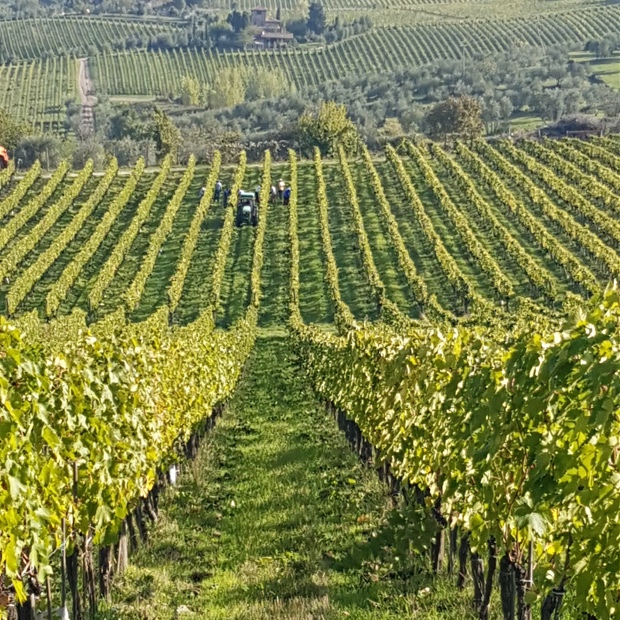
Most likely you’ve arrived at this page because you know that the story of Radda in Chianti will make for a terrific read. If you’ve landed here and do not yet know the blood of Radda’s sangiovese or are not yet excited about the commune’s 2017 harvest then I urge you to press on. In Radda they are farming higher, further and edgier. Their time in the sun as the cool kid on the fringe of selvage sangiovese viticulture in Chianti Classico has begun.

We’ve talked ad nauseam of late about the marginalia of climate change, about cool climates and growing regions finding ways to ripen grapes at the edge of what is possible. As a greater entity Chianti Classico is not one of them per se but Radda may just be entitled to boast about being cool, relatively speaking. Everywhere vines are grown there has to be a coolest spot, where the altitude is highest, the temperatures are lowest and the vines are slower to manage phenolic ripeness. Radda is the coolest sector and the rest of Chianti Classico should be paying careful attention. Like all wines subjected and connected to global climate change, in Chianti Classico the future of sangiovese will be inextricably tied to those from Radda. Until now it has been generally understood that above 550m (or so) of altitude it is more than difficult to ripen sangiovese in Chianti Classico. That too is changing and the 2017 vintage will offer great proof.

In #raddainchianti we find ourselves immersed in a recurring if revelatory theme #sangiovese #chianticlassico

Related – All in with Chianti Classico

Radda is one of four sub-zones in the province of Siena and shares its borders with four other Chianti Classico communes; Gaiole to the southeast, Greve to the north, Castellina to the west and Castelnuovo Berardenga to the south. There is something about the Radda sangiovese that stands alone, a thread that runs through, with traces and shadows of the territory omnipresent in the collective psyche of these wines. While other communes like Gaiole have begun to gather and band together, it is the group from Radda that is most keen and desperate to share their collective heartbeat from the eastern corner of Chianti Classico.

In Radda the shift to one for all and all for one has brought 30 producers together. The recently formed group share a commonality defined by soil types and estate vineyards set at an average elevation of 450m. This is one of the oldest areas of Chianti Classico, a commune of castles and vineyards that date back to the 12th century. Elevation, the soils and the expositions make for some of the most elegant sangiovese in Chianti Classico. The results are a cause and effect summation due to less sun, more finesse and a most prominent mineral influence. Radda’s destiny is defined by deeper root delving and more extraction of trace minerals from well below the soil surface. “The territory has always has been considered a cold terroir with more difficulties to grow sangiovese, especially as compared to other communes that are lower, hotter and with fewer difficulties,” claims Roberto Bianchi of Val delle Corti. Climate change has opened the door for this fringe commune to take center stage.  Says Bianchi, “other communes have tremendous problems of overheating. We don’t have that problem in Radda.”

Radda is a story built upon a multiplicity of limestone, in all its Chianti Classico permutations, from grey calcaire to Galestro and everything in between. Terraces are all used, irrespective of the orientation. Two rivers, Pesa and Arbia mark the lowest points at approximately 300m and the slopes rise up from the rivers, up to 600-650 at the top where the Galestro and Alberese change to Macigno, friable limestone and sandstone, less calcareous, harder to work and therefore, places of lower yields.

“A subzone system for a definitive denomination as big as Chianti Classico should exist.” These are the words of Volpaia’s Giovannella Stianti. Signora Stianti’s vision may not be a singular one but not everyone is bold enough to speak aloud about an idea that most likely will soon become a reality. Until now the Chianti Classico discussion has been limited to varietal and the insistence that the main concern be about the multiplicity of sangiovese. September tastings centred on Radda, Gaiole and even more specific still to Montefioralle and Lamole speak to the idea of breaking down a territory into smaller parts. Defining sub-zones and then sub-sub zones is potentially discriminatory and ultimately controversial but the communes and villages are ready and stating their case for individual due. The murmurings ask the question. Has the time not come to proudly wear Radda in Chianti on your wine label? This piece of prominent information would help the consumer understand where this wine is from. The impressive number of producers and wide-ranging diversity suggests there are more than enough reasons to get behind the plan. Chianti Classico will always come first but in all of Toscana only it is possessive of such distinct communes. So why not tell the world? Borders can’t be drawn underground but the lines can be demarcated above ground, by commune, village, river or road. Naturally the geologies will have to fall into line. In the case of Radda, that won’t be a problem.

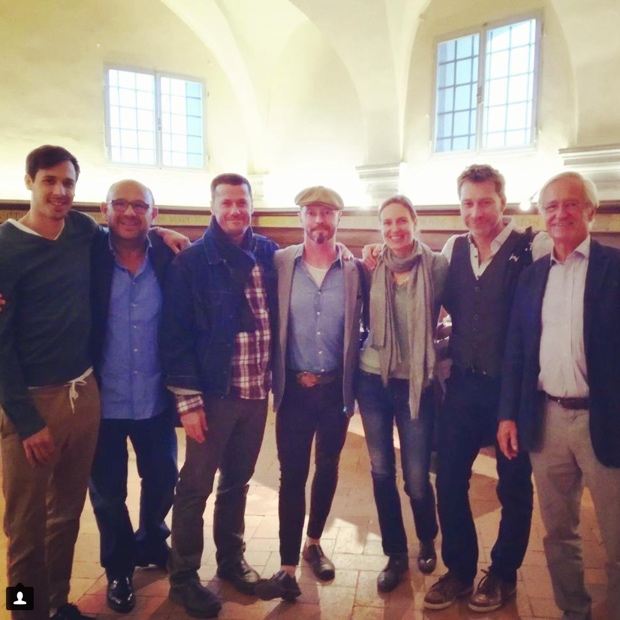
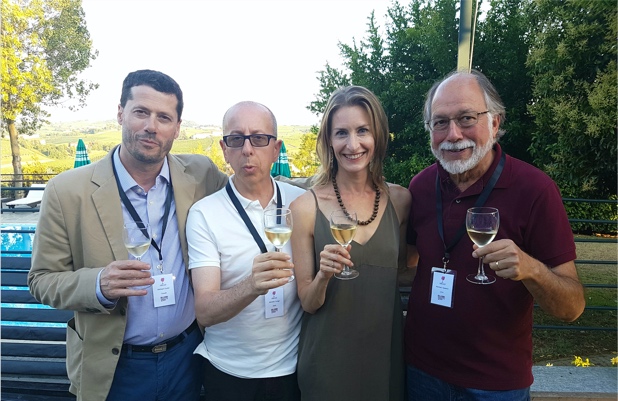
Brad Royale, Steven Robinson and Federica Mascheroni

Related – The most important red wine from Italy

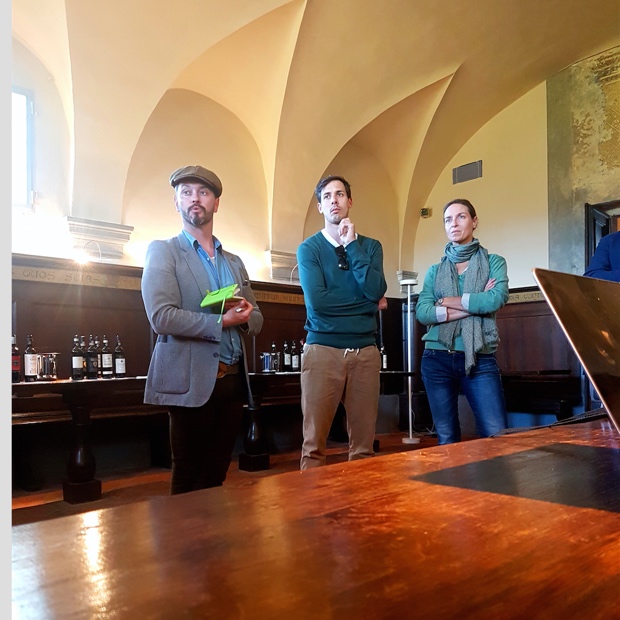
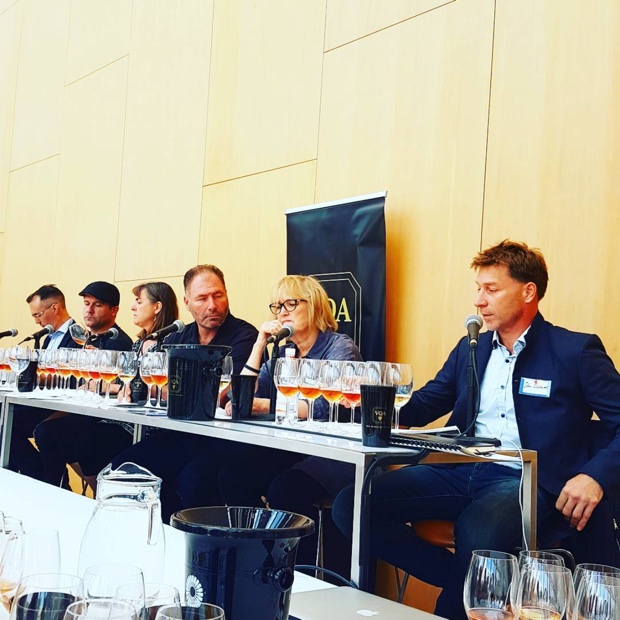
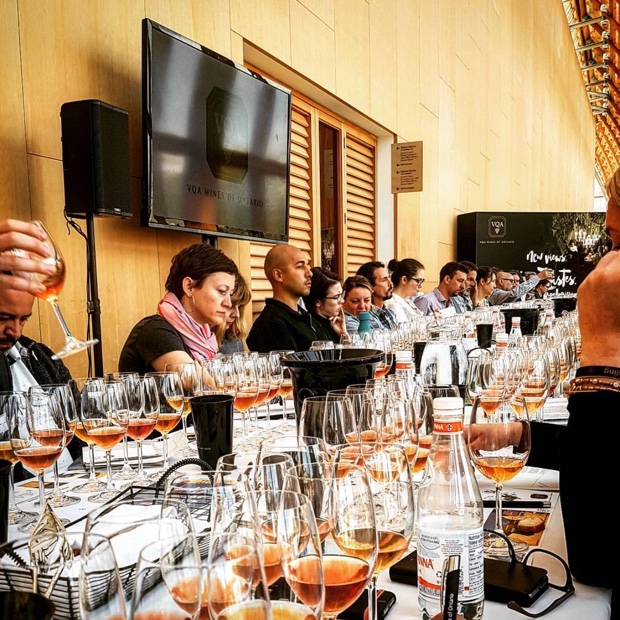
In September of 2017 I made my second visit to Casa Chianti Classico, located in the former Convento di Santa Maria al Prato in Radda in Chianti. It is here that the Consorzio Vino Chianti Classico has set up its new education and events centre to promote the wines of the Gallo Nero. Casa Chianti Classico has been converted from the old Franciscan monastery and is now home to meetings, conferences, events, a wine shop and a museum. Four intrepid Chianti Classico inquirers, John Szabo M.S., Brad Royale, Steven Robinson and Godello were hosted by three valorous representatives for the municipality. Federica Mascheroni of Castello di Volpaia, Roberto Bianchi of Val delle Corti and Oscar Geyer of Borgo La Stella. I have reviewed 23 examples from the tasting in Radda.

Sangiovese of Radda in Chianti

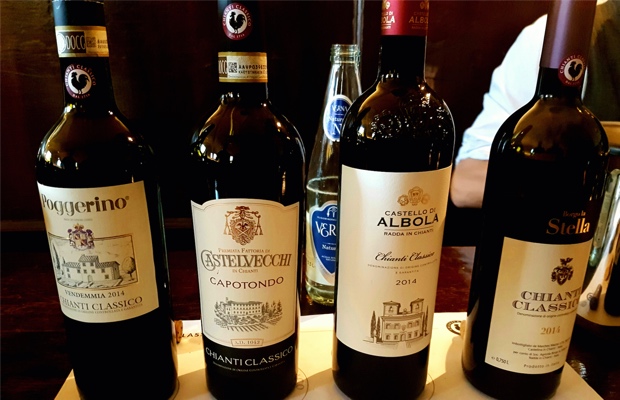
Borgo La Stella Chianti Classico 2014, DOCG Tuscany, Italy (WineryWineAlign)

The proposition indicts 2014 with a tight Chianti Classico, of fruit either berry or plum it’s hard to be sure, but either way it’s found wrapped and dragged through a stone-earthy ride. There is this deep into the soil liqueur that carries a mushroom funkiness, all within reason and finely integrated. Not a fruity CC by any stretch but carries plenty of character and might even be considered ripe for the vintage. From young vines, planted in 2006. That says something about its prescient present and the possibilities for the future. Drink 2017-2019.  Tasted September 2017  borgolastella

Borgo La Stella Chianti Classico Riserva 2014, DOCG Tuscany, Italy (WineryWineAlign)

Made with oenologist Maurizio Alongi, Oscar and Christian-Oscar Geyer’s Borgo La Stella Chianti Classico Riserva 2014 was bottled at Mazzei in Castellina. The vintage is all over this sangiovese (with 10 per cent merlot) planted to heavy, heavy density. The vines are but a mere six years old but already the Alberese is felt in this impressively layered, deeply hematic and starchy tart CCR. The mineral sensation is something that it quite striking at the Riserva level. It’s a big and tannic arena in which the wealthy deposits of mineral salts are pulsating with Radda terroir. Drink 2018-2024.  Tasted September 2017

Brancaia Chianti Classico 2015, DOCG Tuscany, Italy (519173, $24.95, WineAlign)

Classic 2015 Chianti Classico of dark raspberry fruit and maximum ripeness with a side show of top notch acidity, bright enough to stay grounded in loyal and traditional footing. The tannins do cause a minor drying finish which only accentuates the correct and justifiable humility of sangiovese. An example to live and abide by. Drink 2017-2020. Tasted August and September 2017  brancaia_com  noble_estates  @CasaBrancaia  @Noble_Estates  @Brancaia  @NobleEstates

Brancaia Chianti Classico Riserva 2013, DOCG Tuscany, Italy (260802, $36.95, WineAlign)

Brancaia goes all in to exploit sangiovese and the for broke style solicits some patience to wait out in extra time. The dusty, musty and leathery notes are up front, closed and somewhat suffocating for the fruit. Though 16 months in barrel is nothing to call nothing it is not the wood that dominates these gregarious 2013 grapes. With time this swirls into a grosso sangiovese like liqueur with plums, cherries and spice. Really Riserva in style but not of the recent past, more like the older ways but translated to modern times. Needs three more years to perform due diligence, gain some traction and find its guaranteed due elegance. Drink 2019-2024.  Tasted March and September 2017

Castello d’Albola Chianti Classico 2014, DOCG Tuscany, Italy (339937, $18.95, WineAlign)

Castello d’Albola Chianti Classico is really quite ripe for 2014, even perched on the next edge but short of the dangerous ledge. The acids are a bit hard and the compression somewhat intense in a sangiovese that reeks of personality spoken loud and clear. Both fruit and tannins are set out to drying on the savoury finish. Drink 2017-2019.  Tasted September 2017 castellodialbola  zoninwines  @CastellodAlbola  @zonin1821  @castellodialbola  @ZoninProsecco

Castello d’Albola Chianti Classico Riserva 2014, DOCG Tuscany, Italy (315150, $24.95, WineAlign)

Castello d’Albola 2013 is a gamey Riserva, with aromas of roasted meat and salumi, expressly extracted and pressed. This goes for broke and makes the most impression it can, with big fruit, tart edges and big tannins. It’s a formidable mouthful to be sure though lacks some balance, at least while it’s quite young. Time might help to shape the finesse and sharpen the clarity. Drink Drink 2018-2022.  Tasted September 2017

Castello di Radda Chianti Classico 2015, DOCG Tuscany, Italy (WineryWineAlign)

Here the exchange between fruit and acidity is seamless if simple, easy going and with no risk taken. Hard not to understand what’s going on here with its simple plan, fine execution and classic tart, red fruit and salty stone bent. On the sour side for Radda in Chianti Classico, particularly when discussing 2015. Drink 2017-2019.  Tasted September 2017  #castellodiradda  @CastellodiRadda  @castelloradda

Castello di Radda Chianti Classico Gran Selezione 2013, DOCG Tuscany, Italy (WineryWineAlign)

This 100 per cent sangiovese is from Il Corno, a single vineyard meaning “The Horn” upwards of 400 m above sea level. The soil is a calcareous clay and the vines were planted in the early 1990s. The ’13 Gran Selezione is rich and expressly ripe, simply linear for the category with very high acidity. Over the top high acidity. Let’s hope the twain is met before the end of this decade. Drink 2018-2022.  Tasted September 2017

Castello di Volpaia Chianti Classico 2015, DOCG Tuscany, Italy (953828, $27.95, WineAlign)

Volpaia’s 2015 strikes me as a Chianti Classico with ancient wisdom and perfect vintage fruit quality in its calculated, curative concentration, a wine that modestly takes every advantage it can, which are few and far between. This is a rich and earthy red, of frutti di bosco, ropey and wild, yet generating power in its wonderful restraint. Take in and regard the gentile, non facile, wondrous mystery of Radda in Chianti Classico. Drink 2018-2023.  Tasted September 2017  castellodivolpaia  rogersandcompanywines  @volpaia  @rogcowines  @volpaia

Castello di Volpaia Chianti Classico Riserva 2014, DOCG Tuscany, Italy (705335, $41.95, WineAlign)

Volpaia Chianti Classico Riserva 2014 is expressly reductive with layers of beautiful fruit laid comfortable and resting below. The glycerin texture and fine, fine tannins tell us the life of this CCR will be long, slow developed and over time will become more beautiful than imagined. Benvenuto to the blessed nature of Macigno terroir exorcized properly, in allowance of place to hold court and fruit to slowly dance upon its stage, rhythmically and harmoniously together. This takes every advantage of a vintage that will build structure if you let it. Wait for Volpaia’s ’14 because two plus years from now the florality will floor you. So pretty. Drink 2019-2026.  Tasted September 2017

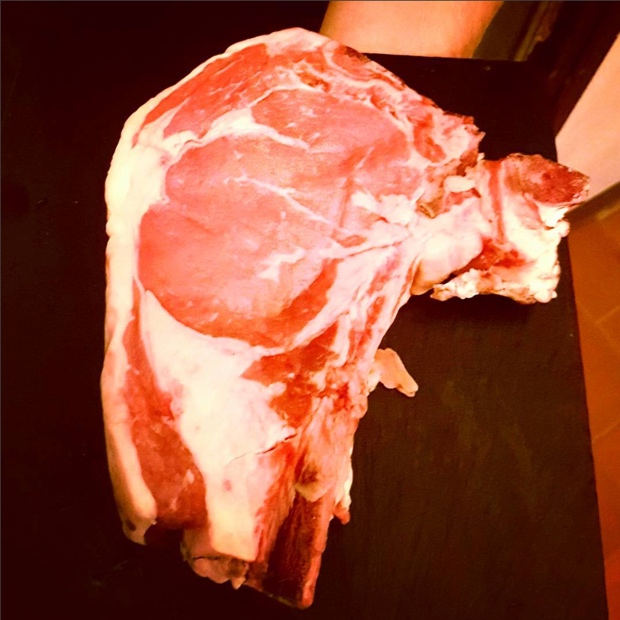
Before #bistecafiorentina #enotecanuvolari

Castelvecchi Chianti Classico Capotondo 2014, DOCG Tuscany, Italy (WineryWineAlign)

I had tasted both Capotondo ’14 and ’15 earlier in the week at Enoteca Nuvolari (Pietrafitta) though took no formal notes at the time. It was clear by way of perspective that ’15 was certainly drinking well but this ’14 holds more impressive and precise structure, at least by way of intensity. This is highly distinctive, chewy, somewhat chunky sangiovese, but the firm constitution and decidedly ferric edginess brings Radda soil into play. The “round head” tells us that it can be nothing but Chianti Classico in all its history and its glory. Drink 2018-2022.  Tasted September 2017  cantinacastelvecchi  barrelselect    @BarrelSelect  @chianticastelvecchi.it  Barrel Select Inc.

Castelvecchi Chianti Classico Riserva Lodolaio 2014, DOCG Tuscany, Italy (WineryWineAlign)

Riserva Lodolaio 2014 is not only scented by a curious perfume but a bit of a nutty one, connected to sweetness by oak in an immediate gratification, prompt to the consumer kind of way. This old castle, heritage vines sangiovese from high territory altitude is a veritable legume and spice spider, with legs of clove, cinnamon, nutmeg, anise, vanilla, coffee, dried herbs and dark chocolate. Here in the short term is an example of Chianti Classico Riserva ready for many a believer and quick to act appreciative imbibers. Lodolaio, the Riserva awarded, in a frame. Drink 2017-2020. Tasted September 2017

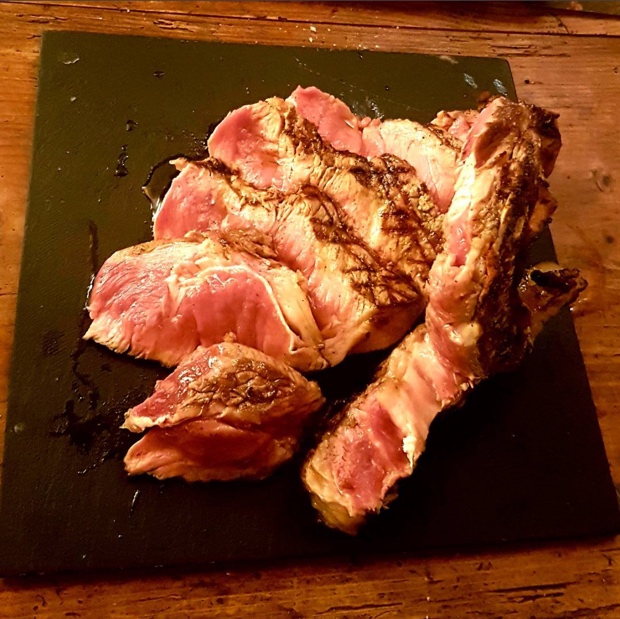
After #bistecafiorentina #enotecanuvolari

Colle Bereto Chianti Classico 2015, DOCG Tuscany, Italy (Agent, $31.95, WineAlign)

From Radda in Chianti and one of Chianti Classico’s great young, forward thinking winemakers Bernardo Bianchi the wisdom is easily noted, deduced, accepted, considered and abided. Red fruit with an earth’s dusty, cracked crust allows for smells like fresh tiles and the just mixed mortar but that fruit is aching to burst forth. Very seamless for a young Chianti Classico, so this building will stand strong and last through the centuries, which in wine years equates to seven, maybe ten. Terrific sweet acidity, life-affriming sapidity and vitality. As good as young CC gets with the longest, pitch perfect tang in elongation, drift and persistence. Drink 2018-2025.  Tasted February and September 2017   @NokhrinWines  Azienda Agricola Colle Bereto  Azienda Agricola Colle Bereto

Colle Bereto Chianti Classico Gran Selezione 2013, DOCG Tuscany, Italy (Agent, $67.50, WineAlign)

The current incarnation of the single-vineyard Gran Selezione from “la vigna del Convento” is a wildly rich and structured, intuitive and interpretive expression. The vineyard resides in a great Radda amphitheatre, situated on the slope beneath Il Convento di Radda in Chianti. Winemaker Bernardo Bianchi does nothing to veer away from the house-composed, let the vineyard speak style, from a sun-worshipping, ambitious yet wise, 22 year-old Galestro soil block at a high Chianti Classico 500m peak. All together making for the new super Riserva of restrained power and elegance. If the aromatics in 2011 were of a wow factor they are somehow, magically and inexplicably improved upon in 2013. The field of flowering greens, the deep way you inhale the fruit and above all else, the mineral of this Galestro. It pervades and attacks, especially on the palate but when you taste sangiovese like this you understand the disconnected exaggerations, over-stressed acidity and the (comparative) imbalance in some of the GS peers. Bereto’s is one of the finest Gran Selezione and worthy of every charged sip. Drink 2020-2035.  Tasted February and September 2017

Istine Chianti Classico 2015, DOCG Tuscany, Italy (WineryWineAlign)

Istine Chianti Classico is made by Angela Fronti out of vineyards set quite high between 480 and 550m, on the road that runs from Radda to Castellina in Chianti. From a great variegation of soils; Alberese, marly limestone, Galestro and some light presence of quartz. A rich red limestone ruby sangiovese is the result, collecting to a mild but notable unctuous liqueur, manageable acidity and tannin. This sharp and correct CC is lovely, well made, so proper. Drink 2017-2020.  Tasted September 2017  istine_raddainchianti    @istineraddainchianti

Istine Chianti Classico Riserva Levigne 2013, DOCG Tuscany, Italy (WineryWineAlign)

Levigne is considered the top wine of the estate and it is one of two assemblage-forged sangiovese. Angela Fronti produces three single-vineyard Chianti Classico, a CC that combines all three vineyards and this Riserva. Since the 2012 harvest Fronti has opted for separate vinifications of sangiovese according to each vineyard of origin. Through different wines the characteristics of each specific vineyard, as in exposure, soil and altitude, are exploited. Fronti notes “we tell our reality through the best sangiovese harvested in the Vigna Istine (between Radda and Castellina), the one collected in the Vigna Casanova dell’Aia (near Radda) and the one in the Vigna Cavarchione (in Vertine, Gaiole). Riserva is a story of assemblage and it seems to me, not the wine of Angela’s greatest passion. This CCR is chosen from her best fruit and spent 18 months in large botti. The fruit is raisin chewy and a bit stewed to be sure but with good acidity and tart, tight tannins to keep the faith. It’s disjointed and I would bet the single-vineyard CCs are more precise and focused. Should SV Riservas be the wave of Istine’s future? Only Fronti can answer that question, if adding more diversity to the portfolio is even a possibility. All that said this high quality blend will turn and morph for a more than interesting secondary CCR display of personality. Drink 2017-2022.  Tasted September 2017

Podere Terreno Chianti Classico 2015, DOCG Tuscany, Italy (WineryWineAlign)

In 2015 Podere Terreno Chianti Classico makes a bit of a funky entry, not reductive but seemingly drawn from a lower slope, deep and earthy. In this vintage it wells deep as an inhalant of cherries, macerated and yet it’s entirely Radda, cool and wet, stony and such a calcari expression. You can enjoy this beginning in six months simultaneously alongside the tougher ’14, but their worlds will parallel one another for the rest of the journey. In both cases Radda represents. Drink 2018-2021.  Tasted September 2017  agriturismo_podereterreno  @podereterrenoallaviadellavolpaia

Poggerino Chianti Classico 2014, DOCG Tuscany, Italy (SAQ 878777, $25.95, WineAlign)

The vines date back to 2004 and 1994 for Poggerino’s Chianti Classico, a 100 per cent sangiovese that sits at a zenith where the most red limestone earth and sour intensity is noted above all 14s almost anywhere, not just from Radda but for all of the territory. Almost over the top in this regard but stand up and counted is what this amounts to. Then it grooves forward and rebounds with warmth and depth before returning to that earthy calacari bonding. Gathers itself, the moving parts and glides along with solid length. Very interesting, honest, organic and naturally curated work from Piero Lanza. Drink 2018-2022.  Tasted September 2017  fattoriapoggerino  vins.balthazard    @vinsbalthazard  @poggerino  @VinsBalthazard

Poggerino Chianti Classico Riserva Bugialla 2014, DOCG Tuscany, Italy (Agent, $45.00, WineAlign)

Here the ’13 vintage is really expressed for Chianti Classico in Radda with deep red cherry fruit, earth and real saline intensity. The tannins are a bit rough and tumbling but even in their coarseness there is charm and even beauty. In such a state of youth at this the deceitful Poggerino Riserva talks some trash, almost as if to lie (alla bugia) about what it’s worth, so let it settle, integrate, develop and expand. The chew and the grip will be replaced by something other. Drink 2019-2025.  Tasted September 2017

Pruneto Chianti Classico 2013, DOCG Tuscany, Italy (WineryWineAlign)

Pruneto is the sole ’13 in the group tasting and the only one with Radda celebrated in larger font on the label. This is the outlier, from the singular winemaker (Riccardo Lanza) and was just recently bottled. The organics and organoleptic, earthy intensity are something to behold. It’s a stripped down ’13, Radda stye, needing time to unfurl and even bloom. This is hard to figure Chianti Classico 2013 but I suspect it will blossom after a few years time. Nothing else in Radda tastes like this. From the tiny, 3.5 hectare estate divided into just two vineyards, surrounded by forest. Drink 2019-2024.  Tasted September 2017  #Pruneto

Val Delle Corti Chianti Classico 2015, DOCG Tuscany, Italy (WineryWineAlign)

Roberto Bianchi’s 2015 is a reserved and restrained aromatic Chianti Classico but there is a subliminal Galestro or Macigno message being delivered here and it would seem to be a grey to darker calcareous rock expression. The fruit is quiet but felt plummy and tart on the palate. This is a bit older schooled but surely carries great presence and length. A rich thorough finish concludes that ride through the mineral life. Drink 2018-2021.  Tasted September 2017  valdellecorti  @ValdelleCorti  @valdellecorti

Val Delle Corti Chianti Classico Riserva 2014, DOCG Tuscany, Italy (WineryWineAlign)

From Roberto Bianchi, the Val delle Corti Chianti Classico Riserva 2014 comes from not just a challenging but also a complicated vintage. Despite the rains and the unusually cool temperatures the aromatics here are not just a pure distinction for CCR but also for Radda. This is because it eschews concentration, alcoholic heat and unnecessary intensity for purity, honesty and delicasse. Here sangiovese acts in a wine that stands on its own as the finest expression of fruit from this estate. It’s both pretty and earthy, peppery and really deep, really deep. This has layers and layers of trace mineral drawn up into the red cherry mixed with some dried fruit bright and vibrant of the bones of the Riserva level wine. It can’t be thought of as anything but most excellent. Drink 2019-2025.  Tasted September 2017

Vignavecchia Riserva Chianti Classico Odoardo Beccari 2011, Docg Tuscany, Italy (Agent, $33.95, WineAlign)

A consistent and terrific follow-up to 2010 from old vines in Radda in Chianti, this is warm and creeping north (or south depending on your explanatory orientation) from deep, religious aromatics. Fresh slices of fennel bulb and wet concrete are rich, wet, juicy and vaporous. Sweet acidity and tannin join spicy red fruit from what is ostensibly the most unctuous and deeply tangy sangiovese you are likely to ever taste. This is quite something else, both hedonistically indulgent and propitiously wild and engaging. You had better like it hot and bothered, fleshy, gregarious and sexy. This really has it all. Drink 2017-2024.  Tasted February and September 2017  #vignavecchia    @VignaVecchia

Gallo Nero Sangiovese Vendemmia 2017

Good to go!

Godello

Twitter: @mgodello

Instagram: mgodello

WineAlign

17 Canadian wines that rocked in 2017

As we taste through the #NWAC17 finals we thank @ZWILLING_CA for the rocking great glassware. Canadian wines are better for these vessels.

I first published this year-end summary of Canadian wine excellence in 2013 and four years on that original list of 13 has expanded with four more. It’s a good thing too because four years later 17 wines is but a fraction of what could or should be included. This exercise is more than difficult. It’s biased, exclusive and decisive but it is meant to celebrate a select few with a mandate to elevate and exult the rest. It’s also a proclamation read to many who remain ignorant to an ideal of great wine being made in Canada, to tell the insolent they are not welcome here anyway. The winemakers in this country are in full command of their acumen, craft and future. They own it. Roll out the red carpet. Here they come.

Related – 16 Canadian wines that rocked in 2016

My writing about wine is a display that spills everything but subtraction, reduction and minimalism. It is an occupation whose reality is examined to points of madness, of long, run-on sentences, often at odds with grammatical winemaking realism. My tireless, tiring sentences and phrasing can at times offer a feeling that is potentially endless. So thanks for reading and putting up with me.

As I have noted before, I try to visit wines more than once before reviewing them, preferably from more than one bottle but even more importantly, with a good chunk of time having passed between assessments. The most complete picture is drawn from such a course of critical action but it’s not always possible. Not a single one of these 17 wines were decided upon at a single VINTAGES release, sterile and windowless LCBO laboratory tasting. The nearly 2000 wines (of which approximately were 20 percent Canadian) that I tasted in the LCBO lab in 2017 are kept, compartmentalized, reviewed and stored over at WineAlign. They are forged from and formed by a very specific, of the fleeting moment style. They are the results of root days and fruit days, often plagued by other writers present levels of distraction and time constraints. These 17 wines are children of repeated concentration and stand out because the makers went out of their way to bring them to me.

Please allow me to quote Wes Anderson. “It is an extremely common mistake, people think the writer’s imagination is always at work, that he’s constantly inventing an endless supply of incidents and episodes, that he simply dreams up his stories out of thin air. In point of fact, the opposite is true. Once the public knows you’re a writer, they bring the characters and events to you and as long as you maintain your ability to look and to carefully listen, these stories will continue to…,” continue to provide what you need to entertain your readers. Thank you to the winemakers for sharing their stories time and time again.

Related – 15 Canadian wines that rocked in 2015

Heartbreaker

If 2016 was a most difficult year, what does that say about 2017? It was a most dippy, derisory, barmy and yet chimerical one. Once again too many special people were taken from us and in Ontario, no one more important to everyone who works in wine than Karl Kaiser. It can and should be argued that the industry we all call home is at its 2017 state because of Mr. Kaiser and what he pioneered more than 40 years ago. Karl Kaiser was eulogized by Brock University’s Dan Dakin. Please take the time to read it.

Related – Karl Kaiser left indelible mark on Brock University

Once again we all lost someone close to us in 2017. Celebrity deaths, especially the ones of loved musicians seem to hit us the hardest because we relive moments of our lives when their songs are played. I’ll ask the social media trolls to walk on past and to once again, please respect our reminiscences.

Gregg Allman. Richard Anderson. Harvey Atkin. Walter Becker. Chester Bennington. Johnny Bower. Chuck Berry. Glen Campbell. David Cassidy. Chris Cornell. Jonathan Demme. Fats Domino. Dick Enberg. Stephen Furst. J. Geils. Robert Guillaume. Roy ‘Doc’ Halladay. Connie Hawkins. John Hurt. Al Jarreau. Martin Landau. Jerry Lewis. Erin Moran. Sir Roger Moore. Bryan Murray. Charlie Murphy. Bill Paxton. Tom Petty. Della Reese. Don Rickles. Sam Shepard. Joni Sledge. Keely Smith. Harry Dean Stanton. Y. A. Tittle. Mary Tyler Moore. Adam West. Malcom Young. Joanne Godel.

Don’t forget the pouring rain

There was more than enough good news out of 2017, especially from Ontario. After one of the wettest summers on record and this looming harvest of disaster everything changed. The temperatures hit 30 degrees and remained there for much of September. October obliged with warm and slowly declining temperatures with very little precipitation. Not only was the 2017 vintage saved but it became one of the great phenolic ripeness stories in wine country history. Quality high. Check. Quantity high. Check. Win win for wine.

The year continued to throw thousands of wines my way. I did travel more and so the international count ran higher at the expense of the local. I plan to fix that in 2018. Things have a way of balancing out anyway. Still I’m sure I tasted close to 1000 Canadian wines once again. We continued to pay great attention to Canadian wines at the WineAlign office. I once again joined the judging with Tony Aspler at the Ontario Wine Awards, in Wolfville, Nova Scotia at the WineAlign National Wine Awards of Canada and with David Lawrason at Gold Medal Plates.

Related – 14 Canadian wines that rocked in 2014

My wine on tap program at Barque Smokehouse and Barque Butcher Bar welcomed a third child to the family when we opened Barque Smokehouse Burlington in August. With that opening we were proud to partner with Rosewood Estates to join the family that over the years has included Tawse, Lailey, Norm Hardie, Creekside, Between the Lines, Kew Vineyards, Redstone, Stratus, Leaning Post, Between the Lines, Coyote’s Run, Vineland Estates and Creekside Estates.

It began, as it always does with Niagara’s Icewine Festival in January and in February there were Thirteen ways to taste Cuvée. In March I found Fifty ways to Taste Ontario and then travelled to Germany for Godello’s March through Prowein, The Ahr Valley and The Rheinhessen. As a Canadian and a representative of Wine Country Ontario I hung around the Canadian pavilion, talked with our coast to coast winemakers, vintners and marketing representatives, took in the seminars on cool climate wines led by David and Dr. Janet Dorozynski and of course, tasted some wines.

Related – 13 Canadian wines that rocked in 2013

In the company of #family so thank you judges, friends and badasses #NWAC17 #killedit

Any major dude will tell you

At the Terroir Hospitality Symposium in May we debated the highly controversial new category of Skin-Contact wines in Ontario. Orange is the new smack should have been my title but instead I chose to talk through hushed tones in Pop goes VQA, a story in three parts, each one more misunderstood than the others. It would take months to come to better and more improved conclusions to that haughty complex story.

In June we convened the WineAlign Canadian Wine Awards in the Annapolis Valley. It was the first time that Nova Scotia hosted our motley crew and what a smashing success it was. Great thanks must go out to all our tremendous hosts including Wines of Nova Scotia, Domiane de Grand Pré, Benjamin Bridge Vineyards, Blomidon Estate, Annapolis Cider Company and Obladee Wine Bar in Halifax.

In July I once again made the pilgrimage to i4c, the International Chardonnay Cool Climate Conference, “the local mecca attracting thousands, arriving to praise chardonnay in all its glory. It’s chanted with incantatory connotation by patrons cantilevered like alluvial fans across the Niagara Peninsula. It teaches us about more than chardonnay because the rapidity of climate change is real and the desire for fresh is yet unquenched. This transcends chardonnay. It’s about growing grapes and making wines in places we all previously discounted. Recently scoffed at. It concerns farming higher, further and edgier. This conference and this grape together let us know that we must change.”

At i4c we welcomed California’s Karen MacNeil, Dr, Jamie Goode, Bill Zacharkiw, Treve Ring, Kurtis Kolt and Rhys Pender MW and then I penned 69 chardonnay reviews. What did Godello learn from Cool Chardonnay in 2017? After a visit to Pearl Morissette I learned from François Morissette, vigneron about oxidation.“Whatever we press, we oxidize. We do not oxidize wine, we oxidize must.” There’s a big difference. The stabilization of these wines are attributed to this idea of getting rid of all oxidizable compounds before they enter into the next stages of the winemaking process. Pleasing aromas, flavours, textures and ultimately the sum of the above elevates the cool chardonnay game and speaks to the future. But I did not learn enough. I needed to move beyond the ubiquity of cool climate. I wanted to understand more about cold soaking and whole berry fermentation. Just last week Pearl Morissette’s savant winemaker Brent Rowland sent me these words of enlightenment.

“This is the main reason I am such an advocate to whole bunch fermentation. The best tannin and worst tannin are seed tannin, depending on how you extract them…heat and alcohol rip out aggressive angular tannins. By keeping the berry attached to the rachis for as long as possible you are creating a little microenvironment for fermentation that is low heat and low alcohol, enabling you to slowly extract long polymerized tannins. This and perfume is the reason I do everything whole bunch. To me whole bunch has nothing to do with the stems, tannins from stems or flavour of stems.” He continues. “I absolutely think that skin contact wines can have elevated structure and texture. I also do not subscribe to the idea that some arbitrary number like “10 days” defines the genre. I did say that Orange wine is not an in-between wine but its own genre and I believe that. For the record I feel the less rigid the criteria for the category the better. As you state the broader the category the more opportunity for discovery of a valued category.” Thank you mate.

Be part of the Greatest Wine Revolution since Prohibition.

Where are we one year later?

I’ve two words for you. WineAlign Exchange. The WineAlign Exchange taps into the world of wines beyond the LCBO and delivers a curated, mixed case of top quality wines directly to your door. All the wines have been carefully chosen by our panel of critics for their quality and value. David Lawrason, John Szabo M.S., Sara d’Amato, Steve Thurlow and Godello. The first case delivered to hundreds of members was an all Platinum Award winners pack from the National Wine Awards of Canada. In terms of free trade we await a decision but don’t expect a miracle in 2018, Christmas or otherwise. As for the VQA panel in Ontario? Well, read my article referenced above and you’ll get my drift.

One of my favorite wines I tasted in 2017. All killer no filler. Beautifully ripe #cabernetfranc nice layers of cocoa, red, and black fruit. Tannin is liquid silk. Can_t wait for next

Let’s be Franc

Cabernet Franc is getting better all the time. In British Columbia the coolest sites are increasingly raising fresh, spirited and ultimately crushable wines with unmistakable west coast accents; savour, garrigue and mountain tea. With thanks to venn diagram circles drawn in and out of Niagara’s Lincoln Lakeshore, but also magically deep into the Prince Edward County limestone, the great Ontario hope is developing into what we thought it might be. Getable and structured red wine.

New World cabernet franc growing sites produce less delineation as compared to the various lieux-dites in the varietal homeland, France’s Loire Valley. Niagara is beginning to enter into an Old World state of mind, so now winemakers and by extension wine geeks, are posturing over micro-terroirs; Niagara-on-the-Lake, Beamsville Bench, Niagara Escarpment, St. David’s Bench, Lincoln Lakeshore, Four Mile Creek. The same is happening in British Columbia’s Okanagan Valley although the cumulative stylistic is worlds (four provinces to be exact) apart. In Nova Scotia Benjamin Bridge Vineyards’ viticultural and vinifying braintrust of Jean-Benoit Deslauriers and Scott Savoy are allocating serious resources to cabernet franc in the Gaspereau Valley. But how is it that decisions are made as to where to plant this crisp, juicy and crunchy grape? While many will disagree, if you consider growing sites as circles within the aforementioned venn diagram, in Canadian soils the shared subtleties can easily get buried or muddled within the common areas. The lines may be drawn but the web is tangled. That said, the story of franc terroir is getting clearer and clearer. Interloper carries the torch.

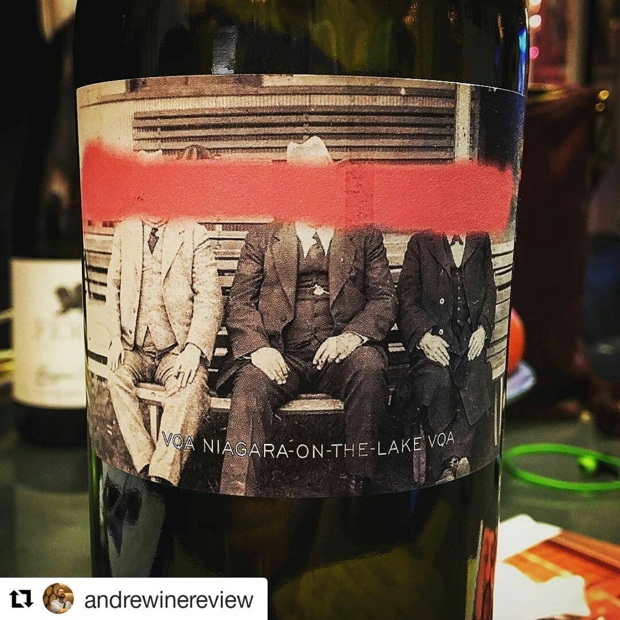
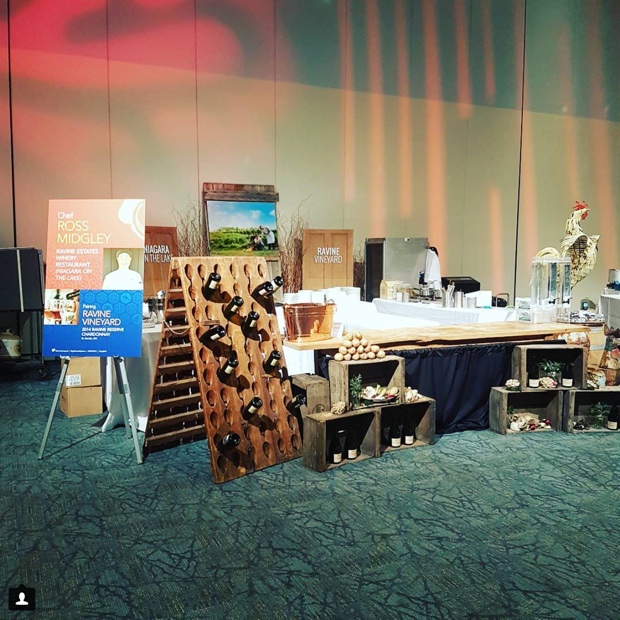
Tonight brought to you by #interloper and the inner beauty of #cabernetfranc @RavineVineyard #vqaniagaraonthelake

At this most recent NWAC17 judging experience the results from cabernet franc paints a more palatable picture than those brushed by both merlot and cabernet sauvignon. We are collectively impressed with and solidly behind the direction growers and winemakers are taking with this noble varietal. The 546 acres planted in B.C. are rising steadily and if I were merlot I’d be looking in the rear-view mirror. In Ontario more than 4,000 tonnes were harvested in 2015, third to only chardonnay and riesling. Four of five Gold Medals were Ontario in origin, 10 of 16 were awarded Silver and 10 of 17, Bronze. While only four in Ontario are labled “LL,” no less than 10 of the 24 winners were made with at least some significant amount of fruit grown in the Lincoln Lakeshore/Beamsville Bench circle of commonality. The sites we want to call “cru” are no longer a mystery.

Taskmasters not pictured #punchdowns #interloper

I can’t say this list is full of surprises, save for the first of 17. You see this particular wine is close to my heart because I had a hand in its concept and design. My partner Scott Zebarth and I teamed up with winemakers Marty Werner and Ben Minaker at Ravine Vineyards to produce what we all feel is the most exciting fresh breath of cabernet franc air to arrive in Ontario in quite some time. It’s obviously self-serving to put it on a best of the year list but we are very proud of this project and its inaugural effort. If you’ve tried it you know. If you haven’t, give me a ring. We’ll break Interloper bread together. To the other 16, welcome to the list.

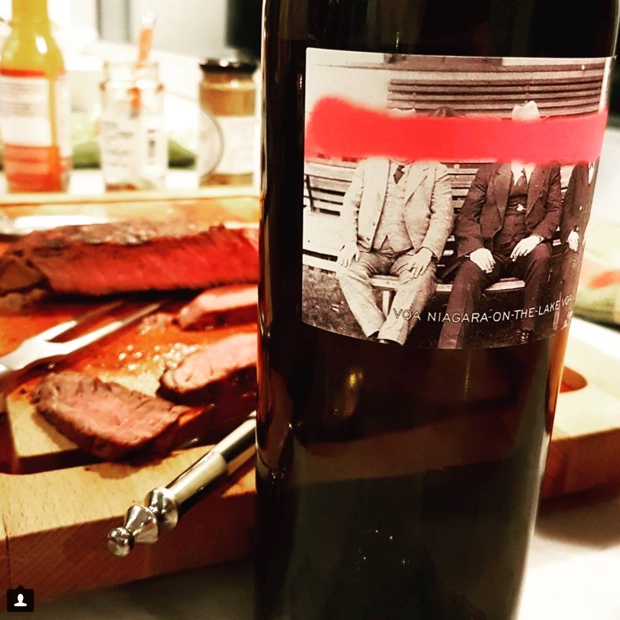
Scott, Marty, Ben and I are proud to present the now SOLD OUT #interloper Cabernet Franc 2016. We’ll be back next year #vqa #niagaraonthelake #ravinevineyard

Interloper 2016, VQA Niagara-on-the-Lake, Ontario ($19.95)

Produced at Ravine Vineyard Estate Winery with the winemaking team of Martin Werner and Ben Minaker

Variety: 100 per cent cabernet franc

Fruit source: 55 per cent Estate (St. David’s Bench), 40 Creek Road, five Tanbark (Four Mile Creek)

Harvest Dates: October 26th and November 5th, 2017

Time on skins: Estate 26 days, Creek 21 days

Length and type of fermentation: Three weeks, ambient/wild for both

Élévage: Eight months in old 225 L French barrels

Case Production: 22

mgodello  scottzebarth  marty_werner  benminaker23  ravinevineyard

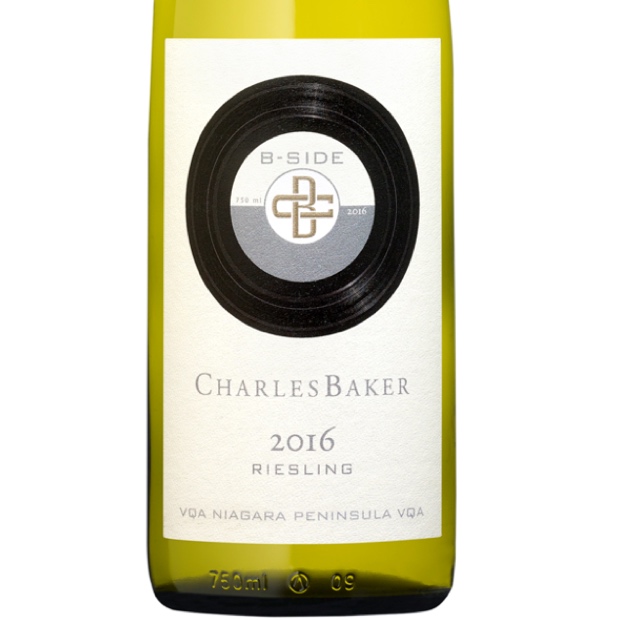
Charles Baker Riesling B-Side 2016, VQA Niagara Peninsula, Ontario (Winery, $22.00, WineAlign)

Vinyl records sound different because they are designed with grooves carved in that mirrors the original sound’s wave form. Their analog recording delivers a sensory feeling of warmth, an aural of texture, nuance and soul. There was a time when the hits spun over and over were also pressed onto the A-Side of 45 rpm singles. The discovery of a never before heard B-Side was a revelation because is was extra material from a favourite band and it was a great song. It meant the record was already too strong for that song to make the final cut and to choose it for a B-Side meant it would elevate the quality of the album. A well-chosen B was not an afterthought. This is the accomplishment of the first Charles Baker’s B-Side, for itself and for the vineyards of Iaen and Picone. Baker digs about in the Niagara Peninsula’s escarpment dirt for young vine, not ready for prime time riesling fruit. If perchance it seems like cheating on his per se Vinemount Ridge Picone and Ivan bottles so be it but one look at him and he’ll say “Hey, hey, what can I do?” His 2016 B-Side delivers a spray bottle Zeppelin expressing heady aromas, high in the stratosphere and raining down upon the earth. The notes are an all in, breath of classic Baker riesling air, blanketing from up above and with a landscape that reeks of lime and quivers with classic agitation. The fruit is wild and full, the salty grit infiltrating and gripping the bloody omniscience of this package. What is this B-Side and where will it be lead? To the top of the ridge, from earlier harvests, younger fruit and higher yields. Scratch the single vineyard elitism, just listen to the song and raise one up, to getting ‘er done before the conceptual singular side one and side two, Ivan and Picone. The Beatles? Forget it. Led’s flip side to the ‘Immigrant Song’ A is the one. Drink 2017-2021.  Tasted November 2017  Charles Baker Wines  stratuswines  @cbriesling  @StratusWines  Stratus Vineyards

Tawse Riesling Quarry Road Vineyard 2016, VQA Vinemount Ridge, Ontario (198853, $24.50, WineAlign)

There is no substitute for seasonal Vinemount Ridge warmth when you are (or even if you’re not) trying to emulate a Mosel like, fleshy Kabinett tension. The Tawse Quarry Road riesling has shown signs of such mimicry in the past but here in 2016 the coincidence is uncanny. Riesling amounts to just 10 per cent of the 2007 planted vineyard, a Fly Road in Lincoln block where chardonnay (planted in 1998) and pinot noir (2007) are queen and king of the hill. But it is riesling that mines for limestone and uses it to distill, filter and enervate the outright fruity purposes of orange zest, lime juice and sweet grapefruit flesh. This ’16 has it all; adipose drupe, salty elements and stasis preserve. It will add some petrol and honey after a few years time and drink well for a few to a bevy more. Drink 2017-2023.  Tasted November 2017  tawsewinery  @Tawse_Winery  @tawsewines

Malivoire Rosé Moira 2016, VQA Beamsville Bench, Ontario (AgentWinery, $24.95, WineAlign)

Hard to believe what I see, a hue not blush nor pink, but gris. That “if my eyes don’t deceive me there’s something going wrong around here.” Forget about Provençe, don’t think too hard about Vin Gris but concentrate only on what Shiraz Mottiar has acceded with Rosé for Moira in ’16. Light and lithe do not begin to explain the rub. Rocks and stones are what come through the good earth on the nose. Is this the blush equivalent of mineralité, away from chardonnay and into pinot noir? “Is she really going out with him?” But the pinot noir component is almost non-existent so what is the phenolic advantage here? Has this gone too far or not far enough? Don’t mistake the things I say. This is delicious, understated and fully underestimated Rosé. It will have great appeal to a specific cognoscenti population and who could not think to drink it any day of the week? Commercially considered however, it may not speak a universal language. Drink 2017-2021.  Tasted March 2017  malivoire  shirazmottiar  @MalivoireWine  @ShirazMottiar  @MalivoireWine

Flat Rock Riesling Nadja’s Vineyard 2016, VQA Twenty Mile Bench, Niagara Escarpment, Ontario (578625, $24.95, WineAlign)

Nadja, like the Bréton novel begins with the question, “Who am I?” A surrealistic trigger is incited by the first taste, with excitement running in many directions but like the book, Nadja’s non-linear structure is grounded in Twenty Mile Bench riesling reality. She is an elite varietal wine in 2016, excitable girl, gregarious, punchy and so bloody juicy. I don’t recall the last Nadja with so much up front zest fervency and writhing aromatic gait, “exploding international, the scenes, the sounds, and famously the feeling that you can’t squeeze ground.” The lime flesh and cordial infusion brings the flavours into a once tropical, twice bitten realm. The vintage delivers the electric version, the new pornographer for the vineyard and the song sung loud swan song for departing winemaker Jay Johnstone. Was it all for swinging you around? Drink 2017-2024.  Tasted October 2017  flatrockcellars  @Winemakersboots  @FlatRockCellars

First Fruit: Field Day Pet Nat, Niagara Peninsula, Ontario (Winery, $25.00, WineAlign)

An escarpment Pet-Nat is born, thanks to the healthy and precocious idealism of winemaker Ryan de Witte and his Winona-based host Ilya Senchuk at Leaning Post Wines. The name “First Fruit: Field Day” carries three connotations; a reference to De Witte’s first commercial wine, the first crop off this particular block and the fact that it’s a field blend of two grapes. The erudite hat is thrown into the micro-cuvée, sparkling wine ring with interchangeable tracks of arts and science from near-equal parts muscat (60 per cent) and gewürztraminer. The style is pétillant-naturel, or as they say in Italy, Vino Rifermentato In Bottiglia, under crown cap with what Ryan notes “as much of the lees as I could get in.” The tightrope induces a two-fold increase, of reduction and for texture, from the nutrients fed the fermentation. De Witte’s math was sound because the effervescence is strong enough to blow the reduction off after a few seconds in the glass. One point for science. After tasting two samples I can safely say that the yeast deposit can’t be missed but it is those crafty and leaningpostwineconsolidated cells that drive the salvus meets salus machine. This lithe, re-fermented and crackling sparkler is both safe and healthy. You can feel its enzymes usher liquid happiness through your body and it makes you pause, leave the warrior behind and become at one with the experimental fizz. It’s raw and you want it to be so. The aromatic varieties collogue preserved lemon, ginger and aseptic vegetal scents in an almost funk-less Pet-Nat. It’s an impossible one actually, that is until you get a load of that slag at the bottom of the bottle. But the lack of danceable, rhythmic funk may deny you a Cissy Strut so think on it like Foam meets Talking Heads as in minimal, industrial, synth-pop. Or, in sparkling wine terms, one Pet-Nat’s riflessioni naturalische is another one’s clarity. One point for art. The intrigue here sets the bar high and looking ahead, when acidity can further provide boundless rhythm section support we’ll really have something to talk about. Inaugurals are never easy, nor is progress but the sophomore release will most certainly play on repeat. Let’s hope someone finds a category to place it for three-letter approval. Drink 2017-2018.  Tasted Twice, February 2017  leaningpostwine  @LeaningPostWine  @Witte_Wine  Leaning Post Wines  Ryan de Witte

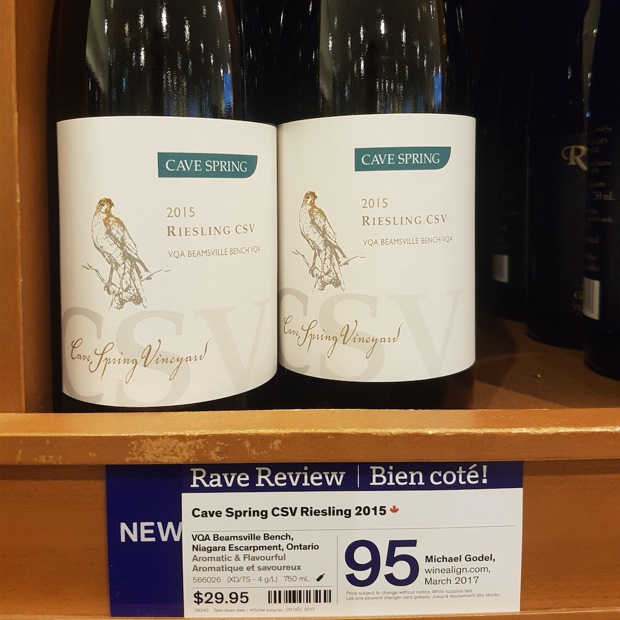
Cave Spring CSV Riesling 2015, Cave Spring Vineyard, VQA Beamsville Bench, Niagara Peninsula, Ontario (566026, $29.95, WineAlign)

In a word, balance. Well two, balance and brilliance. CSV in 2015 takes the reigns from itself and stands firm. The fruit is in charge, the mineral a support system unparalleled and the minor celebratory sweetness a mere afterthought when it comes to rounding out the complexity. CSV is pretty darn back in ancient dolomite time travel and escarpments high great in 2015, uplifting, serious but yet not so. The numbers trip the light fantastic, fooling like gold and bones dry are seemingly preserved in karst but impossibly not. The sensoria apprised reel from the finest acidity it can possibly carry in its veritable truth. Deep lemon intent and a new wax vernacular speak the clarity of a wine that listens to its own expert advice. Might as well have made itself. CSV 2015 is one of the finest rieslings ever made from Ontario grapes. Drink 2019-2031.  Tasted March 2017  cavespringcellars  thevineagency  @CaveSpring  @TheVine_RobGroh  Cave Spring Cellars  The Vine – Robert Groh Agency

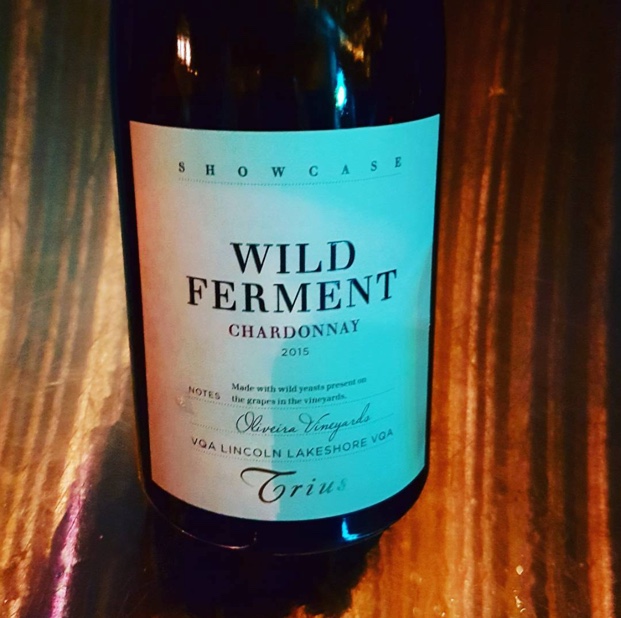
Sneak peak in the @TriusWines Meunier with Craig McDonald and a true Niagara Grand Cru @coolchardonnay site #lincolnlakeshore #oliveiravineyards #vqa #wildferment

Trius Showcase Chardonnay Wild Ferment Oliveira Vineyard 2015, VQA Lincoln Lakeshore, Ontario (Winery, $36.75, WineAlign)

When you consider the level of quality provided by the Wild Ferment 2014 it would be hard to imagine raising the bar any further but this is what winemaker Craig McDonald has managed with his exceptional 2015. The accomplishment is purely based on one year older, wiser and complexities developed Oliveira Farm vineyard fruit, the holy chardonnay grail, Lincoln Lakeshore playground. The site sits along the QEW below the escarpment’s Twenty Mile and Beamsville benches, a recipient of glacial till and rocks left behind by an ancient river running from a lake. It’s a chardonnay wonderland. Intensity of fruit purity, fleshy and real, remarkably juicy and notably crunchy has increased, upping the pleasure game and turning the impression knob up to 11. The windmill generates more power while always maintaining a classic Trius level of finesse. Then you think on the wood integration, equally impressionable because acidity is sweet and refined. Dry extract is also impressive, not to mention a fineness of grape tannin. The site’s unofficial designation as a Niagara Grand Cru should be upgraded with status. There is no better time than the present and the Wild Ferment’s 2015 ability is proof enough. Drink 2017-2023.  Tasted July 2017   triuswines  @TriusWines  @triuswines

Pearl Morissette Cuvée Madeline Cabernet Franc 2014, VQA Twenty Mile Bench, Niagara Peninsula, Ontario (Winery, $38.00, WineAlign)

From the 19th Street Vineyard and wow, there is simply no cabernet franc like this cabernet franc. It pops and flies from the glass, in and out of your mouth, playful, buoyant, joyful, unbridled. A silky and spicy ripeness that’s also shed by its tannin, like shavings of a chocolate only a master knows to render, then currants electric and alive. Excels by its chewy mouthfeel and texture and you must ruminate on this cabernet franc. This is the it vintage, with all the enzymes in control, wrapped up in the enigma membrane and this low, classical Beethoven orchestral strings rumble, on a Verona stage, surrounded by the ancient rocks, acoustics perfect. You can get lost in franc like this. Drink 2019-2027.  Tasted July 2017  pearlmorissette  @PearlMorissette  Pearl Morissette

Quails’ Gate Stewart Family Reserve Chardonnay 2015, BC VQA Okanagan Valley, British Columbia (639641, $43.95, WineAlign)

Some of the Okanagan Valley’s great chardonnay fruit is found on its eastern shore and makes its way into this Quail’s Gate Reserve. The story and place go back 60 plus years and wait if you can’t nose it in this top North American chardonnay. Forget comparisons, competitions and blind judgements but pull anything you want from Sonoma and watch this raise eyebrows and turn heads. The variegations are numerous and in replay. Richness, bite, energy, spirit and firm conceit. The barrel is everywhere and nowhere. What is a great chardonnay? It’s completely invisible, yet always in sight. It remembers what people hate. It anticipates the consumer’s needs before the needs are needed. A great chardonnay is, above all, discreet to a fault. Such is the Stewart Family Reserve. Drink 2018-2023.  Tasted October 2017   quails gate  hobbsandcompany  @Quails_Gate  @AMH_hobbsandco  Quails’ Gate  Hobbs & Co.

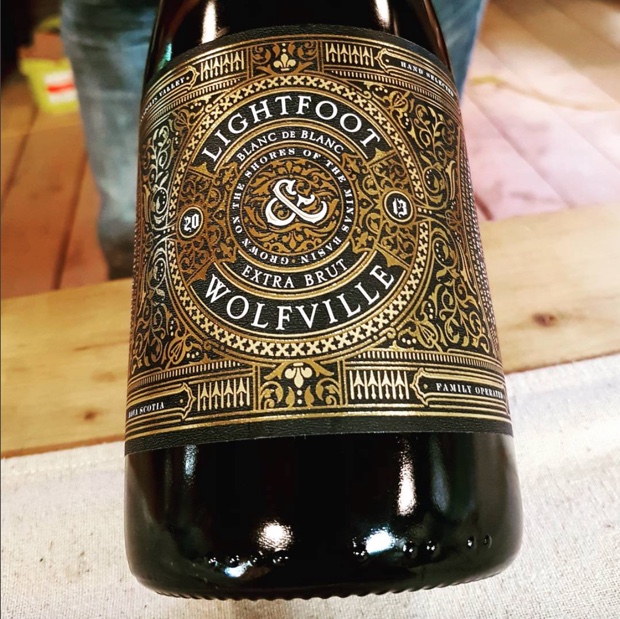
Sparkling wine you need to know @lwwines Blanc de Blanc Extra Brut 2013, from the shores of the #minasbasin #annapolisvalley #novascotia

Lightfoot & Wolfville Blanc De Blanc Extra Brut 2013, Nova Scotia, Canada (Winery, $45.00, WineAlign)

Josh Horton and Rachel Lightfoot presented an early, less leesy glimpse of their 100 per cent estate chardonnay at i4c in July of 2016. It was a different animal than this recently disgorged (late February/early March) sparkling wine. The Extra Brut lives up to its designation, from fruit grown on the shores of the Minas Basin under the auspices of a markedly warm year with exceptional phenolic ripeness and 25 per cent malolactic gain. The time relative to texture lees accumulation is approximately 40 months and it’s an accurate representation of Nova Scotia low and slow. The flavours are wisely developed ripe and spicy, leaning into a moment or two of oxygenation, but seemingly richer than the amount of lees time that was given. Now emerging from the shell of not just a warm but a great chardonnay year (as previously proven by the Ancienne released two years ago). The notion here is of a sparkling wine that has been brought home, a B de B that you need to get to know. There are layers and layers of character that fold and unfold. The precision, focus and rendering is citrus tamed, mouthfeel in perpetual expansion and contraction, length linear and elastic. And it’s just the beginning. Drink 2017-2023.  Tasted June 2017  lwwines  @lwwines  Lightfoot & Wolfville

Blomidon Late Pick Sparkling Chardonnay 2011, Nova Scotia, Canada (Winery, $45.00, WineAlign)

The 2011 late-picked chardonnay, the “Hurricane” is a hyperbole of itself. Normally picked in later October, the frost-free weather allowed further time and development. Picked from seaside vineyards just ahead of another hurricane (in a season that included Irene), this is sparkling wine you just have to try. Though lean, taut and as intense as you are likely to taste, the developed character and complexity is visionary for Nova Scotia and Canadian sparkling wine. Three years on the lees brings the texture and fills the gaps, holes and voids created by such a tightly wound cool climate chardonnay. The dry factor is exaggerated in 2011 (a one-off says winemaker Simon Rafuse) but the wine takes full advantage of the Extra-Brut intent. Did it require the anxiety of a recent and an impending cyclone? Can it be duplicated? “That’s the story of the Hurricane.” Visionary for Nova Scotia and Canadian sparkling wine. Drink 2017-2022.  Tasted March 2017  blomidonestate  @BlomidonEstate  Blomidon Estate Winery

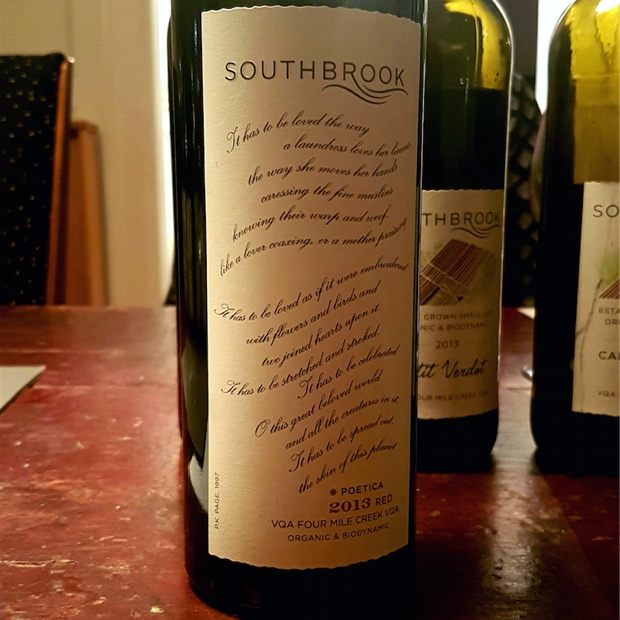
Southbrook Poetica Red 2013, VQA Niagara Peninsula, Ontario (355859, $69.95, WineAlign)

It seems at first that Poetica 2013 was chosen by winemaker Ann Sperling to be the deferential one. The blend is dominated by 74 per cent cabernet sauvignon, the highest number ever for the wine. Conversely the cabernet franc component is set to 23 per cent and far less petit verdot (3 per cent) rounds out the blend. That number had been 29 per cent in 2012 because the varietal elegance shown at that time necessitated the relationship. In 2013 it is the cabernet sauvignon that displayed with elegance and an uncanny ability to sow of its own accord and yes, it is an exceptional vintage so look for 2013 to age on a 15 year curve. The Witness Block CS-CF follows suit and the SV-PV is better off for the allocations. Every wine wins as a result. There is this deep-impressed sous-terre tang in here, a wisdom certainly, and when it is released later in the year the heads will turn. Poetica is often but here not overly tannic, but it is endowed with bones, spine and structure. The flavours, spice and magnetism give cause to salivate. Only Ann Sperling makes Niagara reds like this, wines that can develop such architecture without an excess of tannin, astringency and chalky chocolate from over-wrought wood exchange. Poetica 2013 will drink well young and comfortably into the end of the next decade. Drink 2018-2028.  Tasted January 2017  southbrookvineyards  thelivingvine  @TheLivingVine  @SouthbrookWine   @SouthbrookWine  The Living Vine inc.

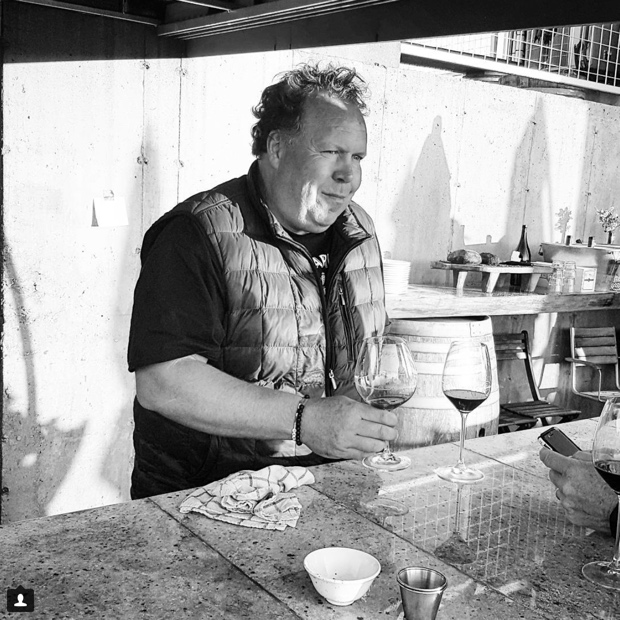
A finer man, winemaker and host you will not find. Thank you @normanhardie @keeponshucking @clarsenault @cuveeletittia @Mknow21 @mclauriault and all.

Norman Hardie Chardonnay Cuvée Des Amis 2014, Prince Edward County, Ontario (Winery, $150.00, 1500ml, WineAlign)

As exceptional as chardonnay may have seemed from out of the 2013 Ontario vintage you haven’t lived or loved until you get a taste of (only in magnum format) Norm Hardie’s 2014 Cuvées des Amis. This chardonnay attacks and ascends, recalibrating the inner workings of the brain and how it develops conceptualization. It is a state of the art and all-knowing elixir to remind that ’13 was a vintage with profitable yields and a generously stretched canvas on which to practice on, for when things begin to get real. The CdeA spent 18 months in barrel, the first 12 (in 35 per cent new), the next six in neutral and the last six in stainless steel on the fine lees. The spin class in the mouth manages agility, dextrous, furtive movement and completes many pirouettes. The dance is pure joy but the intensity is equally to disturbingly intrusive, suggesting more settling time is necessary. The flavour pearls are delicate and come straight from the oyster so they carry salinity, power and brine. Pure lemon essence is received by intravenous injection. Sumptuous is translated from Hardie-speak as a four-letter, Prince Edward County word. It doesn’t get more real than right here, with the best fruit, the tripping of the light fantastic, previously unheard and unseen unconscionable concentration. Drink 2019-2025.  Tasted twice, June and July 2017  normanhardiewinery  @normhardie  Norman Hardie

Le Vieux Pin Équinoxe Syrah 2014, BC VQA Okanagan Valley, British Columbia (Winery, $80.00, WineAlign)

Èquinoxe is announced without equivocation as the Bricco of B.C. syrah and an absolutely lovely Bench expression from winemaker Severine Pinte. What came from these three-quarters Osoyoos Lake District and one-quarter Black Sage vineyards in 2013 was floral and peppery, with a fineness that belies a dessert climate but in 2014, well this is something more and other. You just have to think about texture here and a quality of acidity that is peerless in B.C. syrah. So juicy, beautifully tannic and rendered with culture and class. Drink 2018-2022.  Tasted October 2017  levieuxpin  @LeVieuxPin  Le Vieux Pin Winery

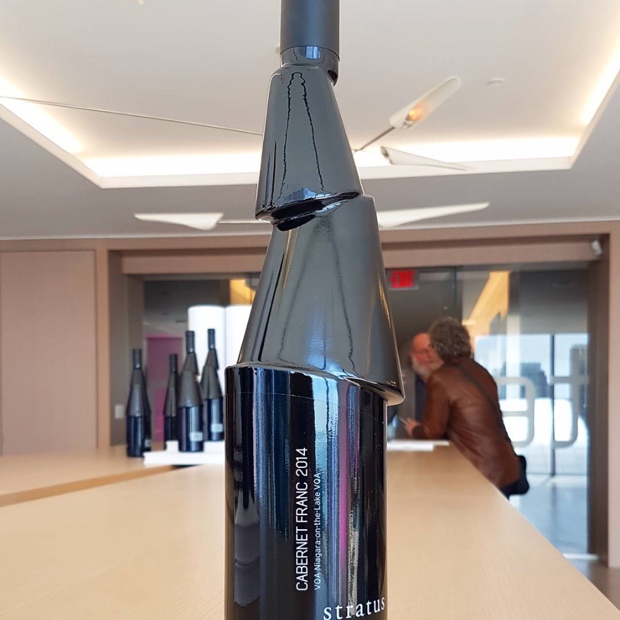
My eyes do not deceive me. It’s Decant @StratusWines #cabernetfranc bottled with lees #vqa #niagaraonthelake #karimrashid

Stratus Cabernet Franc “Decant” 2014, VQA Niagara On The Lake, Ontario (Winery, $95.00, WineAlign)

“A designer’s hands are tied. They are only as good as their opportunities.” The words of the brilliant bottle designer Karim Rashid fully apply to the mirrored universe in which winemaker J-L Groux works, here with a deferential and ulterior cabernet franc, bottled with its lees. When I first tasted it in February (in advance of this auspicious release), its unfiltered state spoke of a hyperbole of perfume, marked by exoticism. The aromatics gave far east five-spice, star anise, cardamom, miso and incense, all natural by-products of its purposed ferment. More grain spoke out but also a roundness of tannin and a smoothness both coating and comforting. There was chocolate accentuated by the treatment, with thanks to those lees left in the bottle. The chopped up and constructed bottle catches the lees while the volume flows out and the function out of form mimics the thought of lees delivering structure and yet they are invisible, caught in a hidden net or nook, out of sight, out of mind. But it’s not about pouring. It’s about the hand, or the slight thereof. Then there is the copycat idealism of strata in the vineyard, of geology transferred to the bottle and kept there, like a ship perfectly preserved inside. This cabernet franc will age better, as is the plan, with thanks to the lees that you’ll never have to deal with. There were 110 cases made. Drink 2019-2029.  Tasted twice, February and May 2017  stratuswines  @StratusWines  Stratus Vineyards

Supper at Benjamin Bridge

Benjamin Bridge Méthode Classique Estate Blanc De Blancs 2013, Nova Scotia (Winery, $119.50, WineAlign)

Tasted from a bottle disgorged in May 2017, there alights a plugged-in, three-pronged, dazed, charged and enchanted energy about the Bridge’s ’13 Blanc de Blancs. The history of go it alone pure chardonnay is a relatively short one for the estate so this quickly makes up for lost time or rather with haste sets the timer and heads out at first light. “Like sittin’ on pins and needles, things fall apart, it’s scientific.” Wild, of talking heads temper and yeasts, done up in demi-muids, with a wilder secondary fermentative push riding on the coattails of the primary fermentation. Everything in this wine is a productive child of the vineyard, of no third party sugars or consultations. “How do you do that without making a Pétillant Naturel,” I wonder aloud. It’s a second ferment, non-contiguous is the reason, even if the former is both influencer and mentor to the latter. It certainly falls under the category of “micro-cuvée. Like its cousin and predecessor (Blanc de Noirs 2011), this ’13 BdeB is mired intensely inward within its own specificity and is not so much a sparkling wine with competitive soul. It is a pure representative of chardonnay grown in Nova Scotia for one purpose. So let’s talk about true stories and wild, wild life. “You get on board anytime you like.” Drink 2018-2024.  Tasted July 2017  benjaminbridge  caveman__jones   winesofn  @Benjamin_Bridge  @benjaminbridgevineyards  @WinesofNS @benjaminbridgevineyards  @winesofns

As we taste through the #NWAC17 finals we thank @ZWILLING_CA for the rocking great glassware. Canadian wines are better for these vessels.

Good to go!

Godello

Twitter: @mgodello

Instagram: mgodello

WineAlign

Seventeen mind-blowing wines of 2017

No, wines do not have to be old to blow your mind but there is just something so mysterious, magical and hypnotizing about the experience of age in preservation. When we use the cliché “tasting history” it distracts from what is most poignant about tasting older wines. It’s the humbling and how wisdom, acumen and meteorological circumstance conspire to take us away from our troubles, to forget about life for a while and to realize that forces greater than us are truly in charge.

There are also young wines so precocious and wise beyond their years that they somehow intuit the future. These too can blow our minds, addle us as if lovestruck and disoriented so that only this confluence of smell, taste, texture and structure are what we know. It takes all kinds to populate a list that separates greatness from the rest, but that does not means only 17 wines were tasted to be extraordinary in 2017.  It means that some struck a vein while others grazed on the skin. Most important is that all were experienced because someone chose to share them. Thank you to the producers and the benefactors for bringing these bottles to light.

Related – 16 mind-blowing wines of 2016

Honourable Mentions

Château Haut-Brion 1986, Saffredi 2004, Brokenwood Sémillon 2007, Domaine Gros Frères Clos Voguent Musigni 2013, M. Lapierre Morgon 2010, Domaine G. Roumier Bonnes-Mares Grand Cru 1996, Domaine Jamet Côte-Rôtie 2006, Coppo Barbera d’Asti Nizza Riserva della Famiglia 2009, Le Fraghe Bardolino 2015, Sordo Barolo Riserva Gabutti 2006, Carobbio Chianti Classico 1990, J & J Eger Kékfrankos 2006, Château Léoville Las Cases 2001, François Cotat Chavignol Sancerre Rosé 2009, Domaine La Vieux Télégraphe Châteauneuf du Pâpe La Crau 2005, D’Arie Syrah 2012, Julia Bertram Handwerk Spätburgunder 2015, Planeta Carricante Eruzione 1614 2015, Dominus 1994, Château Lafite Rothschild 1998 and Esmonin Gevrey-Chambertin Clos Saint-Jacques 1993.

Several times a years I gather with groups of like-minded, wine-spirited folks, to break bread and to pop established icons, singular archetypes, varietal rarities and supernumerary misfits. Many of the wines on this 2017 list are a result of having been fortunate enough to be included in repeated repasts with pirates on picnics and doctors at dinner.  Most of the rest are travel related, in fact this year alone I tasted approximately 700 sangiovese, 200 barbera, 200 corvina and 100 nebbiolo. So many more of those praiseworthy reds and rosés deserved spots on this docket but alas, the list is short. I do not fulminate them, nor you neither. Here are Godello’s 17 mind-blowing wines of 2017.

It began like this and I got 15 dollars hid above the stove.

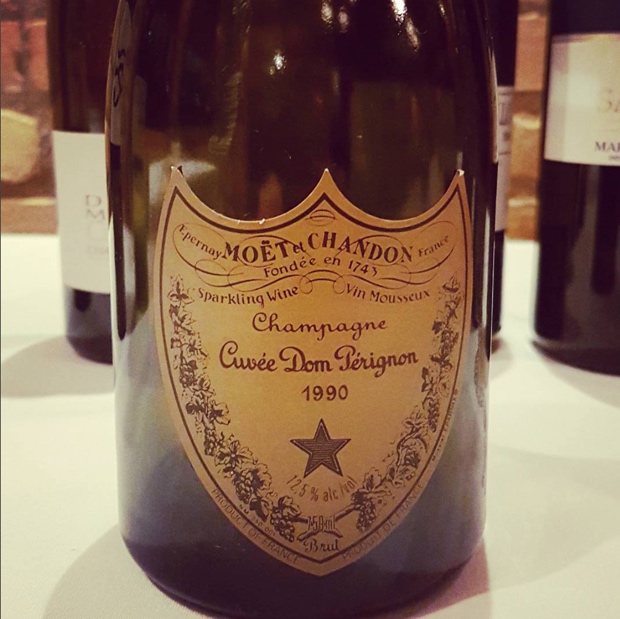
Möet & Chandon Dom Pérignon Vintage Brut Champagne 1990, Champagne, France (280461, AgentWineAlign)

Tasted blind the hue immediately leads the mind in one of two directions; hot vintage or decades of age. I’m tempted to consider a combination of the two, so the decision is warm vintage and a minimum of twenty years age. Further introspection takes me back to 1990 and when the reveal confirms this and in the abide of Dom Pérignon it means one thing. Start the process of thinking again. This wine has done its work, having accumulated a diverse set of developmental traits and processed them so that the language it now speaks is clear and pure. At 27 years of age it’s delicate, smooth, soft-spoken and settled. The finest golden toast (again in hue and more importantly in aroma) glows into the creamy texture, like preserved lemon transformed into gelid curd. The mouthfeel is exceptional with baking bread rising, puffy and satiny glazed across the palate. The seamlessness of this Champagne seeks, solicits and makes rendezvous with no peer or challenger its equivalent, not should any comparison be made. Kudos to a wine that stands on its own and makes you feel this good. It will continue to do so up to and perhaps beyond its 40th birthday. Drink 2017-2030.  Tasted March 2017  moetchandon  @chartonhobbs  @MoetUSA  @ChartonHobbs  @Champagne  Moët & Chandon  Charton Hobbs Canada  Champagne

Famille Picard Saint Aubin Premier Cru Le Charmois 2014, AOC Bourgogne (522078, $57.95, WineAlign)

This is a chardonnay to place the village of Saint Aubin in a remarkable light if only because it’s the most stony, flinty and tightly wound example just about ever. The Charmois is the elevator that carries the appellation into a purity of climat for Bourgogne Premier Cru. In this case terroir delivers the idea of Climat but it is the interaction of the maker that defines the notion simply because there is no mess and no fuss. It just feels like drinking straight from a bleed of the calcareous land, as might happen in a limestone goblet filled with Montrachet. You have no idea how good a deal this is from the most excellent 2014 vintage. Drink 2019-2028.  Tasted October 2017  domainesfamillepicard  profilewinegroup  #bourgognewines #FamillePicard  @ProfileWineGrp  @BourgogneWines  Domaines Famille Picard  Profile Wine Group  Bourgogne Wines

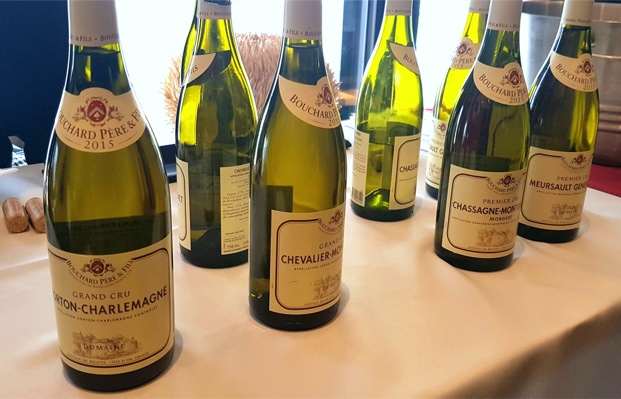
Domaine Bouchard Père & Fils Chevalier Montrachet Grand Cru 2015, AOC Bourgogne (Agent, $480.00 WineAlign)

Chevalier-Montrachet is a matter of aromatics, of the finest of the finest, preserved, reserved, impressionable and of quietly powerful impression. The deistic and the parrhesiastic are reached in this Grand Cru, “one who speaks the truth to power.” Elysium in chardonnay is captured for the perfectly ripe orchard and crushed stones. The young palate is almost severe but takes its first steps down the most ethereal path, with the finest drawn lines and rendered streaks of energy lit, sparked and smouldering. This is Bourgogne of intrinsic value, slowly rising to a crescendo where a flame flickers but within the sheltered lamp of a hurricane. How is such harnessed power even possible? Only like this, in Chevalier-Montrachet . Drink 2021-2037.  Tasted April 2017  bouchardpereetfils  woodmanws  vinsdebourgogne  @BouchardPere  @WoodmanWS  @VinsdeBourgogne  Bouchard Père & Fils  Woodman Wines & Spirits  Vins de Bourgogne / Burgundy wines

Domaine Sigalas Kavalieros 2015, Santorini, Greece (SAQ 11814421WineAlign)

I’ve not yet tasted the Kavalieros 2014, so this single-vineyard, 18 months on lees done in stainless steel Kavalieros 2015 made by “Mr. George” is the benchmark for Santorini, assrytiko and salty white wines everywhere. The first release was 2009. Straight up and turning the world on its head, like the old man on the label and upside down against Apollo’s Aegean Cyclades. This ’15 richer still, more than the seven villages wines and a hyperbole as compared to the entry-level assyrtiko, of deeper mineral, compressed, layered and fantastic. Crushed rocks permeate in aggregate, it’s quixotically saline and textured, of intense presence and finally, structured. For 15 years at least. A late shot of natural Santorini tonic swirls in centrifuge with assyrtiko so wound up. This will need 10 years to unwind and allow for cracks to form in the mineral shell, followed by the birth of its fruit. It should never be forgotten that assyrtiko can and will show fruit but with Kavalieros you’ll have to be patient. Drink 2020-2031.  Tasted March 2017  @DomaineSigalas  @MajesticWineInc  winesofgreece  domainesigalas  @MajesticWineInc  @DrinkGreekWine  @DomaineSigalas  Panayiota Kalogeropoulou  Wines of Greece

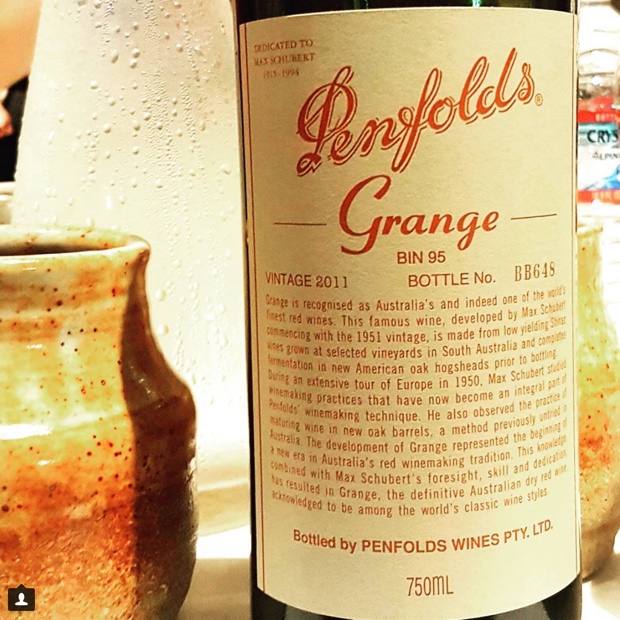
Penfolds Grange 2011, South Australia (356121, $750.00, WineAlign)

There is just something about cool, rainy and irreconcilably regarded vintages that brings out the best in wines made by winemakers of elite acumen. Deliver your best from the greatest of harvests but also “give me your tired, your poor, your huddled masses yearning to breathe free. The wretched refuse of your teeming shore.” Leave the middle of the road to someone else. This Grange faced adversity and won. The yields and output may only be 50 per cent of normal but what gives is the silky texture of Grand Cru Bourgogne. This chosen one of singular vision to represent the multi-tiered and faceted Penfolds Estate tells us about the world inhabited by the instinctual and the ethereal. It combines tannin, structure and aesthetic deeply engrossed in the shadow of its own looming destruction, but is designed from the first with an eye to its later existence as a ruin, forever preserved. If a perfect plum and a magical olive were crossed they would welcome this collective spice of no equal. The quality of bite and chew lead to rumination and the savour rests on a chart clearly defined but in high contrast and only to itself. An analgeisc meets hypnotic cooling is mentholated though if not specific in origin it is only and highly natural. Legendary vintage? Why not. This calm, cool and collected 2011 may just outlast some of the more recently considered top vintages of ’06, ’08 and ’10. Drink 2019-2035.  Tasted May 2017  penfolds  markanthonyon  wineaustralia  @penfolds  @MarkAnthonyWine  @Wine_Australia  Penfolds  @MarkAnthonyWine  Wine Australia

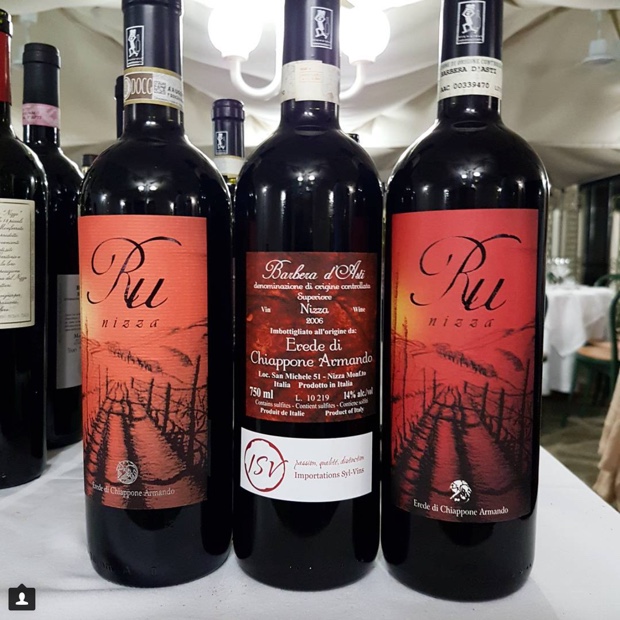
A deep #eredichiappone vertical delve with Daniele for perspective and a release of endorphins @ilNizza possibilities #progrettovini #collisionimonferrato

Erede Di Chiappone Armando Barbera D’asti Superiore Nizza DOC RU 2006, Piedmont, Italy (WineAlign)

RU by Daniele Chiappone is this, at first something altogether inexplicable but when tasted alongside his 2005, 2010 and 2011 it makes such perfect sense. Sense in where this fits in his evolution and to speak on behalf of the age-worthy ability of Nizza barbera. In a world where barbera perfume so often performs with perfunctory brevity this goes on and on. It is a unique combination of fennel frond, incense, hibiscus and violet to create an intoxicant and an anaesthetic. Yet another exceptional vintage is revealed, traditional and so alive, spun from earth crusting over cherry and then this smooth leather. The portal backwards 10 years allows for looks forward 10 more, especially into what’s coming from 2015 and 2016. To say the match with a prodigiously spiced in aromatic ragu over linguine was agreeable would be the understatement of the Monferrato century. Perfectly timed acidity seals the deal. This is barbera folks, of wit, age and history. Drink 2017-2021.  Tasted July 2017  erededi  ilnizza  @erededi  @ilNizza  Erede Di Chiappone Armando  IlNizza

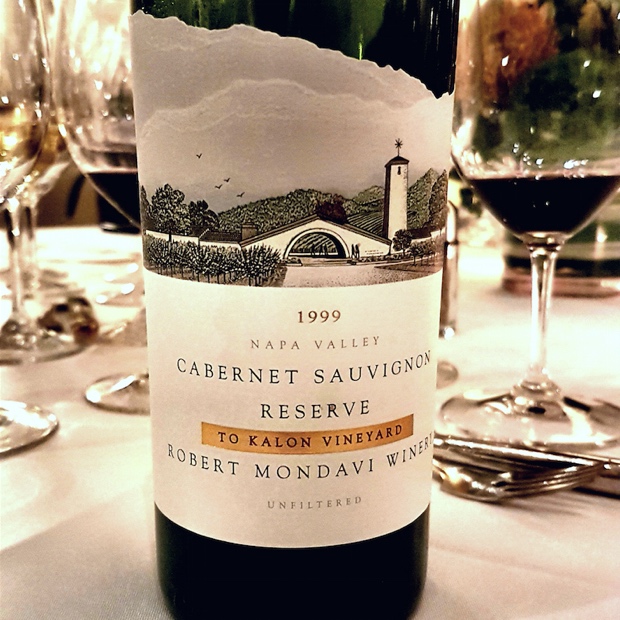
Robert Mondavi Reserve Cabernet Sauvignon To Kalon Vineyard 1999, Napa Valley, California (WineAlign)

This from a time when Mondavi labeled the reserve cabernet sauvignon as “To Kalon Vineyard,” a moniker of essential meaning that would return 14 years later on the 2013 bottle. If this were what Mark de Vere referred to as “a confusing moment in history” I could not say but “this strange bottling” provided an unequivocal and seminal turning point in this wine’s storied past, present and future. It was in fact a small, special cuvée, a little bit different than the ’99 Reserve. “The coolest vintage on record, until it wasn’t,” because of a warm period at the end of summer and early fall that ushered forth a certain, singular sort of ripeness. Regardless of memories, characterizations and twists of fate, this single-vineyard cabernet is as finessed, focused and precise as any Mondavi Reserve. It persists chalky, fine and gritty in tannin running amok, dragging the acidity forward and around. The workout is something to behold, a dispatch of late Napa fashion and never more successful than right here. The dépêche mode of To Kalon is by now famous but culminated with this ’99 for everything to follow, with consistency and a guarantee of modern quality. Listen to it croon “try walking in my shoes.” Many have and many continue to pay homage to this Napa Valley originator and pioneer. It’s a cabernet sauvignon of faith and devotion. Drink 2017-2029.  Tasted May 2017  robertmondavi  @RobertMondavi  Robert Mondavi Winery

Quilceda Creek Cabernet Sauvignon 2003, Columbia Valley, Washington (Agent, WineAlign)

A truly remarkable nose, notably violets and peregrine species of spices. There is so much perfume and beauty, an Aishwarya Rai Bachchan nose and then there is the fruit. Blackberry, Cassis then into vanilla, scented happiness like ruby red grapefruit and bergamot. If it should have aged I can’t say but it’s still a voluminous and voluptuous thing to sip. It blinds like first Growth Bordeaux with its perfect extraction. Thoughts keep at it, to blueberries, cigar box and Kirsch. The tannins are sweet and gritty, not fully resolved and imagine Margaux. You could consider taking out a mortgage on yours and your neighbour’s house for this one. It was one of many great reds tonight but I’ve just tasted this. And I wept. Drink 2017-2024.  Tasted March 2017  @QuilCreekWinery  @thevineagency  winesofwashington  wa_state_wine  @QuilCreekWinery  @TheVine_RobGroh  Quilceda Creek Vintners  @WINESofWA  The Vine – Robert Groh Agency  Washington State Wine

A great honour to taste this 1995 #carobbio #leone and in memory of #carlonovarese Thank you Dario and Silvia. Would like the chance to do it again in 22 years #toscana #sangiovese

Tenuta Carobbio Leone 1995, IGT Toscana, Italy (WineAlign)

Leone 1995 was made under the auspices of the Vittorio Fiore-Gabriella Tani oenology stylistic for Carlo Novarese. To say that this single-vineyard sangiovese is youthful would be the biggest IGT understatement of the century. From vines that at the time were 25 years-old, Leone is not just a survivor of a universally-declared incredible vintage, it is a singular expression from 1990’s Tuscany, in Chianti Classico and for Panzano. The violets, dried espresso and plum-amaretti semifreddo (savoury, not sweet) mixes with fennel frond, fresh rosemary and the 20-plus years lingering Carobbio tobacco. The acidity is fully intact, still travelling up and down the sides of the tongue, repeatedly and soliciting so much savour, sapidity, a desire for a mouthful of hematic, rare sear of Claudia’s beef filet and then more and more sipping. After 20 minutes the aromatics deliver a raspberry purée and even a black olive and mineral-saline, short of briny caper into the fray by stroke of some aromatic brush and bush in the light afternoon wind. That’s enough. I’m not sure my heart can take any more. Time for Vin Santo. Drink 2017-2029.  Tasted February 2017  carobbio_wine  chianticlassico  @Tenuta_Carobbio  @chianticlassico  Tenuta Carobbio  Chianti Classico

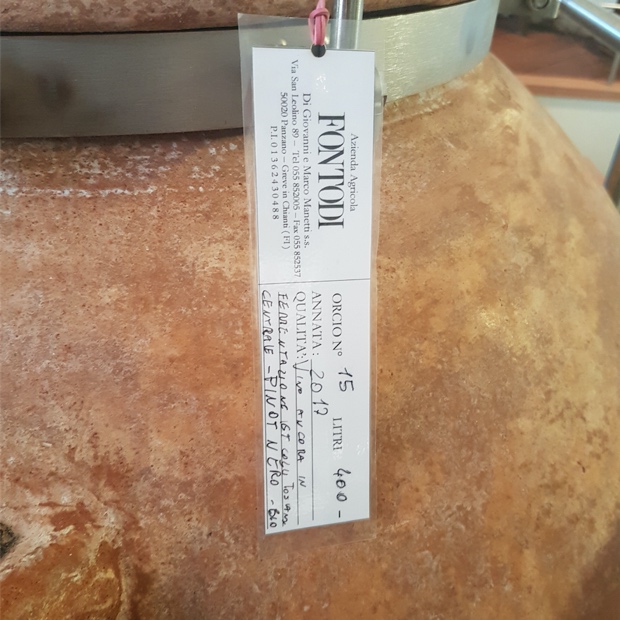
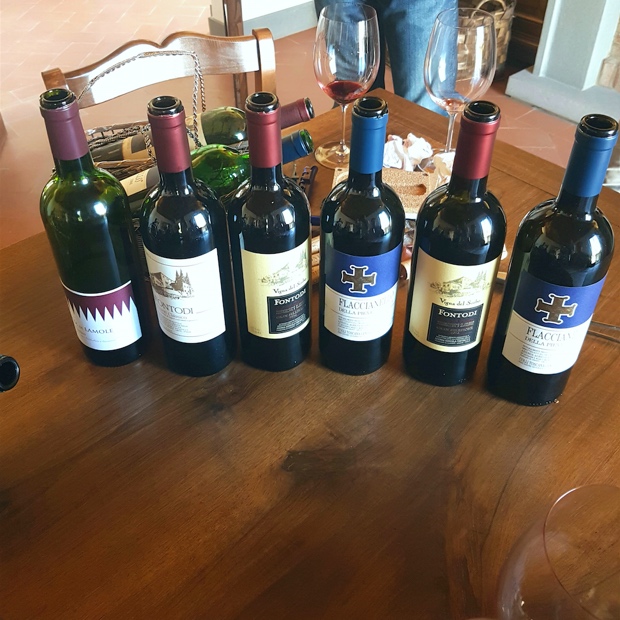
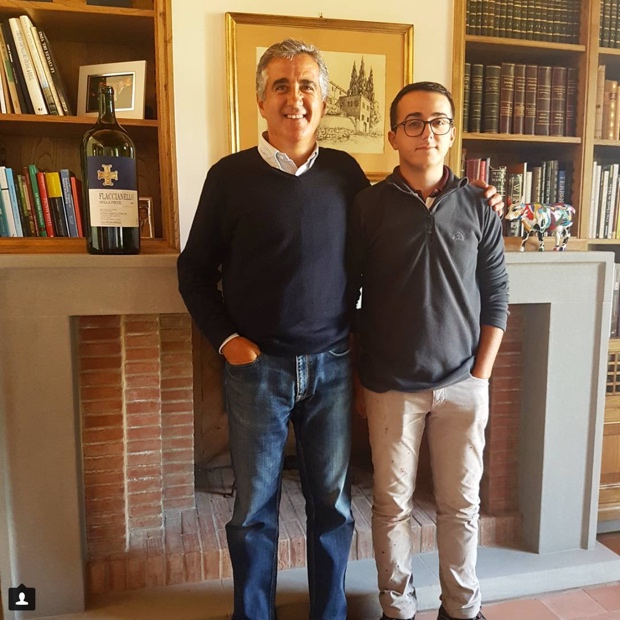
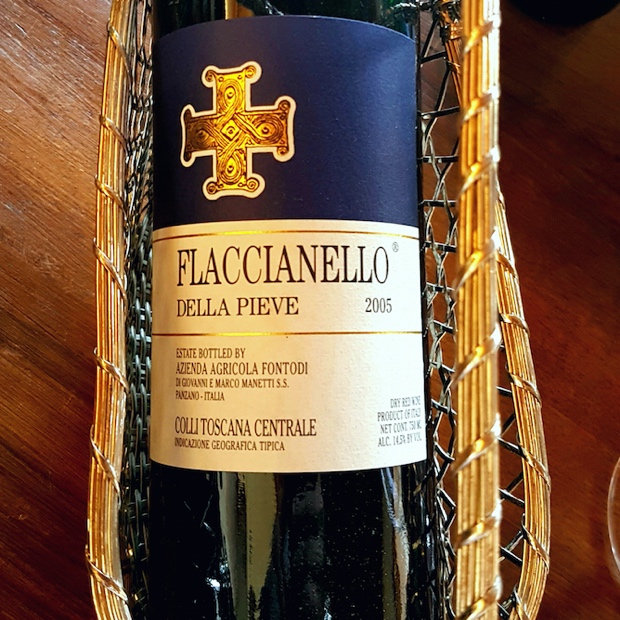
In @chianticlassico mano nella mano 1986, @fontodi #vignadelsorbo & #flaccianello thank you Giovanni Manetti for sharing these two opposing forces of the Tuscan paradox #chianticlassico

Fontodi Flaccianello della Pieve 1986, Tuscany, Italy (WineAlign)

Flaccianello in 1986 is actually though not surprisingly so different from Vigna del Sorbo, more than any other reason because of the cabernet sauvignon, but in a more philosophical way, because they have built a paradox, from the Super Tuscan ideal in revolution. Now the sangiovese going forward will be the most important and also the best wine, like looking back at this 1986, OK, not better than Sorbo but purer, honest, a clearer picture from which to learn from and ultimately a model for the future. Beautiful power, restraint, structure and yes, the kind of wine that deserves to be praised with the term elegance, overused, or not. Perfectly rustic, earthy and full of fruit with its accompanying complimentary, enervating and necessary acidity. Drink 2017-2023.  Tasted September 2017  Fontodi  chianticlassico    @chianticlassico  Chianti Classico  Az. Agr. Fontodi

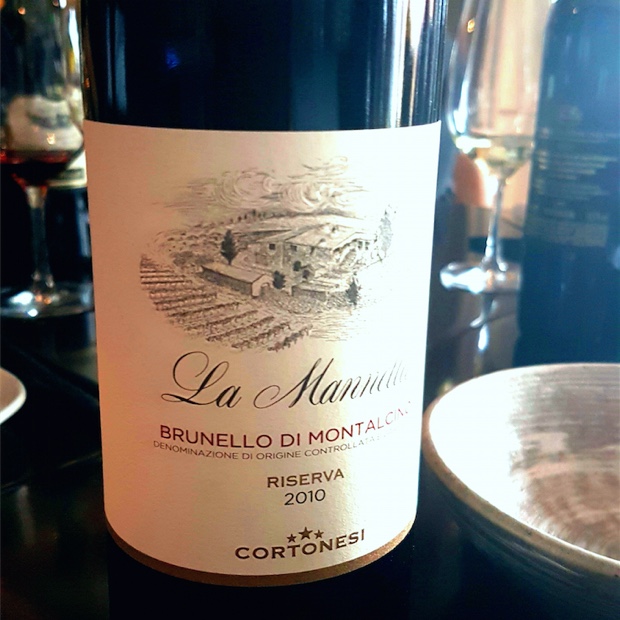
Cortonesi La Mannella Brunello Di Montalcino Riserva 2010, Docg Tuscany, Italy (Agent, $202.95, WineAlign)

There are few Brunello vintages afforded more attention in the last 10-plus, certainly ’04 and ’06, increasingly better even from ’08 and looking forward towards what greatness will come in 2015. Yes but not solely magnified through the lens of patience and bottle time, from 2010 La Mannella has coupled upon and layered over itself like compressed fruit and puff pastry. Though it begs for drink now attention, another seven years will be needed before it can safely be labeled as uncoiled and to reveal all that is wrapped so tight. Rich is not the operative but unmistakeable as Cortonesi it is; that natural clay soil funk of resolution and fully hydrated chalk. This is to sangiovese as Les Preuses Grand Cru Chablis or Rangen Grand Cru Alsace are to Riesling. It carries in its pocket the absolute meaning and genetic responsibility of where it comes from, with a curative and restorative ability to get you lost. Drink 2019-2031.  Tasted February 2017  marcora85  nicholaspearcewines  brunellodimontalcino  @LaMannella  @Nicholaspearce_  @ConsBrunello  Tommaso Cortonesi  Nicholas Pearce  Consorzio del Vino Brunello di Montalcino

Maison Roche De Bellene “Collection Bellenum” Grand Cru Clos De La Roche 1998, AOC Bourgogne, France (Agent, $364.95, WineAlign)

Clos de La Roche 1998 may be 19 years old but you have to swirl the britches out of this Grand Cru because reduction persists in its make-up. Once you work your way over the wall a field of wildflowers and a roses bouquet lays out as far as the nose can mind’s eye. This is pure candy in its most arid, blessed and gout de terroir way. It is as charming as Burgundy can be and yet so fine of tannin, tight and duplicitously-grained in clone upon itself. One of those wines so difficult to put to words because it teaches and you can do nothing but listen. I’d still want to wait two more years, maybe more, before knowing I’ve waited long enough. Close de la Roche speaks to me but to answer with any real credibility and respect I will need to think some more. Drink 2019-2035.  Tasted February 2017  domaine_de_bellene  nicholaspearcewines  vinsdebourgogne  @RochedeBellene  @Nicholaspearce_  @VinsdeBourgogne  Bellene  Nicholas Pearce  Vins de Bourgogne / Burgundy wines

Not just #meerlust more like major lust. Thank you for the sexy time travel @meerlustwine Laurel Keenan and The South African Wine Society.

Meerlust Rubicon 1984, Wo Stellenbosch, South Africa (WineAlign)

Meerlust dates back to 1693, the house that is “love or pleasure of the sea.” Less than five kms south from the Atlantic Ocean, the property was purchased in 1756 and to this day remains family owned, now in its eighth generation with 260 years of continuity. Rubicon 1984 is poured (with brilliant decision making) from magnum and is therefore fresher than the 1996 with an incredibly controlled level of fineness in tannin, from acidity and at the threshold of understood volatility. “Perhaps one did not want to be loved so much as to be understood,” like this early Rubicon. The future of Meerlust is foretold with Orwellian transparency, bold honesty and expert ability. “Who controls the past controls the future.” Drink 2017-2019.  Tasted September 2017  meerlustwine  wosa_za  wosa_ca  liffordgram  @MeerlustWine  @LiffordON  @WOSA_ZA  @WOSACanada  MEERLUST ESTATE  Lifford Wine and Spirits  Wines of South Africa

Boscarelli Vino Nobile Di Montepulciano Riserva 1982, Tuscany, Italy (WineAlign)

The Boscarelli acts like a much younger Nobile, from an exceptional vintage and a producer way ahead of its time. The key is to decide which side of the evolutionary fence we’re on, closer to that 1967 from Contucci or to what is happening today. This may actually be the turning point for Vino Nobile because it really has one foot entrenched in each world. Very much in the mushroom and truffle aromatic atmosphere, where sangiovese should feel free and comfortable to travel in the twilight of its golden years. This is beautiful, with some dark fruit persisting and acidity still in charge. You can imagine the old tannins but they no longer make any demands. Drink 2017-2020.  Tasted at Anteprima del Vino Nobile di Montepulciano 2017, February 2017  #PoderiBoscarelli  lucadeferrarildf  artisanal_wine_imports  consorzionobile  #poderiboscarelli  Nicolò De Ferrari   Luca De Ferrari  @artisanalwineimports

Antichi Poderi Dei Marchesi Di Barolo Gia’ Opera Pia Barolo 1958, Piedmont, Italy (WineAlign)

Poured by Ernesto Abbona on his wife Anna’s birthday, a ’58 at the ripe old age of 58 (though it will turn 59 later this year). Simply, in the words of the Abbona family, “a special evening, special friends, special vintage,” with a cork that looks as good as new, though Ernesto takes great time and care in its extraction. The aromas are blessed of a collective umami but would better be served by a new descriptor because they are antediluvian and impossibly preserved. Forget mushrooms and truffles. These scents are brand new, with no truly identifiable frame of reference, as if plucked from some guise of Eden where never before tasted dark berries fall effortlessly into the hand off of gariga savoury-scented bushes, brambly and crawling intertwined with nasturtium on a composting forest floor. The 1958 was and still is a nebbiolo of struttura, of a fibra morale that tells a story of consistency and longevity. With air it became more complex if deeper and turbido. That this magical nebbiolo from another era hovered in the lasting air of a 30 minute long ethereal says that you could open a few more but perhaps not much beyond its 60th birthday. Drink 2017-2018.  Tasted July 2017  marchesibarolo  majesticwinesinc  @MarchesiBarolo  @MajesticWineInc  @marchesibarolo  Majestic Wine Cellars

The mythology of #thorle #riesling in Beerenauslese and Trockenbetenauslese #weingutthörle #gabsheim #rheinhessen #holle

Thörle Riesling Trockenbeerenauslese Hölle 2011, Rheinhessen, Germany (WineAlign)

The Hölle TBA 2011 is a minuscule 180 bottle single-vineyard production and the vintage was simply perfect for the effort. The process involved the collection of a few berries at a time over the course of three weeks, started in the fridge and was then pressed when the amount of approximately 100L could be obtained. “This is the king’s discipline for creating such a riesling” explains Christoph Thörle. Thick like honey, full of unctuousness and viscosity. It is expressly noticed how the colour and the development have not advanced considering the six year mean. The exoticism is what separates this, with fruits far east, creamy and perfectly easy to assimilate, in flavour, consistency and understanding. Sweet herbology, of thai basil and thyme and candied mandarin rind. Here, a piece of history and legacy from Christoph and Johannes. Drink 2021-2041.  Tasted March 2017  thorle_c  thorleestatewinery  univinscanada  @thoerle  @UNIVINS  @germanwineca  @gen_riesling

Will be a top ’17 from 2017 #louisguntrum #1976 @weininstitut #rieslingauslese #niersteiner #heiligen #nierstein #niersteinamrhein #roterhang

Weingut Louis Guntrum Riesling Auslese Niersteiner Heilibengaum 1976, Rheinhessen, Germany (WineAlign)

“Roter Hang is a geological statement” says Louis Konstantin Guntrum. If you want to hang around and try to understand its red soils and friable limestone fettle it requires a focused state of mind. Guntrum introduces this 1976 by saying “it’s a young guy, 40 years old,” the same thing he could have said years ago about a 1917 Roter Hang Riesling. The comparative studies is a matter of perspective, a theory of relativity, in reduction, colour, drama, florality and fabulousness. While certain vintages and specific wines will blow you away more than others there is something to be said about older just being more interesting, whether 1917, 1976 or whatever back vintage you want to try your luck with. It’s simply remarkable and crazy how sugar and acidity can preserve riesling like this, especially and/or truly withstanding the Roter Hang. The honey and candied orange blossom are so prevalent but it almost seems dry (relatively speaking) even though 100 grams or more of sugar have driven this wine. Beauty from bitter phenols blend with lanolin, paraffin, ginger and ginseng. Keep returning for 15 more years. Drink 2017-2031.  Tasted March 2017  #louisguntrum  @weininstitut  wines_of_germany  @LouisGuntrum  @WinesofGermany  Weingut Louis Guntrum  German Wine Institute i.e. Wines of Germany

\

Good to go!

Godello

Twitter: @mgodello

Instagram: mgodello

WineAlign


Three estates, 23 wines, one agent

Back in April of 2017 I walked into Canoe Restaurant on the 54th Floor of the Toronto Dominion Centre to taste the Henriot Family wines of Villa Ponciago, Domaine William Fèvre and Bouchard Père & Fils. This tasting hosted by Woodman Wines and Spirits is more than just an annual highlight, it is an event borne of necessity for a multiple of triumvirate reasons. Gamay, Chardonnay and Pinot Noir; Beaujolais, Chablis-Bourgogne and Bourgogne; Village, Premier Cru and Grand Cru; Fleurie, Chablis and Les Côtes, d’Or and Chalonnaise; Climat, Climat and Climat. If you want to gain a deeper understanding of the relationship between producer, Village and Climat then you cannot miss such an opportunity.

Related – Bourgogne in a word: Climat

The vintage may have been one borne out of sunshine and the wines are unquestionably rich. From a vantage point of precision and structure they may not be as stubborn, focused and direct as 2014 but they hold a famous adage accountable to its meaning. No wine can truly be great if it does not taste that way from the very beginning. Fruit must be there from the start. It will not later be found. These are the 2015 Beaujolais and Bourgogne as exemplified by these three categorical producers.  I would have liked to taste all 33 wines on offer that day but time constraints for one got in the way, not to mention this tasting is so popular amongst the media and trade in Toronto so several of the wines were drained before I could get to them. Nevertheless I did manage to squeeze 23 concentrated sessions into a 90 minute time slot and these are my notes. Thank you as always to Russell, Jason and Rachel Woodman.

Villa Ponciago La Réserve Fleurie 2015, AOC Beaujolais, France (Agent, $25.00, WineAlign)

Been waiting for 2015 to come along for Ponciago’s no pain Fleurie la Réserve, a gamay always firm but now of fruit like compound berry butter from the giving vintage. Now with more black cherry than almost ever, or at least in recent memory, the tart compressed, compounded too but variegated mille feuille-like so not really tart at all. No war of juicy versus grippy so “I resist what I cannot change.” Persistent as needed but not forever, so this drinkable drug is just what the Beaujolais doctor ordered. Drink 2017-2020.  Tasted April 2017  chateaudeponcie  

Villa Ponciago Cuvée Les Hauts Du Py 2015, Fleurie, AOC Beaujolais, France (Agent, $31.00, WineAlign)

Even the generous vintage can’t distract from the quartz-lined granite bedrock of the Hauts du Puy but it does make for an intensely layered cuvée of moving parts. This 2015 is possessive of a repeatable Réserve condition but with bigger, broader and more complex dark red berries, though also here in the throes of the mineral streak of diffidence. There are few examples of Fleurie that concentrate, purify and integrate inchoate soil and munificent fruit like Les Hauts and with the vintage so forward and early expressive this is as gamey getable as there is on the market today. Pour this critical mass with reckless abandon. Drink 2017-2021.  Tasted April 2017

Unsparing and benevolent @vinsdechablis 2015s aplenty from @williamfevre_ via @WoodmanWS

Domaine William Fèvre Chablis Premier Cru Beauroy 2015, AOC Bourgogne (Agent, $58.00, WineAlign)

There can be no surprise that Beauroy is broader, creamier and it can be said, fruitier than Vaillons though again, the salty earth and the ancient ocean are swirling with their liquid mineral solutions and rushing through with their waves. As Févre is so want to insist, to call to order, even in the thick brushstroke of Beauroy. Drink 2017-2020.  Tasted April 2017  williamfevre_chablis  woodmanws  @williamfevre_  @WoodmanWS  @domainewilliamfevre  Woodman Wines & Spirits

Domaine William Fèvre Chablis Premier Cru Vaillons 2015, AOC Bourgogne (Agent, $58.00, WineAlign)

Vaillons walks along a kimmeridgian trail with so much fruit from the elongated slope and valley in ’15. Though truth be told (winemaker) Didier Séguier has kept the fossils, salinity and direct mineral injections consistent with not only ’14 but in omniscience and with complete trust to what came before. This is not no much a piercing as it is indeed an injection. There is much to learn from how Fèvre approaches Vaillons becuase the consistency is second to none. Vintage matters less and that is the calling card of the house, at least with respect to this Premier Cru. Drink 2018-2022.  Tasted April 2017

Domaine William Fèvre Chablis Premier Cru Montmains 2015, AOC Bourgogne (488718, $39.95, WineAlign)

Montmains is different, that much we know but this is 2015 and no modern era vintage speaks with more fruit clarity. Still the herbology mixed into the salinity and brine consistently forms the basis for the Montmains oeuvre. What conspires from ’15 is more depth and soild tang than what comes off of the nearby hills. It’s like lime over lemon but it’s not exactly citrus that sits at the forefront, more like savoury syrup swirled in but in thick rotation at the conical bottom’s narrowing point. This is quite intense for 2015, but it is Montmains that effects this indelicacy with great presence and the most insistent Premier Cru persistence thus far. Drink 2018-2022.  Tasted April 2017

Domaine William Fèvre Chablis Premier Cru Fourchaume 2015, AOC Bourgogne (Agent, $69.00, WineAlign)

This Premier Cru of greatest surface is committed to by Fèvre with a singular duality, of a domaine within a domaine and as cru versus cru. The greater Fourchaume is a Grand Cru hill place of five distinct climats in which Fèvre holds blocks in Vaulorent so they bottle both it and this ubiquitous Fourchaume. Upwards of four hectares deliver a best of all Premier Cru worlds Chablis as Forchaume is gathered for a collective sumptuousness, really layered and propping up the most kimmeridgian of the line-up to date for ’15. Carries its ilk in its DNA and its expresion; compression, lemon and lime citrus, soil conditioning and the broadest yet most direct feel of appeal. If you want Fevre, 2015, Premier Cru and ancient wisdom all wrapped up in one clear package this is the bank expression for you. Drink 2019-2024.  Tasted April 2017

Domaine William Fèvre Chablis Grand Cru Bougros 2015, AOC Bourgogne (Agent, $99.00, WineAlign)

Bougros, the approachable one. Bougros, with great unction and deep intensity but not hard to get. How this has gathered its sensibilities so quickly is a matter of vintage and place but there are layers, many of them, left to peel away. You get a conditioned and developed salinity meets acidity unlike any Premier Cru and yet you can’t help needing to think it should be drinkable straight away. The potential of mille-feuille layering is leaps ahead of (most but not all) of the Premier Pru. Quite domesticated Grand Cru Chablis that is easier to understand than most. Drink 2019-2025.  Tasted April 2017

Domaine William Fèvre Chablis Grand Cru Les Preuses 2015, AOC Bourgogne (Agent, $125.00, WineAlign)

If Les Preuses isn’t the Fèvre piece, of resistance and resilience. Of memory and understanding, of formidable variegation and in ’15, teasing and tempting open doors. Don’t be fooled or duped because there are many doors and so many fences to tear down before you can find what’s behind the barriers. Intensifies in its delivery of more citrus and compressed stone clarity than Bougros (or at least with more crunch and bite) but it will take years of ruminative meal matching possibilities and execution before you might know where it stands and with it, relative to you. Drink 2020-2027.  Tasted April 2017

Domaine William Fèvre Chablis Grand Cru Les Clos 2015, AOC Bourgogne, France (641381, $130.00, WineAlign)

Fèvre’s Les Clos takes a bit of an unexpected turn so from 2015 it currently goes stone cold and remains intensely locked. From what we know the vintage should be generous from the start but in this instance Les Clos makes use of every ounce and fibre of kimmerridgian being to lay only salt, fossil and stone before you. The fruit kept hidden away makes you pine for fleshy orchard apples. Nothing can really prepare you for the Les Clos iron gate, especially when you were expecting a welcome mat laid out at your feet. Take the time to charm and be charmed, at least 15 minutes with a glass or 15 years if you can offer up the time. The Grand Cru will slowly open up and speak in a vernacular of controlled energy, fineness of acidity and exceptional balance. This will be one for the ages.  Drink 2021-2035. Tasted April 2017

Bouchard Père & Fils Montagny Premier Cru 2015, AOC Bourgogne, France (653683, $38.00, WineAlign)

Montagny is rich and expressive with a shot of tonic and quite the textural viscosity. A bit reductive though another six to 12 months will put it in a honeyed, waxy and preserved citrus place. Drink 2018-2021.  Tasted April 2017  bouchardpereetfils    @BouchardPere  Bouchard Père & Fils

Bouchard Père & Fils Saint Aubin Premier Cru 2015, AOC Bourgogne, France (Agent, $57.00, WineAlign)

Saint-Aubin’s proximity to Montrachet and high percentage of Premier Cru vineyards should be an automatic to elevate its esteem but it still flies under the radar. Bouchard feels otherwise and proudly boasts and toasts its ability to effect fine chardonnay. Great 2015 fruit be scorned this is a terrifically taut example but yes it is certainly fruit expressive (apples and such). In relative terms to Saint-Aubin it delivers more perceived sweetness and spice provided by the barrel in what is ostensibly and sensibly really well-intended and generous from the start. A bit of a wild child this one with plenty of upside. Drink 2017-2020.  Tasted April 2017

Bouchard Père & Fils Puligny Montrachet 2015, AOC Bourgogne, France (Agent, $80.00, WineAlign)

It has often been said that Village level Puligny-Montrachet from top growers can be very good indeed, but is all too often unexciting and disappointing. Combine that statement with a humid 2015 vintage and you may be left to wonder what will happen from a non vineyard-specific Puligny. Bouchard’s stands firm, acts forthright and tackles the suspicion head on. This is a direct, linear, layered and unctuous P-M with layers of lemon and fresh glade air at their get me vintage finest. It’s also a wine of grace and elegance away from barrel and into something ethereal. Acidity suits the flesh, not as an injunction but as an extension and takes the fruit into a place of inflection. Such a beautiful wine. Drink 2018-2026.  Tasted April 2017

Domaine Bouchard Père & Fils Meursault Les Clous 2015, AOC Bourgogne, France (661322, $59.95, WineAlign)

Bouchard’s Meursault Les Clous seems akin to acknowledging the ideal of Bourgogne that sit somewhere along the line between Village and Premier Cru and in this instance well right of centre on that line. Les Clous is a bit more reserved than the Puligny, not so much reductive as much as it is wrapped a bit tight. It may be construed as perhaps a bit couterintuitive to Meursault but certainly not impossible to accept. Really brings the idea of lemon curd and a melting barrel into the ideal. Needs two years to integrate and if you are patient it will reward with a comforting hug at that time. Drink 2019-2025.  Tasted April 2017

Domaine Bouchard Père & Fils Meursault Premier Cru Genevrières 2015, AOC Bourgogne, France (Agent, $129.00, WineAlign)

Meursault Genevières is so much more fleshy, fruit forward, expressive and feminine than Les Clous though never straying too far from carrying a necessary liquid limestone, chalky streak through and through. The soil speaks more from the middle to the back, creating a fascinating transition for this wine. A warmth challenged vintage be anathematized this Genevières has not gone to blazes, constantly re-energizes and is built from a constitution to see it hang in for the long haul. Drink 2018-2028.  Tasted April 2017

Domaine Bouchard Père & Fils Chassagne Montrachet Premier Cru Morgeot 2015, AOC Bourgogne, France (Agent, $141.00, WineAlign)

Bouchard’s Chassagne-Montrachet Morgeot is an intense expression of Bourgogne Premier Cru distilled into the finest, most elegant and ancient geology captured expression. The integration and balance is remarkable when you consider how Climat must contract intuition and acumen for the purpose of harnessed power and controlled energy. This is one of the major stars of the vintage. From soil to microclimate and through temperament it just has it all. Drink 2019-2030.  Tasted April 2017

Domaine Bouchard Père & Fils Corton Charlemagne Grand Cru 2015, AOC Bourgogne, France (Agent, $260.00, WineAlign)

Corton Charlemagne is a thing of great opulence, not the intense and controlled energy of Chevalier-Montrachet but here strutting and the wood more apparent. The fruit component shows off more desire (like Vaudesirs in Chablis but with the volume turned way up). This affinity with Grand Cru Chablis is curious, in a way interchangeable but respectfully mutual, apparent and beneficent. The munificence of this Corton breathes to fleshy texture and from mellifluous honey and bees waxy genteel notes. Power is evident but gorgeous and together is even more so. Toasty in the end, as in the beginning, with lime in gelid curd. Drink 2019-2029. Tasted April 2017

Domaine Bouchard Père & Fils Chevalier Montrachet Grand Cru 2015, AOC Bourgogne, France (Agent, $480.00, WineAlign)

Chevalier-Montrachet is a matter of aromatics, of the finest of the finest, preserved, reserved, impressionable and of quietly powerful impression. The deistic and the parrhesiastic are reached in this Grand Cru, “one who speaks the truth to power.” Elysium in chardonnay is captured for the perfectly ripe orchard and crushed stones. The young palate is almost severe but takes its first steps down the most ethereal path, with the finest drawn lines and rendered streaks of energy lit, sparked and smouldering. This is Bourgogne of intrinsic value, slowly rising to a crescendo where a flame flickers but within the sheltered lamp of a hurricane. How is such harnessed power even possible? Only like this, in Chevalier-Montrachet . Drink 2021-2037.  Tasted April 2017

Bouchard Père & Fils Monthélie Les Duresses 2015, AOC Bourgogne (Agent, $57.00, WineAlign)

Monthélie is intensely floral where roses merge into violets and then strawberry melds into raspberry. Some firm grip as the Climat would suggest but it’s really quite a salvo, like shots fired into the air as an announcement of the wine’s drink early ability. Dureté could just as easily be fermeté because there is strength in trust, belief and assurance. Les Duresses brings attention to itself quite easily and with shameless selfie confidence. Drink 2017-2021.  Tasted April 2017

Bouchard Père & Fils Gevrey Chambertin 2015, AOC Bourgogne (661330, $59.95, WineAlign)

Bouchard’s 2015 is incredibly forward Gevrey Chambertin, full of fruit, flowers and a beautifully integrated red liquid chalky syrup. It’s just plain getable and is the godfather to all of its peers. If you want to show the world and everyone in it who knows or knows nothing about high-level Bourgogne then perhaps consider this to be the journey’s departure point. Gevrey and especially in the hands of Bouchard is such a gate for what it means to build pinot noir from the earth upwards. It explains what needs in a language you can understand and makes an offer you can’t refuse. Pour this every day simply because it is quintessentially ripe and structured stuff. Drink 2018-2026.  Tasted April and November 2017

Bouchard Père & Fils Chambolle Musigny 2015, AOC Bourgogne (Agent, $78.00, WineAlign)

Initial mannerisms direct the imagination to view this Chambolle Musigny as taking a turn towards a gentler version of itself. It’s quite floral and mineral with fruit the protein in between the covers. The condiments of spice, espagnole and coulis derived by that wood-soaked red fruit provide the structure. There are moments when this pinot noir seems more mineral than fruit and this equivocation will surely repeat depending on the time each one is opened but in time the genial will emerge and remain. For now the fleeting impression is of a grippy, firm, intense, citrus circus of acrobatic ability. At the finish it turns to the botanical and the tonic. Drink 2018-2024.  Tasted April 2017

Domaine Bouchard Père & Fils Ancienne Cuvée Carnot Volnay Caillerets Premier Cru 2015, AOC Bourgogne (Agent, $116.00, WineAlign)

Caillerets Ancient Cuvée Carnot is no young, impressionable and misunderstood bit of Bourgogne winemaking. There is DNA in this fruit that connects back 240 years to the house’s first vineyard dating to 1775. Here Volnay exhibits a substantial amount of chalky limestone swimming with variegated aggregate and firm, not quite ready to dissolve crunchy stone behaviour. Dark fruit and so much fraises de bois meets this perception brought on by mineral aromas and flavour. A bit savoury and all in for Volnay. So bloody in charge of its structure with grippy persistence. A classic Climat meets vintage of strength, courage and purpose. Drink 2020-2029.  Tasted April 2017

Domaine Bouchard Père & Fils Beaune Grèves Premier Cru Vigne De L’enfant Jésus 2015, AOC Bourgogne (Agent, $156.00, WineAlign)

When I asked Luc Bouchard which Climat most defines the notion for the estate he replied “from Bouchard estate we are very proud of the Climat of Beaune Grève Vigne de l’Enfant Jésus, monopole of Bouchard since 1791, a unique terroir with gravely soil (unique in Beaune). The roots go very deep into the soil (9m), so if we have a very dry summer there is always enough water far below and if there is heavy rain storm, the drainage is so good that the water is not directly swallowed by the grapes. That explains the consistency of the wine, it’s unique texture and ageing potential.” Beaune Grève Vigne de l’Enfant Jésus in 2015 is the wondrous inhalant, like (dare it be said) Hermitage if it were married to Côte d’Or, of an impossible liqueur and the first to bring this truly rich 2015 element to a Bouchard pinot noir. The finest silk coats the palate and through black composure the mineral (limestone) in here will never relent and let the dark fruit take charge. This is a wine of impeccable balance and gentle, ethereal preciseness. It impresses as much as any Bourgogne will. Drink 2019-2030.  Tasted April 2017

Domaine Bouchard Père & Fils Le Corton Grand Cru 2015, AOC Bourgogne (Agent, $180.00, WineAlign)

Le Corton the Grand Cru is a senior, most adult red of the Côte d’Or crowd, an inwardly impressing Bourgogne with more mineral limestone impression than you can bother trying to imagine settling into one bottle. This is a factor of the very top of the vineyard and can’t be denied. Eighty years ago this Grand Cru received its AOC status but you can feel the roots go so much deeper. East-facing below the Charlemagne holding, Le Corton is often one of the last wines to be picked and it is this necessity that speaks to the severity and royal power wielded by this king of the appellation. In a word, wow and provided by so much wisdom. Drink 2020-2035.  Tasted April 2017

Good to go!

Godello

Twitter: @mgodello

Instagram: mgodello

WineAlign


Gold Medal Plates Toronto 2017

Go Time @GoldMedalPlates Toronto #gmp2017

It was my fourth Gold Medal Plates Toronto as wine judge, culinary taster and olympic athlete groupie. In 2014 WineAlign partner, colleague, mentor and friend David Lawrason invited me to join the festivities and help decide which three wines should be crowned Gold, Silver and Bronze. Two weeks ago a panel of Ontario wine experts tasted, assessed, debated, deliberated and ultimately decided this year’s top three. David Lawrason, John Szabo M.S., Michael Vaughan, Margaret Swaine and Godello. The winner ran away from the pack but two through six were separated by one point increments. It was a photo finish for Silver and Bronze.

The 2017 Toronto event featured emcee Scott Russell of the CBC’s Olympic coverage. Russell was joined by dozens of Olympic medallists and future hopefuls. Blue Rodeo’s Jim Cuddy led the on-stage entertainment; Anne Lindsay, Danny Michel, Jeremy Fisher, Devin Cuddy and Sam Polley. The inimitable and eloquent James Chatto was once again at the head and the heart of the culinary judging panel with seats occupied by an illustrious five; Sasha Chapman, Anita Stewart,  Christine Cushing, Amy Rosen and Chef John Higgins.

Gold Medal Plates Toronto 2014

For a little bit of GMP history please click on this post I penned after that 2014 gala event. The culinary winners then were Gold Medal Plates Toronto 2014 bronze, gold and silver medal winning chefs Damon Campbell, John Horne and Jason Bangerter. The top three wines were Norman Hardie‘s Niagara Unfiltered Pinot Noir 2011, Hidden Bench Nuit Blanche Rosomel Vineyard 2012 and Creekside Estate‘s Iconoclast Syrah 2012. But what about 2017? My top seven in no particular order were Flat Rock Cellars Riesling Nadja’s Vineyard 2016, Ravine Vineyard Chardonnay Reserve 2014, Charles Baker Riesling B-Side 2016, Henry of Pelham Cuvée Catherine Brut Rosé, Stratus White 2013, Leaning Post Chardonnay ‘The Fifty’ 2015 and Tawse Chardonnay Quarry Road 2013. The actual medalists are listed below in David’s report.

National Wine Advisor David Lawrason’s Wine and Spirits Report

Nadja’s Tops a Bounty of Great Whites in Toronto

“The Gold Medal Plates campaign came to a booming 800-person conclusion at Toronto Convention Centre on November 16, and it included the largest selection of wines seen in any stop on the ten-city national tour.  We judged 26 donated wines, beers, spirits and even a lavender mead, but it was a core of great Canadian white wines that caused the most excitement, and produced the winner of the evening.

The “Best of Show” Gold Medal went, by a very clear margin, to Flat Rock Cellars 2016 Nadja’s Riesling, from a single block of maturing vines in Niagara’s Twenty Mile Bench appellation. I was personally stunned by just how delicious, well-balanced and nuanced this wine is – in my mind it is the best vintage of “Nadja’s” ever produced.  Other judges agreed – we all placed it as either our first or second choice.  This beauty also took a rare Platinum Medal at 2017 National Wine Awards.

It will go on to compete for Gold Medal Plates Wine of the Year at the Canadian Culinary Championships in Kelowna in February, and it appears there will be a riesling showdown, as it will be tasted against rieslings from Tantalus, Cave Spring and Norman Hardie, plus six other wines.

For second and third place the voting in Toronto was more varied, and only one point separated the second, third and fourth place wines.  The Silver Medal went to Mission Hill 2015 Merlot Reserve, a swarthy, plummy and ripe red from the Okanagan Valley.  And the bronze medal went to Henry of Pelham Cuvee Catharine Brut Rose, a delicate refined pink sparkler with subtle berry aromas.

In very close 4th place came Tawse 2013 Quarry Road Chardonnay from Niagara’s Vinemount Ridge sub-appellation. I have become very familiar with this solid, complex Burgundian chardonnay as it was generously donated by Tawse to the Celebration in three cities this year. It was also a Platinum Award winner at the 2107 WineAlign National Wine Awards of Canada.

Tawse was one of three Gold Level sponsors. Mission Hill was a national sponsor as well, donating a variety Reserve wines to seven city events across the country, and stepping even higher in Toronto with smaller donations of their more expensive “Legacy tier” red Compendium 2013 and Perpetua 2015 Chardonnay.

Arterra Wines, the recently re-named company with several wineries in Canada, was a gold sponsor donating to six cities.  In Toronto there was a selection of reserve whites and reds from Jackson-Triggs and Inniskillin, as well as a rare public showing of the new Arterra 2016 Chardonnay and Arterra 2016 Pinot Noir.

Toronto’s Silver Sponsor also donated to Ottawa. Cave Spring of Niagara donated their 2015 Cabernet Franc.  Although better known as a riesling producer, Cave Spring is doubling down on its efforts to produce fine reds from Ontario’s most widely grown grape.

Flat Rock Cellars was one two Bronze level sponsors for the Toronto event, providing Nadja’s riesling for the VIP Reception and Celebration tables. The other was Henry of Pelham, which split their donation between the 2016 Old Vines Baco Noir and yet another strong 2016 Estate Riesling.

Among other notable and high calibre wines donated to the chefs, I gave my first-place vote to Stratus 2013 White, a very complex, now maturing, barrel aged blend of several white varieties. Ravine 2014 Chardonnay Reserve, another power white, also earned top-five votes.  Leaning Post 2015 Mile 50 Chardonnay was a leaner style that paired well with Gold Medal Plates Chef Lorenzo Loseto’s winning dish.  And riesling specialist Charles Baker chose the occasion to show his new, bracing B-Side Riesling.

Interestingly, no red wines were paired with chef’s creations this year, but there were two ciders, including the fine, crisp Brickworks CiderHouse Batch 1904 and a lighter cider called Pick Up 66 from Hoity Toity Cellars. Rosewood Cellars donated their exotic, fragrant Lavellener Lavender Mead, and Zirkova Vodka set up shop during the VIP Reception to sample Zirkova One, a vodka designed to be drunk “neat” and Together a version designed for cocktails.

The Best of Show judging is held prior to each event, as way to highlight the generous donation of beverage by Canada’s wineries, brewers and distillers.  In Toronto I assembled four wine pros/sommeliers.  Three are amigos at WineAlign.com and two are judges at the National Wine Awards of Canada; including Master Sommelier John Szabo, and wordsmith extraordinaire and former chef Michael Godel.  Margaret Swaine is a veteran wine and travel writer, and the spirits columnist at WineAlign.  Michael Vaughan publishes Vintages Assessments, a detailed critique of every wine released by the LCBOs Vintages stores.”

Chef Lorenzo Loseto’s @GoldMedalPlates winning dish @georgeonqueen paired by @brieish with @leaningpostwine The Fifty Chardonnay 2015. Congratulations Chef and the entire team.

Culinary Medals

Gold

Lorenzo Loseto
George Restaurant

Pairing: Leaning Post Wines, 2015 ‘The Fifty’

Silver

David Lee
Nota Bene

Pairing: Brickworks Ciderhouse, Batch: 1904

Bronze

Jesse Vallins
Maple Leaf Tavern/PORT

Pairing: Tooth & Nail Brewing Company, AGRARIA Modern Farmhouse Ale

Nota Bene’s David Lee

Here are my tasting notes for the 20 wines entered at Gold Medal Plates 2017.

Henry Of Pelham Family Estate Winery Cuvée Catharine Brut Rosé, VQA Niagara Peninsula, Ontario (217505, $29.95, WineAlign)

A whole new base, a whole new wine, the departure point exacted by a new wisdom and understanding. But it’s somehow like looking in the mirror, reviving a good memory, going back to wine childhood. Consistency is your friend with non-vintage fizz and the Catherine(s) are the undisputed leader in the Ontario biz. Brings back the Niagara orchard of a take your pick red apple, lovely creamy texture, a mild blanch of nut and fresh baked bread. Terrific class and of its own accord. Drink 2017-2021.  Last tasted at Gold Medal Plates Toronto, November 2017

With its fine, strawberry mousse is at the head of its Ontario class. Vanilla, Ida Red apple and bitter nut combine like a smooth, creamy, Mediterranean spread to dip the warmest, fresh-baked bread.  Tasted December 2012

Henry Of Pelham Riesling Estate 2016, VQA Short Hills Bench, Niagara Peninsula, Ontario (557165, $17.95, WineAlign)

A rash of aromatics straight away and marked warmth verging to humidity. More weight, substance and depth than most vintages deal when youth is the tempo so this riesling plays the notes and the hand quick after the draw. What you nose, taste and feel is what you get, with lime, gassing up to petrol quickly and flavours already in developing mode. Five years of riesling together for the best of times, from beginning to end. Drink 2017-2021.  Tasted November 2017

Charles Baker Riesling B-Side 2016, VQA Niagara Peninsula, Ontario (Winery, $22.00, WineAlign)

Vinyl records sound different because they are designed with grooves carved in that mirrors the original sound’s wave form. Their analog recording delivers a sensory feeling of warmth, an aural of texture, nuance and soul. There was a time when the hits spun over and over were also pressed onto the A-Side of 45 rpm singles. The discovery of a never before heard B-Side was a revelation because is was extra material from a favourite band and it was a great song. It meant the record was already too strong for that song to make the final cut and to choose it for a B-Side meant it would elevate the quality of the album. A well-chosen B was not an afterthought. This is the accomplishment of the first Charles Baker’s B-Side, for itself and for the vineyards of Ian and Picone. Baker digs about in the Niagara Peninsula’s escarpment dirt for young vine, not ready for prime time riesling fruit. If perchance it seems like cheating on his per se Vinemount Ridge Picone and Ivan bottles so be it but one look at him and he’ll say “Hey, hey, what can I do?” His 2016 B-Side delivers a spray bottle Zeppelin expressing heady aromas, high in the stratosphere and raining down upon the earth. The notes are an all in, breath of classic Baker riesling air, blanketing from up above and with a landscape that reeks of lime and quivers with classic agitation. The fruit is wild and full, the salty grit infiltrating and gripping the bloody omniscience of this package. What is this B-Side and where will it be lead? To the top of the ridge, from earlier harvests, younger fruit and higher yields. Scratch the single vineyard elitism, just listen to the song and raise one up, to getting ‘er done before the conceptual singular side one and side two, Ivan and Picone. The Beatles? Forget it. Led’s flip side to the ‘Immigrant Song’ A is the one. Drink 2017-2021. Tasted November 2017

Flat Rock Riesling Nadja’s Vineyard 2016, VQA Twenty Mile Bench, Niagara Escarpment, Ontario (578625, $24.95, WineAlign)

Nadja, like the Bréton novel begins with the question, “Who am I?” A surrealistic trigger is incited by the first taste, with excitement running in many directions but like the book, Nadja’s non-linear structure is grounded in Twenty Mile Bench riesling reality. She is an elite varietal wine in 2016, excitable girl, gregarious, punchy and so bloody juicy. I don’t recall the last Nadja with so much up front zest fervency and writhing aromatic gait, “exploding international, the scenes, the sounds, and famously the feeling that you can’t squeeze ground.” The lime flesh and cordial infusion brings the flavours into a once tropical, twice bitten realm. The vintage delivers the electric version, the new pornographer for the vineyard and the song sung loud swan song for departing winemaker Jay Johnstone. Was it all for swinging you around? Drink 2017-2024.  Tasted October 2017

Jackson Triggs Niagara Estate Sauvignon Blanc Grand Reserve 2015, VQA Niagara Peninsula, Ontario ($19.95, WineAlign)

Arterra’s JT sauvignon blanc is youthful and even a bit reductive, with wood notable and a real sauvignon blanc pungency. Its character and a bit of risk are tied up in the aromatics though it settles for mild-mannered and middle of the road on the palate. Drink 2017-2020.  Tasted November 2017

Mission Hill Family Pinot Gris Reserve 2016, BC VQA Okanagan Valley, British Columbia (537076, $24.95, WineAlign)

Reserved to be sure and also still in pulse mode, with some tongue pin-pricking, not quite effervescent but moving in time. A bit of skin-contact hue and plenty of orchard fruit notes are present in both aromas and flavours. Solid gris that will improve in six months or so. Drink 2018-2021.  Tasted November 2017

Inniskillin Okanagan Pinot Gris Reserve 2016, BC VQA Okanagan Valley, British Columbia ($19.99, WineAlign)

Noticeable skin-directed hue, chalky to soapy, with a taste that reminds of Topps hockey card bubble gum. Childhood memory revisited in pinot gris. Drink 2017-2018.  Tasted November 2017

Arterra Chardonnay 2016, VQA Niagara Peninsula, Ontario  (Winery, $25.00, WineAlign)

Arterra’s chardonnay comes from a famous Peninsula source, formerly made into just as famous wines by Le Clos Jordanne The site is on the Escarpment’s Bench above Jordan Village and this is the second vintage at the hands of Jackson-Triggs winemaker Marco Piccoli. Picks up where the fine and ambitious first vintage in 2015 left off but here with some light strike and reduction. You can just feel the buttered toast and kernels behind the flinty curtain, with blanched nut and some fine elasticity. Will benefit from a few more months in bottle to gather thoughts and flavours. Drink 2018-2021.  Tasted November 2017

Leaning Post Chardonnay ‘The Fifty’ 2015, VQA Ontario (Winery, $25.00, WineAlign)

This is chardonnay that had a cup of coffee in the big leagues and was then moved to the fresh confines of stainless steel tanks soon after its 15 minutes of barrel fame. It’s a unique chardonnay specimen this Fifty, barrel fermented but not aged, a wine crafted with pragmatic reverse psychology so that it may solicit great appeal. If you’ve never tasted Ilya Senchuk’s entry-level foray into Peninsula chardonnay you’ve been missing out, but by starting here in 2015 there is certainly no harm, no foul. This is the most pleasing and palatable Fifty so far, barrel creamy, suety and magically malolactic on the nose. The flavours are cooler, of an anti-Senchuk subtlety and versatile food amenability. I can think of 50 reasons to pour this by the glass, at home, on a restaurant list or on a campsite under the stars. Drink 2017-2020.  Tasted April 2017

Ravine Vineyard Chardonnay Reserve 2014, VQA St. David’s Bench, Ontario (Winery, $55.00, WineAlign)

The Reserve is 100 per cent estate fruit that spent 18 months in (50 per cent new) barrel. As it’s both barrel fermented and aged the variegation locks the fruit in so bloody tight so even now it’s reductive, smoky and flinty. A mineral chardonnay needs balance from over the top fruit and so track record, acumen and love will have it so. Marty Werner and Ben Minaker’s is a big, summery and gold platinum expression, very expressive, the two-lb steamed in seaweed lobster chardonnay, seemingly Meursault but just as likely from California. But as Ravine’s Reserve on the St. David’s Bench it is purely Niagara Peninsula. Fruit intensity, extract and controlled oxygenation shows off the best of what these men can do. It speaks to their efforts, knowledge accumulation, trials and finally to the culmination of their stamina. Drink 2018-2023.  Tasted July 2017

Small @RavineVineyard village looking pretty sweet at @GoldMedalPlates 2017 #gmp2017

Tawse Chardonnay Quarry Road Vineyard 2013, VQA Vinemount Ridge, Ontario (111989, $35.80, WineAlign)

When I tasted Quarry Road 2013 out of four barrels three years ago the purpose was to take in the nuances and see only the trees. I for one could not help seeing the forest through the trees and imagining percentages of each combining for the final blend. Neutral Mercurey wood looked over infant three year-old vines spoken here with surprising density, tang and tropical melon in both aroma and flavour. This sits on the front palate right now. The mineral Ceres qualifies older fruit as the pretty and the gemstone, essential for Quarry Road, the most like (Meursault) in Burgundy. This fruit transferred to stainless on the lees from September to March before going into bottle now renders to make Quarry the purest expression from the best vineyard. The CLL toast delivers the taut, not yet reductive wood tightening, then and again now, mainly on the finish. Compressed citrus notes are late arriving and even if it is splitting hairs, the oak really impacts the finish. The larger CLL toast Mercurey barrel reveals a fresher, more reductive, less oaky feel. All together we now have one of Paul Pender’s most accomplished to date and all chardonnays considered, one of the finest higher end values around. I think he would agree. Drink 2017-2024.  Tasted May 2017

Mission Hill Perpetua 2015, BC VQA Okanagan Valley, British Columbia (Winery, $73.03, WineAlign)

Perpetua is a different sort of chardonnay for the Okanagan, with not completely obvious fruit and leesy notes that outdo the effects of wood, plus a lactic edge that also smothers the smoulder. This is not the toastiest of chardonnays but is does deliver a saltiness so ultimately the reference point is flint and stone, a.k.a. Chablis. A bit of crème frâiche adds to the dairy mystique. Perpetual chardonnay motion leads to persistence. Drink 2017-2022.  Tasted November 2017

Stratus Vineyards Stratus White 2013, Niagara Lakeshore, Ontario (660704, $38.20, WineAlign)

There can be little doubt that anticipation would haver to run high for the aromatic, elongated and coolest of Niagara white wine vintages, especially for the chardonnay, but also for the iconic, four-varietal (with sauvignon blanc, sémillon and viognier) blend. The five sensory tenets are solicited and provided for; salty, sour, sweet, briny and umami. The last is exotic and punchy, so this White does it all, speaks for it all and completes it all. It is the most designed and seamless their’s can be. Last tasted May and November 2017

In 2013 viognier is back in the varietal mix, in reprise of its earlier role in support of chardonnay, sauvignon blanc and riesling. A different sort of vintage here for the White, seemingly led by a circular turning of chardonnay and viognier, like a cat chasing its tail. This really goes round and round with no obvious signs of where it will stop. Quite fleshy and lime juicy with stone fruit flavours in righteous abound. Really amalgamated and seamless even for itself. It is here that I think of it as The White. Niagara’s White. Lake Effect™. Drink 2017-2022.  Tasted November 2016

Arterra Pinot Noir 2016, VQA Niagara Peninsula, Ontario (Winery, $29.95, WineAlign)

Wow the cherry pie delivers a healthy slice oozing in reduced cherry syrup. Could only by an effect created by some appassimento on pinot noir. It’s so concentrated, full of glycerin and sweet fruit. Were it not pinot made with some drying of the grapes it would be an amazing feat of growing, picking and pressing. A panoply of cherries wells in this ripe of ripest Marco Picoli red. Wow, as I said. Drink 2017-2019.  Tasted September and November 2017

Cave Spring Cabernet Franc 2015, VQA Niagara Escarpment, Ontario (523001, $17.95, WineAlign)

As with the other Niagara Escarpment reds in the portfolio it is the limestone that stands out, in a good way, to bring about this mineral-red citrus cutting through the rich fruit. That stone-mineral note also does everything to temper and even mute what bitter-tonic-astringent notes might try to distract because that’s what capsicum-bell pepper is wont to do in cabernet franc. This is clean and focused, light and eminently quaffable juice. Drink 2017-2019. Tasted September and November 2017

Inniskillin Merlot Reserve 2014, VQA Niagara On The Lake, Ontario (Winery, $24.95, WineAlign)

This is really pressed and pushed merlot, cool and savoury, minty and spirited with lots of wood spice and equal amounts of tannin. The really tart finish dries out with grip and force. Drink 2018-2020.  Tasted November 2017

Jackson Triggs Grand Reserve Meritage 2015, VQA Niagara Peninsula, Ontario (594002, $24.95, WineAlign)

Now here is a nice little bit of diesel of dust, with more than a fair shake of dark raspberries and a mix of chicory, nettles and chalky tannin. Pretty wondrous quality and complexity here. Drink 2018-2021.  Tasted November 2017

Henry Of Pelham Baco Noir Old Vines 2016, VQA Niagara Peninsula, Ontario (459966, $19.95, WineAlign)

This is finely rendered baco noir, rich and tangy, with bright cherries and what just feels like beeswax. The most elegant baco noir ever made in Ontario and just foxy enough to be itself. Drink 2017-2019.  Tasted November 2017

Mission Hill Merlot Reserve 2015, VQA Okanagan Valley, British Columbia (Agent, $24.99, WineAlign)

This is aromatically rich and lush merlot, with a full compliment of palate richness and silky tannins. For fans of the California style with all in hedonism and a side of nettle. Drink 2018-2022.  Tasted November 2017

Mission Hill Compendium 2012, BC VQA Okanagan Valley, British Columbia (Agent, $86.25, WineAlign)

Compendium 2012 carries a great wealth of aromatics, very floral and rusty, with dried strawberries and so much more. A bit reserved on the palate but its elegance and seamlessness are special. Great length even while it’s just not that much of a concentrated beast. Drink 2017-2022.  Tasted November 2017

Good to go!

Godello

Twitter: @mgodello

Instagram: mgodello

WineAlign

Barbera d’Asti Del Monferrato E Nizza Monferrato

This report first appeared on WineAlign. Here it is expanded to include all the wines reviewed in July of 2017; 27 Barbera d’Asti and 44 Barbera d’Asti Nizza from 29 producers.

  • Consorzio Barbera d’Asti E Vini Del Monferrato
  • Cascina Gilli Di Vergnano Giovanni
  • Cascina Galarin
  • Bersano
  • Pico Maccario
  • Azienda Agricola Ivaldi Dario
  • Az. Agr. Garrone Evasio & Figlio
  • Michele Chiarlo
  • Castello Di Gabiano Marchesi Cattaneo Adorno Giustiniani Srl
  • Rovero
  • Coppo
  • Tenuta Il Falchetto
  • Az. Agr. Franco Roero
  • Viticoltori Associati Vinchio e Vaglio Serra
  • Marchesi Incisa Della Rocchetta
  • Marco Bonfante
  • Erede Di Chiappone
  • Gozzelino
  • Moretti Adimari
  • Berta Paolo
  • Borgo Isolabella Delle Croce
  • Il Botolo
  • Cascina Garitina
  • Villa Giada
  • Bava
  • La Gironda
  • Tenuta Olim Bauda
  • Cantina Tre Secoli
  • L’Armangia

Back in July of 2017 I hopped aboard the Collisioni Progetto Vino train in advance of four seminar-saturated days in Barolo, to immerse myself in everything the great red hope known as barbera holds in the territory of Monferrato. Here in Ontario we possess a pretty good idea about the nature and the competency of Barbera d’Alba, mainly because of its association with the Piemontese region’s more famous grape variety nebbiolo in production of the noble and regal Barolo and Barbaresco wines. The successes enjoyed by Barbera d’Alba are ensured, not solely because of but certainly by its proximate association. But what about Barbera d’Asti?

Collisioni Festival’s Ian D’Agata recently stated “it is undoubtedly in Piedmont where the grape performs best. To put barbera’s popularity in perspective, consider that 33 per cent of Piedmont’s 45,000 hectares under vine are planted to barbera.” Try throwing this statistic in the face of Monferrato, Nizza Monferrato and so many other Asti barbera growers. So the question begs as to why so many DOC’s exist is such a close proximate place? The answer is quite simple. I am “insert commune name here” and I am this DOC, around my village, with my own very special terroir. Yours may only be five kilometres away from me but I am special and my land and grapes are not like yours. It must be noted that in Piemonte there are as many native grapes then there are in all of France. This is the second and more important reason nearly 50, or almost 10 per cent of all registered Italian grapes are found in Piemonte.
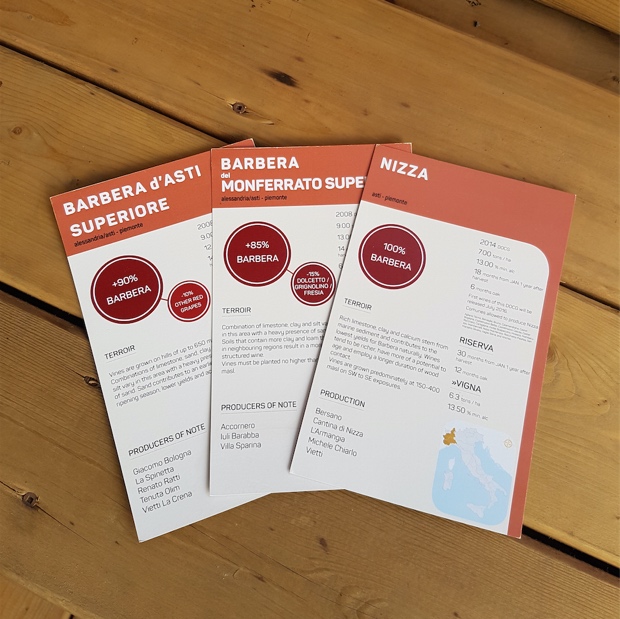
The Barbera DOCGs via somesmartsomm.com

The consortium for Barbera d’Asti and Monferrato wines was founded in 1946 with distinctive labelling and while only seven members were originally on board, today more than 200 band together for the good of the grape and especially the agricultural practices of the territory. I will touch on other Piemontese denominations such as Ruchè di Castagnole Monferrato, Freisa d’Asti and Grignolino d’Asti in a follow-up report but now is the time to discuss, analyze and celebrate all things Barbera d’Asti E Vini Monferrato.

Barbera d’Asti is a DOCG with upwards of 3,900 hectares under vine with nearly 2,500 producers, 30 of which are cooperatives. The wines can be fresh reds made in stainless steel or receive some oak aging while the bigger Barbera d’Asti Superiore, made from selected grapes are required by DOCG law to be aged for at least six months in wood. Both the Barbera d’asti Superiore and Barbera del Monferrato Superiore DOCGs were awarded in 2008, both have maximum yield allowances of nine tonnes per hectare but Monferrato’s minimum alcohol requirement is a half a point higher at 13 per cent by volume. The Vigna (single-vineyard) Monferrato yields are lower, at eight tonnes per hectare. Aging for both is 14 months from November 1st the year after harvest. In Monferrato 85 per cent must be barbera with the remainder allowing dolcetto, grigolino and freisa while Barbera d’Asti Superiore requires 90 per cent barbera.

Barbera vineyards in Costigiole d’Asti

The rich limestone, clay and calcium hills of the Nizza wine zone is one of three Barbera d’Asti sub-zones (that also include Tinella and Colli Astigiani). Nizza’s terroir is a result of marine sediment and with proof supplied by a walk-around tasting and dinner during which wines dating back to 2001 were poured, it is indeed the zone where the most ageworthy and arguably the best barbera d’Asti is made. In 2014 the DOCG was created and the artist formerly known as “Barbera d’Asti Superiore Nizza” has now been abbreviated to simply, Nizza. Like Prince. Power and balance are married in Nizza and many perform well past the 10 year mark after vintage. Wines from Nizza must be 100 per cent barbera, the yields are capped at seven tonnes per hectare and the age requirement is 18 months (six in oak) from January 1st the year after harvest. Reserva is 30 months (12 in oak) and Vigna (single-vineyard) releases must have yields no higher than 6.3 with a minimum of 13.5 per cent alcohol.  The first Nizza DOCG wines were released in July of 2016.

Still today the barbera wines of Monferrato and Nizza are virtually ignored worldwide. Many consumers simply think of the name Asti and sweet sparkling wines come to mind. Many others know not of Asti and still countless more associate the grape with Alba. The Consorzio Barbera d’Asti e Vini del Monferrato is working tirelessly to change public perception, first with its proud public speaking president Filippo Mobrici, by enlisting the association with the Collisioni Festival and through the work of ambassadors like Michele Longo. The Collisioni Progetto Vino brings groups of journalists and sommeliers from around the globe to taste, educate and indulge in the multiplicity of barbera.
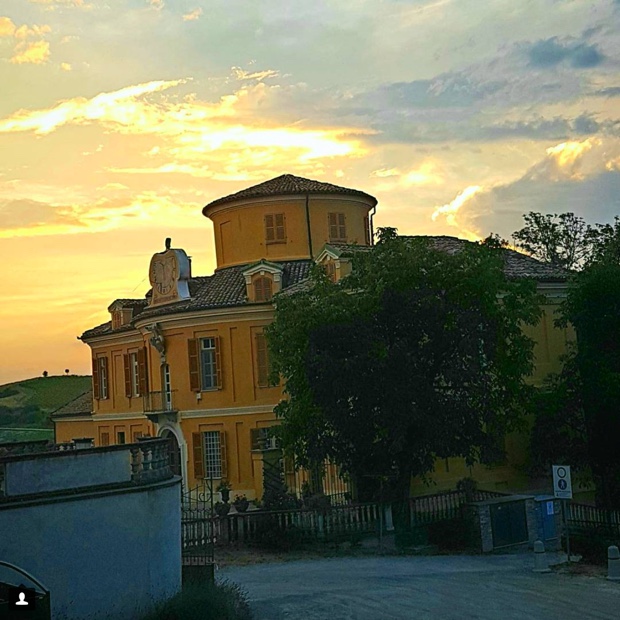
A compassionate barbera d’asti sky in the dimmet of a piemonte evening.

The following tasting notes of Barbera d’Asti and Nizza wines were executed in the consorzio headquarters in Costigiole and at the Enoteca Regionale di Nizza in July of 2017. The first tasting focused on Barbera d’Asti and Barbera d’Asti Superiore from the 2014, 2015 and 2016 vintages with the emphasis placed on four sub-zones and their differing soils. The second (walk-around) tasting allowed producers to pour at their whimsy so this included portfolios with varietal wines such as grignolino and freisa. The gathering of the Associazione Produttori del Nizza focused beautifully on a comparison of only wines from the 2014 vintage, by way of introduction, followed by two brilliant tastings in which verticals of their wines were offered, first at a (way too fast) high-speed walkabout and then later during a (beautifully slow) dinner at Locanda Del Boscogrande. My full report covers more than 75 reviews of Monferrato barbera from both the Asti and Nizza categories.
Barbera d’Asti DOCG

Consorzio Barbera d’Asti E Vini Del Monferrato Barbera d’Asti DOCG 2015, Piedmont, Italy (Winery, WineAlign)

Every year one wine is chosen through a series of blind tastings from a selection of producers, to be bottled and labeled under the “taken as a while” entity Consorzio Barbera D’asti E Vini Del Monferrato Barbera D’asti. Only the producer and the President (Filippo Mobrici) know who’s wine is chosen, along with wink, wink, everyone else. This 2015 is quite the firm and brambly barbera, as it should be, with an omnipresent blanketing European vintage depth of character, from warmth, quality, quantity and length. This is typically barbera pressed, full on for fruit, specific to a Monferrato territorial claim and nary a moment of intrusive tannin. Drink 2017-2019.  Tasted July 2017  barberadasti  @barberadasti  @barberadasti
Cascina Gilli Di Vergnano Giovanni Barbera d’Asti DOCG Le More 2016, Piedmont, Italy (Agent, WineAlign)

From the silty marl of Monferrato in Castelnuovo Don Bosco, here the traditionally rustic is acquiesced. Of dark berry, dusty, mulberry, a rich mid-palate, leathery, textured, solid if not profound structure. Only stainless steel and possessive of appropriate length. Drink 2017-2019.  Tasted July 2017  cascinagilli  @cascinagilli  @cascinagilli

Cascina Galarin Barbera d’Asti DOCG Le Querce 2016, Piedmont, Italy (Agent, WineAlign)

Out of the silty marl comes this stainless raised barbera, of such a similar profile to Le More, less floral and also less obvious fruity berry. Made with five per cent freisa, here there is more caramel and dried plum, also more VA and a bit of residual CO2. The bitter finish blend into acidity so very tart. Drink 2017-2018.  Tasted July 2017  #cascinagalarin  Cascina Galarin
Bersano Barbera d’Asti DOCG Costalunga 2015, Piedmont, Italy (Agent, 348680, $13.75, WineAlign)

Bersano’s, like so many of its peers making barbera in and around Monferrato comes from a terroir of silty marl. It spends one year in (large) botti and is a most most floral and perfumed barbera, notably of violets, even a touch of liquorice or fennel. Fills in with more mid-palate and structure than many at this “posto che si chiama” entry level, with bitters as tonics well integrated into the mix. Drink 2017-2020.  Tasted July 2017  bersano1907  profilewinegroup  @BERSANO1907  @ProfileWineGrp  @Bersanowine  Profile Wine Group

Pico Maccario Barbera d’Asti DOCG Lavignone 2016, Piedmont, Italy (Agent, WineAlign)

Quite the deep, dark and handsome barbera with a current of black currant and a pure stainless steel raising. Plums and chocolate mark the second half profile for the rich red, no oak lover in you. This pervasive barbera represents just about half of the house’s total (400,000 bottle) production. It’s truly a matter of fresh fruit and the already conscious awareness of its sharp, tart, fugacious youth. Solicits a knowing nod of the head when tasted at the source not long after a moment with the ’14 less than a year before. Drink 2017-2019.  Tasted July 2017  picomaccario  @PicoMaccario  @PicoMaccario
Pico Maccario Barbera d’Asti Superiore DOCG Epico 2014, Piedmont, Italy (Agent, WineAlign)

Epico is the top selection from the oldest (60 year-old) vines developed 14 months in barrel. In its current state the oak is alpha dominant and the volatility quite pronounced. There is something of a jammy quality, not so much a viscous or pejorative, pectin-laced presence on the palate but more like a reduction as barbera syrup or liqueur. The epitome of modern and produced. Drink 2017-2020.  Tasted July 2017

Pico Maccario Barbera d’Asti DOCG Tre Rovere 2015, Piedmont, Italy (Winery WineAlign)

The “three oaks” saw to six months in barrel and along with an expressly coffee aroma there too is this sugary scent. Candied plums bring fruit depth and richness and the wine sings the high notes of volatility. It’s quite a tart treat, from liquid clay to blackberry in a combined and distilled affair. A moment of cotton candy is fleeting because the heavy clays and ferric accent take over, stirring up some bitters to mix with the sugars. A deferential and adjustable barbera that condones the ups and downs of the oeuvre. Drink 2017-2020.  Tasted July 2017
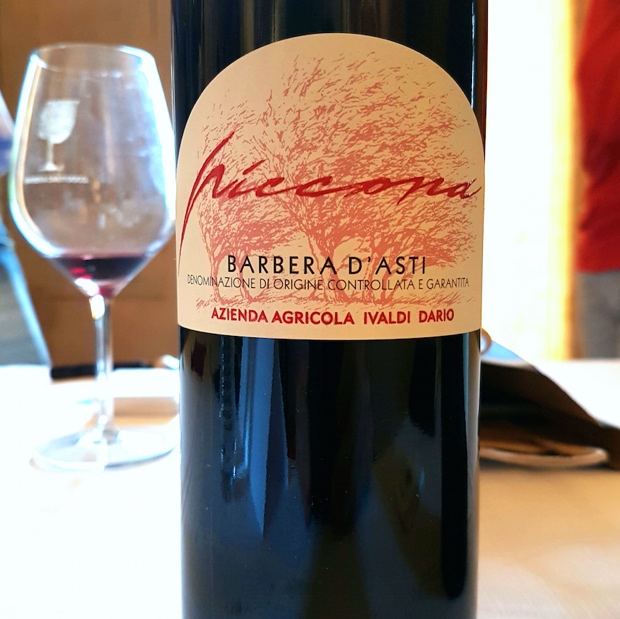
Azienda Agricola Ivaldi Dario Barbera d’Asti DOC 2015, Piedmont, Italy (Winery, WineAlign)

In the pantheon of red wine made from the barbera grape in Asti lands it is Andrea Ivaldi’s that stands out, like a beacon or a lighthouse, lit up to help mariners find the shore. In this case a summoning light set in a white limestone vineyard and it is the youngest member of the Ivaldi family who resides as the current superintendent of this special barbera. At a locally low 14 per cent alcohol and a hue so Monthelie transparent this is classic, innate, intense liquid stone, bled from the pietra bianca at 300 masl. The blessedly honest red fruit raised in cement tanks for one year is hypo-reductive and only 4,000-5,000 bottles are produced. So balanced, melting, oozing and brisk, structured even. Drink 2017-2021.  Tasted July 2017
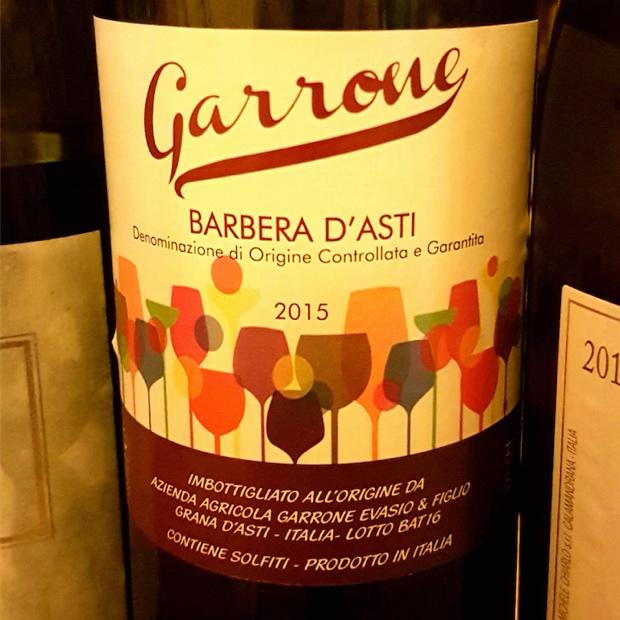
Az. Agr. Garrone Evasio & Figlio Barbera d’Asti DOCG 2015, Piedmont, Italy (Winery, WineAlign)

Garrone’s barbera climbs out of the silty marl and exhibits more VA than the others but in a good way. If perhaps it acts a bit acetic, it thus so hides its florals, though there is more texture and integration, gliding silky across the palate and finishing long. More complexity and interest here. Drink 2018-2021.  Tasted July 2017  @vinigarrone

Michele Chiarlo Barbera d’Asti DOCG Le Orme 2015, Piedmont, Italy (265413, $13.95, WineAlign)

Le Orme or “the footsteps” spent 16 months in stainless steel, taken from variegated terroir; sandy, marly and coarser soils. It sheds developed florals and high yet stretched and creeping acidity and in turn length. The acumen and experience comes through, leading to more refinement and almost a creamy (though unwooded) texture on bright, juicy fruit. Drink 2017-2019.  Tasted July 2017  michelechiarlo  univinscanada  @michelechiarlo  @UNIVINS  Michele Chiarlo  @UnivinsCanada

Castello Di Gabiano Marchesi Cattaneo Adorno Giustiniani Srl Barbera d’Asti DOCG La Braja 2015, Piedmont, Italy (Winery, WineAlign)

Gabiano’s stands apart in a barbera tasting of 13 wines because of its naturally wild personality. Run free off sandy soils it saw 16 months in a combination of botti and barriques. Beyond barbera it also contains some grignolino and freisa, more tannin, certainly reductive (which easily blows off) and I’d even call it righteously and properly stinky. More developed and even wise, this has that acidity that travels up and down the sides of the mouth. Drink 2018-2021.  Tasted July 2017  castellodigabiano  @CastelloGabiano  Gazzola Katia (Castello di Gabiano)

#risotto #ristorantelabarbera #costiglioledasti @costiglioleat

Rovero Barbera d’Asti DOCG Superiore Rouvé (Bio) 2014, Piedmont, Italy (Winery, WineAlign)

Rovero’s wafts with the most perfume by a long shot, by a soaking up and in from 24 months in barrique. The waves of vanilla infiltrate the purple berries, much like Rioja and its wood perfume but in barbera it comes with so much acidity. Like chewing on a stick of wood dynamite overcompensating for fruit that didn’t stack up, though it would have been honest and pure to allow the fruit to talk anyway, in whatever voice it may have chosen. Drink 2018-2020.  Tasted July 2017
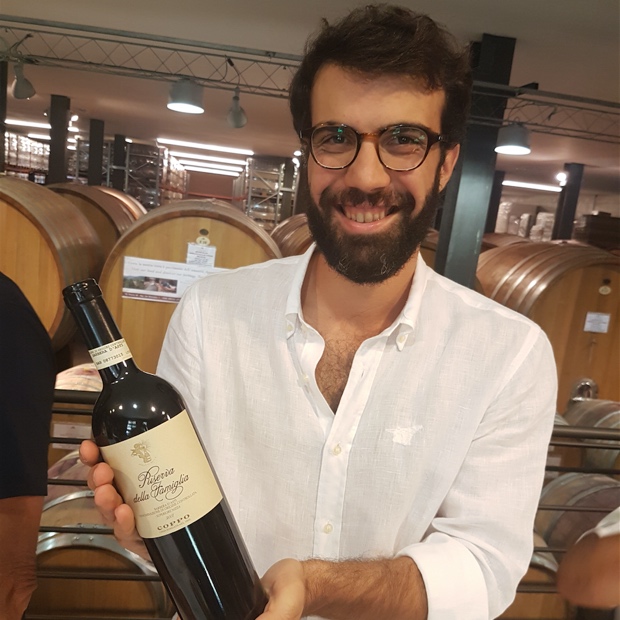
Luigi Coppo

Coppo Barbera d’Asti DOCG Pomorosso 2014, Piedmont, Italy (Agent, $74.95, WineAlign)

From the house that Piero Coppo built, now in the forward thinking acumen-saturated hands, heart and mind of Luigi Coppo, comes a barbera most ambitious and in 2014, likely to be misunderstood in the throes of its youth. Pomorosso carries the baggage and the experience of 125 years of history in pocket, is only produced in the best vintages and spends 14 months in French oak. A fair to challenging vintage makes cause and pause to consider it a case of over-oak usage because it still overwhelms the terroir while simultaneously in disavow and disallow for the vintage to speak. The big but factor is spoken with a simple term. Balance. Even while the wood is very much in charge the craft behind the scene fills the screen, like a sepia toned vintage movie reel, in which hard at work agriculturalists, agronomists and oenologists move in fast frame motion, tending to their barbera. Beautiful fruit defends itself, because and for the land, reeks through the wood, integrates acidity and lingers, long after the wood perfume has dissipated. Fast forward to the end of the film and enjoy in retrospective view, somewhere mid next decade, while the credits roll. Drink 2020-2028.  Tasted July 2017  coppo1892  maitredechai_ca  @COPPO1892  @maitredechai  @COPPO1892  Le Maître de Chai

Tenuta Il Falchetto Barbera d’Asti DOCG Pian Scorrone 2016, Piedmont, Italy (Winery, WineAlign)

Sees some stainless steel and six months in acacia wood. From a mix of soils in the Piemontese tertiary basin, characterized by sedimentary rocks known as “Marnoso Arenacea,” deposited from a marine environment 30-35 million years ago. A lovely barbera in purity of fruit, perfume and balance. Varietal honesty and bright personality bring dark plum, great acidity and ultimately just a pleasure to drink. 2017-2019.  Tasted July 2017  tenutailfalchetto  @ilfalchettovini  @tenutailfalchetto

Az. Agr. Franco Roero Barbera d’Asti DOCG Carbune 2016, Piedmont, Italy (Winery, WineAlign)

Roero’s is another stainless specimen but this time off of mixed soils cut across two sub-zones. The fruit here is rich, darker, spicy and the acidity less pronounced, rendered, melted in. It too is a pleasure to drink but not as bright as some, to be sure. Just a bit pressed, quite solid and hefty at 15.4 per cent alcohol. Drink 2017-2019.  Tasted July 2017  franco_roero_winery  @FrancoRoeroVini  @franco.roero

Az. Agr. Franco Roero Barbera d’Asti Superiore Docg Mappale 213 2015, Piedmont, Italy (Winery, WineAlign)

From Montegrosso d’Asti Roero’s Mappale takes a heat index step back from Carbuné and from 2016. In 2015 the single vineyard, single (213) block is vinified separately from the others (including Siché and Cellarino) and spends 18 months in large barrels. Still it’s a dark, hematic bruiser with Cassis and dark chocolate, plus the omnipresent energy of acidity. Also ropey, tart and glazed, almost to the point of deep caramel. Then again it always comes back to how young it is. Drink 2018-2023.  Tasted July 2017

Viticoltori Associati Vinchio e Vaglio Serra Barbera d’Asti DOCG Vigne Vecchie 2011, Piedmont, Italy (Winery, WineAlign)

The use of generous oak on these old vines rings and scents into secondary notes, of creosote, graphite, vanilla, clove and dried fruit from strawberry to prune. This will soon be turning to figs, chocolate and balsamic when in a year or two the fruit is no longer willing to sing and the acidity will step back into a phase otherwise quiet. From vineyards in Montegrosso, with caramel, more vanilla, creaminess and Amarone like character in alcohol and a perception of sweetness. Drake 2017-2019.  Tasted July 2017  vinchiovaglioserra  @vinchiovaglio  @VinchioVaglioSerra

Marchesi Incisa Della Rocchetta Barbera d’Asti Superiore DOCG Sant’Emiliano 2015, Piedmont, Italy (SAQ, 12278202, $29.45, WineAlign)

Marchesi Incisa Della Rocchetta is from Sassiccaia fame and also a family with a long Piemontese tradition. Their barbera is aged 18 months in French barrels and hails from near (southeast) of Asti. It’s certainly posied and appointed though I can’t help but notice the five-spice, caramel and balsamic aspect. A highly refined if tart style, seriously structured and wholesome though balanced within that formidable framework. As it fleshes and expands it reveals more charm, with some grace and elegance, kept warm and safe from the elements with an expensive scarf to be sure. Drink 2018-2023.  Tasted July 2017  #marchesiincisadellarocchetta  vins.balthazard  #marchesiincisadellarocchetta  @vinsbalthazard  #marchesiincisadellarocchetta  @VinsBalthazard
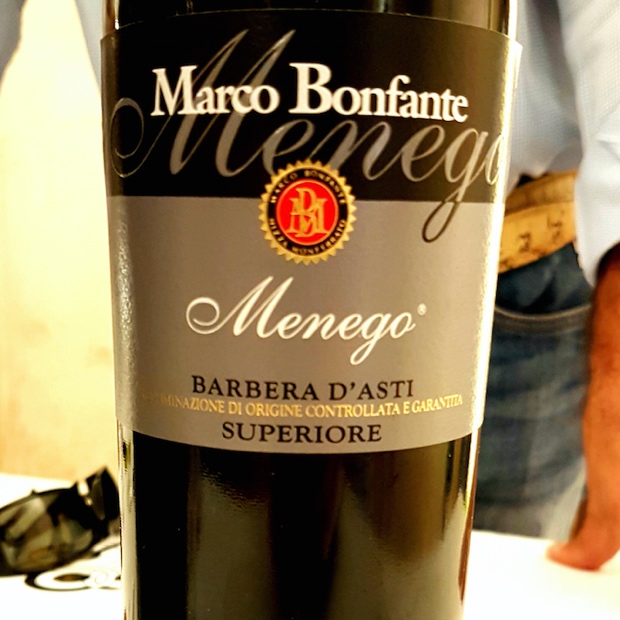
Marco Bonfante Barbera d’Asti Superiore DOCG Menego 2011, Piedmont, Italy (Winery, WineAlign)

Marco Bonfante’s barbera d’asti made from fruit all over the hill is called Menego, the nickname and in honour of his and Micaela’s father Domenico who passed away in 2000. At the top of Domenico’s hill is Il Bricco and it is this one and a half hectares of south-exposed fruit that separates this barbera from the broad expression that is Menego. The calcareous terroir defines this wine and though the journey here is a high octane, jammy developing one through 14 months in barriques, this is the (relatively speaking) elegant vintage. It stills clocks in at a minimum 15 per cent alcohol and delivers a firm, confident and authoritative message but its elasticity and length allow it to breathe. Still it does not merely wave but punches and is more of a shout than a whisper. At six years the window of pleasure is open, if only just the first crack. Drink 2017-2023.  Tasted July 2017  marcobonfantewinery  @MarcoBonfante70  @MarcoBonfanteWinery

Marco Bonfante Barbera d’Asti Superiore DOCG Menego 2012, Piedmont, Italy (Winery, WineAlign)

What a difference a vintage makes, here in 2012 out of warmth and into the highest of alcohol level with intensely ripe fruit. Marco Bonfante does not mess around, stretching the elevations of brix and alcohol while maintaining the natural acidity of barbera and waiting it out so the phenolic ripeness can fall, or rather climb to the high line. That he finds a way to work some magic so that balance is achieved is nothing short of remarkable. The most grip, power and brooding comes out of the 2012, like Madiran tannat, Cahors malbec, Napa Valley Petit Sirah and northern Rhône syrah all rolled into one. But this is the genesis of the new barbera d’asti and only Bonfante pushes such limits and scores in the end. This 2012 is the striker every great football club somehow finds, at most times blending in but always the silent assassin. This Menego is coursing with chocolate, Cassis, espresso and black cherry. It’s just a huge wine, easily at the 16 per cent mark and structured to go a decade before any withering or wuthering. Tension builds all the way until the end. Wot Gorilla. Drink 2019-2027.  Tasted July 2017

Marco Bonfante Barbera d’Asti Superiore DOCG Menego 2009, Piedmont, Italy (Winery, WineAlign)

In 2009 the hill supplied fruit ready to kill so at eight years Menego has entered its secondary phase. It will not be expected that either 2011 or 2012 will travel this far, this fast though the (more elegant) former will certainly get there quicker then (the massive) latter. A new complexity has emerged with the developing 2009, from out of and with a nod to the southwest facing calcareous vineyard. Cinnamon, orange and subtler spices now grace the aromatics, things the young and powerful Menego do not release. The accents make the eyebrows rise and when noted integrating into the chocolate coated palate there is a tickling sensation. Yet another immensely impressive moment with a Marco Bonfante bruiser is had but with some age the time spent is relenting and ultimately offering some relief. Drink 2017-2021.  Tasted July 2017

Erede Di Chiappone Barbera d’Asti DOCG Brentura 2013, Piedmont, Italy (Winery, WineAlign)

From Daniele Chiappone and a 100 per cent stainless steel upbringing at four years old the Chiappone retains remarkable freshness, with not a moment of reduction or careless redirection. Some dried fruit on the nose is curious so changes are in the air but the Brentura’s structure outside of the wood realm is more solid than most. So too is the warmer, rounder and more breathable acidity, now so integrated. Marvellous example of what barbera d’sati can be. Drink 2017-2019. Tasted July 2017  erededi  @erededi  Erede Di Chiappone Armando

Gozzelino Barbera d’Asti Superiore DOCG Ciabot d’la Mandorla 2012, Piedmont, Italy (Winery, WineAlign)

The underworld of gariga and earthy fox holes are accessed through Gozzelino’s well-aged 2012, a barbera that saw its biased share of barrel by way of a 24 months full soaking in (3000L) Grande Botti. It has emerged vinous and boxy, foxy and full of heavy set moxy, like dried fruit and jerky absorbing like sponges in a pool of campari and aperol. The rusticity is palpable, the figs and the chocolate baking with spice. The alcohol persists while the wine acts fading but it’s certainly persistent. Old-school, traditional, out there in the antediluvian void. Drink 2017-2018.  Tasted July 2017  Azienda Agricola Gozzelino Sergio
Moretti Adimari Barbera d’Asti Superiore DOCG 2015, Piedmont, Italy (Winery, WineAlign)

Moretti’s Superiore takes barbera further, out of a stainless steel world and into barriques for eight months. Perfume and acidity are barbera hallmarks, here now merged nicely together, but it is texture that elevates the game. The chalkiness gained from sandy, Franco (white) limestone soils make for a rover of a barbera, through liquid mineral and made creamy by barrel. Moretti as a producer experiments with riesling, chardonnay and sauvignon blanc so there is no surprise this barbera travels hither and thither. And it works. Drink 2018-2022.  Tasted July 2017  morettiadimariwines    @morettiadimariwines

Montalbera Barbera d’Asti Superiore DOCG Nuda 2013, Piedmont, Italy (Winery, WineAlign)

Montalbera’s calcareous soils are the catalyst to keeping this barbera scaled back, with teeth still shining white after 20 months in barriques. The unfiltered, oak driven wine is astonishingly divine and elegantly integrated with so much dripping, oozing and glazing chocolate. It’s rich and fine if for certain a mess in a mouthful. Drink 2018-2021.  Tasted July 2017  montalbera  @Montalbera  @montalbera

Berta Paolo Barbera d’Asti DOCG 2015, Piedmont, Italy (Winery, WineAlign)

From vineyards located between the areas of Monferrato and Langa, Berta Paolo’s barbera is a ceremoniously traditional one, possessive of a walk the line beauty specific to the area, at once sonsy in pure red fruit and then volatile to just the right degree. Here is the sort of barbera that exemplifies the natural while unbeknownst to just how raw an affair it really is. Honesty oozes from one that succeeds in being real without even trying. Drink 2017-2019.  Tasted July 2017 vinifamigliaberta  @wineBerta  @viniberta

Borgo Isolabella Delle Croce Barbera d’Asti DOCG 2015, Piedmont, Italy (Winery, WineAlign)

Were that is were so simple for all barbera to take one road or the other, as does Isolabella’s on the darker, full-tempered side. This is so perfectly solid, structured, architecturally sound barbera, with classically styled columns and porticos, tart and with a wealth of 2015 fruit. It’s dark but health-tempered, ever so slightly tannic and streaming with fine natural acidity. So well made. Drink 2017-2020.  Tasted July 2017  isolabelladellacroce2001  @ISOLABELLA_D_C_  @isolabelladellecroce

The history of @ilNizza began long ago. Prepare for its storied future. Exceptional tasting, stellar wines #barberadasti #100percent #100percentapproval #piemonte #progettovino #collision

Nizza DOCG and DOC

Bersano Barbera d’Asti Riserva Nizza DOCG Generala 2014, Piedmont, Italy (Agent, WineAlign)

Suave, refined, silky smooth barbera, of a warmth to express and make accessible the sense of its strength, power and alcohol. It is the exceptionality of texture that really shines. Bersano’s Nizza (Riserva) has already done its 30 months of aging time so it can be released 12 days from now. A true case of catching a wine at its potential best. As they say, timing is everything. Like on the stage so on a lighter, theatrical note this is perhaps an ode to 20th century Italian drama, to Signora Ignazia. “Dear, dear Signora! Hail to our great Generala! To our patron saint!” And yet we could do without the theatre, as long as we have barbera. Drink 2018-2024.  Tasted July 2017  bersano1907  profilewinegroup  @BERSANO1907  @ProfileWineGrp  @Bersanowine  Profile Wine Group

Bersano Barbera d’Asti Nizza DOC Generala 2013, Piedmont, Italy (Agent, WineAlign)

Something about the 2013 vintage speaks with such great clarity as it does here in Roberto Morosinotto’s barbera from Nizza fruit that spent six months in tonneaux. The chocolate swirl has palpably settled on the palate but it’s just so silky smooth, tempered and demonstrative. Acidity surely runs high, it is barbera after all, but it also drifts into and with the waves of plum, wood spice and just spice in generala. Drink 2017-2020.  Tasted July 2017
Bersano Barbera d’Asti Nizza DOC Generala 2010, Piedmont, Italy (Agent, WineAlign)

The summer of extreme heat (though perhaps holding no candle compared to 2017) has delivered a warm to warmest Bersano barbera with a calming effect achieved by cooling time spent in big barrels that date back to 1970. This ’10 is possessive of that sort of delicious perception of sweetness that puts it up there with the richest of the Nizza barbera. The élevage is half and half tonneaux/barriques and texture is full of this Mediterranean liquorice/black olive/gariga/briny tang. Nicely structured to last in this state for another three years. Drink 2017-2020.  Tasted July 2017

Bersano Barbera d’Asti Nizza DOC Generala 2008, Piedmont, Italy (Agent, WineAlign)

Another excellent vintage for the Generala is found to be sound and generous at the nine year mark though the fully developed secondary character is duly noted. Helps to prepare and deduce a clear impression of where 2010 will go over the next two to three years. This ’08 has not quite reached the denouement stage though it has peaked, reeking resinous of fruit and wood clasped in a lover’s humid embrace, with notes of dried orange, apricot, fig jam, tar and roses. The acidity still rages quite assiduously while the briny and ecoregion earthy brush have now faded and disappeared from the fragrance trail. Drink 2017-2019.  Tasted July 2017
Il Botolo Barbera d’Asti Nizza DOCG 2014, Piedmont, Italy (Winery, WineAlign)

From soils with quite a bit of sediment, in the northeast part of Nizza. Quite the silky feel following on the heels of refinement and freshness. A liquid liqueur that is close to syrup but more of a natural feel, without tonic or medicine, but just pure limestone liquid fruit. The sort of tart that is elongated, elastic and stretched with ease. Drink early because it’s quite a glassful of immediate pleasure. Grows on you too. Drink 2017-2019.  Tasted July 2017
Cascina Garitina Barbera d’Asti Superiore “900” Neuvsent CEC Nizza DOCG 2014, Piedmont, Italy (Winery, WineAlign)

Why 900? Because Giancarlo Morino’s momma began working here in the 1900s but the local dialect was spoken so quickly so it was just, “900.” The vineyard “CEC” is pronounced “check,” or short for Francesca, who used to own the vineyard. From the (Castel Boglione) southern part of Nizza with higher acidity and alcohol, here at 15 per cent. Aged 12 months in barrel, there is some deep organic clay and (three) old vineyard (1924, 1949 and 1954) induced layering, astringency and brooding, of a seriousness about it that makes it dense and a bit tempered, finishing with dark chocolate. A minty, savoury and sapid streak runs through, likely with thanks to the cooling Mediterranean “Marin” winds that blow through the vineyards from spring to autumn. Well done but needs as much as five to seven years to show as silky and refined as some of the others. Drink 2019-2024.  Tasted July 2017  cascinagaritina  @gianlucamorino  Gianluca Morino (Vignaiolo indipendente)
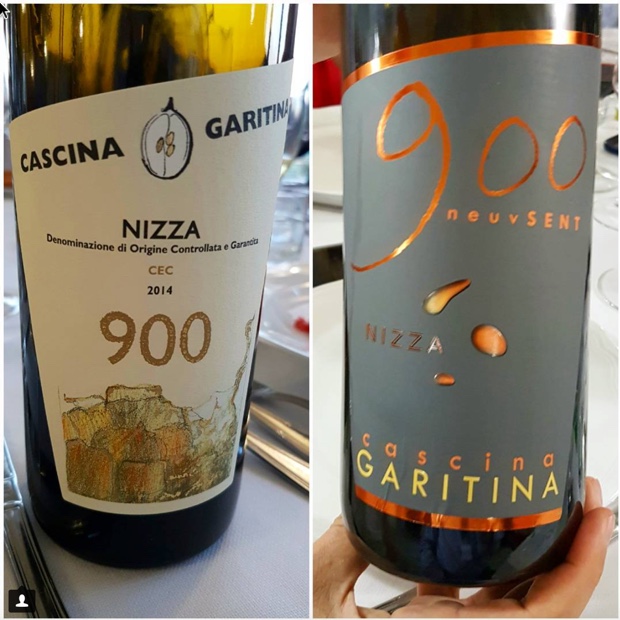
I’ve got 900 reasons to drink these @gianlucamorino #cascinagaritina #nizza but need only one #nizzamonferrato #progettovino #collisionimonferrato #cec #neuvsent #barberadasti

Cascina Garitina Barbera d’Asti Superiore “900” Neuvsent Nizza DOC 2010, Piedmont, Italy (Winery, WineAlign)

Having tasted Gianluca Morino’s 2014 earlier in the day it makes this follow up, retrospective look at his 2010 such a satisfying confirmation of his work. That ’14 was way too young to make lifelong friends with but this ’10, well this is something other. While still a seriously brooding, hematic, ganache spread of fine chocolate barbera, the components have filled the kettle to overflowing, but time has worked to now emit a floral and spice perfume. The richness of oak has also rendered a touch of complexity, of caramel and baking spice but even further, into secondary beginnings. The tones are aromatic, musical and textural, of sweet, salty and faintly sour by a fineness of acidity. One more year will bring it all together. Drink 2017-2020.  Tasted July 2017
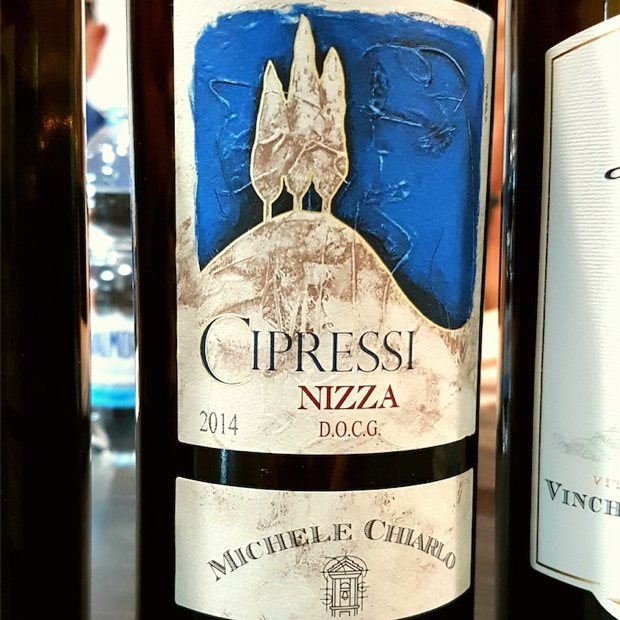
Michele Chiarlo Barbera d’Asti Superiore Nizza DOCG Cipressi 2014, Piedmont, Italy (Winery, WineAlign)

From a loamy locale, aged in large oak barrels, there is a rusticity about it along with its really dark cherry fruit. Some Bretty volatility too, complexity, character, oomph and reason for living. Quite high in acidity and structure is provided by that ideal with addendum by the gentle touch afforded by the higher oxygen exchange, large format wood. Drink 2018-2022.  Tasted July 2017  michelechiarlo  univinscanada  @michelechiarlo  @UNIVINS  Michele Chiarlo  @UnivinsCanada

Michele Chiarlo Barbera d’Asti Superiore Nizza DOCG La Court 2013, Piedmont, Italy (Winery, WineAlign)

Chiarlo’s La Court is actually one of the only Nizza barbera with a hard to get, slightly reserved character. It’s aromas are a bit muted though you get the sense that it’s quite floral behind the veil. Patience and air reveal dark fruits, of plum and black raspberry, then dusty earth and liquorice, with a silky patterning on the palate. Would love to get some wood spice but that too is currently in limbo so time is required to reveal such charm. The acidity is less than barbera raging, something that falls into line with the sneaky structure. Quite singular Nizza cru work right here. Drink 2018-2023.  Tasted July 2017
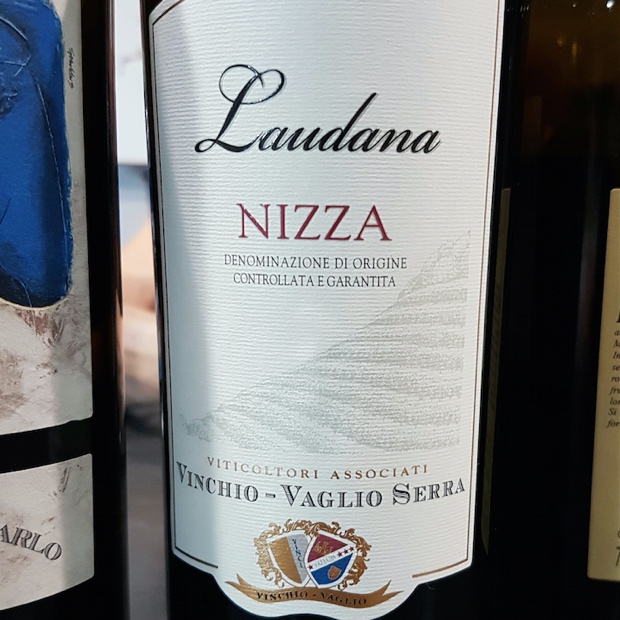
Viticoltori Associati Vinchio Vaglio Serra Barbera d’Asti Superiore Nizza DOCG Laudana 2014, Piedmont, Italy (Winery, WineAlign)

From the hill known as “Bricco Laudana” this is one of two barberas produced from its clay and sandy marls, a barbera d’asti DOC and this extraordinary Nizza DOCG. The Nizza is aged one year in large oak barrels, thus mixing grace, elegance and full on liqueur with high, nearing acetic acidity. Very long but with angular bits and spikes in and out of the morello cherry fruit. Needs a year to settle in and amongst its sharp, moving parts. The cru is farmed by five or six producers and certainly one to watch, explore and anticipate the subsequent glory that near-future vintages will bring. Drink 2018-2024.  Tasted July 2017  vinchiovaglioserra  @vinchiovaglio  @VinchioVaglioSerra

Viticoltori Associati Vinchio Vaglio Serra Barbera d’Asti Superiore Nizza DOC Laudana 2012, Piedmont, Italy (Winery, WineAlign)

Laudana is a warm and inviting barbera, dark with an ambling, rusty variegate, almost traditionally rustic but with a silky texture. Its notes play sweet and sour red fruits, namely raspberry and its constitution is right proper Nizza with the sort of traditional feel to demand not just attention but a raison d’être that says,”grant us our own DOCG.” It’s a dusty and vinous affair, like fully realized merlot with elevated alcohol, acidity and good phenolic ripeness. A solid, unafraid and unabashed barbera to represent the denomination with confidence and poise. Drink 2017-2019.  Tasted July 2017
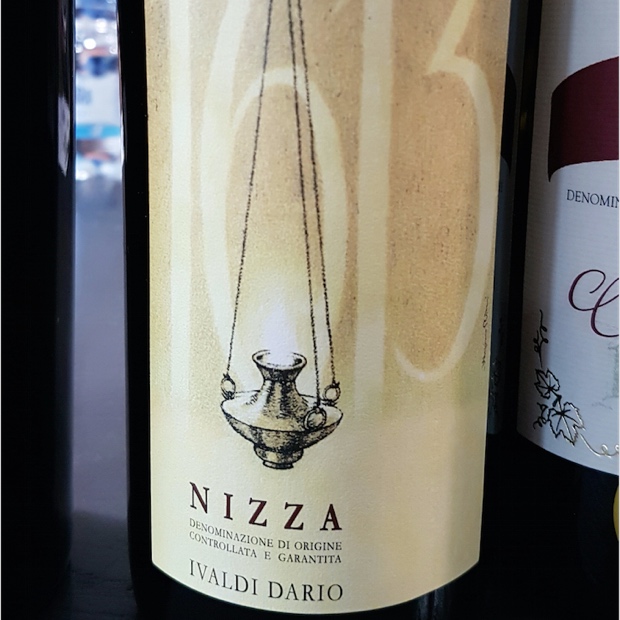
Azienda Agricola Ivaldi Dario Barbera d’Asti Superiore Nizza DOCG “1613” 2014, Piedmont, Italy (Winery, WineAlign)

Ivaldi Dario’s barbera captures the honesty, clarity and purity of Nizza Monferrato, from grapes grown on clay-limestone soils and from vines 50 years of age. This perfectly suited barbera was aged in large Slavonian oak barrels and in 2014 turned out lithe and beautiful at 13.5 per cent. It’s tart as it should be, recounting a brief bit of tradition, earthiness and volatility. This is the most decent and convivial barbera of the lot, from longer, slower maceration with less pump overs and no unnecessary barriques aging. The lighter hue is vintage related but also house-curated, not to (re) mention classic styling. Picked early? Perhaps. Most important is that it is progressively hands-off, proper and most appreciated winemaking to celebrate a white limestone terroir. Drink 2018-2023.  Tasted July 2017  andrea.ivaldi  @ivaldidario  @vinidelmonferrato

Azienda Agricola Ivaldi Dario Barbera d’Asti Superiore Nizza DOC “1613” 2012, Piedmont, Italy (Winery, WineAlign)

Few persuasions in the schemes of wine assessments are more fascinating to study than vintage variation, always great signs and portents from the fringe growing regions of the world. Monferrato is one such place, affected by swings in climatic conditions from year to year, raised here in magnification through the lens of Andrea Ivaldi’s multi-faceted barbera. The depth and structure in this ’12 is so contrary to the bright eyed ’14, now richer and almost brooding, even for Nizza. Ivaldi is a house with a self-predicated idiosyncrasy but here it speaks with Nizza style, perhaps antithetically reflexive but still with fruit that echoes from its manifest gaze into a mirror. Andrea makes exactly what the vintage gives, with blacker than red fruit bruised with a variegated hematoma and yet layered with a mineral underlap from that white limestone hill. As an arrangement it’s bigger than even he would likely have wanted to fashion but he’s a pragmatic winemaker who had to pick his fruit by September 20th. Do the math and see the forest for the trees. Drink 2017-2022.  Tasted July 2017
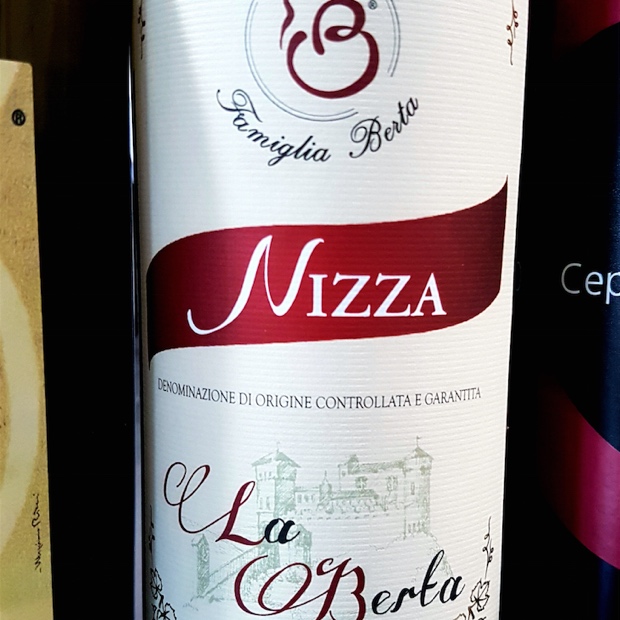
Berta Paolo Barbera d’Asti Superiore Nizza DOCG La Berta 2014, Piedmont, Italy (Winery, WineAlign)

The Berta family wine estate dates back to 1842 with vineyards located between the areas of Monferrato and Langa. Their Nizza barbera d’asti is aged in large 500L oak barrels, lending a perfume that lingers long after this textured wine has stretched into the long aftertaste. Berta’s is quite a warm, rich, welling and dense example, fine liquid grainy, weighty and youthfully cumbersome. Having been afforded the opportunity to taste some older examples later the same day really put this one into perspective and provided a deeper understanding of Nizza structure. Drink 2018-2022.  Tasted July 2017  vinifamigliaberta  @wineBerta  @viniberta

Berta Paolo Barbera d’Asti Superiore Nizza DOC La Berta 2011, Piedmont, Italy (Winery, WineAlign)

The Nizza DOCG was added to Asti’s barbera portfolio in 2014 so this predates the appellative status, though for real intents and purposes this ’11 serves the same purpose. From a hotter than hot summer though the aromatics hide the thought and so you would never know just how warm it was. The palate speaks a different story with a deep-seated liqueur distilled from the top of the Berta Paolo terroir, a 40-70 year old set of plantings at Il Bricco, “The kettle” vineyard, 270 meters above sea level. The veins of this plot stretched over the hill of San Michele at Nizza Monferrato are the reason for Berta Paola’s distinct barbera texture. In 2011 this translates to a creamy, dreamy, suave and fine leathery parochial wine. Another example to set up one’s mind to realize what later vintages will turn out to be. Drink 2017-2022.  Tasted July 2017
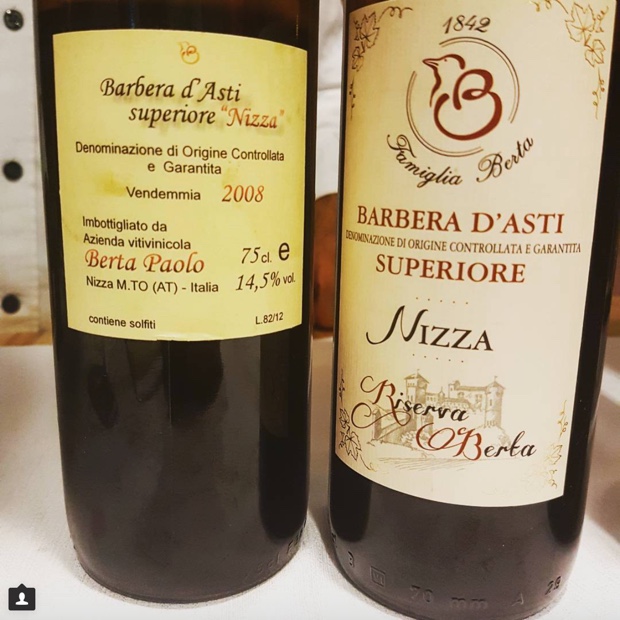
If 2014 is anything like 2008 the future will shine on #famigliaberta #barberadasti @ilnizza Riserva #progettovino #collisionimonferrato

Berta Paolo Barbera d’Asti Superiore Nizza DOC La Berta 2008, Piedmont, Italy (Winery, WineAlign)

More traditional than ever, partly and certainly because of age but also in an era that predates the level of current Nizza Monferrato understanding. This travels into a secondary, present state savour with the still flowing liqueur of the San Michele terroir. Speaks an older school, barrel-influenced vernacular, of a chocolate and vanilla vocabulary with an edge of Brett and volatility. Character from another time and quite persistent in voice. Drink 2017-2018.  Tasted July 2017
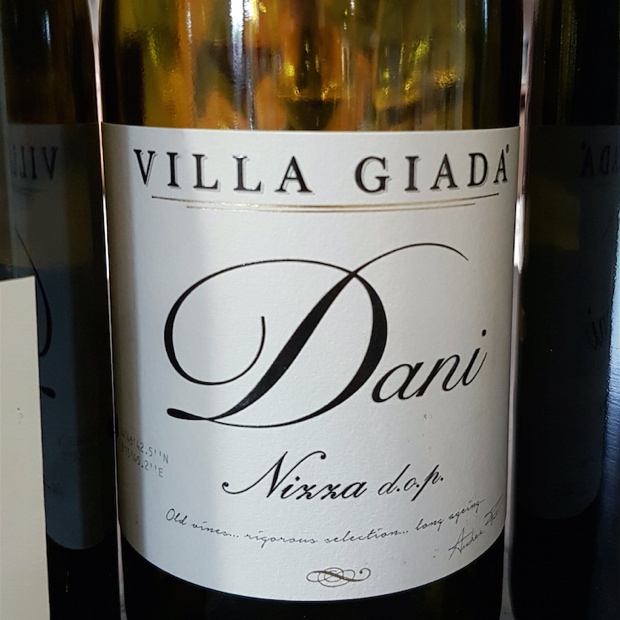
Villa Giada Barbera d’Asti Superiore Nizza DOCG Bricco Dani 2014, Piedmont, Italy (Winery, WineAlign)

Here from Andrea Faccio struts with great confidence the dark, hematic, ferric and brooding barbera. A very serious Nizza, mercury rising, full on chocolate, espresso and an oily tar, imagining a nebbiolo-like modernity that places this in a stylistic and über-specific category. High acidity, some grainy tannin and sharp finishings so this needs some time. More than any other thus far in the Nizza DOCG flights. Drink 2019-2024.  Tasted July 2017  villagiadawine  Andrea Faccio
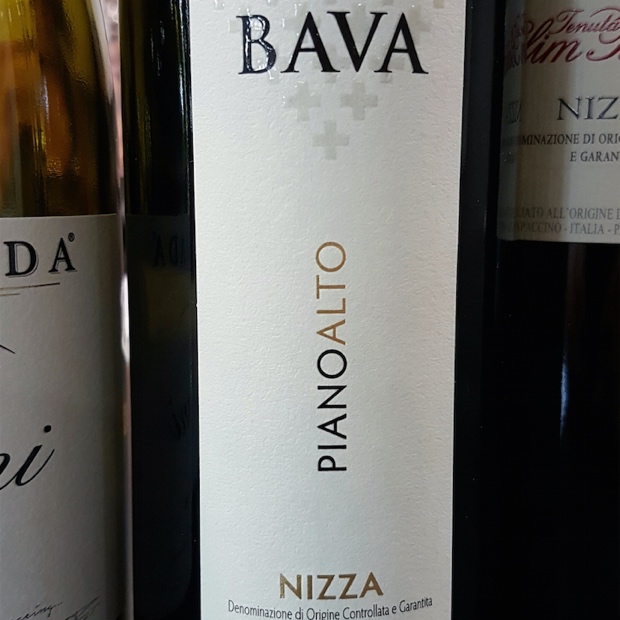
Bava Barbera d’Asti Superiore Nizza DOCG Pianoalto 2014, Piedmont, Italy (Winery, WineAlign)

A large (500L) barrel aging, this is highly, beautifully perfumed, restrained and deliciously tart. Savoury, herbal and tomato leaf herbal, from a hill with a crest, “the high plain,” or plateau. A current of currants, bell pepper and really ripe acidity. This is the most proper use of barrels, generous but exceptional. The most energy of all, modern and yet somehow classic, even traditional. Drink 2018-2025.  Tasted July 2017  bavawinery  @bavawinery  @bava.winery

Bava Barbera d’Asti Superiore Nizza DOC Pianoalto 2007, Piedmont, Italy (Winery, WineAlign)

Barbera’s secondary moments are upon the 10 year-old Pianoalto though the wine still slides across the palate with creamy barrel texture. Notes of fig and prune are a case of a hot and dry vintage with very low yields. The nose has matured into a perfume only lifted now by the persistence of barbera’s elevated acidity so this continues to fly at a decent altitude. It’s quite perfect at the ripe old age. Drink 2017-2020.  Tasted July 2017

Bava Barbera d’Asti Superiore Nizza DOC Pianoalto 2001, Piedmont, Italy (Winery, WineAlign)

Certainly showing its age at 16 and perhaps not as long-lasting due to what was at the time a middle of the road sort of vintage. It was a low and slow, no real heat to speak of, natural and organically rendered season so the wine has in turn done the same in kind. Now into the tertiary it has little to no bite or reason to put up a fight. What does persist is a chocolate, espresso and spice sprinkling, then down towards a slightly sharp, tart and done with it finish. Tannins are now only woody but all in all it’s a curious and worthy look back at turn of the century Nizza. Drink 2017-2018.  Tasted July 2017
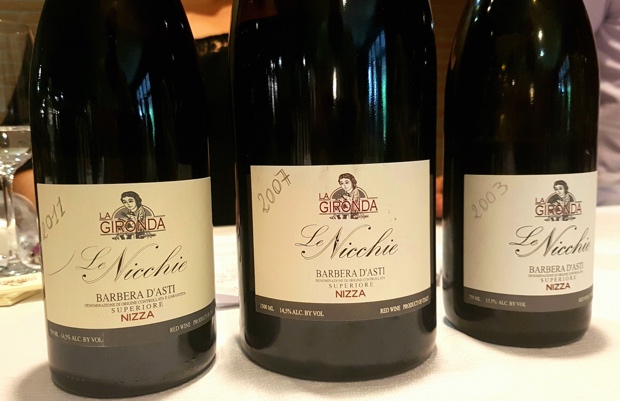
La Gironda Barbera d’Asti Nizza DOCG Le Nicchie 2014, Piedmont, Italy (Winery, WineAlign)

A barbera return to dark fruit, glycerin into texture across a silky smooth palate. From old vines, many exceeding 50 years. Real concentration and developed fruit with an underlay of stone and clay. It’s rich and intense but not dense, warm but not searing. Everything rising but cresting, on a plateau where it can be handled. Structure is clear and obvious. Take this one deep into the cellar. Drink 2018-2025.  Tasted July 2017  la_gironda  @LaGironda  Susanna Galandrino

La Gironda Barbera d’Asti Nizza DOC Le Nicchie 2011, Piedmont, Italy (Winery, WineAlign)

The vintage for Le Nicchie is deep, dark and handsome, with fruit woven into texture rich and thick, with lots of wood and lit-scented herbs. Smells like rosemary and thyme stalks thrown on an open flame. It’s also almost impossibly silky and smooth while in management of quite refined acidity and tannin. Very polished Nizza barbera. Drink 2019-2023.  Tasted July 2017

La Gironda Barbera d’Asti Nizza DOC Le Nicchie 2007, Piedmont, Italy (Winery, WineAlign)

La Gironda’s is yet another 2007 that exhibits very high acidity. It was in fact a hot vintage that concentrated fruit but also that omniscient barbera acidity. Seems very young, almost impulsively so. The flavours are of an extreme Nizza variety, like a slice of Cru cake (in this case Le Nicchie) swimming in a syrupy pool of its own deeply reduced demi-glacé. For fans of barbera density with haute couture style and this is how this house does what they do best. Drink 2017-2020.  Tasted July 2017

La Gironda Barbera d’Asti Nizza DOC Le Nicchie 2003, Piedmont, Italy (Winery, WineAlign)

As hot as a vintage like 2007 might have been it held no fingertip burning candle to the likes of the scorcher of 2003. In the case of La Gironda and its Le Nicchie Cru the heat played right into the hands of the house style. This is quite a remarkable specimen because despite the warmth and the time elapsed this barbera is just in the early throes of secondary life, so the level of structure is quite astounding. The heavy wood aspect fully renders in chocolate tones piqued with spice. The combinative use of barriques and tonneaux has struck an accord and this still clings to viable life even if it’s quite the molten chocolate bomb. Drink 2017-2019.  Tasted July 2017
Tenuta Olim Bauda Barbera d’Asti Superiore Nizza DOCG 2014, Piedmont, Italy (Winery, WineAlign)

Few barbera from Nizza’s recently appointed DOCG are as polished as Gianni Bertolino’s ’14, a long developed piemontese that spent two years in large barrels. The fruit is really ripe, pushed to the limit of the vintage but just cresting at the edge of dried fruit and the tawny, figgy spectrum. Wild strawberry keeps it fruity and earthy, acidity is round and still in charge, thankfully, for the building and beguiling effect of great structure. Drink 2018-2022.  Tasted July 2017  tenuta_olimbauda hobbsandcompany  @tenutaolimbauda  @hobbsandco  @tenutaolimbauda.it  hobbsandcompany

Tenuta Olim Bauda Barbera d’Asti Superiore Nizza Doc 2011, Piedmont, Italy (SAQ 11383570, $37.50, WineAlign)

From a hot vintage, especially in summer but the warmth was managed by enough cool nights. Gianni Bertolino tells me about picking on acidity, not sugar, in mid-September. Here is the generous, extremely fresh, tart and silky barbera. A seriously classy, chic, racy and almost perfectly modern wine, very much an acumen-acquiesced and benchmark leader for the Nizza appellation. Drink 2017-2023.  Tasted July 2017

Tenuta Olim Bauda Barbera d’Asti Superiore Nizza Doc 2010, Piedmont, Italy (SAQ 11383570, $37.50, WineAlign)

Earlier in the day it was Gianni Bertolino who commented on barbera from Nizza being a six-year wine. His 2010 must have hit its stride at just about exactly the six year mark because here in its seventh just the beginnings of secondary character are showing their tell tale signs. It’s in cantilever mode, stretching out over the barbera abyss, unfurling its wings and truly opening to reveal its charms. Though the acidity still burns, churns and plays devil’s advocate to the depth of fruit and territory, the wood has melted enough to reign in that sapidity and balance is coming into order. It may come as a surprise to find the acidity warm but no longer sharpening its stone but where chocolate, dried fruit (namely plum) and spice are concerned this will be the result. Yet so much life persists in this ubiquitously defined cru of a Nizza. Drink 2017-2022.  Tasted July 2017
Cantina Tre Secoli Barbera d’Asti Superiore Nizza DOCG 2014, Piedmont, Italy (Winery, WineAlign)

Cooperative rendered barbera, aged for one year in small barrels. Soil is equally spread across several vineyards, from a rock, sand and loam accrue. Amenable, approachable, warm and vibrant acidity, dark fruit and negligible tannin. Some sweetness, black cherry, berry and fig. Drink 2017-2020.  Tasted July 2017  #cantinatresecoli  @TRESECOLI  @tresecoli1887

Cantina Tre Secoli Barbera d’Asti Superiore Nizza DOCG 2011, Piedmont, Italy (Winery, WineAlign)

It takes but a sip of the Tre Secoli 2011 to gain an understanding in comparison as to where the afore-tasted 2014 is heading. Few Nizza barbera swim with such full on chocolate and dried fruit depth and while the kinship resemblance between the two wines is uncanny, the heat of this ’11 vintage has brought on some fully realized evolution. The richness is all in, drying out and truffles are just around the next bend. Drink 2017-2019.  Tasted July 2017
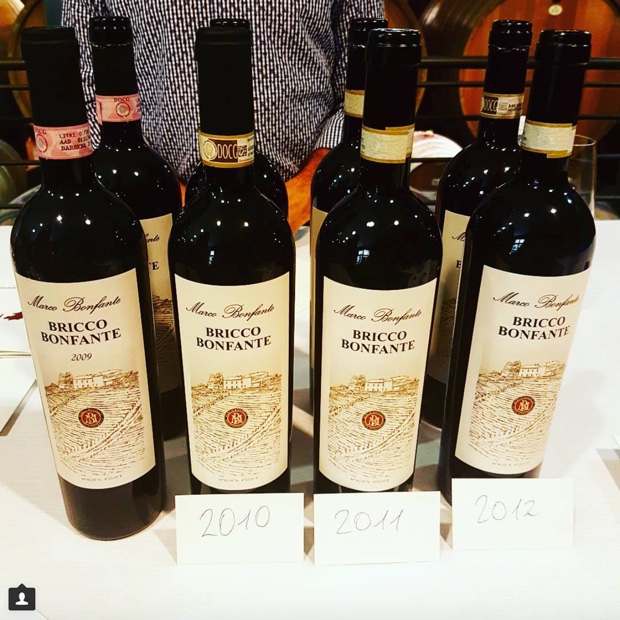
A quadrato of big, bold and balanced @MarcoBonfante70 #barberadasti @ilNizza Bricco Bonfante #progettovino #collisionimonferrato

Marco Bonfante Barbera d’Asti Superiore Riserva Nizza DOCG Bricco Bonfante 2014, Piedmont, Italy (Winery, WineAlign)

In the hills of Nizza and Val di Sacca, Bonfante takes a deferential approach with some drying of the grapes for a handful of days, but unlike the three to four months as in Amarone. His fruit is aged in a combination of small and large oak barrels for 20 months. The extra concentration leads to higher sugar content and therefore elevated (15-16 per cent) alcohol but the wine is vinified dry. Sourced from the Bricco, top of the hill on calcareous clay marl. In the end this is a thick, viscous, shaken but certainly refined and balanced barbera in its large format, unabashed and even braggart style. Drink 2019-2026. Tasted July 2017  marcobonfantewinery  @MarcoBonfante70  @MarcoBonfanteWinery

Marco Bonfante Barbera d’Asti Superiore Riserva Nizza DOC Bricco Bonfante 2012, Piedmont, Italy (Winery, WineAlign)

Bricco Bonfante is the one and a half hectare family vineyard though it’s not necessary to label the wine “vigna.” Bricco works just fine. Now the comparison (to the barbera d’asti Superiore) becomes clear because the silk and elegance is noted in clean and pure Nizza. The 5,500 density of vines producing 4,000 bottles works out mathematically to 800 grams of fruit per plant, a number nothing short of ridiculous economics. With necessity the mother of invention the quality must run high and so 24 months in new barriques is bequeathed the precious fruit. The bricco exalted is the origin of the barbera that delivers prescience, presence and a preciseness of being. The hill is the thing, the vineyard its totem, the hot vintage adding heat early and on repeat, at 15.5 degrees alcohol (declared) so ripe, so big and with structure so in control. Drink 2019-2027.  Tasted July 2017

Marco Bonfante Barbera d’Asti Superiore Riserva Nizza DOC Bricco Bonfante 2011, Piedmont, Italy (Winery, WineAlign)

The vintage is in fact not so completely unlike the 2012 if perhaps a step taken back, away from power, terribilita and the heat. The palate has already begun to relent into a Nizza meets Bricco Bonfante sweetness and the tannins have resolved one notch down to a point closer to understanding. As a result there is more polish to Marco’s 2011 and a finer layer of silk. Here for the first time there is this purity of dark cherries mixed into the finest chocolate and a touch of secondary character development in balsamic. Should be good to go this time next year. Drink 2018-2024.  Tasted July 2017

Marco Bonfante Barbera d’Asti Superiore Riserva Nizza DOC Bricco Bonfante 2010, Piedmont, Italy (Winery, WineAlign)

Travelling in reverse down along a Marco Bonfante vertical is a most interesting exercise and makes so much sense. The 2010 is so similar to 2011, even more than how that ’11 compares with 2012. The fruit in ’10 is less pitchy, in delivery of red to black berries (or black raspberry to be precise) and yet the silky thread runs through the red. The same 24 months in new barriques sends this reeling into the plum chocolate pudding as a veritable bomb of a Nizza barbera. There are some who might find the stylistic overbearing, weighty and dense. They would not be wrong but they would be missing the Bricco point, of a matter that comes from the top of the hill with lowest of the low yields out of a rarity of rarities vineyard. There is no denying the acumen and the ambition but also, mostly the necessity. Drink 2017-2021.  Tasted July 2017

Marco Bonfante Barbera d’Asti Superiore Riserva Nizza DOC Bricco Bonfante 2009, Piedmont, Italy (Winery, WineAlign)

It was beginning to look like no matter how far back you travel in a Bricco Bonfante Nizza vertical there would be no signs of evolution, that is until you hit this 2009. Here the first to begin an inkling into secondary notes, if only the etchings of spice symbols and wood derived pericopes. There is also a faint, around the corner idea of tar and candied roses, or perhaps they’ve already begun to join the scented party. I find this 2009 quite cru Barolo-like and it’s interesting to note that this was Marco’s first Nizza Bricco. It also happens to be the one with the most apparent fruit, or perhaps time is the factor needed for such a reveal. It travels from red to black and back. Really quite amazing. Drink 2017-2021.  Tasted July 2017

Godello, Michele Longo, Michaela Morris and Dr. Michael Apstein

L’Armangia Barbera d’Asti Superiore Nizza DOC Titon 2013, Piedmont, Italy (Winery, WineAlign)

Titon is a blend of three estate vineyards planted between 1934 and 1990. The plots are also a mix of exposures; southeast, east and west, with warm temperatures abundant throughout. This barbera runs a fever of acidity, doles out plenty of chocolate, has yet to fully integrate its wood and is truly well made Nizza. Drink 2017-2019.  Tasted July 2017  armangia.giuly  @LARMANGIA

L’Armangia Barbera d’Asti Superiore Nizza DOC Vignali 2011, Piedmont, Italy (Winery, WineAlign)

Vignali is the single-vineyard barbera from the estate vineyard planted in 1934. An approximate 24 months of barrel aging is performed before it then ages in bottle for a further 24 months. At first there are the new 300L oak casks, then small 130L barrels for 12 months and finally large casks for 10-12 months more. Well, all this to say that Vignali is fully involved in its secondary stage of life. It is a most mature barbera, with the three holy trinity tenets of chocolate, balsamic and high level acidity all working as one. The soil and barbera tang is fully felt. Drink 2017-2019.  Tasted July 2017

L’Armangia Barbera d’Asti Superiore Nizza DOC Vignali 2010, Piedmont, Italy (Winery, WineAlign)

A later harvest developed riper fruit with higher phenolics and with seven years under its belt that fruit is drying nicely. Chocolate as always with figs, raisins, apricots and as expected balsamic, though here with a shot of dark espresso. All of the above on repeat and that big barbera acidity. Drink 2017-2018.  Tasted July 2017
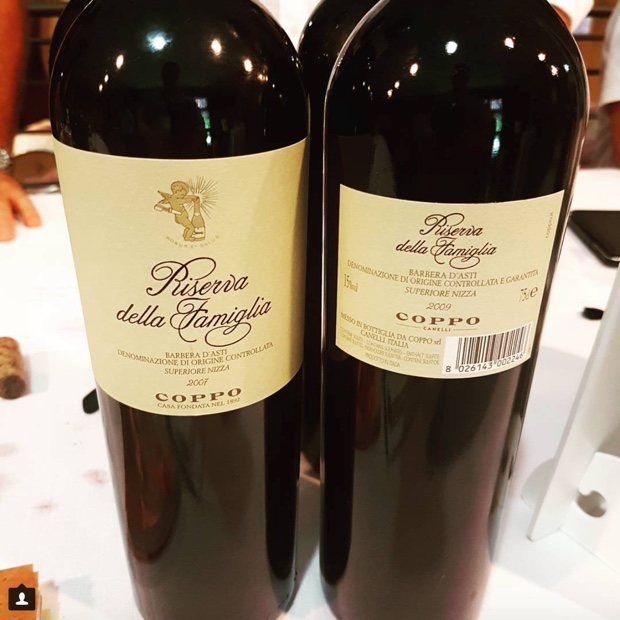
Going back to @ilNizza for a lesson in what tomorrow will bring @Coppo1892 Grazie Luigi #barbera #barberadasti #riservadellafamiglia

Coppo Barbera d’Asti Nizza Superiore DOC Riserva di Famiglia 2009, Piedmont, Italy (Agent, $74.95, WineAlign)

From a small cru located in Castelnuovo Calcea, born in 1998, “a project, not only a wine,” explains Luigi Coppo. Only produced in the best vintages, the previous being 2007 and the next will be 2010, though this ’09 is undoubtedly the finest. “It’s not a wine of economics,” continues Coppo, but a single-vineyard expression for people to think outside the barbera box. It shares less history than Pomorosso and thus the reason why it is only selected from very specific vintages, “to work on the craft.” Few if any Barbera d’Asti carry such precision and presence. It’s adult candy, wise and layered, the key to making great barbera right here, in this texture. Expertly woven are fruit, wood and acidity so that all are blended, with no ego, nothing taken for granted, all in balance. Drink 2017-2027.  Tasted July 2017  coppo1892  maitredechai_ca  @COPPO1892  @maitredechai  @COPPO1892  Le Maître de Chai

Coppo Barbera d’Asti Nizza Superiore DOC Riserva di Famiglia 2007, Piedmont, Italy (AgentWineAlign)

Higher acidity in 2007 and alcohol pushing at 15.3 per cent (as opposed to 14.7 in 2009) don’t mean the world has come to end but it does make for an electric Nizza barbera. Even then Coppo could be pragmatic when it was called for so the wood use in this barbera was increased, to soak up some of that fantasy and see if the components could strike a balance in accord. You can really sense the fineness of silk on the palate. Still so beautifully managed, or rather you can intuit looking ahead 10 years from signsin this 2007 how in future vintages the winemaker will know how to manage the realities of vintage variable acidities, through the adjustments in wood and how that will determine the levels of tannin. Drink 2017-2019.  Tasted July 2017.
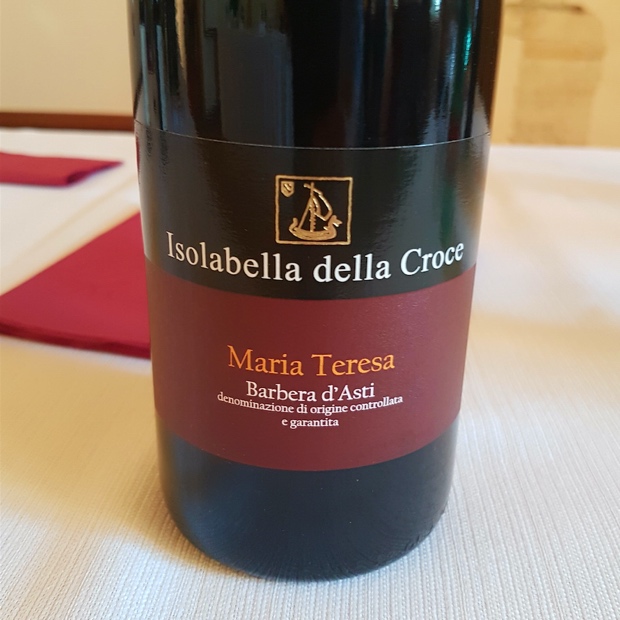
Borgo Isolabella Delle Croce Barbera d’Asti Superiore Nizza Doc Augusta 2009, Piedmont, Italy (Winery, WineAlign)

All the Isolabella wines receive a girl’s name, in this instance Augusta, a vineyard selection from a couple of sites on each side of the village limits and named after the proprietor’s sister. The estate produces only 90,000 bottles, each highly specialized and this barbera comes out of the highly prized vintage. In retrospect and with the fortune to taste several 2009s in one walkabout it is now obvious that the season bequeathed the gift of age on its wines. Great because of an extra fineness of acidity from a grape that always gives this way but in Isolabella’s 2009 there is this cool, savoury, reserved character, not unusual but balanced in equal opposition to the strength of perfume and body. A delicato is expressed in what may be referred to as an ultra-über special 2009. Drink 2017-2025.  Tasted July 2017  isolabelladellacroce2001  @ISOLABELLA_D_C_  @isolabelladellecroce

A deep #eredichiappone vertical delve with Daniele for perspective and a release of endorphins @ilNizza possibilities #progrettovini #collisionimonferrato

Erede Di Chiappone Barbera d’Asti Superiore Nizza DOC RU 2011, Piedmont, Italy (Winery, WineAlign)

Daniele Chiappone’s 2011 is his richest, warmest, most wood affected barbera replete with an armament of spice. While still in the care of its 16 per cent alcohol frame it is a most underdeveloped specimen but because it’s so big and burly it can’t help but reek, ooze and sweat out the aching masala of aromatics. In talking with Daniele he fully admits this to be the vintage of great demand and pressure so he simply made the wine it asked for. I liken this to Amarone from vintages like 2010 and 2011, unavoidable and so a great winemaker will simply do what must be done and try to seek out balance in a bold and crazy world. With fine acidity void of spikes, peaks and valleys Chappione puts this barbera in a state of equilibrium however high the plain may be. Give this two years minimum to integrate and match it with some lean venison over a bed of tangy polenta. Drink 2019-2027.  Tasted July 2017

Erede Di Chiappone Barbera d’Asti Superiore Nizza DOC RU 2010, Piedmont, Italy (Winery, WineAlign)

Chappione’s 2010 is barbera of a powerful maturation and its polyphenolics are quite different than those from 2011. The hard skins, noted by Daniele as pelli durissime might lead to a personality ostinata impermeabilità but a longer maceration broke them down, turned the opposite around to make them flexible and permeable. Though still tightly wound and not yet pliant this precise and very present 2010 of intrinsic structural value will make use of another year in bottle to soften its pertinacious fibres. When it opens up it will bloom, but ever so slowly, over a 15-20 year plan. Its crazy legs, choice acidities and quality tannins will all conspire towards longevity of the indiction degree. Drink 2019-2027.  Tasted July 2017

Erede Di Chiappone Barbera d’Asti Superiore Nizza DOC RU 2006, Piedmont, Italy (Winery, WineAlign)

RU by Daniele Chiappone is this, at first something altogether inexplicable but when tasted alongside his 2005, 2010 and 2011 it makes such perfect sense. Sense in where this fits in his evolution and to speak on behalf of the age-worthy ability of Nizza barbera. In a world where barbera perfume so often performs with perfunctory brevity this goes on and on. It is a unique combination of fennel frond, incense, hibiscus and violet to create an intoxicant and an anaesthetic. Yet another exceptional vintage is revealed, traditional and so alive, spun from earth crusting over cherry and then this smooth leather. The portal backwards 10 years allows for looks forward 10 more, especially into what’s coming from 2015 and 2016. To say the match with a prodigiously spiced in aromatic ragu over linguine was agreeable would be the understatement of the Monferrato century. Perfectly timed acidity seals the deal. This is barbera folks, of wit, age and history. Drink 2017-2021.  Tasted July 2017

Erede Di Chiappone Barbera d’Asti Superiore Nizza DOC RU 2005, Piedmont, Italy (Winery, WineAlign)

The vintage was a tough one with some hail and difficult to get the grapes into a state of full maturity. It’s amazing how winemakers remember every painful moment of a vintage like 2005 and Daniele Chiappone recalls picking in the first week of October. While that may not be wholly unusual for the RU cru it is quite a late Piemonte harvest. This RU carries deep, dark depth in currant fruit, in a realm where cabernet franc hooks up with nebbiolo and sires a love child. Side by side with 2010 it is really just the quality of tannins that truly sets the two apart and here the chemical reactions in the natural world bring about spice; cinnamon, star anise and then this eminence of Chiappone acidity. In Nizza it is this speciality that is both singular and distinct that creates such a structured feeling of éclat, or in the case of Chiappone, fulgore. Drink 2017-2022.  Tasted July 2017
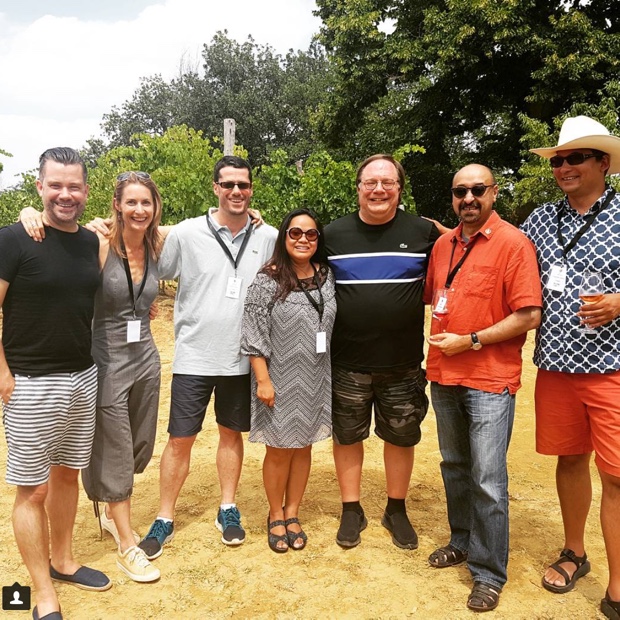
Il contingente canadese @Collisioni #nizza #barberalovers #represent #progettovino #piemonte

Thanks for reading up on the wines of Barbera d’Asti and Nizza Monferrato. Let’s all hope we begin to see more options in both categories made available here in Ontario. A special thanks to Ian D’Agata, Michele Longo, Michaela Morris, Giulia Corino and the entire Collisioni crew.

Good to go!

Godello

Twitter: @mgodello

Instagram: mgodello

WineAlign
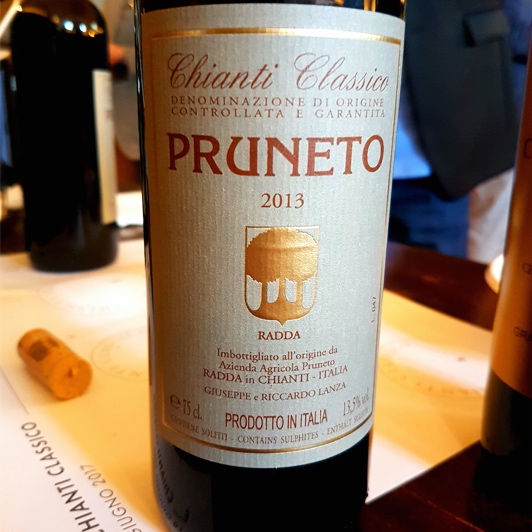
Fontodi’s one hundred per cent sangiovese

In @chianticlassico mano nella mano 1986, @fontodi #vignadelsorbo & #flaccianello thank you Giovanni Manetti for sharing these two opposing forces of the Tuscan paradox #chianticlassico

I have spent quite a bit of time in Chianti Classico over the past two years, most recently during the last week of September. The occupation of study and discovery and the investigation into the intricacies and multiplicities of the region’s sangiovese prepossess a lifelong infatuation. If the cumulative is a factor of compulsive obsession so be it and while decades of learning are left to attack, an essential visit can now be crossed off the bucket list. With Giovanni Manetti at Fontodi.

Fontodi is a certified organic estate which extends over 130 hectares of which approximately 70 are planted to vines. When you break down the name into two parts, first fonte or “source” and odi, “hate” you paint an image in etymology that couldn’t be further from the truth. Take a walk through the estate’s vineyards set in Panzano’s Conca d’Oro and the exact opposite unfolds. Fontodi’s estate vines are as described (and for the effects on health and happiness) prescribed as a place of “high altitude, calcaire-clay-schist soil, lots of light, and a fantastic micro-climate – warm and dry with a marked difference in day and night-time temperatures.” Lots of light is really key, “un sacco di luce,” or as it could be construed, “a source of love.” Spend three hours with Fontodi’s proprietor Giovanni Manetti and you’ll get the picture. Fontodi as Fonte di amore.

Related – All in with Chianti Classico

Giovanni Manetti showing the sangiovese of the 2017 harvest

Today is September the 23rd. First we take a drive down into the Conca d’Oro and walk in the vines. The sangiovese blocks with the finest exposure and the most sun have just recently been picked. Others are coming in as we speak. The rest will be harvested by the end of the week. It has been a most unusual vintage in Chianti Classico. One of the warmest and driest winters on record is interrupted by a near-devastating spring frost then followed by scorching summer temperatures and no rain. The grapes dry up and desiccate to nearly nothing with the danger of an empty harvest looming. Then a miracle happens and the rains fall during one crazy week in early September.

There are producers who make a fateful mistake. They pick their sangiovese ahead of the rains. Sugar and alcohol are high in the shrivelled berries but phenolic ripeness lags well behind. The stems and seeds in these preemptively harvested sangiovese are green, underdeveloped and bitter. The tannins will follow suit. Though these wines will be jammy and flavourful in the first year or two, the hollow feeling on their mid-palate and the astringency on their finish will expose their weakness. Giovanni Manetti makes no such mistake. He allows the grapes to swell with the much-needed watering and then watches them develop their phenolics over the following weeks of warm weather. His sangiovese are beautiful, lower in yield, with many of the bunches and their berries smaller in size, but ripe nonetheless. It may not turn out to be a great year for Chianti Classico and Flaccianello economics but the 2017 wines will shine.

Have not seen a prettier cow than the #chianina raised for @dariocecchinimacellaio on the @fontodi organic farm in Panzano

We move on down to visit the Chianina. The Chianina are an ancient and very large Italian breed of cattle raised mainly for beef. The beautiful, regal and majestic cows are famous for producing the meat for Toscana’s bistecca alla fiorentina. Giovanni’s herd are nurtured for one specific purpose, to supply the most famous butcher in Italy Dario Cecchini with his meat. Says Cecchini, “The Officina della Bistecca is our convivial way of answering the difficult question of the perfect way of cooking Her Majesty the Bistecca alla Fiorentina and Her Sisters the Costata and the Panzanese steak.” The farm to table relationship between Fontodi and Antica Macelleria Cecchini is witnessed right here, first hand.

Pinot Nero in Amphora at Fontodi

Back in the winery Manetti is fully cognizant of a group of seasoned journalists and sommeliers having visited more than their share of estates so we skip past the stainless steel tanks, barrel cellars and bottling lines to get down to what is really right. Along with John Szabo M.S. (WineAlign partner and author of Volcanic Wines), Brad Royale (WineAlign judge, Wine Director of Rocky Mountain Resorts and most interesting man in Canada) and Steven Robinson (First Ontario Ambassador of Chianti Classico and Sommelier at Atelier Restaurant in Ottawa) we talk amphora with Giovanni. Much experimentation is taking place at Fontodi even while much of the world may not associate their iconic sangiovese with this sort of side work. Along with decades of producing tiles, the hand-made wine Amphoras manufactured by Manetti Gusmano & Figli are the result of eight generations of experience in the production of Cotto and high quality handmade terracotta.

What makes the Manetti Amphorae special is the uniqueness of the clay; the abundant presence of Galestro in the terroir of  Chianti Classico, the salts and the calcium carbonates confer the right microporosity, enabling the wine to breathe correctly. This feature, the antioxidant and antibacterial action and the high thermal insulation capacity make the terracotta Amphora  an ideal tool for the production of great natural wines. Fontodi and natural wines. Another partnership so worth exploring.

Fontodi vineyards in the Conco d’oro, Panzano

After the amphora we sit down to taste through the wines of Fontodi. There are good solid sessions and then there is the kind of catechetical research afforded with a proud and humble man of Giovanni Manetti’s stature. First the presentation and sangiovese appetite whetting pour of Meriggio, a sauvignon blanc from the Colli Toscana Centrale, a rest in the shade, “and as for compensation, there’s little he would ask.” Then the Chianti Classico from Fontodi and neighbouring Lamole in Greve in Chianti, for perspective and contrast. Manetti gets down to the greatest of Chianti Classico/Toscana IGT contrastive verticals with eight vintages of Vigna del Sorbo (now labeled as Gran Selezione) and Flaccianello della Pieve. When asked what he thinks of the Chianti Classico Gran Selezione category moving to 100 per cent sangiovese he laughs. “What do I think of the idea? It’s my idea!” The notes will explain the rest.

Fontodi Meriggio 2016, Colli Toscana Centrale IGT, Italy (WineAlign)

Meriggio is 100 per cent La Rota vineyard sauvignon blanc, whole cluster pressed with native yeasts, 75 per cent stainless steel ferment, no malo, 15 per cent in amphora and 10 per cent in French barriques. That said, without temperature control some malo, like it, happens. To go to Meriggio means to go and have a rest in the shade, from the verb meriggiare in reference to the (not Tuscan) poet Eugenio Montale, “merrigiare pallidio e assorto.” Empty is the literal translation but it’s more a case of the unoccupied mind at rest. Sauvignon should always be so calm and yet spirited, here with little to no oxidative character but rather metallurgy, saltiness and pure tang. The leesy reductive environment and Panzano acidity conspire with calcaire for a demonstrative locution. Bloody delicious sauvignon blanc for the man in me. Drink 2017-2022.  Tasted September 2017

Sangiovese of Fontodi

Fontodi Chianti Classico 2014, Tuscany, Italy (933317, $36.95, WineAlign)

No surprise here from stalwart Fontodi, to take a difficult vintage, push vanity aside and select the best fruit for a pure expression of sangiovese, natural and organically made, with precision and clarity. The red Panzano fruit spikes with cran-pom-rasp-currant bursting freshness. It’s just the right amount of tart and sapid, carefully rippling in acidity. So well made. Drink 2018-2022.  Tasted February and September 2017  #Fontodi  rogersandcompanywines    @rogcowines  Az. Agr. Fontodi  #fontodi

Fontodi Chianti Classico Filetta Di Lamole 2014, Tuscany, Italy (Agent, $35.95, WineAlign)

The old Lamole winery is owned by Giovanni Manetti’s cousins, where the grandfather made important wines until he passed away in the 80s and the grapes were then sold to bulk. Then Giovanni began working with the family in the 2000s and this first vintage was ready because the finesse of 2014 spoke to him, to begin the new journey. This has seriously improved, settled, come together, developed its excellence with seven months added in time to bottle. Its characters of amaro, earth and texture are now as one, inseparable and fully vested in the calm. Drink 2017-2023.  Last tasted September 2017

From the “forgotten corner of Chianti Classico,” Lamole of Greve in Chianti is perched in a natural amphitheatre between Volpaia to the south and Panzano to the west. Some of the vineyard’s older vines are still pruned in the alberello (bush) style. This is Giovanni Manetti’s inaugural vintage of the Filetta in cohorts with his cousin. So, decidedly a diffident partner and opposing force to the Fontodi Annata because the earthy-subterranean dwelling aromatics brood beneath the red, verging to riper and darker fruit. There is a liquor, aperitif amaro-ness to the Lamole. The clay must be darker and more compressed. The balance is struck though on deeper, more brooding and warmer alcohol-felt lines and in 2014, as if it were a Riserva. It’s an oak “vessel’ aged 100 per cent sangiovese, as opposed to other the estate’s usual use of barriques. It is perhaps counterintuitive but this acts more evolved than the “normale.” Neither better or worse but enjoyment time is now.  Tasted February 2017

Father and son- Giovanni and Bernardo Manetti @fontodi #panzano #chianticlassico

Fontodi Chianti Classico Gran Selezione Vigna Del Sorbo 2014, Tuscany, Italy (Agent, $83.95, WineAlign)

The older vines are between 52 and 54 years old, the first vintage being 1985 and until 2011, contained some cabernet sauvignon, vines that have since been pulled out. The now site-specific, 100 per cent sangiovese Vigna del Sorbo may have been muscular in 2012 but no such hyperbole exists in 2014. The vintage determined this and despite the deep black cherry chalkiness the true spirit and stripped down honesty of sangiovese is in display. Purity has returned, floral like an artistically-rendered natural, realist and perpetual field of flowers in bloom, in installation, of violet light and rose-scented glass. I can imagine drinking this for decades, with its albarese-galestro saltiness and effortless concentration. Sometimes sangiovese never relents and at the same time never tires. Meraviglioso. Drink 2020-2038.  Tasted September 2017

Fontodi Chianti Classico Gran Selezione Vigna Del Sorbo 2013, Tuscany, Italy (Agent, $81.00, WineAlign)

Fontodi Chianti Classico Gran Selezione Vigna del Sorbo 2013. (Takes deep breath). Just imagine a box filled with all things sangiovese, in all its incarnations and permutations, each aspect teaching something about what you need to know. History, legacy and tradition. Risk taking, forward thinking and progress. What is learned (in retrospect) from two poles; heat and power (2012) and cool savour and elegance (2014). The ’13 is not a matter of being in between but rather an exceptionality, a sangiovese of energy, precision, clarity, purity and a pure reflection in the window of honesty. Everything this vineyard can offer is in the 2013; florals, herbs, fruit, acidity and fine, fine tannin. All in, together, as one. Perhaps its best years will end sooner than 2014 but the time spent will be unparalleled. Drink 2019-2035.  Tasted September 2017

Fontodi Chianti Classico Vigna Del Sorbo 1986, Tuscany, Italy (AgentWineAlign)

Fontodi’s Vigna del Sorbo was obviously not a Gran Selezione designated Chianti Classico in 1986 but it was at the top of the pyramid. A sangiovese in which the acids and fine pear bitters stir in the tray, with a fruit from the (Sorbo) tree that was used to mix with grapes for Vin Santo. Not any more. In 2017 the freshness is impossible, implausible, perpetuated in the most floral and fine acidity combination of any older sangiovese ever experienced. This is like sucking on the most perfect lozenge of fruit, salt, mineral and Panzano mystery. This is Panzano sapidity perfectly realized, preserved and expressed. There is a touch of Cassis, less pyrazine but you can detect the cabernet sauvignon character, even in 10 per cent but combined with sangiovese it’s this frutta di bosco feeling. Just fantastic. Drink 2017-2023.  Tasted September 2017

#nebuchadnezzar @fontodi #flaccianello

Fontodi Flaccianello della Pieve 2014, Tuscany, Italy (Agent $125.00, SAQ 12123921, $97.25, WineAlign)

Flaccianello comes off of a different slope, aspect and exposition than Vigna del Sorbo, here facing straight south, collecting all the sun it can in the golden glow of the Conca d’Oro. The richness celebrates the legacy of this 100 per cent sangiovese, once so atypical and untraditional back in 1981, now the most legacy defining there may just be for varietal Panzano and for the territory in the sense of the greater good. Pure, nonpartisan just, unadulterated and perfectly powerful sangiovese with length from Firenze to Siena and back. Drink 2021-2036.  Tasted September 2017

Fontodi Flaccianello della Pieve 2013, Tuscany, Italy (Agent $125.00, SAQ 12123921, $97.25, BCLDB 55392, $109.99, WineAlign)

The Flaccianello is the Fontodi expression of uva nostrala, “our grape,” explains Giovanni Manneti, the most important local variety owned by Chianti Classico, protected and exalted by Fontodi. Sangiovese the solo act that must define Gran Selezione, to explain what is Chianti Classico in its purest form and to separate how it grows and what wine it produces, particularly when you are to compare it from commune to commune. This Flaccianello separates itself from the Vigna del Sorbo vineyard and Gran Selezione category, even from itself, with another bonafide elegant layer of Conca d’Oro stratified limestone richness and this ultra-savoury umami level of minty-herbal intensity. What else is there to say? Drink 2020-2034.  Tasted September 2017

Fontodi Flaccianello della Pieve 2006, Tuscany, Italy (WineAlign)

Tell it to the vintage perhaps but 2006 is so very floral, more than any Flaccianello in the memory bank and expressly sangiovese in temper. It’s a year with massive tannins and extreme acidity. For these reasons there is a tightness of being and even at 10-plus years it’s silly young to work with but the concentration impresses. Fruit at a premium indicates some citrus, in orange and lemon with compound interest calculated in further variegated acidity. The most sapid Flaccianello of them all has 15 years more initial development ahead before true secondary character will take over. It’s amazing when you stop to think about sangiovese of such structure. Drink 2019-2031.  Tasted April 2017

Fontodi Flaccianello della Pieve 2005, Tuscany, Italy (WineAlign)

“This is the vintage I open when I host a party or an important dinner, because no one asks me to open it.” The words are Giovanni Manetti’s and for him none truer are spoken, with a smile. The younger vines and super-selection from the “Bricco” part of the top of the hill in the exceptional vineyard make for a sangiovese of fine-grained tannin plus what the smallest berries of the smallest bunches gift. Their integration with wood has become a matter of balance, in terms of delicasse, even while supported by such structure. Secondary character is happening, in herbal, balmy and savoury, slightly pulsed and edging into balsamico. But it’s such a gentle and slow-sliding slope, years yet away from tertiary. Drink 2017-2026.  Tasted September 2017

Fontodi Flaccianello della Pieve 1986, Tuscany, Italy (WineAlign)

Flaccianello in 1986 is actually though not surprisingly so different from Vigna del Sorbo, more than any other reason because of the cabernet sauvignon, but in a more philosophical way, because they have built a paradox, from the Super Tuscan ideal in revolution. Now the sangiovese going forward will be the most important and also the best wine, like looking back at this 1986, OK, not better than Sorbo but purer, honest, a clearer picture from which to learn from and ultimately a model for the future. Beautiful power, restraint, structure and yes, the kind of wine that deserves to be praised with the term elegance, overused, or not. Perfectly rustic, earthy and full of fruit with its accompanying complimentary, enervating and necessary acidity. Drink 2017-2023.  Tasted September 2017

In @chianticlassico mano nella mano 1986, @fontodi #vignadelsorbo & #flaccianello thank you Giovanni Manetti for sharing these two opposing forces of the Tuscan paradox #chianticlassico

Good to Go!

Godello

Twitter: @mgodello

Instagram: mgodello

WineAlign

Rewriting history at Meerlust back to 1984, one vintage at a time

Not just #meerlust more like major lust. Thank you for the sexy time travel @meerlustwine Laurel Keenan and The South African Wine Society.

It was on September 12th, 2017 that a once in a lifetime South African vertical tasting happened. The South African Wine Society managed to acquire 10 Meerlust wines from nine vintages gathered over 15 years. In Toronto. At The University of Toronto Faculty Club. It’s not that I want to invoke the dystopian dread of George Orwell nor do I equate the master’s writing with the wines of Meerlust but tasting 1984 through to 2010 has provoked the linguistic drama in me to invoke some wordsmith parallels. “Who controls the past controls the future. Who controls the present controls the past.” Winemaker Chris Williams may not totally disagree.

Few Cabernet Sauvignon vertical tastings are capable of determining such a clear picture in style, patterning and evolution, save for perhaps for obvious reasons what is possible out of Bordeaux. This focused collection from Meerlust connected past to present and with no real South African presence in the room. A 25-minute video presentation by Williams and the wines were all the 75 guests in attendance had to go on. By the time the winemaker had sped-tasted and rapid-dissected the nine vintages most of the four-ounce pours in the room were drained. It was a quick to state of bliss happy bunch.

Meerlust dates back to 1693, the house that is “love or pleasure of the sea.” Less than five kms south from the Atlantic Ocean, the property was purchased in 1756 and to this day remains family owned, now in its eighth generation with 260 years of continuity. On the 3rd July 1693, the Governor of the Cape, Simon van der Stel, granted the land to Henning Hüsing, who named the farm Meerlust, describing the sense of pleasure he obtained from the sea breezes that blew inland from False Bay. Johannes Albertus Myburgh bought Meerlust in January 1757. His ownership marked the foundation of the Myburgh Dynasty.

Hannes Myburgh, eighth generation owner of Meerlust, graduated from the University of Stellenbosch with a Bachelor of Arts degree majoring in French and English in 1982, before studying winemaking at Geisenheim in Germany. Hannes worked at Chateau Lafite in France and von Oetinger in Germany. Chris Williams was appointed Cellar Master at Meerlust in 2004 but has worked as Assistant Winemaker for the farm since 1995. He studied Oenology at Elsenberg and gained international experience in France while working for Michel Rolland. He is assisted by Wilson Waterboer and the cellar team.

Remarkable history and longevity through 10 back vintages of @meerlustwine #rubicon with the South African Wine Society. Thank you LK for the generous treat.

Rubicon is Meerlust’s flagship wine and considered one of South Africa’s premier Bordeaux Blend reds, first made in 1980. This vertical of nine vintages included 1996, 2001, 2003, 2004, 2005, 2006, 2007, 2008  and 2009. I’ve added 2010, tasted recently through Ontario’s VINTAGES release program. In addition, we tasted cabernet sauvignon 2004, infrequently made, the previous time in 1993. This is the prime ingredient to the Bordeaux blend, usually making up around 60 per cent of the wine, with merlot, cabernet franc (and from 2008 on), petit verdot added. Thank you to Laurel Keenan of Wines of South Africa Canada, for having me and to Eleanor Cosman of the South African Wine Society, for hosting. Here are the notes.

Meerlust Rubicon 2010, Wo Stellenbosch, South Africa (64329, $37.95, WineAlign)

Meerrlust’s iconic blend is a Stellenbosch essential, of the ripest fruit and fully-rendered barrel. I’m quite amazed at its uncanny ability to appeal, even at this seven year mark, a show of generosity and gregarious character almost unparalleled for a wine of its Western Cape ilk. The geology runs deep, neither reductive, sap-flowing or bouncy, but the mineral sear and streak is certainly there. This Rubicion trades fecundity for earthy chocolate, uncompromising and unapologetic in its frosting. Beef is a must, preferably rare and dark from high heat char. Dry-aged and or Wagyu would pair even better. The blend is 62 per cent cabernet sauvignon, (24) merlot, (12) cabernet franc and (2) petit verdot. Drink 2017-2021.  Tasted February 2017

Meerlust Rubicon 2009, Wo Stellenbosch, South Africa (WineAlign)

Winemaker Chris Williams forged the people’s Rubicon in 2009, a Bordeaux blend as recognizable in name and style as much as any produced in not only South Africa, but worldwide. Everything is attractive in 2009, beginning with these quite lovely liquid dusty, rich mulberry and deep plum notes. To a crowd of 75 it can’t help but be the standout of general consensus for its sheer restrained hedonism and unabashed beauty. Youth has so much to do with how this shows but believe me 2009 is just a baby, so much more so than 2008 and they are only a year apart. The blend is 70 per cent cabernet sauvignon, (20) merlot, (9) cabernet franc and (1) petit verdot. Drink 2019-2027.  Tasted September 2017

Meerlust Rubicon 2008, Wo Stellenbosch, South Africa (WineAlign)

The 2008 is the first vintage with some petit verdot in the mix though it’s just a start, with one per cent to go along in a blend of (71) cabernet sauvignon, (19) merlot and (9) cabernet franc. Shows some volatility and also more wood in the context of an espresso-chocolate continuum. Here a deeply hematic and iron schisty Rubicon, intense, brooding, mineral well dug deep into the terroir. This goes strong and powerful up the sides of the tongue with that fine but intense acidity. Unquestioned as a fine wine with lots of wood derived chocolate flavours but the spice is all fruit and the tannin from off of that fruit. Massive structure and age possibility will go well into the twenties. Drink 2017-2027.  Last tasted September 2017.

Rubber dust, road macadam and strawberry jam. Fierce Bordeaux Blend home from a hot climate. This has gritty obduracy and doggedness. Like a red blend with a gun, walking the mean streets. Acidity shot through the roof. Bordeaux meets South Africa in every shared, resplendent and promising way. Rasping tannins contain bursting dark fruit, the grain running in multiple directions. Respect. Wait two more years on this and drink comfortably past 2020. Tasted November 2014

Meerlust Rubicon 2007, Wo Stellenbosch, South Africa (WineAlign)

Rubicon 2007 is the last to be made without any petit verdot (74 per cent cabernet sauvignon, (15) merlot and (11) cabernet franc) and is actually not too dissimilar to ’06 though truly lighter and with more high bright intensity. It is also possessive of that collective ropey, red dusty cured and dried fruit character, like what can happen with traditionally adhered to sangiovese and tempranillo. So really when you think about it this shares a style, at least in part with more than its Bordeaux cousins. Yet go and ask winemaker Chris Williams and he’ll tell you “I dont think this wine could be made anywhere else because of terroir and history.” Fair enough. Surely the winemaker knows. Drink 2017-2026.  Tasted September 2017

Meerlust Rubicon 2006, Wo Stellenbosch, South Africa (WineAlign)

Rubicon is one of the original South African Bordeaux blends, here in 2006 with merlot and cabernet franc to satisfy the blended needs of cabernet sauvignon. The blend is 74 per cent cabernet sauvignon, (8) merlot and (18) cabernet franc. This ’06 is a bit shy, reserved, not giving much away from its usual floral heights. There is a layering of palate density before then deriving its complexity through the alleys of acidity, tannin and structure. Still so far from coming around but this reminds me of that salty, saline and mineral 1996. Drink 2017-2022.  Tasted September 2017

Meerlust Rubicon 2005, Wo Stellenbosch, South Africa (WineAlign)

In 2005 the blend (69 per cent cabernet sauvignon, (15) merlot and (16) cabernet franc) saw an increase of cabernet franc, likely because of heat units and a vintage-driven jamminess exhibited by the cabernet sauvignon. The result is a cooler, increased savoury blend with a rising of steroidal currants so very sapid in a pool of high acidity. It’s the most lucent Rubicon, almost luminescent though not quite transparent, still so vital, pulsating and nearly raging in its wild, twitchy edgy energy, even beastly and in the end, just a bit out of balance. Like a Steve Vai riff in Zappa mode. Then again, the, Rubicon ’05, anything but a flex able leftover or quaint little wine might tell me, “I’m the beast of love and you just got in my way.” Drink 2017-2025.  Tasted September 2017

Meerlust Rubicon 2004, Wo Stellenbosch, South Africa (WineAlign)

Rubicon 2004 is a completely different animal, with animale musk and a deep, dark and brooding constitution. The blend is 63 per cent cabernet sauvignon, (27) merlot and (10) cabernet franc. Shows 13 years on as the young (Chris Williams) winemaker’s ambitious first solo effort, while the wood was once so obviously in power of demand, it’s now ameliorated and integrated. This must have taken some time to come around, perhaps as recent as a year or two ago. Rubicon has been produced since 1980, was previuosly a matter of cabernet sauvignon, now here with more cabernet franc than before. Drink 2017-2025.  Tasted September 2017

Meerlust Rubicon 2003, Wo Stellenbosch, South Africa (WineAlign)

Rubicon 2003 was made by Chris Williams’ predecessor Giorgio Dalla Cia and from ’04 on they are made by Williams. The blend is 69 per cent cabernet sauvignon, (19) merlot and (12) cabernet franc. From a long hot dry sumer, a classic Rubicon, again with some lovely complexity out of the shadow of volatility, more savour here and cedar, plus pencil lead and graphite. In the freshest of ways this is closer to the present stylistic of Rubicon and Stellenbosh and further away than 1996. It’s the transition from old to new, with concentrated black currant, Cassis and wine gum. Not quite tertiary bit meaty char, balsamic, fennel and mushroom are just around the corner. Drink 2017-2020.  Tasted September 2017

Meerlust Rubicon 2001, Wo Stellenbosch, South Africa (WineAlign)

2001, a warmer vintage is the assumption, with its wood still in play and tannins truly continuing their assertion. Giorgio dalla Cia fashioned a truly proportioned blend, of 70 per cent cabernet sauvignon with equal parts merlot and cabernet franc. While it can’t hide from its ocean salinity and omnipresent terroir it is a stand out vintage because of new world opulence. I’m not sure there will be another Rubicon in this tasting or at any opportunistic time that will make one dream so vividly of Bordeaux (i.e Château Pichon Longueville Baron) but also Napa Valley (i.e. Opus One). The structure in this Rubicon is purely Stellenbosch and with its merlot/cabernet franc proportion it’s quite intriguing, especially because of the warmth and how dramatically this foreshadows how franc will become more important in the blend as the years progress by. A fantastic wine Drink 2017-2021.  Tasted September 2017

Meerlust Rubicon 1996, Wo Stellenbosch, South Africa (WineAlign)

In 1996 Chris Williams was a junior winemaker (to Giorgio della Cia) at the time but he remembers the vintage well. The blend is 70 per cent cabernet sauvignon, (20) merlot and (10) cabernet franc, from a cool vintage, here still dishing some Brettanomyces. It’s in check and so kind, gentle and helps to fixate towards thinking it a a sleeper vintage sort of personality There is much savour, still fruit (mulberry and plum), lots of acidity in quite a sour patch candy way but really dry and intense.Plenty of sediment! Very much alive with the silty, salty, but not fine pearly tannin. This falls into the saline-savoury style with wood just a dream from long ago, though admittedly a bit too pungent and earthy. Drink 2017-2019.  Tasted September 2017

Meerlust Rubicon 1984, Wo Stellenbosch, South Africa (WineAlign)

Meerlust dates back to 1693, the house that is “love or pleasure of the sea.” Less than five kms south from the Atlantic Ocean, the property was purchased in 1756 and to this day remains family owned, now in its eighth generation with 260 years of continuity. Rubicon 1984 is poured (with brilliant decision making) from magnum and is therefore fresher than the 1996 with an incredibly controlled level of fineness in tannin, from acidity and at the threshold of understood volatility. “Perhaps one did not want to be loved so much as to be understood,” like this early Rubicon. The future of Meerlust is foretold with Orwellian transparency, bold honesty and expert ability. “Who controls the past controls the future.” Drink 2017-2019.  Tasted September 2017

Meerlust Cabernet Sauvignon 2004, Wo Stellenbosch, South Africa (283390, $29.95, WineAlign)

Meerlust’s solo cabernet sauvignon ’04 is not merely very much alive it’s still full of bright fruit, though the wood is more noticeable than on the Rubicon. It is the lack of cabernet franc more than anything that seems to be the reason. The ganache component is highly significant, a chocolate factor magnified but still the Meerlust acidity drives the machine. Ripe and ripping with tannins still very much in charge, this wouldn’t be harmed by the generous and patient affording of more time so that it may further evolve to become the pleasing red it knows it will be. Drink 2017-2024.  Tasted September 2017

Not just #meerlust more like major lust. Thank you for the sexy time travel @meerlustwine Laurel Keenan and The South African Wine Society.

Good to go!

Godello

Twitter: @mgodello

Instagram: mgodello

WineAlign

Pop goes VQA

Having just spent a full experiential week crushing vendemmia 2017 sangiovese grapes between fingers and teeth in the heart of Chianti Classico it’s more than exciting to be home in Ontario in the throes of wine country Ontario’s own ’17 raccolto. Every grape harvest has its challenges, intricacies, twists and turns but the antithetical coming about that has happened in both regions is nothing short of a set of miracles.

In Chianti Classico one of the longest droughts in recorded history threatened to suffocate and desiccate what tiny berries there may have been but an early September deluge filled the sangiovese with hope and a recharge towards quality and even quantity. The opposite happened in Ontario. A full summer of rain and mild temperatures has given way to an unprecedented warm Septenmber and now into October, the continued spell of gorgeous weather means that all parties should be celebrating. A glorious September has done more than save a vintage, it has elevated the quality and stretched the quantity so that winemakers can and will process their grapes into a wide range of exciting 2017 wines.

At a time when wine promotions are happening around the province with great intent and public positivity, the VQA-LCBO pot is simultaneously stirred, a recurring theme it seems in the world we call Ontario wine. The provincial board recently announced that “Ontario wines take centre stage at the LCBO ahead of Thanksgiving. The LCBO celebrates and savours the taste of Ontario. Local favourites featured online and in-store.” The four wines featured are a drop in the bucket of what is both capable and impressive about Ontario wine production so it is the LCBO’s “Taste Local Pop-up Experience” that digs a little deeper.

From Friday September 22nd through Sunday October 15th you can drop by 600 King St. West in downtown Toronto for a joint LCBO-VQA pop-up with an ongoing discovery tasting bar, flight tastings, classes (including life-drawing and chocolate bark making) and tutored events led by sommeliers, product consultants and local winemakers. You can also shop for your favourite VQA wines in the LCBO’s retail and digital store. In fact it was last night only that the irreducible Peter Boyd could be found working the first floor of The Spoke Club with a talk on “how to order wine in restaurants.” VQA wine, that is.

Back in March of 2017 while reporting on the VQA wines Taste of Ontario event I remarked how “new assessments are so important to understanding and gaining new perspective on not just how our (Ontario) wines age but also how they are affected by early reductive environment shock and their ability to change (for the better) after a mere six to 12 months in bottle. The first snapshots are not always the clearest.” The same attitude might apply to what happens when wines are presented to a VQA tasting panel. Only the most experienced palates, best winemakers and a select few Ontario wine cognoscenti can forecast evolution and are therefore capable of making immediate, correct decisions. Left to less experienced hands there are sure to be feathers ruffled.

Related – Fifty ways to Taste Ontario

On the heels of a summer during which VQA Ontario wines were celebrated at the 7th annual Cool Chardonnay conference with unprecedented zeal something is amiss, once again, but this time for curious reasons. An article published in the National Post last week goes on the all frontal attack, in short to the LCBO and long against VQA, the Vintner’s Quality Alliance of Ontario. The story contends that the best wines produced in Ontario do not make it to LCBO shelves. It states “all wine made in Ontario needs to pass through the VQA’s tasting panel if it is to be sold at Wine Rack and the LCBO.” The blame is placed squarely on the VQA tasting panel. The equation is simple. Fail VQA and no LCBO for you. Sounds correct but it’s not that simple. The two problems are only connected for the sake of argumentative convenience. As an Ontario wine producer, even if your wine passes VQA it may never be purchased to be sold at the LCBO. Such an equation takes liberties without substantiation. And, as John Szabo M.S. correctly points out, “there’s no law preventing the LCBO or Wine Rack from selling non-VQA wines. In fact, many wines at Wine Rack are offshore blends.” But even this diverges from the point.

Related – How can i4c the future through cool chardonnay?

More important are the questions of taxation in the discrepancy between VQA and non-VQA approved wines and whether or not a wine industry can grow and flourish when many of its makers feel stymied, both economically and philosophically, by a regulatory board they contend tells them what styles of wine they can make. They argue against a panel that carries the authority to send them to the highest level of appeal before granting approval, all the while bottling, labelling and delivery schedules may be compromised along the way. The bureaucracy is hardest on the smallest fries. Some are vocal about wanting to do away with the VQA establishment, or at least the tasting panel and to ask that they just concentrate on regional policing and labelling. Still others would like to see the end of that arm as well. Australia has gone that route, so why not Ontario? There is much talk about this golden era in which foreign wine writers and sommeliers around the world are raving about and drinking wines from Ontario’s great fringe terroir. Ontario is hot and the fear is that if more is not done to discourage mediocre wines that pass with ease and instead encourage risk-taking styles the mojo will be lost and the region be passed up for the next cool climate producer. Is this a fear based in reality?

This story is as old as Ontario wines time immemorial. There isn’t a local writer worth his or her words in salt that has not touched on the subject of the LCBO and VQA. I’ve read the most eloquently rendered articles of sophistication by David Lawrason, John Szabo M.S., Rick VanSickle, Christopher Waters, Tony Aspler, Beppi Crosariol and countless other excellent scribes about what’s right, wrong, fine and inexplicably deplorable about our monopoly and regulatory provincial systems. Even Godello has touched, broached and breached the subjects. A recent, arguably superficial National Post article by a young writer has caused a minor stir in wine circles though not surprisingly has fallen on deaf consumers ears. There is no new revelation here but I really have to thank the NP writer for her take because for one thing she is a very good writer. She should not feel unwanted if the comments sections remain quiet, nor should the winemakers who feel their plight is falling on deaf ears. I’ve made a living off of being ignored. I’m also not a fan of attacking writers and their work. It takes a great deal of dedication, passion and hard determination to produce such a story. Editors on the other hand are not what they used to be. My editor while I was at Canada.com was an expert in the art of knowing what to print and how to make adjustments for the greater good of the story. The National Posts’s editor was flat-out lazy and yet while the writer’s tirade in crusade against VQA is rife with errors and fact checking inconsistencies (like contending that VQA pumps “inordinate sums of money into promoting Ontario wines”) the provocation has provided me personally with a quick period of genuflection and ultimately, an epiphany.

The average wine drinker in Ontario is not privy to the inner circle of goings on with respect to what is typical and acceptable and how the Vintner’s Quality Alliance of Ontario screens the wines submitted for approval, thus deciding the financial fate and economic viability of selling said wines. There was a minor trickle of comment chiming to the article. Ontario Wine Chat’s Shawn McCormick noted “there’s a few facts wrong in the article, but they hit the key point that unless you regularly visit Ontario wine regions, you have a very narrow view on Ontario wine.” Ottawa’s Dr. Janet Dorozynski, Canadian Wine, Beer and Spirits, Foreign Affairs and International Trade Canada noted, “pprovocative title and interesting perspective by a new-to-wine writer but as there are many factual errors NP editor would be wise to fact check before publication. And Ontario is not really so unknown anymore.”

André Proulx pulls no punches. Proulx writes “another lazy criticism of VQA. Cites 2 wineries issues failing to mention most wineries pass sans problem. Fault doesn’t make a wine daring…The VQA has its faults… but I’m sick of hearing the same two stories about Norm and PMs wines failing ” Hidden Bench winemakers states “this article makes it appear that the only artisanal wineries producing terroir driven wines are those who have had wines rejected by VQA.”

It is WineAlign’s John Szabo that really picks apart the article. On the idea that “many of the world’s greatest wines have naturally occurring faults, which are the result of the soils and wild fermentation processes,” he replies “ridiculous statement. Stay away from subjects you don’t understand.” In response to “in other words, some of France’s best wines would not pass VQA certification because their high reductive notes would be considered faulty,” he answers “more extrapolated nonsense.” Reacting to “many smaller Ontario wineries have begun experimenting with naturally occurring faults by fermenting their wines with wild yeast,” he says “you insult many smaller Ontario winemakers, and some yeasts, too. Nobody strives for faults.” And finally, when the story notes “adding conventional yeast to grape juice is a bit like buying insurance.… it can also stifle the terroir of a particular vintage,” he retorts, “countless top winemakers around the world disagree. Faulty tastes homogenize wine a helluva lot more than any yeast.”

One of our most esteemed and leading winemakers Norman Hardie had this to say. “It’s great someone has had the guts to take on the VQA…have great difficulty with the quote from the VQA claiming “one of our strengths of our model is our ability to flexible and responsive to be both winemaking and consumer trends”. .this couldn’t be further from the truth..it is a factual error given directly from.the VQA..says alot about our governing body.” I followed up by having a lengthy conversation with Norm. He contends that his statement is indeed one grounded in fact and I listened.

Winemakers feel they should not be told how to practice their craft or be penalized for pushing boundaries. Anyone who thinks this just isn’t so is not paying close enough attention and likely drinking boring wine. It is also a progressive imperative that winemakers seek ways to break from tradition, rules and etiquette, to challenge norms and traditions, but does a wine have to be a bad boy to be considered the most important expression of a local terror? And what fun or excitement is there is a governing board saying “yes “and “of course” in response to every submission? The financial ramifications can certainly be damaging but what’s so special about being accepted at every turn? Would William S. Burroughs, Andy Warhol, Frank Zappa, John Coltrane, Henry Miller, Robert Mapplethorpe and Jean-Michel Basquiat been half as interesting if their art did nothing to challenge or subvert? Immediate commercial acceptance comes at a price and much harder to those who choose to make a difference. Just as vines have to stress to produce exceptional grapes, so must a winemaker face adversity and suffer for his or her art. You can’t have it both ways. You can’t have your grapes and drink them too.

In 2011 David Leyonhjelm wrote in Business Spectator, “some believe that Australia’s policy of exporting fault-free but relatively bland wines has done more harm to Australia’s wine reputation than anything that might have been sold without Wine Australia’s approval…The market is a very efficient mechanism for sorting out these sorts of things. It is most definitely anti-entrepreneurial.” Hard to argue against this but a devil’s advocate position would say that undrinkable and or grossly faulted wines made by less than experienced producers can get lumped in with quality bottles in shared categories. What if the consumer was unable to remember one from the other or which was which? Would it not be better to rid the market of the shite before it makes it there in the first place?

After Wine Australia squashed their export vetting panel, wine journalist Max Allen wrote “anybody assessing whether a wine is ‘sound and merchantable’ need to be exposed to the incredible diversity of styles out there: from big, black, overoaked, over-alcholic shiraz to cloudy, orange, amphora-fermented sauvignon blanc, almost anything goes out there in the modern wine scene.” Indeed this is what we want to see, allow and encourage, though in Ontario, can it be done without some form of compromise? It must suck to make a great wine, have it applauded, reviewed with great scores and requested by international sommeliers, only to see it stalled before being accepted by a local tribunal. Something is obviously missing in such an equation but is the full-out scrapping of the tasting panel the solution? Doing so would mean eliminating an identity consumers have come to trust. Ontario wine not only needs VQA, it is VQA. In this part of the world you have to seek diplomacy.

The article in question notes “this is a situation unique to Ontario,” that wines must pass a tasting panel, when in point of fact most appellations make use tasting a panel. VQA continues to carry the function it was built for, just like its AOC, DOCG and VDP European equivalents, with a standard to protect for the greater good of the wine region it has been entrusted to promote. Is it perfect? Far from it. Has eliminating it helped Australia? Sure. Is the free for all system working in South Africa? You could say yes. But Ontario is not a form of the wild west. It’s diplomatically Canadian to a fault and inextricably linked in political and cultural fashions to Europe more than most would like to admit. Bureaucracy is part of the reason so many moving parts manage to get along. The system fails some and more often than not benefits the largest players even while it saves countless others from getting sick, though continued discussion and journalistic discourse will render said governance continuously relevant or perhaps moot, eventually in time.

If as a winemaker you want to forge your own path and make unusual, risk-taking, anti-establishment wines with character and personality you have to be prepared to suffer the financial casualty of making such products within the parameters of an organized and civilized society. VQA should seek a clearer picture so that wines either pass or fail, not string them along if they are just going to pass them in the end. Neither side benefits when good wines are held hostage. That said, when the system weeds out others which are neither curiously subversive nor special then the consumer will benefit. As for ground-breaking winemaking it can take years, sometimes a lifetime and in Bukowski-like cases, a posthumous party for great art to truly be recognized. The system can only change so fast. It’s not realistic, very frustrating and counterintuitive to creativity and productivity to think otherwise.

The VQA system is certainly flawed. So are the AOC and DOCGs in France and Italy. Even Ontario wine industry peeps who have to support VQA’s function and back its credibility could not argue against that statement. The panelists who decide the fate of submitted wines may not always be best equipped to deal with every fleeting snapshot placed in front of them. Even the best make mistakes. Only the most experienced referees and umpires get to work the NHL, NBA, NFL and MLB postseason. Same in World Cup, Champions League and Premier League Football. Why not in wine? At major wine competitions around the world only the most qualified judges get the nod. The same goes for the WineAlign National Wine Awards of Canada and Intervin and the latter includes some of Ontario’s finest winemakers as judges. Who’s better to make these decisions then they? Anyone who thinks that VQA’s processes don’t need any tweaking is hiding under a rock.

Illustrious panel @TerroirTalk ready to rock #orangewine @winecouncilont #vqaontario #vqa #skinfermentedwhite #faultsandall #terroir2017

So let’s talk a bit about progress and picking battles. Back in May of 2017 the annual Terroir Symposium was held and the first of three masterclass wine sessions focused on VQA’s new category of Skin-Contact Whites. That it took somewhere between 12 months and two years for VQA to get this far is not surprising nor should it be called out for taking so long. It’s a step. Italy would still be working on it. The hottest trend to grip the wine world in the last five years is indeed a style that has been the focus of winemakers in Europe for centuries but as a PDO (wines of protected origin) it is most certainly a relatively new ideal. You can’t just snap your fingers and expect everyone involved to know what’s going on.

The standards development committee has decided that 10 days is the minimum time needed on skins. Again, it’s a step and after review may soon be adjusted. This sub-committee of VQA made up of winemakers, educators, etc. arrived at “how long it would take to attract the typical characteristics of a skin fermented wine.” The number 10 was decided upon as a “good starting point, but it’s a living document and not carved in stone.” Vineland Estates winemaker Brian Schmidt added “the characteristics of orange wine require fermentation, as opposed to cold soak.”

As the distinction needs to be for skin-contact white wines, John Szabo asks and Brent Rowland of Pearl Morissette answers his question. “What is the fundamental core character? Fundamentally they are about complexity and structure, about the tactile components of wine’s phenolic compounds and tannins. Heat and alcohol rip out aggressive tannins, so whole berry fermentation improves texture and structure. A cold soak gives you the salty component but not the structure you get from fermentation.”

Writer Fionna Beckett adds, “Orange wine is not an in between wine, but skin-contact wine is just that, without texture and structure. You need the minimum 10 days to get to that point.” Or do you? But the argument agrees that the extended use of stems and seeds will lead you down that textured road. Just keeping it to stems and seeds you will be shortchanged in certain years because they may remain green, bitter and unpleasant. So more flexibility is needed. Are we just adding a category of trendy wine or are we adding a category of value?”

“A small but significant number of consumers are excited by it” admits Beckett. “As an outsider I say why not. It’s a white wine that behaves like a red. A wine made from white grapes but made like a red.” Are they always oxidative? She says they are “white wine but with more structure?” Kind of seems counterintuitive because many whites are laden with texture and structure. So, Szabo asks if skin-contact wine enhances or hinders distinct regional character and what wines would you like to see excluded from this category?” The answer is dominant traits that make wine one-dimensional; but we haven’t set those parameters yet. “We’re looking to weed out flaws, like excessive sulphur, just as with any wine,” says Schmidt and adds Rowland “when you skin ferment white wine they produce glutamate, a precursor to umami. And there is a predisposition to enjoying umami, or not.” Ay, there’s the rub. There is also a predisposition to passing wines through VQA, or not.

Here are my notes on the skin-contact white wines tasted at Terroir in May 2017. After all, what would a post by Godello be without some tasting notes. Let’s not take ourselves too seriously, after all.

Does skin-contact wine enhance or hinder distinct regional character? @terroirtalk #vqaontario #terroir2017

Norman Hardie “Tornado” 2016, VQA Ontario (WineryWineAlign)

Tasted blind this strikes with immediacy in that it presents as so very much like chardonnay of high acidity, not to mention tannin and a Savennières meets somewhere in Alsace like texture and tang. So as varietal pinot gris it does confound and yet this really fine calcareous notion can’t be denied, so there is knowledge in that it would be there regardless. Not technically orange with its (maximum, if even) 12 hours on skins but under the rules of the appellation it more than qualifies as a skin-contact white. With more pronounced and less oxidative fruit than most, without a doubt speaks of its place. Drink 2017-2019. Tasted May 2017  normanhardiewinery  @normhardie  @NormanHardieWinery

Southbrook Vineyards Vidal Skin Fermented White, Small Lot Natural Wine 2016, VQA Ontario (Winery, $29.95, WineAlign)

The first time I tasted this blind (at Terroir Symposium) I noted it to be “vidal-like,” a touch oxidative, of this elegant paste or salve, with notes of green plum and just a touch of grapefruit. The second pass confirms it to be a fine vidal orange wine, with more texture than should or would be expected. It delivers lemon and tannin, plus a calculated layering of ample and enough acidity to carry it along. A fine example. Really mouth coating and so tannic. Takes what was learned from 2014 and 2015 experiments and with VQA category approval in its back pocket, begins the true journey forward. Drink 2017-2020. Tasted blind at NWAC17, June 2017  southbrookvineyards  @SouthbrookWine  @SouthbrookWine

Sperling Vineyards Natural Amber Pinot Gris 2015, VQA Okanagan Valley, British Columbia (Winery, $30.00, WineAlign)

So much beeswax and honey wine attribution. Porcine, delicate and quite elegant for the statement. Plenty of acidity and even more relish. Why not give a little Grauburgunder love to the winemaker for giving the style a shot, and succeeding. Tasted blind at #NWAC16, June 2016  sperlingvineyards  @AnnSperling  @SperlingVyds  @SperlingVineyards

From my earlier note of January 2016:

Ann Sperling is not merely fussing about with natural ferments, skin-contact macerations and non-sulphured, self-preservations. She is learning about winemaking, opening doors to perception and interested in doing things in different ways. Her second go ’round with a natural Amber Pinot Gris furthers the non-plussed discussion and the understanding. While pouring the inaugural 2014 from keg on tap last year at Vancouver’s Belgard Kitchen, it was Sommelier David Stansfield who so succinctly noted “this wine is a raw expression of vineyard, grape, and time.” This gets right to the heart and the crux of the Orange matter, especially within the context of a North American account. Sperling has many supporters in her corner, including husband-winemaker-consultant Peter Gamble, the folks at the Casorso-Sperling Kelowna Farm and Bill Redelmeier at Southbrook Vineyards in Niagara. This 2015 is a veritable pink cloud, anti-orange, still so very musty, funky, tanky, with great Sperling acidity and pierce. There is so much exuviation to evanescence and back again flavour. There is feigned sweetness that purposes towards and with gearing second wind into length. How much pleasure is this from and for Pinot Gris? Drink 2016-2017

Cos Rami Sicilia 2014, Sicily, Italy (Agent, SAQ, 12461525, $31.50, WineAlign)

The ornate “orangeness” of the Raimi is patterned and woven across a flat and linear map, introducing itself in a way no other wine can or will be willing to do. Still equipped with this fine acidity but it is the flavours and the texture that cause and solicit so much more sensory approbation, first savoury, then sapid and finally umami. A melted salve of orange skin, bergamot-scented and hazelnut-essential oil secreted beeswax. You gotta get into it to get in to it. Drink 2017-2027.  Tasted May 2017  #cosvittoria  #aziendaagricolacos  thelivingvine     @TheLivingVine  @cosvittoria  The Living Vine inc.

Domaine Viret Dolia Paradis Ambré 2015, Vin De France (Agent, $65.95, WineAlign)

Philippe Viret’s orange wine resides in a cosmoculture world, class and category of its own. Cosmotelluric principles, magnetic fields, homeopathic applications, natural preparations and ancient architectural rules destine this so very naturally flat, rusty and rustic wine into a nether world. The coppery blend of muscat petit grain, bourboulenc, clairette rose, roussanne, vermentino and grenache blanc spent 60 days on the skins and with transparent clarity leaves nothing behind. It does leave much to the imagination and requires some metaphysical fortitude, especially because it lingers, long after it has left the glass and the room. As for amber wine it’s as close to paradise as you are going to find. Drink 2017-2025.  Tasted May 2017  #domaineviret  nicholaspearcewines  @CosmocultureFR  @Nicholaspearce_  @ledomaineviret  Philippe Viret (Domaine Viret)  Nicholas Pearce

Norman Hardie Pinot Gris “Ponton” 2016, VQA Ontario, Canada (Winery, $39.00, WineAlign)

Unlike the Tornado, Hardie’s Ponton is the most Rosé like in this newly created skin-contact category. It’s pink and rosey, of great acidity, salinity, regional limestone and even liquid dusty. In its quantifiable sapidity and wispy lime-zippy personality it could actually pass for riesling and having spent up to and only 10 days on skins this continues to state such a case. The number is actually nine days in cold soak and then it began fermenting, so really just one day of fermentation to confound the category, then put into barrel. The natural fermentation and zero adjustments add up to this, neither white nor red, but comfortably in the land settled between. A clear and focused SCW in the natural world. Drink 2017-2019.  Tasted May 2017

Pyramid Valley Vineyards Growers Collection Kerner Orange White 2015, New Zealand (Winery, WineAlign)

This Kiwi skin-contact blend almost smells like Icewine what with its tropical, exaggerated fruity nose but conversely and impossibly bone dry despite that aromatic sweetness. Kerner is the vineyard and its actually a one month on skins ferment of pinot gris, gewürztraminer and riesling. Tres cool. Drink 2017-2020. Tasted May 2017  pyramidvalleyvineyards  @pyramidvalleynz  @PyramidValleyVineyards

Pearl Morissette Cuvée Blu 2015, Niagara Peninsula, Ontario (Winery, $25.00, WineAlign)

The amphora (qveri) fermented Cuvée Blu makes use of 100 per cent whole cluster chardonnay in blend with pinot gris, riesling and (in 2016, sauvignon blanc). This singular, go it alone fantasy spent three and a half months on skins pressed and aged in foudres. It may just dance with the funkiest R & B gait of them all and to the semi-trained noggin can only be Pearl Morissette. The risk taken here is done without fear, into sheep’s milk, unwashed rind, saline, earth-crusted, stoned immaculate. The accumulation of glutamate-umami-polyphenolic-brettanomyces and volatile acidity takes it to great lengths and yet all this might disappear around the next aromatic corner. So much interest and so playfully dirty at the same time is this geekiest of them all, whole bunch, aged in 60 year-old (Alsatian) oak vats SCW. The numbers show 14 per cent abv, though it’s not yet in bottle. Drink 2017-2024.  Tasted May 2017  pearlmorissette  @PearlMorissette  Pearl Morissette

Vineland Estates Chardonnay Musqué Skin Fermented White 2016, VQA Twenty Mile Bench, Ontario (Winery, $30.00, WineAlign)

Though Brian Schmidt’s floral chardonnay “experiment” might be considered the simplest and easiest of Ontario’s “orange” wines that is only because it’s so bloody delicious to consume. The character is rusty and textured and in a way tastes just like warm iced tea and all the tannic variations that come from such a profile of flavour. This chardonnay musqué spent 55 days on skins and in turn developed its tannic backbone though it seems to have lost its intrinsic chardonnay character. That said it soaked up its Bench terroir so if something is lost much has been gained. Drink 2017-2019.  Tasted May 2017  vinelandestates  benchwineguy  @VinelandEstates  @benchwineguy  @winery.vinelandestates  Brian Schmidt

Good to go!

Godello

Twitter: @mgodello

Instagram: mgodello

WineAlign
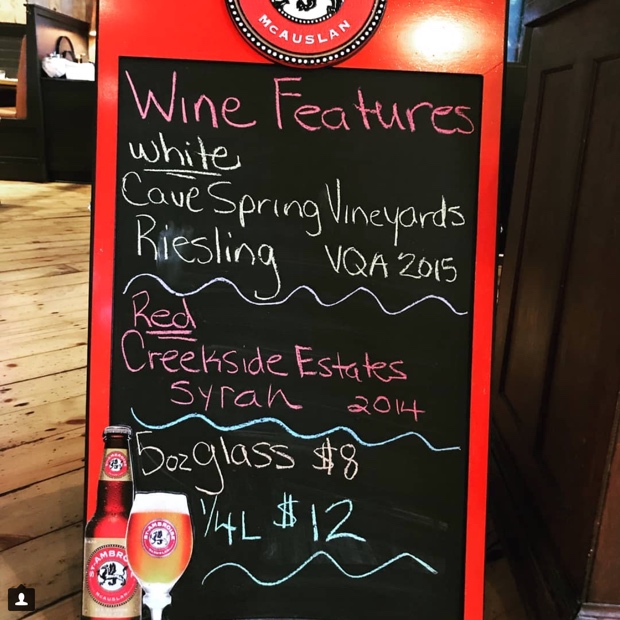
50 years of Vino Nobile di Montepulciano

Missed it by that much. #oldwine #vinonobile #sangiovese #vinonobiledimontepulciano #cantineriunite

During the eight-day locomotive migration through Anteprime Toscane in February 2017 there were nearly 1000 wines to try, mostly sangiovese in all its various genetic, clonal and stylistic fluctuations.  The aberration was in San Gimignano, a stop on the tour that I regrettably missed due to a deeper delve into Chianti Classico’s (even in) February verdant hills. One checkpoint and more specifically one tasting stood out from the rest. Fifty years of Vino Nobile di Montepulciano.

That the powers that be at the Consorzio del Vino Nobile di Montepulciano thought to amass ten wines spanning four decades and launching with that fateful year of 1967 was more than a stroke of regional genius. It was both a major risk to take and a gift of great generosity. There was no way of knowing how those early virgin wines of DOC origin would show or if in fact that life would still be left in them. Perhaps another shortlisted vintage or two was waiting in the wings just in case a 1967 or a 1975 failed to survive but regardless, some serious props, high-fives and sincerest thanks go out to the producers and decision makers of this most storied consorzio.

While some examples expressed themselves with more spirit and vitality than others, any doubt cast on the structure of the Montepulciano sangiovese has been vehemently cast aside. The prugnolo gentile and other (increasingly employed) varietal variants cultivated in the Valdichiana and Val d’ Orcia are more than a 50-year-old project. “The oldest documented reference to the wine of Montepulciano is from 789 in which the cleric Arnipert offered the church of San Silvestro or San Salvatore at Lanciniano on Mt Amiata, a plot of land cultivated with vineyards in the estate of the castle of Policiano. Later, Repetti mentions a document in 1350 (in his “Historical and Geographical dictionary of Tuscany”) which drew up the terms for trade and exportation of Vino Nobile di Montepulciano.”

“The Sixties brought a reawakening in winegrowing geared principally towards the production of Vino Nobile rather than Chianti. State and EU funds used by the wineries to convert their vineyards into conformity with the requirements of the DOC (1966), enabled new wineries to enter the market. Recognition of DOCG status came in 1980 and Vino Nobile began a new life.”

In advance of the 50-year seminar the Annata 2014 and Riserva 2013 vintages were presented. The challenge of the growing season showed the fortitude and the persistence of Montepulciano’s producers. You can throw a difficult set of weather patterns at the Vino Nobile but you can’t break their spirit. The ’14s are different, that much is clear, but more than enough quality, firm grip and structure is available to send these wines well into the next decade. They are a grounded bunch. The 2013 Riserva are more of an elegant crew, for the most part and as representatives of the multiplicity of sangiovese they are as falling snow, like the endless repetition of winter’s everyday miracle. They are also wines that do not swing their arms, an indication of a secretiveness of character. Which smarts into contradiction a connection to the ten 50 years of Vino Nobile wines. It explains how exciting it is to spend time with them in 2017.

Post Anteprima Vino Nobile we paid a visit to Avignonesi. Two extraordinary vertical tastings were held with proprietor Virginie Saverys, Max Zarobe and winemaker Ashleigh Seymour; Vino Nobile di Montepulciano 2014-2010 and Desiderio Merlot 2013-2010-2001-1998. “When I purchased Avignonesi in 2009 it was Mars, or Venus,” began Virginie, “it was not planet earth.” Today it is a model of Montepulciano consistency. Here are my notes on those Avignonesi vintages along with some Anteprima prugnolo and those 50 years of Vino Nobile di Montepulciano.

50 years of #vinonobile @consorzionobile #50anni #sangiovese #vinonobiledimontepulciano

Contucci Vino Nobile Di Montepulciano 1967, Vino Nobile Di Montepulciano, Tuscany, Italy (486068, Agent, WineAlign)

Contucci’s Vino Nobile di Montepulciano ’67 was produced during a significant year in world history. The first heart transplant, the Six-Day War, the Monterey Pop Festival, The World Exposition in Montreal, The first Super Bowl and the release of the Beatles’ Sgt. Peppers Lonely Heart Club Band. It was also the year Celtic beat Internazionale in the European Cup Final. Contucci’s Vino Nobile is from a time when there were maximum seven producers in Montepulciano and only the second vintage as a denominazione wine. A primitive wine from a primitive stage in the history of the area. If it’s not totally oxidized, it’s certainly most of the way there. Smells like a nearly petrified orange, fermenting lemons and toasted meringue. Certainly many white grape varieties in here. Old and chestnut barrels were used for a seven to eight month period of aging. Much more life shows on the palate, with lemon, orange, caramel and lanolin or paraffin. Lingers for a bit. More than interesting. Drink 2017.  Tasted at Anteprima del Vino Nobile di Montepulciano 2017, February 2017  andreacontucci  #contucciwinery  kylixwines  #cantinacontucci  @KylixWines  Contucci  Andrea Contucci  @KylixWines

Tramps like us. @consorzionobile #borntorun #1975 #vinonobile #fanneti #sangiovese #vinonobiledimontepulciano #toscana

Fanetti Vino Nobile Di Montepulciano 1975, Tuscany, Italy (WineAlign)

Fanetti’s Vino Nobile di Montepulciano almost defies 40 plus years having passed since 1975. The higher acidity may not exactly scream at this time but you can imagine it having done so for a long time in its harkening back to having been raised at a higher elevation. Fruit is completely gone (of course) but we’re still in forest floor, faint mushroom and compost. The acidity still kind of rages, incredibly and this smells like lemon wood polish but also musty leather. Twenty years ago would have been really nice. I like the mouthfeel, like old Rioja, really old, with a creamy and silken texture. Quite alive, despite the off-putting nose. This was worth the visit. Drink 2017.  Tasted at Anteprima del Vino Nobile di Montepulciano 2017, February 2017  #fanetti

Boscarelli Vino Nobile Di Montepulciano Riserva 1982, Tuscany, Italy (AgentWineAlign)

The Boscarelli acts like a much younger Nobile, from an exceptional vintage and a producer way ahead of its time. The key is to decide which side of the evolutionary fence we’re on, closer to that 1967 from Contucci or to what is happening today. This may actually be the turning point for Vino Nobile because it really has one foot entrenched in each world. Very much in the mushroom and truffle aromatic atmosphere, where sangiovese should feel free and comfortable to travel in the twilight of its golden years. This is beautiful, with some dark fruit persisting and acidity still in charge. You can imagine the old tannins but they no longer make any demands. Drink 2017-2020.  Tasted at Anteprima del Vino Nobile di Montepulciano 2017, February 2017  #PoderiBoscarelli  lucadeferrarildf  artisanal_wine_imports  #poderiboscarelli  Nicolò De Ferrari   Luca De Ferrari  @artisanalwineimports

Avignonesi Vino Nobile Di Montepulciano DOCG 1988, Tuscany, Italy (Agent, 943670, WineAlign)

Avignonesi’s Vino Nobile di Montepulciano 1988 picks up where its most excellent peers left off but also leads back into a quality level of parity tasted after Boscarelli’s 1982. This nearly 30 year-old sangiovese is not alone in its walk through the woods, leading to the autumnal mushrooms, unearthing the truffles and yet its trudge though the forest floor is even more prevalent. And then the intense pungency of porcini comes flying out of the glass. Good acidity still travels up and down the tongue and then it retreats so very drying on the finish. Wonderful look back. Drink 2017-2019. Tasted at Anteprima del Vino Nobile di Montepulciano 2017, February 2017  avignonesi  rogersandcompanywines  mdzbtz  @avignonesi  @rogcowines  @mdzbtz  @avignonesi  @rogcowines 

Poliziano Vino Nobile Di Montepulciano “Vigneto La Caggiole” 1988, Tuscany, Italy (AgentWineAlign)

Back in 1988 Poliziano’s Riserva style Vino Nobile di Montepulciano came from this single vineyard, the “Vigneto La Caggiole.” Named after an ancient farm and/or St. Mustiola’s “Caggiole” Parish, it comes from Cagio, a word in the middle ages meaning “a forest or a bounded area by forests.” When tasted side by side by each with the ’82 Boscarelli and the ’88 Avignonesi this Poliziano is much more reserved and muted aromatically so I’ll hedge a bet that the tannins are still in charge. Indeed this is the case but they are sweet and copacetic to fruit that persists, though only reveals its fleshy charms on the palate. A Vino Nobile yet very drinkable to date. Drink 2017-2020.  Tasted at Anteprima del Vino Nobile di Montepulciano 2017, February 2017  polizianowinery  noble_estates  @PolizianoAzAgr  @Noble_Estates  @PolizianoAz.Agr  @NobleEstates

Carpineto Vino Nobile Di Montepulciano 1988, Tuscany, Italy (AgentWineAlign)

Carpineto’s Nobile dating back 29 years is now wholly and totally volatile, of the vinyl curtain as carpeting on the forest’s floor. Some mushroom and lots of wood on the palate. Smoky and smouldering to a tart and still persistent, tannic finish. Still waiting for the settling though after three decades if it hasn’t happened yet it’s not ever going to. Would have offered serious and substantial pleasure when the fruit was still active but that finest moment was in the last decade. Drink 2017.  Tasted at Anteprima del Vino Nobile di Montepulciano 2017, February 2017  @CarpinetoWines  @UNIVINS  Carpineto Wines  @agence.UNIVINS  carpinetowines  univinscanada

Tenuta Di Gracciano Della Seta Vino Nobile Di Montepulciano 1995, Tuscany, Italy (Agent, 487074, WineAlign)

The Della Seta ’95 hosts and boasts an aromatic combination of forest earthy and floral pretty and so is this most interesting 22 year-old Vino Nobile, with dried wild strawberry (fragaria vesca = fragola di bosco), fruit, leaves, mulch and all. Quite tart and with some real texture, more structure and remarkable considering this was produced at the beginning of the house’s history. Well preserved and if it holds no candle to Chianti Classico or Sienese/Florentine Hills IGT sangiovese from the same excellent vintage, it surely lives to tell a similar tale. Drink 2017-2020.  Tasted at Anteprima del Vino Nobile di Montepulciano 2017, February 2017  tenutadigraccianodellaseta  @GradellaSeta  @GraccianodellaSeta

Salcheto Vino Nobile Di Montepulciano 1995, Docg Tuscany, Italy (Agent, 685180, WineAlign)

The volatility and Bretty quality is there but I don’t imagine it so much more aggressive than it may have been at the start. Dried fruit is full on and in with very little in the way of mushroom and truffle. The small French oak barriques have certainly given this some preserve so that the fruit can turn to preserves on the palate. Good acidity persists as does so much residual spice from the wood. Drink 2017-2018.  Tasted at Anteprima del Vino Nobile di Montepulciano 2017, February 2017   #salchetowinery  hobbsandcompany  @SalchetoWinery  @AMH_hobbsandco  @Salcheto  @HobbsandCo

Bindella Vino Nobile Di Montepulciano 1999, Docg Tuscany, Italy (WineAlign)

The wood used at the time is clearly in full view though in a settled, creamy and gently spicy aromatic way. This has evolved quite quickly and efficiently, now into a sangiovese turned to balsamic, five spice and soy wax. Was and still is a rich wine though I would bet that 1998 has fared better. The acidity is still quite prevalent, the tannins not so much. Two shots of doppio espresso mark the tail and it lingers long enough to suggest a couple of more years at this stage. Melts away like chocolate on the tongue. Drink 2017-2018.  Tasted at Anteprima del Vino Nobile di Montepulciano 2017, February 2017  #bindella  #tenutavallocaia    @bindellavallocaia

Tenuta Valdipiatta “Vigna d’Alfiero” Vino Nobile Di Montepulciano 1999, Docg Tuscany, Italy (AgentWineAlign)

Valdipiatta’s Vigna d’Alfiero is not quite as evolved a 1999 as the Bindella with some more presentable and viable fruit life available, though the wood is very sheathing and in full couverture. Balance is better though because the acidity is finer and still persistent. Tannic and drying, this is exactly what I would expect for 18 year-old Vino Nobile. Drink 2017-2020.  Tasted at Anteprima del Vino Nobile di Montepulciano 2017, February 2017  #tenutavaldipiatta   rogersandcompanywines  @TenValdipiatta  @rogcowines  @TenutaValdipiatta  @rogcowines

Poderi Boscarelli

Boscarelli Prugnolo Rosso De Montepulciano DOC 2015, Tuscany, Italy (Agent, $27.95, WineAlign)

Boscarelli’s use of varietal alias for the local sangiovese is both obvious and modern in approach. Their’s is a fresh and vibrant Rosso, lithe and unencumbered. Fragrant, sweet smelling roses lift the spirit and second the motion for needing no ornamentation. This completely self-adorned prugnolo is gentile but just firm enough a foil for the antipasti. Drink 2017-20219.  Tasted at Anteprima del Vino Nobile di Montepulciano 2017, February 2017

Boscarelli Vino Nobile De Montepulciano DOCG 2014, Tuscany, Italy (Agent, $51.00, WineAlign)

A firm ’14, not so unusual in itself and yet just ripe enough, with fragrant roses as indicated in the prugnolo ’15. Yet here the flowers also deliver a dried and saline line while everything seems to soften and emancipate on the palate. Notes of a future with tar and tabby developed red fruit comes dreamy yet clear with spice notes by barrel and varietal keeping the youthful spirit alive.  Drink 2018-2022.  Tasted at Anteprima del Vino Nobile di Montepulciano 2017, February 2017

Boscarelli Vino Nobile De Montepulciano Riserva DOCG 2012, Tuscany, Italy (Agent, $63.95, WineAlign)

In accord of time under its belt and meltable structure afforded by the barrel it is the Riserva that strikes a now balance between ripe fruit and the firm grip of Vino Nobile tannin. I Boscarelli reference the least amount of volatility but the particular acidity is quite fastening as it works in cohorts with the tannin. These are musical wines of ligature and kedging anchors. While the Annata 2014 may have more bob in its sailing drift the Riserva is the stable schooner. It’s just a question of approach. Drink 2018-2024.  Tasted at Anteprima del Vino Nobile di Montepulciano 2017, February 2017

Boscarelli Vino Nobile De Montepulciano Riserva Sotto Casa DOCG 2012, Tuscany, Italy (Agent, $86.95, WineAlign)

Sotto Casa is a single-vineyard prugnolo from “beneath or below the home,” as the nomenclature suggests and is the house Vino Nobile paved with 15 per cent cabernet sauvignon and five merlot. I don’t take huge stock in the need to discuss Bordeaux varietal addendum versus the endemic though in this case the floral lift and forgiving nature is worth a word or two. The 20 per cent expatriate accents make for a prugnolo of inclusion, in this case bringing the best out of that local sangiovese. Richness goes above and beyond, with nary a shrinking or chocolate shaken moment. The freshness here in such Riserva clothing is to be lauded. Really fine. Drink 2018-2024.  Tasted at Anteprima del Vino Nobile di Montepulciano 2017, February 2017

Boscarelli Vino Nobile De Montepulciano Riserva Il Nocio DOCG 2012, Tuscany, Italy (Agent, $148.95, WineAlign)

With some variegation in the alluvial soil to include sand and clay this 100 per cent sangiovese is drawn from the east side of the estate. The four hectare, 280 to 350 metres of altitude Vigna del Nocio has been owned by Poderi Boscarelli since 1988. It is here where terroir, aspect and existential vine placement changes everything. More than four and less than 5,000 bottles of the vineyard’s finest produce are gifted in this wine, “the nuts,” but also the bolts of Boscarelli’s noble fruit. Yes there is this bifurcate character about it, at once roasted nuts meets frutta seca and then this depth, seriousness and structure. The forked Vino Nobile is both blessed by that Boscarelli grip and lifted into noble elegance. Three years will pass and little will change. I’d expect it to linger for 15 more. Drink 2019-2027.  Tasted at Anteprima del Vino Nobile di Montepulciano 2017, February 2017

Tenuta Valdipiatta

Tenuta Valdipiatta Pinot Nero Rosso Di Montepulciano IGT 2008, Tuscany, Italy (AgentWineAlign)

This small lot production is one of the most unique wines made in the Montepulciano hills, from just half a hectare on sand and clay. The vineyard was planted in 2000 to what must have been some whispers, giggles and closet envy, at the base of the hill beneath the winery. Dark berries, red ropey, ruby yet firm pinot nero fruit leads a wine of amazing toughness and grit. This must have really been something to behold in its first two or three years. All terroir and the hardest of nuts to crack. It has now softened somewhat but I wonder if in 2000 they could have known what might happen. The vines should hit their elegant stride beginning with perhaps the 2015 vintage, would be my best guess. Drink 2017-2019.  Tasted at Anteprima del Vino Nobile di Montepulciano 2017, February 2017

Tenuta Valdipiatta Rosso Di Montepulciano DOC 2015, Tuscany, Italy (AgentWineAlign)

Valdipiatta’s Rosso was just recently bottled, with 10 per cent mamaiolo and canaiolo in support of the prugnolo. It spent only three months in (20 per cent) used barriques and like the pinot nero is truly a terroir driven wine. While certainly dusty, firm, deeply clay fruit deepened its musicality plays anything but an astringent tune. Drink 2017-2019.  Tasted at Anteprima del Vino Nobile di Montepulciano 2017, February 2017

Tenuta Valdipiatta Vino Nobile Di Montepulciano DOCG 2014, Tuscany, Italy (AgentWineAlign)

A multi-barrel slumber of six months in small barriques and 12 months in 500L Slavonian casks has ushered this firm sangiovese (with five per cent canaiolo) through the world of the traditional and the historically noble. In spite of its old school charm in upbringing it’s quite the amenable one with a wide reaching, outstretched arm of generosity marked by a salty-sweetness of candied-savoury accents. It’s quite the minty cool and fruit prosperous Vino Nobile that while tending to grippy is almost always open for business. Drink 2018-2022.  Tasted at Anteprima del Vino Nobile di Montepulciano 2017, February 2017

Tenuta Valdipiatta Vino Nobile Di Montepulciano DOCG 2013, Tuscany, Italy (AgentWineAlign)

The 2013 Vino Nobile is a softer, understated in grip version of the ’14, still terroir-driven but from a less demanding albeit singular vintage. What’s different, aside from an extra year beneath its legs is the presence of sweeter and finer-grained tannins but also a wider, open door of invitation and possibility. The Valdipiatta acidity is quite consistent, as is the traditional way of styling. A pattern is forming, of the ideal out of which an intrinsic understanding is able to cogitate the links in these wines of place. Strong genes run through the lineage of the Valdipiatta family. Drink 2018-2023.  Tasted at Anteprima del Vino Nobile di Montepulciano 2017, February 2017

Tenuta Valdipiatta Vino Nobile Di Montepulciano Riserva DOCG 2013, Tuscany, Italy (AgentWineAlign)

Unlike the allure into a smiling reception offered up by the Annata 2013 the Riserva is conversely closed and not yet in a forgiving mood. The firmness of fruit, tart shrill of acidity and fineness of tannin all combine in procurement of one seriously intense Vino Nobile. The orotund voice and dramatic attitude follow the company line and in the Riserva do so with great hyperbole. It’s quiet remarkable actually. Unmistakable Valdipiatta. Drink 2019-2025. Tasted at Anteprima del Vino Nobile di Montepulciano 2017, February 2017

Avignonesi’s Virginie Saverys with Wine & Spirits Magazine’s Stephanie Johnson, on her right and The Reverse Wine Snob Jon Thorsen, on her left

Avignonesi

Avignonesi Vino Nobile Di Montepulciano DOCG 2014, Tuscany, Italy (Agent, 943670, $41.95, WineAlign)

Quite relaxed for sangiovese from the demanding coincidences of implausibility that arose out of the 2014 vintage, clearly directed as such to drink well while others have to wait. Tannins are certainly ripe and whatever agitative spearing or sparking that seems to be going on is given a healthy and humid oak bathing. Not so much found in the elegant oasis occupied by either or both ’12 or ’13 but a very grounded and centred Vino Nobile nonetheless. Drink 2017-2021.  Tasted at Avignonesi February 2017

Avignonesi Vino Nobile Di Montepulciano DOCG 2013, Tuscany, Italy (Agent, 943670, $41.95, WineAlign)

Like so many 2013s the fruit is quite plussed, pure and distinctly raw, dusty, cured and naturally craft sangiovese. The wood also seems to be in a diminutive position and so distinguishes the fruit though when all is said and done this equivocation can only be from Avignonesi. Terrific spice elements rub in and out of every crevice. Long like 2012, elegant in of itself and it’s quite possible the better or best is yet to come. The elusiveness of development means that we can’t yet really know. Drink 2019-2024.  Tasted at Avignonesi February 2017

Avignonesi Vino Nobile Di Montepulciano DOCG 2012, Tuscany, Italy (Agent, 943670, WineAlign)

The vintage is the one with the reductive “lamentala,” but merely just a fraction of that idea and is quick to blow off into the Val di Chiana. “We have to be careful with sangiovese,” cautions owner Virginie Saverys, “it has a very thick skin.” Extraction must be a delicate process and so a gentle délestage is performed, plus from the bottom up, “not a very physical pump over from the top.” This leads to big fruit, well endowed by barriques and tonneaux towards and always elegant result. Drink 2018-2023.  Tasted at Avignonesi February 2017

Avignonesi Vino Nobile Di Montepulciano DOCG 2011, Tuscany, Italy (Agent, 943670, WineAlign)

The 2011 was augmented by late August into September warmth so late phenolic ripeness made for an adjustment to picking and a new wine was born. Though less floral and perhaps not quite as elegant as 2010 the slower developed will and power were a perfect fit for an Aussie winemaker’s roots. You can’t help but note the shiraz-like attitude in this ’11 but balance is afforded by a more extreme acidity. With thanks to prudent picking passes the greens were avoided and all was gifted by the reds and the blacks in one massive but now mellowing coexistence. Drink 2017-2021.  Tasted at Avignonesi February 2017

Avignonesi Vino Nobile Di Montepulciano DOCG 2010, Tuscany, Italy (Agent, 943670, WineAlign)

This first year production under the transfer of full ownership to Virginie Saverys was marked by a long, cool growing season and as a result, a lovely, long-developed ripeness. The 2010 Vino Nobile is one of alcoholic meets polyphenolic balance. Though quite young yet there is a triumvirate fineness of fruit, acidity and tannin in a sangiovese where richness and elegance meet at the intersection of texture. This is a wine of shoulders lowered, at ease and at peace. Ripeness is the virtue on a road that flows like a river. Drink 2017-2021. Tasted at Avignonesi February 2017

Avignonesi Desiderio Merlot Toscana IGT 2013, Tuscany, Italy (Agent, SAQ 10993456, $72.00, WineAlign)

Desiderio is Avignonesi’s wine of “desire,” an IGT usually made with 15 per cent cabernet sauvignon though it’s as much a varietal wine as any sangiovese, or perhaps better as a comparison to Napa Valley merlot. From the Val di Chiana, a wine looking for Chianina beef. Proprietor Virginie Saverys explains the terroir is “the southern most limit of making a decent merlot in Tuscany.” Any further south and “you can lose your whole crop to the heat over the course of three days.” Concentration due to clay rich soils and a consumption of oak by healthy fruit like there is no tomorrow. It’s quite remarkable how little heat spiked spice is found on the nose. Smells as merlot should with just a touch less than obvious jamminess, a dusty and complex emulsion of fruit and herbs. The bite, spice and concentration well up on the palate. Desiderio is intense and implosive merlot. Drink 2019-2031.  Tasted at Avignonesi February 2017

Avignonesi Desiderio Merlot Toscana IGT 2010, Tuscany, Italy (AgentWineAlign)

From a selection off of 32 hectares of merlot with 15 per cent cabernet sauvignon, the 2010 Desiderio is not unlike ’13 but with more elegance, softness and demure. The spice is again hidden and here in ’10 it’s really a full case of fruit and what seems at first like nothing else. Time and the effects of that vintage have already conspired to soften a bring about this creamy mouthfeel and texture. Vanilla, chocolate ganache and a restrained sense of power. It’s quite pretty, ready to drink and yet there is this feeling that it’s not quintessential Desiderio. It’s beautiful nonetheless. Drink 2019-2031.  Tasted at Avignonesi February 2017

Avignonesi Desiderio Merlot Toscana IGT 2001, Tuscany, Italy (AgentWineAlign)

From a classic, important and proven Tuscan vintage and for merlot, very good, if not wholly and unequivocally exceptional. The wood on 2001 carries more weight and massive couverture and at 16 years of age the rendered effect is dripping in chocolate and fine espresso. There is this sense of exotic spice in airy accents, like five-spice and liquorice, but then a swirling descent into demi-glacé. Tannin and acidity are both a bit lower here, a reminder of time and evolution, not the most lashing in any shape or form. Paolo Trappolini was the winemaker for this 2001, a powerful merlot with plenty of glory. Drink 2017-2023.  Tasted at Avignonesi February 2017

Avignonesi Desiderio Merlot Toscana IGT 1989, Tuscany, Italy (AgentWineAlign)

Proof is in the varietal pudding that merlot is much more forgiving than sangiovese and also more adaptive in its longevity. This ’89 is from a time when the winemaker could not have truly known what would happen or have the varietal expertise to provide the tools for making exceptional merlot. That was Ettore, one of the two brothers (along with Alberto Falvo) who procured a merlot of structure and this passive commitment to time. It’s more welled up with chocolate but there is this tension that obviously never wavered nor has oxidation really crept in. Incredible really. Drink 2017-2021.  Tasted at Avignonesi February 2017

The Valdichiana from the terrace of the Enoliteca del Consorzio del Vino Nobile di Montepulciano

Good to go!

Godello

Twitter: @mgodello

Instagram: mgodello

WineAlign