Fear not dear Ontario wine consumer. Neither advertisement nor earworm jingle will be implanted inside your head, nor a benediction to invoke the virtues of Solaia or Sassicaia neither. There will be no mention of the X-word but like it or not, it has begun. The VINTAGES machine got going this past Saturday with its first big buying time of year roll-out on October 29th. For 11 months a year the $30-$3,000 category appeals to one per cent of the wine buying population but increases to perhaps five when the bells begin to ring. By my count there are 15 (or so) October 29th release big guns now on shelves, half of which are reviewed right here.
Domaine De Pignan Châteauneuf Du Pape 2013, Ac Rhône, France (473678, $36.95, WineAlign)
In 1989 Frédéric Charvin began to work his family’s vineyard, like Louis and René Pécoul, Pécoul François and Pécoul Antoine before him. His Domain goes back 160 years and the average age of Pignan’s vines are 60 years, three of them are a hundred years old. Subtle for Châteauneuf Du Pape (if that can even be such a thing) with mineral mourvedre and soild syrah funk streaking through the grenache. The other varieties add up to 11 per cent and we should not discount their blending capabilities, for structure and for balance. Equanimity is the name of the game in this esteemed section of the southern Rhône Valley and kudos to Pignan for bringing reason and reserve to the table. The potential here is 10 plus years and yet plenty of value and pleasure will be afforded along the way. Drink 2018-2025. Tasted October 2016 #domainedepignan@terroirtoronto@VINSRHONE
Zuccardi Zeta 2012, Uco Valley, Mendoza, Argentina (163725, $39.95, WineAlign)
Zeta is a vital and conspicuous malbec-dominated bottling from careful fruit selection for Jose and Sebastian Zuccardi. The fruit is chosen from specific lots out of La Consulta and triggered by catalyst cabernet sauvignon grown in the Gualtallary Vineyards. These two locales rank with Mendoza’s best and the effects of such ripe extracted fruit in combinative if combative cohorts is one of depth, layering and extreme warmth. The alcohol and acidity on top of massive fruit extraction is beholden to nothing. This one stands firm, confident, tall and with great conceit. It is a force to be reckoned with. Drink 2016-2019. Tasted October 2016 @SebaZuccardi@ZuccardiWines@FamiliaZuccardi@winesofarg@ArgentinaWineCA
Beringer Private Reserve Chardonnay 2014, Napa Valley, California (26682, $47.95, WineAlign)
Though richly aromatic and textured this is the first Private Reserve in many years to act with this kind of beautiful reserve. The barrel aging is less engaging than the previous, lets say, 17 years and so fruit is smartly in play. A bite of crisp apple while whiffing the early baking scents of pie is the conjuring in revelrous demure. Here a minor hypnosis from a delicious Beringer that will only improve with a year or two in bottle. Drink 2018-2022. Tasted October 2016 @beringervyds@NapaVintners@CalifWines_CA
Gallo Signature Series Cabernet Sauvignon 2013, Napa Valley, California (394197, $50.95, WineAlign)
The three-R guarantee of ripe, rich and robust from winemaker Gina Gallo accompanies the Signature Series cabernet sauvignon. Hue and structure addendum are provided by a combined five per cent petit verdot and petite sirah. William Hill is the primary source of fruit from Vaca foothills, rocky, thin and nutrient-deprived Silverado benchland soils. Monte Rosso and a few bucket loads of petite sirah from the Louis Martini Thomann Station Vineyard round out the accumulation. The parched vintage is responsible for this parged cabernet, juicy by Cassis and stereotypical blackberry but managed to further warmth with dried black fig and a barque char on brisket straight from the smoker. The naturally-flavoured bovine-bresaola charcuterie crust is so very Napa Valley hillside issue so ageability is yet another Gallo guarantee. Drink 2018-2025. Tasted October 2016 @GalloFamily@Winegirl23@NapaVintners@CalifWines_CA
Fattoria Dei Barbi Brunello Di Montalcino 2010, Tuscany, Italy (928028, $53.95, WineAlign)
Quite approachable for the normally firm and hands off in its youth Barbi. Always with a foot firmly rooted in the past and yet the house seems to be slowly waltzing into the modernity of the future. This has hallmark roses and cherries under leathery hides but also a beautifully bright and dynamic luminescence. It also carries a silky texture that should have it pause less than the habitual five years to fully shine. So, a newer and earlier gifting Sangiovese and that’s quite alright. Drink 2017-2023. Tasted January 2016 @FattoriaBarbi@ConsBrunello@Noble_Estates
Though it may long ago have been considered the quintessential one, there may be no other Alsatian gewürztraminer more important than Weinbach’s Cuvée Laurence. The reasons are manyfold but begin and end with memory and legacy. This was daughter and sister Laurence Faller’s prized wine, the wine she put her name to, that defined her gracious winemaking in echo of the estate she worked. Her family has carried the torch and yet her touch is all over this wine. Calm, composed, balanced and ethereal. Laurence is a clear expression of the marly limestone soil beneath the lieu-dit of Altenbourg, located at the base of the great Grand Cru Furstentum vineyard. Where else do you find gewürztraminer of such delicasse, from which classic aromas (rose petal, creamy to boozy-syrupy tropical fruit) and impossible unction combine without ukase? Nowhere. The acidity does not act with impulse. No, it rings, supports and lingers. The extract is intense but out of mind. Exceptional vintage. Drink 2018-2033. Tasted October 2016 #domaineweinbach@AlsaceWines@drinkAlsace@ACT_Alsace@VinsAlsace
Stony Hill Chardonnay 2010, Napa Valley, California (444471, $71.00, WineAlign)
Time has been kind to this Napa Valley chardonnay, with the score drawn up in fruit and wood fully settled and into calm denoument. The hard bite into green apple crossed with butterscotch candy is no sugary afterthought and the elastic viscocity perfectly in tune with the waning acidity. If middle age is a thing for Napa Valley chardonnay then here you have it. The length has yet to find the door. Drink 2016-2019. Tasted October 2016 @StonyHillWine@NapaVintners@CalifWines_CA
The firmness of the vintage uncouples and engages the eyes open wide with a Quintarelli presented so taut and so tense. Just the thought of how long it will take for this Valpolicella to not only open up but develop into secondary life is frightening. There are aromas here I can’t or don’t presently recall. Currants, fennel, tobacco, cedar, tar, roses. Or maybe I do. The figs and dried plums are there but either so faint or conjured up from memory of how things ought to be. This Quinterelli is designed as it needs to be. Young, unapproachable, deferential and miles away from nowhere. It may become one of the longer lived. Drink 2020-2035. Tasted September 2016 #Quintarelli@LiffordON
Over at WineAlign we recently introduced a new feature in our already comprehensive coverage of the bi-weekly VINTAGES releases. If I Could Buy Only One offers subscribers a first in line, get inside the minds of four Ontario critics. As part of the overall recap on each release David Lawrason, John Szabo M.S., Sara d’Amato and I are asked the question: “If you could buy only one wine from this release – which one would it be and why?”
When it comes to tasting, assessing and scoring VINTAGES wines there is simply no equal to what WineAlign covers in Ontario. As a group we four are sure to collectively provide at least one tasting note and score for 100 or more wines per release. In most cases there are two and sometimes three or even all four. Where else in print or online can you access such a synoptic scope of sweeping current information?
We are not alone but we are at the head of the game. Our colleague Michael Vaughan is the only critic who tastes every wine on every VINTAGES release. His nearly three decades of utter dedication and encyclopedic memory is nothing short of incredible. Tony Aspler covers the releases and contributes to Vaughan’s newsletter. Tony’s decades of experience are invaluable to both his and Michael’s readership. Beppi Crosariol offers a handful of concise and epigrammatic weekly recommendations in the Globe and Mail, Carolyn Hammond in a Toronto Star nutshell and Rod Phillips meaty and marrowy in the Ottawa Sun.
The LCBO media tasting lab is frequented by many Ontario writers. Most notable is Tim Appelt. Tim sounds off extensively on the releases. Eric Vellend publishes recos in his column “Bottle Shop” for Billy, the Toronto Island Airport’s magazine. André Proulx brings his own ignited take to his website, Andre Wine Review and Michael Pinkus publishes his broad brushstroke on his Wine Review. Erin Henderson does so on The Wine Sister’s website and Dean Tudor at Gothic Epicures World Wine Watch. If you follow what comes through VINTAGES and sequester help and ideas, who do you turn to? The answer is simply WineAlign.
When asked to single out just one I chose another Chablis from the current September 17th release. Look for the stellar Simonnet Febvre & Fils Côte De Lechet Chablis 1er Cru 2013 review in my upcoming report on Chablis in Ontario. Today I’ve got 13 other solid recommendations from a wide range of places.
Man Family Warrelwind Sauvignon Blanc 2015, Rocca Delle Macìe Chianti Classico 2014, Dominio Dos Tares Estay Prieto Picudo 2012, Les Darons 2014, Pazo Das Bruxas Albariño 2014, Talley Vineyards Bishop’s Peak Chardonnay 2014
Man Family Warrelwind Sauvignon Blanc 2015, Wo Western Cape, South Africa (461004, $13.95, WineAlign)
Man’s upper reaches sauvignon blanc whirls and winds around open-affable, semi-pungent fruit and churns like citrus juice through a windmill. This multi-purpose white speaks with great acidity and deep tart flavours. Just a touch of sweet peach with lime zest and a spritz keeps it spinning. Lots of bang for just a few bucks. Drink 2016-2019. Tasted September 2016 @MANVintners@vonterrabev@WOSACanada@WOSA_ZA
Tasted from a half bottle, The Zingarelli Chianti Classico 2014 is as expected, classic. Hits all the appropriate and life-affirming sangiovese notes; cherries, fresh leather, dried figs, old wood walls, bright acidity and fine-grained tannin. When commercial, protective and attention to detail get together in Chianti Classico, this is what comes out. Expectations met and dinner accompanied. Ready to drink now and should be so because of the freshness afforded. Drink 2016-2019. Tasted September 2016 @roccadellemacie@chianticlassico@ProfileWineGrp
Dominio Dos Tares Estay Prieto Picudo 2012, Vino De La Tierra De Castilla Y León, Spain (393140, $15.95, WineAlign)
Flat out juicy prieto picudo if you must know is 100 per cent employed out of Castilla Y Leon. Drinkable and gulpable don’t get much better than this, like spicy gamay but with more weight. You can put the truck in reverse and open the back doors wide for this and its sultry sway from French and American oak. The oak does not intrude mind you but it certainly adds texture and punch. Utterly delectable. Drink 2016-2018. Tasted September 2016 @DominiodeTares@oenophilia1
Les Darons 2014, Ap Languedoc, France, Languedoc-Roussillon, France (448464, $17.95, WineAlign)
Fresh and dramatic Languedoc with amazing floraility, namely violets but also rose bushes in a mid-summer swelter. Vitality is ensured by the top notch acidity and the tempering here has nothing to do with chocolate. Tart just right and back bite. While some from the warm region seem “toujours le cup entre demux chaises,” this Jeff Carrel red is right where it needs to be, comfortable in its own skin. No Ogres des Barback. Simply Les Darons. Drink 2016-2019. Tasted September 2016 @LanguedocWines
Pazo Das Bruxas Albariño 2014, Do Rias Baixas, Spain (417667, $19.95, WineAlign)
This is a fine example of Albarino bringing miles of rich, ripe fruit into a brew of ripping acidity. Very mineral motive as as well, so with so much stewing in the pot you can expect a whole lot of vigor, revelry and magic. The citrus on the back side is nothing short of scintillant-spurred from lemon and lime. Miles from balmy, this is quite electric Galicia. Witches’ Brew, Bitches Brew in a Spanish Key. May not be a revolutionary bottle but it’s as close to jazz-rock fusion Albarino as you are likely to find. Drink 2016-2020. Tasted September 2016 @TorresWines@RiasBaixasWines
Talley Vineyards Bishop’s Peak Chardonnay 2014, Edna Valley, Central Coast, California (318360, $27.95, WineAlign)
Another well-managed, keep it in the cool-climate family entry-level chardonnay from Brian Talley, keeping the faith and the successful streak alive for the idea behind Edna Valley as an important haven for chardonnay. It’s nearly unoaked, with just some neutral barrels to keep it leesy and creamy but acidity and umami are clear to lead the way. Excellent effort if on the lean and mean side. Good length. Drink 2016-2019. Tasted September 2016 @TalleyVineyards@TheVine_RobGroh
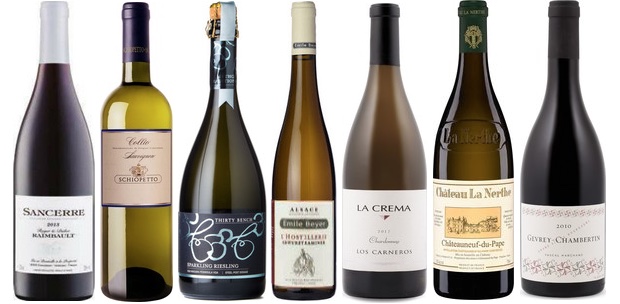
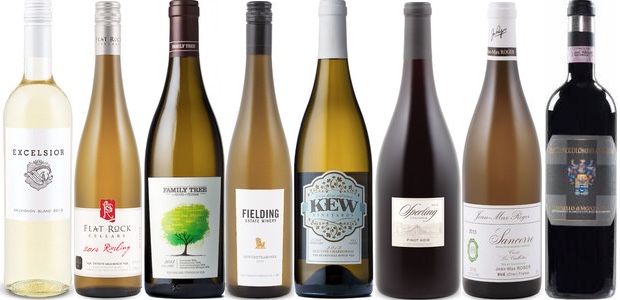
From left to right: Roger & Didier Raimbault Sancerre Rouge 2013, Schiopetto Sauvignon 2013, Thirty Bench Sparkling Riesling, Emile Beyer L’hostellerie Gewürztraminer 2012, La Crema Chardonnay 2014, Château La Nerthe Châteauneuf Du Pape Blanc 2014 and Pascal Marchand Gevrey Chambertin 2013
Roger & Didier Raimbault Sancerre Rouge 2013, Ac Loire, France (446401, $28.95, WineAlign)
Cured, natural, direct and experiential red Sancerre. A case of hands-off winemaking if there ever was, leaving exceptional fruit to walk the road and find its own way. Red berries, currants and just a hint of natural smoke. Savoury not even on its radar. Very fresh and alive. Freedom in red Sancerre. Drink 2016-2019. Tasted September 2016 @LoireValleyWine
Ripe, pungent and forthright Collio sauvignon blanc from the regional leader Schiopetto, culled from top level terroir and exercised with great intent. No Aqualung here, no “start away uneasy.” Dives into stony, flinty and mineral tangy waters then emerges to tell a tale of richness and mille-feuille layering. Top level sauvignon blanc for anywhere but from a very specific, agriculturist place. Finishes with a creamy lemon curd and a shot of adrenaline. If any sauvignon blanc could help solve the answer to the distinction between religion and God, Schiopetto’s could very well be the one. Drink 2016-2022. Tasted September 2016 @schiopetto@LeSommelierWine
I will stand to be corrected but this first such sparkler from Thirty Bench (it’s my first) and its dry riesling stoicism is a first in its singular way for Ontario. Using a small dosage from Steel Post Vineyard riesling fruit, the quality level in this non-vintage bubble (but I would think that the primary vintage fruit is 2014) is elevated with that world-class juice and yet aridity is not compromised. The subtle, rich, elongated and amalgamated orchard fruit aromatics are pure Beamsville, Thirty Bench and Emma Garner with well-rounded Niagara Peninsula Sparkling couverture. One, Garner wouldn’t waste a thimble-full of her riesling to make less than stellar sparkling wine and two, it’s really good. Drink 2016-2022. Tasted September 2016 @ThirtyBench@PellerVQA
Emile Beyer L’hostellerie Gewürztraminer 2012, Ac Alsace, France (462556, $39.95, WineAlign)
The tense and focused aromatics lead the way in this very generous gewürztraminer, classically styled to be off-dry but the sweetness is the furthest thing from your mind. Seeping rose petals and pure lychee syrup are graced with lemon zest, fennel frond and a curious note of rooibos tea. An exemplary vintage for an elixir that never cloys but just touches on something spicy and thinks about the bitterness of nuts though never really goes there. Subtle, refined and Eguisheim cultured from Emile Beyer. So impressive and a steal to drink in its first 10 years. Drink 2016-2022. Tasted September 2016 @EmileBeyer@AlsaceWines@drinkAlsace@VinsAlsace
La Crema Chardonnay 2014, Los Carneros, Sonoma County, California (184929, $39.95, WineAlign)
Experience, vintage and location will conspire to deliver profundity when the winemaker is attuned to available excellence and in tune with the vines. La Crema’s Elizabeth Grant-Douglas has a large, who’s who and what’s what portfolio to plate. She does so with broad, brushstroke ability and triads. In 2014 she has simply dialled into Los Carneros. The cool, temperature mitigated rolling hills, wind and aspect/exposure of this largest appellation straddling Napa and Sonoma does wonders for Chardonnay. Here in ’14 the third of the drought vintages is cradled with zest, vitality and pure energy. If you like nougat then have a chew of this one. If rich and unctuous Champagne with a bit of age is your thing you may just sit back and sigh. This wine was fatter previously, vegetal and just too easy. Here it sings “cause it fits in well with the chords” its playing. Right in tune. “Getting in tune with the straight and narrow.” The line that runs through Carneros with chardonnay the voice and La Crema the orchestra. Drink 2016-2020. Tasted September 2016 @LaCremaWines@bwwines@sonomavintners@thesirengroup
Château La Nerthe Châteauneuf Du Pape Blanc 2014, Ac Rhone, France (704429, $56.95, WineAlign)
This is quite closed for white Châteauneuf-du-Pape, remarkable that way and dramatically caught between the rocks and stones of its upbringing. There is nothing yet fleshy or flashy about it but considering how tightly wound it is you just have to know that revelry is up around the bend. So many stone fruits will reveal during the unravel. At this rigid dry extract and carpeted stage something microbial stands out but this too shall pass. The grip is firm and the focus leering. A structurally imposing La Nerthe with the will to live 15-20 years. Drink 2018-2029. Tasted September 2016 #ChateauLaNerthe@WoodmanWS@VINSRHONE
Pascal Marchand Gevrey Chambertin 2013, Burgundy, France (286450, $59.95, WineAlign)
Sweet, expertly extracted and gently pressed fruit provides the bassinet for a subtle, charming and effluent pinot noir from Pascal Marchand. This falls on the lithe and graceful side of pinot noir with well-managed oak and an inherent structure that speaks as softly as the fruit but that does not mean its not capable of stretching this into a second decade. This is really pretty stuff. Would love to see its secondary stage and later fruition next decade. Drink 2019-2025. Tasted September 2016 @pasmarchand@Burgundy_Direct@BourgogneWines@vinsdebourgogne
Some folks in Ontario know quite a lot about the B.C. wine industry but they are few and far between. Wine professionals with decades of experience and those who have travelled extensively to the Okanagan Valley and Vancouver Island have their fingers pointed in the right western direction. But most of us living and imbibing here in Ontario are clueless as to the breadth of B.C.’s wine culture. It’s not our fault. Our government is keeping us in the dark.
Ontario still refuses to agree that it should not be illegal to carry or ship wine for personal use across provincial borders. That issue is at the forefront of what keeps Canada’s wine regions isolated from one another. The Canadian Vintners Association (CVA) recently met for their annual AGM in Kelowna, B.C. The CVA is the industry’s governing board that deals with national regulatory issues, standards and policies. The idea of direct to consumer interprovincial shipping was again tabled and discussed with five MP’s from Ontario and B.C. in attendance. WineAlign’s David Lawrason was there.
“The politicians and CVA members were most vocal about getting Canadian wine moving freely and directly across all provincial boundaries in Canada. Alas, there was no breakthrough to announce in terms of more provinces dropping their opposition, but I was surprised by how loud, frequent and public the CVA and its members, as well as the politicians, have become – insisting that action be taken sooner rather than later. There was a mood in the room.” Still Ontario consumers continue to be ignorant about the wines of British Columbia. It remains to be seen if the recent CVA meeting will help constitute a step forward.
Back in June we took the WineAlign National Wine Awards of Canada on the road and hunkered down in Penticton, British Columbia to assess and pick winners from over 1,500 Canadian produced wines. And we did so much more. First we paid a visit with The Wines of British Columbia for the Judgement of B.C. The second annual cage match was hosted by the B.C. Wine Institute and took place on Tuesday, June 21, pitting 12 B.C. Wines against 12 acknowledged global benchmarks. Riesling and Pinot Noir squared off, curated by DJ Kearney and judged by a who’s who of Canadian wine writers, critics and educators, along with international WineAlign Awards judges Dr. Jamie Goode and Elaine Chukan Brown.
Max Ferd. Richter Graacher Himmelreich Riesling Kabinett 2013 from the Mosel Valley, Germany placed first in the Riesling category, followed by two B.C. entries, CedarCreek Platinum Block 3 Riesling 2014 BC VQA,Okanagan Valley, B.C. and Wild Goose Stoney Slope Riesling 2013 BC VQA,Okanagan Falls, B.C. Three international Pinot Noirs medalled, Bouchard Père Premier Cru Beaune Clos de la Mousse Monopole 2012, Burgundy, France, Bachelder Oregon Pinot Noir 2012,Willamette Valley AVA Oregon, USA and Felton Road Bannockburn Pinot Noir 2014, Central Otago, New Zealand. B.C. Pinot Noir took the fourth, fifth, sixth, seventh and (tied for) eighth spots. “What was really interesting when I tasted through those 12 wines blind, I couldn’t pick out the BC Wines which tells me they belong in their peer group which is a ringing endorsement for BC Wine that we’re on the right track,” noted Dr. Jamie Goode.
Faultless evening @OKCrushPad above reproach and the wines beyond #nwac16
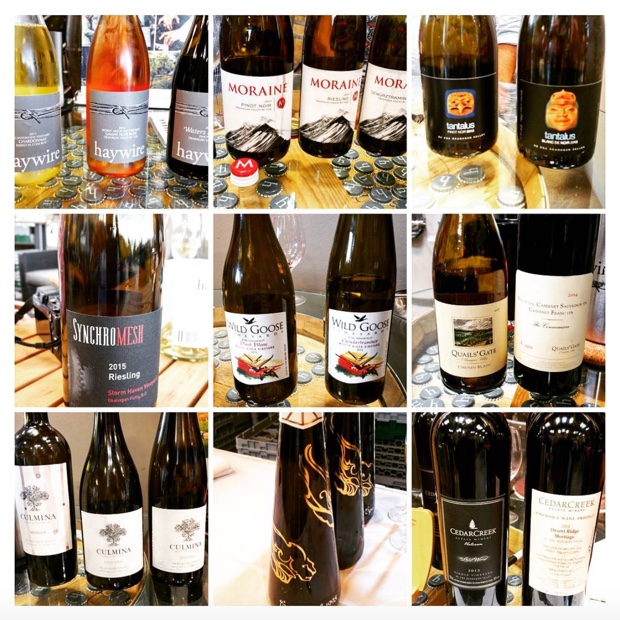
As the week progressed, the WineAlign judges paid visits to Okanagan Crush Pad Winery in Summerland, Culmina Family Estate Winery in Oliver, Tantalus Vineyards in Kelowna, Rustic Roots Winery with the Similkameen Wineries Association and Deep Roots Winery on the Naramata Bench. I tasted more than 100 wines over the course of the five days from the appellations of Okanagan Valley, Okanagan Falls, Oliver-Osoyoos, Golden Mile, Similkameen Valley and Naramata Bench. Whatever I thought I knew and understood about wines coming from B.C.’s diverse and variegated landscapes has been tossed out the window and diapason replaced with an entirely renewed subset of thought. It is even clearer to me now, from an Ontario perspective with limited access to B.C. wines and an even smaller vocabulary that here in this province we really don’t know shit about B.C. wines.
Exceptional eats @CulminaWinery in adroit by @Quintoquorto and @hooydonk_van
In talking and reflecting recently with Elaine Brown she told me how “Canada’s Provincial restrictions around wine have created what are essentially isolated sovereignties of wine. There is a lot of good wine made throughout Canada but speaking with wine lovers across the country I am impressed with how little access they have to wines from other provinces.” Brown hits the proverbial screwcap right on the head. In a country where distance makes community so difficult, the only way to seek unity is to tear down trade barriers and that is something our provincial government has outright refused to docket. As a result, the consumer in Ontario has little access to the diversity that the B.C. wine industry has to offer.
So much @WineBCdotcom amour in the @tantaluswine cellar last night #nwac16
One of the great B.C. revelations on the June trip was all about riesling. In his recent WineAlign column, Rhys Pender wrote the following. “It feels to me that the last few years have seen a really strong focus towards quality in BC. Not that good wines weren’t made, but most of the riesling seemed to be aimed at being a low price, broad crowd pleaser. More and more wines are a little pricier but a lot more intense and quality focused. This was evident in the recent judging of the National Wine Awards of Canada. To be honest, Ontario riesling has pretty much always been superior to BC in these competitions and while there were still many great Ontario wines, this year things were different and many of the best rieslings I personally tasted in my flights were from BC. Less simple, fruity wines and more serious, intense and concentrated examples. Seven of the top ten riesling overall were from BC this year including the Gray Monk 2013 Riesling which won a Platinum medal. An impressive showing.”
Another adumbrate scoop came outlined in out-of-the-box white varietals, with very interesting results by albariño, grüner veltliner, muscat ottonel and trebbiano. The same quality of wines made from these grape varieties can’t be found in Ontario, nor can the success of red blends from the Similkameen Valley and from single varietal reds in the Okanagan Valley as a whole. When B.C. winemakers begin to dial back the oak and take full advantage of ripe, fresh fruit, the world won’t know what hit them. In his National Wine Awards of Canada report, David Lawrason noted that “two B.C. wineries, Moon Cursor and Stag’s Hollow, are worth watching for their medal winning experiments with grapes like tempranillo, grenache and petit verdot.” Another nod to experimentation.
I liken the Okanagan to South Africa, a varietal playground where just about anything can achieve phenolic ripeness in almost any given vintage. B.C. has one distinct advantage and that is a cooler climate. It should be exploited to the fullest, in the name of balance and quality. Though I tasted many more, in the name of 5,000 words or (slightly more) brevity, here are notes on 40 wines tasted and reviewed in June.
Bartier Bros. Cabernet Franc Cerqueira Vineyard 2013, Okanagan Valley, British Columbia (Winery, $30.00, WineAlign)
A rich, savoury mess of red fruits comes clean if surreptitiously divided by barrel on the nose on this gently intended cabernet franc from the gentle Cerqueira slope. More than a modicum of concentration of dusty raspberry and some new leather jacket. Silky smooth mouthfeel and the condensed tangy extraction really pops up on the finish. Another crunchy, chewy, smoky, serious cabernet franc turning bitter and tough with alcohol and bramble on the finish. More freshness would be ideal so let it rest for two years instead. Drink 2018-2022. Tasted June 2016 @bartierbros
Bench 1775 Semillon 2015, BC VQA Okanagan Valley, British Columbia (Winery, $19.90, WineAlign)
A virtually bone-dry, stainless steel raised semillon that is quintessentially fresh and varietally correct though even more attentive to the Okanagan Valley. There is an abundance of fruit in the green mango/citrus realm and a je ne sais quoi spirit. All in all quite amenable and no reason to seek a future dripping with honey. The sense of anti-austerity, fruit over mineral reaction means drink it young. Drink 2016-2019. Tasted June 2016 @bench1775
Black Hills Viognier 2014, BC VQA, British Columbia (Winery, $25.00, WineAlign)
A very impressive viognier from a mother nature conspired vintage to make it shine. This is so very viognier as much as it is B.C. which is a great thing. White floral, viscous and split between honey suckle and white pepper-edged, green apple bite. Against all odds in a way and certainly a top example for the region. Drink 2016-2019. Tasted June 2016 @BlackHillsWine
Black Hills Nota Bene 2014, BC VQA, British Columbia (Winery, $52.09, WineAlign)
This Nota Bene can be espied as of the Okanagan Valley’s most ambitious reds filled with good notes, in winemaking conditioned real tones, as opposed to pure, simple acoustic ones. The Black Sage Bench blend of cabernet sauvignon (52 per cent), merlot (33) and cabernet franc (15) is pulled from two vineyards, Double Black and Sharp Rock. The proprietary junction is criss-crossed where rich chocolate takes up address at a certain genre of Napa ideology. Black Hills’ premium wine is big and full of brawn, backbone and guts. The three real tones played together express pronounced dissonances between many of their harmonics. Dissonance is related to (barrel developed) spice so I would think that a minimum of five years will be needed to connect and make seamless the overlapping harmonics. Drink 2019-2025. Tasted June 2016
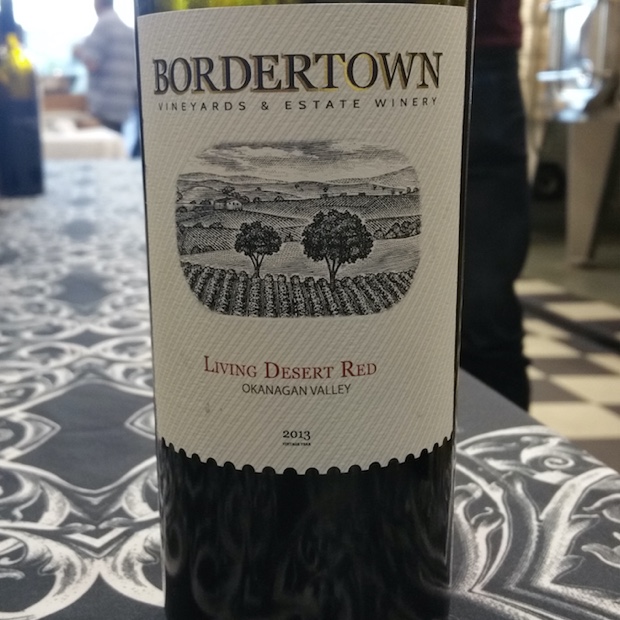
Bordertown Living Desert Red 2013, Okanagan Valley, British Columbia (Winery, $25.00, WineAlign)
The first vintage of Mohan Gill’s 600 case merlot and cabernet franc blend is one of the more curious and engaging Osoyoos reds that is really worth some study. The 18 months spent in all new French wood should ring the alarms but instead it seems a combination of vaguely engaged and greatly spectatorial. Reduction and volatility strike an accord with the wood and the result is a rich, meaty, full on expression from which fruit emerges virtually unscathed. “It’s the first vintage,” shrugs Gill, “what else could I do?” More of the same Mohan. Drink 2017-2020. Tasted June 2016 @BordertownWine
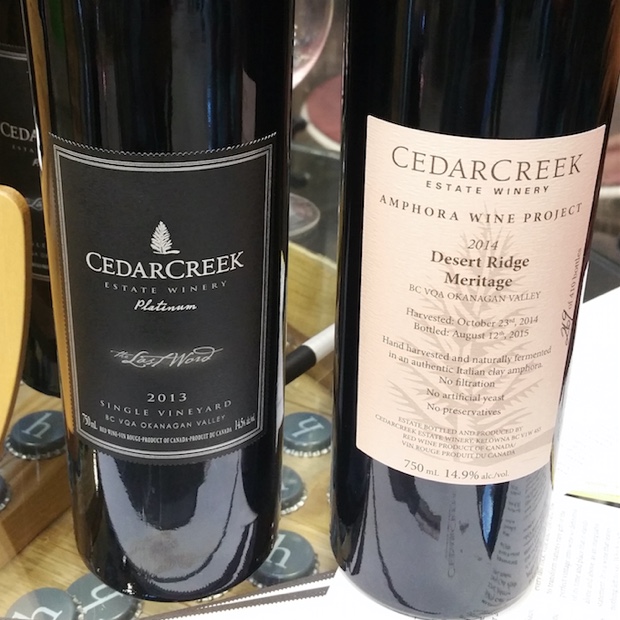
CedarCreek Amphora Wine Project Desert Ridge Meritage 2014, Okanagan Valley, British Columbia (Winery, $60.00, WineAlign)
Winemaker Alexis Moore inherited the (Chianti sourced) clay amphora from former winemaker Daryl Brooker and this (second vintage) meritage is her first kick at the urn. The co-fermented, all natural, don’t even think about peeking and sneaking a taste blend is cabernet sauvignon (54 per cent), cabernet franc (35) and malbec (11). The hallmark desert notes of rich, caky and dusty are necessarily present but it is the preservation of red earth savour that gives this formidable flagon of magic juice its inimitable personality. Mature rows of fruit are to blame and thank for the just desert reward. Transferred to amphora the fruit is preserved in such a way no B.C. reds have ever really seen and the new territory is not so simple for making quick, on the spot judgements. I have thought about this wine for quite some time and the conclusion is positive for two important reasons. Spice and tannin. Together they combine for an infinite finish. Here is the crux of the vessel’s power, to preserve fruit and slowly release its charms within the structure provided. Drink 2018-2024. Tasted June 2016 @CedarCreekWine
CedarCreek Platinum Series “The Last Word” 2013, Okanagan Valley, British Columbia (Winery, $77.99, WineAlign)
The “Last Word” is at the pinnacle of CedarCreek’s Platinum Series, single-vineyard wines and only made in “nature conspired,” exceptional vintages. The biggest and baddest red is a “wine that leaves nothing left to say,” thus the moniker. The blend is cabernet sauvignon (34 per cent), merlot (32), cabernet franc (24) and malbec (10) in true Meritage style. Talk about big reds, talk about the passion. Plan on getting extra hours of REM sleep after a glass, after the punch, the ripest fruit, tempered chocolate, grip and after the heavy hitting acidity. Every crevice is filled in with a jangle of notes and few winemakers can find balance with such a wealth of material. There is simply no way not to make a bold, tannic statement. “Not everyone can carry the weight of the world” but CedarCreek has managed to grin and bear it. Drink 2018-2026. Tasted June 2016
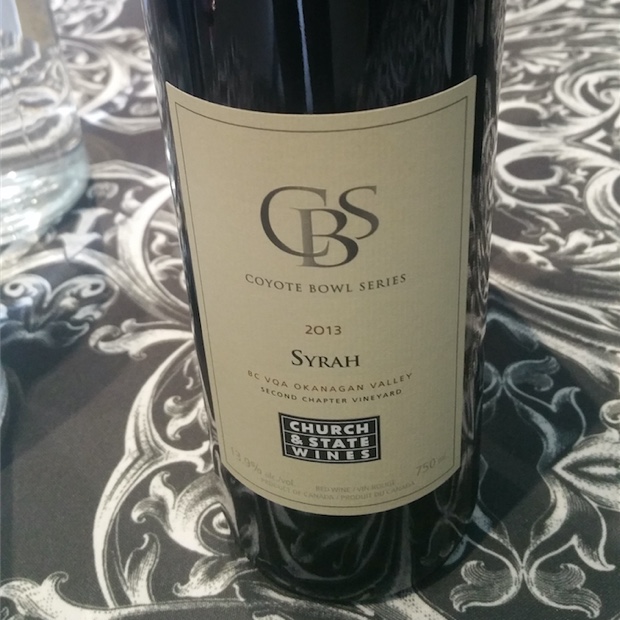
Church & State Coyote Bowl Series Syrah 2013, BC VQA Okanagan Valley, British Columbia (Winery, $35.00, WineAlign)
Reductive, dark, stormy raging and off the charts spicy syrah but there is terrific ripe fruit and cool, cool savour. Edgy but tannic within range. After the violets come sweet purple palate fruit but it’s a feigning sweetness. Long drifts of acidity and tannin but again, like so many Okanagan peers the finish dusts with espresso and not the mocha. The spice lingers well after all else has resolved. Drink 2016-2020. Tasted June 2016 @ChurchStateWine
Clos Du Soleil Estate Reserve Red 2012, Similkameen Valley, British Columbia (Winery, $58.90, WineAlign)
The apropos named winery, the “Vineyard of the Sun,” describes British Columbia-Okanagan-Similkameen so well. That and what can happen when Bordeaux varietals are the recipients of proper sun-worshipping phenolic journeys is the crux to understanding and enjoying such a proper and righteous red. Tasting this Michael Clark characteristic fruit handling facture with Spencer Massie sheds enlightened light on the Clos du Soleil passion project and the red ability of the Similkameen Valley. Taken from the Estate Vineyard on the Upper Bench of the Similkameen Valley, the prettiest and most inviting nose pops up here, led by cabernet sauvignon and in usage of all five Bordeaux varietals. The best red fruit, the hint of mineral and sage, the aridity of the land, the restraint from wood. It’s all correct and truth be told. Solid red blend. Drink 2016-2022. Tasted June 2016 @ClosduSoleil@spencemassie
Corcelettes Menhir 2014, Similkameen Valley, British Columbia (Winery, $31.90, WineAlign)
It’s hard not be endeared into the red blend culture of the Similkemeen Valley and the variegation various positions occupy on the slopes of its benches. This ode in OZ style of cabernet Sauvignon (62 per cent) and syrah (38) is pulled from vines set on the rocky soils of the Corcelletes Middle Bench Vineyard. Though the herbal, savoury, currant and tobacco laced cabernet should dominate it does not with witness thanks to a more than peppery edge and black fruit ooze of the syrah. Only the Similkameen can bring such shared duality and find common ground like this in the overall B.C. genre. Like Beamsville in Ontario and with grace in wood usage, here the two varieties co-exist with copacetic simpatico. The ancient monolith believed to date back 2741-2488 BC on the Baessler family farm off the shores of Lac de Neuchatel, Switzerland gives this blend its name. This wine is no monolith, nor does it strike as ancient or antediluvian, but it does stand out as singular for the Similkameen and for B.C. Drink 2016-2021. Tasted June 2016 @corcelettes
Culmina Dilemma 2014, VQA Okanagan Valley, British Columbia (Winery, $35.65, WineAlign)
The road taken for this chardonnay should have led to rich, buttery and fat because the approach mimics a throwback west coast style. Alcohol, pH, new barrel usage are all generous but so is acidity. So this could have emerged huge but it’s impossibly restrained. The cool-climate metal factor sings with austerity and the gemstone crunch folds with richness. The Margaret’s Bench land speaks and gives so all tolled Culmina’s signature chardonnay is a study in heutagogical learning because it teaches knowledge sharing. This is chardonnay and in many ways, this is Burgundy. Chances taken have landed reward, if a bit unexpected, but certainly appreciated. Drink 2016-2019. Tasted June 2016 @CulminaWinery@CulminaSara
Culmina Merlot 2013, VQA Okanagan Valley, British Columbia (Winery, $31.00, WineAlign)
Red over green merlot to substantiate a vintage called better on the Golden Mile (Arise) Bench. Here is bone-dry, full malolactic, high acidity merlot, so very vacuous, inward, implosive and wild. The wood blankets with purpose in lieu of reckless abandon and because the fruit is just ripe enough to defend itself the return is an effusive one. Would love to taste this merlot in a best vintage with 20-25 per cent less new oak and a number close to this healthy 6.4 g/L of acidity. Now we’re talking, in tones red over green. Drink 2017-2021. Tasted June 2016
Culmina Unicus 2014, VQA Okanagan Valley, British Columbia (Winery, $31.05, WineAlign)
B.C. is a playground for experimentation, a place not unlike South Africa where phenolic ripeness is almost always accomplished yet it has a distinct advantage. Cooler sites and the availability, if embraced, of equally ripe acidity. So grüner veltliner, along with trebbiano, muscat ottonel, auxerrois, sylvaner and others should be investigated. Culmina’s work with grüner is fought properly, in a combination of concrete amphora, egg and steel, allowing varietal to share equal ground with terroir. A sense of some white-ish rhubarb here is noted in the most complimentary vegetal sense, along with white flowers and a dash or two of white pepper. This is a gustatory and gastronomic grüner with intensity and vitality that good slope Marlborough sauvignon blanc will similarly give. The difference here is the absence of searing citrus which is a good thing, all things considered. Drink 2016-2018. Tasted June 2016
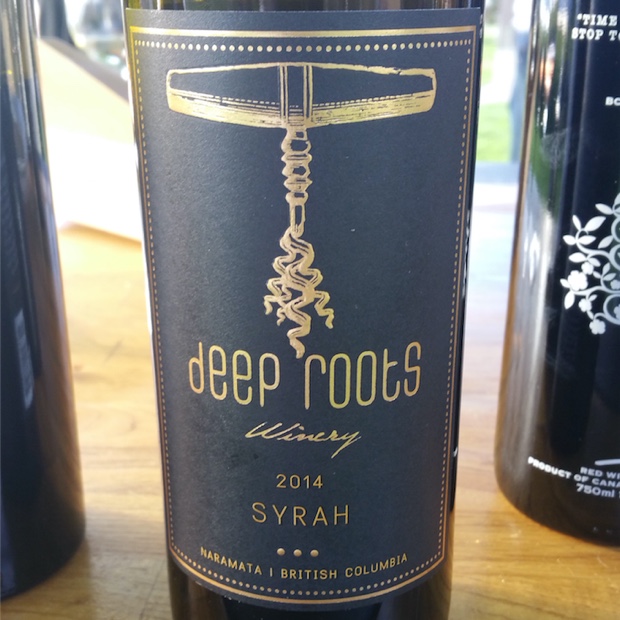
Deep Roots Syrah 2014, Naramata, British Columbia (Winery, $34.00, WineAlign)
Tasted twice, first blind at #NWAC16 and then at the winery, this is syrah with a dual northern intent, more Naramata than Rhone though the bent is a soulful repent in the church of St. Joseph. Beautifully savoury and smoky, like a big meat and smoulder sandwich with great fruit and a silken texture. The peppery bite is a sure tell sign of well-made syrah. Drink 2016-2020. Tasted June 2016 @DeepRootsWine
Gehringer Auxerrois 2015, BC VQA Okanagan Valley, British Columbia (Winery, $13.29, WineAlign)
Despite the off-dry (11 g/L RS) directive because that is what auxerrois always wants to do and though the vintage brings much warmth, this persists as a delicate and fresh wine. Auxerrois as a grape variety is set in an imprecise past, shaded by myth, carried forward and planted decades ago in B.C. These old vines could tell stories but today its fruit expresses itself simply, with richness and with plenitude. I wouldn’t tie a cellophane bag around one and leave it in the cellar to revisit in 30 years. I’d rather hook some trout, pan roast it and work in some acidity. The auxerrois will compliment such a move just fine. Drink 2016-2018. Tasted June 2016 @GB_Wines
Haywire Chardonnay Canyonview Vineyard 2013, BC VQA Okanagan Valley, British Columbia (Winery, $22.90, WineAlign)
From the Summerland vineyard, raised in concrete and emerged with a semi-unoaked feel. There is a certain sort of sweet condense as if a tank and a barrel had merged. Clearly managed in the slow, micro-oxygenated way, with notes of curd, cream and whey. A chardonnay smoothie with many beneficial enzymes running wild, the yeasts working and munching away. Still retains a cool-climate feel regardless of the vat influence with top notch acidity and tannin to lengthen the chain. Drink 2016-2019. Tasted June 2016 @Haywirewine@OKCrushPad@brixandmortar
Haywire Pinot Noir 2014, BC VQA Okanagan Valley, British Columbia (Winery, $27.00, WineAlign)
From the steep limestone and granite Waters & Banks Vineyard, this is a limber, lissome and rusty pinot noir, gently pressed, caressed and left to find its own singular way. Reminds me of the salinity graced Willamette Valley, set upright and alert on the bright side of life. Their is a musky lime aroma and a lithe tartness that belies its mineral gifting. Well done. Don’t envision this losing its charm any time soon. Drink 2016-2020. Tasted June 2016
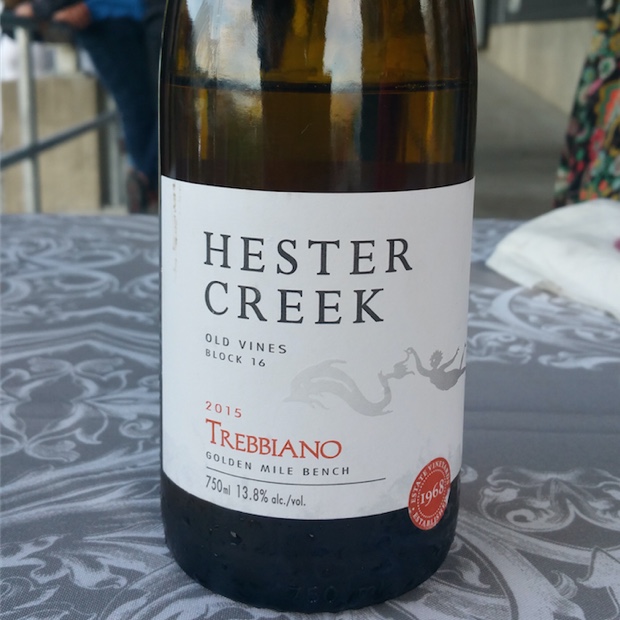
Hester Creek Trebbiano Old Vines Block 16 2015, BC VQA Okanagan Valley, British Columbia (Winery, $22.95, WineAlign)
From vines planted in 1968 which in itself is a wild and mind-blowing proposition. Trebbiano has well-adapted to the Okanagan Valley, or at least these two acres have and only fools would not try to get their hands on one of the 1100 cases produced. No it’s not Emidio Pepe nor is it your nonno’s trebbiano but it is a singular expression for B.C. Terrific acidity layers over rich and viscous stone-orchard fruit. Something creamy evolves, not like similar styled Okanagan viognier but in another realm. It’s a derivative sensation, like the way children look like their mothers, so the connection to Abruzzo is really there. This is a special proprietary moment and good on Hester Creek for brokering the proviso. I will agree to abide. Drink 2016-2020. Tasted June 2016 @HesterCreek
Hillside Muscat Ottonel 2015, BC VQA Okanagan Valley, British Columbia (Winery, $24.99, WineAlign)
Floral, as expected, but in contrast to the globally spoken style, this does orange blossom and mineral mining with equal and opposing ease. Acidity rings round, not overtly meaningful but nonetheless wild. From 30-plus year-old vines (circa 1982), to not find fun, joy and pleasure would be to miss every pertinent point. Hillside presents a provincial comic flick of a muscat phrase and does so with lighthearted resourcefulness and ingenuity. Drink 2016-2018. Tasted June 2016 @hillsidewines
La Stella Fortissimo 2014, BC VQA Okanagan Valley, British Columbia (Winery, $35.00, WineAlign)
In 2014 Fortissimo is mostly merlot with sangiovese playing a vital role along with a splash of cabernet sauvignon. This is found to be softer, more amenable and structured with bungalow sprawl. Bright, maximum juiced red berry fruit resemblance is anti-savoury, friendly, and ready to roll but still with some smoky spice. The 21 per cent sangiovese is significant (up seven points from 2013) so the Classico factor runs high. This is the alternative world case of Fortissimo where in some years you make Chianti Classico and in others, Gran Selezione. Though she may not consider 2014 to be her most accomplished Fortissimo, winemaker Severine Pinte will have to accept that she has procured a very elegant red blend. A Classico. Drink 2016-2020. Tasted June 2016 @LaStellaWinery
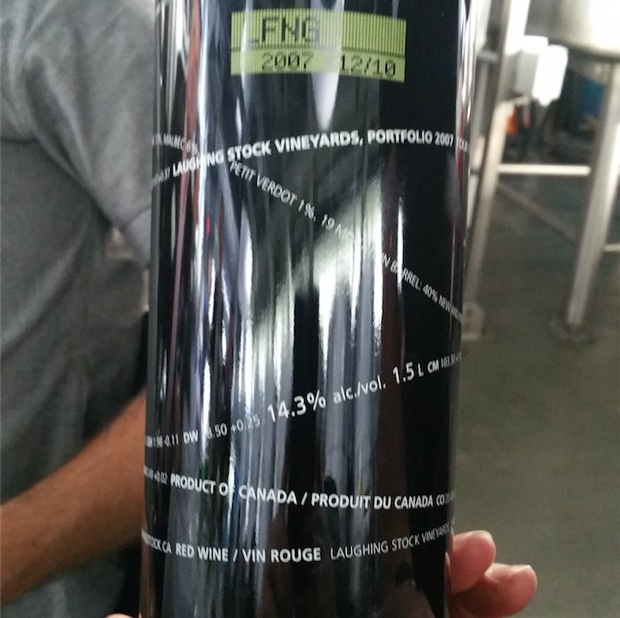
Laughing Stock Portfolio 2007, Naramata Bench, British Columbia (Winery, $52.95, WineAlign)
Poured from Magnum the LSV ’07 has resolved from cool vintage and micro-oxidation into cool-climate meets right bank stylistic personality. Soy, Chinese five-spice, cassia, balsamic, fig and a caramelization that lists to part vegetal and part demerara sugar. The palate is expressly vital still, carrying a torch that for a cabernet-merlot Okanagan blend is fun to reason with. Magnum is obviously a major plus for this nine-year advancement. Sweet with no noticeable heat finish. Drink 2016-2018. Tasted June 2016 @lfngwine
Maverick Syrah 2013, BC VQA Okanagan Valley, British Columbia (Winery, $35.00, WineAlign)
Winemaker Bertus Albertyn bottled a meagre 200 cases of this Golden Mile Bench sourced syrah after 18 months in three to four year-old French Oak. If you are a fan of fresh, well-spoken, confident and blessedly transparent syrah then look for the next vintage of this sold out beauty. So gauzy gossamer textured, peppery but of scant bite and driven by a northern, smoky beat. The cure and depth in its make-up nearly adds up to beefy but its form of athleticism is built upon the quiet politesse of its maker’s execution. The comparison must be made to septentrional Rhône and the lack of new oak is so appreciated. This is a wine to watch for. Drink 2016-2020. Tasted June 2016 @MaverickWinery
Moraine Gewürztraminer 2015, Okanagan Valley, British Columbia (Winery, $17.90, WineAlign)
Classic Okanagan Valley gewürztraminer with a touch of mute reserve relative to more forward peers. The aromatics pause at traditional exoticism then veer to pear and apricot. The palate concentrates the off-dry varietal tendency with a furthered spin out of the seed orchard and into the pit. Not necessarily a gewürztraminer with extended play acidity but highly pleasurable nonetheless. Drink 2016-2018. Tasted June 2016 @MoraineWinery
Moraine Riesling 2015, Okanagan Valley, British Columbia (Winery, $19.90, WineAlign)
Slightly airy and hyper-opiated riesling up to here, of burgeoning talent, suggesting what is yet to come from Moraine with respect to the great varietal Okanagan potential. On the off-dry scale this falls somewhere in the middle, going at it with heavy Mosel fuel. Quite intense with acidity to match. Hip riesling, “addicted to approval, addicted to the air. It was see if you like it or see you up there.” Drink 2016-2020. Tasted June 2016
Moraine Pinot Noir 2013, Okanagan Valley, British Columbia (Winery, $25.95, WineAlign)
Moraine’s Okanagan Falls pinot noir is lambent with great rust and conversely vapid in desert dust. The entire red fruit spectrum is seemingly sung and stung with range and breadth; cranberry-cherry-pomegranate-strawberry-raspberry, from tart all the way to sweet. Taut, tight and bracing. This will work with pairing pride for short to mid-term enjoyment. Drink 2016-2020. Tasted June 2016
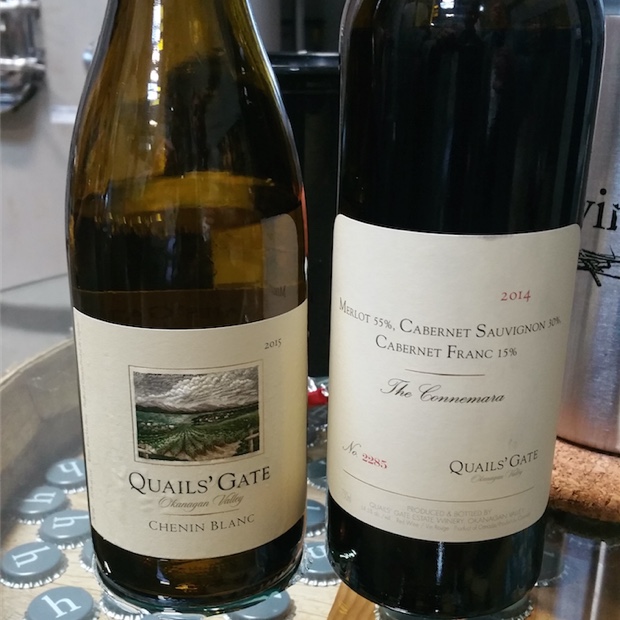
Quails’ Gate Chenin Blanc 2015, BC VQA Okanagan Valley (Winery, $18.95, WineAlign)
The fruit hails from both Quails’ Gate Estate and Osoyoos vineyards. Tasted just three months after bottling, the sweet (whole bunch pressed) serenity of chenin blanc has already settled in with equal and opposing acidity in tact. An angle of bitters works the lush fruit (thickened by a small percentage of older wood) and weaves the two as one in this eager and enthusiastic young (albeit early sulphur persistent) white. A splash or two of sauvignon blanc helps in the ushering. Drink 2016-2020. Tasted June 2016 @Quails_Gate@@hobbsandco
Quails’ Gate Connemara 2014, BC VQA Okanagan Valley (Winery, $64.00, WineAlign)
The inaugural vintage and first ever Quails’ Gate Bordeaux-style blend is winemaker Nikki Callaway’s ode to her stage/cellar hand/winemaking time spent in Bordeaux. The cumulative of merlot (55 per cent), cabernet sauvignon (30) and cabernet franc (15) is formidable in its perplexing youth, taut, rigid and so very tannic. The minor’s current approach is virtually unapproachable but look for something to grab for, like perfectly ripe fruit or structure. The beatitude is easily found in these two essential components. You’ll then think “if you were another pretender, oh I’d pass you by,” but in the case of the Connemara, put in the effort and the time. The reward will come later. Drink 2018-2028. Tasted August 2016
Quails’ Gate The Boswell Syrah 2014, Okanagan Valley, British Columbia (Winery, $61.05, WineAlign)
Named in ode to grandparents, The Boswell is a deep, brooding and extreme-bodied syrah that is actually quite floral. Smoky, meaty, chewy fruit mixes with tar and roses in a heightened, variegated state. Rich and piqued by peppery spice and then the chocolate warmth settles in on the finish. Sip again and note that every pass circles back to the beginning. Though it nods to the northern Rhône and wells up like Barossa, you can’t take the Okanagan out of the Boswell. It wins every time. Would prefer to see this again in three years. Drink 2019-2025. Tasted June 2016
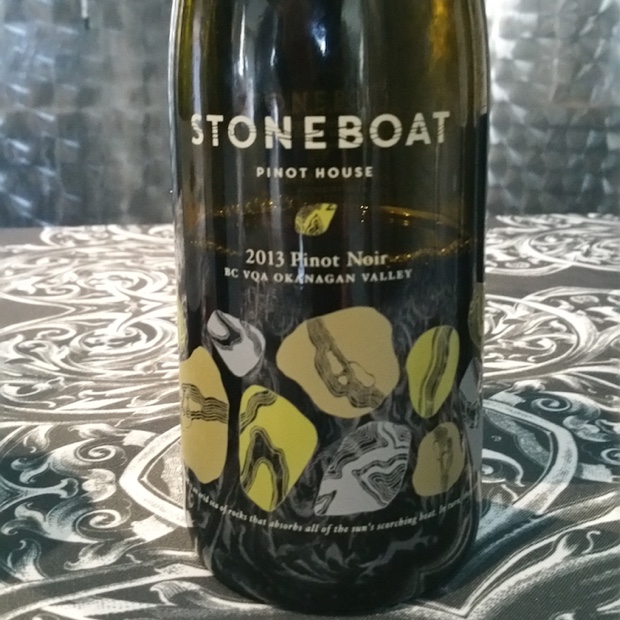
Stoneboat Vineyards Pinot Noir 2013, VQA Okanagan Valley, British Columbia (429332, $29.95, WineAlign)
I tasted this blind at #NWAC16 and with Larry Martiniuk that same week and both times was struck by the electric pinosity, density and beneficial volatility. The pre-integration period is apparent so I’d hazard a guess that 18 months more are needed to assimilate the 18 months spent in (20 per cent new) French oak. To whiff it’s like peat moss mixed with a cassia-cassis cocktail. Black cherry sweetish on the palate and quite spicy. This neon pinot is quite volatile and yet closed, but it carries a downy pilosity texture. Very west coast. Though I return to thinking it out of whack, still feeling the alcohol and wondering why it has to be so loud, the texture and the complexity always bring me back. The raindrops are alive. Drink 2018-2022. Tasted June 2016 @stoneboat@Noble_Estates
Synchromesh Riesling Storm Haven Vineyard 2015, BC VQA Okanagan Valley, British Columbia (Winery, $31.90, WineAlign)
If this riesling is sweet I couldn’t say. That is the first thought that comes to mind. From Alan Dickinson’s home property, this is his baby, an Okanagan Falls derived riesling that lives an entirely holistic existence. No spraying, none, nada, niente. Not ever. The wine could not get any cleaner. Purity is its cognomen. The vineyard is subject to the highest diurnal temperature swing than just about anywhere in the valley. That might explain the risk-reward probability factor. The technical specs are a triumvirate of implausibility; 46 g/L RS, 11.5 g/L TA and pH below three. What? This is the most impossible wine made in B.C. In its concentrated velocity it wheezes like something ancient. We could almost be drinking Greek debina or 20 year-old Alsatian auxerrois. Dickinson makes three passes over each of the two blocks so even if the hands are off, the meticulous picking breeds asepsis. Citrus such as found in the Storm Haven fruit does not happen very often, if rarely. It’s like citrus soma. Citrus unknowable out of determination unthinkable. Direct misunderstanding by indirect whimsy. And so the vintage offers good fun but not greatness. Imagine the possibilities. Drink 2018-2027. Tasted June 2015 @SynchromeshWine
Synchromesh Riesling For Shadows Vineyard 2015, BC VQA Naramata Bench , British Columbia (Winery, $23.00, WineAlign)
Like its brethren Storm Haven Vineyard, this Synchromesh draws blood from stone in holistic ways that few Canadian riesling seem to do. The Four Shadows is different in that it chooses wisdom over risk. A clear, clean and precise nose reveals lemon drop and a honey drip. Though the sugar is more noticeable than the SHV, the older world (Germanic) impression is filled with a sense of tradition. The vineyard is in fact of very high elevation on an extremely steep slope (think Mosel) of gravel and clay layered over fractured bedrock and granite. The sugar is also elevated (50.93 g/L) and the acidity lower (8.4 g/L) so what you get may seem to lower the impossibility factor. Don’t be fooled into thinking this a riesling of privilege and lassitude. It does not drip with sleep but rather rages with life. The stones seem to speak. And the riesling listens. Drink 2016-2022. Like its brethren Storm Haven Vineyard, this Synchromesh draws blood from stone in holistic ways that few Canadian riesling seem to do. The Four Shadows is different in that it chooses wisdom over risk. A clear, clean and precise nose reveals lemon drop and a honey drip. Though the sugar is more noticeable than the SHV, the older world (Germanic) impression is filled with a sense of tradition. The vineyard is in fact of very high elevation on an extremely steep slope (think Mosel) of gravel and clay layered over fractured bedrock and granite. The sugar is also elevated (50.93 g/L) and the acidity lower (8.4 g/L) so what you get may seem to lower the impossibility factor. Don’t be fooled into thinking this a riesling of privilege and lassitude. It does not drip with sleep but rather rages with life. The stones seem to speak. And the riesling listens. Drink 2016-2022. Tasted June 2016.Tasted June 2016
Tantalus Blanc De Noir 2013, Okanagan Valley, British Columbia (Winery, $31.90, WineAlign)
Winemaker David Paterson “squeezes it like Champagne” and lets it rest for six months in chardonnay barrels. Two years of triage and boom! Freaking elegant Blanc de Noir. Rusty, rosy, the absolute spot on ripe vernacular spoken, the right tart exposed. It’s curious and foreshadowed thinking to know that 100 cases have been set aside for a five to seven year disgorgement. D’ya think Paterson is high on the vintage? Tasted June 2016 @tantaluswine
A single block of Clone 93 pinot noir planted in 1985 is responsible for this breath of fresh Okanagan Valley Blanc de Noir. Fashioned with the omnipresent Tantalus acidity, this rages out with aridity, salinity and palpable tension. Only pinot noir can act like this, with layers of sous bois and fraises du bois. The age of the vines, the early-picked necessity and the allowance for needful and natural expression has resulted in a wine simply stressed as terroir and boîte. Carries the acidity and the tension across and through the palate. Finishes as dry as it started. Drink 2016-2020. Tasted April 2016
Tantalus Pinot Noir 2013, Okanagan Valley, British Columbia (Winery, $29.90, WineAlign)
The vintage was not shy to gift dark, optimum-achievement in phenolic fruit and along with that ripeness comes even deeper tonal intent. Red hyperbole is elevated by striking acidity, setting this Pinot Noir up for really high expectations. The palate does not disappoint. Flavours range from black cherry to charred meat making for a highly gustatory experience. Chewy and enjoyable describes the time spent with this wine. It will offer great pleasure in the short term. Drink 2016-2018. Tasted April and June 2016
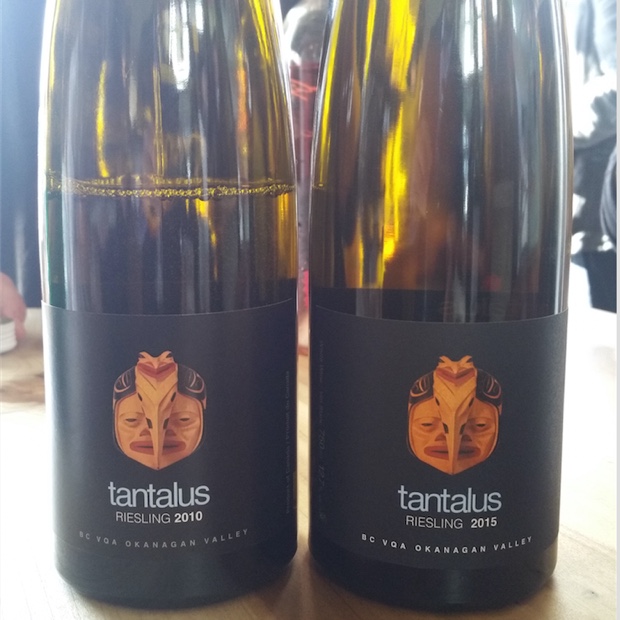
Tantalus Riesling 2015, Okanagan Valley, British Columbia (Winery, $23.00, WineAlign)
Two months later things have changed and yet not at all. There are more tricks and inducements (as compared to 2010) but don’t be fooled because with a difficult (sweltering) vintage the wine makes you think you can get close. But you can’t. You are further away than you think mostly due to incredible citrus and wild rhythms swimming through raging riesling waters. Change of plans. Drink 2018-2024. Tasted June 2016
Well with the arena of aridity, salinity and sheer marketability, here is a showy Tantalus with super searing lemon flavours emerging out of great atmosphere and aromatic intensity. Some Riesling taketh away and some are mouth watering, like this. The stone fruit goodness attacks and sticks to the tongue like sap, then glides effortlessly down. Tantalus might make me think of things that are out of reach, “standing in water, but dying of thirst, this is my thanks and this is my curse.” Yet this early to market 2015 Riesling offers an antithetical view, ready, willing and able to please. Drink 2016-2019. Tasted April 2016
Tantalus Riesling 2010, Okanagan Valley, British Columbia (Winery, $22.90, WineAlign)
I’m thinking that no other B.C. riesling tries, trips and tricks with intense tribulation like the Tantalus, especially with a look back at this 2010 ripper. Though just now emerging from out of its saline crusted shell, the liquid stone injection will always render this a tantalizing wine so while it seems to open a door a part of it will always remain just out of reach. This 2010 can retrospectively be looked at as a genre defining riesling at the hands of an engaging young winemaker to be. Tasted June 2016
Tinhorn Creek Oldfield Series 2bench Red 2012, BC VQA Okanagan Valley, British Columbia (Winery, $29.99, WineAlign)
Naturally south Okanagan crunchy, chewy, spicy and taut red blend. From two benches, the Golden Mile (Tinhorn Creek Vineyard) and the Black Sage Bench (Diamondback Vineyard). This is quite a ripper in that magical $30 middle ground with power to impress as much as many peers two times the price. That said it certainly retains its tangy, two-step, red fruit freshness, with cool savour, like two mints in one. Kind of reminds me of Coonawarra, especially the Penfolds Bin 169, so perhaps when brought together there is a Bench similarity with the Terra Rosso soil. Or perhaps just a stab at clouds. Either way this 2012 takes over from the vital 2011 and runs with the baton. Drink 2016-2021. Tasted June 2016 @TinhornCreek@Andrew_Tinhorn@SandraOldfield
Upper Bench Zweigelt 2014, BC VQA Okanagan Valley, British Columbia (Winery, $25.00, WineAlign)
I’ve not had the opportunity to taste the go between 2013 but progression and evolution are found in the bright red fruit of this 2014 zweigelt from Upper Bench. The aromatics travel east and west, as if coast to coast and on a global trek. I get the foraged berries, baking scents and the felled evergreen mixed with fresh cocoa. I also sense garrigue, as well as jasmine in the early evening. Though the sugar is elevated (an insignificant 0.6 g/L up to 2.9) the wine was picked at lower brix (23.5 as opposed to 24.2) and so the acidity is given the chance to feign higher. The alcohol is hefty (14.4 per cent) but the overall balance is improved. Dialled back a bit but another notch or two would really do justice to the grape. Early consumption is still the order and fresher remains the promise. We’ll see what the warm 2015 vintage will bring. Drink 2016-2018. Tasted June 2016 @upperbench
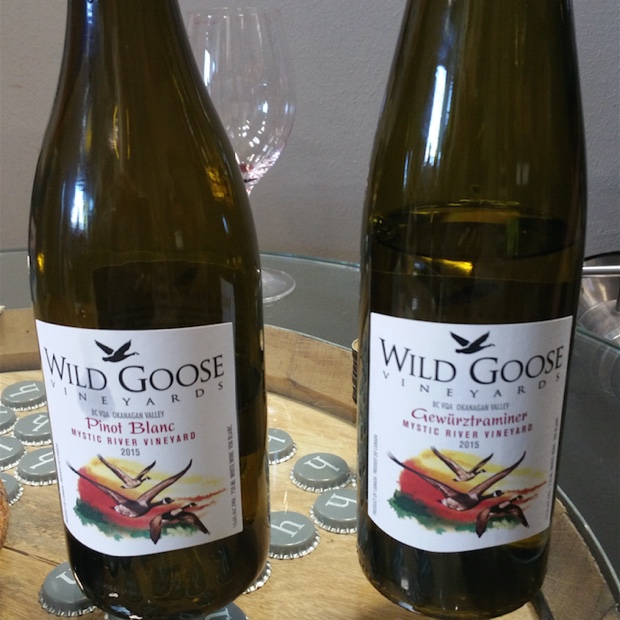
Wild Goose Pinot Blanc Mystic River 2015, Okanagan Valley, British Columbia (Winery, $19.00, WineAlign)
A few clicks north of Oliver comes this maximum juice master of a pinot blanc, like a tart gooseberry cake with a warm, yeasty crust. It’s like autolytic sparkling wine without the bubble, foiled by a sauvignon blanc faux botrytis thing going on. The acidity is well suited to match the exuberant fruit. Roland Kruger points a finger to the vineyard (right along the south Okanagan River) to explain the aromatics. The addendum of 20 per cent barrel fermentation is the key that turns the textural screws. As far as pinot blanc goes, “it’s open mike, punk rock, (it’s natural), red, white and blue.” This Wild Goose. Drink 2016-2019. Tasted June 2016 @wildgoosewines
Wild Goose Gewürztraminer Mystic River 2015, Okanagan Valley, British Columbia (Winery, $19.00, WineAlign)
Wild Goose is proving to be a gewürztraminer leader in the Okanagan Valley not just for its adherence to rose petal and lychee varietal correctness but also for aromatic elegance. Terrific texture marks the ’15’s territory (a trademark of Wild Goose whites) and here you get drying wax still pliable and malleable. The aura is distinct and the wine so very amenable. Really well made Mystic River output. Drink 2016-2020. Tasted June 2016
Good night and many thanks @tantaluswine #kelowna #nwac16
While life is a blur there is always wine. In the past month the WineAlign National Wine Awards of Canada, Chablis and three VINTAGES releases have seen me taste through more than 800 glasses of wine. This is something I do often in a four-week stretch but this, this was something other. It was intense.
During the same stretch I completed my tasting notes on 50 Chianti Classico (including 18 Gran Selezione) and those ruminating thoughts will be published in the coming weeks. Tomorrow I head down to Niagara for the sixth annual International Cool Climate Chardonnay Celebration, or as it is affectionately hash-tagged, #i4c16. Just in case I didn’t have enough tasting notes to transcribe, edify, pop-culture aggrandize, indoctrinate and embellish, well, get ready for 100 more.
For now there is the upcoming July 23rd VINTAGES release and 15 wines I recommend with Godello certainty. Now if I could just get off this grid.
Sutherland Sauvignon Blanc 2014, Wo Elgin, South Africa (203877, $14.95, WineAlign)
A pungent, insistently perfumed cooler clime sauvignon blanc from a big, need to be picked quick crop. Spice, grapefruit, agave and yellow flowers and with more texture than its Thelema ’14 cousin. Fleshy, tropical, juicy, ripe and spirited. Classic Elgin cool savour running linear like a beam through the joist of structure. High quality fruit ready for all comers. Drink 2016-2018. Tasted September 2015 and July 2016 @ThelemaWines@WOSA_ZA@WOSACanada
Castillo De Almansa Old Vines Selection 2010, Almansa, Spain (586719, $16.95, WineAlign)
Rich and concentrated, nicely balanced between roping fruit and ripping acidity. Has real firepower but enough sense to remain calm at the right moments. Plenty of verve, concentration and development from old vines and the stuffing to stand up to blessed char off the grill. Terrific summer BBQ red. Will also work for winter stew. Drink 2016-2020. Tasted July 2016 @BodegasPiqueras@almansaturismo@DionysusWines
Vinedos Y Bodegas Pablo Menguante Garnacha Selección 2012, Cariñena, Spain (313833, $16.95, WineAlign)
Two years on and with more oak this is a very different animal than the subdued ’14, integrated but on the other side of the aromosphere. The oak is dominant, vanilla and cocoa are the great waft in what is ostensibly pitch perfect fruit, in bottle on the dark side of the moon. Coconut, vanilla extract and cinnamon. The wood brings layered and sheathed character. Very plush and notes Jorge, “if you come to Cariñena to experience Garnacha, this wine will allow you to discover the wonders of American oak.” The deep fruit and earth melded into and by the barrel makes for a very pleasurable drop. The ’08 released into the Ontario market in November 2014 lends credence to the ageability of this Garnacha. Drink 2015-2019. Tasted October 2015 and July 2016 @GranViu@VinosCarinena@DoCarinena@Vinexxperts
Quails’ Gate Gewürztraminer 2014, BC VQA Okanagan Valley, British Columbia (354480, $17.95, WineAlign)
The ripest Quail’s Gate gewürztraminer ever may be some kind of anomic desert hyperbole but wow is this fleshy, extracted and beautiful. Spicy too, with a minor citrus pith and almost into slight effervescence. Fun with gewürztraminer. Drink 2016-2018. Tasted July 2016 @Quails_Gate@hobbsandco@AMH_hobbsandco
Santa Rita Medalla Real Syrah 2012, Limarí Valley, Chile (443523, $17.95, WineAlign)
From the northerly clime of the Limari this is seductively floral syrah with an edge of peppery spice. It just feels balanced on the nose and silky sweet in mouthfeel. Pushes characterization towards incomplex tautology. Linger with it long enough and the fine tannins will rear and bring everything back to earth. Cue the value jingle. Drink 2016-2020. Tasted July 2016 @SantaRitaEst@WinesofChile@DrinkChile@ImportWineMAFWM@MarkAnthonyWine
The lower bowl of this Tawse-Redstone plot is the shiny one, as in happy scintillant of riesling proportions. A year on the attitude persists, in lime and honey, acacia and beeswax. Terrific tartness and direct enjoyable deposit. Enough mineral to satisfy a calcaire lover’s soul. @RedstoneWines@Tawse_Winery@DanielatTawse
From my earlier note of May 2015:
So much lime and liquid chalk make for desired and dreamy texture. The lime slides like a slick of oil into the full flavours, spiked by peach and white plum liqueur. Terrific 20 Mile value. Drink 2015-2019.
From my earlier note of May 2014:
This inaugural Riesling foray from atop the Twenty Mile Bench out of the Limestone Vineyard is a sister to the Tawse exploration from same. The comparisons end right there. Paul Pender’s take is kinetic, frenetic and electric. Redstone winemaker Rene Van Ede tends to and lends from a reconnaissance that heralds Mosel. His first, fixed take is off-dry (in obvious ubiquity) with circular acidity. The co-agitation is early picked at low brix, with realized high residual sugar (36.4 g/L) and low alcohol (10 per cent). Toothsome, with a ying/yang, lemon/lime, push/pull. The case load is formidable for a first go ’round (1000 plus) yet paddled through limestone acreage with effortless strokes.
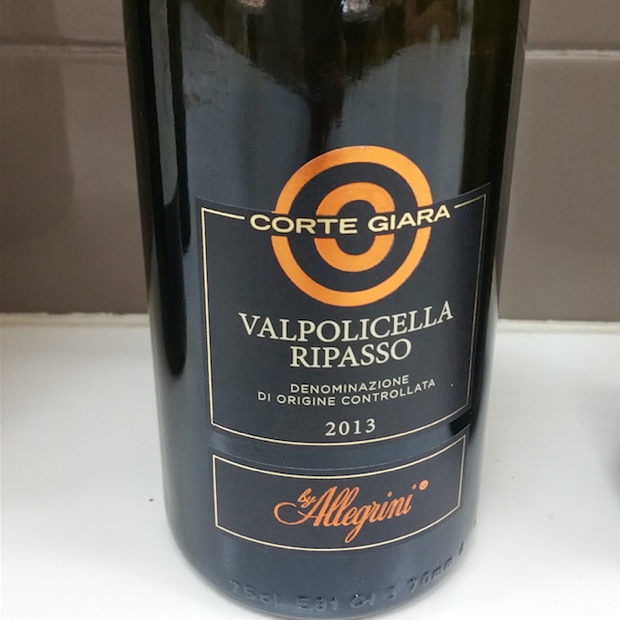
Lovely Ripasso liqueur with pretty red fruit and compressed earthy accents. Resides on the correct side of tart and the exemplary aspect of sweet, fine-grained tannin. Accomplishes Ripasso intimacy by doing so at a mimetic remove. Lingers like a perfect pastille. Drink 2016-2019. Tasted July 2016 @AllegriniWine@C_Valpolicella@RegioneVeneto
William Fèvre Champs Royaux Chablis 2014, Ac Burgundy, France (461640, $24.95, WineAlign)
The Champs Royaux is Chablis drawn from a selection of Fèvre’s better grower contracts and five to 10 per cent is aged in old oak, the rest in stainless steel. It is a generalized but oh too important expression from kimmeridgian soil, hedged and qualified from all over Chablis. Takes all the hills, valleys, les clos and slope/aspect dimensions into account. It is textbook Chablis, a guarantee of quality, especially out of the cracker 2014 vintage. The fruit is ripe and the acidity a study in Chablis exactitude. The balance may be the best this cuvée has ever shown. Drink 2016-2020. Tasted July 2016 @williamfevre_@WoodmanWS@BIVBChablis@purechablis
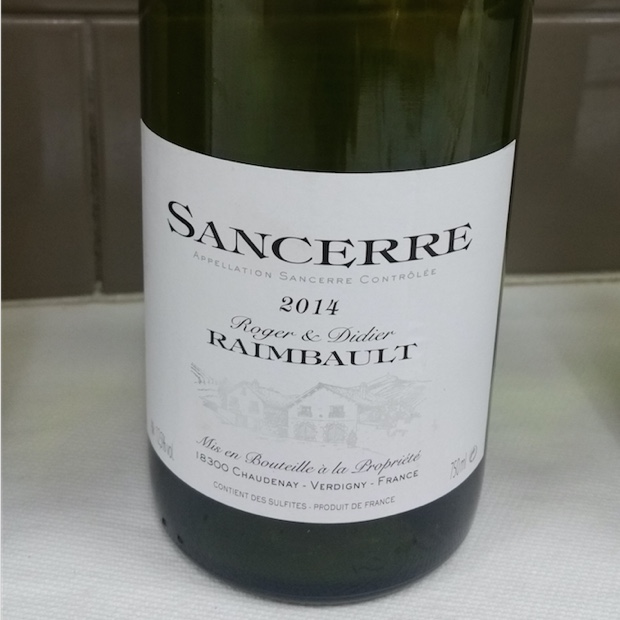
Roger & Didier Raimbault Sancerre 2014, Ac Loire Valley, France (82255, $26.95, WineAlign)
This white scintillant by Raimbault from Sancerre is laid out with clear instruction, like Rimbaud through Van Morrison, in precisely what sauvignon blanc needs to impress from the Loire. The beseeching immanent, insulated implosion of fruit, searing mineral and tannin multiplying within a bubble. This is tres fort fricative stuff, tart without any excess tang, notes all important and leading to a grand result. Pungency does not enter the vocabulary but the mouthful of stones is palpable and sonant. Raimbault’s 2014 offered up a sense of wonder, “showed me ways and means and motions. showed me what it’s like to be. Gave me days of deep devotions, showed me things I cannot see.” Essential sauvignon blanc with poise, precision and mandatory feel. Sincere Sancerre tore down a la Rimbaud. Drink 2016-2022. Tasted July 2016
Château Des Charmes St. David’s Bench Vineyard Cabernet Franc 2012, VQA St. David’s Bench, Niagara On The Lake, Ontario (453415, $27.95, WineAlign)
I’d put my money down on a French woman to work magic from cabernet franc grown on the warm, generous and giving St. David’s Bench. Lo and behold here is Amélie Boury with such fruit of spot on varietal countenance, magnified by the exhort of 2012. The gifts of that vintage could have been clouded with oak smothers but that case is not presented nor was it predicted. Boury certainly makes use of the barrel but its presence is textural, with mellow spice and for la longeur. This will develop efficiently and with grace, from this current anglaise stage into something modern Loire Valley en croute. It will accrue its culture and its character over seven to 10 years. Drink 2018-2022. Tasted July 2016 @MBosc
Bachelder Hautes Côtes De Beaune 2013, Ac Burgundy, France (445247, $27.95, WineAlign)
My sweet Beaune from Thomas Bachelder, as in sweet on the spontaneous haute ideal, not the cloying of residual imbalance. From a winemaker who lets his wines narrate themselves. Exemplary by George (well, Thomas) of a Beaune perfume with an underlay of acidity and tannin. No bitters here, nor astringent behaviour, nor harassment, which is nice. My sweet Beaune. Hm, my Beaune. Hm, my Beaune. Though a touch firm at present, a year ahead will see it come closer to hallelujah harmony. Drink 2017-2020. Tasted July 2016 @Bachelder_wines@BourgogneWines@vinsdebourgogne@LiffordON
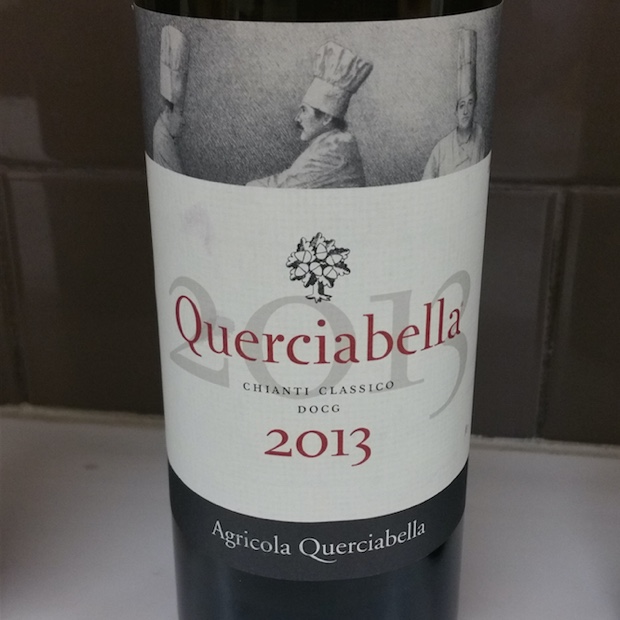
Remarkable sangiovese so fleshy and forthright, modern and of an extreme brightness of being. There is an underlying Greve truth be told in moderation, tradition and historical meets varietal significance but it’s a new oration. This means that the structure is both sound and hermetically sealed. The lightness of volatility is a reminder of the past but it treads so delicately you just know this is a shining star pointing the way to the future. A brilliant “normale” without the the new slang of Gran Selezione but in many respects it may as well be. Drink 2018-2025. Tasted July 2016 @Querciabella@chianticlassico@rogcowines
Fisticuffs Cabernet Sauvignon 2012, Napa Valley, California (457507, $49.95, WineAlign)
From Pavi Wines comes this study in hedonistic Napa Valley balance from out of a top-notch vintage. Ripe fruit and oak spice dance a simple cabernet sauvignon language with rope-a-dope drupe, right-handed acidity and a solid tannic left. A peremptory wine but its message is an assertion rather than a persuasion. Not a heavyweight by any means but behold the high-strung, svelte and agile middleweight. Possessive of the stuffing and the stamina to go a full fifteen rounds. Drink 2018-2022. Tasted July 2016
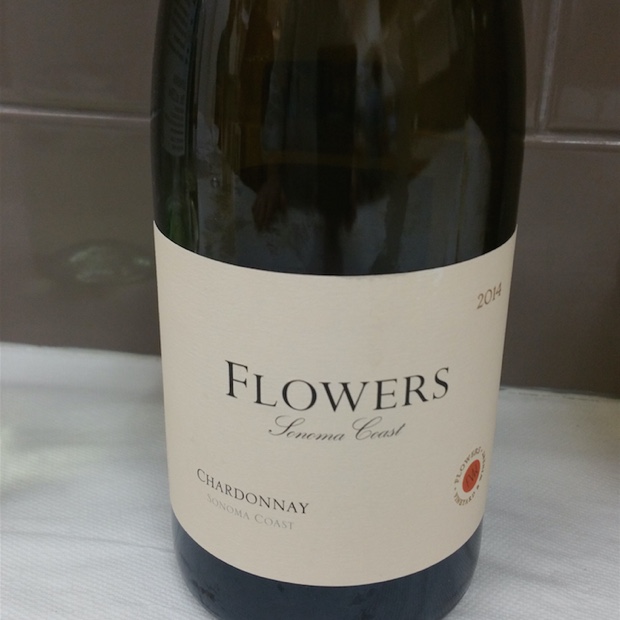
A near perfect vintage after a mild winter was presented to shape this ripe gathering of increased extraction. Though the previous years pale in comparison, there can be no mistaking the load of impression. The causation supplied by extreme coastal vineyards with dramatic altitude stretches and elongates the fruit and so it is hard to get to know the oak. The bite is toothsome into great green apple, perfectly ripened grapefruit and a far eastern note of Indonesian sasak (snake) fruit. The materials and the handling are as one, from purchased coastal fruit to winemaker Dave Keatley’s acquiescent dispensation. Delicate fortitude from Sonoma. Where else before but here can chardonnay sire and develop such a family? Drink 2016-2022. Tasted July 2016 @FlowersWinery@rogcowines@sonomavintners
Two Hands Samantha’s Garden Shiraz 2013, Clare Valley, South Australia, Australia (67355, $71.95, WineAlign)
This is simply gorgeous shiraz from the Clare Valley. A wine of balance, precision and focus. It seems the wood regimen has been relaxed in welcoming retreat. On a rare occasion when a garden of flowers can bloom through despite so much fruit and an equal tempering by wood, well that is a joyous thing. The texture is woven from pure silk and the quality of the ganache painted with the finest brush. This never over soaks, runs roughshod or lays down the hammer. It is a fine-tuned shiraz of the highest esteem. Drink 2018-2030. Tasted July 2016 @twohandswine@bwwines@Wine_Australia
It reminds me of Richard Yates at his early career, Revolutionary Road best, in tense humour, as noted by James Woods, “a celebrated indictment of suburban surrender.” Here we are, in 21st century Ontario, preparing to head to our suburban respite sanctuaries with tools, sundries and supplies in hand, only lacking one essential piece. Good wine. We turn to the LCBO, to VINTAGES, to the ceaseless recurrence of release and we find limbo. Last week? Next week? Why not now?
We are willing to submit and surrender but the shelves are stocked with 2nd tier choices, the wines of first degree excitement already having disappeared with the previous week’s first wave. So if you need wine suggestions for the Victoria Day weekend I’ll have to send you on a retroactive search through the May 14th VINTAGES release. “It’s a beautifully typical story of these times and this place.”
Why am I looking forward and into the eyes of May 28th? Well, I’ll tell you why. The finest collection of Canadian wines in some time gathered together at one communal table will become available, sadly just days after the May 24 three-day escape. These wines would have sold well, in droves actually, had VINTAGES made use of their excellence in advance. So, as a messenger for the stars, it is my duty to tell you about their upcoming presence in diplomatic conformity of early 21st century Ontario realism, on the LCBO stage. These be the 10 of them.
Jackson Triggs Okanagan Reserve Series Viognier 2014, BC VQA Okanagan Valley, British Columbia (445700, $15.95, WineAlign)
This 2014 Okanagan take on Viognier is an all out rich, ripe and boozy affair. Sparks fired by a cold play take the lead, singing with spice, marked by galangal and ginger in control over the wishful act of balancing extract. “And I saw sparks, yeah I saw sparks,” enough so for such a Viognier to be on your way. Sharply struck, in smithereens and yet epic for the price. Drink 2016-2018. Tasted May 2016 @JacksonTriggsBC@CBrandsCareers@winebcdotcom
Good unction for the un-oaked Jay Johnston procured Chardonnay, more green apple and early honey than before. This is the purity machine in motion, direct, spoken in a Bench vernacular and zagging like the rows of the vineyard. Still at $17 and not to be bypassed for anything that might think to stand in its way. Can you say petite Chablis? Drink 2016-2020. Tasted February 2016 and May 2016 @Winemakersboots@brightlighter1@UnfilteredEd
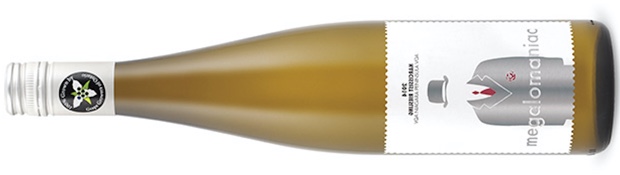
The bottle tells you about grapes handed the pink slip during post harvest deliberations, something not lost within its own ironic twist. When you have pink lemons you made pink lemonade, done here to great simulated effect. Tart is the operative, like a perfect square of gelid red citrus on a plate to foil briny sea morsel and verdant greens. With the right herbs and lettuces this pink grapefruit Rosé will handle itself with pairing irony and relative ease. Welcome aboard Sébastien Jacquey. Megalomaniac’s winemaking approach to Rosé never had it so good. Drink 2016-2018. Tasted May 2016 @MegalomaniacJHC
13th Street June’s Vineyard Riesling 2013, VQA Creek Shores, Niagara Peninsula, Ontario (147512, $19.95, WineAlign)
Continues to throw its weight about and has now engaged a phase of typical J-P Colas redolence and pungency. Strict adherence to Creek Shores citrus minerality injects the June for future time-lapse release, an internal ooze that will take years to push its way upwards to the surface.
From my earlier note of December 2014: 2013 was a perfect follow-up for Niagara Riesling, after a vintage where so many exceptional wines were made. The ’12 June’s by Jean-Pierre Colas was his best and with this repeat performance in ’13, the consistency of June’s vineyard is further cemented. Once again, the citrus injection is a Creek Shores thing, a vehemence not matched by other sub appellations. Where ’13 differs is its weight. There is a textural density improved upon and at the same time dragging on the freshness of the fruit. The trade-off will mean less immediate gratification in lieu of more flesh and bone for a longer period of aging. Given at least five years rest, the 2013 June’s Riesling will discover a Ribeauvillé like future.
Such a ripe and extroverted Pinot Gris, in a style created and honed by winemaker Richie Roberts, here in 2014 near its apex. Singular without feeling the pressure to induce rapture or revelation. Fleshy ripe, of peaches, plums and nectarines. Typically and expectedly fresh, juicy, industrious, vehement and good, spicy length. Always well-made, hitting essential, doctrinal Pinot Gris notes and so very food versatile. May I suggest a whole grilled fish, lemon and fresh herbs. Drink 2015-2018. Tasted May 2015 and May 2016 @FieldingWinery@RichieWine
Joie Farm A Noble Blend 2014, BC VQA Okanagan Valley (454793, $23.95, WineAlign)
The dial is turned up in the noble blend, an amalgamation of five grape varieties and nine vineyards. The inspiration and the intent is Alsace, the result lying somewhere in between. It is an inspired blend and it does resemble Alsace but in the end it’s all Joie Farm. Distinct from structure and connectivity, not to mention drinkability, with a shot of spice. Drink 2016-2020. Tasted May 2016 @JoieFarm
At first the 2013 Red alights in high tones juxtaposed by a chew of sultana, an odd entry for the Thirty Bench, carrying on for the first few minutes in the glass. There are sulphide notes, of red onion and yet after a few minutes they begin to resolve, caramelizing to sweetness, mixed with tannin. The transformation continues, playing new notes, of red rooibos tea and seasoned seaweed. Grilled onions and charred poblanos come on the palate. Currants finish off the profile. The emotive cabernet franc really dominates this blend and though at first difficult to crack, the eventuality is an equation figured as a true positive. Drink 2017-2021. Tasted May 2016 @ThirtyBench
This is more than an interesting look back into the Tawse time machine to compare where the Grower’s Blend now sits as compared to what it was like in its youth. Now into liqueur, of cherry and earth, no longer just a hint of what they wish to be. This shows the excellence of the 2011 vintage for Pinot Noir and the master blending acumen of winemaker Paul Pender. Drink 2016-2018. Tasted May 2016 @Tawse_Winery@DanielatTawse@Paul_Pender
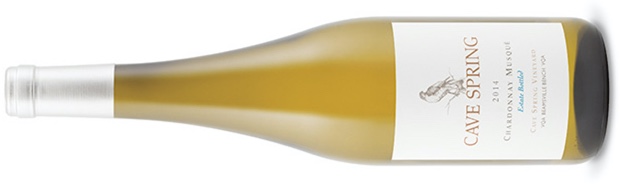
Cave Spring Csv Riesling 2013, Estate Bottled, Cave Spring Vineyard, VQA Beamsville Bench, Niagara Peninsula, Ontario (566026, $29.95, WineAlign)
That flesh, that Kabinett flesh, fills the CSV in every crevice. In 2013 the residual sugar number lies between 15 and 16 g/L, and though the crop was bigger, it was still picked later than in 2012. The result is formidable corporeal concentration, consistency of house style and perhaps the only ’13 Niagara Riesling to imitate, perpetuate and extrapolate on the vintage that came before. This Cave Spring concentrates fruit and Escarpment into a powerful Riesling, streaming like charged particles through changing expressions. A lingering ascension hovers as it rises, until it slowly fades into the welkin, like a balloon that languidly gets lost into the blinding blue of a midday sky. Drink 2017-2025. Tasted April 2015 and May 2016 @CaveSpring@TheVine_RobGroh
Bachelder Nuits St Georges La Petite Charmotte 2013, Burgundy, France (357228, $58.95, WineAlign)
From the Nuits St Georges parcel that Thomas reaps, built on the premise of soil, structure and depth. The lithe beauty of this La Petite Charmotte block is lifted and held in the highest esteem in 2013, perhaps with even greater sensibility of character than out of what was an exceptional 2011. The Nuits iron power surge may have descended down a half level but the redolent Beaune balance is spot on. So very perfumed. That Bachelder perfume, expressed in Neaune craving and breadth. Drink 2017-2024. Tasted May 2016 @Bachelder_wines
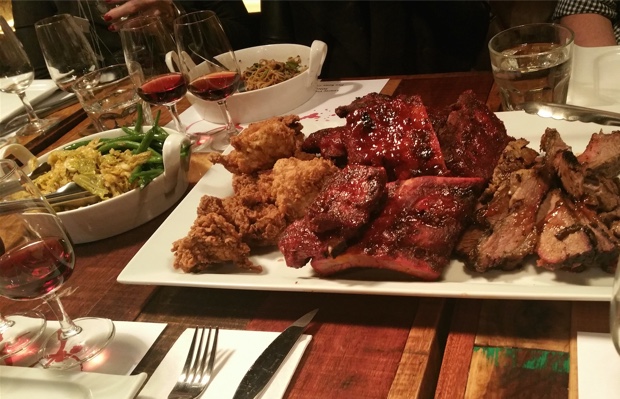
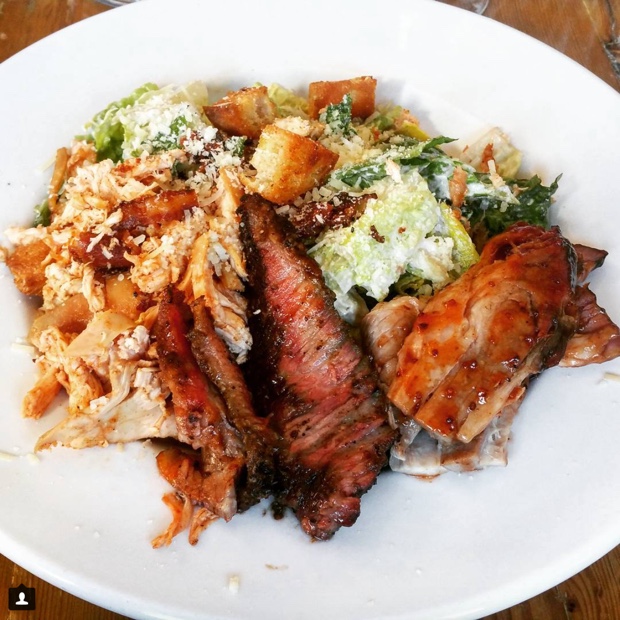
Barque Butcher Bar Fried Chicken, ‘Bama Baby Back Ribs and 12-Hour Beef Brisket
The VINTAGES release program certainly lends structure and a targeted faculty of morphology to the selling and buying of courtly wine in Ontario. It’s a part of the LCBO juggernaut that deserves to be celebrated, particularly when it offers glimpses of hope and excitement. Optimism does exist and persist within the confines of an otherwise habitually oppressive system. A system that tends to function with coordinate construction, of paratactic verse that heavily promotes wines of narrative brunt.
On the other hand, VINTAGES is a mimetic project, which is a few projects too many. We wine trackers and writers are akin to Cricetinae, perpetually running in a wheel or like Sisyphus, forced to roll an immense boulder up a hill, only to watch it roll back down. We read the bi-weekly catalogue, pre-taste the newest offerings, make our lists and check them twice. In every batch there are 10-15 wines that stand out, as much about bell curve positioning as absence of singularity.
We don’t want to waste time drinking shite. There can be no good reason to swill sugar, contrived acidity or fast drink laboratory concoctions. Bring us wine of humility and humanity. Pour us truth and honesty. Separate the wheat from the chaff and don’t waste our time or insult our character. Give us wine from people, with roots and a sense of place. VINTAGES abides with a class of red shirt freshmen each and every release. That much I can concede.
From what I have tasted in advance of the VINTAGES March 5th release, what has excited me most is perhaps more a reaction to the unseasonably warm weather or maybe it’s just that I am presently satiated by tannic and acidity-molifiying white wines during winter. Last week I reported on the California stars as a follow-up to my recent Napa/Sonoma trip and in advance of April’s California wine fair. Brunello di Montalcino is in the spotlight what with Benvenuto Brunello coming next week. The Sangiovese Grosso line-up for March 5th is solid if underwhelming. My consensus pick of one is potentially polarizing. It will seem tired to some palates and precociously wise and cultured to others. The difference of critical opinion keeps the VINTAGES wheel turning and I am of sound mind to believe that’s a good thing.
Wine Country Ontario comes to the Royal Ontario Museum today for Taste Ontario in Toronto, the annual gathering of winemakers from The Niagara Peninsula, Prince Edward County and Lake Erie North Shore. On Saturday four peninsula whites will be released, three of which are typicity poster children for VQA good sportsmanship awards. Felicitous and regionally befitting Chardonnay, Riesling and Gewürztraminer that succeed as they should even while they bypass the idea that creative voices should be heard. Are we witnessing the dearth crumbling of stylistic freedom or is change coming, necessary and inevitable? The fourth white on offer is a shining example of the Ontario appellative blend, a category ever elusive, uncapitalized upon and necessary to the industry’s future success.
Superior South Africa, Vinho Verde Portugal not allowed to be labeled as such and Spanish Garnacha, white and red, grace this list. I also recommend an Ann Sperling Okanagan from the B.C. homestead and one freaking, awesome Sancerre. Here are 11 picks on March 5th in the year 2016. Enjoy.
Excelsior Sauvignon Blanc 2014, Wo Robertson, South Africa (382085, $13.95, WineAlign)
Warm climate conditions, a thunderstorm-inflicted harvest and prudent, hasty picking are what winemaker Johan Stemmet had to contend with in 2014. Kudos as a little something for the effort. Quiet and subdued aromatics are levied and bolstered by extreme fruit sensations exhibited on the palate. Crunchy green apple and green mango spritzed by lime forge a tight, angular and nearly tense relationship with linear and direct acidity. Sauvignon Blanc of meaning, unencumbered by the tenets of global style. A certain kind to be sure. Drink 2016-2019. Tasted February 2016 @Excelsior_Wines@WOSACanada@WOSA_ZA
Casa Do Arrabalde Avesso/Alvarinho/Arinto 2014, Vinho Regional Minho, Portugal (429324, $14.95, WineAlign)
Here $15 of pure Minho beauty, ripe and rich, regionally representative, if generalized in name because Alvarinho alights in the varietal mix. Smells and tastes just like a tart Mutsu apple picked post fully completed phenolics. The minor spritz on the tongue screams Vinho Verde, as does the stony eligibility. Well-chilled, warm day, grilled fish. Yes, please. Drink 2016-20218. Tasted February 2016
Talk about bottled up compression. Twist the screwcap and thwop! The cap nearly popped like a Champagne cork. This baby has energy and drive. The vintage is compressed and pile-driven as nosed by the density opposed by reticulated 9.5 per cent alcohol. This has Mosel tattooed on its being, from neck to bottom. A dead ringer for fine Kabinett, the tropical fruit in apricot and dragon reaching back to join Ontario, in apple and pear. A good flinty stone and raging acidity combine forces to exaggerate a Riesling reticulum in what is not the missive’s greatest ever vintage. Will live five to seven easy and just go for soda. Go ahead and quaff the hell out of this one, from 2015-2020, from bottles one through twelve. Tasted March 2015 and February 2016 @Winemakersboots@brightlighter1@UnfilteredEd
Henry Of Pelham Family Tree White 2013, VQA Niagara Peninsula, Ontario (251116, $17.95, WineAlign)
Very accessible and balanced white rabbet with tree fruit aromas and flavours, from yellow plum to white peach and back again. Straight up juicy circulation with a limestone tang amidst the weight of clay. Good value from the Peninsula to drink in the short term. An appellative blend to feed the category concept and perfect for sipping high in the skies. Pour this on your airplanes Air Canada. “Feed your head, feed your head.” Drink 2016-2018. Tasted February 2016 @HenryofPelham@SpeckBros
Residing on the correct side of off-dry with a waxy, lemon-honey drop secession from smell to taste. Brings proverbial lychee and rosewater into play, stirring the lees and pressing upon the palate in a faint, yeasty way. Ostensibly Fielding in conception to work with Vietnamese, Japanese and Thai. Food that is. Drink 2016-2020. Tasted February 2016 @FieldingWinery@RichieWine
Time has befriended Philip Dowell’s organic and creamery fresh-churned Chardonnay. The Kew is Bench defined and not shy in embrace of its wood. Abiding Chardonnay denuded in a healthy symbiotic relationship with ripe and recessive fruit. More mineral than before from Beamsville soil lands this somewhere along the pantheistic line featuring such stalwarts as Fielding and Hidden Bench. Will follow a casual down-to-earth grounding over the next five years. Drink 2016-2021. Tasted February 2016 @kewvineyards
Jaspi Blanc 2014, Do Terra Alta, Spain (439570, $23.95, WineAlign)
Such a culturally gregarious, aromatically generous and varietally gracious white blend from Terra Alta should be received with the most open of arms. This rare sighting in Ontario is mostly Garnatxa Blanca, with a minor (kept alive) amount of Macabeo, a grape of sweet realization and rainbow veraison. This is a classic indication of the subtlety that is derived from the soft, cuddly and rock-free panal soils in Terra Alta. A terraced white wine, cascading like lemon and bubbles, as if it were an ethereal, tart, savoury sabayon. Will be a pleasure to drink for the the next two to three years. Drink 2016-2019. Tasted February 2016 @cocaifito@doterraalta
Jardín De Lúculo 2012, Do Navarra, Spain (438655, $23.95, WineAlign)
Lovely, tidy Navarra with perfectly ripe cherries and an underlay of tension to give it real vitality. Oak (if any) bothers with nary an intrusive beat. Though there is a dried herb and drying savoury-minty ending it lingers, long after the paint has dried. Really necessary Navarra, a region portrayed in such a wine on the qui vive for exotic adventure. Drink 2017-2020. Tasted February 2016 @louisgeirnaerdt@vinosnavarra@navarrawines@navarrawine@hobbsandco@AMH_hobbsandco
Sperling Vineyards Pinot Noir 2013, BC VQA Okanagan Valley, British Columbia (382283, $27.95, WineAlign)
Here a vintage cementing a Sperling Pinot Noir into altruistic west coast territory occupied by the ripe and famous. Were I able to recall so much warmth, elevated tones and ripping aromatics while the wheels are spinning, still the memories remain in neutral. The gravelly grit and fine lined elucidation is in, but here things turn tropical, with far eastern spice and melted, oozing liquorice. Flavour coaxing is at an all time high but the question begs. Can you handle this hyperbole of efficiently convenient Okanagan truth? Drink 2016-2019. Tasted February 2016 @SperlingVyds@AnnSperling@CRUOntario@StratusWines
Jean Max Roger Cuvée Les Caillottes Sancerre 2014, Ac Loire, France (65573, $27.95, WineAlign)
Were all Sancerre this floral we might be forced to re-learn the typicity and the vernacular. Les Caillottes stands alone, if only for a few whiffs, before retreating back to the Sauvignon Blanc norm of mineral and white berry. Here Sancerre seems to take chances, steps out of the box and ventures into wild sage and thyme territory. Ends with lemon and lime, echoing the florally of tiny flowers on the tips of that thyme. I can imagine honey flowing in five years time, still gaining on the oxidative effects of time. Drink 2016-2022. Tasted February 2016 @oenophilia1@LoireValleyWine
More than a classic vintage for this seminal bottle of Sangiovese. The liqueur is so comfortably and rigorously distilled, the floral aspects fresh in their potpourri disguise. The aromatics, like eclipses, arrive early, but tend to exact themselves profoundly. Balance is everything with wine and transparently so for Brunello because if the tannins are overdone than pleasure can’t ever be truly discerned. Here they are like rhythmic, venting spasms at the end of a sentence. This offers early accessibility in spite of its ferocity. Drink 2019-2030. Tasted February 2016 @TrialtoON@ConsBrunello
A confession. Herein these pages there might seem to be the appearance of astonishing disorder. With music as a muse and a foil to wine, I prefer to look at it as an enjambment, or, as James Woods might explain it, as “the desire to get more in, to challenge metrical closure.” No form, structure or cohesion you think, you mutter, you say? Oh, well.
Over at WineAlign I share my February 20th VINTAGES release picks in the Buyer’s Guide, along with colleagues John Szabo, Sara d’Amato and a travelling David Lawrason. Here at Godello the list expands. First here, with seven whites for snow days and well, just snow. Look for the reds on Saturday.
The white wines of VINTAGES February 20th, 2016
Hugel Gentil 2014, Ac Alsace, France (367284, $16.95, WineAlign)
A bottle blend soft and inviting, teasing tropical fruit but grounded in the continental orchard. Warmth on the nose and cool effervescence on the tongue add up to a waxy, airy finish. This opens up, rises and elevates on the back end. Terrific aperitif out of 2014 with some legs to last through the night. Drink 2016-2019. Tasted February 2016 @FamilleHugel@HalpernWine@AlsaceWines@drinkAlsace@VinsAlsace
Like a gypsy boy, the idea of Riesling, winemaker Rob Power and Creekside Estates do not occupy overtly obvious territory so here, “come over to the window, my little darling. I’d like to try to read your palm.” In it the perfected Cohen lines of classic Bench Riesling, of stalwarts Thirty and Hidden Bench. Same stoic, non-gentrified possibilities unfollowed and new concepts surreptitiously proposed. Terrifically tart, dangerously darting and tasked for mouth watering righteousness. Such succinct lemon-lime continuous balance. Winemaker Rob Power may not have a storied history with Riesling but now that he has gone Marianne Hill he can’t go back. Drink 2016-2021. Tasted February 2016 @CreeksideWine@hobbsandco
Such potential from Croatia found, packaged and articulated in this bottle. Classic Furmint in Grasevina clothing, right along the wire where Pinot Gris looks over towards Chenin Blanc and says “let’s spend the night together.” Honeyed, unctuous, spicy and floral to the stones and back. For days when “I’m going red and my tongue’s gettin’ tied,” turning to white never tasted so good. You gotta try this. Drink 2016-2019. Tasted February 2016 @WinesofCroatia@RolandRussell
From the town of bedrock, Kevin Judd’s Greywacke is a modern, stone-age Sauvignon Blanc. Grown out of vineyards in the Central Wairau and Southern Valleys in Marlborough, Judd’s exploratory to trailblazing SB announces its aromatic arrival like a pick struck on granite. Tannic from the get go and forged with precise angles and friezes, always tied by an indenture with texture. The vintage is a fruit first forward, neighbourly one and it takes a winemaker to keep things etched in stone. This one strikes me as one that could have got away but the reigning was accomplished in lope, guiding the fruit through a precise pattern of circles, spins, and stops. The success lies in the canter of acidity to extend the effect towards a turning and returning, again and again. Drink 2016-2022. Tasted February 2016 @greywacker@Greywacke@oenophilia1
Trimbach Réserve Pinot Gris 2012, Ac Alsace, France (971762, $29.95, WineAlign)
Immediately reminds of 2008 and will go down a similar, slowly turning and evolving path. So purposed and direct though there is a slight elevation in residual sugar as compared to the four four beat four years ago. Pinot Gris of pears and operas, with some spice on the finish. This will aria into something lovely at the age of seven and beyond. Drink 2018-2022. Tasted February 2016 @trimbach@WoodmanWS@AlsaceWines@drinkAlsace@VinsAlsace
Béjot Les Bouchots Montagny 1er Cru 2013, Ac Burgundy, France (438002, $27.95, WineAlign)
Tidy, tide and vine Chardonnay the way with oak it needs to be. Unobtrusive and just a sheet between fruit and acidity, enough for warmth and not too much to bring on the sweats. Snug, spruced, agitated, resplendent even. Drink 2016-2022. Tasted February 2016 @HannaNealWines@BeauneTourisme@BourgogneWines
Josef Chromy Sparkling 2010, Tasmania, Australia (393629, $29.95, WineAlign)
If 2008 has just recently settled into its low heat unit skin then the consideration here can’t yet touch the thought. So much lees and so much time, so little evolution and so little mind. Jeremy Dineen must be grinning from ear to ear with the thought of where this fizz will go, carrying so much wisdom in its autolysis and Tazzy vernacular in its mousse. Great citrus benchmark OZ outpost where the bubbles work hard for their money and offer up nothing but charm. Drink 2016-2023. Tasted February 2016 @JosefChromy@bwwines@Wine_Australia
Take Godello to a place that’s far away and it will fill him with words. With memories still thick as Bredasdorp pea soup, it is hard to believe it has already been four months since travelling to South Africa in September for Cape Wine 2015. I think it wise for the reader to be offered fair warning. The following wayfaring log is not brief and while it may be broken up with images of food, bottle shots and scenery, there are five thousand plus words to wade through. Feel free to skim at your wine tasting note leisure.
For a comprehensive look at South Africa’s Capelands, read my report at WineAlign.
It has been four months since Cape Wine 2015 and many wines remain to be mentioned. My initial ramblings covered the three-day wine fair, varietal awakenings, Premium Independent Wineries of South Africa (PIWOSA), the Swartland Independents and the Zoo Biscuits.
Lemon butter poached crayfish tail, kale, parsnip puree and bisque, Open Door, Constantia
I tasted hundreds over three days at the bi-annual Cape Town event, along with dozens more in restaurants and at wineries in Stellenbosch, Swartland, Franschhoek and Constantia. One of the more memorable culinary experiences happened at Open Door Restaurant located at Uitsig Wine Estate in Constantia. The wine selection opened doors to new Cape perceptions and forward-thinking measures.
A visit to the Franschhoek Motor Museum at the Anthonij Rupert Wyne Estate rolled into a tasting of wines with Gareth Robertson, Sales and Marketing Manager at Anthonij Rupert Wines. Verticals were poured; Cape of Good Hope, Leopard’s Leap, La Motte and Optima L’Ormarins. Then the varietals of Anthonij Rupert Estate.
Hitching a ride on the Anthonij Rupert Estate
A full on Premium Independent Wineries of South Africa (PIWOSA) experience at the Car Wine Boot was nothing short of a wine-soaked, large object flinging hoedown throw down.
The act of intense immersion into any important wine-producing nation and its diverse regional expressions can only leave a lasting impression if the follow-up takes a long, cool sip of its meaning. Though just the beginning of what I hope to be a life-lasting fascination with South African wine, these 50 reviews prepare and pave the way.
Beaumont Family Wines Hope Marguerite 2013, Bot River-Walker Bay, South Africa (Winery, WineAlign)
Named after winemaker Sebastian Beaumont’s grandmother, Hope Marguerite Beaumont. Thirty-five (400L) barrels of Chenin Blanc from 1975 and 1978 plantings anointed by natural fermentation and maturation. Reductive, malo-avoidant and lees stirred for 10 months to dess effect. Acidity swallows and trumps sugar while bitters, well, these bitters don’t even realize they are bitters. Possessive of that torched orange peel, lime skin and hinting at something faintly tropical. Many shades of Chenin Blanc within one tight-knit bottle. A benchmark of species. Drink 2015-2022. Tasted September 2015 @Beauwine
Paul Cluver Riesling Dry Encounter 2013, Elgin, South Africa (Winery, $23.99, WineAlign)
Riesling from South Africa’s largest and nascent varietal growers, one of three Cluver bears and wholly antithetical to the “Close Encounter’ simply and primarily because of its omnipresent aridity in the face of 9.0 g/L of residual sugar. Based on fruit from a variegated 27 year-old block of ferricrete (surficial sand and gravel masses) layered over decomposed Bokkeveld Shale and/or light clay. From a basin, a true amphitheatre between the mountains. The dry one shows off the cooler climate charity, offering up the opportunity to make Riesling the way it needs to be. Floats boats of blossoms piled in apples, honey and native fynbos. Elevated in nervousness, tension and anxiety through the conduit of acidity. This guy is the tip of the spear that pierces the palate. Though dry to that pointed end it is the primitive passion of grape tannin that churns the combine. Drink 2015-2019. Tasted September 2015 @paulcluverwines@PIWOSA@paulcluver
Paul Cluver Gewürztraminer 2015, Elgin, South Africa (Winery)
If Riesling is a South African anomaly, the nine hectares planted to Gewürztraminer on the Cluver estate is at least preternatural if not verging on antediluvian. The throwback approach to varietal expression takes on the do anything in South Africa mandate and runs with it. A tightly wound white, like Riesling driven by acidity, inconsequential in sugar (10.2 g/L) and rushing with rivers of grape tannin. Lime is again the thing in a world where sweetness finds it hard to live. Anything but soapy, less than sticky and so very clean. Purity out of Elgin in Gewürztraminer. Drink 2015-2018. Tasted September 2015
Cape of Good Hope Riebeeksrivier White 2013, Swartland, South Africa (Winery)
From the stable of Anthonij Rupert Wines, a blend based on Chenin Blanc (65 per cent) with Rhône assistance from Marsanne, Roussanne and Viognier. Similar in a way to the old vines Chenin in its purest form in a clean amalgamation of weighty varietal relations. Naturally driven acidity and an increase in creamy texture is accompanied by lactic notes and a greener, sharp apple bite. A wow reversal of impression with an anise under current and a toasty, nutty omnipresence. Quite fine. Drink 2015-2020. Tasted September 2015 @AnthonijRupert
Rall Wines Red Coastal Region 2013, Swartland, South Africa (Winery)
Superior Syrah spine (85 per cent) with a 2014 Grenache (15 per cent) addendum. Healthy and happy in alcohol (14 per cent) from Swartland schist to cure what troubles and saps. Liquorice, easy tannin and illimitable fruit (for a two to five-year run) from the gifts of a terrific vintage. Open-knit, expressly serviceable with a not overly piquant, peppery finish. Tobacco moment is just a pinch between the cheek and gums. Easy on the extraction and 50 per cent stainless housing for nothing but Swartland fruit with some added stems for the perception os sheer freshness. Drink 2015-2018. Tasted September 2015 @SwartlandRev
David and Nadia Paardebosch Chenin Blanc 2014, Swartland, South Africa (Winery)
A blend of 1960’s, 1970’s and early 1980’s, mainly dry-farmed bush vine Chenin Blanc vineyards throughout the Swartland. Sweet textured Chenin with endemic herbiage and territorial tang. Varietal identity is never an issue for South Africa’s signature white but how does definition out of disparate plots come together? For the Sadies “the meaning always lies somewhere that’s right between the lines.” Connotation and significance in what’s left behind. Drink 2015-2020. Tasted September 2015 @DavidandNadia@SwartlandRev
David and Nadia Aristargos 2014, Swartland, South Africa (Winery)
David and Nadia Wines
A bush vines dominant, 12 vineyard, five-varietal interface of Chenin Blanc (35 per cent), Roussanne (25), Clairette Blanche (20), Viognier (15) and Sémillon (5). The latter (not inconsequential) addition is from a 1950’s planted vineyard. Round and round aromatics integrate Swartland harmonies in transition to palate promptitude of spry lemon and lime. Emits that fleshing four to five-year pursuit to honeyed possibility, in which the Sémillon is not lost on that ideal. We should all be willing to wait that long though not be greedy for anything more. Drink 2017-2019. Tasted September 2015
David and Nadia Grenache 2014, Swartland, South Africa (Winery)
A riveting (85 per cent) Grenache honed from two vineyards planted in granite mountain soils, mixed and matched with (15 per cent) fruit off of organic vines grown in deep iron rich soils. A scintillant of reductive freshness gets busy with chalk ou of ferric soil in romantic and heavy breathing passion. Though nearly carbonic, atomic and more exhalant than inhalant, the freshness is always halted by a weight in denouement. The obdurate cessation is helped along by 10 to 11 months in oak. Very thoughtful, engaging and consummated Grenache from the Sadies. Drink 2016-2020. Tasted September 2015
Godello and Billy Hughes at Cape Wine 2015
Hughes Family Wines Nativo White 2014, Swartland, South Africa (Winery)
Certified organic from the Kasteelsig Vineyards on the Hughes Family farm in Malmesbury. The blend is high in Viognier with Chenin Blanc, Roussanne and Grenache Blanc. Picked at three separate intervals, the bifurcate prongs of sugar, acidity and alcohol are remarkably streamlined towards an upwards push skyward. A very base and elemental white wine that hovers in the lower reaches of the stratosphere, wanting to rise but held secure by the heartstrings of older oak filaments. This is fresh and yet filled out by a density defined in Swartland ways. An appellative white blend with my thoughts of Cape Town’s Chef’s Warehouse crudo in mind. Drink 2015-2019. Tasted September 2015 @NativoWines
Crudo and Kimchi #tuna #kingclip #chefswarehouse #cape town
Hughes Family Wines Nativo Red 2009, Swartland, South Africa (Winery)
Certified organic from natural, dry-farmed estate Kasteelsig Vineyards on the Hughes Family farm in Malmesbury. The blend is Shiraz (56 per cent), Grenache (16), Merlot (13), Mourvedre (9) and Pinotage (6). Swartland’s local master of assemblage Billy Hughes (the J-L Groux of South Africa if you like) counselled separate and all natural fermentations, barrel malolactic, eight months in 225L barriques (none new) plus four more post blending. The core aroma to palate thematic is ingratiated by a grape in raisin initiation stage, habituating the right side of ripe. This is a soft-styled Swartland red having fully realized its progressive road to enrichment. Drink 2015-2017. Tasted September 2015
Hughes Family Wines Nativo Red 2010, Swartland, South Africa (Winery)
As in 2009, certified organic from natural, dry-farmed estate Kasteelsig Vineyards on the Hughes Family farm in Malmesbury. The blend is Syrah (52 per cent), Mourvedre (22), Grenache (13) and Pinotage (13). Fresher, lighter even than 2009, floral, feathery, feminine. Through the pretty dab of perfume there is the presence of clay, iron and a feeling of warm Cassis. The red fruit while anything but dark has a presence, an attitude, an unfailing condition. Will live longer than the previous vintage. Drink 2015-2019. Tasted September 2015
Wildehurst Velo White 2014, Swartland, South Africa (Winery)
Juicy Colombard, Chenin Blanc and Viognier in cohorts simply, basically and ostensibly about town for texture. Beautiful freshness, grace and grape tannin. The juice and nothing but the juice. Drink 2015-2017. Tasted September 2015 @WildehurstW@ShereeNothnagel@SwartlandRev
Wildehurst Velo Rosé 2014, Swartland, South Africa (Winery)
A multi-cultivar and double-hued blush by way of Grenache, Viognier, Mourvèdre, Colombard and Chenin Blanc. Really widens the fresh fruit spectrum, in manifold customary shades of red. From a hot vintage where sugars ran higher than 2013 yet still just about as dry as a skeleton way past tissue. Despite all attempts, the brine and herbiage outplay the salinity and aridity. Drink 2015-2017. Tasted September 2015
Wildehurst Chenin Blanc 2012, Swartland, South Africa (Winery)
The only straight up cultivar in Sheree Nothnagel’s portfolio from 30 year-old bush vines. Arranged low, natural and slow across a two month fermentation period in 3rd fill (225L) barrels towards a dry end. Matured on the lees for a further five months. Handy, prosaic and unostentatious Chenin Blanc of texture and mouthfeel. Drink 2015-2018. Tasted September 2015
Silwervis Cinsault 2014, Swartland, South Africa (Winery)
First introduced at the inaugural Swartland Revolution, winemaker Ryan Mostert is a key player in the South African Cinsault revival. His naturally exhibited (with only added sulphur) old-vine Swartland Cinsault was matured in one Nomblot concrete egg. His is the Allman Brothers, Creedence Clearwater Revival and Deerhunter rolled into one varietal ode “to the malleability and uniqueness of Swartland.”
One of hundreds of wines tasted over an eight-day period in requiem to exclaim, “I am saved, I am saved. And oh, would you believe it?” So fresh, salty, ultra-carbonic, russet roseate raspberry and orange peel. It really feels real, unlike anywhere else. The varietal and the reformation. “We’re in a revolution. Don’t you know we’re right. People can you feel it? Love is everywhere.” Drink 2015-2018. Tasted September 2015 @Silwervis@SwartlandRev@PascalSchildt
Silwervis winemaker Ryan Mostert is behind the new Terra Cura label with Samantha Suddons. From just outside of Malmesbury in the Western Cape. This cracker of a bottle is one hundred per cent Syrah from rolling hills rocking down to the sea. Ferric, burrowing into depths, rooted and heavy. Structured, chunky savoury, of wild sauvage, from a fierce and filthy athletic vintage. Reeks of potpourri, ambition and is yet remarkably ready to drink. A messenger to herald a land of opportunity, a revolution, the future. Drink 2015-2019. Tasted September 2015 @Terra_Cura
Johan Simons, Dragonridge Wines
Dragonridge Wines Supernova Ancestral 2014, Paardeberg, South Africa (Winery)
Chenin Blanc works with Sangiovese and with Pinotage to lead this ancestral method sparkling blend. From Joubertskloof’s Fynbos Estate, this fizz is really nothing like Méthode Cap Classique in that it adds nothing to the fermentation in the bottle, relying only on its own sugars and wild yeasts. When it does not explode it goes this way, so, so natural, all in. Winemaker Johan Simons happily sees it persist through the problem. “We do it because we can, and we want to.” From two blocks planted in 1964 and 1990 with a section going back to 1920. Picked on the 19th of January and from a ferment that finished two months early. These very old, unirrigated bush vines offer up lemon funky, low pH fruit. Goes straight to the roof of the mouth with rising, unassertive flavours. The question begs, is this an oasis of South African fizz or a desert where ancient longings go to die. The answer lies “caught beneath the landslide in a champagne supernova.” We’ll see about that. Drink 2015-2018. Tasted September 2015 @FynbosEstate
Dragonridge Wines Cabernet Sauvignon 2015, Paardeberg, South Africa (Winery)
No wood. From five barrels of naturally thick, free-run only juiced, patchy, basket pressed elixir. This is simply brilliant, drink the hell out of it until it’s gone Cabernet Sauvignon. Forget the barrel. Bring it on. Drink 2015-2016. Tasted September 2015
Elementis Skin Contact Chenin Blanc 2014
Intellego Wines Chenin Blanc ‘Elementis’ 2014, Swartland, South Africa (Winery)
A private label by Lammershoek’s Jürgen Gouws, from two 40 year-old bush vines parcels. A direct, right at you, citrus and dry-farmed tang Chenin simultaneously pretty and bitter. Three weeks of skin contact detour to grapefruit and guava with a level of great elegance in its laundry soaking up dirty water. Cloudy and slightly dangerous, Basque cider like and built by the bare necessities of salinity and trim, briny orange elements. As snake-driven a purposed accumulation as found anywhere in South Africa. Drink 2015-2017. Tasted September 2015 @jurgengouws
Intellego Wines Syrah Kolbroek 2013, Swartland, South Africa (Winery)
Same natural fermentation as the Chenin in this single-vineyard, 100 per cent Syrah. Comes up firing after time spent on its skins, soaking up and in its own tannic juices. Fresh if tight for elegance in Syrah. Refined bitters adhere to the supreme purpose which is an expression of spritely, red energy. Drink 2015-2018. Tasted September 2015
Black Oystercatcher Triton 2013
Black Oystercatcher Triton 2013, Elim, South Africa (Winery)
From owner & winemaker Dirk Human at Cape Agulhas, this is highly modern and refined Shiraz major (86 per cent) with minor Cabernet Sauvignon (12) and Cabernet Franc (2). Stylish without a whack of new oak, with independent varietal fermentation, maturation and ageing for 12 months. In a multiple choice Shiraz world of spicy, piquant, snappy and sharp the fill is all of the above. The present day South African cliché encompassing fresh, tight and elegant reds comes ’round again though here you can add cool-climate (southernmost tip of Africa) feel to the mix. What comes from the wood is in the finish, over charcoal and brushed by tar. Should show best in 2018. Drink 2015-2021. Tasted September 2015 @BOC_Wines
Francois Haasbroek, Blackwater Wines
Blackwater Wines Underdog Chenin Blanc (MMXIV) 2014, Stellenbosch, South Africa (Winery)
A mere 5500 bottles from winemaker Francois Haasbroek, a balanced tannin, alcohol (13.3 per cent), acidity (5.8 TA) and sugar Chenin, culled from high slope, (46 year) old bush vineyards of Bottelary Hills. Concrete tank housed ferments and aged on the fine lees for six months. Texture drives the green apple machine, fuelled by salinity and faux candy bursts. Drink 2016-2019. Tasted September 2015 @Blackwaterwine@ZooBiscuitsWine
Blackwater Wines Blanc (MMXIV) 2014, Western Cape, South Africa (Winery)
Chenin Blanc 80 (per cent), Sémillon (15) and Bourboulenc from vineyards in Durbanville and Ashton. The Chenin was skin fermented for 7 days and then blended with 2013 Sémillon (equipped with 12 months of texture gained on the lees) and what Haasbroek quips was a “smidge” of Bourboulenc. The 1200 bottle blend saw further time (16 months) in old (225L) barrels. Possessive of apples glazed in lemon polish, terrific, granitic grain in tannin and Deiss-esque Pinot d’Alsace surrealism. Drink 2016-2021. Tasted September 2015
Blackwater Wines Cultellus Syrah (MMXII) 2012, Swartland, South Africa (Winery)
Schist Syrah in its entirety, mineral warm and tempered, moderately spiked by its alcohol (13.7 per cent) and five-plus year controlled acidity (5.6 TA). Blackwater’s steep block of Riebeek Kasteel vineyards offers up fruit begging to left alone. Haasbroek consented to four weeks of contact on the skins, followed by nothing more indulgent then a drain & whole-bunch press into eight to ten year-old (600L) barrels. Twenty-six months later, sans filter, nary a fining and voila. Syrah in fancy-free finesse, smoky elegance, Swartland schist, sour cherry and more schisty ferric earth. Dynamic though never in danger of inflammation, inflammatory or flaming behaviour. In the end, the sweetness is impossible. Drink 2016-2022. Tasted September 2015
Blackwater Wines Noir (MMXII) 2012, Swartland, South Africa (Winery)
The largest output in the Blackwater portfolio with a whopping 6000 bottles. A multi-site Swartland Syrah (92 per cent), 10-15 per cent whole bunch fermented and then blended with Carignan and Grenache after a year of ageing. This follwed by an additional 12-14 months in old 500-600L barrels. Deep and meaty, but like modern Nebbiolo, of finesse in the clarity of its recesses. Marked by gnashing tannin and grippy structure. Drink 2016-2019. Tasted September 2015
Blackwater Wines Omerta (MMXIV) 2014, Swartland, South Africa (Winery)
It begins with a shush, this “code of silence,” although it has nothing to do with “criminal activity” and yet its aromatic sweetness should be illegal. Caring proposed in 100 per cent terms, off of 28 year-old Swartland bush vines, fully entrenched in the revolution and the revival, while in “refusal to give evidence to authorities.” The single vineyard, predominantly granite soils are the source of amazing purity and acidity as if by wrote. Healthy (30 per cent) whole bunch fermentation and a 25 day linger on the skins imparts more tannic by-product nectar. The older 500L barrels for 16 months makes for a dusty, carefully curated cure. When it comes to thinking about drinking this Omerta, “Old black water, keep on rollin’…I ain’t got no worries, ’cause I ain’t in no hurry at all.” Drink 2018-2022. Tasted September 2015
Savage Wines White 2014, Western Cape, South Africa (Winery)
In which Sauvignon Blanc (70 per cent) and Sémillon (30) keep good vibes, smile and celebrate a pure purée of progressive white tannin. This is the last of the straightforward Bordeaux Savage Mohicans with subsequent vintages adding more varietal diversification. Duncan Savage sees the future replete with appellative blends as per a Western Cape necessity, free from the posit tug of French heartstrings. This last kick at the Left Bank can is bright, pure and composed to reflect sunshine and stone. Drink 2015-2018. Tasted September 2015 @ZooBiscuitsWine
Savage Wines Red 2014, Western Cape, South Africa (Winery, WineAlign)
Essentially Western Cape fruit with a dab of Darling in a blend that emits polished Syrah (67 per cent) with naturally supportive Cinsault (12), Grenache (9) and Touriga Nacional (9). Duncan Savage procured 3500 bottles to market of this ranger, a red thinking cool Rhône thoughts and rooted firmly on the median line between his single-vineyard Syrah and the precocious Follow the Line. Will increase in complexity when Syrah gives away some floor time to the other grapes. Drink 2015-2018. Tasted September 2015
Savage Wines Syrah 2014, Western Cape, South Africa (Winery)
Perhaps the most personal of Duncan Savage’s wines, even more than the Farmhouse draw in his red blend Follow the Line. This SV Syrah is the home block, the place where he lives. His blends are a pure blur while this Syrah offers up a not too distant future filled with early life appreciation, graceful necessities and gifting niceties. It just hints at this now and subsequent wines will sing. Let this one and what’s left of the other 599 bottles produced sit for a year, to smooth out harsh bits and to integrate the Cape funk and Syrah cure. “Oh, it’s like an animal farm, but you’ll come to no harm in the country.” Drink 2016-2020. Tasted September 2015
Momento Wines Chenin Blanc-Verdelho 2014, Bot River, South Africa (Winery)
The Chenin Blanc (85 per cent) grows in old vineyards from Bot River and Darling and together with 11 year-old Bot River Verdelho (15) they reside in Bokkeveld shale, with portions of sand and clay. Five (400L old) French barrels carried natural Chenin ferments with some fine lees. Stainless tanks and older oak housed the riper Verdelho which joined the Chenin just before bottling. Winemaker Marelise Niemann was able to produce a healthy yet manageable quantity (200 cases) of a blend directed to deferential texture. This from a cloudy ferment once clarified turned to secondary, mineral flavours. The early pick and moderate (12.5 per cent) alcohol gained on bacteria and made for pure white fusion. The orchards are spoken for, from pit, through seed and back to pit. Drink 2015-2019. Tasted September 2015 @momentowines@ZooBiscuitsWine
Marelise Niemann, Momento Wines
Momento Wines Grenache 2014, Swartland, South Africa (Winery)
From porous, sandy soil, Grenache loving dryland (10 year-old) bush vines, for the time being at least, until the Bot River vines mature. A smaller (one half) production than the white raised in open fermenters, one-third punched down and only old barrels used. So opposite in feel to the Bokkeveld shale, regardless of the grape hue, bringing a foxy, natural cure to Grenache. Direct, tight and autotelic fresh, crunchy and popping. Unalloyed red fruit, hidden citrus and a racy finish. Drink 2015-2018. Tasted September 2015
Botanica Wines Chenin Blanc and Chenin Blanc Untitled #1 2014
Botanica Wines Chenin Blanc 2014, Citrusdal Mountain, South Africa (Winery)
Winemaker Ginny Povall draws fruit made on the Stellenbosch farm from 55 year-old vines set in a 1600m high dry-farmed vineyard. The location is the rugged Skurfberg slopes in the mountains of Clanwilliam, 40 kilometres from the sea. These vines are low yielding, producing a scant 2.5 tons per hectare and picked early. Half of the just on the lee side of ripe fruit is barrel fermented and matured in 400L French oak and spends nine months on the gross lees. Juicy, bright, full on citrus, striking and crackling Chenin. Wood adds some weight and oh, the Rooibos. Drink 2015-2019. Tasted September 2015 @ginnypovall
Botanica Wines Chenin Blanc Untitled #1 2014, Citrusdal Mountain, South Africa (Winery)
The approach is small batch, from lower Skurfberg altitude, chosen out of a specifically identified parcel and intentionally managed with 100 per cent (20 new) oak intervention. Lower alcohol, higher reduction and an ulterior, gemstone mineral manifestation. On one hand the Chardonnay like approach causes a perplexing feeling and on the other, a sense of wonder. The tropical abutment and real-time citrus symbiosis carries the weight and then the Rooibos, again. Occupies high ranks in the wooded Chenin outpost territory. Drink 2015-2022. Tasted September 2015
The Tea Leaf Chenin Blanc 2014, Piekenierskloof, South Africa (Winery)
Made by Donovan Rall for Boutinot in the anti-Western Cape unicorn region Piekenierskloof, from where Chenin Blanc seems to have risen to sudden and darling prominence. The 70 year-old vineyards are at 750m, which is not nothing and the fruit is cropped from 40 year-old vines. All natural fermentation is the modus in this fuller, deeper, mineral completed Chenin that runs the gamut from creamy to bitters. And unfermented redbush, Aspalathus linearis. Drink 2015-2019. Tasted September 2015 @BoutinotWines
Boekenhoutskloof Sémillon 2004,Franschhoek, South Africa (Winery, Agent, WineAlign)
If anything, Marc Kent’s decade and a year Sémillon has travelled down a long road to a very quiet place. That retirement home is filled with honey and dates, all gathered up nicely in tangy, gift wrapping acidity. The orchard fruits are gone and the truth no longer lies in the second half of the bottle. It speaks with early clarity. Time to drink up, sipping slowly, with the “sun going down, blood orange, behind the Simonsberg.” Drink 2015-2016. Tasted September 2015 @UNIVINS
Steenberg Nebbiolo 2013, Constantia, South Africa (Winery)
Another achievement in what can be cultivated, nurtured and brought to fruition with great success in South Africa. A ringer for Serralunga from Nebbiolo treated to 60 per cent second and 40 per cent third fill 225L French oak barrels for 14 months. Roses meet tar, tea, red citrus and bright, vital flavours. The life affirming and balanced qualities of Nebbiolo in the cooler, temperate and Mediterranean-mimicked Constantia climate will bring longevity to this wine. Should flesh out, settle and sing in three to five years. Drink 2018-2022. Tasted September 2015 @SteenbergWines@ConstantiaWines
Allesverloren Tinto Barocca 2013, Swartland, South Africa (Winery)
Dating back to 1704, Allesverloren is situated on the south-eastern slopes of the Kasteelberg near Riebeek West, is the oldest estate in the Swartland Wine of Origin district. “The Naked Winemaker” Danie Malan farms dryland, trellised vineyards, situated 140m above sea level and facing south-east, were planted between 1958 and 1996. Here exemplary bread basket viticulture with a perfectly habituated expatriate Portuguese grape, rich in warmth, tannin and texture after having been aged in second and third French oak for eight months. The hematic push is elevated, as per the Swartland soil give, so the brooding capitulation is both deep and vaulted. High pH mixed with upwards and capped acidity ensures brightness, to speak the correct dialect and fanciful expression. Finishes with style. Drink 2015-2019. Tasted September 2015 @AllesverlorenSA
Innemend teenage Cabernet @Uitkykwines
Uitkyk Cabernet Sauvignon 2000, Stellenbosch, South Africa (Winery)
From north-west facing vines planted in 1989 to 1993 in soils rich in decomposed granite at 300 meters above sea level. Aging was completed for 18 months in 300L French oak barrels of which 53 per cent were new, (35) second and (12) third fill. I begin with “Hello? Hello? Hello? Is there anybody in there? Just nod if you can hear me. Is there anyone at home?” The answer is very much yes. At 15 years of age the Uitkyk is a treat in the latter stages of a comfortably numb dream. Deep pink, raspberry dusty, funky of triturated earth and ground stone. Still much aridity and acidity hanging on for dear life. Seems to drone on with mostly rising breaths and strings in oscillation. A remarkable older drop. Drink 2015-2016. Tasted September 2015 @uitkykwinemaker
Grangehurst Cabernet Sauvignon Merlot 1995, Stellenbosch, South Africa (Winery)
Quite the treat to see this pouring at the older wines, help yourself tasting session at Cape Wine 2015. It was from what is widely considered Stellenbosch’s vintage of that decade and 20 years is not nothing for Paulliac let alone Stellenbosch. Grangehurst has made this wine in every vintage save for one, since 1992. What a remarkable old drop from winemaker Jeremy Walker, alive and kicking, as if by any means necessary. This from a guy who was quoted as saying “the more you surf during the harvest season, the better the wines.” His 1995 is replete with notes of cedar, thyme, coercing currants and really grand minerality. Has survived with acidity and tannin intact, stretching, yet persistent and working with what had to have been a harvest of such perfect fruit. Drink 2015-2017. Tasted September 2015 @grangehurst
Tamboerskloof Viognier 2015 and Shiraz Rosé Katharien 2015
Kleinood Farm Tamboerskloof Viognier 2015, Stellenbosch, South Africa (Winery, Agent, WineAlign)
From Tukulu and Kroonstad, augmented with nine or 10 percent Roussanne. Some barrel aging (nothing new, mostly 4th fill French 300L) plus a final 30-60 days in concrete eggs. Beautifully restrained, classically styled and tempered Viognier. The respectable alcohol (12.9 per cent), piqueing acid (6.0 g/l), low pH (3.22) and necessary residual sugar (4.4 g/l) are the specs of attentive and pinpoint winemaking. The result is remarkable freshness and purity with a bit of stuffing. Picked on the model of “flavour faith,” the softness “just dropped in to see what condition” the grip’s “condition was in. It was with cool fleshy fruit against a backdrop of warm, tropical flowers. Chic, first edition Viognier. Drink 2015-2018. Tasted September 2015 @Tamboerskloof
Kleinood Farm Tamboerskloof Shiraz 2011, Stellenbosch, South Africa (Winery, Agent, WineAlign)
The blocks are Tukulu/Kroonstad/Klapmuts/Witfontein and vines at 12 years of age. Five per cent Mourvèdre and a couple of points Viognier clean and lift the Shiraz while 10-12 days of skin contact roll out the red carpet of elixir vitae. Imagine the possibilities if Gunter Shultz had opted for 24-30. The engineering in l’élevage pays heed to 18-20 months in 300 and 500L French oak barrels, 15 per cent new, (20) second, (25) third, (20) fourth (20) fifth fill. A further 18 months in bottle delayed the patient and philosophic release. Shiraz rarely gains a compatibility like this. Big to elegant, brawn to finesse. The purity is only overshadowed by the youth. Five years are needed to reverse the ratios of cosanguinity. The Tamboersklook is a prime Stellenbosch example of thoughtful winemaking taking full advantage of technology and techniques firmly entrenched in the progressive and the forward thinking. Drink 2019-2026. Tasted September 2015
Big wines. Bigger, balanced finesse @Tamboerskloof @CapeWine2015 @WOSA_ZA #upperblaauwklippenvintners
Kleinood Farm Tamboerskloof Shiraz 2012, Stellenbosch, South Africa (Winery, Agent, WineAlign)
It’s quite amazing to see a wine made in virtually the exact same way as the forbearing 2011 turn out to be so different. The only noticeable adjustment is the few points increase in Shiraz but the approachability and accessibility factor is manifest tenfold. Lush fruit, plush texture and tannins sweeter yet still firmly structured lead this down a much friendlier road. For winemaker Gunter Shultz this could be the result of exceptional planning or just dumb luck. Does it matter? The fact that this can be enjoyed in just two years time while the 2011 broods and sulks means that four years on you could switch back and forth for maximum mini-horizontal enjoyment. Drink 2017-2027. Tasted September 2015
Kleinhood Farm Tamboerskloof Shiraz Rosé Katharien 2015, Stellenbosch, South Africa (Winery, Agent WineAlign)
Fundamentally bone-dry Rosé first picked at 20 brix and then at 24, so very lightly pressed and then finished at 13 per cent alcohol. Mostly stainless steel in ferment with some time in “odds and ends” of French oak barrels. A dry and dusty blush with Shiraz that goes straight to strawberry and candied fruits. The simple pleasures found. Drink 2015-2017. Tasted September 2015
Kleinood Farm Tamboerskloof Shiraz John Spicer 2010, Stellenbosch, South Africa (Winery, Agent, WineAlign)
Single-vineyard (Tukulu block), 100 per cent Shiraz from 20 months in 300L French oak, split between 25 per cent first, (20) second and the remainder third fill. As a comparison with the ’11 and ’12 (less than 100 per cent) Shiraz this is the one with the “devil’s grip, the iron fist.” Follow up to the maiden voyage, the motorhead 2010 broods under a moonless sky, a dark night and a wine with which you “walk in circle lose your track, can’t go on but you can’t go back.” Like the song, this is one of those wines you can actually lose weight while sipping. So hard to tame this ferric, oozing beast but the far eastern, temperate, somewhat fertile savour, from mint, eucalyptus and clove is nothing if not intriguing. Built from north facing, Clone SH470 Shiraz vines of cool acceptance, there also invades a Mediterranean brush of garrigue and délicasse. Enough finesse in its largesse causes pause for thought, that like any contemporary sound, smell or taste it often just takes getting used to. With time the immensity and reverberation settles and immunity sets in. A newer, larger expression will take centre stage and the old bark won’t seem so loud. John Spicer 2010 will seem like a ballad some day. Drink 2020-2030. Tasted September 2015
Alheit Vineyards Flotsam & Jetsam Cinsault 2015, Darling, South Africa (Winery)
Coined the Boetie Van Reenan Darling Cinsualt from dry-farmed fruit in a tertiary-carbonic, whole bunch stomped, gassed and left t0 reach one-third of the total ferment state. A short stay in old, left for naught oak barrels. The result is a wine the world knows not from or how. The resolution is where South Africa is heading, into fine, pure, fresh berry tonic territory. The clarity of the language is downright biblical. The elements are base and instructional, of carbon, hydrogen, oxygen, nitrogen, calcium, sulphur and a few other unnamed elements. Their accrued spirit is not one of sophistication but they succinctly prepare us for a path to civil and ceremonial wine consuming law. This my friends is a Monday to Friday breakfast wine. Drink 2015-2018. Tasted September 2015 @ChrisAlheit@ZooBiscuitsWine
Maps & Legends, from Cartology to Flotsam & Jetsam @ChrisAlheit @ZooBiscuitsWine #alheitvineyards #hermanus #capewine2015
Alheit Vineyards Cartology Chenin Blanc-Sémillon 2014, Western Cape, South Africa (Winery, Agent, WineAlign)
An exploratory cuvée of recherché to examine the diversity of mature dryland bushvines out of vineyards dotting the Western Cape. Eighty year-old Sémillon from Franschhoek is the catalyst to complement and ramble with heritage (30-40 year old) Chenin Blanc grown in Skurfberg, Perdeberg, Bottelary Hills and Kasteelberg. A natural fermentation is performed to imitate a cold night in the vineyard. The wine is a map with the compass to lead you back to the vineyards, to taste the grapes in their naked states. The South African version of atticism and rhythm in Cartology is utterly Western Cape and nothing else tastes just like this. It bleeds lime and stone with subterranean salinity trailing all the way. Criterion Chenin Blanc and paradigmatic Sémillon. Drink 2015-2022. Tasted September 2015
The wines of Diemersdal
Diemersdal Grüner Veltliner 2015, Durbanville, South Africa (Winery)
From a vineyard planted in 2009 of Scali and Hutton soil and South-West facing slopes. This third vintage of 12,000 bottles was 50 per cent fermented with “X5,” a Sauvignon Blanc-Riesling yeast and the balance with a traditional varietal strain from Austria, Oenoferm Veltliner. Sixmonths post fermentation lees are `stirred up to once a week. Classic mineral and fruit 50/50 GV style though equally and tangibly in poesy to regional Sauvignon Blanc; crisp with a touch of herbal spine. Vibrant, tightly wound acidity and a peppery bite on the back-end. The SB bent is written and exploited in the best possible way. Will be a great wine when the vineyard grows up just a bit. Drink 2015-2017. Tasted September 2015 @diemersdalwines
Diemersdal Sauvignon Blanc Eight Rows 2015, Durbanville Hills, South Africa (Winery)
When sixth generation winemaker Thys Louw wanted to make a block specific Sauvignon Blanc his father Tienie’s offer fell short. “Why get out of bed for three rows?” Eight it was. From soils of decomposed granite with high clay content off of vines nearly 30 years of age. The locale, pinpoint picking from carefully chosen contours and the attention to detail have come to a cleaner, finessed and wisely distinct Sauvignon Blanc expression. The ride is calmer than the reserve and the finish still replete with freshness. The citrus preserves, locks in and bottles acidity. The obvious grape variety avoids cliché and the obscurity of “stand by me…nobody knows the way it’s gonna be.” Instead the eight rows oasis produces a Sauvignon Blanc that understands where it comes from and knows what it wants to be. Knows where it’s going. Drink 2015-2019. Tasted September 2015
The Foundry Grenache Blanc 2014, Cape of Good Hope, South Africa (Winery)
From Meerlust’s cellar master, Chris Williams, in partnership with his Kumala brand manager, the Scot James Reid. Fruit sourced from growers across the Cape. The wines are produced at Meerlust in Stellenbosch. The Grenache Blanc comes from the Malmesbury shale and decomposed granite soils of the Voor-Paardeberg. A mineral streak runs through and this bears little resemblance to the Rhône, nor does it reminisce about Catalonia. This is futuristic Grenache Blanc, the kind only found in dreams because of its high level of sumptuousness despite the elevated stone count. Tack on scents of lead and/or graphite and the revelry ascends. Perhaps it should be looked at as a block of chilled rock as holding vessel for selling fruit. Longevity from 100 per cent Grenache Blanc is a rare, cool and beautiful thing. Drink 2015-2022. Tasted September 2015 @ChrisTheFoundry
The Blacksmith Vin Noir 2014, W.O. Coastal Region, South Africa (Winery)
A personal project of 600 bottles for Tremayne Smith, assistant winemaker at Mullineux & Leeu. A blend of 59 per cent Cinsault from Paarl and (41) Carignan from the Swartland. Neither Irish Planxty nor traditional folk Steeleye Span, the Vin Noir’s power chords and mineral metal imagines “uncrushable shields, power belts and magic rings.” A Falconer in Cinsault-Carignan clothing, smoky sweet, savoury emulsified, vaporous, beautifully murky. The Carignan is devilishly Rhône, built with spice, liquorice and dried sassafras. A slow release of red citrus Cinsault and a final, flinty feign of sweetness. A far cry from the old days of drinking South African tassies. Drink 2015-2017. Tasted September 2015 @tvsmith85
J H Meyer Cradock Peak Pinot Noir 2014, Outeniqua, South Africa (Winery, Agent, WineAlign)
From the Cape outpost of Outeniqua, of all deity forsaken places, in the mountains above George and named for the highest (1578m) peak. The montane fynbos terrain makes for Pinot Noir of wild depth, tannic breadth and a natural, unfined, unfiltered bush vine pressed sensation. Though so unknown, this southeast facing slope drives a point not just new but also important to the South Africa Pinot Noir discussion. This Cradock Peak is a pushy Pinot, plush and demanding. Drink 2016-2019. Tasted September 2015 @Nicholaspearce_@PublikWine
J H Meyer Cradock Peak Pinot Noir 2014, photo (c) Nicholas Pearce
I call it the Godello. Caesar @barquebbq with smoked chicken, brisket and pulled pork.
Next Saturday the VINTAGES widget scrolls out the February 6th release with yet another consistently same as two weeks before element of interaction. The familiarity breeds calm and contentedness with the comforting thought of “you know what to expect and you know what you’re going to get.”
What you will be gifted are six right proper Canadian releases, two from British Columbia and four from here in Ontario. Here they be.
A good vintage for the unwooded, floral Musqué with a bit more lit wax than previous incantations. Lots of lemon here and good texture. Always trust Cave Spring to make hay from the singular and singled out Musqué. Good, spicy finish. Drink 2016-2018. Tasted January 2016 @CaveSpring@TheVine_RobGroh
Sue Ann Staff Loved By Lu Riesling 2014, VQA Niagara Peninsula, Ontario (322636, $16.95, WineAlign)
Classic, genre verbalizing and focused Niagara Peninsula Riesling that, despite and with purposefully fun kitsch in nomenclature, will love you. Know this. You will love it too. Just the slightest spritz and moscato-like florality is nothing but fun and light, in tenuity of being and in temperament. It stands to say if this lover does not make you sing “hit me with your (Riesling) stick, hit me, hit me,” I’m not sure what would. Drink 2016-2019. Tasted January 2016 @SueAnnStaff
Past attempts out of Edra’s Vineyard have not struck a found balance between arid, tropical and bitter behaviour. In 2014 something changed. First, waves of delicacy and pierce. Second, aridity and copious, blessed, halcyon bitters. Third, a grant of grape tannin and gifts recalling the fruit of trees, their seeds and pits in full on ripe drupe. Would like to say “where did this come from,” what happened in 2014, but we know. Edra (Thompson’s) Vineyard and the finishing skills of new winemaker Sébastien Jacquey in his first blending work at Megalomaniac. The 2014 shows that this vineyard block at the back of the property is a haven, a bastion, a plot of regard to make such a complex Riesling specimen. Future releases may see it dropped from the label. Drink 2016-2019. Tasted January 2016 @MegalomaniacJHC
Tinhorn Creek Gewürztraminer 2014, BC VQA Okanagan Valley, British Columbia (904185, $18.95, WineAlign)
Repeat ripe Okanagan Gewürztraminer from the Tinhorn Creek gang but in 2014 with a dirigible spotlight of consciousness elevated to heights where the air grows thin. Blessed by its own unparalleled funk 49 reflexology, with a twang like a bend on a good old fashioned 59 Esquire. Turns weighty and beautifully pungent when reflected upon by taste. The solo plays in semibreve, as does the long, slow, fading peace out. Gewürztraminer “out all night, sleep all day…what you try’n to hand me?” Drink 2016-2021. Tasted January 2016 @TinhornCreek@SandraOldfield
Quite seamless for the amalgamation. A bid red machine if you will, not the shortstop alone but the whole squad. The varietal grand schematic is well integrated in ’12 and will be appreciated by those with wishes for equality between fruit, acidity and tannin. It’s that simple, isn’t it? Drink 2016-2018. Tasted January 2016 @FieldingWinery@RichieWine
Burrowing Owl Merlot 2012, BC VQA Okanagan Valley, British Columbia (585737, $39.95, WineAlign)
Though I can’t say for certain that this ’12 Merlot smells and exudes the Sonoran, northern, sage-brushed desert more than just about any B.C. wine to date, I’ll say it anyway and again, even if I have said it before. A dry heat and a whip-crack of pepper that just kills it for Merlot brings game and creates an air of excitement. There is fruit, copious fruit, glorious fruit. Some kind of dense sweetness permeates the palate and the finish goes all herbal on the backside. Full on west coast affair. A top B.C. Merlot. Drink 2017-2022. Tasted January 2016 @BurrowingOwlBC@LeSommelierWine
“You can choose your philosophy of critiquing just as you choose how to live. The freedom to personalize or substantiate thoughts on structure sacrifices the detail to meaning and meaning to preciseness.” I wrote that nearly a year ago. It holds true, as before, near, dear and clear to me today.
Extreme cold ushered in January of 2015 and the obvious lede was Coming wine from the cold. Halfway through the month an epiphany of sorts knocked upside the cerebral cortex, elaborated upon in Varietal Spanish wine. That smithy precursor would lead to revelations in October.
As January wound down and I prepared to hit the Niagara Icewine Festival, (revealed in We the Icewine) I first asked a matter of fat cat factual question, Is writing making a mess of wine? “The combined fugitive pieces of wine and its critics pose questions without answers. They must be asked very slowly.”
The weeks of suffering through frozen days and night breeds reflection and thought. While the temperatures remained cursedly south of 20 I begged the question, Why drink that?, “looking for heroic entablature and architectural wonder in bottles of wine. We see them as DNA and in their liquids we can read their entire future. We sip them again and again until we taste them for the first time. To remember generations.” Have wine forget winter.
Good bye and thank you for your hospitality South Africa @WOSA_ZA @WOSACanada @CapeWine2015
In March I explained Why it matters to taste wines again, urged sharing through the practice of Take a bottle, leave a bottle and waxed parenthetical in yet another meaningful soul-searching moment. Why hate wine? was waged with a comment on “the wine geek who hates certain wines. The wine aficionado who picks on specific bottles, bullies them to the point of hatred. Slags them beyond reproach. Rants to the world about the injustice of their existence.” Bugger off.
The Old Third, Pinot Noir 2008
Then April. “The Ontario wine industry is the best kept secret in the world. It has grown, accelerated and advanced with more success than might have been imagined as recently as five years ago. Ontario winemakers have figured it out. The “world-class” comparative humanities of aging and longevity aside, the comprehensive and widespread phenomenon of excellence, regardless of vintage, is now an Ontario reality.” Now you know the answer to Why taste Ontario?
With Pablo Alvarez (#vegasicilia) and Laurent Drouhin (#josephdrouhin) at #fourseasonstoronto for #primumfamiliaevini…Can there be a more visceral wine experience than tasting some of the world’s greatest wine estates and all the while their principals just seem to only talk about history and family? Makes me think about parents, grandparents and children. About accomplishments, passing torches and smelling roses. Or something like that.
Pulled from four vineyards at 650-850m of altitude and from vines 19-42 years old. No skin contact though it shows a light, slight tinge of colour. Nearly platinum in its yellow hue, perhaps attributed to organics says Papagiannopoulos, Eighty per cent was achieved through natural ferment (with zero malolactic) plus “one tank for security.” Roditis can go clean or develop anti-austerity, texture, viscosity in the direction of a dirty projector. The Tetramythos glides “forward through the clover and the bergamot.” I can see what she’s seeing. Tasting like a leesy ripe peach, this is the best “basic” Roditis tasted in Achaia. Serious match of Aleria Restaurant‘s Sea Bass Tartare. Drink 2015-2020. Tasted July 2015
To taste again @lafouceller in @doterraalta is today’s master plan @VINOS_ICEX #lovegarnacha #garnatxablanca #crdoterraalta
Lafou Celler Garnatxa Blanca 2014, DO Terra Alta, Spain (Winery, Agent, WineAlign)
Ramon Roqueta Segalés, winemaker, soothsayer, visionary, seeker of the Garnatxa Blanca of today from “a narrow valley.” Ramon is very concerned with the valleys, the landscape, the geology, how the wind, the mediterranean climate and the ancient rivers that run through, having left their glacial deposits, all combine for this particular and most important expression of Garnatxa Blanca. Established in 2007, this wine was first released in 2011. Combines old and young fruit, some harvested fresher at a greener stage and others picked later, riper, brought together. Vinified separately, with some skin maceration, looking for fat to surround acidity. Ripe fruit (10 per cent) sees oak, the rest in egg shape concrete tanks with six to seven months of lees contact. Smells like a ripe peach, fresh and without sugar but instead a sprinkling of subterranean, ancient riverbed harvested salt. The tang is layered, variegated, mineral, mastered over and in corralling of oxidation, elaborated with gentle but forceful demand. “We learned that you can get a balance by harvesting and an early and a later stage, sometimes three times.” Finishes with lime, fresh squeezed, sweet tonic and distilled flowers. A wine that has succeeded in “mastering the oxidation process.” Plus the tannic (anti-oxidative) aspects offered in micro-oxygenation from the slightly toasted new oak. Approximate price $28.95 CAN. Drink 2015-2025. Tasted October 2015 @lafouceller@oenophilia1
Maps & Legends, from Cartology to Flotsam & Jetsam @ChrisAlheit @ZooBiscuitsWine #alheitvineyards #hermanus #capewine2015
Alheit Vineyards Flotsam & Jetsam Days of Yore 2014 (Winery)
Chris Alheit’s brand might allude to a chapter in J. R. R. Tolkien’s The Two Towers but Days of Yore must pay some homage to the 80’s thrash metal band and with great irony. This Cabernet Sauvignon and Cinsault blend is no Doomsday for the Receiver and certainly No Place for Disgrace. What it is instead is pure liquid brilliance. Old 1960 Cabernet Sauvignon bush vines are (even if unintentionally) farmed the way they used to be, back in the days of yore. Now cropped, tended and produced in pitch perfect cure, the resulting wine (when Cabernet is blended with Albeit’s dry-farmed, stomped and tonic-singular Cinsault) shows smoky depth and musicality. Sour-edged or tart can’t begin to describe the tang. It’s something other, unnameable, sapid, fluid and beautiful. It brings South Africa from out of the heart of its wayfinding darkness. Drink 2015-2025. Tasted September 2015 @ChrisAlheit@ZooBiscuitsWine
“If you can see the differences of terroir in Gewürz, then you won’t see it in Riesling” @AlsaceWines #olivierhumbrecht
Domaine Zind-Humbrecht Gewürztraminer Clos Windsbuhl 2011, Ac Alsace, France (Agent, $64.00, WineAlign)
This is the most northerly Zind-Humbrecht vineyard, in Hunawihr. Like oil and water from this to 2012. So much more richness, unctuousness, classic western European riverbank gluck and heavy weighted metal. Layers upon layers of texture though not nearly as dramatically sweet as it might appear to be. Hides it so well, thanks to those remarkable Windsbuhl gifting phenols and intense grape tannin. This has presence so very rare in Gewürztraminer. In the end its a glass full of liquid gems, polished, elegant and refined. Allow the sugars several more years to fully realize its potential relationship with the acidity. Drink 2018-2033. Tasted November 2015 @olivier_dzh@TrialtoON@AlsaceWines@VinsAlsace@drinkAlsace
Concha Y Toro Don Melchor Cabernet Sauvignon 2010, Maipo Valley, Chile (403980, $70.00, WineAlign)
The 2010 Don Melchor harkens backwards, to years like 2001 and 2003, rephrasing and rewriting the paradigmatic book. From seven contiguous, sub-divided blocks of Cabernet, the ’10 speaks most highly of Lot Two, emphasized by chocolate, menthol and mineral, in cohorts with Lot Four, in elegance and depth. Extended glom and time-lapse picking between April 22 and May 27 was the casualty turned blessing of a cooler growing season in the semi-arid Mediterranean-like scrub desert of Puente Alto. The alluvial motion hauteur of slow-ripened fruit can’t be overestimated. The frame by frame capture has resulted in aromatics wafting off the charts; violet, anise, roasting cocoa bean, garrigue, ferric filings, mortar on wet stone, Cassis and eucalyptus. There is no heat, rendering the 14.6 declared alcoholic irrelevant. Best of all, it smells like Chile as much as it does Cabernet. There is no need to discuss the (97 per cent) CS in terms of Bordeaux, that is until you taste. Then the tobacco angst and silky texture elicit Margaux. Black currants and fine chocolate melt on the finish, still with a mouthful of stones. For winemaker Enrique Tirado, this may be his “El opus.” It will age effortlessly for 12-15 years. For anyone who purchased this wine more than 10 vintages ago, comparing current cost can be a byproduct in natural preoccupation. Who would not want a return to the sub-$50 Don Melchor going back a decade or more? Yet while tasting the present decimus, $100 crosses the fiscal mind and seems completely apropos. At $70 the clarity and sonority of its value is the blazon of an epistle. Few Cabernet Sauvignon dominant wines from Bordeaux or Napa Valley can compare. Drink 2016-2025. Tasted April 2015 @conchaytoro@MikeAikins1@DrinkChile
Mullineux & Leeu Syrah Iron 2013, Wo Swartland, South Africa (Winery, Agent, WineAlign)
If such cure, grip, ferric grab and intense tannin has ever infiltrated South African Syrah it has not yet found its way over to me. In a side by side comparative tasting with the Schist Syrah this one wrestles to win. The Schist is all perfume and soft elegance. The Iron draws power to strength from strength. It is an unrelenting conduit of energy, from soil clearly designed to outlive humanity. The Syrah is a product of geological wonder and winemaking that steps aside to let the terroir speak its mind. Demanding and filled with tension now, time will soften the stranglehold and loosen the wires. Lots of time. Drink 2019-2028. Tasted September 2015 @MullineuxWines@MullineuxChris@Nicholaspearce_
Fleury Père et Fils Cépages Blancs Extra Brut Champagne 1990, Champagne, France (Winery, Agent, WineAlign)
The expediency of weighted oxidation in flight flies effortlessly as a traveller propelled with verve and intrepid behaviour. Dried tangerine and so many tannic aspects are exaggeratedly exceptional for Champagne, fast forward thrusted and draughted with effortless urge. Derived as if from concrete shaped in purest form, of and before life. The dried fruits and a pith so calming are gathered for a level of citrus almost never before encountered. A very, very special 25 year-old bottle of bubbles from a pioneering organic and biodynamic producer in Courteron. Drink 2015-2020. Tasted February 2015 @ChampagneFleury
Most exciting wines tasted in a long time @winesorarg #carasur #bonarda #criolla #argentina #valledecalingasta
Cara Sur Bonarda 2014, Barreal, San Juan, Agrentina (Approx. $140)
Dry farmed, mordant and agile varietal red, a garagiste of a dirt road, in minuscule production, from natural run-off water and wild yeast. Only 500-600 bottles are produced, from north of Mendoza, in the Valle de Callingasta and Zuccardi funded. The natural cure is off the charts, the Emidio Pepe of Argentina, in which winemaking is really just perfect. Smells like the scrape of the amphora, already imbued of the aromatics of years, the answers of age, the design of ancients. You could keep this in the glass for a week and it will hardly evolve. Imagined as a 40 year wine for sure. Purity incarnate. Drink 2015-2040. Tasted August 2015 @winesofarg
As I get on the 707 @penfolds 1999 #cabernetsauvignon carries me far away #treasurywineestates #southaustralia #bookofdreams
Jonata La Sangre De Jonata Syrah 2008, Santa Ynez Valley, Santa Barbara County, California (220517, $150.00, WineAlign)
A tremendously ripe, rich and layered Syrah that has few equals or rivals in California so in that sense the price is benevolently justified. Winemaker Matt Dees is no flash in the pan. His wines are cerebrated and cogitated with no stone left unturned. They are showy, chiselled wrestlers, boxers and ultimate fighters but they are the real deal. This ’08 is a veritable protein potpourri, of wafts from the finest boucherie, all hung limbs and wrapped sheep’s cheeses, in caves, on counters and under glass. The expression is also very Côte Rôtie meets côte de bœuf rôtie, with added luxe perfume, chalk and lacy grain. The fruit boundaries are endless, the chew meaty, cured and smoky. Ultra Syrah of never wavering red fruit in a packed vessel with alcohol declared at a meagre 14.9 per cent. Even if it is really more like 15.5, the wealth of fruit, acidity, tannin and structure can handle the heat. With so much happening, this wine will age like the prized hind quarters and mother’s milk solids it smells of. Jonata La Sangre De Jonata Syrah 2008 says something and I’d love to hear what that is 15 years down the road. Drink 2018-2028. Tasted May 2015 @WoodmanWS@CalifWines_CA
As I get on the 707 @penfolds 1999 #cabernetsauvignon carries me far away #treasurywineestates #southaustralia #bookofdreams
Penfolds Bin 707 Cabernet Sauvignon 1999, South Australia, Australia (Agent, $175.00, WineAlign)
The Bin 707 was first produced in 1964 though passed over from 1970 to 1975 and then in 1981, 1995, 2000, 2003 and 2011. With Grange in mind, were it to look in the mirror, it would see its reflection as Cabernet Sauvignon. A true South Australian Claret, multi-regional blend from Barossa Valley, Coonawarra, Padthaway, Robe and Wrattonbully. The ’99 was the 28th and as I get on board in 2015 and taste the 707, it carries me so far away. Today, in this world and how we play it, this is as fresh as Cabernet Sauvignon can be. It reads like a book of dreams. It is a miller of fruit, in secondary ester of refinement. It is a jet airliner, leaving behind a voluminous, velutinous trail of exhaust. “I feel like it’s all been done,” but not like this, aged for 18 months in 100 per cent new 300 litre American oak hogsheads. Not with this precision from veraciously selected fruit. Not like this. Look to 2025 for the tertiary period to begin. Drink 2015-2024. Tasted August 2015 @penfolds#treasurywineestates
Fino, Don P.X. ’86 and ’62 w: @sorgatoBTA @toroalbala @LeSommelierWine Magical, impossible, unchanging. Bucket list to revisit in 150 years #pedroximenez #bodegastoroalbala #montillamoriles #spain
Bodegas Toro Albalá Don P.X. Reserva Especial 1962, Do Montilla Moriles (424085, $205.00, WineAlign)
Unlike the 1986 which under recent European law (because it is not a red wine) must not be named Gran Reserva, this grandfather of a Pedro Ximenez is free to be what it’s supposed to be. A wine that was housed in a home somewhere in the village 10 years before the winery was created. A wine harvested in 1962, then took two months to ferment (to 7 or 8 per cent alcohol). Estate distillate was added to fortify and raise it to 17 per cent, followed by a slumber for two years in concrete vats. The final resting place was in American wood where it slumbered peacefully for 49 years until it was bottled in 2011. In a show of future forward thinking and in retrospect, of historical allegiance, the signature on the bottle belongs to its original maker. Egresses from such delicate aromas, from citrus to coffee and stands in remarkable freshness belying its 50 years. The nuts are smoked with a zesting by citrus and a dusting in nutmeg. Chestnut and hazelnut curiously form a crasis of sensation, airy and creamy like mousse, sabayon or Caudreau. If you allow it, the finish will not let go. The sugar (300 g/L RS) and acidity (5.73 g/L TA) are the tangible aspects of its futuristic longevity. Like the ’86 this is another dessert wine secured of natural preservatives; undefined, magical, impossible. These wines opened could last for 20 plus years, unchanged. Unopened that number could surpass 100, without question, no problem. Like honey, this is an earthly substance that can last, seemingly forever. So, one glass of P.X. every day, going forward, for self-preservation. Drink 2015-2060. Tasted October 2015 @LeSommelierWine
Give Emidio Pepe’s reds thirty odd years to develop and the impossible happens. To postulate in a moment’s assessment without remembering the pious tradition with which this was made would be a crime against Pepe, Abruzzo, the natural world and the wonders of the universe. With this much passage the spice cupboard that emits is wow times a thousand. Clove, cinnamon, cardamon, orange peel, galangal and like golden raisins that pass through quarries to become rubies. This wine is perfect. It has not broken down an iota. It requires no decanting. It defies logic, perception and time. There is no sediment, only energy. Speaks from the glass as if it were a child of destiny and mythology. The 1983 Emidio Pepe Montepulciano d’Abruzzo Riserva arrives from along the same road taken but its transmogrification proves that the result, with thanks again to the endemic froth, is different every time. Drink 2015-2029. Tasted March 2015
Gaia Gaja and 1978 Barbaresco #veryproud #nebbiolo @StemWineGroup
Tasted with Gaia Gaja as an added, as good a bonus as there ever was to an already exceptional line-up of Gaja wines, the 1978 Barbaresco is untangled, untwisted and liberated. Nebbiolo spoken with the utmost clarity. Cherries falling from the tree the moment the tips of fingers come within a hair of the touch. Spring is indeed in the air (despite it being early fall), a trick of the Gaja Genesis tale, “fields of incentive covered with green.” A mesmerizing Barbaresco, pure as driven snow, clear as a pool of fallen rain, quiet as an undisturbed slumber. Ancient longings of leather and dusty cocoa are but pipe stuffing, not yet lit. This Nebbiolo is pretty, feminine, beautiful and forcefully elegant. “When you’re asleep they may show you, aerial views of the ground, Freudian slumber empty of sound.” Only available from Nebbioli of the highest caste and order. Drink 2015-2028. Tasted September 2015
Five little ducks all in a row @BellaVistaVino #anothersongaboutthefizz #franciacorta #largeformats #1987 #1989
Bellavista Winery Brut Sparkling 1987, Franciacorta, Italy (From a Six litre bottle, Agent, Winery)
Tasted alongside a 750 mL, Magnum, Jeroboam and nine litre 1989. The Methuselah is the first wine to show similarly to any of the others so the comfort level rises and yet this rocks out flinty and reductive most like the 3L. The energy is consistent, but here the spice is magnified and the nutty sense that showed in the Magnum has come forth. This seems to combine the pique aspects of both the Magnum and the Jeroboam. A best of all worlds bottle plus what it brings that neither had. Absolute freshness. Does not evolve in the glass in its first few minutes like the others that came before. It evens glistens unlike the others, as if it knows how complex, special and alive it is. This is the bomb for sure. Dart straight through the heart. Crazy exceptional Sparkling wine. It should be interesting to try and assess, which is a major act of liberty in assumption, to gauge with accuracy how format affects age. To close one’s eyes tight and place a number on each wine, to where it has evolved and why. Here, Jeroboam still three to five years away from even that beginning. Truly. Drink 2018-2037. Tasted November 2015 @BellavistaVino@Noble_Estates