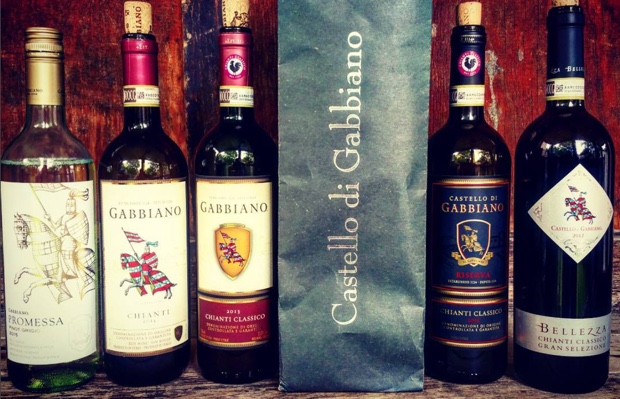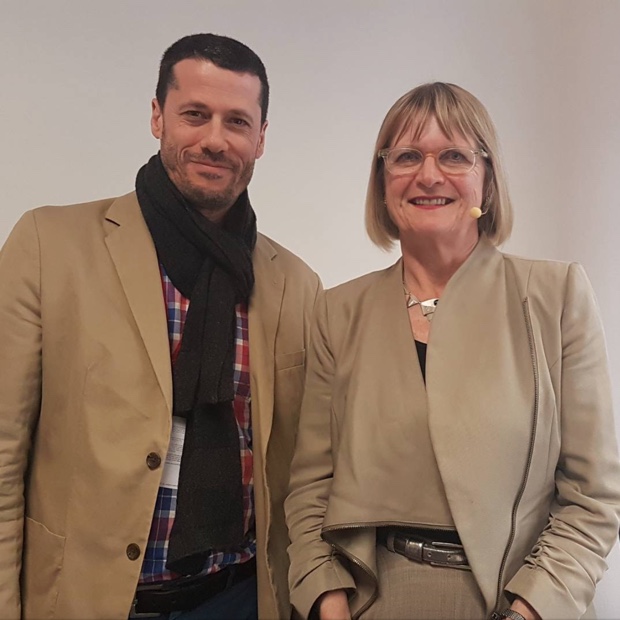
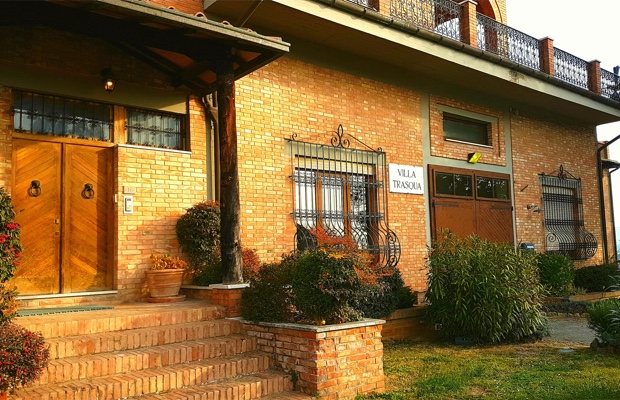
A Chianti Classico return to Villa Trasqua

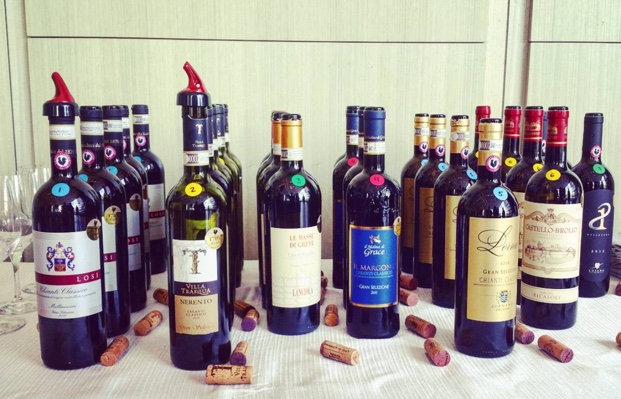
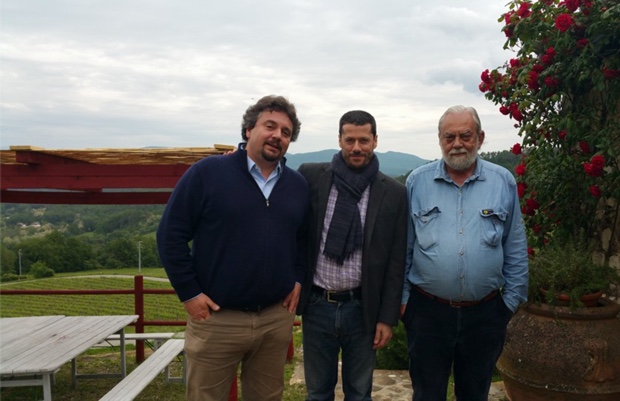
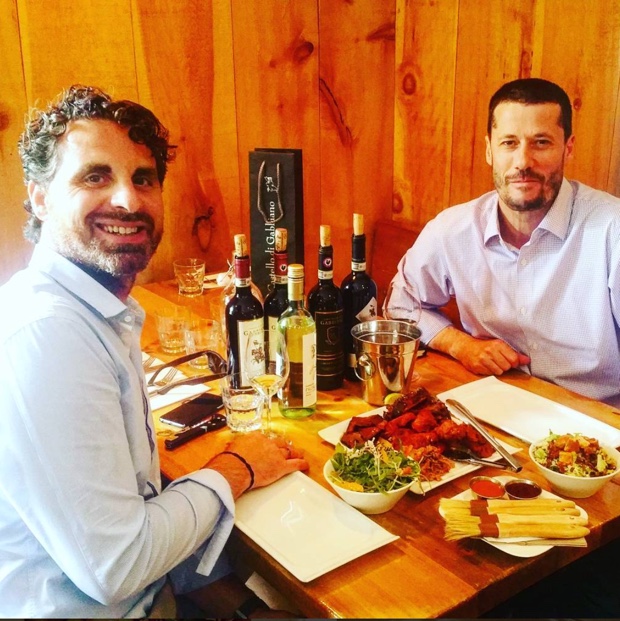
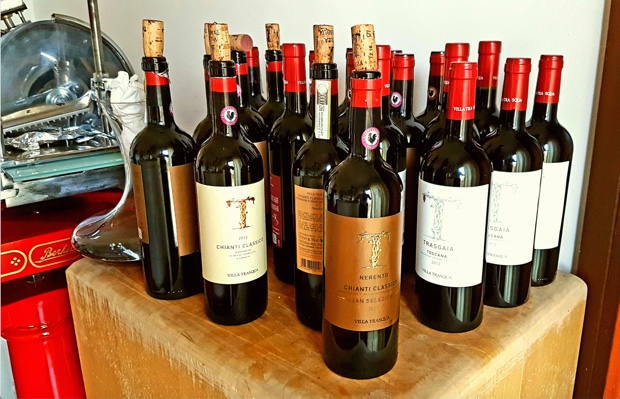
I had been to Villa Trasqua once before, in May of 2016. Proprietor Sven Hulsbergen was more than kind and generous to say I would always be welcome back, so I took him up on that offer and returned in February 2017. I joined Sven and Villa Trasqua’s Export Manager Giorgia Casadio for dinner and to taste through the estate’s current releases, not to mention some spirited conversation and debate.

Related – The most important red wine from Italy

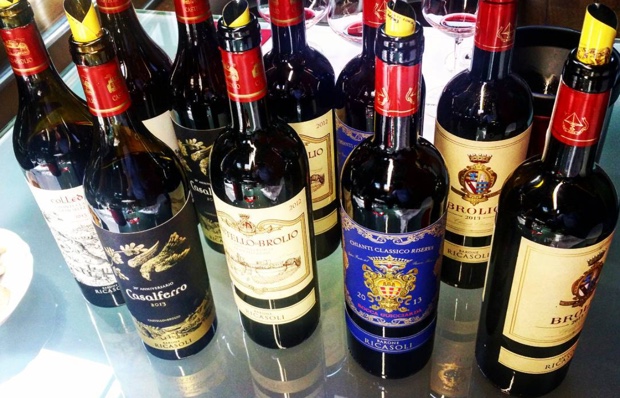
The following day in Florence inside Stazione Leopolda at Anteprime’s Chianti Classico Collection 2017 Sven and I run through the wines again with two Villa Trasqua associates, Francesca and Guilia. It is nearly impossible to gain a true sense of an estate’s Chianti Classico through the nadir scope of a single 12-hour window, even by tasting each bottle twice, yet such an ascent towards conceptualization and visualization leads to a higher probability of ken. I could not do this with just any Chianti Classico but Villa Trasqua’s wines are both encouraging and enabling. When sangiovese opportunity knocks, Godello walks through the varietal door.

A restful return and new visit with the #chianticlassico of #villatrasqua #castellinainchianti Thank you Sven. Thank you Giorgia. #graziemille

Related – Three days, eight estates, Chianti Classico

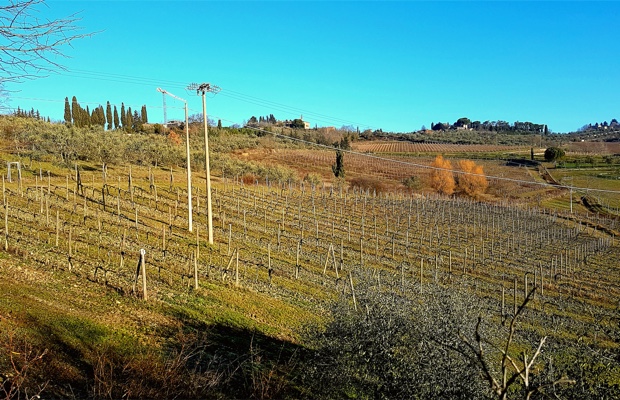
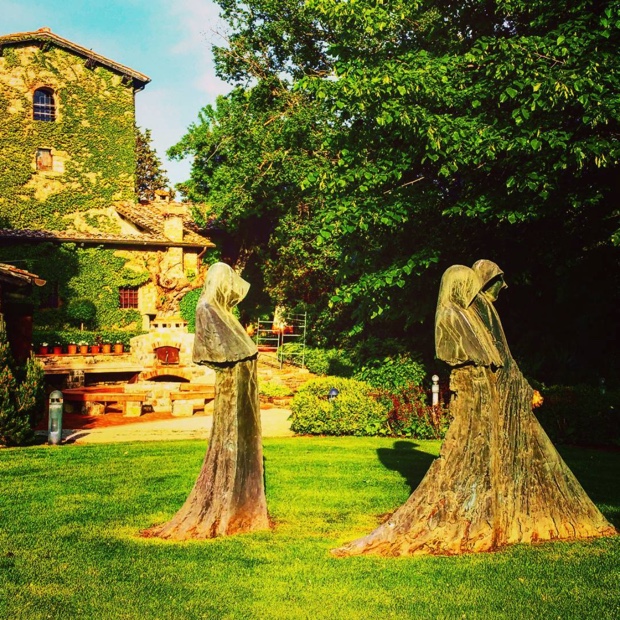
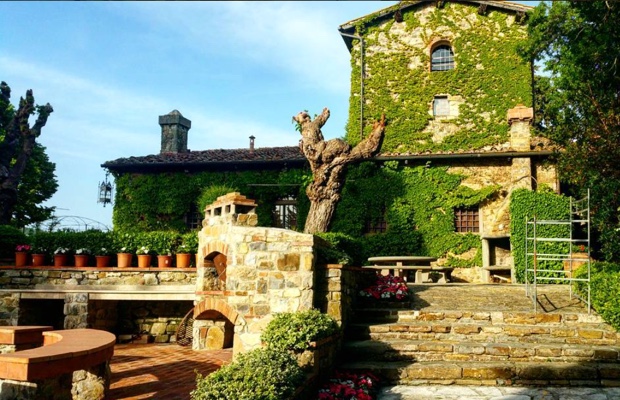
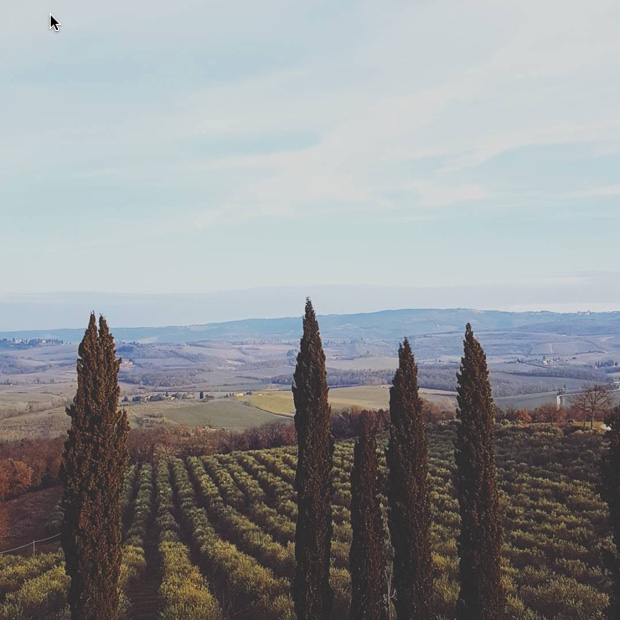
Located north of Siena in Castellina in Chianti with Monteriggioni rising majestically above the estate, Villa Trasqua is built around the ancient and exceptional vineyard known as Nerento. The estate dates back to 1965 and cultivates its 120 hectares and 10 vineyards in the oldest part of Castellina in Chianti. Trasqua is owned by Swiss brothers Sven and Alan Hulsbergen. Organically farmed vines and the gravity fed winery built on several levels are overseen by oenologist Franco Bernabei and Director Armand Metalla. The estate is represented in Ontario by Frontier Wine Merchants.

I tasted four new releases from Villa Trasqua, all from earlier vintages than the norm shown at the Chianti Classico Collection and held back because time in bottle is your ally and your friend. This is one of the ways that Bernabei refuses to let the estate’s wines melt into a puddle of conformity. The wines are not merely executed on behalf of comfort’s sake or stylized to emulate wherever the sangiovese grass is greener. They are specific to the soils with Nerento at the epicentre of it all.

The team at Trasqua takes what the land gives and allows each vintage to speak on its behalf. There are no forcing square pegs into round holes or the stealing of phrasing from other regional, or even more parochially, Castellina in Chianti micro-locales. Like love, sangiovese from Chianti Classico can’t be owned because no two are the same and Villa Trasqua’s are no exception but, they are becoming increasingly exceptional and each are their own emotive exemption. Here are the notes.

Annata, Fanatico, Nerento and Trasgaia

Villa Trasqua Chianti Classico 2013, Docg Tuscany, Italy (Agent, $19.95, WineAlign)

Trasqua’s from the Hulsbergen brothers (Alan and Sven) out of an idyllic, naturally rippling and undulating Castellina in Chianti bowl is 100 per cent sangiovese. I have to admit to fully agreeing with Sven when he tells me “you can drink this with red sauce.” I did in fact retroactively follow-up on this and tasted it alongside one prepared by him at the estate. The round, soft yet structured CC was, for the vintage and the pasta a perfect match. It’s that simple and you should try it, on a Monday night, as we did, in Chianti Classico, or anywhere else. This is traditional (perhaps even more so that their 2012) with its tart and edgy red fruit and some tannin. More than that is its smoke and smoulder, coming as it has from eight months in big barrels, eight more in concrete and finally, steel. Drink 2017-2019.  Tasted twice, February 2017     Villa Trasqua  @HULSI_II  Frontier Wine Merchants

Villa Trasqua Chianti Classico Riserva Fanatico 2011, Docg Tuscany, Italy (Agent, $29.95, WineAlign)

Though not declared on the label Fanatico is 100 per cent sangiovese in 2011 and very much in line, vein and style to the Annata Chianti Classico. The Bernabei entusiasta/amatore/appassionato for Trasqua’s exceptional Castellina in Chianti terroir comes across with CC amplifications so this does by its nomenclature in attitude, acidity and big red fruit. To stay clear of hyperbole balance was key to the vintage and here struck with firm, grippy and almost gritty amplitude. As a result it’s nearly atypical to traditional but it speaks to the specificity of Trasqua grown sangiovese. Drink 2018-2023.  Tasted twice, February 2017

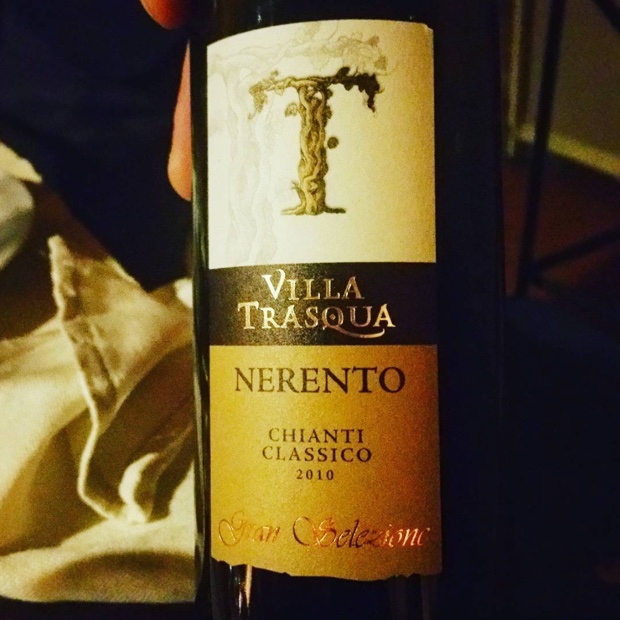
Villa Trasqua Chianti Classico Gran Selezione Nerento 2011, Docg Tuscany, Italy (459685, $39.95, WineAlign)

Nerento lies at the heart of the Trasqua Vineyards and the vines take root in the deep red soil. The name might be mythical, a tree of life reference or from the Latin “nerent,” meaning courting. This is Gran Selezione that courts like a suitor, charming and suave but built on power and a deep liqueur, like at the bottom of a pure well. The sangiovese is still very kissed by wood and locked shut. The first bottle (over dinner) needed more than one hour to open, eventually releasing fresh florals (violets especially), herbs, savour and forest floor. The second bottle next day was not so eager to do the same. This is compact, woven, textured and refined sangiovese with forceful (and the promise of) delicate tannins. Drink 2019-2026.  Tasted twice, February 2017

Villa Trasqua IGT Toscana Trasgaia 2012, Tuscany, Italy (AgentWineAlign)

The IGT foray takes half sangiovese to mingle with two cabernets (35-40 per cent sauvignon and 10-15 franc) from the sandy Trasqua soils abutting Nerento. The name also combines and returns the estate to the earth. The conscious life of this blend centres around a currant crunch and a current of simplicity to solicit early and repetitive consumption with meals. This was bottled in May of 2016 so is now just coming into its window. There is a peaty, smoky note from the oak and this is one instance where sangiovese does not dominate, control or reign. It’s both rich and firm, typically Bernabei in style and with a tannic, beneficially bitter finish. IGT of a democratic and discreet kind. Drink 2017-2019. Tasted twice, February 2017

Good to go!

Godello

Twitter: @mgodello

Instagram: mgodello
WineAlign

Chilling with the bad boy of Chianti Classico

Journalist hard at work, Photo (c) Christine Lechner

On a glorious February afternoon in between Anteprime days I exited the car at Bibbiano and noticed this most beautiful stone wall bathed in Chianti Classico light. Castellina in Chianti light to be precise, overlooking the Elsa Valley towards the castle of Monteriggioni and I laid my body down for a quick rest. Here in Bibbiano with Montornello on the northwestern side and on the southwestern, Vigna del Capannino. A stillness filled the air. Minutes later, refreshed and ready, I sat down to taste Bibbiano’s wines.

Bibbianaccio. It means bad boy, not literally but this is what it means all the same. Cattivo Ragazzo would be the literal translation of bad boy but an avant-garde IGT from Tommaso Marocchesi Marzi called Bibbianaccio is the elucidation we are going with. A wine that breaks from current ranks by metaphrasing ancient tradition in order to dwell on the past and pour with current modernity.

Tommaso Marocchesi Marzi and his brother Federico are responsible for crafting such a devilish IGT Toscana and it’s a most unusual departure from the rest of their classic renderings of Chianti Classico. Their Annata, Riserva and Gran Selezione sangiovese are steeped in praxis and birthright, adhere to a deeply soulful, local Castellina in Chianti style and the thread run through all three DOCG levels is both obvious and uncanny. What stands further apart with glaring clarity is the determinate or indeterminate Bibbiano slope each wine draws their fruit from. In some cases one or the other and in others, a combination of the two. Montornello and Vigna del Capannino. The descending vineyards on either side of the Bibbiano plateau offer up an incredible study in contrasting Chianti Classico geology.

February? #chianticlassico has no issue with #february nor Godello neither.

“The name Bibbiano is of late Latin origin (circa 200 A.C.) and the first historical reference to the name is dated 1089, preserved in a parchment currently preserved in the Abbey of Passignano. It is a record of the deed of donation of the “curte” (court) and of the “castello de Bibiune cum ecclesia, cum casis, (…) viteis (…)” (castle of Bibbiano with church, farms, and grapevines) from Mingarda di Morando to Giovanni di Benzo.” In 1498, Bibbiano is registered in the Cadastre of the Decima Repubblicana as being owned by Matteo di Piero di Francesco Squarcialupi.”

In 1880 Antonio Marzi, son of Pietro, expanded the property of Bibbiano by adding other plots such as Gagliano, Gaglianuzzo and Padule. In November 1942, together with Giulio Gambelli, Pier Tommaso Marzi started producing Chianti Classico wines at Bibbiano. After World War Two Pier Tommaso Marzi and his son-in-law Alfredo Marrocchesi began major renovations, with the help of Gambelli. The work started in 1950 and ended in 1970 with the completion of a large wine cellar, the planting of 20 hectares of specialized vineyards. The family has been a member of the Consorzio di Vino Chianti Classico since 1948.

A study of the district of Castellina in Chianti and geomorphological Bibbiano is paradigmatic to the variety of the appellation. The estate is placed at the southwestern side of the area with altitudes varying from 250m to 600m. It’s plateau is perched on two slopes, on a late Miocene and early Pliocene seabed platform aged 5-10 million years. On one side the highest and eastern is based on primary boulder platforms; the lowest and western on silt sediments. More specifically it is broken down as calcareous silt and sediments of diverse kinds of clay mixed with round pebbles, rare sands, rare chalk veins on the NE estate side; pure gray clay with fragmented limestones, shattered schists on the SW estate side.

A river of adroit style runs through the wines of Bibbiano. They are uncluttered, ingenious, precise and successive sangiovese (and sangiovese grosso) wines of tradition and modernity. I tasted Chianti Classico Annata, Riserva, Gran Selezione and IGT. Here are the notes.

A river of adroit style runs through it @bibbianowines #ingenuity #uncluttered #succession #precision #chianticlassico #chianticlassicoriserva #granselezione #bibbianaccio #tomassomarocchezimarzi

Bibbiano Chianti Classico 2014, DOCG Tuscany, Italy (168286, $23.95, WineAlign)

Taken out of both the north and south vineyards (the estate sits on the ridge of Bibbiano at 310m) from the difficult, rainy vintage. Tommaso Marocchesi Marzi notes that “being organic you have to be very careful with your farming” but despite the adversity the fruit came clean. You get freshness, acidity, florals of a wide range, fennel-liquorice, mint and savour, taut sapidity, but not wound so tight you can’t gain access. The vintage solicited a careful selection, more so than usual but not so out of the ordinary. Yields were low as result. This is very sturdy, essential sangiovese of tradition, proper description of its dual terroir and what it means to be in this wine. From calcareous pebbles in variegated clay and sharp schist in red clay. Smells like the slopes and its natural growth, with just a touch of colorino, raised all in concrete and no wood. Is what it is, perfect and imperfect. Drink 2017-2021.  Tasted February 2017  @bibbianowines  @chianticlassico  @ChiantiClassUSA

VineWhys Wine Experts

Bibbiano Chianti Classico 2013, DOCG Tuscany, Italy (168286, $23.95, WineAlign)

A rich liquere, weight and warmth define this sangiovese from Castellina in Chianti by Tommaso and Federico Marrocchesi Marzi. While the old school leather, cherries and steeping liquor are in line with many Brunello this is pure Chianti Classico and not Riserva. The clarity and purity of fruit make that determination even if the wine is warm to mulled in feeling. Will settle a bit and develop its mushroom, truffle and forest floor nuances sooner rather than later. For fans of bold CC and the way it can be thought as has to be. Drink 2018-2022.  Tasted January 2017

Bibbiano Chianti Classico Riserva Montornello 2013, DOCG Tuscany, Italy (AgentWineAlign)

Montornello is 100 per cent sangiovese grown on the eponymous northern slope, the one with the variegated soil. Montornello is the (five million years) younger of Bibbiano’s two geologies, a platform of several types of partly calcareous, loose clay; red, yellow, amber and white. As floral as the ’14 annata but more mellow, serious and of a noted confidence. Some barriques are employed but the fruit is not shrouded in any way. Scents of liquorice again, plus graphite, a toasty char, warm tar and some beneficial bitters. Finishes strong, seamless and cool. Drink 2018-2023.  Tasted February 2017

Bibbiano Chianti Classico Gran Selezione Vigna Del Capannino 2011, DOCG Tuscany, Italy (AgentWineAlign)

The vineyard “Del Capannino” was planted in the 1950’s by the late great Giulio Gambelli, assistant to Tancredi Biondi-Santi. Not surprisingly and in connection to Brunello di Montalcino it is a clonal planting of sangiovese grosso, with further propagation done in the 1990s. The rich Albarese soil of Del Capannino enjoys the finest exposure and microclimate on the estate and is considered the best expression of Bibbiano’s “genius loci,” the spirit of the place. The first single vineyard vintage was 1998 and the Riserva designation switched to Gran Selezione in 2014, retroactive to the 2010 vintage. Today Bibbiano uses Botti (di rovere) Grande and Tonneaux (beginning in 2008) after barriques had been used for years. Still and always has been 100 per cent grosso, the only producer to do so in Chianti Classico. And so theirs is a liqueur that of course takes your mind to Brunello but this is purely Castellina and Chianti Classico so don’t be confused or tempted to settle for idyll comparisons. This has freshness, purity and that enticing meets teasing acidity, certainly consistent with and of no divergence to Bibbiano style. Ties to CC and CCR are blatant, necessary and so very pleasing. There is great structure but you can think about drinking this in its youth. It wont let out all its secrets but it will begin to tell its story. A story of territory. Drink 2019-2028.  Tasted February 2017

Bibbiano Bibbianaccio 2011, Igt Toscana, Italy (AgentWineAlign)

Bibbianaccio comes to light in its inaugural vintage, “the bad boy of Bibbiano.” Who is this bad boy, wine or man, referring to Tommaso Marocchesi Marzi perhaps, or is it something other? The 50 per cent sangiovese, (40) colorino and mixed varietal (including malvasia bianca) blend is an ode to a time before, when Chianti Classico regional wines were blends filled with whatever grew in the fields and men were men. This (mere production of 2,000 bottles) one is forged with extended battonage, malolactic is done in tonneaux and then the blend is assembled and sent to Slavonian oak. The bad more likely refers to a departure, a break from the stylistic and the the territorial approach. His purpose is “to show that we are capable of anything,” insists Tomasso. His rebel is floral and it reminds me of a northern Rhône syrah-viognier, in a sangiovese-colorino with white grape addendum body. Colorino brings the colour, but texture is also ushered in. The punch downs, the stalks mined in, the wood and the compression all give this a vivid, fleshy reality. It’s also much more tannic than the straight-shooting sangiovese. Bibbiannacio is yet another wine tasted in Chianti Classico with no frame of reference, or certainly not one that I have ever tasted before. It is drawn fruit on down from both sides of the Bibbiano plateau but I really taste the calcaire, liquid chalky and mixed with that tannin showing that some further bottle time is needed. Drink 2019-2025.  Tasted February 2017

Two sides of Bibbiano: Montornello and Vigna del Capannino

Good to go!

Godello

Twitter: @mgodello

Instagram: mgodello
WineAlign

Grace in Chianti Classico

Panzano, Toscana

Panzano, Toscana

I first visited Il Molino di Grace in May 2016 and was graciously welcomed into the family’s estate by Director Iacopo Morganti. In the months leading up to that first visit I had opportunities to assess Chianti Classico, Chianti Classico Riserva and Chianti Classico Gran Selezione at LCBO media lab tastings in Toronto. I became an instant convert and a buyer even before I stepped foot onto Il Molino di Grace’s sloping Galèstro soil-driven vineyards in Panzano. After that May visit I was transformed into a life-long friend.

Later that May I was handed the keys to Chianti Classico’s Gran Selezione Masterclass presentation at The Four Seasons Hotel in Toronto. My role was to open the door to sangiovese perception before a crowd of Toronto sommeliers, agents, buyers and media. It was the Gallo Nero’s 300 year anniversary and its Ontario reputation was entrusted to me by the consorzio braintrust of President Sergio Zingarelli, Director Giuseppe Liberatore, Silvia Fiorentini and Christine Lechner. At that Toronto event I had the pleasure to meet and sit on the panel with Tim Grace. Last week I followed that up and made my way back to Tuscany to have a go at 400-plus Chianti Classico at Anteprima 2017.  When the two-day sangiovese adventure was done I returned with Iacopo back to Il Molino di Grace.

the-vineyard-at-il-molino-di-grace

The vineyard at Il Molino di Grace

Frank and Judy Grace purchased the vineyards in the mid 1990’s and restored an abandoned 19th century ruin into what is now the cantina of Il Molino di Grace, named for the centuries-old historic water-mill. The first vintage out of the new winery was in 1999. MdG became a certified organic winery in 2013, something they and indeed the entire 20 viticultural Panzano-in-Chianti producers are extremely proud of, all together as one. It took 20 years to get this way, with no spraying and even the workers who work the roads will cut, but never spray.

Related – Three days, eight estates, Chianti Classico

Tim Grace runs Il Molino di Grace along with Iacopo Morganti. Their consulting oenologist is none other than Franco Bernabei. To say that Il Molino di Grace is an authentic producer of terroir-driven Chianti Classico would be an understatement. Their vineyards are set upon some of the finest Galèstro soil in all of Chianti Classico. The permeations and permutations from that soil have separated this estate from so many others with a portfolio of wines constructed with power, finesse and yes, grace.

Related – The most important red wine from Italy

Iacopo poured a very strategic retrospective of the estate’s wines in an artfully designed schematic so that I was able to literally pick up where I left off last May. We travelled retrospectively astern through CC’14, CCR ’13, GS ’12 and IGT ’11 with prudent stops at intervals to re-visit previously tasted wines. The exercise never wavered from the safekeeping of sangiovese as the heart of the matter and the vintage interval play showed both the progression and the consistency of the estate. Here are the notes.

my-valentines-chianticlassico-of-ilmolinodigrace-and-of-course-iacopo

My valentines, @chianticlassico of @ilmolinodigrace and of course, Iacopo

Il Molino Di Grace Chianti Classico 2014, Docg Tuscany, Italy (85209, $19.95, WineAlign)

Incidentally the first vintage on which the label reads organic, 2014 captures the freshness and the true Chianti Classico, its nature and its truth. No mask, nothing to hide behind, nowhere to run. “In some ways 2014 is more typical a vintage,” suggests Iacopo Morganti, because like other passed over and quickly assessed ones of the recent past (such as 1996, 1998 and 2008) the intrepid purity of sangiovese is decisive and built to last. This is deeply hued Chianti Classico, refreshing, spirited and crafted with a very specific type of actionable drinkability. With pasta, with filetto, with friends. Will not change course for four years and drink comfortably for four more. Sangiovese accented with canaiolo, colorino and malvasia nero. Drink 2017-2025.  Tasted February 2017  @Ilmolinodigrace

Il Molino Di Grace Chianti Classico 2013, Docg Tuscany, Italy (85209, $19.95, WineAlign)

Nine months later so provocative and round, still imbued of the deep pulpier purple Il Molino di Grace hue with ruby tinges. Floral but not bursting, warm, in control and easy. Manages fruit purity and then by extension, the grip from 100 per cent sangiovese. Now gelling into a liqueur typical of ’13, smooth and rapidly developing into a multi-faceted sip. A drink earlier in full enjoyment vintage.  Last tasted February 2017

The 2013 point blank sangiovese Chianti Classico is a softer, rounder version of its normale self, with less spice and dust and as a matter of course, from double the output. A dreamy downy growing season saw to 100,000 bottles and each are so eminently drinkable. There is a soil in there that seeps through because of the vintage, that combination of marl and limestone known locally as galestro and so while the concentration is wontedly in measure to 2012, it is ultimately just a matter of differing result. One wine’s pale is another one’s edge. This ’13 will present for immediate pleasure while ’12 spends one more year coming into view. Drink 2016-2019.  Tasted May 2016

Il Molino Di Grace Chianti Classico Riserva 2014, Docg Tuscany, Italy (382945, $23.95, WineAlign)

Riserva 2014 is certainly positioned further down that democratic line from the Chianti Classico, its hue more variegated with three to four variations of shade and fruit still popping fresh. These two pronto pieces of personality are the hallmarks of the Il Molino di Grace style and singularity. To employ such darker fruit without any compromise to freshness, this is the magic of this place. Iacopo Morganti says there is no magic. “I like to see the colour of the vintage.” It is true, 2014 is one of purple violet fruit so it speaks of a time. As a Riserva it demonstrates guts and creates a shell of protection for itself, sufferable to whoever thinks it may fail to validate the idea of a classic vintage, which it most certainly will turn out to be. Drink 2019-2029.  Tasted February 2017

2013-and-2014

Il Molino Di Grace Chianti Classico Riserva 2013, Docg Tuscany, Italy (382945, $23.95, WineAlign)

A better vintage for Riserva (as it is in Chianti Classico for merlot) because of the warmth and highest available poly-phenolic qualities. A return here to deep purple, Il Molino di Grace’s ’13 Riserva is akin to 2009 (though seemingly more in control of its fruit) and also with thanks somewhat like ’14 Chianti Classico, popping, fresh and with its stark moments. It is necessary to stick around, keep checking the glass and it too will lead you down a sexy, sultry, sumptuous road. Shows signs of 2010 in these flaunting ways, with a forward and upwards trajectory through the notions drawn from its very specific Panzano territory. There is chocolatey richness mixed with driving acidity, because “this is the vintage.” Will live long enough, perhaps developing some exoticism and balsamic and/or mushroom notes after seven or eight years time. Drink 2019-2027.  Tasted February 2017

Il Molino Di Grace Chianti Classico Gran Selezione Il Margone 2012, Docg Tuscany, Italy (435115, $39.95, WineAlign)

Chianti Classico Gran Selezione Il Margone 2012 comes structured from a vintage with frost in May that compromised 50 per cent of the crop and as a result, bestowed lowest of low yields and concentrated berries. After that happenstance of natural selection the vintage turned to hot and dry, with great weather at harvest. This is and could only have developed into a fleshy and magnanimous Gran Selezione with acidity equivocal and anti-acrimonious to bones draped with the ripest of fruit. And it’s a good thing the acidity is set to high because that fruit and richness will need it going forward. Such a GS had to be crafted this way, with compound aggression and aggressive behaviour. Ultimately defines what it means to be affirmative action Gran Selezione. Drink 2021-2030.  Tasted February 2017

Il Molino Di Grace Gratius 2011, Docg Tuscany, Italy (Agent, $49.95, WineAlign)

“The ’11 Gratius is like a bomb,” says Iacopo Morganti with a shrug and a gesture of hands. The vintage parlays sangiovese that clocks in cresting and swimmingly close to breaching 15 degrees in alcohol, because it just had to be, like 2000, heavy and brooding. The aromatics are distended, bloated, full of over-exceptional life. Sangiovese in warm, mediterranean tones, black olive, sun-dried tomato and surfeited with bloody good chocolate. Sangiovese so big and youthfully musty-dusty must be accompanyed by and is in fact supported by the Il Molino di Grace acidity to carry this Gratius forward five years but not necessarily much more. In 2011 the composition is 95 per cent sangiovese with stabilizing colorino and canaiolo. Tasting this in 2017 is a gift that never stops giving. Drink 2018-2022.  Tasted February 2017

Il Molino Di Grace Gratius 2010, Docg Tuscany, Italy (Agent, $49.95, WineAlign)

Again, as before and going forward, Gratius is 95 per cent sangiovese with the supporting bits of canaiolo and colorino, In contrast to ’11 all the weight falls away with wistful pleasure. “Here you have fantasy,” smiles Iacopo Morganti. Your mind is taken places by the exotica and the clouds of perfume. Elegance derived from sangiovese so deep is possible when balance is struck and at 13.5 per cent alcohol, just what you want from such a wine. Contemplate the blades of acidity sharpening their teeth on the back sides of your tongue and know that the subsidies won’t begin their wane until 2022 or beyond. Yes Gratius, you are indeed elegant and long. Last tasted February 2017.

Gratius, meaning more pleasing, the author of a poem on hunting, opponent of the poet Archias and a contemporary of Ovid. The other sangiovese from Il Molino di Grace whose first vintage was 1999, of “a nose incredible,” says a wistful Iacopo Morganti and he is not wrong. From the Panzano-Greve in Chianti slopes of Montefili, at 500 meters, a 2.2 hectare single vineyard of old vines (70 years) co-planted with some colorino and canaiolo. So in that sense it’s a field blend but essentially sangiovese. Tuscan climat of rock and poor soil, where the wind blows and grapes whose fate is two weeks later maturation. Aromatics and elegance are in a calm struggle and like two brothers, rolling but not fighting. Such a wine of clean, pristine purity does not exist just anywhere. The inviting perfume solicits readiness and a willingness to be generous. No need to wait. Drink 2016-2022.  Tasted May 2016

Il Molino Di Grace Gratius 2005, Docg Tuscany, Italy (Agent, $49.95, WineAlign)

A next look nine months later confirms what Iacopo insists. “The acidity’s finished for me. It’s ready to drink now.” At this juncture Gratius 2005 has abandoned its fantasy in concession to a drink now reality. Last tasted February 2017

The Gratius 2005 shares DNA with 2009 aromatically speaking but in texture and expression the litheness is pinot noir like, with a bit of bretty volatility as an impression that is vineyard funk derived. Just now beginning a drinking window in performance for the art of perfect timing but why not imagine the installation persisting for 10-12 more years? Here the Montefili Galestro vineyard is clearly iterated in a funk-soil-chalk-liquid rubies way. A brilliant peek back because the tart is just so right. Ask the question, “what was the old wine like?” The answer is “it was like old wine, that is to say, like all old wines.” Drink 2016-2022.  Tasted May 2016

Good to go!

Godello

Twitter: @mgodello

Instagram: mgodello
WineAlign

Seventeen in VINTAGES February 4th, 2017

breakfast

as seen on WineAlign

Familiar and not so familiar Europe, always cool chardonnay, seeing South African red (and a white)

These past two weeks have been difficult, bizarre and disturbing to say the least. No one is immune to thinking about the twists, turns and horrors of recent world events. With no disrespect to activism, especially on a personal level, at WineAlign our job as critics is to find ways to keep the machine running, in other words, to focus on wine. In 1975 Saturday Night Live did a skit in which Paul Simon played one-on-one basketball against one-time Harlem Globetrotter and NBA legend Connie Hawkins. Just before the game sports reporter Marv Albert asks Simon about his strategy in going up against The Hawk. “Uh, but I’ll just have to play my game, as I usually play it,” says Simon. “I mean, I’m not gonna change anything, I’ve gotta stay with my strengths… basically, singing and songwriting.” At WineAlign we’ll simply do the same.

Wines across the Mediterranean are a primary focus of the VINTAGES February 4th release. A great number of them will coax a feeling of familiarity and there are others that may not ring a bell. In any particular wine purchasing scheme it is always best to strike a balance between the poles of available options so best approached by looking to one and then the other. While France, Spain and Italy will always deliver the tried and true, a gem of a geeky or otherwise deferential varietal can be unearthed if your mind and your heart are open. Get into the corners and alleys of habituated Europe but also a place like Greece. You will marvel at how it can change your outlook to usher in the most interesting of times, in life and in wine.

Related – Only one in VINTAGES January 21st, a writer’s defence and nine more

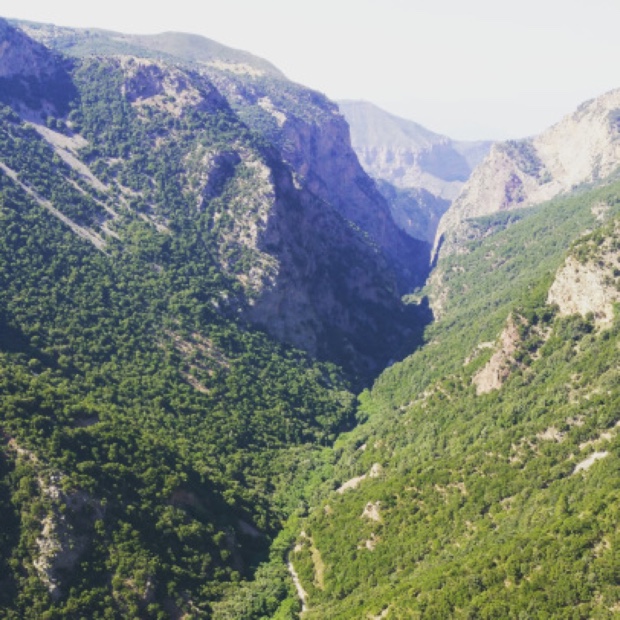
A view through Vouraikos Canyon from Mega Spileo Vineyard

A view through Vouraikos Canyon from Mega Spileo Vineyard

Don’t worry. I’m not going to run off and wax rhapsodic about wines found “off the beaten path,” argue on the semantics of what exactly that means or how it should be defined. But I will tell you a little story. In July of 2016 I visited one of Europe’s most extraordinary vineyards, found in Achaia, located in the northern Peloponnese. At the top of this incredible canyon you stand at the foot of another even more imposing and massive rock face that is home to the 11th century Mega Spileo monastery. Gazing north through the cracks in the mountain cragges you can see the azure blue waters of the Gulf of Corinth. Looking straight down you see the greenery of the healthy Mega Spileo vineyard. The entire footage leaves an indelible mark. What’s the point? The point is to get out there and make discoveries. This also applies to what can be found in the VINTAGES catalogue.

Related – Seventeen for January 7, 2017

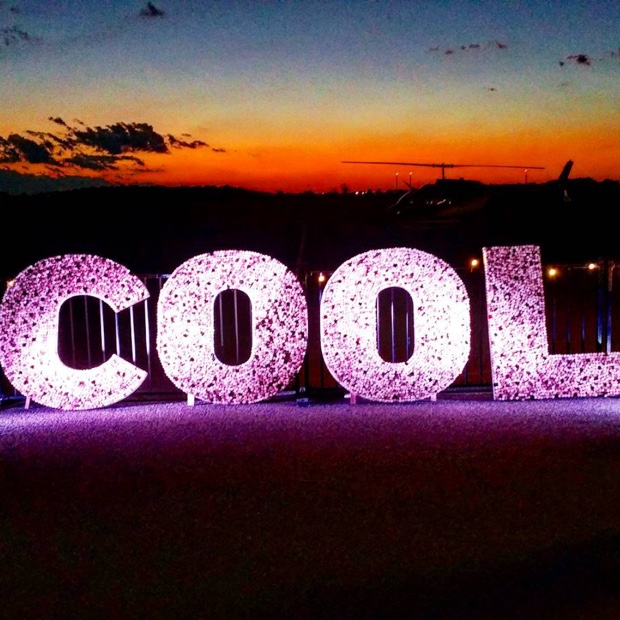
#cool

Chardonnay is always in the spotlight so why should February 4th be any different? This past summer at Niagara’s Cool Chardonnay conference I found out that we have to look at organoleptics and ask a very important question. Is your expectation of a Chablis going to be the same as chardonnay made from anywhere else? More important, who are we putting this wine in front of? Ian D’agata’s take struck a Canadian chord. He talked of “a welcome astringency characterized by piercing flavours. These are cool-climate wines. Cool climate chardonnay is not about a long litany of fruit descriptors. If you have a cool-climate viticultural area it behooves you to give the people what they are looking for.” More cool chardonnay examples available on this release are worthy of your time and your dollars.

Bush vines, Groot Drakenstein Mountains @AnthonijRupert Wyne @WOSACanada #lormarins #franschhoek #southafrica #winesofsouthafrica #mesmerizing

Bush vines, Groot Drakenstein Mountains @AnthonijRupert Wyne @WOSACanada #lormarins #franschhoek #southafrica #winesofsouthafrica #mesmerizing

South Africa is a geographical and geological land of wonder, of ancient soils and picturesque intrusions. Extreme examples include the shale and schist of Swartland that turns into dust and the granite domes of Paarl, which are 30 million years old. We are talking about beginning of time stuff, but how does it impart into wine? Taste more than just a few South African reds and you will get a sense.

I’ve said it before and will repeat myself. South African wine is not what we thought it was. This mantra can’t be repeated often enough. Ventures into the Cape wine lands, tastings and zealous immersion into Stellenbosch, Paarl, Franschhoek, Swartland and Hemel-En-Aarde see to that. If you’ve not visited you can’t possibly know what revelations lurk but you can get a glimpse by drinking South African wines here in Ontario.

Familiar Europe

sierra

Sierra Cantabria Selección 2014, Doca Rioja, Spain (Agent190520$14.95, WineAlign)
@RiojaWine  @azureau

nimes

Château d’Or et de Gueules Les Cimels 2013, AC Costières de Nîmes, France (Agent480301, $15.95, WineAlign)
  @RhoneWine  @VINSRHONE  @NaturalVines

Grand Cru Riesling, Alsace

Grand Cru Riesling, Alsace

Jean Biecher & Fils Schoenenbourg Riesling 2014, AC Alsace Grand Cru, France (Agent, 469767, $23.95, WineAlign)
  @AlsaceWines  @drinkAlsace  @VinsAlsace

not-all-terroir-is-created-equal-cinque-cru-barone_ricasoli-granselezione-castellodibrolio-chianticlassico-massimilianobiagi-francescoricasoli-stefanocapurso

Five terroirs of Ricasoli

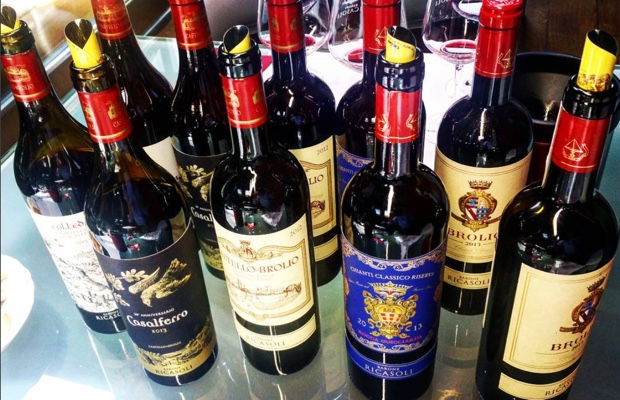
Barone Ricasoli Castello di Brolio Gran Selezione Chianti Classico 2013, DOCG Tuscany, Italy (Agent, 942607, $59.95, WineAlign)
@barone_ricasoli  @chianticlassico  @imbibersreport

Not-so familiar Europe

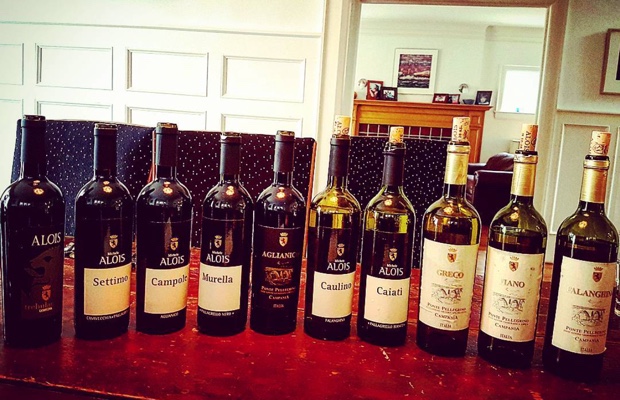
There's a new obsession in town- #campania @vinalois #falanghina #greco #fiano #aglianico #pallagrello #pallagrellonero #palagrellobianco #cassavecchia #pontepellegrino #therealcampania #massimoalois #vinialois #brandnewdaywines #bndwines

There’s a new obsession in town- #campania @vinalois #falanghina #greco #fiano #aglianico #pallagrello #pallagrellonero #palagrellobianco #cassavecchia #pontepellegrino #therealcampania #massimoalois #vinialois #brandnewdaywines #bndwines

Ponte Pellegrino Greco di Tufo 2015, IGT Campania, Italy (Agent477760, $13.95, WineAlign)
@vinialois

prunotto

Prunotto Mompertone 2015, DOC Monferrato, Piedmont, Italy (Agent, 388587, $18.95, WineAlign)
  @HalpernWine  

alicante

Tommasi Poggio Al Tufo Alicante 2013, IGT Toscana, Italy (Agent, 70797, $22.95, WineAlign)
@UNIVINS  @Tommasiwine

Mega Spileo Monastery

Mega Spileo Monastery

Domain Mega Spileo Red 2010, Peloponnese, Greece (Agent, 466110, $29.95, WineAlign)
@DrinkGreekWine  

chenin

Domaine F L Savennières Chenin 2012, AC Loire, France (Agent470971, $33.95, WineAlign)
@DomaineFL  @vinsdeloire

spatlese

Maximin Grünhäuser Abtsberg Riesling Spätlese 2014, Pradikätswein, Germany (Agent, 481374, $39.95, WineAlign)
  @germanwineca  @WinesofGermany

More cool chardonnay

citry

Simonnet Febvre Bourgogne Chitry 2014, AC Bourgogne, France (Agent, 479667, $19.95, WineAlign)
@SimonnetFebvre  @LouisLatour1797  @ImportWineMAFWM  @BourgogneWines  @vinsdebourgogne

Blue Mountain Vineyards Phoo: (c) www.bluemountainwinery.com

Blue Mountain Vineyards
Phoo: (c) http://www.bluemountainwinery.com

Blue Mountain Gold Label Brut Sparkling, Traditional Method, Okanagan Valley, British Columbia (Agent, 206326, $28.95, WineAlign)
@BlueMtnWinery @rogcowines  @winebcdotcom

Time to taste at Domaine Queylus

Time to taste at Domaine Queylus

Domaine Queylus Tradition Chardonnay 2014, VQA Niagara Peninsula, Ontario (Agent, 489591, $24.95, WineAlign)
@QueylusVin  @Dandurandwines

luminous

Beringer Luminus Chardonnay 2014, Oak Knoll District, Napa Valley (Agent, 395699, $39.95, WineAlign)
@beringervyds    @NapaVintners

South African reds (and a white)

Rustenberg R.M. Nicholson 2013

Rustenberg RM Nicholson 2014, Wo Stellenbosch, South Africa (Agent, 278390, $19.95, WineAlign)
@RustenbergWines  @WoodmanWS  @WOSACanada  @WOSA_ZA

mentors

The Mentors Shiraz 2012, Wo Paarl, South Africa (Agent, 403618, $29.95, WineAlign)
@KWVwines  @Dandurandwines  @WOSACanada  @WOSA_ZA

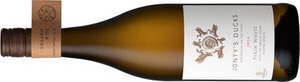
Avondale_Wines_Jonty_s_Ducks_Pekin_White_web

Avondale Jonty’s Ducks Pekin White 2015, Wo Paarl, South Africa (Agent, 439554, $15.95, WineAlign)
@Avondalewine  @RareEarth_Wines  @WOSACanada  @WOSA_ZA


I would like to wish you all great February release wine hunting and gathering. The WineAlign team is in travel mode these days but rest assured the reviews from upcoming VINTAGES releases will be dutifully covered. I’m off to Antiprime Toscane next week and will be back in time for everything March. The February 18th release will find a focus on Australia and March 4th, well, it’s anyone’s guess!

Good to go!

Godello

Twitter: @mgodello

Instagram: mgodello

WineAlign

16 mind-blowing wines of 2016

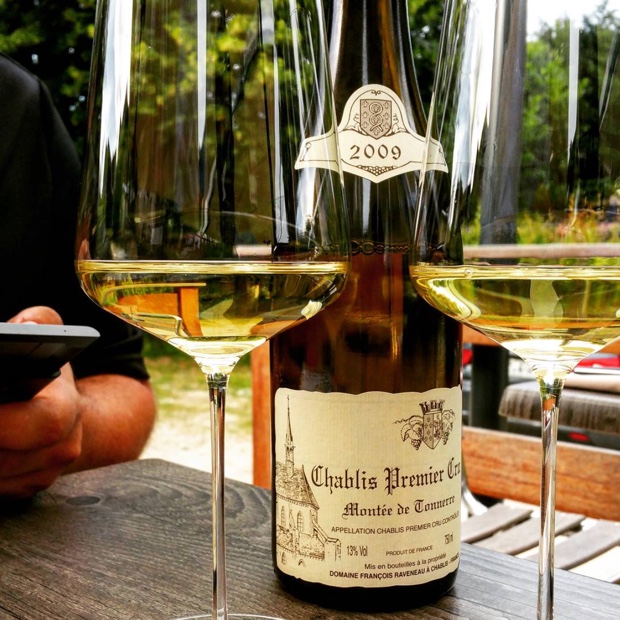
this-may-or-may-not-have-happened-raveneau-memory-monteedetonnerre

This may or may not have happened #raveneau #memory #monteedetonnerre

It has never been this difficult to narrow it down. This frenetic, fast and forward moving blur of a year has blistered the patterns of thought so much so that I seriously considered throwing the whole 16 in 16 down the drain and laying it all out there. “Here are the 42 mind-blowing wines of 2016…” and then this wave of clarity came over me like a cloudless afternoon in Chablis. I mean I tasted 50-plus Grand Cru Chablis this year. They could all be on this list.

I meant this just the way I wrote it. The simplicity of wine is a beautiful thing. A vine grows and produces grapes. That fruit is picked and ferments itself with help from yeast it just happens to carry in its luggage. Time passes and wine is made. No one had to invent it. The most basic example of shit happens.

Related – 15 Mind blowing wines of 2015

As if to presumptuously bookend 2016 before it even began, that first post was apropos. New year, 16 new VINTAGES releases were not mind-blowing by any stretch of the waxing rhapsodic imagination but white space was filled. Like growing grapes in warm climates where just about anything can complete a phenolic journey, the possibilities are endless. So that I may feel comfortable quoting Godello again and again, multeity is the name of the game.

Related – Around the Cape in 50 wines

South Africa continued to occupy Godello for the early part of 2016 and that will never cease and desist. Hosting Andrea Mullineux at Barque Butcher Bar was one of the true highlights of the year. The landscape of South African wine is demarcated by ancient geology and by the geographical diversity of its regions, sub-regions and micro-plots. Varietal placement is the key to success. As I mentioned in previous articles, South African winemakers can grow anything they want, to both their discretion and their whimsy. The choice of what grows best and where will determine the successes of the future.

A new riesling on my radar was released in February. Creekside Estate Riesling Marianne Hill Vineyard 2014, Beamsville Bench, Ontario (443572, $19.95, WineAlign) and it paired beautifully with more foreshadowing than I’d like to admit.

Such a showing of 12 from Langton's does @Wine_Australia proud. Formidable, exemplary #AussieWine #vintagewineconservatory

Such a showing of 12 from Langton’s does @Wine_Australia proud. Formidable, exemplary #AussieWine #vintagewineconservatory

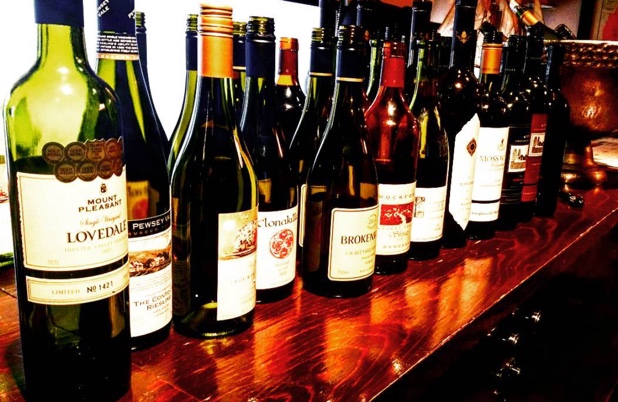
The Langton’s Classification: Excellent, outstanding, exceptional could have, would have placed 16 wines on this best of list were the rest of the planet not so adept at making wine. Like Wynns Coonawarra Estate John Riddoch Cabernet Sauvignon Limited Release 2010, Coonawarra, South Australia (466748, $99.95, WineAlign). Such a gathering of Australian wine delivers the preponderance of form, with the incantatory capacity of narrative to bring truth to light and fulness out of pleasure. The mantra repeated with Savouring the new Australia.

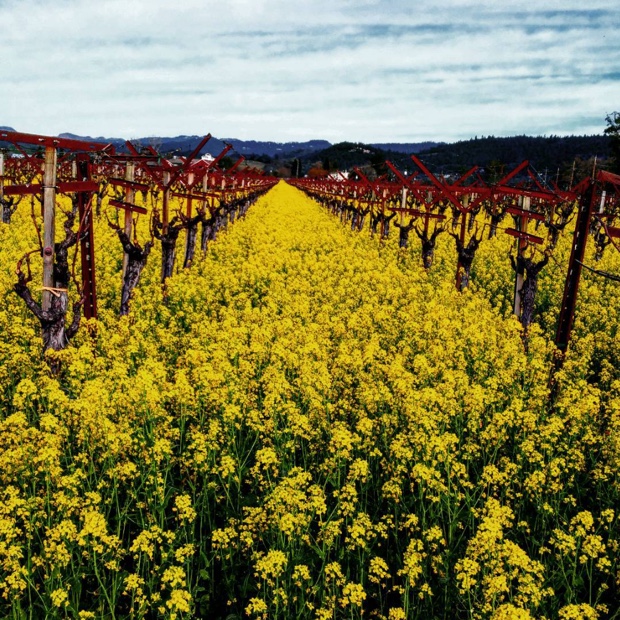
The #napavalley mustard is something else @CalifWines_CA #napa #califwine

The #napavalley mustard is something else @CalifWines_CA #napa #califwine

California stars showed up in droves and like any high quality engrossing preoccupation, the trip to Napa and Sonoma this year changed everything. Whatever I thought I knew or felt about the California wine industry now needs to be rewritten. First, Napa Valley: Where ripeness happens, then Napa Valley two: A question of ageNapa Valley: The next generationChardonnay in the Napa luxurySonoma gaps and single vineyardsSeven Grothic tales and Old vines for the Zin.

Vintage to vintage nuance and the common thread of %22grothiness,%22 or, @GrothWines in essence @TheVine_RobGroh #suzannegroth #napavalley #oakville #cabernetsauvignon

Vintage to vintage nuance and the common thread of grothiness, or, @GrothWines in essence @TheVine_RobGroh #suzannegroth #napavalley #oakville #cabernetsauvignon

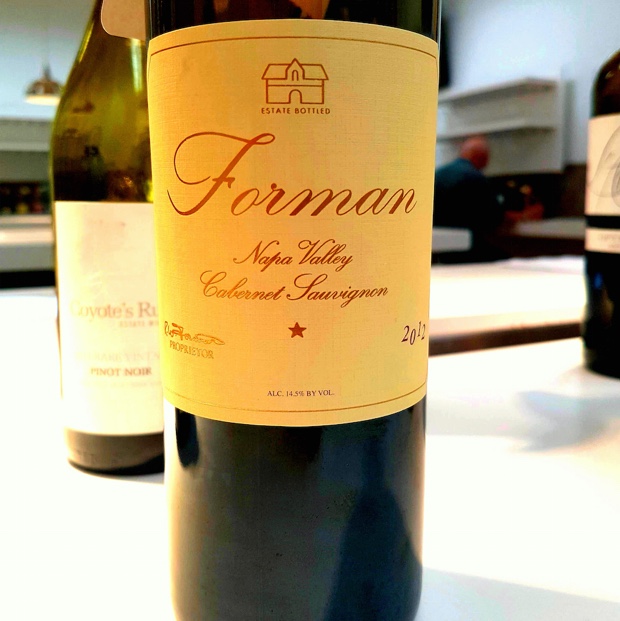
The most pertinent question now in my mind is this. Can European wine keep up with the fictionality of North American reality? Even these wines could not make this list, however great and exceptional they are. Anakota Helena Montana Vineyard Cabernet Sauvignon 2013, California (181131, $158.95, WineAlign), Forman Cabernet Sauvignon 2012, Napa Valley, California (143925, $160.00, WineAlign) and Groth Cabernet Sauvignon Reserve 1997, Oakville, Napa Valley, California (Agent, $179.95, WineAlign). Sometimes the answer still persists. All in the Primum Familiae Vini. And by the way, The LCBO keeps Kosher.

lunch-champagnelallier-azureau

Much of what I taste is in a lab with no windows. That is because VINTAGES is a mimetic project, which is a few projects too many. We wine trackers and writers are akin to Cricetinae, perpetually running in a wheel or like Sisyphus, forced to roll an immense boulder up a hill, only to watch it roll back down. We read the bi-weekly catalogue, pre-taste the newest offerings, make our lists and check them twice. In every batch there are 10-15 wines that stand out, as much about bell curve positioning as absence of singularity. That is why attending varietal-centric events like The dawning of the age of Austrian wine and travelling the world is so important. Not too mention in my dining room In the Campania of Vini Alois.

ca-la-bionda

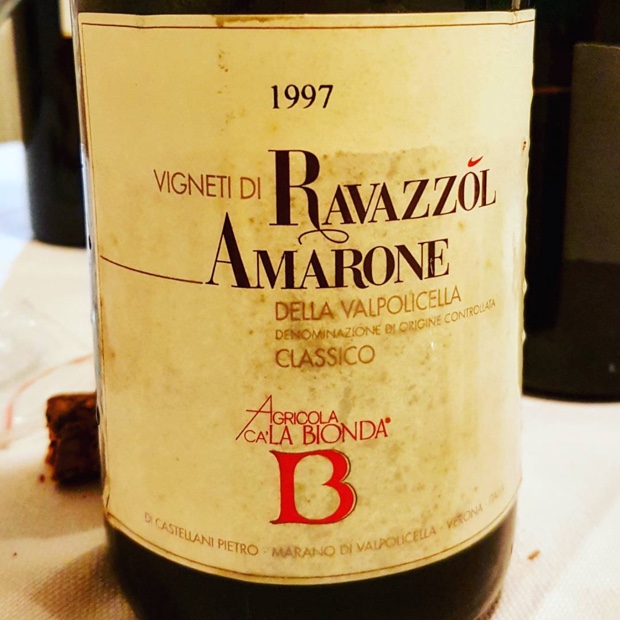
To name a few excursions, I visited California in February, Vinho Verde in March, Chianti Classico in May, Chablis in July and Valpolicella in September. November in Paris I re-connected with Earth and sky. The take aways were extraordinary and flush with the relish of new discoveries and brand new days. Who can forget Ca’ La Bionda Vigneti Di Ravazzol Amarone Della Valpolicella Classico 1997? Italy in the fall reminded me that Franciacorta is the best kept sparkling secret on the planet. November is a sublime time to visit the province of Brescia and the cellars of Franciacorta. Meraviglioso! Meanwhile, Champagne has to be on the list, right? Lallier Cuvée Millésime Grand Cru Brut Champagne 2008, Champagne, France (Agent, $95.00, WineAlign) should be but again, space restrictions and there was this old bubble from the New World. Decisions, decisions.

Related – March of the Canadians

Which brings me back to Canadian and more parochioally, Ontario wine. The Canadian wine renaissance is attributed to high-end, artisan winemakers like Norman Hardie and Thomas Bachelder. That’s the cool factor. The truth of the matter is that Canadian winemakers have realized and capitalized on the significance and exceptionality of their terroirs in regions such as Niagara, Prince Edward County and the Okanagan Valley. Journalists and buyers from around the globe know it and have begun to spread the Canadian gospel.

And now #cuvee2016 @CCOVIBrockU #vqa @winecountryont #scotiabankconventioncentre

And now #cuvee2016 @CCOVIBrockU #vqa @winecountryont #scotiabankconventioncentre

And so I asked Where does the taste of Ontario go from here? At Cuvée, where was the Cabernet Franc? Where was the rest of Ontario’s Go Gamay Go arsenal? Varietal lampoonery I tell ya. Over the highway and across the hills, No County for old wines and then, “a celebrated indictment of suburban surrender,” Too late for May Two-Four.

Related – 16 Canadian wines that rocked in 2016

This 16-strong list has much to do with the beg, Drink now or save it for later? I have spent the last 30 years considering wine in some respect. The last 15 much more so. The tries, trials, errors, tricks, and tribulations have taught me one thing. I prefer and receive much more instant gratification from drinking wines young but nothing compares to the insight and the exhilaration of partaking in older wines.

You never forget your first hunk of #kimmeridgian love @BIVBChablis @vinsdebourgogne #chablis #cotedelechet

You never forget your first hunk of #kimmeridgian love @BIVBChablis @vinsdebourgogne #chablis #cotedelechet

The year’s greatest distraction came at the hands of Chablis and fair warning, twenty thousand words are coming soon. In 2016 I published three times, Chablis from Dauvissat to VocoretLooking for Chablis in Ontario?Enlightened Chablis of Château De Béru and Paradox in Chablis. Chablis as a varietal concept, as opposed to and unlike anywhere else in the world, seemingly unrelated to chardonnay. How could these extraordinary Chablis not make the list? Domaine Laroche Chablis Grand Cru Les Blanchots Réserve De L’obédience 2014, Ac Burgundy, France (AgentWineAlign) and Domaine William Fèvre Chablis Grand Cru Bougros Côte Bouguerots 2014, Ac Burgundy, France (AgentWineAlign). Perhaps because I will soon publish Grand Cru hyperbole next month? That must be it.

Mirror to classicism, history and tradition. Purity from @valerialosi #querciavalle @chianticlassico #agricolalosi #sangiovese #granselezione #pontiganello

Mirror to classicism, history and tradition. Purity from @valerialosi #querciavalle @chianticlassico #agricolalosi #sangiovese #granselezione #pontiganello

For the first time, I think ever, I gave some love to Rosé in the Days of wine and Rosés. I also fell for new dessert wines and these two tried hard but came up just a wee bit short for the list. Domaine Cauhapé Jurançon Symphonie De Novembre 2012, Southwest, France (470344, $38.95, WineAlign), Losi Querciavalle Vin Santo Del Chianti Classico 2000, Docg Tuscany, Italy (Agent, $95.00, WineAlign).

grahams_port-insanity-via-abnermallity-onceinalifetime-piratesonapicnic-piratesv4point0-sharingiscaring-1948-finestreserve

@grahams_port insanity via @abnermallity #onceinalifetime #piratesonapicnic #piratesv4point0 #sharingiscaring #1948 #finestreserve

Graham’s Vintage Port Finest Reserve 1948 (with thanks to Peter Boyd) granted the year’s moment of providable history. Love in droves. Holiday season for the VINTAGES releases were split and categorized, from December 10th in VINTAGES: Canada through December 10th in VINTAGES: Old World and into December 10th in VINTAGES: New World.

Singolarità, qualità, diversità. Grazie di tutto @chianticlassico

Singolarità, qualità, diversità. Grazie di tutto @chianticlassico

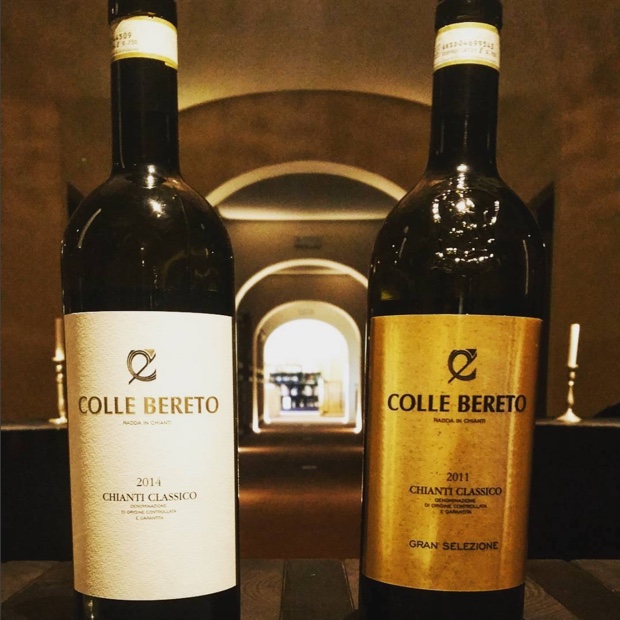
In 2016, two words. Chianti Classico. The wines have embarked upon an ascension into their contemporary golden age. Image, perception and finalmente, reality, these are the truths all who feel the soul of Chianti Classico are in search of today. Today and moving forward, explaining to the world that Chianti Classico is not what you thought or think it to be. Colle Bereto Chianti Classico Gran Selezione 2011, Docg Tuscany, Italy (Agent, $67.50, WineAlign) was a side-revelation, as were so many others in Three days, eight estates, Chianti Classico and Gran Selezione, The most important red wine from Italy. And in a year when CC is all that seems to matter, Tenuta dell’Ornellaia Ornellaia 2012, Doc Bolgheri Superiore, Tuscany, Italy (722470, $195.50, WineAlign) and Fattoria Dei Barbi Brunello Di Montalcino Riserva 2004, Tuscany, Italy (Agent$100.00WineAlign) are but mere mentions in addendum.

DavidPpelletier, 'Le Sommelier Fou' and friends in Vinho Verde

David Pelletier, ‘Le Sommelier Fou’ and friends in Vinho Verde

It may seem irrelevant now but Changes to VINTAGES release recommendations and notes on Godello will translate to a revolution at WineAlign in 2017. Wait for it. Most of all, 2016 will remind me that I will always raise my glass of Vinho Verde to Le Sommelier Fou. Here are Godello’s 16 mind-blowing wines of 2016.

200-yr-old-vines-1300m-above-sea-level-vignerietna-somesmartsomm-rosato-vinudilice-2008-tastethelava-volcanic

200 yr old vines. 1300m above sea level @vignerietna @somesmartsomm #rosato #vinudilice 2008 #tastethelava #volcanic

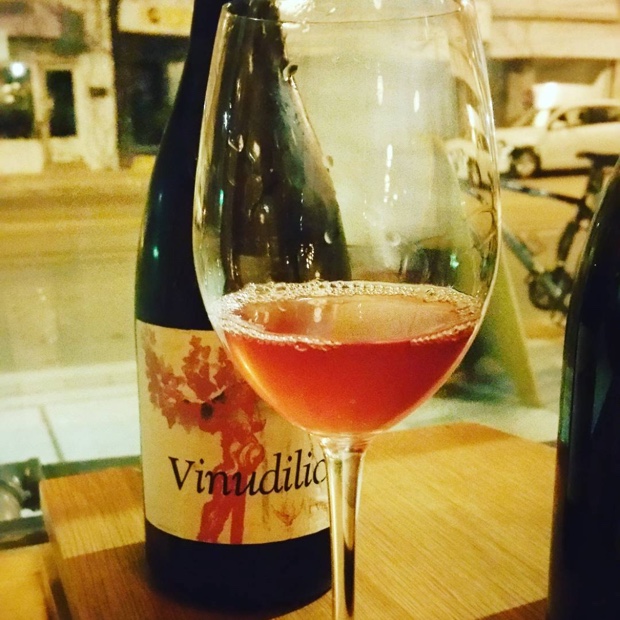
I Vigneri Di Salvo Foti Vinudilice 2008, Igt Sicilia Rosè, Sicily, Italy (WineAlign)

So much about this introduction to volcanic Rosato falls under the category and melts into the realm of the impossible. Begin with Vigna Bosco planted to 10,000, (up to) 200 year-old bush-trained (Etnean alberello) vines per hectare in Bronte, Northern Etna. Consider the party goers, endemic alicante, grecanico, minnella and other minor if wholly obscure native varietals. Locate the vineyard at 1,300m above sea level. Tell me it’s not the highest in all of Europe. Go on, tell me. Tended by hand with the help of Ciccio the mule. No refrigeration, yeasts or filtration. Decanting and bottling follow the phases of the moon. Blush has never acted like this, suspended as if put into bottle yesterday, beautifully minutia funky, every detail in laser calm focus. There really is no reference point, not in the south of France or anywhere in Italy to prepare for such an intellection. Vinudilice is nestled in a wood filled with holly oak (quercus ilex or in Sicily, ilice) but in respect for its singularity I would hesitate to categorize or compartmentalize. In fact I would not use the term Rosé, or Orange or natural to realize a need for reason. I would simply taste the lava. Thank you SomeSmartSomm. Drink 2016-2018.  Tasted April 2016  @ivigneri  @somesmartsomm  @WinesOfSicily

not-members-of-blasted-mechanism-with-magnuspim-and-vasco-croft-aphroswines-vinhoverde

Not members Blasted Mechanism. With Chris Wilton and Vasco Croft, Aphros Wines, Vinho Verde

Aphros Phanus Pet-Nat 2015, Sub-Região Lima, Doc Vinho Verde, Portugal (Agent, $34.95, WineAlign)

Loureiro of a fashion so rare for Portugal and this region, from a concrete pétillant-naturel style, vinified in stainless steel with wild yeasts and initially no additional sugar, then bottled with 20 grams of natural residual sugar, to alight the single fermentation conclusion. An 11 per cent contrariety of méthode ancestrale dialectic, like a lime-grapefruit cordial housing a dissolving lemon tablet. A bowie cut, boning and dressing of loureiro. This here the whole new way to take the grape, to send it sky-high and bring it down to the rustic roots of glam, sparkling funk. “Like to take a cement fix, be a standing cinema. Dress my friends up just for show, see them as they really are.” Vasco (Andy) Croft walking and his hunky dory pet-nat spinning an original tale of a time and a place, or perhaps a myth, like the rustic deity of the forest riding shotgun to Dionysus and his native war. Drink 2016-2018.  Tasted March 2016    @LeSommelierWine

Oldest vines #barossavalley textures in #semillon and #grenache @cirillo1850wine @Wine_Australia #southaustralia #marcocirillo

Oldest vines #barossavalley textures in #semillon and #grenache @cirillo1850wine @Wine_Australia #southaustralia #marcocirillo

Cirillo 1850 Ancestor Sémillon 2011, Barossa Valley, South Australia (Agent, $36.00, WineAlign)

A sémillon revelation is found in this Barossa Valley ancient, a wine procured from vines dating back more than 150 years. To discount that prodigious bit of calculated fortuity would be wrong on so many levels. The Cirillo family are guardians of what may be the oldest continuously producing grenache and sémillon vineyards in Australia and by logical extension, the world. Here the combination of dry extract, mineral depth and straight-lined (unsalted) salinity is beyond special. While the Hunter Valley garners the most attention for aging immortal sémillon, this Barossan will likewise escape, somehow, to live another more complicated and mysterious life. I would wait three years for some extract meets tannic sweetness to begin its development and then take it slow for another six to 10. Incredible find here in Ontario from Marco Cirillo. Drink 2019-2029.  Tasted May 2016  @Cirillo1850wine  @bokkewines  @BarossaDirt

Brash Higgins Nero D’avola Amphorae Project 2015, McLaren Vale, South Australia (Winery, $55.00, WineAlign)

The renegade triumvirate of coagulation denotes the shock and awe of this outlier; McLaren Vale, Nero d’Avola and Amphora. Winemaker Brad Hickey and his nickname have taken the troika and created a beautiful monster. A non-oxidative, crunchy, spicy, toasty, chewy and tannic NdA in versicolour, mottled and florid in flavour. There is black and white pepper, cinnamon, zesty orange spritz and a clay influence (plus amphora) to waft one for the ages. The palate flaunts a tapenade of painfully brilliant chalky black olive. The swirl is chocolate and vanilla, mediterranean and meganesian. There should be zero attention paid to the unusual in its concept. This is both a pleasure to taste now and will evolve into something wholly other given enough time. At least 10 years to be sure. Drink 2016-2025.  Tasted May 2016  @BrashHiggins  @mclaren_vale  @TheLivingVine

what-is-rockpile-time-in-and-time-out-the-fun-stuff-keith-moon-of-zinfandel-mauritsonwinery-sonomacounty-jameswood

Rockpile Zinfandel Cemetery Vineyard 2013, Rockpile AVA, Sonoma County, California (Winery, US $47, WineAlign)

Look towards the other arm of Lake Sonoma and let your mind’s eye rest 250 feet higher than Jack’s Cabin Vineyard. The Cemetery plantation is a jagged, craggy outcropping with “a face uneven as a river jag and asperous as the mullein’s flannel.”  The Mauritsons are Los Campesinos of Cemetery Vineyard in Rockpile. The rocks below resemble giant headstones along the Rogers Creek fault and you just have to believe all this immensity of geology impacts the vines. It does but don’t ask how or why, just settle into the cimmerian depth of zinfandel touched by black fruit, spice and the akimbo savour of glutamate and amino acid. Three further months in barrel (85 French plus 15 American) accentuates the spice, smoulder and espresso con crema texture. Ripeness of fruit, tannin and acidity are simply stellar out of this dramatic place. “You know us by the way we crawl and you know us by our cemetery gaits.” Drink 2017-2025.  Tasted February 2016  @mauritsonwinery  @sonomavintners

weinbach

Domaine Weinbach Gewürztraminer Cuvée Laurence 2013, Alsace, France (581975, $64.00, WineAlign)

Though it may long ago have been considered the quintessential one, there may be no other Alsatian gewürztraminer more important than Weinbach’s Cuvée Laurence. The reasons are manyfold but begin and end with memory and legacy. This was daughter and sister Laurence Faller’s prized wine, the wine she put her name to, that defined her gracious winemaking in echo of the estate she worked. Her family has carried the torch and yet her touch is all over this wine. Calm, composed, balanced and ethereal. Laurence is a clear expression of the marly limestone soil beneath the lieu-dit of Altenbourg, located at the base of the great Grand Cru Furstentum vineyard. Where else do you find gewürztraminer of such delicasse, from which classic aromas (rose petal, creamy to boozy-syrupy tropical fruit) and impossible unction combine without ukase? Nowhere. The acidity does not act with impulse. No, it rings, supports and lingers. The extract is intense but out of mind. Exceptional vintage. Drink 2018-2033.  Tasted October 2016    @AlsaceWines  @drinkAlsace  @ACT_Alsace  @VinsAlsace

alessandro-your-grandfather-was-a-very-good-winemaker-luiluiano-chianticlassico-fattoriadiluiano-chianticlassicoriserva-1979-sangiovese-alessandropalombo-antoniopalombo-luiano

Luiano Chianti Classico 1979, Tuscany, Italy (WineAlign)

Alessandro Palombo is skeptical at first, one eyebrow raised but with the look of possibility on his face. Takes me very little time to acknowledge that this ’79 is very much alive, fruit not predominant (and surely some prune) but neither cooked nor bruised. The brown nose (earth and spice) purports a full concentration of anthocyanins, acidity still full in, dried fraises de bois, black liquorice, dirty leather and worth repeating, still very good acidity. Truffle, forest floor and then black olive tapenade on the palate. This is 70-80 per cent sangiovese with colorino and canaiolo and for 1979 it’s quite incredible. It should not have lasted this long.  Antonio says that up to 10 per cent could have been malvasia blanca and trebbiano because at the time it was a field blend, co-planted with the sangiovese, which could explain some of the variegation in the colour. This is a Chianti Classico to lend credence to the idea of using multiple fruit, vegetal and animale descriptors when assessing an old wine. It’s also the reason why you put them away and open them with friends who’s eyes are wide open. Thank you Alessandro for the opportunity and for the connection to your grandfather Alberto. He was a very good winemaker. Drink 2016.  Tasted May 2016  @LuiLuiano  @chianticlassico

thoroughly-enamoured-with-the-purechablis-made-by-athenais-at-chateau-de-beru-chablis-monopoleleclosberu

Château De Béru Chablis Clos Béru Monopole 2012, Ac Burgundy, France (Agent, $87.95, WineAlign)

In 2012, less density and iodine matchstick is on display in performance for the historic, south facing vineyard beyond the Château’s walls. From this her eighth vintage in the resurrection of the family’s estate wines, Athénaïs de Béru has assembled fruit from Kimmeridgian limestone in rapport with a vintage of portent and intent towards elegance. The acidity is much more linear (than 2013) and the limestone sensations less metallic. Here the feeling is more of a liquid chalk and the balance is much improved. Also less evolved, bright and a much more amenable of a bitter pith, more citrus (lemon and lime) and not as earthy. Longer finish too. What 2013 lacks this ’12 gains and vice versa. The comparative literature and parenthetical study is duly noted as apples to oranges so the wines are exempt of one another. Neither answer all the questions asked and both express their terroir from their time spent on it. This ’12 story will become clearer in another year or two. Drink 2017-2023.  Tasted July 2016       

remelluri

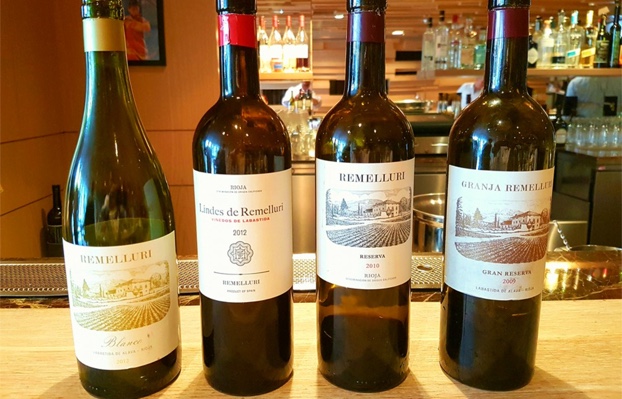
Granja Remelluri Rioja Gran Reserva 2009, Rioja, Spain (Agent, $89.99, WineAlign)

“What is Rioja?” asks Telmo Rodríguez. He notes that Lopez-Heredia still manages small vineyards, Grand Cru and Premier Cru plots, but most Rioja houses are industrial. Their wines age in barrels in 100-150 year old wineries but have no sense of place, of origins, of an amazing vineyard. “I want to be radical. I believe it (Rioja) can be one of the most beautiful places in the world but I told my brothers it needed to go in a very particular direction. My brothers agreed.” So costs went up 35 per cent. They bought no grapes. “If you want to work properly in Spain, you have to be a hero.” You have to work the most difficult vineyards, where production costs are five times that of Grand Vin Bordeaux but the price sells for 10 times less. And so Telmo Rodríguez produces this Gran Reserva, a wine that adheres to a Rioja systematic but does so from a blind-eye turned, high density field-blend planting of tempranillo, garnacha, graciano, muscatel, viura and malvasia. A field blend, unlike Bordeaux but a local village farmed gathering of the best fruit. The 2009 is showing no age but the difference between 2010 Reserva and 2009 Gran Reserva is night and day. This makes the ’10 seem fresh, alive, open, almost simple. Here the variegation is distilled down to laser focus, as if the varieties all become one and most people would simply say tempranillo, but who has ever tasted and been dealt such a tempranillo? This is oozing of a liqueur like no other, rich, viscous, natural and dry-extract sweet. An expression of the best microclimates and their vineyard kin. Wait another five years to allow it to remember and tell its tale. Drink 2022-2034.  Tasted September 2016    @TelmoRodriguez_  @Noble_Estates

dominus

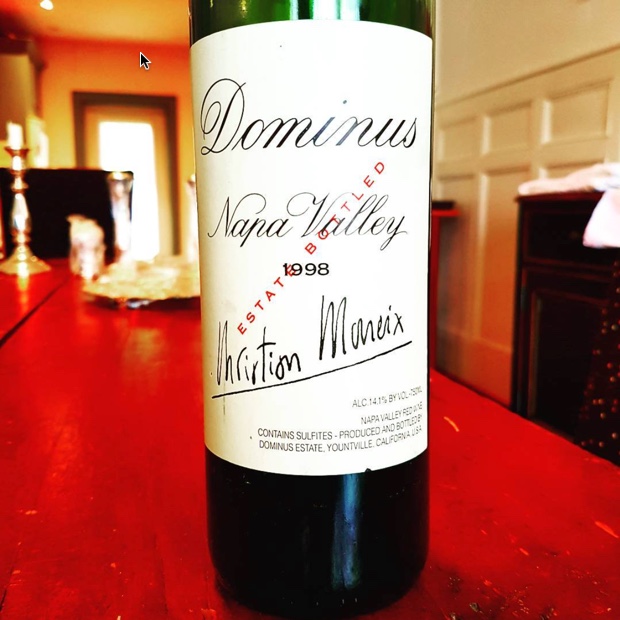
Dominus 1998, Napa Valley, California (212381, $176.95, WineAlign)

When I tasted the 1990 in 2012, hanging on to every thread of oscillation from death to life and back again was exhausting. The 2008 tasted that same year could not have been more life affirming. This ’98 is such a zoetic Dominus beast with an embarrassment of resplendent riches. It is everything 1990 wished it could have been and yet the light-hearted George Hrab geological funk reminds me of that wine. The 1998 trips on a trebuchet and I weep at its aromatic reverie. It is hypnopompic, a state immediately preceding waking up, whiffing the most beautiful Brett there ever was or could ever imagined to be. Volatility in a bubble, circumstantial, lost in a dream. Get lost in the butcher shop, the natural cure here, there, everywhere, curative and comforting. Porcine and rapturous, fruit perfect and entitled, structure supprting every note. If 1998 was both a curious and concerning vintage this wine lays those worries to rest. The fretting may have swayed feelings and been difficult to glide fingers across but the harmonics extend with ease. Finishes with staccato calm, a palpable exhale of breath and silence. Five more years will be like this and five more without threat. Drink 2016-2026.  Tasted October 2016     @rogcowines  

its-ok-it-was-a-half-bottle-ridgevineyards-montebello-noguilt-rogcowines-2010-draperperfume-balance-structure-beautiful

Ridge Vineyards Monte Bello 2013, Santa Cruz Mountains, California (405332, $191.95, WineAlign)

From a serious drought vintage, dry, warm and demanding, the 2013 Montebello’s Draper perfume is as heady as ever, to such effect that after one whiff this is where daydreaming takes over consciousness. Montebello gets inside the head, with allegory, radio frequency waves and platonic thought, as if inside a cave. An 80 per cent Cabernet Sauvignon, Petit Verdot (8), Cabernet Franc (7) and Merlot (5) classic, lithe and restrained blend of sheer, utter exceptionality. The balance in 2013 is impeccable but dont be fooled into thinking this is not a big wine. The acidity is dramatic, the tannins fine and demanding and the amount of pure extract whorled and revelling. All in dark red fruit and a coolness through the mid-palate that threads like silk through fine stainless steel fibre. “This goes beyond me, beyond you.” Drink 2018-2030.  Tasted May 2016  @RidgeVineyards  @rogcowines  @CalifWines_CA

Fino, Don P.X. '86 and '62 w: @sorgatoBTA @toroalbala @LeSommelierWine Magical, impossible, unchanging. Bucket list to revisit in 150 years #pedroximenez #bodegastoroalbala #montillamoriles #spain

Fino, Don P.X. ’86 and ’62 w: @sorgatoBTA @toroalbala @LeSommelierWine Magical, impossible, unchanging. Bucket list to revisit in 150 years #pedroximenez #bodegastoroalbala #montillamoriles #spain

Bodegas Toro Albalá Don P.X. Selección 1967, Do Montilla Moriles, Spain (491647, $199.95, WineAlign)

You know it’s a good month when you are afforded the opportunity to taste two Montilla-Moriles Pedro Ximenez oldies, first the Alvear Solera 1927 in Paris and now this Selección 1967 bottled in November of 2016. The vintage-dated PX are produced from sun-dried grapes fermented for two months to eight or nine per cent alcohol, at which point a distillate made from the same PX pressings is added to bring the wine up to 17 per cent. First in concrete vats and then a transfer into 50-150 year old American oak barrels. Only 630 bottles were filled in a PX of awakening and hope that finished at an indiscernible 17 per cent alcohol. Some dessert wines can be cloying Popskull but Bodegas Toro Albalá delivers yet another impossible and crazy dessert wine of heavy fuel, impeccable balance in the face of Lugduname breaching sweetness and aromas sin fronteras. The gamut glides through roasted nuts and dried fruits, from almonds and Van Gogh Museum memories of their abundant flowers plus pomegranate, apricot, peach, nectarine, damson plum and pistachio. So much pistachio!! In between there is orange marmalade, quince jelly and prune preserve. Plenty of acidity extends and narrows into a sharp, pointed tang. No matter how many times you try to empty the glass there is always more wine. Always another sip. Is it viscosity, a truco del ojo or trampantojo? Is there some kind of wizardry at play? Then finally, well, actually never, a finish with no end, or a pause in a never-ending 49 year-old (and counting) story. So where is the beginning? 1967. Drink 2016-2040.  Tasted November 2016  @toroalbala  @sorgatoBTA  @MontillaMoriles  @LeSommelierWine

schram

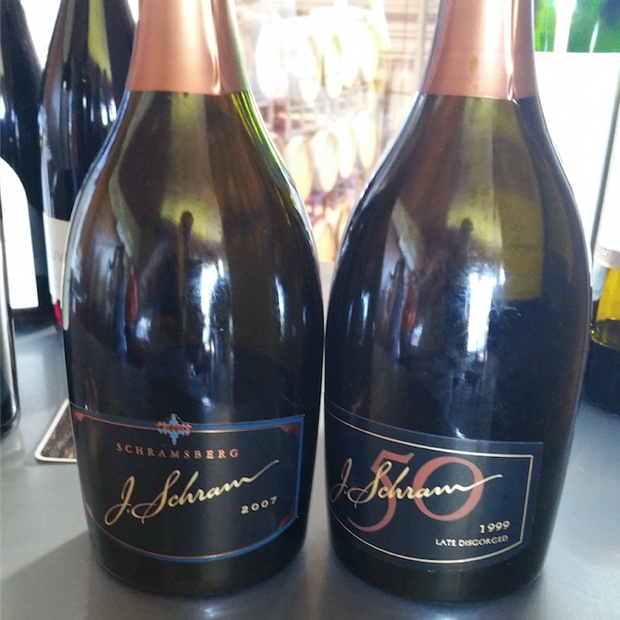
Schramsberg Sparkling J. Schram 50th Anniversary Late disgorged 1999, Napa Valley, California (Winery $175 US, WineAlign)

In celebration of Schramsberg’s golden anniversary, 50 years after Jack and Jamie Davies revived the historic Schramsberg estate for the purpose of making the nation’s first chardonnay and pinot noir based, bottle-fermented sparkling wines. A North Coast (57 per cent Napa, 25 Mendocino, 15 Monterey and 13 Sonoma) blend of 74 per cent chardonnay and 26 pinot noir. Seventeen years have come to ginger, cumin, coriander and galangal in laminous, oxidative ingenuity, wholly arid in kicking up the aromatic dust. Flavours of pressed lemon, bitter brioche and then tannin, yes tannin. From a protracted year, picked as late as October 19th, disgorged in August of 2014 at a dosage of (very necessary) 11.5 g/L RS. Blessed with high natural acidity of 9.8 tA. How can I not concur with Hugh Davies. “What we’re really showing here is Napa Valley Chardonnay.” Drink 2016-2031.  Tasted February 2016  @Schramsberg  @TheVine_RobGroh

Down by the river with #raveneau #grandcru #blanchot #chablis @lafolieauxerre #2009 #francoisraveneau #thankful

Down by the river with #raveneau #grandcru #blanchot #chablis @lafolieauxerre #2009 #francoisraveneau #thankful

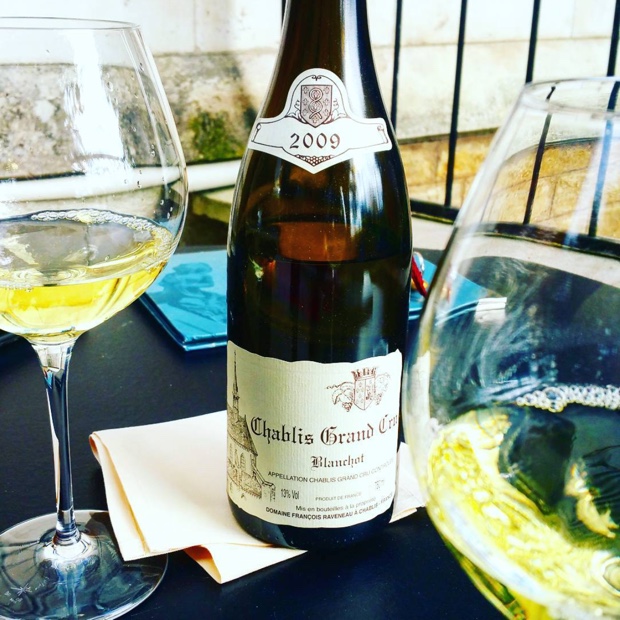
Domaine François Raveneau Chablis Grand Cru Blanchot 2009, Burgundy, France (WineAlign)

It would be misleading to address Raveneau’s Blanchot as chardonnay even as we know it as such because Raveneau produces wines as unique as door keys. They are so inimitable and each will only open the gate to its own unique perception. Blanchot is the southernmost of the seven Chablis Grand Cru climats and blankets the southeastern side of Les Clos. The Raveneau narration does not convey the notion of manifest feeling but instead splits the axiomatic atom of the climat. A sip and you are inside the Blanchot, gliding and passing through rock as if you are the ethereal and the wine is the solid foundation of thought, pathos and avowal. There are aromas that combine citrus and umami with a sweetness that can’t be denied or defined. The wine is just a child, complex, shy and yet unable to express both its meaning and power. But you try to get inside its head, stumbling over kimmeridgian rock replete with the smithereen-crushed shells of ancient fossils. This is a calm young Blanchot and you melt away while under its spell. Three more years should render its hidden meaning. Drink 2019-2034.  Tasted July 2016

A great pleasure and exercize in humility to taste with #vincentdauvissat in his cellar @BIVBChablis #humanity #chablis

A great pleasure and exercize in humility to taste with #vincentdauvissat in his cellar @BIVBChablis #humanity #chablis

Domaine René et Vincent Dauvissat Chablis Grand Cru Les Clos 2001, Burgundy, France (WineAlign)

Tasted from a bottle opened five days prior which is nothing really for a wine that can age easily for 30 years. It resides in a perfect state. Vincent concedes “over 20 there is nothing to be gained” and yet the still terrifically raging acidity would suggest this 15 year-old specimen is only halfway there. The texture is nothing if not persuasive. In 1931 Vincent’s father began this journey. Here 70 years later is a wine so perfectly intact, the lemon-waxy aspect almost on the edge of the hive. But not quite because of the taut bracing and tight embracing. There is a chew to this and Dauvissat shrugs. “What’s to say?” Nothing but a great piece of his history and his father’s legacy. If this wine is a sentimental tribute to a childhood village, it is never uncomplicated. Drink 2016-2031.  Tasted July 2016

2016-12-28_19-42-19

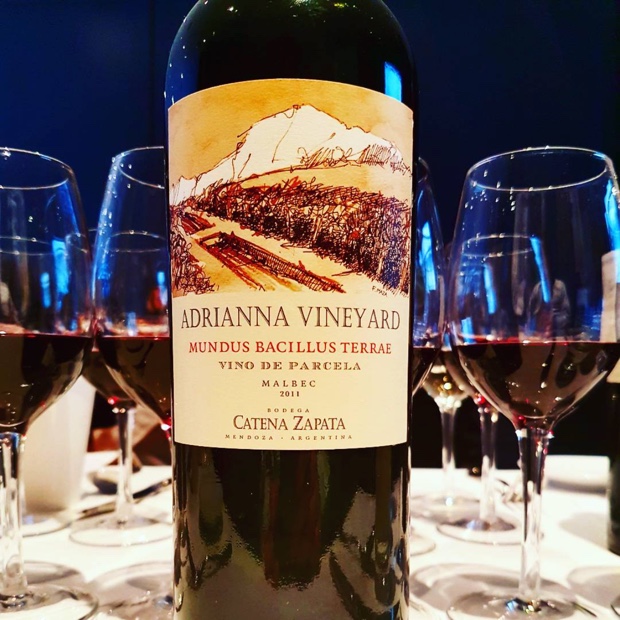
Catena Adrianna Vineyard Mundus Bacillus Terrae Malbec 2011, Mendoza, Argentina (Agent, $325.00, WineAlign)

In this extremely specific malbec from a diagnosed block of the Adrianna Vineyard we are graced with the micro-science of wine. And if you feel that using the name of an aerobic bacteria in the nomenclature is an odd choice, consider the mind of Dr. Laura Catena and her biological approach to viticulture. If we can understand and differentiate the microbes in the soil we can make better wine. It’s as simple as that. When wine is broken down to the biological level it becomes something entirely different and this is the road travelled by the Mundus Bacillus. Catena’s usage of 70 parcel pits per hectare has unearthed this single parcel within the vineyard, again completely different and the pinpointed microbial discussion initiates right here. The soil stakes a claim for this malbec only, certainly not in any way that tends to funk but surely as an impresario of soil. Talk about eugenics in the MBT because that science is compelling and can be related to in this wine. It can offer keys towards improving genetic quality of the vinous population. Here we are faced with rich and dusty, a mean streak of malbec intensity made elegant by earthly microbes. This section draws parallels to the (chardonnay) White Bones soil from which there transfers an excess of dry extract and tannin. Patience please for a malbec that will be long lived. Drink 2019-2027.  Tasted November 2016

Good to go!

Twitter: @mgodello

Instagram: mgodello

WineAlign

Outward and inward nines for November 12th

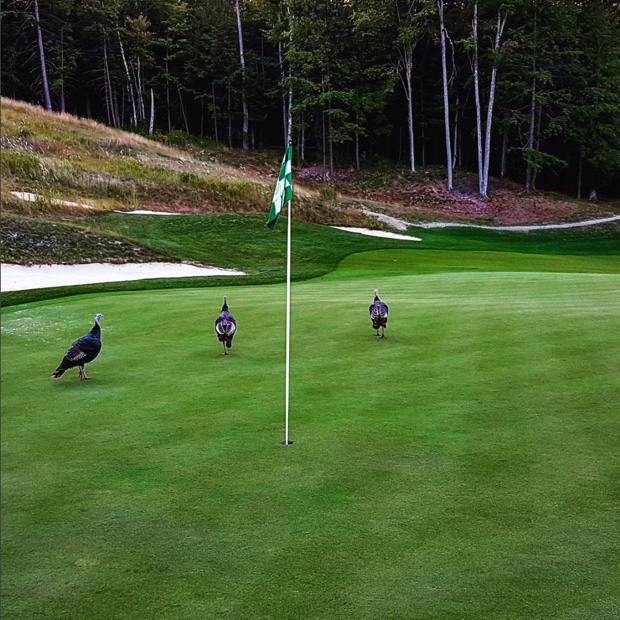
Can somebody get the pin? The ninth green at Summit Golf & Country Club

Can somebody get the pin? The ninth green at Summit Golf & Country Club

This will be the last weekend of play for most southern Ontario golf courses, or at least the ones who are smart enough to lock down and protect their precious 7,000 yards of turf from irreparable 2017 damage. For many players there are two seasons, golf and wine buying. Now that the exceptional 2016 year of 50-plus, sunshine-blessed rounds of 18 are done, the time has flipped over to loading up for the holidays and stocking the cellar.

My outward and inward nine recommendations from the VINTAGES November 12th release cover one and then the other. The front is marked by balance relative to par; wines of value, amiability, varietal purity and regional respectability. Just have a look at some of these iconic names: Delas, Catena, Trimbach, Gabbiano, Hedges and Cave Spring. The back takes swings into under and over par territory. Some are choices that polarize with buyers, critics and geeks. Are they worth the cash? Only you can be the judge. Along with some of Niagara’s greats are selections that include Chablis, Gran Selezione, Veneto and Napa Valley.

So put away the sticks and hit the stores. Here are my top 18 recommendations coming to VINTAGES this weekend.

Front Nine

delas

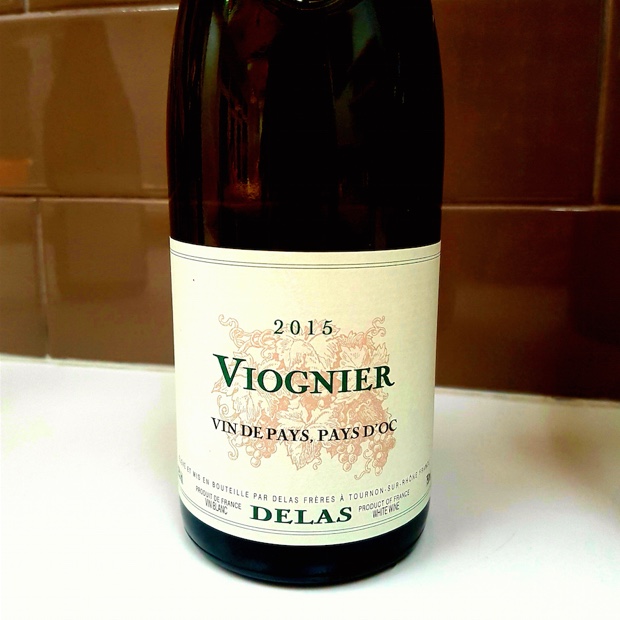
Delas Viognier 2015, Vins De Pays D’oc Rhone, France (462465, $13.95, WineAlign)

Pretty darn textbook viognier in the broadest sense of the varietal word, aromatically waxy, tropical and medicinal. The low alcohol, high flavour and commercially managed acidity is balanced by cream and citrus. No more, no less, precise and managed with utmost professionalism. Drink 2016-2019.  Tasted October 2016    @VINSRHONE  @UNIVINS

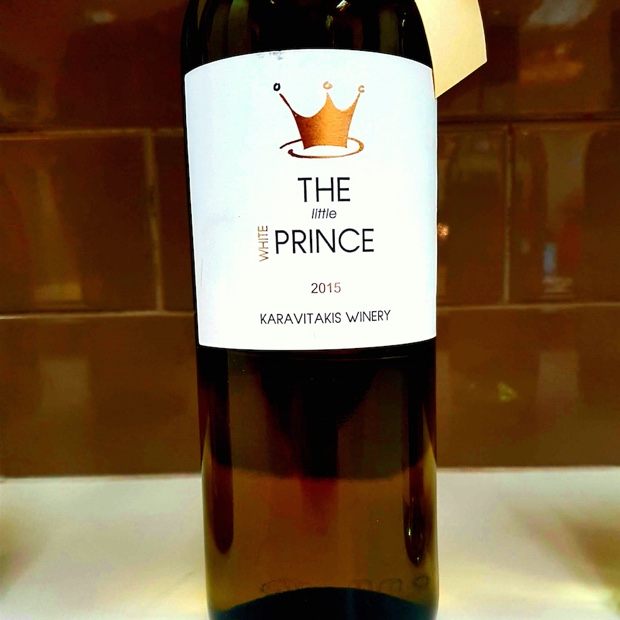
karavitakis

Karavitakis Winery The Little Prince White 2015, Crete, Greece (465930, $14.95, WineAlign)

Here an interesting bit of local vernacular, Cretan style, with vilana (65 per cent) and vidiano (35) dishing up a distinctly and singularly endemic mineral impression by way of subtle hints from tropical fruit. The palate is rich, broad and marzipan creamy. The acidity is round and rambling, tying the whole kit and Crete kaboodle together. A worthy side venture into the Greek Aegean hinterland. Drink 2016-2018.  Tasted October 2016   @karavitakiswine  @VictoryWine  @winesofcrete  @DrinkGreekWine

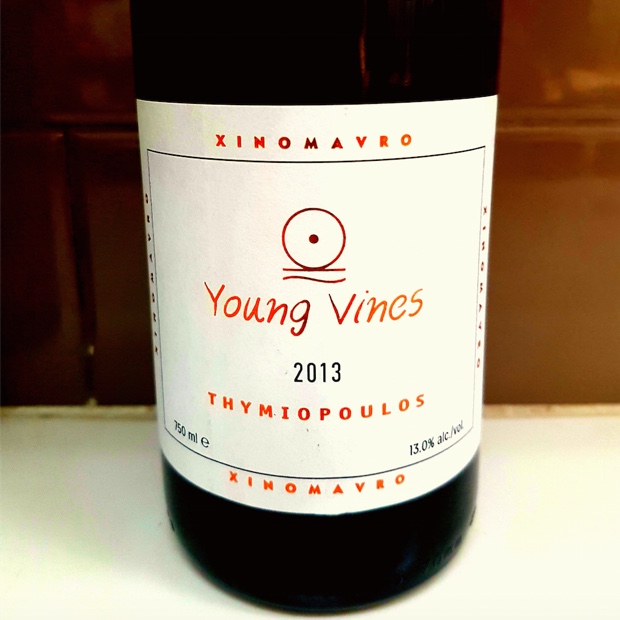
thym

Thymiopoulos Vineyards Young Vines Xinomavro 2013, Naoussa, Greece (466474, $17.95, WineAlign)

The Young Vines is an orange to the Earth and Sky’s apple, of a change of fruit and a pace that is hot off the press. Yet it is not without some ancient wisdom. In some new world sites vines up to 15 years of age would be considered old growth adults. In a Greek vineyard like that of a Naoussan like Thymiopoulos, they are babies of the sun. The Xinomavro here is fresh, momentarily acts strikingly brazen, bracing and ultimately, blatantly beatific. With a glass of the young vines in hand to it I say, “it’s not the pale moon that excites me, that thrills and delights me. Oh no, it’s just the nearness of you.” Like Norah Jones in a glass, sultry, contemporary, lightly smoky, of a jazz aesthetic and a pop sensibility. And wild berries. So fresh, so good. Drink 2015-2019.  Tasted May 2015

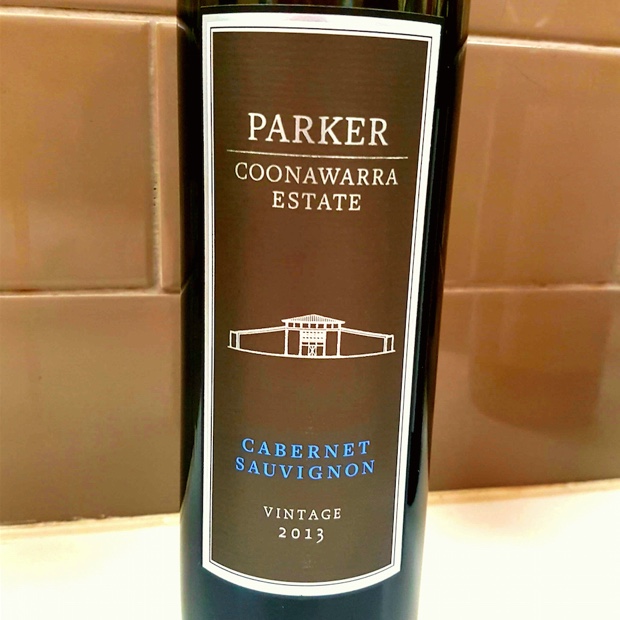
parker

Parker Coonawarra Series Cabernet Sauvignon 2013, Coonawarra, Limestone Coast, South Australia, Australia (467571, $19.95, WineAlign)

The Coonawarra Series cabernet sauvignon is predominantly sourced from the Williams family vineyard (like that of the chardonnay) in Southern Coonawarra. There can be no separating Terra Rossa soil from what happens with (especially) cabernet sauvignon anywhere in the Coonawarra. Very cool and savoury cabernet with tart cranberry, currant and black raspberry aromas. Really crunchy, chewy and gritty wine with focus and grip. Drink 2017-2020.  Tasted October 2016  @parkerwine  @CoonawarraWine  @Select_Wines  @Wine_Australia

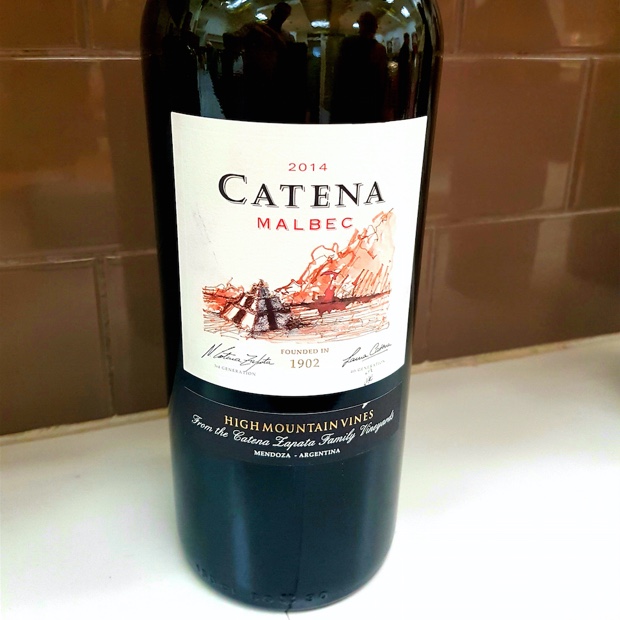
catena

Catena Malbec 2014, Mendoza, Argentina (468066, 1500ml – $39.95, WineAlign)

High mountain vines bring more than altitude to Catena’s most commercially visible and successful malbec. In magnum format it accentuates the herbs and the dry, dusty qualities. In here there is sweetness but from tannin and extract. Acidity is the catalyst to make this sing a mountain hymn. Such proper winemaking brings rain. Love the format. Drink 2017-2020.  Tasted October 2016  @LauraCatena  @CatenaWines  @ArgentinaWineCA  @winesofarg  @Noble_Estates

gabbiano

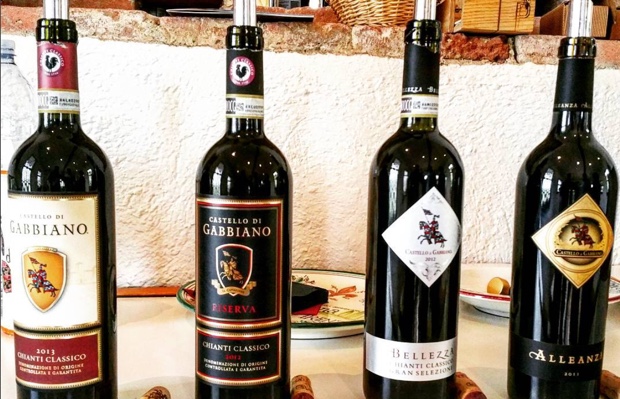
Castello Di Gabbiano Chianti Classico Riserva 2013, Docg Tuscany, Italy (216309, $22.95, WineAlign)

First and foremost it is the wood, or the lack of wood that stands out in the CCR 2013. It may be observed as a different kind of wood, less polished and more natural but what really wins out is the fruit. The cherries are surfeited by impressed tannin and linger with good tonic for a good length of time. Great restraint shown by winemaker Federico Cerelli. Drink 2018-2024.  Tasted June 2016  @castgabbiano    

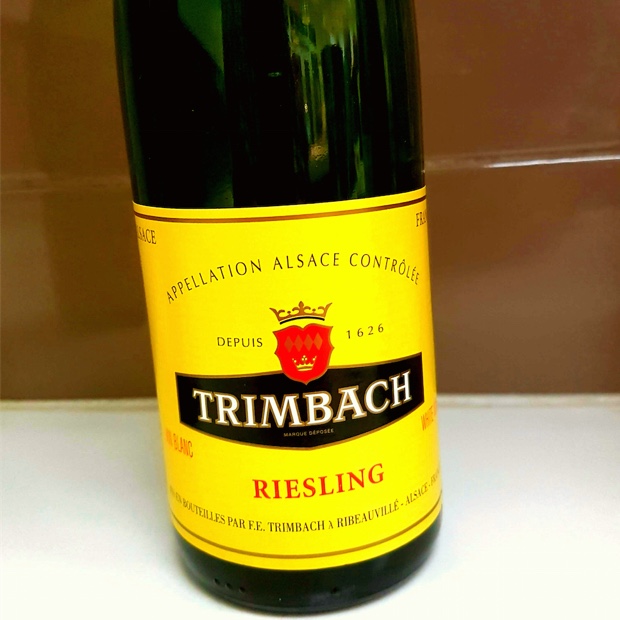
trimbach

Trimbach Riesling 2013, Ac Alsace, France (734517, $23.95, WineAlign)

What pray tell might you ask more than this from Alsace riesling? Could you, would you demand more immediate gratification? Might you request more purity and clarity of soil, rock and regional understanding? Is there a need to better define citrus and dry extract in any finer way? Trimbach has it down and few can pinpoint with fewer words and more direct impression. How things ought to be. A tight vintage though, so wait 18 months before embarking on chapter one. Imagine the Cuvée Frédéric Emile possibilities. Drink 2018-2023.  Tasted October 2016  @trimbach  @annetrimbach  @WoodmanWS  @AlsaceWines  @ACT_Alsace  @VinsAlsace  @drinkAlsace

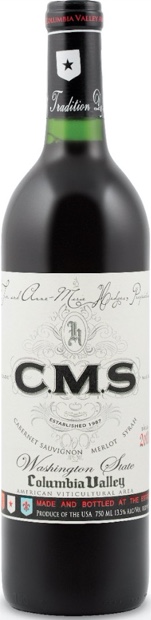
hedges

Hedges C.M.S. Cabernet Sauvignon / Merlot / Syrah 2014, Columbia Valley, Washington (948992, $23.95, WineAlign)

Copacetic and well-amalgamated vintage here for the Hedges CMS, a wine of deep singer-songwriter meets jazzy flavour and sensible grip. Though there are bitters and a display of fine if sweet tannic structure, this CMS hits not over the head or below the belt. Just a few jabs and a loving embrace. A blackstar Columbia Valley blend that flies past, like “seven tracks in 40 minutes and it’s musically distinct.” In this way it reminds me of Ben Greenman’s New Yorker piece, “The Beautiful Meaninglessness of David Bowie.” Or it makes me think of Bowie as so many Hedges wines do. It’s not that this wine offers no clear meaning but it dishes ambiguity in ways only it can do. Like the late glam star, it “can’t give everything. Away.” Or, as Greenman concludes, “unless, of course, that isn’t what it means at all.” Drink 2017-2020.  Tasted October 2016  @hedgeswine  @Noble_Estates  @WINESofWA

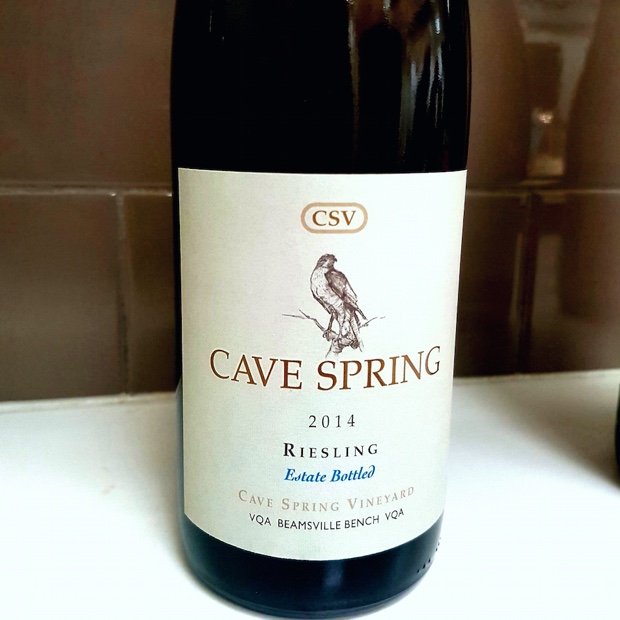
csv

Cave Spring CSV Riesling 2014, Cave Spring Vineyard, VQA Beamsville Bench, Niagara Escarpment, Ontario (566026, $29.95, WineAlign)

The vintage brings a concentration and a compression and the most fruit imaginable for the Beamsville bench and the CSV. How this iconic riesling solicits immediate attention and fruit-juicy love is really something and hasn’t been seen in a few years. The citrus is all flesh and juice, the mineral aspect full of tang. Unction and viscosity define the texture and the palate. Drink early and enjoy the hell out of this forward CSV riesling. Drink 2016-2021.  Tasted October 2016  @CaveSpring  @TheVine_RobGroh

Back Nine

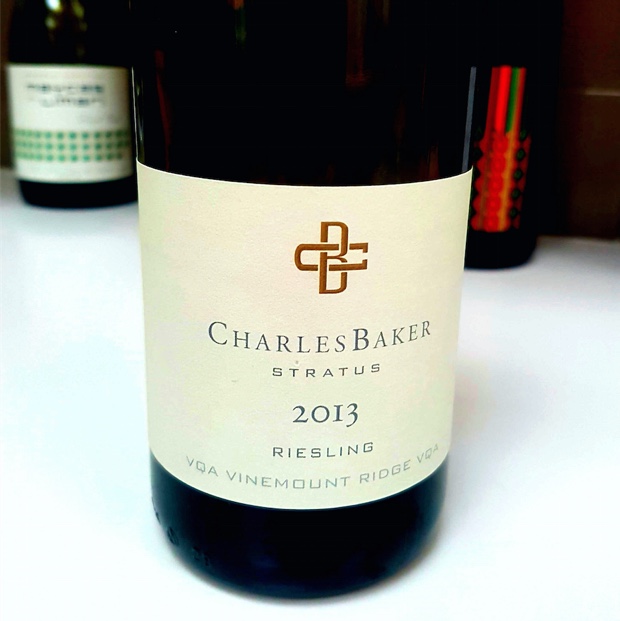
baker

Charles Baker Picone Vineyard Riesling 2013, VQA Vinemount Ridge, Niagara Peninsula, Ontario (241182, $35.20, WineAlign)

There was this intuitive moment with Picone 2013 as if it was waiting on me. Not doting or soliciting, but waiting. I will admit to have been wondering, reeling and speculating. To peer or peek into what Mark Picone’s Vinemount Ridge vineyard would adjudge and then bestow Charles Baker’s riesling in 2013? Would it be a case of weight, hyperbole, a hang in the balance out of misjudged necessity? Nah. Picone is no longer a mature 20 year-old vineyard but now a wise old thirty year-old one. Picone 2013 is in fact a fun park mirrored image of itself, with haughty, aerified aromas and variegated, leaning to tropical fruit flavours, taut like a flock in line with the vintage. The riesling berries just seem to have imploded and the results that have followed are nothing if not intense. Imagine a Yogyakarta market and a two-wheeled, glass-cased push cart stacked with a pyramid of tart mangoes. The fruit had been picked just as the sugars had begun to run like sap and bleed sticky on the cracking skin. A mango is sliced and doused with the intensity of Java lime juice and then sprinkled with Laut Jawa salt. The flavours are searing, sweetly saline and quenching. Only this tart is this, where tart and acidity meet, intertwine and connect on an emotional level. Picone 2013. The first non-inoculated riesling at first and then touched up near the end. “The best vintage you could ask for in riesling,” notes Baker, “cloud-covered, a meeting of the minds, vibrant.” The arid, cranky one will live without fret for 15 years. Drink 2018-2028.  Tasted twice, October 2016  @cbriesling  @StratusWines

moreau

Louis Moreau Chablis Vaulignot Premier Cru 2014, Burgundy, France (525386, $36.95, WineAlign)

Vaulignot was created in 1976, one of the last Premier Crus to gain such status within the association. Note that Moreau’s nomenclature is Vaulignot instead of Vau Ligneau, but the meaning is exactly the same. Really round and rich Chablis with a relative and realistic purity specific to place. This alights as a sun-drenched and lemon waxy chardonnay with enough (thank you very much 2014) tension to keep it rolling right along. What Vaulignot brings to the Chablis table is stick to your tongue, mouth and ribs persistence and vitamin water mineral enhancement. In a way it is caught in the Chablis netherland between up front gregariously fruity and strikingly mineral/acidity piercing. Great length in this vintage. Drink 2016-2020.  Tasted October 2016  @MoreauLouis1  @vinsdechablis  @purechablis  @BourgogneWines  @vinsdebourgogne

hb

Hidden Bench Terroir Caché Meritage 2012, VQA Beamsville Bench, Niagara Peninsula, Ontario (505610, $38.00, WineAlign)

I would not have thought it possible but the ’12 TC Meritage is open for business. The fruit is near-perfect for what these parts of the Beamsville Bench can offer and the normal gnashing is frozen as if suspended, which it likely is. In its current state it is all berries and dusty tannins, ripe, ripe acidity and plenty of outright happiness. A wisely structured Terroir Caché from Marlize Byers as only she could coax and extend. Drink now (not) or wait five years. Points in between may be confounding. Drink 2020-2030.  Tasted October 2016  @HiddenBench  @BenchVigneron  @MarkAnthonyON

coyote

Coyote’s Run Rare Vintage Pinot Noir 2013, VQA Four Mile Creek, Niagara Peninsula, Ontario (296863, $39.95, WineAlign)

A tart and robust vintage for the rare pinot noir, deeply ingrained into earth, sun and savour. This is distinctly varietal to Four Mile Creek with haute sapidity and exceptional length. The rusty accents inject piercing citric life into strawberry rhubarb pie. The tannins gnash their terrible teeth and the fruit hides for dear life. I’m not sure any Rare Vintage David Sheppard-ed pinot noir has ever delivered such mean structure. The next Niagara growing season should contribute to an ever more impressive showing because the fruit will almost certainly be up to the tyrannical task. Not to mention the coincidental crossroads 30th Sheppard vintage of making wines in Ontario. Meanwhile, from the cloudy, windy 2013 vintage his pinot noir will live long and prosper. Drink 2018-2025.  Tasted October 2016  @coyotesrun

pelham

Henry Of Pelham Cuvée Catharine Carte Blanche Blanc De Blanc 2011, Méthode Traditionelle, VQA Short Hills Bench, Niagara Escarpment, Ontario (315200, $44.95, WineAlign)

t’s always a highly anticipated taste when a vintage dated Cuvée Catherine is on the table sidled and promoted with the bar raised to epic heights from a striking chardonnay vintage like 2011. With acidity a given as the elephant in the room the formidably elegant Blanc de Blanc glides ethereally to press upon the olfactory nerve major and then grace the palate with fine mousse, citrus and biscuits. This is a benchmark for Ontario and Canada with only Benjamin Bridge’s B de B styled Gaspereau Valley gemstone sparkler in the same elite league. Enjoy this now and for 15-20 blissful, fizz-friendly years. Drink 2016-2032.  Tasted October 2016  @HenryofPelham  @SpeckBros

brolio

Barone Ricasoli Castello Di Brolio Chianti Classico Gran Selezione 2012, Docg Tuscany, Italy (942607, $59.95, WineAlign)

A Chianti Classcio first borne in 1997 with the plan to create a maximum quality blend as an expression of the estate’s diverse terroir. A meticulous selection is combed from the estate’s vineyards, spread over 230 hectares of land. Though early on the fruit may have emerged out of good but not yet exceptional vineyards, nearly 20 years later the sangiovese (90 per cent) with cabernet Sauvignon and merlot (or perhaps petit verdot) adheres to grand vin excellence. The wood regimen is 18 months in tonneau followed by 18 in bottle. Perhaps you will not find a more accomplished, perfectly judged, matter of factly expressed Gran Selezione. Sangiovese in equality of spicing with fruit, acidity and tannin, perfectly integrated toast, wood impact and textural drive. Stefano Capurso admits this about the transition from Chianti Classico to Gran Selezione.”It’s a matter of compromise between what is needed for the small producers and the need to express through crus for the large ones.” Drink 2018-2025.  Tasted May 2016  @barone_ricasoli  @imbibersreport  @chianticlassico

quintarelli

Quintarelli Primofiore 2012, Igt Veneto, Italy (20867, $66.95, WineAlign)

Only and distinctly Quintarelli, of that Negrar perfume and the kind of salumi cure no other producer can seem to procure. Though an infant and a baby to more mature vineyard selection Quintarelli adult bottlings, the Primofiore is full of exotics, of clove, cardamom, liquorice and meaty char. There is a sweetness to Quintarelli fruit and a remarkable resistance to astringency. This particular 2012 IGT is smooth and soothing. It is dangerously easy to consume. Drink 2017-2027. Tasted October 2016    @LiffordON

stag

Stags’ Leap The Leap Cabernet Sauvignon 2012, Napa Valley, California (142844, $89.95, WineAlign)

Signature cabernet sauvignon from Stag’s Leap from the first of the dry Napa vintages is dusty and high-toned to a high degree. Pure berry distillate and a savoury linger lead off and yet the closemindedness is still a youthful issue. There is a beautiful sense of florality behind the veil of aridity and big room tannin and yet the fruit is so very ethereal when it comes to tasting. Yes the dinging acidity and dastardly tannin will be a constant reminder of structure but without over compensation from the barrel the DJ Kylo driving beat will always be helpful. Gorgeous wine from Christophe Paubert. Put it in the time machine. I’ll take that leap in the dark. Drink 2019-2027.  Tasted October 2016  @stagsleapwines  @SLDistrict  

forman

Forman Cabernet Sauvignon 2012, Napa Valley, California (143925, $160.00, WineAlign)

Forman’s 2012 is a big, vibrant, robust and dusty expression, full of fruit, more fruit and nothing but fruit. Though the price is exceptional, the combined stylistic and level of honesty is formidably forman-ible. It is a rare opportunity and execution indeed when sweetness is culled from extract without the necessities of manipulated winemaking, oak usage included. The naked purity of this wine from an exceptionally dry, ripe and efficiently evolved vintage leads this cabernet sauvignon down a long, purposed and grandiloquent road. Drink 2018-2030.  Tasted October 2016  @rogcowines  @NapaVintners  

Good to go!

Twitter: @mgodello

Instagram: mgodello
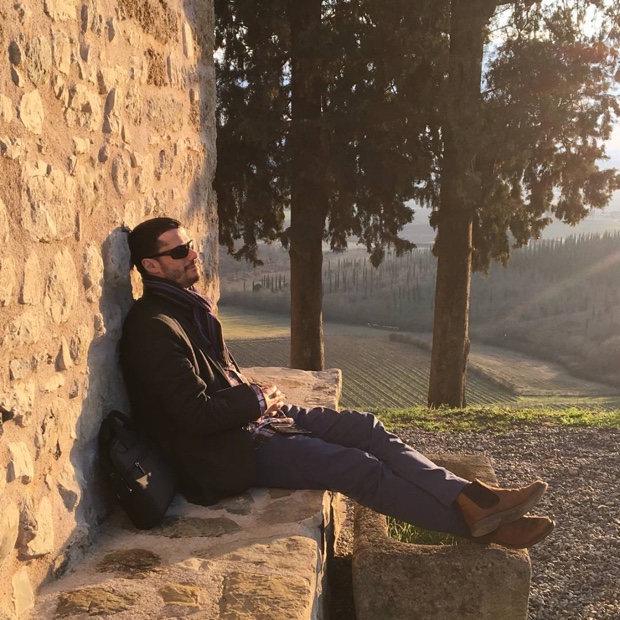
WineAlign

But first, October

steak

L’shanah tova, happy new year, peace, happiness and health to all the members of the tribe out there. New beginnings, sweet and good times to you and yours. I’ve just returned from Italy, specifically Verona and Valpolicella. While I was in transit a new VINTAGES release crept into stores.

Related – The most important red wine from Italy

Tuscany, Rioja, Thanksgiving. These are the main themes of the VINTAGES October 1st release. As from me for the first it is Chianti Classico’s Gran Selezione that occupies the best sangiovese position in the central thematic. Second comes entry-level excellence from Álvaro Palacios and for the last three, pinot noir from disparate outposts; Sonoma County, the Willamette and Hemel-En-Aarde Valleys. A further 12 recommendations explore 10 regions; South Africa’s Coastal Region, Veneto, Loire Valley, Beaujolais, Alsace, Piedmont, Calatayud, Montagny, Paarl, Arroyo Seco and 14 additional grape varieties; chenin blanc, garganega, sauvignon blanc, gamay, riesling, arneis, garnacha, sylvaner, chardonnay, grenache blanc, picpoul blanc, roussanne and nebbiolo. Something for everyone.

Boschendal Rachelsfontein Chenin Blanc 2015, Wo Coastal Region, South Africa (455881, $12.95, WineAlign)

Classic chenin blanc from Boschendal, tart, balmy, savoury, smoky and spirited. Conjures up simple pleasures, breathing and bliss. A morning walk in a glade, a bubbling brook, herbs everywhere, wildlife. Drink 2016-2018.  Tasted September 2016  @BoschendalWines  @LiffordON  @WOSA_ZA  @WOSACanada

San Raffaele Monte Tabor Soave 2015, Doc Veneto, Italy (277392, $14.95, WineAlign)

Always a good Soave buy and especially in the ripe and easily commercialized 2015 vintage. In fact this preface is a clear indication for such a wine because it can basically make itself so it smells, tastes and delivers just like itself. Citrus and herbs, Maresina, Pisacan, Sciopeti and then more citrus, followed by a mouth feel with an accent of stone. Delicious little commercial Soave. So correct. Drink 2016-2018.   Tasted September 2016    @RegioneVeneto

versant

Foncalieu Le Versant Sauvignon Blanc 2015, Vins De Pays D’oc, Loire, France (470336, $14.95, WineAlign)

Terrific scintillant of a sauvignon blanc with extract to burn and the gesture of giving generously. Pungency be damned this goes at it with vitality, energy and the great sweetness feigning, peachy sauvignon blanc equalizer. There are few Midi SBs that can both thrill and appease with ease like this Pays d’Oc. Crowd pleaser to pour at weddings and other large gatherings. The finish guarantees success. Drink 2016-2019.  Tasted September 2016  @foncalieuwines  @LoireValleyWine  @azureau

aviron

Stephane Aviron Beaujolais Villages 2014, Beaujolais, France (468744, $15.95, WineAlign)

The juicy appeal of gamay. In its purest form it struts and flaunts in full peacock display as in this $16 Aviron Beaujolais. He or she who could not drink a tank full of this BV is missing out on one of the go to pleasures of the wine world. Fresh and outright getable, when risked with a more than slight chill this could do no harm. Drink 2016-2018.  Tasted September 2016 @DiscoverBojo  @Nicholaspearce_

palacios

Palacios Remondo La Vendimia 2014, Doca Rioja, Spain (674564, $15.95, WineAlign)

Rioja to grab for, spread out the blanket, pull out the jamon and kick back. Fresh, juicy, slightly smoky and full of nothing but fruit with a quick shake of spice. The simple pleasures provided by Alvaro Palacios at the lowest of low affordability. You can find Rioja with a much greater and historically profound sense of place but it will cost an arm and a leg. And I’m not sure it will get you anywhere. So put aside the serious face and embrace this modish value-driven sketch by Palacios. I too will abide. “It’s not that I care any less for that philosophy, but I would spend one night with you in trade for all that I’ve achieved.” Drink 2016-2018.  Tasted September 2016  @WoodmanWS  @RiojaWine

kuhlmann

Kuhlmann Platz Riesling 2014, Ac Alsace, France (196741, $16.95, WineAlign)

From the cooperative Cave de Hunawihr where the winemaking is overseen by Nicolas Garde here is a typically tart and citrus-driven riesling from alluvial flats. Salinity and a touch of brine with a minor note of spritz makes this nothing but fun. It’s certainly lean and direct but such an Alsace riesling line is fine when done with no agenda in mind. Well made with enough complexity to add five years onto its life. Drink 2016-2021. Drink 2016-2021. Tasted September 2016  @VinsAlsace  @AlsaceWines  @drinkAlsace  @ChartonHobbs

arneis

Cordero Di Montezemolo Langhe Arneis 2015, Piedmont, Italy (455162, $21.95, WineAlign)

Prodigious and revered producer meets resurrected varietal in this hear me roar and highly expressive roero arneis. From Langhe vineyards in La Morra, Guarene and Govone. The level of extract and texture is elevated to where the grape can go but we so very rarely get a chance to enjoy. This has mineral, loads of mineral, like a chew of rocks in bubble gum form. With this on offer who wouldn’t choose to chew every day. More acclaim for arneis and that makes me smile. The freshness will offer perfect window drinking in years one through three but why not put one or two aside and watch them develop some honey and petrol in years five through ten. Drink 2016-2022.  Tasted September 2016    @ProfileWineGrp

breca

Breca Old Vines Garnacha 2013, Do Calatayud, Spain (329086, $22.95, WineAlign)

Very floral garnacha from gravelly slate with more than enough blueberry and blackberry to bake into a hundred pies. As per the modern norm this 100 per cent garnacha from typically regional (upwards of 100 year) old vines pushes the scales in extraction, weight and alcohol. If any Aragonese garnacha can handle such largesse it is Calatayud because the combination of gnarly vines and rocky soil gives essential nutrients to fruit for balance. It may only be a distraction but when the wine is polished (albeit sweetly so) the looming alcohol is kept in threaded check. Drink 2017-2021.  Tasted September 2016  @CSWS_ON  @WinesofGarnacha  @GarnachaOrigen  @docalatayud

wildewood

Wildewood Pinot Noir 2013, Willamette Valley, Oregon (462994, $23.95, WineAlign)

If mountain herbs and tea could burrow or seep their savoury ways into a Willamette Valley pinot noir this Wildewood would be a viable candidate. It’s a global, pinot from everywhere and for everyone affair in here so call the aromas what you will; fynbos, rooibos, Peloponnese clandestina, wild thyme, rosemary, lavender. So pretty in its sauvage, so suave in its ruggedness. This pinot noir understands what it is saying and selling. Unlike the gritty poet, it is in complete control of its phenolics and its faculties. The palate pales but delivers straight to structure. The aridity and the salinity seal the deal. Drink 2016-2020.  Tasted September 2016     @Nicholaspearce_

Maison Roche De Bellene Montagny 1er Cru 2014, Ac Burgundy, France (470476, $26.95, WineAlign)

Such thews and texture are wonderful to elevate Montagny and you can tell that important Nicolas Potel time was allocated into turning this into something rocking. Plenty of citrus and wood intertwine in layers of chardonnay flesh. This is quite something. Gregarious, talkative and alive. Drink 2016-2019.  Tasted September 2016  @RochedeBellene  @vinsdebourgogne  @Nicholaspearce_  @BourgogneWines

sylvaner

Domaine Loew Vérité Sylvaner 2013, Ac Alsace, France (462598, $25.95, WineAlign)

The truth of sylvaner explodes into olfaction with the flats left for others and the slopes of Alsace greasing their way into this wine. A wow factor of 13 on the texture scale brings it here. Oily doesn’t due this sylvaner justice. You could run heavy machinery on this juice. Beyond the oléagineux there is great bite from old wood, tonic from the varietal necessity and bitters so very artisan crafted in nature. More British aperitif than Italian digestif in that sense but strictly Alsatian and in requiem for a match made in Foie Gras heaven. Needs two years to settle. Drink 2018-2028. Tasted September 2016     @VinsAlsace  @AlsaceWines  @drinkAlsace

avondale

Avondale Armilla Blanc De Blanc 2009, Méthode Cap Classique, Wo Paarl, South Africa (451930, $29.95, WineAlign)

From a farm dating to 1693 purchased by Johnathan Grieve’s family in 1996. Poster bubbles, for the Blanc de blancs habitation and for the Avondale oeuvre, the Armillary sphere, Roman “circle of life” and ancient astronomical instrument used to show the position of stars around the earth. Traditional production, with a kiss of oak and a final act of dosage. Five total years on the lees, including two on coarse and one in bottle. Picking was accomplished at the end of that January, in purpose of stylistic elegance and beautiful bitters born of natural and integrated acidity. Terrific dip of biscuits into honey. Like Baklava in a glass though equally savoury to dessert. Baller bubble, balanced and with the sense to envision evolution, to the look ahead of an adult age. Would retail for approximately $28 CAN. Drink 2015-2027. Tasted twice, May and September 2015  @Avondalewine  @WOSA_ZA  @WOSACanada  @RareEarth_Wines

doon

Bonny Doon Beeswax Vineyard Le Cigare Blanc 2013, Arroyo Seco, Central Coast, California (95331, $34.95, WineAlign)

The Beeswax Vineyard is not just a pretty face. That this blend reeks of the bee’s work can’t be a coincidence. The ‎Rhône is but a mere smirk or memory here with fruit so ripe and vital you can hear yourself think. Arroyo Seco does cool chardonnay but it works for these varieties in another worldly way; with viscosity and texture. The pitch from the lemon and the flesh of creamy tropical fruits come together with a party gathering crafted tonic. And yet there is this rhythmic, low-toned, folk-roots-blues riff tenderness to Le Cigare Blanc. Really. J.J. Cale (by way of Don Nix) if you will. I’m going Doon, Doon, Doon, Doon, Doon, Doon. Drink 2017-2024.  Tasted September 2016  @BonnyDoonVineyd  @RandallGrahm

https://www.youtube.com/watch?v=Fm-euFpRLMg

ama

Castello Di Ama San Lorenzo Gran Selezione Chianti Classico 2011, Docg Tuscany, Italy (418897, $48.95, WineAlign)

Castello di Ama has chosen their signature San Lorenzo Vineyard to qualify for Gran Selezione designation, one of three such highest level Chianti Classico produced at the estate. The high Gaiole elevation and argilo-calcaire soil make for a specific style, still deep and mineral but not so much like what happens from sangiovese raised on Galestro or Albarese solis. The liqueur here is a grander kind of sangiovese ooze (with 20 per cent malvasia and merlot), more hematic and of a purity only it can express. There is more liquorice and less leather, more iron and less cherry. Certainly less fruity but not as mineral. Here the umami is conspicuously undefined and so I am oriented to say it is simply San Lorenzo. Drink 2019-2026.  Tasted September 2016  @CastellodiAma  @HalpernWine  @chianticlassico

ratti

Renato Ratti Marcenasco Barolo 2011, Docg Piedmont, Italy (713479, $53.95, WineAlign)

The Ratti Marcenasco is in a league of it own but it shares the club with like-minded nebbioli, wines that steep in tradition and breath an aromatic liqueur only its kind resemble. Deep waters here, always mysterious and hiding sunken treasures. Candied roses and liquid tar, savoury forbidden forests and intricate tannic chains. You have to exercise extreme patience with Marcenasco, avoiding years five to 10 and best to look in at 15. Everything will rise to the surface. Drink 2021-2031. Tasted September 2016    @LiffordON

hr-pinot

Hamilton Russel Vineyard Pinot Noir 2015, Hemel-en-Aarde Valley, South Africa (999516, $57.95, WineAlign)

In 2015 the hyperbole of the Hemel-en-Aarde shines bright in magnified reflection with fruit and land combining for full effect. I get cola and beet root in ways I cant necessarily recall from most recent Hamilton Russell pinot noir and I also get depth like I’ve not encountered before. This is a massive expression in 2015, not a gentle one. I imagine the vintage was raging with adrenaline and testosterone so you have to take what is given. A masculine wine is the result, muscular, chiseled and ripped. At present the Hamilton Russell homiletic Hemel-En-Aarde verbiage is a tad evangelical. With such Adonis-like features and marbled structure it will need a few years to recoil, recalibrate and recharge. By next decade it will soften and preach with a bold style yet remain humble enough to change. Drink 2019-2025.  Tasted September 2016  @OliveHR  @hermanuswine

flowers

Flowers Pinot Noir 2014, Sonoma Coast, California (215202, $68.95, WineAlign)

Pinot Noir that is all coastal, from vineyards far and wide but inclusive of some fruit from the Sea Ridge Estate Vineyard. An extreme brightness of being pinot noir with that distinctive Sonoma Coast feigned red candy nose, first raspberry and then strawberry. Exquisitely perfumed and gainfully rendered with mindful, purposed and calibrating acidity, propped up and misty fine. Such effete fruit and unassuming character does not materialize with enough regularity out of these parts. The finesse and fineness of this wine is what California does best when it comes from the heart and not from the hand. Though his chardonnay is otherworldly you just have to appreciate David Keatley’s touch with Sonoma Coast pinot noir. Drink 2016-2022.  Tasted twice, February and September 2016  @FlowersWinery  @rogcowines  @sonomavintners

Good to go!

Twitter: @mgodello

Instagram: mgodello
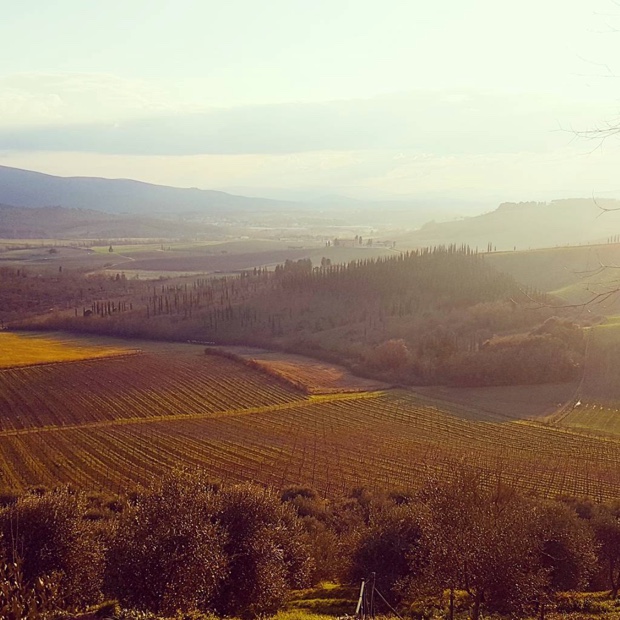
WineAlign

The most important red wine from Italy

Singolarità, qualità, diversità. Grazie di tutto @chianticlassico

Singolarità, qualità, diversità. Chianti Classico

As seen on WineAlign

For three weeks in May my professional life focused entirely on the brave new world of Chianti Classico Gran Selezione. It began with a four day gambol through the heart of Toscana between two of the world’s great cities, Siena and Florence. It culminated with a Masterclass on Gran Selezione I guided for the Consorzio of Chianti Classico at Toronto’s Four Season’s Hotel.

The time in Italy brought me to eight estates plus a tasting of Gran Selezione at the former Convento di Santa Maria al Prato located in Radda in Chianti. It is here that the Consorzio has set up its new education and events centre to promote the wines of Chianti Classico. In Radda I tasted 12 selections with Consorzio president Sergio Zingarelli. The Masterclass in Toronto was organized as part of the region’s 300th anniversary celebration and the producers walked a crowd of 75 guests through eight Gran Selezione.

mondays-presentation-of-chianticlassico-granselezione-fstoronto-c-su-su-han

Monday’s presentation of @chianticlassico #granselezione @FSToronto (c) su su han

Related – Three days, eight estates, Chianti Classico

Critics comment and often complain that all Chianti Classico, Riserva and now Gran Selezione adhere to one style. They will say that because of minimum aging requirements that all wines are produced in the same way and towards the same end. Nothing could be further from the truth.

Today #toronto went to masterclass school on @chianticlassico #granselezione No going back now #chianticlassico #300years #300anni #gallonero #blackrooster

Today #toronto went to masterclass school on @chianticlassico #granselezione No going back now #chianticlassico #300years #300anni #gallonero #blackrooster

What Makes it Gran(d)

Gran Selezione must be composed of 80 to 100 per cent sangiovese and may contain up to 20 per cent red grapes (indigenous or international). It is produced from a single-vineyard or from a selection of the estate’s best grapes. The minimum aging requirement is 30 months, including three months in bottle before release. The manifesto portents a wine of new typology “at the summit of a denomination’s quality pyramid.”

“The use of the name ‘Chianti Classico Gran Selezione’ depends on issue of a suitability certificate based on chemical-physical tests conducted by authorized laboratories and approval of the wine’s organoleptic characteristics by special tasting committees as per Italian Ministerial Decree 16/12/2010 concerning batches of wine destined for bottling.” Some applications were granted retroactively for the 2009 vintage.

So, what is Gran Selezione? In the simplest terms, which means everything and yet nothing at all,  it represents a Chianti Classico producer’s finest Riserva expression at the top of the quality pyramid. Yes, it is aged longer, for an additional six months beyond Chianti Classico Riserva. But Gran Selezione is not simply one thing; it comes as a matter of interpretation. Some producers, like Nicolò Pozzoli and Silvio Campatelli of Lornano see others releasing the same wine already made, from the same vintage, with a new label and of course, a new price. Yet others see it as an opportunity to make a Selezione as a vineyard-designate Riserva, or as cru or climat based. For some it means opportunity, freedom, revelation or, like Pietro and Valeria Losi of Querciavalle, the realization of a dream.

Some quotes from producers:

“It’s a matter of compromise between what is needed for the small producers and the need to express through crus for the larger ones.” – Stefano Capurso, Barone Ricasoli

“It is not a military position.” – Bernardo Bianchi, Colle Bereto

“It is the best block of the estate.”  – Federico Cerelli, Castello di Gabbiano

“It is made in the vineyard,  from the best vines and the best grapes.” – Massimiliano Biagi, Barone Ricasoli

“It is from a mico-territory within a territory, a micro climate and geology, a climat, combined by exposure and soil, together with the work of a man.” – Alessandro Palombo, Luiano

“It is the best selection of barrels. We taste the wine in the cellar and decide the wine that will be, to the end.”– Iacopo Morganti, Il Molino di Grace

“Gran Selezione begins in the vineyard, in the barrels is too late.” – Pietro Losi, Querciavalle

“I already make my top wine so I simply now call it Gran Selezione.” – Sergio Zingarelli, Rocca delle Macie

Perhaps you remain skeptical. You may be unclear as to the clarity of the category and perhaps you do not find whole or justifiable insight. I can say this. In Chianti Classico I asked all 10 producers I met with this question. “What is Gran Selezione.” All ten responded immediately, emphatically and with unequivocal determination. All 10 answers were intuitive and no two were exactly the same.

Chianti Classico is not a small wine region by any means. It is home to upwards of 70,000 hectares (177,500 acres), of which a mere 10 per cent are planted to vines. Remarkably, impossibly even, no matter where you are, you can always travel from one estate to another in what seems like 30 minutes or less, using one of multiple routes. On my last day the Consorzio’s Silvia Fiorentini and I left Il Molino di Grace in Panzano and drove southeast to Radda in Chianti. We then travelled from Radda northwest to the Consorzio’s offices in Tavernelle Val di Pesa. Then Christine Lechner drove me north to Castello di Gabbiano in Mercatale Val di Pesa but I swear we passed by Panzano and Greve on route. Chianti Classico has more exposures and angles than any wine region I have been to. It would take many years to understand where you are in relation to where you’ve been and where you are going. The wines share an identical set of diverse parameters. Singularite, diversite, qualite.

A Look to the Past

More time has been spent making dry red wine in Chianti Classico than in Piemonte’s Barolo or Barbaresco, where it was essentially Recioto until the mid 18th century. Thus, more time has been spent understanding the hills and differing terrains of the region than Piedmonte for this purpose. Antinori and Brolio are families that have lived and gained an understanding in the region for centuries. Brunello has figured it out. It can certainly be done in Chianti Classico.

She may be hiding behind the scenes but you all need to know who Christine Lechner is. Christine is events coordinator for the Consorzio and along with Silvia Fiorentini is responsible for bringing Chianti Classico to the world. Silvia’s work with the Consorzio is threaded everywhere throughout the world. It is Giuseppe Liberatore, director of the Chianti Classico Consorzio who directs the troops to showcase the excellence of the region’s wines.

Critics will say that Chianti Classico is living in the past. With three hundred years of beautiful and profound history, from Grand Duke Cosimo Tre de’ Medici to incumbent Consorzio President Sergio Zingarelli, you are damn right they are living in the past. Gran Selezione wines exists in a realm far beyond just a shared fleeting moment with 21 carefully selected Chianti Classico Riservas. If I could name a wine region anywhere in the world with a commensurate kinship of family, lineage, conoscenza, storia and the contiguous passing forward of tradizione I would. But I can’t.

A Look To the Future

Gran Selezione can be interpreted in a number of ways, depending on producer. I do not stand alone in my need to ask many questions. Where does one truly understand the region and not just the producer? What ways can the consortium pursue to cherish their name, by not sharing it with many different versions of similar products. Can one of the producers explain the decision to raise the alcohol level requirement of the Gran Selezione? Or is it just a matter of fact, something that happens as part of the winemaking process.

How important is 100 per cent sangiovese to the GS discussion and when other varieties are blended in, does it matter if endemic ones are used, like colorinio and canaiolo, or international ones, like merlot and cabernet sauvignon? What about the decision to grandfather in some approved applications for older vintages to be labeled as Gran Selezione? How has the category progressed from the first vintage to the present one. And has the approach or the style already changed?

Is there any consideration to add subzones to the Gran Selezione label? Either in its simplest form, Siena or Florence, or more parochially, Radda, Gaiole, Castellina, Castelnuovo Berardenga, Poggibonsi, Greve, Barbaerino or San Casciano.

Sleep walking not advised #panzano #ChiantiClassico

Sleep walking not advised #panzano #ChiantiClassico

The Unione Viticoltori di Panzano is a recent development in the Chianti Classico region. Like Chianti Classico, they have their own logo that can be printed on labels that indicate the origin of place. The producers under one village have one common idea. To produce organic and/or biodynamic wine in and around the village just south of Greve. All of the vineyards are from 300-500 meters above sea level and represent the microclimate within the area. Whatever you think about organic, the common goal is something to appreciate.

These are all valid and important discussions going forward but the truth and the fact of the matter is simple. Barolo received DOC status in 1966, and Brunello in 1980. Brunello in 1980. Gran Selezione is a very recent development and growing pains will be a necessary part of its development. Patience and perseverance will see to reward. I would be shocked if Gran Selezione is not the most sought after red wine to come out of Italy by the year 2025. You heard me. Not just sangiovese. The most important red wine from Italy.

I tasted 21 Gran Selezione in Chianti Classico between May 11 and May 15. Here are my notes.

Complex by name, nature and nurture @chianticlassico #granselezione @luiluiano #ottantuno #fattoriadiluiano #alessandropalombo #sangiovese #antoniopalombo #luiano

Complex by name, nature and nurture @chianticlassico #granselezione @luiluiano #ottantuno #fattoriadiluiano #alessandropalombo #sangiovese #antoniopalombo #luiano

Luiano Chianti Classico Gran Selezone Ottontuno 2012, Docg Tuscany, Italy (Agent, $72.50, WineAlign)

From Luiano’s premier cru vineyard on white stones from an ancient natural spring that tumbled into a lake. The 85 per cent sangiovese plus (15) merlot are kept separate form the rest of the production. Here berries fold into mineral with wood-delineated spice (truffle, tumeric, saffron, etc.). An amazingly silky wine with that cartology of spice all over its map. The cru is one hectare that executes into 3000-4000 bottles per year. The nomenclature here is not a serious one, the “A” and and the “P” in representation of a signature by Alessandro and his father Antonio that also looks like an “8” and a “1.” It was Alessandro’s grandfather who built Luiano in 1959 and Antonio began working with him 1981. When you dream to make wine, you remember 1981 and when Alessandro was three years old in 1981, he said to his grandfather at lunch, “Ottontuno!” This is an extraordinary Gran Selezione, from a micro-territory within a territory, of a micro-climate and geology, a climat within Luiano. A terroir that combines exposure and soil, together with the work of a man, Antonio, planted in 1999. The merlot was added in 2001. The wine needed to be open for quite some time, to envisage the mineral florals and gain consciousness under the auspices of the spices. Drink 2018-2026. Tasted May 2016

Lornano Chianti Classico Gran Selezione 2011, Docg, Tuscany, Italy (Agent, $42.95, WineAlign)

Gran Selezione for Chianti Classico is a matter of interpretation, in this case a selection of the finest few barriques of both sangiovese and merlot. Lornano’s spent 30 months in all new barrels, resulting in the smooth operator that is this Gran Selezione, seductive and inviting within the context of its truth behind a veil of terribilita. This infancy is merely a window into 15 years of what may be, only a split second screen shot of the grand picture. To believe in anything but time would be short-sighted and disrespectful to what this sangiovese is capable of developing towards. Truth from vineyards built on stratified sands, shales, stony alluvials and limestone. History dating back to 1904. Drink 2017-2025.  Tasted May 2016

Structured and getable @chianticlassico via @LornanoChiantiC Il piacere è stato mio #NicolòPozzoli #SilvioCampatelli #montereggioni

Structured and getable @chianticlassico via @LornanoChiantiC Il piacere è stato mio #NicolòPozzoli #SilvioCampatelli #montereggioni

Lornano Chianti Classico Gran Selezione 2012, Docg, Tuscany, Italy (Agent, $42.95, WineAlign)

Lornano’s interpretation of Gran Selezione for Chianti Classico is a selection of the finest few barriques of both sangiovese and merlot. Thirty months in new barrels takes sangiovese through a fluid and rippleless ride, from the same élevage of 2011, though here showing its tannic teeth with more than just one less year by age. The cherries and the leather are both more extreme but this is a fleeting moment of assessment, from a sangiovese of acute youth, but the tannins are sweet. It is this crux that shows there is genetic lineage to scroll back through Chianti Classico and CC Riserva. More perfume in 2012, of violets and roses, even in the presence of human aromatic intervention. Drink 2018-2028.  Tasted May 2016

È vero, a special vineyard #VillaTrasqua @chianticlassico #castellinainchianti #montereggioni #granselezione

È vero, a special vineyard #VillaTrasqua @chianticlassico #castellinainchianti #montereggioni #granselezione

Villa Trasqua Chianti Classico Gran Selezione Nerento 2010, Docg Tuscany, Italy (Agent, $39.95, WineAlign)

Single-varietal, single-vineyard, sangiovese-vigna nerento Gran Selezione. From the vantage point of Villa Trasqua’s terrace you can look out and see the demarcation of this special plot, a cru that seems to throw a special light even at dusk and this Gran Selezione offers a changing luminescence as it warms and evolves in the glass. Nerento is a success from the early category days and not all producers were able to find commitment and distinction this early. At six years of age post vintage it drinks as it should, idiomatically fresh and precise in the unequivocal Castellina in Chianti way. Here is post modern Chianti Classico’s preferred exit because Nerento is an example that puts full trust in the grand theory and the ideology of the Selezione. Keep this in the glass for hours and contemplate; the vineyard, the perfectly cooked filet of beef and the quiet Chianti Classico night. Drink 2016-2022.  Tasted May 2016

The #alberese of #querciavalle #pontiganello @valerialosi #agricolalosi #sangiovese #granselezione

The #alberese of #querciavalle #pontiganello @valerialosi #agricolalosi #sangiovese #granselezione

Losi Querciavalle Chianti Classico Gran Selezione Losi Millenium 2010, Docg Tuscany, Italy (Agent, $39.95, WineAlign)

Every great wine dissolves a genre or creates a new one and in the context of Gran Selezione, Pietro Losi and Giorgio Baldi’s Millenium 2010 concludes the latter. In a category where so much changes and yet nothing at all, the choice to pick individual plants, specific vines and particular bunches of grapes as destined for a vision of greatness defines the ideal that wine is indeed made in the vineyard. This Chianti Classico Riserva sees 36 months in 10hL barrels and it is a wine that has essentially been made since since 1997. It went to market again in 1999 and then it was 2000 that prescribed the Millenium, followed by 2001, 2003, 2005, 2007 and 2009. Subsequent top quality vintages are 2011, 2012 and 2015. The selected vines and particular bunches produce on average and approximately 4800 bottles. Take note of the most perfume and yet not the most savour, forest or truffle but there are hints, with some fennochio and the most grip to lead a sangiovese (with five per cent each canaiolo and malvasia nera) structure. The finest tannic grain runs through, lifted by tang meets sour over tart so round and specific to Gran Selezione. This wine is a highly accomplished specimen and a portal in ode to a great grandfather who started his day with wine and cheese, for energy. He imbibed for everyday consumption, just as water would nourish as it should be with this wine for food and contemplation. A wine with a finish minutes long. Drink 2018-2028.  Tasted May 2016

Barone Ricasoli Castello Di Brolio Chianti Classico Gran Selezione 2012, Docg Tuscany, Italy (942607, $59.95, WineAlign)

A Chianti Classcio first borne in 1997 with the plan to create a maximum quality blend as an expression of the estate’s diverse terroir. A meticulous selection is combed from the estate’s vineyards, spread over 230 hectares of land. Though early on the fruit may have emerged out of good but not yet exceptional vineyards, nearly 20 years later the sangiovese (90 per cent) with cabernet Sauvignon and merlot (or perhaps petit verdot) adheres to grand vin excellence. The wood regimen is 18 months in tonneau followed by 18 in bottle. Perhaps you will not find a more accomplished, perfectly judged, matter of factly expressed Gran Selezione. Sangiovese in equality of spicing with fruit, acidity and tannin, perfectly integrated toast, wood impact and textural drive. Stefano Capurso admits this about the transition from Chianti Classico to Gran Selezione.”It’s a matter of compromise between what is needed for the small producers and the need to express through crus for the large ones.” Drink 2018-2025.  Tasted May 2016

Delivering purity with deep respect to exceptional vineyards @barone_ricasoli @chianticlassico #sangiovese #granselezione #merlot

Delivering purity with deep respect to exceptional vineyards @barone_ricasoli @chianticlassico #sangiovese #granselezione #merlot

Barone Ricasoli Castello Di Brolio Chianti Classico Gran Selezione Colledilà 2013, Docg Tuscany, Italy (AgentWineAlign)

Colledilà is the Ricasoli Chianti Classico “other side of the hill” cru developed and realized from 15 years of estate terroir sangiovese research. This vintage was cropped at less than six tonnes per hectare so no need for green harvest, out of limestone vineyards with southeast and southwest aspects on seven blocks. Only 15,000 bottles were produced from only the best grapes selected (the rest go into the Brolio GS). This 100 per cent sangiovese is the soil king agronomist Massimiliano Biagi’s favourite and it sees 18-20 months in 2nd fill tonneaux. Biagi is the custodian of the fractured mineral, the white rock, catalyst to this off-roading sangiovese of built in natural, shock absorbing structure. Notes of balsamic, baking spice, vanilla and lavender are antithetical to the Brolio GS. The Colledilà’s first vintage was 2007 and the seventh breadth is here remarkable, the acumen inherent, the result timeless. You should never give up on sangiovese and when I tasted this again upon return after the Casalferro I then came to realize and respect its power. But it is never overpowering. It whiffs the most perfume, in the end, in reverse. Drink 2018-2025.  Tasted May 2016

Il Molino Di Grace Il Margone Chianti Classico Gran Selezione 2011, Docg Tuscany, Italy (435115, $39.95, WineAlign)

What is Il Margone? “This is the best selection. We taste the wine in the cellar and decide the wine that will be, to the end,” explains Iacopo Morganti, director of Il Molino di Grace. The name must also refer to the particular construction of the vineyard at Montefili, on Panzano’s west side, of its altitude, slope and the Galèstro within. Il Margone is a kind of wine for the (Molino) windmill, where the water goes over the stone and it is a wine that was always the Gran Selezione, before and after, on the vine and in the barrels. Now it can be called what is has been whereas before it was the second Riserva but the more important one, the best one. It now spends 18 months in barriques, 50 per cent new and 18,000 bottles are made. It runs deeper still, far through the Galèstro and into the pietra forte, for the cementing of strong sangiovese (not just religious buildings). From the hot vintage of 2011 and with the alcohol to prove it (14.5 per cent), there is an inherent sense of yeasty culture, a sheep’s milk pecorino that runs through the warmth. It functions as a cooling centre, then compression, layered spice and tannin. That late attack co-conspires with acidity to freeze the mouthfeel and seek years of patient desire. Really energetic Sangiovese, iron-fisted and demanding but with so much seeping cherry fruit. Wait four years minimum. Drink 2019-2025.  Tasted May 2016

At the intersection of @chianticlassico and #singlevineyard there is #granselezione #collebereto

At the intersection of @chianticlassico and #singlevineyard there is #granselezione #collebereto

Colle Bereto Chianti Classico Gran Selezione 2011, Docg Tuscany, Italy (Agent, $67.50, WineAlign)

A single-vineyard Gran Selezione, as per the house interpretation of the category, from “la vigna del Convento” situated on the slope beneath il convento di Radda in Chianti. So very concentrated, modern, plush but unshaken, of no compression. Noses all the flowers and herbs of Radda in this glass; lavender, rosemary and many varieties of sage. “This is not a military position,” notes Bernardo Bianchi. The block is always in the sun over fully-occupied Galestro soil, 490m above sea level. All together making for a new Riserva of restrained power and elegance. Wow. Such mouthfeel and structure many Gran Selezione would kill for. The single monastery vineyard is very special at 20 years-old and has just entered its prime. Finishes with more mineral in what seems like Amaro bitters, but it’s mineral, all mineral and nothing but mineral. And it’s just a baby, at this time in bottle five months.  This is a very, very grown up wine. It solicits the requiem to be stashed away for future re-connection. Drink 2020-2031.  Tasted May 2016

Ambassadors of @chianticlassico to the world. 2013 #castellodigabbiano #granselezione (not pictured) will blow your mind #treasurywineestates #sancascianovaldipesa #ilbellezza #chianticlassicoriserva

Ambassadors of @chianticlassico to the world. 2013 #castellodigabbiano #granselezione (not pictured) will blow your mind #treasurywineestates #sancascianovaldipesa #ilbellezza #chianticlassicoriserva

Castello Di Gabbiano Gran Selezione Bellezza Chianti Classico 2013, Docg Tuscany, Italy (652438, $39.95, WineAlign)

Tasted with winemaker Federico Cerelli alongside the new era ushering 2012, a wine with six months further resolve, which is really just a moment in life. Looking at this 2013 it clings to that ’12’s ideal, still firm and in need of down time, stirring still, wasting some time. Here a gear switch, alteration and adjustment. A reduction of new oak, an increase of the mineral cogitation specific to the Albarese soil, with tannins great like in 2012 but finer, more elegant. This is more classic in the sangiovese thought because what also is allowed is the level of dry extract, “over 30 for sure” notes Cerelli. This Bellezza is pure sangiovese, the best Bellezza in years, classic to remind of many years ago but a very modern wine. It is the Gabbiano predicament and the predilection to announce what Gran Selezione means so in a word, bravo. You could actually drink this now and then over 25 years. “What is Bellezza? This is the best block of the estate” is the answer as told by Federico. Great tannins, simply great tannins. Drink 2019-2032.  Tasted May 2016

Selection of #granselezione @chianticlassico at the Convento di Santa Maria al Prato #raddainchianti

Selection of #granselezione @chianticlassico at the Convento di Santa Maria al Prato #raddainchianti

Castelli Del Grevepesa Panzano Chianti Classico Gran Selezione 2011, Docg Tuscany, Italy (SAQ 12626764, $38.00, WineAlign)

Fom San Casciano in Val di Pesa, a cooperative-produced Gran Selezione from vineyards all around the area. Quite barrel-influenced adding extracted layers around steroidal cherries, with aromas recalling shoe leather and polish. A rich and broad mouthfeel of elasticity like a stick of chewing gum with alkalescent flavours of lavender and vanilla. A highly oaked, cakey, middle of the road GS. Dusty as if surely some merlot would be the filler in here but it’s 100 per cent sangiovese. Well made coop Chianti Classico. Drink 2016-2020.  Tasted May 2016  @Grevepesa  @SelectFrechette

Mangiacane Z District Chianti Classico Gran Selezione 2011, Docg Tuscany, Italy (Agent, $49.95, WineAlign)

The big, heavy bottle, echoed in the wine’s tones, from wood and with extract. Very Igt in temper, with international varieties in here for sure, seemingly designed with cabernet sauvignon but perhaps also merlot (it’s actually the opposite). The intent here is a full expression of fruit, wood, acidity and tannin. A beast that requires years to integrate and settle. There is liquorice and fennel pollen in the later stages. It’s very chewy and certainly all in. Drink 2018-2022.  Tasted May 2016  @VillaMangiacane  @loyalimportsltd

Fontodi Vigna Del Sorbo Chianti Classico Gran Selezione 2012, Docg Tuscany, Italy (Agent, $95.00, WineAlign)

The plot specific, 100 per cent sangiovese Vigna del Sorbo is from organic vineyards in Panzano, now in its third year for re-branding the single-vineyard Riserva. Remarkably aromatic and in hyper reality of its unique and very own red fruit, high-toned, full bodied and certainly elevated of alcohol. A sangiovese of massive tannins and acidity but the fruit is equal to the task. This leans more to the modern wave of extraction and sun-drenching than any other Gran Selezione I have tasted recently, like 100 per cent grenache of say Chateau Rayas. A Chianti Classico tall, big, muscular and strong, of ample tannins, proportionate acidity, body, structure, all in and all together. A bit more elegance than Châteauneuf-du-Pape but along very similar lines. Also a product of the 2012 vintage. Drink 2018-2036.  Tasted May 2016  @rogcowines  #fontodi

Casaloste Chianti Classico Gran Selezione Don Vincenzo 2010, Docg Tuscany, Italy

From Gionanni Battista D’orsi, also from Panzano so organic. The vintner hails from Naples (note the tiny Vesuvius on the label), this is the first to show real acetone but it’s beneath the threshold. There is also wood in droves, woods and thickets with dark blackberry fruit to extreme ripe red plum. This needs years to settle down and play nice. It’s a very formidable GS, not so surprising considering the vintage as it is imagined. A bit less grit, girth and astringency will travel though future vintages although with Casaloste it’s certainly a stylistic choice. Drink 2018-2028.  Tasted May 2016  @Casaloste

Castello D’Albola Chianti Classico Gran Selezione Il Solatio 2012, Docg Tuscany, Italy (Agent)

From Radda in Chianti and owned by Zonin, this is typically lighter in body for the area. Composed of 100 per cent sangiovese, very much in red fruit and old-school Brunello-ish liqueur. Cherries macerating and gaining acidity in its pool, flavour is a ringer for Japanese omeboshi plum, and then fruit leather/roll-up made with strawberry. Liquid chalky and lactic. Great intensity. Drink 2017-2024.  Tasted May 2016

Premiata Fattoria di Castelvecchi Chianti Classico Gran Selezione “Madonnino della Pieve” 2010, Docg Tuscany, Italy

From Radda in Chianti, rich red to darkening fruit and some acetic dealings,. There is more than just a simple breadth of likeability in the layering and variegation of the red fruits in here.  Plenty of herbiage and more tonality on the second half of the ride. Somewhat old school and very taut, tight, vigorous and vital. Classic, traditional, ripe and attentive sangiovese. This will live quite long,  somewhere in the vicinity of 15-20 years. Drink 2018-2028.  Tasted May 2016    @BarrelSelect

Rocca Delle Macìe Gran Selezione Chianti Classico Riserva Di Fizzano Single Vineyard 2012, Docg Tuscany, Italy (699454, $32.95, WineAlign)

From Castellina in Chianti, another singular, unique and specifically to itself Gran Selezione, with dark red fruit and tones set above though there is nothing remotely acetic about the play. Purity from the Fizzano vineyard is apparent with much mineral (seems to be albarese) throughout. The mid-palate here is full and this strikes as both elegant and traditional. Great length, longer than many or even most. A very accomplished yet classico Classico. Re-branded and worth every bit of that advantage. Perfect transfer from single-vineyard Sangiovese (95 per cent) plus (5) merlot, to SV-GS. Even if you notice the wood in the mid-palate and through the structure, you do not finish with it. There are 26,000 bottles made for a wine first produced in 1986. Drink 2018-2024.  Tasted May 2016  @roccadellemacie  @ProfileWineGrp

Mazzei Castello Di Fonterutoli Chianti Classico Gran Selezione 2012, Docg Tuscany, Italy (Agent, $75.00, WineAlign)

From Castellina in Chianti by the Mazzei family, fashioned from 92 per cent sangiovese. There is so much wisdom in here, out of grace and for elegance with wood rounding out all the angles. Very much a particular and painstakingly precise selective Gran Selezione, from wide and far. Though curious to note that within the pantheon of the genre the Fonterutoli is almost middle of the road in style. This comes as a result of where is lies in the range occupied by the multifarious interpretations. This 2012 is demonstratively integrated with a high level of acidity spurring and embracing generational connectivity. Drink 2018-2030.  Tasted May 2016  @MarchesiMazzei  @TrialtoON

Castello di Cacchiano Chianti Classico Gran Selezione Millenium 2009, Docg Tuscany, Italy

From Gaiole in Chianti and one of the first to jump headfirst into the new category. Showing a bit of age, from a very warm vintage, this has the humid funk (and is consistent with the 2007 tasted earlier in the week). Rich, a bit caky, chalky and yet the acidity winds its way around with room-tying, rug-hooking ability. Older in schooling and traditionally-styled to be sure. Drink 2016-2019  Tasted May 2016

Rocca Di Castagnoli Stielle Chianti Classico Gran Selezione 2011, Docg Tuscany, Italy (SAQ 12489114, $47.00, WineAlign)

From Gaiole, with 20 per cent cabernet sauvignon, this is modish-modern, high-toned, rich and spicy, very wood apparent Gran Selezione. A bit splintered and flinty this early in toddler years but the mineral and high altitude vineyard impart is and will become gainfully employed as a major plus. Long finish. Strikes like a very modern Brunello in style and increasingly international with time in the glass. In some respects it may as well be Igt. Drink 2018-2024.  Tasted May 2016  @Roccacastagnoli  @ProfileWineGrp

Rocca di Montegrossi Chianti Classico Gran Selezione Vigneto San Marcellino 2011, Docg Tuscany, Italy (Agent, $59.00, WineAlign)

Supported by nine per cent pugnitello to accentuate hue, aroma and structure, this is organic sangiovese from Gaiole. Produced using the finest grapes from the San Marcellino vineyard that surrounds the namesake Church in Monti in Chianti. Saw 27 months in medium-toast Allier forest French barriques and tonneaux plus an additional 18 months in bottle before release. Yet another rich and high-toned example (pushing 15 per cent alcohol), with lots of liquorice and corporeal feel on the nose. A child of modern and rich styling with good animale tension, as well as ferric and hematic accents to the dark fruit. Very Tuscan Igt mixed with Classico ideals to speak for Gran Selezione through the voice of traditional varieties. Only 7,400 (plus 300 magnum) bottles were produced. Drink 2018-2028.  Tasted May 2016  

Good to go!

Twitter: @mgodello

Instagram: mgodello

WineAlign

Three days, eight estates, Chianti Classico

alessandro-your-grandfather-was-a-very-good-winemaker-luiluiano-chianticlassico-fattoriadiluiano-chianticlassicoriserva-1979-sangiovese-alessandropalombo-antoniopalombo-luiano

Alessandro, your grandfather was a very good winemaker @luiluiano @chianticlassico #fattoriadiluiano #chianticlassicoriserva #1979 #sangiovese #alessandropalombo #antoniopalombo #luiano

By the time I landed in Florence and had settled into the Kraft Hotel it was pushing 3:00 pm and I needed to be ready just a few hours later to meet my Chianti Classico hosts for dinner. It had been 21 years since I last wandered aimlessly, holistically and believe me, blissfully through the streets of Cosimo I de’ Medici’s Florence. Greater men than me had walked these narrow strade. Pietro Cimabue, Giotto di Bondone, Dante Alighieri, Arnolfo di Cambio, Desiderio da Settignano, Donatello, Lorenzo “The Magnificent” de’ Medici, Michelangelo Buonarotti, Botticelli, Lorenzo “The Magnificent” de’ Medici, Giovanni Boccacio, Raphael Sanzio, Vincenzo Danti, Leonardo Da Vinci, Francesco Furini and Filippo Brunelleschi. Twenty-one years should distort and disorient one’s sense of direction but I found myself at home, mapless, confident in finding my way from landmark to landmark. Ponte Vecchio, Piazza della Signoria, Santa Croce, Santa Maria Novella, Palazzo Pitti, Palazzo Vecchio and Il Duomo. Hours later, wide-eyed and energized, the dinner bell sounded and then forward, for three extensive immersion days, it was all Chianti Classico.

godello-and-brunelleschi-together-at-last-firenze-piazzadelduomo

Godello and #brunelleschi together at last #firenze #piazzadelduomo

I spent some time in Chianti Classico at the beginning of May. I had been to Toscana before, in 1986, 1989 and in 1995. With twenty years having passed, so much had changed and in some ways, nothing at all. What I learned this time around can’t be found in a book, online or in scattered, random tastings here in Toronto. I found people, I found place and I found progression. The wines of Chianti Classico have embarked upon an ascension into their contemporary golden age.

On September the 24th, 1716 the Black Rooster was born. A notice was given by the Grand Duke Cosimo III de ‘Medici who decided to demarcate the territories dedicated to the production of high quality wines. To protect and to safeguard this special place, found in the hills and valleys between Siena and Florence. Chianti Classico. Three hundred years later the Gallo Nero, quintessential symbol synonymous with the Chianti Classico DOCG, is celebrating its birth.

the-sheer-breadth-of-ilduomo-is-just-amazing-firenze-piazzamichelangelo-brunelleschi-toscana

The sheer breadth of #ilduomo is just amazing #firenze #piazzamichelangelo #brunelleschi #toscana

All who serve to ride shotgun as sentinels to the profound history and quality of Chianti Classico are very sensitive and protective of the term, so the use of the full name “Chianti Classico” is essential. In Tweets, Instagram and Facebook posts, as well as press releases, articles and conversation, the omission of “Classico” is akin to liking it to that other lesser wine that shall not be named, and could result in being taken outside and subjected to some dark arts. The two names, as a matter of fact, represent two DOCG with distinct and separate production territories, histories and consortia.

#tranquillo #greveinchianti #ChiantiClassico

#tranquillo #greveinchianti #ChiantiClassico

Chi-anti Classi-co. Two very important words. Classic Chianti. Classical Chianti. Take away the demonstrative qualifier and what do you have. You have Chianti. With no disrespect to some very honest, simple and pleasurable Chianti produced outside of the boundaries that define Chianti Classico, the difference between the two is night and day. When you travel through the verdant, rolling hills, in and out of wine estates and villages of the region, you can’t help but feel the sense of tranquillo. Calm. You are also hyper aware of the singularity, diversity and quality of the produce. This is Chianti Classico. You do not get lazy and say I am in Chianti or I have travelled through Chianti. Per favore, Chianti Classico. In fact, the moment you leave Chianti Classico and pass through the terra-cotta villages just south of Firenze the landscape changes immediately. It’s just not the same.

dropped-in-on-some-old-friends-today-villadigeggiano-barrelselect-bianchibandinelli-castelnuovoberardegna

Dropped in on some old friends today @VilladiGeggiano @BarrelSelect #bianchibandinelli #castelnuovoberardegna

Image, perception and finalmente, reality, these are the truths all who feel the soul of Chianti Classico are in search of today. Today and moving forward, explaining to the world that Chianti Classico is not what you thought or think it to be. In my three full days of exploring the region I visited eight wine estates, and no two were the same. Each have vines growing on different soils, each vinify with varying techniques and all eight treat l’élevage of their wines with surprisingly divergent approaches.

Related  – Chianti Classico’s Gran Selezione plan

My visits to these eight estates (plus one 21-year later reunion with Andrea Bianchi Bandinelli at Villa di Geggiano) was made possible and with thanks to the Consorzio di Vino Chianti Classico. In particular President Sergio Zingarelli, Director Giuseppe Liberatore, Christine Lechner and Silvia Fiorentini.  Last week I published links to 21 tasting notes on Chianti Classico Gran Selezione over at WineAlign. The full notes will go live on Godello next week. This week you can read 28 tasting notes on the non-Gran Selezione wines I tasted In Chianti Classico back in May.

Luiano

Luiano as from the Latin, “janus,” where all begins from Jaunary, with an eye to the past and forward to the future. Located in San Casciano in Val di Pesa, through Impruneta due south of Firenze. Passed down from grandfather Alberto, now Alessandro and father Antonio Palombo’s vineyards fan out to an amphitheatre with four distinct (cru) climats. The use of merlot and cabernet sauvignon is employed to achieve roundness with the tannic and tougher sangiovese, to avoid the classic, firm and historically at times infirm and instead go for the amenable. Representation in Ontario is with Tre Amici Wines.

alessandro-luiluiano-palumbo-announces-chianticlassico-quality-luiano-even-before-you-have-ascended-his-drive

Alessandro @luiluiano Palombo announces @chianticlassico quality #luiano even before you have ascended his drive

Luiano Chianti Classico 2014, Docg Tuscany, Italy (Agent, $24.50, WineAlign)

From a challenging vintage and winemaker Alessandro Palombo admits readily to much fruit purposefully languished on the vine. Field selection was the sine qua non, inexorable and moral imperative to seek this floral sangiovese from a less than homogeneous vintage. With a father’s wise voice resonating in his ear it was the inborn proclivity to resist temptation and not to over press and to focus on freshness. Some cabernet sauvignon and merlot urges the chamomile, jasmine, black tea and candied orange peel with some healthy contrariety by underbrush (mushroom and forest floor) and truffle shaved over black cherry. A bit iron rich though righteously clean, with no exaggerations, in avoidance of arbitration, greenness or pepper pyrazine. “It’s not the greatest Chianti Classico I’ve ever made but it’s one I’m very proud of.” 60,000 bottles made. Drink 2016-2021.  Tasted May 2016

with-alessandro-and-antonio-palumbo

With Alessandro and Antonio Palombo

Luiano Chianti Classico Riserva 2013, Docg Tuscany, Italy (Agent, $39.95, WineAlign)

There was some rain and cold at the climax of maturation, so here the sangiovese is grittier, shivered with sweetmeat and somewhat bitter tannins, but otherwise a “normale” vintage. Here we have 100 per cent sangiovese of the best selections and the first vintage not in true French oak. It is in fact larger barriques (French but made in Italy). Still the forest floor and a hint of truffle, albeit slathered with a deeper richness, whiffing some leather and tobacco. The wood is present but respectful to the fruit, as is the verdant streak running through the tremendous San Casciano in Val di Pesa acidity. The bitter and drying tannins will require time to help soften the astringency and relent they will though not completely, but age will certainly help. 13,000 cases made from a vintage with no Grand Selezione. Drink 2017-2022.  Tasted May 2016

Luiano Chianti Classico 1979, Tuscany, Italy

Alessandro Palombo is skeptical at first, one eyebrow raised but with the look of possibility on his face. Takes me very little time to acknowledge that this ’79 is very much alive, fruit not predominant (and surely some prune) but neither cooked nor bruised. The brown nose (earth and spice) purports a full concentration of anthocyanins, acidity still full in, dried fraises de bois, black liquorice, dirty leather and worth repeating, still very good acidity. Truffle, forest floor and then black olive tapenade on the palate. This is 70-80 per cent sangiovese with colorino and canaiolo and for 1979 it’s quite incredible. It should not have lasted this long.  Antonio says that up to 10 per cent could have been malvasia blanca and trebbiano because at the time it was a field blend, co-planted with the sangiovese, which could explain some of the variegation in the colour. This is a Chianti Classico to lend credence to the idea of using multiple fruit, vegetal and animale descriptors when assessing an old wine. It’s also the reason why you put them away and open them with friends who’s eyes are wide open. Thank you Alessandro for the opportunity and for the connection to your grandfather Alberto. He was a very good winemaker. Drink 2016.  Tasted May 2016

Lornano

Fattoria Lornano had been a Napoleanic French property taken from the church and re-assigned.  Like many properties in Chianti Classico the 180 hectare estate was originally a church, in Lornano’s case a privilege of Pope Innocent III who was entrusted with the administration of other neighbouring churches and adjacent agricultural lands. The Taddei family-owned Lornano is located on the south west hills of Castellina in Chianti and Monteriggioni, five kilometres from Siena.

Nicolò Pozzoli’s great grandfather bought Lornano in 1904 after making a fortune in matches followed by owning a glass factory in Empoli. This from Nicolò’s mother’s side of the family and it was aunt Katerina who ran the winery, now in the hands of Pozzoli. In 1998 they re-planted six hectares and in 2013, replaced seven hectares of Chianti Classico on the upper hill. Today the team is led by General Director Pozzoli, Agronomist Silvio Campatelli and Enologists Franco and Matteo Bernabei. They are represented in Ontario by Frontier Wine Merchants.

structured-and-getable-chianticlassico-via-lornanochiantic-il-piacere-e-stato-mio-nicolopozzoli-silviocampatelli-montereggioni

Structured and getable @chianticlassico via @LornanoChiantiC Il piacere è stato mio #NicolòPozzoli #SilvioCampatelli #montereggioni

Lornano Chianti Classico 2012, Tuscany, Italy (211599, $17.95, WineAlign)

Lornano’s Chianti Classico benchmark endeavours from lock, stock and barrel sangiovese and is held back from market longer than most, to soften the 100 per cent edges and give the round, plumate feel. The vintage is nothing if not consistent with the Lornano house style, divaricated rich and dishing out some evolution. The fifty-fifty small and large barrel split and 12 months of aging following a 22-day fermentation at 25-28 degrees is more than just a jumpstart and a kicker. The integral technical play celebrates and elevates the elegant vintage of very pure fruit, almost biting, ricercato crack spice and finally, very silky tannins. A seven to 10 years Chianti Classico with significant poise for so little salvo. Drink 2017-2023.  Tasted May 2016

Lornano Le Bandite Chianti Classico Riserva 2011, Docg, Tuscany, Italy (230672, $19.95, WineAlign)

Le Bandite, “the banned,” is a cru special for its content of white sand. This is the place “where the hunters went hunting,” notes Direttore generale Nicolò Pozzoli, Monteriggioni territory in which, for public tender are prohibited hunting, fishing or grazing. So what is the significance with respect to Chianti Classico Riserva? Simple. The hunter’s loss is the wine consumer’s gain. Here a wine that spent 21 months in barrels, of wise character, evolved and integrated inherent, thanks to an extra year in bottle before release. Sangiovese from clay, of earthy density settled, on the palate, with three to five years left for prime drinking. When tasted alongside the 2009 Le Bandite, it shows more is less vitality and acidity than when that vintage was last tasted in November 2013. This 2011 will soon revive a pop and a feeling that brings leather and liquorice into the fray. Drink 2017-2024.  Tasted May 2016

with-thanks-to-nicolo-pozzoli-e-silvio-campatelli-inowfeellikenew-lornanochiantic-chianticlassico-fattorialornano-castellinainchianti

With thanks to Nicolò Pozzoli e Silvio Campatelli #inowfeellikenew @LornanoChiantiC @chianticlassico #fattorialornano #castellinainchianti

Lornano Commendator Enrico 2011, Igt Toscana, Italy (211615, $29.95, WineAlign)

In reference to a time in Lornano’s history when the property was placed in trust as a commendam, “the temporary holding of an ecclesiastical benefice.” The Igt blend is sangiovese (50 per cent), merlot (25) and cabernet sauvignon (25) housed for 20 months in new barrels and large barriques. Nothing but rich and intense with the most spice and also the notion of liquid violets. As an aside to the Chianti Classicos there is here a new texture, the merlot giving dusty brushes, the cabernet blackberry, Cassis and with a savoury side. Drink 2016-2020.  Tasted May 2016

Lornano Vin Santo Del Chianti Classico 2008, Docg Tuscany, Italy (244947, 375ml, $29.95, WineAlign)

So very nutty, of almonds and hazelnuts and then marzipan. Succinctly apricot and ripe peach with acidity that hits during the initial shot of fresh fruit into frutta secca and then again at the back end. A dessert wine unique to its own character, perfectly clean and pure. From the oldest plantings of trebbiano and malvasia, one hectare of each, aged for up to six years. Picked in late October, brought in and hung up in a well-ventilated room with humidity and mildew control, then sorted before fermentation. Up to 30 per cent is lost or discarded. Drink 2016-2028.  Tasted May 2016

Villa Trasqua

Located north of Siena in Castellina in Chianti with Monteriggioni rising majestically above the estate, Villa Trasqua is built around the ancient and exceptional vineyard known as Nerento. The estate dates back to 1965 and cultivates its 120 hectares and 10 vineyards in the oldest part of Castellina in Chianti. Trasqua is owned by Swiss brothers Sven and Alan Hulsbergen. Organically farmed vines and the gravity fed winery built on several levels are overseen by oenologist Franco Bernabei and Director Armand Metalla. The estate is represented in Ontario by Frontier Wine Merchants.

how-about-this-beauty-chefmolson-berkel-1912-slicingmachines

How about this beauty at Villa Trasqua? #berkel #1912 #slicingmachines

Villa Trasqua Trasquanello Rosé 2015, Docg Tuscany, Italy (Agent, $13.95, WineAlign)

A 100 per cent sangiovese designed out of a quick bleed for minor colour and the result is great elegance. Saline, savoury and with a bit of sweetness, sexy, easy going Rosé with oomph. Drink 2016-2017.  Tasted May 2016

Villa Trasqua Chianti Classico 2012, Docg Tuscany, Italy (Agent, $19.95, WineAlign)

From serene Castellina in Chianti wide open spaces vineyards and built upon sangiovese plus (five per cent) colorino and malvasia nera. Leaf savour of and with the tart sweetness of frutti di bosco. Spicy oak and depths plumbed but ultimately fresh elegance with acidity to lift, clean and place this in the new echelon of Chianti Classico. Drink 2016-2019.  Tasted May 2016

Losi Querciavalle

If any Chianti Classico estate speaks of family values, tradition and a deeply profound, contiguous lineage it is Losi Querciavalle. Located a stone’s throw across a few valleys southeast towards Siena in the Comune di Castelnuovo Berardenga, the Losi family are the custodians of the purest Albarese soils in the hills of Pontignano. The Albarese here is so pronounced and so defined from plot to plot and vine to vine that Pietro Losi is able to distinguish and differentiate specific vines for the purpose of choosing identified bunches of grapes for each of his wines. Pietro and daughter Valeria take the torch from Cavaliere Tranquillo Losi, mezzadro (cropper) and a man who pioneered farming and winemaking methods to make wines that purely and clearly define the region’s Chianti Classico. Tranquillo’s transference of indispensable Chianti Classico information came from his father Emilio Losi and from Brunello of Montalcino’s Tancredi Biondi Santi.

Pietro continues the work of his forefathers, along with Valeria and brother Riccardo. The Querciavalle farm, acquired in 1954 with the establishment of the company, covers 35 hectares of vineyards while Pontignanello farm, acquired in 1998, bordering on the Querciavalle farm, covers 15 hectares. The estate is represented in Ontario by Natural Vines.

Mirror to classicism, history and tradition. Purity from @valerialosi #querciavalle @chianticlassico #agricolalosi #sangiovese #granselezione #pontiganello

Mirror to classicism, history and tradition. Purity from @valerialosi #querciavalle @chianticlassico #agricolalosi #sangiovese #granselezione #pontiganello

Malvasia Nera 2015 (Barrel Sample)

Aged in tonneaux barriques, the blending grape on a possible solo mission gives green vegetal and floral aromatics, violets, like petit verdot in a way, with great acidity. Pietro Losi is considering producing a single-varietal wine, is cloning to try and plant more for such a purpose. Tannins are grainy but sweet, fine and delicate. Three words for you Pietro. Go for it.  Tasted May 2016

Losi Querciavalle Chianti Classico 2011, Docg Tuscany, Italy (Agent, $19.95, WineAlign)

The historical south-facing “Leccino” family vineyard is situated at 300-350 above sea level, from sandstone in the higher areas and from Galestro and Albarese, so typical from the lower areas of Chianti Classico. Sangiovese (90 per cent) and canaiolo see 18 months in 50 hectolitre barrels and in concrete. Here the natural world and the particular poetry of “old school” dialectical sangiovese speech is heard. It is certainly traditional and pure, clean, crisp, structured, taut and of that wise liqueur. The verbiage is all that plus what feels like dusty ancient mountain brush mixed with albarese soil minerality. In the end it is the canaiolo that brings the perfume. Drink 2016-2021.  Tasted May 2016

Losi Querciavalle Chianti Classico Riserva 2010, Docg Tuscany, Italy (Agent, $24.95, WineAlign)

With five per cent canaiolo instilling just enough potpourri into the fine-grained sangiovese, this could be easily pass for Gran Selezione from an inelastic vintage. The 30 months in 20hL barrels has crafted a structured, elegant, firm and classic Riserva. More than sixty vintages have gathered up the albarese and here, from Querciavalle’s “Vigna del Pino” vineyard. Forest floor, vanilla and berries cull the traditional, resting calm, balanced, noiseless and bitterless. The aftertaste comes out the habits of generations, with a sweet amaro finish, a smooth digestivo. Drink 2018-2026.  Tasted May 2016

Losi Querciavalle Vin Santo Del Chianti Classico 2000, Docg Tuscany, Italy (Agent, $95.00, WineAlign)

Every drop poured and considered from this ambrosial elixir solicits memories from and for a family’s history and tradition. From trebbiano and malvasia, the grapes picked on the 15th and dried from September to December. The pick has graduated to become earlier over the years, and the new, soft press to fermentation heads directly into the cartelli. Querciavalle’s patience exceeds the the five years (as required by the DOCG), usually waiting eight and making use of stainless steel to lower the natural sediment. “An immortal wine, already in paradise,” smiles Pietro Losi, knowingly, of dried fruit and of course almonds. There also challenges a depth and an aridity amongst this sugar, a depth of intensity through acidity that lines and then rounds without a moment of searing. This is true gran selezione calm, gorgeous and alone, warm and full of love. A dessert wine that takes minutes to finish, stays warm in the belly, helpful, coating and comforting. The best and correct story for Vin Santo is of the black plague when the monks believed it held the power to cure. What’s not to believe? Drink 2016-2040.  Tasted May 2016

Barone Ricasoli – Castello di Brolio

The history of Chianti Classico, Tuscany and for that matter, Italian wine can’t be discussed or put into perspective without mention of Barone Ricasoli. That name has been linked to wine since 1141, when Brolio Castle passed into the hands of the Ricasoli family. The first 700 years of Tuscany’s most famous castle and the family aside, it is the work of Baron Bettino Ricasoli, Prime Minister of Italy, researcher, innovator and first marketing expert for the regions wines.  Bettino is credited with having invented the Chianti formula in 1872. When I visited the Ricasoli family crypt in May I was struck by the fact that the Iron Baron passed away on my wife’s birthday. Then shivers travelled down my spine when I noticed a second Bettino Ricasoli shared a birthday with me.

Francesco Ricasoli, 32nd Baron of Brolio has been at the helm of the castle and the family business since 1993. In the past 20 years he has overseen the re-planting of vineyards, isolated exceptional soils, plots and exposures. The five types of soils found on the estate; sandstone, argilliti, montemorello, pliocene and fluvial deposits all play major rolls on vineyard demarcations and which blocks are used for which wines. This research with nearly 1000 years of experience in the current hands of Francesco Ricasoli has transformed an historic estate into a new golden age as one of Chianti Classico’s most important producers. Massimiliano Biagi is now head of winemaking and Commercial Director Stefano Capurso is responsible for bringing Ricasoli’s exceptional wines to the world. Churchill Cellars is the Ontario Agent.

delivering-purity-with-deep-respect-to-exceptional-vineyards-barone_ricasoli-chianticlassico-sangiovese-granselezione-merlot

Delivering purity with deep respect to exceptional vineyards @barone_ricasoli @chianticlassico #sangiovese #granselezione #merlot

Barone Ricasoli Brolio Chianti Classico 2013, Docg Tuscany, Italy (3962, $23.95, WineAlign)

When you consider that this Chianti Classcio enjoys a production of 8000,000 bottles, you might think it a huge salad of over determination. It’s not but instead gleefully full of coincidence and implausibility. Sangiovese (80 per cent) mingles with merlot and cabernet sauvignon for nine months in barrique and tonneau. The goal is freshness from fruit with Chianti Classico character. The exactitude of resolution is a full expression, of cherries, dusty character and a meeting point from and for all five terroirs across the estate. Carries its full fleshy fruit with some liquorice in a dichotomous combo of exceptional quality and high quantity, incorporating diversity, brought together with simple but highly technological vinification. This is now as much a vision of Toscana, even as it resonates as Chianti Classico, than what it used to be. That is to say internationally stylized, but isn’t this in effect true of all sangiovese, not especially of Chianti Classico? Drink 2016-2021.  Tasted May 2016

Barone Ricasoli Brolio-Bettino Chianti Classico 2013, Docg Tuscany, Italy (Agent, $34.95, WineAlign)

This ulterior Chianti Classico label is dedicated to Bettino Ricasoli who invented the formula for the production of Chianti in 1872. The Iron Baron must have been a hard-nosed, get things accomplished kind of Prime Minister-Researcher-Inventor-Marketer because the sangiovese (with a splash or two of colorino) is a gritty effort, firm and taut. Aged in refurbished old casks, this unfiltered and bullish Chianti Classico is built upon a full-frontal fun nation of black cherry fruit. There is a textile texture that is not quite the CC leather of old but something newer, modern, hand-crafted and woven, silky and gentile. This is the elegance of such a form ridable sangiovese, on the tongue, to the touch and the feel. Bettino’s ode is dark and brooding but it is so very sangiovese. Drink 2018-2022.  Tasted May 2016

fettuccine-con-crema-di-tartufo-osteriadelcastello-barone_ricasoli-madonnaabrolio-gaioleinchianti

Fettuccine con #crema di #tartufo #osteriadelcastello @barone_ricasoli #madonnaabrolio #gaioleinchianti

Barone Ricasoli Rocca Guicciarda Chianti Classico Riserva 2013, Docg Tuscany, Italy (943613, $24.95, WineAlign)

The blend for the Riserva (first introduced out of the exceptional 1999 vintage) is very similar to the Brolio (beginning with 80 per cent sangiovese), but here the l’élevage sees time in large casks with some canaiolo in the mix. Carries the Brolio gene and the torch, takes the diversity of sangiovese from the cinque terroirs and distills it into a very fresh (especially for CCR) but certainly rich and velvety red. Firm, taut and finishing on its recurring entry note of round acidity and sweet tannin. Drink 2017-2022.  Tasted May 2016

not-all-terroir-is-created-equal-cinque-cru-barone_ricasoli-granselezione-castellodibrolio-chianticlassico-massimilianobiagi-francescoricasoli-stefanocapurso

Not all #terroir is created equal. Cinque #cru @barone_ricasoli #granselezione #castellodibrolio #ChiantiClassico #massimilianobiagi #francescoricasoli #stefanocapurso

Barone Ricasoli Casalferro 2013, Docg Tuscany, Italy (122598, $51.95, WineAlign)

Casalferro is 100 per cent merlot wrought from a southeast exposure, single vineyard cru for a total of 27,000 bottles. New barriques for 18 months are filled from fruit picked in late september (after the rest) and eight or nine further months in bottle before release. Here despite the wood and the varietal, this is as much a study in Chianti Classico as it is merlot, chiantified so to speak, of pure sweet acidity and red cherry like no other Tuscan merlot will espouse to show. This is surely not Redigaffi, Galatrona, Masseto or L’Apparita. None of them. It may not be the richest or silkiest but it is very pure and it has a naturally cured, sandstone and schisty feel. At a modest 14 per cent alcohol it feels light and ethereal. A great vintage for Casalferro. Drink 2018-2022. Tasted May 2016

Il Molino Di Grace

Frank and Judy Grace purchased the vineyards in the mid 1990’s and restored an abandoned 19th century ruin into what is now the cantina of il Molino di Grace, named for the centuries-old historic water-mill. The first vintage out of the new winery was in 1999. MdG became a certified organic winery in 2013, something they and indeed the entire 20 viticultural Panzano-in-Chianti producers are extremely proud of, all together as one. It took 20 years to get this way, with no spraying and even the workers who work the roads will cut, but never spray.

Tim Grace runs Il Molino di Grace along with Director Iacopo Morganti. Their consulting oenologist is none other than Franco Bernabei. To say that Il Molino di Grace is an authentic producer of terroir-driven Chianti Classico would be an understatement. Their vineyards are set upon some of the finest Galèstro soil in all of Chianti Classico. The permeations and permutations from that soil have separated this estate from so many others with a portfolio of wines constructed with power, finesse and yes, grace.

galestro-and-panzano-in-every-pour-with-iacopo-morganti-ilmolinodigrace-chianticlassico-toscana-organic-granselezione-ilmargone-gratius

Galèstro and #panzano in every pour. With Iacopo Morganti @IlMolinodiGrace @chianticlassico #toscana #organic #granselezione #ilmargone #gratius

Il Molino Di Grace Chianti Classico 2012, Docg Tuscany, Italy (85209, $19.95, WineAlign)

Sangiovese running 100 per cent solo, but from a vintage that surrendered 50 per cent of the crop in the spring to frost. The absence of quantity is quality’s coup for a mere 48,000 bottles of Molino di Grace’s normale. Aging happened in Botti (25 hL) for one year. There is a distinct opposition to the other house stylistics, here fresh and fruit massive meets a beautifully dusty, high quality, straight and taut line. Drink 2016-2020.  Tasted May 2016

Il Molino Di Grace Chianti Classico 2013, Docg Tuscany, Italy (85209, $19.95, WineAlign)

The 2013 point blank sangiovese Chianti Classico is a softer, rounder version of its normale self, with less spice and dust and as a matter of course, from double the output. A dreamy downy growing season saw to 100,000 bottles and each are so eminently drinkable. There is a soil in there that seeps through because of the vintage, that combination of marl and limestone known locally as galestro and so while the concentration is wontedly in measure to 2012, it is ultimately just a matter of differing result. One wine’s pale is another one’s edge. This ’13 will present for immediate pleasure while ’12 spends one more year coming into view. Drink 2016-2019.  Tasted May 2016

%22just-need-a-place-where-i-can-lay-my-head-%22-panzano-chianticlassico

“Just need a place where I can lay my head.” #panzano #ChiantiClassico

Il Molino Di Grace Chianti Classico Riserva 2009, Docg Tuscany, Italy (382945, $23.95, WineAlign)

From a hot vintage you can feel straight away on the nose, augmented corporeal and heavy hued. A perspicuous selection from the vineyard is kept in old tonneaux (2nd and 3rd fill), then tasted through those barrels to decide on the Riserva’s final blend. Another Il Molino di Grace 100 per cent sangiovese and the last vintage produced of the regular Riserva. Here again you note the house-style liqueur, the deep seep of cherry and the indubitable vineyard. The culmination of the calefactive vintage offer, from fruit to strength, inclusive with deep intent and a burrowing into the galestro. This the rooted riserva, firm and stretched to elegant. The spice and the tannin are late arriving, tied up in sapidity, graced by comfort. Still so very young, with chards nicking and drawing blood, in need of three years for the fragments of stone to peel away and dissolve into the liquid. Drink 2018-2023.  Tasted May 2016

Il Molino Di Grace Gratius 2010, Docg Tuscany, Italy (Agent, $49.95, WineAlign)

Gratius, meaning more pleasing, the author of a poem on hunting, opponent of the poet Archias and a contemporary of Ovid. The other sangiovese from Il Molino di Grace whose first vintage was 1999, of “a nose incredible,” says a wistful Iacopo Morganti and he is not wrong. From the Panzano-Greve in Chianti slopes of Montefili, at 500 meters, a 2.2 hectare single vineyard of old vines (70 years) co-planted with some colorino and canaiolo. So in that sense it’s a field blend but essentially sangiovese. Tuscan climat of rock and poor soil, where the wind blows and grapes whose fate is two weeks later maturation. Aromatics and elegance are in a calm struggle and like two brothers, rolling but not fighting. Such a wine of clean, pristine purity does not exist just anywhere. The inviting perfume solicits readiness and a willingness to be generous. No need to wait. Drink 2016-2022.  Tasted May 2016

Il Molino Di Grace Gratius 2009, Docg Tuscany, Italy (Agent, $49.95, WineAlign)

Darker, exuding more heat and vineyard funk with an emphatic oomph. You can’t help but notice it, the Galestro, screaming to be heard. This has that natural cure, that wisdom, the kind of feeling that the wine was always as it is now, borne this way. From the windy Montefili, 500m limestone and marl single-vineyard. Usually late maturing but warmer from 2009 and slightly obscuring but not smothering the Gratius “more pleasing” perfume. Very ready sangiovese field blend intensified in augmentation by canaiolo and colorino. Ready for drinking alongside the enchanting 2010. Drink 2016-2019.  Tasted May 2016

Il Molino Di Grace Gratius 2005, Docg Tuscany, Italy (Agent, $49.95, WineAlign)

The Gratius 2005 shares DNA with 2009 aromatically speaking but in texture and expression the litheness is pinot noir like, with a bit of bretty volatility as an impression that is vineyard funk derived. Just now beginning a drinking window in performance for the art of perfect timing but why not imagine the installation persisting for 10-12 more years? Here the Montefili Galestro vineyard is clearly iterated in a funk-soil-chalk-liquid rubies way. A brilliant peek back because the tart is just so right. Ask the question, “what was the old wine like?” The answer is “it was like old wine, that is to say, like all old wines.” Drink 2016-2022.  Tasted May 2016

Colle Bereto

The Pinzauti family have transformed one of Chianti Classico’s most idyllic settings into an architectural and wine-producing estate of the highest elegance and excellence. Bernardo Bianchi is winemaker and the estate’s total production is 80,000 bottles per year. “The 60 hectares of the estate, of which 15 are devoted to grape growing, are skillfully arranged and tended to obtain excellent quality wines.” Sangiovese, the area’s “noble vine,” is used for Chianti Classico and Chianti Classico Riserva, while the Pinot Noir and Merlot grapes give their best in Il Cenno and Il Tocco, respectively.”

The approach is through a very careful selection in the vineyard, stems removed and the thickest skinned sangiovese selected for Riserva. The avoidance of green berries is exercised with extreme prejudice, they do no crushing and only work with gravity fed juice followed by the gentlest fermentation. The Ontario agent is Nokhrin wines.

at-the-intersection-of-chianticlassico-and-singlevineyard-there-is-granselezione-collebereto

At the intersection of @chianticlassico and #singlevineyard there is #granselezione #collebereto

Colle Bereto Chianti Classico 2014, Docg Tuscany, Italy (Agent, $31.15, WineAlign)

From a vintage with no Riserva or Gran Selezione, so 50,000 bottles of sangiovese (97 per cent) and colorino (3) were produced. Fermented in botti, finished in stainless steel and bottled the first week of February. Includes fruit from the single-vineyard “la vigna del Convento” that lays beneath il convento di Radda in Chianti, now the restored home of the Consorzio del Vino Chianti Classico. The ’14 CC is possessive of the most liberal import and impart of local mineral. “We are very lucky, it is all Galestro,” says winemaker Bernardo Bianchi. This is Chianti Classico of tradition and progress defined, with the better and best grapes instilling structure, full of the kind of fruit that will last for 10 years. Who needs Riserva when you have this. Liquid concentrated must and dust, mineral and mouthfeel. Great round acidity and finally, blessed bitters. Drink 2018-2024.  Tasted May 2016

Castello di Gabbiano

Castello di Gabbiano was built in the 12th century, just south of Florence in the heart of the Chianti Classico region. The estate has been protecting its estate-grown grapes since 1124. The castle remained in the possession of the Florentine banking family Bardi until the early part of the 15th century when it passed to the Soderini family, one of the most politically influential families in Florence. It was the Soderini who were responsible for the conversion of the turreted manor house of Gabbiano in Fattoria, already completed by the late 15th century.

Today the 147 hectare estate is in the hands of Treasury Wine Estates, one of the most progressive wine companies in the world. The vineyards are divided up into DOCG Chianti Classico (109 hectares), IGT (35) and Vin Santo. Winemaker Federico Cerelli has dedicated the best blocks of exceptional aspect and exposure upon the finest clay and limestone rock-filled soils for Gabbiano’s most important cuvées. Cerelli pays painful attention to both his agronomy and his winemaking. He is constantly analyzing the soils, carefully selecting the choice of rootstocks and clones, as well as pruning back in a careful, skillful handling of the vines. In the winery and in the cellars he exercises the balanced epitome of melding a natural approach to traditional methods and technical innovation to both large and small productions.

federico-cirelli-brought-the-castellogabbiano-barquebbq-supplied-the-sampler-treasurywineestates-greatmatch-chianticlassico-sangiovese-granselezione-bellezza-chianti-chianticlassicoriserva

Federico Cirelli brought the @CastelloGabbiano & @barquebbq supplied the sampler #treasurywineestates #greatmatch #chianticlassico #sangiovese #granselezione #bellezza #chianti #chianticlassicoriserva

Castello Di Gabbiano Chianti Classico 2013, Docg Tuscany, Italy (219808, $18.15, WineAlign)

Classic red sauce pasta appendage, for Monday and Tuesday, along with Wednesday, Thursday and Friday. Though the varietal and regional specificity floats in the Tuscan wind, the local tension, tang and tannin make for some robust Chianti Classico moments. Fashioned from 90 per cent sangiovese, the rest merlot with some colorino and canaiolo, moist from the fresh maker Branca vintage of deep, fertile soil. Partial carbonic fermentation after five days of cold (15c) maceration. Aging done in 70 per cent (five tonnes) cask and some 3-4 year old barrels plus 30 per cent in cement. The latter gives the exposure of freshness in fruit. Quite pure, clean and soil driven, earthy enough to soak up swimming pools of sugo all’arrabbiata or amatriciana. Drink 2016-2018.  Tasted February and May 2016

Castello Di Gabbiano Chianti Classico Riserva 2013, Docg Tuscany, Italy (216309, $22.95, WineAlign)

First and foremost it is the wood, or the lack of wood that stands out in the CCR 2013. It may be observed as a different kind of wood, less polished and more natural but what really wins out is the fruit. The cherries are surfeited by impressed tannin and linger with good tonic for a good length of time. Great restraint shown by winemaker Federico Cerelli. Drink 2018-2024.  Tasted June 2016

really-getting-to-know-these-guys-castellogabbiano-chianticlassico-chianti-granselezione-bellezza

Really getting to know these guys @CastelloGabbiano #chianticlassico #chianti #granselezione #bellezza

Castello Di Gabbiano Chianti Classico Riserva 2012, Docg Tuscany, Italy (216309, $22.95, WineAlign)

Winemaker Federico Cerelli’s 2012 Riserva goes at the ancient ideal with (95 per cent) sangiovese and (5) merlot, of which 70 per cent of all estate grapes are used to produce this wine. From the Mercatale Val di Pesa castle vineyards, the CCR is a work of time, energy and investment spent in the vineyard. The elevated tonality can’t help but be assessed as compared with the ‘normale,’ here fermented in small (10 tonne) tanks, of a wild ferment, a warmer maceration and 20-25 days of skin contact. The new and improved state of the art incarnation of this Gabbiano is a by-product of Cerelli’s major reduction in pump overs (like, zero), a bit extra delestage, sangiovese malolactic in cement and merlot in barrel. Then into wood (20 per cent new French) plus (80) in third and fourth fill. A minor amount sees large cask. The totality is 12 plus 12 months (wood and bottle). Such a smooth operator with spice accents, again that classic rolling hills red fruit, great length, remarkable breadth and quality for the price. It’s amenable to immediate consumption with some air but will benefit from two more years imagined aeration. Drink 2018-2023.  Tasted May 2016

Ambassadors of @chianticlassico to the world. 2013 #castellodigabbiano #granselezione (not pictured) will blow your mind #treasurywineestates #sancascianovaldipesa #ilbellezza #chianticlassicoriserva

Ambassadors of @chianticlassico to the world. 2013 #castellodigabbiano #granselezione (not pictured) will blow your mind #treasurywineestates #sancascianovaldipesa #ilbellezza #chianticlassicoriserva

Castello Di Gabbiano Alleanza 2011, Igt Toscana, Italy (Agent, $39.95, WineAlign)

A single block alliance between merlot and cabernet sauvignon, less than 10,000 bottles per year, from low lying vines on clay soil, consummated out of a late harvest. “I like to pick when the vine has lost their leaves,” notes winemaker Federico Cerelli, “that is the right time to pick. It’s not too hot so this is when the phenolics are ripe.” Just a few hectares of cabernet see a separate, mostly wild ferment, mostly in concrete and normally 40-45 days of skin contact. It then spends 14 months in (100 per cent) new French oak. So very, very vanilla, caky but not milk-shaken, urged am biliously forward by crazy acidity, (5.7 tA) and high pH (3.9). The nose wields blackberry and Cassis and then the palate seems to veer wholly Merlot, dusty, silky and sandalwood soft. Just a faint note of dill pickle and it’s quite cool and savoury, of some black olive and brine, no animale, clean, almost anti-super Tuscan. There is no beast here. There is tannin and an edgy level but no brood. There is drinkability and it uses its wood well. A real improvement for this bottle, with thanks to Federico. Drink 2016-2020.  Tasted May 2016

the-river-arno-beneath-a-florentine-night-westinflorence

The river #arno beneath a #florentine night @WestinFlorence

Good to go!

Twitter: @mgodello

Instagram: mgodello

WineAlign

Reading of the last whites (and reds)

It were so simple #caprese

It were so simple #caprese

It’s that time of summer when transitions begin to set in, in paradoxical slow surges and breezes, sonic wallows and fond, rueful, ironic gaps. It also brings the unofficial last one of the season (gasp), the upcoming VINTAGES August 20th release. The limits of probability, possibility and potentiality are great, delineated and distilled to 17 wines tasted, reviewed and laid out right here.

Calamus Steely Chardonnay 2013, VQA Niagara Peninsula, Ontario (210062, $14.95, WineAlign)

The barrel need not be employed to gain success for chardonnay from the excellent Niagara 2013 vintage. Calamus has done right by the no-wood approach, allowing the slow-ripened fruit to shine solo and brightly. Steely chardonnay for steamy days. Drink 2016-2017.  Tasted August 2016  @calamuswinery

Val De Vid Verdejo 2015, Do Rueda, Spain (452086, $14.95, WineAlign)

Quite a racy Rueda with lemon and lime juiced and cooling the warm stone aspect. Were the acidity a touch more in tune this would really plug in the senses. But it is delicious and worthy of some seafood tapas. Drink 2016-2018.  Tasted August 2016  @DORueda  @rogcowines

Schloss

Schloss Schönborn Riesling 2011, Qualitätswein, Rheingau, Germany (653535, $16.95, WineAlign)

Schloss Schönborn’s basic, entry-level, come and get it Qualitätswein is seemingly riesling from out of a designate void and no strings attached. It’s actually highly specified riesling but without label verbiage and from a most excellent vintage. The oscillation runs the gamut from propellant to scintillant, with pumped in air and rising cool temperature behaviour. There is a balanced, posit tug between acidity and sweetness, over the line and back again. The cumulative flavours recall long lasting pastilles, of gin, tonic and agave. Drink 2017-2025.  Tasted August 2016     

Contini Pariglia Vermentino Di Sardegna 2014, Doc Sardinia, Italy (455238, $18.95, WineAlign)

Stoic and aerified vermentino emanating like semillon or riesling, with a vapour trail and simply terrific mineral feel. You might imagine riesling from calcareous soils or semillon off of dry, arid plains, but this vermentino is striking on its own accord and illuminates as a developing experiment. The next big thing perhaps for geeks and mineral freaks in search of a profound, axiomatic, aromatic experience? More than perhaps and Sardegna beckons. Terrific tonic and beneficial bitters mark the rather lengthy finish. Drink 2016-2020.  Tasted August 2016  @WineOfSardinia  @vinosardegna

Nova

Quinta Nova De Nossa Senhora Do Carmo Colheita Tinto 2011, Doc Douro, Portugal (452748, $19.95, WineAlign)

A blend of four endemic varieties, two from touriga and two by tinto. The label tells us it’s “unoaked.” Brilliant. Such knowledge is power and usually an exclusive bit reserved for whites, especially chardonnay. Why not tell us your red wine spent no time in barrel? This is nothing short of awesome for the consumer. And so we have pure fruit, excellent extraction, very little in the way of masking or shrouding (if any) and a simple, unadulterated experience. Terrific summer red when procured with a chill that will serve and protect your palate and your will. At five years of age it has held up beautifully, a testament to hands off and trustworthy winemaking. Drink 2016-2018.  Tasted August 2016  @LeSommelierWine  @winesportugalCA

Lighthall

Lighthall Progression Sparkling 2014, Ontario (468090, $20.00, WineAlign)

Charmat or otherwise, grapes grown on Lighthall’s beautifully stark, wind-swept and electrifying property destined for sparkling wine does so with profound meaning. This is lit with the finest Ontario spark of vidal, also known as “Ward 5 Brut.” Unparalleled in its treatment to effect continuum, Progression is possessive of real intent and fine-grained precision. It’s simply meant to be. Their are notes of green apple and grapefruit, sweetness from extract, wild and wooly texture. This and fresh summer basil pesto would work every time. Just imagine the possibilities when Glenn Symons adds further lees and traditional method applications to his sparkling fruit. Just you wait and see what it does to elevate the category in Ontario. Drink 2016-2019.  Tasted July 2016  @lighthallvyard

Thörle Feinherb Riesling 2015, Qualitätswein, Rheinhessen, Germany (420091, $20.95, WineAlign)

Tart, waxy, off-dry, herbal and very sapid. Tremendous appeal on the scales of sweet, sour and racy. Great acidity and a fine pesto of herbs. Balance is spot on. Really well made. Drink 2016-2021.  Tasted August 2016  @thoerle  @UNIVINS  

Campo

Campopazzo Chianti Classico 2012, Docg Tuscany, Italy (454512, $20.95, WineAlign)

From Radda in Chianti on the Monterinaldi Estate, here the prevalent liqueur of intuitive and naturally occurring sangiovese wafts like ripe, red fruit warming in compote with wildflower honey. While this may seem a touch raisined (and even slightly volatile) it is in fact both those things. But it’s beautifully bitter and richly old-school. A certain kind of CC and a style that is slowly dying out but there is something to be said in support of drying sangiovese fruit once steeped and macerated in its own narcissistic liqueur. I for one am happy to spend time with this and like my grandfather, would know to miss him when he’s gone. His old and drying tannins really grow on you. Great deal in old-school Chianti Classico. Drink 2017-2021.  Tasted August 2016  @monterinaldi  @chianticlassico

Brocard

Jean Marc Brocard Domaine Sainte Claire Chablis 2014, Ac Burgundy, France (356634, $23.95, WineAlign)

In a year for acidity and total, utter freshness the Saint Claire rushes and wells with excitement. Beautifully green apple tart and crunchy. The saline temperature is measured in an ooze running through and with the lees. Cracker vintage keeps the deep salinity intense, vital, searing and so naked to the world. Pure Chablis with length that stretches away from richness and into a lean lingering. Drink 2016-2019.  Tasted twice, July 2016  @chablisbrocard  @BIVBChablis  @purechablis

Montagny

André Goichot Les Guignottes Montagny 2014, Ac Burgundy, France (455139, $26.95, WineAlign)

As in the case of Chablis, 2014 is a stellar vintage from the ever-increasingly excellent Côte Chalonnaise subregion from which chardonnay fervently shines. André Goichot’s fruit is rich, ripe and beautifully pressed, expressed and plays with the determination of the mineral obsessed. Oh the vitality and the range this displays, with balance and exceptional layering. Breath is actually taken slightly away on the acidity’s back side and the airy, elemental finish. Simply wow Montagny. Drink 2016-2022. Tasted August 2016  @vinsdebourgogne  @BourgogneWines

Dutschke Jackson Cabernet/Shiraz 2012, Lyndoch, Barossa Valley, South Australia, Australia (447037, $27.95, WineAlign)

This marriage of shiraz (60 per cent) and cabernet sauvignon is a deep well filled to overflowing with Barossa berry and Lyndoch savour. The smell of ripening pomegranate and red berry is in the air but the blend is grounded by a lactic-limestone like liquid chalkiness. This is seamless stuff, pretty and modern but also following down a very direct line. The dualistic varietal speak is a thing of seamless, duet, two-part harmony. Will pair and compliment anything you throw at it over the following five years. Drink 2016-2021.  Tasted August 2016  @DutschkeWines  @Wine_Australia  @TFBrands

Closson

Closson Chase Vineyard Chardonnay 2014, VQA Prince Edward County, Ontario (148866, $29.00, WineAlign)

Keith Tyers’ follow-up to the tour de force that was the hypnotizing 2013 is a step forward in the vineyard’s progression out of a vintage that takes a step back from buttressed substance. Taking into account that 2014 was cooler than the year before, the barrel swaddle needed to also scale back, but just a bit. This CCV chardonnay takes a clean and lean precise line, drawing up PEC mineral with mining acumen and wrapping perfectly phenolic ripe fruit coiled like gelid citrus around a gemstone wire popsicle stick. The palate does provide an orchard meets stone fruit creamy respite from the rocks of entry and exit but it is the mineral County notes that make the biggest impression. Terrific balance is struck, on flint and over the course of so many levels. Leave this a year to stretch and flex while you enjoy every waking moment with the ’13. Drink 2017-2023.  Tasted May 2016  @ClossonChase

Mazzei

Mazzei Fonterutoli Chianti Classico 2013, Docg Tuscany, Italy (977629, $29.95, WineAlign)

Fonterutoli’s “second wine” pays exceptional attention to fruit quality, drawing from five different limestone sites and bringing them all together with balance. The minor tonic is an asset to the major fruit and a tie of acidity. Classic Castellina in Chianti richness and sun-driven excellence. Few CC’s are as firm and structured within the arena of such exceptional fruit. This is so modern and bright you might have to wear shades but the stylistic is achieved with grace, class and culture. Never forget where you are from. Mazzei. Fonterutoli. Castellina. Chianti Classico. Drink 2018-2024.  Tasted August 2016  @MarchesiMazzei  @chianticlassico  @ProfileWineGrp

Collett

Jean Collet & Fils Montée De Tonnerre Chablis 1er Cru 2014, Ac Burgundy, France (405720, $37.95, WineAlign)

Just amazing pitch and imploding vitality from a climat that demands traditional winemaking (in 100 per cent old wood) so as not to detract from a classic flinty, steely Chablis direction. No bells and whistles, just rocks and stones and straight ahead chardonnay. Takes what the vintage gives and tackles the rest. Drink 2018-2024.  Tasted August 2016  @BIVBChablis  @purechablis

Losi

Losi Millennium Gran Selezione Chianti Classico 2010, Docg Tuscany (459735, $38.95, WineAlign)

Every great wine dissolves a genre or creates a new one and in the context of Gran Selezione, Pietro Losi and Giorgio Baldi’s Millenium 2010 concludes the latter. In a category where so much changes and yet nothing at all, the choice to pick individual plants, specific vines and particular bunches of grapes as destined for a vision of greatness defines the ideal that wine is indeed made in the vineyard. This Chianti Classico Riserva sees 36 months in 10hL barrels and it is a wine that has essentially been made since since 1997. It went to market again in 1999 and then it was 2000 that prescribed the Millenium, followed by 2001, 2003, 2005, 2007 and 2009. Subsequent top quality vintages are 2011, 2012 and 2015. The selected vines and particular bunches produce on average and approximately 4800 bottles. Take note of the most perfume and yet not the most savour, forest or truffle but there are hints, with some fennochio and the most grip to lead a sangiovese (with five per cent each canaiolo and malvasia nera) structure. The finest tannic grain runs through, lifted by tang meets sour over tart so round and specific to Gran Selezione. This wine is a highly accomplished specimen and a portal in ode to a great grandfather who started his day with wine and cheese, for energy. He imbibed for everyday consumption, just as water would nourish as it should be with this wine for food and contemplation. A wine with a finish minutes long. Drink 2018-2028.  Tasted May 2016  @Valerialosi  @chianticlassico

Humility only exceeded by impossibility @normhardie #pec #countyinthecity Pinot Noir 2014

Humility only exceeded by impossibility @normhardie #pec #countyinthecity Pinot Noir 2014

Norman Hardie County Unfiltered Pinot Noir 2014, VQA Prince Edward County, Ontario (125310, $45.20, WineAlign)

A second taste four months later confirms the impossibility from Hardie in 2014, a vintage that just begs for Norm’s magic handling, from exemplary, slow-developed fruit off of a vintage’s hyperbole of low-yielding vines. The low alcohol continuum persists, the freshness and richness of County berries magnifies and the development of flavour is beyond and above. The tart is a membrane and the sweetness a virtue, feigned and delicate. Tremendous work made easy by Norm and a pinot noir that will live longer than any he has produced before. Drink 2017-2027.  Tasted August 2016.

In Prince Edward County and for Pinot Noir there is no substitute and no comparison. Quixotically sweet Pinot Noir fruit, from the lowest of the low yields, scrupulously heeded and handled with care and yet also, somehow without a care to the world. As self-effacingly pretty and impossible as ever though in 2014 the tensity is lower, the anxiety bereft and not so crucially or dearly developed. There is almost no crisis from out of this first of the near-crisis vintages. This is an early to love Norm Pinot Noir, brought to life and with red citrus that only a Hardie low alcohol Pinot can bring. Humility only exceeded by impossibility. Ready to enjoy younger than most.  Tasted April 2016  @normhardie

Drouhin


Domaine Drouhin Pinot Noir 2013, Dundee Hills, Oregon (961284, $52.95, WineAlign)

Beautifully firm Dundee Hills pinot noir requesting some patience before it will submit and offer near instant gratification. The fruit is wonderfully, naturally sweet with an underlying saline current and so much ripe yet tart currant fruit. This gift wraps French Beaune soul and Oregon soil in one exemplary pinot noir package. Will develop righteously for up to ten years. A stroke of balanced genius from winemaker Arron Bell. Drink 2018-2023.  Tasted August 2016  @DrouhinOregon  @FWMCan

Good to go!

Twitter: @mgodello

Instagram: mgodello
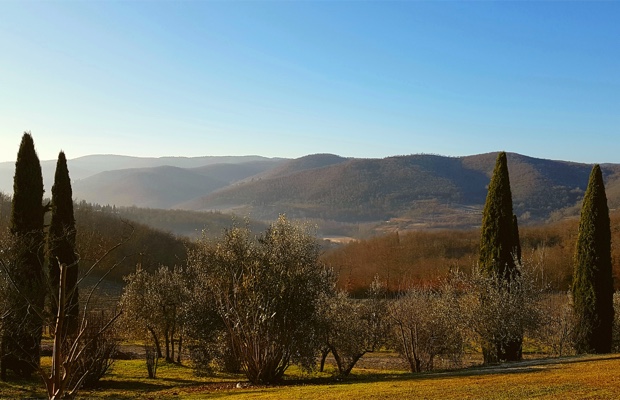
WineAlign