High times in Bourgogne

Château du Clos de Vougeot, Côtes de Nuits


“Bourgogne vs. Burgundy: A critic’s take on the “plus” side of Bourgogne – the Best Places for Value”

Please join me on Tuesday, June 30th via Instagram for a Bourgogne video in which I talk about Les Hautes, “the plus side of Bourgogne,” where vineyards and producers of quality can be found. Bourgogne du Haut, “The Upper Bourgogne.”

I will also make a case for “Bourgogne against Burgundy: A critic’s take on why language is so essential to messaging, for preserving identity and tradition. Finally I will pose the question, What is Climat?

Then, on Monday, July 13th, from 10:30 to 11:15 am I will be hosting a Bourgogne webinar on Regional Appellations. The 45 minute seminar will be directed at sommeliers and the trade industry.

Searching for Bourgogne-Plus

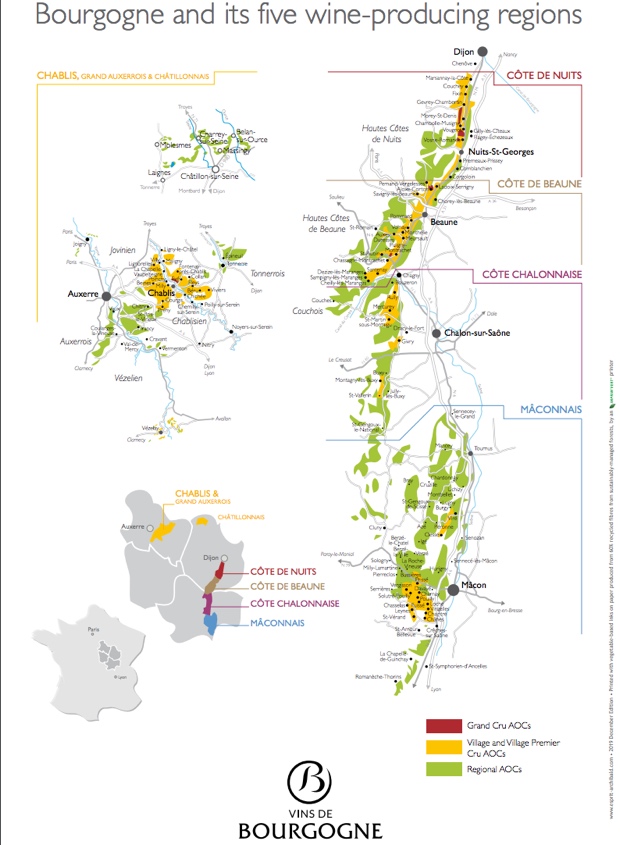
Bourgogne holds many secrets yet discovered and that is why in November of 2019 my colleague and friend John Szabo M.S. and I travelled to France’s most revered wine region. The Bourgogne Appellation d’Origine Contrôlée (AOC) was authorized in 1937, for white wines extending to the three departments of Yonne, Côte-d’Or and Saône-et-Loire and for reds, to pinot noir from 299 communes throughout wine-growing Bourgogne. Designations have been immovable since the year dot for Bourgogne’s five wine-producing regions; Chablis and Grand Auxerrois, Côtes de Nuits, Côtes de Beaune, Côtes Chalonnaise and the Mâconnais. Opinion has come to expect a certain fixed and comprehensible understanding of the hierarchy of appellations; Grand Cru, Premier Cru, Village, Appellation Régionale Bourgogne. The latter to many simply translates as the ubiquitous Bourgogne AOC, though it is but one of six that fall within the category of La Région Bourgogne, the others being Coteaux Bourguignons, Bourgogne Aligoté, Bourgogne Passe-Tout-Grains, Bourgogne Mousseux and Crémant de Bourgogne. The deeper delve is all about the multiplicity of Les Appellations Régionales in the study of what collects beneath the larger umbrella referred to as les dénominations géographiques.

It’s 8:46 am, we’re at #latâche and that’s not our dog #canadiansinbourgogne #vindebourgogne #vosneeromanee #domainedelaromaneeconti

They the outliers have not been truly considered, at least not until recent times. At the head are Les Hautes, the parts of Bourgogne thought to exist in the nether realms and so previously passed over. “The heights,” out of sight fringe locations, places unseeable, host to wines untenable and from vines unsubstantiated. Or with some investigation, perhaps something else? There too are the siblings, Côte Chalonnaise, Côtes d’Auxerre, Côtes du Couchois, Chitry, Coulanges-la-Vineuse, Epineuil, Vézelay, Tonnerre, Le Châpitre, La Chapelle Notre-Dame, Montrecul and Côte Saint-Jacques. In the latterly days of November 2019 the opportunity was presented to visit these shadowy appellative entities, perchance to uncover their truths, they by vineyards and producers of Bourgogne-plus quality. Bourgogne du Haut, “The Upper Bourgogne.” High times in Bourgogne indeed.


Related – Bourgogne in a word: Climat

I penned that 2017 article in the last days of November, two years ahead of the trip that would rework my internal vision of a Bourgogne world order. At the time a choice was made to focus on the central theme that ties the Bourgogne room together. Climat. I asked the 50,000 euro question. What is Climat? Please read that post for the 10,000 word answer but the irony of my conclusion went like this. “The only true intrinsic reality gained through a discussion about Climat is accessed by the tasting and assessment of examples that represent a full cross-section of Bourgogne. The appellations of Chablis et du Grand Auxerrois, Côtes de Nuits and Hautes Côtes de Nuits, Côtes de Beaune and Hautes Côtes de Beaune, Côtes Chalonnaise and Couchois, the Macônnais and the Châtillonnais are best understood by comparative studies of Pinot Noir and Chardonnay. With more than 100 appellations (84 officially recognized) it would take a lifetime and then some to cover them all and several more to come to grips with the very specific meanings and interpretations of their personalized Climats. By that time the moving target would change so much that starting again would be the only option. Make the most of the time there is, which is the way of the Bourguignons.” Ironic because exactly two years later I returned to Bourgogne to begin my education anew in the light of a trip gone deep into the Hautes Côtes and satellite appellative explorations. The findings are remarkable, as I will elucidate in due course.

Beaune

Would a rose by any other name smell as sweet?

Bourgogne, now there’s the rub. In this case the party line and profound argument emphatically says no. Pause to consider the infallible cogency of the nuanced word. Then cringe at the platitude of an overused and confusingly perpetuated Brittanica translation that need not be named. Never could or should have but it must now be stressed that the imposter can no longer be considered a viable alternative for it changes meaning and even more importantly, emotion. If we must say it aloud then we may as well point the culprit out in matters point of fact. Burgundy takes its name from the Burgundians, an East Germanic people who moved westwards beyond the Rhine during the late Roman period and settled in Bourgogne. The seat of the Duc de Bourgogne was to be found west of the Saône along the narrow spit of land between Dijon to the north and the area just south of Mâcon. The reference “Duke of Burgundy” is but a translation. The first Google result that answers the query “Is Burgundy the same as Bourgogne” goes like this. “Burgundy is wine made in the Burgundy region in eastern France, in the valleys and slopes west of the Saône, a tributary of the Rhône.” The proper response to that would be to scream, to shout “answer the bloody $&**!!??&$@ question!” And to offer a strict reminder not to believe everything you read. The first recorded use of “burgundy” as a colour in English was in 1881. Making the argument that the word Burgundy dates back 300 years? Puh-lease. Who but the blind believer and the colonialist heeds this fallacy. These are the eyes of the old. They have seen things that you will never see. Leave it to memory. Dare the Bourguignons to breathe.

At Domaine de la Romanée-Conti’s La Tâche Vineyard, In the heart of Bourgogne

Plus grand est l’obstacle, et plus grande est la gloire de le surmonter

Just a little bit more than a year ago the Bourgogne Wine Board (BIVB) made the plea, on behalf of and at the behest of le vraiment Bourguignon, for a firm and clear pronouncement to take back their name, as is their right to do. “To re-affirm its identity as one of the most iconic vineyards of France, the region and its producers are reverting back to the original French iteration of its name: Bourgogne. Historically Bourgogne is the only French appellation that adopted an alternate identity for export markets with the use of the ‘Burgundy’ designation for the English speaking markets, or Burgund for the German speaking and many other translations according to the country. Today, this traditional ‘Bourgogne’ designation has already been adopted by nearly all the wines produced here – either via appellation designation or wine region labeling. By maintaining this one true identity, Bourgogne returns to its historical roots as the consummate vineyard treasured by consumers the world over.”

The devil might advocate for inclusion, to allow for levity and to argue against a parochialist stance. The contrarian might say, “why exclude a greater population when it might be to the detriment of market share. Tell the people they have to speak the language and they may feel alienated or worse, choose not to participate because it’s harder work, or just too much to ask.” They will say that language is merely colloquial, a matter of repetitive utterance, developed slang and simply a matter of evolution. Why fight it? Would it not make most sense to worry about making good wine and concentrating on selling the product?

“Plus grand est l’obstacle, et plus grande est la gloire de le surmonter. “The greater the obstacle, the greater the glory of overcoming it.” Indeed were Molière here today he would abide in support of the usage. Besides, un savant imbécile est plus un imbécile qu’un imbécile ignorant, “a learned fool is more a fool than an ignorant fool.” Bourgogne, name of the territory and also the name gracing each and every bottle conjoining all its appellative wines. Practice your pronunciation and become comfortable with using it. Do so with unequivocal conviction, daily, written, typed and in the vernacular of spoken word. Glad we got that out of the way.

Iconic Bourgogne

Related – Les Grands Jours de Bourgogne 2020 are suspended

Uncertain times

Things were going so well. Sales were up, wine importers and consumers the world over were beginning to embrace the affordable Bourgogne, these partisan orbiters in surround of their better established kin, these fine pinot noir, chardonnay, aligoté, sauvignon blanc and gamay blends of qualities and quality not seen before. No one ever really worries about the rising prices of the established and their place within the establishment. The new work concentrates on the new world and upwardly mobile millennial spending. Get the regional appellative wines of geographical designation to these new buyers, they of dollars aimlessly doling away to Argentina, Chile, South Africa and Australia, to the cheap and cheerful Italian and Spanish wines. Teleport these varietal outliers into their minds and the golden era will usher in. Then COVID-19 rears its ugly viral head.

Fear not for this will pass and while trade shows are an essential aspect of selling wine, they can be circumvented. Education is the key. There are educators around the world aching to tell a Bourgogne story and fill cups with the wines. The Bourgogne tome is a magnificent one, filled with centuries of great reality, overflowing with heartbreak, victory and desire. The viral hiccup is indeed dangerous, surely dramatic and as great a mortal nuisance as there is but it will leave as fiercely as it came. A trail of debris and sorrow will be left behind but the Bourguignons are a resilient people to get past and move on.

Dinner at Le Bistro des Cocottes in Beaune

Dovetailing and Denominations

In algorithm design, dovetailing is a technique that interweaves different computations, simultaneously performing essential tenets. Bourgogne moves in such rhythm, not only from Côtes de Nuits north to Maçonnais south but also in vortex web design that incorporates Les Appellations Régionales. In Bourgogne the greater territory is tied together by threading all its constituent appellative parts through a mortise, designed to receive corresponding appellations on another part so as to join or lock the parts together. The chardonnay and pinot noir of Les Hautes-Côtes are tenoned through Côtes de Beaune and Côtes de Nuits, just as the reds of Irancy and Bourgogne Epineuil are threaded through the whites of Chablis to define a northerly Yonne-Serein section of Bourgogne. The same applies to the Côtes de Couchois with the Côtes Chalonnaise.

Jump to:

Chablis and Grand Auxerrois
Côtes de Beaune
Côte Chalonnaise
Côte de Nuits
Bourgogne Coulanges-la-Vineuse
Bourgogne Côtes d’Auxerre, Saint-Bris and Irancy
Bourgogne Epineuil, Chablis and Bourgogne Tonnere
Bourgogne Hautes Côtes de Beaune
Bourgogne Côtes du Couchois
Bourgogne Côte d’Or
Bourgogne Hautes Côtes de Nuits

Producers:

Domaine Jean Claude Courtault and Stéphanie & Vincent Michelet

Domaine du Clos du Roi
Goisot Guilhem et Jean-Hugues
Domaine Gruhier (Domaine de L’Abbaye du Petit Quincy)
Domaine Alexandre Parigot
Maison Roche de Bellene
Maison Bertrand Ambroise
Cave de Mazenay
Domaine Theulot-Juillot
Domaine de L’Évêché Quentin & Vincent Viticulteurs
Cave des Vignerons de Buxy
Domaine Bart (Pierre)
Domaine David Duband
Domaine Cruchandeau

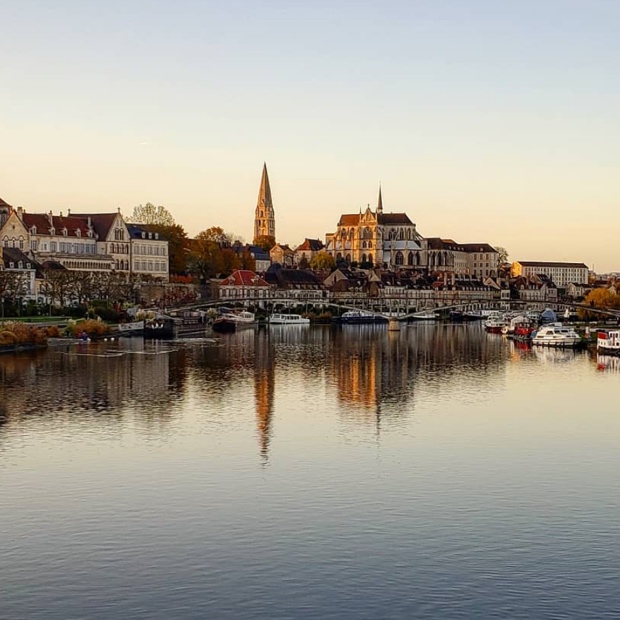
Quai de l’Yonne, Auxerre


Grand Auxerrois

The Grand Auxerrois covers a multitude of very old small plots which are today sorted into four terroirs:
• The Auxerrois covers around a dozen communes to the south and southeast of Auxerre
• Farther to the east, beyond Chablis, the vines of the Tonnerrois are found in the valley of the Armançon, the river that runs through the little town of Tonnerre.
• In the south of the Grand Auxerrois region is the Vézelien, which covers Vézelay, Asquins, Saint-Père and Tharoiseau
• The slopes of the Jovinien look down over the town of Joigny, to the north of Auxerre

On these limestone soils, the wines are mainly produced from the traditional Bourgogne varietals of chardonnay and aligoté for whites, and pinot noir and gamay for the reds. Smaller quantities of césar for reds, and sacy or melon for whites are used, while the very old Bourgogne varietal césar sometimes makes a minor appearance in certain Irancy wines. There is an exception in Saint-Bris, where the winemakers produce very aromatic whites from the sauvignon grape.

The Grand Auxerrois brings a wide palette of appellations to the Bourgogne winegrowing region, mainly specific appellations Régionales:

  • Appellations Villages: Irancy, Saint-Bris, Vézelay
  • Appellations Régionales specific to Grand Auxerrois: Bourgogne Chitry, Bourgogne Côte Saint-Jacques, Bourgogne Côtes d’Auxerre, Bourgogne Coulanges-la-Vineuse, Bourgogne Epineuil, Bourgogne Tonnerre


Bourgogne Coulanges-la-Vineuse

The education begins in Bourgogne Coulanges-la-Vineuse, south of Auxerre in northwestern Bourgogne at the hamlet of the same name surrounded by five valleys; les vallées de Chanvan, de Douzotte, des Champs, de Chamoux, de Droit à Vente and de Magny. There are just over 135 total planted hectares, only 18 of which are chardonnay, with seven producers in the village and 15 overall in the appellation. Unlike virtually all other appellations in Bourgogne the wines produced here all come from the regional appellation, save for a small amount of Côteaux Bourguignons.

Exploring the @vinsdebourgogne of #coulangeslavineuse with great curiosity, emerging engaged, engrossed and charmed. Instructive tasting at Domaine du Clos du Roi.


Domaine du Clos du Roi

Red, White and Rosé are produced at Domaine du Clos du Roi from 16 hectares of chardonnay, pinot noit and césar. Founded in 1969 by Michel and Denise Bernard the domaine has been run by Magali Bernard and her husband Arnaud Hennoque since 2005. Magali is in charge of winemaking and sales while Arnaud the business and the vines. Chardonnay are gifted by generous bâtonnage and raised in demi-muid. The pinot noir purports to be the most typical from these lands, somewhat glycerin rich and clay-chalky with relatively soft and easy tannin. Raised in foudres de chènes (44 hL), the barrels introduced by Ludovin’s father and made in the traditional and historic way of the domain. César is the varietal wild card as noted by the 15 per cent whole cluster worked into pinot noir for the Clos du Roi “Coline” Nos Origines. 

Click here to see all reviews for the wines of Domaine du Clos du Roi

Clos du Roi Cuvée Charly Nos Origines 2015, Coulanges La Vineuse AOC

From viticulturist Bernard Magali Nos Origines ia a wine of generous bâtonnage a much easier vintage required less stirring and more accounting from naturally fortifying lees. This exceptional child must have loved its comforting and nurturing stay in demi-muids so now the imagination runs wild with gently rolling spice and thoughts of well-deserved aperitíf moments, especially with a semi-soft, almost firm Epoisses. Has lost little energy at this point in fact it’s still fresh as can be. Tells us something about the future for the ’18 though ’16 and ’17 will outrun the latter. Drink 2019-2021.  Tasted November 2019.

Clos du Roi “Coline” Nos Origines 2017, Coulanges La Vineuse AOC

The only cuvée in the portfolio that contains some cézar, at 15 per cent mixed into the pinot noir. Coline, Magali’s daughter. Carries a foot-treading tradition, perhaps more Portuguese than Bourgignons but this is the playful wine, not necessarily the serious one. More floral and quite full of citrus, namely pomegranate and especially blood orange. Falls somewhere in the middle, not between red and white but within a red spectrum of its own. Can see this as the correct one to drink with charcuterie. That’s the sort of structure it considers, especially because of the whole bunch workings inside. Drink 2019-2022.  Tasted November 2019

Saint-Bris and Côtes d’Auxerre


Bourgogne Côtes d’Auxerre, Saint-Bris and Irancy

The Auxerre vineyards (pronounced “Ausserre”), lying on either side of the river Yonne, boast ancient lineage, thanks to the abbey of Saint-Germain and a proximity to Paris. Today they are very much alive. In 1993, wines from the communes of Auxerre, Vaux, Champs-sur-Yonne, Augy, Quenne, Saint-Brisle- Vineux and Vincelottes were granted the right to add a local identifier to the appellation Régionale Bourgogne.

Lying alongside the river Yonne in the heart of the Auxerrois region, Saint-Bris-le-Vineux is an old stone-built village beneath which are extraordinary medieval cellars, running everywhere, the most astonishing examples of their kind in Bourgogne. They cover 3.5 ha, 60 metres underground. The quarries at nearby Bailly supplied the building stone for the Pantheon in Paris.

Irancy, in the Grand Auxerrois region, stands on the right bank of the Yonne river, some fifteen kilometres South of Auxerre and South-West of Chablis. It is typical of the wine-growing villages of the district. It boasts a majestic church, as well as the house where G. Soufflot, architect of the Paris Panthéon, was born. The handsome winemaker’s houses make a fitting setting for a red wine with such a long-established reputation. It was raised to the status of an appellation Village, which it shares with the neighboring villages of Cravant and Vincelottes, in 1999.

Guilhem Goisot


Goisot Guilhem et Jean-Hugues 

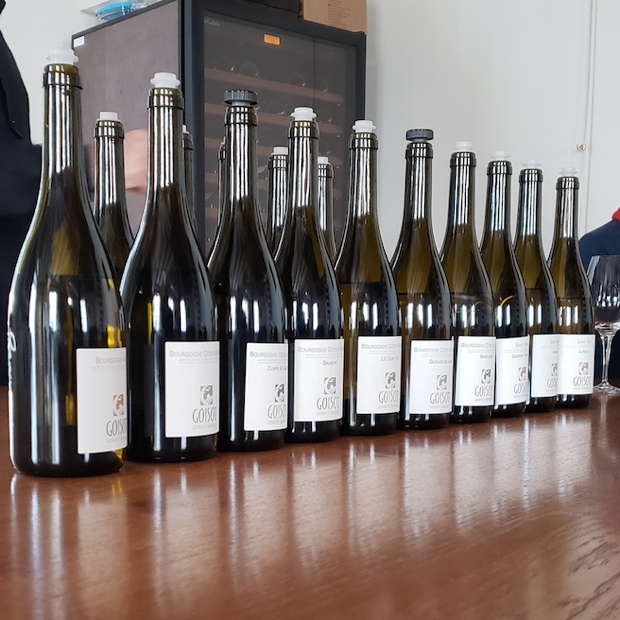
The family tree of the Domaine Guilhem & Jean-Hughes Goisot traces roots back to the 14th century and today the estate raises vines biodynamically in the communes of Saint-Bris-Le-Vineux and Irancy. They are unique on a hill position that straddles both the Saint-Bris and Côtes d’Auxerre appellations enabling production of both sauvignon blanc and chardonnay. Irancy is the source for pinot noir. Their cellar lays beneath the 11th-12th century village. Guilhem’s parents Ghislaine and Jean-Hughes took over production in 1979 while he and his wife Marie assumed the lead in 2005. Guilhem’s collection of calcareous rocks and especially ancient seabed shells and fossils is perhaps the most incredible in Bourgogne. His translation of three terroirs is concise and exacting. These are some of Bourgogne’s most focused wines that elevate the power, precision and status of these three furthermore there appellations.

The precise, focused and compact pinot noir, chardonnay and sauvignon blanc of @guilhemgoisot from out of the @vinsdebourgogne proximate terroirs of #cotesdauxerre and #saintbris ~ Plus some of the great rocks anywhere.

Click here to see all reviews for the wines of Goisot Guilhem et Jean-Hugues

Goisot Guilhem et Jean-Hugues Les Mazelots 2017, Irancy AOC

A Villages wine from and for Irancy from 100 per cent pinot noir. Aromatically quiet, not unusual for the appellation and especially without any of the allowable 15 per cent cézar in the mix. Quite pure and similarly structured to the Côtes d’Auxerre in that it’s not full-bodied but is in fact tightly compact. More implosive intensity and idiosyncrasy with a chalky underlay from white to grey soil high in calcaire and layered with arglieux. Yet another very refined wine. This man knows how to use his sulphur properly. Clean, focused and very precise. Benchmark for Irancy. Drink 2020-2026.  Tasted November 2019

Goisot Guilhem et Jean-Hugues La Ronce 2017, Bourgogne Côtes d’Auxerre AOC

The next Climat behooves the already pronounced adage that these wines increase upwards from one to the next in delicasse, precision and possibility. There is an earthy grounding in La Ronce that seems absent in Le Court Vit and here makes for a new structure, or rather a more complex one. Now taking another step into variegated terroir replete with all the fossils, shells and epochs of clay, limestone and multi-hued soils all filling up the elemental well. These vines draw from it all and it shows with precise sapidity, aridity, salinity and validity in the aromatic character and flavour profile. A conditioning that is sweet because the fruit is pure and savoury with thanks to the acid-tannin structure that makes this sing. Amazing purity, grace and possibility. Drink 2022-2031.  Tasted November 2019

Goisot Guilhem et Jean-Hugues Gondonne 2017, Bourgogne Côtes d’Auxerre AOC

A soil of kimmeridgian and marl of white and blue, with great layering of fruit and that is in fact what you feel from Gondonne. There is something rich and overtly expressive here and while it’s anything but simple it could be imagined that so many consumers would understand this chardonnay, love it and want to drink it with abandon. That said the structure, gout de terroir and de vivre are just exceptional. The wood and the land just melt right in. Drink 2020-2029.  Tasted November 2019

Goisot Guilhem et Jean-Hugues La Ronce 2017, Saint-Bris AOC

Usually this is a Climat reserved for holdings in Côtes d’Auxerre but in this case the northwest exposure is indeed within the appellation of Saint-Bris. In fact there’s more affinity with chardonnay here and also conversely more terpenes in the notes. Also pyrazines which is more than curious. Ripe too and ultimately a most curious expression of sauvignon blanc. It’s got everything in here, in hyperbole and more. Drink 2020-2028.  Tasted November 2019


Bourgogne Epineuil, Chablis and Bourgogne Tonnere

The Tonnerrois region lies in the southern Yonne not far from Chablis. Épineuil the commune won the official right to identify its wines by name within the general appellation Bourgogne in 1993. The word Épineuil may only be appended to the word Bourgogne in the case of red or rosé wines produced within the defined area of the appellation. On the label, the word Épineuil must follow the word Bourgogne. The soils, full of white pebbles, resemble those of the nearby Chablis region (Kimmeridgian or associated limestones) and have definable qualities. Where the vineyard district is broken up into valleys, the vines are sheltered from the cold winds of the Langres plateau and reap the benefit of a favourable microclimate.

I’ve considered Chablis many times before. “There is little about Chablis that is not drawn up in contrasts. It begins with Left Bank versus Right Bank, the Serein River and the village of Chablis acting as the interface between. Petit Chablis giving way to the more important Chablis and then Premier Cru the varied and always impressive interloper separating the villages wines from the Grand Cru. Chablis as a varietal concept, as opposed to and unlike anywhere else in the world, seemingly unrelated to chardonnay.”

Related – Paradox in Chablis

“The greatest paradox of all is written in stone along a few ridges and across the most important set of hills above the river. Deep-rooted, inveterate purlieu of geology in eight names; Les Preuses, Bougros, Vaudésir, Grenouille, Valmur, Les Clos, Blanchot and unofficially (depending on political affiliations), La Moutonne. Les Grand Crus of Chablis are singled out not only for their exceptional terroir and climat but also for the impossibility of what happens when fruit is pulled from their chardonnay vines. The Grand Cru are oracles in complex riddles, transcendent mysteries and the most enigmatic of all Chablis. I suppose it’s because the rich fruit versus exigent stone is the epitome of Chablis paradox.”

Domaine Jean-Claude Courtault, Lignorelles


Domaine Jean Claude Courtault and Stéphanie & Vincent Michelet

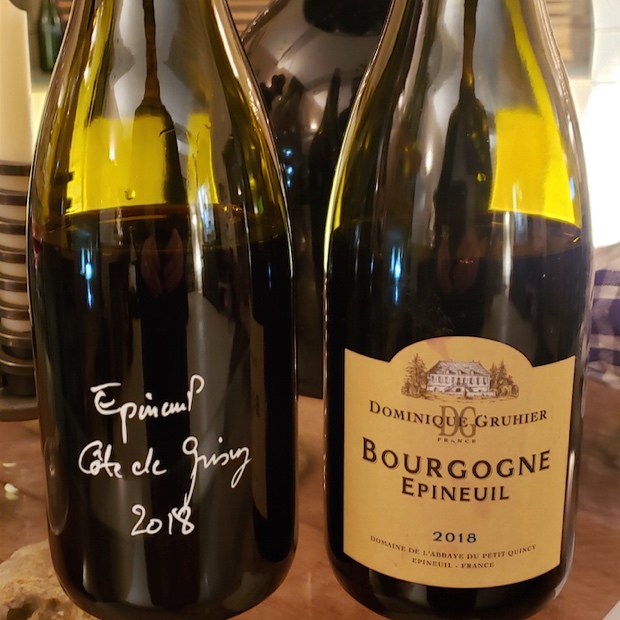
Stéphanie Courtault-Michelet is the daughter of Jean-Claude and Marie-Chantal Courtault. She and her husband Vincent Michelet farm 20 hectares in the appellations of Bourgogne Epineuil and the four that comprise Chablis. The business dates back to 1984 and today both Domaine Jean-Claude Courtault and Stéphanie & Vincent Michelet produce Chablis from vineyards in Beines and Lignorelles, at a windy and cool spot on the top of the hill above the Vau Ligneau. Their Bourgogne Epineuil Climat is the Côte de Grisey from a valley and off of vines that face west.

Click here to see all reviews for the wines of Domaine Jean Claude Courtault and Stéphanie & Vincent Michelet

Stéphanie & Vincent Michelet Chablis AOC 2018

From only one hectare of vineyards right on the line between Lignorelles and Villy and much of the vines are in and about 60 years of age. A very concentrated yet somehow delicate and quite precise Chablis that weighs in above it’s appellative status, if only because it’s not considered one of the more coveted terroirs. Here at the limits of Chablis there is a micro-climate that speaks a Premier Cru vernacular, categorized or not. Very much a calcareous child, fresh, darting, never tiring and innocent. That means it’s focused and pure. Drink 2020-2026.  Tasted November 2019

Domaine Jean Claude Courtault Chablis Premier Cru AOC Mont De Milieu 2017

From young vines and certainly quality fruit that comes across as simple, sweet and charming. From a valley and vines that face west with a darkening cherry profile, mainly clay induced with just a little stoniness from the limestone. Finishes with just a touch of tannin in a notably dried herbs and arid way. Find your food match, like a little pot au feu of tête de veau. Drink 2020-2022.  Tasted November 2019

Dominique Gruhier


Domaine Gruhier (Domaine de L’Abbaye du Petit Quincy)

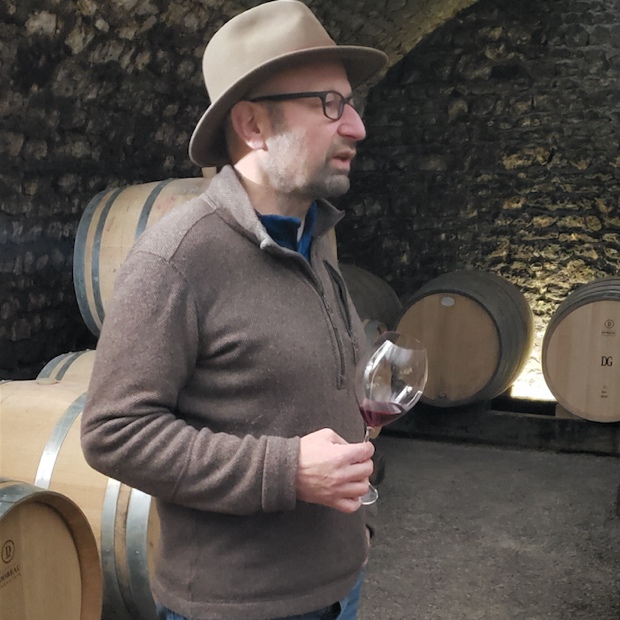
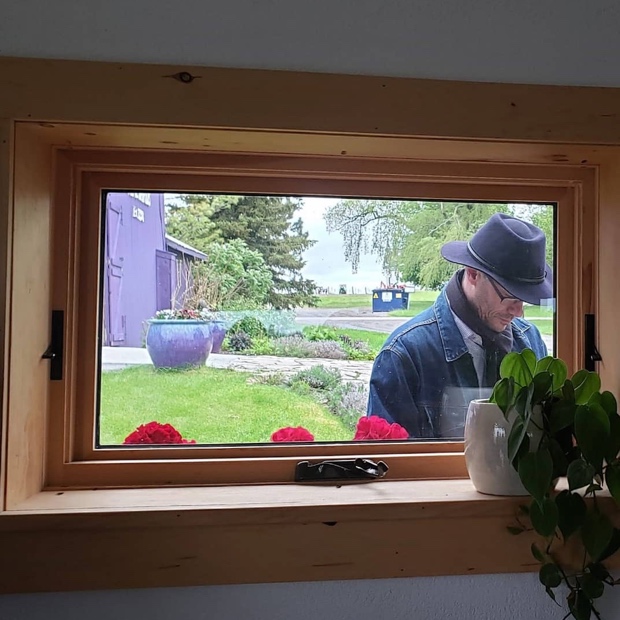
More often than not it should be a conscionable imperative to trust a man with a great hat. Dominique Gruhier in Epineuil walks around the Abbey of Quincy in a characteristic, dashing calibre lid. The Abbey was founded in 1212 by Cistercian monks, sold in 1792 as a natinal asset ands was preserved in pastoral and viticultural terms through 1914. Though it fell to Phylloxera and disrepute there was activity through 1970. Twenty years later The Gruhier family began the resurrection and today create Bourgogne Epineuil and Tonnerre wines that lead for the appellations. Dominique’s Sparkling Wine program is at the head of Bourgogne’s new world order for classic method Crémant de Bourgogne AOC preparations.


Click here to see all reviews for the wines of Domaine Gruhier (Domaine de L’Abbaye du Petit Quincy)

Domaine Gruhier (Domaine de L’Abbaye du Petit Quincy) Cuvée Juliette 2017, Bourgogne Epineuil AOC

Named for Dominique Gruhier’s eldest daughter Juliette. A lighter, more delicate and refined Tonnerrois with floral cherry and cherry blossom aromatics, moving away from the darker ultra-violet notes of the following vintage and also two forward based on what’s in barrel. The tannins are fine like those 2019s but the wine has more tension than 2018. Righteous structure in a wine to last well past the namesake’s 21 birthday.  Drink 2020-2024.  Tasted November 2019

Domaine Gruhier (Domaine de L’Abbaye du Petit Quincy) Grande Cuvée Pur Chardonnay Brut Nature, Crémant de Bourgogne AOC

The eminent one or rather the grand eminent. His eminence is a zero dosage, 100 per cent Crémant of zero put on. From an accumulated amount of solare the make up is 85 per cent 2015 and the other 15 a sparkling wine with everything up front, on its sleeve and one that just screams “won’t you come and join the party, dressed to kill.” A second, just opened bottle reveals the great strike, right from the opening keyboard whirl to the final shout. Drink 2019-2024.  Tasted November 2019


Côtes de Beaune

The Côte de Beaune vineyards lie on the upper slopes of the Montagne de Beaune just above the Premier Cru plots at heights of 300 to 370 metres and on brown limestone and calcium-rich soils, Oolitic and Rauracian (Jurassic) in origin. The special value of these vineyards is attested by the fact that one of the Climats belonging to this appellation, located on Mont Battois, is a dedicated part of Bourgogne’s vine-science research program. When Beaune’s twins AOCs were instituted in 1936, it was the higher altitude vineyards which became the Côte de Beaune appellation. Unlike the appellation Côte de Beaune-Village, with which it must not be confused, it refers to one commune only – Beaune. Within this relatively restricted area, the appellation Côte de Beaune produces one third white wines (chardonnay) to two-thirds red (pinot noir).

A night in Beaune. Thank you Nico. Je me souviendrai toujours.


Bourgogne Hautes Côtes de Beaune

The Bourgogne Hautes Côtes De Beaune Régionale appellation covers still red, white, and rosé wines produced in an area covering 29 villages that was defined in 1961. The vines are located at the foot of the limestone cliff on the sunny slopes of a ribbon of valleys perpendicular to the Côte de Beaune, from Les Maranges to Ladoix-Serrigny heading west. Wine from the Hautes Côtes de Beaune was drunk at the coronation of Philippe Auguste in 1180. The vines underwent a period of expansion, linked to economic growth throughout the 19th century, until phylloxera struck. Between 1910 and 1936, almost half of the vineyard disappeared. Its renaissance stemmed from the reestablishment of the winegrowers union of the Hautes Côtes de Beaune in 1945, which was responsible for the creation of the appellation on 4 August 1961.


Domaine Alexandre Parigot

Marie et Régis Parigot have handed the reigns to Domaine Parigot to their son Alexandre who is clearly poised to become a star for pinot noir threaded from Hautes-Côtes de Beaune through Savigny, Volnay and Pommard. Today Domaine Alexandre Parigot cultivates 18 hectares in total, 15 of which are pinot noir. The Hautes-Côtes de Beaune vines are of south, southwest expositions on very fine argileux-calcaire, quite sandy and causing wines of elegance and finesse. Le Clos de la Perrière is a benchmark for the appellation. Two to three weeks of classic remontage from which the closing of the tanks and raising of temperature to 32 degrees post fermentation brings this and these pumped over Parigot pinot noir into their silky and seductive state.

Click here to see all reviews for the wines of Domaine Alexandre Parigot

Domaine Alexandre Parigot Clos de la Perrière 2017, Hautes Côtes de Beaune AOC

The Domaine cultivates 18 hectares in total. The Hautes-Côtes de Beaune vines are of south, southwest expositions on very fine argileux-calcaire, quite sandy and causing wines of elegance and finesse. A fresh and silky pinot noir with 2017’s great purity and transparency of fruit. Transparency but subtle glycerin texture which is truly an extension of the sweet aromatic profile. A perfectly enlivening nine o’clock in the morning Haut-Côtes. Drink 2020-2024.  Tasted November 2019

Domaine Alexandre Parigot Pommard-Charmots Premier Cru AOC 2017

From the plot just beneath the village at the height of Pommard. The particularity of 2017 grapes is their fineness of skins and perfectly phenolic gifts donated with great philanthropy by the perfectly ripened seeds. But in this case the laces are once again pulled tight, with great power in even greater finesse. There’s an elegance opposed by a controlled tension that puts this in a position of posit and positive tug, though always charged with something higher and opposing. Drink 2022-2032.  Tasted November 2019

Domaine Alexandre Parigot Clos de la Perrière 2010, Hautes Côtes de Beaune AOC

The 2010 is incredibly fresh, showing negligible evolution, with no advancement into mushroom or truffled territory. Certainly no blood orange and still welling with cherries. No desiccation, only fresh fruit and high acidity. Very impressive showing for a nine year-old Hautes-Côtes de Beaune. Drink 2019-2024.  Tasted November 2019

And of course in Beaune we tasted 30 Bourgogne with Nico @johnszaboms @nicholaspearce_ @domaine_de_bellene


Beaune to be wild – Maison Roche de Bellene

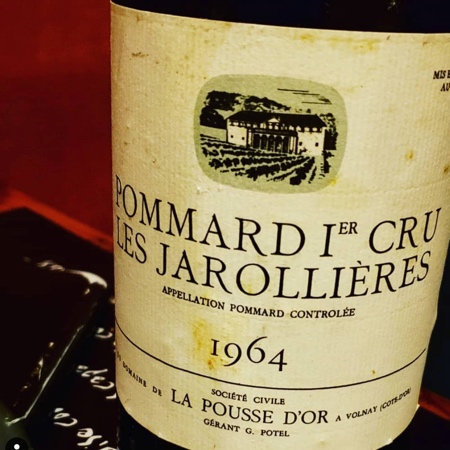
There really is nothing Nicolas Potel can’t do, does not touch or lacks kinship with all things Beaune. Potel’s father Gérard was larger than life, local hero and legend, one of Bourgogne’s most cherished and beloved, the King of Volnay and who’s legacy can’t ever be forgotten. While at dinner in Beaune in November Nico suddenly disapparated to teleport 20 minutes home and back, to retrieve and then share his dad’s 1964 Domaine de la Pousse d’Or Pommard Premier Cru Les Jarollières. Why? It was suddenly the right time and it was sublime. In fact the city of Beaune was called Bellene back in the Middle Ages and this is the reason Potel chose the name for his brand/wine merchant/négoce domaine. Maison Roche de Bellene is a force to be reckoned with, a seer of all things and provider of a cross-section of many terroir to educate us all on the power of Bourgogne multitude and multiplicity. Nicolas does have a reputation for being the wild child of Beaune and yet he is also known for his generosity, mainly of spirit. One never forgets a night in Beaune with the infamous Nicolas Potel.

Tasting with Nicolas Potel at Maison Roche de Bellene

Click here to see all reviews for the wines of Maison Roche de Bellene

Maison Roche de Bellene Beaujolais Côte de Brouilly 2015

Larger than life, at least by normal Brouilly standards, here from Stéphane Aviron’s hands transferred into Nicolas Potel’s arms. There’s a blowsy, boisterous and open-handed handle in this gamay, ready for anything. Was ready, remains ready and will always be ready. Rich, fatter and appealing. Drink 2019-2022.  Tasted November 2019

Maison Tastelune Monthelie AOC 2017

Tastelune is a play on Tastevin in ode to how labels of Nuits-Saint-Georges Bourgogne were brought on an Apollo mission to the moon. Quite firm, grippy and near glycerin in texture, quite rich for 2017. Generally speaking the winemaker makes use of 30-40 per cent whole bunch, no punchdowns and just pump-overs. The result is a true sense of grip and grit. Drink 2020-2026.  Tasted November 2019

Maison Roche de Bellene Volnay AOC Vieilles Vignes 2016

A high quality fruit year means one major thing in Nicolas Potel’s hands and that’s 100 per cent whole bunch in the fermentation. These lignified brown stems add the sort of complexity that great Bourgogne just has to have. Plenty of fine tannin, grip for the future and real swagger. Drink 2022-2030.  Tasted November 2019

Maison Roche de Bellene Bourgogne AOC Chardonnay Vieilles Vignes 2017

The old vines chardonnay, just as Nicolas Potel has managed to effect with the pinot noir is a matter of bringing Bourgogne to the market. The old vines carries a purpose and an intendment to speak as a by the glass matter with a classic regional styling, clean, crunchy and white cherry fruit designed. Made reductively and for freshness to consume with great immediacy. That’s exactly what it does. Buy into the program. Drink 2019-2021.  Tasted November 2019

Maison Roche de Bellene Chassagne-Montrachet Premier Cru AOC Trés Vieilles-Vignes 2016

Why Trés? Because they are. They meaning the vines which are more than 80 years old. Wisdom, acumen and inbred understanding translated and transported into this Bourgogne of chic stature and the sort of class only Nicolas Potel can gift. Balance is spot on. Drink 2021-2031.  Tasted November 2019

Ludovine Ambroise, Maison Ambroise


Maison Bertrand Ambroise

Maison Ambroise dates its origins to the 18th century and 1960 is about the time the family begins making a life around the vineyard after two and a half centuries of unsettled times. The location is Premeaux-Prissey, across the road and proximate to Nuits-Saint-Georges on a dividing line that separates the two Côtes, de Beaune and de Nuits. In 1987 Bertrand Ambroise takes over management of the 17 hectare domaine which he now runs with his family; Martine, Ludovine and Françoise. These are chardonnay and pinot noir in the space between, dualistic, generous and austere, bold and forgiving, demanding and generous. Truly Bourgogne.


Click here to see all reviews for the wines of Maison Bertrand Ambroise

Maison Bertrand Ambroise Bourgogne Chardonnay Haut-Côtes de Nuits AOC 2018

A step up in height and tension for a reductive one that may not speak in the same fruit terms as the regional chardonnay of higher calling, but welcome to the new and exciting Hauts denomination. This is crackerjack Bourgogne, with real strength in tension. So much fun, joy, excitement and delight. Drink 2020-2024.  Tasted November 2019

Maison Bertrand Ambroise Bourgogne Pinot Noir Haut-Côtes de Nuits AOC 2018

From near the village of Villers there’s a refinement about this pinot noir that speaks to the chic abilities of the Haut-Côtes de Nuits. Black cherry and high acidity all oozing, welling and pulsing out of concentration. If the whites are crunchy then the reds are chewy and this sits at the top of the spectrum. The top pinot noir for sure and equipped with the finest tannins. Drink 2020-2026.  Tasted November 2019

Maison Bertrand Ambroise Nuits-Saint-Georges AOC 2017

A Villages Nuits-St.-Georges (sans Climat) with a peppery reduction that will blow off with time, just not in these few minutes of dating. In fact some hand-covered agitation does the trick and releases the florals you’d imagine would be present. The firm grip is just outstanding, as is the liquid velvet mouthfeel with true argiluex underlay. From fruit just north of the village and clearly a spot that delivers some of the appellation’s great finesse. Terrific pace and compact structure while also rich for 2017 but not so unexpected from the place. Drink 2021-2031.  Tasted November 2019

Côte Chalonnaise


Côte Chalonnaise

The appellation Bourgogne Côte Chalonnaise dates from 1990 and recognizes the distinct personality of wines from the 44 communes in the northern part of the department of Saône-et-Loire, an area some 40 km long and between 5 and 8 km in width. Lying between the valleys of the Dheune and Grosne and open towards the South, the Côte Chalonnaise offers a less rugged landscape than those of the Côte de Nuits to the North. These gentle hills are outcrops of the Massif Central thrown up by the creation of the rift valley known as the Bresse Trench. In the North, limestone forms the East-facing slopes and there are outcrops of lias and trias formations (Saint-Denis, Jambles, Moroges). South of the granitic block formation at Bissey, the hillsides slope either to the East or the West until they reach the hills of the Mâconnais. The soils below the Bajocian limestone corniche are marly, with sands and shaly or flinty clays at the foot of the slopes where there are also some gravel outcrops. Altitudes vary from 250 to 350 metres.

Pruning in the Côte de Couchois


Bourgogne Côtes du Couchois

The Bourgogne Côtes du Couchois Régionale appellation covers still red wines produced in an area covering six villages that was defined in 2000. An application for AOC-status for the white wines is currently ongoing. The vines of Bourgogne Côtes du Couchois are located to the south of the Côte de Beaune and the Hautes Côtes de Beaune, on the left bank of the River Dheune, which separates it from the Côte Chalonnaise to the east. They grow on the best slopes in this rolling landscape, offering some remarkable viewpoints. The vines are divided up across south- and southeast-facing slopes at between 280-420m above sea level, with a climate marked by continental influences that leads to relatively late ripening. The soil is characterized by granite from the Primary period, clay sandstone and clay from the Trias, and limestone from the Lower Jurassic. Most of the vines in the Bourgogne Côtes du Couchois appellation sit atop versicoloured clay from the Trias.

Château de Couches, a.k.a Marguerite de Bourgogne, Chagny


Cave de Mazenay

Jean-Christophe Pascaud is the Directeur of the Cave de Mazenay, Union des Producteurs at Négociants de l’AOC Côtes du Couchois, located in Saint-Sernin-du-Plain in Saône-et-Loire. Their most particular wine is the Blason de Vair from the Château de Couches vineyards. Although located since its creation in the very heart of the Couchois appellation, the cellar’s approach is not limited to the work of a single PDO. But also to the production of a complete range of Bourgogne wines, mainly from Côtes de Nuits to Côtes Chalonaises, and of course also including Côtes de Beaune. Their range is extensive and includes the sale of bulk wines. Production includes Bourgogne Pinot Noir et Hautes-Côtes, Maranges et Santenay, Savigny les Beaune, Pommard et Meursault, Gevrey Chambertin, Vin des Hospices de Beaune, Bourgogne Aligoté, Viré-Clessé, Rully, Givry et Mercurey, Crémant de Bourgogne.

The Cave is intrinsically tied to one of Bourgogne’s most famous castles and medieval fortification, the Château de Couches, known as Marguerite de Bourgogne, near Chagny and classified as a historic monument. The château is a former fortress of the Dukes of Bourgogne dating back to the 11th century, with a dungeon, underground, garden and of architecture designed between the end of the 11th and the 19th century. Acting as a form of protection for the route between Paris and Chalon-sur-Saône, over the centuries, the château underwent many changes, but its defensive character remains intact. This fortress dominates the road and the surrounding countryside from the top of its crenellated towers and its keep.

Marguerite of Bourgogne was the granddaughter of King Saint Louis and daughter of the Duke of Bourgogne. She spent part of her youth in this place. Her marriage to the future Louis X le Hutin made her a queen of France but, convicted of adultery, she was locked away in the fortress of Château Gaillard in Normandy. Legend claims that after the death of her royal husband, secret negotiations between the crown and the powerful Duchy of Bourgogne would have enabled her to end her days in Château de Couches.


Click here to see all reviews for the wines of Cave de Mazenay

Cave de Mazenay Château de Couches Blason de Vair Clin d’Oeil 2016, Côtes du Couchois AOC

The fruit meeting acidity seam is woven properly in this right proper grippy pinot noir with less wood notice and more up front terroir in the transparency of this wine. These are the Bourgogne cherries and sense of terroir piques we’ve come to expect and translate to our own language of understanding. Tightly wound with much finer tannins than the other wines. A much better vintage in this particular case. Drink 2020-2025.  Tasted November 2019

Cave de Mazenay Château de Couches Chardonnay Clos Marguerite Passonnément 2018, Côtes du Couchois AOC

A wood at the forefront chardonnay for now with a greater reductive freshness than the ’17. A similar ripe, sun-worshiped quality though more structure and integration it would seem. The winemaking is better in this second incarnation of the company’s top chazrdonnay. This would impress the Bourgogne seeker of higher end chardonnay. Drink 2020-2024.  Tasted November 2019

Nathalie and Jean-Claude Theulot, Domaine Theulot-Juillot


Domaine Theulot-Juillot

Few producers in Bourgogne will offer a more profound, deep, philosophical and über historical delve into the triumvirate of terroir, lieu-dit and Climat as Jean-Claude and Nathalie Theulot. Their Mercurey estate is one of the regions great sleepers, founded more than 100 years ago by Émile Juillot. Granddaughter Nathalie and her husband Jean-Claude run the 12 hectare farm of Mercurey Villages and sense of place pinot noir that can age 20-25 years.


Click here to see all reviews for the wines of Domaine Theulot-Juillot

Vignobles Nathalie Theulot Côte Chalonnaise AOC 2018

From Nathalie and Jean-Claude Theulot, their négoce part of the estate’s production, here a transparent and simple expression of chardonnay. Drawn from Mercurey vineyards though outside of the limit to name this Mercurey AOC, this is fruit grown specifically for basic consumption. The richesse and finesse take it further than many with traditional and classic touching great modernity. Just a bloody delicious and balanced chardonnay. That’s the proper stuff. Drink 2019-2022.  Tasted November 2019

Domaine Theulot-Juillot Mercurey Premier Cru AOC Les Saumonts 2018

A red terroir planted to white now 35 years ago, then and now, without fear. Clearly a more mineral, saline and fine brine inducing plot of Mercurey for chardonnay. Truly rich and developed with ideal, precise and extract sidling phenolics. Ripeness is truly a virtue and exclamation exercised with confidence and also restraint. The wood is necessary and invited, always present while finding a balance between thermal amplitude and cooling comfort. Very young, in structure and at heart. Drink 2022-2029.  Tasted November 2019

Domaine Theulot-Juillot Mercurey AOC Lieu-Dit Château Mipont 2018

From two words, “Mi” and “Pont,” meaning a milestone or military marker at the bridge on the ancient Roman road from Chalon to Autun. The house or fort would have been a dwelling on the plot where the stone was set and now the lieu-dit carries the name. This is still Villages appellation and yet there’s a climb above in quality, from texture for sure but also calcareous excitement. It’s a complicated spot to define but there is more limestone because the soil washes away in a section due to the exposition and the “plunge” of that part. There’s a tension but not an anxious one, no rather the lift is simply of joy in a rapid heartbeat, from love, not consternation. Drink 2022-2028.  Tasted November 2019

Domaine Theulot-Juillot Mercurey AOC Premier Cru La Cailloute 1999

A blind pour without knowledge of Climat, lieu-dit or vintage. Certainly older than 2010, now with mushroom and truffle involved but still high in acidity. There is also the ferric quality that was noted in the Cailloute. The tannins are so limestone driven with a red earthiness that converts sugars to savouriness and fruit to umami, Life affirming, longevity defying and quality of all its constituent parts. This is why Jean-Claude and Nathalie do what they do and share it with people like us. Drink 2019-2024.  Tasted November 2019

The Côte Chalonnaise from Domaine de L’Évêché Quentin & Vincent Viticulteurs


Domaine de L’Évêché Quentin & Vincent Viticulteurs

In the 17th century the Clos de L’Évêché was part of a larger property owned by the Bishop of Autun. Vincent Joussier purchased Domaine de L’Évêché in 1985 and runs the estate today with his wife Sylvie and son Quentin. The Côte Chalonnaise vineyards cover 14 hectares across several appellations: Mercurey, Bourgogne Côte Chalonnaise, Crémant de Bourgogne, Coteaux Bourguignons and Bourgogne Aligoté. Most of the production comes from pinot noir (80 per cent) and chardonnay (15) but also small amounts of aligoté and gamay.


Click here to see all reviews for the wines of Domaine de L’Évêché Quentin & Vincent Viticulteurs

Domaine de L’Évêché Quentin & Vincent Viticulteurs Mercurey AOC Les Ormeaux 2017

Just the terroir makes the difference,” explains Vincent Joussier, “and the age of the vines.” They are in fact 10 years older and handle their wood compliment with greater acceptance and ease. Still quite a creamy chardonnay but this time with lemon curd, dreamy demure and finer spice. A much more refined and defined wine with much greater sense of place. Certainly the Premier Cru of Vincent’s blancs. Drink 2021-2025.  Tasted November 2019

Domaine de L’Évêché Quentin & Vincent Viticulteurs Mercurey AOC Les Murgers 2017

Now into a pinot noir with some tension as purposed by a calcaire Mercurey terroir, as opposed to the simpler argile in the Côte Chalonnaise. Not just grip, tension and tannin but a fineness in those chains to extend the future’s possibilities. Fruit is relatively dark but there is a persimmon flavour and texture mixed with something citrus undefined. Maybe pomegranate but also wooly-earthy, like red Sancerre. Quite a complex wine with a sour complexion. Needs time to integrate to be sure. Returns to earth and fineness at the finish. The length is outstanding. Drink 2021-2025.  Tasted November 2019


Cave des Vignerons de Buxy

Bourgogne’s most impressive cooperative producer is none other than Cave des Vignerons de Buxy, established in 1931 and easily the largest in the Côte Chalonnaise. Located in the North of the Mâconnais, the “cave” groups together fifty or so family producers associated with the Cave des Vignerons de Buxy since 1976. The range of wines from the Mâconnais and the Côte Chalonnaise is nothing less than extensive. At least 20 white, red and rosé appellations are bottled and represented. At the forefront of it all is the passionate Rémi Marlin, he of knowledge encompassing all things Mâconnais and especially Côte Chalonnaise.


Click here to see all reviews for the wines of Cave des Buxy

Cave des Buxy Millebuis Côte Chalonnaise AOC 2017

A very different vintage but more backbone in 2017. Even fresher and even now than the 2018 with more than 90 per cent of the growers’ fruit the same. Less than 10 per cent fermented in barrel because the vintage served up the possibility and the chance taken was a prudent and ambitious one. Fresh and snappy, really and truly perfectly Côte Chalonnaise. Drink 2019-2021.  Tasted November 2019

Cave des Buxy Millebuis Côte Chalonnaise AOC Champ Cardin 2018

On the plateau up to the village of Culles (des Roches) only seven kilometres from the Cave. Champ Cardin makes use of its higher elevation at 300-plus metres above sea level. There is more fruit and acid attack along with a longer chain of extract  giving sharp mineral notes that also come through caused by less topsoil and more exposed rock in the upper reaches of the vineyards. Well-balanced chardonnay from a solid lieu-dit. Drink 2020-2023.  Tasted November 2019

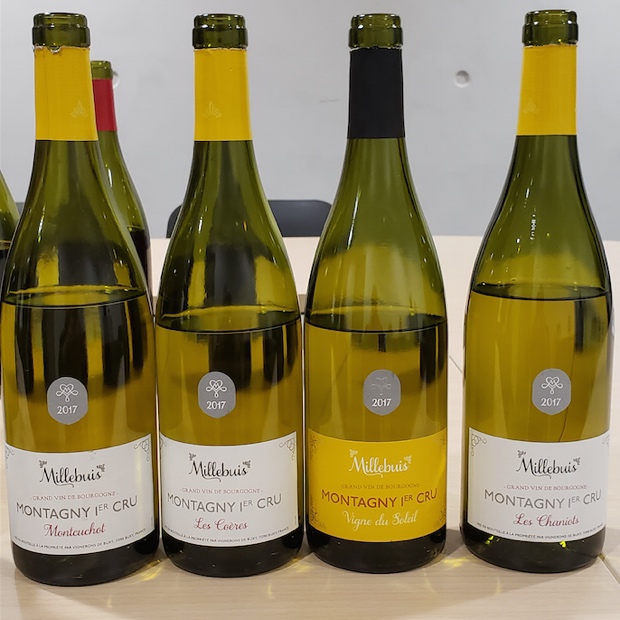
Cave des Buxy Millebuis Montagny AOC Premier Cru Montcuchot 2017

Located at the entrance of “the circus,” in front of the amphitheatre, oriented south and southeast. At 350m and with the aspect it’s an early maturing Climat, of 12.3 hectares on steep hillsides with the vines are planted at the top of the slopes. Quite “clayeux,” as in chalky with that great Montagny richesse. You feel like you’re chewing this chardonnay long after it has left your mouth. Drink 2020-2026.  Tasted November 2019

Cave des Buxy Millebuis Côte Chalonnaise AOC 2016

The vintage for pinot noir to deliver and express the best of both worlds it is the sense of piquing spice that separates this Côte Chalonnaise from the pack. There’s also an earthy volatility that grounds, elevates and keeps it real. Chalky finish as expected in a pinot of really solid architecture. Drink 2020-2024.  Tasted November 2019


Cave des Buxy Millebuis Givry AOC Cur Clos Jus 2016

A high level of iron-oxide is contained withy the clay of Cur Clos Jus, just below the road from Givry to Mercurey. It’s a seven hectare plot re-planted in the late 70s early 80s and farmed by only five growers. Two years of age (more than the ’16) is finally showing some advancement and even a moment of relenting behaviour. A few portents for the future are hidden and then released in this bloody, meaty and piquillo-paprikas of a Givry. Drink 2020-2026.  Tasted November 2019


Côte de Nuits

The Côte de Nuits and Hautes Côtes is predominately cultivated with pinot noir and holds most of the region’s Grands Crus. Much of the small production of white wine is chardonnay though aligoté is also grown. The reputation of the appellations of the Côte de Nuits is firmly established. Some have even gone so far as to name this exceptional terroir the Champs-Elysées of the Bourgogne winegrowing region. This sophisticated pseudonym also explains the reality of the terrain. Between Dijon and Corgoloin, the wines grow along a narrow strip of hillside that is around 20km long and in parts, just 200 meters wide.

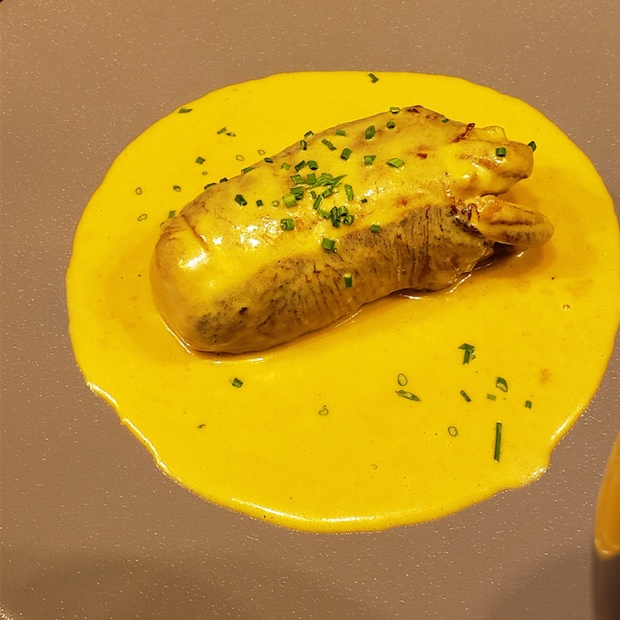
Andouillette


Bourgogne Côte d’Or

The vines of the Bourgogne Côte d’Or appellation extend across an area 65km long and between 1-2km wide, from Dijon to the Maranges. Geographically speaking, the Côte d’Or (golden slope) covers the Côte de Beaune and the Côte de Nuits. The reputation of the wines grown here is such that the department was named after the area during the Revolution. Vines have been grown here since antiquity, and were subsequently expanded by religious orders, the Dukes of Bourgogne, the wine merchants.

In the 19th century, new means of transportation facilitated and modernized the sale. The establishment of the AOC system led winegrowers to build a hierarchy of terroir on the Côte, thus marking out specific areas and protecting their Crus. In 2017, producers of the Régionale appellation Bourgogne from Côte de Nuits and Côte de Beaune were granted the extended name of “Bourgogne Côte d’Or”, their wines thus becoming Bourgogne Identifiés within the Régionale Bourgogne AOC, limited to specific geographical areas within the Bourgogne appellation.

If you ever find yourself in Bourgogne, Côte-d’Or, Nuits-Saint-Georges and Curtil-Vergy do not miss the cuisine and the playlist of Olivier Lebail. Grand jour! ~ #aupetitbonheur #aubergebourguignonne


Domaine Bart (Pierre)

Fifty years after André Bart was farming only six hectares of vines, sixth generation Pierre Bart is now the custodian in Marsannay-la-Côte, working 22 hectares of vines.  After André’s children Martin and Odile arrived in 1982 they founded a farming association for combined operations in 1987, to continue operating as the GAEC.  Pierre Bart is a community leader in the process to recognize the more important vineyards of the Marsannay appellation as Premier Cru. Approximately one in four identified blocks in separated bottlings of the appellation are up for Premier Cru status consideration and while his intention is to highlight these Climats, he is also pragmatic about which ones should remain in the Village appellation. The most likely to suceed are Champs Perdrix, Champ Salomon, Clos du Roi, Longeroies and Montagne.

Click here to see all reviews for the wines of Domaine Bart (Pierre)

Domaine Bart (Pierre) Bourgogne Côte d’Or AOC 2018

Bourgogne Côte d’Or AOC began in 2018 after years of incremental appellative movement. There was Bourgogne AOC in 1965, followed by Marsannay AOC in 1987. The entire cuvée comes from fruit grown in Marsannay, mostly on sandy soils created by washes coming down from the hills. In this case Combe Grand Vaux and Combe Semetot. If 2018 seemed open than ’17 is fully un-shuttered and doing great business. Interesting how on the calcareous soils you always get a chalky feel but here just smooth, silky and immensely amenable. What a great pour by the glass right here in so many ways to justify this from Marsannay in Bourgogne Côte d’Or AOC clothing. Fine and delicate.. Drink 2019-2021.  Tasted November 2019

Domaine Bart (Pierre) Marsannay Rosé AOC 2018

Marsannay Rosé AOC began in 1987 after years of incremental appellative movement. There was Bourgogne AOC in 1965, followed by Marsannay AOC in 1987. It can be drawn from both the Villages and the Bourgogne appellations, a particularity specific to labelling it Marsannay Rosé. The fruit is drawn from sandy soils and made from the Marsannay pinot noir. Two thirds direct press and one third (48 hour ) maceration. Not a huge quantity made in the appellation and here with plenty of fruit undercut by a current or streak of sweet salinity. Tons of flavour and unlimited drinkability. Drink 2019-2020.  Tasted November 2019

Domaine Bart (Pierre) Marsannay AOC La Montagne 2017

From a very small, seven barrel cuvée and a tiny parcel near the northern limit closest to the hill. There is some primary calcaire mixed into the white oolite dominated soil. Twenty per cent whole bunch fermentation and 20 per cent new oak with the accumulation result being a notable raise and rise in this Marsannay Villages Climat’s fine acidity-tannin relationship. There’s a study in here in consideration of Premier Cru though one that sits on the fence. A little too amenable and subtle of appellative grip to be in the running. Drink 2020-2026.  Tasted November 2019

Domaine Bart (Pierre) Marsannay AOC Au Champ Salomon 2017

From near the mountain and the place (Champ) where people were killed. Here is the Marsannay that I personaly have come to know and expect, laced pulled so tight but there is a quality to Bart’s fruit that is consistently woven through the Climats. Clearly a matter of hands off/hands on winemaking playful of whole bunch, new wood, temperature adjustment and easy movement work. These are wines of great pleasure and while the structure here moves the needle to a 10-15 year aging potential there is no question the pleasure is early and almost instant. There’s something very special about that. Drink 2021-2030.  Tasted November 2019

Signs and portents. First an afternoon Chevannes rainbow and then more examples of on-a-want-to-know-basis #hautscotesdenuits @vinsdebourgogne ~ Oh, some pretty stylish Climat and Grand Cru as well from Domaine #DavidDuband


Bourgogne Hautes Côtes de Nuits

At one time apparently doomed to disappear the vineyards of the Bourgogne Hautes Côtes de Nuits have since the 1950s undergone a patient, courageous, and ultimately successful restoration. They are situated overlooking the slopes of Gevrey-Chambertin and extending as far as the wood of Corton, the Hautes Côtes de Nuits. Little villages nested in the forest fringes lay waiting to be discovered. The vineyards located on a plateau behind the famous Côte de Nuits  and village of Nuits-Saint-Georges at altitudes of 300 to 400 metres cover all these slopes which enjoy favourable exposures and proudly preserve their proof of nobility going back to Vergy and the abbey of Saint-Vivant.

High-level discussion at Domaine David Duband


Domaine David Duband

The domaine was created in 1991 in the footsteps of David’s father Pierre who first started in 1965. From 1995 on and after his father’s departure the estate made several purchases and extended to making wines off of 17 hectares of vineyards. No less then 23 prestigious appellations are employed, including important Côtes de Nuits Premier and Grand Cru. The wines cover the Grand Cru of Echezeaux, Chambertin, Charmes-Chambertin and Clos de la Roche; the Premier Cru of Chambolle-Musigny Les Sentiers, Nuits-Saint-Georges Les Procès, Aux Thorey and Les Pruliers, Morey-Saint-Denis Clos Sorbè; Villages from Vosne-Romanée, Gevrey-Chambertin; Hautes Côtes de Nuits. The farming is organic since 2004.

Click here to see all reviews for the wines of Domaine David Duband 

Domaine David Duband Pinot Noir Louis Auguste Bourgogne Haut-Côtes de Nuits AOC 2017

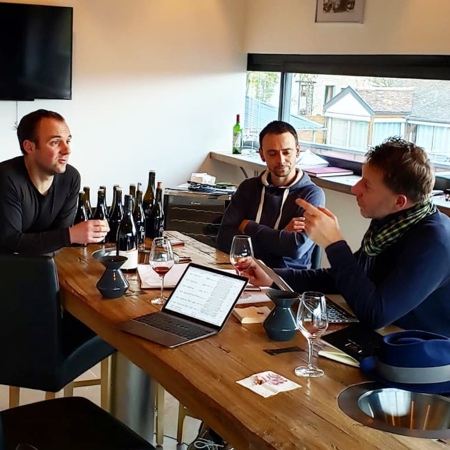
Tasting with Laurent Berger. Located in the village of Chevannes, next to the Côte de Nuits with some vineyards in Nuits-Saint-Georges and some in Savigny. A négoce of most of the important Côte d’Or and Côtes de Nuits appellations. Here from the Hauts-Côtes at the top the south facing hill off of 35 year-old vines growing on full calcaire slopes. Mixes a wealth of fruit and tart acidity sent straight to the cerebral cortex, crux and cross of the heart. Well made, clean and ideally balanced. Drink 2020-2024.  Tasted November 2019

Domaine David Duband Morey-Saint-Denis AOC Premier Cru Clos Sorbè 2018

Clos Sorbè the Climat is located right in heart of Morey’s interior, right next to the cemetery. Now the rose’s petals are macerating with the cherries in a pinot noir of classic Bourgogne depth and understanding. The structure is quite elegant in a focused and rich way while weight seems developed by vine age in the 50-55 year range. An impressive Premier Cru of true blue cause, personality and effect. Drink 2022-2028.  Tasted November 2019

Domaine David Duband Grand Cru Chambertin AOC 2018

Taking a side step from Chames-Chambertin is the more transparent and seemingly lighter and more delicate Chambertin. Looks and first impressions are deceiving for the power lies in the aromatic complexity, garden and wild field floral plus a gastronomy that incites memories but also machinations of the great demi-glacés imaginable, The fruit pectin and sweet cerebral enhancements are at the top of this portfolio so if others were seductive and enticing this Chambertin is off the charts. Seamless, endless and utterly fine. Structure just at the precipice of pinot noir. Drink 2023-2036.  Tasted November 2019

Domaine David Duband Grand Cru Charmes-Chambertin AOC 2018

Wholly antithetical to the 2018 with much more Bourgogne, Duband and Charmes fruit in the delicate vein of great and sheer transparency. This takes an organza line along a finely threaded and woven seam. There can be no mistaking the understatement of the vintage and while it may not strike an arrow into the hearts of the deducted and seduced there can be no mistake found here. This is the pinnacle of this appellation in fine dress and perfectly classic vernacular. Drink 2022-2034.  Tasted November 2019

Julien Cruchandeau and his Pinot Noir


Domaine Cruchandeau

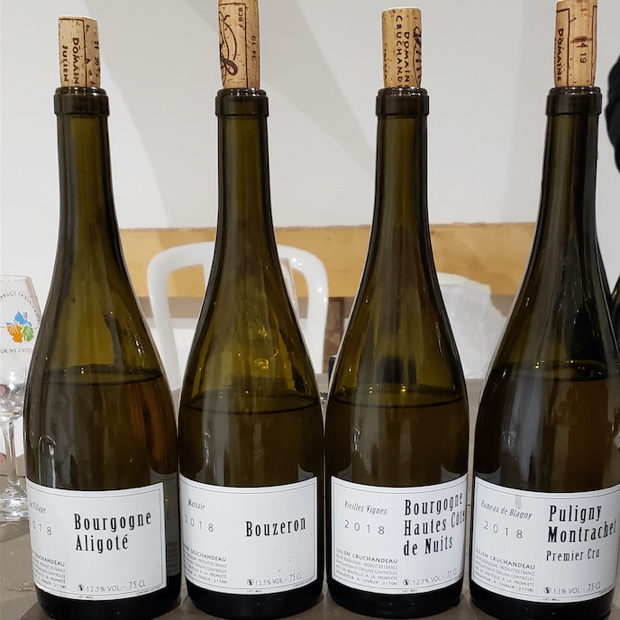
The estate was established in 2003 by Julien Cruchandeau and his first vines were purchased in Bouzeron. In 2007 expansion saw to the buying of a house in the village of Chaux, located in the Hautes Côtes de Nuits, with large cellars and an extensive vat room. In 2009 and 2010 investment helped to establish an agricultural land group (GFA) “Aux Saint Jacques,” thus extending the estate from Nuit-Saint-Georges to Savigny-les-Beaune. Julien grows chardonnay, pinot noir and some pinot blanc in the Hautes Côtes de Nuits, with four and a half hectares in the appellation that includes two parcels in the Villa Fontaine, a.k.a the mini Corton. Red parcels are Les Cabottes and Les Valançons, the latter being one you can see straight from the tasting room window at the estate of David Duband. Whites are made from Bourgogne Aligoté, Bouzeron and Puligny-Montrachet. In addition to the Hautes Côtes de Nuits other reds produced are from Savigny-Les-Beaune, Ladoix and Nuits-Saint-Georges.


Click here to see all reviews for the wines of Julien Cruchandeau

Julien Cruchandeau Haut-Côtes de Nuits AOC Vieilles Vignes 2018

From four and a half hectares in the appellation, including two parcels in the Villa Fontaine, a.k.a the mini Corton. Villa Fontaine plus if you will. It’s a top essence soliciting exposition that makes for a great floral chardonnay and one of pretty impressive finesse. Takes care of the vintage with great care and no ambition to overdue or over-exaggerate. Wood is in the background and at the finish, spices are very far eastern. Reminds of Indonesian sasak fruit as only a few chardonnay can and do. Different and exotic stuff. Drink 2019-2022.  Tasted November 2019

Julien Cruchandeau Puligny-Montrachet Premier Cru AOC Hameau de Blagny 2018

Very close to Meursault in every way and the smoulder is so very Puligny, as it should be with Julien’s exotic twist and turn of the storied fruit. A parcel like this does not come along every day so the coup is in Julien’s hands and the wine celebrates the possibilities. Takes your breath away for a fleeting moment but stays with you for minutes. Just 900 bottles were made and there are notes of toasted kernel or nut plus a recently extinguished candle. The suggestion says that the future may hold out for the possibility of a touch of honey. Drink 2021-2027.  Tasted November 2019

Julien Cruchandeau Haut-Côtes de Nuits AOC Les Valançons 2018

You can see Les Valançons straight from the tasting room window at the estate of David Duband. Here you find one of Bourgogne’s great terroirs deemed a satellite and not considered worthy of others fetching 10 times the price. Thirty to 40 year-old vines equate to exquisite south facing slope fruit to this glass and the mineral streak running through violets is just what you want and what you can drink for 10 plus years. Pay attention to the threefold relationship between Haut-Côtes de Nuits, Cruchandeau and Valançons. Superb. Drink 2021-2030.  Tasted November 2019

Julien Cruchandeau Nuits-Saint-Georges AOC Aux Saint Jacques 2018

Th Climat is next to Vosne-Romanée at the northern limit of Nuits-Saint-Georges and clearly raised on great promises. Julien has taken the exceptional ripenesses of the vintage and turned those promises into possibilities with pinot noir that effects juicy behaviour without maximum effort. And so probable is quickly becoming a reality. Very primary however and almost like it’s still in barrel. Just has that feel, like it’s not finished yet, still working, just a child. Speaks to the structure and what the future more than very likely holds. Just need the wood to begin a settling for the next phase to begin. Welcome to modern Bourgogne with one foot always entrenched in the past. Drink 2021-2029.  Tasted November 2019

With John Szabo at La Tâche

Good to go!

Godello

Château du Clos de Vougeot, Côtes de Nuits

Twitter: @mgodello

Instagram: mgodello

WineAlign

Barbaresco DOCG previews and retrospectives: 2017, Riserva 2015, 2007 and 2005

Flying in to Pi-e-mon-te

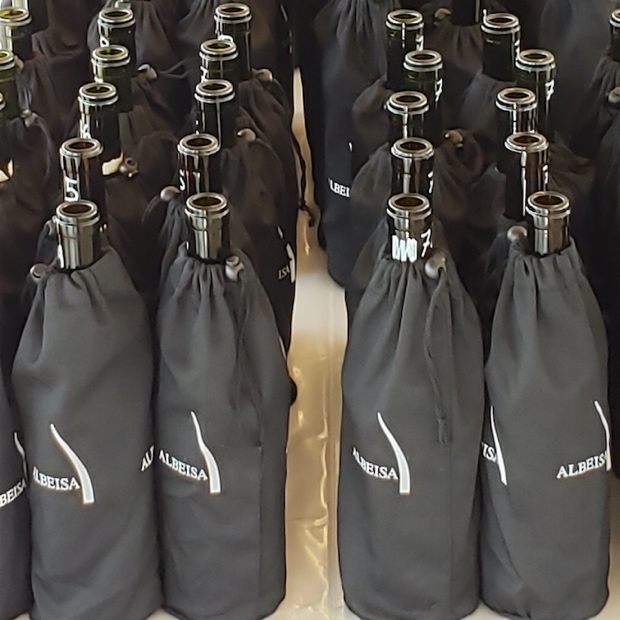
Nebbiolo Prima is a wine tasting and immersive concern of impossible equal. The twenty-fourth edition took place in Alba during the latter stages of January 2020, the last innocent period of Piemonte’s recent history and the memories ingrained will last a lifetime. How retrospectively insignificant were the stressors incurred through tasting 300 wines blind over three days plus hundreds more with producers at lunches, dinners and visits? How happy, carefree and miles from non-plussed were the journalists, sommeliers and their Albeisa hosts during a week of connectivity and shared motivations? Less than one month later everything had changed.

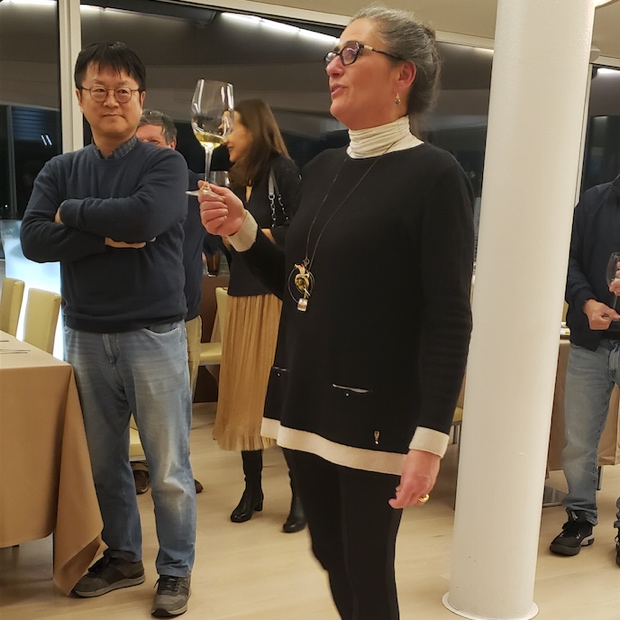
Marina Marcarino introduces Nebbiolo Prima 2020

Tutto arriva al momento stabilito, “everything comes at its appointed time.” War, peace, pandemic, recovery. Piemonte has been particularly compromised by COVID-19 and it just seems so unfair but the Piedmontese back down from nothing and move ahead no matter the obstacles. The work ethic never tires, nor do fruit and tannin. There are a thousand wine producers who raised estates out of post-war, mezzadrie ashes to put Barbaresco, Roero and Barolo at the forefront of Italian wine. This generation will do the same beginning in 2020. Piemonte does just about everything well and for so many tangible reasons, everything right. The clash of cultures, detailed attention to seductive and gratifying food particularities and impossible to resist, covetable wines from Langhe and Roero origins add up to one of Italy’s finest destinations. Eating and drinking in Piemonte is one of life’s greatest treats and I’ve not yet even mentioned the word nebbiolo. Life and winemaking are all about the pauses, where art resides in the elusive calm between Barbaresco fruit and tannin. 

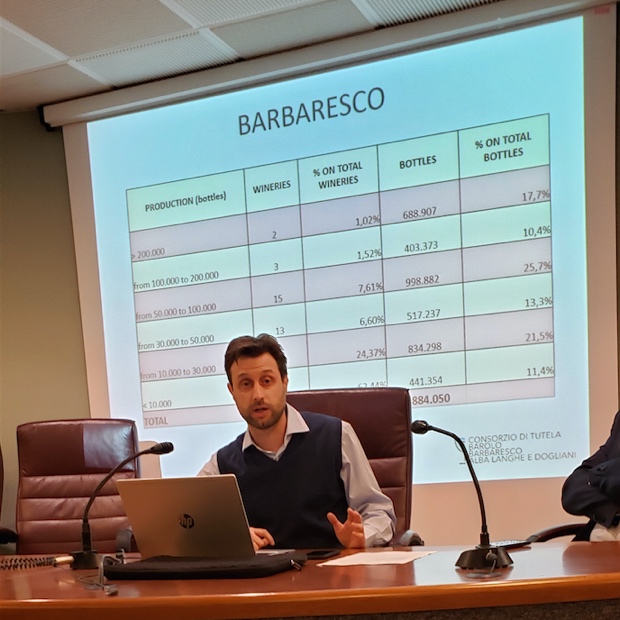
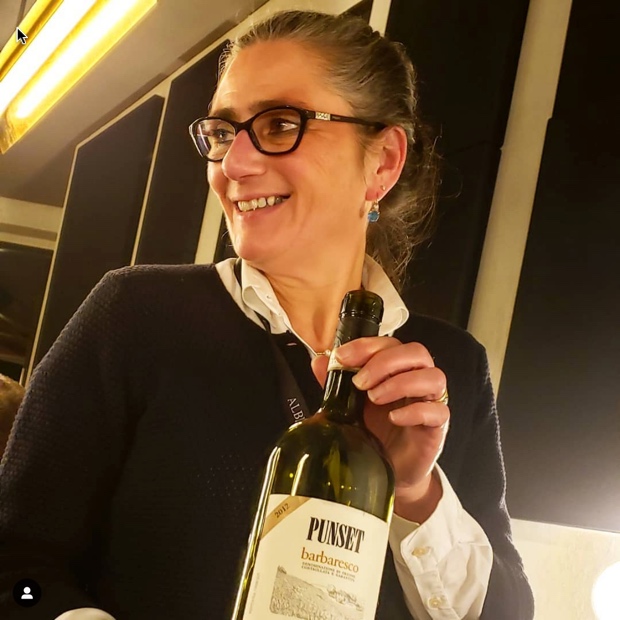
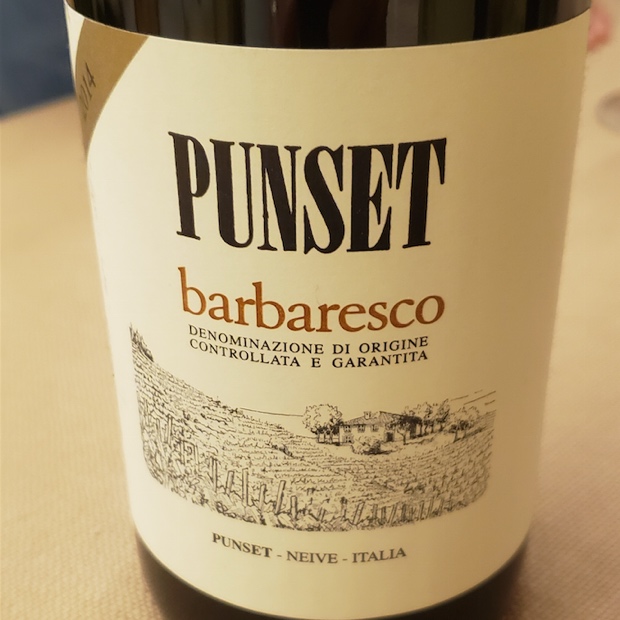
It had been a most incredible Nebbiolo Prima 2020 week with gratitude and love to the guidance and effort of the the Albeisa organization’s President, Domaine Punset’s Marina Marcarino. Always the first to pioneer, lead, teach and share, Marcarino expressed the pride and the passion of the community of producers that worked tirelessly to create this formidable assembly. Albeisa’s goal is not singularly focused. This event is not simply a matter dedicated to the tasting of wine. Agricultural evolution and wine-producing innovation are a major focus, always with a socio-economic bearing kept in mind. Albeisa’s deans pointed out that there has been a steady decline of the de-classification of grapes and for Barbaresco that has meant a drop from 46 to 23 per cent of bottlers at harvest moving from Barbaresco DOCG and into Langhe Nebbiolo DOC. 

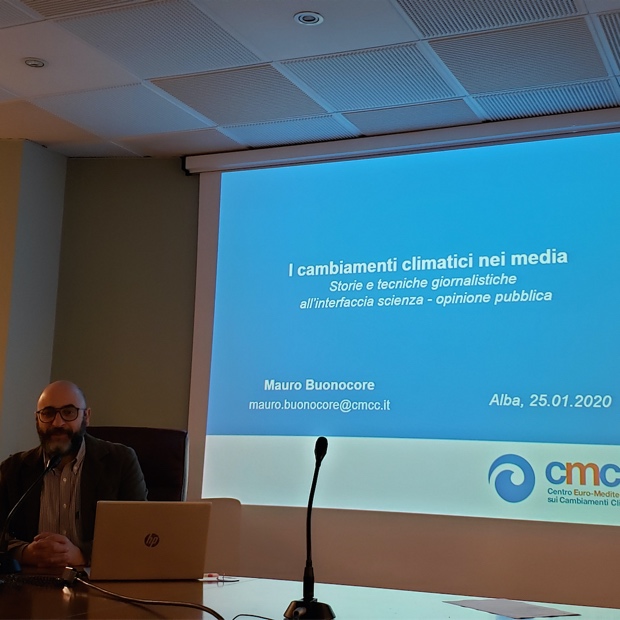
Mauro Buonocore

Trusting Science

Most fascinating was a climate change talk titled I Cambiamenti Climatici NEI Media, given by Mauro Buonocore, head of the Communication and Media Office at CMCC Foundation – Euro-Mediterranean Center on Climate Change. Buonocore began with a challenge to journalists, to report truths, based on science. “Why are journalists and the public interested in such complex scientific problems?’ he asks. This is Mauro’s question, his purpose for studying the subject. “Attention paid to climate change makes sense if we do so in relation to socio-economic systems.” He then wants to know “what is the cost for business in a world in which temperature is changing and extreme events like heavy rains and heat waves taking place?”

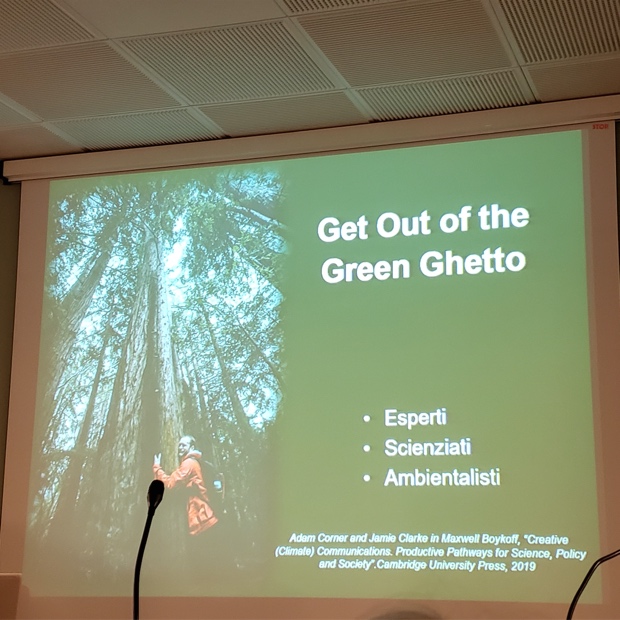
The study by Fondazione Centro Euro-Mediterraneo sui Cambiamenti Climatici presents as a focal point for Italy, to “get out of the green ghetto,” insists Buonocore. “Hugging trees is not the only answer.” The starting point is science because science is informative. “It’s a democratic community.” IDCC creates reports by 300 authors, in 20,000 studies, with 100,000 comments. It’s more than enough to satisfy the most skeptical journalist. It’s also a consistently framed initiative that resides at a global level.

Mauro Buonocore, CMCC

2020 Findings

The foundation’s most recent investigations are heavily reporting about extreme weather, a.k.a the new global warming. Climate action is now responsive and mobilizing to act in response to the natural disasters but also losses in biodiversity. Human made environmental tragedies are the single largest crises faced today and more than ever there is a need for collaboration between journalists and scientists. Un”alleanza necessaria, driving scientific research into journalists’ hands, to report on forests, environment and climate change. Wine journalists. The road goes both ways, recoproche risorese, not a one-man band.  The intrigue of this study takes journalists and in turn the public away from the idea about what can be done to combat and make adjustments for climate change to a realm defined by placing trust in scientists and scientific thought. A blind trust perhaps but this is the request.

What to make of Barbaresco DOCG 2017

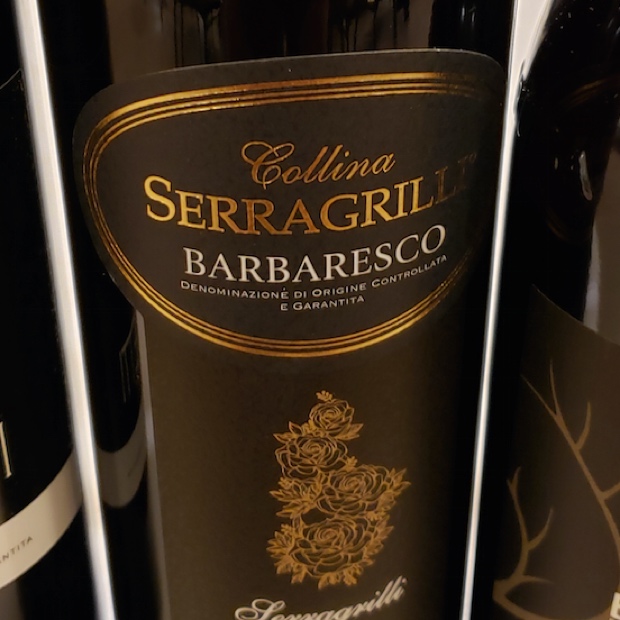
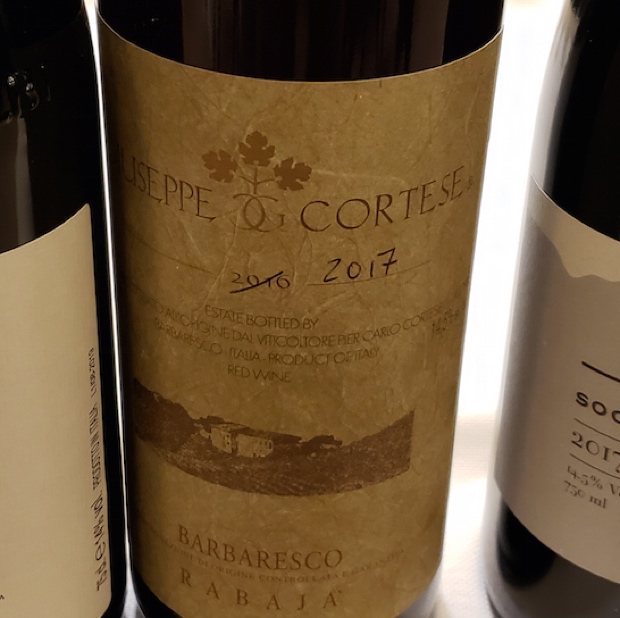
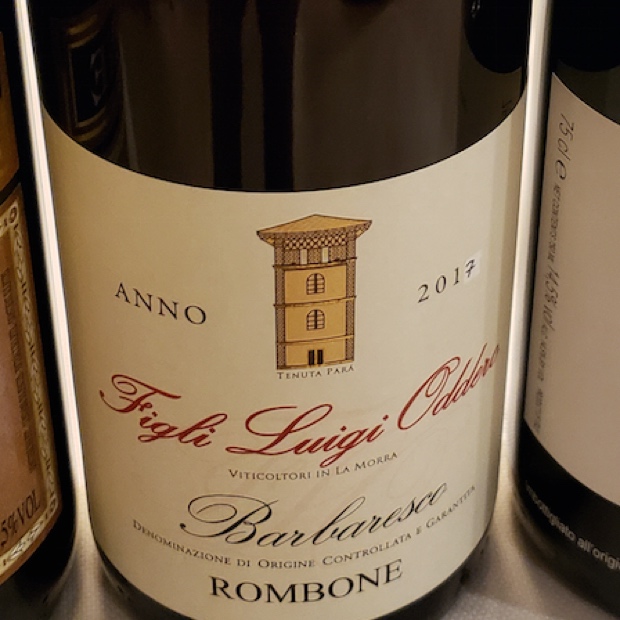
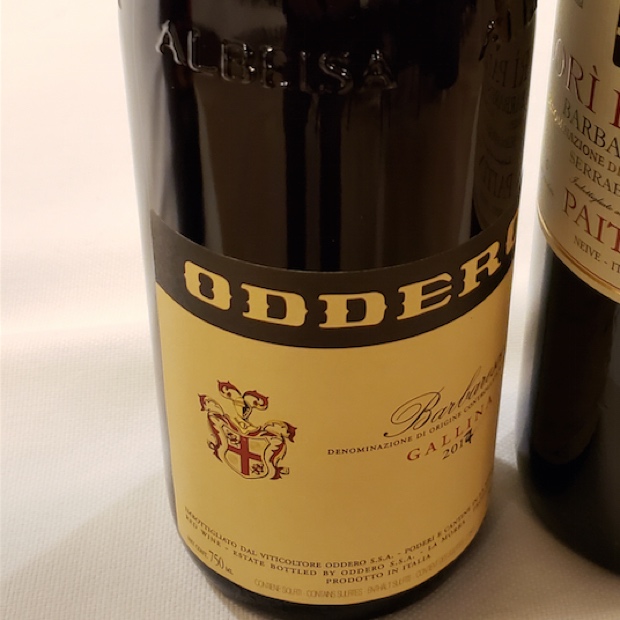
In subsequent articles I will get to what Barolo and Roero have reached in their recent contributions to nebbiolo but today we begin with Barbaresco. Nearly 60 examples of Barbaresco DOCG 2017 were presented, along with 15 Riserva 2015 and a further dozen or so retrospective 2007s. Communes of origin (Alba, Barbaresco, Neive and Treiso) were joined by Cru examples (Montersino, Rocche Massalupo, Asili, Ovello, Pora, Rabaja’, Rio Sordo, Roccalini, Roncaglie, Ronchi, Montaribaldi, Albesani, Basarin, Canova, Cotta’, Gaia-Principe, Gallina, San Cristoforo, San Guiliano, Bricco San Giuliano, Santo Stefano, Senadaive, Serraboella, Serragrilli, Sorì Paitin Serraboella, Starderi, Bricco di Treiso, Casot, Giacone, Marcarini, Meruzzano, Nervo, Nubiola, Pajore’, Rombone, Valeirano and Vallegrande).

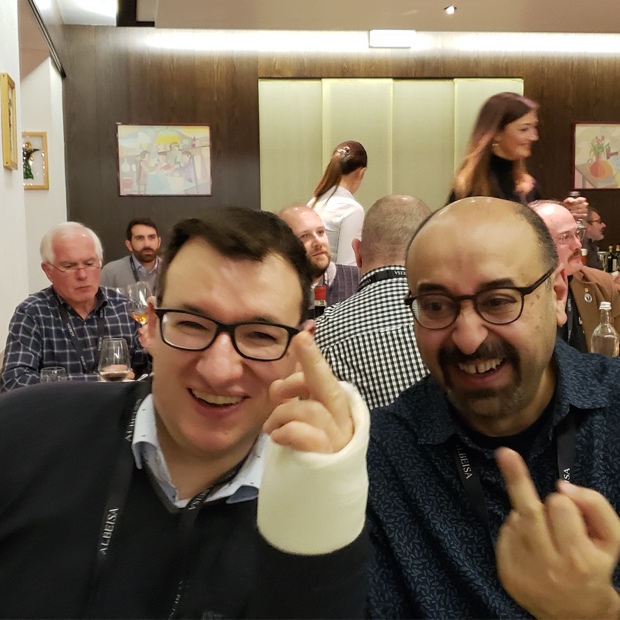
Tasting at #nebbioloprima2020 with the Morris, side by each ~ Day one, 120 in

These odd, curious and at times inspiring 2017s are littered with examples that speak to great variability, lined with pockets of hot and bothered micro-climates but also cool spots in spite of the prevailing terms of the vintage. These Barbaresco are wines of patent freedom and some imbibers may think they want in but may not be equipped to handle the liberties they provide. Still others will unite over the untied and untucked nature of the lot. The highlights are nominally noted by nebbiolo quietude that act as breaths of fresh 2017 air. The Riserva of 2015 are at their best when the spice cupboard is wide open for nebbiolo to act aromatically gregarious, volatile and yet unsettled. The best of 2015 have yet to peek out of the open windows.

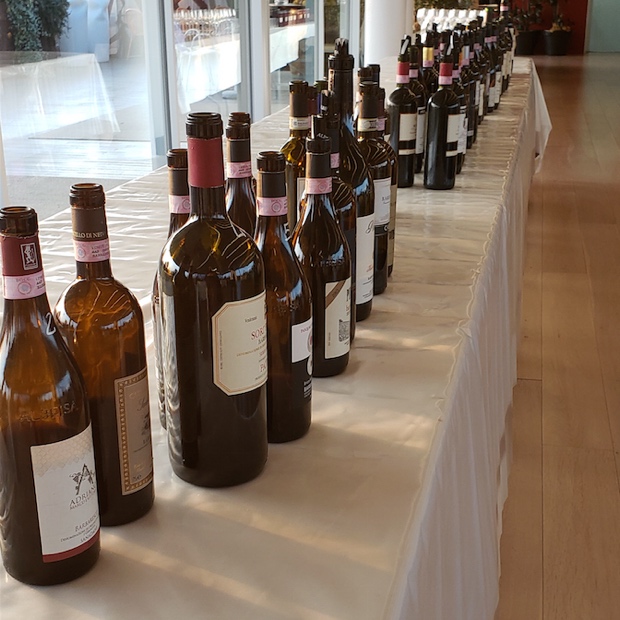
The task of tasting 360 nebbiolo blind or not in four days would be unthinkable without the guidance and assistance of a professional Sommelier. What is a Sommelier? A Sommelier is completely invisible, yet always in sight. A Sommelier remembers what wine tasters hate. A Sommelier anticipates the taster’s needs before the needs are needed. A Sommelier is, above all, discreet to a fault. In total here are 92 reviews for Barbaresco nebbiolo tasted in Alba, January 2020.

Barbaresco at Hotel I Castelli, Alba

Barbaresco DOCG 2017 (59 reviews)

  • ***** (denotes the top wines of the vintage)

Ada Nada Barbaresco DOCG Valeirano 2017

Sweet and saline Treiso nebbiolo, light and bright, lemon to orange. Quit and confident, the silent type that allows its actions to speak louder than its words. Good tang in its textural step and fine tannins will lead to mid-term aging exceptionality. Drink 2021-2025.  Tasted January 2020

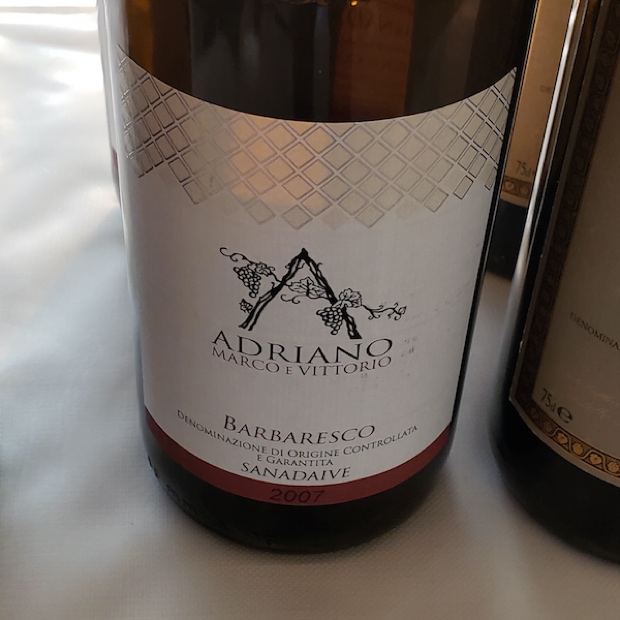
Adriano Marco E Vittorio DOCG Barbaresco 2017

Plays hard to get from the outset though there’s a prettiness to the lightness of this nebbiolo’s being. Can be tough when it needs to be and so there is potential here. Will need to wait and see just what becomes of this light, underestimated and yet understood Barbaresco. Drink 2023-2028.  Tasted January 2020

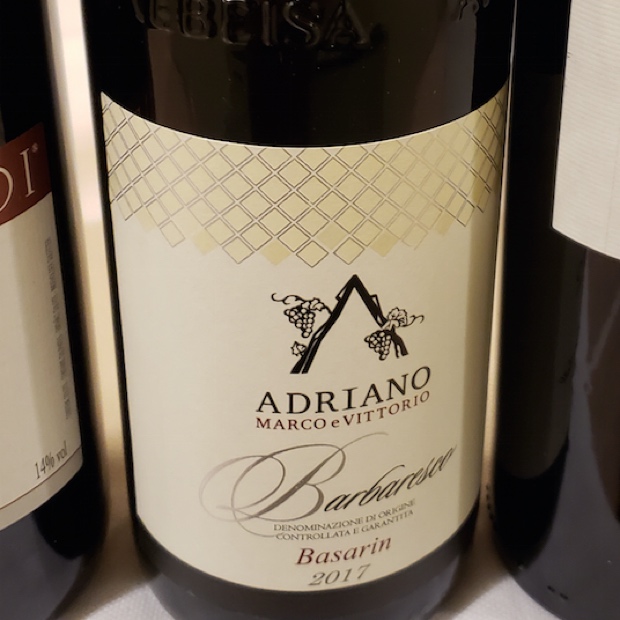
Adriano Marco & Vittorio Barbaresco DOCG Basarin 2017 ($45.00)

Candied exterior in that the fruit scents are like flowers dipped into a sweetly perfumed liquid that permeates and infiltrated so that everything comes up roses. The palate then dries out a bit so that fruit succumbs to the tannins in the wine. Neive traditional and so plausible. Drink 2022-2028.  Tasted January 2020

Albino Rocca Barbaresco DOCG Montersino 2017

Tannic and intense. Decent fruit more or less speaks to varietal obviousness and basic understanding. There’s a comfort level in the rustic charm of the tradition found inherent and fomenting in this Montersino nebbiolo. Drink 2022-2026.  Tasted January 2020

Albino Rocca Ronchi Barbaresco DOCG 2017 ($75.75)

Once again a menthol note permeates but here from Ronchi in Barbaresco it is met with notable citrus, namely pomegranate, deep blood orange and also a real cherry-ness. Also very spiced, cinnamon and nutmeg, plus a variegation that comes across as much textural as it had aromatic. A serious wine of great integration and potential more than anything as a quotient of its fineness and deep-rooted complexity. Drink 2024-2037.  Tasted January 2020

Alessandro Rivetto Barbaresco DOCG Montersino 2017

Ripe and syrupy nebbiolo, simpler than many or even most with fine-grained though negligible tannin. A bit of disconnect between the fruit and the finish, namely because the acidity is not a catalyst or a matchmaker in the Montersino equation. Drink 2021-2023.  Barrel Sample tasted January 2020

Antica Casa Vinicola Scarpa Barbaresco Tettineive DOCG 2017

No cru designate mention (but referred to as Tettineive, “at the head of,” or above the village) and the Neive ubiquity is noted in the swarthy and swarming aromas that speak foremost about ripe fruit. It’s so very raspberry and not so very tannic though the acids are developed and encompassing. Not so complex but a great dinner date companion for the next few years. Drink 2021-2024.  Barrel Sample tasted January 2020

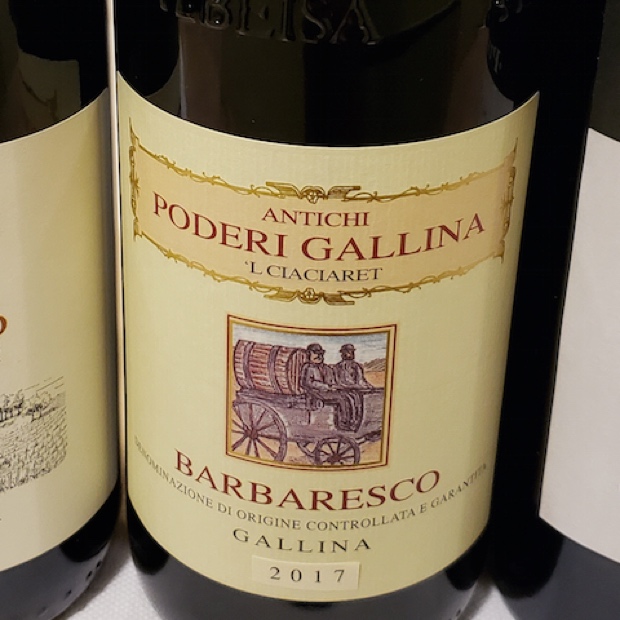
Antichi Poderi Dei Gallina Barbaresco DOCG Gallina 2017

Quite bright and very citrus, light blood orange meeting green tannins. Seems like a very cool spot in spite of the ’17 Neive vintage. A tonic injection and a botanical feel make for a unique take on nebbiolo from Gallina. Drink 2021-2025.  Tasted January 2020

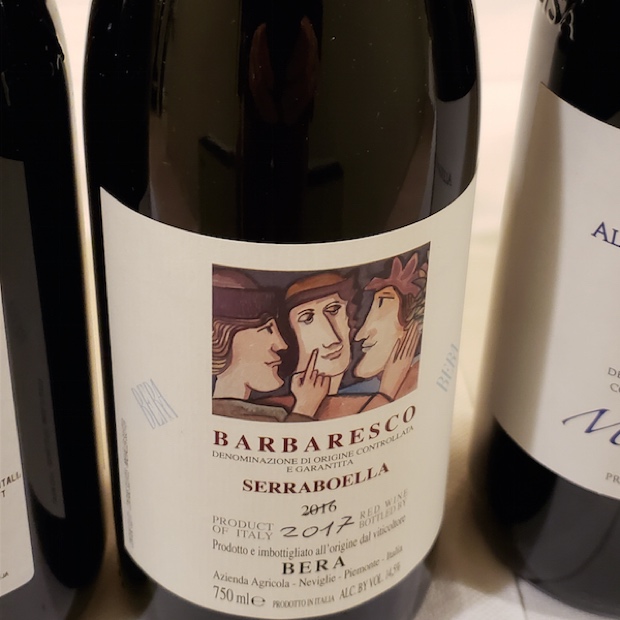
Bera Barbaresco DOCG Serraboella 2017

Very cherry, very glycerin and also light on its aromatic feet. The scents are spiced and varietally obvious as Neive nebbiolo with a sweetness that speaks to the land. Good structure, even sweeter tannins and very apparent that the barrel is a major part of the game. Needs time and also tells us that if you like sweetness from wood then you should clearly stick around. Drink 2022-2027.  Barrel Sample tasted January 2020

Now we are onto and into something other, ulterior, extraordinary even. The berry and cherry scents are ripe, effusive and frank. The subtleties speak to the knowledge and the knowing. There’s a restraint and a consummate professionalism in such a Treiso Barbaresco but also an accumulation spurred by precision. The real deal, needing no swagger to solicit no adulation. Drink 2023-2035.  Tasted January 2020

Gran Bollito alla Piemontese, Ristorante Luna, Sinio

Briccogrilli Battaglio Barbaresco DOCG 2017

Slightly over-developed, heading towards oxidative and not far from raisin. Flat, little acidity and no real potential. Drink 2020-2021.  Tasted January 2020

Ca’ Del Baio Barbaresco DOCG 2017

If ever a Barbaresco nebbiolo carried an uncanny aroma that is purely reminiscent of liquorice than this would be the one. Fruit quality is impressive and structure supports with a proper frame,. Nothing overtly complex here but overall the game is played quite well. Drink 2021-2024.  Tasted January 2020

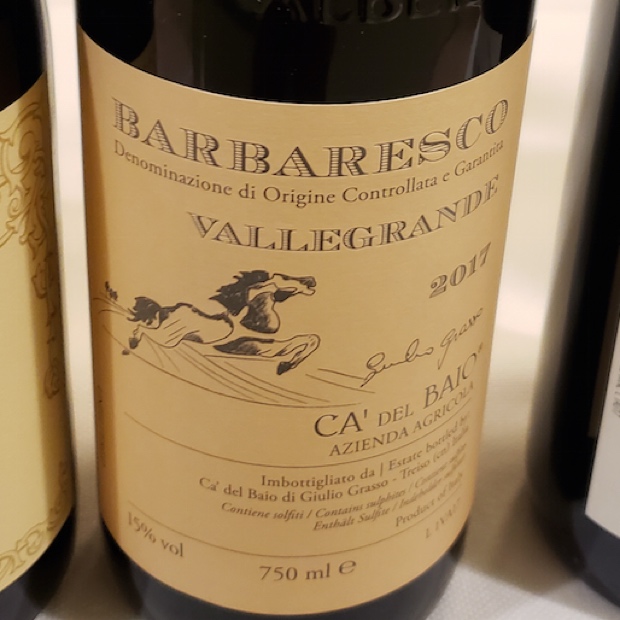
Ca’ Del Baio Barbaresco DOCG Vallegrande 2017

Sweet meets savoury for fruit that needs little introduction. So bloody nebbiolo, Barbaresco, Treiso and seemingly, clearly, obviously Vallegrande. Ripe and grippy tannins take control so maybe try and avoid needing to spend too much time here over the next five years. Drink 2022-2028.  Tasted January 2020

A clear and concise look at Treiso nebbiolo from Barbaresco with tart currant, pomegranate and cherry fruit, tang in pocket and a lovely liquidity. This is the textural one of clarity and precision. Clearly textural, structured and fine. Not overtly tannic and so far from intrusive in terms of what the barrel wants to say. Drink this everyday and for no particular reason. Drink 2021-2029.  Tasted January 2020

You can tell straight off the top that this Barbaresco-Asili nebbiolo is not begging for attention, nor does it care if you get it or not. The fruit wades and treads easily, comfortable, without any real tension. The acids are delicate and fine, real and necessary. The tannins repeat the yoga mantra. This is a sneaky one, seemingly light and uninterested but time will see flesh, bone and serious intention come to the surface and swim with strength deep into the distance. Drink 2023-2031.  Tasted January 2020

Cascina Luisin Barbaresco DOCG Rabajà 2017

A deep inhalant of hillside brush, red citrus and well-ripened fruit are the three-part harmony sung by this Barbaresco. Simplifies a bit once you realize the heavy bass played by the wood takes over and commands a sweetness but also a simplicity in the structural line. Still there is a quality that just aches with the singsong verse of Rabaja’. Drink 2021-2026.  Tasted January 2020

Cascina Morassino Barbaresco DOCG 2017 ($58.62)

Lovely and complex nebbiolo aromatic profile with crisp bites and red fruit drawn off the right kind of soils for all to take part. One part kind fruit, one part energy building and one part lengthening structure. Adds up to quality Barbaresco and accessibility. Drink 2021-2026.  Tasted January 2020

Impressive from go with high-toned, pectin-developed and transparent, glycerin fruit. Really fine lines, bones and structurally sound encroachment into the tough areas only such Barbaresco nebbioli can go. Serious Ovello wine with a long life ahead. Drink 2023-2032.  Tasted January 2020
 
Cascina Sarìa Barbaresco DOCG Canova 2017

Quite ripe and developed Neive nebbiolo with an oxidative waft. Will go quickly into the pruned night with so much vanilla by wood in its fading light. Drink 2020-2021.  Tasted January 2020

Castello Di Neive Santo Stefano Albesani Barbaresco DOCG 2017 ($51.75)

Fruit is sweet and properly ripened, a touch herbal and tannins take quick stage to cover and draw the curtains. Chewy in a liquorice way and drying though tradition runs like blood through the structure. Solid Neive Barbaresco. Drink 2021-2025.  Tasted January 2020

Collina Serragrilli Barbaresco DOCG Serragrilli 2017 ($45.00)

Wildly earthy and aromatic Neive nebbiolo from Serragrilli, a touch overdrawn but still sitting on that ledge. Smells like a scorch of sorts and a light char on wild game. Also brings the hematic aromas that only fresh meat, toasty wood and blood orange can gift. Complex specimen here if just a touch ripe into the beyond. Drink 2021-2026.  Tasted January 2020

Sweet scented aromas and a chewy textural aspect make this Barbaresco nebbiolo one of the more impressively expressionistic examples. The substance in grain and disposition are clearly developed and designed to create a gregarious and exhibitionist example. So much Rabajà proposition, supposition and expectation await. Drink 2023-2032.  Tasted January 2020

Figli Luigi Oddero Barbaresco DOCG Rombone 2017

Unusually scented Treiso Barbaresco, almost like baking biscuits mingling with cured meats. Quite chalky tannic and earth crusted too. Very nebbiolo, high strung and extended perhaps beyond means but there will be a sweet spot somewhere out there in the mid ages. Drink 2022-2026.  Tasted January 2020

Another about face for nebbiolo twists and turns within the variability and variegation found in the Neive Barbaresco from Gallina. Tartness, tang, tannin and even a moment’s tumult make this curious, foreboding and so very interesting. Watch to see where this one goes. Drink 2022-2028.  Tasted January 2020

Grasso Fratelli Barbaresco DOCG Vallegrande 2017

Darker, bloodier and richer than some but also as compared to brethren within the cru. Vallegrande is quite expressive Treiso Barbaresco though this example is clearly driven by the barrel. Vanilla in droves, chocolate not too far behind and tannins thick as thieves. Drink 2021-2024.  Tasted January 2020

Icardi Barbaresco DOCG Starderi 2017 ($78.00)

Intensely reductive and closed, even for Neive nebbiolo. There too is a pine resinous note and some charred meeting preserved citrus. Curious and yet to open up its charms. Drink 2022-2026.  Barrel Sample tasted January 2020

Pasta heaven in Alba

Il Bricco Barbaresco DOCG Bricco Di Treiso 2017

The mix of cured meats, wood smoke, spice and wet concrete make for a Treiso nebbiolo with so much bloody character that keeps changing with every nose put into the glass. Brings blood orange and bresaola to the mix. What a potpourri, what a design and what a complication. That all said the tannins are not so firm and not so demanding, More wood and texture than anything else. Drink 2021-2026.  Tasted January 2020

La Ganghija Di Enzo Rapalino Barbaresco DOCG 2017

A touch past ripe and syrupy though with complex aromatic notes, namely preserved citrus and gingered chocolate. A gastronomic Treiso Barbaresco in a dessert course kind of vein with notable cask sweetness, spice and strength. Very modern and ambitious. Drink 2022-2026.  Barrel Sample tasted January 2020

La Ganghija Di Enzo Rapalino Barbaresco DOCG Giacosa 2017

A bit past the centre line for ’17 Treiso ripeness and evergreen amplitude. Also an earthy note, albeit a sweet one that mingles with fruit and tang. Lots of wood, texture and grip. Very chewy and will develop some fun funghi and umami secondary character. Drink 2022-2028.  Barrel Sample tasted January 2020

Mainerdo F.Lli Barbaresco DOCG Roccalini 2017

Quite a mentholated sauce and scented nebbiolo, not unlike the Barbaresco of Pora though Roccalini also delivers a multitude of red fruit. It’s berry, plum and citrus all rolled into one. There too is a note that seems uncanny but you can’t quite put your aromatic sensors on it. Chalk it up to memory that will come back one day. Drink 2022-2029.  Tasted January 2020

Manera Barbaresco DOCG 2017

Simple and basic nebbiolo with mild acidity and grippy tannin. Proper enough but just not that interesting. Drink 2021-2025.  Barrel Sample tasted January 2020

Masseria Barbaresco DOCG Montersino 2017

Extremely high-toned Montersino nebbiolo with a decidedly vinyl shower curtain note. Also some fennel, mountain tea and sweet herbal aspect. Funny wine with a hard candied shell. Drink 2021-2024.  Tasted January 2020

Massimo Rivetti Barbaresco DOCG 2017

Very herbal almost in a cough concoction sort of realm and certainly an alcoholic warmth mixed with some mephitic material. Smells like the stable. Not clean. Drink 2020.  Tasted January 2020

Moccagatta Barbaresco DOCG 2017

Curious one this nebbiolo, at once a rich and ripe ’17 and on the other hand tight, taut and closed. Somewhat pine verdant and cool with a graphite note. Crunchy acids and plenty of texture make this one gregarious, full and ambitious. Tannins follow suit with grip and energy. Yes, the drive and the energy her are the thing. And the potential. Drink 2022-2028.  Tasted January 2020

Molino Barbaresco DOCG 2017

Extreme ripeness and developed cherry fruit that ultimately means simple and straightforward juice. A bit meaty and chewy in a cheaper cut, a bit too quick braised way. Drink 2020-2022.  Tasted January 2020

Montaribaldi Barbaresco DOCG Montaribaldi 2017

Quite simple, tart, woody and unreflective. Comes across as sweet and overtly intentional. Drink 2021-2024.  Tasted January 2020

Musso Di Musso Barbaresco DOCG Rio Sordo 2017

Perfume is off the charts in a Barbaresco nebbiolo that clearly speaks for the land from whence it has come. Fruit quality is ripe, sweet and developed while acids are just as important as tannin for a cru Barbaresco of style and no real overt need to go decades for best pleasure. The results are now and for 10 years max. Drink 2021-2029.  Tasted January 2020

Wow the mentholated and graphite noted aromatics are off the charts in this singular Barbaresco. Also tobacco and a fine liquidity that runs through like one substance suspended within another. Should be interesting to see when the two will emulsify and get together as one. Drink 2023-2030.  Tasted January 2020

Mustela Barbaresco DOCG 2017

Ostensibly what you’d imagine Treiso Barbaresco to nose without a cru mention and in a wholly modern way. Sweet spice, cured meat and vanilla. Big wine with lots of texture. Drink 2022-2027.  Barrel Sample tasted January 2020

Nada Giuseppe Casot Barbaresco DOCG 2017 ($33.25)

Very right, credible and proper Treiso nebbiolo from Casot here with all the constituent parts in line, one following another and no gaps to speak of. There’s a salve texture that you already knew was coming because the aromas told you so. The texture carries forth with admirable consistency and the elasticity of this Barberesco is right there behind, in support and with en eye towards the eventual conclusion. Drink 2022-2029.  Tasted January 2020

Ristorante La Libera, Alba

Negro Giuseppe Barbaresco DOCG Gallina 2017

Deeper and more developed for Neive-Gallina and surely from a warm and sunny exposition to take full advantage of the vintage. A bit lean on the other hand and also a touch verdant. This one will travels to all four corners of nebbiolo earth. Drink 2022-2027.  Tasted January 2020

Orlando Abrigo Meruzzano Barbaresco DOCG 2017 ($42.95)

Earthy and reductive with the forest and the barn’s floor all over the Treiso aromatic room. Plenty of wood and where this excels is in its cool, silky and pleasurable texture. Needs time, of course it needs time. Success depends, well of course it depends. Drink 2022-2027.  Tasted January 2020

Paitin Barbaresco DOCG Sorì Paitin Serraboella 2017

Almost negligible in so many ways in that it’s so very hard to get. That said the quietude is a breath of 2017 Neive air because no intrusions have been allowed to get through, neither red, green, overt or unwanted. A simply rendered nebbiolo can be your friend and here the structure is likely sneakier than first, second and third time around imagined. Charming wine from Serraboella. Drink 2022-2028.  Tasted January 2020

Pasquale Pelissero Barbaresco DOCG 2017

Quite blood orange, hematic and even ferric nebbiolo form the odd, curious and at times inspiring Neive 2017s. Textural on the outside and linear and lean on the inside, even this example owes to its very own variability. Tannins are a bit grippy and energy comes back and forth, in and out of time and waves. Drink 2021-20327.  Barrel Sample tasted January 2020

Pelissero Pasquale Barbaresco DOCG San Giuliano 2017

Developed in many ways, not the least of which is fruit in syrup and dried fruit character. Turns lean and uninteresting with a cool mint and graphite quality on the back end. Drink 2020-2022.  Barrel Sample tasted January 2020

Pertinace Barbaresco DOCG Marcarini 2017

A traditionally accumulated, developed and rendered Treiso nebbiolo to be frank with generous big barrel character and silken ripe 2017 fruit. Big bones and full texture make for a mouthful and one that will take years to find its classic stride. Drink 2023-2030.  Tasted January 2020

Pertinace Barbaresco DOCG Nervo 2017 ($59.95)

Nervo is south facing on famous Treiso blue clay. Just a lovely nose here, sweet scenting, floral and savour-candied. Just a touch of so many things; herbs, creosote, pine, cedar and scorched earth. Vanilla, chocolate and spice. Gone for it all. Drink 2022-2028.  Tasted January 2020

Pietro Rinaldi San Cristoforo Barbaresco DOCG 2017

Light to developing in aromas and textures with variegations. Crunchy and chewy at the same time, with a taste profile that encompasses the liquorice, earth and wood spice profile. Lots going on here from San Cristoforo in Neive but in the present not overtly complex. Probably best to wait a year or two ands then drink young. Drink 2021-2025.  Tasted January 2020

Poderi Colla Roncaglie Barbaresco 2017 ($50.00)

Wound tight, taut and far from ready to unravel there are layers upon layers of structure in this ’17 Roncaglie-Barbaresco. Crunchy and crusted you will have to exercise great patience before even thinking you can see the light or feel the gentle pull in the elasticity of this wine. Take it slow, take your time and let it flow. Drink 2024-2032.  Tasted January 2020

Rattalino Massimo Barbaresco DOCG 2017

Pretty and effusive Barbaresco nebbiolo with notable tannic structure. Quite a mouthful of barrel-influenced spice and tannin. The length is impressive so there is no doubt that this will go far. Drink 2022-2028.  Barrel Sample tasted January 2020

Rizzi Barbaresco DOCG Pajoré 2017 ($42.95)

Again this is Pajore’ in its basked light of delicacy, ripe and rising. Understated and yet so cumulative of fruit, acidity and fine tannin. In fact the tannins accumulate with great numbers and in even greater force. This will outlive many of us to die another day. Tour de force is what nebbiolo can be albeit with Treiso subtlety and drive. Drink 2023-2034.  Tasted January 2020

Roberto Sarotto Barbaresco DOCG Gaia Principe 2017 ($43.00)

There’s an almost appassimento note to this strange and unusual Neive nebbiolo and also an over-developed fruit feel. Like roll-up, very strawberry and quite overripe. So simple as a result and mired in a pectin-glycerin way. Drink 2020–2021.  Tasted January 2020

Socré Barbaresco DOCG 2017

Takes a walk along a wire that supports both a lightness of being as well as some high-tonality to the point of volatility. There is an old-school Barbaresco quality to be sure and a traditional waft that is both obvious and comforting. Clean enough to eat off of though you also knows where its been. Drink 2021-2027.  Tasted January 2020

One of only two Cru Neive Barbaresco made by the family in 2017 because of hail that rained down on Basarin the 25th of April. Lower production on one hand, indelible mark of concentration and focus on the other. Elegant, lightly lifted and breezy with that density of fruit laying low, stowed safely and securely away to rise only as necessary, as the tannins melt, spread out and dissipate. Accented with chromatic prejudice as only a Sottimano nebbiolo will, xanthous, cinnabar, maroon, together imagined as spices that feed the flavours. Liquid berries, cool, fine and finessed. Does Barbaresco get more honest than this? A true window into a cru and snapshot of a vintage. Drink 2021-2031.  Tasted January 2020

Taverna Barbaresco DOCG 2017

Very ripe and organized, developed and heading forward with great haste. Acids are brighter than some so there is light streaking through the Neive vintage darkness. Another example that speaks to the great variability in 2017. Drink 2020-2024.  Barrel Sample tasted January 2020

Tenuta Baràc Barbaresco DOCG Rocche Massalupo 2017

Dark and developed nebbiolo fruit with some serious grip in its tannic step. The wood is a major factor early on and the stuffing is surely there. Needs a few years easy to let things settle and to allow full or even partial integration. Great potential from Rocche Massalupo. Drink 2024-2030.  Tasted January 2020

Unusually restrained for a Neive nebbiolo of clear complexity and might. The substantial fruit texture and mineral-alloy impression cannot be ignored, nor can the exquisiteness of the elasticity be denied. So much acumen, passion and planning are clearly meant to make many requests, most notable the one that asks for patience before judgement and ultimately joy plus pleasure accumulated in the decades long exercise. Drink 2023-2035.  Barrel Sample tasted January 2020

Barbaresco DOCG 2016 (2 reviews)

Sottimano Barbaresco DOCG Basarin 2016

Basarin in the newest Cru for Sottimano, established in 2014 though the vines are already between 45-50 years old. Released just at the start of 2020 and already displaying a prominence in aromatics that speak to this exceptional nook just below Neive. From a vintage blessed for its place in history matched by a requiem for a dream. Crunchy for nebbiolo surely caused by the policy of classically long Piedmontese maceration, drawing fruit with gentle impunity and long-grained tannins in thrushes and intermingling chains. Pure dark fruit (almost raspberry) and a generous application of wood varnish. Architecture, length and character, all together. Drink 2022-2037.  Tasted January 2020

Taverna Barbaresco DOCG 2016

Comes from one vineyard at the top part of the hill, Gaia Principe it’s called, one of four that make Barbaresco in the MGA (menzioni geografiche aggiuntive). Quick maceration, only seven days, not very Piedmontese and because the house tradition is to make wines to drink and drink now. A very fresh nebbiolo, sweetly perfumed, clear, pure and precise. Drink this most days. No good reason not to. Drink 2020-2024.  Tasted February 2020

Marina Marcarino

Barbaresco Riserva DOCG 2015 (15 reviews)

Briccogrilli Battaglio Barbaresco Riserva DOCG Serragrilli 2015

All about aromatics for this Neive nebbiolo. Candied meets spiced, like a cinnamon lozenge, soothing and yet peppery. Not the most structured affair and thins out as the hard shell cracks, softens, melts and disappears. Drink 2020-2022.  Tasted January 2020 

Cantina Del Nebbiolo Barbaresco Riserva DOCG 2015

Set at the highest tone, nearly to 11, with fruit rising along and everything just hanging out on the edge. Drink 2020-2022.  Barrel Sample tasted January 2020

A bit linear and herbal though there’s some substance hiding in the Barbaresco reeds. Quite closed and yet to open for the world to know and perhaps understand. Seems to shed some light with time in the glass before structure creeps in and up. Definitely wait and return. Better times lay ahead. The transparent and confident fruit will emerge. Drink 2023-2029.  Tasted January 2020

Francone Barbaresco Riserva DOCG 2015

Now here is a Barbaresco Riserva for an overall consumer platform with ubiquity and pleasure across all fronts. Mildly fruity and with acids meeting tannins that mimic a concept of the same, Unquestionably Neive nebbiolo and without making any demands. Drink 2020-2024.  Tasted January 2020

La Bioca Barbaresco Riserva DOCG Secondine 2015

Aromatically gregarious, volatile and yet unsettled in what is still an unfinished state. So much acidity and wood without respite. Can surely be imagined as the sort of Barbaresco nebbiolo that will suddenly transform and morph into something completely other, brilliant, ethereal even. Drink 2022-2028.  Barrel Sample tasted January 2020

Marchesi Di Barolo Barbaresco Riserva DOCG Rio Sordo 2015

Here’s a taut, tightly wound and spice-filled aromatic nebbiolo with a soil’s firm intention in solicitation of a wine’s structural intuition. Serious Barbaresco here with bones and elastic flesh. Let it ride. Drink 2020-2026.  Tasted January 2020

Tajarin, Osteria dei Sognatori, Alba

Massimo Rivetti Barbaresco Riserva DOCG Cerebella 2015

A cool and almost minty Neive nebbiolo that lies in the nether between transparent and glycerin. Far from reduced or reductive and yet not overly oxidative either, Very middle of the road. Drink 2020-2023.  Tasted January 2020

Molino Barbaresco Riserva DOCG Ausario 2015

Not merely ripe but nearly over the top, the edge and the precipice towards a falling down the other side. Tries hard and ultimately fattens, flattens into soft tones and sits out of balance. Drink 2020-2021.  Tasted January 2020

Nada Giuseppe Barbaresco Riserva DOCG Casot 2015

Clear and marked upscale notes give this Treiso nebbiolo a true blue Barbaresco feel that can only lead to sensation. Very cherry and great in its soul connection to the way the wine slides gracefully into its structural components. A bit over-heated on the back end with a plethora of wood spice and mild char but it finds its way back to the cool tempered wine it wants and needs to be. Drink 2021-2026.  Tasted January 2020

Piazzo Comm. Armando Barbaresco Riserva DOCG Nervo 2015

A ripe Nervo nebbiolo from Treiso on the darker, nearly black cherry spectrum with a clear directive from pressing through extraction and into barrel. Flavours are cough candy and tonic. Really quite botanical in the end. Drink 2021-2025.  Tasted January 2020

Prinsi Barbaresco Riserva DOCG Fausoni 2015

Closed in aromatic terms though a sweet-scented baking spices resides in mild fade where the middle meets the background. Cool and taut, not yet ready to play or offer pleasure. Will do so when time gets under its belt. Not an overtly generous 2015 Barbaresco from Neive but clearly a serious one. Drink 2023-2031.  Tasted January 2020

Produttori Del Barbaresco Barbaresco Riserva DOCG Muncagota 2015

Quality through really earthy fruit that reflects a feeling of beetroot in a chalky tannic Barbaresco nebbiolo. Quite crusted, nearly crusty and some bitters mark the finish. Dry and tannic. Young but the fruit will need to work hard in order to stand the test and onslaught of time. Drink 2021-2026.  Tasted January 2020

Wildly aromatic of wild strawberry and sweet bitters liqueur. Highly glycerin and textural with grippy and elastic stretched tannins. A huge Neive Barbaresco with time definitely secure on its side. Drink 2022-2030.  Tasted January 2020

Punset Barbaresco Riserva DOCG San Cristoforo 2015

This nebbiolo in the Barbaresco Riserva category goes for broke, pressed to find the fulsome glycerin that is entirely vintage possible. Extracted in tow are volatile and woolly characters with the present tense ability to infiltrate and distract. Time will act as catalyst to link the moving parts and give Neive life to what is at current a dry and tannic finish. Drink 2022-2027.  Tasted January 2020

The sense of place is clearly in with a jig of fruit that whispers Martinenga in Barbaresco. Wears a fine-knitted woolly cap and wraps up red fruit in a fine tannic sweater. Well-delineated from a generous vintage with the sort of bone structure and taut flesh that will withstand and bask in comfort through many cold winters. Drink 2022-2030.  Tasted January 2020

Masseria’s Alessandro Giordano and Gurvinder Bhatia

Retrospective Barbaresco DOCG 2007 ++ (15 reviews)

Masseria Barbaresco DOCG Montersino 2015

From the brothers Giordano, Stefano and Alessandro in San Rocco frazione and only 8,000 bottles produced. Spent 12-18 months in (30 per cent new) barriques and grandi botti. Almost oily rich, certainly luxurious with the blood orange notation. Nicely balanced, thoughtfully pressed and a joy to drink. Proper tannins speak for the site which makes this nebbiolo a representative of place and the youthful presence of its then 10 year-old vines. Drink 2020-2024.  Tasted January 2020

Pertinace Barbaresco DOCG Nervo 2009

Vigneto Nervo is south facing on blue clay in Treiso and here 11 years on this is no longer tense and nervous as it surely once was. Still nervy to be sure and from a big vintage. Generous red fruit with more than many shakes of spice and an almost dried balsamic wooden note. Wholly unique aromatic profile. Must be the compact blue clay we’re smelling. The silky palate texture tells us we’re right in the window. Last tasted at Ristorante Luna in Sinio, January 2020

A tight, saliva-sucking, bone dry, ossified, ferric Nebbiolo. Just two sips and my tongue and gums feel like a lorry has run over them. That and the crimson smell of climbing roses. Classic really.  Tasted September 2013

Adriano Marco E Vittorio Barbaresco DOCG Sanadaive 2007 ($26.45)

At 13 this Sendaive nebbiolo out of Alba has put in the work and the time, now quiet and rested. Must have been a raging one in its day because the residual volatility is present albeit rendered and flaccid now. Now all chocolate and vanilla so in other words, wood. Drink 2020.  Tasted January 2020

Cascina Luisin Barbaresco DOCG Rabajà 2007

Quite advanced Rabajà having taken all the steps necessary to travel through the portal into tertiary character. The secondary Barbaresco stage is but a faint glimmer in the rear-view mirror. It’s all milk chocolate wafers and milk now. The late bites are wood spice, not acidity. Drink 2020.  Tasted January 2020

Castello Di Neive Santo Stefano Albesani Barbaresco DOCG 2007 ($44.95)

The fruit has vacated the Neive premises leaving wood, alcohol and mineral smells to keep the nebbiolo faith alive. Was and persists as an earthy soul with old-school and big barrel ideals in all its former glory. Drink 2020-2021.  Tasted January 2020

Cortese Giuseppe Barbaresco DOCG Rabajà 2007 ($46.95)

Advanced and chocolate-filled, red fruit still juicy and thriving, acidity too. Tannins mostly resolved but still holding the fort. Solid Rabajà 2007 from Barbaresco to be sure. Drink 2020-2023.  Tasted January 2020

Paitin Barbaresco DOCG Sorì Paitin Serraboella 2007

Amazingly characterful Neive-Sorì Paitin Serraboella nebbiolo, with a pronounced note of Brettanomyces mixing with the dried fruit and mineral salts. Would peg it for older than 2007 aromatically speaking but palate wise it still crackles and pulses with life. Drink 2020-2022.  Tasted January 2020

Pelissero Pasquale Barbaresco DOCG Bricco San Giuliano 2007

Quite the quiet, soft and sultry nebbiolo with fruit very much intact. This is a warm 2007 that did not get under the covers and saw a Bricco San Giuliano stay away from overheating. Plenty of chocolate here and lots of life left to live and give. The Neive Pelissero heyday incarnate for Barbaresco and 2007. Drink 2020-2024.  Tasted January 2020

Pelissero Barbaresco DOCG Nubiola 2007 ($45.95)

Nubiola out of Treiso is showing some age here with acids still raging and a candied sweetness to the aromas. Not nearly as expressive on the palate but when you think about the vintage and the age it still shines with as much happiness as you’d hope it would. Drink 2020-2022.  Tasted January 2020

Poderi Colla Roncaglie Barbaresco DOCG 2007 ($50.00)

Colla’s 2007 Roncaglie saw a great compliment of wood, that much can be true in a 12.5 year later assessment. The fruit and the thrill are gone with the barrel and the cool savour stringing it out. Quite easy, amenable and one of the better food Barbaresco nebbiolo in this 2007 retrospective. So it’s got that going for it, which is nice. Drink 2020-2021.  Tasted January 2020

Produttori Dei Barbaresco Barbaresco DOCG 2007 ($41.95)

A wee hint of mephitic reduction is maintained in this earthy, salt of the land nebbiolo from the great Barbaresco cooperative. Still showing its tannic teeth and elevating fruit up along with the high-toned character. The finish is like a Piedmontese chocolate and hazelnut torte. Drink 2020-2023.  Tasted January 2020

Punset Barbaresco DOCG 2007 ($55.95)

Wildly aromatic, in a terrific window to check out the progress and clearly a top cru for nebbioplo from Neive in 2007. Which tells us Basarin is always a top cru. All have come to play and join the serious fun; fruit, nuts, wild shrubs and herbs, but also things toasted, charred, roasted and seared. All the while keeping a coolness and a winter savoury character to match the natural and honest personality it just feels so comfortable in display. Drink 2020-2027.  Tasted January 2020

Rizzi Barbaresco DOCG Pajoré 2007

Pajoré from Rizzi is youthful to bely the 12 and a half years it has spent in its vessels. The notes of cherry are joined by a pinot noir like cola in Treiso nebbiolo clothing. Acids are still string and in charge while tannins are the ones to have softened. Spectacular look back in retrospection that I would wish upon everyone to have and enjoy. Drink 2020-2026.  Tasted January 2020

Socrè Barbaresco DOCG Roncaglie 2007 ($50.00)

Pretty much what you might and want to expect from 2007 Barbaresco tasted in 2020. High-toned, fruit a mix of fresh and dry, acids in total control. Impressive Roncaglie that leaves a lasting impression. Drink 2020-2024.  Tasted January 2020

Punset Barbaresco DOCG Campo Quadro Riserva 2005 ($71.95)

Highly complex Neive Barbaresco from Marina Marcarino’s Campo Quadro with age fully engaged but also on its side. The tones, bones and fleshy substance all show off their balance and their agility. Wise? Sure. Fortuitous? Maybe. Proper? Exactly. Drink 2020-2026.  Tasted January 2020

Tenute Cisa Asinari Barbaresco Riserva DOCG Camp Gros 2005 ($104.00)

A bit of a demurred Barbaresco here from Camp Gros and yet the fruit has surely lasted without too much stress or effort. Crunchy and a touch earthy, quite floral and really elegant. Lovely at 14 years-old. Drink 2020-2024.  Tasted January 2020

Good to go!

godello

Flying in to Pi-e-mon-te

Twitter: @mgodello

Instagram: mgodello

WineAlign

All the wines of Sicily

Temple ruins of Giunone, Parco Valle dei Templi Agrigento

People get ready and listen up. Back in May of 2019 I paid a visit to the great and ancient, melting and wondrous pot of multiculturalism that is the island of Sicily. Sicilia en Primeur, a.k.a Anteprima Siciliana is one of Italy’s finest. JustSicily founder Giusi Macchiarella and her staff on a mission to be great provided my companions and I with an Enotour designed to make tracks through green pastures and winding roads mostly covering the eastern and southeastern sectors of the island. Though it flew by in an instant there was plenty of time afforded intensive investigations over backroads of Catania and Agrigento, replete with return engagements at four near and dear properties; Feudo Montoni, Tenuta Regaleali, Baglio di Cristo Campobello and Feudo Principe di Butera.

Related – Notes from 2019 Sicilia en Primeur

A walk through #villaromanadelcasale to see the exorbitant 4th century splendour of Roman nobility

These visits reconnected me with some of Sicily’s smartest and greatest characters; Fabio Sireci, Melissa Muller, Alberto Tasca, Davide Bacchiega, Carmelo Bonetta, Rosario Ferro, Antonio Paolo Froio and Alessandra Zambonin. It also made cause to pause and be reminded of the important vineyards and wines for which these messengers are custodians; Vrucara, Barbietro, San Lucio, Campobello di Licata and Deliella. On this 2019 leg of the journey a new vineyard discovery called Diodonos told an old nero d’avola story for the Agrigento cooperative Canicattì beneath the temple ruins of Giunone. Perfect segue for a walk through Villa Romana del Casale to see the exorbitant 4th century splendour of Roman nobility.

A glorious finale in Ortigia at Castello Maniace with @siciliaenprimeur

After the 2018 Sicilia en Primeur I asked “have you ever felt so at home or been so comfortable travelling as you have been in Sicily? If you’ve not been then you might not understand what I mean. Sicily is Casa quantu stai e tirrinu quantu viri, “home for as long as you need to be and land as far as the eye can see.” I always assumed it would be the water to captivate me, but from endless seas of wheat to grapevines covering plains, hills and terraces, it would always be about the land.”

“You might also think this island in the southern Mediterranean would ripen grapes with the sort of ease akin to some of the world’s warmest climates, like South Australia or the Western Cape of South Africa. Oh that it were so simple. In Sicily they say, Austu e riustu capu i mmennu, “after August, winter starts.” Growing grapes is truly a matter of place. You need to be specific with your grape varieties and match them to your micro-climate, but also your soils. This is a Sicilian necessity.”

Calling it a day with the @siciliaenprimeur sommeliers @orteapalace

In Siracusa we tasted all the wines of Sicily over two glorious Ortigia days in the palace. I have split up my 136 tasting notes into 12 separate categories, five of which cover the winery visits. If you’d like to go straight to a particular section covered in this report, please feel free to skip forward and click the quick links for any of the following categories:

It’s on the way back home We’ll be there soon.

Sicily’s Viticultural Year: 2018

For those who keep such records, 2018 will go down as the fifth hottest year on the Mediterranean  Italian island since 1900. Sicilia en Primeur took place between May 6th and 10th, 2019 as Assovini Sicilia presented that peculiar vintage to 100 international wine journalists through three days of eno-wine tours and two more of anteprime in Siracusa. This sixteenth edition of Sicily en Primeur hosted 50 producers in the Ortea Palace Luxury Hotel of Ortigia, with more than 500 wines available to taste. The technical presentation was delivered by Mattia Filippi, winemaker and founder of Uva Sapiens. Five masterclasses were presented by five Masters of Wine; Vineyards with a sea view, Travelling through time, DOC Sicilia, Etna, a constantly evolving territory and Small Destinations, a great history.

#piazzadelduomo #ortigia #syracusa #sicilia

We learned three simple truths about the Sicilian wine industry because of the collective reaction to the heat brought forth by 2018. First, production numbers were consistent with 2017. Second, the other two wine production regions of Italy with similar horizontal exactitudes were Piedmont and Tuscany. Third, Sicily proved that staying true to core values, paying attention to quality and limiting yields in the name of productive balance puts the island’s denominations in a league with the country’s elite.

Related – Sicily in review

Sicily’s aromatic whites

In Sicily, the climate and especially the many micro-climates bless the island with levels of aromatic complexity that come straight off of the skins of the grapes, especially the whites. The winemaker attuned to and in tune with his or her terroir is not in search of fat wines because quite frankly, in Sicily they already have so much of everything. So the question begs, “why do they need more?” This fundamental approach is surely an existential one but also one that is highly practical and when followed always leads to some of the most truthful aromatic white wines on the planet. From catarratto, grillo and inzolia to carricante and zibbibo, Sicilian whites are simply killing it. Two prime examples are noted from May visits with Fabio Sireci at Feudo Montoni and Alberto Tasca at Tenuta Regaleali. Many others offered up thrilling discoveries, including those made by Planeta, Tornatore, Donnafugata and Rallo.

Fabio Sireci and Melissa Muller

Feudi Montoni

Feudi Montoni Catarratto Masso 2018, Sicilia DOC ($22.95)

Masso is the cru, “conglomerate stone,” from the soil. Fermented in cement, locked in for and with freshness, sapid and ultra fresh. In 2018 it rained every 10 days, including during harvest so the aromatics are an about face from 2017, a vintage that saw no rain from March to October. What was a relative tropical 2017 is now an herbal, verdant 2018, with aromatics filled by wild finnocchio, fava, honeysuckle, chick pea and lentil. So to speak. Great freshness and so linear, with more age potential. More lime in ’18 and sapidity but only having tasted ’17 will you heed to that belief. Drink 2019-2022.  Tasted May 2019.

Feudo Montoni Inzolia Dei Fornelli 2018, Sicilia DOC (539932, $22.95)

‘Tis a perfumed vintage for inzolia in Montoni’s world and while the length of time for its stay in stainless is not defined, it remains at service, ready when ready and different every year. If it’s floral so be it with thanks to the blooming heather or in this property’s case, the purple honeysuckle. Another indigenous wine extended from the pied de coup, wildly elegant and yet so simple. Will gain some honey and more flinty strike with a few years in bottle. “And we’ll all go together.” Drink 2019-2023.  Tasted May 2019

Feudo Montoni Grillo Timpa 2018, Sicilia DOC ($22.95)

Like the cattaratto and the inzolia the aromatics have turned 180 degrees in ’18 from the wet year, with linearity and direct to the senses notes. Still the fresh squeeze of lemon gets you quick, with smiling spirit. A wholly soulful grillo that will keep you woke and alive. Drink 2019-2022.  Tasted May 2019

Feudo Montoni Nerello Mascalese Rosé Di Adele 2018, Sicilia DOC ($22.95)

“For you Adele I will pull out all the thorns and put in roses.” This from Fabio Sereci’s father to his mother. Also symbolic for bringing a vineyard back to life. The only wine not named after a cru, but after mama, the mama, the only mama. The “roses of Adele.” The most sapid, herbal, linear and did I mention sapid Rosé in the these parts and any nearby and far away. Take nerello mascalese, grow it in the wilds of Feudo Montoni and this is the result, elegant, lengthy and certainly piu sale. Drink 2019-2021.  Tasted May 2019

Feudo Montoni Nero d’Avola Lagnusa 2018, Sicilia DOC (523738, $23.95)

The cru where the nero d’avola grows, the lazy one or better yet the smart one, intelligent one who is a late starter, but when he works he’s very good at what he does. Lagnusa. Also a grape gown in clay soils from which yields are low, once a negative now very positive in terms of quality. Some concrete aging and only a short contact with mostly (approximately 80 per cent) old barrels. Another factor of a vintage, herbal, dusty, so very fennel and aromatic enhancing legumes, non marmalata, far from dense, heavy or over the edge in any possible sense of reality. Just balanced in its slightly wild, feral, cured and elegant way. Drink 2019-2023.  Tasted May 2019

Feudo Montoni Nero d’Avola Vrucara 2015, Sicilia DOC ($58.00)

The en primeur nero d’avola, finished but so far from even hinting at a readiness. Wild strawberry and the dreams of aromatics to come; carob, liquorice, salumi and all the herbs. Grasses and magical things that grow in a Montoni natural world. Top quality acidity for 2015, reeling, supportive and wild. A truly structured wine and one that will resist growing old despite the passage of time. Drink 2020-2029.  Tasted May 2019

Feudo Montoni Nero d’Avola Vrucara 2010, IGT Sicilia

From Fabio Sireci’s pre-phylloxera vineyard in which some heritage nero d’avola with unparalleled root structures find water six to eight metres below the sand and clay layers. Some are as old as 120 years and still others have been raised by the Sireci method of propaginato, the bending of a heritage vine cane into the earth and then brought up as a new vine. The savoury here is fed by so many surrounding native plants, aromatic oils and how they share the terroir with the Vrucara vines. It’s a great wine, singular, mature and mellowing but done with such confidence and lessons learned. One of Sicily’s greatest wines of confidence and humility. Drink 2019-2025.  Tasted May 2019

Feudo Montoni Nero d’Avola Vrucara 2008, IGT Sicilia

Still just a baby, curative youthful, high acidity very much in charge with an uncanny at present aroma of wild strawberry. Impactful wild fennel and roses still in bloom. Just the first stages of secondary character are upon the aromatics but structure controls the rest, all of whom still lay in wait around the next decade. We visited the queen by pickup at night where she sits on her throne, as she has for 120 years, with her children born by propaginato, over the course of all that time. Like a cavallo indonato or, if you like, non manzito. Untrained, not wanting to be fenced in, needing time to civilize, habituate and domesticate. We’ll all be long gone.  Last tasted May 2019

The answers are so simple and yet unanswered because magic is involved. You can understand the old vines and the way their fruit turns into wines that begin with ancient wisdom but move so little in the first seven years. What happens at 10 is the turning outward, to express the place and speak the dialect of the cru. The acidity is still high but is now in lift, with fruit at the height and en anergy that flows, really flows, moving across your palate with grace, grab and attention. A contiguous wine from start to finish, with intensity, impression and precision. The structure is come cavallo domato, like a trained horse. Dramatic nd’A but with no drama at all. Tamed and in respect of ancient vine, where it grows and what it wants to give. Ma zitto, a wine to keep you silent. Drink 2018-2029.  Tasted May 2018

Feudo Montoni Perricone Core 2008, Sicilia DOC ($22.95)

The most interesting of grapes, known as guernaccia in this part of Sicily, “the grape of the farmer,” thick-skinned, disease resistant and perfect for making home made wine. Full phenolic perricone still has a green pit, picked late (in November), so Fabio cuts/crimps the vine very hard, blocking the flow of sap from the rootstock to the clusters, ostensibly creating an appassimento technique but in the vineyard, one week before harvest. Intriguing from bitter cocoa, through tobacco, carob, bokser and liquorice. You absolutely need lignification, brown stems, for whole bunch fermentation and add all this up, the grape, the techniques and the result is almost singular for any red wine in the world. Drink 2019-2025.  Tasted May 2019

Feudo Montoni Passito Rosso, IGT Terre Siciliane

From nero d’avola and perricone. Upwards of 200 g/L of RS. That nero liquorice and carob is magnified, hyperbolized and liquified. The acidity brings stability and re-introduces the varietal centrifuge and microcosmic sense of place to the wine. This is like the place itself, centre of some people’s necessary universe, where everything goes on and on.  Drink 2019-2029. Tasted May 2019

Feudo Montoni Passito Bianco, IGT Terre Siciliane
From grillo with some cattaratto to elevate and manage acidity in a passito that is upwards of 136 g/L of RS. So much fruit goings on; gelid orange, caramelized orange, burnt pineapple and apricot. Just faintly nutty, surely unctuous and fine. Drink 2019-2029.  Tasted May 2019

So good to be back @tenutaregaleali with @albertotasca

Tenuta Regaleali

Tenuta Regaleali Nozze d’Oro 2017, Sicilia DOC

A wine with a nod in ode to Alberto Tasca’s grandparents and their 30th anniversary, made from inzoilia off of the old (back to 1966) Barbieto Vineyard and blended with sauvignon blanc grown at the highest site on the estate. From a hot and quick vintage the two aromatic varieties layer to create something intense and the connection to Bordeaux Blanc in style is somewhat an uncanny one. A seamless and straightforward white wine with top quality sweet acidity and exceptional food pairing ability. Drink 2019-2024.  Tasted May 2019

Tenuta Regaleali Nozze d’Oro 2014, Sicilia DOC

A cooler vintage makes for a flintier, tighter and more snappy white blend, from Barbietro Vineyard grown inzolia and sauvignon blanc. If the hot 2017 was thought to be a Bordeaux ringer than this will double down on that idea, in fact this makes that vintage seem downright tropical. Crunchy, sapid and in the truest sense of the word, so bloody mineral. Lovely bit of grapefruit like bitters with a note on ginger on the finish. Drink 2019-2028.  Tasted May 2019

Alberto Tasca

Tenuta Regaleali Nozze d’Oro 2006, Sicilia DOC

A remarkable study in longevity for a Sicilian white blend but you have to delve deeper and into the microcosmic world of the Tenuta Regaleali Estate. Flinty like 2014 though of some more humidity and also residual, semi-tropical fruit substance still relative within the subtext of a cool vintage. It’s like lime dousing mango and gooseberry in cooling mode out of the stufa. Still very flinty and implosive, spirited and gaining speed, if traction even. Impressive look at a 13 year-old joint between inzolia and sauvignon blanc, acidity and structural elegance. Drink 2019-2020.  Tasted May 2019

Tenuta Regaleali Perricone Tasca d’Almerita Guarnaccio 2016, Sicilia DOC

The artist also known parochially as guarnaccio is the magical grape variety of endemic proportions that only Sicilia can claim. A wine that will open doors to perception and change the way you see Sicily, not just because it’s different but because it’s exciting. Like cabernet franc with sweet basil, liquorice and sweet peppery plum. Just an ideal vintage, liquid chalky, high acid, full fruit complement and ideal extract. Crunchy like a mouthful of berry rocks.  Last tasted May 2019

Endemic perricone is the grape that has always existed at Regaleali, since 1954, in the historical San Lucio vineyard. The massal selection allowed for extending the vineyard, because believing in perricone (always known as Guarnaccio at the Estate) means respecting the winemaking past of western Sicily, which was rich in this grape. Because brother Rosso del Conte was always offering an age able wine, it was decided to bottle this varietal wine for freshness and possibility. It sees 12 months in 2nd and 3rd use barrique. The first vintage was 2012 and there is a sweet nuttiness about this grape made in this way, like marzipan or nougat, with currant red fruit and in a way, like cabernet franc but without any pyrazine intrusion. A note of carob or bokser joins in, advantageous acidity for buoyancy and a calmness without any real demand by tannin. So much pleasure and confidence. Too early in its tenure to know about aging solo but how can confidence not speak to an avowal of yes? Drink 2019-2026.  Tasted May 2018

Tenuta Regaleali Rosso Del Conte Tasca d’Almerita 2014, Sicilia DOC

The famous blend of perricone and nero d’avola that does not tread into the danger zone of over ripeness and jam, keeping acidity and running with the devil, for the better part of 50 years. Extremely youthful wine, still reductive, still reeking of its multi-vegetal/floral scents of herbs, legumes, grasses and flowers that grow all around the infamous vineyard. The oak regime is still very much in charge of the fruit and so a vanilla-graphite film rests atop the syrah-like pepperiness of the endemic fruit blend. Should begin talking in a dialect that lends a sense of place in two or three more years time and will be a long-lived RdC. Drink 2021-2032.  Tasted May 2019

Tasca d’Almerita Rosso Del Conte 1998, DOC Monreale

The original Super Sicilian is a nero d’avola and perricone marriage though over the years they have swapped place in terms of which one leads. Still a secondary time and place, with fruit coming around again and again, especially at the finish. A perricone bulk head wonder with nero d’avola wings. Very much a creamy chocolate ending that while certainly a matter of oak it’s really quite dreamy and through a connection to earthiness it brings you back to the vineyard. Drink 2019-2021.  Tasted May 2019

Baglio Del Cristo Di Campobello

Baglio Del Cristo Di Campobello C’D’C Cristo Di Campobello Rosso 2018, Sicilia DOC

Proper Rosato, of chalk and a faint feign of sweetness, lithe in legerement, no more than two or three hours of free press run. An expression of nero d’avola, of currants and savoury but also sweet herbs. Perfectly salty and in salivation solicitation. That’s what you need and also because there is fruit, real nero d’avola fruit, inclusive of tiny wild strawberries. Only 8,000 bottles are made, out of an estate total of 300,000, in this the fifth year of blush production. Drink 2019-2021.  Tasted May 2019

Baglio Del Cristo Di Campobello Adènzia Bianco 2018, Sicilia DOC

The 50-50 grillo and inzolio blend that is the expression of white wine as a philosophy from the estate. A Sicilian dialect word that means “pay attention and take care, to the little details, to something or someone.” A soil enriched white blend with tang, silk, salt and richness. It reminds of some Western Cape chenin blanc with melon and sweet lime flavours filling up a frame built on white crumbling stone and aridity. Good persistence noted from a persistently wet year. Drink 2019-2021.  Tasted May 2019

Baglio Del Cristo Di Campobello Adènzia Bianco 2009, Sicilia DOC

Now a look at the 50-50 grillo-inzolio joint going back 10 years and a wine you might not expect to age this long. An estate credo for the dialectical expression that asks to “pay close attention, take care of the things and people you know and love.” Still carries some impressive energy mixed with some warmer fruit like banana and mango, dusted with dried herbs and fine chalky salt. The acidity persists cut with tonic. Better showing than than the 2008 poured here one year ago. Drink 2019-2020.  Tasted May 2019

Baglio Del Cristo Di Campobello Grillo Lalùci 2018, Sicilia DOC

And so grillo on its own from Campobello stands alone with a pulse and a stand up to be noticed personality that speaks to a relationship with the land. “A most representative white for us,” says Carmello, “a great variety with a great potential.” Literally translates to “the light,” in reference to times when economics and potential were in the dark. Also means “hope” in light at the end of the tunnel. Rich and sapid, implosive and saline, like peaches sprinkled with rock chalk and fresh basil. Very fresh, very young, at heart. It’s Papa Bonetta who says it best. “I’d like to make a toast with Lalùci, to think positive and see the light in every day of our life.” Drink 2019-2023.  Tasted May 2019

Baglio Del Cristo Di Campobello Grillo Lalùci 2013, Sicilia DOC

Two bottles are opened because one is just slightly deeper hued and showing an oxidative note. Each does to an extent which comes us no surprise for a six year-old white from grillo of micro-oxygenated life moments. It’s still reductive, smoky, flinty and like a Sicilian marriage between Bordeaux Blanc and Hunter Valley sémillon. The oxidative bottle is not nearly as smoky or expressive and while it’s not necessarily faulted the advancement must be a result effected by the quality of the cork. It’s actually quite flat in comparison with the sound bottle offering more richness meeting salinity and tension on the palate. More than curious, in fact this is a fascinating look at grillo. Drink 2019-2021.  Tasted May 2019

Baglio Del Cristo Di Campobello Laudàri Chardonnay 2017, Sicilia DOC

Tasted last year after only only week in bottle, now the reductive aspect and the equalizing barrel are front and centre in this youthful wine from a very warm and even more so, an extremely arid vintage. The chardonnay vines were planted back when no one wanted wines made from autochthonous grape varieties and here twenty some odd years later have become some important heritage vines for the estate. It’s chewy and structured chardonnay, will be improved in another year’s time and while may not live like some cooler vintage brethren, will still develop more interest. Drink 2020-2023.  Tasted May 2019

Baglio Del Cristo Di Campobello Adènzia Rosso 2017, Sicilia DOC

Silky red, fine, refined and thorough. The blend is 50-50 syrah and nero d’avola, raised in large 100hL barrels. Tini in Legno is the tradition, from tanks meeting barrel where the bottom and the top portions are stainless steel. This allow every aspect of the winemaking to be controlled and the technique combines the old and the new. No surprise this is as smooth as you might imagine. There’s a chalky terroir doubled down by the chalky grain of barrel running through the veins of this deep and warming red blend. Drink 2020-2023.  Tasted May 2019

Licata hospitality @cristodicampobello is always on point.

Baglio Del Cristo Di Campobello Lusirà Syrah 2016, Sicilia DOC

Lusirà is Syrah in dialectical Sicilian speak. From a micro-climate and a soil that can express syrah with elevated, aerified and intense aromatics. Fermentation in stainless steel and aging in French oak barriques, new, second, third and fourth passage. All blended back together and the result is rich, richer and richest. It’s a silken feeling, a peppery liquidity and good persistence. Highly modified and prepared syrah for pomp, pop and pleasure. Drink 2020-2025.  Tasted May 2019

Baglio Del Cristo Di Campobello Nero d’Avola Lu Patri 2016, Sicilia DOC

“The father” is the ultimate red wine expression from Campobello for which all things endemic and traditional are drawn upon for the crafted nero d’avola. The process is the same as Lusirà Syrah, stainless steel fermentation and aging in barriques from one through four years old. Rich as nero d’avola can be, of sweetly endowed fruit and plenty of swagger. This nDa knows exactly what it wants to be, sticks to its guns and tells the world. Look at me, I am nero and I am proud. Drink 2020-2026.  Tasted May 2019

Baglio Del Cristo Di Campobello Nero d’Avola Lu Patri 2009, Sicilia DOC

The father, as opposed to “my father,” so that it celebrates all fathers. That and the fact that nero d’avola is the father of Sicilian grape varieties. A patriarchal wine and three different samples are poured. A bit oxidative and musty with some raisining fruit. More freshness and spirit with good acidity in the second but still showing similar to the first. The third is most similar to the first. They are all past their best but all show what nero d’avola can do if treated with hands off kid gloves. The 2016 is an example of the trending direction en route to finding the strange, kind and fine magic. In the end it grows on you to make you think of things that matter.  Last tasted May 2019

We tasted two bottles of Lu Patri 2009, the first being a bit muted, not very evolved, a character that could be described as one of slow micro-oxygenation. In the second a minute advancement and I agree with Carmelo that this is preferable, because by now it is clear that all of his wines get better with age. They are not that much fun when stuck inertia-like in their undeveloped youth. The evolution at this stage has brought wild cherry, part fresh (Yes!) and part dried. The acidity is linear up and down the sides of the mouth and the length exceptional. First wine with true chocolate and espresso ahead of the balsamico. The last supper nero d’avola. Truly. Drink 2018-2022.  Tasted May 2018

Canicattì

Canicattì Catarratto Aquilae 2018, IGP Terre Siciliane

From the contrada of Aquilata, municipality of Canicattì and the “hinterland” of Agrigento off of limestone and silty soils. The quickest and fruitiest catarratto there just might be, with straight to the point starlight fruit after just a few months of fermentation/aging completion. Like value vermentino or greco, straightforward of recognizable orchard and tree fruit. The minor complexity is like Eledrflower and blanched almond. Simple, fresh, clean and dry. 4.35 euro ex-cellar price. Drink 2019-2020.  Tasted May 2019

Canicattì Grillo Fileno 2018, Sicilia DOC

From the municipality of Canicattì and the “hinterland” of Agrigento off of limestone and silty soils. With some higher altitudes at play (up to 600m) this child of zibbibo and catarratto is a spiced, herbal and wildflower grillo, fresh and direct though quite expressive. There’s a fruit tincture meets tin cup sweetness elevated by arranged acidity and garnished by mint. Solid and very drinkable with a minor lemon pith bitter note on the finish. Drink 2019-2020.  Tasted May 2019

Dining with the boys of @cvacanicatti at #restaurantecaico in #valleditempi #agrigento

Canicattì Grillo Acquilae Bio 2018, Sicilia DOC

From the contrada of Aquilata, municipality of Canicattì and the “hinterland” of Agrigento off of limestone and silty soils. The organic one and like father catarratto it’s a quick ferment and ageing for easy, fresh, sapid and instant access. What is lacks in complexity as compared to the Fileno it more than makes up for it in acidity, clarity and ubiquitous amenability. No over-thinking needed or involved. Fry some small fishes and exhale. Drink 2019-2020.  Tasted May 2019

Canicattì Rosato Delicio 2018, IGP Terre Siciliane

From the municipality of Canicattì and the “hinterland” of Agrigento off of limestone and silty soils. The Rosé is 50-50 nero d’avola and nerello mascalese taken from younger vineyards and aged for four months. More about fruit than acids, although the latter’s presence is noted quite prominently. Strawberries, red delicious apple and currants meet sweet herbs and this is ultimately really well made Rosé with nary a bitter moment. Drink 2019-2020.  Tasted May 2019

Canicattì Nero D’avola Centuno 2016, Sicilia DOC

From the municipality of Canicattì and the “hinterland” of Agrigento off of limestone and silty soils. Saw 12 months in barriques and the graphite-eucalyptus notes confirm the newness of the aging. That said it exhibits some notable varietal character albeit in a lush, modern, oxy and forward manner. Clearly a wine made with a specific idea and executed plan in mind. Drink 2019-2020.  Tasted May 2019

Canicattì Diodonos 2016, Sicilia DOC

Next vintage from the 2010-ish resurrected vineyard beneath the temple ruins of Giunone, off of sandy, alluvial soils at valley floor altitude. This is mostly nero d’Avola two months in tank and 10 in barrels, then six more before release. A sense of place truly comes through from this youthful 2016 with both sugar ripeness and phenolic ripeness walking hand in hand. The 10 per cent coming from nerello mascalese and cappuccio is nicely supportive for a wine that tastes like nero d’avola should. Balanced, bright, fruit full and structured. Drink 2021-2026.  Tasted May 2019

Canicattì Diodonos 2015, Sicilia DOC

From a once abandoned and now resurrected vineyard (around 2010) below the temple of Giunone, off of sandy, alluvial soils at valley floor altitude. Varietal nero d’Avola two months in tank and seven or eight in barrels, then six more before release. A sense of place is important because this carries more, albeit some dried fruit varietal character and in spite of 10 per cent coming from nerello mascalese and cappuccio. Chewy, fruit leather character and some finishing bitters. Goes all out for sugar ripeness, pressing and extraction with a minor green seeds astringent note. Drink 2020-2024.  Tasted May 2019

It is such a pleasure to travel across oceans, to talk, taste and learn with friends, colleagues and wine’s sharpest minds ~ at #siciliaenprimeur with @principidibutera @antoniopaolofroio and @alessandrazambonin

Feudo Principi Di Butera

Feudo Principi Di Butera Grillo 2018, Sicilia DOC

The child of zibbibo and cattaratto, a recent story actually, from an agronomists’ experiment. This is “A” type of grillo, also know as the “green one,” as opposed to the “B’ used in sweet Marsala production. The green association is a sauvignon blanc one. The verdant character may be present but plays second and third strings to the freshness and the acidity. Implosive grillo and salivating quite frankly. Drink 2019-2021.  Tasted May 2019

Feudo Principi Di Butera Inzoila 2018, Sicilia DOC

A new soil which is both a blessing and a curse, a pain and a joy to work with. Quality comes from lower yields and specific soils. Here inzolia grazes into hyper-metallic and mineral territory, protected from the heat of the sun, in avoidance of saturated copper, sunflower and gilded gold. Very short skin-contact and nurturing care turn inzolia into this, sapid and even salty, expressive of the calcareous soil and the sea breezes coming from a mere eight kilometres away. Drink 2019-2023.  Tasted May 2019

Feudo Principi Di Butera Inzoila Séro 2018, Sicilia DOC

Serò is inzolia that saw some time in old barrels and also extra time in bottle. It has maintained its vineyard and atmospheric character while also carrying an oxidative note in opposition to the reductive sibling. Takes the varietal out of vintage and into something structured, with tonic spirit and implosive tang. This is surely something new for inzolia, to be taken seriously into something from a winemaker’s (Paolo Antonio Froio) imagination and beyond. The finish adds toasted chestnut and brown butter, not atypical for wines that pass through Bourgogne barrels. Drink 2019-2025.  Tasted May 2019

Feudo Principi Di Butera Syrah 2017, Sicilia DOC

The first red to harvest in August at a time with less of a probability to face climate stress. It’s rich, spicy, liquid chalky, peppery and finishing with a minor note of creosote or mesquite. The vintage only accentuates the character, concentrating floral aromas and fine-grained structure without compromise or consequence to über-heightened flavour. A third is put to 350L tonneaux and it shows, in depth of accent and overall composition. Drink 2020-2026.  Tasted May 2019

Butera Pasta

Feudo Principi Di Butera Nero d’Avola 2016, Sicilia DOC ($18.95)

Find another nero d’avola that smells like this. I dare you. It’s wildly floral, feral and meaty but not really a matter of sauvage. The fruit optimization and concentration is simply unparalleled and while extraction is ambitious this never gets into over mature berries and cherries. Right now there is strawberry and the just ripe cherry but not so far away are balsamico, tobacco, truffle and all things leather. Only large botti and no tonneaux are used, in respect to the terroir.  Last tasted May 2019

Really complex perfume, jumping from the glass, fresh, vital, from large plantings that make up more than 50 per cent of the agriculture. It’s both dark red fruit expressive and also herbal, of fennel and then a territorial limestone impression running through the fruit. Quite chewy and expansive in the mouth, all a result of stainless fermentations followed by older, larger barrels, 30 and 50 hL. Gives a broad, soft, elasticized and stretched palate texture with no departure from varietal and place. Very focused, clean, modern interpretation with no excesses, attitude or conceit, nor ambition neither. Drink 2018-2021.  Tasted May 2018

The man, the thinker, the legend- Antonio Paolo Froio @principidibutera ~ calcaire soils, focused wines, ocean breezes, calming vistas and @zoninwines hospitality. A perfect Sicilian storm.

Feudo Principi Di Butera Nero d’Avola Deliella 2015, Sicilia DOC ($55.00)

Take everything you think you have come to know about a Butera nero d’avola and begin to multiply, extrapolate and exaggerate. High acidity and a mentholated accent work with the dark purple fruit. Did not think the “normale” was one dimensional but this makes that wine seem simple by comparison. Only the best berries are chosen and only those of the right size and dimension. Precision and focus define this structured wine first produced in 2000 and one that has the potential to age gracefully for up to 20 years.  Last tasted May 2019

Deliella is a selection in the vineyard, from edgy, prurient and analytical investigations in special vineyard blocks with maximum of five bunches per vine to find more concentration from each vine. It’s actually quite a taut and reserved nero d’avola with a slow release of aromatics and charm, dark liquid fruit chalky, structured and quite calm. Takes its time but the acidity carefully climbs up and down the sides of the mouth to stress its position in the overall architecture. Aged in 30 hL casks (and larger tonneaux) for 14 months. There will be some extended longevity here, not forever but likely five to seven years. Drink 2019-2024.  Tasted May 2018

Feudo Principi Di Butera Nero d’Avola Deliella 2013, Sicilia DOC ($55.00)

From a time before Antonio Paolo Froio took over the winemaking duties and yet you can’t help but notice the terroir in this single-vineyard nero d’avola. Blacker fruit than red and plenty of spice. Although the oak-aging is stronger than perhaps what needs the fruit persists, the acidity is vibrant and supportive and the concentration handles tannins with great ease. Love the way the caress in energy remains in charge and expressive over the palate. Still very youthful but if you’ve tasted more recent vintages it will then come as no surprise. Very capable wine. Drink 2019-2024.  Tasted May 2019

Sparkling Wines

Cantine Nicosia Sosta Tre Santi Carricante Brut Metodo Classico 2016, Sicilia DOC ($55.00)

Varietal carricante from Catania province carrying true green character, lime over lemon and dried herbs. Great grape spirit, high elevation airy tension and flavours promising orange zest, spry and finishing fine bitters. Make use of this ambitious, finely leesy and refreshing sparkling wine as a most excellent aperitif. Drink 2019-2023.  Tasted May 2019

Cantine Nicosia Sosta Tre Santi Brut Metodo Classico 2014, DOC Etna ($55.00)

The use of nerello mascalese is certainly intriguing for traditional method sparkling wine, here from volcanic soil on Etna. The varietal character is not without its obviousness in light berry meets currant aromas and then the citrus aspect of red fruit takes over on the palate. Tart in just the right way, balanced and driving steady right down the middle of the road. Drink 2019-2022.  Tasted May 2019

Firriato Gaudensius Blanc De Blancs, IGT Terre Siciliane

Labeled as B de B though a 50-50 carricante and chardonnay joint from Catania province with sulphur and citrus dominating the intensity on the nose. Leesy and creamy with some lemon pith for what adds up to a disparate and meandering sense of pleasure. Drink 2019-2021.  Tasted May 2019

Casa Vincola Fazio Grillo Spumante Brut, Sicilia DOC

Here grillo from Trapani delivers the basics, with some sugar residually noted and not entirely captured by quick acting fermentation and acidity. Very peachy as per the varietal, the technical guru’s instruction and the method. Drink 2019-2020.  Tasted May 2019

Sibliana Due Sorbi, Sicilia DOC

Trapani raised grillo supports a supple and fairly still bubble with concrete and lime aromas leading to a gain of ascension on a palate that comes as quite a pleasant and tension filled surprise. Goes herbal and tannic at the finish. A program with plenty of potential in need of more lees, more acidity and more time. Drink 2019-2021.  Tasted May 2019

Sibliana Grillante, Sicilia DOC

Grillo from Trapani in Grillante form is much more direct, dry, intense and ultimately refreshing. There’s a true lemon and lime spirit in this simple, effective and really well made, balanced and focused bubble. Drink 2019-2021.  Tasted May 2019

Tenuta Gorghi Tondi Palmarès Brut

Grillo of no specific production zone is a child of Trapani provincial heritage (Mazara del Vallo, south-western Sicily) and it’s one of the more leesy sparkling wines in Sicily. That and great acidity balance out the sweetness and the creamy consistency. Kind of goes for all out broke to layer and solicit pleasure, albeit with quite a whack of flavour packet concentration. Drink 2019-2021.  Tasted May 2019

Firriato Gaudensius Blanc De Noir, DOC Etna

Mount Etna, nerello mascalese and downright intensity are the triad of notation from a sparkling wine of great freshness and drive. The lime notes are there from start to finish and there’s a reductive and peppery green apple bite, with an amazing note of green nasturtium seed. This would pair so well with a salad augmented by salty chèvre or feta with nuts, seeds and fresh nasturtium. Like a Brut Zero from Franciacorta, in a way, with great length and potential right here. Drink 2019-2023.  Tasted May 2019

Feudo Principi Di Butera Nerlouce, DOC Sicilia

A 100 per cent Charmat method nero d’avola that was first produced in 2018 to initiate a sparkling wine program under the guide of winemaker Paolo Antonio Froio. The new traditional method program will launch in 2020 from the 2016 vintage and this “black light” is a careful play on words for a varietal wine made light, fresh, fruity and a touch sweet from the dark-hued red grape. It’s vibrancy is very useful for midday sipping under the Butera sun with a cool breeze and a view across the surrounding hills. It’s just the beginning of a long sparkling relationship ahead. Drink 2019-2021.  Tasted May 2019

Planeta Carricante Brut Metodo Classico, DOC Sicilia

The varietal classic method sparkling wine come from the same vineyard as the Eruzione, picked around the 20th of September. First bottles were made in 2009 and first commercial release was 2010. Today the vintage (2015) is defined but actually on the back label. Stoic and sharp, attention grabbing and if short of eruptive, still blowing ash, smoke and pumice. So to speak of course but there is true intention, pet up tension and after a sip, release. Drink 2019-2022.  Tasted May 2019

Gurvinder Bhatia

Whites from Etna

Cottanera Etna Bianco Contrada Calderara 2016, DOC Etna

Salty volcanic single cru Etna Bianco (at 750m) with a distinct lava-wild finocchio aroma that demands immediate attention. Also quite floral with as much of a sense of place in pocket as any carricante from anywhere on the volcano. Some tonic and ginger-orange bitters mark the back end in finale. Drink 2019-2024.  Tasted May 2019

Cusumano Alta Mora Etna Bianco 2018, DOC Etna

Herbal, rich and lightly salty carricante with yeoman acidity and good soil derived tang. Quickly on the lime and savoury herb angle without equivocation. Basic really and perfectly serviceable. Drink 2019-2020.  Tasted May 2019

Gulfi Carjcanti 2016, IGT Terre Siciliane

Highly curious and salty savoury carricante from Gulfi, apposite to Etna Bianco in more than simple denominational ways. It’s flinty reductive, white peppery and bloody spirited stuff, a Ragusa white of parochial and carefully if rebelliously constructed purpose. The tart aspect is angular to implosive and the length a matter of exceptional extract and tannin, if not necessarily acidity. It’s a different sort and so worth the visit. Will age really, really well. Drink 2019-2026.  Tasted May 2019

Pietradolce Sant’Andrea Bianco 2016, IGT Terre Siciliane

This Catania Bianco is quite evolved in its own idiosyncratic way, with a barrel influenced note that still indicates reduction in a wine that has clearly seen its share of oxygen. The paraffin and beeswax are just ahead of what soon will be honey and lemon curd entangled romantically for soft lighting and music. A natural, in the local demure of dimly lit carricante for those who need to get lost in their wine. Drink 2019-2022.  Tasted May 2019

Pietradolce Etna Bianco Archineri 2018, DOC Etna

The Archineri cru brings the most laser-like and saltiest intensity to carricate from Etna. It’s a syringe filled with concentrated lemon and grape spirt injected into the utmost varietal conjecture that can be captured from this volcanic moonscape. Such a crunchy mouthful of lava, basalt and love. Drink 2019-2025.  Tasted May 2019

Pietradolce Etna Bianco 2018, DOC Etna

The Etna Bianco normale from Pietradolce shoots less of a laser shot into carricante and while it may be seen as rounder and more amenable than the Archineri and it is a perfectly knowable introduction to Etna Bianco. You should and will not be fooled for its honesty. It shoots from the hip and means serious Etna business. A must have for licensees and those who just want to share the volcano with friends, enemies and colleagues. Drink 2019-2022.  Tasted May 2019

Vivera Salisire Contrada Martinella Etna Bianco 2015, DOC Etna

Salsire is by now well accumulated in character from time and evolution to bring a lovely sense of that secondary expressiveness only carricante can do with idiosyncratic oath. It’s round and full of lemons in many respects; juice, curd and zest. Has come to where volcanic Etna can and will. It just is, that’s all there is and it’s alright. Drink 2019-2021.  Tasted May 2019

Alessio Planeta

Planeta Etna Bianco 2018, DOC Etna

Planeta’s Etna Bianco is the poster child, smiling face and sharp as a tack example, also carrying a smirk and an all pervasive knowing of what do to. This fruit and the way it is handled go hand in hand with what you want, need and desire from carricante, volcanics and winemaking. There is substance, a serious basaltic injection and more fruit than most white grape varieties are capable of giving without gushing, cloying or tropically distracting your attention. Such an ideal vintage too. Drink 2019-2023.  Tasted May 2019

Planeta Eruzione 1614 Carricante 2017, Sicilia DOC ($42.99)

Eruzione lies in wait, impulsively structured, set marbled in state as an implosive carricante (with five per cent riesling) class of its very eruptive own. It is a mimic of its volcano, a wine spewing smoulder and gaseous aromatics surrounding a core of fruit so compact, connected, exacting and protected. Perhaps a misunderstood and even strange vintage advance but in a world’s away way the evolution will take time to unwind and reveal what lays behind. There is nothing like fantasy and musical sci-fi imagery in a wine of such mystery and we’re all better off to be caught up in the presence of this great unknown. We’ll find some things out when this casts in a future light so for now, just enjoy whatever laser light show and sonic beeps happen to come your way. Drink 2021-2029.  Tasted May 2019

Torre Mora Etna Bianco Scalunera 2018, DOC Etna

Scalunera is a new player steeped in Etna volcanic tradition from the house that Puccini built. The carricante fruit is highly augmented with complexities of almond pit, peach blossom and soft marzipan. It’s both herbal and fruity with these accents providing the salve greeting proviso to consumer pleasure. Can’t go wrong here. Drink 2019-2022.  Tasted May 2019

Firriato Le Sabbie Dell Etna Bianco 2018, DOC Etna

The blend of carricante and catarratto (60-40) from the sandy basalt on Mount Etna is a rounder and more herbal pesto expression with sweet verdant personality and very lime driven flavours. It’s the salsa verde of Etna with fine acidity and true salinity. Golden and purely pleasurable, if slightly metallic Bianco. Drink 2019-2021.  Tasted May 2019

Firriato Cavanera Ripa Di Scorciavacca 2016, DOC Etna

This Firriato carricante-catarratto blend (60-40) takes an about face turn away from the Sabbie sister and goes more linear, direct and intense. Still verdant but this time less herbal and more reductive, with green apple bite. A bigger and more focused and extracted Etna Bianco with more bones and further potential to develop beneficial bitters and secondary notes. Drink 2020-2024.  Tasted May 2019

Tornatore Etna Bianco Pietrarizzo 2017, DOC Etna ($34.00)

The cru Pietrarizzo concentrates fruit, style, cause and effect in a carricante (with 10 per cent catarratto) that really builds texture upon a core of stability. There’s a lemon layering as mille-feuille as any on the mountain from which mouthfeel and balance are well-afforded time, grace and place. This is the quintessentially responsible, responsive and remonstrative Etna Bianco. It’s giving, generous and free-spirited, taking cleanest fruit and bringing a Contrada’s specificity to light. Drink 2020-2027.  Tasted May 2019

Tenute Bosco Piano Dei Daini 2018, DOC Etna

If any other Etna Bianco were considered round and generous previous to now, this from Bosco re-writes the script. The fruit is quelling, welling and so up front, mostly citrus in orientation but aromatically speaking this bursts from the glass. Extreme freshness with heavy prejudice towards immediate gratification brings you in and keeps you fascinated. A gregarious wine with a solid core and a karst from bones that bodes very well for the future. Drink 2019-2026.  Tasted May 2019

Tenute Bosco Etna Bianco 2017, DOC Etna

A blend of the two contrade (Santo Spirito and Pian dei Daini) made with 90 per cent carricante blended into by catarratto and inzolia. A triad of clean clarity, salty aromatics and confident fruit unction. Meyer lemon to peach and a metal-mineral set of moments. Basalt tang and pure intensity with persistence to just an amount you would ask for and to manage the bites you are enjoying from various depths plucked out of the sea. Drink 2019-2024.  Tasted May 2019

Assorted Whites

Rallo Bianco 1860 2017, DOP Sicilia

No member of the Rallo family remains a part of the winery yet that need not distract us from a catarratto out of the terroir in Patti Piccolo ad Alcamo,with luminous acidity plus low and slow developed phenolics. The fruit has come full growing cycle circle so that the pith is truly a part of the lushness that flirts with the tropical. Organic, perfectly bitter and so drinkable. Nothing neutral or boring here. Should develop a sense of caramelization by way of flinty, smoky and smouldering ways. Drink 2019-2025.  Tasted May 2019

Assuli Donna Angelica 2017, DOC Sicilia

A sample somewhat metallic, oxidative and quite glycerin in texture, of catarratto, grillo and zibibbo in the production area of Mazara del Vallo. A completely different style of extraction, longer maceration and lots of richness. Certainly a style and one that will solicit a consumer who likes their fruit and their metals. Drink 2019-2021.  Tasted May 2019

Alessandro Di Camporeale Catarratto Vigna Di Mandranova 2017, DOC Sicilia

The parent of garganega (Soave and Gambelara) is a firm, giving and well endowed in acidity catarratto from this single vineyard in Agro di Camporeale. Some wood aging adds tonic and marzipan to what began as a smoky varietal wine. The concentration can handle the movement through wood so that basalt, fruit and elemental fineness all get on the same page. Quite complex and morbido (in two languages) at the finish. Drink 2019-2021.  Tasted May 2019

Centopassi Terre Rosse Di Giabbascio R14 2014, IGT Terre Siciliane

From a warm area in San Giuseppe Jato on the northwest part of the island and a cooperative on lands confiscated from the mafia. Long aging adding up to nearly four years in tank plus barrel make for a tannic, evolved, metallic and soft catarratto. Full development and extract of all phenolics available in a wine predicated on winemaking above all else. Drink 2019-2020.  Tasted May 2019

Feudo Arancio Bianco Riserva Dalila 2017, DOC Sicilia

The blend is grillo (80 per cent) and viognier from Contrada Portella Misilbesi in Sambuca di Sicilia. Very yellow orange, quite muscat like with sauvignon blanc lime, floridity and florality. It’s like how that grape can seem botrytis affected because of the peach sweetness and noble rot sensation. Nothing exciting but surely has its place. Drink 2019-2020.  Tasted May 2019

Le Casematte Peloro Siclia Bianco 2018, DOC Sicilia

A blend of grillo and carricante, more than 60 per cent is grillo and yet the carricante develops the good and plenty complexity from high toned aromatics. A flinty and striking scintillant with laser sharp flavours. Lovely wine, focused, mineral, salty and fine. Drink 2019-2024.  Tasted May 2019

Dei Principi Di Spadafora Catarratto 2018, IGP Terre Sicilane

Out of northwest Sicily, of land and respect for nature first. An organic vineyard, 100 hectares, 215,000 bottles produced annually. From sand and marl, essentially argiloso, so a very Good texture, some peach and almond pit notes that are gentle and influential. Lovely wine. Drink 2019-2022.  Tasted May 2019

Dei Principi Di Spadafora Don Pietro Bianco 2018, IGP Terre Sicilane

A 50-50 split of catarratto and grillo, named for Enrica’s grandfather who first made this wine in 1993 and named it as such in 1994. The grillo adds sunshine but this is in fact more amenable and understandable with a different sort of mineral, here in alloy conglomerate accumulation. A beautifully arranged appellative blend. Drink 2019-2021.  Tasted May 2019

Dei Principi Di Spadafora Grillo 2018, IGP Terre Sicilane

Grillo is held back two years, one in concrete tank and one in bottle, to mitigate the potentially obstructive freshness though more so, like riesling, a little extra time will bring more balance and delight. There needs to be middle ground between the old oxidative grillo and the new must drink in the first six months style. This is the compromise but even better the right way to accomplish what’s right, proper and necessary, And one to age as well. Drink 2020-2025.  Tasted May 2019

Planeta Allemanda, Sicilia Noto DOC

A dry moscato (de Noto) that ranks as one of most aromatic you are likely to come across. While it is dry there’s a sweet and savoury tug at once herbal and then metallic enough to pique your interest straight up into the atmosphere. Drink 2019-2021.  Tasted May 2019

Planeta Alastro 2018, Sicilia Menfi DOC

A varietal sauvignon blanc from the unheralded and exceptional outpost of Menfi which just may be Sicily’s version of the wild, wild, west. This is a searing, straight-shooter, powerful, elegant, direct and unintentionally ethereal. There’s a punchiness, a fruit punch lag and great mineral thoughtfulness. All terroir right here. Or if you could make riesling in Sancerre, when done well, this is what it might be. Drink 2019-2023.  Tasted May 2019

Planeta Cometa 2018, Sicilia Menfi DOC

Cometa has changed or rather in its youthful state of ultimate reductive freshness is so straight-laced, linear, tightrope walking along a razor sharp edge. There’s a tonic injection that helps to propel it forward and the envisioning projects two years ahead to see it develop some sweeter fruit notes, straight from the orchard’s hip. Watch for this special vintage of fiano, the ancient noble variety from Campania that Planeta’s braintrust took a well-advised flyer on in the 1990s. Drink 2020-2026.  Tasted May 2019

Planeta Didacus 2016, Sicilia Menfi DOC

The chardonnay dedicated to Diego Planeta, from the oldest Menfi vines, planted in 1985. The name Didacus is indeed Diego in Latin and the inherent plus inferred further meaning is as thought, a didactic one, which says something about many things. It speaks to the pioneer Mr. Planeta’s two-toned, ahead of its time work and to the way chardonnay takes Sicily into another realm and brings reductive freshness into buttery bites that ties two voices together. And they will speak as one. Soon. Drink 2021-2027.  Tasted May 2019

More dry #zibbibo please ~ tasting a diverse lot @siciliaenprimeur ~ terrific wines

Zibbibo

Donnafugata Lighea 2017, DOC Sicilia ($27.99)

Now into the lost art of grillo’s parent zibbibo, a once dominating Sicilian grape that can and will demand your attention when made this way. Like muscat with greater acidity and metal-magic ability, zibbibo carries fine lime and grapefruit bitters like the best of riesling and with a florality that intimates gewürztraminer. Just this example will tell you why some winemakers choose the skin-contact route with a grape that’s such a chameleon and able to maintain acidity plus structure without heading out to salve pasture. Prime example of that right here, finishing with a perfectly tart, just bit into green peach. Drink 2019-2023.  Tasted May 2019

Sibliana Eughenes Zibbibo 2018, DOC Sicilia

Another example of dry zibbibo here with less petrol and floral notes but so much citrus fruit. Along with the lemon and lime comes that grapefruit and zesty orange. It’s amazing how it’s expressive of all this plus the kind of bitters that really tie the zibbibo room together. Some will find it challenging but the linger and length are nothing short of remarkable. Drink 2019-2022.  Tasted May 2019

Tenuta Gorghi Tondi Rajàh 2018, DOC Sicilia

Yet again another sort of zibbibo and even within the dry spectrum we see the versatility and diversity of this disappearing variety. More verdancy, herbal pesto, honey dew melon and unction now, with the floral return in lily of the valley and then some drops of orange in a tincture of coriander, stem and hay. The grassiness here is more sauvignon blanc than riesling or muscat and yes, a new way to look at dry zibbibo. Drink 2019-2021.  Tasted May 2019

Rallo Al Qasar 2018, DOC Sicilia

The richest and sexiest of the five zibbibo tasted in this flight, of tropical, glycerin fruit and spicy white pepper. Surely less arid than the others, rounder and with added metallics. Drink 2019-2020.  Tasted May 2019

Fina Taif Zibibbo 2018, IGT Terre Siciliane

Taif is zibbibo from Trapani and once again it’s profile and style is unlike any of the other four tasted in this flight. Though linear, high in striking acidity and certainly lemon-lime focused it’s also an aromatic white of texture and mouthfeel. Brings the muscat nose and zibbibo palate capability together for balanced culpability. Just a terrific example of pleasure meeting structure for the next five years of tight and copacetic togetherness. Drink 2019-2023.  Tasted May 2019

Sunset over Siracusa

Rosato

Spadafora Dei Principi Rosato Don Pietro 2018, IGT Terre Siciliane

A wild strawberry and mildly earthy-funky Roasto without any bones about who he, she or they happen to be, which coincidentally is nero d’avola of the quickest press for just a hint of varietal inclination. Tart, tight, salty and direct, the brain with knowable and nodding understanding. Serious and who cares at the same time. Drink 2019-2021.  Tasted May 2019

Cottanera Etna Rosato 2018, IGT Terre Siciliane

Well, now this is really something in nerello mascalese Rosato. It seems at first so fruity, amenable and commercial. The masses will love its fruitiness and what seems like the right amount of sweetness. Then it turns, salty and fine, complexities woven through the extract of time, tannin and crushed rocks sprinkled with lime. It’s chameleon ability to now reel in the the intellect and the discerning one is something to behold. Smart, funny and so charming. Drink 2019-2023.  Tasted May 2019

Tenuta Gorghi Tondi Rosa Dei Venti 2018, IGT Terre Siciliane

A lovely dry and herbal Rosato with a distinct rose petal aroma that leads to saltiness and real Provençal styling on the palate. It’s the way nerello mascalese can imitate, intimate and walk the walk of such a stylistic. Really well made in that regard. Drink 2019-2021.  Tasted May 2019

Tenuta Bosco Rosato Piano Dei Daini 2018, DOC Etna

Daini’s is recognizable nerello mascalese in Rosato styling and clothing with its tart aridity and fruit of a cranberry, currant and pomegranate vein. If that makes sense to you then read on. There’s a red citrus notation that some Rosés just seem to acquiesce and I tend to find it polarizing for those who like Rose. In this instance it can be imagined to work really well for grilled meats. That much I know. Drink 2019-2021.  Tasted May 2019

Tenuta Bosco Etna Rosato 2018, DOC Etna

Rosato from only the pre-phylloxera vines found in Santo Spirito and yes, this is Rosato from those grapes, albeit at the lowest part of the vineyard. The saltiest (within perfect reason) and great fruit concentration rosato that makes you wish you could have the bottle all to yourself. A natural extract sweetness that Rosé so rarely gifts. Just ideal. Drink 2019-2024.  Tasted May 2019

Pietradolce Etna Rosato 2018, DOC Etna

Pietradloce does Rosé with certain weight, not in density or heaviness but in magically drawn dry extract and grape tannin. Though it’s lithe Rosato made like a white wine from local nerello mascalese it comes across as a red because the unspoken and hidden possibilities in that extractive process bring trace minerals, elements and earth that most don’t find the way to do. Curious, expressive and with some serious potential. Drink 2019-2021.  Tasted May 2019

Pietradolce Etna Rosato 2017, DOC Etna

Perhaps less expressive as ’17 but equally salé with a touch of pepe bianco, or if you concentrate the fruit like this and gift such clarity, the delicasse is more pepperosa. Lovely, fine, special and ideal. Celebrates the young vines growing in the pre-phylloxera Santa Spirito vineyard. Drink 2019-2024.  Tasted May 2019

Torre Mora Scalunera Etna Rosato 2018, DOC Etna

Here is truly fruity, amenable and aromatic Rosato from nerello mascalese that walks the textured line. The components are all raised up on the bar; fruit, acids and also sweetness. It’s ostensibly made dry by its balance but the market is meant to be pleased with this style. And it will be. And more because the sneaking factor suggestive of structure raises the ceiling of potential. Drink 2019-2021.  Tasted May 2019

Donnafugata Sul Vulcano 2018, DOC Etna

Here Donnafugata serves up a serious yet humorously chic Rosato of more seamlessness when you consider the gathering of fruit, texture and acidity. This just has a way of tying the varietal and purgatorial room together with some method in its magic madness and the result is quite hypnotizing. It’s both gratifying and mystifying from a hermaphroditic wine that crosses between the poles. So for Sul Vulcano there is no mystery. As for the rest of us, there is plenty. Erstwhile will watch to see where this goes. Drink 2019-2024.  Tasted May 2019

Assorted Reds

Castello Solicchiata Cabernet Franc 2013, IGT Terre Siciliane

If you are not fascinated by what can happen when cabernet franc takes to the diaspora streets than clearly you are not a golfer. It is unfortunate that this particular bottle is a bit oxidized, not as a matter of age but just the bottle. And yet the captured acidity is still more than intact but it can’t make up for fruit that is at the edge; hints at cooked, roasted, torched and drying. Drink 2019-2020.  Tasted May 2019

Castello Solicchiata Cabernet Franc 2012, IGT Terre Siciliane

While the bottle of 2013 is not so sound this 2012 resides in a place of much better condition. The fruit ripeness persists with a drizzle of reduced balsamico and a lingering that really drives the point. There’s a real sense of crunchiness now rendering into chewy leather and liquorice. Highly instructive wine that is a true rarity in these parts around Catania. Drink 2019-2022.  Tasted May 2019

Tenuta Gorghi Tondi Dumé 2018, DOC Sicilia

This frappato from Trapani is a fruit bomb in the lightest and most acid-driven expression of the word. The light, airy and unencumbered brilliance is buoyant and responsive. This is clearly on the sour side of frappato and in a wholly intense and gastronomic way. Drink 2019-2022.  Tasted May 2019

Valle Dell’acate Frappato Il Frappato 2018, DOC Sicilia

Here is a richer and riper frappato that has been pressed for success and squeezed for every last good and plenty drop it can give. There’s a sour candy apple tartness to the fruit and nearly negligible tannin. Ready to drink anytime you are ready. Drink 2019-2020.  Tasted May 2019

Centopassi Cimento Di Perricone 2017, IGT Terre Siciliane

Cimento is high glycerin and rich perricone in the garnacha realm, nearly into syrup and certainly at maximum fruit. Dark and blue blood fruit mysterious with pectic and fine-grained tannin. Really well made. Drink 2020-2024.  Tasted May 2019

Azienda Agricola Todaro Perricone Feotto 2016, DOC Sicilia

Rich, thick, unctuous and all pervasive glycerin perricone. Highly modern, extracted and wood modified red. Drink 2019-2021.  Tasted May 2019

Assuli Furioso Perricone 2016, DOC Sicilia

The longest living variety in Italy, kept alive by a couple dozen producers that was at a time (in the late 19th century) the most planted variety in Sicily. From Contrada Carcitella in Mazaro del Vallo, far western Sicily. A varietal play with rocks, crunchy texture and highly parochial flavours; amaro herbal, blue pulpy fruit and quite forthright. Juicy, juicy wine. Drink 2019-2021.  Tasted May 2019

Todoro Shadir 2017, DOC Sicilia

Varietal nero d’avola from Contrada Feotto in San Giuseppe Jato in western Sicily on the north coast. Clay soils at 450m bring dark, rich and warmth for fig, raisin and caramelized sunshine. Not very expressive aromatically though finely tannic and chalky. Acidity is quite supportive though the toasted fruit is not so interested in what it might improve upon were it so accede. Drink 2019-2021.  Tasted May 2019

Baglio Di Pianetto Viafrancia Rosso 2014, DOC Sicilia

Contrada Pianetto in Santa Cristina Gela is the source for merlot (70 per cent) and cabernet sauvignon raised in controspalliera (cordone) trellising. Carries all the hallmarks of international varieties grown in foreign lands where it may or may not have found its way. The acidity is searing while the fruit fades into acetic ways. Chalky and grainy but very tart. Drink 2019-2020.  Tasted May 2019

Feudo Maccari Maharis 2016, DOC Sicilia

From Contrado Maccari, in Noto with 100 per cent varietal syrah off of calcareous soils. Quite layered and expressive, peppery, high-toned and fruit liquorice leathery. Fragrant and crunchy at times too with savoury-sinewy, nearly resinous but just dialled back enough syrah style. The name comes from the watchtower built by the Arab inhabitants on this coast. Drink 2019-2022.  Tasted May 2019

Duca Di Salaparuta Duca Enrico 2009, IGT Sicilia

This is just a lovely older wine with perfectly intact albeit transmogrified cherry fruit, uncanny as cherries dried, leathery and still somehow deliciously fresh. That it is nero d’avola, allevato ad alberello in Tenuta di Suor Marchesa in Riesi may or not bring further surprise but the tertiary qualities are nothing short of remarkable. Acids are still supportive and though the syrupy palate is advancing into marbella-like territory that earthiness just adds to the overall charm. As does the sweet smoulder of tobacco that comes at you in waves. Drink 2019-2021.  Tasted May 2019

Duca Di Salaparuta Làvico 2015, IGT Terre Siciliane

Take a turn about face in such a nerello mascalese, not quite Etna and surely something other. There is a glycerin and wood structuring if mottled by a soothing coolness about this Rosso. It’s lavished with gilded texture and is very lengthy, like a dress on a mosaic depiction that runs the length of a 4th century Roman villa’s welcome hall. Another example of what a particular house in a particular place can do with nerello mascalese. Drink 2020-2029.  Tasted May 2019

Gulfi San Loré 2001, IGT Sicilia

Gulfi’s Vigna San Lorenzo is the source for this umami-marmite-vegemite-roasted vegetable-meat curative Alberello raised nero d’avola from Pachino/Eloro/Val di Noto. This is essentially Sicilian royalty winemaking from fruit concentration at its very optimum best. Twenty-four months in all the right vessels has extracted all the magical character in charm and possibility from and for the grape variety. The acidity is extraordinary and the balance just spot on. So much life and further potential lay ahead. Drink 2019-2026.  Tasted May 2019

Spadafora Nero d’Avola Selezione Limitada 2013, IGP Terre Siciliane

“We like to wait, we’re in no hurry. When the wine is ready we release it.” So says Enrica Spadafora. This ’13 is the current release, six years forward. The aging has been done for you and this one needed the time, in fact the tannins are still demanding and in charge. The dark fruit has not dissipated a moment or lost a step. Has 10 years left easy. Delightfully structured nero d’avola of tension, purpose and definitive direction. Drink 2020-2025.  Tasted May 2019

Spadafora Schietto Nero d’Avola 2009, IGT Sicilia

From Contrada Virzi in Monreale this is nero d’avola fuller and with more tart ability. While the aromatics are less curious or idiosyncratic there is a wet concrete character that suggest less oxygenation and freshness, though with it comes more unresolved tannin. From Sicily’s northwest with rich soil structure that translates into this nero d’avola heading towards the sunset. It’s really good though not necessarily magically complex. Drink 2019-2021.  Tasted May 2019

Leonardo di Bella and Enrica Spadafora

Spadafora Cabernet Sauvignon Selezione Limitada 2012, IGP Terre Siciliane

One of the few Sicilian wineries to not just bottle varietal cabernet sauvignon but to do so with such intention and to treat it with the same respect nero d’avola affords. From the island’s northwest and a small total output off of organic vineyards. So bloody smooth, of ribena and chocolate and one of the island’s great textural wines. Quite a Sicilian expatriate epiphany this one. Drink 2020-2025.  Tasted May 2019

Spadafora Syrah Sole dei Padri 2009, IGP Terre Siciliane

This 2009 is the current release, held back for the consumer as will all the reds. A 100 per cent syrah, 50 per cent seeing 25hL barrels, 25 per cent in barriques and 25 in stainless tank. High toned, of creosote, graphite and syrah’s distinct pepperiness. Travels far beyond nero d’avola and cabernet sauvignon in terms of reductive expressionism though without the dusty plum or black forest cake syrup glaze. The flavours here are singular and striking, needing even more time to integrate because the tannins are formidable. Drink 2021-2027.  Tasted May 2019

Donnafugata Mille E Una Notte 1996, DOC Contessa Entellina

An arch classic from Sicilia sud Occidentale and more specifically Tenuta Contessa Entellina. Of the oldest wines this is one of the highest tonality, not unlike older and older schooled nebbiolo from Barbaresco, in a queen’s throne sort of way. There is siply no way to argue that this wine did not deserve to be aged this way and to be waited on for such a moment of appreciation. Age worthy and load management indeed, with every resolution hoped for and expected. Brilliance and a benchmark, with a half decade of life still ahead. Drink 2019-2026.  Tasted May 2019

Le Casematte Faro 2017, DOC Sicilia

A four-poster blend of nerello mascalese (55 per cent), nerello cappuccio (25), nocera (10) and nero d’avola. Another wine from Gianfranco Vailati that smells and tastes like the sea, like the far northeastern corner on the strait of Messina to almost reach out and touch Calabria. Sea urchin again, great black fruit, acidity and fine tannin. Drink 2019-2027.  Tasted May 2019

Le Casematte Nanuci Nocera 2017, IGP Terre Sicilane

A salty and marine, “ricci di mare,” totally and utterly uncanny in how it smells like sea urchin or perhaps Sicilian mussels and this is a red wine to drink with such an animal and to gaze out over the sea. Dark fruit and massive tannin from the native grape variety. Sit on this thymus one, take deep breaths and take in the vastness of life. Drink 2021-2028.  Tasted May 2019

Planeta Santa Cecilia 2016, DOC Noto ($75.00)

The flagship 100 per cent nero d’avola must be poured last because of the power and the fact that it’s not something so easily understood. If you were to try and taste other wines after this it would be like Eric Clapton going on after Jimi Hendrix. There’s a deep olive, blood orange, tar and ribena profile that you just know will seek out truffle, porcini, tar and roses. Welcome to the world of aging Sicilian wines and in this very specific world, nero d’avola from Noto. Drink 2022-2034.  Tasted May 2019

Planeta Nero d’Avola Plumbago 2017, Sicilia DOC

Young and chalky, a nero of very blue fruit, very much a Menfi d’avola, led to believe and also to act like it must from the place. The acidity demands mouth attention, not just up and down but also all around. There’s a certainty and a need for time, a waiting period for those grains of tannins to turn liquid, fill in the cracks and solidify as stalagmites and stalactites. Balance is already confirmed so the result will do the same. Drink 2021-2027.  Tasted May 2019

The blend in 2017 is 60-40, nero d’avola and frappato and if there was ever so much power before I’m not sure I’ve been there alongside. The nero loves warm vintages and so really takes grippy control of lighter and more submissive frappato, but conjoined they form a formidable fruit team. Peppery plum and pomegranate plus a tarry note on fresh roses that speaks to an idea that reminds of modern nebbiolo. Big structure in the first of two CdV’s. So much teen grape spirit here. Smells like it. Drink 2021-2028.  Tasted May 2019

Planeta Cerasuolo Di Vittoria DOCG Dorilli 2016

The blend in 2016 is 70-30, nero d’avola and frappato with the addition of 12 months in old grandi botti, 25 and 36hL. If the CdV (non-classico) was considered to be firm, grippy and in charge then just get a load of the chalky, non-grainy tannins that mark the structure in this DOCG. The aromatics speak to time, as in what’s needed to settle the graphite, creosote and distilled extracts that well up in elemental tension. Great liquid smoke of peppery fruit permeates and percolates. This wine is alive, organically reverberating about while it tries to find itself and you.  Last tasted May 2019

Cerasuolo di Vittoria Classico is one thing, Dorilli 2016 is another matter altogether. The name of the estate marks the iconography of this Planeta blend, from a chosen vineyard carrying the dialectical tome of the river passing by. The old maps say Dirillo but through time this has changed, just like this Burgundian wine will draft through wake and evolve. There is a minor reduction here so it’s not as open as the normale though it’s offset by an extra year of aging for release 18 months after harvest. Blooming should happen some time in 2019 after the 70 per cent nero d’avola and (30) frappato begin to unfold out of itself for a full and layered Vittoria. Still there is the Cerasuolo fragrance from a guarantee by vintage and for texture. Drink 2019-2027.  Tasted May 2018

Planeta Nocera 2017, DOC Sicilia

This varietal rarity from Menfi is a tannic bruiser and while it often offers no respite at all, this vintage, warm as it was brings fruit nearly capable of standing up to the mother of all acidities and tannins. It’s like sangiovese, barbera and tannat all wrapped up in one big package; tart, tight, taut and of the most solid backbone. Black cherries and black olives through and through. Drink 2021-2026.  Tasted May 2019

Planeta Mamertino 2016, DOC Sicilia

From Capo Milazzo the blend is 60-40 nero d’avola and nocera, so apposite to what such a blend will be with frappato instead, out of Vittoria. Here from a dry and relatively cool vintage though the vegetation period was fortunate with water filling the table beneath the surface. Richness preserved, ripeness exceeded and fine tannins resolving, nearly, almost, maybe. Drink 2020-2025.  Tasted May 2019

Reds from Etna

Pietradolce Etna Rosso Contrada Santo Spirito 2016, DOC Etna

Santo Spirito seems like it doles fruit that wants to solicit immediate gratification when in fact it’s been structured to advance only to this point. It teases that luxe fruitiness and then lashes at you with repeated whips of acidity and tannin. Much bigger, bolder and grippier than the first attack provides and so it just keeps coming at you in waves. Not a wine of first impression so be sure to take your time or it may just overwhelm you. Drink 2020-2027.  Tasted May 2019

Pietradolce Etna Rosso Barbagalli 2016, DOC Etna

Barbagalli is not merely just a year older than Santo Spirito but it is a contrada to deliver the most fruit in the Piertradolce stable. There’s also an earthy underbelly impression, plus a richness and an unctuous stability that breeds sour edging over the sweetness of its fruit. Does not fool around in fact it’s structured to last a short lifetime, or 15 years at the very least.  Last tasted May 2019

The estate flagship Etna Rosso Barbagalli is taken from Contrada Rampante in the area that is known as “Barbagalli” in Solicchiata. This northern Etna 80 to 100 year-old pre-phylloxera vineyard delivers the most naturally earth-crusted, umami-laden expression in hyperbole, concentration and peak spiciness. There is a buzz about this nerello mascalese that the rest of the portfolio does not pulse with, neither outward through expressionistic energy nor inward, retracted and self-effacing by implosive feeling. The texture separates itself with multi-faceted tenor and a tremor of explosive potential that might strike at any time, anywhere, any place. This will turn into something ethereal, of that there can be little doubt. Drink 2022-2032.  Tasted May 2018

Tornatore Etna Rosso Pietrarizzo 2017, DOC Etna ($34.00)

Pietrarizzo comes with mentholated cool and savoury fruit that soothes the palate, this after having anaesthetized by way of the inhalant it provides. If you hang in there for 10 minutes or so it will exude lovely cherry and tisane notes before coming to grips with its firm constituent behaviour. The development over time shows the character of its building blocks for structure and longevity. Very fine wine indeed. Drink 2021-2028.  Tasted May 2019

Tornatore Etna Rosso Trimarchisa 2016, DOC Etna

Tornatore Trimarchisa in Rosso clothing is rich, luxe and luxurious nerello mascalese with darker fruit as compared to many,. The volcanic basalt is reductive and reduced like a lava demi-glacé for Etna Rosso of deep, dark and hematic-blood orange display. Impressive concentration and intensity with seven to 10 years of ideal Etna DOC exemplary drinking ahead. Drink 2020-2029.  Tasted May 2019

Tenute Rapitalà Etna Rosso 2016, DOC Etna

Here we climb right into the depths of the Etna Rosso glass in a structured nerello mascalese of hematic and ferrous red fruit. Plenty of depth, wood spice and high acidity, not to mention wound up, pent up and grippy tension. That’s the tannin speaking, fully extracted and presented to the fruit, which incidentally want no part of that anxiety at this time. The architecture is Roman and if not for an emperor, is at least at the level of nobility. Wait five years before returning to this place. Drink 2021-2028.  Tasted May 2019

Vivera Etna Rosso Martinella 2013, DOC Etna

At nearly six years of age it’s a wonder this Martinella cru nerello mascalese from Vivera is till tight and reductive. It’s quite the spool of tannin this fruit layered with fine acidity is wrapped around. Good fruit concentration brings sour berries and sweet pomegranate into a pool where pectin and acids swirl with the fishes. Fine wine here. Drink 2021-2029.  Tasted May 2019

Cittanera Zottorino Etna Rosso Riserva 2013, DOC Etna

Cool vintage, late pick, some rain at harvest for nerello mascalese in Contrada Zottorino, Castiglione di Sicilia. Fruit driven aromatics still quite persistent now coming into flowers and spices. Acidity and freshness plus structure in line with Etna’s possibilities plus an affinity with more famous or more established Italian kin like nebbiolo and sangiovese. Very much alive, less advanced to taste and eight in the window. Drink 2019-2022.  Tasted May 2019

Cantine Nicosia Etna Rosso Riserva 2012, DOC Etna

From Contrada Monte Gorna in Trecastagni. Impressively youthful, still pulsating with original fruit and magically or if you will, skeptically un-evolved. Transparent and clear as a late summer afternoon sky with nary a moment of distraction. If only a perfect bottle it matters little because the showing speaks volumes about vintage, luck and acumen. Fruit rom start to finish but also a searing tartness on a sour spectrum that talks the varietal talk. If you love Etna Rosso this is a perfectly vibrant and classic example. Drink 2019-2024.  Tasted May 2019

Benanti Etna Rosso Rovittello 2014, DOC Etna

Rovittello cru is a structure gifting one and that much is obvious from Benanti’s 2014, a wine at five years that has yet to move an inch. This from an estate known well for the elegance and understated nature of their nerello mascalese. Sometimes the volcanics in the soils give you pomegranates and at other time they give you demi-glacé. This is a long and winding structured road Etna Rosso travelled one. It winds in and out of fruit, acidity and tannin so where it will emerge remains to be seen. I would imagine the truth will lie somewhere between five years and not more than 20. Drink 2021-2032.  Tasted May 2019

Benanti Etna Rosso Serra Della Contessa 2011, DOC Etna

From Contrada Monte Serra I Viagrande on the southeast volcanic slope soils of Etna. More evolution, looser and well into secondary character. Acidity keeps it alive while the fruit has moved into dried, leathery and browning personality. Quite earthy, nearly stewed and further along by a long shot. It’s both a glass of pleasure and also one of puddle mud. That said it’s charming and even if it may seem at least five years older than it really is, there is still something to get onside with, especially with a plate that might sing along. Drink 2019.  Tasted May 2019

Torre Mora Etna Rosso Càuru 2016, DOC Etna

Torre Mora Etna Rosso Càura is the entry level blend of nerello mascalese (85 per cent) and nerello cappuccio (15), meaning hot in the local dialect, taken off of younger vines 7-10 years old. Nicely floral and also a bit salumi curative, tangy and freshly volcanic. Chewy and persistent, somewhat youthfully rustic in the precocious ways of nerreli bambini on Etna’s slopes. Bodes well for what’s more to come. Future vintages from more mature vines will bring next level expressiveness. Count on it. Drink 2019-2023.  Tasted May 2019

Torre Mora Etna Rosso Scalunera 2015, DOC Etna

From Imboscamento (inside Rovittello, or hiding in the bush within), the next level blend is not even what the top tier Contrada specific wine will be, either next year of the one after that. Tier two is older vines in the 15-20 year range, with savoury basaltic notes typical of the cooler clime and quite high-toned like Marsannay. An uncanny connection to cooler limestone raised Bourgogne, like the lighting red fruit pinot noir, here in nerelli clothing. Says that this Etna Rosso comes from a place, from a very specific terroir. Drink 2020-2025.  Tasted May 2019

Cottanera Etna Rosso Diciassettesalme 2017, DOC Etna

Youthful to say the least and so the operative here is reductive, tight and unforgiving. A swirl, some air and some time releases the essential oils of a nerello mascalese out of a historic contrada with a great history of aging the wines. The fruit concentration is markedly given to the obvious and the fineness of acidity may be equalled by the high level of glycerin available. That said it’s a balancing act performed by going to the edges of all these places and peeling back to try again. This will age gracefully and consistently so that subsequent trips and sips provide new and improved information all along the way. Drink 2021-2032.  Tasted May 2019

Tenute Bosco Etna Rosso 2016, DOC Etna

The Rosso’s fruit is in Contrada Piano dei Dani, with 90 per cent nerello mascalese and 10 cappuccio. It’s ripe, bright, knowable and the fruit concentration reaches an apex of optimization without tempting fate, going over or pressing any problematic buttons. There’s a succulence with thanks to level-headed and easy-handed oaking so that the overall expression goes hand in hand with your wishful senses. Drink 2019-2026.  Tasted May 2019

Tenute Bosco Etna Rosso Vigna Vico Pre-Phylloxera 2015, DOC Etna

The litheness of this nerello mascalese from Mount Etna off of 100-plus years of age pre-phylloxera vines cannot be over-stated or overstressed. The light, ethereal beauty of this wine may very well transport you to a place, to a vacuum within a bubble that is a hidden world inside a biodome. Few words are available when a wine speaks to you such as this Vico does to me at this time. This impossibility of such fruit concentration is also implausibly understated, as are the tannins and the acidity, yet all align and intertwine along a perfectly rendered line. You recognize the automatic brilliance, for the people and from the place. You just know it when you taste it. If you can find this wine, if you ever get the chance to purchase a bottle or two, you owe it to yourself to act, for you and for anyone you might happen to share it with. Drink 2019-2035. Tasted May 2019

Tenute Bosco Etna Rosso Vigna Vico Pre Phylloxera 2013, DOC Etna

Allora e adesso. And so we travel back another vintage to when Vico was in its first vintage and the word Vigna was still on the label. Nothing else on the mountain smells like Vico, is as delicate while having fruit concentration that is so mysteriously connected to transparency, grace and structure. Though the vintage was difficult this is Etna Rosso of heritage and love that only this house can procure, from Sofia Bosco, the men and women in her crew. Drink 2019-2029.  Tasted May 2019

Tasting @planetawinery with @plantdependent

Planeta Eruzione 1614 Nerello Mascalese 2016, DOC Sicilia ($42.99)

Mainly nerello mascalese but there is in fact nine per cent nerello cappuccio. Not so much an eruptive vintage but certainly a rumbling one, a low murmur, gardening at night. This is imagined to be the nerreli red that would work in the garden, at night, under an Etna moon, no clouds (as if) and absolute quiet. Fruit concentration is outstanding, liquid pepperiness calming and yet grappling for you attention. The grip is easy but wrapped tight and the next five years will see very little movement. A beautifully textured Etna red with everything to look forward too.  Last tasted May 2019

Like the yellow lorry carricante thriller it is Etna Rosso incarnate that is portrayed in this Eruzione red lorry nerello mascalese (with nine per cent nerello cappuccio) from up the mountain’s 890m vineyards of (Contrada) Sciaranuova, but with some fruit from lower altitude at 600m. The vine age is part 2008 and part 20 year-old vines and a small section going back 90 years but just a small spot. The higher you climb for nerello macalese the more finesse you acquire. This Eruzione is swimming through lava with it, smoothed by plenty of silky texture, raspberry and chalky liquid tannin. Nerello, “you ain’t nothing but a true embrace. You ain’t nothing but a hidden face.” Your Planeta edition gets neither more refined, elegant nor focused. You’ve been descried as the “alternative classic” or the new light pinot noir. Maybe frappato, but not you, nerello mascalese. Let’s leave you out of the discussion. Leave you alone. Talk about the weather. Drink 2019-2025.  Tasted May 2018

Good to go!

godello

Twitter: @mgodello

Instagram: mgodello

WineAlign

Tasting Ontario at Canada’s Great Kitchen Party

Congrats to the winners at Canada’s @greatkitchenparty in Toronto last night. Repeat for @cbriesling and couldn’t happen to a nicer guy. Quality at an all time high for all the wines in the competition.

Related – Gold Medal Plates Toronto 2017

The artist formerly known as Gold Medal Plates is deep into its second tour under the auspices of the new and improved moniker Canada’s Great Kitchen Party. Four weeks ago the launching port for the magical travelling culinary, wine and musical tour was Toronto’s Metro Convention Centre and 12 cities later the cross-cultural palooza will culminate at the Canadian Culinary Championships in Ottawa, January 31st and February 1st, 2020.

The plates at Canada’s @greatkitchenparty are always some of the year’s best. Three from last night.

Related – Eighteen Canadian wines that rocked in 2018

On October 3rd, 2019 over 550 guests enjoyed an evening of celebration and elevation of Canadian culture in food, sport and music. The chefs came both to compete for their chance to be on the podium and to share their creative talent with the guests. Over 45 athletes from amateur, para and pro sports shared their stories and guests were on the dance floor enjoying the performance of some of Canada’s greatest musicians! It was an inspiring and impactful experience as the city united to provide Canadian youth the opportunity to be extraordinary in food, music and sport. We are proud to support Community Food Centres Canada, MusiCounts and B2ten.

Gold – Chef Keith Pears, Executive Chef at Delta by Marriott Toronto

Silver – Chef Frank Parhizgar, FK Restaurant

Bronze – Chef Renée Bellefeuille, Art Gallery on Ontario

My WineAlign colleague David Lawrason requested that I join his merry band of judges for the sixth straight year to assess, deliberate and conclude on the three podium wines of the competition. That we did are these were the results.

Here are my notes on all the wines tasted that evening.

Flat Rock Riddled Sparkling 2017, Traditional Method, VQA Twenty Mile Bench, Niagara Escarpment, Ontario (383315, $34.95)

Riddled ’17 is so bloody young and fresh it’s hard to let it into your life but you should and you must. Bright, startling nearly, greatly aromatic, crispy and yet perspiring with the most humidity and sunshine from a Riddled to date. Tense and nervous, can’t relax. Toasty and just plain fun. Drink 2021-2028.  Tasted October 2019

Mission Hill Reserve Pinot Gris 2017, BC VQA Okanagan Valley, British Columbia (537076, $22.95)

Very gris, lush and fulsome, dripping with orchard fruit juices and so well integrated. A balanced and tangy mess of fruit and ease into acidity.  Last tasted October 2019

Always puts some time, effort and pleasure in reserve so the moniker continues to hold true to Mission Hill form. The pulse of energy persists and it is that tongue-tying freshness that stands still though will be moving forward soon, in time. Seemingly a bit less skin-contact but so heady in apple, pear and white peach, yet always returning to that green mango-apple bite. Better gris goes deeper and beats before, so kudos to the Hill for the work. Drink 2020-2023.  Tasted April 2019

Chef Keith Pears

Charles Baker Picone Vineyard Riesling 2016, VQA Vinemount Ridge, Niagara Escarpment, Ontario (241182, $37.20)

Baker’s ’16 is the child of a great vintage’s phenolics and so without needing to concern oneself in wondering about ripeness or fruit quality it allows for a beeline straight to the tannic structure. That’s the crux of 2016, built upon a core that may as well be centred in the very heart of Colmar. Sugar may as well be nowhere and nothing because balance induces dreams utterly grounded in aridity. So reminded of Bernard Schoffit and The Rangen, austere yet entangled, lean and direct of sure, focused and precise. In the zone and will be for 12 blessedly slow developing years. Drink 2021-2030.  Tasted October 2019

Flat Rock Nadja’s Vineyard Riesling 2017, VQA Twenty Mile Bench, Niagara Escarpment, Ontario (381251, $19.95)

Warmth from Nadja in 2017, not humidity mind you but certainly juiciness, citrus squeeze and real tart behaviour. Not the acidity of some vintages but enough action to counteract the flat out rocking expressiveness of the fruit. Now you can drink this early while other more tightly constructed and yet uncoiled Nadjas move through their paces.  Lasted October 2019

Nadja has taken the anomaly of an inverted vintage and founded a striking riesling with laser quick reflexes. It’s a lean, lightning flinty and lime-powered one, stark in its intensity and drier than I can ever remember it being. The levels of grape tannin and extract are amazing and it really needs time to settle in. Let’s look at it again in 2019. Drink 2019-2022.  Tasted October 2018

Redstone Riesling Limestone Ridge South 2017, VQA Twenty Mile Bench, Ontario (381251, $19.95)

All about the lime, beneath the surface and above board. Juiced, filling up the flavours matched against the sugar. Well-balanced, tightly wound and grippy as you know what.  Last tasted October 2019

From the sizeable Limsetone Vineyard’s south portion, the 2017 does what good Bench riesling should. It delivers a gamut of citrus and orchard fruit, from apple to peach stone and yet communicates through a conduit of fine riesling acidity. This example cuts like a knife through creamy custard, in other words it drinks straightforward and with full calm at ease. Drink 2019-2021.  Tasted March 2019

Honsberger Chardonnay Schuele Vineyards 2017, VQA Lincoln Lakeshore, Ontario ($35.00)

Just four months has done the trick,. No simply fruitful with an ease of oak, little to less encumbrance from spice and very much having arrived, pitched and settled in the lovely to elegant camp. No longer overtly demanding in engagement or complexity and in this case all the better for it.  Last tasted October 2019

A mix of apple terpene and green pesto marks the nose before turning leesy, creamy and corn. Quite extracted, oaked and tannic so expect a chardonnay of ambition in request for settling time. That or some heady food to stand up and count together. Drink 2020-2023.  Tasted blind at NWAC19, June 2019

Domaine Queylus Chardonnay Reserve Du Domaine 2017, VQA Niagara Escarpment, Ontario ($34.95)

The Reserve is an impressive and bloody delicious chardonnay with all of its parts moving together and speaking straight from the Peninsula heart. Crunchy and luxe at once then the other, then synched, together. Ripe and developed but also green apple fresh, smart, in good humour and beautiful. This Queylus just has a glow about ‘er. Drink 2020-2025.  Tasted October 2019

Tawse Estate Vineyards Chardonnay 2013, VQA Niagara Peninsula, Ontario ($38.15)

The toastiest and most reductive of the Tawse chardonnays, above Quarry Road and well beyond Robyn’s. It may have once been the smooth one but not any more. Expect sharp, pointed and angular juts and struts. A sharp varietal Tawse that speaks a more pointed Bench vernacular than the Peninsula labelling would say. No matter for time has done little to crack the safe.  Last tasted October 2019

The rock of the compos mentis Tawse chardonnay is the Estate, as consistently composed as any in the high end Ontario tier. The simple plan leads to something ultimately complex, first by charitable dispensation by a vintage like 2013 and then from fruit synchronically pulled off of four iconically developing vineyards; David’s Block (39 per cent), Quarry Road (35), Hillside (14) and Robyn’s Block (11). The balance of fruit, mineral and barrel is impeccable with many thanks due to Paul Pender’s recondite investigative barrel program. The Estate chardonnay owes a great deal to French forests and variegated toasts, all of which show tongue and teeth in this wine. The layering here (and really fine lees) brings creamy tropical as well as crisp Ontario fruit. This is the most soothing of Tawse’s chardonnays with a developing sense of tart candied flowers melting into caramel. In other words, delicious. Drink 2017-2020.  Tasted April 2017

Hidden Bench Locust Lane Rosé 2018, VQA Beamsville Bench, Niagara Escarpment, Ontario (68833, $23.95)

What you want and need from Rosé out of Ontario or anywhere you might dream light, salty, richly fruitful and generously hued pink stuff. Dry and saline with a full gamut of rootsy and ripe fruit; strawberry, cranberry and pomegranate. So good.  Last tasted October 2019

Locust Lane is certainly one of Ontario’s top cru sites for Rosé and while that may sound like a wine style misnomer to some you’d better taste this before making any statements you’ll then want to retract. Winemaker Jay J. must thank his lucky Beamsville Bench stars to have the fortune to make Rosé with this fruit. He would also know not to screw it up so behold this saline, sapid, linear, natural, balanced and just bloody delicious wine. Along with Moira just a stone’s throw over a hill away there are some that just rise above and do so with great ease, like fruit fallen into the hand just before it had been plucked from the stem. That’s when you know Rosé had been grown, run and fermented just right. Drink 2019-2021.  Tasted June 2019

Thirty Bench Winemaker’s Blend Red 2017, VQA Beamsville Bench, Niagara Escarpment, Ontario (320986, $24.95)

Quite heady red here from Thirty Bench, full on dark red fruit in the raspberry merlot vein and just the right verdancy. It’s also sharp and spiced by botanicals that perk up your favourite amaro. Fun stuff from Emma Garner.  Last tasted October 2019

A plethora of mixed red fruits marks not just the entry but the entirety of the Red Blend. It’s a Bordeaux fashion in Beamsville clothing, of berries, plums and even a bit of fennel like addendum. Quite fruity, integrated and balanced, all in the name of amenability and drinkability. Drink 2019-2021.  Tasted August 2019

Mission Hill Reserve Merlot 2017, BC VQA Okanagan Valley, British Columbia (553313, $29.95)

Rich and heady to no surprise and plenty of instigating spice. Dives down and into the depths of dark fruit in the shroud of barrel where all sing along together. A bit of balsamic and the notion of impending umami. Drink 2020-2025.  Tasted October 2019

Trius Red (The Icon) 2017, VQA Niagara Peninsula, Ontario (303800, $24.95)

The Red Icon is everything Niagara can be in affordable red wine, magnified and hyperbolized to the nth degree. A huge icon if from a vintage in reverse and so the strawberry jam is right there, set up in the fruitiest way above the acids and the structure. Tannins won’t lie however and neither will 10 years of great drinking. Drink 2021-20230.  Tasted October 2019

Stratus Red 2015, VQA Niagara Lakeshore, Ontario (131037, $48.20)

Quite high-toned from a Stratus Red, fruit elevated and lifted by 2015 acids, trying to settle but not able to let gravity do its work. Crunchy and certainly grippy, firm and far from open. Last tasted October 2019.

Harvested over a week’s time in mid to late November from a warm if unremarkable vintage that followed a polar vortex winter, the just released 2015 Red is the five-headed Bordelais made from cabernet sauvignon, merlot, cabernet franc, petit verdot and malbec. If indeed perception is conceived to occur through five senses then all are needed to feel the fingers and toes of this assemblage. It’s also a matter of mathematical relevance, especially if you’ve tasted a few vintages of this most consistent appellative blend. And so standard deviation is relevant in assessment. From one Stratus Red to another we are looking at two sets of five different numbers that have the same mean but different standard deviations and it can be argued (because of the methodology), the same standard deviation but different means. If only J-L Groux knows the answer to the mean and standard of each Red set we can still look at this ’15 and note how it’s quite dusty and high-toned in its youth, with a richness that will eventually bring it all down to earth. It’s a chewy Red with some dried, leathery fruit, as per the mean, equal and opposing to the fresh and friendly, as per the standard deviation. As a matter of assemblage it’s as classic and recognizable as any in the accumulative history and also reminiscent of the past, like ’07, ’10 and ’12, to name just a few. With cabernet sauvignon at the head it tells us that ripeness is the virtue and comfort the result. By the way, the varietal breakdown of 40, 24, 23, 11 and 2 equates to a mean of 20 and a standard deviation of 14.40. For what it’s worth.  Drink 2019-2026. Tasted October 2018

Good to go!

godello

Twitter: @mgodello

Instagram: mgodello

WineAlign

Spotlight on South Africa in VINTAGES August 6th

South Africa’s South Coast

as seen on WineAlign

Rosé all day, an absence of whites, reds in Portuguese, French and Italian dress plus choosing South Africa like falling off a log

It has been nearly a year since I last visited South Africa and every time VINTAGES rolls out an easily managed thematic collection of wines from that great country the heart swells and memories flood back into the brain. The powers that be within the LCBO’s New World buyers’ department do their finest no sweat work and narrowing down when it comes to Western Cape collections, surely witnessed and proven by the duck soup choices made for both the July 20th and August 6th releases. But we can’t lay too much emphasis on their easily accomplished selections as being the be all, end all reason for the successes. Producers are fortunate to work with exceptional terroir that includes dozens or more old vine blocks in many Cape nooks and transversely the Ontario purchasing choices are so numerous it’s like shooting fish in a barrel. The winemakers adage of “just don’t mess it up” translates into kudos to the buyers for getting things right. The fact is South African wines are of such high quality across varietal, producer and regional lines they speak for themselves and do so with great heart.

What do you do with the Swartland Swingers? Lawn bowls in Malmesbury of course

Related – Heritage and diversity in South Africa

Which brings me to what struck so strong in September 2018, straight to the heart and without equivocation. Heritage and diversity are the country’s two greatest strengths. Sure as a circle will turn you around there is this third tangible and credible something that seems so unmissable about South Africa and South Africans. Resilience. Neither politics, nor conflicts between and in the oppression of peoples nor drought can deter the farmers, workers and producers of this nation. The human condition mimics its heritage vineyards planted to century-old varieties, to perpetuate and to persevere. This is the South African way. And it is the wines that are exceptional in ways that require great levels of explanation.

Over the last several centuries grape varieties were brought, expatriated and forced into the blending of exile. No peoples should ever be de-humanized nor taken for granted and neither should wines be quietly dismissed. With each passing varietal situation time has been sublimed and wines produced in South Africa teach us that they simply are not examples of minor beverages. It has taken place in the heart of agriculturalist and winemaking ability, to change small things and see greatness in ascension to that which is simple, authentic and refined. It’s a matter of having felt sensations introduced into the absurdity of our lives.

We begin with some wines tasted and assessed back in September 2018. These are a cross-section of what the country’s makers do best, some unknown, others better known and collectively they act as examples in performance at the highest level.

Fourteen South African producers and wines you need to know

A. A. Badenhorst Chenin Blanc The Golden Slopes 2017, WO Swartland (WineAlign)

The Golden Slopes is chenin blanc planted on granite hillsides, vines in the 80-ish years of age and this surely has much to do with the paradigm of success predicated by a focus on texture. Remarkable heritage vines on the Badenhorst for which Adi is able to seek, measure and play. Like the Secateurs it is indeed all about texture but here, this is something other. Conatus. The Golden Slopes are marked by intense and impressive warmth, lees and the effects of managing lost acidity. Adi finds a way for them to be kept by the moments gained in flesh and layers. Old vines do what the young and inexperienced do not. They achieve an innate inclination, in this case for chenin blanc to continue to exist and enhance itself. Drink 2019-2027.  Tasted September 2018

Craven Wines Syrah The Faure Vineyard 2017, WO Stellenbosch (WineAlign)

Like the sister Firs this Faure Vineyard site is also 21 years of age, east facing towards the Heldeberg, with rocks in the soils. The name is more than familiar to Jeanine Craven, who was a Faure before she merged with Mick. What really separates this place is the marine air, three kilometres from the sea, as far as the African Black Oystercatcher flies. Again the planning involves whole cluster pressing and on skins seven days, to make pure syrah. Separated by 15 kms the Faure is antithetical to the Firs, salted by the sea and of a furthered intensity in a different form. It’s near searing, linear, grippy and with acidity lifting everything. Really juicy, pushed by a wow factor, clean, no funk and so much spice. Drink 2019-2027.  Tasted September 2018

David And Nadia Wines Chenin Blanc Hoë Steen 2017, WO Swartland (WineAlign)

One of two single vineyard explorations from the Sadie’s work is this 1968 steen planted in deep soils to the west, towards Darling. This fourth vintage is a demure of chenin blanc’s deepest, richest and most glycerin textured possibilities. Time and a warming in the glass causes this floral emergence in a spiced space time continuum usually reserved for white wines like Condrieu. But this is entrenched in heritage steen genetics, not viognier and the acidity is all local, parochial and fine. The complexities are circular by nature, in rotation and encompassing all that we hold sacred for Cape wines. Takes hold of your mind and controls your breathing with its life affirming energy, like an invisible blanket wrapping you up in the desert, at night, under stars. Total production is 45,000 bottles. Get some. Drink 2019-2028.  Tasted September 2018

Hamilton Russell Vineyards Pinot Noir 1997, WO Hemel En Aarde Valley (WineAlign)

It was 1997, a point 10 years deep into the Hermanus pinot noir investigations and what Anthony Hamilton Russell called “the year the Dijon clones kicked in, or at least the use of them.” This is seemingly more evolved than that ’86 if only because the über ripe fruit may have baked a bit in the sun. Tastes so old school Beaune now with a cane sugar-cocoa-vanilla trilogy of development. Powerful pinot noir now in the throes of its soporific times. Drink 2018.  Tasted September 2018

Huis Van Chevallerie The Hummingbird Colibri Kap Klassique 2017 (WineAlign)

The Hummingbird is composed of 70 percent viura with chenin blanc from Christa von la Chevallerie’s Nuwedam Farm in the Paardeberg. The first viura as far as we can tell in South Africa, a Spanish grape variety not very high in acidity picked up and elevated by the chenin. This first vintage kick at the sparkling can in a Cava style is mostly 2017 fruit, in bottle 12 months so very much adhering to a Cap Classique model. Christa thinks both outside the box and the varietal groove with this textural beauty and so its moniker naturally importunes as Kap Klassique. As a bottle of bubbles it offers a forward rush of life, crystallized in a brilliant jewel of a moment. Drink 2018-2022.  Tasted September 2018

Ken Forrester Wines Chenin Blanc The FMC 2004, Stellenbosch (WineAlign)

FMC, as in Forrester (Ken), winemaker Martin Meinert and chenin blanc. Here looking back 14 years to a time when they and only a handful of others had the true understanding of foreshadowing as to what the signature grape variety could become for South Africa. That is why they set to making this highly specific and purposed example. From a single vineyard, then 34 years old (now pushing 50) and the eighth vintage, by 2004 fully commanded stylistically by its makers. Barrel fermented and bloody rich, still viscous, now so honeyed and lit like a candle in a cool cave. A true original, like the Ford Motor Company, a female main character kicking butt in an action film, FMC. Drink 2018-2021.  Tasted September 2018

Lismore Chardonnay Estate 2017, WO Greyton (WineAlign)

From the Cape’s south coast and Samantha O’Keefe’s Greyton Farm down a dusty road. The Estate sees 500L barrels, 35 per cent new and is a best fruit selection cuvée. It’s also about the ferment “to keep a limey tension,” tells O’Keefe, so it’s really about the combination of the two. Like the “normale” the orchard fruit persists but here there are stone fruits joining the apples and now the grip takes hold. If the other needs a year in bottle this “Reserve” could entertain three. In quite an awe-inspiring way it travels to and fro on a Meursault-Marsannay line, of high construct and palpable intensity. I’d wait the three for the grace and beauty of its future. Drink 2020-2027.  Tasted September 2018

Momento Wines Grenache Noir 2017, WO Western Cape (WineAlign)

There are some South African winemakers who just seem to intuit what grenache is capable of realizing comme il faut from a Cape raising. Marelise Niemann is one of a select few who have mastered the art and science of grenache pulmonary resuscitation. Hers is 90 per cent Paardeberg and (10) Voor Paardeberg, so not labeled as such. “The most important red grape in South Africa,” she says with varietal diffidence and I will not be one to argue. Not with Marelise. These are bush vines, all itching to succeed off of decomposed granite. These vines scratch and claw their way out of the aridity and the adversity to gift a purity of fruit and very special tannins. Pretty and with a level of tension seen in its face, after some time on skins and a natural ferment crawled out of whole bunch pressings. Spiced and spicy, demurred, matured in old oak 16 months, wise, mature and nurturing. Drink 2019-2024.  Tasted September 2018

Mullineux Cape Winemakers Guild ‘The Gris’ Sémillon 2013, WO Swartland (WineAlign)

This was the year Andrea Mullineux began working with this rare and certified by the Old Vines Project sémillon gris from a 1960 planted (just 2 kms away from the chenin blanc), heritage dry-farmed plot grown on the granite soils of the Paardeberg in the Swartland. Only a few blocks exist anywhere and in 2014 some of this fruit began to augment the Mullineux Old Vines White. It is what Andrea calls “a project of the jumping gene.” It’s like a varietal ride on a pogo stick, in colour from pale like colombard to dark as cinsault. A citrus attack like no other and subjugated to the lush manifestations of skin contact. Still so flinty-smoky, lean and yet of a texture like an emollient of florals keeping the wine moist, fleshy and flexible. Though not the saltiest of vintages this gris is in complete control of its phenolic emotions. It’s also blessed of this unreal incandescence. Wholly unique in every respect. Drink 2018-2026.  Tasted September 2018

Paul Cluver Pinot Noir Seven Flags 2015, WO Elgin (WineAlign)

The most floral vintage of the Seven Flags and the first with clones 115 and 667 brought into the blend. This to create new concepts and levels of complexity with vines old, new and next level involved. The intermixing leaves us with a sensation involving many layerings; fruit, acid and structural. The fruitiness and fresh flower gatherings presents an aperture of severe harmony and adds up to a bunch of aesthetic yeses. Give it a year or two to integrate. Drink 2020-2027.  Tasted September 2018

The Sadie Family Palladius 2016, WO Swartland (WineAlign)

Palladius is the quintessential spear brandishing South African appellative blend with more varietal diversity than an oenology department’s nursery. It holds chenin blanc, grenache blanc, marsanne, sémillon, sémillon gris, viognier, clairette blanche, roussanne, verdelho, colombard and palomino. No one does varietal interaction and trickery like Eben Sadie. No one. The ’16 is a wine of mixed tenses, the whole echelon and the black hole in the sun. Fruit comes from eleven different blocks all on granites, some from the Riebeek-Kasteel side. Ages in clay amphorae and concrete eggs, then racked into foudres, “to bring it all together.” Palladius holds a casual disregard for synchronizing fruit, acid and extract verb tenses in the way it uses a conditional interrogative without the proper structural order. It’s a wine of fine and unfair intensity, iconic, wise, learned and all for good reason. Imagine this to age well beyond its 15th birthday. Drink 2019-2032.  Tasted September 2018

Savage Wines Syrah Girl Next Door 2017, WO Coastal Region (WineAlign)

Though the négoce roaming transverses the entirety of the Western Cape, sometimes you just go home again. This as small as it gets Girl Next Door resides and is raised out of a 0.38 hectare Noordhoek vineyard, “the weekend hobby vineyard,” as Duncan Savage would put it. A block of great clichés, “the home garden,” or at least close to home and certainly “a work in progress.” The developing plot is a mystery wrapped inside an enigma within a narrative that currently fashions a wine to speak of a long term vision. In these first chapters it is already doling dark and mysterious, rich and silky, highly meaningful fruit. How this can’t turn into one of the great epic novels of Western Cape lore is beyond you and me. Home is where the heart soothes then savage beast. Winemaker and syrah. Drink 2020-2026.  Tasted September 2018

Silwervis Cinsault 2016, WO Swartland (WineAlign)

A single-vineyard is the source and a unique one at that for the Swartland because here is the spot where the decomposed granite of the Paardeberg begins to meet the northern slate. Paardeberg cinsault. If you are not yet familiar with this lovely beast it’s high time you got stoned on it. A varietal echelon rebirth eschews decades of French mistakes and enters into a revolution. As I noted from the ’14, it’s also a revival, a saving and a reformation. Having made itself a home in the Swartland now cinsault can create its own narrative, re-write the book and speak of the terroir. Transparency is truth and in a tightly wound, uniquely tannic way this curls tart and cured meaty filaments around a paradigmatic red fruit core. It’s bloody caesar delicious. Drink 2018-2022.  Tasted September 2018

Van Loggerenberg Wines Kamaraderie 2017, WO Paarl (WineAlign)

Just the second vintage of Lukas van Loggerenberg’s Kamaraderie is a chenin blanc from a 1960s planted, two hectare single-vineyard in Paarl. Lukas picks the bottom of the slope first and the top many days later so there is this natural layering of fruit. Reeks with reminiscence, of fennel and pistachio, of fronds and gelid cream. Only 800 bottles make this one of South Africa’s rarest chenins raised for 10 months in old barrels, unstirred, shaken or allowed to visit with the malolactic king. There’s a dissolve of delicious citrus seamlessly streaked through fleshy fruit in what is just such an organized and structured chenin. Finishes with the brine, oh the brine. Drink 2019-2024.  Tasted September 2018

Stellenbosch Braai

In VINTAGES

While the August 6th VINTAGES is chock full of stalwart South African wines it bears repeating that July 20th also gifted some worthy picks. The list below takes a page out of each book.

South Africa picks – August 6th Release

651711, Cederberg Chenin Blanc 2018, WO Cederberg ($18.95)

Michael Godel – Next level chenin blanc from the Cederburg appellative specialist, so very herbal, lime driven and smart like dry riesling in a Rheinhessen way. Terrific acids lift and elevate the lime and tonic flavours. Most excellent arid example with a dried herb finish.

652867, House Of Mandela Phumla Pinotage 2017, WO Western Cape ($21.95)

Michael Godel – A pinotage that bridges the twain between old school and necessary modernity, with plenty of wood induced chocolate and some mocha but also quality varietal acidity and tannin. Rich, unctuous and spirited to the thriving point of attack.

355438, De Wetshof Finesse Lesca Estate Chardonnay 2018, WO Robertson ($24.95)

Michael Godel – Lesca’s fruit is drawn from three vineyards in Robertson notable for their predominant soils of limestone and chalk. Great work from the De Wetshof bros who just allow this grape variety to shine on, be explicit and act of its very own accord.

651810, Spier 21 Gables Cabernet Sauvignon 2014, WO Stellenbosch ($39.95)

Michael Godel – From the extraordinary Annandale Estate in Stellenbosh Spier’s is very peppery cabernet sauvignon with a distinct local touch of glare and flare. Steely exterior, massive fruit and and such a bloody lekker South African. Long and juicy. Who says you can never go back to old school.

South Africa picks – July 20th Release

698274, Rustenberg Stellenbosch Chenin Blanc 2018, WO Stellenbosch ($14.95)

Michael Godel – Rustenberg continues to prove that it qualifies for top varietal value specialist out of Stellenbosch by pumping out pop hit after hit and this chenin blanc is no exception. Fruit riper than many, mild spice meeting wafts of vanilla and more than its share of lees-effected texture. All around right and proper.

698290, Bellingham Homestead Shiraz 2017, WO Paarl ($18.95)

Michael Godel – Deep, dark, handsome and peppery shiraz here from Stellenbosch with a syrupy confection and plenty of energy on the flip side. Really drinks like a bigger, more expensive and chic wine.

Best of the Rest for August 6th

498535, Malivoire Vivant Rosé 2018, VQA Beamsville Bench, Niagara Escarpment, Ontario ($19.95)

Michael Godel – Canada knows Rosé but Malivoire really knows Rosé. Vivant may be there between entry-level and cru but it’s done up so right, light but too much so, gently expressed but enough that fruit gets through and shines bright as if picked just there. Salinity strikes through without splitting up that fruit, like a main vein bringing oxygen and essential nutrients like blood to the mind. Last tasted July 2019.

668335, Argento Reserva Cabernet Franc 2015, Mendoza, Argentina ($15.95)

Michael Godel – Argento is from the owners of Uruguay’s Bodega Garzón, Chianti Classico’s Dievole and Montalcino’s Podere Brizio. A year past the freshest time in its life but cool, savoury and without too much barrel overtake (thanks to second and third passage wood). Well-worked and solid to be franc, true to place, now chewy and offering proper value.

667527, Château De Montguéret 2017, AP Saumur, Loire Valley, France ($17.95)

Michael Godel – Ostensibly the driest and purest form of chenin blanc from Saumur with the Loire’s post-modern take on the Western Cape, in a way though without pungency, pepperiness or glucose inflected texture. This is dry as the desert, tart, tangy and intense. Needs some richness in food to make all ends meet.

964221, Le Volte Dell’Ornellaia 2017, IGT Toscana, Italy ($29.95)

Michael Godel – Welcome into the Ornellaia range by way of the second wine that has never shown even a modicum of compromise. Hot vintage but acidity is strong and true while fruit stays cool, seasoned and reasoned, There’s a real meatiness to this ’17 and a lovely sense of salumi cure. Once again an educational tool for Bolgheri and Toscana.

260802, Brancaia Riserva Chianti Classico DOCG 2013, Tuscany, Italy ($38.95)

Michael Godel – Sangiovese needing the bottle is proven here. Now a year and a half later this swirls into a grosso sangiovese like liqueur with plums, cherries and spice. Really Riserva in style and now just 18 more months away from its guaranteed due elegance.

922054, Silvio Nardi Brunello Di Montalcino DOCG 2013, Tuscany, Italy ($50.95)

Michael Godel – Oenologist Emanuele Nardi draws his classic Brunello from the fluvial Cerralti parcel, a mix of jasper which is a type of opaque, granular quartz, along with shale and clay. Classic liqueur and modern texture give way to grippy acidity and more than necessary structure. This is one of those Brunello that speak with fruit early but with a knowing nod to longevity.

What goes best with chenin and cinsault? Tuna Burger at Sea Breeze in Cape Town

Thanks for reading up on South Africa once again.

Good to go!

godello

South Africa’s South Coast

Twitter: @mgodello

Instagram: mgodello

WineAlign

Single white varietals: No roommates required

Godello

as seen on WineAlignRiesling, Other Single Red and Single White Varieties – Medal Winners from NWAC 2019

It may or not need clarifying but the single white varietal category does not include chardonnay, riesling, pinot gris/grigio and sauvignon blanc. In terms of medal winners it does include albariño, arneis, bacchus, chenin blanc, coronet, gewüztraminer, grüner veltliner, marsanne, muscat, obrigado, pinot blanc, roussanne, sémillon, sauvignette, siegerrebe, sovereign opal, trebbiano, unicus, viognier and white pinot noir. The total medal count for single white varietal wines in 2019 was 70, an unprecedented number awarded for this competition covering 20 grape varieties. Can you guess which was the most celebrated? If you said gewüztraminer you would be correct at 21 total medals, with viognier a close second at 17.

There is little surprise that these French vinifera grapes make up more than half of the awarded wines because their acreage, vine age and their winemaker’s acumen in crafting quality goes back a generation or two, or even three. That 10 percent are pinot blanc is truly encouraging, as are the multiple medals doled out to grapes with great potential on Canadian soils, including grüner veltliner, albariño and chenin blanc. This will encourage more plantings and pioneering work backed up by post-modern viticultural theory, while also ensuring biologically genetic and varietal diversity. Most surprising is that two of the top wines made from marsanne and roussanne represent two of only three medals awarded to wines from these classic and exceptional Rhône Valley grapes. If two can be great, why not others and why not grow more?

Congratulations to the Road 13 Marsanne 2017 out of the exceedingly promising Similkameen Valley. There can be no denying the effect of ripe fruit and the richness of developed sugar into proportionally knowing phenols in this beautifully integrated wine. Black Hills Roussanne 2017, Blasted Church Small Blessings Sémillon 2017, Thirty Bench Small Lot Gewürztraminer 2017 and Road 13 Viognier 2017 round out the judges top picks from the competition.

Littlejohn Farm‘s Smoked Trout, soubise, french onion rings, pickled shallots – at Closson Chase Vineyard, Prince Edward County

The question truly begging to be answered is with 20-plus different grape varieties represented and being assessed side by side how do the judges separate the apples and oranges to figure out which wines stand apart as being more impressive than the rest. It may sound cliché and redundant to hear but balance is the key to our single white varietal hearts. If acidity matches, supports and elevates sugar than all will fall into place and if the wine is a dry example it will likely be flesh, mouthfeel and texture that work to elevate its status. Proportion, seamlessness and length are all essential tenets of quality single whites, as are energy, drive and spirit.

Plain and simple, single white varietal wines are able to succeed because of their inherent ability to express their varietal selves, provided they are planted in the right location and their handlers allow them to speak on their own behalf. Quality single white varietals display attributes of confidence and are anything but insecure. No roommates required.

I’ve also tasted some more single white varietal wines as of late and all would certainly qualify for medal consideration in this category. These are the three.

Mission Hill Family Estate Viognier Reserve 2018, Okanagan Valley, British Columbia ($19.99, WineAlign)

Perfectly lovely, archetypal, required varietal sipping viognier here from Mission Hill. Yet another notch on the Okanagan Valley pioneer’s impressive climb to forging wines moving from strength to strength. There is nothing over the top about the the florals, the texture or the flavours. Fruit east to west, from the B.C. orchards to the south Asian trees is graced by a dreamy and creamy marzipan texture and finished with low and slow rendered spice. Just what viognier can be for one and for all. Drink 2019-2021.  Tasted July 2019

Harwood Estate Gewürztraminer 2017, VQA Prince Edward County, Ontario $20.00, WineAlign)

The 2016 was made from Niagara (Four Mile Creek) grapes and vinified in Prince Edward County but the estate 2007 plantings have now matured so this 2017 marks a new era for gewürztraminer grown in the disapora. It’s one of extreme aridity, lightning quick reflexes, focused and intense. Quite the singular style of expression for Ontario. Drink 2019-2021.  Tasted June 2019

CedarCreek Platinum Block 9 Ehrenfelser 2018, Okanagan Valley, British Columbia ($29.99, WineAlign)

Ehrenfelser is the German crossing of riesling and sylvaner, kept alive on slopes like CedarCreek’s lakeshore vineyard in semi-mimic of those cresting on great angles above the river Rhine. There’s a notable juicy sweetness to this from 13-16 year-old, low yielding vines in a very concentrated mandarin orange way. That sweetness yields to many other pronounced attributes like tropical fruit skins as well as creamy orchard fruit under a squeeze of lime. The acidity is ripping and there’s some potential for a bit of flinty, lit paraffin smoulder to emerge in a year’s time. The fun quotient runs high in this unique white wine and it offers up moments of both crushable and cerebral. Good on CedarCreek to keep the dream alive. Drink 2019-2021.  Tasted July 2019

Good to go!

godello

Godello

Twitter: @mgodello

Instagram: mgodello

WineAlign

A Canadian preoccupation with White Blends

as seen on WineAlign – Red Blends, White Blends and Sauvignon Blanc – Medal Winners from NWAC 2019

The catchall collection funnelled into flights titled “White Blend” continue their ascent upwards into the essential echelon of categories at the National Wine Awards of Canada. These compound varietal meet and greets do so with increasing calm, cool and collected demeanour, a.k.a balance to offer up some of this country’s most pleasing and in very special cases, most age-worthy white wines. Another year later the judges are finding the quality of the wines to be at their best yet, perceptible and discernible beyond reproach from coast to coast.

The 52 strong medal count from the 2019 awards is a testament to the masters of assemblage known as winemakers in British Columbia, Ontario, Quebec and Nova Scotia. In fact five of the medals were awarded to Tidal Bay, the maritime appellative blend creation so apt-scripted and terroir specific to vineyards and estates in Nova Scotia. Tidal Bay is a model of consistency, progress and marketing genius. It hasn’t happened yet but the day will come when Ontario and British Columbia will become woke to the economic success of the great East Coast appellative party.

Dinner at Rosehall Run

Where do Canadian winemakers look for inspiration when it comes to designing their white blends? The obvious pioneers are unequivocally Bordeaux and the Rhône Valley, the former being a matter of a sauvignon blanc-sémillon coupling and the latter a relationship between grape varieties that include grenache blanc, marsanne, roussanne and viognier. Other and lesser varieties employed are ugni blanc, clairette, bourboulenc, picpoul and rolle (vermentino). Many are grown and matched up in Canada but in 2019 it is Nk’mip Cellars White Meritage Merriym 2017 that we find standing alone at the peak of white blend success. The Bordeaux inspiration is an antithetical one at that with a two to one ratio of sémillon to sauvignon blanc and what one judge sees as a blend of “power and accuracy.”

Last year we noted that the white blends made with sauvignon blanc from out of the Okanagan Valley relied on higher percentages of sémillon than their sistren and brethren in Ontario. B.C.’s vineyards are not subjugated to the same winter kill that Ontario’s winters are often wont to inflict and so the vulnerable sémillon is planted and used to much greater quantity and effect out west. Ripeness and style are also great reasons why B.C.’s über rich and fat sauvignon blanc loves for sémillon to help out. The varietal mitigation and third party injection from barrel aging often leads to examples of flinty-smoky-mineral white blends of freshness, pizzazz, texture and style.

The Mission Hill Terroir Collection Sauvignon Blanc Sémillon 2018 is such an animal, taken from Jagged Rock Vineyard nearing 400m in elevation and the sém portion is 40 percent. Tightrope Sauvignon Blanc Semillon 2018 is another though it may just be one of closest Bordeaux ringers made anywhere in Canada. The Pentâge Roussanne Marsanne Viognier 2013 is the most singular Gold Medal winner in 2019, first because it does the Rhône varietal two-step and second because of its age. That it caught the palates of so many judges is a testament to its balance and also its structure.

The 2018 Tidal Bays from Lightfoot & Wolfville, Jost Vineyards, Planters Ridge and Gaspereau Vineyards were Nova Scotia’s one Silver plus three Bronze category medallists. These Bay of Fundy/Minas Basin east coast wonders are true Canadian wines of quality and efficiency. Tidal Bay pioneers Peter Gamble and Benjamin Bridge Vineyards tell us that In 2010 Nova Scotia launched this wine appellation with a purpose “to showcase a vibrant and refreshing white wine compatible with our coastal terroir along the Bay of Fundy, a vast expanse of seawater that is home to the highest tides in the world. An independent technical committee ensures that only the wines displaying the region’s distinct characteristics and meeting a rigorous set of standards are approved to wear the appellation seal.” The blends are most often filled with the likes of l’acadie, geisenheim, chardonnay, riesling and vidal.

Two Ontario white blends joined the 11 B.C. Silver winners. In terms of Bronze, six from Ontario and one each out of Nova Scotia and Quebec were winners alongside 23 from B.C. Yes it is increasingly true that appellative blends are more than a going concern, in fact they have become some of our Canadian winemaker’s greatest preoccupations. At this rate we can certainly imagine a future filled with bright white lights and structured blends to rival some of the world’s best.

Good to go!

godello

Twitter: @mgodello

Instagram: mgodello

WineAlign

Riding red blends from Canadian frontiers

Ancient PEC red care of Geoff Heinricks

Ancient PEC red care of Geoff Heinricks

as seen on WineAlignRed Blends, White Blends and Sauvignon Blanc – Medal Winners from NWAC 2019

Some producers may be riding red blends all the way to the bank while others, including many winemakers simply love making them. Hearing about or looking at the broad term “red blends” causes many of us to think about wines that are big in every respect. Broad shouldered, big-bodied, long-legged, tannic and age-worthy.  As for how these wines are made we imagine a barrel room of oak casks filled with deep, rich and dark liquids made by winemakers and their science flasks layered by endless combinations of samples in varying percentages. This is in fact how most red blends are made. Barrel and tank samples of different grape varieties are pulled and with a conditional maximum amount of each kept in mind, the constituent samples are mixed and matched until the blend just feels to come out right. Add in a bit of chemistry for scientific balance and Red’s your uncle.

Red blends is employed as that highly scientific wine-speak term used to define one of the largest, broadest and most undefined categories in wine. There are blends established in the Old World emulated and mimicked from Argentina to South Africa, Australia, New Zealand, Canada and everywhere vinifera is grown. Bordeaux’s Left and Right Bank are most commonly copied but so too is the Southern Rhône. The triumvirate of cabernet sauvignon, cabernet franc and merlot lead the way while grenache, syrah and mourvèdre are the source of much imitation. Blending does not stop at such multi-varietal exactitude because the Australians (namely) decided that syrah/shiraz goes with everything and why not. The concept of admixture or fusion is becoming increasingly relevant and the norm for red blends made in Canada, especially in British Columbia and to a lesser extent in Ontario too.

Chef Albert Ponzo’s Gnocchi with Morels

Basically anything made with two or more grape varieties qualifies and in some cases a kitchen sink is amalgamated from literally dozens of locally planted options. To be honest the methodology categorically removes said wines from every other varietal class or division, in competition or otherwise. So the question begs. How do judges at the National Wine Awards of Canada assess, rate and ultimately dole out medals when the comparisons are all apples to oranges? How do we as a team decide which blends are most deserving in a sea of peers comprised of wholly different, antithetical and multifarious combinations?

The answer is complex but in the end not exactly rocket science. Truth be told the necessity of knowing the percentages in the blend is the mother of invention. This is because each wine is a sum of its combinative parts while success is predicated on the communal effort and seamlessness of the gathering. But more than anything and it’s certainly cliché to say, wines as blends must achieve balance and those that do will reap the most reward. News flash to corroborate that theory. Most varietal wines are blends too, made up of vineyard slash vessel percentages picked, mixed and matched by the winemaker. What really is the great difference?

Is there any wonder why Canadian winemakers love the category of Red Blends? At this year’s Nationals there are 105 medals awarded to a group of wines that in their collective make-up include just about every red (plus a white or two) grape varieties grown in Canada. Read that number again: 105! Three out of four Platinum winners are from British Columbia and 12 of 14 Silvers as well. As for Bronze, 60 are from B.C., 24 from Ontario and three are from Nova Scotia.

While it would be a joyous exercise to break down all the medal winning wines it would also be one that just might put you to sleep. So for the purposes of analytical brevity and for the fact that we have an unprecedented four Platinum winners in 2019, let’s stick to these exceptional wines. The Hatch Dynasty Red 2016 is syrah and malbec from the Hans Estate Vineyard in Osoyoos raised in all new French oak for 18 months. Yes, ALL new French oak. Noble Ridge Reserve Meritage 2016 from Okanagan Falls is essentially classic Left Bank Bordeaux led by merlot with cabernet sauvignon with minor amounts of cabernet franc plus malbec. Hester Creek Syrah Viognier 2017 from the Okanagan Valley is a stunner and steal for the price though truth be told could have very easily been awarded a similar accolade in the straight varietal category. Niagara’s Tawse Meritage 2015 is a three-pronged Bordeaux varietal mix of merlot, cabernet sauvignon and cabernet franc “with so much going on you might not understand what it’s trying to say.” It’s like Glossolalia but will surely live on through epochs of Canadian Meritage notability and infamy.

OK I lied. Some mentions and some love for the Golds as well. Out of Niagara the judges jumped for the merlot, cabernet franc and cabernet sauvignon in Marynissen Heritage Collection Red 2015 and the kitchen sink blend only Stratus Red 2016 can gift; cabernet franc, merlot, cabernet sauvignon, syrah, malbec, tannat and petit verdot. The hits keep on coming from B.C., especially strong in this category demarcated by grip, grit and strength. The following 12 began their journeys with a plethora of varietal combinations, spoke with great ability to reach the judges palates and all ended up Gold.

Note the seemingly infinite combinations is this diverse group. Maverick 2016 Rubeus, syrah, merlot, cabernet sauvignon and cabernet franc; Bench 1775 2016 Cabernet Franc MalbecCorcelettes 2016 Meritage Estate Vineyard, merlot, cabernet franc, cabernet sauvignon, malbec and petit verdot; Corcelettes 2016 Cabernet Sauvignon Syrah Menhir Estate Vineyard; Black Hills 2017 Addendum, merlot, cabernet franc, cabernet sauvignon; TIME Winery 2016 Meritage, merlot, cabernet franc, cabernet sauvignon; Mission Hill 2016 Quatrain, merlot, syrah, cabernet franc and cabernet sauvignon; Sandhill 2016 Single Vineyard One Small Lots Program Vanessa Vineyard, cabernet franc, cabernet sauvignon merlot and syrah; Moon Curser 2017 Dead of Night, syrah and tannat; Sun Rock Vineyards 2016 Red Meritage, merlot, cabernet sauvignon and cabernet franc; Red Rooster 2016 Golden Egg, mourvèdre, syrah and grenache; Nk’Mip Cellars 2016 Winemakers Talon, syrah, cabernet sauvignon, malbec, merlot, cabernet franc and pinot noir.

If you don’t see a clear and obvious pattern in these Red Blends be neither confused nor discouraged because this is how things function and in turn offer up so much possibility in fresher frontiers. In today’s garden of climate change affected vineyards it is Canadian winemakers who are the beneficiaries of a wild west, anything goes environment where mates can be made across varietal lines both renewed and re-invented. Embrace the diversity and let it ride.

We finish we a special red blend tasted with Maggie Granger in Prince Edward County.

Grange Of Prince Edward Bunny Wine 2016, VQA Prince Edward County ($65.00, 1500ml, WineAlign)

Bunny Wine is nothing if not playful, a field blend that tugs on conceptual heartstrings and has been doing so for 18 months. It has come into kairos, whether unexpectedly, by chance or by the intuition of the moment, it matters little. Bunny is an extension of three plus years of furry flirtations, in cuvées that have come before, of gamay and pinot noir, of passe-tout-grains. I’ve tasted barrel samples and now here we are at the real thing, “the milk of the gamay bunny, drinkers of spillage by tipsy monks. Even if you know little or care less about bunnies and monks it’s the truth even if it didn’t happen, based on memories and perception, just as a look back at that taste and this note will be. Seamless weaving here, between Bourgogne cousins, north and south, grippy and supple. Hard to tell one from the other and isn’t that the point? From the Victoria Block, four rows of pinot next to four of gamay, picked, fermented and crushed together. All thanks to fruit of exemplary patience. Drink 2019-2023.  Tasted June 2019

Good to go!

godello

Twitter: @mgodello

Instagram: mgodello

WineAlign

The diplomacy of Canadian Sauvignon Blanc

What is sauvignon blanc? More importantly why does it solicit so much winemaking interest, continue to be planted at increasing rates and produced with so much great heart? The Grape Growers of Ontario see it as “an extremely precocious and vigorous cultivar in Ontario, even on sites of low vigor potential.” Though it is very sensitive to extreme cold it is attractive “for its vegetal or herbaceous flavours.” In British Columbia sauvignon blanc experienced an explosion in the 1990s” and is made in a “style (that) benefits from the natural high acidity and fruit ripeness. Both the crisp, zingy, green bean, grass and asparagus style, as well as a riper, tropical fruit, richer version can be found. Some of the most successful wines are oak fermented and blended with sémillon to make wines in a white Bordeaux style.”

Related – Red Blends, White Blends and Sauvignon Blanc – Medal Winners from NWAC 2019

Related – Single white varietals: No roommates required

In Canada’s cool climate viticultural regions there just seems to be this persistent thirst for grassy, herbal and gooseberry gifting white wines embraced as sauvignon blanc but also those that are flinty, smoky, nutty, creamy and rich. This tells us that sauvignon blanc makes full use of its wiles to attain its ends. Whether or not you see its origins as Loire Valley (Sancerre, Touraine, Pouilly Fumé and Cheverny) or Bordeaux (Pessac-Léognan, Graves, Côtes de Bordeaux Blayes et Franc and Entre-Deux-Mers), Canada’s sauvignon blanc finds a way to please all camps.

Related – A Canadian preoccupation with White Blends

Related – Riding red blends from Canadian frontiers

There were 25 medals awarded to Canadian sauvignon blanc at the 2019 Nationals, one platinum, three Gold, four Silver and 16 Bronze. The split between Ontario and British Columbia was almost exact with the nod to the east by only one over the west. Trius Showcase Clean Slate Sauvignon Blanc Wild Ferment 2017 from Niagara-on-the-Lake took home top honours, yet another varietal wine in the ever-increasingly impressive Showcase line-up fostered by winemaker Craig McDonald. This is a wine that won Silver in 2017, Gold in 2018 and now Platinum in 2019. I’d say that’s called moving in the right direction. Nearby to Trius out of Niagara vineyards is the Peller Estates Private Reserve Sauvignon Blanc 2018, a consistently high quality example that continues to show remarkable success for sauvignon blanc in Ontario with its second straight NWAC Gold.

Related – Pinot Gris goes National

Related – Canada knows Rosé 

The other two Gold winners are from British Columbia, first for the Howling Bluff Sauvignon Blanc Three Mile Creek 2018 noted by one judge as “exuberant…zesty acidity and a textural, multi-layered core.” The Hillside Reserve Sauvignon Blanc 2018 from the Naramata Bench impressed as well as a “very ripe style of sauvignon blanc…crisp and refreshing with a smooth, medium-bodied profile and a subtly sweet, fruity finish.” The Silver winners are split two and two from both provinces, as are the Bronze winners in equal numbers, eight to eight. It’s just so bloody obvious that sauvignon blanc offers consumers what they want; equality, diplomacy and something for everyone.

Here are more sauvignon blanc tasted in recent weeks.

G.Marquis Sauvignon Blanc The Red Line 2017, VQA Niagara Peninsula, Ontario (556894, $13.95, WineAlign)

Yes. Barrel fermented and flinty, reductive, smoky and with full fruit compliment. Crunchy, juicy, in metal motion and full of varietal excitement. So Fumé Blanc in character, rich, layered, variegated and fine. Plenty of acidity, herbal pesto, savour lemon square and length. Really accomplished wine. Drink 2019-2025.  Tasted blind at NWAC19, June 2019

Nomad At Hinterbrook Winery Sauvignon Blanc 2018, VQA Niagara Lakeshore, Ontario ($16.95, WineAlign)

Steely, juicy, melons of yellow, orange and green, full fruit straight ahead. Just fruit and stainless steel acquiescing sauvignon blanc. Nothing off track here. Drink 2019-2021.  Tasted blind at NWAC19, June 2019

Mission Hill Reserve Sauvignon Blanc 2018, BC VQA Okanagan Valley, British Columbia (57430, $22.95, WineAlign)

The hyper-spirited layers of fruit intensity are noted above and beyond the previous vintage of Mission Hill’s Reserve sauvignon blanc. A similar grapefruit to guava to mango to gooseberry accumulation gathers albeit on a drier and more focused frame. The result is a douse of lime and a sprinkle of herbal salt for more complexity and ultimately opening the door to greater and further far reaching food pairings. Great joy in Mission Hill-ville with a nod to Sancerre-land. Drink 2019-2021.  Tasted June 2019

Reif Estate Drea’s Sauvignon Blanc 2017, VQA Niagara Peninsula, Ontario ($26.50, WineAlign)

Leafy, savoury, verdant and grassy sauvignon blanc. Metallic, orange juiced and then, more metallics. Not a matter of excitement but definitely a thing of botany, chemistry and integrated science. Drink 2019-2020.  Tasted blind at NWAC19, June 2019

CedarCreek Platinum Sauvignon Blanc Border Vista 2018, BC VQA Okanagan Valley, British Columbia ($33.70, WineAlign)

Aromatic whites are integral to the CedarCreek project and so sauvignon blanc is a natural for joining the ranks and carrying a torch. The wild ferment, 1500L oak foudres and concrete egg all contribute towards this three-pronged effect; musky berry skin scents, creamy and nutty flavours and then the kicker in how texture swells and fills the mouth. You’ve likely never experienced sauvignon blanc this way, not in the Loire, not in the New World and not even in British Columbia. This vintage presents a magnanimous beginning for what will become a benchmark varietal wine when the wild, wooly and moving parts learn how to co-exist in a world of balance. Can’t wait to see how ’18, 19 and ’20 turn out. Drink 2019-2021.  Tasted June 2019

Le Vieux Pin Sauvignon Blanc 2018, BC VQA Okanagan Valley, British Columbia ($34.59, WineAlign)

Wholly engrossing sauvignon blanc of great pungency and perhaps a kiss of barrel here. Grassy and in a sense a crossing of Casablanca with Marlborough though just for a fleeting cerebral moment. Some mango to pear fruit sweetness through texture. Ambitious and reminiscently woolly style but B.C. knows how to make this happen and considering the expressiveness, why not? Dry extract and tannin come across on the finish. Drink 2020-2024.  Tasted blind at NWAC19, June 2019

Good to go!

godello

Twitter: @mgodello

Instagram: mgodello

WineAlign

Chianti Classico is the future

Panzano Sunset

Tasting notes and reviews on 125 sangiovese at the 2019 Chianti Classico Collection

by Michael Godel

Related – As seen on WineAlign

Sangiovese and the Black Rooster. The grape and the symbolic trademark are the inseparable and inextricable nexus of Chianti Classico. The Gallo Nero brands each bottle of sangiovese with a seal to guarantee the exacting territorial source of the contents inside, on the neck or the back label, for a conceit of quality. If the rooster is not there, it can’t be Chianti Classico. All three levels of DOCG classification are rubber stamped; Chianti Classico, Chianti Classico Riserva and Chianti Classico Gran Selezione. Deconstructed deeper there are San Casciano in Val di Pesa, Radda in Chianti, Poggibonsi, Greve in Chianti, Gaiole in Chianti, Castellina in Chianti, Castelnuovo Berardenga and the freshly renamed commune of Barberino Tavernelle. Deeper still there are frazioni; Panzano, Lamole and Montefioralle (Greve), Monti (Gaiole), San Donato in Poggio and Mercatale in Val di Pesa (San Casciano) and many more. These names grace some examples and you can expect more and more to join the menzione geografica wave.

#lacappella

Quick Links:

In Ontario Market Chianti Classico

Chianti Classico DOCG 2017
Chianti Classico DOCG 2016
Chianti Classico Riserva DOCG 2016
Chianti Classico Gran Selezione DOCG 2016
Chianti Classico DOCG 2015
Chianti Classico Riserva DOCG 2015
Chianti Classico Gran Selezione DOCG 2015

Not currently in Ontario market Chianti Classico

Chianti Classico DOCG 2017
Chianti Classico DOCG 2016
Chianti Classico Riserva DOCG 2016
Chianti Classico DOCG 2015
Chianti Classico Riserva DOCG 2015
Chianti Classico Gran Selezione DOCG 2015

putting my money on @beck to pair @johnszabo with #chianticlassico

Related – John Szabo’s Anteprime di Toscana report

The preview or anteprima tasting of current vintage releases known as the Chianti Classico Collection took place on February 11th and 12th at Stazione Leopolda in Firenze. Upwards of 200 producers were on hand to introduce their most recent (or imminent to be released) Annata, Riserva and Gran Selezione. Journalists from all over the world were present, including myself and WineAlign’s John Szabo M.S. Those who are commensurate with the Tuscan territory’s landscape, people, food and wines fondly remember the essential and tireless work lent to Chianti Classico matters by long-time friend and Consorzio past President Sergio Zingarelli of Rocca delle Macìe. In 2019 the focus is on where the territory will go, with the future squarely, capably and thankfully in the hands of the incumbent President, Fontodi’s Giovanni Manetti. It would be provocation and a challenge to express the sentiment any clearer. For Chianti Classico the future looks bright and so very sangiovese.

When I met with Manetti in both September and November of 2018 he had that look, the one of serious concentration mixed with great hope. Manetti told me that Chianti Classico is home to “one of the best red wines from all over the world, deserving of space in place with the best. I find great harmony in the wines.” His words and the things I myself have seen, nosed, tasted, felt and experienced over seven trips and 76 estate visits spread across 34 latter months have led to some serious genuflection. The important question is contemplated again and with great sincerity. Is Chianti Classico the most important red wine from Italy?

Which way with the Gallo Nero?

The sangiovese raised in Chianti Classico must and should not be assessed without considering what lays beneath the ground in conjunction with the people who work the vineyards. It was a discussion with Principe Corsini/Le Corti’s Duccio Corisini in which he mentioned the term genius loci that led me to regard the Chianti Classico Climat concept equivalence called acclimazione sottosuolo. Both are a matter of agriculturalists interacting with the stratified Chianti Classico layers beneath the vines. Four major types of mineral soils are present, prevalent and essential to how, why and where sangiovese acts and thrives in the territory.

Alberese (calcareous limestone), Galestro (schisty marl), Pietraforte (purple-brown shale) and Macigno (sandstone) fix and demonstrate the sub-soils but they are not the only significant rocks that contribute to regional character. River stones and marine fossil shells are also found in various vineyards and yet it is simply impossible to draw geological and geographical lines that explain exactly which soils exist and where. The master mapmaker himself Alessandro Masnaghetti has tried and while his rendering is the most accurate and complete for Chianti Classico even he has conceded that it is the most complex weave in all of Italy. Here is the rub and the essence of Chianti Classico’s set of exemptions and eccentricities. The complexity of soils results in the multiplicity of its sangiovese.

There’s 32 kilometres to Lamole, we’ve got a full tank of gas, a six pack of Chianti Classico, it’s dark out, and we’re wearing sunglasses.

In advance of February’s #CCC2019 I published tasting notes and reviews for all the wines I assessed at Chianti Classico estates in the Autumn of 2018.

Related – Chianti Classico Fall 2018: September and November, 25 estates, 150 wines reviewed in 18,000 words

Those September and November 2018 visits to 25 properties were my pre-anteprima to the February 2019 anteprima at the Chianti Classico Collection. In addition to the reviews I also dropped two posts, one that appeared on the Chianti Classico website so succinctly translated into Italian by the Consorzio del Vino Chianti Classico’s Silvia Fiorentini and Caterina Mori. This was no simple or easy exercise for them as any of you who know the meandering style of my prose. The second was in English, as I had originally composed.

Related – as seen in Chianti Classico Magazine, translated into Italian – Il sogno Canadese del Chianti Classico abbraccia il più nobile dei Sangiovese Italiani

Related – Chianti Classico’s Canadian dream

Chianti Classico

What did we learn from this most recent Chianti Classico Collection? For one thing we remarked upon the unprecedented level of attendance. The Collection is divided into two rooms, each a football pitch in length, one with the producer stands and the other with tables set for journalists to taste at the hands of a service dutifully provided by the hardest working Sommeliers in the business. There was this non-stop buzz and producers pouring to throngs lined up three or four deep. The Collection also marked the moment when the newest Chianti Classico ambassador award was honoured to none other than Decanter’s long-standing consultant editor and author of Wine – A Way of Life, Steven Spurrier. Spurrier joins the 2018 list and inaugural first five CC ambasciatori; Jeffrey Porter, Michaela Morris, Massimo Castellani, Isao Miyajima and…Godello.

In spite of the very hot growing season yet another successful vintage was noted from the small number of 2017 sangiovese poured, in particular those showing great freshness with help from communes and vineyards blessed of higher altitudes. The real focus at #CCC2019 was on the 2016 Annata, a vintage at once normal and then exceptionally generous to show the exponential, across the board increase in quality and ever-evolving multiplicity of the territory’s sangiovese.

Lamole, Greve in Chianti

So what will 2019 bring? Will it usher in a new era of Chianti Classico bottles noted by villages and crus on the labels? Will sangiovese long designated IGT come back to the appellation? Will Gran Selezione gain further ground and find itself endeared by the hearts of more women and men? Will the category seek 100 per cent sangiovese status? One thing is certain and that is Canada’s connection and bond to the territory will only grow stronger. When we convene at the end of 2019 the sales figures will prove that the process is moving in the right direction.

As you will note from the following tasting notes/wine reviews the number of Chianti Classico I rated 90 points or higher are the most I’ve ever awarded above that arbitrary threshold. Not that I take much stock in the 100-point system, or any numerical substantiation for that matter, but in the context of what consumers want and how they make purchasing decisions, these scores show just how many Chianti Classico are worth buying, drinking and adding to the cellar.

Ontario in market Chianti Classico DOCG

These are the wines from producers with importation agency representation in Ontario available for purchase either through LCBO channels (LCBO General List, VINTAGES, Classics Catalogue, VINTAGES Shop-Online or Destination Store) or through case purchases in the LCBO-Agent Consignment program. The list does not include producers’ wines represented in Ontario that are either brought in periodically through Private Order or have not yet been imported at all.


Chianti Classico DOCG 2017

I Fabbri Chianti Classico DOCG Lamole Olinto Grassie E Figlio 2017

“A true expression of this terroir,” says Susanna Grassi, from the organic vineyards, and the tiniest (3,000) bottles of production. At altitudes as high as any in Chianti Classico and from the warmest of vintages, the fresh factor is as high as there will be. The fruit goes beyond cherry, into what careens like raspberry and the savoury aspect is almost sweet, but not. Aged in concrete and just so pleasurable meets territorial. Exactitude for Lamole. Drink 2019-2024. Tasted February 2019  ifabbriclassico  roberto_codispoti  @ifabbrichianticlassico  Susanna Grassi

With Volpaia’s Federica Mascheroni

Volpaia Chianti Classico DOCG 2017

Pretty taut for Volpaia though truth be told this Radda sangiovese always requires some time. Fullness of fruit and equally supportive acidity meets the texture of altitude and the advantage of acumen. There are layers here that many ‘17s will just not have, exhibit or develop. A tour de vintage force really. Drink 2021-2028. Tasted February 2019  castellodivolpaia  rogersandcompanywines  @volpaia  @rogcowines  @volpaia

Castello Di Ama Chianti Classico DOCG Ama 2017

Aromatic freshness never had it this way and the flowers are in full bloom. It’s both violet and rose but more than that, an installation as a late summer/early fall garden having been respectfully groomed. The palate does nothing to change your mind because the texture and quelling constitution are almost hypnotic, capturing, spellbinding even. Acids are fine and timing even better. Drink 2020-2027. Tasted February 2019  castellodiama  halpernwine  @CastellodiAma  @HalpernWine  @castellodiama  @halpernwine

Rocca Di Montegrossi Chianti Classico DOCG 2017

Monti in Chianti is a special tour de force location for grooming sangiovese and the vintage takes this terroir for a real spin. The Galestro rocks heated up in a way they had not recently been accustomed to doing, having received so much intense sun and you can feel the accumulation in this 2017 Annata. The fruit is particularly sweet-scented and richly developed. It needs little settling time and with acids not overly demanding I would suggest early enjoyment. Drink 2020-2023. Tasted February 2019  #roccadimontegrossi  #roccadimontegrossi  @RoccadiMontegrossi

Bibbiano Chianti Classico DOCG 2017

Scintillant this ’17 fresh-maker from i Marrochezi Marzi at Bibbiano, lightning red fruit of clarity, transparency and pulse. High-toned early, out of the gate and surprisingly without foible despite the ripeness and while concentrated, not excitedly so. Well done Tommaso, really well done. Drink 2019-2023. Tasted February 2019  bibbianowines  lesommelierwine  @bibbianowines  @LeSommelierWine  Bibbiano Chianti Classico  Le Sommelier, Wine Agency

Filippo Mazzei in discussion with Brad Royale and Steven Robinson

Castello Di Fonterutoli Chianti Classico DOCG Fonterutoli 2017

A poster child for 2017, ripeness developed without trepidation, berries small and bursting with tart fruit, cherries on high and acidity wound so very tight. Some quality tannins, sweet and savoury, liquid chalky and always intense. All that said, try and find a better Tuscan cuisine matching early drinking Annata. It’s exactly that, to be sure. Drink 2019-2021. Tasted February 2019

Carpineto Chianti Classico DOCG 2017

Tough reductive nut to crack though a swirl, some agitation and air releases some classic Greve in Chianti Carpineto aromatics. Chewy sangiovese, after that initial rock solid wall broken through and full of rendered fruit, some leathery, very cherry and quick to speak. Such a mouthful with bones and a verdant streak run right through. Drink 2019-2022. Tasted February 2019  carpinetowines  univinscanada  @CarpinetoWines  @UNIVINS  Carpineto Wines  @agence.UNIVINS  


Chianti Classico DOCG 2016

Villa Di Geggiano Chianti Classico DOCG 2016

Sometimes there’s a sangiovese that’s really quite perfect for its place and time. In Geggiano’s case their land is a highly specific micro-climate in as far as the crow flies close to Siena at the western edge of Castelnuovo Berardenga. With terrific 2016 in pocket it adds up to immediate gratification giving way in credence to structural organization. This is the 2019 find from Annata so many of you will have been looking and waiting for. Precise and focused are certainties though it is the way its silky texture slides down and its fine tannins only limelight the layers the pleasure along that ride. Great work from field to table from the brothers Boscu Bandinelli Bianchi. Drink 2022-2033. Tasted February 2019  illadigeggiano  andreaboscu  barrelselect  @VilladiGeggiano  @BarrelSelect  @villadigeggianowinery  @barrelselect

Consorzio Vino Chianti Classico President Giovanni Manetti, Fontodi, Panzano in Chianti

Fontodi Chianti Classico DOCG 2016

There are so many attributable aspects at play upon arrival at 2016 for Fontodi. Tasting three times in 2018 with Giovanni Manneti lent much discussion to the anticipation of this vintage even though it hot not yet been poured. The newer vineyards have entered a new period of maturity, coupled with the older Conca d’Oro vines and in the breathing of 2016 all adds up to a pinnacle of sorts. This is an uncompromising Annata of fruit, acidity, oh acidity and all around structure. It’s actually a bit chalky at this stage and the finest tannins still dominate the scene. Will be one for the ages. Drink 2021-2028. Tasted February 2019  #Fontodi  rogersandcompanywines    @rogcowines  Az. Agr. Fontodi

Fontodi Chianti Classico DOCG Filetta Di Lamole 2016

Once again Lamole both astonishes and confounds. It’s make-up, constitution and display are unlike any other in Chianti Classico. It’s both liquid lava flowing and petrified, salumi cured and fresh as just picked red fruit. It’s quite a scene this Fontodi from land occupied by cousins to Giovanni Manetti, sangiovese that is chewy but linear, chalky while viscous, savoury but far from herbal. It’s the umami of Chianti Classico sangiovese I suppose. It’s so singular and needs to be investigated, nosed and tasted, again and again. Drink 2022-2029. Tasted February 2019

Paolo de Marchi, Isole e Olena

Isole E Olena Chianti Classico DOCG 2016

Was finally bottled in July, to be released in February. “I like 2016, it’s a very different vintage.” As usual there is 15 per cent canaiolo mixed in. Why Canaiolo? “Because it’s from here. And it’s a late ripening variety like sangiovese, and also not heavy and jammy like merlot.” Canaiolo is like sangiovese in that it must be selected and used in very particular ways. Paolo’s is actually a darker depth of fruit from 2016 while the spice is so much more sophisticated. There is so much wisdom now, more than even before and a calm, settling depth about this wine. Last tasted November 2018 and February 2019  #isoleeolena  @HalpernWine    halpernwine  Isole e Olena  @halpernwine

Chianti Classico 2016 is composed of 80 per cent sangiovese, (15) canaiolo and (5) syrah, which since the 1980s has always held a spot, in fact it may have been as much as 10 two plus decades ago. Paolo de Marchi explains.”Syrah in my opinion, was really about thinking, about blending in an earlier ripening variety.” It also added colour, not for quality necessarily, but for pleasure. “If I were a consultant I don’t think I would recommend to plant it anymore.” But Paolo loves it, its bright acidity and lower pH, and loves the warmth. You can feel the liquid peppery hug from the combination of canaiolo and syrah in the constitution of this CC and now a new texture evolved from a traditional one, clearly passed on through generations. It is spoken in the clarity of this 2016, but it has taken decades to arrive here. Finessed, soft tannins and an effulgent acidity wrap fruit chewy and yet very crisp. Singular again and alone but quicker to please, at least for now. Perhaps it too will shut down in 2019. Perhaps not. Drink 2019-2028. Tasted February 2018

Il Molino Di Grace Chianti Classico DOCG Solosangiovese 2016

”I think it’s a very good vintage,” announces Iacopo Morganti and that is all you really need to know, though take the time to glide along and feel the in synch moving parts. This is essential and partisan to gain an understanding ingrained of deepest knowing. There is something about this house style, this estate gathering and this layering of no-proviso, 100 per cent sangiovese. It walks you down all the way to Rimocine, down to the bottom of the Grace vinyards, looking up at San Francesco and the vines all around. This transports you to a place. Isn’t that what you want? That and great fruit, acids and fine tannin. Southeast Panzano sangiovese incarnate. Drink 2021-2028. Tasted February 2019

Colle Bereto Chianti Classico DOCG 2016

So accomplished, respectful and purposed. Knowable, knowledgeable and guaranteed to educate on the merits of growing, picking and sorting perfect fruit. The furthest from rustic that you will find or know. Dark fruit, succulent acids and some of Radda in Chianti’s finest tannins. Drink 2020-2027. Tasted February 2019  olleberetowinery   @NokhrinWines  Azienda Agricola Colle Bereto  Azienda Agricola Colle Bereto

Le Fonti Di Panzano Chianti Classico DOCG 2016

Officially still a tank sample but it is a finished wine, just awaiting DOCG approval. Very firm and juicy, replete with the classic Le Fonti aromatic profile, of salumi, fennel, herbs and salty savour. Fruit, acidity, structure all there in fineness and Panzano culpability. Needs a year to come together, at least, for sure. Essentially 90 per cent sangiovese give or take a point or two with merlot and cabernet sauvignon. Drink 2020-2027. Tasted February 2019  poderelefonti  thevineagency  @LeFontiPanzano  @TheVine_RobGroh  Fattoria Le Fonti – Panzano   @thevineto

I Fabbri Chianti Classico DOCG Lamole Olinto Grassie E Figlio 2016

From a normal vintage really, warm in Spring, hot in summer and back down to pleasant in the fall. A phenolic journey just right for Lamole, More savour, in fennel and gariga than ‘7, surely not as juicy sweet. Still so mouth watering in a way that most sangiovese doesn’t normally accede. This really sparks the taste buds and livens up the energy required to come back again and again. Succulence through acidity assured. Really proper. Drink 2019-2024. Tasted February 2019

Barone Ricasoli Chianti Classico DOCG Brolio Bettino 2016

There is no other name in Chianti Classico that speaks to tradition, formula and success like Bettino. Bettino ’16 is a clarity that is Ricasoli. Sits up at the peak of generosity at a vortex where the fine history of a terroirist’s prayers of intercession come together. As one voice they speak of acidity and structure, brought in to meet, engage and commune at a masterly rendered vanishing point. It’s a rich one Mr. Ricasoli, but one that can be shared and enjoyed by many in the congregation. Drink 2021-2026. Tasted February 2019

Querciabella Chianti Classico DOCG 2016

On the ripest side of 2016 life, Querciabella’s Annata is all in, developed, deep and pure. The fruit already there, unencumbered by holds barred and of a picking that pushes the envelop to gratify at the highest level. There’s nothing stopping the early enjoyment and while the tannins are anything but astringent they are there, albeit sweet and fine. Drink 2020-2023. Tasted February 2019   querciabella  grape_brands  @Querciabella  @querciabella

Luiano Chianti Classico DOCG 2016

Quite the extracted and pressed Annata of sangiovese florals and liquor so dark cherry and even a note of Cassis. A bit of cabernet methinks, along with warmth, a big San Casciano bear hug and all you could want from a wine meant to offer up some love. XOXO for sure. Last tasted February 2019  luianowine ale_luiano  tre.amici.imports  @LuiLuiano  @treamiciwines  Luiano®  Alessandro Palombo  Tre Amici Wines

While 2014 showed a winemaker’s ability to survive and ultimately thrive in spite of a great challenge and 2015 proved a different sort of sangiovese mettle, 2016 is more accented and accentuated. The tobacco mid-point on a crunchy mid-palate moves away from gelée and into gravelly pronouncements. Though only in bottle a few days you can’t help but feel the power, grit and structure from this youthful 2016. It’s so very primary and needs to be heard but I’ve asked for a rain-check, looking forward to a re-visit in late ’18 or early ’19. Drink 2019-2023. Tasted February 2018

Casa Al Vento Chianti Classico DOCG 2016

‘Tis a savoury and yet also rich Chianti Classico, pretty much what you’d want and expect from Gaiole in Chianti. At present it’s found somewhat in a shell with inherent structure from what seems like a pretty solid variegate of soil. You can sense Alberese, Galestro and clayey-marl in the layers of fruit and the blocks that stack one upon the other. An unmistakeable sangiovese albeit well-extracted and very modern. Drink 2021-2025. Tasted February 2019

Ruffino Chianti Classico DOCG Santedame 2016

Santedame is quite traditional Chianti Classico, straight ahead with tart red fruit, a tad sour-edged and one of the keepers of the words. Classico, as in what came before and needs to continue, plus Chianti, place in a territory where things are always what they are. Don’t expect much change from this wine. It is loyal to its lineage and proper. It’s also really well made in a very good vintage. Drink 2020-2024. Tasted February 2019

Villa Trasqua

Villa Trasqua Chianti Classico DOCG 2016

Trasqua’s Annata comes from a special sway of land, from a valley floor sweeping over gentle hills to create sangiovese of ease and drink ability. You can basically back up the truck for this one without needing to wait or expect later miracles. That said the acidity and tannin are fine, present and accounted for, so all the boxes are checked. Drink 2019-2023. Tasted February 2019     @tenutavillatrasqua  @HULSI_II  Frontier Wine Merchants  villatrasqua

John Matta and John Szabo at Vicchiomaggio, Greve in Chianti

Vicchiomaggio Chianti Classico DOCG San Jacopo 2016

A varietal sangiovese with full fruit freshness intentions though there is some sweet herbal aspects to go along. Quite fresh and youthful with minor tannic structure. Don’t lose these in the cellar. They are ready whenever you are. Last tasted February 2019

A syrup quells and wells on the nose in Vicchiomaggio’s Greve drawn San Jacopo, like an anaesthetic offering temporary numbing before the scents of fennel and baking spices shake you clear. Here the vintage is spoken early and with weight, density and deep impression. Everything fires on quick cylinders; fruit, wood spice, smoulder and verdant savour. It’s all in and immediate. Drink 2018-2021. Tasted February 2018

Cantalici Baruffo Chianti Classico DOCG 2016

Quite a barrel affected Annata with a richness of fruit that can handle the toasty wood and carry forward with expressive character, along with quite alimentary tannin. It’s not so much an older schooled Chianti Classico as much as it’s one of swagger, ambition and going hard for the vintage. Drink 2020-2025. Tasted February 2019  cantalici_winery__  @wineCantalici  Cantalici  Carlo Cantalici  Angela Butini  

Borgo Scopeto Chianti Classico DOCG 2016

Very getable 2016 sangiovese straight shooter with a glass full of cherries and quick to the point acids. Zero tannin means drink this as young as is humanly possible and let everyone enjoy the wholly ubiquitous, international and easy to appreciate style. Drink 2019-2020. Tasted February 2019  borgoscopetorelais  @BorgoScopeto  @rubenelmer  Borgo Scopeto  Ruben Elmer


Chianti Classico Riserva DOCG 2016

Villa Le Corti Principe Corsini Chianti Classico Riserva DOCG Cortevecchia 2016

A river of stones up on the Corsini hill provide the elemental fodder to generate vine health in a territory where altitude and exposure are everything. At least in the case of Cortevecchia. The richness of savoury edged cherries meets very fine tannin and a princely cohort of conscious movement. The old court is the wine for the decade at this very particular vantage place and place, in Riserva form. Drink 2021-2027. Tasted February 2019  principecorsini  artisanal_wine_imports  @PrincipeCorsini  @ArtWineGuru  Principe Corsini  Artisanal Wine Imports

Who does Il Molino di Grace’s Iacopo Morganti remind you of?

Il Molino Di Grace Riserva Chianti Classico DOCG 2016

Welcome to the new world Il Molino di Grace order. Here along, after and in addition to the Annata that changes everything is a crunchy and chewy Riserva of pure, laser focus. An extension of Annata with deeper fruit and confidently brighter than most Riserva. The selection is not merely impressive, it’s necessary. The opening farewell is just the beginning of the end. The fruit sits way up on high, on a hill where acidity and tannin live intertwined, transparent and monumental. Sangiovese on its own in Riserva might need help, a little bit of support to elevate and celebrate a little bit of everything. Not this IMG. Solo suffices with ease. It’s already got a little bit of everything. Marks the first of more steps to come for an estate ready to climb into a highest Chianti Classico echelon where it wants, needs and deserves to be. Drink 2021-2029. Tasted February 2019

Bibbiano Chianti Classico Riserva DOCG 2016

Bibbiano’s ’16 wears a robe of wood and wears it well. There are notes expected in lavender, vanilla, graphite and syrupy berries but all swim together in the same and forthright direction. As with the pervasive Bibbiano oeuvre there’s time ahead before learning will push forward to allow this great vintage fruit to poke through as sunlight through the trees. Please, I implore you to wait for that glorious moment. Drink 2022-2027. Tasted February 2019

Dievole Chianti Classico Riserva DOCG Novecento 2016

A highly focused, geographically compassed, navigationally composed and just plain oozing sangiovese in Riserva form. Many facets are at play and to thank; Vagliagli, Castelnuovo Berardenga and concrete eggs are just a few though truth be told, in Dievole’s case, are all larger than life. They all contribute for presence, texture and ultimately, dreaminess. Drink 2022-2028. Tasted February 2019  @dievole  profilewinegroup  @Dievole  @ProfileWineGrp  dievole  Profile Wine Group

Barone Ricasoli Brolio Chianti Classico Riserva DOCG 2016

Riserva is but a bambino, locked tight, with great acidity, fruit agglomerated as one from a selection of all the vineyards. It’s the Ricasoli signature sangiovese dish, a true estate combinative Riserva. This is like taking a tour through all of the plots scattered around 270 hectares, to gain an understanding of what goes into making this Gaiole in Chianti body of work. The insight and grasp is yet unfulfilled because in this case it will take some time for all the moving parts to come together. Solid work in Riserva regardless, really really solid. Drink 2021-2026. Tasted February 2019  ricasoli1141  francescoricasoli  churchillcellars  @ricasoli_1141  @imbibersreport  @ricasoli1141  @imbibersreport

Mazzei Ser Lapo Chianti Classico Riserva DOCG 2016

Big 2016 fruit from the Mazzei family, with a massive amount of concentration to meet a grip no honest man can pay. Clearly a wine of maceration, concentration and fine liquid tannic focus. Long and true in the context of the tradition of Ser Lapo. Drink 2021-2025. Tasted February 2019

Rocca Delle Macìe Chianti Classico Riserva DOCG Famiglia Zingarelli 2016

Classic firm and over delivering entry for a Zingarelli Riserva built to last. Succulent of red fruit rolling round beneath a hard savoury candy fruit shell. Such a rich edition with lights flared and motor running. I’d wait a couple of years for the richness of 2016 fruit, the warmth and the bones to get together. Drink 2021-2027. Tasted February 2019  @roccadellemacie  @roccadellemacie  @ProfileWineGrp  Profile Wine Group  roccadellemacie

@castellovicchiomaggio

Vicchiomaggio Chianti Classico Riserva DOCG Agostino Petri 2015

Riserva Petri is the largest of the Vicchiomaggio cru, in production of 500 hL so 60,000 bottles. Aged in used barriques and large barrels. A deeper and darker sangiovese so silky and smooth. There is now a balsamic and truffle aspect to the aromas, with some chocolate on the palate. Last tasted February 2019

Agostino Peri is an expressly and explicitly written Riserva from Vicchiomaggio, dusty, high in acidity and ultimately, ostensibly wholly, traditional. Sits on a perch above Greve in Chianti lands to tell the world. Drink 2019-2024. Tasted February 2018


Chianti Classico Gran Selezione DOCG 2016

Conti Capponi/Villa Calcinaia Chianti Classico Gran Selezione DOCG Vigna Contessa Luisa 2016

Now for something completely different. The Contessa’s vineyard is a lifelong dream and confounding sangiovese from which to grab attention. She’s immediately elegant and charming and then so closed. She is predicated on darkening red cherry fruit but her acidity is formidable and so the connection is severe to establish. She lingers with you for so long that you don’t know what to do because she was never really accessible to begin with. Teasing Gran Selezione, an incubus for now, but eventually you will realized the dream. FYI, the oldest estate 1959 planted Contessa Luisa vineyard was dedicated to matriarch Luisa Vonwiller. Drink 2023-2033. Tasted February 2019  @villacalcinaia  @Nicholaspearce_  villacalcinaia  nicholaspearcewines  @calcinaia  Nicholas Pearce

Castello Di Ama Chianti Classico Gran Selezione DOCG Vigneto Bellavista 2016

It’s worth noting that Bellavista is the Gran Selezione passed over in 2014 because it is only deemed worthy of being made in the most concentrated of vintages. Bellavista may be a brother to San Lorenzo but they really couldn’t be any different. Deeper, richer, more tannic and structured, with a chalkiness that speaks to white limestone. But it’s a not a lightning, bright red fruit sangiovese, no rather it’s strong, deep, grippy, brooding and built for the longest of of hauls. This fulfills the wishes of a very specific type of Chianti Classico, of an emperor’s structure in sangiovese clothes. Drink 2022-2030. Tasted February 2019

Conte Capponi/Villa Calcinaia Chianti Classico Gran Selezione DOCG Vigna Bastignano 2016

Capponi’s Bastignano is a Gran Selezione consistent and repetitively persistent to speak its singular truth. It is truly hematic, a sumptuous, oozing full-fruit sangiovese with above the left bank of the river Greve coursing through its blood. Very smooth, seamless, finely tannic and beautifully high in ripe acida. If all GS carried such acid then the category would float even higher. Drink 2021-2029. Tasted February 2019

Castello Di Ama Chianti Classico Gran Selezione DOCG San Lorenzo 2016

San Lorenzo will gift all that Ama has to offer with respect to sangiovese for the 2016 vintage. The fruit is quite dark cherry, perhaps exceeding acquainted expectation though truth be told expectation is easy to handle when vineyards, fruit and seminal acidity do what they do. Far from a tumult of tannin sacrifices nothing to pleasure. A great San Lorenzo many will simply want to drink. Drink 2020-2027. Tasted February 2019

Conti Capponi/Villa Calcinaia Chianti Classico Gran Selezione DOCG La Fornace 2016

Vigna Fornace, “The Furnace” is indeed the warmest of the Capponi Gran Selezione, full of gathered 2016 sunshine, ready to melt in the mouth acidity, tannins and in this case, chocolate. The acidity is very different to Bastigano, here cured, developed and dare it be said in such a young wine, assimilated. Drink this younger while ye wait for the bigger structure and high tonal Bastigano. Drink 2019-2024. Tasted February 2019

Rocca Delle Macìe Gran Selezione Chianti Classico DOCG Riserva Di Fizzano Single Vineyard 2016

In 2016 the cards all align for this ubiquitous and all pervasive get to market Gran Selezione, with a sweet fruit core and satiny viscosity to tell the tale of an estate and a category. This is so very stylish, cultured and rendered sangiovese with round edging, good quality acidity and a voice to last a generation. Drink 2021-2029. Tasted February 2019


Chianti Classico DOCG 2015

Tenuta Perano Chianti Classico DOCG 2015

The second harvest (though the first to enter the market) for Frescobaldi’s Tenuta Perano in Gaiole is a fortuitous one and you have to see these steep vineyards for yourself to believe what possibilities there can be. The unusual situation of a simultaneous release alongside the same vintage Riserva is necessary and understood because the ’14 fruit was de-classified and sold off. Chianti Classico Annata is proper when this much freshness abounds, with high acidity and Gaiole savour. So very and bloody Gaiole and I say this with blood orange in mind. There is also a forested nod and a wink in affinity over the hills to Radda but this remains secure in its Gaiole clothing. The angles, slopes and aspects of Perano’s steepness are echoed in the way this sangiovese ambles across the palate, expanding and contracting as sangiovese likes to and will often do. Temperature fluctuations will also impart this sense of breaths taken in and out. Great intrigue here and with no surprise why Frescobaldi coveted this impressive property. Drink 2018-2022. Tasted September 2018 and February 2019

Losi Querciavalle Chianti Classico DOCG 2015

Let’s talk about sangiovese needing time. Even this generous and rapturous 2015 from the Losi family is not ready to tell its Castelnuovo Berardenga, on the road to Pontignano truth. Not yet. Annata yes I know but structured like the chapels that take a decade or more to restore after many centuries of formidable architecture refusing to yield. Like this Alberese fed sangiovese. Always a firm one of honest and fair play. Drink 2021-2028. Tasted February 2019

Le Cinciole Chianti Classico DOCG 2015

Quite the tangy and chewy number this ’15, let bleed from Panzano Galestro, at once torn and frayed and then fully engaged in its business. This has got you by the cherries that much it’s true and while it’s a bit out of its musical element there’s a charm about it’s country twang. Drink 2020-2024. Tasted February 2019

Stefano Farina Le Bocce Chianti Classico DOCG 2015

Fleshy, somewhat morbido, dark red to black fruit sangiovese with some complications, notably acidity that stands apart. Fruit so savoury and tangy tart leaning into a raisin direction. There’s an intensity, a high tonality and also a depth of dried fruit. Drink 2020-2023. Tasted February 2019


Chianti Classico Riserva DOCG 2015

Le Fonti Di Panzano Chianti Classico Riserva DOCG 2015

Two years in the barrel (400 and 500L, one is Hungarian Kader), again approximately 90 per cent sangiovese and the new wood in ’15 was in the 20 per cent range. Here comes that Le Fonti aromatic profile again, as distinct as any sangiovese you will ever nose. Would like to think they could be picked out of a line-up anywhere. Savoury, salty, cured, elegant and pure pleasure available. The quietest 15 per cent alcohol anywhere and from the coolest part of Panzano, to the east. Drink 2021-2028. Tasted February 2019

Rocca Di Castagnoli Chianti Classico Riserva DOCG Poggio A Frati 2015

Poggio A Frati 2015 is primarily sangiovese though usually contains a few percentage points of canaiolo, for tradition. The vines grow on 12 hectares of schisty Alberese soil at Poggio Frati, “the hills of the friars.” The generous season is blessed of beautifully defined tannins, fine and sweet, with that vintage’s glycerin fruit and really intense acidity. This is such a baby but with tannins so accomplished there will be a really fine future, sooner and later. Drink 2021-2029. Tasted February 2019  roccadicastagnoli  profilewinegroup  @Roccacastagnoli  @ProfileWineGrp  Rocca di Castagnoli  Profile Wine Group

Castello Di Querceto Chianti Classico Riserva DOCG 2015

Classically styled 2015, honest, pure and welling with extracted sangiovese depth. Acidity, grip and then tension all consistently woven from and beyond Annata, but it too is silky smooth,with a liquid liquorice ooze. Smooth bitter balsamic finish. Drink 2020-2024. Tasted September 2018 and February 2019   castellodiquerceto  profilewinegroup  @CastQuerceto  @ProfileWineGrp  Castello di Querceto  Profile Wine Group

Tenuta Perano Chianti Classico Riserva DOCG 2015

In Riserva the essence of this Gaiole location is continued to be captured, along with a strong Frescobaldi identity instituted for an early defined Perano style. It’s a severe set of vineyard landscapes here and appropriating the place is necessary to making quality sangiovese. The sanguinity and orange citrus aspects speak of the white limestone and chalkiness in the soils, here accompanied by a Riserva glaze, slightly caramelized and charred al forno. The fruit multiplied by earth richness is properly rendered and texturally you can imagine this to feel like elastic pizza dough. Acidity is everything, the key to success and the director of the project. As it should be with sangiovese, Chianti Classico and this place. The focus begins right away with vintage number one and so the future of Gaiole is ensured inclusive with the talents of Frescobaldi. Truly. Drink 2019-2023. Tasted September 2018 and February 2019  frescobaldivini  philippedandurandwines  @FrescobaldiVini  @Dandurandwines  @FrescobaldiVini  @VinsPhilippeDandurand


Chianti Classico Gran Selezione DOCG 2015:

Volpaia Chianti Classico Gran Selezione DOCG Il Puro 2015

Il Puro takes her purity to another level in 2015 with fruit so silky fine and chalky tannins integrated into liquid even finer than that fine. The accumulation is just impressive and the charm meeting grace even more so than that. The Mascheroni-Stianti family has really found a stride in this GS to explain why it exists and how it can make many people happy. The structure here will take this through two or three decades of unfolding. There is a house record to prove it, ironically regardless and in spite of the bottle’s name. This is sangiovese. Drink 2023-2037. Tasted February 2019

Susanna Grassi of I Fabbri

I Fabbri Chianti Classico Gran Selezione DOCG 2015

A choice selection of sangiovese only from the oldest vineyards (1969 and 1984, planted by Susanna Grassi’s father Guiliano). The fine, fine lines, streaks and sets are all a matter of taking the best of the best. The two wines made before this were 2011 Gran Selezione and 2007 (special) Riserva. Texture is drawn from altitude, climate and states of grace. Susanna believes that a special bottle should be made in only the most special vintages. A pretty good argument for commerce in terms of the category, if not everyone were to make it every year. A serious argument. No make-up, no overblowing of extraction, wood or horns. Know this wine. It’s from Lamole. Drink 2021-2034. Tasted February 2019

Colle Bereto Chianti Classico Gran Selezione DOCG 2015

Here is a rich, rendered and Radda rocking Gran Selezione with dark fruit, high acidity and really sweet tannins. So very stylish with a keen sense of itself and who it aims to please. Colle Bereto’s bring the cleanest fruit and Bernardo Bianchi’s are very confident Chianti Classico, sempre e per sempre. Drink 2022-2031. Tasted February 2019

Il Molino Di Grace Chianti Classico Gran Selezione DOCG Il Margone 2015

Molino di Grace’s Margone 2015 perpetuates the previous and original epoch for the estate, healthy, ambitious, full-bodied and of a wealth by fruit multiplied through wood. While it has always been a celebration of its land, it has also always been a wine made big, bold, spicy and tannic through the ushering along of real men’s barrels. That said Margone ’15 is the most calm and layered one to date, full of textures, tapestry and chewy rapport. It marks a turning point, not a complete one, but surely the one where both feet are securely and confidently striding forward into the new dimension of re-invention. Drink 2022-2029. Tasted February 2019

Rocca Delle Macìe Chianti Classico Gran Selezione DOCG Sergio Zingarelli 2015

The 2015 Zingarelli Gran Selezione is a taut, youthful, fresh and also very tannic sangiovese. The toasty wood notes and chocolate are much in play with the fruit still tied up in youth. It’s one that takes all that ’15 wants to give, big, dense and and weighty. Will take five plus years to unfold and reveal, then five more to establish its territory. Castellina in Chianti. Drink 2023-2031. Tasted February 2019

Marchesi Antinori Badia A Passignano Chianti Classico Gran Selezione DOCG 2015

Instantly recognizable archetype of the continuum in Chianti Classico excellence and one of the original seven Gran Selezione. Badia a Passignano comes to life in 2015 with the generosity of fruit that not all in the top of the pyramid category will exhibit as best in show. The classically styled tenets of structure, acidities and tannins are qualified fine as fine can be. Purposefully produced to be this way, to dot every I, T and traditional Italian restaurant wine list. Very fine. Drink 2019-2025. Tasted November 2018 and February 2019  marchesiantinori  halpernwine  markanthonyqc  @AntinoriFamily  @HalpernWin e  @MarchesiAntinori  @halpernwine

Chianti Classico Riserva DOCG 2013

Villa Di Geggiano Chianti Classico Riserva DOCG 2013

Geggiano’s ’13 is certainly a sangiovese explicit of expression within a sub-category that falls inside the category of multiplicity that is Riserva. That it took five years to come to a place of accessibility is no shocker and shares yet another detail of this nook in the western edges of Castelnuovo Berardenga. The perfume is beginning to emerge with truly succulent red liqueur. Very prominent (and promising) which is funny to say for a wine now heading into middle age, but not for Geggiano where sangiovese needs as much time as any. Tannins are fine but still in charge. Clarity and purity are surely defined. Wait another year for the next level of perfume and presence, though to be fair the structure is just a shade below the ’12. Drink 2020-2028. Tasted February 2019

San Francesco in the vineyards of Il Molino di Grace

Not currently in Ontario market Chianti Classico

These are the wines from producers without importation agency representation in Ontario but also wines represented in Ontario that are not currently available. They may either be brought in periodically through Private Order or have not yet been imported at all.


Chianti Classico DOCG 2017

Riecine Chianti Classico DOCG 2017

Riecine’s is the true limestone sangiovese, of pure and striking, fast as lightning red fruit. This is without any equivocal wavering a Chianti Classico for purists, for those who look to tradition and who seek the truth, with the most clarity and modernist’s approach. The acids are perfectly succulent, defined and refined. An Annata that will live in infamy, fifteen to twenty years or more I should think. Drink 2021-2035. Tasted February 2019

Podere La Cappella Chianti Classico DOCG 2017

Sangiovese with merlot in two and three year old botti and barriques, to be bottled in two weeks. Smells like Colombino stone, licked by rain with the fruit at its highest La Cappella promise. It’s never been this rich or full but sapidity will always streak through these wines. It reminds me of really high quality mencìa, in a way, piqued by toasty spice, juicy and ready for great meats and roasted vegetables. Drink 2020-2028. Tasted February 2019  natnito  #poderelacappella  Natascia Rossini

Podere Poggio Scalette Chianti Classico DOCG 2017

Quite forward and viscous for a Jurji Fiore Annata at so young a moment which tells us that in the heat of 2017 the highest altitudes were able to not only get to maximum phenolics but also do it with an accumulation of next level texture. For those who love Scalette’s lighting sangiovese and for those who like it real and those also those who want crushable this hits every collective note. Drink 2020-2025. Tasted February 2019  PoderePoggioScalette  profilewinegroup     @ProfileWineGrp  Podere Poggio Scalette  Profile Wine Group

Castello Di Monsanto Chianti Classico DOCG 2017

Once again here is the Castello di Monsanto perfume, distinct, proper, self-effacing correct and then into a purity of taste and texture to carry the name. Sangiovese and the meaning of what is now known collectively as Barberino Tavarnelle. A bit crunchy this early, indeed it is very young and will officially go to bottle in two weeks, though the wine is clearly a finished one. Another gem from Laura Bianchi. Drink 2020-2027. Tasted February 2019   castellomonsanto  @castelmonsanto  @castello.dimonsanto

Fattoria Montecchio Chianti Classico DOCG ‘Primum Line’ 2017

Spring frost has resulted in minuscule quantities from a very young vineyard (though 22 years of age). Pretty impressive for Annata, with enough freshness to balance the weight and the sheer presence of this wine. This is the Premium (Primum) alternative to the original and much larger production Chianti Classico DOCG. Drink 2020-2025. Tasted February 2019

Fattoria Di Montecchio Chianti Classico DOCG 2017

The original, historical label, having been 140,000 bottles production. A year in grandi botti plus four months in bottle before release. Classic, savoury, San Donato bigger, silky and smooth style. Not hard to understand and easy to drink. Find some of this ’17, drink it while waiting for the more structured 16s and stay loyal to a fine, honest and hard working house. Drink 2019-2021. Tasted February 2019

Alessandra Casini Bindi Sergardi and Giulia Bernini


Chianti Classico DOCG 2016

Podere Cianfanelli Chianti Classico DOCG Cianfanello 2016

From David Cianfanelli in the most northeasterly corner of the territory in Greve. Tight and also reductive, or hand in hand in a way and über promising. Reminds me of the sangiovese styling by Luca Martini di Cigala at San Giusto e Rentennano, serious, in control and perfectly reasonable for what the vineyard wants to give. Lithe airiness in here, with clay and Galestro in the vineyard. From a warm location butted up against a cooling hill. Goes both ways, AC/DC, with savour and rich fruit but so in balance. Acids are prepared, round and supportive while tannins take charge in the long winded end. Drink 2021-2028. Tasted February 2019

Istine Chianti Classico DOCG Vigna Istine 2016

Eponymous winery vineyard facing northwest, surrounded by forest at 550m, rocky, steep, full of both Galestro and Alberese, bottled in May 2018 and will be sent to market in January 2019. The dusty, savoury and structured one, from the steep slope and if there is a vineyard that delivers more black olive tapenade and wild earthy complexity, please let me know. This needs time, loads of precious time to get into a charming place. It’s a matter of layers waiting to peel back, air and breath. It’s also a thing of powerful beauty, linear, direct and vines that breathe in the forest and bathe in the morning sun. Harvested third week of October, a month before 2017 and two weeks before what will be in 2018. Submits a new voice into the modern lexicon of Chianti Classico. Drink 2021-2028. Tasted September 2018 and February 2019  istine_raddainchianti  angela_fronti    @istineraddainchianti

Fattoria Pomona Chianti Classico DOCG 2016

Essentially 100 per cent sangiovese, from the better and higher part of the vineyards planted in 2004 and 1998. From hot days, cold nights and eight months in barrel. Beautiful. Fruit, fruit and more fruit. Calcareous marl and Alberese stone interchangeable for the make up the vineyard and the house, with pietraforte, quartz, everything all in, together in conglomerate. In the end, combined with organic farming and low pH, there is a salty vein running through the deeply rendered red fruit. Sapidity unique to this vineyard. Perfect with caponata, carpione and pecorino. This Annata needs to be drawn from every part of the estate because it’s terroir is one of the most variegated in all of the territory. Drink 2018-2022. Tasted September 2018 and February 2019  fattoria_pomona    @fattoriapomona

A result of our manic research on the quintessential search for #sangiovese in Radda and @valdellecorti. Roberto Bianchi’s sangiovese, now with even more consciousness.

Val Delle Corti Chianti Classico DOCG 2016

Just bottled and I mean just bottled, a sangiovese of bright red to purple fruit with a 30-40 per cent assistance by what Roberto Bianchi employs through fermentation called “piemontazino,” or macherazione carbonica a capello son merso.” Leaving 30-40 per cent of the fruit in stainless steel tank on skins for three to four months. Tames the Raddesse acidity for the Annata and makes it more than drinkable. In 2016 it’s crushable, back up the truck gulpable. Beauty in sangiovese, questa, è radda. This, is Radda. Drink 2019-2023. Tasted September 2018 and February 2019  valdellecorti  @ValdelleCorti  @valdellecorti

L’erta Di Radda Chianti Classico DOCG 2016

A tightly wound, sharp as a tack, robust, fascinating, lightning quick sangiovese with Galestro and altitude in its blood. Really forceful through the brightest red fruit in the book. Intensely red liqueur wowing with no loss of pulse, tempo or fast paced drum kit animale. Radda Sangiovese strike straight to the heart. Drink 2020-2027. Tasted February 2019

Poggerino Chianti Classico DOCG 2016

You must walk these Radda vineyards to understand what’s in this glass. Regard the way the rows of vines change colour in September and give up a variability of timing. It is these stops along the way where winemaker Piero Lanza makes his picks then crushes, macerates and collectively ferments. It results in the most seamless, albeit high alcohol, glycerin and textured sangiovese. It is Chianti Classico made precisely the way it needs to be made from this very specific place. Drink 2021-2028. Tasted February 2019 fattoriapoggerino  vins.balthazard   @vinsbalthazard  @poggerino  @VinsBalthazard

Poggiopiano Chianti Classico DOCG La Tradizione 2016

One of the new standard bearers and setters for San Casciano sangiovese. A massively structured Annata that will need rest and will eventually emerge in time. While more traditional than the sister ’16, this comes as no surprise considering the name. Tart and intense, Alberese demanding and purposed, asking for and being granted the request for a return engagement at a much later date. Drink 2022-2029. Tasted February 2019

Fattoria Montecchio Chianti Classico DOCG ‘Primum Line’ 2016

Quite reductive and wound with a tightness that moves the adage one step up the rung, the one that says sangiovese needs time. For ’16 it’s a matter more pressing and a story yet to be told. It’s tart but so very layered and there’s a feeling of Galestro here, with a darker chalky texture and mouthfeel. Perhaps not the same weight as 2015 but more power and structure by a mile. It’s about preference of style and vintage variation. You may have to drink 15s while this waits two or three years before seeing the glory unfold. Drink 2021-2027. Tasted February 2019  fattoriamontecchio  @FattMontecchio  Fattoria Montecchio

Fattoria Dell’aiola Chianti Classico DOCG Aiola 2016

High glycerin, chewy, textured, tangy and ropey red fruit Annata with great purity though certainly up there in ripeness, alcohol and ambition. Reminds of the dark and intense sangiovese from Galestro marl west of the Arbia River though it’s not as deeply rendered and the tonality is a bit higher. Surely seems like Castelnuovo (and turns out it is) but in the northeast, off of slopes abutted up against Radda. If you’ve not heard of Aiola you and I need to know this estate and their vineyards, which certainly present sangiovese right up there with some of Chianti Classico’s finest. Drink 2020-2027. Tasted February 2019

Ormanni Chianti Classico DOCG 2016

The combination of Poggibonsi and Barberino val d’Elsa is Ormanni’s trump card, a straddling of commune borders that creates the ideal estate Annata in perfect alignment. It’s really layered and sumptuous, old school at heart but clear, pure and honest, always looking straight ahead. There’s no rusticity but there is this red fruit beauty that reminds of days of yore. Drink 2021-2027. Tasted February 2019  #fattoriaormanni  rogersandcompanywines    @rogcowines  @fattoriaormanni  @rogcowines

Monte Bernardi Chianti Classico DOCG Retromarcia 2016

Retromarcia represents 75 per cent of the production from vines under 50 years old, averaging 13 years of age, from all four points on the estate. “The workhorse,” says Michael Schmelzer, giving perfume, tannin and a great chew. La matematica è bella; 75 per cent of 75,000 bottles on 75 hectares, of Galestro (70 per cent), purple-brown shale/pietraforte-sandstone (20) and Alberese (10). Made by adding stems back, but not before in the carbonic maceration way. “because that’s winemaking. I feel that I’m adding tannins and de-acidifying naturally, increased in cold years and decreased in the hot ones.” It’s a matter of potassium bonding with tartaric acid dropping out. Longer macerations occur in high acid (i.e. cooler) years and vice versa. Last tasted February 2019  michaelschmelzer  #montebernardi  @montebernardi  @Michael_MonteB  @montebernardi  Michael Schmelzer 

Retromarcia is like the Swahili “pole, pole,” a reminder to us all to slow down, gear down, chill out, take it easy. This Annata has been a 100 per cent, Panzano in Chianti estate grown sangiovese since 2010. The fruit is some of the sweetest and purest sangiovese out there, with a scent of anise, a whiff of tobacco. It’s unequivocally “molto frutto,” with glycerin texture, especially for the frazione and also nosing spiced floral notes. Fresh, light in the tannic department, light in weight and also in alcohol (13.5). Just a joy to drink. As a match to an Italian racer it’s a sprinter, Gino Bartali, Cavaliere di Gran Croce, Gino the Pious, 1950 winner in San Remo. Drink 2018-2021. Tasted September 2018

Vicchiomaggio Chianti Classico DOCG Guado Alto 2016

Guado Alto is the first, La Prima of four Vicchiomaggio cru, so small in fact that it delivers only 50 hL (6,000 bottles). In Annata it is so bloody fresh and perfectly tangy, modernist with really fine acidity. Matured only in large barrels it’s a stylish, chicca of a sangiovese with the kind of length needed to sooth and keep you coming back for more. Clarity and focus in Annata incarnate. Drink 2019-2023. Tasted February 2019  castellovicchiomaggio  @vicchiomaggio  @SignatureWS1  Castello Vicchiomaggio

Montefioralle Chianti Classico DOCG 2016

Harvested at the end of September from the warmest and most gracious gifting vintage. Stock in colour may be unnecessary but oh so beautiful this one, deeply hued, rendered of a purple that’s really just perfect. Grace in acidity meets depth of fruit and such polish. There is nothing rustic about this and yet the perfumed meets spice profile is exacting and pure for this Montefioralle terroir, which incidentally is three hectares of planted vineyards. Silk in sangiovese, honest and pure. Drink 2019-2025. Tasted September 2018 and February 2019  montefioralle  @MontefioralleWi  @montefioralle  Lorenzo Sieni

Vallone Di Cecione Chianti Classico DOCG 2016

Old school, volatile, earthy, funky and very, very real. From Panzano, organic, natural and all you want in sangiovese of this particular ilk. Dreamy. Long and immediately gratifying due to being battle ready. Drink 2019-2021. Tasted February 2019

Stomennano Chianti Classico DOCG 2016

The Grassi family borgo is in close proximity to the medieval town of Monteriggioni just outside of the Chianti Classico zone. Their vineyards are Castellina in Chianti, of sangiovese and colorino grown on loose and not very deep soils where beneath there is grey clay and tufaceous rock. Their’s is lovely rich and delicate sangiovese of ripeness and verdancy intermingling. Great presence, length, high acidity and texture fills the mouth. Cool, minty, savoury. Drink 2020-2026. Tasted February 2019

Renzo Marinai Chianti Classico DOCG 2016

One step closer to a deep, deep understanding is where Marinai has arrived with this welling, oozing and fully rendered Greve sangiovese. There’s some true depth and fullness to this fruit and this constitution, not to mention architecture. Certainly filled with warmth and spice for the lovers here. Drink 2020-2024. Tasted February 2019

Poggiopiano Chianti Classico DOCG 2016

Nothing hidden here about the level of texture, aromatic layering and tannic amenability, wholly consistent if much improved impression from San Casciano in Val di Pesa. It’s a big, nearly boozy and welling to oozing sangiovese of deep cherry and next level modernity. Will please many camps, especially Italian wine lists that must have this avant garde producer on board. Drink 2021-2028. Tasted February 2019  poggiopiano.galardi  @PoggiopianoFI  @FattoriadiPoggiopiano

Bindi Sergardi Chianti Classico DOCG La Ghirlanda 2016

Full sweet natural fruit, a reductive shell and real savoury Mocenni character add up to an Annata from the generous vintage without a tenebrous bone in its body. Chewy mouthful, collected acids and finely grained tannins. A step up again for the Castelnuovo house. Drink 2020-2025. Tasted February 2019

I Fabbri Chianti Classico DOCG Terra di Lamole 2016

Take the Lamole terroir and taste it again and again. Though it may be confounding the first 10 or 12 tries it continues to educate and with time you are unable to avoid the understanding and the temptation. There is a layer beneath the Greve level, of altitude and aspect but also a variability that deems sangiovese impermeable within a context of repeatable. Hard to explain, really. Sweet as original fruit, a genesis of Chianti Classico and a fineness that slides and grooves effortless and with succulence. Drink 2021-2027. Last tasted February 2019

Lamole in Greve is the source for this high toned, stone-tined and savoury aromatic young Annata, traditional, mildly volatile in its wise rusticity and surprisingly tannic. This is the sort of pressed sangiovese you’d find over the decades, from information and technique passed down and upheld by the current generation. Continues the thread with more microbes and real live tart notes to taste. Builds and builds upon its old-school foundation. Drink 2018-2021. Tasted February 2018

San Fabiano Calcinaia Chianti Classico DOCG 2016

Rich and earthy, full dark liqueur, lots of barrel and needing time. This is brawny but needs time. It will settle, eventually and offer great pleasure. The biggest Annata from Poggibonsi, deep in clay and consistently structured this way. Drink 2022-2026. Tasted February 2019  sanfabianocalcinaiasrl  @SanFabiano  Società Agricola “San Fabiano Calcinaia”  Soleil Fine Wines

La Querce Seconda Chianti Classico DOCG 2016

Nicely funky volatile, a rich cherry liqueur, full of spice both out of the vineyard and from the barrel. There is this chewiness that is also marked by a mouthful of spice, candied flowers and calcareous chalkiness from big variegated stones in the soil. Crunchy Annata out of San Casciano in Val di Pesa. Drink 2020-2026. Tasted February 2019  laquerceseconda  #laquerceseconda  La Querce Seconda

Borgo La Stella Chianti Classico DOCG 2016

Cool climate Chianti Classico on full display here with a vintage advantage though you can’t take the hill or the place out of the sangiovese. Seriously savoury, gariga style and a cherry liqueur that’s as much liquor and very much singular of its La Stella own. Quite fine. Drink 2020-2024. Tasted February 2019  borgolastella  #BorgoLaStella  Borgo la Stella

Podere Terreno Chianti Classico DOCG 2016

Terreno’s lights are flashing with sangiovese of bright fruit and ultra high tones. That said there is a macerated and extracted depth to this, with layered acidity and grippy tannins. It’s very youthful and not showing its best, at least not yet. Might allow the shell to be cracked in a year or more likely two. Drink 2021-2027. Tasted February 2019

Vecchie Terre Di Montefili Chianti Classico DOCG 2016

Talk about exotics. The aromatics are all perfume and spice; cinnamon, clove, liquorice, star anise and Szechuan pepper. It’s a veritable Pho broth in Greve in Chianti, sangiovese clothing. The barrel is an obvious influence but the fruit remains lightning quick and culpable for place. I find it a bit thin and lean for 2016 so it’s a bit of a disparate accumulation. Drink 2021-2025. Tasted February 2019

Castellinuzza E Piuca Chianti Classico DOCG 2016

From Greve in Chianti, the sangiovese di Lamole here is strong, youthful, firm and pure. Bright red fruit so typical of the frazione indicates limestone for cherries. Also a salumi of Mortadella and yes, that sort of connection is imaginable and possible. Very fresh with big acidity from the cool night air at 550m above sea level. The inclusion of 10 per cent canaiolo only accentuates the sapidity and the terraced sense of place. If it were a rider it would be Felice Gimondi, precocious and gregarious, a rookie who was a 1965 Tour de France winner in his first try. Drink 2018-2022. Tasted September 2018 and February 2019  castellinuzza.chianti.classico    @poderecastellinuzza

Terre Di Perseto Chianti Classico DOCG Albòre 2016

Sweet and candied, high acidity but not in a VA way, though alt-morbido malic and hard candy shelled. Needs some time for the crackling and the cracking to flake away. Drink 2019-2020. Tasted February 2019

Montecalvi Chianti Classico DOCG 2016

A highly recognizable style of Annata, tangy, soil chalky and textured of sour cherries, ripe and a bit feral. Well on its way to celebrate a Greve in Chianti terroir with this sandy clay (and some Galestro) soil. Drink 2020-2023. Tasted February 2019

La Sala Chianti Classico DOCG 2016

Quite the traditional sangiovese offering up a seriously parochial San Casciano sense of place. Grounded in pace from that place in peace out to the Galestro and Argilla Rosa. Drink 2020-2024. Tasted February 2019

Le Masse Di Lamole Chianti Classico DOCG 2016

From Annamaria, great-granddaughter to founder Emilio Soccio, who with her husband Giuliano tend to some of Lamole’s highest vineyards at upwards of 650m. Their’s is a highly traditional, high acidity and sapid sangiovese at the rooftop of the territory, “il tetto del Chianti.” From the generous vintage and showing well early. Some canaiolo and colorino field blended in only accentuate the loyalty and the adherence to place. Authenticity incarnate right here. Drink 2019-2023. Tasted February 2019

Fattoria Rodáno Chianti Classico DOCG 2016

Dirty, peppery reductive and dark fruit, black earth, sharp, woody, old school and spicy. Storm clouds looming, threats on the horizon. Take shelter. Return in two years when the dust has settled. From Castellina in Chianti. Drink 2021-2025. Tasted February 2019

San Giorgio A Lapi Chianti Classico DOCG 2016

San Giorgio a Lapi is an unusually floral and aromatic sangiovese, much more so than many. It veers and teeters to the edge of geranium but manages the balance to hang on the right side of 2016. It’s a bit brittle on the palate but there is no oxidative or raisining tendency. Perhaps just a bit out of sorts at this time. Drink 2021-2025. Tasted February 2019


Chianti Classico Riserva DOCG 2016

Poggerino Chianti Classico Riserva DOCG Bugialla 2016

Piero Lanza’s selection is so smart, protracted and tidy within the framework of what a Poggerino Riserva just happens to be. It’s almost as you find yourself scanning the vineyards and your mind’s eye settles on a few perfect plants. You taste the berries from those vines and imagine them bound together in wine. This is the sangiovese mimic of those isolated points of a very special vineyard and also a perfectly constructed stone house in Gaiole, variegated, tightly intertwined and just beautiful to behold. Perfectly streamlined, built to last a few hundred years, but I would suggest to drink it 280 years before that. Drink 2022-2032. Tasted February 2019

Fattoria Pomona Chianti Classico Riserva DOCG Bandini 2016

Purity of handsome fruit lingers left, right and centre within a commission of structural components designed by nature on the road past Villa Pomona up through Castellina in Chianti. The vintage is a rich and elastic one for Monica Raspi and one she must have just delighted in simply being a part of. Elegance as the opposite of vice. Reaches all the essential peaks, plateaus and precipices where supple fruit settles and rests. Drink 2021-2028. Tasted February 2019

Tenuta Cinciano Chianti Classico Riserva DOCG 2016

Cinciano ’16 Riserva bleeds straight from the Annata in style though because of the berry concentration and extra aging it misses out on the transparency and the basic purity, at least at this so very early stage. Tannins are grippy while fluid and the vineyard waits in anything but vein. Drink 2022-2027. Tasted February 2019  fattoriacinciano  @fattoriadicinciano

Cigliano Chianti Classico Riserva DOCG 2016

A sleeper this vineyard, on a peninsula out into a great wide void of San Casciano set beneath fairy tales and vistas to set you straight. This is Riserva made to do the same, to ground you in a garden, on a perch, with nothing but tranquil surroundings. Succulent acids support ripe fruit egged on by the variegate of the soil. Drink 2022-2028. Tasted February 2019  Villa del Cigliano  dbwineandspirits    @VilladelCigliano  @dbwineandspirits

La Sala Chianti Classico Riserva DOCG 2016

What an absolutely lovely Riserva from La Sala in San Casciano, with purity, transparency and clarity. The acidity is perfectly uplifting and the fruit a loyal follower. The tannins are sweet, supple, supportive and once again the fruit tows the tannic line. Structured for a slow, soft and delicate incline, followed by a graceful decline. Drink 2020-2027. Tasted February 2019  cantinalasala  @LaSalaVini  @toohotrightnow  La Sala  Stefano Pirondi

Riecine Chianti Classic Riserva DOCG 2016

Older schooled, tart, tangy, intense, welling and oozing Riserva. Very, truly, obviously Riserva. Like ’13 in a way but the vintage is almost a polar opposite so it’s clearly an estate style in as much as there ever could be. Built to age for a long time. Drink 2022-2029. Tasted February 2019

Vicchiomaggio Chianti Classico Riserva DOCG Vegan 2016

This is note merely John Matta being whimsical or polite but a wine born of an idea to bring something to market that many people demand, want and need. A vegan wine from a specific vineyard area where no animal products are used. The whole process is certified, including the cork. There is a peppery reductive meets soil movement, here with a “natural wine” feel though it’s all red to black fruit with a stop at purple flowers. Very smooth, lightly tannic, not a rare beef pairing Riserva. Not just vegan friendly. Truly vegan. Good on you John Matta. Drink 2019-2020. Tasted February 2019


Chianti Classico Gran Selezione DOCG 2016

Vicchiomaggio

Vicchiomaggio Chianti Classico Gran Selezione DOCG Le Bolle 2016

Named for the small group of houses to which the vineyard abuts, a vineyard where the large gathering of stones resembles Les Galets of Châteauneuf-de-Pâpe. The total prodcution is 50 hL (6,000 bottles). Just going into bottle as we speak, there is a structural architecture to this Gran Selezione that stands apart. La Prima is the wine for everyman while Le Bolle will appeal to ye who wants edgy, artistic and deferential. The blood orange, cranberry, pomegranate and sapid-herbal attributes are all part of the extenuating mix. Terrifc single-block within a single-vineyard expression of solo sangiovese Gran Selezione. Drink 2022-2031. Tasted February 2019


Chianti Classico DOCG 2015

I Fabbri Chianti Classico DOCG Terra Di Lamole 2015

A blend of sangiovese and canaiolo, circa 10 per cent, including the vines planted in 1964 (by Susanna’s father Guiliano), plus 1989 and 2002. This is a whole ‘nother matter of fruit sumptuousness and exquisite tannin. There’s a fine bitters note and fruit that enters into an area where it’s almost a middle-aged, mature version of the Lamole sangiovese. The tannic structure is so very different than the “Lamole” surely because of the altitude 200m lower down the slope. There’s a bass note here apposite to the higher Lamole horns, but also something umami and salty. Wow did this need a year to open up. Last tasted February 2019

Into the Lamole lair we delve from I Fabbri with 90 per cent sangiovese (grosso) plus canaiolo nero of great potential and it should also be said, probability, if not right now then soon, very soon. This terroir is different and if we are not quite sure exactly how or why then perhaps the producers are not quite sure either. The fruit is 98 per cent ripe but I can’t help but wonder how greatness could have been were the number perfect. That may be asking too much but something is amiss, even while the dusty excesses and fine acidity support of wild red fruit is there to see, sense, feel and enjoy. That is the end game after all. Drink 2018-2022. Tasted February 2018

I Fabbri Chianti Classico DOCG Olinto 2015

From sangiovese (80 per cent) plus merlot, named after great-grandfather Olinto Grassi, nonno, patriarch and pioneer in Lamole. From vineyards at 500m and aged part in concrete plus part in barrels. A very different wine because of the merlot, more of a big hug, with sweeter and less tart acids, not the same caress in the mouth, but surely silky and easy. Get into the glass and note the orange, blood or just simply orange. Fresh and spirited regardless of merlot or not. Pair with Pino Daniele, the Italian Van Morrison. Drink 2019-2023. Tasted February 2019

Poggio Borgoni Chianti Classico DOCG Curva Del Vescovo 2015

From San Casciano, “Curve Of The Bishop” is a rich and nearly voluptuous sangiovese with more than enough fruit to withstand the triad of wood, acidity and tannin in great, systemic but manageable concentration. Yes, a truly concentrated CC to be clear and surely so, with extensions in many directions but mostly length. Drink 2020-2027. Tasted February 2019

Fattoria Montecchio Chianti Classico DOCG ‘Primum Line’ 2015

A sangiovese with five per cent Alicante Bouschet and the first of its kind in terms of Annata. Diverts 10 per cent fruit by way of selection from the original and traditional Chianti Classico and it’s quite a beautiful wine in 2015 though not as structured as 2016. It’s like a compromise between that ’16 and the coming ’17. Drink 2019-2024. Tasted February 2019

Villa Montepaldi Chianti Classico DOCG Tagliafune 2015

Very syrupy, sweet raspberry fruit, bled from San Casciano clay and some grey stone. A tannic wine too, older schooled though there is a clarity in that world it lives. Correct, proper and successful. Drink 2021-2025. Tasted February 2019

La Casa Di Bricciano Chianti Classico DOCG 2015

Pretty floral syrup that’s neither too viscous nor tart, not exactly right but certainly finding some balance. A bit resolved with melted barrel notes in vanilla and lavender. Smooth, silky, satiny, easy drinking sangiovese. There was more verve from the adversarial ’14. Drink 2020-2022. Tasted February 2019


Chianti Classico Riserva DOCG 2015

I Fabbri Chianti Classico Riserva DOCG I Fabbri 2015

From the first passage through the vineyard, when all the fruit is ripe and ready to go. Now Riserva gets serious, or not really at all, but the table is set anew with an entirely new look at the category. Chew on this fresh and leathery wine for awhile. Take your time, feel the heights and the aspects. The acidity is incredibly fine and the effect like a blood red sunset to the west of the Lamole valley. There may be five per cent canaiolo in here, hard to say because of the way and the timing of the picking. Sapidity and salinity are perfect streaks through the sunken, drunken, oxygenated red fruit. Length all the way up to Terrata and La Sala at 100m and back. Drink 2020-2029.  Tasted February 2019

Monte Bernardi Chianti Classico Riserva DOCG Sa’Etta 2015

From the sandstone (Pietraforte) soils, this is sangiovese (100 per cent) with canaiolo and malvasia nowhere to be found. The vines are also 50 years old and sure as the sun sets over the towers of San Gimignano the force of soil stone nature here is rigid, forceful and grippy. Still ripe in every which way; fruit, acids and those added back in stems that lift, strike and place. Two years in botti grandi and then another year in bottle. The perfume is blue and purple flower, i.e. violets and lavender but it almost matters very little because of the perfectly polished tannins. Straight as an arrow, chewy and sapid as the vein of that rock runs long. It’s all about instinct, long macerations and adding back those stems, because that’s the way Michael rolls. I get it because that’s the way I cook. Drink 2021-2027. Tasted February 2019

Monte Bernardi Chianti Classico Riserva DOCG 2015

It was 16 years ago that Michael Schmelzer came to Panzano with the idea to make pure and elegant wines that represent the territory. Monte Bernardi’s vineyards are in the “belly-button” at the heart of Chianti Classico, with vineyards spread out beneath the winery from 300-410m. Tannins from the Torchiatta are what Schmelzer calls “the best that you can get.” What you get from the pressings and then the ripe stems brings sapidity and longevity. The Riserva is a vineyard selection from only Galestro soils, across the road, 95 per cent sangiovese, with canaiolo and malvasia. Stems are added back in and the wine is aged in botti grandi plus tonneaux, if there is more than the botti can hold. The idea here is the soft constitution from rocks that absorb more solar radiation and yet the acidity is wound remarkably tight so imagine what’s coming next from the Pietraforte in the Sa’Etta. Sapidity is exceptional, in fact in spite of fruit right on the button it’s really quite everything. Drink 2019-2024. Tasted February 2019

Podere Campriano Chianti Classico Riserva DOCG Le Balze Di Montefioralle 2015

Exactly Campriano, distinct and luxurious in its own perfect way. it’s so very Riserva, unctuous with red fruit that seems almost completely absent of wood. because of the land, a vineyard set in the forest “and still so very present.” That also means it’s in the wine. recognizable every year. Always. The vineyard is west facing above the Greve River, on old terraces, with old stones. You can drink this now even if it’s so young. Last tasted February 2019  poderecampriano  @ElenaCampriano  Elena Podere Campriano Lapini(Podere Campriano )  Elena Lapini

Just put to market, the vintage will surely have so much to say and that it in fact already does, with a combination of perfume and spice. Still dusty, with fennel and endemic herbs, teas and brushy plants. There’s a raspberry to dried currant fruitiness that ’14 doesn’t have, also more mid-palate flesh and overall juiciness. A different sort of structure, still with long capabilities but will likely go into a drier fruit profile after the seven year mark. Elena Lapini is a very busy agriturismo and viticoltore proprietor these days and if these most recent 100 per cent sangiovese from two sides of the Greve river tracks are any indication, she’ll be busier than ever before. Drink 2019-2025. Tasted September 2018

La Cappella

Podere La Cappella Chianti Classico Riserva DOCG Querciolo Unfiltered 2015

Querciolo sees one year in barriques, of which 20 per cent is new. Takes off straight away from where the ’15 Annata wants it to, from a generosity and a perfume that stands apart because the vintage says so. There’s still a minor peppery reductive note and that will serve this wine so well going two decades further. One sip lingers so long on the back of the tongue, right in the middle, lingering like a bite of something marbled, a protein of layered flavour. Here you really get a sense of marine sediment and rocks one over the other, in perpetuity out of the soil. Drink 2021-2030. Tasted February 2019

Val Delle Corti Chianti Classico Riserva DOCG 2015

The 45 year old vines are responsible for this single cru, 100 per cent sangiovese that while older is yet bolder than the barrel sample tasted of 2016. Here you feel the hottest weeks of the summer, less elasticity, fluidity and fluency than that 2016. And yet it is so intuitively elastic, fluid and fluent in mineral rich, marly limestone soil. Here from the Corti Valley on the east facing slope above the river below. Richness, weight and red fruit so specific to this place meets the Radda acidity head on but can’t help but be submissive and respectful. Pure expression of estate, valley and commune. Truly. Drink 2020-2029. Tasted September 2018 and February 2019

Montecchio Chianti Classico Riserva DOCG Premium Line 2015

The Riserva is 95 per cent sangiovese with cabernet sauvignon and alicante bouschet. It ages for 26 months in grandi botti. Quite rich, even reductive, with its upside not yet available. As for Riserva it’s ripe, ripping, big, high in acidity and so necessary to wait at least two more years for it to settle down. Pulsates, quivers and sends shock waves around the mouth, with heavy-hitting sapidity and structural shudders. Quite amaro herbal and very, very long. There is some serious structure available for the log haul here. Impressive and demanding. Drink 2022-2028. Tasted February 2019

Podere Castellinuzza Chianti Classico Riserva DOCG 2015

Podere Castellinuzza’s Riserva is one of Lamole’s most generous (100 per cent) sangiovese though not without the very particular salty-mineral-sapid streak the hill always delivers. Only 1,500 bottles were produced of this highly traditional Greve-Lamole ’15 and it’s most certainly a perfect foil for fresh pasta with pumpkin, roast chicken, pork and rabbit. Drink 2020-2027. Tasted February 2019

Montefioralle Chianti Classico Riserva DOCG 2015

So very young and powerful, just a few months in bottle. Primary and beautifully perfumed with the liquified deep fruit chalk of the frazioni and a hit of exotic spice. An intensity that ’14 just did not show and the polish we know to be the kind mastered out of Montefioralle by this passion project house. The liqueur is again one of textured silk, a viscosity to nearing the vanishing point of glück and in the end, total domination. Drink 2019-2024. Tasted September 2018 and February 2019


Chianti Classico Gran Selezione DOCG 2015

Bindi Sergardi Chianti Classico Gran Selezione DOCG Mocenni ’89 2015

There’s pure unbridled surprise in the delicasse and the gentility of this Gran Selezione, one of the more and even most charming of them all. The Mocenni texture is very present, very full, no holes, no peaks or valleys, just a calm and easy nature that finds no reason for stress. Pure fruit, Galestro and Alberese interwoven freshness. Proper, sweet and forward thinking tannins with a future ahead indeed. Drink 2020-2029. Tasted February 2019

Tenuta Cinciano Chianti Classico Gran Selezione DOCG 2015

Cinciano’s is a true effort and tour de acidity force in 2015, with fruit drawn from the oldest blocks of great rock filled soils in Poggibonsi. It’s perfectly perfumed with exotica and the brushy herbs that grown on hillsides and in between rows. A wise and cultured GS that stands apart for its beauty and its power. Forged with great passion and insights to be clear and sure. Drink 2023-2033. Tasted February 2019

Le Fonti Di Panzano Chianti Classico Gran Selezione DOCG 2015

Thirty months in wood and a year in bottle later, this top estate wine is the pinnacle of the Le Fonti aromatic certainty. A big vintage to be sure and one that extrapolates in every which way but loose. Taut, tight, firm, grippy and every other subset of structure you can imagine. The 100 per cent sangiovese ideal is acquiesced and believe it or not it failed DOCG designation on the first try. Who might see this as light, atypical or not ready for international prime time is surely missing the point. Drink 2021-2028. Tasted February 2019

Fattoria Montecchio Chianti Classico Gran Selezione DOCG 2015

The vintage 2015 is the one for Montecchio ready and purposed for the category, done up two-thirds in barrel and one-third in amphora. You can feel it both in cured aromatics but also the texture, part salve and part hard savoury candy. Really takes on the Selezione category with charm and power, with ultra fine tannins and a balancing number of personality in acidity. Does what it must, by the reigns and drives a point. Here the terracotta amphora designed and built by the family business is employed to raise the character and the wonder of the sangiovese. The one third amphora adds great interest, something many other in the category could certainly use. The Riserva does not taste like this, nor does it carry this level of spice. Quite a thrill, long and rich. Drink 2022-2030. Tasted February 2019

Vallepicciola Chianti Classico Gran Selezione DOCG 2015

Chianti Classico and Gran Selezione get neither more modern nor more forward than this. The 2015 is a brooding boozy and stylish sangiovese. Dressed up of a flashy liqueur and a massive attack. Dark fruit, lots of wood, with notes of creosote, graphite and vanilla. Just wow. Drink 2022-2029. Tasted February 2019

Vicchiomaggio Chianti Classico Gran Selezione DOCG La Prima 2015

Made with a few percentage points of merlot, this is the a small-ish production Gran Selezione, a 100 hL output so the number is approximately 15,000 bottles produced. Really high-toned aromatically for Gran Selezione and then a palate of great richness and layering. Truly a selection created sangiovese, with drinkability and steak house amenability. Suits the style and the intent so perfectly. Drink 2020-2027. Tasted February 2019

Chianti Classico DOCG 2014

Castell’in Villa Chianti Classico DOCG 2014

Immediate amore for the aromatics and the lack of supposition, for how this 100 per cent sangiovese is naturally careful, subtly handsome and respectfully direct. Lean but without angles or sharp, pointed edges, nor overtly weighted down in tang. Floral notes are stated in grace and like all of the Principessa’s wines from these Castelnuovo Berardenga vineyards, the singularity of restraint for power and and purity is duly recognized. Drink 2018-2024. Tasted November 2018 and February 2019   Castell In Villa  Les Importations Olea inc.  marino_castellinvillarestauran

Chianti Classico DOCG 2013

Castello Di Lamole Chianti Classico DOCG Le Stinche 2013

From the Lamole producer connected to one of Tuscany’s oldest castle properties, going back one thousand years and a high altitude vineyard restored 16 years ago. This is the sangiovese of the Macigno (sandstone) soil terraces of Lamole, richer than many of the frazione and deeper in textures and transitions. Raised in cement and tonneaux there are floral as well as smoky notes, almost tobacco but more like wild herbs and wood smoulder. You’ve not likely ever whiffed (or tasted) anything quite like Le Stinche, also known as “carcere delle Stinche,” the prison on Via Ghibellina in Florence. Drink 2020-2024. Tasted February 2019

Chianti Classico Riserva DOCG 2013-2010

Castell’in Villa Chianti Classico Riserva DOCG 2013

A blend of parcels ”though we know more or less the fields from where they come,” says Principessa Coralia Pignatelli della Leonessa. Here we are introduced to the clarity and functionality of what Castell’in Villa has always purported to be, traditional while always moving in a forward direction of evolutionary necessity. There is no guessing game being played and the aromas are expressive of the property, in everything that grows, plus all that sits beneath and slowly rises to the surface of the fields. Flowers and rocks, together with grapes. It’s that simple really. Finesse and reality. Drink 2019-2028. Tasted February 2019

Chianti Classico Riserva DOCG Poggio Delle Rose 2010

From the hill parcel planted in 1990 to the old selezoine massale clones, from the original property, not the current “Chianti Classico” clones. “And there is a difference,” insists Principessa Coralia. Three or four years in grandi botti and older tonneaux so no, it’s not even close to ready. Yet the fcat that you don’t explicitly notice the tonneaux is its magic. A big and complex vintage with variability in temperature and precipitation but at the crucial moments it gave what was needed. There is a special presence about this sangiovese, because of the source but also how alive, bright-eyed and expressive it is. This pulses, vibrates and reverberates with ancient seabed salinity. No loss to finesse but more time will be required, to turn back time and back pages, for the true clarity and calm disposition to settle in. Extraordinary wine of restrained power and exceptional sangiovese. Has always been Riserva and “will never be Gran Selezione.” Drink 2021-2035. Tasted February 2019

Chianti Classico Gran Selezione DOCG 2013

Capannelle Chianti Classico Gran Selezione DOCG 2013

This first edition of Gran Selezione for Capannelle is an amzing combination of authenticity and polish, with Gaiole’s infamous acidity and herbology combining to deliver a promise of today and for the future. The estate produces no Annata because winemaker Simone has always felt that the acidity here would be over the top in the freshest wines of the year. This Gran Selezione confirms the ideology but the near future may change the plan. Meanwhile kudos for waiting before making Gran Selezione and matched to Tagliatelle con Funghi Porcini. Drink 2020-2026. Tasted September 2018 and February 2019  capannelle  @Capannellewines

Fattoria Di Lamole Gran Selezione Chianti Classico DOCG Vigna Grospoli Antico Lamole 2013

From Paolo Socci in Lamole who also produces the alternating Annata/Riserva “Le Stinche” and who just may be Chianti Classico’s greatest and long-winded storyteller. Socci’s high altitude Greve-Lamole Grospoli vineyard is filled with Macigno stone and while Le Stinche adheres to history and tradition (both in style and the ode to the Florentine Prison’s connection to Lamole), this Gran Selezione hyperbolizes and accentuates both sides of the equation. Very smoky, high dense texture and big acids with this underbelly of sandy, gritty and grippy tannin. Once again, a most singular expression of sangiovese and Chianti Classico. Drink 2021-2029. Tasted February 2019

Good to go!

Godello

Panzano Sunset

Twitter: @mgodello

Instagram: mgodello
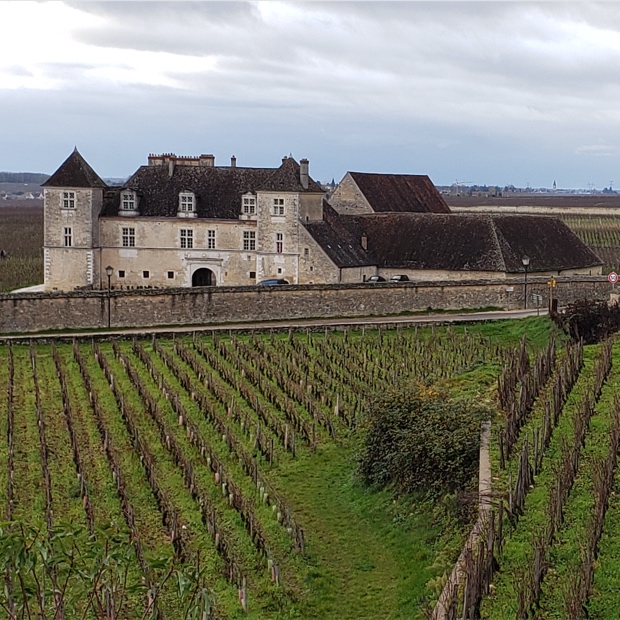
WineAlign