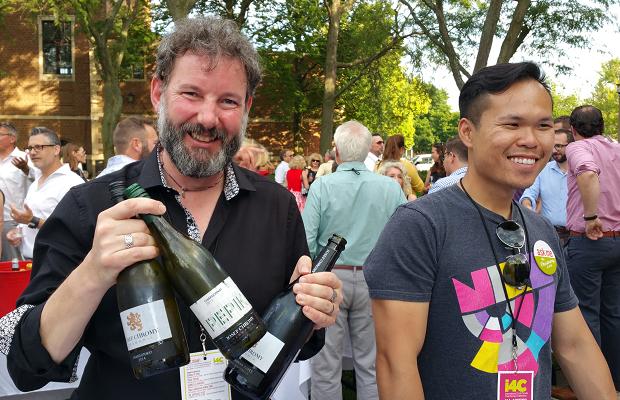
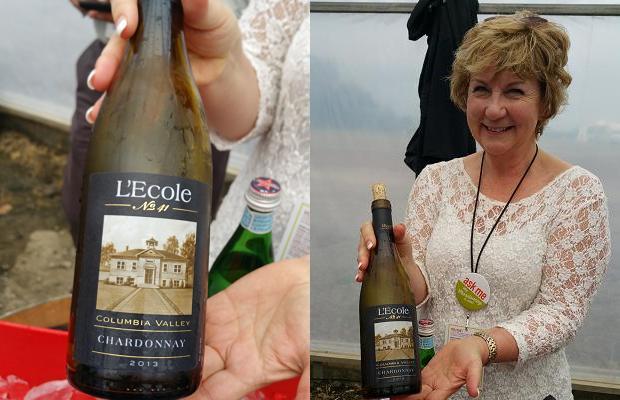
In the cool, cool, cool of the i4C

Cool Chardonnay on ice

In the cool cool cool of the evening
Tell ’em I’ll be there
In the cool cool cool of the evening
You better save a chair

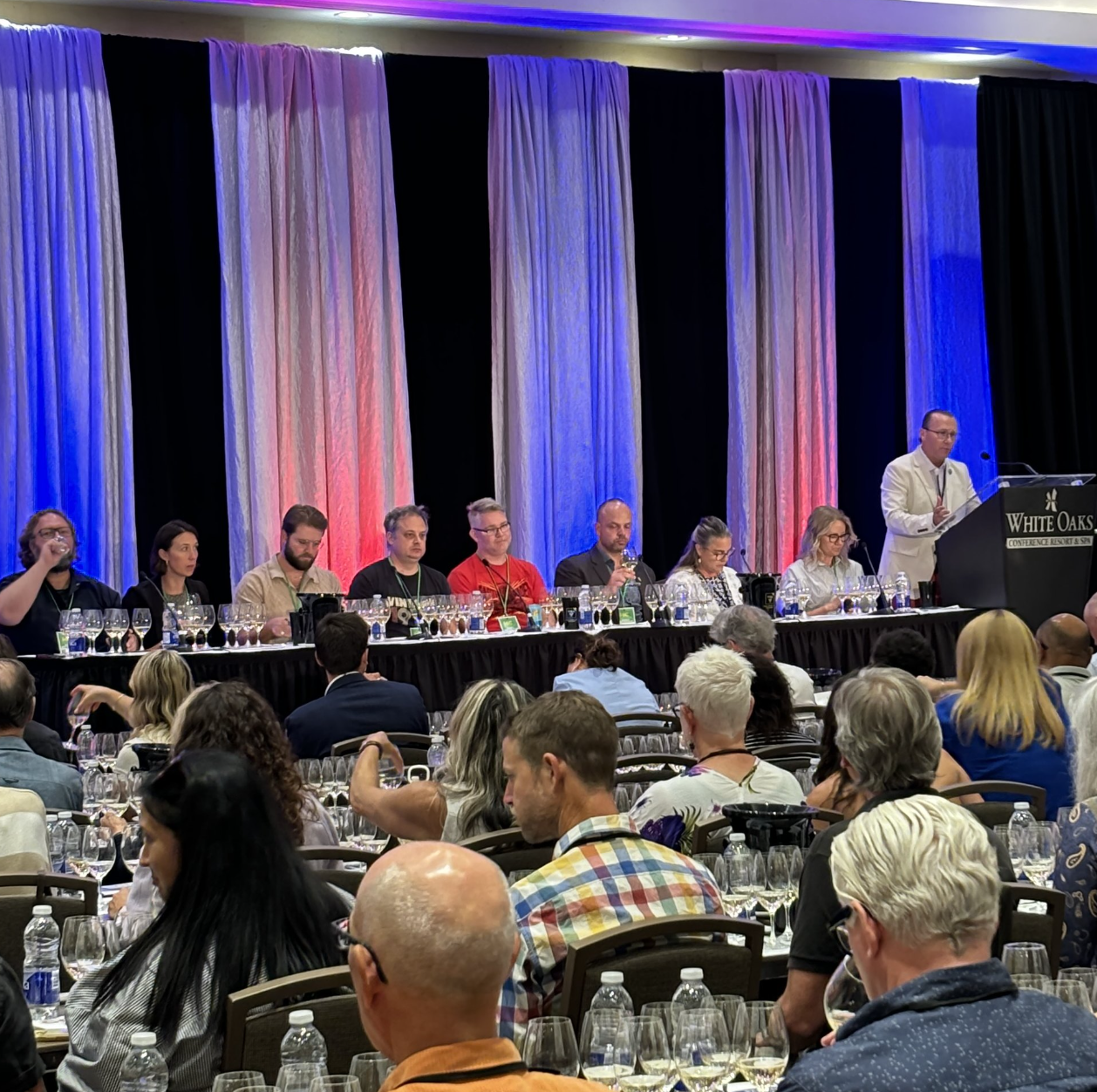
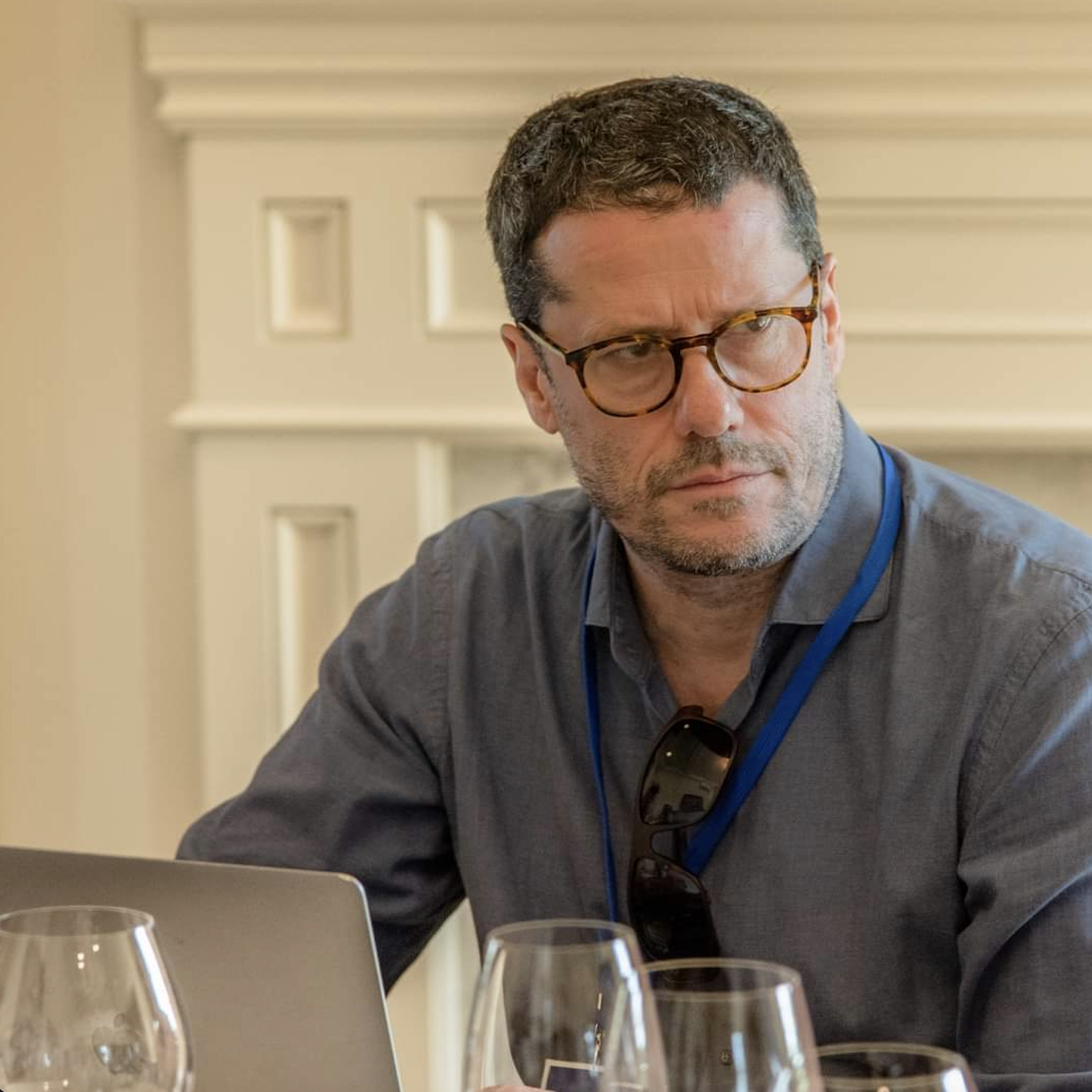
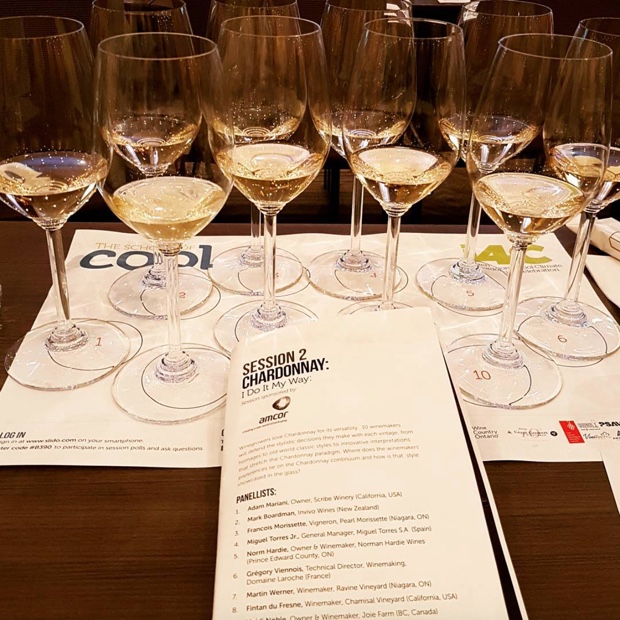
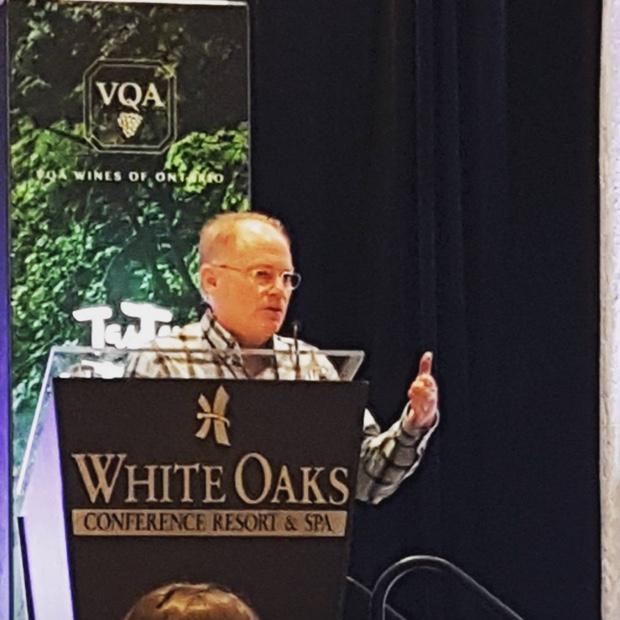
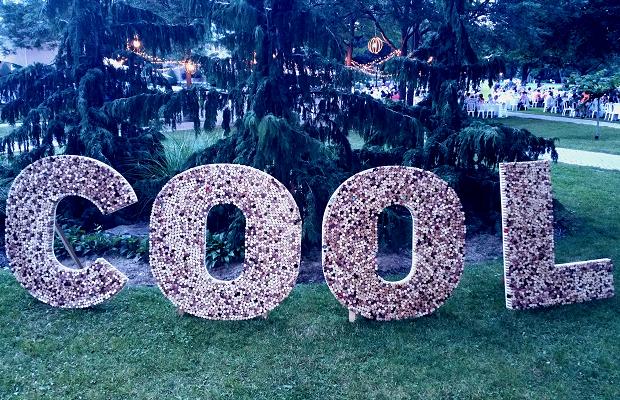
The 15th International Cool Climate Chardonnay Celebration took place just a few weeks ago and while every annual Niagara chardonnay experience is cool, this above the clouds 2025 edition was something other. Unexpectedly Godello was tasked with steering the educational component as emcee for the Thursday School of Cool at White Oaks Conference Resort and Spa. An honour and indeed a privilege it was, to share a stage with Canadian and international winemakers, winery representatives, distinguished minds and presenters. There was a palpable buzz in the room at this year’s School of Cool and also an uncommon level of expert conviction conferred by the moderators and panelists. The Canadian wine industry has assuredly come of age and chardonnay’s cool weekend was the perfect time to express the explorative, collaborative and measurable maturity of experience. Over those four days from July 17-20, the i4C was the coolest place to be.
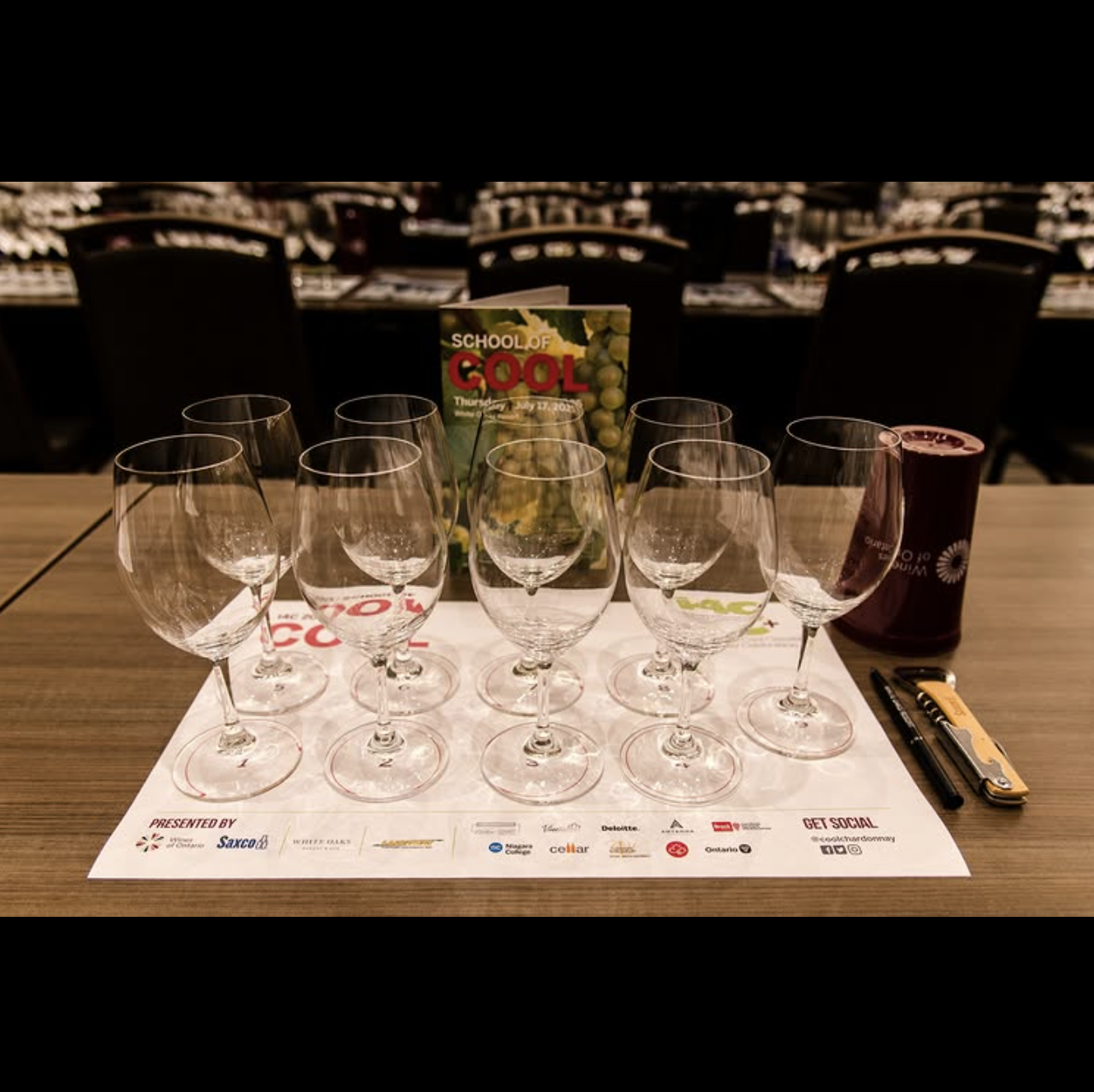
The School of Cool July 17, 2025 Edition
(c) Cool Chardonnay

Godello is pleased to share his words spoken to the audience that day.

“Good morning, and welcome to Day One of #i4c, the coolest conference in the world. My name is Michael Godel, a wine writer based in Toronto, sometimes in Italy and in my spare time I play both critic and partner at WineAlign. When I was asked to emcee this year’s School of Cool I thought hmmm, compared to those who have previously served this post, what can I contribute? I’m neither as funny or savvy as my colleague John Szabo, not as witty and sharp as Chris Waters, certainly less accomplished than both Magdalena and Suzanne. But I am good at surrounding myself with smart and talented people. I look forward to introducing many of them to you today.

We are thrilled to welcome all of you for the 15th year of the i4C! (Holds up applause sign). Every year winery representatives and people who adore chardonnay from around the world congregate here in the Niagara region to celebrate the variations, intricacies and philosophies behind making cool climate chardonnay. I once asked the question, How can i4c the future through cool chardonnay? Chardonnay is cool, then, and now. Don’t we always seem to foresee 4C a future filled with chardonnay?

This year at i4C we have 43 participating wineries, including 12 internationals from England, France, Tasmania, Argentina and two wineries from each British Columbia and Nova Scotia.

Today, we are meeting on Indigenous lands, over which Indigenous people still hold jurisdiction. In the Niagara Region, where 27 of our participating wineries operate, we are meeting on the shared lands of the Haudenosaunee, Anishinaabeg, Wendat, and Chonnonton nations. A key treaty governing this territory is the “Dish with One Spoon” agreement. This treaty between the Anishinaabe, Mississaugas and Haudenosaunee  binds them to share the territory and protect the land. Subsequent Indigenous nations and peoples, settlers, and all newcomers, have been invited into this treaty in the spirit of peace, friendship and respect. We all share the responsibility of ensuring the “Dish” is never empty, meaning that we must take care of the land and the creatures we share it with.

I would like to take a moment to acknowledge and thank our Educational Committee: Scott Wilkins, Rob Power, Elsa MacDonald, Dr. Jennifer Kelly of CCOVI at Brock University, Peter Rod of CCOVI and Niagara College and Trisha Molokach, our esteemed, tireless and incredible Event Director. Twelve years Trisha has poured heart and soul into this event. Thank you.

This weekend is made possible by the contributions of a dedicated group of volunteers who have spent countless hours preparing for this weekend. We have a wonderful team of folks pouring wine for you today, so if you happen to see someone in a colourful I4c t-shirt, make sure you take the opportunity to thank them for their time and efforts. None of this is possible without them.
We would love to see any photos or videos that you take today, so please be sure to tag us. Our Instagram handle and the i4C hashtag are both listed on the bottom of your name tag and on your tasting mat.

At the end of the first session I will get to more specific housekeeping details and we do have a full schedule ahead of us today. There will be three educational sessions and tastings, with coffee breaks and a lunch in between, followed by a walk-around tasting in the afternoon. Please refer to the booklet provided at your seat for more information on timing and session details.

Before I proceed I would like to take a moment to remember a great friend of the i4C. Just a few weeks ago we lost Nicolas Potel, a great winemaker, négoce, father and friend. We miss you Nico and all of us wish you were here. But believe me I can’t think of anyone who would want us to just go out and have a grand time. Nicolas Potel came from Bourgogne for the very first event and his winery Domaine de Bellene was present here at i4C eight times, including last year when his son Alphonse joined us for the weekend. We should all raise a glass of cool chardonnay to the great Nicolas Potel.”
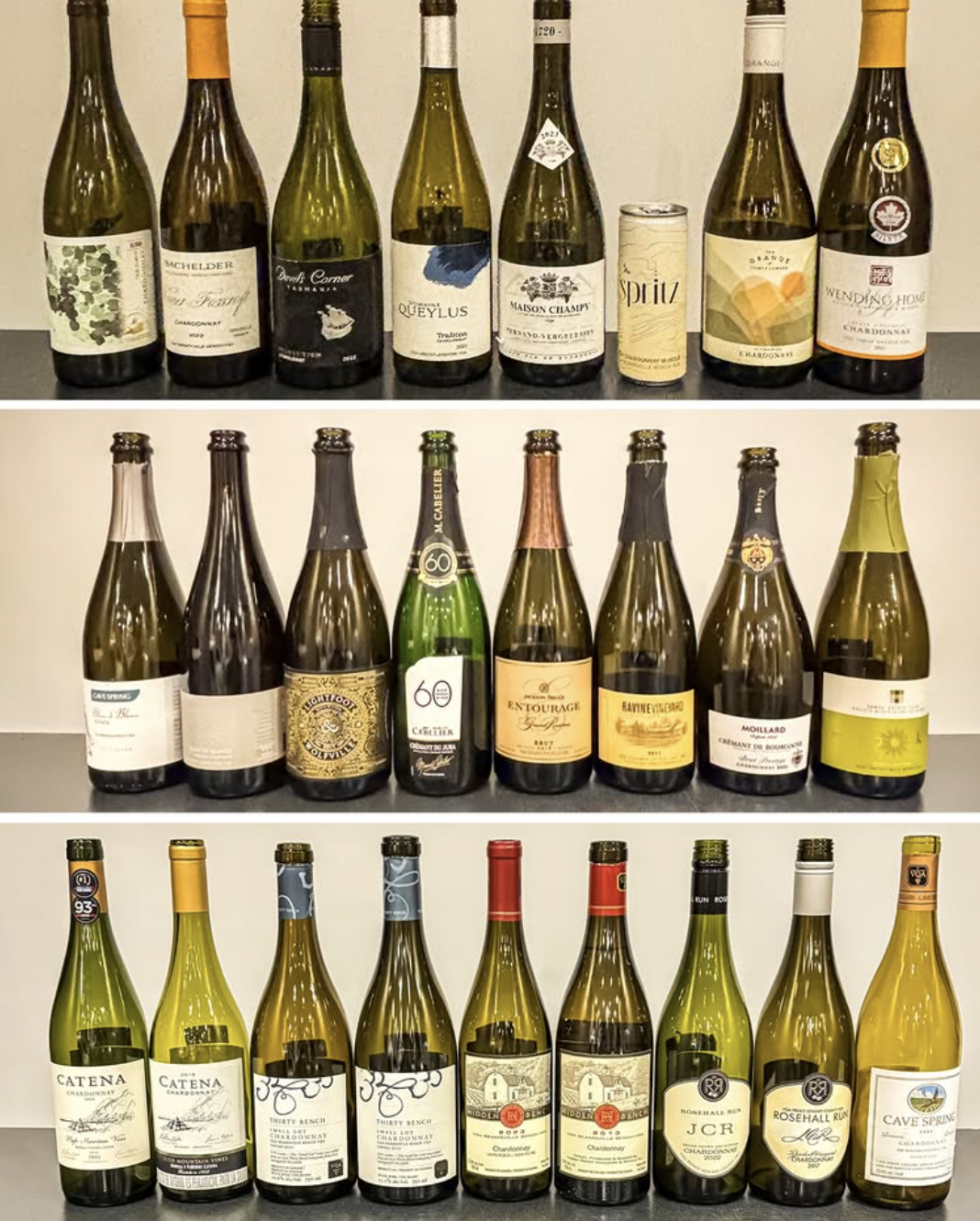
Coolest Chardonnay of The School of Cool (c) Cool Chardonnay

Session One

“Our keynote speaker for this year is Clive Pursehouse. Based in Seattle, Washington, Clive Pursehouse is Decanter’s US Editor and Regional Editor for the Pacific Northwest. He is the creator of the site Northwest Wine Anthem, Culture Editor at Peloton Magazine and the newly minted Fausto Magazine. This I gather makes him an avid cyclist. In fact I’m told he is a fan of Cyclocross, which is a unique, non-Olympic discipline of cycling that can be best described as a cross between road cycling, mountain biking and steeplechase. Wait, there’s more. Cyclocross takes place on technical outdoor courses of grass, dirt, mud, sand or sometimes snow. Snow. Still more – Pursehouse broke his pelvis cycling in the middle east and spent who knows how long in casts and wheelchairs. In other words and though I’ve just met him, not unlike a close friend I have known since nursery school who is an ultra-marathon runner, I would have to say that Clive is clearly nuts. And he’s from Pittsburgh (I like Pittsburgh!) but he does know a lot about wine, including chardonnay, especially those beauties from Washington and Oregon. I would say that his mix of intense exercise, the snow part and wine study make him ultra qualified for this role as our keynote speaker. When our Concierge asked if he had any allergies, Clive replied, “yah, tusk.” Tusk? Well Clive, this walk up song is for you. (Cue Tusk by Fleetwood Mac). Allow me to introduce Clive Pursehouse.”

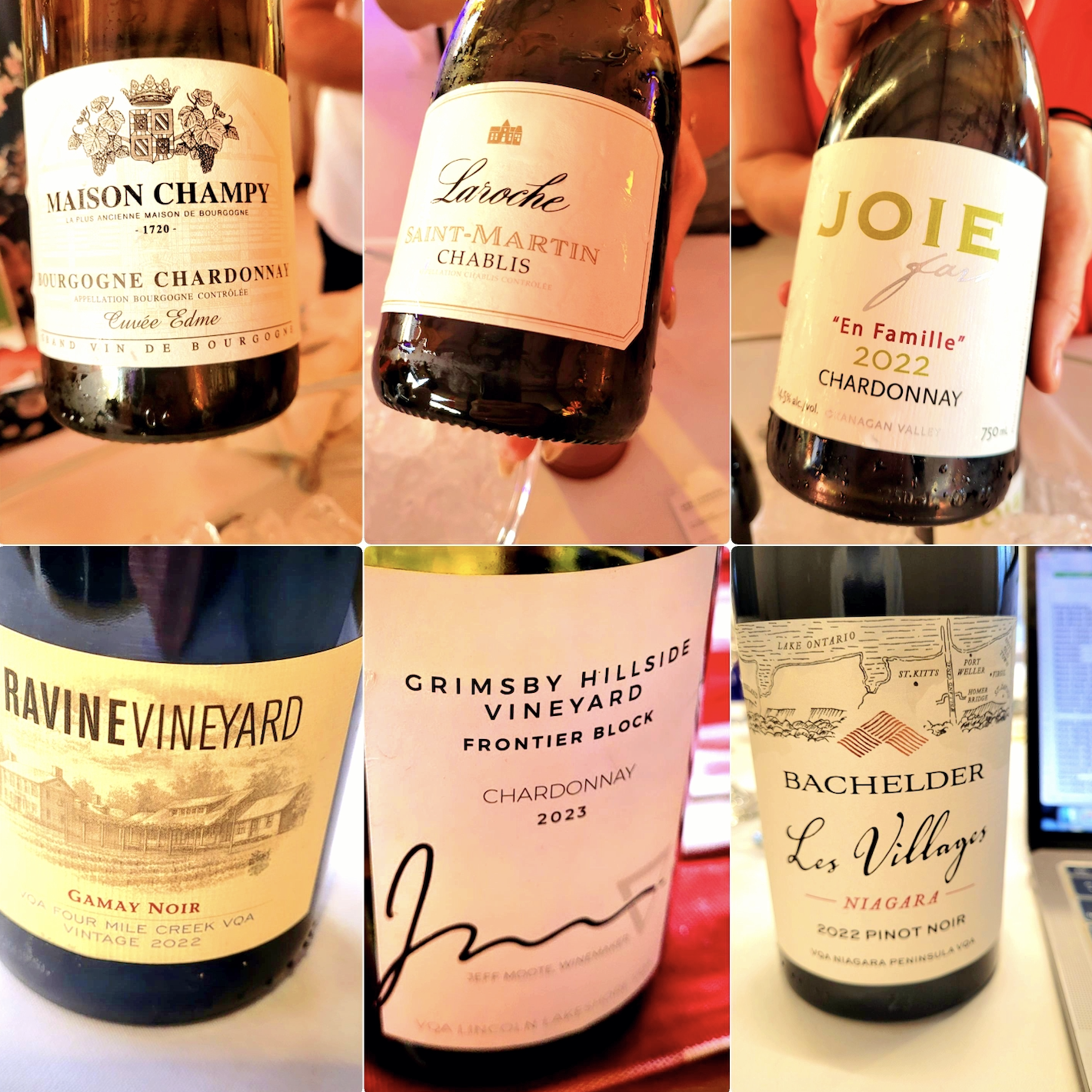
Pursehouse began by saying “cool” starts with Miles Davis. Then there was Camus. “Cool is aloof. It resides on the fringe.” Finally a description that applies to Kim Gordon of Sonic Youth. “Cool is aspirational – It has an elusive character we find attractive.” Then like André 3000, “wine needs cool voices and cool critics. Cool is coming and it can’t be stopped.” Lastly, The Who because “the kids are alright, meaning it’s time to partner with cool, young voices who will celebrate edginess, low alcohol, fresh fruit and minerality. “The loneliness epidemic is real,” reminded Pursehouse, “and wine can be the healer, can bring people together and make things better.”
Session Two

“Eugene Mlynczyk is national sales manager and fine wine ambassador for Principle Fine Wines, the luxury team within Arterra Wines, Canada. He attended Stanford University in the 1980s, majored in art and earned a Master of Fine Arts degree in Painting from Indiana University. Eugene earned the title of Master of Wine in 2015 and I will always remember a memorable trip spent with him at Mondavi in 2017. Session Two is titled Sparkling Chardonnay – No Occasion Required. Please welcome moderator and Master of Wine Eugene Mlynczyk.”

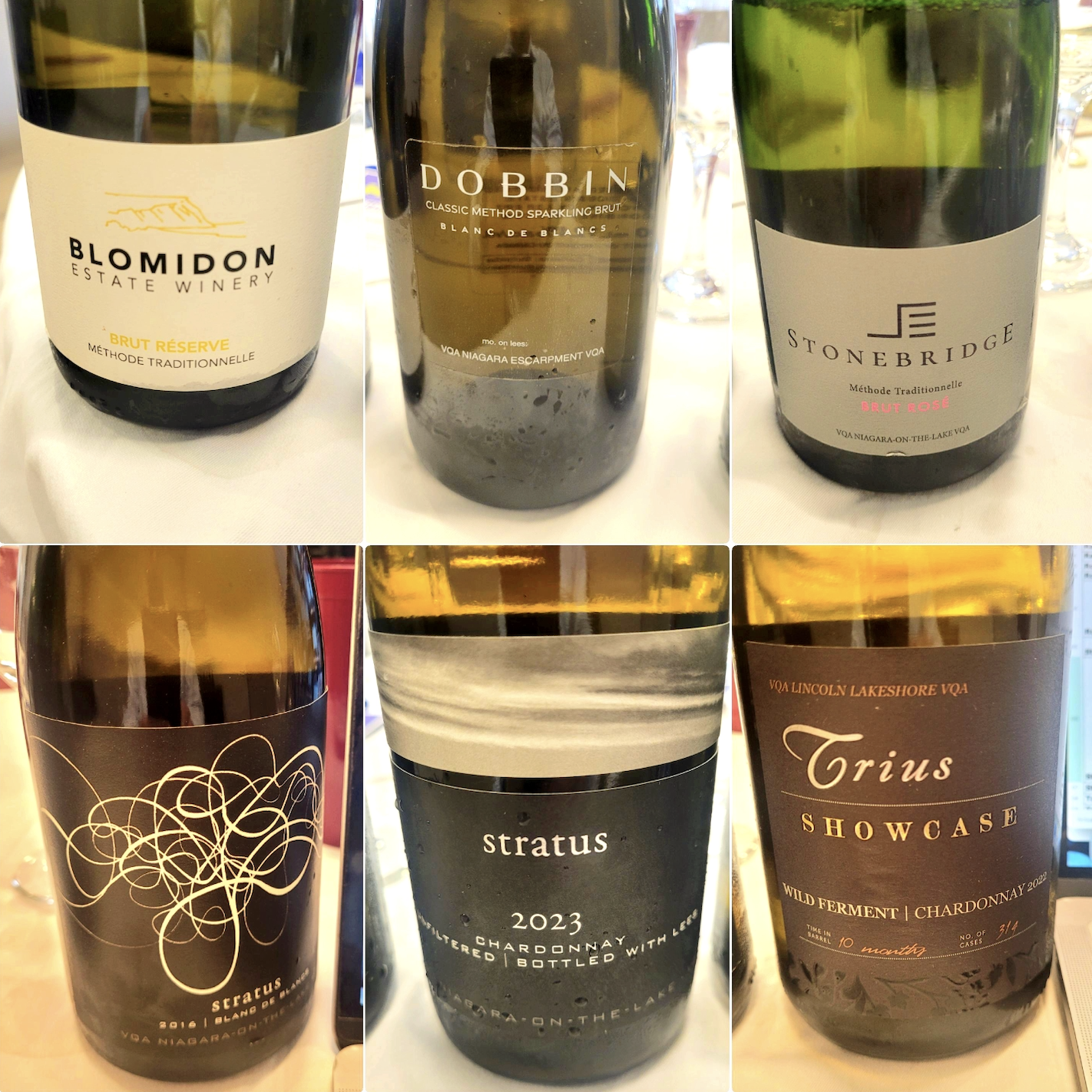
“The world can’t get enough bubbles and chardonnay is at the heart of the world’s finest sparkling wines.”
Session Three

“Dr. Jennifer Kelly PhD has been a Scientist in Oenology at Brock University’s Cool Climate Oenology and Viticulture Institute since May of 2023. I had the pleasure of sitting on the 2024 Experts’ Tasting Panel with Dr. Kelly who brought a much needed scientist’s perspective to assessing Niagara wines in a room with nine winemakers, one sommelier and one journalist. Hanging around Jen certainly helped me to trust the science. I think you will all be intrigued by Jennifer’s approach and moderation for session three called Chardonnay’s Coming of Age – A Retrospective. Please welcome Dr. Kelly.”
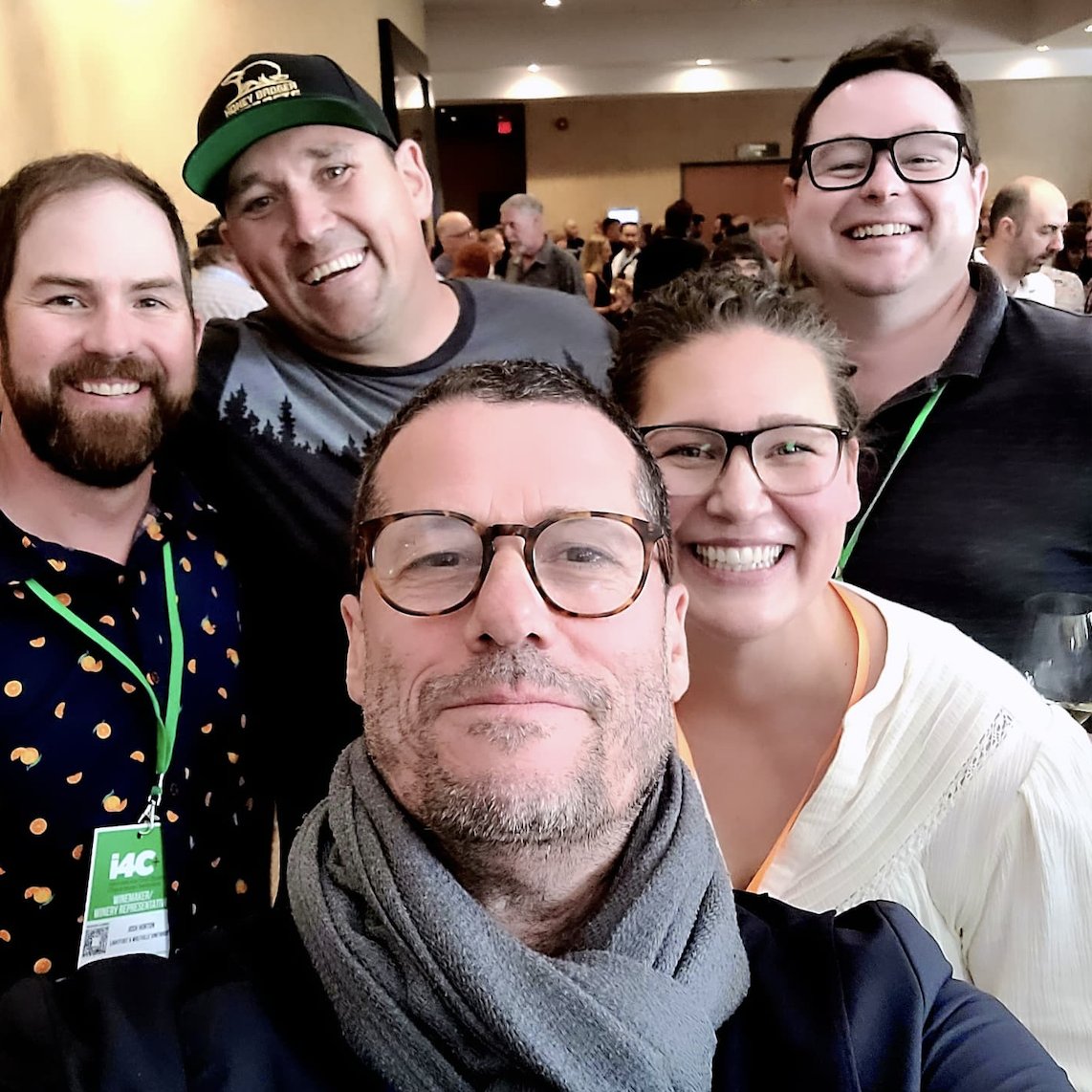
School of Cool squadra; Josh Horton (Lightfoot & Wolfville), Marty Werner (MW Wines), Ben Minaker (Andrew Peller) and Dr. Jennifer Kelly (CCOVI)

“This has been a true pleasure for me, to be a part of being a messenger for cool chardonnay. I am grateful for the opportunity. To the i4C committee, Trisha and her unbelievable team, our terrific AV guys and the White Oaks staff. Bravo. Thank you to Clive for leading us into cool territory with a refreshing approach. I loved the image of Kim Gordon but personally Clive I would have chosen Tina Weymouth or Kim Deal – but we can argue that out later. Kudos to our three session moderators, Clive, Eugene and Jennifer. Your time and attention is seriously appreciated. To all our panelists, your insights are what we come for and to learn anew each and every year at the School of Cool. And to all of you for being here, I hope there was something here for everyone and we’d love to see you back next year. Remember, Chardonnay is never too cool for school. Just outside the doors you will find all the chardonnay available at a walk around tasting which is scheduled to last until 6:15 pm. Happy tasting and thank you all for coming and see you again in 2026!”

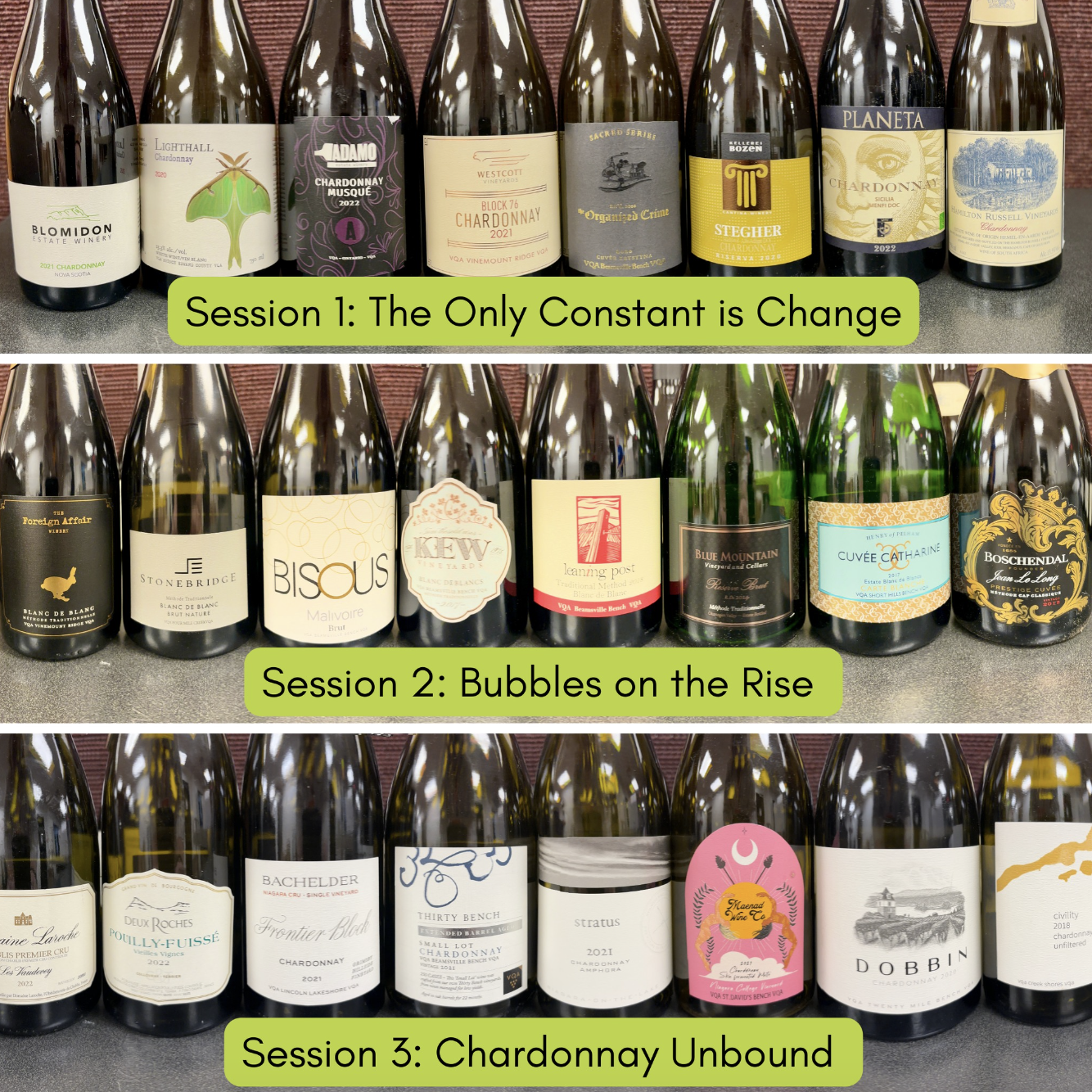
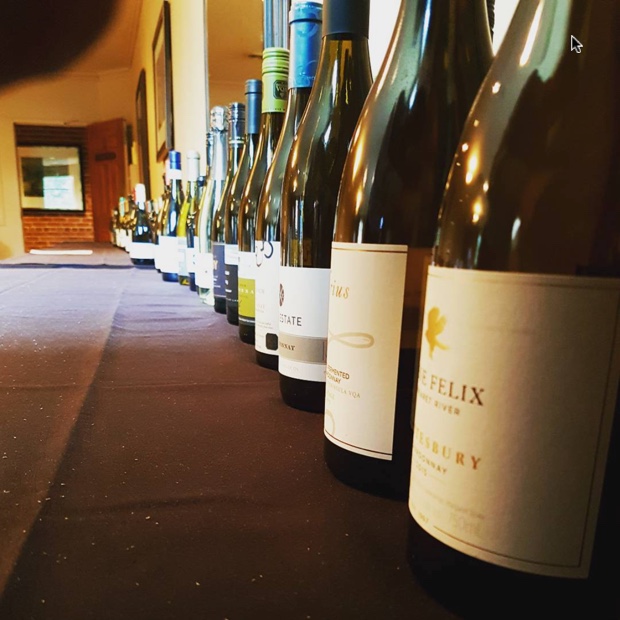
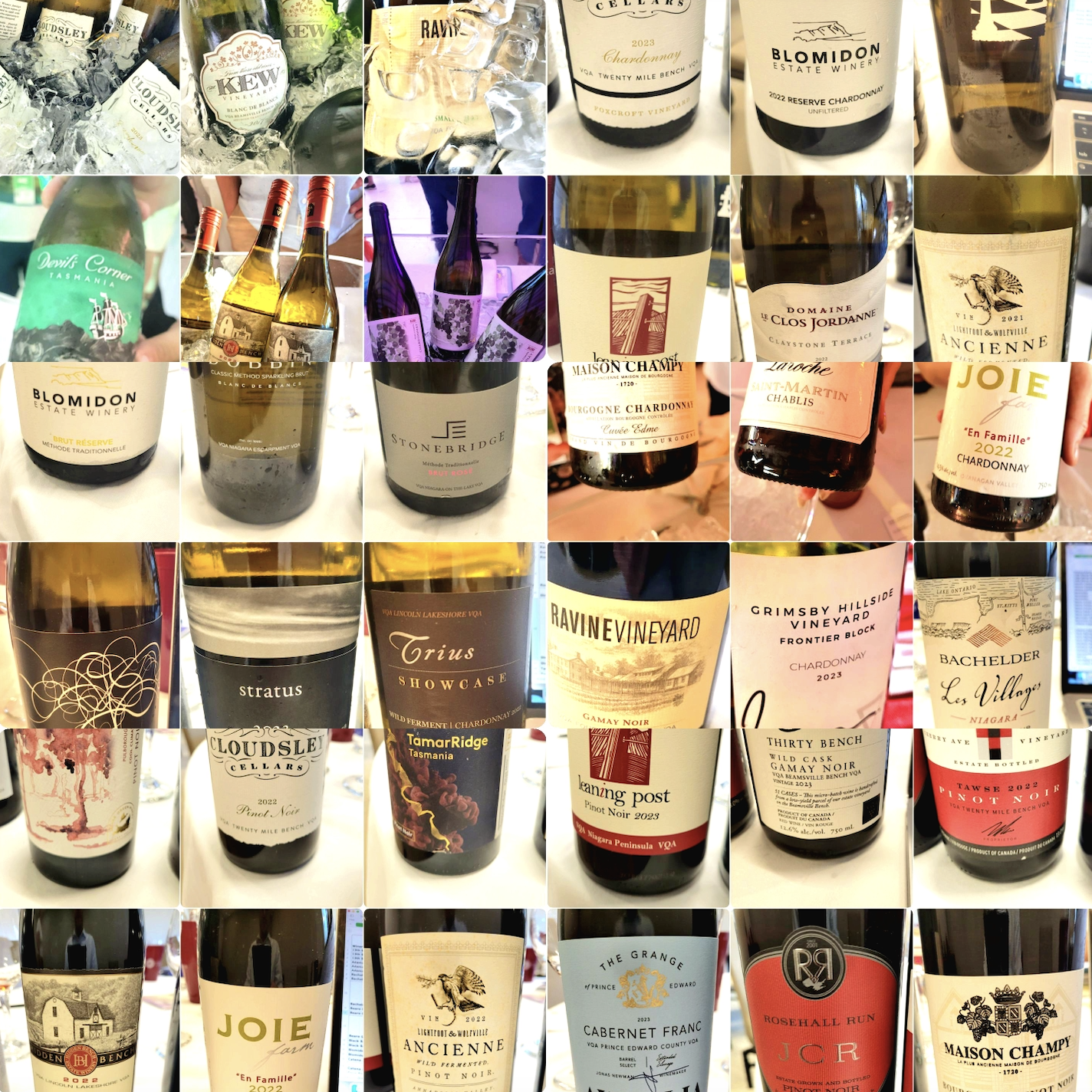
Godello tasted and has reviewed 80 wines during the four-day conference; At the School of Cool; In the White Oaks media room set up by the Wine Marketing Association of Ontario team led by Andrea Peters; At visits to Cave Spring with Gabriel Demarco and Malivoire with Shiraz Mottiar; An evening at Ravine Vineyard with Jeff Moote of Divergence Wines, Jonas Newman and Marlise Ponzo of The Grange of Prince Edward, Chris Thompson and Stephen Del Degan of Volta Estate Winery and Ron Giesbrecht from Wending Home Estate Vineyards & Winery; Lunch at Black Bank Hill with Taylor Emerson, Jonathan McLean and Meg McGrath; At the evening events held at Friday Night Flights, Niagara District Airport, Niagara-on-the-Lake and at Chardonnay in the Vineyard World Tour Tasting and Dinner at The Riverbend Inn, Niagara-on-the-Lake. Here are the notes.
The Sparkling

Blomidon Brut Réserve NV, Annapolis Valley, Nova Scotia

Next year and disgorgement, same five years on lees for Blomidon’s signature sparkling wine and now more depth. Once again time is the impetus (and requiem) to see results, both of which have manifested into a bubble of greater charge than so many peers. Mainly chardonnay from that strip of land running up from the Minas Basin and jutting through the Bay of Fundy. Depth yes and also a low rumble of botanicals that make this a most agreeable sapid sparkling wine from Nova Scotia, like a cool night that follows a warm day.  Last tasted at i4C, July 2025

Put to bottle in 2019 and so five years on lees ain’t nothing to develop complexities, eccentricities and potential variability. This pour comes out of sound and vision, disgorged in March of 2024, set to be released in the early Fall. Makes great use of 2016 and 2017 fruit, plus a small amount of the frost vintage 2018. Youthful, appropriately Blomidon Peninsula/Annapolis Valley tightly wound and in a way very chardonnay, though not glaringly so. “For us this is the future for non-vintage,” explains Simon Rafuse, “and to save the cooler vintages for Blanc de Blancs.” It’s a reverse engineering kind of approach. Simply put, in cooler vintages you can’t push wines through malolactic and so chardonnay is best purposed for sparkling when acids are high and pH levels are low.” Like 2011, but not 2010 and Rafuse adds that “the problem is you have to wait many years to see the results. But it’s worth it because they are really good.” True that. Drink 2024-2028.  Tasted at i4C, July 2024
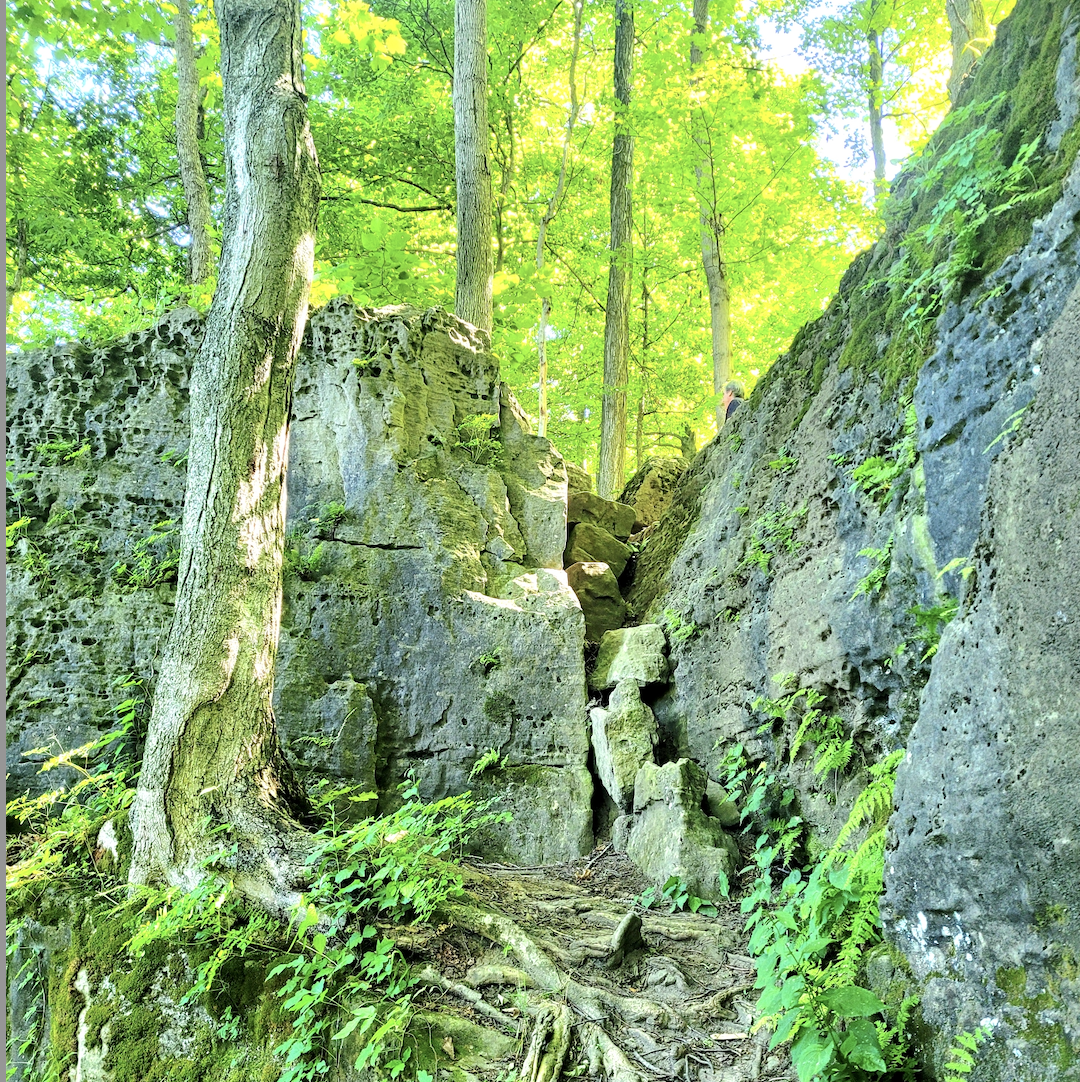
The Adam Steps, Niagara Escarpment

Cave Spring Estate Blanc De Blancs NV, VQA Beamsville Bench, Ontario

Over the course of tasting the non-vintage Blanc de Blancs over 13 years it is noted how the chardonnay bubbles have evolved yet stayed the course and ultimately improved. From strength to strength with a wine that now bears the stamp and waves the banner for cool climate sparkling wine made with its most essential grape. The team has struck balance for a wine to be used, enjoyed, employed and celebrated all the bloody time. Simply put “ripe fruit and acid structure” said by by winemaker Gabriel Demarco, “putting in accumulated knowledge to recognize a place.” Which by the way includes 50 percent clone 777 chardonnay musqué originally built into the program by OG winemaker Angelo Pavan. Drink 2025-2030.  Last tasted at i4C, July 2025

It matters not whether this Beamsville Bench Blanc de Blancs is p[riced at $24.95 or $32.95 because it still represents the finest Ontario value in chardonnay sparkling wine. Bar none. Why trust your hard-earned, looking to celebrate or drink bubbles on a Tuesday dollars on anything else. Last tasted November 2024. Classic, sharp, intense and ideal. A ripper, “and I love that” says Stephen Gash. Dry as the desert in such a playfully proverbial way. Scintillant extraordinaire.  Last tasted at i4C, July 2024 and November 2024

For the first time in quite some time the next look at the Cave Spring Estate Blanc De Blancs is bang on one year later and so yes, freshness is the thing. Crisp and crunchy, stylistically so consistent and really set up to act as the dictionary entry for chardonnay as sparkling wine out of Niagara. It’s just so spot on, high in energy and exacting for style, place and estate.  Tasted November 2023

Sees a minimum 30 months on lees ahead of disgorging and this chardonnay was likely sprung in the Spring of 2022 with a good dose of 2019 fruit layered within. In other words a true-blue varietal vintage to espouse the latest virtues and expound upon the great elevator in Niagara Blanc de Blancs sparkling wine. Never disappoints and continues to rise, surge ahead, power forward and capture necessary tension. The offset here is more botanical tonic and weight. A new complexity.  Tasted November 2022

It seems every three years is the interval for reviewing this arch-classic Ontario sparkling wine but be assured that the time in between actually drinking this fine Niagara wine is a much tighter and repetitive proposition. Terrific balance accorded and afforded from this latest cuvée with equal and opposing trips switched on by yeast and lemon, ginger and tea. Good toasty bubble for any and all toasts, plus innocuous glasses for drinking in between.  Tasted October 2020

Angelo Pavan and Cave Spring sure do love to fashion a toasty sparkling chardonnay. Still in the biscuity, flinty and textured Champagne vein though really far from the last B de B tasted back in May 2014. No longer a case of fruit from in and around the 2008 vintage it would have to be the cool as lightning 2011 by my calculations with likely some warm and rich 2012 fruit. The relationship delivers the best of all worlds; tart, bright acidity and linear functionality with creamy, rich orchard and stone fruit, generous and round. All together now.  Tasted September 2017

Today a fine misty Blancs, looking very much the coppery, crisp slice of apple it need be. Slate stone tone directive, grapefruit very much in play. A slice of tart key lime pie.  Tasted July 2014

From my earlier May 2014 note: The freshest style of the #ONfizz B de B flight. Fruit, escarpment bench stone layering, richesse, biscuits and toast are all in. Acidity meets complexity

From my earlier, December 2012 note: Sees no malolactic fermentation and sits at the top end of dry (12-14 dosage). Most of the fruit is 2008, despite the NV designation. A soda fountain of argon and nitrogen bunsens forth through clean lines and carries an entire cider house orchard of Spartan apple. This one certainly hints at Champagne-like characteristics, of brioche and toast. The apples never relent
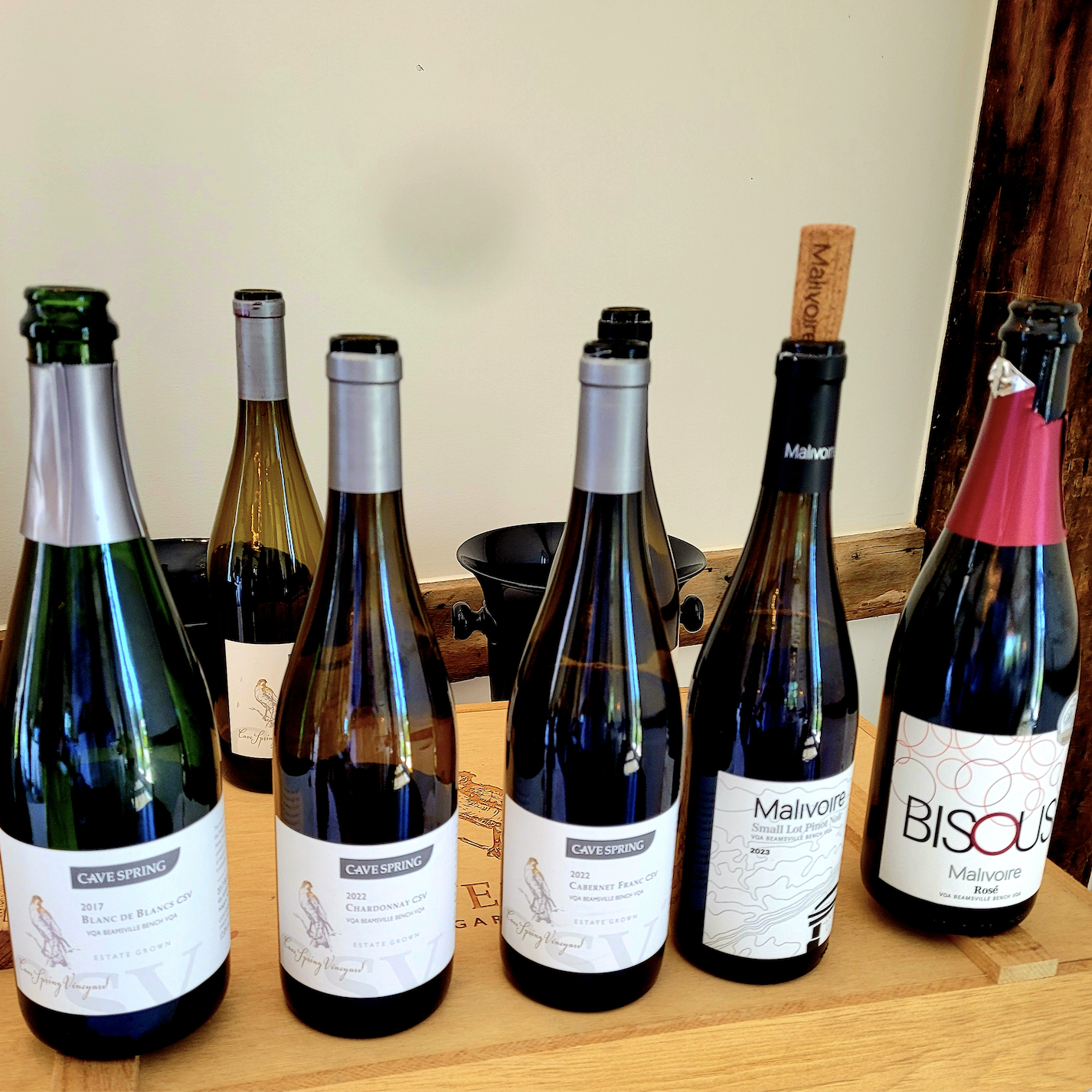
Cave Spring CSV Blanc De Blancs Natural Brut 2017, VQA Beamsville Bench, Ontario

The chardonnay scintillant for a toasty style of Blanc de Blancs in pointed appeal. Must be 80-plus months on the lees for this disgorgement and a bubble as fresh as the day it was conceived. Controlled or let’s say restrained excitement, vertical, a sparkling wine of backbone without hitch or bend, taut though generous of flavour. In a terrific place right here and now.  Last tasted at i4C, July 2025

Home (Cave Spring Vineyard) which means old chardonnay vines for Blanc de Blancs with added human experience to set up for top regional excellence. This from the upside down vintage which meant that chardonnay ripening was not the same as it ever was and so come here expecting something different. In fact the 2017 takes a turn for the toasty and excitable, into tart and scintillant territory for B de B of a singular style. Even for the most consistent sparkling wine house of them all but all things being equal this Beamsville Bench bubble creates a new fashion all its own. Drink 2024-2027.  Tasted November 2024

Divergence Blanc De Blancs Hughes Vineyard 2020, VQA Lincoln Lakeshore, Ontario

Made from a place “of big skies and lots of sunshine,” tells winemaker Jeff Moote and that is why he chose the double “L’ to make his inaugural sparkling wine. The clay-loam-till with a strain of limestone delivers richness for chardonnay and into sparkling wine. Eight months further, seemingly the same disgorgement (October 2024) and a slight exaggeration of the toasty-autolytic notes, but now with more of a soft creamed centre. Orange flavour now coming through, perhaps owing to that CLT terroir.  Last tasted at i4C, July 2025

Small production of less than 600 cases for a 100 percent chardonnay from the Lincoln Lakeshore sub-appellation’s Hughes Vineyard. A whole cluster pressed, cuvée juice only used and the base wine barrel fermented in neutral French wood where it is aged six months on lees. Follows with 42 months en tirage and just two g/L of sugar added. Essentially dry and in the scintillant style for Blanc de Blancs, screaming grape and acidity, accented by dried herbs and orchard fruit. In a serious vein, not what could be described as generous and conversely needing bottle time to settle into its parched and piqued skin. A bit severe and this from a warm vintage. Intensity is all in. Drink 2025-2029.  Tasted November 2024

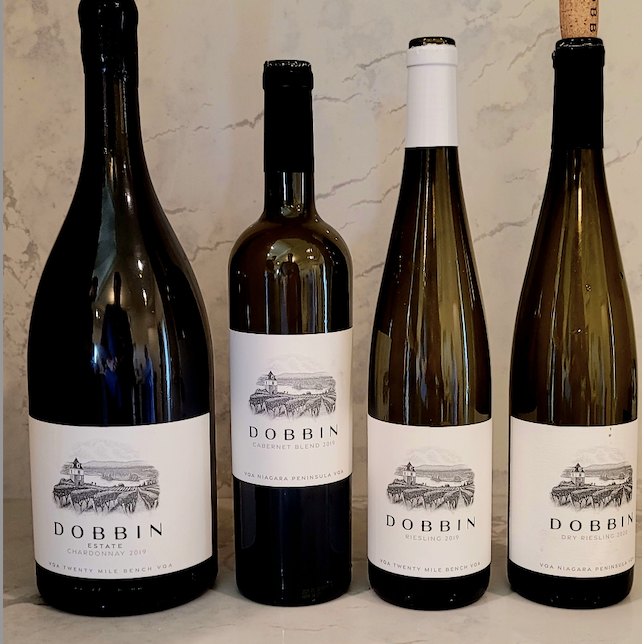
Dobbin Estate Brut Blanc De Blancs, VQA Niagara Escarpment, Ontario

The newest and ambitious chardonnay in the Dobbin project is Blanc de Blancs, Brut in style and non-vintage. Perfumed and chock full of relatively ripe chardonnay flavours, accessible and immediately enjoyable. It should likely be surmised that subsequent releases will have seen longer lees aging time with this shedding the feel of 30-36 months. No doubt strikes an almost perfectly equanimous balance between sugars and acids in the 7-ish g/L range. Not yet developed into the ambient, enigmatic and complex sparkling wine it is detailed and destined to become – yet there is elegance, softness and charm in this (presumably first) issue. Smells, tastes and feels like celebration. Drink 2025-2027.  Tasted at i4C, July 2025

Jackson Triggs Niagara Entourage Grand Reserve Brut 2018, VQA Niagara Peninsula, Ontario

The 14th vintage of this silver medal winner at the 2025 WineAlign National Wine Awards of Canada and a unique Brut made in an ulterior intensified fruit style. An entourage of a bubble, a word that can translate as “surroundings” and the concentration of chardonnay emotions meeting flavours speaks to a grand place on the Niagara Peninsula. Entourage is half and half chardonnay plus pinot noir with two percent pinot meunier. Tastes like a mouthful of minerals with a dusting of sugar dosage and a shot of botany, a.k.a. tonic at the finish. Drink 2025-2028.  Tasted at i4C, July 2025

Lailey Stonebridge Méthode Traditionnelle Brut Rosé 2021, VQA Niagara-on-the Lake, Ontario

Classically composed and delineated Brut Rosé blessed by top quality fruit, a strawberries in cream softness transposed against a frothy bubble of vitality and airiness. Tons of flavour here, from the red berries through savoury elements inductive of leafy chicory greens and nettles. A beautiful bitterness juxtaposed against reliable dosage, harmonious while still expressive of individual parts. Trusted and effective, on the road to knowledge and future finer results.  Last tasted at i4C, July 2025

A chardonnay purposed grown and cropped then “pinkified” with just two or three percent Lailey zweigelt for what it truly an original look at Niagara sparkling wine. Picked on September 12th and 13th with just a bit left for still wine and perfectly ahead of the September rains. Recently disgorged (after approximately 20 months on lees) and of a season that reminds Ann Sperling of 2006. Very phenolic vintage of high caste character, just not the most intensity and power. Crunchy like the other ’21 Rosés, salty and as mentioned, quite phenolic. Not an autolytic fizz but definitely one that combines precision with pleasure. Just a tweak of tannin at the finish. There are 83 cases made and the wine will be released in a few months. Drink 2023-2025.  Tasted April 2023
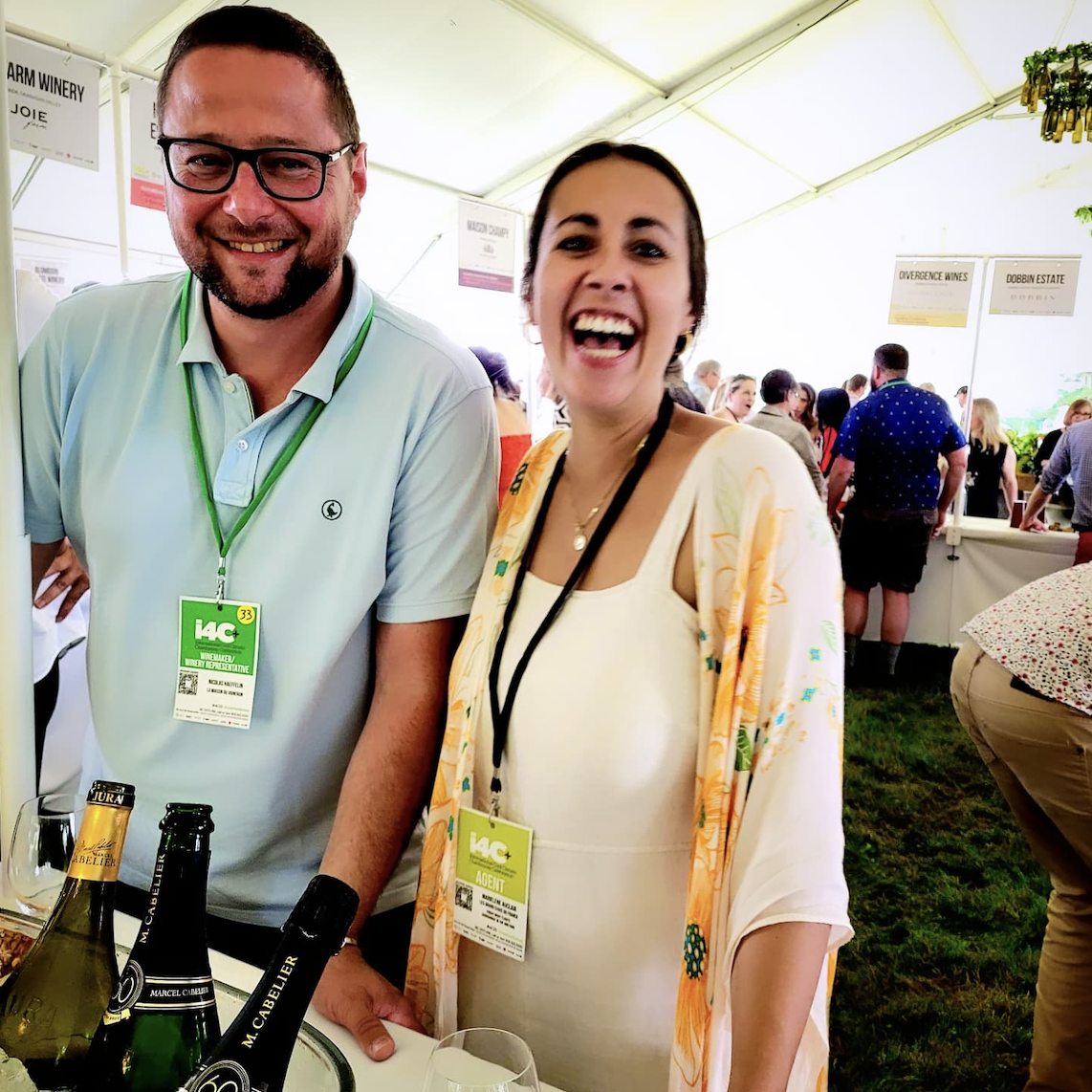
The team from Maison du Vigneron

La Maison Du Vigneron Crémant Du Jura Marcel Cabelier NV, Jura, France

Truly Jura, no matter whether the chardonnay is made into still or sparkling wine, with the unmistakable earthenware aspect speaking vividly to terroir. This may be non-vintage but there just feels to be a lot of sunshine accumulated into this fruit and so the orchard is well represented in the chardonnay bubble. Lower acidity (at 4.15 g/L) and the creamy palate is as generous as they come. Drink 2025-2026. Tasted at i4C, July 2025

Lightfoot & Wolfville Brut 2019, Nova Scotia

Surely more richness from the 2019 Brut and still the cool interpretation of the Annapolis Valley’s maritime climate. You must consider this amazement of success from a place that resides at the furthest edge of viticultural promise. “It’s challenging” says Josh Horton, “and we’re starting to see the odd hot vintage” which this wine somehow expresses. “Chardonnay checks all the boxes for us, acidity, structure, complexity and versatility, not mention walking right through a winter with a polar vortex.” Brut 2019 is fleshier and balanced, ripe and zesty. Yes, angularity can be beautiful. Drink 2025-2029. Tasted at i4C, July 2025

Malivoire Chardonnay Musqué Spritz (In Can) 2024, VQA Beamsville Bench, Ontario (250ml)

Perhaps the first Ontario chardonnay musqué packaged in a can, experimental, light, minimally frothy, also with sweetness and floral. A semi-sparkling wine of arrested fermentation at nine percent alcohol with 40 g/L of residual sugar. Easy drinking, like juice with some alcohol, almost moscato d’Asti stylistically speaking. Candied, of fuzzy peach and ginger for adults only. Fun stuff from winemaker Elisa Mazzi and quenching for what gets you hot.  Tasted at i4C, July 2025

Malivoire Bisous Brut 2012, VQA Beamsville Bench, Ontario

Tiraged in 2013, of 60 pinot noir and 30 chardonnay for what was at the time just winemaker shiraz mottiar’s third kick at the sparkling can. Fermented in older barrels and aged 10 years on the lees. Oxidative and gingered, full cupboard of exotic spices. Dynamic, pulsating, pretty dynamite experimental bubble. Only 20 bottles made. First release of Bisous was 2016. Make more of this shiraz. That’s an order. Drink 2025-2027.  Tasted at i4c, July 2025

Malivoire Bisous Brut NV, VQA Beamsville Bench, Ontario

Of 70-ish chardonnay with 30-ish pinot noir disgorged in May 2023 and so think about fruit from 2019 which means a top sparkling vintage because neither fruit nor acidity saw any compromise. Nearly dry with just 2 g/L of dosage, a negligible number that only helps to coax out the natural sweetness in the wine. Quintessential house bubble for anyone who seeks and can see the top value (along with Cave Spring) in a $30-35 traditional method Ontario sparkling wine. Drink 2025-2028.  Last tasted at i4C, July 2025

Having recently tasted Bisous just four months ago you might think there would be no change when in fact things have. Tension is now juxtaposed by a truly creamy feel on the palate and so next tasting is next level gained. Bisous is now a perfect foil for tortellini and crispy pancetta with a drizzle of basil infused oil and some aged pecorino. Please. Tasted November 2024

Not simple. Fine and mighty toast, a mix of autolysis and oxidative minutia, full-flavoured and complex, of orchard plus stone fruit and more than just chardonnay. Feels like some pinot noir mixed in and the blend creates a terrific variegate experience.  Tasted blind at i4C School of Cool July 2024

Good and simple if also plenty but very simple. Drink 2024-2026.  Tasted blind at #NWACS24, June 2024

Moillard Prestige Blanc De Blancs 2021, Crémant De Bourgogne AOC, France

Crémant de Bourgogne labeled as Blanc de Blancs, of fruit left to ripen a bit longer than many, in maintenance of acidity though furthest from the racy style. Richness incarnate for chardonnay in sparkling clothing. Nothing searing about this one and truly accessible. Spends 24 months on lees with 6 g/L of dosage. Drink 2025-2027.  Tasted at i4C, July 2025

Ravine Vineyard Brut NV, VQA Niagara-on-the Lake, Ontario

There is a real depth behind this Ravine Brut, packed with flavour and what now feels like deeper concentration than just over a year ago. A huge style, classically blended and true to its roots, but also an extension from what others have done as they came before.  Last tasted at i4C, July 2025

Quiet and demure sparkling wine made from a mix of 60 percent chardonnay and (40) pinot noir for a pretty and soft example. Feels like a relatively short to mid-term time on lees, Considered blanc de noirs despite its lean to the white side and while the custardy lemon-osity sprinkled by white pepper runs high it is the smooth softness that dictates the order of this wine. Drink 2024-2026.  Tasted blind at #NWACS24, June 2024

Charlotte Hickey and and Suzanne Janke, Stratus Vineyards

Stratus Blanc De Blancs 2016, VQA Niagara-on the Lake, Ontario

Eight months further on lees, now deeper meaning, more complex behaviour and a compounding of the autolytic meets mature flavours in full concentric abound. Quite savoury now, more herbal than botanical and like a scape pesto with cilantro, best with fish, boiled fingerling potato, or grilled flank steak.  Last tasted at i4C, July 2025

Still noting the grip and aromatic compaction due to high level phenolics, a trenchant autolytic intention and a level of seriousness in the realm of Blanc de Blancs. Hides some aspect of chardonnay fruit and also texture but the elemental quotidian is impressive to say the least. Not an elastic B de B, nor is it a scintillant per se but something other, something mature, developed and of the earth. Singular in that regard.  Tasted November 2024

Some phenolic grip on this blanc de blancs takes chardonnay into a metallic and distillate place. The base wines involved were likely pressed for success and as such have collectively adjudicated, settled and come to this place. If it seems at present to lack some tension there is clearly function and the shrouding of flavours righteously complex. Notably autolytic and may leave some wondering when the energy will revive. Which it will because the stuffing and cunning will most certainly raise the bar and encourage a realizing of potential. Drink 2024-2028.  Tasted blind at NWAC2023, June 2023
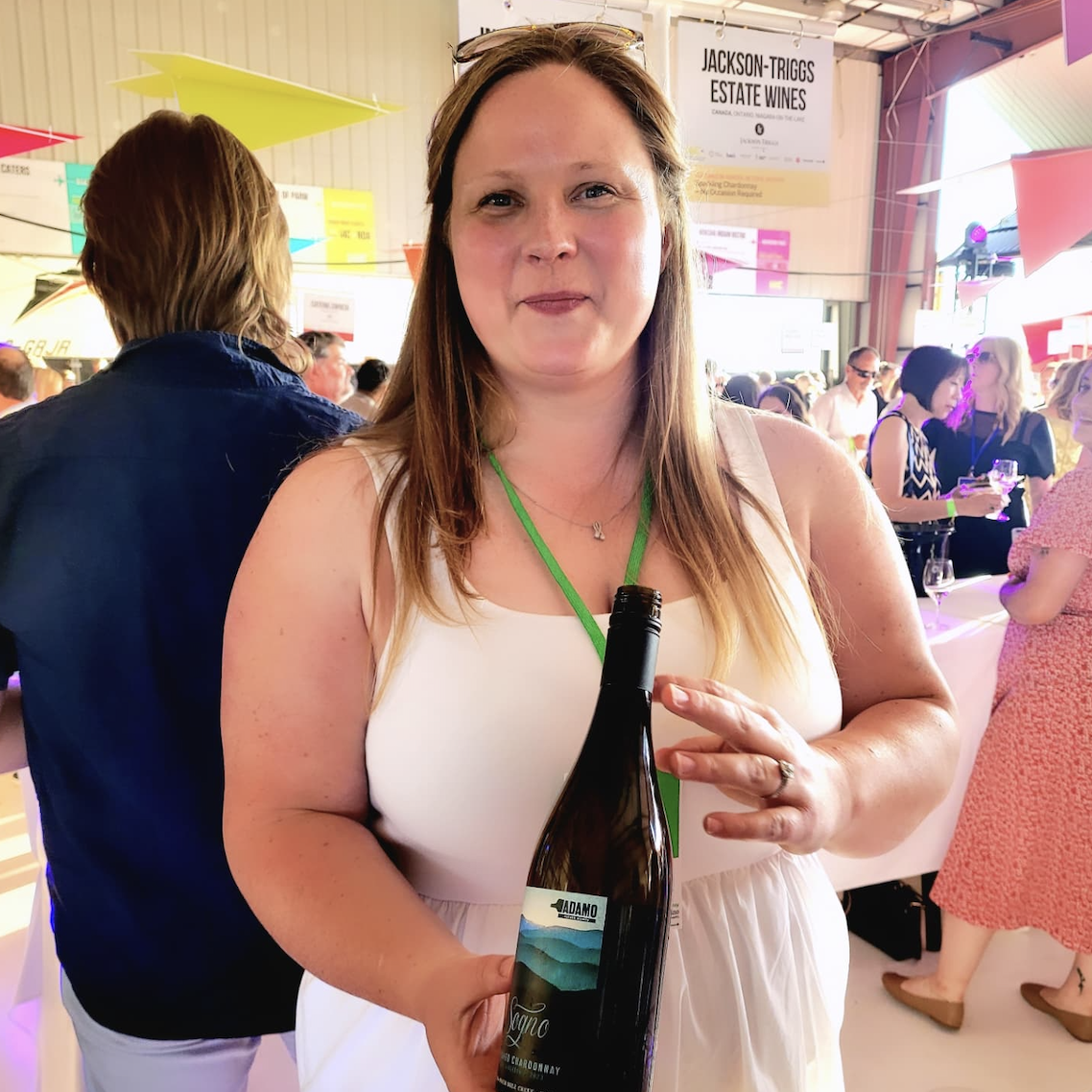
Vanessa McKean, Adamo Estate

Chardonnay

Adamo Sogno Chardonnay Unoaked Lore Vineyard 2023, VQA Four Mile Creek, Ontario

From the 1980s planted Four Mile Creek Lore Vineyard with some chardonnay musqué involved to consistently add a floral muskiness. No wood and now quite the experienced fresh and layered chardonnay in the hands of winemaker Vanessa McKean. A pyramid of activity because of a change by way of employing three ferments and three different yeast strains to see what complex results might result. Lees does the yeoman work without needing to blender pulse the fruit, but just to simply act as catalyst for the transference from vineyard to glass. Drink 2025-2027.  Tasted at 14C, July 2025

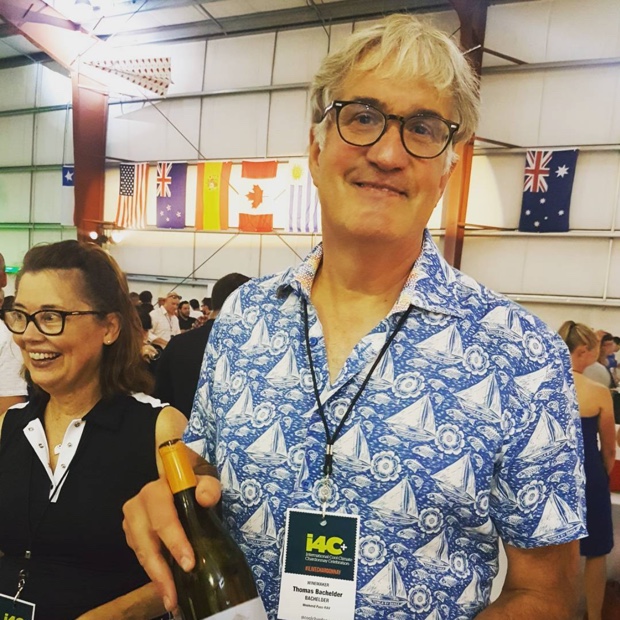
Bachelder Chardonnay Wismer-Foxcroft Parcelle Nord 2022, VQA Twenty Mile Bench, Ontario

Fascinating to get a nose into Wismer-Foxcroft not quite a year but easily eight or nine months later. A Toussaint forward moment for chardonnay still maintaining its touch with the flinty beginnings and the storied act of fleshing out is corroborated today. Late July is a terrific time to re-taste a November Bachelder release of the previous year. This showing drives the point and marks an important moment on the curve.  Last tasted at i4C, July 2025

Does not get more knowable or established for Bench chardonnay than the Foxcroft block in Wismer’s expansive vineyard and who but Thomas Bachelder knows this place as well as anyone. A similar story to Wismer Parke with pinot noir in that this vintage just somehow feels like the culmination of a decade-plus worth of experience. Wismer-Foxcroft 2022 is a truly mature and adult version of its reliable self, seamless, punctual and responsible. Substantial, harmonious and structured. All of the above. Drink 2024-2028.  Tasted November 2024

Beare Green Winery Chardonnay Clonal Blend 2023, Surrey, England

From Wine with Jimmy’s (jimmy Smith) and a project that started in 2022 with a real core aim to make “low intervention English wine.” A wine made beneath a “perennial dark cloud in a marginal maritime climate” tells Jimmy. A chardonnay of a short ripening season, an average of 700mm of rainfall (and 1,700 in 2024) for lean, edgy, on the edge of cool wine production. “I want English wines to have electric acidity,” says Smith. His chardonnay is lean yet charming, more than somehow because the wine is balanced in spite of its searing intensity. The intrigue is palpable and real. This chardonnay may age for a very long time. Drink 2025-2028.  Tasted at i4c, July 2025
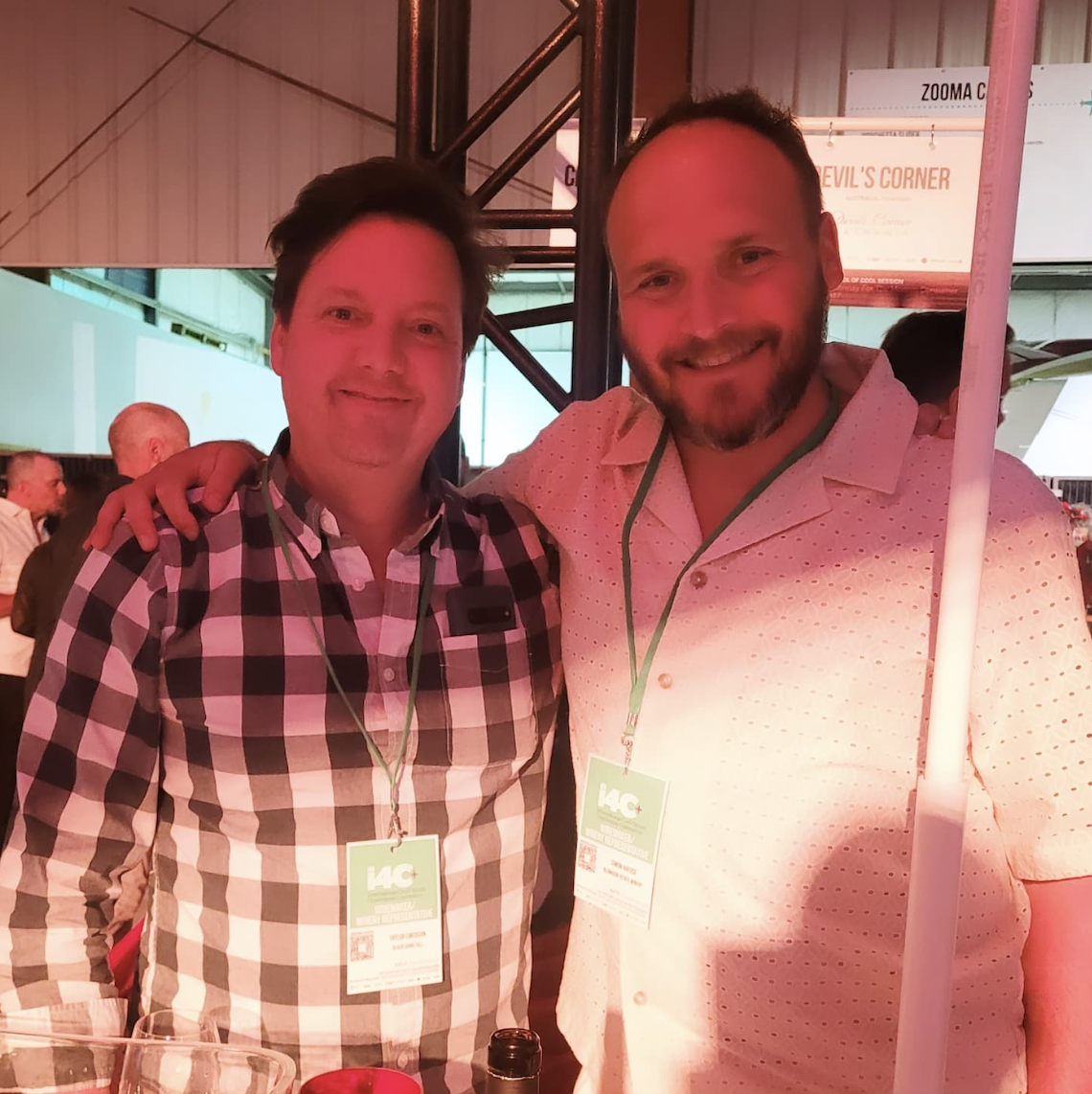
Taylor Emerson, Black Bank Hill and Simon Rafuse, Blomidon Winery

Black Bank Hill Chardonnay Runway 2023, VQA Lincoln Lakeshore, Ontario

A reminder that the name is an homage to service people and the part the property played in the First World War. All the land from here to the lake was an aerodrome and a runway ran right through the field along Sanna Rd. Now showing its lactic-citrus angle without any give or relent to high voltage acid backbone. Come to think of it there is just something Tantalus chardonnay about this ’23 chardonnay in how it rises vertical, controlled within its intensity and built to travel forward. There could very well be four to six years remaining in this singular high wattage way.  Last tasted at i4C, July 2025

Gotta be the first chardonnay out of the gates from the 2023 vintage and if this cracker example is any indication of what’s coming then hold on to your senses. Recently bottled and even with an early (September) pick this saw less than 10 months of aging, but the mix of indelible lees and high voltage (8.5 g/L) total acidity put this in scintillant, dare it be said Blanc de Blancs styled territory. So very different to the Runway White (blend) because of its intensity but also warmth at 13.8 alcohol, not quite torridity, but a white peppery scorch nonetheless. Wild and exciting shift from vintner Taylor Emerson and winemaker Jonathan McLean. Will be hard to wait and anticipate what the next level chardonnay turns out to be. Drink 2024-2026.  Tasted at i4C, July 2024

Black Bank Hill Chardonnay 2022, VQA Lincoln Lakeshore, Ontario

Warm vintage for Lincoln Lakeshore chardonnay fruit, layers more compressed, aromatics to flavours, resulting in a fullness of mouthfeel quite opposite to 2021 and apposite to the situation. Just the right mathematical problem is written should reduction keeps the freshness and vitality in motion. That said there is warmth and some development, already showing maturity yet time will graciously be kind, at least for a spell and behold a top tier pairing wine is born. Foie Gras with Membrillo and Sherry Vinegar anyone? Drink 2025-2029.  Tasted at i4C, July 2025

Black Bank Hill Chardonnay 2021, VQA Lincoln Lakeshore, Ontario

With Twenty Mile Bench fruit in the rear-view mirror Black Bank begins their estate journey with Lincoln Lakeshore fruit accepting and abiding by barrel aging with a precociousness that belies its youthful experience. This from a less than heat unit cumulate vintage and still the body of this 2021 is fleshy and impressive, its elastic length dutiful in helping fruit, acid and texture all come together as one. Should drink beautifully for a few more years. Drink 2025-2030.  Tasted at i4C, July 2025

Classic styling for chardonnay, from a winemaking perspective more so than the viognier and also the reds in the Black Bank portfolio. Neither reductive nor oxidative, reactive nor submissive, obsequious nor domineering. No risks taken, nor aversions neither. Buttery yet with good acids, natural sweetness and also wood spice. Right there in that space between, still a wine for its makers to continue figuring out, in terms of wishes and direction. For now a glass in hand is a good one. Drink 2024-2026.  Tasted May 2024
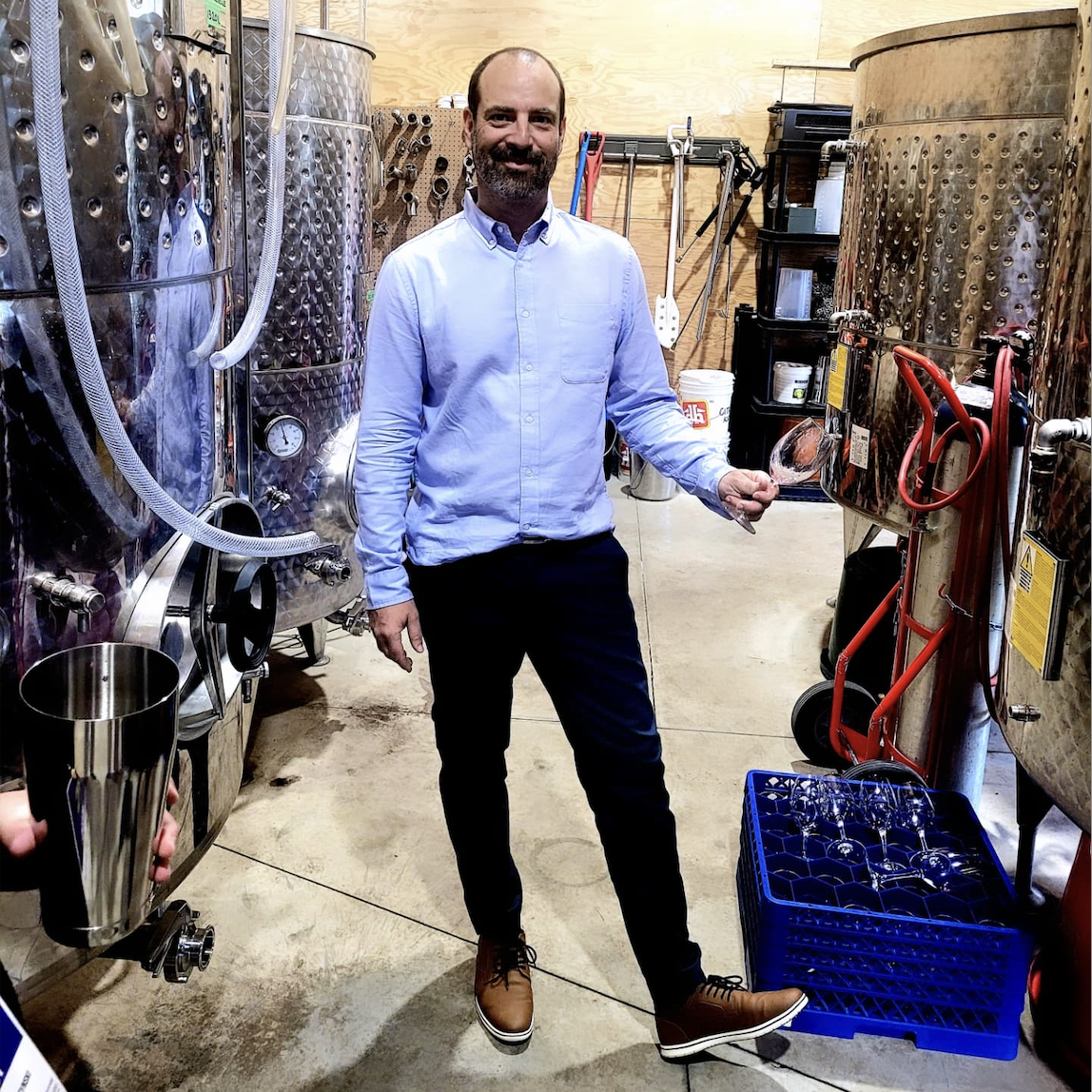
Winemaker Jonathan McLean, Black Bank Hill

Black Bank Hill Chardonnay Wingfield 2020, VQA Twenty Mile Bench, Ontario

Top end chardonnay for Black Bank Hill in the Wingfield section of the Wismer Vineyard, riper and of a concentration that celebrates a vintage, especially now that full integration has come about. The stylized and chic feel is fuller than 2018 and more than a shade less than 2019, with no imminent sign of maturity. But these are oranges as compared to apples even though they come from cousin plots within the larger vineyard. And so Wingfield brings everything to the table; concentration, backbone, linearity, energy and acids wrapping it all up in a fine sharp bow. Top tier chardonnay right here for lovers of the Okanagan, Sonoma, Napa and Ontario, not necessarily in that order. Drink 2025-2028.  Tasted at i4C, July 2025

Black Bank Hill Chardonnay Foxcroft 2019, VQA Twenty Mile Bench, Ontario

The 2019 Foxcroft has matured faster than the 2018 and now shows some caramel with more obvious vanilla by way of its conceptual French wood styling. Has done its time, run amok, gone lactic, now softened and finishing its run. Drink 2025.  Tasted at i4C, July 2025

Black Bank Hill Chardonnay Foxcroft 2018, VQA Twenty Mile Bench, Ontario

Fruit was sourced from Foxcroft within Wismer Vineyard for the first chardonnay made at the time Black Bank Hill was a virtual winery. The wines were made by Adam Lowry at Cloudsley Cellars and knowledge is power in knowing what a seriously good vintage it was for chardonnay. Age able as well with 2018 persistently fresh, piqued, energetic and thriving. Might have been reductive and tight to begin but time has been generous and kind for Foxcroft 2018 to arrive at this ideal moment in time. Drink 2025-2027.  Tasted at i4C, July 2025

Blomidon Reserve Chardonnay 2022, Nova Scotia

Hard to find more chardonnay substance and texture than in Reserve 2022 from winemaker Simon Rafuse at Blomidon. Spiced piques, crunchy apple bites, barrel blanketing and fruit involved at all points for what define the character of this wine. More about flavour than aroma, not out of character for chardonnay but beyond fruit comes sea air and the crushed shells of fossils. There is a Bourgogne feeling gained but not an old school one. Close your eyes and imagine young, modern and inspired from the Motherland.  Last tasted at i4C, July 2025

A chardonnay that shows how in the context of a flight of eight wines just how different Canadian chardonnay will be from one to the next. Which also means from one province through to another. Juicy, orchard juiced fruity and simple, if a fine coolest climate expression from the grape to gift high energy character, belied by easy and accessible drinking. Drink 2025-2027.  Tasted blind at NWACs, June 2025

Catena Chardonnay High Mountain Vines, Sustainable 2023, Valle De Uco, Mendoza, Argentina

A chardonnay of four sites, Agrelo (950m), Villa Bastías (1,120), Gualtallary (1,450) and El Cepillo (1,090). Classic Catena, of respectfully farmed fruit to optimum ripenesses, phenolics included and ease of barrel blanketing to oxygenate and elevate. Partial (60 percent) malolactic because why compromise acidity when you’re making mountain chardonnay? A higher level of affordable chardonnay prepared and meant for all, of fullness in concentration and experience to get things balanced and just right. Another unmitigated success, delivered without surprise. Drink 2025-2027.  Tasted at i4C, July 2025

Catena Chardonnay 2019, Mendoza, Argentina

Well settled, buttery warmth and a nut butter oiliness having entered the arena of delicious and snackable. Drink up although there are two more years available in this state. Drink 2025-2026.  Tasted at i4C, July 2025

With every passing vintage the solar radiation affecting high altitude vines increases and dramatizes the gainful effect of Argentina’s darling value-priced chardonnay. It has come to this. A wine of great concentration, generous of fruit and equipped with the tightest spiral of complexity and then, unwind. That the winemakers have figured out how to dial in and expound upon an already well figured out scheme is nothing short of outstanding. Do not dismiss this as a regular, easy to knock back $20 white wine. The substance and the fanning out of notes and pleasures is just too much to simplify, no matter the quantity of output. Drink 2021-2025.  Tasted January 2021

Cave Spring Chardonnay Reserve 1995, VQA Niagara Peninsula

Made by Angelo Pavan and we are drinking the last drops of this wine. Picked at 22 Brix in 1995! And yes the wine is showing beautifully. Spiced and piquing with spiciness on the tip of the palate from a chardonnay that was so perfectly oxidative from the beginning with just the right amount of skin contact to see it age remarkably for 30 years. Magic.  Tasted at i4C, July 2025
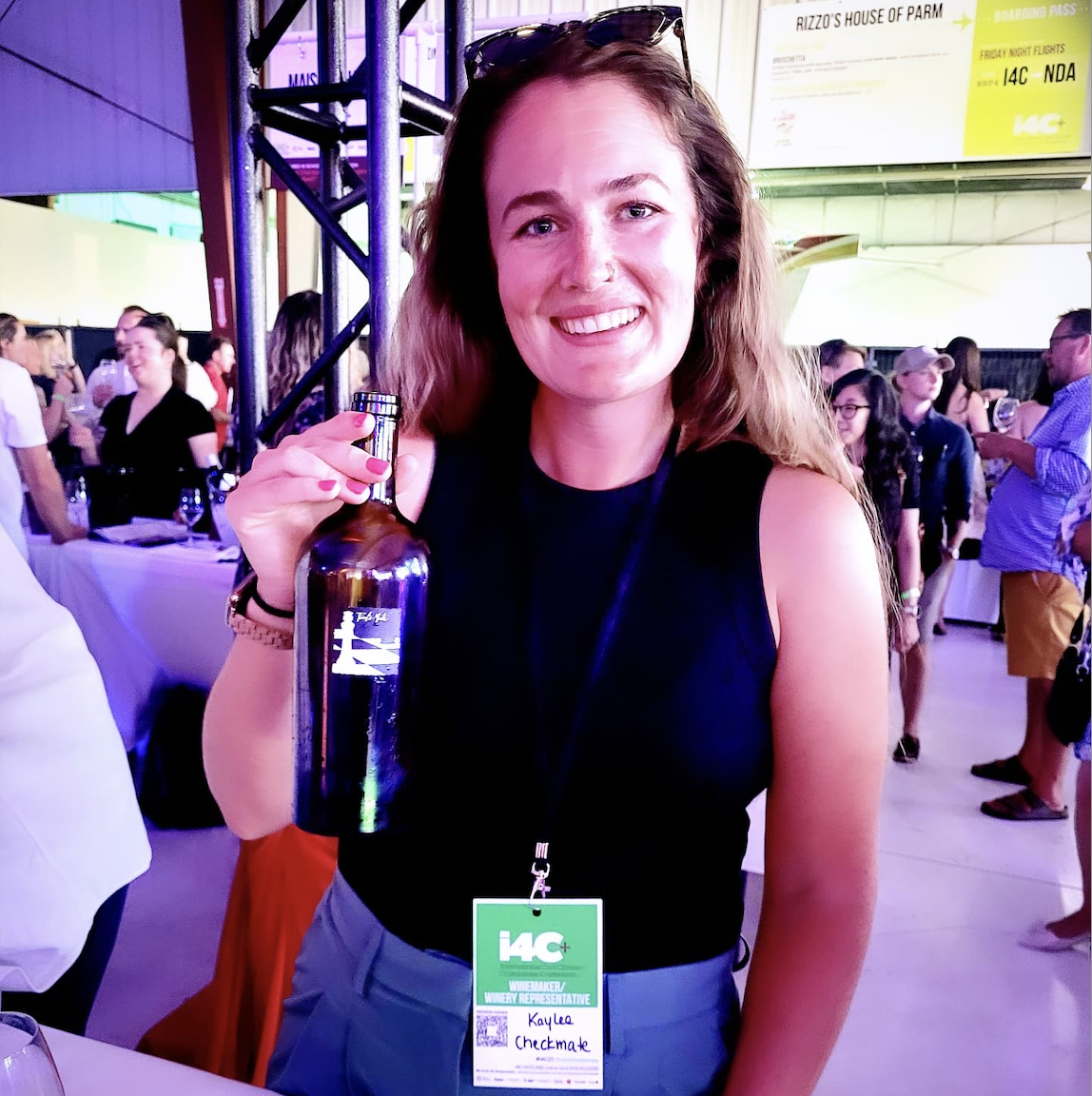
Kaylee Barss, Checkmate Winery

Checkmate Chardonnay Fool’s Mate 2020, VQA Okanagan Valley, British Columbia

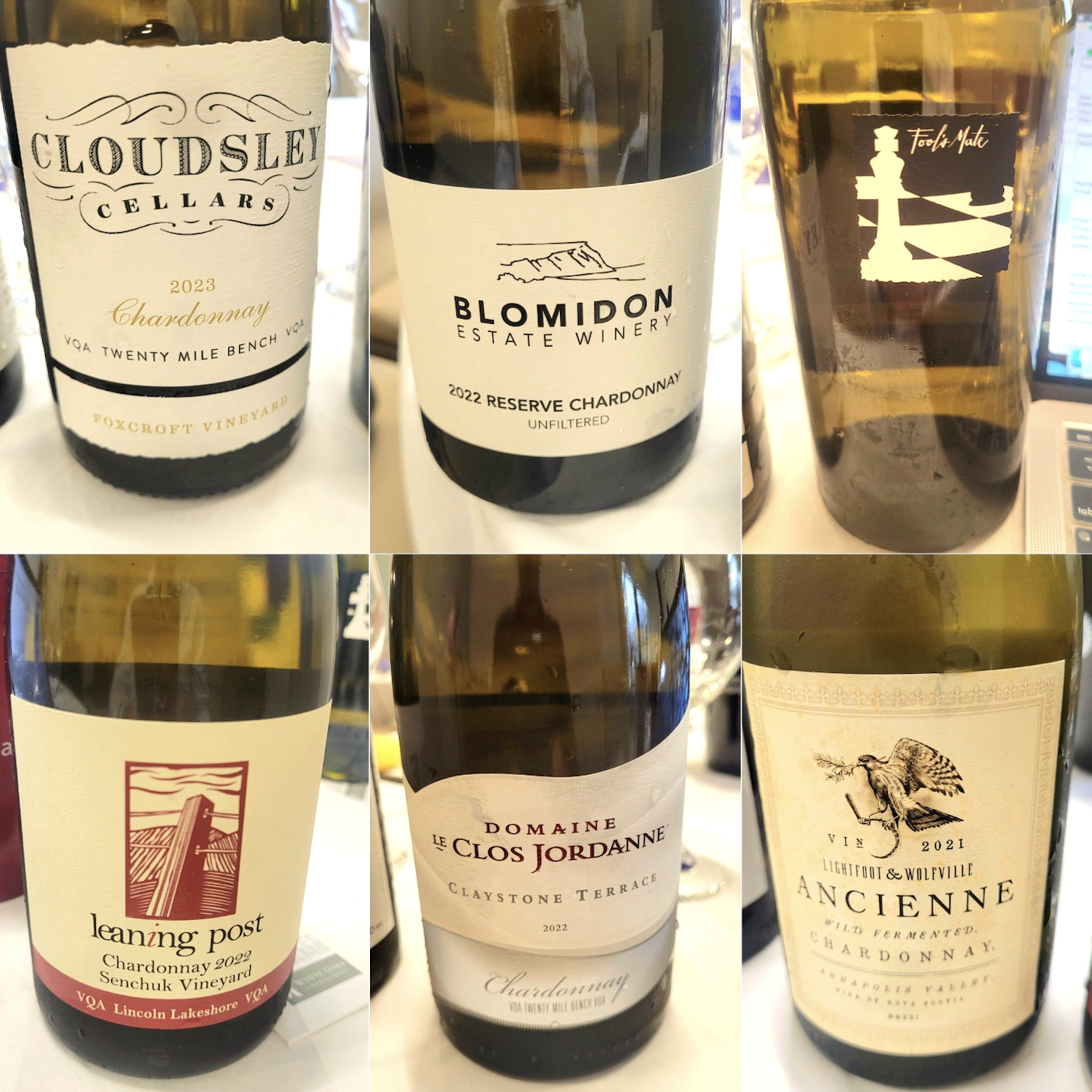
Hard to find a fuller, more substantial and all in chardonnay than the Fool’s Mate, but also one with this much finesse, charm and grace. Ridiculously pleasing and dealing in immediate gratification, Checkmate’s 2020 has now settled into its skin to be the kind of wine that literally makes you sigh. So much textural fabric and Okanagan essence from a top-tier focused, sophisticated, considered and flawlessly executed chardonnay. Drink 2025-2029.  Tasted at i4C, July 2025

Cloudsley Cellars Chardonnay Foxcroft Vineyard 2023, Twenty Mile Bench, Niagara Peninsula, Ontario

For 2023 winemaker Matt Smith and proprietor Adam Lowry take their Foxcroft chardonnay to another level. The integration of sharply dressed orchard fruit in barrel clothing is a suave and handsome design, look and feel. This stands upright, expresses varietal linearity and is just about as fit and taut a Foxcroft as there has ever been. Essential Wismer Twenty Mile Bench chardonnay, focused and got so right. Raises the bar and ceiling for estate and vineyard. Drink 2026-2030.  Tasted at i4C, July 2025

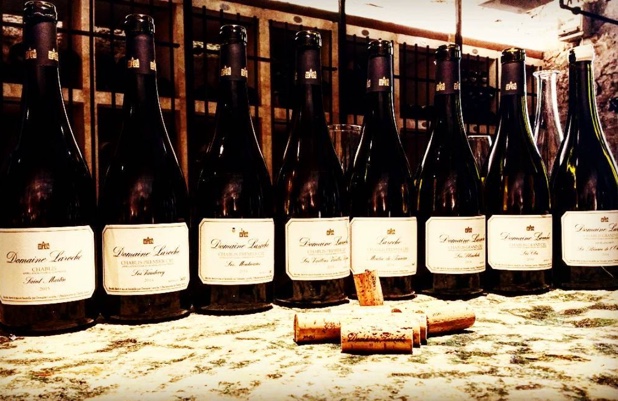
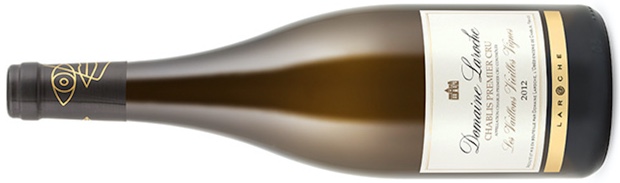
Domaine Laroche Chablis Les Vaudevey Premier Cru 2022, AC Bourgogne, France

Terrifically balanced, harmonious and gracious Chablis for 2022 from Les Vaudevey. A Left Bank beauty with joyous acidity that lifts this Premier Cru up to a place where eager palates will find bliss in chardonnay. Truly a factor of kimmeridgian soil and soul, seamlessly integrated, layered and also elastic in mouthfeel. Spot on with persistent aging potential.  Last tasted at i4C, July 2025

The word precise is often used to describe Chablis and many other global chardonnays, sometimes gratuitously but here perfectly applies to the Laroche Vaudeyey. Les VdV ’22 is focused to a virtue with its equality, equanimity and equilibrium from start to finish. A lexical entry to figure out the crux and relationship between cru and village.  Tasted a second time, July 2024

Domaine Queylus Chardonnay Tradition 2023, VQA Lincoln Lakeshore, Ontario

“We’re growing the wine and not really making it in the cellar. It’s really challenging, you have to be proactive and also reactive on a vine by vine basis.” The words of winemaker Kelly Mason. From leaf thinning to green harvest and hopefully at the right time, all within the parameters of vintage variation. “Like being the pit crew and driver at the same time.” From the Lincoln Lakeshore vineyard for a ’23 Tradition leaner than some other years, a linear drive with a platinum gold hue and mineral feel. Less than 20 percent new wood, no stirring, “out to barrel and leave it to sit.” Ever so slightly acetic, well within reason and with a pinch of natural chardonnay sweetness. Drink 2025-2027.  Tasted at i4C, July 2025

Hidden Bench Chardonnay Béton 2023, VQA Beamsville Bench, Ontario

A unique Bench chardonnay because the fruit has all been taken from the 2009 planting in the Felseck Vineyard. The younger vines are perfectly suited to this Béton’s raising, as in the label’s meaning which is 10 months in concrete for briny and über fresh chardonnay with its own kind of bite. Also tension with no wood to attract attention from the sharp, pointed and direct display of chardonnay. The middle is creamy, that much is true and the juxtaposition makes for an open invitation to imbibe. Drink 2025-2028.  Tasted at i4C, July 2025

Hidden Bench Chardonnay Estate Organic 2023, VQA Beamsville Bench, Ontario

Youngest and freshest of Ontario’s 2023 chardonnay aged and then aged further in bottle for what should be this precise release point. Any earlier and it might have played hard to get, any later and freshness would not be this pitch perfect. Assemble a group of wine lovers without extensive cool climate experience or bring this on the road and serve it to consumers beyond these borders for what will be a cool chardonnay teaching moment at a time in history when these wines can turn even the most ardent disbeliever. Drink 2025-2029.  Tasted at i4C, July 2025

Hidden Bench Estate Chardonnay 2013, VQA Beamsville Bench, Ontario

Seduction from the word go, nose to glass and if surprise well this could be forgiven considering this is an 11-plus year-old chardonnay from the Beamsville Bench. Then again in 2013 winemaker Marlize Beyers, Hidden Bench and many Bench wineries were already keenly aware of how to make high quality and also structured chardonnay. This wine has drifted slowly and comfortably into its ripe maturity at an age with beauty and of respect. Special is the understatement. FYI for corks nerds out there the 2013 was bottled under Diam-10.  Last tasted at i4C, July 2025

A best of both worlds Chardonnay; indicative of the giving vintage (in quality, not quantity, prestige, not prosper) and an Estate, house style with some cosmetics to enhance the consequence. Really typifies and explains what a Marlize Beyers Chardonnay is. Elegant, stylish, with perfect skin, tones, understated beauty and the soft vernacular of few yet precise words. The texture and feel of this Chardonnay is downy, lacey and so very understated. You simply can’t take your eyes off its charms and your palate away from its soft feel. A wine of character and poise. Drink 2015-2020.  Tasted August 2015
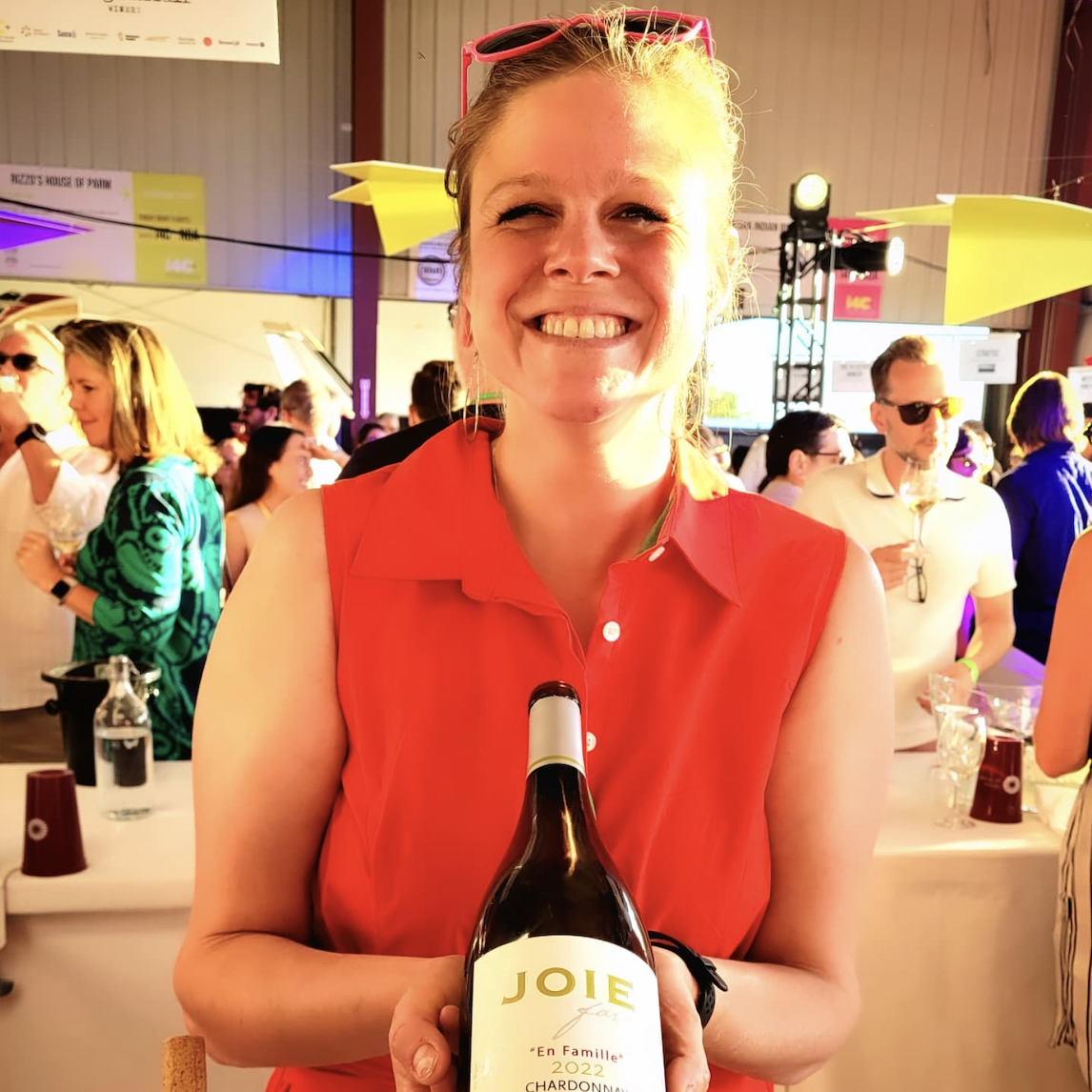
Jennifer Carter, JoieFarm

Joiefarm Chardonnay En Famille Reserve 2022, BC VQA Okanagan Valley, British Columbia

En Famille is the line of signature Joie wines that define, but also distinguish a family’s and team’s fulfillment for everything they’ve accomplished. All in the family celebrates a history and the present, here with chardonnay from a terrific vintage that takes every binate advantage given. Is this not the epitome of a Naramata season, to induce seduction, generosity and philanthropy. Gives and then gives some more, like ripe stone and orchard fruit at peak ripeness, the subtlety of barrel and fineness of acidity. The sweetest kind and thing that could be, natural, at hand to induce consequential pleasure and gratification. Drink 2025-2028.  Tasted at i4C, July 2025

Joiefarm Winery Chardonnay Con Vida Vineyard 2022, BC VQA Okanagan Valley, British Columbia

The pinnacle of En Famille for chardonnay drills deeper into place with Con Vida Vineyard, meaning “alive” or “with life,” a term of endearment to celebrate a piece within the greater good. Winemaker Richard Charnock takes chardonnay to the next level, particularly in amplitude and opulence for the kind of wine no mere mortal could resist, Or deny its succulence and generosity. Thankfully the sweetness and elasticity of acidity extends the character, fortune and play before giving way to warmth, a buttery brioche-ness and fluid forward motion extended well into the lingering minutes of a palate’s perception. Drink 2025-2029.  Tasted at i4C, July 2025

Leaning Post Chardonnay Senchuk Vineyard 2022, VQA Lincoln Lakeshore, Ontario

Sharp and pinpointed without equivocation in home base chardonnay of vines further matured into early adulthood. Now in delivery for fineness and a development into true realism in western Niagara chardonnay. In fact place does not get any more west and so we begin to believe that the west is indeed the best. The concept may express a subjective opinion and also convey a preference for a specific geographic region but who can deny what the Senchuks have accomplished with the clay based block behind the winery. The 2022 is in fact a warm chardonnay from a cool climate that shows just the existential where and when history of a wine like this. With depth of flavour, rise and length. Drink 2025-2032.  Tasted at i4C, July 2025

Le Clos Jordanne Chardonnay Claystone Terrace 2022, VQA Twenty Mile Bench, Ontario

Claystone for 2022 chardonnay notes reductive character in a restrained and fruit encapsulated manner. Separates itself from Jordan Village through more varietal and place specifics with higher aromatic pitch and pinpointed flavours to make you think and feel the sickle curved nook on a plateau aboard the Twenty Mile Bench. Terrace that is, where clay and decomposed stone are the impetus for chardonnay of an identified speciality, coaxed and brought to life by Bachelder and team. Sharp and focused with the earth of a vintage packing its pockets and fleshing out its fruit.  Last tasted at i4C, July 2025

If anyone were to ask, what does a chardonnay from Le Clos Jordanne taste like, the answer would be this. This 2022 Claystone is exactly it, a chardonnay of selection from a specific block, a development of fruit hung to optimize aromas, favours and intangibles, a wealth wrought of barrel choices made to accentuate all the fresh meeting mature nuances of Twenty Mile Bench chardonnay. Top stuff at eye level shelf for this sku in the hands of three skilled wine crafters that make Niagara proud. Phillip Brown, Kerri Crawford and the monk himself, Thomas Bachelder. Drink 2025-2028.  Tasted July 2025

Lightfoot & Wolfville Chardonnay Ancienne Wild Ferment 2021, Annapolis Valley, Nova Scotia

One nose into Ancienne 2021 and you know the change has come. The first epoch of evolution now paves the way for another, the last one having developed and experienced over the past eight years, now come to full fruition. The new and improved Ancienne will one day beget a decades old chardonnay that truly defines its ancient name, looks to its past and reflects on what has been accomplished. As we will do in kind, to have believed everything was possible and was meant to be. This ’21 owes its DNA to place and previous vintages but there is are new parameters of warmth, richness and ripeness, aspects now present in more vintages than not, no matter the climate extremes and obstacles that are want to diminish quantities. My goodness what great chardonnay is being made on such a consistent basis by a winemaker as present and confident as Josh Horton. The underlay of Fundy spray saltiness in the heart of juiced and zested lemon is an irresistible mix for chardonnay. They who take this wine’s subtleties and potential for granted are missing the point. Drink 2025-2029.  Tasted at i4C, July 2025
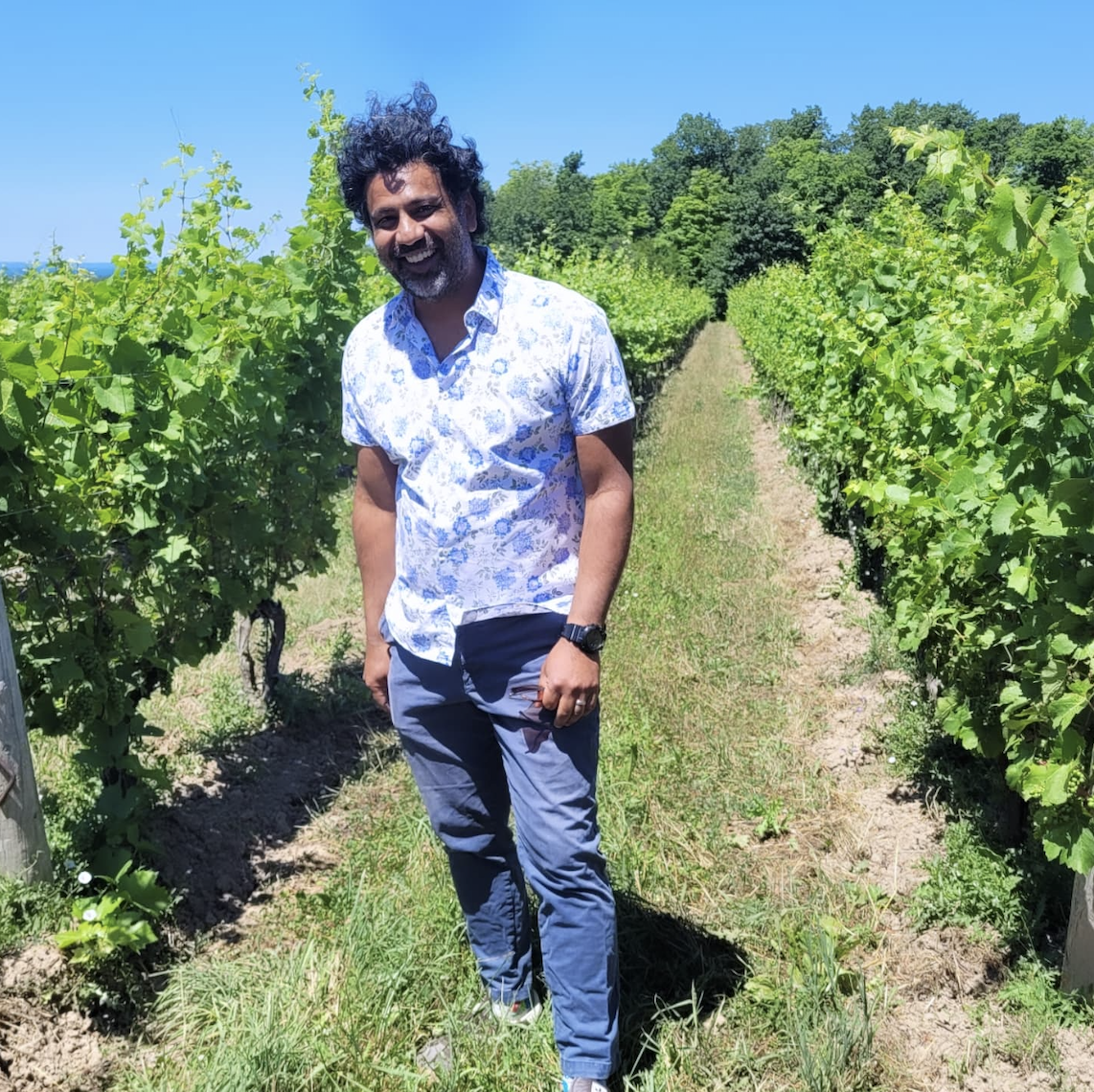
Shiraz Mottiar in his home vineyard

Malivoire Chardonnay Mottiar 2021, VQA Beamsville Bench, Ontario

From Shiraz Mottiar’s home vineyard and the wet vintage, moderately cool and one of those times that fruit dropping and rigorous sorting could and would lead to great chardonnay. That is this, taut and opening slowly, incrementally, in no hurry, nearly yet still not ready to go. Not the open flower yet and will be soon when fleshier times will fill the glass. A newfound yes to 2021.  Last tasted at i4C, July 2025

“A disaster (yet high volume, up 30 percent) vintage but I’m really happy what came from there,” admits winemaker Elisa Mazzi. No matter the rain and fog because there is flesh and substance in the ’21 from Shiraz Mottiar’s vineyard. Not a fully natural fermentation with some yeasts used but also not a full malolactic fermentation. Stopped halfway, winemaking on numbers instead of taste so to speak. Some wet concrete notes, washed hard cheese rind and surely different for a Malivoire chardonnay, leaner and linear but ready as ever to go out and please. Drink 2024-2026.  Tasted March 2024

Malivoire Chardonnay Mottiar 2018, VQA Beamsville Bench, Ontario

Pronounced flintiness from 2018, “it’s just vintage,” says Shiraz Mottiar and it lends a Beamsvile-ness to chardonnay, not unlike 2011 but ’18 was warmer. Translates to an added layer of richness with just the right amount of wood felt at this six-plus year stage.  Last tasted at i4C, July 2025

Intensely youthful chardonnay is a scent to behold, especially from a vineyard block picked on the high-low dichotomy of acid and pH then naturally fermented with bunches intact. I wonder if the barrel time was extended slightly because of the promise of 2018 and that may add to the taut nature of this Mottiar. That said there is no lack of freshness or shortage of cool climate bite. After all, this is chardonnay that speaks the vernacular of stoicism, structure and length. Drink 2022-2027.  Tasted October 2020
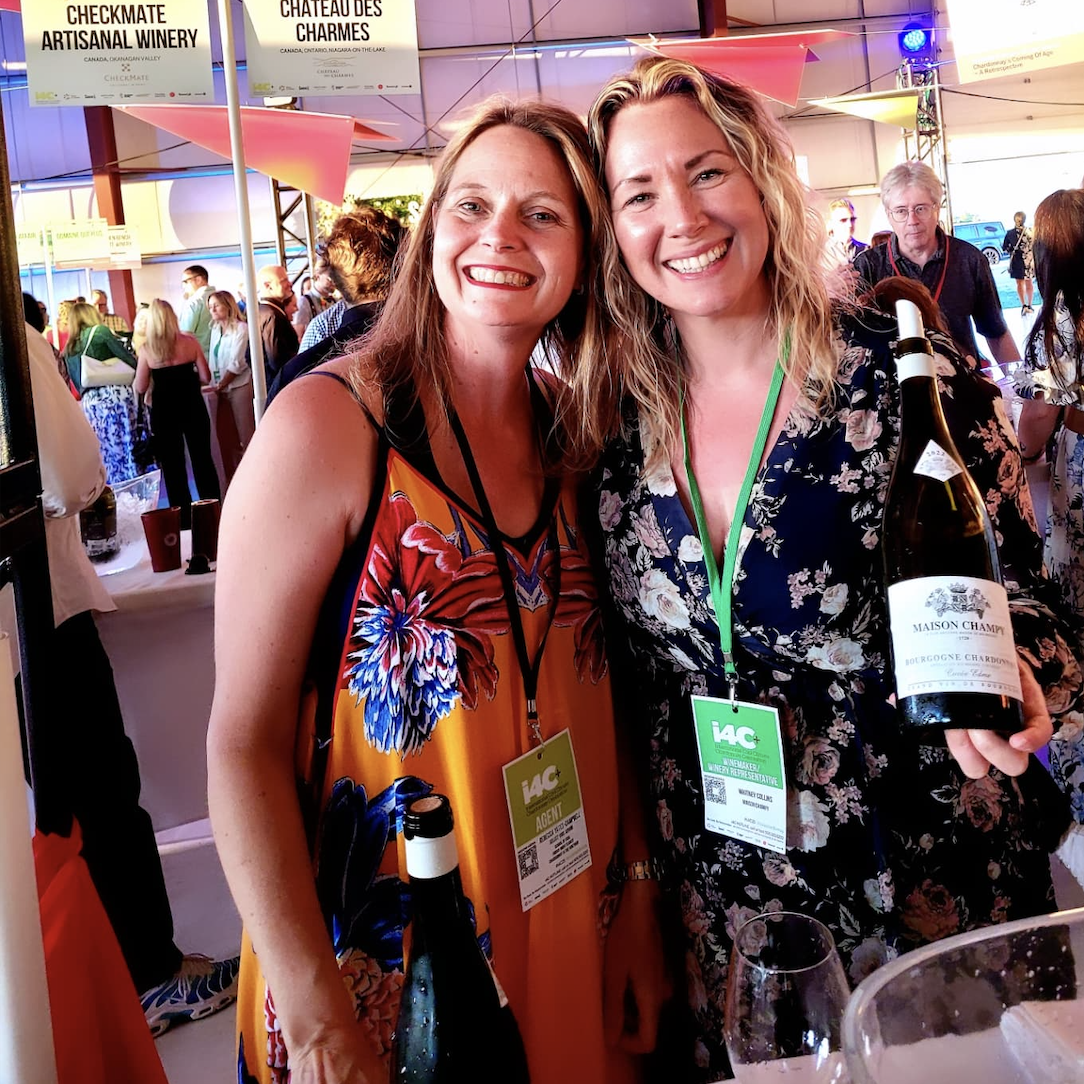
Rebecca Yates-Campbell and Whiney Collins, Advini (Maison Champy and Domaine Laroche)

Maison Champy Pernand Vergelesses Blanc 2023, Bourgogne AOC, France

The appellation and terroir must direct a classic movement in chardonnay and Champy ensures its orchestration finds what we are all looking for. That would be lighter, mineral-acid freshness from a large local landholder with more cards than many to mix, match and most importantly adapt. Organics and the essential ideal of sustainability translate into a chardonnay that is truly technically proficient to the edge of perfection. Translates terroir, talking points and acumen into great chardonnay. One of innovation for timelessness. Drink 2025-2029.  Tasted at i4C, July 2025

Organized Crime Chardonnay Limestone Block 2022, VQA Beamsville Bench, Ontario

Sharp value chardonnay cut from stone and to deliver top quality varietal goods from a fantastic Beamsville Bench terroir. Crisp as it gets for a 2022 Bench chardonnay, sweetly herbal, crispy and taut yet with no shortage of fluidity and flesh. Distinct and still recognizable for grape and place with wood the pique in spice at the tip and also back end of the palate. Acidity fills the voluminous space between. Drink 2025-2028.  Tasted at i4C, July 2025

Organized Crime Chardonnay Sacred Series Cuvée Krystyna 2021, VQA Beamsville Bench, Ontario

Higher end and inviting pinpointed cuvée from the cooler and wetter if humid vintage to determine ultra specific chardonnay. In a way surprisingly soft with a cream-centred mid-palate, pH elevated and acidity mild. The truth is this feels and drinks like a “Reserve” style of Ontario chardonnay with no questioning the quality of fruit ripeness, purity and wood. Comes together nicely and still drinks with purpose, though these immediately arriving years will see a waning of freshness. Drink 2025-2027.  Tasted at i4C, July 2025

Rosehall Run JCR Chardonnay Rosehall Vineyard 2017, VQA Prince Edward County, Ontario

Were you to say upfront that this was a Prince Edward County chardonnay from 2017 it would not be believed. Still cracker energy and freshness, crispy and crunchy character and blessed County beauty.  Last tasted at i4C, July 2025

As a follow-up to the warmth and phenolic heights of 2016 you’ll have to imagine a meandering through zig-zagging directions for ’17. Despite the ups, downs and ups again this chardonnay has indeed found its way, charming us with insights and how richness ensues. The surety of this fruit and this composure ensures and enriches the great sleeper County chardonnay that continues to explain the concept of cool climate viticulture done right. It’s not really all that reductive but it is protective and crafted with indefatigable structure in surround of high quality ingredients. Another winner from Dan Sullivan. Drink 2019-2023.  Tasted June 2019 and May 2020

Stratus Chardonnay Unfiltered And Bottled With Lees 2023, VQA Niagara-on-the Lake, Ontario

The Stratus chardonnay lees program is simply fascinating. Options, possibilities and abilities learned have developed and been banked for hits that keep on coming, but what is most striking about the 2023 unfiltered is how perfectly clean it is. Like you would never know there were significant lees bottled and so here there feels like a return or in a sense a throwback to chardonnay from say 2012. Of a clarity, purity and acceptance of barrel in proper tones and with effortless ease. The agriculture is everything anyway, so to be sure a chardonnay like this will improve and be sure to bless a consumer with the last vintage produced being the best. Which means 2023. Drink 2025-2029.  Tasted at i4C, July 2025

Tamar Ridge Devil’s Corner Chardonnay Resolution 2022, Tasmania, Australia

Man does this smell like Tasmanian chardonnay, but what does that mean? Cool, for one thing, taut and tart with a Champagne profile minus the bubble. Also a chardonnay provided with a western rain shadow, a moderating body of water and north-facing sun capture for optimum ripening. Much of the fruit comes from the river that makes a moderating temperature effect horseshoed around the vineyard, that and 15 percent from the coastal vineyard. Like a bite into a strong green apple with satisfying juiciness and acidity. Drink 2025-2028.  Tasted at i4C, July 2025

Thirty Bench Chardonnay Small Lot 2021, VQA Beamsville Bench, Ontario

In a ripe and settled place, fruit over acidity and barrel, fresh in its persistence and pulpy by texture. Green apple bite and spice more than many, exaggerated from a cooler vintage for excitability, gastronomy and complexity.  Last tasted at i4C, July 2025

True to Bench chardonnay sprit and energy, standing upright, demanding to be noticed and in turn we are paying notice. A harvest of demand forces the team to focus and pay extra attention, to do everything possible for greater returns. Picking and sorting strategies finds the best available fruit to create something cool, gelid, succulent and shockingly Chablis like. In fact at 12.6 percent (low) alcohol this acts in a stoic and matter of fact way, without airs and confidently what it needs to be. Will not overwhelm any palate, nor will it takes any breath away. That said it should age longer than first anticipated.  Last tasted twice in July 2024, including at at i4C

Small Lot just has to be the owner of the lowest of low alcohol number as it pertains to the Beamsville Bench and at 12.6 percent the conversion rate falls under the categorical auspices of magic. This is not a light chardonnay but it is a lithe, elastic and effusive one. Aromatically demure yet soft and almost caressing, without peppery (and sharp apple) bites or jolting in any way. The palate runs a similar course, gracing with soft and round flavours that are easy and stretched. Lovely and amenable 2021 here from Emma Garner and one to savour slowly, in a calm and tranquil setting. Drink 2023-2025.  Tasted July 2023

Trius Showcase Chardonnay Wild Ferment Watching Tree Vineyard 2022, VQA Lincoln Lakeshore, Ontario

Single vineyard, optimum fruit picked right at peak in a warm vintage and just the wild facts before barrel time rounds out the edges and corners. They still point and stand out with reductive style being the impetus for freshness and how this chardonnay will age, journey and thrive. There is a crunchy green apple quality, a flinty moment our two and fine lees as pure as ever.  Last tasted at i4C, July 2025

Volta Estate Winery Chardonnay Unoaked 2023, VQA Prince Edward County, Ontario

One of three Volta chardonnays, the second being barrel-aged and the third raised in (sandstone) amphora. Fruit comes from Hillier’s Ramirez Family Farm, at one time sourced by Lighthall Vineyards, a fun fact that indirectly forms a connection with new winemaker Chris Thompson who used to work at there. This steely chardonnay is stirred and closely mimics a Chablis perspective, youthful style that is with languid drift, elasticity, freshness and cool finishing spice. Acids are spot on for this ultra correct chardonnay. Drink 2025-2026.  Tasted at i4C, July 2025

Volta Estate Winery Chardonnay Amphora Ramirez Family Vineyard 2023, VQA Prince Edward County, Ontario

As with the first Volta chardonnay the source is Hillier’s Ramirez Farm but here the aging is done in French (sandstone) amphora-style vessels. A freshness does not merely drift but flies out in a way that rarely happens from these pots (when made with concrete or clay) and so the medium surely creates some sort of revolutionary housing. Purity incarnate and no salve drip or texture melted upon the palate makes this so bloody different. Highlights the fruit and not reduction while micro-oxygenation comes into effect in the neatest way. Drink 2025-2027.  Tasted at i4C, July 2025

Wending Home Chardonnay Estate Vineyards 2021, VQA Creek Shores, Ontario

First tasted 13 months ago and no shock to find this chardonnay right in the heart of its open window. The spice is melting and infiltrating every pore of this wine for pervasive seasoning and flavour. Just delicious at this stage.  Last tasted at i4C, July 2025

Bit of a cool banana smoothie here, extracted and sweet though naturally so with that tropical spectrum feel, especially like pineapple. Chewy for chardonnay and the wood is very much there, finishing with a buttery swath pasted across the palate. A bit heavy handed (though not overdone) in terms of bâtonnage to effect honeycomb and creaminess, however those who like the style will do very well with this example. Drink 2024-2026.  Tasted blind at #NWACS24, June 2024
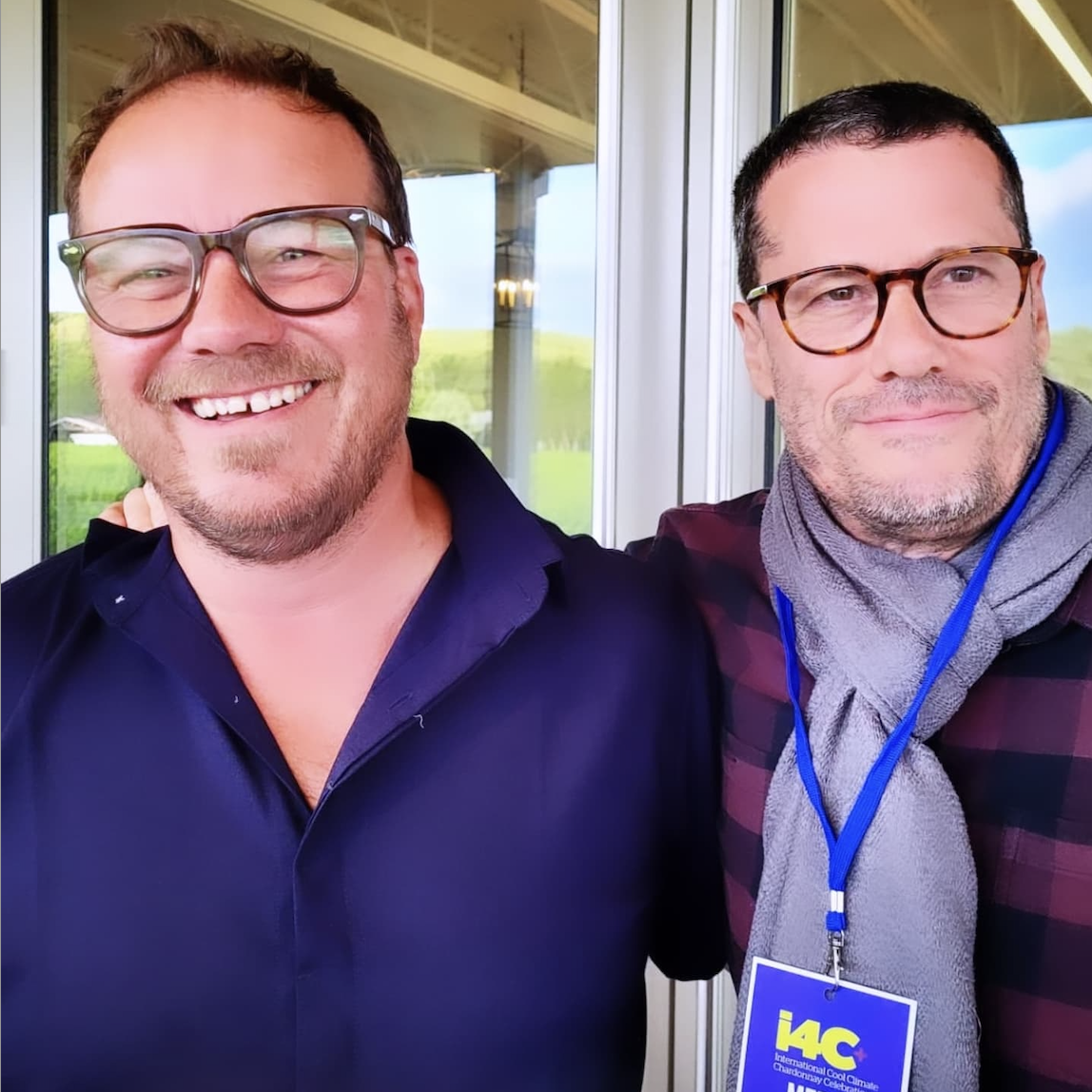
With Jonas Newman, The Grange of Prince Edward

Other Whites

Divergence Wines Sauvignon Blanc Creek Road Vineyard 2023, VQA Four Mile Creek, Ontario

In the past Jeff Moote sourced his sauvignon blanc from Hughes Vineyard in Beamsville and this is the first from Creek Road near Virgil in the Four Mile Creek sub-zone. The vineyard may be most famous for cabernet franc but this white grape cousin makes for a fine, ripe and complex wine. Saw 20 hours of skin contact, enough to effect colour and texture but not enough to adhere in any unwanted way aboard the palate. There are notes of green fig and yellow peach from what is ostensibly tight, vaguely tannic and corporeally solid white wine. Drink 2025-2027.  Tasted at 14C, July 2025

Grange Of Prince Edward Sauvignon Blanc Newfield Block 2024, VQA Prince Edward County, Ontario

From vines planted in 2003 though never really ever made into a dry sauvignon blanc. Now in the hands of winemaker Jonas Newman that changes with a stirred yet no wood version, although Newman feels that could come into play sometime soon. “To make a more complex and sophisticated sauvignon blanc,” but the quality of this feels like there will need to be two. This ’24 is joyous and eye-opening stuff. Drink 2025-2028.  Tasted at i4C, July 2025

Grange Of Prince Edward Pinot Gris Isabella Block + Northfield Block 2024, VQA Prince Edward County, Ontario

Truly ABG, anything but grigio in dry, salty, crisp and enticing pinot gris. Gris for gris’ sake, solid, purposed and drinking effortlessly. Drink 2025-2027.  Tasted at i4C, July 2025

Malivoire Pinot Gris 2024, VQA Beamsville Bench, Ontario

Aromatic for gris with flowers, part fresh and part desiccated. Vaguely turbid with an acetic moment that distract from the purity of intended local pinot gris flavours. A bit troubled by its youthful style and perhaps it will “clean itself” up with a few to more to six months in bottle. Drink 2025-2027.  Tasted at i4C, July 2025

Malivoire Melon 2024, VQA Beamsville Bench, Ontario

Fresh, ultra fruity and light style, decidedly void of long lees aging. Originally conceived and continues to be made for proprietor Martin Malivoire because this melon de bourgogne is exactly what he prefers for oysters. As will you because the 2024 delivers both substance and salinity, key ingredients in the pairing. Drink 2025-2028.  Tasted at i4C, July 2025

Malivoire Melon De Bourgogne Demo Series 2022, VQA Beamsville Bench, Ontario

The ulterior methodology and stylistic for melon de bourgogne, here aged 22 months on the lees. No we have not walked up from the river to Nantes, but there is some fantasy in that regard. Salty and the feeling of wet concrete, so proper for oysters but frankly an exciting melon on its own. Flinty and still youthful. Drink 2025-2029.  Tasted at i4C, July 2025
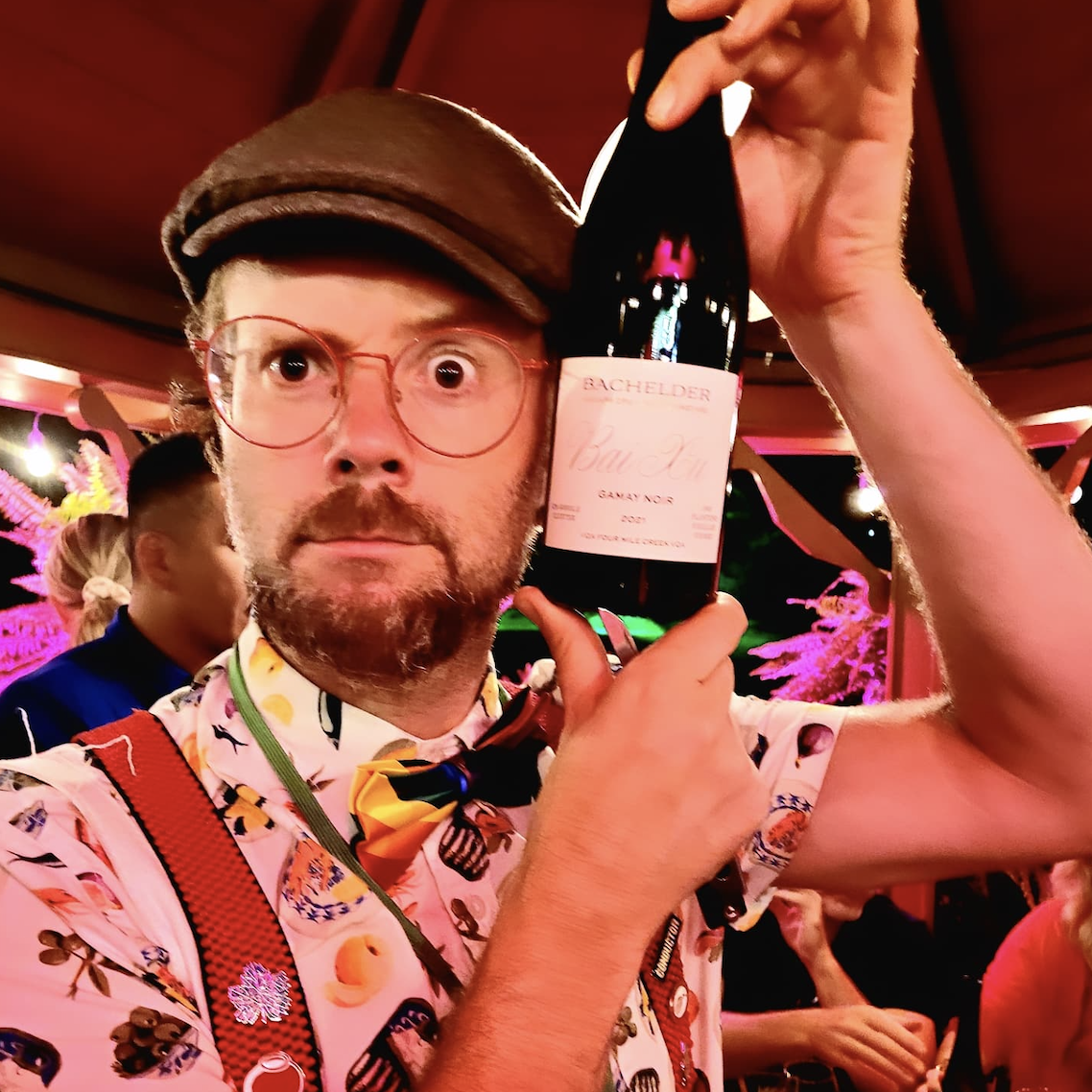
Jimmy Smith, Beare Green Winery and Wine with Jimmy

The Reds

Beare Green Winery Pinot Noir Pulborough Cool Climate Clone 777 2023, Surrey, England

The Surrey project of Wine with Jimmy (Smith) comes from Pulborough, a tiny village where the fringe of cool climate viticulture is practiced and planted to pinot noir clone 777. Beare Green’s is a natural varietal treat with acetic meanderings and like the chardonnay, leanness is belied by its charm. Yes it is in fact acid tart and sax jazzy while also crunchy and intensely cherry sour. A ton of clash but the prospects and possibilities feel like a high ceilinged future awaits. The intrigue is great with much looking forward to watching this passion project grow. London and the world are calling. “J-a-zee zee, J-a-zed zed, J-a-zed zed, Jimmy Jazz.” Satta Massagana Jimmy. Drink 2025-2027.  Tasted at i4C, July 2025
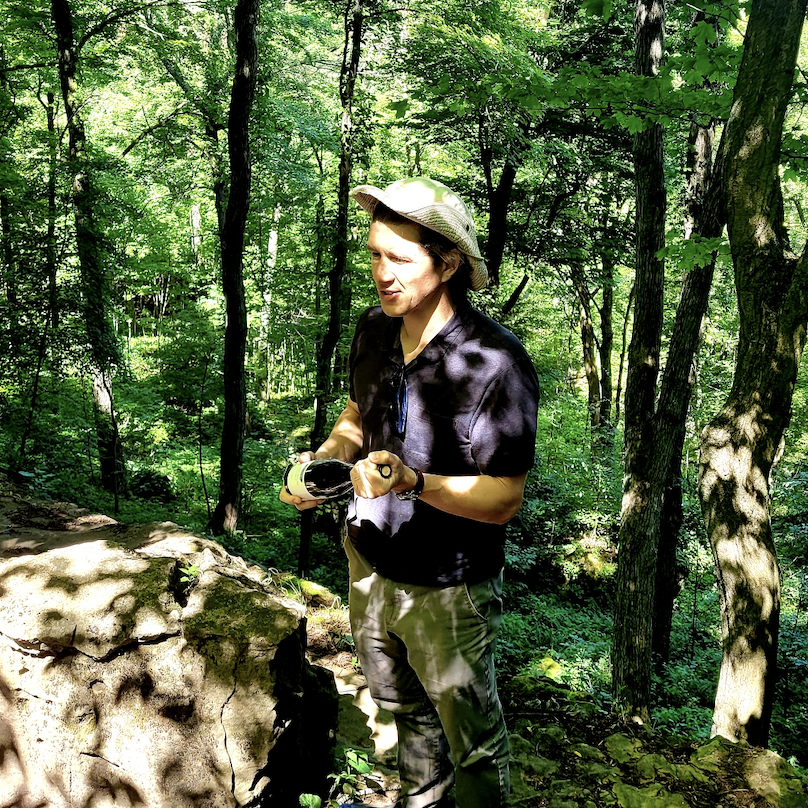
Cave Spring winemaker Gabe Demarco speaking at the Adam Steps

Cave Spring Cabernet Franc CSV Estate Grown 2022, Sustainable, VQA Beamsville Bench, Ontario

Warm vintage, a richness of fruit optimized from highest attention to farming and chosen right there in the field. In June no less because identifying blocks ahead of canopy management is key to drawing up the map for Cave Spring wines. CSV is the varietal meow, also with cabernet franc and while the ’22 carries deeper meaning there is no denying the sheer purity. Wood used generously is the requiem to elevate and extend the grip, spice, texture and potential of this wine.  Last tasted at i4C, July 2025

Juicy, unfettered in terms of exuberance and yet finely restrained as cabernet franc because it pulls no gratuity, nor punches for that matter. Only a kiss of the barrel is felt and the proper herbaceous greens are noted, as they rightly should. Speaks to the Cave Spring Vineyard and the important farming adjustments made over these last few years by Gabe Demarco and team. The fruit is singing because their host vines are well loved. It’s as simple as that. Drink 2024-2027.  Tasted September 2024

Cloudsley Cellars Pinot Noir 2022, VQA Twenty Mile Bench, Ontario

Adam Lowy’s Twenty Mile Bench pinot noir really is the mirror into a vintage with its mix of vineyard fruit, lithe transparency and aromatic spicing of a season. That’s the thing – His pinot noir does not go into bottle without proper, correct and frankly spot on salt & pepper seasoning in order to coax out the truth of fruit. Its decisive resource is concentration and depth without unnecessary over-extraction or heft. Would say to drink this early in its tenure and also pour it to those who question the viability and comparability of Ontario pinot noir. Drink 2025-2028.  Tasted at i4C, July 2025
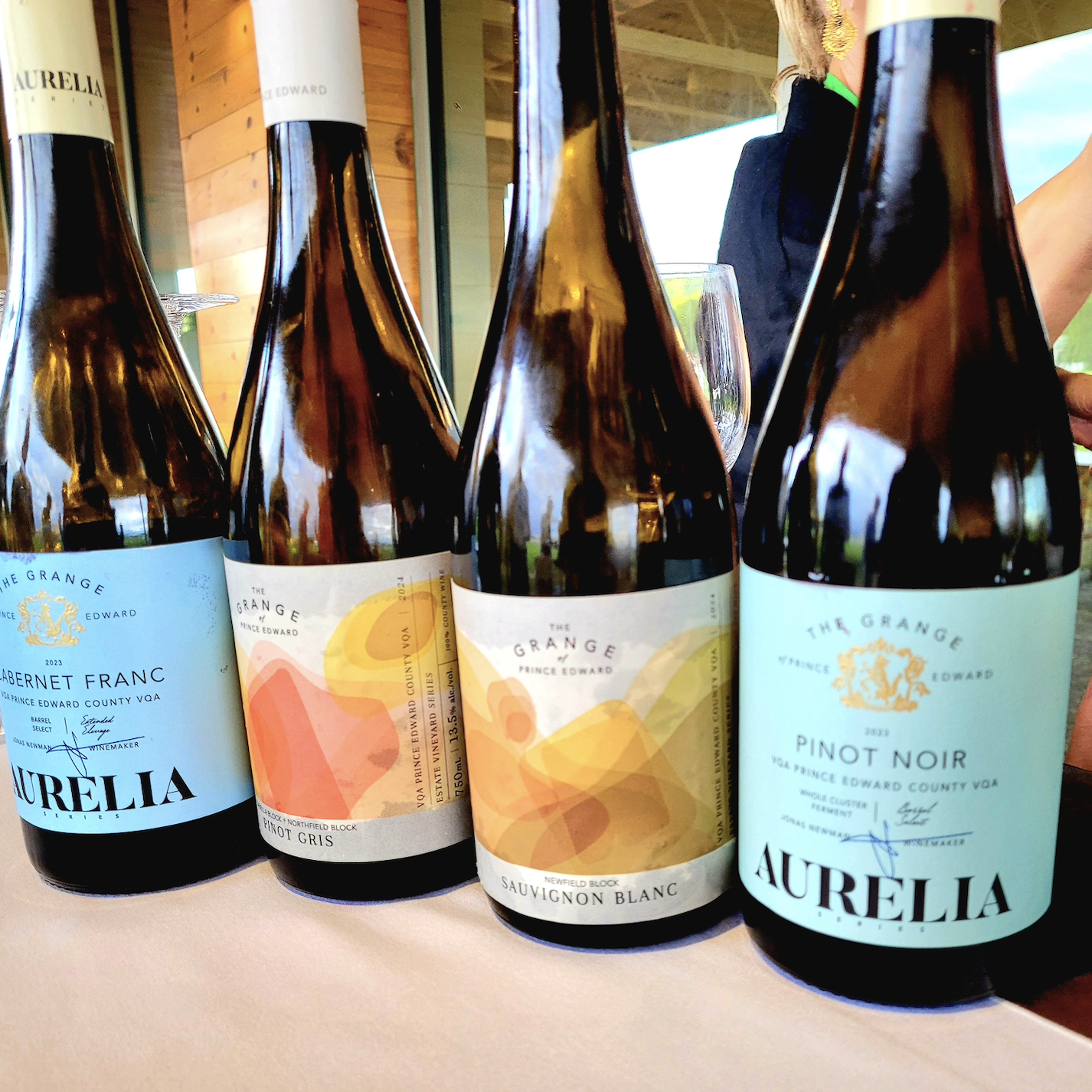
Grange Of Prince Edward Pinot Noir Aurelia 2023, VQA Prince Edward County, Ontario

Tart with an acetic edginess because of its raw energy and DIY ethic. Red fruit intensity, implosive, dangerous, rebellious and still workable. It is County pinot noir, the punk rock of Ontario’s varietal sound, purposefully shock chord driven and fast. Try to keep up.  Last tasted at i4C, July 2025

The golden one, Aurelia, from the Latin Aurelius and if you want to delve deeper, the name for Marcus Aurelius Antoninus, Roman emperor from 161 to 180. Even deeper still the character portrayed by Richard Harris in Gladiator. Also the top of the opus pinot noir at The Grange and what a golden one it surely is. Needs to be because it is bloody expensive but just 98 cases were made of a varietal harbinger that gets the full on spa treatment. Double sorted, first in the vineyard, then at the table. Whole cluster fermented, including carbonic for five days and then foot trodden. Ten days of délestage before being pressed off and blended to finish ferment in tank. Ages in the most expensive wood for 10 months, 33 percent new. Burgundy anyone? Yes this is the idea and the result is a pretty good approximation, all the while tended to by that County high life in acidity with a generous amount of volatile compound effect. Yet the fruit and that acidity are in cahoots, sweet, inviting and enlivening. At nearly $75 there is a whole lot of swagger, ambition and confidence but if money were no object I’d happily drink through a few bottles. Drink 2024-2027.  Tasted December 2024

Grange Of Prince Edward Cabernet Franc Aurelia Series 2023, VQA Prince Edward County, Ontario

What absolutely killer, beautiful and appropriate volatility in the sweetest and most elastic vein. There are Loire and Ontario cabernet franc and then comes along Aurelius at Prince Edward County’s Grange made by Jonas Newman – and the skies re-open. Feels like a cabernet franc epiphany sent after a storm with order restored post chaos and darkness. The wine’s opening salvo is something understood to be professional and artisanal rolling into the proverbial emergence from risk relatable to reward. Brightness and potential ensues. Near, near absolutely brilliant bottle of cabernet franc. The pinnacle is coming soon. Drink 2026-2031.  Tasted at i4C, July 2025
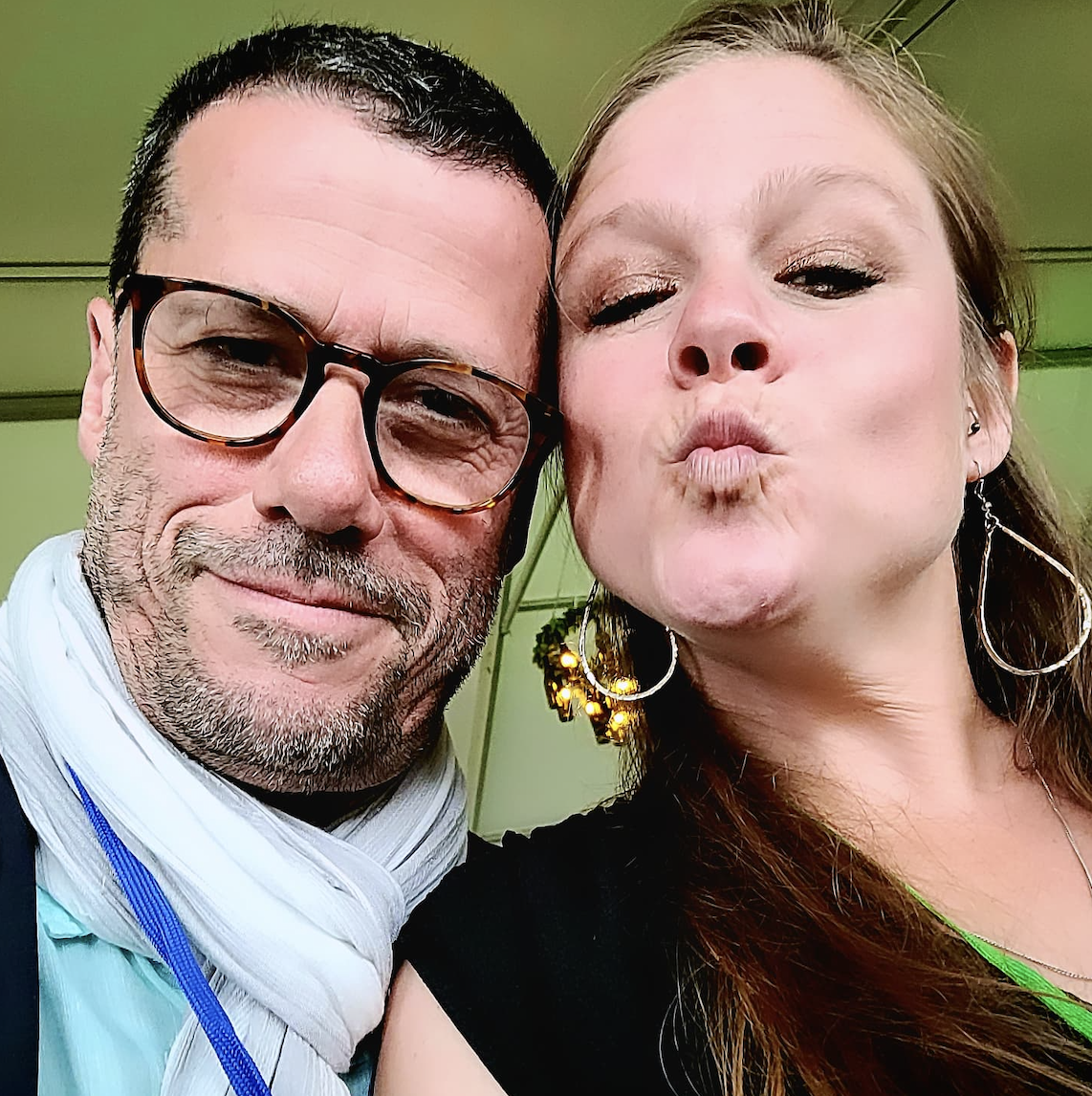
With Jennifer Carter, JoieFarm

Joiefarm Winery Pinot Noir En Famille 2022, BC VQA Okanagan Valley, British Columbia

A treat to taste a signature JoieFarm pinot noir from a most rewarding Okanagan Valley – Naramata Bench vintage, especially under the auspices of the En Famille autograph. A true “farm” wine, emphasizing a connection between Naramata and these varietal wines. The ’22 brings fullness and generosity in a most familial and joyous way. Ripeness is just right there and softness ensues to ensure the highest level of drinkability for always and whenever. Drink 2025-2028.  Tasted at i4C, July 2025

Leaning Post Pinot Noir 2023, VQA Niagara Peninsula, Ontario

The NP pinot noir falls into the Leaning Post line wedged somewhere on the line between The Fifty and the single vineyard labels of Senchuk, Hemeris, Lowery and Grimsby Hillside Vineyard. What’s right and charming about 2023 is how it settles into our varietal psyche for a vintage neither as warm or concentred, while returning to varietal basics. This feels like 2009 or 2009, wines ripe and structured enough that in Ilya Senchuk’s hands that are able to please early yet surely age gracefully forward several years. There is purity and potential magic from vintages like this with no exception for one labeled as an LP pinot noir. Less than epic, but they can’t all be and my how good ’23 will be for years to come. Drink 2025-2031.  Tasted at i4C, July 2025

Lightfoot & Wolfville Pinot Noir Ancienne Wild Ferment 2021, Annapolis Valley, Nova Scotia

Feels like only yesterday when pinot noir planted, nurtured and made into wine at Lightfoot & Wolfville was born, but here we find this special Annapolis Valley example come upon a decade into its tenure. Things have changed in terms of ripeness, knowledge and experience, but still this is Nova Scotia wine. Unequivocally and beautifully, with tension and this rise of high tonality up high into a Fundy-Minas Basin air. The 2021 still rises but also settles in term of its tannin structure. This says drink away and be keenly aware of how time will dramatically change this pinot noir across all of its character; volatility, emotional well-being and spirit. Drink 2025-2028.  Tasted at i4C, July 2025
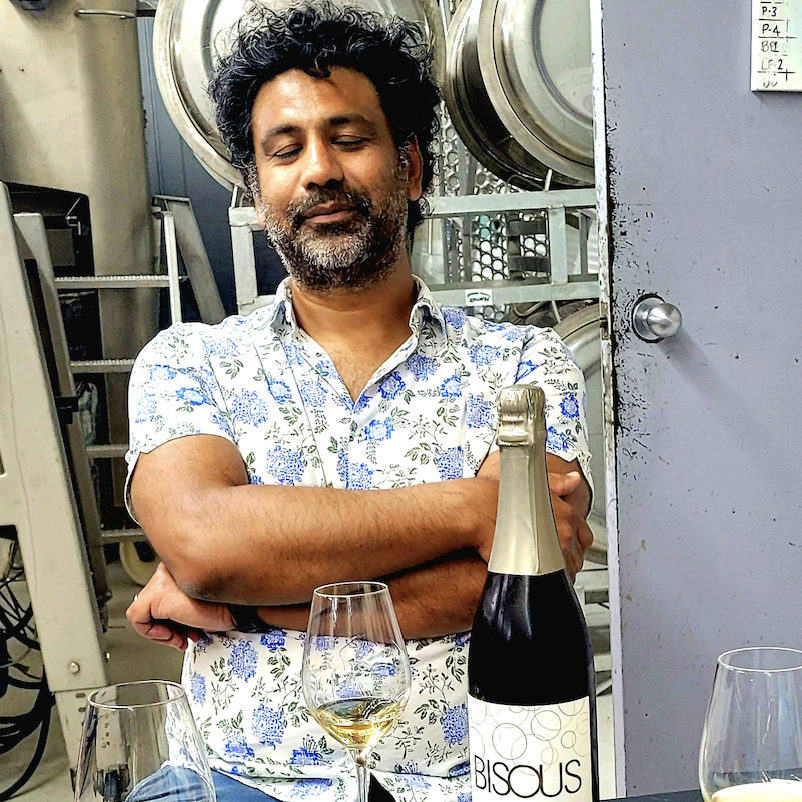
Shiraz Mottiar, Malivoire

Malivoire Gamay Small Lot 2023, VQA Niagara Escarpment, Ontario

Some carbonic from 30 percent whole cluster gamay. Pretty tight, spot on, clean and correct gamay with ample concentration stopped short of density and so no noted chalkiness. Aromatic spice and Villages stylistic captured to represent keen varietal aspiration bred from rooted Escarpment function. Drink 2025-2028.  Tasted at i4C, July 2025

Malivoire Gamay Le Coeur 2023, VQA Niagara Escarpment, Ontario

A hundred percent carbonic from same number whole cluster gamay and if there once was risk involved that anxiety is long gone. The all in number has been a factor since 2017 and one time trepidation is now a gamay that knows exactly what it is from makers who know exactly what they’ve got. Firm and with elastic tension for gamay that reaches out, snaps back and does it again. Repeats its processes on the palate with pulse and meter. Amazing.  Last tasted at i4c, July 2025

Punchy for gamay, so very Niagara style, likely Lincoln Lakeshore or the steppes of the Beamsville Bench. Fruit, leafiness and a mild earthiness (as in reduction) together with top level perfume of spring flowers (hibiscus), fresh dill and that induction of reductive aromas. and a Villages emotion that speaks volumes about a general sense of place. Less demanding in terms of tannin and a declension of flavours while not quite as fleshy or full as expected to follow what came at the first. Will this flesh out? Quite likely because it grows and grows on you. Tremendously solid varietal wine – if not so adept at aging. Drink 2024-2026.  Tasted blind at #NWACS24, June 2024

Malivoire Gamay Courtney 2022, VQA Beamsville Bench, Ontario

Courtney releases a year later than Small Lot and Le Coeur because it’s more traditional without any carbonic maceration. Warmer vintage, more depth and peppery quality in a pinot meets syrah sort of way. A unique and mature vineyard brings warmth and depth, the treatment in the cellar meant to add breadth and lengthen what is possible. That it does.  Last tasted at i4C, July 2025

Juicy and effusive gamay, such sweet perfume and candied goodness in that aromatic regard. Leafy and savoury infiltrates within and then a repeat on the palate that speaks to harmony within and also without. Maybe some RS sweetness but it is forgiven because all parts work well and together, Acidity over tannin and that’s perfectly fine. Just a bit sour at the finish. Drink 2024-2026.  Tasted blind at #NWACS24, June 2024
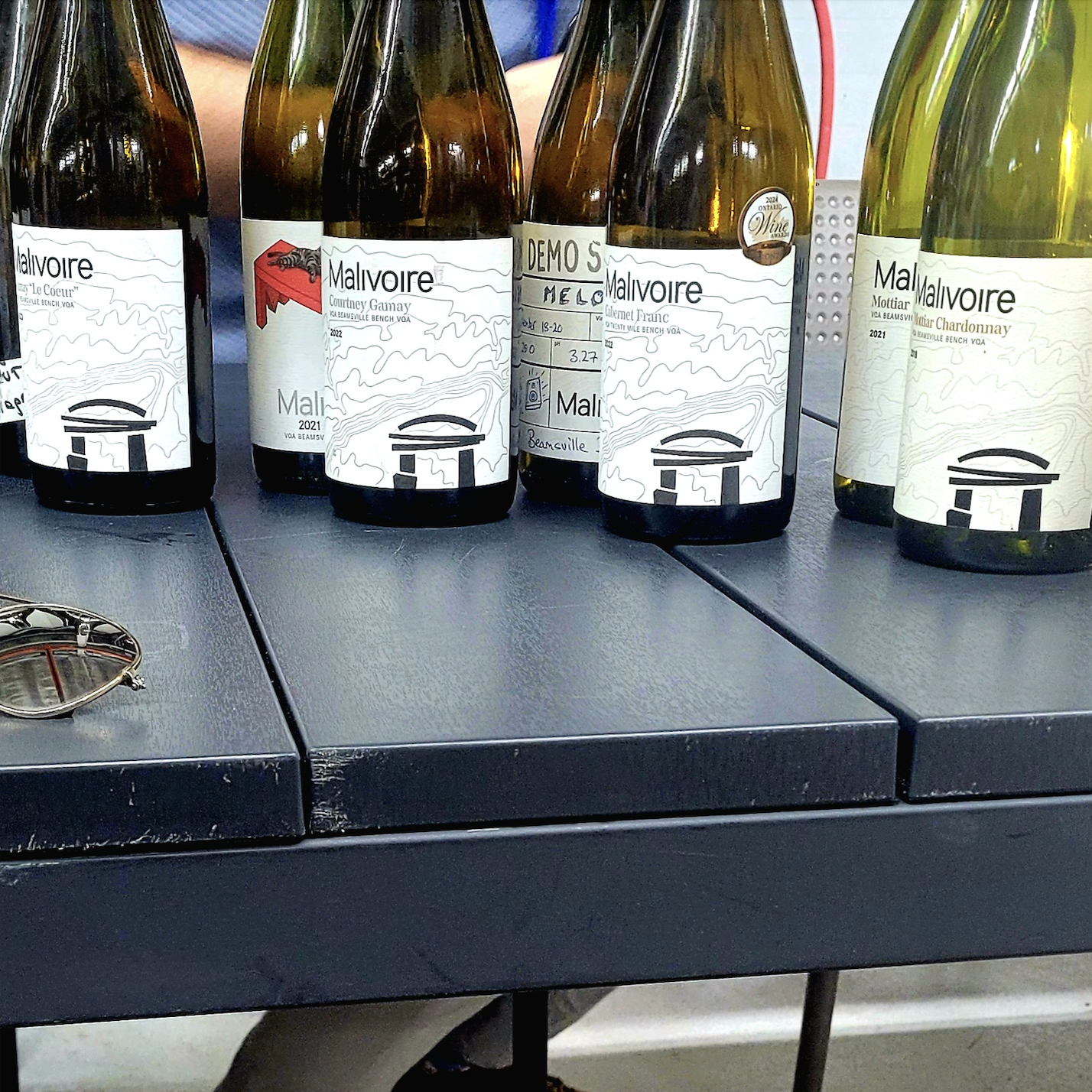
Malivoire Cat On The Bench Gamay 2021, VQA Beamsville Bench

Hard not to think comparatively but the musky funk of Cat on a Bench really does imagine Cru Beaujolais, specifically Morgan from a famous producer or two. “We got the funk, we got the funk!” Just one barrel makes 30 cases, first vintage was 2007 and who is the cat? Is it one of three or is it Martin? And which bench, the one next to the barn or The Bench? All adds up to fantasy, to Beaujolais and benches, to the impossibility of herding cats and the uniqueness of gamay from Moira vineyard. In any case this hits the proverbial off the beaten path spot.  Last tasted at i4C, July 2025

New gamay sku here for Malivoire, one of if not Niagara’s (and Canada’s for that matter) benchmark gamay houses. Martin Malivoire planted vines more than 25 years ago and at the time of bottling it was winemaker (now head of all things Malivoire) Shiraz Mottiar who had been running hither and thither with the varietal program. The iterations included Small Lot, Farmstead, Courtney, Le Coeur, Wismer-Foxcroft, Concrete and Genova. Mottiar has been playing with whole bunches, carbonic maceration, wood, concrete and things we may not fully be privy too. The Cat series includes three $50 chardonnays called Steel, Stave and Skin, while this looks to a new pinnacle for what the team surely saw as the finest estate fruit to date. “Cat on a Bench” may just be the mendicant four-legged feline on a hot tin roof because it’s survival depends on instinct and cunning, its energy nervous, hot, desirous and bothered. In a good way. Yes this is structured gamay, notably firm, sour, crunchy and somehow finds a way to reflect the realities of normal gamay life. And it is $60, surely unprecedented for Canadian gamay. Cru Beaujolais as well. A one off? We shall see. Drink 2024-2027 . Tasted August 2023

Malivoire Pinot Noir Small Lot 2023, VQA Beamsville Bench, Niagara Escarpment, Ontario

Brightest of the Malivoire pinot noir and a high acid, toned and intensity example with less concentration than the previous 2022. Classic cool climate correctness and standard bearer. Takes what it’s given and stays the varietal to place course. Drink 2025-2028.  Tasted at i4C, July 2025

Malivoire Pinot Noir Mottiar 2023, VQA Beamsville Bench, Ontario

Just a small amount of whole cluster, maybe 10 percent because of the variety’s penchant to elevate in volatile acidity. Still a little bit goes a long way and the wine just pops here from 2023. First there were the fiddlings of Shiraz Mottiar and now Elisa Mazzi, two winemakers who have confidently figured out how to master pinot noir from the small Mottiar vineyard. Do not fear “if you”can’t find the conductor who created the whole cluster” in this wine, but trust that their signature is there. As is the fruit and how it expresses this peekaboo of a block on the Beamsville Bench. If Val were pinot noir this would be her song and she would find her way off the train. It’s the theme of humankind and making pinot on the Bench. Drink 2026-2029.  Tasted at i4C, July 2025

Malivoire Pinot Noir Cat On The Bench 2022, VQA Beamsville Bench, Ontario

Malivoire’s Cat on the Bench in pinot noir is expressive of a similar whole cluster funk as noted with the Cat on the Bench gamay. Here however it combines with and is elevated in spice, but also increased depth and it all formulates as a serious pinot noir with a wildly invigorating result. COTB is a layered varietal wine that will take years to peel away and figure out what full possibilities await. The vintage is key to constructing and ultimately resolving the pressing and evolving questions. Hard to make a final decision on just how important the 2022 really is because tasting bottles along the way will surely re-write the script. Drink 2027-2031.  Tasted at i4C, July 2025

Malivoire Cabernet Franc 2022, VQA Twenty Mile Bench, Ontario

Crispy, crunchy and chalky cabernet franc, deep and sonorous, herbal with herbaceous piques, edgy and structured. Will still take a few years to figure itself out, push the fruit to the fore and find its core of balance.  Last tasted at i4C, July 2025

Very different vintage to the light and stretched ’21, now fleshier and fulsome, 18 months total wood time, the last eight of which were in older barrel. From a vineyard in the valley below Ball’s Falls, this being Cascade adjacent to the Wismer cabernet franc block. Classic varietal expression, truly classic, tasting like and from limestone, impressively forward enough considering it was bottled just two weeks ago. Crunchy currants and red pepper, tart and tannins still a bit austere. Drink 2025-2028.  Tasted March 2024

Rosehall Run Pinot Noir JCR Rosehall Vineyard 2022, VQA Prince Edward County, Ontario

Sweet floral aromatics for Rosehall’s JCR 2022, a pinot noir that scents like an open book after a warm season. The dictionary entry for effusive, a Prince Edward County welcome, of “approval in an unrestrained or heartfelt manner.” A far as pinot noir in JCR steading goes there is a drinkability factor quickly underscored and yet a few more sips come to regard a stealth and sneaky structure under the underscore. This is the way of a Rosehall Run drug, especially in pinot noir, waging war within itself and at times struggling to make itself understood. Like an ocean of pinot personality beneath the waves and remember, “it always gets so hard to see, right before the moon.” Drink 2026-2031.  Tasted at i4C, July 2025

Tamar Ridge Devil’s Corner Estate Pinot Noir 2023, Tasmania, Australia

Tamar Ridge’s Devil’s Corner is Tasmanian branding for four equal parts salty, sapid, sweet and sour pinot noir. In other words a four-poster balanced cuvée of vineyards’ fruit that draws lines to four corners within an a varietal enclosure and repeats the process ad infinitum. Stage presence and a profound personality stood up to be recognized, investigated and counted. Firm, grippy and impressive. Drink 2026-2030.  Tasted at i4C, July 2025
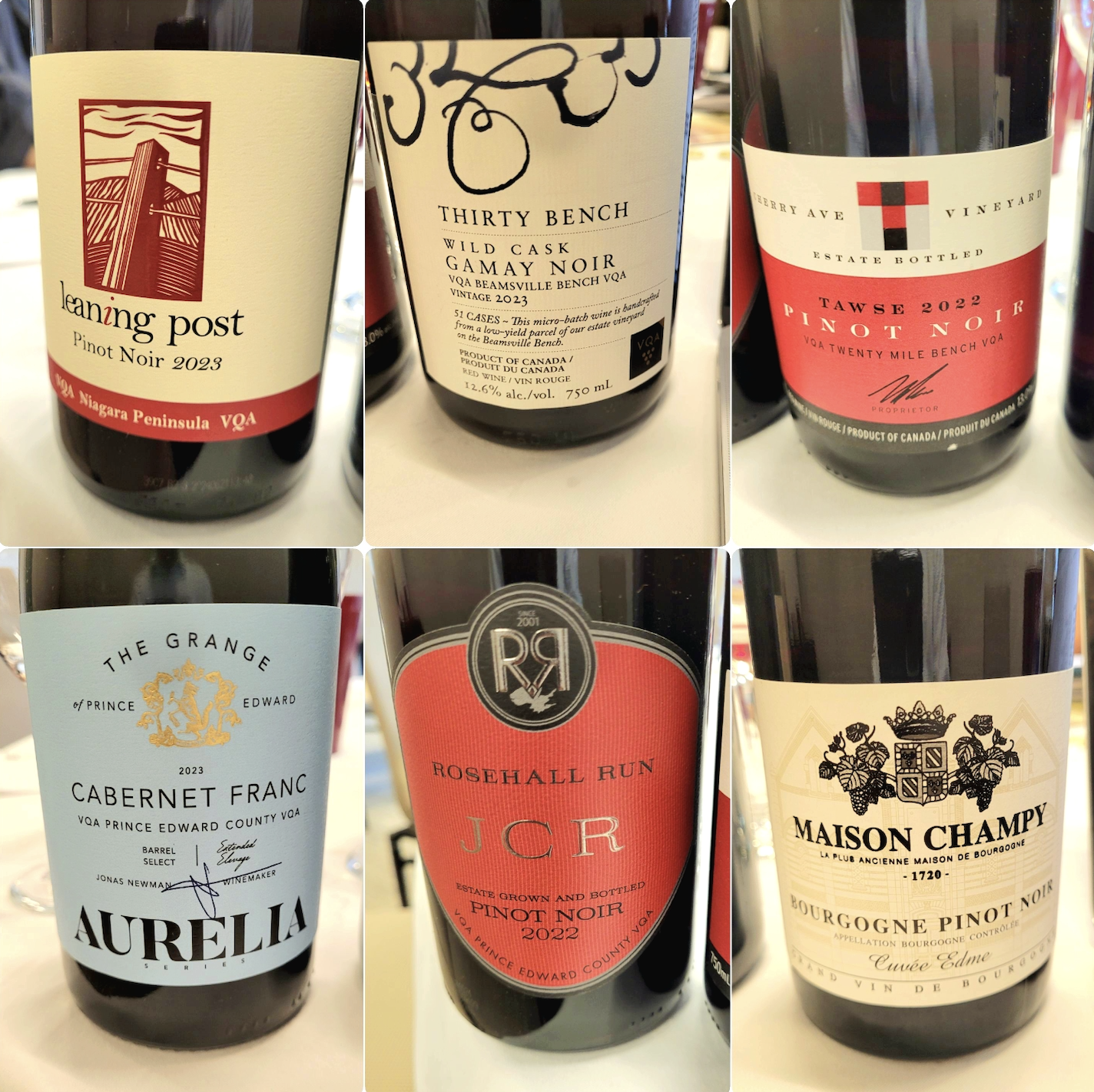
Tawse Pinot Noir Cherry Avenue 2021, VQA Twenty Mile Bench, Ontario

No shock to experience a young Cherry Ave pinot noir in a state of rigid and closed control because it defines restraint for the Twenty Mile Bench. Quiet and diffident though we do detect a half wink and wry smile as it teases aromatics if obtusely giving little of its charm away. Noting the classic red crayon and concrete stiffness, breathing diaphragmatically, fuller and longer of inhalation and exhalation, costal speaking. This means low and slow evolution, a few years yet before things begin to open up and a long life ahead. The child of a wet and often cool vintage, showing as it should, made in a style that expresses vintage and place with distinction. Even if these things are not yet known. Drink 2026-2030.  Tasted at i4C, July 2025

Thirty Bench Gamay Noir Wild Cask 2023, VQA Beamsville Bench, Ontario

Only 51 cases were made of this ultra unique Bench gamay noir which will appear as the lightest and leanest of them all. Do not be fooled by colour because there is varietal concentration, intensity, structural integrity and pent up power in Emma Garner’s wine. Not exactly puff up the chest and egocentric, but rather capability, probability, possibility and promise. Balanced, sweetly volatile and singular with wood spice and a white pepperiness that is unlike the rest. Should hazard a guess the kids will love this and in these times can afford it too. Drink 2025-2029.  Tasted at i4C, July 2025
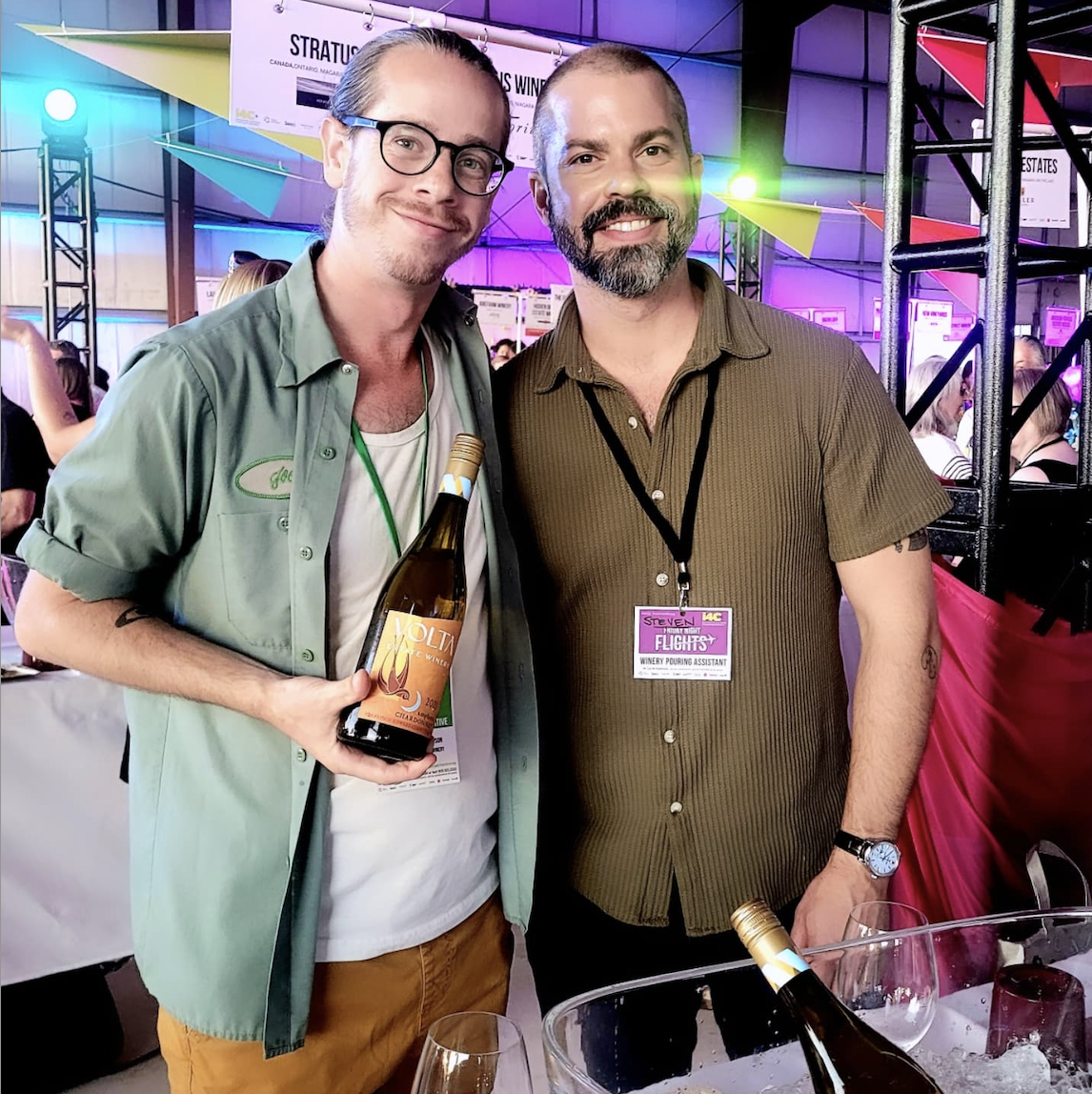
Chris Thompson and Stephen del Degan, Volta Estate

Volta Estate Winery Pinot Noir Knotty Vines Vineyard 2023, VQA Prince Edward County, Ontario

Welcome to the future. The Del Degan family are a new County player standing up to immediately be noticed and reckoned with. Just a short time ahead will be filled with elevated Prince Edward County importance to include Rosehall’s Volta Estate Wines under the guidance of winemaker Chris Thompson. Hard to fathom how quickly a wine like this 2023 rises to prominence for the region but here it is in all its ripeness and crucial balanced glory. A more precocious and richer start from the corner of Greer and 33 where 18-24 inches of topsoil separate 12 year-old plantings from solid limestone bedrock. This is simply a remarkable, yet surely well-reasoned and calculated beginning. Drink 2025-2027.  Tasted at i4C, July 2025

Good to go!

godello

Cool Chardonnay on ice

Instagram

Facebook

Chardonnay is never too cool for school

Flight #1 at the 2024 School of Cool
(c) i4C

Will fully admit to having seriously considered not using the word “cool” in the title for this latest exposé on i4C, Niagara’s annual International Cool Climate Chardonnay Conference. Then good conscience and reality set in because the original dub for Canada’s most important and successful wine congress will always be too good to dismiss. They coined it, built it and people have most certainly come. To foresee and then to consummate this collective pursuit of excellence inscribes Cool Chardonnay into the lexicon of wine forever. Hard to predict just how many more of these joyous to potentially annual profound (four-day) weekends there will be, but were this the last then hundreds upon hundreds of producers, winemakers, media, influencers and consumers over the years will have walked away happy, better for it and with memories to last a lifetime. The extraordinary 2024 edition of i4C went deeper still, to deliver the coolest quality and finest balance between information, socialization, revelry, society and of course, chardonnay. Cool as ever, gotta be cool, relax and never too cool for school.

Three panels of i4C School of Cool 2024

The School of Cool gets into sessions with wise and wily words from Past Chair Suzanne Janke, a lifer for the cool climate cause, public face of Stratus Vineyards and light of the room. Janke’s input, along with the i4C Board, Concierge Kim Auty and Event Director Trisha Molokach shows a highest level of intuition for what can only be judged as a cracker choice for keynote speaker at the 2024 School of Cool. That would be the affable character, next level intelligence and dry as the desert humour of Austrian-born, London-living Master of Wine Stefan Neumann. Mr. Neumann peeks out from behind his little boy grin to invoke the legend that is Laura Catena, to introduce his intentions as it pertains to cool climate chardonnay. “She slapped me on the brain and said there is no such thing as good warm climate chardonnay.” The wheels are turning, theories circulate and then from his own powers of reasoning Stefan announces, “I really think the world needs to know more about Canada and cool climate chardonnay, because it’s really important.” Not that he is late to the party, but the choir nods silently and knowingly, all smiling wryly. You can hear the collective internal dialogue working. “We like this guy.” Then he speaks to they who are not in the room. “Every cool chardonnay has a cool admirer out there,” he insists, “just as every pot has a lid.” The analogy might have got lost in translation from within the history of some ironic Viennese dialect. Note to self: Send Ernst Molden a note to ask for clarification. In any case Neumann comes from a place of hospitality. “As a guest you need someone who can help you,” he explains. “As a sommelier, if I’m going to explain cool climate chardonnay to a guest I’m not going to start with the Winkler classification.” Truer words never spoken.

School of Cool
(c) i4C

South Africa’s Anthony Hamilton Russell leads the first session where things turn immediately laugh out loud funny, if simply because Hamilton Russell is an Afrikaans lekker of off-the-charts intellect, dry wit and a brand of self-deprecating meets sweet roasting and toasting humour that is by all accounts infectious. “The only constant is change,” he begins with an address that may or may not attempt to tackle climate change. “All the hard rains and frosts are just noise in the background and it’s about how we are going to deal with it.” Anthony wisely chooses to order the chardonnay tasting from north to south. His first notation is to explain “how important it is to precipitate proper dormancy in chardonnay.” Then he poses the question, “what is the worst climate problem?“ He is answered by (Nova Scotia’s) Blomidon Estate winemaker Simon Rafuse. “Depending on when you ask me, the answer will be about what just happened.” For Adamo’s Vanessa McKean “it’s a big catch up in the spring to get ahead of things, remove the (geo-thermal) blankets as late as possible before the weeds get out of hand and also late frosts compounded by the textiles still in surround of the vines.” Westcott’s Casey Kulczyk notes that bud break occurs earlier, growing seasons are warmer and ripening is quicker, while also more uneven. Are you sensing a (lack of) discernible Canadian patterning? Even in winemaking, from west to east Canada is comprised of many different vine-growing countries.

Sparkling Flight led by Peter Rod
(c) i4C

Session two is led by Peter Rod, he of chivalrous and consortable character, a prodigy and mentor for Niagara educator royalty and if the audience thinks Neumann’s humour is dry, they are then treated to Rod’s mix of dead-pan, amusement and bemusement. Fine decision to put Peter at the fore for the Sparkling wine flight because nowhere does that category receive more attention, research and investigation than that at his seat of higher learning. Peter Rod is surrounded by bubbles at Brock University’s CCOVI where fizz is considered on a daily basis. An effervescent panel delves deep into discourse for what Peter dubs as “Bubbles on the Rise.” Then the third set of eight pours, this time returning to still waters, holds title for “Chardonnay Unbound,” a varietal discovery with different faces, from different countries. Stefan Neumann returns and keeps the room engaged. Then Suzanne Janke is back at the podium and tells the audience her outfit blends seamlessly into the drapes, as if no one had noticed. Janke’s words are sing-song, showing the skills of a melodist with a sweeping sense of purpose. All she says focuses on the patrons, panelists and chardonnay, but never the I. Piano-woman, “quick with a joke or to light up your smoke….Oh, la, la-la, di-dee-da. La-la, di-dee-da, da-dum.”

With Katie Dickieson, Emma Garner and Ben Minaker – Andrew Peller Ltd.

In the end these are three memorable panel experiences at the 2024 i4C Cool Chardonnay School of Cool. Three expertly moderated sessions by Anthony Hamilton Russell, Peter Rod and keynote speaker Stefan Neumann MS. Intel of the highest order from 21 Chardonnay winemakers. In 12 years of attending this conference there has never been a better organized, finer seamless set of transitions or more to learn. Bravo to Concierge Kim Auty, Event Director Trisha Molokach, Past Chair Suzanne Janke, the producers and entire team of volunteers. Friday night we tasted Friday Night Flights with the producers at Cherry Lane Farms in Vineland. On Saturday night we returned for Chardonnay in the Vineyard World Tour Tasting and Dinner at The Riverbend Inn, Niagara-on-the-Lake. And there were visits orchestrated by the Wine Marketing Association of Ontario’s Andrea Peters. To Chef Ryan Crawford’s Bar Ruffino with J-L Groux, Dean Stokya and Suzanne Janke of Stratus Vineyards. To Dobbin Estate with Wade Dobbin, Peter Gamble and Ann Sperling. To Flat Rock Cellars with Ed Madronich. To Le Clos Jordanne with Thomas Bachelder, Phillip Brown, Kerri Crawford and tasty treats from Chef Crawford. Finally, an i4C lunch at Westcott Vineyards’ Butlers’ Grant Vineyard with Grant Westcott, Carolyn Hurst, Casey Kulczyk and magnificence from Chef Tim Mackiddie. Alas, here are 83 tasting notes, 63 for chardonnay and 20 others. 

Three panel blinds

Blomidon Estate Winery Chardonnay 2021, Nova Scotia

“We have been growing chardonnay since the 1990s,” tells winemaker Simon Rafuse. “We can definitely ripen and picking is weeks ahead of the past, but we have experienced more extreme climate events in the last decade, whether it be frost, flash flooding, polar vortexes, hurricanes and disease pressure.” His ’21 is made in a clean style, whole cluster pressed, on lees for 12 months. Sharp yet rich, intense while full, apropos, meaningful and direct. Top vintage without a shadow of a doubt. Drink 2024-2027. Tasted at i4C, July 2024

Adamo Estate Chardonnay Musqué 2022, VQA Ontario

From an emerging Ontario region – Hockley Valley. Does not quite feel like 100 percent chardonnay musqué but more like an interplanting or layering with some linear, vertical and incisive Burgundian chardonnay. Less fruit from this bottle replaced by mineral salts yet with no compromise to the flowers by musqué. Producers and consumers of fleshy to buttery chardonnay will find holes but the rest will relish in this outcome all the same. “We farm in an area not great for growing grapes” says winemaker Vanessa McKean. ”We don’t have a large body of water to mitigate extreme temperatures so we cover out our entire 18 acres with geo-textile blankets.” Air flow through the vineyard is essential and being at the top of the hill is helpful. Barrel fermented in neutral wood with the musqué portion delivering more floral notes than most Ontario chardonnay. There is a tinned orchard fruit character that invites more than it distracts and the sharpness of this palate journeying acidity is really quite special. Drink 2024-2026.  Tasted twice at i4C, July 2024

The winemakers are alright – Westcott Vineyards

Westcott Vineyards Chardonnay Block 76 2021, VQA Vinemount Ridge

From the home farm of 26 acres and the lowest elevation, teardrop block on shales and gravels, facing east. Earlier ripening, acid retentive and sees 10 months in barriques, followed by six months in puncheon filled with the previous vintages’ clean lees. Like connective tissue that links the past to the present to prepare the chardonnay for a longer future. Texture is mineral, set below tannin, in command of the palate from a chardonnay built to celebrate and also abide by it’s double-barrelled shotgun approach. Fires, attacks and conquers the palate from above and below so that there is no escape. Spirit of ’76 all the way with more vibrancy than ever. Impressive like few others. Will age really well. Made for seafood dishes poached, bathed and sautéed in butter. Drink 2024-2028.  Tasted at i4C, July 2024

Greg Yemen – The Organized Crime

The Organized Crime Winery Inc. Chardonnay Sacred Series Cuvée Krystyna 2020, VQA Beamsville Bench

As implosive and protected as any Niagara chardonnay to speak of a year older example that acts and feels as young as any on recent record. Terrific sweetness of fruit and a testament to a full and in this case also long ripening season. Crisp and biting, orchard fruit crunch and no sign of breaking down. Gambles with nature, shows off precision winemaking and confidence exudes from a chardonnay constantly reopening and one you can do so much with. There are savoury elements that suggest food pairing with be a most fun and rewarding exercise.  Last tasted twice at i4C, July 2024

Powerful, reductive and in charge chardonnay, assuming the risk and in delivery of the reward. Platinum gold hue and attitude, serious, grippy and über conscious of its abilities. Top notch with vanilla and cereals that swirl into the full fruit complement of a chardonnay you just bloody want to drink. Consume away, with abandon because it asks this of you. Abide and oblige. Drink 2022-2026.  Tasted blind at NWAC2022, June 2022

Kellerei Bozen Chardonnay Riserva Stegher 2020, Alto Adige, Italy

From a vineyard at 650m with picking happening at least a week earlier than just 10 years ago and a dolomitic mountain air that breathes great life into this special sort of cool climate chardonnay. A yellow apple just short of ripe, with acidity sweeter than the drupe itself and a classic northerly sharpness that speaks to place as well as any European chardonnay. Drink 2024-2026.  Tasted at i4C, July 2024

Planeta Chardonnay 2022, Sicilia DOC 

Production began in 1995 while the vines are now nearly 45 years of age. In the southwest part of Sicily, in the Ulmo area around the village of Menfi where a corridor of wind, “our favourite friend,” tells Santi Planeta, blowing through between the lake and the sea. Through vines growing between 100 and 450m, breathing cool life, especially in the summer. The 2022 vintage saw plenty of rain though not concentrated at any particular time and so the constant events of moderation were something remarkable considering how often extreme climate events are increasingly more prevalent. The coming vintage of 2023 and 2024 will be affected by them, mostly because there was no rain. This chardonnay is impeccably balanced between fruit and acidity, acidity and texture, texture and tannin. The progression is seamless, the result precise and anyone who does not the recognize the experience and continued work put in may not be paying close attention. That’s fine but know just how special a (relatively) large production, semi-cool climate chardonnay this truly is. Planeta’s year-to-year consistency is truly impressive. Drink 2024-2028.  Tasted at i4C, July 2024

Hamilton Russell Vineyards Chardonnay 2023, WO Hemel En Aarde Valley, South Africa

The spirited intensity is unrelenting and speaks to how the HRV chardonnay tastes more profoundly serious than any other of its ilk. “Young and primary,” insists Anthony Hamilton Russell. “I like the complexity that our chardonnay develops with time in the bottle.” Well said but truth be told the wine already exhibits an electric variegate character and so what’s to come may just blow the mind.  Last tasted at i4C, July 2024

Freshness and abundance incarnate for Hemel-en-Aarde Valley chardonnay from the HR team that simply gets this grape from this place. A citrus vintage, less reductive than some whilst bursting with energy. Delight in lemon custard, all the zest, crunchy, mellifluously honeyed and never over-arching above and beyond the target. A scintillant of fruit through variety, to ache with love and to please, simply and unequivocally by design. Peak performance, summarily in the best of ways.  Drink 2024-2029. Tasted July 2024

The Foreign Affair Blanc de Blancs 2021, Methode Traditionelle VQA Vinemount Ridge

Light toast, easy goes, no long lees but a good signed lease to hang around for a few years time. True as chardonnay blanc de blanc, apples part terpene and part mashed. Smells like baked and cooled apple pie. Palate spirit yet agin those apples are all over, all consuming and all in. Some wood aging, Brut in style, somewhere between six and 10 g/L of dosage laid over 24 months leased lees aging. The second iteration of this sparkling wine.  Last tasted blind at i4C, July 2024

The bottle lists Vinemount Ridge as the fruit source though the website writes Lincoln Lakeshore so lets go with the bottle! Regardless we are looking at 100 percent chardonnay crafted in the dry, intense, citric, high energy style. This shows real energy and a couple of sips nearly take your breath away. The elucidations are green apple, piques of white pepper and the flavour profile slash texture much like sabayon extended by a few shots of limoncello. So much interest here. Drink 2023-2026.  Tasted November 2023

Stonebridge Blanc De Blanc Brut Nature 2020, VQA Four Mile Creek

More autolytic than some and even more than that, mellow, malolactified and softening quickly. Botanical flavours and fine bitters, creamy style, easy and ready. From chardonnay first made off of the estate in 2017 and looking forward to seeing what can be learned from the idylls of experience towards trying this first sparkling wine made at Stonebridge. Old puncheons and stainless steel combine for a punchiness that come out of several cuvées to try and abide by site, structure and ultimately consumer appeal. Richness of the site begets texture and in turn that appeal. The flavours persist though this is ready to drink sooner than many. Drink 2024-2025.  Tasted blind at i4C, July 2024

Kew Vineyards Blanc de Blanc 2017, VQA Beamsville Bench

Golden toast, truly brioche style, equipped with fruit a plenty marked by a note that reminds of good and plenty. Stage presence, persistence and length. A dosage of 5.9 g/L of residual sugar which may be the highest in a flight of eight but still very low for sparkling that is essentially dry. Made by Phillip Dowell with chardonnay that would have been planted on the property back in 1980. As concentrated as it gets for chardonnay sparkling wine but the vintage was acid driven and so the sugar extends the flesh.  Last tasted blind at i4C, July 2024

High energy, raging acidity, captivating and intense Blanc de Noirs right here. Eye-opening, olfactory shocking and palate enervating in every which way but loose. Taut, tight and demanding. Party wine. Drink 2020-2023.  Tasted October 2020

Leaning Post Traditional Method Sparkling Blanc de Blancs 2018, VQA Beamsville Bench

From Hemeris Vineyard on the Beamsville Bench, primary fermentation for six months in barrel, another six with lees and then the full lees aging of 36 months. An emotive sparkling wine that elicits and solicits emotion. Could this be a unicorn wine in its own special way? Evocative of what it makes you feel and what you would like a bubble to taste like? The long lees aging is clearly appropriate and leads the autolysis to a place of warmth, beauty and comfort. Oxidative and yet searing, a blanc be blancs no doubter that mans serious chardonnay business. Complex and curious, crafty and creative.The acidity here is special and in charge. An ideal mix of 9.2 g/L of total acidity and 3 g/L of residual sugar. “The vineyard was asking to become this kind of wine” explains Ilya Senchuk. “The purpose is a single vineyard expression.” Here’s to hoping the 2019 will add a few more months on lees to take that next step upwards.  Last tasted blind at i4C, July 2024

Single vineyard block called Hemeris (an old term for garden, or “something like that,” from the Greek). Of chardonnay, location between (Hidden Bench’s) Rosomel Vineyard and Cave Spring, picked late September and sometimes early October, for sparkling. Base wine is barrel fermented and aged in oak for six months. Spent 36 months on lees in bottle, finished at 2 g/L dosage (so essentially bone dry) and is now about to be released. This was the wine Nadia Senchuk pushed her husband for and this is the chardonnay tract that was needed to create it. Listen to the vineyard says Ilya, “because it’s basically growing bubbles.” Rich and exciting in the same breath, essential through autolytic response elicited and the breath stolen, literally taken away, every move made for the connection between I and it. An auspicious debut and were it not for the prophetic mind and ravishing palate of the winemaker’s better half, well then access to supply might not be so limited. Drink 2022-2026.  Tasted June 2022

Blue Mountain Vineyard and Cellars Brut Reserve R.D. 2014, VQA Okanagan Valley

Aromatic complexity, a chardonnay and pinot noir (55-45) sear of raging citrus but never lean because there is flesh all over the palate. The lemon segments are ripe and delicious, the red fruit character compliments with added spice, the persistence endless and the winemaking clearly coming from a place of experience and respect to place.  Last tasted blind at i4C, July 2024

Always pleased to welcome the BR R.D. into a glass and here is an old but a proverbial goody, that being 2014 and consumers must be reminded just how special this research and development is to determine the excellence of Blue Moutnain’s indagative sparkling wine. A blend of chardonnay and pinot noir, the first 10 percent more than the last with some of the most restrained, reserved and demure aromatics in the Okanagan Valley. All ways to say this is lovely, quietly generous and so settled to gift pleasure above all else. A most complex game of citrus and orchard fruit, distillate by nature, expertly seasoned with fine sea salt, white pepper and lemongrass powder. Such a gift nine years after vintage at a ridiculously reasonable price. Drink 2023-2027.  Tasted November 2023

Henry Of Pelham Cuvée Catharine Carte Blanche Estate Blanc De Blancs 2017, Traditional Method, VQA Short Hills Bench, Niagara Escarpment

Stoic, reserved, full scenting, flavoured and expressive. Tons of fruit here in what could only be 100 percent chardonnay. From a vineyard planted in the 1990s to Clone 95 chardonnay and a place of incredible consistency, “one of the most I’ve ever worked with,” tells winemaker Lawrence Buhler. Sees 54 months on its lees and while it may be difficult four to five years ahead to know what will happen – this is Ontario’s benchmark sparkling wine that always comes through. Not merely a matter of replication but more like intuition conjoined with persistence.  Last tasted blind at i4C, July 2024

Consistently crafted as a Blanc de Blancs that sees 60 months on the lees from estate grown chardonnay. From a varietal growing season so ideally destined for sparkling wine because a cool and wet spring plus summer emerged in late August to hot days and cool nights through October. In the middle of that spell is the chardonnay pick for sparkling and as good, complex and riveting as this arch-classic Ontario bubble may have been before – well bring on 2017 for next level complexities. Tasty, piquant and toothsome, of toasty brioche like never before and this swirl of creamy fruits and exotic seasonings. Feels like aged Growers’ Champagne and the fact that it is from Niagara makes it all that much more satisfying. Plenty of crunch, succulence and acid-driven energy from a meticulous bubble. The benchmark for local. Drink 2023-2027.  Tasted November 2023

Jacques Viljoen – Boschendal

Boschendal Cap Classique Jean Le Long Prestige Cuvée Blanc De Blancs 2012, WO Elgin

Presented by cellar master Jacques Viljoen for a sparkling wine coming from one of South Africa’s coolest climate area. The first vintage was 2007 and these are vines planted south-facing (i.e. cooler in the southern hemisphere) and facing the sea. A place where grapes can hang long and develop phenolic ripeness even while coming in at a brix number just above 19. Lower dosage now and so the autolytic notes (if not globally classic in their expression) and also excitement are increased. As much toast, autolytic and oxidative notes as any in a blind flight of eight. Pushes the envelope to see what can be done with sparkling wine, malolactic fermentation, wood aging, near dry dosage and lees aging. Not so much the classic brioche or baked bread representation but there are complex notions perceived from that aforementioned style clearly chosen, conceived, attempted and for the greater part, succeeded. Drink 2024-2027. Tasted blind at i4C, July 2024

Kyle Loney and Whitney Collins – Advini and Domaine Laroche

Domaine Laroche Chablis Les Vaudevey Premier Cru 2022, Bourgogne AOC, France

The word precise is often used to describe Chablis and many other global chardonnays, sometimes gratuitously but here perfectly applies to the Laroche Vaudeyey. Les VdV ’22 is focused to a virtue with its equality, equanimity and equilibrium from start to finish. A lexical entry to figure out the crux and relationship between cru and village.  Tasted a second time, July 2024

The immediate feeling perceived would be of a chardonnay bottled with lees, of a certain level of autolysis though neither by brioche or with respect to the sparkling kind. More like washed cheese rind, preserved lemon and that kind of texture that skin contact whites also deliver. The sort that settles on the tongue like a dissolving salve but here the subtlety suggest lees in the bottle more than light “orange.” In fact this is essential Chablis and does it not just feel like Ontario winemakers (in particular) are trying to emulate such a style by keeping lees in their bottles? Drink 2024-2028.  Tasted blind i4C, July 2024

Deux Roches Pouilly-Fuissé Vieilles Vignes Deux Roches 2022, Bourgogne AOC, France

Also a bottled with lees style of chardonnay with a level of richness so rightly and righteously older/traditional schooled, but so bloody clean and expertly made. Express and expert tang, layers of citrus, more grapefruit than many, fine tonics and also sweet bitters. There is some fat here but also acidity and verticality, in other words tension, more so than many of the appellation. Recommended by Export Manager Romain Bourgeois and also Stefan Neumann M.S. to pair with The Little Sparrow, a.k.a. La Vie En Rose, the one and only Édith Piaf. Drink 2024-2027.  Tasted blind at i4C, July 2024

Bachelder Chardonnay Grimsby Hillside Vineyard Frontier Block 2021, VQA Lincoln Lakeshore

So much to digest, first with knowledge of chardonnay in the hands of one monkified human that shall be named Bachelder and second of so much to take in and absorb from the label on the bottle. Niagara Cru (there are many), Single Vineyard (there are more), Grimsby Hillside Vineyard (current status Grand Cru, in progress) and Frontier Block (one of two within the great new frontier, inclusive of Red Clay Barn). Two-toned, of bites and textural chew, sexy chardonnay, clean and focused. Highest level aromatics at the peak of what is possible out of Ontario, positively spicy, white peppery even. Cleanest lees usage for a chardonnay of clarity and relatively speaking, also substance.  Last tasted blind at i4C, July 2024

Vintage number three from Grimsby Hillside Vineyard and now more specific by way of a split, with the Frontier Block as the plot within the larger plot, along with that of Red Clay Barn. Drilling down into this historical vineyard that has risen as fast as any New World terroir, just about anywhere these sorts of things are measured. Here named for the final frontier, that being the “last terroir” in Niagara and who knows, maybe it will soon be the first rolling off of everyone’s lips. GHV-FB 2021 is a force, that much is clear from the first look. Or nose, for what matters. Cool and stony style from a wide open space where limestone, shale and gravels conspire to create something new and with absolute potential. It’s already arrived thank you very much and while words like luxe and opulent do not come to the tip, others like succulent and scintillating do. Just something so real and right at your doorstep, vivid beyond chardonnay compare, a stealth fish swimming in clear waters. Truly complex for chardonnay and it must be noted, unlike any other in the world though at the same time feeling like something you’ve known your whole life. Make an exception to delve into this exception because when it comes to chardonnay, this is what we need. Remarkable clarity and distinction, precision extraordinaire and a wine to cast nets far and wide to secure as many bottles that could be found. Drink 2024-2032.  Tasted December 2023

Thirty Bench Chardonnay Small Lot Extended Lees Aging 2021, VQA Beamsville Bench

Spent 22 months in barrel, in other words space was not needed for new juice after 10, nor did Emma Garner feel the need to remove this lot and so 22 months it was. For good reason, great measure and bonafide success. You know the extra wood melt is there and integration is so complete. No compromise to fruit from a vintage aboard the Beamsville Bench that gave of itself selflessly to mingle in cahoots with the cohorts of those barrels and nuances at every turn. Acumen begets probability which in turn generates prospect. Conclusions drawn are expressed with silent nods, a twinkle and smile. This will age gracefully for 10 years.  Tasted a second time, July 2024

Maximum ripeness, warm vintage no doubt, captured and locked into what feels like a reserve style of chardonnay. Full and fine, fleshy and yet sturdy, chiseled musculature, riveting and attention so locked in. As is ours because we simply can’t turn away. Not an easy vintage tells Emma Garner because there was some rot, botrytis and less than desirable grapes. But there was also plenty of great fruit once the chaff was culled, the wheat came in and in turn a terrific chardonnay was made. The length is outstanding.   Tasted blind at i4C, July 2024

Stratus Vineyards Chardonnay Amphora 2021, VQA Niagara-on-the-Lake

Several factors are here at play, namely lees but also vessel so that the mineral aspect exhumed and manifested as texture makes us think about place. Spices run amok and that housing continues to occupy the impression that is distinctly Ontario chardonnay. Bottled with lees would be the reason behind the feeling and also the fact that it has been aged in amphora. First edition, fermented and aged in the clay vessels, influenced by Rene Barbier Jr. says winemaker Dean Stoyka. “It really respects the fruit and causes some restraint in the wine,” he explains. “Giving some salinity and richness on the mid palate.” A unique way to make chardonnay indeed.  Last tasted blind at i4C, July 2024

Along with cabernet franc this chardonnay was also tucked into and raised in amphora, no surprise because these have been two varieties suited up for experimental tests. Very late harvested (November 4th) from the 2021 vintage and specs are not very elevated for this wine. Moderate across the board and yet it is the clay that defines what we nose, taste and feel. Wet clay, a preserve with notable vegetal and savoury elements, banana esters, soft wool and ultimately a new set of varietal parameters imagined. One assumes this is bottled with a similar amount of lees as the R & D Stratus OG chardonnay but the clarity and transparency of the AC suggests something other, or wise. All in all a conundrum frankly, jury still out, much left to figure, pilot, trial, error and decide. Drink 2023-2025.  Tasted September 2023

Maenad Wine Company’s Yvonne Irvine

Maenad Wine Co. Chardonnay Skin Contact 2021, VQA St. David’s Bench

Orange chardonnay is a thing and this leads by example. Cloudy, hazy and yet much cleaner than the visuals might suggest. From Yvonne Irvine’s virtual wine project, made at Creekside and sold through the retail license at Marynissen Estates. Breaks down regular conventions like busy beavers taking apart wood and making their dens. To be honest skin contact wines don’t get much more delicious than this, especially from chardonnay, fruit having been “borrowed” from the vineyard owned and farmed at Niagara College. Full malolactic, lees stirring, older French wood for seven months. The richness, roundness and cozy-fuzzy feeling on the palate shows just how well this turned out. Should be so interesting to see how this ages – can’t hep but think it will go through the process with ease. Drink 2024-2027.  Tasted blind at i4C, July 2024

Stefan Neumann MS

Dobbin Estate Vineyard & Winery Chardonnay 2020, VQA Twenty Mile Bench

As full, rich and riveting a style of Niagara chardonnay as there has ever been. Ripeness at peak, wood in full glory, generously yet judiciously used and the overall effect is something usually reserved for what many will think of as a story written over centuries by Beaune chardonnay. There is delicacy here and if this chardonnay were a book it would be a page turner, which says this vintage in particular should likely appeal to a great and wide audience. Make no mistake though because a wine like this is comfortably affordable to the haves. That it turns out to be a Peter Gamble and Ann Sperling made chardonnay from a top warmth vintage comes as little surprise. Drink 2024-2027.  Tasted blind at i4C, July 2024

Morgan Juniper – 16 Mile Cellar

16 Mile Vineyard Chardonnay Civility 2018, VQA Beamsville Bench

Just carries and emits the feel of classic chardonnay winemaking, without hesitation or equivocation to result in something so knowably Niagara. The wood is on the weighty side and maturity has begun to see this wine acting its age. “I really think it’s important to honour the process of patience in winemaking,” says winemaker Morgan Juniper. The opportunity is not always available to do that but the ripeness here presented the proposition on a platter. “This wine is like waiting for a child to actualize their full potential,” she adds. “I wanted to push the boundaries to see this actualize at a later date.” As it has and the window is fully open with another year or two of enjoying this light lees-affected, barrel-aged and now of a chardonnay at this all in butterscotch stage. Drink 2024-2026.  Tasted blind at i4C, July 2024

Not labeled as such but essentially a Reserve wine taken from a single barrel housing all estate fruit. High level of concentration and richness in the face of a vintage considered cool and challenging, but when you take a smallest of small lot wines like this that just does not apply. Everything about this is classic, basket pressed, natural ferment, full natural malolactic, 22 months maximum for oak aging, Burgundian obviously and medium of toast. “We come to barrel turbid – we like density,” notes Peter Gamble. (Peter) and Ann Sperling really liked this one particular barrel and decided to put it to magnums only. From late September and early October picks, finished at 14.5 percent alcohol and ultimately mouthfeel that rivals some pretty warm wine growing regions. A chardonnay that moves beyond Bourgogne to offer up its very own definition of Niagara’s Twenty Mile Bench.  Last tasted July 2024

Friday, Saturday and Media room tastings

Trius Chardonnay Showcase Wild Ferment 2021, VQA Lincoln Lakeshore

A matter of factor decided by two essential aspects, the first being this chardonnay’s wild ferment and the second surely vintage. Turbidity endured and yeasty ebullition understood are how Wild Ferment ’21 co-opt and conjoin for aromas dedicated and unique to the Trius distinction. Scents of tropical fruit bathing in opaque waters cleansed by energy and movement to result in seriously complex chardonnay. Some spice tipping the tongue and tripping the palate fantastic for machinations of dreams and fantasy. Curious 2021, wild and woolly of texture with the confusion in delivery of a great part of the fun. The back label reminds that the fruit source continues to be Watching Tree Vineyard. Drink 2024-2027.  Tasted July 2024

Rosehall Run Chardonnay JCR Rosehall Vineyard 2021, VQA Prince Edward County

More of a restrained, stoic and while not reductive as chardonnay per se there is a wall erected between aromatics and early joy. A JCR dictated by its extract and structure, a compound butter in hard shell, surely not one in delivery of early returns. The crispiest, crunchiest, saltiest and most savoury of all the Dan Sullivan draws from the oh so important PEC Rosehall Vineyard. Try not to blink for many chardonnay that change straight away but with Rosehall that is far from the case. Twenty minutes in a glass and plus ça change, as they say. Immovably youthful chardonnay, stark and as a contrast, so sown, sworn, authoritative and stone cold of its own accord. There are 2021s from Ontario what will last comfortably in states of fickle freshness for 15-plus years. This could very well be one of them. Drink 2025-2031.  Tasted July 2024

Domaine Queylus Chardonnay Tradition 2022, VQA Niagara Peninsula

Warm and inviting, textural like silk, some glycerol and running soothingly smooth from start to finish shows a different look and separates itself from other vintages. Kelly Mason’s ability to change it up while still maintaining an always high level is a chardonnay testament to a team that ranks with the hardest working makers in Niagara Peninsula show business. There are clean yeasty notes, like sourdough in the proofing stage and subtle baking spice with texture truly divining the directive for high quality “classico” Niagara chardonnay. Never gives up or in, never too hot or cold, a great vintage in Mason’s estimation, but then again, “anything was better than ’21.” Drink 2024-2027.  Tasted July 2024

Taylor Emerson and Jonathan McLean – Black Bank Hill

Black Bank Hill Chardonnay Runway 2023, VQA Lincoln Lakeshore

Gotta be the first chardonnay out of the gates from the 2023 vintage and if this cracker example is any indication of what’s coming then hold on to your senses. Recently bottled and even with an early (September) pick this saw less than 10 months of aging, but the mix of indelible lees and high voltage (8.5 g/L) total acidity put this in scintillant, dare it be said Blanc de Blancs styled territory. So very different to the Runway White (blend) because of its intensity but also warmth at 13.8 alcohol, not quite torridity, but a white peppery scorch nonetheless. Wild and exciting shift from vintner Taylor Emerson and winemaker Jonathan McLean. Will be hard to wait and anticipate what the next level chardonnay turns out to be. Drink 2024-2026.  Tasted at i4C, July 2024

Alex Baines – Hidden Bench

Hidden Bench Chardonnay Unfiltered 2022, VQA Beamsville Bench

Say 10 months in French barrel, a warm vintage to coax out full concentration though “bunch weight and tonnage were actually lower than 2021,” tells winemaker Alex Baines. “More on the average” and yet this Estate level is all that 2022 could be and more, of fruit so silkily rendered, starred gastronomy plated and proffered as if by sous vide and reverse seared white meat, asparagus, salsify and yucca for one of HB’s most sweetly vegetal and succulently situated chardonnays. Gentle spice, firm grasp of the Beamsville Bench, extract accumulated at the peak of the proverbial chart and elastic tannin. All fine, refined and stylish.  Last tasted blind at i4C, July 2024

Full and wholly substantial chardonnay wth fruit juiciness, acidity and intensity. Never relents, takes a break or falls away. Keeps a straight line and follows the progression to a vanishing point. The perspective here is focused and linear. Top “Villages” example. Drink 2024-2027.  Tasted blind at NWACs24, June 2024

Dancing Swallows Chardonnay “Composite Number” Unfiltered 2019, VQA Ontario

Maturing, acetic and yet quite complex aromatics offer more than curious intrigue. Über cool climate, variegate ripenesses in the fruit and the acetone incites the proverbial shower curtain comment. All that said there is promise and even pleasure to be had.  Tasted July 2024

Hidden Bench Estate Winery Chardonnay Felseck Vineyard 2021, VQA Beamsville Bench

My goodness this is special chardonnay, coming as no surprise and if your thoughts and emotions for 2021 Niagara chardonnay need buoying than begin the bob right here. Precise aromas, immediate and echoing, more fruit than frankly necessity should expect as the mother of invention because mineral and saltness demand our utmost attention. Yet the fruit stands firm and even pulpy in the face of the crushed stone infiltrate from a vineyard stop on the grandest of Niagara cru tours. Exemplary to speak on behalf of a vintage that separates wheat from chaff, pinpointed location from just anywhere and adults from the gambling trials of youth. Drink 2024-2028.  Tasted July 2024

Kelly Mason and Brooke Husband – Domaine Queylus

Domaine Queylus Chardonnay Réserve du Domaine 2022, VQA Niagara Peninsula

Kelly Mason has hit the proverbial nail on the chardonnay head with her focused and balanced work with 2022 fruit to create what will forever exists as a quintessential Réserve du Domaine. The sort that will linger for years and be compared with when subsequent vintages are produced over the next 10-15 years. Remember the 2022 they will say. Ideal posit tug and a correct split between ripe fruit and stony goodness, also considered as mineral wealth to equip the wine with structure and subsequently longevity. All this despite a slight miss on acidity, which really turns out to be a thing of vintage. Brava team Mason. Sometimes there are misses when we taste blind.  Tasted July 2024

Oak all over, toasty notes in the orchard fruit aromas, mid-palate texture and no glissade but instead a settling on the palate. A bit heavy though just a year’s time will integrate the cloud. Lacks the right kind of acidity to really make it sing. Drink 2024-2026.  Tasted blind at #NWACS24, June 2024

With Alphonse Potel – Domaine de Bellene

Maison Roche De Bellene Vieilles Vignes Bourgogne Chardonnay 2022, AC Bourgogne

A vieilles vignes at Bourgogne AOC level that proves the ’22 point just how universal these wines should be admired and can be your friend. Bellene’s is luxe, focused and balanced.  Last tasted at i4C, July 2024

Sharp chardonnay from Nicolas Potel’s Maison Roche de Bellene out of 2022, lightly reductive, tightly wound and beaming with energetic light. Got a buzz and a vitality about it, with old vines concentration keeping pace and developing texture as we speak. This has been a good sku in the past but Potel has hit the proverbial varietal nail on the head this time around. Drink 2024-2026.  Tasted July 2024

Nadia and Ilya Senchuk – Leaning Post

Leaning Post The Fifty Chardonnay 2022, VQA Niagara Peninsula

What was once a true matter of 50-50 barrel to steel raising has morphed and is now another matter. A concrete matter for today’s 50, full of fruit and fuller after its cementing, a posit tug still, even though wood and steel no longer play the push-pull game. More about fruit versus lees, tension so tight the rope never seems to budge, but it sways and slings within inches of itself. A bloody poignant vintage in spite of warmth, contiguous from its wild ferment and winemaking truth. Drink 2024-2026.  Tasted at i4C, July 2024

Matthias Messner – Kellerei Bolzen

Kellerei Bozen Chardonnay Bolzano 2022, Südtirol Alto Adige DOC

Really hot year tells Matthias Messner for a steel only raised chardonnay on lees from vines at 550-600m of elevation. Close to the south of Balzano, “a windy area” with cooling temperatures at nigt. Straight as a marksman’s arrow, cracker sharp and the sort of chardonnay to pierce your heart. Quenching, satisfying and Südtirol perfumed. So drinkable.  Last tasted at i4C, July 2024

Has been three vintages since getting back to tasting this archetypal Südtirol-Alto Adige chardonnay from top quality and quantity cooperative producer Bolzano. Can’t go wrong with the style or the effect, of no oaks given and the most lemony sunshine one could arrive hoping to find. This is a terrific vintage for a chardonnay we could all afford to drink a boatload of. Drink 2024-2026.  Tasted July 2024

Boschendal Chardonnay Appellation Series 2021, WO Elgin

“It’s easy to make quality chardonnay,” says cellar master Jacques Viljoen, “but hard to make sellable quality. Also scaleable but Boschendal seems to have accomplished all three with their high level tiered Appellation Series Chardonnay. What could be called a 2021 of dramatic restraint, of tension but never nervous, of grip but no abuse of power. Brilliant chardonnay and Ontario consumers should be happy to know it will become available in the upcoming VINTAGES September Classics. Drink 2025-2028.  Tasted at i4C, July 2024

Lydia Tomek – Ravine Vineyard

Ravine Vineyard Chardonnay 2021, VQA Niagara-on-the Lake

All Niagara-on-the-Lake fruit, from three vineyards and with just a wee bit of musqué inclusion to give Ravine’s chardonnay that gentle spirit and floral lift. Just that subtle hint of jasmine flower, oxalic acid lemony scent of purslane and faint anise of chervil. Spends 18 months in a majority of old wood which does develop texture to find this somewhere comfortably between pillowy and elastic tension. You may not always have you’re best stuff but you can still contribute admirably to the team. Though 2021 is not the recent vintage to set Niagara chardonnay up for its greatest balance, “you take everything you’re given and make the best of it,” reassures winemaker Lydia Tomek. Which she clearly does to deliver a chardonnay to keep the dream alive and the streak unbroken. Drink 2024-2026.  Tasted at i4C, July 2024

Thirty Bench Small Lot Chardonnay 2021, VQA Beamsville Bench

True to Bench chardonnay sprit and energy, standing upright, demanding to be noticed and in turn we are paying attention. A harvest of demand forces the team to focus and pay extra attention, to do everything possible for greater returns. Picking and sorting strategies finds the best available fruit to create something cool, gelid, succulent and shockingly Chablis like. Should age longer than first anticipated.  Last tasted at i4C, July 2024

Small Lot just has to be the ownver of the lowest of low alcohol number as it pertains to the Beamsville Bench and at 12.6 percent the conversion rate falls under the categorical auspices of magic. This is not a light chardonnay but it is a lithe, elastic and effusive one. Aromatically demure yet soft and almost caressing, without peppery (and sharp apple) bites or jolting in any way. The palate runs a similar course, gracing with soft and round flavours that are easy and stretched. Lovely and amenable 2021 here from Emma Garner and one to savour slowly, in a calm and tranquil setting. Drink 2023-2025.  Tasted July 2023

Katie Dickieson – Peller Estates

Peller Estates Private Reserve Chardonnay 2022, VQA Niagara Peninsula

A factor of chardonnay and also musqué interplanting, unique for Niagara and smartly put to a 50-50 ferment between steel and oak. What follows is 12 months in barrel and mostly no malolactic fermentation though says Katie Dickieson, “some might happen.” Clear, clean, precise, pristine and from an ideal vintage to make this style of direct, ready to rock chardonnay. Beautiful. Drink 2024-2025.  Tasted at i4C, July 2024

Westcott Chardonnay Estate 2022, VQA Niagara Escarpment

Wild ferment and malolactic happenstance, “and if it occurs simultaneously,” says winemaker Casey Kulczyk, “it’s fine, I want this.” Barrel fermented, super turbid going in and also desired. Welcome to 2022, a vintage for which its maker forgets and leaves everything behind because adversity and challenges always puts one on their toes. Cold snap in winter, vine damage and a 60-plus percent loss of buds (on chardonnay). Great quality nonetheless, a new or different estate mix to result in a more linear, tight, bright and for Westcott, extreme iteration. Yet this arrives brilliantly, very young, not itinerantly fruity, but sharp and hyper real. Drink 2025-2029.  Tasted at i4C, July 2024

Tawse Chardonnay Quarry Road Vineyard 2021, VQA Vinemount Ridge

No shock or surprise that Quarry Road ’21 is a mineral bomb, coming away on that rocky side of the 50-50 fruit to stone compendium. Forget everything you’ve heard or read about this arch-cool Vinemount Ridge chardonnay, but also ignore all the noise about unmitigated disaster by vintage. Niagara winemakers should always make quality cool chardonnay these days and Tawse holds more water and responsibility than most. Jessica Otting is ten times equal to the task with a Quarry so precise and focused it may just make a tooth or two feel the mineral pain. A chardonnay chillingly representative of its vineyard yet, rewriting the jazz because of the shall not be named vintage. The naysayers can run away and hide in their holes because history will be kind to these wines, especially when they shine on in tastings ten years forward. No crutch or apology, sorry not sorry. Remember 2011 and 2013. Now forget them and only speak of 2021. Just great chardonnay. Drink 2025-2030.  Tasted at i4C, July 2024

Cave Spring Estate Blanc De Blancs, VQA Beamsville Bench

Classic, sharp, intense and ideal. A ripper, “and I love that” says Stephen Gash. Dry as the desert in such a plainfully proverbial way. Scintillant extraordinaire.  Last tasted at i4C, July 2024

For the first time in quite some time the next look at the Cave Spring Estate Blanc De Blancs is bang on one year later and so yes, freshness is the thing. Crisp and crunchy, stylistically so consistent and really set up to act as the dictionary entry for chardonnay as sparkling wine out of Niagara. It’s just so spot on, high in energy and exacting for style, place and estate.  Tasted November 2023

Domaine Des Deux Roches Saint Veran Vieilles Vignes 2022, Bourgogne AC

From the estate’s flagship old vines holdings in the village of Saint-Véran on the slopes set below the famous two rock faces (Deux Roches). They happen to be the largest holder of hectarage and as such this is one of six cuvées in the Véran. As crunchy as any in the Bourgogne Mâconnais, or will ever be, with crisp bites and never dissipating tension. Sharp, representative of great value with several Premier Cru coming to mind and a vintage quality to solidify and formalize the overall trenchant intention, consolidation and voice. Drink 2024-2028.  Tasted at i4C, July 2024

Violette Bachelder and Mary Delaney – Bachelder Vineyards

Bachelder Wismer Wingfield Chardonnay 2021, VQA Twenty Mile Bench

By this time Wismer-Wingfield is the standard Bachelder chardonnay, the one of great acumen and knowledge accrued, the most middle of the road of the Toussaint releases. This is said with greatest of compliment because there is no substitute for experience and Thomas has long since figured out how to make this most high level and consistent chardonnay. No lack for all this and more from 2021, of a wine where fruit and wood share equal space but both exist on the same footing. As always the presence of waxy, aerosol and resinous notes that chardonnay for Wismer-Wingfiled always displays. There is something to be said for the same old. Drink 2023-2026.  Tasted December 2023 and at i4C July 2024

Leaning Post Chardonnay Senchuk Vineyard 2021, VQA Lincoln Lakeshore

“I fought the grapes…and the grapes almost won,” quips Ilya Senchuk. We should note that the the temps are/were five to six degrees cooler in Grimsby/Senchuk Vineyard and so he and Nadia feel quite strong about their success for cool climate chardonnay out of the adversarial vintage. A “war of attrition” perhaps and some losses but in the end more wins, but you have to buy and taste these wines to find out. Ilya agrees that sometimes “you have to get out of the fruit zone,” and not just with respect to pinot noir. The mineral aptitude and stony goodness of this cracker ’21 Senchuk chardonnay will not be denied. Not to mention at 12.5 percent alcohol we need to look past lean and consider magical conversion rates. See for yourself. Drink 2025-2029.  Tasted July 2024

Cloudsley Chardonnay Twenty Mile Bench 2022, VQA Twenty Mile Bench

Always a mix of Wismer fruit, of Wingfield and Foxcroft, same bat fermentation and same bat channel. Wild ferment that is, followed by 18 months in French wood with one-quarter or so being new barrels. Balance of the old and new, the buttery and the grippy, the soft and the profound. A recurring fruit theme for 2022 with less tension and tightening as compared to say ’19 and ’21. Getable as chardonnay though persistent in its inherent cool climate origins. Still it will attract more and more consumers who hold preconceived notions about the idea of chardonnay. Drink 2024-2027.  Tasted July 2024

John Szabo M.S., Godello and Malivoire’s Shiraz Mottiar

Malivoire Chardonnay Mottiar 2020, VQA Beamsville Bench

In a state of grace resolve on course to deliver its best at every step of development. In the heart of the matter now, primary yet moving forward with finespun caramel right ahead. So well conceived and made to honour its origins.  Last tasted at i4C, July 2024

Sure there is a full and subtly opulent quality to the Mottiar 2020 but from the beginning there is confidence and balance. Always this way but ’20 is special in that regard, comfortable in its skin and so sure of what it brings to the chardonnay table. Beamsville Bench beauty and bounty, acidity so sweet and developed it feels like it has not yet acted just like this before. A hint of paraffin and beeswax, a lilt and a rise in beats here and there but most of all freshness and that aforementioned surety of conviction. Drink 2023-2027.  Tasted July 2023

Blomidon Brut Réserve NV, Annapolis Valley, Nova Scotia

Put to bottle in 2019 and so five years on lees ain’t nothing to develop complexities, eccentricities and potential variability. This pour comes out of sound and vision, disgorged in March of 2024, set to be released in the early Fall. Makes great use of 2016 and 2017 fruit, plus a small amount of the frost vintage 2018. Youthful, appropriately Blomidon Peninsula/Annapolis Valley tightly wound and in a way very chardonnay, though not glaringly so. “For us this is the future for non-vintage,” explains Simon Rafuse, “and to save the cooler vintages for Blanc de Blancs.” It’s a reverse engineering kind of approach. Simply put, in cooler vintages you can’t push wines through malolactic and so chardonnay is best purposed for sparkling when acids are high and pH levels are low.” Like 2011, but not 2010 and Rafuse adds that “the problem is you have to wait many years to see the results. But it’s worth it because they are really good.” True that. Drink 2024-2028.  Tasted at i4C, July 2024

Dean Stoyka and J-L Groux – Stratus Vineyards

And there were visits

Stratus Vineyards at Bar Ruffino

Stratus Brut Nature Zero Dosage 2013, VQA Niagara-on-the-Lake

J-L Groux explains that the main factor for making this kind of sparkling wine is PH, “because the aromatics will be built upon six to seven years of lees aging time.” J-L feels this ’13 is going to be the winner now, and for 20 years. Not far off it would seem because of the “partial disgorgement” method, well within VQA rules and thus you arrive at a toasty smoulder unlike any other sparkling wine. The lees are the thing, in fact they are everything. They prevent the aromas and the wine from oxidizing. Amazing.  Last tasted July 2024

Comes across a bit cloudy, at least as compared to the B de B with thanks to the natural, lees left intact style. The citrus component is so pronounced, as is the taut, direct, lean and intense manifold destiny of what is truly a singular Sparkling wine. That being a living, breathing, inhaling and exhaling wine, slowly releasing proteins, acids and realizing its B de B Nature dream. Just amazing what lees can do for sparkling wine.  Tasted July 2021

Released side by each with the Stratus Blanc de Blanc 2013 and while vintage and grape are the same, the similarities almost seemingly, ostensibly and allegedly end there. Yes in fact this 100 per cent chardonnay is a child of the most excellent varietal vintage and like the B de B spent six years on the lees. Comparisons cast aside it is the very fact that because much of the lees were transferred to bottle by a minimalist’s disgorging that this cloudy bubble with a Canadian artist’s series set of labels can’t help but elicit another memory. The Lilies of Monet and their clouds represent neither the horizon, nor the top or the bottom. Nor does a bottle of this Zéro Dosage Brut. The elements of water, air, sky and earth become intertwined in a composition without perspective, or so it goes in this hazy, opaque and dry as the desert sparkling wine. So many layers of lemon can be peeled, juiced and scraped away. If a Stratus wine could be a a riddle, wrapped in a mystery, inside an enigma then here it is. The texture here is palpable and the intrigue factor surely high, so it should be imagined that longevity will be this wine’s calling card. It’s more austere than the Blanc de Blanc but I think in fact it will. Drink 2022-2029.  Tasted November 2020

Stratus Chardonnay Reserve 2002, VQA Niagara-on-the-Lake

Harvested between October 4th and 6th which for J-L Groux was early, akin to harvesting in early September in the Stratus world of today. Barrel fermented for 350 days in a mix of new, second and third fill French wood. Low(ish) acid and high pH vintage from the vineyard purchased just two years prior. The team went about immediately reducing yields from eight to two tonnes per hectare, “direct to concentration,” says J-L, who at the time partnered with Peter Gamble to make this rare iteration labeled as a Reserve wine. They selected barrels for this premium chardonnay and truth can feel counterintuitive because many years after having tasted the (Non-Reserve) 2002 it is this ultra varietal bottle that shows impossible freshness. Persistent in reserve, laden with grapefruit and as much texture as wood is want to impart. Well, actually a bit less than expected but as a chardonnay expression with the same fruit the special barrels chosen have come about with such a different result. Less preserved lemon, wax, late bitters and oxidation. Therefore sharper and fruitier while in the end likely just what Peter and Jean-Laurent were looking for. Drink 2024-2026.  Tasted July 2024

Stratus Vineyards Retrospective at Bar Ruffino

Stratus Chardonnay 2009, VQA Niagara-on-the-Lake

Late pick (November 10th), high acid, smoky and smouldering chardonnay, connecting it to a course of action for those that are made today. A precursor and one that the winemakers surely look back at and draw upon for current preoccupations. Especially Dean Stoyka who stirred some lees and learned how to get his chardonnay through malo during his Niagara College educational days. Looking at 2009 helps to consider the sparkling wine program because the specs and style of this wine are clearly inspirational towards that end.  Last tasted July 2024

Comes off like a white blend, aka Stratus White but this is the outright, unchaste vintage talking. Winemaker J-L Groux crafted three wines with viticulturist Paul Hobbs. Here they split the project 50/50 with Hobbs including wild yeast fermentation and whole bunch pressing and J-L adding short skin contact, controlled yeasts and no whole bunch pressing. From extreme low yields, this one puts on a show after only 10 months in barrel. High on aroma, brazen in texture, ambient in flavour bites. Very Niagara if inexactly Chardonnay.  Tasted March 2014

Stratus Chardonnay Bottled with Lees 2015, VQA Niagara-on-the-Lake

Medium acid and low pH year, picked across September which is early (and necessary because acids would have waned) but what matters most are the lees kept in bottle. To develop aromas over time and ward off oxidation. So unlike the 2009 tasted side by each, here from a “winter damage year” tells Dean Stoyka. Small crop, somewhere between 88 and 91 tonnes (the number changes form time to time), average heat and precipitation. Serious chardonnay concentration, fruit persistent, in great shape and a better wine today than it showed as seven years ago.  Last tasted July 2024

The 2014 vintage was essentially the first year when barrel lees would be left in the bottle and my how conservative this ’15 really was as compared to an evolution that culminates (currently) with the full on lees filled chardonnay vintage. Quite the opulent vintage mixed with aromatics still morphing, developing lees, brash and blushing by 40 per cent new oak, complimented by generous acidity. Showing with controlled drama and though the yields were low (only 88 tonnes) there is something quite special about this emotionally charged, vivid, scarce and remarkable chardonnay.  Last tasted July 2021

Stratus Amphora Chardonnay 2022, VQA Niagara-on-the-Lake

“Slightly, maybe three times more oxidative than a barrel,” explains Dean Stoyka as it pertains to amphorae. Kind of surprising but then again there needs to be a good reason for choosing these tight-grained Tava Amphora baked at higher temperatures, especially as compared to Georgian Qvevri. More oxidation means more lees and more lees means kept freshness plus the ability for aromas to develop into complexities over time. As for a a second kick at the chardonnay in amphora can by Stratus well then assessment out of expectation also triples and the learning curve realized by Stoyka becomes three times the fun. Where is the reference point? Who cares because the nurturing of this fruit and palate caress conspire to create a feeling, as if you have known this wine your whole life. A matter of great positivity and understanding. Dios mio, man. Longevity should never be questioned and reasons why never argued. Keep at it, keep on keeping on. Drink 2024-2030.  Tasted July 2024

Hillebrand Trius Barrel Fermented Chardonnay 2000, VQA Niagara Peninsula

Nutty, flor oxidative and 24 years of age. From a very cool year and J-L Groux’s roots as a Niagara winemaker. Reluctantly fresh and honestly a good showing at this ripe old age easily into a time when the ideas and thoughts of mortality and finality can’t help but creep in. Though the wine would not shine to the dispassionate it does cause a stir of interest to a group of writers, influencers and sommeliers, all happy to drink one glass. Kudos to the Stratus team for offering up this cool piece of chardonnay history.  Tasted July 2024

Dobbin Estate Vineyard & Winery

Dobbin Estate Vineyard & Winery Chardonnay 2019, VQA Twenty Mile Bench

This may be just the first stages of Dobbin’s tenure making high end wines from the Twenty Mile Bench but auspicious does not begin to describe the level of sophistication marking these beginnings. The erudite oenological consulting team of Ann Sperling and Peter Gamble have taken chardonnay into territory they are quite familiar with but always keep in mind that top terroir, vineyard conditioning and uncompromising preparation are what collectively set this up for success. This 2019 is from a cool climate vintage out of a cool climate place and recent history tells us that these are chardonnay that live good, long and healthy varietal lives. Luxe yet still crunchy, high quality wood used generously if judiciously and in the end this kind of rocks the world. In a chardonnay way. Drink 2024-2028.  Tasted April 2024

The Tower at Dobbin Estate

Dobbin Estate Vineyard & Winery Cabernet Blend 2019, VQA Twenty Mile Bench

From a cool vintage, long one though and cabernets cropped at the lowest of the low – less than one tonne per acre. ”A drinkable style,” says Peter Gamble and “I like the ‘19s from Niagara for that reason.” Pretty much a 50-50 final blend, almost too easy if by design and immensely popular with those who know, but also those who do not necessarily know the how or why. This is not a Caymus drinker’s red but it will inform and in turn impress they who should do better than their muscle memory habits of consuming over ripened, elevated alcohol, sugary reds. The ’19 is not particularly structured as a cabernet squared though the modelo drinking window is a good one.  Last tasted July 2024

First release for the new, high-end estate found on the Twenty Mile Bench with this stylish, Right Bank in make-up cabernet franc (inclusive of 15 percent merlot) having been sourced from a mix of the Homefront along with Creek Shores and Four Mile Creek. Oenologists Ann Sperling and Peter Gamble have consulted from the beginning and this is what would be considered a “Peninsula” wine because the fruit is drawn from three very different micro-climates. Sure seems like single site iterations are the future once each have been trialled and understood but for now the mix makes for a treat of layering and integration. Chic, full, substantial and generously oaky in the classic Sperling-Gamble style for full-bodied but never over the top Bordeaux reds for Niagara. The wood lends sweetness, fine chocolate ganache and a smoothness that is a hallmark of their wines. They did not go for structured broke in this inaugural bottle but the result is dreamy and leaves an impression, without seemingly trying to be impressive. No doubt a Napa Valley feel here which is always a compliment as it pertains to Niagara reds. The only qualm is the lack of franc-ness but that feels somewhat intentional. Drink 2024-2026.  Tasted April 2024

Tasting at Dobbin Estate

Dobbin Estate Vineyard & Winery Riesling 2019, VQA Twenty Mile Bench

Classic and balanced, concentration meeting at the intersection where a righteous mix of sugars and acidities form layers from. Vineyard blocks are what define the intention and i turn the results of this riesling. Nothing overt, neither by salinity or sapidity, though their are hints, shadows and subtleties indicated by both. And so the requiem for this riesling’s success lies in its ability to please without speaking loud or acting with any sort of impunity or demand. This is why people who know nothing about riesling will gravitate to enjoying this as a glass of a special white wine. And those who get it will be hard pressed to label or pigeon-hole it as Ontario. The inclusion of some botrytized grapes has something to do with this. Drink 2024-2028.  Tasted July 2024

Dobbin Estate Vineyard & Winery Riesling 2020, VQA Twenty Mile Bench

A much warmer vintage for all of Niagara and with riesling the difference between 2019 and 2020 is truly the proverbial might and day. Almost an about face style with the ripest and juiciest ripe fruit, lower sugar and (less botrytis) but truth be told there is more richness and flesh in 2020. Intensity by implosion and higher sugar number (15-16 g/L) as compared top 10.5 fro 2019. Unrelenting flavours and a profile more Germanic than that more chiseled and muscular ’19. Drink 2024-2028.  Tasted July 2024

Ed Madronich holding court at Flat Rock Cellars

Flat Rock Cellars

Flat Rock Cellars Pinot Noir Foundation Series 2022, VQA Niagara Peninsula

The separation between Foundation and Gravity is essentially barrel selection with the winemaking being the same. So specific to this place, rusty and busy tart fruit, a mix of plum and cranberry, always curious, always complete. Gently and fluidly volatile, crunchy at its peaks and low rumbles in the valleys. A 5,000 case production (on average) as compared to 1,000 of Gravity. Never a question that this is and represents Flat Rock.  Last tasted at i4C, July 2024

No questioning the ripeness on all fronts, to the edge and precariously so with maturity and also a glycerol meets acetic set of circumstances. As such there is a raw cookie dough note, also potpourri and natural medicinals. A very specific tang carries the flavours and the sensation of style is duly noted. Gets chalky and the acidity takes over on the backside of this distinguishable pinot noir. Drink 2024-2025.  Tasted July 2024

Flat Rock Cellars Pinot Noir Gravity 2020, Twenty Mile Bench VQA

Warm vintage and about as high-toned that Gravity as pinot noir will ever be. A tight and to be frank also austere iteration that still remains and persists in this state of the unforgiven. If a Gravity has ever needed for time than this 2020 is certainly up for debate. Muscular, concentrated, broad shouldered, full of texture and buzz in its extremities. There is plenty of substance and so when the wine settles in it will do what intention asked it to do.  Last tasted July 2024

Jury’s still out on the season’s relationship between pinot noir, Niagara and especially the tattooed effect painted by the Escarpment’s benches. Gravity ’20 is still showing some early earthy, fermentative aromatic volatility by way of bread dough, tar, strawberry red fruit and coniferous-evergreen energy. Some stem inclusion surely, an early pick on acidity in a warm year, strength in maceration and equally pressed so that the Ontario greens also come through on the flexed rope of tannins. Like hastily hand-stretched pizza dough popping holes, or pulling liquorice too fast and causing cracks. Gravity is meant to fall softly downwards, gracefully and gently. The sour accents speak another language, a bit unfamiliar and yet the track record of this wine deserves respect and time. Jury will be hung and a new one will come back in two years for next assessment. Drink 2024-2027.  Tasted October 2022

Flat Rock Cellars Pinot Noir Gravity 2010, VQA Twenty Mile Bench

Really warm vintage, one of those in that time that ripened fruit to the max and so pinot noir went where it so boldly wished to go. One of those substantial examples that has surprisingly lasted deeper into its tenure than assessment of that vintage would have predicted. Good showing today and some duck prosciutto would work really well alongside.  Last tasted July 2024

Reels in Twenty Mile Bench fruit in a warm vintage as well if not better than any of its peers. Founder Ed Madronich is clearly slope and soil obsessed and this Pinot Noir is a study in topography and geology. To paraphrase Madronich, it’s ”more Pommard than Volnay, in a deeper and more masculine way than the Estate bottling.” Pinot barrels most representative of the Gravity style were chosen for the final blend, in this case noted by woodsy black cherry and spiced root vegetable. “Get a little savagery in your life.”  Tasted twice, April and December 2013

Flat Rock Cellars Chardonnay Foundation 2021, VQA Twenty Mile Bench

Middle road traveled, taken and projected for chardonnay definitive of a 25-year study by Flat Rock makers to arrive at this time. Lovely, juicy, prolific and in its Flat Rock way also a quintessential Twenty Mile Bench example of chardonnay What more needs to be said?  Last tasted July 2024

Foundation Series: Our Classics redefines the Flat Rock entry to market and gateway for their chardonnay. If you’ve been tasting these wines for a decade or more you’ll recognize these aromas from a 2021 that resonates of the house style. Inviting, somewhere between vanilla crème frâiche and lemon crème brûlée, soft and demure. Creamy palate texture, a swirl of butterscotch ripple curd and easy drinking all the way through. Many will find this soft but it’s best considered as a comfort food kind of chardonnay. Drink 2023-2024.  Tasted October 2023

Flat Rock Cellars Chardonnay The Rusty Shed 2021, VQA Twenty Mile Bench

If the Foundation delivers a quintessential Flat Rock chardonnay experience than The Rusty Shed takes it further. More substantial fruit and aromatic muskiness if less immediate joy and juiciness. No shock because RS is a wine that can and will age with this being one of those vintages that fit the bill. Reminds of 2011 or 2013, or maybe a combination of the two with the modern world of love and varietal development taking chardonnay from FR to new heights. Will hit the zone sometime later this year or early next. Drink 2024-2027.  Tasted July 2024

Flat Rock Cellars Chardonnay The Rusty Shed 2013, VQA Twenty Mile Bench

A more than appropriate vintage to pour side by each with 2021 because they share that Flat Rock Rusty Shed affinity of chardonnay needing some time to open up before delivering the juicy, gelid and fleshy character they will almost always eventually do. The ’21 will get to this place and few Niagara or Bench chards can go light years ahead into such a place of beauty. Just knew 2013 would get there and what a joy to be here with it.  Last tasted July 2024

It’s as if this label had bided all this time to be the benefactor of 2013 fruit. This Rusty Shed, this 20 miler with the track record to age, a wine that sheds baby fat over a 10 year mineral through echelon stratum, in ways few other peninsula to bench chardonnay can do. This Jay Johnston handled surfer of a wine, buoyant and balanced, centred and able to withstand turbulence, oscillation and tidal sway. Here with sumptuous and spiralled fruit gaged in lode intervals and a tartness held in lope and line by a membrane of extract and tannin. Best ever. Showing well, repeatedly and to forecasted repute. Impressing critics and consumers alike. Bravo. Drink 2016-2025.  Tasted June 2016

Flat Rock Cellars Riesling Nadja’s Vineyard 2021, VQA Twenty Mile Bench

A savoury, mineral and waxy Nadja as riesling, citrus as high and spritzed with energy as it will ever be. Not a vintage of concentration but rather one that is structured and so bloody specific to the vineyard higher up upon the estate’s step of the Niagara Escarpment. Flat Rock is perhaps the only estate with this level of elevation change, as much as a 10 story building from the this top vineyard to the (pinot noir) bottom. A place of air flow, equidistant to the lake and to the top of the Escarpment. Crisp, crunchy, tart and high level intensity, even for Najda. Need to wait a few years to see what next steps it will take. Drink 2025-2029.  Tasted July 2024

Flat Rock Cellars Riesling Nadja’s Vineyard 2006, VQA Twenty Mile Bench

Tough vintage but are they not the ones that find the magic of aging to deliver a wine like this? Phenolic and mineral as the saltiest of Nadja rieslings, ultra aromatic and a bit yeasty but the vintage had much to do with this. The rest is soil and location, up on the Twenty Mile bench on a second step up towards the crest of the Niagara Escarpment. Crunchy in every way, citrus as always but accentuated here (as it will repeat 15 years forward with 2021) and as Nadja, so very recognizable. Drink 2024-2026.  Tasted July 2024

Chey Ryan Crawford’s Fried Zucchini Blossoms

Le Clos Jordanne

Le Clos Jordanne Pinot Noir Villages 2021, VQA Niagara Peninsula

A few more red fleshed drops of fruit after only three months further in bottle. Fine impression gained from these Jordan Bench blocks acceding a seamless layering and all is right in this Villages world.  Last tasted July 2024

Off the top a more structured pinot noir vintage for Le Clos Jordanne and the aromatics are not shy to announce their swaggered arrival. Bigger bones and flesh hanging tightly, tannins very much apart of the mix, holding firm, lightly chalky in constitution and a notable wine meant for aging, surely be design. Very different to the 2019 and 2020 LCJ pinots which is both curious and effective. Drink 2025-2028.  Tasted April 2024

Le Clos Jordanne Pinot Noir Claystone Terrace 2021, VQA Twenty Mile Bench

This is a first kiss with and assessment of Claystone Terrace aboard the Twenty Mile Bench which Thomas Bachelder sets the record straight for how it is a contiguous tract connected with the terroir of the Jordan Bench. What it shares with Le Grand Clos Vineyard is a west to east gradation that moves from the structured to the blowsy. In other words every block acts differently but also incrementally and when their individual barrels are assembled they are done so to make the best and most balanced wine with nuts, bits, bolts and pieces drawn out of each gradation. From 2021 the softer aspects shine on because austerity and tension just don’t hold court as strong as they might in some cooler and also much warmer vintages. More middle road (for Claystone specifically) and the beneficiaries of such a pinot noir are all of us. Still another year will soften the last of the tannins and gripping tension. Drink 2025-2029.  Tasted July 2024

Le Clos Jordanne Pinot Noir Le Grand Clos 2021, VQA Twenty Mile Bench

As with Claystone Terrace the Grand Clos Vineyard blocks running from west to east move through this fruit gradation from structured and austere through to soft and amenable. For 2021 the middle ground is duly noted with a signature and arch classic Jordan/Twenty Mile Bench pinot noir that sings in youthful life as early as it ever has. The team (Thomas Bachelder, Kerri Crawford and Phillip Brown) have coaxed out the sweetest natural fruit. While it flows with ease it’s also equipped to slow down, reflect, and then re-emerge a few years thereafter, post pause and not atypical varietal dumb phase. Th3 2021 is found to be chic, suave and stylish as ever, fruit in a dark red cherry state and acidity meeting texture for mouthfeel of a most finessed kind. Drink 2025-2031.  Tasted July 2024

Chey Ryan Crawford’s Salmon Sack

Le Clos Jordanne Chardonnay Villages 2021, VQA Niagara Peninsula

Something about the Goldilocks vintage for chardonnay brings the three LCJ wines closer together. Villages may lack the complexities of Claystone Terrace and Le Grand Clos but its juiciness, open aromas, flavours and texture are all there. When you consider price there is no debate in how much value this offers and the gentle spice masala on all parts of the palate are really special. The attack of CT and le roi cru block LGC are there, albeit here less grippy and weighty, but Villages gives all that you want and need. Drink 2024-2026.  Tasted July 2024

Kerri Crawford – Le Clos Jordanne

Le Clos Jordanne Chardonnay Claystone Terrace 2021, VQA Niagara Peninsula

The Claystone Terrace attacks direct into vision, up the olfactory and drilling into the cerebral cortex, no holds barred, nor does it wait to express anything it needs to say. Like a blast of sunlight straight out of the west on a late July afternoon, not blinding but warm and inviting, though not what would be considered subtle. This speaks from the vineyard in a more substantial way than Villages and also Le Grand Clos, if not quite at the level of aromatic and textural complexity of the highest tier, signature chardonnay. CT scans your senses and takes hold of them. It is anything but tripping the light but it is quite fantastic. Captain Claystone fantastic. The bomb for 2021 as a Le Clos Jordanne chardonnay. Drink 2024-2027.  Tasted July 2024

Le Clos Jordanne Chardonnay Le Grand Clos 2021, VQA Niagara Peninsula

Feels like a bit more easterly block fruit from barrels chosen for the 2021 Le Grand Clos because there is a softness (though far from blowsiness) about the mouthfeel and mellow flavours. The Claystone exhibits more drama and while complexities are on par it is this LCJ that should actually be consumed sooner rather than later. Thinking however that more folks would love and appreciate this style from this vintage.  Last tasted July 2024.

A bit sweet it needs saying straight away from wood aging that mixes with fruit quite ripe though not seductively so. Surely cool climate and well judged but the barrels do lend some oily texture and weight to this otherwise fine chardonnay. Solid mid-weight example. Drink 2024-2026.  Tasted blind at #NWACS24, June 2024

Westcott Vineyards

Westcott Vineyards Chardonnay Reserve 2022, VQA Vinemount Ridge

Like Block 76, also from the home farm of 26 acres on the Vinemount Ridge. Warmer parameters for richer and well-developed chardonnay cut through with fine chiseling because of the limestone bedrock beneath the slim soils for what can be best described as Westcott salinity. Reverberations and consequences are a mix of quantifiable component and marbling, also with thanks to the mix of 95 and 96 clones. Reserve always comes from the same rows of two blocks and while it may have once been a barrel selection, over time it has come to abide by the strictest regimen of only those rows. A retro Reserve if you will with a return to fully celebrating specific fruit no matter the vintage or circumstances. What separates this chardonnay is more than concentration, but rather the underlying salinity that is more pronounced that that of the Block 76.  Drink 2024-2027. Tasted July 2024

Westcott Vineyards Chardonnay Estate 2016, VQA Vinemount Ridge

Amazing how age can be a graceful and beautiful thing and the ideal truly applies to Westcott’s Estate chardonnay. The ’16 was made by then winemaker Arthur Harder and subsequently blended and bottled by Casey Kulzyck. Now in a pretty good place, fine and refined, Still some linger of primary fruit.  Last tasted July 2024

This is one of the first near-premium chardonnays to hit the market from 2016 and so a decision needs to be quickly made if the style is more vintage or house in origin. There really isn’t any estate precedence for this superabundance of fruit on the “normale,” like Christmas coming early or Niagara peaches appearing in June. The ripeness goes beyond freestone fruit and into the tropical realms occupied by mango and pineapple. There is no denying the nectarous and appetizing nature so I’d like to think it’s really a seasonal somewhereness that drives the druthers. Drink this young and with some poached seafood. It will satisfy the pairing. Drink 2017-2019.  Tasted July 2017

Chef Tim Mackiddie’s Scallops, Cavatelli and Chardonnay – At Butlers’ Grant, Wetscott Vineyards

Westcott Vineyards Chardonnay Butlers’ Grant Old Vines 2022, VQA Twenty Mile Bench

Old Vines refers to the 1989 planting of Clone 76 on a 5.08 acre block on the northwest side of the 43 acre Vineland Bench property. The long and rectangular chardonnay block culminates on the southeastern side at Butlers’ Workshops and is paramount for a site that was a grower’s vineyard up until the Westcotts purchased the land that immediately abuts the Bruce Trail. So many c’s are apt descriptors for this chardonnay; copacetic, coalescing, conditioned and commendable. From a recalcitrant vintage in some ways, adversarial and short of crop but the chosen fruit seemed eager to please and access feels easy. Concentration is impressive and immediate gratification is on offer. Extract and tannin take this to another level and so the probabilities are positive for a chardonnay you may choose to age. Drink 2024-2028.  Tasted July 2024

Westcott Vineyards Pinot Noir Butler’s Grant Carolyn’s Block 2020, VQA Twenty Mile Bench

From the block closest to the house planted to the 667 clone. Youth still the understatement, vintage accessibility be recognized and quickly cast aside. A mix of flintiness and delicacy when rich and fat could have been this pinot noir’s everything. Not in this case.  Last tasted July 2024

From riesling to chardonnay and now pinot noir, all planted in 1988 under the name of Butler’s Grant and here the pinot is dedicated to Westcott proprietor Carolyn Hurst. A clone first iteration, or at least one owning as much as site itself because vinous, resinous and intense is what oozes from this Twenty Mile Bench wine. Hard to find this much varietal expression so reminiscent of some Beaune counterparts because austerity, intensity and implosive behaviour are all compounded with tough love, seriousness and respect. The vintage gives and is in turn captured for a wine that will command your undivided attention, in part because some suspected whole bunch fermentation just seemed like recssecity is the mother of invention. Need is the primary driving force behind Carolyn’s strong-willed pinot noir. Drink 2024-2028.  Tasted August 2023

Westcott Vineyards Pinot Noir Butler’s Grant Carolyn’s Block 2019, VQA Twenty Mile Bench

The 2020 Carolyn’s Block is something joyous but get a scent of (a now well-aged) 2019 and the aromatic world changes dramatically. A vintage advantage and clearly a pinot noir in need of time to set it aromas straight. From eccentricity to complexity, wildly spiced and now entrancing. An affinity with Cuesta the the south and Hanck to the north yet perfectly idiosyncratic in between. Some sweet seduction, ripe acidity and organza texture.  Tasted July 2024

Westcott Vineyards Pinot Noir Butlers’ Grant Old Vines 2019, Twenty Mile Bench

The 2020 Carolyn’s Block is something joyous but get a scent of (a now well-aged) 2019 and the aromatic world changes dramatically. A vintage advantage and clearly a pinot noir in need of time to set it aromas straight. From eccentricity to complexity, wildly spiced and now entrancing. An affinity with Cuesta the the south and Hanck to the north yet perfectly idiosyncratic in between. Some sweet seduction, ripe acidity and organza texture.  Last tasted July 2024

Funny aroma to begin, paint or something metallic but also tomato purée. Verdant as well, chalky and chewy, ready to rock and roll. Something amiss or at least distracting but there is this great palate presence and structural appeal. Silkiness and wood define the finish. Drink 2022-2025.  Tasted blind at NWAC2021, October 2021

Westcott Vineyards Pinot Noir Butlers’ Grant Old Vines 2020, VQA Twenty Mile Bench

Elevated concentration, of course, but an immediate burst of energy and immediacy really command attention. Spice and potpourri, full and up front, unabashed, without hesitation, standing vertical to be noticed. Clone is 828 planted in 1988 on the southwest corner of the Vineland Bench property. Explicit varietal assemblage curving to the substantial to decide the outcome for pinot noir designed to please. The gratification is underscored by a mineral underlay to say that tine is on side. Two more great years and two to for more with positive secondary characteristics.  Last tasted July 2024

Dark fruit, ambitious and tannic. Bold and structured pinot noir from a hot summer clime. Drink 2024-2026.  Tasted blind at #NWACS24, June 2024.

Westcott Vineyards Pinot Noir Butlers’ Grant Old Vines 2019, VQA Twenty Mile Bench

The second harvest of this block foreshadows what will be concluded as a dramatic difference between the ’20 and this ’19 residing in the arena of the vivid. A level of chalkiness and therefore structure now explain why tasting this early would have been confusing to deduce how clone and place will conspire for great pronouncement. This Twenty Mile (or Vineland) Bench geology directs the show and old vines concentration does the rest. Who knows, maybe Carolyn’s Block will act like this 28 years from now. For now Butlers’ Grant Old Vines is the one in command.  Last tasted July 2024

Funny aroma to begin, paint or something metallic but also tomato purée. Verdant as well, chalky and chewy, ready to rock and roll. Something amiss or at least distracting but there is this great palate presence and structural appeal. Silkiness and wood define the finish. Drink 2022-2025.  Tasted blind at NWAC2021, October 2021

Westcott Vineyards Brilliant Traditional Method Blanc De Blancs, VQA Vinemount Ridge

Winemaker Casey Kulczyk explains how chardonnay is always picked at a minimum 19 brix which not only influences but extends flavours and also exaggerates texture. Plenty of acidity mind you though the complex profile wins over all else. Sees 30 months on lees and makes every iota of their use to accentuate and autolyze for increased extensibility, plasticity and the aforementioned flavour. Yes this shows smoother texture and strengthened chains of mousse. Westcott’s sparkling processes are at the head of the game. Drink 2024-2027.  Tasted July 2024

Westcott Vineyards Brilliant Traditional Method Blanc De Noirs, VQA Vinemount Ridge

As with the Blanc de Blancs the pick is done at a minimum 19 brix and lees aging time is 30 months. The mix of chardonnay, pinot noir and meunier shows off ample freshness and sharp acidity, leading to boundless energy tethered with creamy flavours. Red fruit prominent but the truth lies in mellifluous textures ruling the day. Drink 2024-2026.  Tasted July 2024

Good to go!

godello

Flight #1 at the 2024 School of Cool
(c) i4C

Twitter: @mgodello

Instagram: mgodello

WineAlign

How can i4c the future through cool chardonnay?

Every stop is neatly planned for a poet and a one man band, but #i4c Sunday @ravinevineyard is always #homewardbound

It’s #i4c, the coolest of chardonnay celebrations. It’s a pilgrimage to a local mecca attracting thousands, arriving to praise chardonnay in all its glory. It’s chanted with incantatory connotation by patrons cantilevered like alluvial fans across the Niagara Peninsula. It teaches us about more than chardonnay because the rapidity of climate change is real and the desire for fresh is yet unquenched. This transcends chardonnay. It’s about growing grapes and making wines in places we all previously discounted. Recently scoffed at. It concerns farming higher, further and edgier. This conference and this grape together let us know that we must change.

Few ideals or notions are hotter these days than those relating to cool climate viticulture and the selvage regions from where such wines are produced. That is why each summer for the past seven Niagara has attracted a world-class global presence for its most important annual congress. The seventh installation of the International Cool Chardonnay Celebration made an ironic and apropos choice in California’s Karen MacNeil to act as keynote speaker at The School of Cool. Ironic for obvious reasons because MacNeil spends most of her time talking about and educating on matters pertaining to growing areas generously gifting maximum sunshine to its grapes. Apropos because like any top quality orator she chose to speak about a rapidly changing world and a paradigm shift for wine growing, producing and ultimately consuming being led down an extreme, on the fringe and ultra cool path.

@KMacwine on @coolchardonnay Refrigerated sunlight, conscious marginality, sophisticated choreography. #i4c17

Cool, as in temperature and slowly developed phenolic ripeness. Cool, as in places like Champagne, Nova Scotia, Austria, Uruguay, northern Chile and Ontario. But MacNeil was quick to point out that the greatest terroirs may yet to be known, despite the proverbial Canadian wine cognoscenti already in the possession of harnessed and usable power through information, knowledge that tells us that five of the 15 (also known as one-third) coldest wine regions growing quality grapes, are found in Canada. “Elegance is directly connected to coolness, the slow dance, refrigerated sunlight,” waxes the poetic and rhapsodic MacNeil, “from couch potato chardonnay to lift, spirit and class.” She admits to pitting the world versus “us,” as a challenge against “them,” the overwrought, overblown and over-produced. She asks the question, “why are they not over it already, these cream puff of chardonnays?” and then “oak is like a tattoo, it doesn’t always look good with age.”

If all these warmed by the hot, hotter and hottest sun and fashioned to express this in hyperbole wines all taste so similar, is this really something reassuring and knowable? Apparently it still is, this persistent overloaded ice cream sundae style of chardonnay that will just not go away. But wake up and smell the altitude and the stone-based, craggy outlooks of  “marginal” vineyard locations. “All of the world’s greatest grapes are only great if they exist on the edge,” said the great Willamette Valley Oregonian David Lett. “Complexity is only achieved, paramount to success, by a slow dance or heartbeat. A great wine revels itself sequentially, over time,” insists KMac, as opposed to mindless and soulless. With acidity at the crux of cool climate wines she talks of “conscious marginality” and “sophisticated choreography.” This is how we should see the future, not only in chardonnay, but in all wines subjected and connected to global climate change.
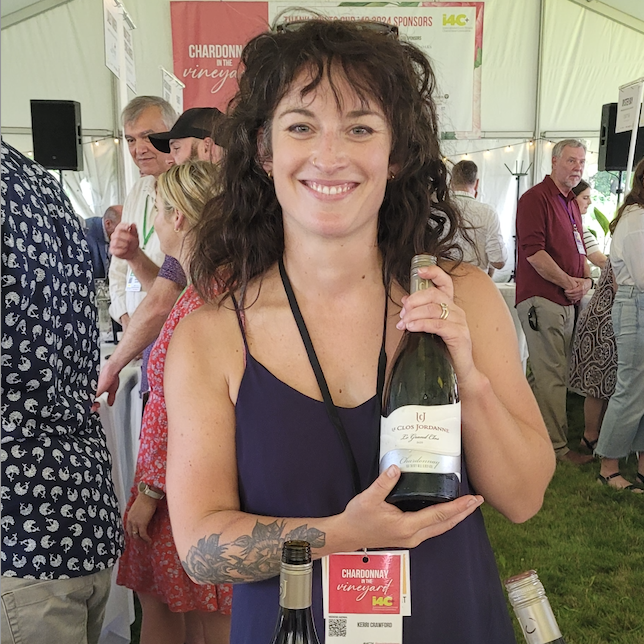
Says @johnszabo apparently winemakers matter too. #i4c17 @coolchardonnay I do it my way #schoolofcool

Related – A link to the School of Cool presentation download

In the first of three Friday School of Cool sessions at White Oaks Conference Resort and Spa it is MC Master Sommelier and WineAlign Partner/Critic John Szabo who introduces the “soil smackdown.” The question “is there a best soil type for chardonnay” is meant to instigate a healthy discourse but like every #i4c that came before it quickly turns to a dissing of the “m” word. Paul Anamosa of Vineyard Soil Technologies, the main man down in California, is the first to speak. He rambles on about trace minerals, nematicides, oils and clay minerals – kaolinite is the smallest and yet still a very big molecule. “I don’t know too many winemakers with deflated ego problems,” is interjected. “Minerality is a metaphor, not a simile (like what it shown on the aroma wheel). It does not get up and impart flavour into the wine. It’s a romantic notion. Limestone doesn’t give up its water readily or easily.” Here we go again.

Anamosa will give up the idea that poor soil structure allows for a low and slow hydration transfer, with no spikes up or down and this uptake certainly affects vine growth, nutrient transfer and ultimately flavour, but its the elements found in the water that effect these impressions. Not “minerality.” Must be hard to go through life with such a scientifically nihilist approach. It sounds exhausting.

I don’t know too many winemakers with deflated ego problems. Paul Anamosa @coolchardonnay #soilsmackdown #i4c17

Three winemakers go pro on the mineral ideal. Paul Berger of Berger-Rive has been making his wine since he was four-years old and unsulphured Rosé no less. He talks of clay over limestone, places where “the ground is in love.”  Thomas Bachelder monkifies the soil plant matrix made to transmit minerality. “It’s as much about photosynthesis in the new world but minerality is still apart of it. Jory soils in Oregon bring a salty tang, a savour. It’s true.” Shiraz Mottiar notes that calcareous soils that start wet and sticky eventually turn to concrete. “They don’t crumble, there is no soil tilt, they are angular, evolving and difficult, self-compacting and that hard-pan deals with high mineral content. So we use cover crops for developing soil tilt and friable structure.” There points for the mineral team. Szabo concludes with “anyone getting the sense that this is pure crap? We’re going to continue with the program anyway. Monkeys in a parallel universe are doing this and doing it better.”

In the second session, “Chardonnay, I do it my way,” Szabo told several hundred #i4c junkies “apparently winemakers matter too.” I thought Invivo Wines’ Mark Boardman said it best. “Rob (winemaker “Crusher” Cameron) is not trying to make a $100 Burgundy here folks,” but rather chardonnay can be so happy in so many places, in so many ways. Here it’s from one of the warmest parts of New Zealand, with high rainfall, on Pacific coast of the South Island. It’s about pleasing the customers, being approachable and “nice” on the palate. “Respect, not patronize the consumer.”

François Morissette, vigneron of Pearl Morissette talked technique. “Whatever we press, we oxidize. We do not oxidize wine, we oxidize must.” There’s a big difference. The stabilization of these wines are attributed to this idea of getting rid of all oxidizable compounds before they enter into the next stages of the winemaking process. Pleasing aromas, flavours, textures and ultimately the sum of the above elevates the cool chardonnay game and speaks to the future. Ravine Vineyard’s Marty Werner remarked on the high degree of heat units but also the cool nights in 2014 so his chardonnay received no cooling, some sulphur for a night, straight to barrel and left a bit empty. Why? “Because it’s different in Niagara, you need to get some oxygen in there, so that we develop some more fruit characteristic.”

Dr. Jamie Goode

Heidi Noble, Owner & Winemaker of B.C.’s Joie Farm coined the term “juiceidity.” She told the crowd, “when (cellarmaster) Karl speaks it’s incredibly important and poignant,” he knows the truth about location, from the most northerly tip of the Sonoran desert but in a zone of what Karen MacNeil called “conscious marginality,” a micro climate of cool within a hot zone.

And finally, le grand ami himself Norman Hardie. “Solids matter to me,” he explains. “We pump out the separated clear juice until the point where I feel like we are getting to the danger zone.” They make use of horizontal tanks, “so the ratio of solids to juice is much higher.” Solids are critical to expressing terroir but too many solids and it’s too reductive. “I’ve gotten braver and braver as time’s gone on.” Mackenzie Brisbois talked about the 2015 vintage, her first full one at Trail Estate. Her methods include hyper-oxidized, cold-settled, natural ferments in stainless steel, put to barrel towards the end, 4o per cent new, 60 neutral, full malo, 10 more months, sulphured, racked out of barrel and a coarse filtration so it’s called unfiltered. “Hopefully my lack of filtration helps you to hear the music in my wine.”
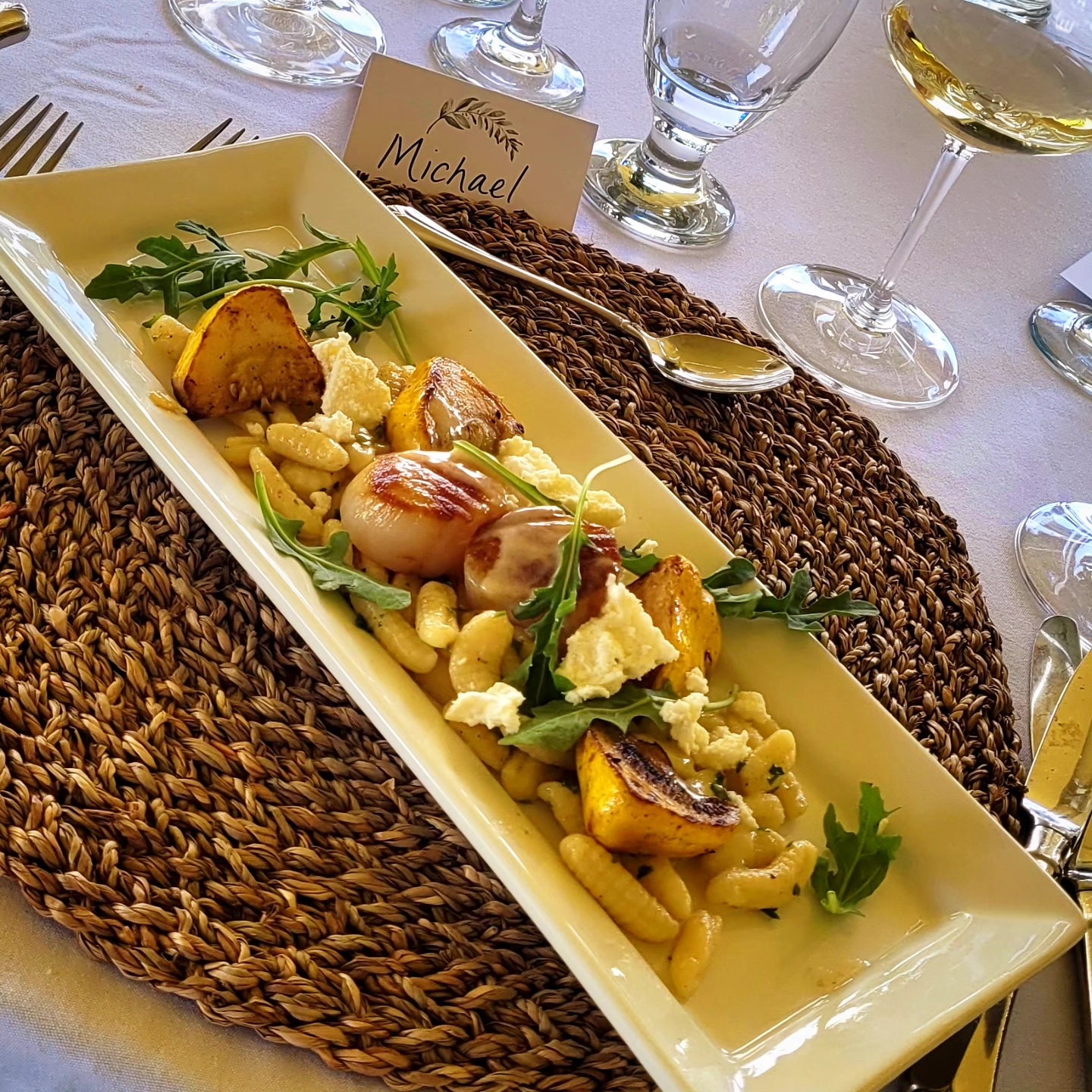
The third School of Cool session looked at dosage in bubbles. “The Sugar Trials,” or as moderator John Szabo M.S. told us “sparkling wines are wines of process and one of the most important events happens right at the end of the trail and that’s called dosage.” Essentially, the crux of what it is, the sugar trials define how much, if any, should be added.

A Sunday #i4c @coolchardonnay morning at the P & P and Josh Ritter covering Modest Mouse. Johnny Cash next.

Dr. Belinda Kemp led the panel discussion and her research at Brock University’s CCOVI lies at the heart of the Ontario wine industry’s investigations. Tawse winemaker Paul Pender had this to say. “Balance is something I strive for but rarely achieve.” He noted that it’s about pleasure, hedonism sometimes, ultimately something that makes you smile, and tastes good. It’s always a moving target, so many things effect how it tastes and more so your perception of sugar and acidity, even what you had for breakfast this morning. “Sugar kind of takes away terroir.” Dr. Jamie Goode added, “it turns out we all live in different taste worlds. Because we model touch, taste, smell and all the sensory perceptions into an unconscionable, alt-reality which bears no real resemblance to how a wine actually tastes. It’s highly personal.”

The i4c weekend takes winemakers, journalists and consumers from White Oaks’ School of Cool and over to Niagara Airport’s hangar for a grand, cool affair. It shuttles past lunch tastings scattered across and throughout the Niagara Peninsula and Escarpment locations and lands at Ridley College for the worlds most grand chardonnay event. It culminates on Sunday at Ravine and Redstone wineries for brunch and if you’ve not had your fill, more chardonnay. Most of all it brings people together but not without an army of volunteers to make it happen. It functions seamlessly because of people like the Cellar Sisters, Angie Jewell and MJ Macdonald, Paul Dearborn and Kari-and Macknight Dearborn. The Cool Chardonnay weekend delivers year after year with thanks to VQA Wines of Ontario, Dorian Anderson and Trisha Molokach and the chefs of Niagara. The media are treated (better than we deserve) because of Wine Country Ontario’s Magdalena Kaiser, Joanna Muratori and Ryan Zanette.

I was not able to taste and review every chardonnay on hand at #i4c17 but I did get to a better percentage than I actually thought I had at the time. Many of these wines are available in small quantities through the VINTAGES Online platform through August 3rd so you have exactly three more days to act. Here are 69 reviews. If you are thinking about injecting some cool chardonnay into the rest of your summer plans then read on and make your picks. I hope I’ve been of some assistance.

Are you ready for an #i4c17 @coolchardonnay Saturday night?

Invivo Chardonnay 2016, Gisborne, North Island, New Zealand (499855, Agent, $16.95, WineAlign)

A nicely green and cool Gisborne composed chardonnay is just the ticket for warm nights, frâche-inflected appetizers and a good chill. This is quite fleshy, creamy and tangy, just stopping short of citrus-sour piercing and intense. It’s that creamy sherbet and tangy gelato character that balances it out. Drink 2017-2019.  Tasted June and July 2017  invivowines  nicholaspearcewines  @InvivoWines   @Nicholaspearce_  @InvivoWines  Nicholas Pearce

Maycas del Limarí Reserva Especial Chardonnay 2015, Limarí Valley, Chile (143768, $18.95, WineAlign)

Lovely vintage and cool-climate conditioning with A-plus exemplary effort from the Limarí specialist. The ripe and bright fruit is buoyed by classically rendered acidity that never relents. I really like the elegance and the way the wood is just a spice accent, not a cream churning machine. Not to be missed. Drink 2017-2020.  Tasted May and July 2017  maycasdellimari  #thevineagency  wines_of_chile_canada  @Maycasdellimari  @TheVine_RobGroh  @WinesofChile  @maycasdellimari  The Vine – Robert Groh Agency  @WinesOfChile
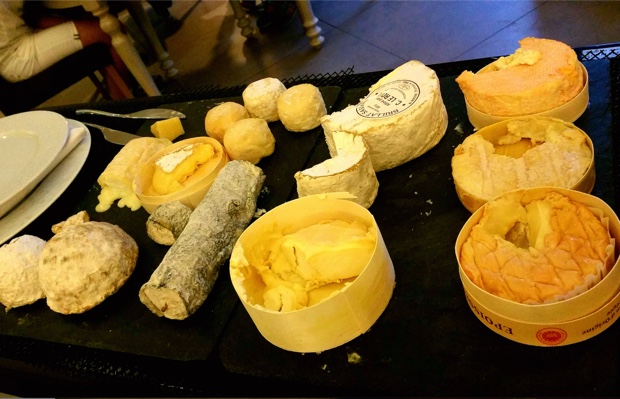
Cheesecake Bar by Chef Frand Dodd, Trius Winery and Restaurant

Trius Barrel Fermented Chardonnay 2015, Niagara Peninsula, Ontario (346064, Winery, $19.95, WineAlign)

Quite flinty and mineral smoky, even for Trius and Niagara chardonnay so it would seem that winemaker Craig McDonald prepared this larger batch with a friendly reductive environment. The aim, goal and result adds up to locked in freshness and a decoding of oak to relegate the label as secondary to the post-modern future of this bottling. It’s crisp, crunchy, spoken of and for place with edging cut with spice. The creamy centre is present and delivers texture, not weight. Really fine effort. Drink 2017-2019.  Tasted July 2017  triuswines  @TriusWines  @triuswines
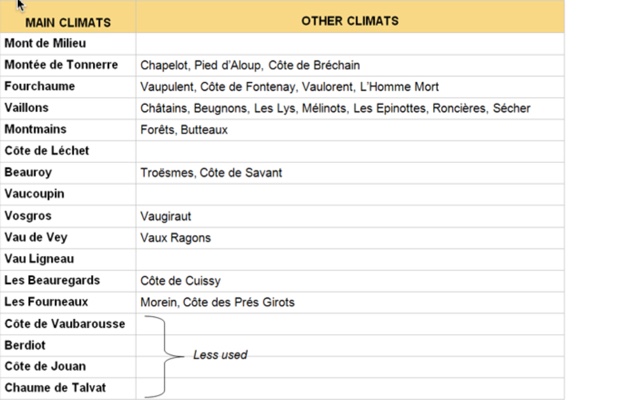
Esterházy Chardonnay Leithaberg DAC 2015, Burgenland, Austria (511386, Agent, $19.95, WineAlign)

Tangibly full and rich style of chardonnay with a flinty, smoky limestone foundation edge, a pierce running through the barrel spiced mid-palate and quite generous length. Really fleshy, lemon-citrus sparked, clean, precise and stony good. Of markedly fine compression, layers woven of tart and stone. A highly composed and forged composition, in action and temperament, so kudos to the great work out of a warm vintage. It’s a complete wine all the way through, perhaps restrained at first but structure is the key to its success. An Austro-pure, appellative finessed chardonnay if ever there was from a place where the grape thrives unencumbered and blessedly expressive. Drink 2017-2020. Tasted twice, with Stefan Tscheppe, July 2017  #esterhazy @esterhazywein  austrianwine  Esterhazy Wein  @NaturalVines  @oesterreichwein  @AustrianWine  @BirgittaSamavar  Marzia Gallo  @austrianwine

Pierre Sparr Le Clos Sainte Odile Brut Crémant D’alsace, Traditional Method, Ac, Alsace, France (457788, Agent, $19.95, WineAlign)

Sparr’s site specific Crémant would seem counterintuitive to the free and easy-going genre which prides itself on the purpose of wide-ranging food matching but the divergence here in minimal. Le Clos Sainte Odile is equally proportioned though it carries a marked increase in lees and texture. Smells more like Champagne and acts this way too, so in that sense the quality improves and food will benefit several fold. The length is exceptional. Still creamy Crémant but with more layers and fine complex stills. Drink 2017-2020.  Tasted June and July 2017  #pierresparr  profilewinegroup  vinsalsace  drinkalsace  #PierreSparr  @ProfileWineGrp  @AlsaceWines @VinsAlsace  Pierre Sparr  Bernard Sparr  Maison Pierre Sparr Successeurs  Profile Wine Group  @AlsaceWinesOfficial  @vinsalsace

Pierre Sparr Crémant D’alsace Chardonnay Brut Méthode Traditionnelle, Ac Alsace, France (416040, Agent, $20.00, WineAlign)

In Sparr’s eponymous Crémant bottling the dosage is evident in every facet of fizz being to balance out the sour acidity and formidable tension. The most Champagne like of the flight is contextual, textural, elevated and serious. It is a bit on the sweet side (at 8 g/L of RS) as compared to (3.7 TA and pH of 3.29) with 18 months minimum on the lees and aging in oak casks. There is no shortage of fruit and that acidity is surprisingly lively. Tasted with Bernard Sparr who says quite simply, it’s “easy to drink.” Drink 2017-2019.  Tasted July 2017  #pierresparr  profilewinegroup  vinsalsace  drinkalsace  #PierreSparr  @ProfileWineGrp  @AlsaceWines @VinsAlsace  Pierre Sparr  Bernard Sparr  Maison Pierre Sparr Successeurs  Profile Wine Group  @AlsaceWinesOfficial  @vinsalsace

Marcel Cabelier Crémant De Jura Organic 2014, Jura, France (738641, Agent, $19.95, WineAlign)

A most engrossing and provocative Crémant, at first aromatically onion skin sweaty and sweetly caramelized. No citrus to really speak of and then lemon sweetness to taste. Sapid to be sure, leaner, crisp, on the path to a searing style. Fascinating when you consider the dosage number is upwards to 12.3 RS while the actual acidity is 5.26 TA. An elevated 3.37 pH and a ripeness from the warm vintage really helps to hide its sugar, incredibly so. Texture never hurts as well as this spent 24 months on the lees. Will age nicely into secondary waxy territory. Drink 2017-2022.  Tasted with winemaker Nicolas Haeffelin at i4c, July 2017  #marcelcabelier  #andrewpellerimportagency  #jurawine  #marcelcabelier  @APImportAgency  @JuraWine   #marcelcabelier  @APImportAgency  @JuraWine

Cremaschi Furlotti Chardonnay Single Vineyard 2015, Do Loncomillo, Maule Valley, Chile (511097, Agent, $22.00, WineAlign)

DO Loncomilla lies at the heart of the Maule Valley, a place of serious Chilean history. The Battle of Loncomilla was the decisive campaign of the 1851 Chilean Revolution between conservative government and liberal rebel forces. It’s also apparently a terrific place to grow chardonnay. Winemaker Gonzalo Perez’ 2015 is a fuller expression, with green apple piquancy to nose, a wealth of fruit, tart done so right and a true barrel-blessed chardonnay bite. It reeks of stone, acts restrained enough to seem (at times) unsure but in its quietude there is a mineral sway to say this must be the way. It solicits a follow me down the stone road, up to a very orchard palate with gregarious flavours and compressed acidity. Serious, almost brooding chardonnay but very new world. Chewy and very long. The soils are volcanic and alluvial, aiding and assisting to gather into this highly complex, 100 per cent malolactic, reductive, tart and biting chardonnay. The most surprising and intriguing find at #14c17. Drink 2017-2020.  Tasted July 2017  cremaschi_furlotti  @winecremaschi  @cremaschifurlotti

Coteau Rougemont Chardonnay La Côte 2015, Quebec, Canada (Winery, $24.00, WineAlign)

From La Famille Robert and the latest, newest, impressionable cool climate frontier in Rougemont Quebec, climate change delivers another stellar chardonnay attack, here with something quite supple, almost creamy, acid-driven but surprisingly far from scathing and eminently drinkable. These vines are planted on sun-drawing south facing slopes with more than ample pebble and schist in the soil, enough no less to streak a wire of balance through the softened, downy fruit. Well done. Drink 2017-2019.  Tasted July 2017  coteaurougemont  #CoteauRougement  @VinsduQuebec  Vignoble Coteau Rougemont

Creekside Chardonnay Queenston Road Vineyard 2015, Niagara Peninsula, Ontario (Winery, $24.95, WineAlign)

Comes barreling out replete with the highest of chard tones mixed with plenty of richness lifting and layering oak. Quite ambitious, full malo felt, of waves more than dollops of vanilla. The acidity comes later because nothing can get in the way of the creamy texture and voluptuousness. Cool but secondary to these flavours and mouthfeel are incendiary savoury tendencies. Adding things up all being equal the Queenston Road, St. David’s Bench vineyard, with its clay-loam and the eventuality of full-malo effect well, it’s really a thing of richesse. “I wouldn’t say this wine is a whole lot about minerality,” says winemaker Yvonne Irvine, “but it’s there in the bite on the finish.” Fair enough. Drink 2017-2021.  Tasted July 2017  creeksidewine  @CreeksideWine  @CreeksideWine

Inniskillin Montague Vineyard Chardonnay 2014, VQA Four Mile Creek, Niagara Peninsula, Ontario (586347Agent, $24.95, WineAlign)

If you have had the opportunity to taste the Montague Vineyard chardonnay from Niagara’s Four-Mile Creek sub-appellation in at least four consecutive vintages you will know that its style is only exceeded by its consistency. Little has changed; the same warm, barrel-kissed style comforts generously pressed and extracted fruit. It’s not that I don’t deduce soft, downy and buttery fruit from Montague. I do, but this vineyard always offers a counter-point with some firmness and compression, as it does with pinot noir. This 2014 is smoky and faintly smouldering, even a touch flinty. Even if it is a bit baked, spiced or toasted it is also a more mineral vintage for chardonnay. On one hand it offers or gives up too much of itself (and too early), with creamy vanilla, ripe melon and sappy, stone-fruit. On the other it finds balance amongst the dense layering of bigger, harder and more productive moving parts. You are going to want to match this with some protein and a good reduction sauce. I’d look to pulled pork, zesty kohlrabi slaw and a tangy BBQ sauce, duck confit with a savoury-spiked demi-glacé or coq au vin, just to name a few. Drink 2017-2019.  Tasted January 2017  inniskillinwines  cbrandscareers  @InniskillinWine  @CBrandsCareers  Inniskillin Vineyards  

Vasse Felix Filius Chardonnay 2016, Margaret River, Western Australia (416511, $24.95,  WineAlign)

Same price and highly credible follow-up is what we can all hope to taste and make comment to the great winemakers of this world so kudos to Virginia Willcocks of Vasse Felix for doling out another eminently drinkable Filius. Still holds the Australian cool-climate chardonnay candle from the Margaret River though it’s a touch fleshier, riper and creamier in 2016. The combination of salt and stony-mineral adds up to grip and the tightness means some air is needed. A mess of grilled langoustines would also work. Drink 2018-2021.  Tasted June and July 2017  vassefelixwines  margaretriver  @vassefelix  @MargaretRiver  @MargaretRiverWi  @vassefelixwines  @MargaretRiverWineRegion  @margaretriverwines1

Château Des Charmes Paul Bosc Estate Chardonnay 2014, VQA St. David’s Bench, Ontario (511345, Winery, $24.95, WineAlign)

Here is fine example of a winery showing off their rockstar barrel program in a starman of a chardonnay. The dreaminess on the nose and the early 1970’s ambient and textured guitar unction on the palate just get you stoned. “Didn’t know what time it was and the lights were low…Some cat was layin’ down some rock ‘n’ roll, ‘lotta soul.” Tart, lots of wood, bite, so much structure. Is it too much? Not when it’s the kind of chardonnay and music that can stand the test of time. Drink 2018-2022. Tasted blind at NWAC17, June 2017 and at #14c, July 2017  chateaudescharmes  @MBosc  Château des Charmes

Domaine Laroche Chablis Saint Martin 2015, Ac Burgundy, France (289124, $25.25, WineAlign)

The vintage is a ripe, accessible and easy to love one so this marks a 90 degree turn for the Saint Martin. This is Laroche’s most important cuvée, sold in 80 countries and collected from select plots across 60 hectares of vines. Structure will always direct this cuvée and so long as Gregory Viennois is winemaker you can be sure that a taut entry will be joined by some subtle oak richness (in 2015, eight per cent in large, 25 year-old, 55 hL foudres). It’s just an aromatic hint but look forward with eyes closed and inculcate the texture addendum. Acids are soft and caressing. Drink 2017-2021. Tasted July 2016 and 2017  laroche_wines  selectwinemoments  @DomaineLaroche  @SelectWinePros  @Select_Wines  @SelectWinesCanada

Southbrook Chardonnay Triomphe 2015, VQA Niagara Peninsula, Ontario (172338, Agent, $24.95, WineAlign)

The fruit for Ann Sperling’s chardonnay Triomphe ’15 is sourced primarily from Saunders (Beamsville Bench) with auxiliary support out of Heather Laundry’s old vine Lincoln Lakeshore vineyard. There are older, non-clonal blocks with perhaps some Musqué mixed in so the aromatics fly, with no restraint applied by the wild ferment and (mostly 300L) neutral oak. This Triomphe is anything but reductive, a no stress chardonnay from such a far from sluggish, clean ferment. The simplicity and complicity explain how beauty is curated, from a vintage where reduction did not happen or beg to happen so why try to force it. The copacetic re-quiescence bears witness to classic Ann Sperling in such a vintage. Chardonnay of mellow smoulder, of old barrel spice and one to define a certain kind on a line of disparate and unique, cool climate, i4c selections. There are 800 cases made. Drink 2017-2020. Tasted January and July 2017  southbrookvineyards  thelivingvine  @TheLivingVine  @SouthbrookWine   @SouthbrookWine  The Living Vine inc.

Bachelder Chardonnay Niagara 2014, VQA Niagara Peninsula, Ontario (302083, Agent, $24.95, WineAlign)

Thomas Bachelder’s ’15 chardonnay is a story of what happens ’round here, a chardonnay counting the years of peninsula life. It’s so representative, a comfortable stroll through the echelons and stages of a man’s history, in and out of Niagara eponymy and how it relates to a monk’s personal journey. It also traces the stages of vineyard life and for the winemaker, of fruit “slipping through my hands.” Out of 2015 chardonnay can be forgotten, with weather nothing to remember and on the heels of two most excellent seasons. It could easily pass “into the fog where no one notices the contrast of white on white.” Here is the time, place and harvest for Thomas Bachelder to interject and explain, to send a grape into a recognizable future, as far as the crow flies. He uses the barrel to pique the fruit into life, to inject French cream with the very intent in demand of its intention. Flavours are therefore sapid, piquant and variegated. In the end, you can drink this in August and into complexity, everything after. Drink 2017-2020.  Tasted July 2017  bachelder_wines  liffordgram  @Bachelder_wines  @LiffordON  @BachelderWines  @liffordwineandspirits

Joie Farm Unoaked Chardonnay 2016, VQA Okanagan Valley, British Columbia (511261Agent, $25.00, WineAlign)

Terpenes up front, orchard fruit and high acidity in ways that mimic riesling but the broad apple juice swirl and bite on the palate is all chardonnay. Shows sugar tempered by acidity in what is ostensibly fresh and simple, unoaked Okanagan juice. This is made in the vineyard, picked three times, from straightforward winemaking, making use of lots of solids,”lots of liquid aromatics,” as Heidi Noble notes. Champagne yeasts are employed to celebrate place. Drink 2017-2018.  Tasted July 2017  joie farm  liffordgram  #JoieFarm  @LiffordON  @joiefarm  @liffordwineandspirits

Willamette dammit! @bachelder_wines @coolchardonnay #i4c17

Bachelder Chardonnay Willamette 2014, Oregon (273334, Agent, $25.00, WineAlign)

The richest Bachelder Oregon to date for reasons explained by the indubitable and unwavering Thomas is no doubt in leading part a result of one of the earliest vintages on record for Oregon Pinot Noir. His Willamette is a veritable intertwine of mineral, fruit and energy like there is no tomorrow. Also welcome to the lengthy one. The barrel is a caramel pillow, a downy wooden bench, a soft French cream dream. Drinkable is the understatement, pleasure the song. Willamette Dammit. Drink 2017-2020.  Tasted July 2017  bachelder_wines  liffordgram  @Bachelder_wines  @LiffordON  @BachelderWines  @liffordwineandspirits

Westcott Vineyards Estate Chardonnay 2016, VQA Vinemount Ridge, Ontario (427484, Winery, $25.95, WineAlign)

This is one of the first near-premium chardonnays to hit the market from 2016 and so a decision needs to be quickly made if the style is more vintage or house in origin. There really isn’t any estate precedence for this superabundance of fruit on the “normale,” like Christmas coming early or Niagara peaches appearing in June. The ripeness goes beyond freestone fruit and into the tropical realms occupied by mango and pineapple. There is no denying the nectarous and appetizing nature so I’d like to think it’s really a seasonal somewhereness that drives the druthers. Drink this young and with some poached seafood. It will satisfy the pairing. Drink 2017-2019.  Tasted July 2017  westcottvineyards  @WestcottWines  @westcottwines

Domaine Berger Rive Manoir De Mercey Bourgogne Hautes Côtes De Beaune Clos Des Dames 2015, Ac Burgundy, France (Agent, $26.95, WineAlign)

A restrained, faux-sugary, hautes Bourgogne, spirited near but so far from a Reuilly-like nose. You think it’s thin but know it’s not while the fruit struggles to steal the spotlight from the rocks. Very cool chardonnay with crazy natural sweetness and sneaky length. The warm vintage plus the limestone calcareous soil grows on you for sure and so that length shows off the best of its world and the talents of winemaker Paul Berger. Drink 2017-2020.  Tasted July 2017  @FWMCan  #BergerRive  fwmcan  @FWMCan

Traversa Viña Salort Chardonnay Reserve 2016, Canelones, Uruguay (511550, Agent, $29.00, WineAlign)

Chardonnay from Canelones needs to discovered and Traversa’s Reserve is a fine high-end place top start. The name is derived from a species of cinnamon called “canelón, growing along the banks of the homonymous river. This new fringe frontier for chardonnay is found here 50 kms or so north of Uruguay’s capital Montevideo. A specific sort of freshness is locked in tight, reductive in a gassing up the truck sort of way, subduing fruit and inviting mineral meanderings. It’s on the palate where things get very interesting, upon which the spice, buttered toast and brûlee of pears lay. There is a few percentage points too much wood on this next South terroir-Americanific frontier chardonnay but the substantial mid-palate fruit can handle the accents. A fine example in many respects. Drink 2017-2018. Tasted July 2017  familiatraversa  @TraversaUSA

Malivoire Chardonnay Mottiar 2014, VQA Beamsville Bench, Niagara Peninsula, Ontario (Winery, $29.95, WineAlign)

This is classic Mottiar chardonnay, lean, sharp, quivering and yet somehow so knowable and comfortable. As time goes by this generates the confidence to represent the Beamsville Bench as its prodigal son, the handsome one, of pulchritude and with the promise of great memories ahead. If it’s a bit reductive, taut and aerified chardonnay, so be it, but it’s also so very Niagara, essential, the essence of what happens on dolomitic limestone. The low (3.15) pH factor at go time caused a force picked at high acidity to maintain the lean style and a partial (not much) malo assists in effecting this high-level bench factor. Shiraz Mottiar’s eponymous chardonnay is the shit, for Beamsville and for what he does best. Drink 2018-2022.  Tasted July 2017  malivoire  shirazmottiar  @MalivoireWine  @ShirazMottiar  @MalivoireWine  

Rodney Strong Sonoma Coast Chardonnay 2014, Sonoma Coast, California (465724, $29.95, WineAlign)

The first appearance of the Rodney Strong Sonoma Coast bottling is an auspicious one, announced with ripe and delicious clarity. Though the nose is a bit reserved there is no reductive quality and the orchard is but a mere stone’s throw away from really standing out. The wood shows up on the vanilla, caramel tangy and further, deeper into the apple tree’s palate. The finish brings a pie from out of the warm oven. Drink 2017-2020.  Tasted October 2016 and July 2017  rsvineyards  markanthonyon  california.wines  @rsvineyards  @ImportWineMAFWM  @CalifWines_CA  @Rodney.Strong.Vineyards  @MarkAnthonyWine  @CaliforniaWinesCanada

13th Street Sandstone Reserve Chardonnay 2013, VQA Four Mile Creek, Niagara Peninsula, Ontario (Winery, $29.95, WineAlign)

No surprise the vintage is a major plus for the Sandstone and the natural funk it owns. And I mean owns. Only Sandstone has such geological drive, not unlike chardonnay from South Africa’s Hemel-En-Aarde Valley. In 2013 there is a sweetness to the fruit mixed with a misty humidity and finally that falling over backwards with feet stuck in the clay and the calcaire. Wildness from J. P. Colas here and with attentiveness to place and time. Drink 2016-2021. Tasted at #i4c16, July 2016 and #14c17, July 2017  13thstreetwinery  @13thStreetWines  @13thStreetWines

Hidden Bench Estate Chardonnay 2014, VQA Beamsville Bench, Niagara Peninsula, Ontario, (68817, $29.95, WineAlign)

Exemplary follow up to a terrific 2013 with more emerald gemstone, green apple bite and fine textured lees running through. Tart and yet not at the same time, seemingly sweet but only in the way that flavourful salts with added umami can collect, pool and co-exist. Just great focus, precision, fineness and balance. Drink 2018-2022.  Tasted June 2017 and #14c, July 2017  hidden bench  @HiddenBench  @Hidden.Bench

Thirty Bench Small Lot Chardonnay 2014, VQA Beamsville Bench, Ontario (Winery, $30.00, WineAlign)

The nose on this chardonnay is pretty, alive, vibrant and pure. The palate is exceptional, fleshy and full. There is intensity and precision, class and seamless integration of fruit, acidity and texture. Really longDrink 2018-2024. Tasted blind at #NWAC17, June 2017 and at #14c, July 2017  thirty bench  @ThirtyBench  @ThirtyBench

Ravine Vineyard Chardonnay 2015, VQA Niagara Peninsula, Ontario (Winery, $30.00, WineAlign)

Ravine’s is one of those chardonnay blessed with uncanny ability to amalgamate the sumptuousness of fruit warmed by sun and kissed repeatedly by barrel. The equation renders delicacy and texture, so obviously and vehemently spoken in the 2015 Peninsula language. It really is all about texture with a plus-minus spice note codicil and cool unction drawn like butter in suspended animation, a pool into which all parts have melted. Needs a year to finalize the deal and sweeten the pot. Drink 2018-2022.  Tasted July 2017  ravinevineyard  marty_werner  benminaker23  @RavineVineyard  @marty_werner  @BMinaker23  Ravine Vineyard Estate Winery  Martin Werner  Ben Minaker

Mer Soleil Silver Unoaked Chardonnay 2014, Monterey, California (220343, Agent, $31.00, WineAlign)

Chardonnay sans wood doesn’t get more premium than this (save for some Chablis) so the use of unlined concrete tanks (a third to a half) allows the sort of micro-oxegynation that elevates the complexity game. Despite the hard-goings of working this way, the delivery is a crisp, crunchy and slightly edgy (and eggy) ’14 with addendum by the confluence of fog, sun and sea. Mer Soleil. More pear than green apple, the character speaks a Monterey note. The packaging has left ceramic behind in favour of electrostatic painted (second-purposed) glass, made to look like (and celebrate) concrete. This is surprisingly creamy so the solids get their say and the conclusion is of a chardonnay made this way that rarely achieves such a level of texture and piquancy. Drink 2017-2019.  Tasted July 2017  mersoleilwine  #andrewpellerimportagency  @MerSoleilChard  @APImportAgency  @MerSoleilVineyard  Andrew Peller (Andrew Peller Import)

House of Chards #i4c Lunch at Trius

Artesa Chardonnay 2014, Carneros, Napa Valley, California (657585, Agent, $31.00, WineAlign)

The differing and contrastive style in Artesa’s ordinario is literally chardonnay night in comparison to the estate’s reserve day. Absent is the mineral alloy streak, the temper and the level of fruit quality and density so that here the buttery and creamy oak is felt on top and down below. Acidity, tension and posit tugs of intensity are relegated and softened to the mild mannered and middle palate personality. This is 70 per cent estate fruit, simple, rich, soft and mildly spicy chardonnay, antithetical for completion recognition of the basic to reserve paradigm. Drink 2017-2018.  Tasted July 2017  artesawinery  #andrewpellerimportagency  @Artesa  @APImportAgency  @Artesa

Adamo Oaked Chardonnay Willms’ Vineyard 2014, VQA Niagara-on-the-Lake, Ontario (Winery, $32.00, WineAlign)

This is the second vintage of the Willms, a rich and viscous chardonnay with green apple bite. More barrel (15 months, 30 per cent new) on this than others in an #i4c School of Cool flight and also Beaune-styled, ambitious otherwise but certainly the structured and gregarious one. Chardonnay as many would recognize, could be nothing other, some terpenic moments but the cool, sharp and spirited are mixed into the clay. Last tasted July 2017.

Adamo sources from the same vineyard that provides fruit for 13th Street’s Sandstone Reserve in the Four Mile Creek sub-appellation of Niagara-on-the-Lake. Planted in 1983, it is owned and farmed by Erv, Esther and Eric Willms. In its early stages the fruit acted and reacted as a lean, taut and tension fuelled chardonnay with party a sign of letting up. Eight months later the juicy flesh of orchard fruit pushes past the vintage’s grip and lets tis wine breath a sigh of relief. Chalk one up to yet another cool-climate, calcareous clay stuck moment in time. Drink 2017-2019.  Tasted twice, at #i4c16, July 2016 and Taste Ontario, March 2017  adamoestatewinery  @AdamoEstateWine  @adamoestatewinery

Trail Estate Chardonnay Unfiltered 2015, VQA Niagara Peninsula, Ontario (Winery, $32.00, WineAlign)

A blend of vineyards, from Ed Hughes and (Wismer) Foxcroft, perhaps with some influence under the lingering auspices of the Norman Hardie school, here in the playful and progressive hands of Mack Brisbois. Mackenzie employs no sulphur at processing, allowing for chardonnay efficacious and liberally oxidized, settled, cold stabilized, non bentonite-affected, chilled and racked. Not lost is the ever-commented process of going at it with wild ferment, but also caution thrown to the wind via no temperature control (but yes on the Hughes fruit), with the final end game in search of and wanting a fruity Chablis side. Done up in half stainless plus 50 old 500L and two 225L barrels. The sulphur was added in October, the full malo achieved and then bottled in November. All of this technical mumbo-jumbo to say there is still quite a creamy, leesy, oaky feeling but like some others in Niagara (Robyn’s Block, Oliveira and Aberdeen) it totes great palate texture and a “fruitiness,” but it’s not fruity. It may not recreate the Chablis fruit to mineral purity but it is a righteous, proper and Niagara purity fashioned in PEC. There are 266 Cases. Drink 2016-2020.  Tasted December 2016 and July 2017  trailestatewine  mackbrisbois  @TrailEstateWine  @MackBrisbois  @TrailEstateWinery  Mackenzie Brisbois

Westcott Vineyards Chardonnay Lenko Old Vine 2014, VQA Niagara Peninsula, Ontario (Winery, $32.95, WineAlign)

The iconic vineyard, the wise old vines, the chance to make some magic; these are all a part of the mystery and the mystique of Lenko placed in the hands of one winemaker at a time, fruit put to bottle in his or her own special way. It’s simple isn’t it? “Go far enough and you will reach, a place where the sea runs underneath,” take up the grapes and do what they need. In terms of chardonnay the vineyard is ground zero, the genesis, the oldest Chardonnay planting in Canada. In Arthur Harder’s hands the fruit reaches you with apposite if ambient sparks while its chords are strummed with 12 strings so that it never loses touch with its structure. A very expressive chardonnay from a benevolent vintage, Westcott’s breaks free from traditional Niagara with this tart and that tart. There is wind, wuthering and it has the uncanny ability “of turning the world so it’s facing the way that I’m going.” Drink 2017-2024.  Tasted July 2017  westcottvineyards  @WestcottWines  @westcottwines

Chateau Des Charmes Blanc De Blanc Sparkling Méthode Traditionelle 2014, VQA Niagara On The Lake, Ontario (511352, $32.95, WineAlign)

A different sort this one, with lots of barrel spice, liquid splinter creaminess, a heavier dosage to be sure, creamy lemon and almond skin, but also pith. Complex if commercially sweeter, rich and fatter, something School of Cool 2017 Sugar Trials panelist Rhys Pender MW agrees with. Making sparkling wine from the warmish Niagara-on-the-Lake regional-appellation (which includes the warm St. David’s Bench) has its pros and cons, the positives mostly tending to richness and the negatives the compromise to energy and verve. Winemaker Amélie Boury manages the dosage of 10 g/L RS with natural acidity (5.5 g/L TA), a forthcoming low pH of 3.16 and a late September pick. “For richer fruit” she notes and then a coupling texture by fermenting in barrels. Look for it on the ambit of tertiary personality after a few years of age. Drink 2017-2021.  Tasted July 2017  chateaudescharmes  @MBosc  Château des Charmes

Domaine De Mauperthuis Chablis Vieilles Vignes Les Malantes 2014, Ac Burgundy, France (511063, $33.95, WineAlign)

From a new family (relatively speaking) to Chablis, the estate belongs to Marie-Noëlle & Laurent Ternynck. The old vines Chablis saw 12 months in foudres, on the lees, with fruit gathered from vineyards in Fleys. The cool spot comes with a higher altitude, on a windswept plateau and so harvest is generally five to six days later. And so their Chablis is cool, direct, taut and sapid stuff, as Chablis will go, from such a climat and handled so. Acidity runs rampant and travels quickly up and down and into parts of the mouth that stand up to take notice. Sharp and focused Chablis. Drink 2017-2022.  Tasted July 2017  #mauperthuis  vinsdechablis  vinsdebourgogne  nicholaspearcewines  #Mauperthuis  @vinsdechablis  @VinsdeBourgogne  @Nicholaspearce_  Vins de Bourgogne / Burgundy wines  Nicholas Pearce

Mer Soleil Chardonnay “SLH” 2015, Santa Lucia Highlands, California (958975, Agent, $34.95, WineAlign)

The sun always shines upon Mer Soleil’s “SLH,” a chardonnay equipped with exceptional fruit purity that welcomes but could go it so much more confidently alone without the mask-caking make-up. It needs a fraction of the wood it receives. A tour de force of ocean and sun (tied together by fog) delivers acidity, sapidity and the fruit is raised to keep things moving swimmingly along. So it’s got that going for it. Which is nice. Drink 2017-2019.  Tasted July 2017  mersoleilwine  #andrewpellerimportagency  @MerSoleilChard  @APImportAgency  @MerSoleilVineyard  Andrew Peller (Andrew Peller Import)

Good man this man. Great winemaker this winemaker #i4c @coolchardonnay

Tawse Quarry Road Vineyard Chardonnay 2013, VQA Vinemount Ridge, Ontario (111989, $35.80, WineAlign)

When I tasted Quarry Road 2013 out of four barrels three years ago the purpose was to take in the nuances and see only the trees. I for one could not help seeing the forest through the trees and imagining percentages of each combining for the final blend. Neutral Mercurey wood looked over infant three year-old vines spoken here with surprising density, tang and tropical melon in both aroma and flavour. This sits on the front palate right now. The mineral Ceres qualifies older fruit as the pretty and the gemstone, essential for Quarry Road, the most like (Meursault) in Burgundy. This fruit transferred to stainless on the lees from September to March before going into bottle now renders to make Quarry the purest expression from the best vineyard. The CLL toast delivers the taut, not yet reductive wood tightening, then and again now, mainly on the finish. Compressed citrus notes are late arriving and even if it is splitting hairs, the oak really impacts the finish. The larger CLL toast Mercurey barrel reveals a fresher, more reductive, less oaky feel. All together we now have one of Paul Pender’s most accomplished to date and all chardonnays considered, one of the finest higher end values around. I think he would agree. Drink 2017-2024.  Tasted May and July 2017  tawsewinery  @Tawse_Winery  @tawsewines

Maycas del Limarí Chardonnay Quebrada Seca 2013, Limarí Valley, Chile (331520, $36.00, WineAlign)

Maycas de Limarí’s Quebrada Seca or “dry-cracked” makes reference to the fragmented soils, a place of low-fertility and chardonnay loving terroir. This spent 14 months in (30 per cent new) but it’s not just the extended barrel time that separates it from the estate’s Reserva. Vintage plays a significant role in conjunction with the soil and it teaches so much about the virtues of patience and time. No malo but high sapidity, lots of bite and the verdant, healthy life are borne out of poor fertility. This is life affirming chardonnay from harsh climes. Drink 2018-2022.  Tasted July 2017  maycasdellimari  #thevineagency  wines_of_chile_canada  @Maycasdellimari  @TheVine_RobGroh  @WinesofChile  @maycasdellimari  The Vine – Robert Groh Agency  @WinesOfChile

Joie Farm Chardonnay “En Famille” 2015, BC VQA Okanagan Valley, British Columbia (511113Agent, $36.00, WineAlign)

The developed layers of fruit are well integrated and interwoven into the mildness of both barrel and tannin. The sweetness of that sun-kissed fruit leaves a lasting impression from what has been brought into being by a warm and impressionable vintage. Exemplary three or four year Okanagan chardonnay that shows off its charming sucrosity. Drink 2017-2020.  Tasted July 2017  joie farm  liffordgram  #JoieFarm  @LiffordON  @joiefarm  @liffordwineandspirits

Sneak peak in the @TriusWines Meunier with Craig McDonald and a true Niagara Grand Cru @coolchardonnay site #lincolnlakeshore #oliveiravineyards #vqa #wildferment

Trius Showcase Chardonnay Wild Ferment Oliveira Vineyard 2015, VQA Lincoln Lakeshore, Ontario (199273, $36.20, WineAlign)

When you consider the level of quality provided by the Wild Ferment 2014 it would be hard to imagine raising the bar any further but this is what winemaker Craig McDonald has managed with his exceptional 2015. The accomplishment is purely based on one year older, wiser and complexities developed Oliveira Farm vineyard fruit, the holy chardonnay grail, Lincoln Lakeshore playground. The site sits along the QEW below the escarpment’s Twenty Mile and Beamsville benches, a recipient of glacial till and rocks left behind by an ancient river running from a lake. It’s a chardonnay wonderland. Intensity of fruit purity, fleshy and real, remarkably juicy and notably crunchy has increased, upping the pleasure game and turning the impression knob up to 11. The windmill generates more power while always maintaining a classic Trius level of finesse. Then you think on the wood integration, equally impressionable because acidity is sweet and refined. Dry extract is also impressive, not to mention a fineness of grape tannin. The site’s unofficial designation as a Niagara Grand Cru should be upgraded with status. There is no better time than the present and the Wild Ferment’s 2015 ability is proof enough. Drink 2017-2023.  Tasted July 2017  triuswines  @TriusWines  @triuswines

Exquisite dish by Frank Dodd @TriusWines #houseofchards #i4c lunch . . . Lake Huron Whitefish, lobster and scallop sausage, crab croquettes, asparagus, sweet peas, celeriac slaw, seabuck

Trius Showcase Chardonnay Wild Ferment Oliveira Vineyard 2014, VQA Lincoln Lakeshore, Ontario (199273, $36.20, WineAlign)

With fruit from the Niagara chardonnay mecca Oliveira Vineyard and the addendum of yet another stellar varietal vintage it is this Craig McDonald speciality that helps to steal the show. Striking out with near-raging acidity (pushing and possibly exceeding the 8 g/L mark) the Wild Ferment is one of the most formidable expressions of 2014, if not ever. All the moving parts work fervently and impressively as if the motor is running and the machine careening around the speedway. To keep composure it is texture that brings about grounding, balance and cadence, from obvious lees perfection and 30 per cent new wood plus the rest forged by two to five year old barrels. This is creamy, energetic and tannic chardonnay, all conspiring to express itself with both weight and poise. From a maker who’s been around the block a few times, the ’14 WF will go the distance. And you can start now. Drink 2017-2024. Tasted at Cuvée, March 2017 an #i4c July 2017  triuswines  @TriusWines  @triuswines

Esterházy Il Magnifico Blanc de Blancs Brut 2013, Burgenland, Austria (511378, Agent, $37.95, WineAlign)

Esterházy was a Hungarian noble family with origins in the Middle Ages, generally bilingual, in Hungarian (as a result of their ethnicity) and German (as they were aristocrats of the Austrian Empire). The family was intrinsically tied to the Austrian composer Joseph Haydn (master to Beethoven) and the estate today shares the same desire; to epitomize the aims and achievements of the Classical era, Hadyn for music and today, Esterházy for contemporary Austrian wine. General Manager Stefan Tscheppe spins a tale of Nikolaus II, the wealthy late 18th and early 19th century prince who lived a charmed life, nicknamed by his sisters as “Il Magnifico.” The namesake sparkler is done in a Brut Nature style, 18 months on the lees and is possessive of a distinctive grapefruit liqueur. The vines grown on limestone-based soil and this is clearly picked on acidity, in the first to second week of September. Il Maginifico may not carry the weight or tone of Hadyn’s The Creation but it is a most excellent Blanc de Blancs composition. Drink 2017-2022.  Tasted July 2017  #esterhazy @esterhazywein  austrianwine  Esterhazy Wein  @NaturalVines  @oesterreichwein  @AustrianWine  @BirgittaSamavar  Marzia Gallo  @austrianwine

Pearl Morissette Chardonnay Cuvée Dix Neuvième 2014, VQA Twenty Mile Bench, Niagara Escarpment, Ontario (303602Winery, $38.20, WineAlign)

It’s never easy to follow up greatness, even for this top quality Niagara chardonnay and yet I am almost ready to believe that this Dix-Neuvième delivers more richness of fruit than its predecessor. The stoicism lost from 2013 is woven texture gained, here in a tapestry of pure chardonnay fruit, beeswaxy, faint honey and an almost imperceptible reductive environment. Francois Morissette and Brent Rowland clearly had texture earmarked as the raison d’être for this ’14, almost to a fault but the result is bloody delicious. No Pearl Morissette wine ever gave of itself so young, so fast. Immediate gratification be darned there will be five blessed textured years ahead. And then the honey will set in. Drink 2017-2022.  Tasted June and July 2017  pearlmorissette  @PearlMorissette  @lassvet  Pearl Morissette

Domaine Laroche Les Vaudevey Chablis Premier Cru 2014, Ac Burgundy, France (416057, Agent, $38.95, WineAlign)

A compressed chardonnay that strikes as a passion play between herbs and limestone and no surprise that the spoils go to the latter. The citrus is gassy, rising, bathed in atmosphere. The structure is predicated on stone, rock and struck flint. Chablis of metal and essential minerality, discovered and defined. This slow-ripened chardonnay will evolve one year for every month contributed by its growing cycle. Drink 2016-2026.  Tasted June 2016 and July 2017  #domainelaroche  selectwinemoments  @DomaineLaroche  @SelectWinePros  @Select_Wines  Domaine Laroche, Chablis 

Mackenzie Brisbois, Trail Estate Winery

Trail Estate Chardonnay Unfiltered 2016, VQA Prince Edward County, Ontario (Winery, $39.00, WineAlign)

Auspicious beginnings transcend the customary for Trail’s winemaker Mackenzie Brisbois, case in point exhibit A with her first fledged County chardonnay, a whole cluster pressed, native yeasts and full malolactic beauty. Only a single barrel was made of this really tight, taut and youthfully vituperative one but it will mature, self-reflect and turn into a respectful and generous wine. There is a toasty note that currently smoulders in the glass but that too will gently peel away. The terrific render of acidity couples at present and will melt with the rest of the intensities. This is the estate’s first kick at this County cru, “things are going great, and they’re only getting better.” The future’s so bright I gotta wear shades. Drink 2018-2022.  Tasted July 2017  trailestatewine  mackbrisbois  @TrailEstateWine  @MackBrisbois  @TrailEstateWinery  Mackenzie Brisbois

Hidden Bench Chardonnay Felseck Vineyard 2014, VQA Beamsville Bench, Niagara Peninsula, Ontario, (276261, $39.20, WineAlign)

Unction and creaminess, lost in a chardonnay dream because to nose it’s a sweet, floral, demure thing. Lees apparent so you can smell the work in progress and feel the texture. But it’s wound loosely tight with just enough give to make it so readily available. Beautiful little wine though I can’t help but imagine there’s more single-focus structure than a blind taste wants to give. Hope to come across this hard to get beauty again someday soon. Drink 2018-2022.  Tasted blind at NWAC17, June 2017 and #14c, July 2017  hidden bench  @HiddenBench  @Hidden.Bench

Norman Hardie Chardonnay Niagara Unfiltered 2015, VQA Niagara Peninsula, Ontario (184432, $39.20, WineAlign)

Norman Hardie’s 2015 Niagara is a reductive yellow goddess dressed chardonnay, connected to the fullest of its fruit, (slowly developed) creamy malolactic, touchstone acidity and grape tannic ability. There is this understated feeling in the throes of richness that the winemaker and the place always seem to agree upon. The display window celebrates and proudly promotes the somewhereness of this ’15 chardonnay. It is never a matter of Niagara versus County, there is little substance to be found, nor is it a necessary point of discussion worth investigating. It’s just highway that separates the two. Both are children of the Norm, both deserving of estate credibility and here, with this next excellent Niagara, taking the Hardie progression one step further. Drink 2017-2022.  Tasted June and July 2017  normanhardiewinery  normhardie  Norman Hardie  @NormanHardieWinery

Domaine De Mauperthuis Chablis Premier Cru Montmains 2015, Ac Burgundy, France (511071, $39.95, WineAlign)

Winemaker Stéphane Saillet’s is a highly compressed, pure and precise Montmains. No wood was used because of the vintage, a season from which the ripe and developed fruit could clearly defend and take care of itself. Carries the essential tenets of texture and chew. Stéphane notes that the challenged ’16 will have some barrel (foudres) because “in the beginning there was nothing,” an important omen with which to help reflect on the fantasy and fantastic effort found in his 2015. Drink 2018-2023.  Tasted July 2017  #mauperthuis  vinsdechablis  vinsdebourgogne  nicholaspearcewines  #Mauperthuis  @vinsdechablis  @VinsdeBourgogne  @Nicholaspearce_  Vins de Bourgogne / Burgundy wines  Nicholas Pearce

Malivoire Chardonnay Moira 2014, VQA Beamsville Bench, Niagara Peninsula, Ontario (Winery, $39.95, WineAlign)

Moira delves much further into the spice with a wood feel into texture, piquancy, savour, sapidity and on repeat in all of the above. The length stretches further as a deeper, more intense expression of Beamsville Bench terroir. It will need to settle and integrate with another year in bottle. Drink 2018-2022.  Tasted July 2017  malivoire  shirazmottiar  @MalivoireWine  @ShirazMottiar  @MalivoireWine 

Lightfoot And Wolfville Chardonnay Ancienne 2014, Nova Scotia (Winery, $40.00, WineAlign)

The name Ancienne and the proximate irony appraised is not lost for its translation as endemic or indigenous for wines made from Burgundian grape varieties raised on Nova Scotia soil. The sophomore chardonnay speaks in a vernacular a year to the wiser but at the expense of excitement, which is actually a good thing. A step back taken will result in two going forward, as I shall explain. The same regime exercised mimics the ’13, of 20 per cent new, 18 months in barrel, but a slight course altered with some reductive play in ’14, as an experiment but also as a plan. There seems to be more lees richness and spice notes that flit like direct darts on the palate. Different clones are harvested at different times, so now the vinifications are staggered and layered, which really shows on the stratified and almost germinating palate. Another year older allows these vines to bring diversified variegation, more Nova Scotia and as a consequence, less winemaking. The growth here is fascinating and enlightening. In the interim it may compromise the flavour profile and the wow factor but in the long run it is structure, longevity and impressibility that will give the green light to estate grown, Minas Basin success. Drink 2017-2021.  Tasted June 2017   lwwines  jhortonns  rachelhopelightfoot  winesofns  @lwwines  @rachel_hope  @WinesofNS  @lightfootandwolfvillewines  Rachel Lightfoot  @winesofns

Bachelder Wismer Vineyard #2 “Foxcroft Block” Chardonnay 2013, VQA Niagara Peninsula, Ontario (512178, Winery, $44.95, WineAlign)

Deeper and deeper into the micro terroir we go, with thanks to the monk himself so strike me down as a cool climate instigator if you must but Thomas Bachelder takes on the challenge, fresh and new as ever. This Wismer Block dubbed #2 is purely and expressly Foxcroft, a divided up for purchase and worked by many vineyard. Few do it justice like the unstressed symbiotic relationship between Bachelder and grower Craig Wismer. From the ideal session of 2013 we have creamy and cracked, fragmented mineral intensity in opposite attitude to Wismer-Parke but more on the fleshy and structured side. The wood is bigger and more integrated, the flesh ripping and of the sort of musculature that shows no aggression nor needs any explanation. It’s just big and beautiful, not to mention an ambassador for cool. Hello world. Drink 2018-2025.  Tasted June and July 2017  bachelder_wines  liffordgram  @Bachelder_wines  @LiffordON  @BachelderWines  @liffordwineandspirits

Henry Of Pelham Cuvée Catharine Blanc De Blanc ‘Carte Blanche’ 2012, Short Hills Bench, Ontario (Winery, $44.95, WineAlign)

Reserved for Ontario sparkling but indicative of a bench-steppe foothills style because it just has that spark. Very much a ball of tart and compressed energy and so intense. A middle of the norm dosage at 8 g/L RS is managed in perfect oscillate with equal and opposing acidity at 7.3 TA. Such precision, ease and high quality serviceability is the equanimity quotient delivered by the estimable work ethic of winemaker Sandrine Bourcier. It boils down to recognition. The benchmark for Niagara Peninsula year-dated sparkling wine juices ripeness out of this warm vintage to perpetuate Cuvée Catharine’s unparalleled fizz consistency. Drink 2017-2021.  Tasted July 2017  henryofpelham  @HenryofPelham @SpeckBros  Henry Pelham

Lightfoot & Wolfville Blanc De Blanc Extra Brut 2013, Nova Scotia, Canada (Winery, $45.00, WineAlign)

Josh Horton and Rachel Lightfoot presented an early, less leesy glimpse of their 100 per cent estate chardonnay at i4c in July of 2016. It was a different animal than this recently disgorged (late February/early March) sparkling wine. The Extra Brut lives up to its designation, from fruit grown on the shores of the Minas Basin under the auspices of a markedly warm year with exceptional phenolic ripeness and 25 per cent malolactic gain. The time relative to texture lees accumulation is approximately 40 months and it’s an accurate representation of Nova Scotia low and slow. The flavours are wisely developed ripe and spicy, leaning into a moment or two of oxygenation, but seemingly richer than the amount of lees time that was given. Now emerging from the shell of not just a warm but a great chardonnay year (as previously proven by the Ancienne released two years ago). The notion here is of a sparkling wine that has been brought home, a B de B that you need to get to know. There are layers and layers of character that fold and unfold. The precision, focus and rendering is citrus tamed, mouthfeel in perpetual expansion and contraction, length linear and elastic. And it’s just the beginning. Drink 2017-2023.  Tasted June and July 2017  lwwines  jhortonns  rachelhopelightfoot  winesofns  @lwwines  @rachel_hope  @WinesofNS  @lightfootandwolfvillewines  Rachel Lightfoot  @winesofns

Bachelder Chardonnay Johnson Vineyard 2013, Yamhill Carlton District, Oregon (416644, Agent, $45.00, WineAlign)

The best of the barrels, always remember the soil, the soil Johnson Vineyard chardonnay will send you spiralling deep into thought, like it or not. It’s origins in Jory, sedimentary soils draw energy from a source unseen, dug down into where the ancients dwell. Thomas Bachelder monkifies the soil plant matrix made to transmit minerality. “It’s as much about photosynthesis in the new world but minerality is still apart of it. Jory soils in Oregon bring a salty tang, a savour. It’s true.” Bachelder speaks of a wisdom once revered, now questioned and he’s fine with needing to work for a living. The Johnson chardonnay is beautifully tart, rich and complex, biting, full of energy, so cool, taut, structured and even still a bit reductive. But it really is pressed, juiced and spirited with lime, for success and to linger, for a decade post harvest, perhaps for even longer a quality length of time. Drink 2018-2023.  Tasted July 2017  bachelder_wines  liffordgram  @Bachelder_wines  @LiffordON  @BachelderWines  @liffordwineandspirits

Norman Hardie Chardonnay Sans Soufre 2015, VQA Niagara Peninsula, Ontario (Winery, $45.00, WineAlign)

Says Norm with matter of factness, as he always does, “it’s the regular Niagara chardonnay, but without sulphur.” So you ask the question up front? Is the unsulphured so different than the other? To the naked senses, no. The charm, power and generosity are all there. It took a full year to pass malolactic inspection. So why do it? Because it reminds of 2012, same slow malo, same deferential and determined kind of wine and the answer comes from something Norm says. “I didn’t have the guts in those days.” But he has them now and yet the decisions imparted this Sans Soufre will be different, with more guts and glory, say in 2022. Perhaps there is a softness about this naked one, something cotton candy about its aromatics and its texture. It’s fine-spun, ethereal and dissipating. It does not argue but you sense it’s possessive of an organized, controlled tension. But don’t be thinking this isn’t a planned piece of parenthood. Did I mention the tannic presence on the palate? How about the wind-up, into tart and the stiff breeze that blows through as if it’s already turning to fall. Drink 2017-2022.  Tasted Twice, June and July 2017  normanhardiewinery  @normhardie  Norman Hardie

Tawse Robyn’s Block Chardonnay 2013, VQA Vinemount Ridge, Ontario (Winery, $45.95, WineAlign)

The temptation and the desire to compare Robyn’s Block and the other Tawse chardonnays is unavoidable but in 2013 it’s a fruitless exercise. Neither warmth, tropical fruit, cold, rain, terpenes or high acidity are hallmark traits of Robyn’s Block 2013. So what is? When I tasted through Robyn’s barrels with winemaker Paul Pender back in April of 2014, the Mercurey (one year-old, CLL toast) from the oldest (32 years) vines off of the richest site worked wonders in tandem with new oak. Very primary, fermenting notes foretold of a reigned in, restrained Robyn. The Mercurey (new) barrel gifted tang and girth into which the barrel disappears, with sappy toast on the back end. It too was quite young in its evolution but was rich, thick and dense. The Céres (Mineral) barrel brought exclamatory fruit and was ready to drink. All together and three years later these barrels have conspired for all of the above but if I had to sum it up in five words or less I’d say Robyn is “full of energy, texture and beans.” She will turn out creamy notes as the decade turns but always maintain her sense of restraint, running sap and fleshy tone. The wine is nothing if not a fascinating introspection into the history and the future of this block.  Drink 2017-2023. Tasted April and July 2017  tawsewinery  @Tawse_Winery  @tawsewines

Sperling Vineyards Blanc De Blancs Brut Nature 2013, VQA Okanagan Valley, British Columbia (511329, Agent, $47.00, WineAlign)

There is no dosage in this directly motivational Blanc de Blancs and plenty of potential palate weight with thanks to 30 months spent on the lees. There is something top single-vineyard cru Alsatian about the savoury and searing coolness in this style, as if it were more than just the sum of chardonnay parts, like some hypothetical pinot blanc and perhaps auxerrois. There is some reductiveness, a lovely washed rind cheese, lemon scrape melted into curd and fine bitters. The flavours are really quite lemony tart. Striking really. School of Cool moderator Karen MacNeil described this like “a nun in catholic school, severe and a bit starched. I’d like to try it a bit sweeter, to mollify the tension.” Though the consensus is one that sees it under-dosed, you have to admire Ann Sperling’s “decision based on lees contact time.” To make it longer. The sharp, angular edges are a by-product of its aggressive nature but like sémillon in its lean and gaunt youth this B de B will develop some faux honey and petrol with age. Drink 2018-2022.  Tasted twice, July 2017  @SperlingVyds  @AnnSperling  @CRUOntario  sperlingvineyards  cruwine  Sperling Vineyards  Ann Sperling

Stratus Chardonnay 2014, VQA Niagara-On-The-Lake, Ontario (307645, Agent, $48.20, WineAlign)

The Stratus 2014 is more reductive than usual, in its case more of a vintage-related affair than others. The “Burgundy method” is employed, but in a “Niagara style” notes winemaker J-L Groux,  that is with native yeasts and a pick that can’t be too early. The wine saw nine months in (25-50 per cent new) oak. This ’14 is Groux’s last of the chardonnay mohicans because in 2015 it will be bottled with lees. This ’14 is nothing if not bloody delicious, ripe orchard fruit swelling, of mild acidity and seamless texture. Drink 2017-2021.  Tasted May and July 2017  stratuswines  @StratusWines  @StratusWines

Southbrook Poetica Chardonnay 2013, VQA Four Mile Creek, Ontario (366500, Agent, $49.95, WineAlign)

Always Ontario’s outlier, eccentric and non-conformist chardonnay and I say this with complimentary, best of intention flattery. The 2013 vintage is simply chivalrous to chardonnay and in Poetica’s corner, a perfect calm case of preux meets elegante. Here is a chardonnay of inherent oxidative wisdom, from cloud cover, cool, long breaths of Niagara air well into the elongated autumn and the address for what I refer to as “the age apparent one.” The iconoclast Poetica ideal conforms because it is matched with equal breadth by richness of fruit and confirms the way Ann Sperling makes her signature wine. Tasted blind my first guess would put this at five years old because of the exuding warmth so 2010 might just be the order. A 2012 Bench chardonnay might have also been the answer. But with Poetica the promise is like Meursault with uptown fruit, honey, vanilla, caramel, a Niagara vapour and ethanol. Such a telling display that only Poetica can play. Drink 2016-2024.  Tasted October 2016 and July 2017  southbrookvineyards  thelivingvine  @TheLivingVine  @SouthbrookWine   @SouthbrookWine  The Living Vine inc.

Viñas Ventisquero Tara Chardonnay 2014, Atacamas, Casablanca Valley, Chile (511337, Agent, $53.00, WineAlign)

Chile’s Atacama Valley frontier is one of the world’s great terroir expansions, a limestone soil-based flat, even further north than the Limari valley. Ventisquero’s winemaker Felipe Tosso has said that Atacama “breaks all the paradigms of what has been produced in the central-southern valleys of Chile.” The salinity in the land translates to notes in chardonnay of almost no precedence, like salty cotton candy and a fineness of acidity singular in chemical design and how it feels in the mouth. It’s like sucking on a stone lozenge that never dissolves. It’s relentless in its pursuit of fruit. Flavours coagulate liquid almond joy and transparent bitters but there is also a sweetness without definition, a simple limestone syrup that melts into the saltiness of the wine. Drink 2017-2021.  Tasted July 2017  vventisquero  univinscanada  wines_of_chile_canada  @vventisquero  @UNIVINS  @WinesofChile  @VentisqueroWines  @UnivinsCanada  @WinesOfChile

Charline Drappier

Champagne Drappier Blanc De Blancs NV, Champagne, France (599860, Agent, $54.95, WineAlign)

Made with five per cent pinot blanc this faintly oxidatively-styled Blanc de Blancs is gingery-leathery and felt as if by extended skin contact. It’s both tannic and orange pith spritzy, also mixed in with grapefruit and lemon. Twenty-four lees-affected months bring body that is fleshy, corporeal and with acidity in charge on the palate. Quite a full fizz with some preserved fruit attentiveness. The dosage is healthy but simply flavour gifting at 7.1 RS because the sugar is a combination of beet and cane aged in oak for 10-15 years. It’s a special Drappier liquor dosage developed at the winery. What it brings is not just sweetness but a complex sweetener that has evolved and developed over time while it has aged. Drink 2017-2021.  Tasted twice with Charline Drappier at #14c, July 2017 #ChampagneDrappier  @FWMCan  champagne_drappier  champagnedrappier  fwmcan  Champagne Drappier  Charline Dppr  @FWMCan

Ravine Vineyard Reserve Chardonnay 2014, VQA St. David’s Bench, Ontario (Winery, $55.00, WineAlign)

The Reserve is 100 per cent estate fruit that spent 18 months in (50 per cent new) barrel. As it’s both barrel fermented and aged the variegation locks the fruit in so bloody tight so even now it’s reductive, smoky and flinty. A mineral chardonnay needs balance from over the top fruit and so track record, acumen and love will have it so. Marty Werner and Ben Minaker’s is a big, summery and gold platinum expression, very expressive, the two-lb steamed in seaweed lobster chardonnay, seemingly Meursault but just as likely from California. But as Ravine’s Reserve on the St. David’s Bench it is purely Niagara Peninsula. Fruit intensity, extract and controlled oxygenation shows off the best of what these men can do. It speaks to their efforts, knowledge accumulation, trials and finally to the culmination of their stamina. Drink 2018-2023.  Tasted July 2017  ravinevineyard  marty_werner  benminaker23  @RavineVineyard  @marty_werner  @BMinaker23  Ravine Vineyard Estate Winery  Martin Werner  Ben Minaker

Adam Mariani, Scribe Winery

Scribe Chardonnay 2014, Carneros, California (511139, Agent, $55.00, WineAlign)

Adam Mariani raised his 2014 in concrete and though we are distracted and of course fully willing to think about the fruit (especially in contrast to his Skin Contact chardonnay) it is the texture that grabs most attention. That this solicits older world comparisons is hard to avoid, but it’s not a Burgundian thematic. Like the garnatxa by Ramon Roqueta Segalés of Domaine Lafou, Scribe’s is a wine that has succeeded in mastering the oxidation process and the scents are of ripe peach, fresh, without overdeveloped sugars but instead a sprinkling of ocean salt. Finishes with a savoury mix of lime, tonic and the liquor of distilled flowers. Drink 2018-2023.  Tasted July 2017  scribe winery  nicholaspearcewines  @scribewinery  @Nicholaspearce_  Scribe Winery  Nicholas Pearce

Familia Torres Chardonnay Milmanda 2014, Catalunya, Spain (332171, Agent, $59.95, WineAlign)

Miguel Torres Jr. tells us his wine comes from a great white wine vintage; cool and rainy, though not great for reds. “I don’t believe in miracles from the vineyard. You have to do some things in the winery,” he adds, like the use of bigger (300L) barrels and a 50 per cent malolactic goal. His chardonnay is a juicy, terpenic, honorary cool climate Canadian. That’s not to say it isn’t barrel rich, but it too speaks a language of the lively, crisp, crunchy and bloody delicious. This is full, satisfying, spicy and buttery teasing chardonnay out of Catalunya and few gallop along with such equine gait and grace, at least not from Spain, without either softening like butter or hardening like stone. Here the twain is met. Drink 2017-2021.  Tasted July 2017  torreswines  @FWMCan  @TorresWines  fwmcan  @bodegastorres  @FWMCan

Scribe Skin Fermented Chardonnay 2015, Carneros, California (511147, Agent, $63.00, WineAlign)

Scribe Winery’s Adam Mariani introduces his antithetical Californian from the Sonoma side of cooler Carneros up on Arrowhead Mountain in the northern part of the region, planted in 2007 abutting the Mayacamas range on volcanic soils. The grapes are skin-fermented cold (in the farenheit 50’s) with native yeasts for five to six weeks until mid-December but over the past several vintages they (the winemaking team) have slowly gained the confidence to get them above 100 days. One bottle (served too warm) is amiss and oxidative and this really accentuates the skin-settling tannins on the palate. A second is beautifully lively, tannins a bit tamed, acidity in tact and fruit concerned and even obsessed with all things lemon. The aging is done in concrete egg and with a correct bottle this is not oxidized, nor is it an orange wine but it most certainly is a Carneros expression of great interest. It should be dealt with young. Drink 2017-2019.  Tasted July 2017  scribe winery  nicholaspearcewines  @scribewinery  @Nicholaspearce_  Scribe Winery  Nicholas Pearce

Artesa Estate Reserve Chardonnay 2014, Carneros, Napa Valley, California (457143, Agent, $67.00, WineAlign)

Artesa or artisan, from the Catalan, an affirmation of style gifted in name from the Barcelona family Raventos. This chardonnay from the base of Mt. Veeder is 100 per cent estate fruit, adjacent Hyde Vineyards, all hillside sits of elevation, sun and under cover of omniscent fog blowing in from San Pablo Bay. The character is unmistakable French (50 per cent new) cream barrel warm and buttered, yet young and still a bit closed for business. The 16 months in wood requires double that to integrate but a fine mineral streak cuts through the caramel. Nothing shocking mind you, grace meets weight and toasted chestnut melds into sweet marzipan. The quality of fruit is unquestionably high and the seamlessness a given. The style can be yours. Drink 2018-2022. Tasted July 2017  artesawinery  #andrewpellerimportagency  @Artesa  @APImportAgency  @MerSoleilVineyard  @Artesa

Chamisal Vineyards Chardonnay Chamise 2014, Edna Valley, California (511212, Agent, $86.00, WineAlign)

The aromatics are slow to reveal but if at first they are mildly mired in solder there is this sweet basil-herbal and lemon-balmy calmness on the entry. Takes some moments and then opens to a creamy, barrel-sweetened, tart and layered chardonnay. Looked at blind I’d certainly peg this as warmer climate, New Zealand perhaps but more likely and gracefully California. Indeed the Chamisal-Chamise of Edna Valley origins completes the picture. The first vineyard planted in the Edna Valley in 1973 near the Pacific and a long temperate growing season adds up to low and slow phenolic developed chardonnay. The warm vintage plus calcareous, clay-rich soil develops further flavour. Shy no more, the namesake flowering plant Adenostoma fasciculatum (chamise or greasewood) native to California bounds away with complex flavours. Drink 2018-2022.  Tasted July 2017  chamisalvyd  #andrewpellerimportagency  @ChamisalVyd  @APImportAgency  @Chamisal.Vineyards  @APImportAgency

Vasse Felix Chardonnay Heytesbury 2015, Margaret River, Western Australia (674648, $91.00,  WineAlign)

Heytesbury is Virginia Willcock’s top chardonnay and while it is one of Australia’s most iconic wines, it may never be made the same way twice. In 2015 the élèvage is in French oak for nine months (57 per cent new and 43, one to two years old) but no malolactic was encouraged. That’s a non-committal way of saying (and Virginia did in fact say) there was no malo in 2015 simply because it was not a vintage in which the acidity needed to be tamed. So with fruit so pure, strong and expressive, what else is there to say? Simply that you would be an idiot to tire of a fresh herb garden, blue slate shoes, ripe pomelo, a wedge of smoked cheddar, fresh scones and a crunch of mellifluous honeycomb. Heytesbury will gift all of this and more. Drink 2019-2027.  Tasted July 2017  vassefelixwines  margaretriver  @vassefelix  @MargaretRiver  @MargaretRiverWi  @vassefelixwines  @MargaretRiverWineRegion  @margaretriverwines1

Benjamin Bridge Méthode Classique Estate Blanc De Blancs 2013, Nova Scotia, (Winery$119.50, WineAlign)

Tasted from a bottle disgorged in May 2017, there alights a plugged-in, three-pronged, dazed, charged and enchanted energy about the Bridge’s ’13 Blanc de Blancs. The history of go it alone pure chardonnay is a relatively short one for the estate so this quickly makes up for lost time or rather with haste sets the timer and heads out at first light. “Like sittin’ on pins and needles, things fall apart, it’s scientific.” Wild, of talking heads temper and yeasts, done up in demi-muids, with a wilder secondary fermentative push riding on the coattails of the primary fermentation. Everything in this wine is a productive child of the vineyard, of no third party sugars or consultations. “How do you do that without making a Pétillant Naturel,” I wonder aloud. It’s a second ferment, non-contiguous is the reason, even if the former is both influencer and mentor to the latter. It certainly falls under the category of “micro-cuvée. Like its cousin and predecessor (Blanc de Noirs 2011), this ’13 BdeB is mired intensely inward within its own specificity and is not so much a sparkling wine with competitive soul. It is a pure representative of chardonnay grown in Nova Scotia for one purpose. So let’s talk about true stories and wild, wild life. “You get on board anytime you like.” Drink 2018-2024.  Tasted July 2017  benjaminbridge  caveman__jones   winesofn  @Benjamin_Bridge  @benjaminbridgevineyards  @WinesofNS  @benjaminbridgevineyards  @winesofns

Cuvée des Amis in grand format from le grand ami @normhardie at an #i4c @coolchardonnay grand tasting dances and trips the light fantastic with unconscionable concentration.

Norman Hardie Chardonnay Cuvée Des Amis 2014, Prince Edward County, Ontario (Winery, $150.00, 1500ml, WineAlign)

As exceptional as chardonnay may have seemed from out of the 2013 Ontario vintage you haven’t lived or loved until you get a taste of (only in magnum format) Norm Hardie’s 2014 Cuvées des Amis. This chardonnay attacks and ascends, recalibrating the inner workings of the brain and how it develops conceptualization. It is a state of the art and all-knowing elixir to remind that ’13 was a vintage with profitable yields and a generously stretched canvas on which to practice on, for when things begin to get real. The CdeA spent 18 months in barrel, the first 12 (in 35 per cent new), the next six in neutral and the last six in stainless steel on the fine lees. The spin class in the mouth manages agility, dextrous, furtive movement and completes many pirouettes. The dance is pure joy but the intensity is equally to disturbingly intrusive, suggesting more settling time is necessary. The flavour pearls are delicate and come straight from the oyster so they carry salinity, power and brine. Pure lemon essence is received by intravenous injection. Sumptuous is translated from Hardie-speak as a four-letter, Prince Edward County word. It doesn’t get more real than right here, with the best fruit, the tripping of the light fantastic, previously unheard and unseen unconscionable concentration. Drink 2019-2025.  Tasted twice, June and July 2017  normanhardiewinery  @normhardie  Norman Hardie

Took all night but it was so worth it. Welcome to #i4c17 @coolchardonnay #ilivechardonnay

Good to go!

Godello

Twitter: @mgodello

Instagram: mgodello

WineAlign

Seven climats in 54 Chablis Grand Cru

kimmeridgian

Le kimmeridgien en fossiles d’Exogyra virgula

Related – Chablis Premier Cru by Cru

I have spent the better part of these past eight months tasting, assessing, contemplating, excogitating, dreaming about and purchasing Chablis. I may have once believed that the rooted obsession incited by my visit to the kimmeridgian zone last July would cease and desist by the time the clock struck 2017. I was dead wrong. If ever there was a Chablis lifer transformed, you are looking at him.

Related – Chablis from Dauvissat to Vocoret

chablis-grand-cru

Related – Chablis got soil

Chablis Grand Cru can be found in the commune of Chablis on the right bank of the Serein River and the appellation comprises seven climats; Blanchot, Bougros, Les Clos, Grenouilles, Preuses, Valmur, and Vaudésir. “The terroirs, formed in the Upper Jurassic era, 150 million years ago, are composed of limestone and marl with Exogyra virgula, tiny oyster fossils. Chablis Grand Cru is one of the rare French AOC wines to make reference to its geology, notably the Kimmeridgean age.”

Related – Looking for Chablis in Ontario?

chablis-grand-cru-2

Related – Raveneau’s Grand Cru Blanchot 2009

If at first you have not written enough about a particular subject, keep on writing. My first grand assessment took my olfactory and gustatory senses, emotions and tangent extrapolating explorations into 76 examples of Chablis and Petit Chablis. I followed that exercise with 92 reviews to cover all the Premier Cru tasted in Chablis and Auxerre back in July of 2016 and also those I have assessed in the months since. Finally I have come to the Grand Cru, a group of top echelon Chablis that caused more personal reflection and inner exorcism than I’d like to admit. The count is 54 wines reviewed. At last, again and again I must pay retrospective and forward thanks to @purechablis  @vinsdechablis  @BourgogneWines and @vinsdebourgogne.

Related – Paradox in Chablis

au-fil

Au fil du Zinc Chablis, thon, concombre, crème d’anchois

Related – A Canadian in Chablis

Valmur

Patrick Piuze Chablis Grand Cru Valmur 2015, Ac Burgundy, France (WineAlign)

The south-facing, Right Bank Grand Cru “Valley of Ripeness” parcel known as Valmur is from “val” which refers to “valley” and the French “mur,” which means “ripe.” Valmur and its great, late afternoon sun ensures phenolic ripeness unlike anywhere else, to accentuate the richness and the éclat. Yes there is this strong personality and guarantee of Grand Cru acidity but the creamy richesse is unparalleled for Chablis. Piuze recognizes both the place and the vintage and just lets this Valmur run free. What else should it be? Drink 2018-2023.  Tasted July 2016  @patrickpiuze  @LaCelesteLevure  @LiffordON

Patrick Piuze Chablis Grand Cru Valmur 2012, Ac Burgundy, France (WineAlign)

Before launching into the Valmur 2012 first an exhortatory preface, or at least a contextual, cautionary tale from Patrick Piuze. “It will look a bit older, on the nose, because we tasted so many 2015s.” True, we have just sailed through 18 (plus one 2014) so this Valmur does seem “dressed-up” and boozy with alcohol but it’s OK because the acidity is divine. Evolution has done some rendering and I get the feeling Patrick was picking later then than he is now. The liqueur leads a remarkable cocktail of pure Valmur geology distilled, subservience to ends, almost now, but now quite. If this Piuze Valmur is a Chablis meme to an aramaic Belshazzar’s feast, the Mene, Mene, Tekel, Upharsin is clearly understood writing on the wall. Drink 2016-2021.  Tasted July 2016  @patrickpiuze  @LaCelesteLevure  @LiffordON

collet-grand-cru

Domaine Jean Collet & Fils Chablis Grand Cru Valmur 2014, Ac Burgundy, France (AgentWineAlign)

Valmur under the spell and with classic Collet acumen is a tale of two parts told with seamless transitions. Two to three year-old Allier “Moyenne chauffe” barrels hold the central Grand Cru hill’s proud climat fruit for 12 months followed by five extra fortifying and corralling months. The Valmur clocks in at a minor but important and impressing half per cent extra of alcohol and you can nose the slow-release, micro-oxygenated wood. In part two there is this rich and expansive vacuum with definite taxing spice and of course that Collet-specific lemon acidity. The back end is dripping with citrus, taking the reins and leaving the wood behind. In another year or two the transition will complete for perfect symmetry. Drink 2018-2024.  Tasted July 2016  

Sébastien Dampt Chablis Grand Cru Valmur 2014, Burgundy, France (AgentWineAlign)

The Valmur is a négoce Grand Cru from Sébastien Dampt, so very rich with razor-thin mineral pastry, fruit and cream layered upon that mineral many times over. It is raised in some wood and some inox, resulting in a tiered tart wrought with some weight. This is really like sucking on a mouthful of rocks, at first, all saline and tangy. Then the custard and the (on the edge of) brûléed orchard fruit creams in. The tension hangs in that caramelized balance in a Grand Cru set from a very clean and vintage driven take on Valmur. Drink 2018-2022.  Tasted July 2016  @SebastienDampt  @LesVieuxGarcons

Domaine William Fèvre Chablis Grand Cru Valmur 2014, Ac Burgundy, France (AgentWineAlign)

Valmur leaves an indelible mark because in 2014 this one is just so confident and impresses with purpose. The Grand Cru vineyard is located on the top of the hill, both east and southwest facing, with some clay and marl (as a vein into the kimmeridgian sub-soil). There is more richness in Valmur and here surely a by-product of stupidly low (25 hL/L) yields. This carries in its DNA the complex and multi-faceted variegation of Chablis soils intertwined, reticulated and defined. Will make itself readily available ahead of the other Fèvre Grand Cru because of its richness as an extension of soil and exposition. Drink 2017-2023. Tasted July 2016  @williamfevre_  @WoodmanWS

Domaine Christian Moreau Chablis Grand Cru Valmur 2013, Burgundy, France (Agent, ON $74.00, BCLDB 116517, $60.99, WineAlign)

From winemaker Fabien Moreau and his tiny parcel of 50 year-old vines sandwiched between Vaudésir to the north and Les Clos to the south. A pittance (for Grand Cru) percentage of new oak is used for half of the fruit, eventuating in beautifully delineated bitter density and fresh dressed pith. Quite open for business at this early stage but so very complex and variegated. Upon a second go ’round you might think reductive when what you are really getting is cool fresh mineral, away from bitter and into the yet unresolved. Drink 2018-2022.  Tasted July 2016  @ChristianMoreau  @rogcowines

Domaine Jean Paul Et Benoît Droin Chablis Grand Cru Valmur 2013, Burgundy, France (SAQ 12280775, $71.50, WineAlign)

Benoît Droin has crafted an esteemed, highly amenable and juicy Valmur in effete for break of dawn business openness. The acidity is really quite round, more so than the Moreau and quite in contrast to the Premier Cru (Montmains and Vaillons) Droins. There is more pitch and assertiveness in Valmur to be sure, qualities to qualify its Grand Cru positioning though still surprising to note how well it drinks while young. It’s a funny vintage to be sure, with more weight, aromatic liquor and pooling viscosity than most. Droin’s Valmur will develop a bilateral petrol-honey secondary note before the decade strikes end. Drink 2016-2020.  Tasted July 2016  

lasperule-barbue-brulee-legumes-verts-croquants-jus-daretes-a-lugli

L’asperule Barbue, brûlée, légumes verts croquants, jus d’arêtes à l’ugli

Related – Enlightened Chablis of Château De Béru

Bougros

(Côte De Bouqueyreaux)

Patrick Piuze Chablis Grand Cru Bougros 2015, Ac Burgundy, France (WineAlign)

The Bougros vines grown on the plateau and while the aromatics are a bit reserved (like those on the Piuze Terroir Découverte) this inward and recondite Grand Cru is an intense, raging from within Chablis. It is this collected and surrounded power that keeps Patrick’s Bougros so in control and while it is labeled at 12.5 per cent alcohol, Piuze admits that is maxes out at 12.2. This is significant when you consider what sort of sapidity plays out in the context of enigmatic behaviour. “You can’t have a duality between acidity and alcohol,” says Piuze. “I don’t want high alcohol.” What he wants is chaste tension and while 2015 is not the perfect vestal vintage to realize his plans, it stays the course nonetheless. Drink 2018-2023.  Tasted July 2016  @patrickpiuze  @LaCelesteLevure  @LiffordON

Jean Marc Brocard Chablis Grand Cru Bougros 2014, Ac Burgundy, France (AgentWineAlign)

Brocard’s Grand Cru Bougros ’14 is the most reductive Chablis tasted so far this week, striking, chiseled and young beyond youth. Saline and briny to the hyperbole of its younger siblings, the implosion of full extract is at once arid and then rich. This is a full-on pure and simply beautiful Bougros, precisely tart and very long. Will age gracefully into the middle next decade, with ease. In the hands of Brocard Bougros to the west is neither entry or exit point but more like the epicentre of the action. This 2014 is certainly a top example for the vintage and the Grand Cru. Wait three years for it to unwind. Drink 2019-2026.  Tasted with Julien Brocard at the domaine, July 2016  @chablisbrocard  @LiffordON

Domaine William Fèvre Chablis Grand Cru Bougros Côte Bouguerots 2014, Ac Burgundy, France (AgentWineAlign)

Côte Bouguerots is the two point two hectare Domaine plot close to the river at the base of the Bougros Grand Cru hill. The extreme anti-steppe where only calcaire and kimmeridgian soils exist is the moonscape of Burgundy, bald, austere and machinery retarding. The ’14’s stark karst reality bleeds sea salinity, intense citrus and as much inferential mineral as this place can and ever will. Such a masculine assertion of Chablis predicated on this sort of fluidic geology and assortative power comes across in only so few. While the complexity is increased in Côte Bouguerots it is also like a vacuum within the greater clime, concentrating richness without fatness. This is, simply stated, a great white bottle of wine. The length goes on forever. Drink 2019-2030.  Tasted July 2016  @williamfevre_  @WoodmanWS

Domaine William Fèvre Chablis Grand Cru Bougros 2014, Ac Burgundy, France (Agent, $97.00, WineAlign)

If Bougros in 2013 is the outlier and the exit west away from the Grand Cru, the follow up 2014 turns that right around. In this terrific mineral meets acidity vintage Bougros strikes as the entry point into Grand Cru Chablis. The southwest facing climat launches the introductory impression of the Fèvre Domaine GCs, with idiosyncratic layers of citrus, namely lemon and lime. Fifty per cent of the Bougros (six of 12 hectares) lies calm and poised on the flat portion of the already mild slope, offering easier access and amenability. A launch point from where control is transferred from the operating system to the process and ultimately, the programmer. That would be winemaker Didier Séguier, he who takes a calm ferment and squeezes out its vital juices to render Chablis with all the attributes it has come to define. Drink 2017-2022.  Tasted July 2016  @williamfevre_  @BouchardPere  @WoodmanWS

Domaine William Fèvre Chablis Grand Cru Bougros 2013, Ac Burgundy, France (Agent, $97.00, WineAlign)

The southwest facing Bougros is the furthest strip west of the Grand Cru climats at modest altitudes ranging from 130 to 170m. Bougros strikes me as the hardest to read and the outlier of the Grand Cru because it is less expressive of that necessary and contemplative Chablis mineral idiom but don’t be fooled into thinking it bourgeois or insignificant. That type off thinking will only look for trouble and lead to dire straits. “Sitting on a fence that’s a dangerous course.” Bougros of marl and clay is a clam before a storm Grand Cru. It is sneaky dangerous and long. The limestone permeate is integrated with deep intent. It fills all nooks but with nary an act of argumentation or attrition. The vintage is an expanding one, not so much one that leaves a direct impression as much as one of wide expression. The palate circulates with citrus and zest, more lime and grapefruit than others and in warmer tenses, native and prominent. One upon a time in the west. Drink 2016-2021.  Tasted April 2015  @williamfevre_  @WoodmanWS

Côte De Bouqueyreaux

Patrick Piuze Chablis Grand Cru Bougros Côte De Bouqueyreaux 2015, Ac Burgundy, France (WineAlign)

The Côte de Bouqueyraux terroir is a (45°) steep-sloping solid bedrock section of Bougros. It’s also a name referring to “how the monks are calling it” back in the pressoir day. “Bougueriot,” from the Latin “bucca” which gave the Old French “bouque” (shrunken). Or, Boquereau, which took its name from “bouque-eau,” (narrow passage by the water). Piuze made only 600 bottles in 2015 from this highly specified, laser-focused, riverine-simulated and disciplined Grand Cru vineyard. This is tasted 14th in the great caves breakfast Piuze rendezvous with Patrick and is unequivocally the most intense. And yet there is this creamy, nutty and tart stone tree-fruit character that adds a level of toothsome delight. Will chalk that up to 2015, from “a really sharp place,” coupled with the warm vintage. Drink 2018-2023.  Tasted July 2016  @patrickpiuze  @LaCelesteLevure  @LiffordON

piuze-bouqeyrou

Patrick Piuze Chablis Grand Cru Bougros Côte De Bouqueyreaux 2011, Ac Burgundy, France (WineAlign)

At 45° in angle the steep (perhaps the steepest) Côte de Bouqueyraux dangles Bougros like bait on a line and is the farthest thing from a shrunken (from the French “bouque”) or shrinking violet. This 2011 is what Patrick Piuze refers to as “in between ’09 and ’15 in style; my style.” He puckers, shrugs and adds, “pretty good for a vintage that isn’t supposed to age.” Once again it is Piuze that looks at Chablis, at Grand Cru Chablis from the very recent past as a wine of THE past. Most vignerons would see a 2011 Grand Cru as an infant, barely evolved and far too young to even think about passing any real judgement. Pious is the most pragmatic, honest and transparent of them all. It is both refreshing and confounding. Either for Bougros or in sub-climat terms this Côte De Bouqueyreaux is in the sweet spot. Citrus fruit, saline-mineral innervation and a vintage-affected softening combine for this lime-sherbet palate. Will drink with perfect reason for three to four more years. Drink 2016-2020.  Tasted July 2016  @patrickpiuze  @LaCelesteLevure  @LiffordON

bordet-vaudesir

Vos désirs, in a word, #vaudesir @purechablis #jeanfrancoisbordet @bivbchablis #domaineseguinotbordet

Vaudésir

Domaine Séguinot Bordet Chablis Gran Cru Vaudésir 2014, Ac Burgundy, France (AgentWineAlign)

Jean-François Bordet’s Vaudésir tells a climat tale with the sort of precision and clarity that really explains the Cru comparative to Les Preuses and Les Clos. Bordet took over in 1988 so 25-plus years of experience later and with the exceptional vintage in pocket he has really locked into Vaudésir. The finesse that calmly breathes from SB’s fruit farmed on this double semi-circled, steep-sloping hill is certainly mellow, golden and mature. It’s also alive. Bordet makes use of 10 hL wood tanks for aging (12 months) plus six more in stainless steel. This has been in bottle six months, just long enough to reveal the intoxicating perfume, the power, rich texture and the elegance. In the present (or futur proche) Bordet’s ’14 Vaudésir will incite your desires, as it will say “je vais congelé vos désirs.” J-F shrugs and holds out his hands as he tells you this so after a glass (and an exceptional meal prepared by Eric Gallet at Le Bourgogne in Auxerre) some of your fantasies may come true. The effect may come with less jouissance than Les Preuses and not quite as much puissance of Les Clos but true power nonetheless. Drink 2018-2024.  Tasted July 2016  @BordetJean  @TheCaseForWine

Domaine Billaud-Simon Chablis Grand Cru Vaudésir 2014, Ac Burgundy, France (SAQ 11482703, $77.00, WineAlign)

For some producers Vaudésir is the pinnacle of their Chablis expression and yet here it seems the entry point as it leads in a tasting of four Grand Crus. From three parcels in the amphitheatre, one right at the top by the wood and two at the mid-way point on the hill. A direct, in your sight lines Vaudésir, so very lemon-lime push-pulled and densely tart. It’s taut but not sour, tight but not cringing from the tightening of the winch. The most masculine of Vaudésir perhaps with few equals though unwavering and unquestionable in its achievement of balance. The Inox secret is discarded (or complicated, depending on your vantage point) in favour of 100 per cent (15-16 years) old oak. This is Grand Cru after all. Drink 2019-2029.  Tasted July 2016  @Billaud_Simon

Domaine Gérard Tremblay Chablis Grand Cru Vaudésir 2014, Ac Burgundy, France (Agent, WineAlign)

Here from Vincent Tremblay a nicely stinky (dare it be said) and reductive Vaudésir of major mineral compression and the combative exaggerated energies of weight, body and density. This is a powerful expression of the climat that sits atop the Grand Cru hill, unique in round shape and steep slope as if created as a natural and ancient amphitheatre. Tremblay cuts a white stony line right through his chemin des vaudésirs, as any self-respecting Grand Cru Chablis should. Drink 2018-2023. Tasted July 2016  

Domaine William Fèvre Chablis Grand Cru Vaudésir 2014, Ac Burgundy, France (226373, $110.00, WineAlign)

Vaudésir from Fèvre’s Didier Séguier is the consummate erudite expression from the amphitheatre-chiseled and curled Grand Cru. It is here where there simply is no clay, only the calcaire for the kimmeridgian, so its all about high mineral commission. All Vaudésir is meant for aging but this, this is something other. Séguier the winemaker is a generous fellow, a giver of Chablis, gift-wrapped in 50 per cent oak and tank equality (as he does for all GC). The vernacular spoken is very direct primarily because of the veritable bath of mineral which translates to salinity off the charts. It can be imagined without any real difficulty that the alleged ancient sea bed is in this one. It will be some years before any change is noted and many more until mindfulness reigns in a secondary geological observation. Drink 2019-2028.  Tasted July 2016  @williamfevre_  @WoodmanWS

Domaine Louis Moreau Chablis Grand Cru Vaudésir 2014, Burgundy, France (124354, $79.00, WineAlign)

Vaudésir in Moreau’s Chablis cellar spent a mere handful of months in one, two and three year-old oak barrels, destined to an end game of gentle spice, then followed up with 24 months in stainless steel. Concentration, resolute vitality and depth render the barrel nearly obsolete, allowing the desires of the Cru’s mineral to really shine through. All that said it is a decidedly feminine expression, delicate and with richesse, but ultimately calm. Will age with charm and grace. Drink 2018-2025  @MoreauLouis1

lasperule-labbaye-de-citeaux-pommes-sautees-raisins-opaline

L’asperule L’abbaye de Citeaux, pommes sautées, raisins, opaline

Blanchot

Patrick Piuze Chablis Grand Cru Blanchot 2015, Ac Burgundy, France (WineAlign)

The Serein River’s Right Bank Grand Cru faces south with vines that average 40 years-old. Neutral barrels are employed for the Piuze Blanchot so that density is derived slowly, effortlessly and with GC corradiation. In the cathedral of Blanchot there is always a compression intro. of mille-feuille flint and citrus but few act with as much immediate amenability as this ’15. Seemingly warm and downy, things begin to increase with intricate complexity and the point of convergence is met where persistence begins, two years down the tractor road, to carry on into the middle of the next decade. Drink 2018-2025.  Tasted July 2016  @patrickpiuze  @LaCelesteLevure  @LiffordON

Domaine Billaud-Simon Chablis Grand Cru Blanchot 2014, Ac Burgundy, France (401984, $115.00, WineAlign)

From the top right (eastern) aspect of the white stones Grand Cru, just across the valley from Montée de Tonnerre. This is a fuller, slightly richer Blanchot but still so direct, piercing and impressed stone-dominant. Great lemon zest shaved into juice and an amplitude rendering dollop of curd. The lemon-curated and curative house continues to flex its citrus style. Once again, the enigma of Inox barrel and old barrels used. Why pour this last of the four Grand Crus? I suppose it’s because the rich fruit versus exigent stone is the epitome of Chablis paradox, in retrospect and with further addendum to what seemed obvious at the time. Blanchot is the gate-keeper of Grand Cru middle ground. Drink 2019-2027.  Tasted July 2016  @Billaud_Simon

Domaine Laroche Chablis Grand Cru Les Blanchots 2014, Ac Burgundy, France (AgentWineAlign)

Four of Domaine Laroche’s total of six-plus Grand Cru hectares are in Blanchot and comprise one third of all holdings in this ancient kimmeridgian climat and its southeast exposure. “We are the ambassador of this Grand Cru,” informs Elodie Saudemont, noting the low and slow ripening processes on the eastern portion of the Cru. The white clay defines Les Blanchots, infusing a fine minerality that delivers a purported sense of fitness and fineness to this wine. In 2014 there is a delicate arabesque lacework and a certain salinity, explicit and inherent to Blanchot. Floral like no other Grand Cru, of stereotypical but percipient aromas that call to the air what can only be white flowers. Not that it’s any shock but the length is exceptional too. Drink 2019-2027.  Tasted July 2016  @DomaineLaroche  @SelectWinePros  @Select_Wines

une-degustation-chez-domainelaroche-originale-exceptionnelle-et-tellement-informative-merci-beaucoup-elodie-vaudevey-lesmontmains-lesvaillons-montedetonnerre-chablispremiercru-chablisgrandcru

Une dégustation chez @DomaineLaroche originale, exceptionnelle et tellement informative. Merci beaucoup Elodie #vaudevey #lesmontmains #lesvaillons #montedetonnerre #chablispremiercru #chablisgrandcru #leclos #lesblanchots #reservedelobedience

Domaine Laroche Chablis Grand Cru Les Blanchots Réserve De L’obédience 2014, Ac Burgundy, France (AgentWineAlign)

Réserve De L’obédience is a cuvée coalesced from the best of Les Blanchots barrels, those that show the greatest balance between fruit and acidity. The entire technical team takes part in the process, to the end for a wine with the most finesse. There is no true reference point for such a wine, that is unless you can close your eyes, travel back in time and conjure up some 9th century L’Obédiencerie or 13th century Saint-Martin monks working a pressoir. Grand Cru Chablis separates itself from the rest for good reason but because L’obédience is a cuvée consolidated from the best of Les Blanchots’ barrels this is something other, or rather it is a cuvée spotted in a light separate from the rest of the Chablis Grand Cru. An unusual amalgamation, beyond the idea of selecting the best plots, into the concept of selecting the best wines. Here the practice of lutte raisonnée ensures balance is profligate and etched in stone. The acidity is pitch-perfect, the fruit a metronomic peregrination from streaming to richness and back again. Multiple exposures and various levels of ripeness be damned, this Grand Cru skips over the tribulations of plots and vintage variation. The best is stolen and used for great purpose. And 2014 was a friend. Drink 2019-2029.  Tasted July 2016  @DomaineLaroche  @SelectWinePros  @Select_Wines

Domaine Long-Depaquit Chablis Grand Cru Les Blanchots 2012, Ac Burgundy, France (AgentWineAlign)

The Long-Depaquit treatment for Blanchots is with 25 per cent barrel. A real preserved lemon and just a hint of paraffin is replete with such elegance and finesse on the nose. Les Blanchots is at once soft but also of a sexy smoulder, like flint that has been sparked, extinguished and left with a lingering wisp. So beautifully wound and full of demurred grace. But don’t be fooled, there is a punch of acidity and underlying spirit. The house accounts for a meaningful if ponderous part of the Blanchot riddle, its centrism wrapped in a mystery, in a fruit versus stone enigma. Recondite, interwoven Chablis. Drink 2019-2025.  Tasted July 2016  @Matth_Mangenot  @Bichotwine  

Down by the river with #raveneau #grandcru #blanchot #chablis @lafolieauxerre #2009 #francoisraveneau #thankful

Down by the river with #raveneau #grandcru #blanchot #chablis @lafolieauxerre #2009 #francoisraveneau #thankful

Domaine François Raveneau Chablis Grand Cru Blanchot 2009, Burgundy, France

It would be misleading to address Raveneau’s Blanchot as chardonnay even as we know it as such because Raveneau produces wines as unique as door keys. They are so inimitable and each will only open the gate to its own unique perception. Blanchot is the southernmost of the seven Chablis Grand Cru climats and blankets the southeastern side of Les Clos. The Raveneau narration does not convey the notion of manifest feeling but instead splits the axiomatic atom of the climat. A sip and you are inside the Blanchot, gliding and passing through rock as if you are the ethereal and the wine is the solid foundation of thought, pathos and avowal. There are aromas that combine citrus and umami with a sweetness that can’t be denied or defined. The wine is just a child, complex, shy and yet unable to express both its meaning and power. But you try to get inside its head, stumbling over kimmeridgian rock replete with the smithereen-crushed shells of ancient fossils. This is a calm young Blanchot and you melt away while under its spell. Three more years should render its hidden meaning. Drink 2019-2034.  Tasted July 2016

La Folie d'Auxerre

Restaurant La Folie, Auxerre

Les Preuses

Patrick Piuze Chablis Grand Cru Les Preuses 2015, Ac Burgundy, France (SAQ 12034902, $106.00, WineAlign)

Les Preuses faces west, the Grand Cru Patrick Piuze notes “is always last. You cannot beat Les Preuses in Chablis.” The crux of what Piuze is aiming to accomplish with Grand Cru fruit is motivated by this climat and explained like this. “We are early pickers, early bottlers and (patient observers of) late transformations.” Semi-getting on towards vieilles vignes of 35 years are grown in Kimmeridgian limestone and clay soil. La Voie Pierreuse (The Stony Path) is the Piuze GC muse and his tightly wound elucidation will take longer to unravel, flesh up and drink heartily than most. Even in 2015 there will be no immediate Les Preuses gratification but there will be valiance and stony reward. Eventually. Drink 2018-2028.  Tasted July 2016  @patrickpiuze  @LaCelesteLevure  @LiffordON

Domaine Billaud-Simon Chablis Grand Cru Les Preuses 2014, Ac Burgundy, France (360834, $99.00, WineAlign)

What separates Chablis from chardonnay begins with these 65 year-old vines, with healthy yields (50 hL/H) that are perfect for the vintage from this stoic and iconic Cru. Here is the essentiality of Les Preuses, “the juice of the stone,” saline, crustaceous, briny and simply, utterly trenchant. This is the vraiment Preuses impression, a fossil entrenched in the chardonnay and subsequently on the brain and the senses. A straight jacket Chablis with length up Les Preuses, back to the river and then straight back up and away into the woods. Inox barrel (sic) and old barrels used. Drink 2020-2030.  Tasted July 2016  @Billaud_Simon

Domaine William Fèvre Chablis Grand Cru Les Preuses 2014, Ac Burgundy, France (Agent, $123.00, WineAlign)

Les Preuses is comprised of two point five hectares in two plots held in the Fèvre Domaine, one east facing and steep, the second southwest, flat and deep. The memory of an old Roman stone road “Perreuse” lays beneath, as marker and sentinel to the ancient rocks and stones below. Les Preuses is a blend of the two plots, both equal in delivery of rich and mineral elegant fruit. No other Grand Cru offers such near-identical balance from blocks meant to compliment one another. It is this symmetry, mille-feuille layering and gainful repetition that dishes LP such a a different sort of singular variegation, not so much a vein but a 12-string strum over top one another. There is more length to speak clearly of and ultimate elongation in Les Preuses. It is simply citrus beautiful. A near-perfect record, from side A to side B. Play either one first because it always comes around full circle. Drink 2018-2027.  Tasted July 2016  @williamfevre_  @WoodmanWS

Domaine William Fèvre Chablis Grand Cru Les Preuses 2013, Ac Burgundy, France (Agent, $123.00, WineAlign)

There is a certain sense of romanticism that surrounds Les Preuses, a cinematic beauty in thinking about a two thousand year-old Roman road which ran below the current vineyard. “Perreuse,” meaning stone and tasted directly after Bougros offers a stark inherent and stylistic contrast and unfairly puts the western frontier Grand Cru to shame. In Les Preuses the fruit speaks with beautiful infancy and fanciful clarity. It’s fleshy, creamy soft and delivers Fèvre’s most markedly chèvre-like aroma. The palate replay indicates this climat is expressly possessive of true goût de terroir. The lines led by stone and friable marl deliver crisp and cool streaks, climbing to higher climes, over hills and collines. Even in the climate-confused 2013 vintage Les Preuses is top quality Chablis, above and beyond. Drink 2017-2023.  Tasted April 2015  @williamfevre_  @WoodmanWS

La Chablisienne Chablis Grand Cru Les Preuses 2013, Burgundy, France (AgentWineAlign)

This particular concentrated salinity of Les Preuses is briny but not oyster briny, verdant but not savoury, tart but not piercing. The personality forged here is a calm before storm that will soon rage for three to five years and then settle into its predetermined gentile nature. A little bit of hay and popcorn feel is noted from more oak obviousness that couples with the vintage towards developing a richer style. In Ontario the equivalent ideal is like that of Tawse’s Paul Pender and when his wines age they remind me of Les Preuses. Here a great example of a Grand Cru in different hands and what impact the producer has on the specific expression for the terroir. Drink 2017-2022.  Tasted July 2016    @vbartement  @Vinexxperts

domaine-testut

Grenouilles

Domaine Testut Chablis Grand Cru Grenouilles 2014, Ac Burgundy, France (WineryWineAlign)

In 2014 Grenouille in Cyril Testut’s domain returns to the typical and the expected. Though he employs 17 per cent new oak this persists stylistically so very much in the same range as his Premier Crus. You get oak in the guise of a minor crème anglaise and even more spice, but a delicate one. Round acidity is pronounced and in surround of the fruit richness as per the Grenouilles climat and this is observed as a very dedicated wine to the oeuvre. Lower yields (than the PCs) at 45 hL/H and 50 year-old vines combine for full-on variegated effect. This shows off great length, in oscillation and circular return. Grenouilles is different and the appreciation here is for loyalty and adherence to what is necessary. It’s so simple. Application of “cuivres et boites et assemblage” was completed before bottling. Drink 2017-2025.  Tasted July 2016  

Domaine Testut Chablis Grand Cru Grenouilles 2013, Ac Burgundy, France (Winery, WineAlign)

Some wines can be understood and disseminated just fine, but others are better vetted with the winemaker. Like this Grenouilles ’13, tasted at the domaine with Cyril Testut. The triad of vintage, climat and handling is made clear under Cyril’s supervision and explained with tacit and axiomatic clarity. “I like this vintage very much, difficult but very interesting.” Indeed it is vintage with good botrytis, not typical but so very interesting. In comparative literary and mythological ways it and Alsace Pinot Gris Grand Cru (and Hengst in particular) are construed to be running in parallel lines, with ripeness, metallurgy, orange blossom and tropical notes. But again there is a reigning in and a balance struck to stay away from the lychee, nectarine and mango spectrum. Minerality is still the king so you may allow yourself to be stationed in Beaune as well. I find great preoccupation in Testut’s Grenouilles ’13. It reads like few other Grand Cru. Drink 2016-2023.  Tasted July 2016  

grandcru-for-breakfast-jambon-persille-for-lunch-cest-chablis-oh

grandcru for breakfast, jambon persillé for lunch. C’est Chablis. Oh

La Chablisienne Chablis Grand Cru Château Grenouilles 2012, Ac Burgundy, France (AgentWineAlign)

The smallest of the greats Château Grenouilles is Chablisienne’s Grand Cru (seven of 9.5 farmed hectares), situated below Vaudésir and sandwiched between (right) Les Clos, Valmur and (left), Bougros and Preuses. Grenouilles is the only estate in Chablis where grapes are picked, crushed, vinified and aged directly within the vineyard itself. Only in this Grand Cru and heightened by this increasingly understood ’12 vintage is a wonderful note of green fraises du bois and floor of the bois above Les Grenouilles. Then comes a palate pricked with darts of green apple and such tart density. Really inward, taut and determined Chablis. Poured at the domaine by Oenologist Vincent Bartement. Drink 2018-2022.  Tasted July 2016     @vbartement  @Vinexxperts

grenouilles

La Chablisienne Chablis Grand Cru Château Grenouilles 2011, Ac Burgundy, France (82974, $99.00, WineAlign)

Tasted with Oenologist Vincent Bartement at the domaine. The Grand Cru Grenouilles sits just above the D965 and the Serein River, with Les Clos and Valmur to its left, Bougros and Preuses to its right and Vaudésir above. It may be the least understood, least discussed and oft forgotten Grand Cru, in part because La Chablisienne farms and bottles a near exclusive (seven of the 9.5 hectares) quantity on the smallest of the Chablis Grand Cru. In a small vertical (that included ’12, ’10 and ’05) when you travel back a year ahead of that cracking 2012 there emerges a clear olfactive difference. The self-effaced “neologism with cloudy contours” whiffs into more herbology and perhaps some crustaceous notes. Certainly a raised funky beat. The gustative sensation salvos to more glycerin and although not as much texture, the age is offering a minor oxidative, liquid maize drip into perceived honey. As a consequence length is not as pronounced and if this ’11 is (at this stage) the most awkward of the three (consecutive vintages), it is also the most tactile and the most astute. Drink 2016-2021.  Tasted July 2016     @vbartement  @Vinexxperts

La Chablisienne Chablis Grand Cru Château Grenouilles 2010, Ac Burgundy, France (SAQ 12449930, $98.75, WineAlign)

In a retrospective examined through a line-up with ’12, ’11 and ’05 in the vertical mix the development of Château Grenouilles emerges with some new-found clarity. This ’10 offer insights in ways the follow up vintages are not yet able to, now a year into secondary notes. The 2010 funk du fromage is musky strong, at first, and then beautifully developed from and into metal-mineral. Wonderful texture from 2010 and very little of the corn liquor. None even. A terrific vintage and what seems to me a near-perfect expression of Les Grenouilles. The most distinction is unearthed and appreciated, a calming pause, poise and such perfect temperament. A wonderful wine. Drink 2016-2023.  Tasted with Vincent Bartement, July 2016    @vbartement  @Vinexxperts

la-chablisienne-chateau-grenouilles

La Chablisienne Chablis Grand Cru Château Grenouilles 2005, Ac Burgundy, France (AgentWineAlign)

Château Grenouilles Chablis Grand Cru 2005 at 11 years-old is beautifully and slow-micro oxidatively evolved though in many ways suspended in animation and almost not at all. Closer to 2010 than the others (tasted along with ’11 and ’12) for sure, with compressed minerality and excellent glycerin woven into wonderful texture. There will be two to three more years of optimal drinking before a next level oxidation begins to break down the fruit and turn the mineral into mandarin orange mixed with coppery metal. Take advantage of this current open window. Drink 2016-2018.  Tasted July 2016    @vbartement  @Vinexxperts

Patrick Piuze Chablis Grand Cru Grenouilles 2009, Ac Burgundy, France (WineAlign)

Grenouilles is a Grand Cru that Piuze used to work with but does not anymore. This 2009 is close to achieving its full resolve, now waxy, oleaginous, briny and filled with the kind of glück usually reserved for older riesling, especially out of Alsace. Piuze discusses Grenouilles as “the most uni-dimensional” of all the Grands Cru, but he likes the way it has come to this point. If it has to be a one-trick perfect pony than so be it. Drink 2016-2017.  Tasted July 2016  @patrickpiuze  @LaCelesteLevure  @LiffordON

Les Clos

Patrick Piuze Chablis Grand Cru Les Clos 2015, Ac Burgundy, France (SAQ 12034929, $106.00, WineAlign)

Piuze gathers equal and opposing Les Clos fruit from two parcels, first (and in dominance) in communality with Blanchots and then by Valmur. While not a perfect vintage for the grand Grand Cru by any stretch of the Chablis imagination, precision and clarity is a guarantee under the tutelage of Patrick Piuze. Hail was certainly a factor so quantity is sacrificed to quality, with herbs, bitters and spicy salinity the collective foil to early picked fruit. It’s a toss-up whether or not Les Clos is more successful than Blanchots and it remains to be seen if phenolics will drive the ageability machine, but Patrick’s caution and judgement should see this through to live another day. It is Grand Cru after all and deserves at least two years respect. Drink 2018-2024.  Tasted July 2016  @patrickpiuze  @LaCelesteLevure  @LiffordON

Domaine Billaud-Simon Chablis Grand Cru Les Clos 2014, Ac Burgundy, France (Agent)

Here Les Clos is a magnified adaptive narrative of the Grand Cru, rich and full of ripe excess. Riper than most of the others, which is saying something. Magnetic, platinum mineral with very expressive fruit from Billaud-Simon’s take out of the grandaddy of all Chablis climats. The biggest bad boy of the flight and in the eyes of the world, textbook Grand Cru. Salinity, floral blossom airy and briny, though not quite expressive of the fossilized, ancient river trenchancy of Les Preuses. But again, Chablis at it old school, from very little shrouded or spice-driven wood, classic, cool-climate, mineral-driven Chablis. The summation confirms why it is poured after Vaudésir and Les Preuses but ahead of Blanchots. Drink 2018-2025.  Tasted July 2016  @Billaud_Simon

Domaine Jean Collet & Fils Chablis Grand Cru Les Clos 2014, Ac Burgundy, France (AgentWineAlign)

At first seemingly a different expression of Les Clos, both in aromatics and personality. There is this exoticism about Collet’s ’14, a perfume that imagines far east markets, of incense and peppermint. Then the terroir takes charge, of precious metals, platinum, gemstones and the Exogyra Virgula of the ancient soil’s shells. This combination of sweet fragrance and mineral contusion is intoxicating for a Les Clos. The Collet take is also neutral with respect to wood and unlike Valmur, lemon preserve appears nowhere on the forecasted radar. And yet there is more spirit here than many, if not quite as laser-focused as others. Drink 2018-2025.  Tasted July 2016  

Domaine Laroche Chablis Grand Cru Les Clos 2014, Ac Burgundy, France (AgentWineAlign)

Laroche’s (45 year-old) vines sit at the bottom of the slope where the ground ripples with an excess of limestone. Laroche build its Les Clos architecture through this super-structured mineral foundation, the use of enclosing shrubs for micro-biological bio-diversity and wood posts as opposed to iron. This Les Clos does not mess around. It’s a straightforward expression in mimic of a craftsman’s personality, i.e. technical director Gregory Viennois. As a portrait it makes a direct connection and an impression with extract, but also tannin and fruit of true Les Clos intensity. This is a truly engaging and laser Les Clos, of mouth watering acidity and repeatedly encouraging return sip-ability. Drink 2018-2024. Tasted July 2016  @DomaineLaroche  @SelectWinePros  @Select_Wines


Domaine Louis Moreau Chablis Grand Cru Les Clos 2014, Burgundy, France (AgentWineAlign)

Moreau’s take on the grand-père Grand Cru is more obvious, showy and in exhibition of wood apparent musculature on the masculine side of the Grand Cru spectrum, not so much as spice but with volume and a broadening in mouthfeel. The mineral is tangy strong and will surely need a few years to settle into the rich fruit and savvy wood. This is really a baby as far as Les Clos is concerned and should not even be considered to be opened any time soon. The long road ahead will twist, turn and loop back into itself before Les Clos settles into the karst of its limestone landscape. Take the time to navigate the sinkholes and cavernous spaces and rewards in the name of miasma, massepain and miel will one day fill your glass. Drink 2020-2028.  Tasted at the domaine with Frédérique Chamoy, July 2016  @MoreauLouis1

domaine-william-fevre-chablis-grand-cru

Domaine William Fèvre Chablis Les Clos Grand Cru 2014, Ac Burgundy, France (641381, $130.00, WineAlign)

The Fèvre holdings are not so much a cornering of the market but more so, let’s say, are representative as existing out of the creator and chair of the exchange. The four hectares owned, farmed and produced of the largest of the (25 hectare) Grand Crus confirms Fèvre as the largest producer of Les Clos. Fifty per cent of the noble and lofty locale was planted by William’s father in the 1940’s, at the top of the hill. This 2014 is prodigious, ponderous and cracking, because it is a Fèvre, due to the house approach for this stand alone vintage and simply by virtue of that vintage. Here you have the richest Les Clos of them all, perhaps, but the puissance is dramatic. There is more pith and density here than any other. It is simply a wow Grand Cru expression, searing, intense, layered, compact, compressed and very, very long. This is the most gregarious, strutting peacock of Chablis. Tasted at the domaine with Director Didier Séguier. Drink 2020-2035.  Tasted July 2016  @williamfevre_  @WoodmanWS

Domaine William Fèvre Chablis Les Clos Grand Cru 2013, Ac Burgundy, France (641381, $130.00, WineAlign)

Whereas Les Preuses persists as a player as part of its own height scaling process, Les Clos is already perched, permanently entrenched at the precipice. The permeate is integrated with a commotion of purity and clarity like no other. The stone is juiced like real lime in metronome time, with nothing but time on side to see this through 20 years of evolution. The richest fruit, laciest of organza overlay and highest degree of variegation has been gently coaxed from this storied Grand Cru by Director Didier Séguier. Top Les Clos from the challenging vintage. Drink 2017-2033.  Tasted April 2015  @williamfevre_  @WoodmanWS

Sébastien Dampt Chablis Grand Cru Les Clos 2014, Burgundy, France (AgentWineAlign)

I find in this a different sort of Les Clos from Sébastien Dampt, a négoce Grand Cru that is more linear, taut and even a bit austere. I’d go so far as to say this is the most piercing Dampt and the most piercing Les Clos I’ve comes across. For Dampt the first Les Clos was 2010 and here is his fifth vintage the Sébastien stride has been compassed and effectuated. This Les Clos will live very long as the length is exceptional. Drink 2019-2029.  Tasted July 2016  @SebastienDampt  @LesVieuxGarcons

dampt

Sébastien Dampt Chablis Grand Cru Les Clos 2013, Burgundy, France (AgentWineAlign)

Together with Sébastien Dampt I tasted two bottles of the 2013 Les Clos because he was not satisfied with the first. It was the side by side comparison of the two négoce Grand Cru that taught me things about the Cru, the vintage and Dampt. Initially speaking this can retrospectively be looked at as quite anti-2013 and as such more in line with the follow-up ’14. It alighted linear, taut and nearly as piercing. But unlike 2014 it was broad, soft and filled with French crème. Perhaps this first bottle was a bit frenzied and inculpably enzymatic. The second bottle tasted, reminded and reacted more like a ’13, ripe and near boozy, rich and expressive, with the spice so very pronounced. What is learned is Dampt’s unique ability to perpetuate a house style, despite the vintage and the Cru. Some things can’t be fought or changed so his is quite a big Les Clos but in 2013 not without his signature line. Drink 2018-2025.  Tasted July 2016  @SebastienDampt  @LesVieuxGarcons

La Chablisienne Chablis Grand Cru Les Clos 2013, Burgundy, France (Agent, $73.00, WineAlign)

The Chablisienne piece of Les Clos takes a fine and even a middle path with copacetic, inert cooperation interfaced between bled citrus and mined mineral. This is a very linear, direct, purely and precisely informative Les Clos. It speaks to the idea of consistency and to the expected despite coming out of a strange vintage. With a line clearly drawn into the dry, stone-flint, “mineral touch” Chablis directive it will take some time to develop its comfort level of flesh though fruit will always be the understudy. Drink 2019-2026.  Tasted July 2016    @vbartement  @Vinexxperts

Lamblin et Fils Chablis Grand Cru Les Clos 2013, Burgundy, France

Smoky, wannabe flinty Grand Cru with a creamy, malo feel. Like a scoop of Grand Cru gelato, with a real almond paste smoothed into marzipan finish. Clearly speaks with more wood finishing than most and rounds out the stones of Les Clos with polish and crown moulding. As a result I would expect this needs a year to integrate but not as long as the more mineral examples. The fleshing has already begun and oxidative notes will rear before too long. Will drink beautifully beginning in the summer of 2017 and for two plus years beyond. Drink 2017-2020.  Tasted July 2016

Domaine Christian Moreau Chablis Grand Cru Clos des Hospices dans Les Clos 2013, Burgundy, France (Agent, $94.95, WineAlign)

The very specific flint from top to bottom slope off of three hectares of terroir brings a climat’s certain acidity from the soil and in the guise of a multi/micro-parcel tang. From macro-mineral to stone fruity not this specific anywhere so fine. Does not show and will not show fatigue any time sooner or later, after all, it never has to climb to the top of Les Clos. The length here is legendary. It will be tough to find a better example for the vintage, from Les Clos and into an examination more specific and so precise. Drink 2019-2033.  Tasted July 2016

Domaine Long-Depaquit Chablis Grand Cru Les Clos 2012, Ac Burgundy, France (Agent, WineAlign)

Just because the richest of Grand Cru fruit can handle the added value, Les Clos receives a generous 35 per cent barrel fermentation. As per Les Clos the corpulence and amenability adds up to one grand and inviting Grand Cru Chablis. Always critically evident and full of joie de vivre, there is roundness on les Clos like no other Grand Cru and Long-Depaquit is front and centre to the end of that ideal. What separates this house’s style is the long and slowly evolving finish because and with thanks to the wood adding texture and cream to all aspects of its relationship with the largest Grand Cru. Drink 2018-2024.  Tasted July 2016  @Matth_Mangenot  @Bichotwine  

Jean Marc Brocard Chablis Grand Cru Les Clos 2014, Ac Burgundy, France (AgentWineAlign)

Les Clos in 2014 to be honest is surprisingly a much more approachable Grand Cru, especially tasted side by side with Bougros, with nary a reductive moment. Here is the broad approach, a rich style, consumer-friendly chardonnay with a willingness to please to no end. Everything about this wine is liquid gold, like a still Champagne, haute of couture and stylish beyond words. That sense of affluence in style, and poise drift away dreamily into a slow, languid drizzle of warm caramel. Les Clos is anything but austere in the hands of many but particularly here, with this Brocard. Drink 2017-2023.  Tasted July 2016  @chablisbrocard  @LiffordON

Jean Marc Brocard Chablis Grand Cru Les Clos 2007, Ac Burgundy, France (AgentWineAlign)

Julien Brocard pours the Grand Cru Les Clos 2007 blind from magnum and the first impression is this seems to have at least 10 years on it, but it’s probably older than I think. My initial guess is 2002. From what most mainstream critics considered to be a classic stone-mineral vintage with average acidity, I am surprised by the density of mineral so culpable to its oxidative tendency but the acidity keeps it very much alive. The cork was not in the best shape so this clearly had an bomb effect on speeding up aging by five years. A 2007 that acts like a 2002 is not such a terrible thing. Drink 2016-2019.  Tasted July 2016  @chablisbrocard  @LiffordON

long-dep

Grand Cru Moutonne Monopole

Domaine Long-Depaquit Chablis Grand Cru Moutonne Monopole 2013, Ac Burgundy, France (46706, $89.95, WineAlign)

The greatest of paradoxical moments is shared in confessional confidence with Moutonne because not just anyone can make a wine with the name and of such a singular distillation from within a venn diagram of places. While some lieu-dit in Chablis share affinities, territorial geography and climats with larger Premier Cru, it is only Moutonne that stands alone in the schematic drawn up for the Grand Crus. Though the Moutonne can’t help but take on the atypical characteristics of the 2013 vintage it also can’t escape from itself. Les deux visages are always relegated into the dichotomous and interconnected realm, of Les Preuses (five per cent) controlled with manifest destiny by Les Blanchots. Les Preuses’ fruit is feisty and must be heard and this is so necessary in the tropical and spicy vintage. There is no lychee here but there breathes some very ripe stone fruit and the great white geology of the Grand Cru. In spite of the vintage this is a beautifully managed Moutonne (fermented in 25 per cent barrel) with trenchant piquancy on the finish. Drink 2018-2025.  Tasted July 2016  @Matth_Mangenot  @Bichotwine  

Good to go!

Godello

Twitter: @mgodello

Instagram: mgodello

WineAlign

Chablis Premier Cru by Cru

Chariot de Fromages at Le Bourgogne, Auxerre

Chariot de Fromages at Le Bourgogne, Auxerre

Chablis Premier Cru is a multi-faceted, varied and wondrous thing. The interlocking complexity of its many defined micro-terroir parts weaves a tapestry specific to Burgundy and dares to be easily understood. Trying to get to know Premier Cru Chablis lies somewhere between the iconic and the psychotic. It’s like stabbing at clouds, understanding French by way of Greek from Latin, attesting meteorological inclination, grasping at amorphousness. It’s a slippery, discreet and humble secret. Nobody can get a grip on it. Many have tried and others believe they have succeeded. Only the winemaker in Chablis can really intuit the nuances of climats and cru, but even then, the learning curve is boundless and endless.

Related – Chablis got soil

The relationship between grower, producer and land in Chablis is entirely familial. The master considers and treats the land, vines and grapes with great respect. The farms are totems and the wines amulets, blessed with the power ascribed to protect their owners from danger or harm, but also possessive of poised intelligence. The clarity of this becomes increasingly true with enough time spent with the Premier Cru.

Last week I published 76 notes covering all the Petit Chablis and Chablis AOC wines I have tasted going back to my visit in Burgundy last July. It’s now time to move forward, upwards and deep into the Premier Cru. This appellation is comprised of 40 climats, “a place where vine cultivation is attested for a very long time” and each commune or hamlet within the appellation has one or more main climats, the name of which may be applied to the other Premier Cru climats in that commune. There are 17 main, “flag-bearing” climats. Each are defined by their particular soil, aspect, geological and climatic conditions and the way they are farmed. The communes are located in Beine, Chablis, La Chapelle-Vaupelteigne, Chichée, Courgis, Fleys, Fontenay-près-Chablis, Fyé, Maligny, Milly and Poinchy. In this appellation, the words Premier Cru and/or the name of the climat of origin may be added to the name Chablis for wines grown on Premier Cru plots.

Premier Cru Climats photo (c) http://www.chablis-wines.com/

Premier Cru Climats
photo (c) http://www.chablis-wines.com/

Vins de Bourgognes tells us “no French wine-growing area has pinned its faith more firmly on the facts of geology. The main substrate is Jurassic limestone (specifically, Kimmeridgian limestone) laid down some 150 million years ago. The rock contains deposits of tiny fossilized oyster shells which remind us that Bourgogne once lay beneath a warm ocean. Regarding the Premier Cru, the particularity is that they are produced on either side of the Serein River (left bank and right bank). The most famous climats are those on the right bank, surrounding the Grand Cru.”

Related – Paradox in Chablis

Porc, de la ferme de Clavisy grillé au Bintoyan, sauce acqua pazza (coquillage, tomates, olives, câpres...) Restaurant L'Aspérule, Auxerre

Porc, de la ferme de Clavisy grillé au Bintoyan, sauce acqua pazza (coquillage, tomates, olives, câpres…) Restaurant L’Aspérule, Auxerre

If you are searching for definitive information on the micro-terroirs of Chablis you need look no further than the governing board’s website which may just be the best in the business. Precise, critically-pinpointing information awaits. The pages will tell you all you really need to know. Jean Paul Droin is “a winemaker with a passion for history” and has researched the possible origins of the names of the various Climats of Chablis. His findings are presented here.

Related – Looking for Chablis in Ontario?

The following 92 reviews cover all the Premier Cru tasted in Chablis and Auxerre back in July of 2016 and also those I have assessed in the months since. Thanks to @purechablis  @vinsdechablis  @BourgogneWines and @vinsdebourgogne

chablis-1er-cru-left

Left Bank

Montmains

(Butteaux, Forêts)

Domaine Des Malandes Chablis Premier Cru Montmains Vieilles Vignes 2014, Burgundy, France (SAQ 11094760, $39.25, WineAlign)

This Malandes Montmains from old vines (aged 55-60 years on average) carries the most fruit of any in a flight of Left Bank Premier Cru that is not directly attributed to citrus. Truly amenable chardonnay, juicy, replete in absolute faith to the delicacies of Chablis, as a wine raised healthy and fleshy from enough but not egregious barrel. The kind of Chablis laid ripe and ready to swim alongside the whole fish, preferably off the grill, with citrus and herbs to balance to fullness and the gravity. Drink 2017-2020.  Tasted July 2016    @TrialtoQC

Domaine Jean Paul Et Benoît Droin Chablis Premier Cru Montmains 2014, Burgundy, France (SAQ 11678845, $44.75, WineAlign)

Benoît Droin’s Montmains is a far right expression of a Left Bank terroir out of which other producers often allow fruit to trump mineral. Benoît’s take is less about orchard and stone fruit and more into the flint meets acid and mineral Montmains. The layers of tart and mineral are nothing if not exceptional, pulsating and full of nervous energy. Here we find a son’s departure from a father’s winemaking ways, away from the barrel and into the steely, nearly blinding light, but clearly expressing the singular chardonnay effects off of kimmeridgian terroir. A Montmains to wait for and allow to age. Drink 2018-2023.  Tasted July 2016

tremblay

Vincent Tremblay

Domaine Gérard Tremblay Chablis Premier Cru Montmains 2014, Ac Burgundy, France (Agent, WineAlign)

The Tremblay presents a real wet and briny oyster shell Montmains plus some favourable generosity, forest aromatics and a solid construct of medium weight and intensity. Of the five Premier Cru poured by Vincent Tremblay this is the calmest Chablis of the crew. A meditative and restorative Montmains of sheer afternoon delight. Drink 2016-2019.  Tasted July 2016  

La Chablisienne Chablis Premier Cru Montmains 2014, Burgundy, France (265090, $32.95, WineAlign)

Montmains from Chablisienne concentrates on the sub-climat of Butteaux, a generally guaranteed Left Bank strength and from a proportion that comes off of argileux soil. Skips over the oily pungency of 2013 and reprises the form and formality of 2012. Ships by bateaux an even more striking Chablis with the leesy sweet nose only Butteaux-Montmains affords, encouraged and developed for richesse. Once again the palate pulses with lemon-lime juiciness, more depth and richness and of course, so bloody piercing. Drink 2018-2022.  Tasted July 2016    @vbartement  @Vinexxperts

From #chablis to #i4c16 see you in #niagara @coolchardonnay @DomaineLaroche

From #chablis to #i4c16 see you in #niagara @coolchardonnay @DomaineLaroche

Domaine Laroche Chablis Premier Cru Montmains 2014, Ac Burgundy, France (SAQ 13047641, $38.75, WineAlign)

Montmains from Laroche and winemaker Gregory Viennois comes off of the Left Bank from a great wide open valley of wide open spaces. The soil is heavier in clay than just about any Premier Cru and that sweeping vastness solicits solar vulnerability. Montmains can solarize early, be quick to put on excess wait and difficult to avoid oxidative tendencies. Canopy management and picking time is key. In 2014 Augedond brings fruit in wonderful balance to seek and find such great salinity and tingling briny obfuscation. This is where Montmains heads to a tart that is tense, intense and even a bit terse. And so this is direct strike Chablis with supporting flesh. Such a vital and long elixir. Drink 2017-2022.  Tasted July 2016  @DomaineLaroche  @SelectWinePros

Domaine Jean Collet & Fils Montmains Chablis Premier Cru 2014, Ac Burgundy, France (405704, $34.95, WineAlign)

First tasted at the domain with Romain Collet. From 40 year-old vines on mostly white calcaire stony soil and how can you not taste it?! Classic and expected in every way, by Collet, in Montmains, for Chablis. Mostly mineral, somewhat smoky-flinty, by spontaneous fermentation (as with all of Collet’s Chablis) and just a fine thread of fruit clarity. Chablis the way it has to be, leaning back in traditional time but rendered with 21st century clean purity. No surprises and zero waver from the proper and the norm. Well-priced for the specific, direct and always white rock-led Premier Cru. Every Chablis lover should try this at least once. Drink 2016-2022.  Tasted July and November 2016  

Domaine William Fèvre Chablis Premier Cru Montmains 2014, Ac Burgundy, France (977587, $50.00, WineAlign)

The Montmains Domaine 2014 on Chablis’ Left bank is tethered from three and a half hectares split into three plots, facing southeast. It combines kimmerridgian and marl soils and sees 30 per cent in oak. More richness and full bodied palate to texture compendious behaviour seems inverted or contradictory to 2013, as if the wines were switched at birth. But this is the irony of Montmains, always offering a view to Chablis as a whole and making cause for constant second guessing. Or perhaps it’s the game played by winemaker Didier Séguier, to make use of vintage and wood in ways to subvert and throw fruit-mineral contradictions on its head. Then again, here is Chablis without batonnage so nary a pastille melt, no cream or fat. Lengthens from purity with just a slight bit of almond, without bitter, or butter. Drink 2017-2021.  Tasted July 2016  @williamfevre_   @WoodmanWS

Domaine William Fèvre Chablis Premier Cru Montmains 2013, Ac Burgundy, France (977587, $50.00, WineAlign)

Montmains by Fèvre in 2013 is Chablis incarnate, a clear portrait in reveal of a non-obliterated view to the depth of the Premier Cru. Though we are once again discussing and assessing the misunderstood and often questionable vintage, Fèvre-consistency and confidence renders moot the trials. This Montmains is both portal and interior laid bare. Resolved and pourable, chardonnay as it is spoken in this cru is ready before it is born. Here the fruit is handled with Premier Cru poise, protracted beyond its borders so that it represents Chablis as a mechanism larger and axiomatic as a whole. The rocks never lie. Drink 2016-2021.  Tasted April 2015  @williamfevre_  @WoodmanWS

Pascal Bouchard Chablis Premier Cru Montmains Vieilles Vignes 2013, Ac Burgundy, France (374181, $36.95, WineAlign)

This was tasted at #14c16. As with 2011 but in contrast to 2012, the limestone stands chalky and flinty up front because Pascal Bouchard has allowed it to do so. The site is windy, not so steep and a cooler sort of red clay mixed in terroir. Quite typically energetic 2013 with the mineral sharing the stage with thick air whiffing gassy and atmospheric. It’s a tang that comes from cool metals and it pours or rather oozes with a squeeze of preserved lemon. The Montmains is an open-minded Premier Cru and this Bouchard works with the climat’s malleability to be transformed in a vintage like ’13. Drink 2016-2019. Tasted July 2016

descending-substratum-dans-la-cave-chablisbrocard-kimmeridgian-portlandian-calcaire

Descending substratum dans la cave @chablisbrocard #kimmeridgian #portlandian #calcaire

Butteaux

Patrick Piuze Chablis Premier Cru Les Butteaux 2015, Ac Burgundy, France (SAQ 12936615, $67.50, WineAlign)

Butteaux with Patrick Piuze stands apart not just from other readings but also independent and aside from his own separate Premier Cru dealings. This Butteaux feels a bit more boozy which is not a vintage surprise, nor is it when you consider the cru and its ability to deliver both texture and gastronomy. The chunks of limestone and chalky topsoil get in here like mineral syrup emulsified into grape extract with a Piuze variegation that subdues both aromatics and linear acidity. This Montmains sub-divided Chablis instead plays with length and focuses on presence, delivering successes on both ends. Drink 2018-2025.  Tasted July 2016  @patrickpiuze  @LaCelesteLevure  @LiffordON

Patrick Piuze Chablis Premier Cru Les Butteaux 2010, Ac Burgundy, France (SAQ 12936615, $67.50, WineAlign)

After tasting through 18 2015s Patrick Piuze travels back in time and pulls this Butteaux as his choice for 2010, despite no label but identified by its cork. The sub-climat of Montmains is notable for its variegated character, tang upon tang, density folded into density, tart on tart. It is a fascinating look into the rear-view Piuze mirror from a terrific vintage and a time when he couldn’t yet have fully known what this terroir could do. The citrus is pure, intense and still in demand of attention. Though the window is clearly open it would not surprise to see this drink with similar personality for yet another few eye and palate-popping years. Yet another example of Premier Cru Chablis with ambitious aspirations and a seeker of Japanese inspired Bourgogne cuisine. Drink 2016-2019.  Tasted July 2016  @patrickpiuze  @LaCelesteLevure  @LiffordON

Jean Marc Brocard Chablis Premier Cru Butteaux 2014, Ac Burgundy, France (294165, $46.95, WineAlign)

Another side by side 2015 to 2014 comparison which is a brilliant play by Mr. Julien Brocard to offer up a sense of relativity which is essential for understanding not just his, but all Chablis. Great freshness and woven salinity, brine and umami, from the lieu-dit within the greater Montmains climat. Butteaux’s western Montmains locale is one of major importance and significance, stratified and magnified in the crazy good 2014 vintage. The fight concentration is quite remarkable and rendered into pure citrus honey in the hands of Brocard. Really fine and tactile Chablis, tapestry textured, dentil frieze entablature of feigning and palpability. Butteaux is a wine of sun, balance and elegance from which ancient geology is the catalyst to make it all happen. Essential Chablis right here. Drink 2017-2027.  Tasted September 2016  @chablisbrocard  @LiffordON

collet-butteaux

Domaine Jean Collet & Fils Chablis Premier Cru Butteaux 2013, Ac Burgundy, France (AgentWineAlign)

Collet first began separating Butteaux from the larger Montmains Premier Cru in the 2009 vintage. Élevage in the obscurity of 2013 came with a significant amount of reduction and Collet did more with Butteaux than so many others could not out of almost any climat. The use of five to 10 year-old barrels has rendered a pretty and elegant Chablis, unheard of in ’13 and while it lacks the drive of ’12 or the acidity of ’14 it is more typical and just plain delicious without any tropical meanderings. Classic Chablis character is discernible albeit in lighter and more demurred tones. The acidity elevates fruit into the preserved kind, part lemon, part leek confit and part courgette pickle. Butteaux in 2013 is gastronomic, like bottled condiments and will ramp up a great piece of fish. Drink 2017-2022.  Tasted July 2016  

Forêts

Patrick Piuze Chablis Premier Cru Forêts 2015, Ac Burgundy, France (WineAlign)

It would be impossible to discuss Patrick Piuze and Forêts without bringing Vincent Dauvissat into the fray. To Piuze, Vincent is mentor, friend and benefactor. The fruit for Patrick’s ferment comes from Dauvissat’s domain and similarly in new blood’s hands it breathes the way only Forêts can, “with the confidential creak of oak, in the Dauvissat way.” Vincent’s quite politesse in Patrick’s care puts on confident airs, beneath the moon and with parallel lines drawn in a classically sharp but creamy Chablis. The balance struck between grace and tension is a performance only few from this special corner of Montmains learn to craft. Success in 2015 once again, with the best yet to come. Drink 2018-2026.  Tasted July 2016  @patrickpiuze  @LaCelesteLevure  @LiffordON

Patrick Piuze Chablis Premier Cru Forêts 2013, Ac Burgundy, France (WineAlign)

Patrick Piuze gains a whiff of his ’13 Forêts. “Hmm, like a riesling.” No other winemaker in Chablis is as honest as Piuze when it comes to extolling or denouncing the virtues of the vintage. “Like a virgin,” is what I begin to hum, “touched for the very first time.” And for the first time in 20 Piuze wines I consider chardonnay because this does not resemble it, but in a way that the rest do not. Forêts here is gassy, aerified, unusual, full of strange atmosphere and just plain atypical. Oh, Madonna this ’13 “made it through the wilderness” in spite of the weirdness, with enough citrus and mineral impression because, well, it’s still Chablis. “Cause only love can last.”  Drink 2016-2017. Tasted July 2016  @patrickpiuze  @LaCelesteLevure  @LiffordON

Domaine Testut Chablis Premier Cru Forêts 2015, Ac Burgundy, France (WineryWineAlign)

Forêts is a steely patron of the larger Left Bank Montmains Premier Cru and lies situationally between Butteaux and Montmains proper. Testut treats the mineral-rich fruit pulled from 70 year-old vines by doing it up in demi-muids. Forêts stands alone in its bifid interpretation of Chablis; it forges a hyperbolic relationship with the wisdom and the concentrated intensity of the old vines. The ripeness in the Testut ’15 is echoed while the minerality is amplified. Like climbing a hill by switchbacks and circumventing trails, Cyril Testut’s Forêts cuts angles and elongates the path. This Chablis is linear but with round fruit and presents a fascinating dichotomy. The citrus is different, in a way a form of umami in flavour and the tartness is very frank. Drink 2017-2022.  Tasted July 2016  

Domaine Jean Collet & Fils Chablis Premier Cru Les Forêts 2014, Ac Burgundy, France (WineAlign)

Les Forêts offers great contrast to Montmains but it’s not so direct and easy to compare. Perhaps the most enigmatic, mysterious and magical of all the Left Bank terroirs, in Romain Collet’s hands it bleeds less white stone but is conversely more piercing. With 10 per cent having slept in new barriques for 17 months you would think creamy and gossamer textured but then you would also know why Collet does this with Forêts. It both controls and also elevates the acidity onto a higher, astral Premier Cru plane. And so this elects as pure, unadulterated snow-driven Chablis, with a textural addendum thanks to the oak. Drink 2018-2025.  Tasted July 2016  

but-these-hosts-with-benjamin-and-stephanie-laroche-lamanufacture

With Benjamin and Stephanie Laroche, La Manufacture

La Manufacture Premier Cru Chablis Forêts 2013, Ac Burgundy, France (SAQ 13133232, $43.00, WineAlign)

From the sub-climat of Montmains, this second vintage for la Manufacture is harvested earlier than the Beauroy and Vau Ligneau. Laroche’s Forêts is the first 2013 to not display the gaseous, atmospheric Chablis that has come from that vintage. Benjamin convinced his growers to wait, despite the rain, to compromise some quantity for quality. A risk taken but not a grand risk. The barrel took in 25 per cent of the fruit to round out Chablis’ edges while retaining its inherent acidity. Certainly one of the most balanced Premier Cru 2013s it seems, to date. Fuller than many but without blowsy hot air, or density. Drink 2017-2021.  Tasted July 2016  @BenjaminLAROCHE  @StemWineGroup

Vaillons

(Les Lys, Beugnons, Séchet, Les Minots, Les Roncières)

Domaine Barat Chablis Premier Cru Vaillons 2015, Ac Burgundy, France (WineAlign)

The vintage can’t hide in Barat’s Vaillons, noted first in a warm, boozy run of the nose, wildy floral and willy-nilly as per the flaunting cru perspective. The palate takes the baton and sprints further, deeper into lanes of ancillary luxury, honeyed, nearly tropical territory. This here is the biggest of the Vaillons, athletic, fast, rippling and perspiring from the summer swelter. Note the maple, apple and nectarine. Enjoy this opiate-edged, vintage-deemed Vaillons while the fruit shines with  sun-shining delight. Drink 2016-2018.  Tasted July 2016  

a-preview-of-a-much-needed-friendly-vintage-with-sebastien-dampt-alors-remycharest

A preview of a much needed, friendly vintage with Sébastien Dampt. Alors, @remycharest

Sébastien Dampt Chablis Premier Cru Vaillons 2015, Burgundy, France (Agent, Quebec $40.86, WineAlign)

Tasted with Sébastien Dampt at the domaine, from 60 year-old vines a Vaillons so very early in its development, bottled two weeks ago, reductive and trying with yeoman effort to preserve freshness. The vintage demands such an emperor’s excess of style, to foster the adage of “this is ancient Chablis in new clothing.” Really just that. Very much a rich and creamy washed rind stylistic happening with lemon preserve and a tonic not really yet seen. Vaillons aperitif. There is the semblence vermouth in here. Drink 2017-2020.  Tasted July 2016  @SebastienDampt  @LesVieuxGarcons

Domaine Jean Collet & Fils Chablis Premier Cru Vaillons 2014, Ac Burgundy, France (650804, $31.95, WineAlign)

L’élevage for Vaillons is 15 months, at first with more stainless steel fermentation (95 per cent) than the other Premier Cru. What follows is one third stainless, foudres and barriques. Examples tasted show that Vaillons has the ability to go big, to acquire added corporeal layers of sweet and creamy. It has been seen to drift into apéritif territory without stimulating the appetite. Even in an acidity-led vintage like 2014. Case in point here, a Vaillons with herbal qualities and one in which the wood is very much a part of the highly sapid personality. Needs a year to integrate. Drink 2017-2020.  Tasted at the domain with Romain Collet, July 2016  

Domaine Jean Paul Et Benoît Droin Chablis Premier Cru Vaillons 2014, Burgundy, France (SAQ 11678925, $47.75, WineAlign)

Vaillons from Benoît Droin, like that of his Mont de Milieu and Montée de Tonnerre receives 25 per cent barrel fermentation and maturation though a negligible amount of new oak is used. For this reason the Vaillons is so very flint and and smoke-driven, intense of aromatic liquor, compression and drama. It is the epitome of Chablis rendered in strength from remarkable drive and line-centric forward movement. Look ahead two years to a point of early evanescence where cantata and flesh collide. The hegira for Droin’s Vaillons begins there. Drink 2018-2022.  Tasted July 2016  

Domaine Billaud-Simon Chablis Premier Cru Les Vaillons 2014, Ac Burgundy, France (330175, $39.95, WineAlign)

Composed from several lieu-dit in the Cru; Les Minots, Roncieres and two parcels each of high solar-powered Chatains and Sécher. A rounder, softer, fuller expression by sun and out of the open-mindedness provided by exposure. Here the house accentuation from stainless steel helps to preserve freshness and keep it at the maximum. A committal success in 2014 for a vintage that demands acidity and freshness, here buoyed by decisions and understanding. Exemplary Vaillons of lemon with a shot of lime injection. Drink 2017-2022.  Tasted July 2016  @Billaud_Simon

domaine-long-depaquit

Domaine Long-Depaquit Chablis Premier Cru Les Vaillons 2014, Ac Burgundy, France (19364, $34.95, WineAlign)

Immediacy from the specific stony soil of Vaillons, unmistakable, of tang in impression and such a broad mouthfeel. The presence of Vaillons is nearly always noble, sumptuous, modish and sensual. Extract and tannin are very much a part of the program. Ten per cent of the take saw time in oak, lending an ingrained smack of spice. I would not exactly call it lavish though it is certainly a Vaillons surfeited with fruit, sun and stone. Drink 2017-2021.  Tasted July 2016  @Matth_Mangenot  

Domaine Testut Chablis Premier Cru Vaillons 2014, Ac Burgundy, France (WineryWineAlign)

Cyril Testut’s Vaillons 2014 has just been two months in bottle so there is some inhibition, shocky reserve (though miles from reduction) and a certain force field guarding. Try as I might to crack the stony shell I am repeatedly faced with structure taut, tight, rigid and not yet open for business. There is orange blossom and other white florality waiting to bloom and of course so much mineral wanting to burst. Vaillons is yet another tart and wisely mature-directed Testut. It needs a year to open and solicit audience participation. Drink 2017-2021.  Tasted July 2016  

Domaine Laroche Chablis Premier Cru Les Vaillons Vieilles Vignes 2014, Ac Burgundy, France (991893, $36.95, WineAlign)

In many ways a carbon copy of the superb 2012, herbal, sharp and as predicted, saline and piquant. Vaillons is a special parcel, a climat with such linear reality and basic, factual raison d’être. The Kimmeridgian, calcareous clay and limestone is presented, discussed and celebrated for good reason because it makes for perfect conditions in Vaillons.
The 40-45 year-old Laroche parcel sucks it all in and don’t let anyone evince you away from or de-program you otherwise. Be the mineral. Vaillons of old vines (yes, they too work magic) that is precise, trenchant and miles beyond merely dependable. Treated to some battonage and very minimal oak. Examines the layered intensity of Laroche and the exceptionality of Vaillons. Tasted twice, at Domaine Laroche and at #i4c16. Drink 2018-2022.  Tasted July 2016  @DomaineLaroche  @SelectWinePros

Domaine Laroche Chablis Premier Cru Vieilles Vignes Les Vaillons 2012, Ac Burgundy, France (991893, $36.95, WineAlign)

Gorgeous and wealthy Chablis of all that makes this unparalleled style of Chardonnay tick. Flinty, struck stone entry, vineyard hyperbole of mineral and the geology of ancients. Lithe, lifted, lightness of being but always brought back down by the minerality. Some flavour density by way of old vines wisdom and persistence that just won’t stop going. Superb quality. Drink 2017-2022.  Tasted January 2016  @DomaineLaroche  @SelectWinePros

Domaine Louis Moreau Chablis Premier Cru Vaillons 2014, Burgundy, France (AgentWineAlign)

Vaillons is drawn from sub-appellative blocks in Les Epinottes and Roncières, with some vines as old as 65 years and yields quite low for where concentration trumps quantity. Very rich and concentrated is indeed the mode here, with good mineral bled from stone and very little in terms of sour or lactic edges. This is amenable Vaillons to be sure. A purity subsists and solicits simple and non-specific pairings, like Dorado, Sea Bass or Magret de Canard. There is this amazing salinity that hints at iodine, lemon and lime, but I would not call it salty. I would call it really refined Chablis. Drink 2017-2022.  Tasted July 2016  @MoreauLouis1

a-kimmeridgian-breakfast-williamfevre_-chablis-bivbchablis-woodmanwines

A #kimmeridgian breakfast @williamfevre_ #chablis @BIVBChablis #woodmanwines

Domaine William Fèvre Chablis Premier Cru Vaillons 2014, Ac Burgundy, France (Agent, $53.99, WineAlign)

Vaillons lies at the heart of the Domaine stylistic, from an entirely different sort of valley than Montmains but still facing southeast, certainly steeper (25 degrees) and early maturing. The three and a half hectares farmed in the Fèvre holdings are split into 10 plots and in 2014 picking was altered from the past 15 years’ norm, on and around the 20th of September. Adjudication through acumen deals a cooler 2014, of more herbiage, less piercing citrus and mineral but more pure fruit layers and also rounder for Chablis. There is more calm in these here Vaillons hills, despite or perhaps with thanks to the early picking. Later would have resulted in real winter fat. What ponder there is will step aside and the mineral will emerge up to and after five years. Drink 2018-2024.  Tasted July 2016  @williamfevre_  @WoodmanWS

Domaine William Fèvre Chablis Premier Cru Vaillons 2013, Ac Burgundy, France (Agent, $53.99, WineAlign)

Here Vaillons of breadth to speak on behalf of the whole cru and the cru as a whole. The layering of expected Vaillons flinty-smoky struck stone is toned down, elastic and a bit flat-lined. Texture is the key to a Vaillons heart in 2013, especially considering the automatic nature of the aromatics. Personality is subdued relative to other Fèvre Domaine crus but mineral concentration is still a vital thing. Check the palate and that texture to bring this quiet one to life and to find the nuggets of fruit treasure buried within. Drink 2016-2019.  Tasted April 2015  @williamfevre_  @WoodmanWS

Séchet

Domaine Jean Collet & Fils Chablis Premier Cru Séchet 2014, Ac Burgundy, France (WineAlign)

Séchet is a formidable climat at the head of the Vaillons slope near the town of Chablis and needs to be coddled or it can be one tough cookie. Romain Collet employs 30 per cent new oak in 2014, requisite because of and for the humanity of it all. To taste this in the summer of 2016 is to drive south to Beaune, with bits of nuts and pats of butter smearing the flinty fruit like a galette under a rich almond glaze. The mask is painted thick at present but structure makes for length and with acidity vibrant and variegated this Séchet will nigh carry its popcorn and vanilla all the way to the next decade bank. Drink 2018-2024.  Tasted July 2016  

Beugnons

Sébastien Dampt Chablis Premier Cru Beugnons 2015, Burgundy, France (Agent, Quebec $44.78, WineAlign)

From the Beugnons parcel within the Vaillons, raised entirely in concrete egg, the third vintage as such, for micro-oxidation. Gently ushered along with a very light and slow batonnage. Perfumed like lemon in concrete (reminding me of Terra Alta’s Domaine Lafou garnaxta blanca, or vice versa) and luminescent like brilliant gemstone, rich but of such gorgeous control. The round acidity envelopes discernible fruit (it’s 2015 after all) and just a hint of spice. That said it is still found to be a bit closed down and minutely austere at this stage but age will not suffer as a result. Again the vintage is kept at bay with freshness and elongation. There were 2100 bottles made (as per the size of the egg). Drink 2017-2021.  Tasted July 2016  @SebastienDampt  @LesVieuxGarcons

Les Lys

Domaine Long-Depaquit Chablis Premier Cru Les Lys 2014, Ac Burgundy, France (SAQ 10278920, $40.00, WineAlign)

An achievement in the richer style of Vaillons Premier Cru, broad and expansive, not entering the cortex with overarching acidity but rather good host invitation. A Bichot Burgundian stylistic really shows in Les Lys, not so much a wood attack but the lees and fullness is certainly felt. Acidity is late and round, encompassing and caressing. A softer 2014 and a good foil to other, sharper, more piercing brethren. Kept in 100 per cent stainless steel to preserve the acidity and the freshness. Even in 2014 this was necessary, for freshness and elegance. Certainly showing the most lifted and modern of the three Premier Cru on this day. Drink 2017-2020.  Tasted July 2016  @Matth_Mangenot  

La Chablisienne Chablis Premier Cru Les Lys 2014, Burgundy, France (AgentWineAlign)

La Chablisienne’s Les Lys from within Vaillons is codicillary to north by northwest exposure and later ripening. Flat out a wine of strength, urged linear and forward by high levels of kimmeridgian rock, inspiring and generating power and richness. The citrus here is so concentrated and also developed. Time stops and with great length there is just this. Les Lys. Drink 2018-2022.  Tasted July 2016    @vbartement  @Vinexxperts

Domaine William Fèvre Chablis Premier Cru Les Lys 2014, Ac Burgundy, France (76984, $51.00, WineAlign)

Les Lys is perhaps the most particular, focused and pinpointed terroir of the Fèvre Domaine Premier Cru. Located in the Vaillons Valley as a sub-climat of the larger Vaillons, Les Lys is picked, vinified and bottled separately. Northeast facing, in many ways an antithesis and as what can be considered the antithetical Premier Cru, a place which doubles the richness coupled with the occupying, chalky minerality. Old vines of 50-65 years old are harnessed with and for their power, appearing but feigning boozy, thanks to very low yields and deep, concentrated phenolic development. An intense expression that is magnified by the portents of classic and structured 2014. Not quite British psychdelia but here Chablis is intoxicating, tracing circles around my head. “Time will tell if I’ll take the homeward track. Dizziness will make my feet walk back.” Always back to Les Lys. Drink 2017-2024. Tasted July 2016  @williamfevre_  @WoodmanWS

Domaine William Fèvre Chablis Premier Cru Les Lys 2013, Ac Burgundy, France (76984, $51.00, WineAlign)

Les Lys from within the Vaillons swims with liquid calcaire running through its interpolated climat veins and oozing from its extramural pores. It is a wine possessive of a seamlessness of chalky liquidity secreting in endless oscillations. Warmer than expected or perhaps within well-reasoned sensibility for the odd vintage, compounded by more savour and evergreen sensitivity. The Fèvre treatment of Les Lys in 2013 elevates above most others, then deals in longevity and perpetuity. Its piercing fruit-mineral skewer neither pokes nor scores. It simply permeates with fineness and appeal. Drink 2016-2020. Tasted April 2015  @williamfevre_  @WoodmanWS

Les Minots

Patrick Piuze Chablis Premier Cru Vaillons “Les Minots” 2015, Ac Burgundy, France (WineAlign)

Patrick Piuze likes this single-parcel of 75 year-old vines in the warmest spot on Vaillons. He likes it a lot. The way he picks and vinifies turns over, inside and out the highest acidity and alcohol but it’s really a matter of place. This Vaillons is a striking wine, “Le Petit,” as he likes to call it and of the most wondrous mouthfeel. This from what Piuze likens as “the resto vintage,” so imagine the possibilities, the flinty, smoky, steely and cracking results that will come from true-blue, platinum, gemstone and ancient sea creature portended vintages. Drink 2018-2025.  Tasted at the domain with Patrick Piuze, July 2016  @patrickpiuze  @LaCelesteLevure  @LiffordON

Les Roncières

Patrick Piuze Chablis Premier Cru Les Roncières 2015, Ac Burgundy, France (WineAlign)

Piuze’s first attempt at tendering Les Roncières is here in this first edition ’15 from the single-plot, sub-climat inside Vaillons. You can’t help but sense the Dauvissat approach in Patrick’s take on Roncières with the conscious (or unconscious) allowance for the block within the block specific perfume. The stoic and quiet confidence of fruit submissive to mineral presentation points not to obviousness but to the basic tenets of smoke, flint and shell, Together they hover in the proverbial air. But Piuze’s Roncières walks a more direct line and of all his lieu-dit or Premier Cru ’15’s, it seems more akin to a vintage like ’14. This is because in mouthfeel it comes across as lean, but only in comparison to the rest of ’15. This is the one to really wait on and seek more time-rendered flesh. Drink 2018-2025.  Tasted July 2016  @patrickpiuze  @LaCelesteLevure  @LiffordON

cote-de-lechet

Côte De Léchet

Côte De Léchet

Domaine Barat Chablis Premier Cru Côte De Léchet 2015, Ac Burgundy, France (WineAlign)

It suffices to say that Domaine Barat’s prized terroir is this Left Bank Côte De Léchet. Their work with Right Bank plots in Fourneaux and Mont de Milieu is very good but it is here that they truly jibe and harmonize with the mise en scène of the kimmeridgian. A classic climat base wine, you note the pithy-leesy sense of washed rind cheese, the Barat richesse and spiced lemon palate. Concentrated and length-worthy, exceptional as oyster shell brittle speckled in its character. With 2016 qualified by Ludovic Barat as “une année très compliquée,” a once in a generation “catastrophe climatique,” this C de L is made all that much more important. The unprecedented combinative accumulation of hail, rain, frost, more hail and mildew in 2016 is unprecedented. With Barat’s excellent 2015 we’ll be able to say, “we’ll always have Côte De Léchet.” Drink 2017-2021.  Tasted at the domain with Angèle and Ludovic Barat, July 2016  

a-special-purechablis-je-ne-sais-quoi-from-domainebarat-milly-umami-cotedelechet-chablispremiercru

A special @purechablis je ne sais quoi from #domainebarat #milly #umami #cotedelechet #chablispremiercru

Domaine Barat Chablis Premier Cru Côte De Léchet L’Umami 2014, Ac Burgundy, France (WineAlign)

L’Umami is an extraordinary concept within (or without) the exclusivity of Chablis Premier Cru, a first picked, top of the plot from 90 year-old vines, separately vinified cuvée. It was a difficult harvest up at the helm of the Côte De Léchet and Ludovic Barat took this cogent fruit and laid it down in only stainless steel for 18 months. No oak, old or new, only metal on metal, mineral in mineral, stone vs. stone. You receive the most indeterminate if excellent experience that Chablis can gift but you can and will not be able to put your pointed finger squarely upon it. Thus the moniker, L’Umami. This is indeed a deferential outlook and flavour experience, a new and unreal, yet conversely experiential dive into the savoury and the mineral. The closest analogy I can make is like catching the melted drippings of limoncello granita, slightly boozy, wild and citrus musky. Few Premier Cru tastings come up so singular as this. Drink 2017-2022.  Tasted July 2016  

Sébastien Dampt Chablis Premier Cru Côte De Léchet 2015, Burgundy, France (AgentWineAlign)

Interestingly enough that like the Beugnons this is also a bit closed at this time so again, despite the forward vintage, age for this Côte De Léchet will be aided. Richer though and fuller than the Beugnons, from a southern exposure but with high kimmeridgian and portlandian minerality. The wood is full on at this stage, not with spice like the Vaillons but with pith, kernel and then, coming up behind, drupe. While Sébastien’s 2014 might have reminded of say, a Jean Boxler (Alsace) sentiment in a chardonnay of precision and clarity, the ’15 can’t help but put a little unction at the junction of saline, mineral Chablis, as is his style and want. His 2014 just exaggerated this and ’15 does so with another shot of Dampt tonic. Really direct, inward vacuum of mouth watering and citrus expressing chardonnay. Drink 2017-2022.  Tasted July 2016  @SebastienDampt  @LesVieuxGarcons

dampt-cdel

Sébastien Dampt Chablis Premier Cru Côte De Léchet 2014, Burgundy, France (AgentWineAlign)

Dampt’s small “parcelle cinquantenaire” fortuitously facing southeast looks to higher pastures and reeks of greatness. From the terroir with the grand lookout and great kimmeridgian rocks comes this Premier Cru secretly blessed with an unknown umami factor specific to the Côte De Léchet. There are things about Chablis you can’t know or consciously discern from this but what you do puts you under spell, hypnotized and alert by fruit digging for mineral, driven into the earth. This C de L is what Sébastien concedes as being “hors normes,” non-standard Chablis concentrated from an ancient place. There is no oak, only Inox, a choice clear and necessary. What a piece of work this take on Côte De Léchet is and under the microscope of a precise and linear vintage. Classique. Drink 2018-2024.  Tasted July 2016  @SebastienDampt  @LesVieuxGarcons

La Chablisienne Chablis Premier Cru Côte De Léchet 2014, Burgundy, France (SAQ 869198, $35.00, WineAlign)

Pleasure is always derived from Chablis off the prized Left Bank terroir with an ideal fan of slope and exposure and a perfect view across the Serein to the Grand Cru. La Chablisienne’s Côte De Léchet offers up a classic mineral nose with a bit of youthful SO2, taking account of its southwest exposure and carefully combing its calcaire-kimmeridgian soils for a very directed expression. Really works the specific climat for what is a cumulative expression of all around success. This is a broad and thoughtful Côte De Léchet, nothing unexpected and yet with everything gained. Drink 2017-2021.  Tasted at the domaine with Vincent Bartement, July 2016    @vbartement  @Vinexxperts

La Manufacture Premier Cru Chablis Côte De Léchet 2014, Ac Burgundy, France (AgentWineAlign)

In La Manufacture’s 2014 there is a Léchet lightness of Chablis being with lift from the limestone and it’s like an appetizer or apéritif to gain entry into Premier Cru Chablis. Crisp, tart and delicate. Some spice lifts even higher but the youth is really a talking point. Exceptional minerality gained from 2014 is used to explain what that is. A minor youthful reduction will need six to 12 months to dissipate but this will assist in the aging process. Drink 2018-2022.  Tasted July 2016  @BenjaminLAROCHE  @StemWineGroup

Domaine Gérard Tremblay Chablis Premier Cru Côte De Léchet 2014, Ac Burgundy, France (WineAlign)

Tremblay’s handling tends towards the leesy side and aids in the promotion of that Lechet fromage and its ancient sea-salinity, crustaceous behaviour. In fact this level of marine salty is more intense than most and doubles down with elasticity and stretched length. Far from contemplative, Tremblay’s C de L is indicative of the linear, direct and precise house style. Drink 2016-2020. Tasted July 2016  

Simonnet Febvre & Fils Chablis Premier Cru Côte De Léchet 2013, Ac Burgundy, France (462549, $42.95, WineAlign)

This is a striking Chablis, drawn out of an atypical vintage and from the venerable Côte de Léchet Premier Cru, an angled Left Bank climat of necessitous Kimmerridgian soil. The rocks there may be my most favourite, craggy, ash blond chunks replete with ancient sea creatures embedded in the golden stratum. This teases with the gaseous and aerified aspects of the oxidative-evolved vintage but the picking and the treatment here are spot on and just in time, because just a day or two later and too stark would have been the result. Terrific weight, pitch perfect acidity and a grazing, elongated finish. Top, top quality ’13 not to be missed. Drink 2016-2020.  Tasted September 2016  @SimonnetFebvre  @ImportWineMAFWM

Sylvain Mosnier Chablis Premier Cru Côte De Léchet 2013, Ac Burgundy, France (318139, $35.95, WineAlign)

From the Cru’s unparalleled southeast exposure on a 38 degree slope inlaid with kimmeridgian and white stone, the high salinity quotient and briny fossil/oyster shell is predictably omnipresent. Take a moment and smell the white flowers before giving back in to the stone and direct humming energy. Extreme this Mosier from low yields and tiny grapes, even for Côte De Léchet and covertly striking for 2013. One of the absolute best but and because it’s old school. In other words, not typical 2013. Taut freshness from antediluvian terroir is a beautiful thing.  Last tasted July 2016  

Classic Chablis from a very old vineyard (belonged to the Pontigny’s monk) with southeast exposure west of the town of Chablis and just above the small village of Milly. Mosnier’s parcel gifts delicate fruit, just so fortuitous in quantity and quality of lees overtures on stony lime-driven texture. Chardonnay in hands of terroir so flinty, lacy, organza fine. What more could be asked of for this next to nothing 1er Cru Chablis price? Drink 2017-2024.  Tasted March 2016

Sylvain Mosnier Chablis Premier Cru Côte De Léchet 2012, Ac Burgundy, France (318139, $32.95, WineAlign)

Mosnier’s ’12 is a flinty, mineral, fruit smacked in the face Chablis from the exceptionally sea-fossil shell, stony-kimmeridgian Côte De Léchet. Soil and its tang-rocky impart doesn’t get any more obvious than here with bleeding rusty sea-nail salinity for chardonnay. Carries weight and density with a peach-pit tonic in its citrus-bent flavours. Very long and never relenting in its intensity. Drink 2016-2021.  Tasted February 2015  

Jean Marc Brocard Chablis Premier Cru Côte De Léchet 2012, Ac Burgundy, France (181305, $26.95, WineAlign)

Tasted with Julien Brocard at the domaine from a bottle produced under the auspices of the biodynamic range and wondering if this is the cause to view this as so very different than Vau de Vey. Here the exceptional Côte De Léchet kimmeridgian terroir is rendered deeper, almost brooding, but far from humid. There is lemon but it is a preserved and slightly pithy one. Rich and layered, a variegation on liquid stone and density. This really submerges into the sub-strata. The most contemplative Côte De Léchet yet. Drink 2016-2020.  Tasted July 2016  @chablisbrocard  @LiffordON

Vau De Vey

Domaine Laroche Chablis Premier Cru Vau De Vey 2014, Ac Burgundy, France (991893, $36.95, WineAlign)

A compressed chardonnay that strikes as a passion play between herbs and limestone and no surprise that the spoils go to the latter. The citrus is gassy, rising, bathed in atmosphere. The structure is predicated on stone, rock and struck flint. Chablis of metal and essential minerality, discovered and defined. This slow-ripened chardonnay will evolve one year for every month contributed by its growing cycle. Drink 2016-2026.  Tasted June 2016  @DomaineLaroche  @SelectWinePros

Steak Tartare, Bar Le Quai, Auxerre

Steak Tartare, Bar Le Quai, Auxerre

Jean Marc Brocard Chablis Chablis Premier Cru Vau De Vey 2015, Ac Burgundy, France (159012, $29.95, WineAlign)

Brocard’s Vau de Vey is a Left Banker that offers up a unique set of Chablis aromas, hard to pinpoint but recalling something akin to tubers sprinkled with rock salt. Even from the forward and sun-gifted 2015 vintage this is hard to tackle and there is some CO2 still working on the palate. Is expressive of dogged persistence, spirit and vitality. A very fresh Vau de Vey. From a very steep, east facing vineyard (nearly 50 per cent grade in spots), inviting and receptive to morning sun. Distilled down to the bare mineral essentials it is simply a wine that pops. Wait a year and drink it young while the ’14 continues to flesh and in lieu of the absence of ’16. Drink 2017-2020.  Tasted July 2016  @chablisbrocard  @LiffordON

Jean Marc Brocard Chablis Chablis Premier Cru Vau De Vey 2014, Ac Burgundy, France (159012, $29.95, WineAlign)

The contrast is quite striking to 2012, two vintages so aligned and so very different. Here actually and surprisingly rich for a 2014 but essentially fresh and vital, as per the Vau de Vey locale, east facing, steep, always ready and sure to pop, like rocks on the gush of a geyser. Now settled past the once twitching phase, this has the surety of minerality from ancient kimmeridgian grants. A platinum VdeV with statuesque musculature. Long from head to toe. Personally speaking I’d wait two years for a further fleshing to ensue. Drink 2018-2022.  Tasted July 2016  @chablisbrocard  @LiffordON

Jean Marc Brocard Chablis Premier Cru Vau De Vey 2012, Ac Burgundy, France (159012, $29.95, WineAlign)

Tasted with Julien Brocard from the biodynamic range, this Vaudevey (Brocard spelling, same, same) 2012 really is such an exceptional wine from an even more exceptional vintage. I write this with bias in a tasting that includes the ’14 and ’15 VdVs, so the viewpoint is at least obscured in part to the relative terms my current immersed opinion. Such texture, if only from an aromatic perspective, is estate defining, but it does not stop there. The palate brings such healthy phenolics and drive, purpose and this singular exceptionality of precision. The balance is impeccable and the tannin so fine. This will age for 10 years with love in kind and circumstance of the mind. The length slides in lingerings for miles and miles. Drink 2016-2025.  Tasted July 2016  @chablisbrocard  @LiffordON

Beauroy

Domaine Hamelin Chablis Premier Cru Beauroy 2014, Ac Burgundy, France (391805, $32.95, WineAlign)

While all the Chablis climats enjoyed an ideal growing season in 2014 I have to say that the Premier Cru Beauroy made full use of its gifts. The parcel lacks the striking mineral underfoot of close neighbours Côte de Léchet and Vaillons but what it does have is roundness and depth of fruit. In 2014 those aspects converge with the Chablis mineral ethos to paint a picture who’s whole is both the sum and the accumulation of its parts. Hamelin makes full advantage of fruit, rock and vintage. The triumvirate is saddled with ideal and ripe acidity an d the extract is second to none. A prime example and just about as good as it gets in the beautiful king’s climat. Drink 2016-2023.  Tasted August 2016    @oenophilia1

La Manufacture Premier Cru Chablis Beauroy 2014, Ac Burgundy, France (AgentWineAlign)

It is the deponent exhibition of Premier Cru Beauroy that La Manufacture creates the full-bodied cru, flirtatious, gregarious and giving. From what Benjamin Laroche describes as a “vraiment superb exposition,” Beauroy delivers so much lemon citrus of the preserved and pressed variety. It may not define calm, amenable and paradigmatic Chablis like Vau Ligneau but in other ways it is more than that. Ways that come from a need to flaunt and display. Such an interesting way with Beauroy. Drink 2016-2020.  Tasted July 2016  @BenjaminLAROCHE  @StemWineGroup

Domaine Gérard Tremblay Chablis Premier Cru Beauroy 2014, Ac Burgundy, France (WineAlign)

Tremblay’s is a Beauroy of salinity and beautiful brine, from a half hectare block, piercing if immediately gratifying Chablis. There are some underlying bitter notes (but good ones, like wasabi) but also necessarily and ultimately tart, smoky, flinty and compressed. Chablis in the mind of Beauroy as it surely once must have been, strayed from and has now made the traditional new once again. Drink 2017-2021.  Tasted July 2016  

Domaine William Fèvre Chablis Premier Cru Beauroy 2014, Ac Burgundy, France (907733, $52.00, WineAlign)

Beauroy is a south facing Premier Cru harvested earliest than most and also done so to preserve freshness, acidity and the most that can be gained from its subtle terroir. Fevre treats it with 15 per cent oak and the remainder goes into tank. Beauroy’s deference here is acquiescence, its character preserved, like lemon compressed in a jar or a curd slowly concentrated to the point of pure, glossy, silken texture. I find this typical of Fevre for 2014, consistent with the rich house style and yet may be the most elastic and restorative Premier Cru of the eight tasted. Impressive all around. Drink 2017-2021.  Tasted July 2016  @williamfevre_  @WoodmanWS

Domaine William Fèvre Chablis Premier Cru Beauroy 2013, Ac Burgundy, France (907733, $52.00, WineAlign)

A best of both worlds kind of Premier Cru Chablis, this beautiful Beauroy, with a fleur de sel-floral feminine side like Les Lys and a white meat, white heat masculine calcaire drift like Montmains. The barrel begins to show, in as much as whatever the fruit is willing to relent and submit. Charges into another gear, where mineral is spoken as citrus. Not as refined as Les Lys and not as gritty as bigger Montmains (or as deep) but in Beauroy the twain is met. Drink 2016-2019.  Tasted April 2015  @williamfevre_  @WoodmanWS

la-manufacture

Vau Ligneau

La Manufacture Premier Cru Chablis Vau Ligneau 2014, Ac Burgundy, France (AgentWineAlign)

From the valley through the forest, Vau Ligneau is located parallel to Vau de Vey and is widely considered to possess a more favourable exposition. La Manufacture’s 2014 is all about freshness and elegance. “C’est Chablis,” says Benjamin Laroche with a wise and confident smile, followed by a knowing chuckle. Yes Mr. Laroche, this is Chablis. Direct, fresh, intense but somehow and needfully easy to understand and enjoy. Walks a straight citrus line and is very versatile. Near perfect because it can please just about every palate. Settle in and relish the definitive expression of Premier Cru Chablis and with Vau Ligneau there is no need for social media. Laroche does his very best here as a man of négoce, working with his growers. Now 2016 will be a difficult vintage, with at best 50 per cent of 5,000 hectares available and without any idea of quality or price. “It will be complicated in 2018” shrugs Laroche. Pack away this Vau Ligneau and make great use of its charms through 2018 and beyond. Drink 2017-2023.  Tasted July 2016  @BenjaminLAROCHE  @StemWineGroup

Domaine Louis Moreau Chablis Premier Cru Vaulignot 2014, Burgundy, France (525386, $36.95, WineAlign)

Vaulignot was created in 1976, one of the last Premier Crus to gain such status within the association. Note that Moreau’s nomenclature is Vaulignot instead of Vau Ligneau, but the meaning is exactly the same. Really round and rich Chablis with a relative and realistic purity specific to place. This alights as a sun-drenched and lemon waxy chardonnay with enough (thank you very much 2014) tension to keep it rolling right along. What Vaulignot brings to the Chablis table is stick to your tongue, mouth and ribs persistence and vitamin water mineral enhancement. In a way it is caught in the Chablis netherland between up front gregariously fruity and strikingly mineral/acidity piercing. Great length in this vintage. Drink 2016-2020.  Tasted October 2016  @MoreauLouis1

Right Bank

chablis-1er-cru

Fourchaume

(Vaulorent)

Domaine Séguinot Bordet Chablis Premier Cru Fourchaume 2015, Ac Burgundy, France (AgentWineAlign)

As if handed off like a relay torch or baton from the Petit Chablis, the thread of elegance, purity and clarity continues in the Séguinot Bordet Chablis. Freshness floats in Chablis suspension, a liquid not so much viscous but one that acts as a cradling or a coddling. There is spice up on the aromatic front and it heads straight north to tease and tingle the olfactory senses. Deeper down it’s all inter-metallic compounds and alloys, a dimension that exists in a realm beyond chardonnay. Chablis. A circumambient capacity resistant to wood or nut but steals subtle aspects of both. Tasted with proprietor Jean-François Bordet in Auxerre he concludes, “my story is in memory.” Chablis by wrote. Drink 2016-2022.  Tasted July and September 2016  @BordetJean  @TheCaseForWine

Domaine Séguinot Bordet Chablis Premier Cru Fourchaume 2014, Ac Burgundy, France (AgentWineAlign)

“Are you a leftie or a righty” is the first question Jean-François Bordet asks at Niagara’s i4c Cool Chardonnay Chablis masterclass. He does so and then introduces his very own Right Bank, Premier Cru Fourchaume 2014. So I guess we know where he stands. His ’14 is clean, elegant and long. It is a nourishing mouthful of Chablis and markedly layered with tart compressions that really travel back on the the tongue and to the sides of the mouth. Séguinot Bordet’s Fourchaume could be labeled as L’Homme Mort, but it’s not. This top of the Right Bank hill, kimmeridgian limestone lieu-dit is known for classic minerality that somehow and impossibly does not translate as smoky or flinty. In the hands of J-F it most certainly transmits the rock but with flesh on that mineral bone. Drink 2017-2021.  Tasted July 2016  @BordetJean  @TheCaseForWine

La Chablisienne Chablis Premier Cru Fourchaume 2014, Burgundy, France (SAQ 11094671, $38.50, WineAlign)

Fourchaume by La Chablisienne stylistically shows how amazing it is that when you taste a Premier Cru that makes full breadth use of fruit from across the climats within a larger climat, you get such a full and rounded expression. This Chablisienne is a poster child for such a cuvée. In a way it so perfectly defines the largest of the Premier Cru because it is a melting pot for so many plots and blocks. It also employs more wood so here Chablis softens into the cream of crème anglaise, pretty, downy, like lemon chiffon. A generous, full and flat out feminine chardonnay of aggregated fruit to woo and court a decidedly English palate. Drink 2016-2019.  Tasted July 2016     @vbartement  @Vinexxperts

Domaine Gautheron Chablis Premier Cru Fourchaume “L’homme Mort” 2014, Burgundy, France (WineAlign)

L’Homme-Mort is a block at middle slope adjacent to and counted as of the eight lieu-dits that make up the Fourchaume Premier Cru. To many hearts and minds, it is the best of them. The increased limestone presence is palpable on the Gautherons palate, after the latent aroma to atmosphere ubiety relented to that palate confident in retention of lemon and lime. L’Homme Mort is straight to the back of the mind direct, a Chablis recall to arms for the days of great acids. It will live long. Drink 2017-2022.  Tasted July 2016     @ProfileWineGrp

Domaine Billaud-Simon Chablis Premier Cru Fourchaume 2014, Ac Burgundy, France (AgentWineAlign)

Taken specifically from a block in the Vaupulent lieu-dit at the southern end of the larger Fourchaume. The style is rich but with mineral in the air, ethereal and intoxicating. Fourchaume does not always get to such precise and hovering heights. This is typically 2014 and elevated by citrus with extreme prejudicial clarity. Right in the linear wheelhouse. Long floral, waxy citrus finish. Drink 2018-2023.  Tasted July 2016  @Billaud_Simon

Domaine William Fèvre Chablis Premier Cru Fourchaume 2014, Ac Burgundy, France (Agent, $69.00, WineAlign)

Fèvre from from the largest Premier Cru is Chablis of a double-edged dagger, Domaine versus Domaine, cru within cru. Fourchaume is split into five distinct climats and with Fèvre holding plots in Vaulorent, they bottle both a Fourchaume and a Vaulorent. This particular expression of Vaulorent is from three point six hectares split into eight plots. Located on the Grand Cru hill so texture here mimics (especially Les Preuses) with an extension to the northwest of the same exposure, compressing into marl and cut with kimmeridgian stone impression. This is intense, dramatic, rich and lengthy. The most opulence, perhaps in all of the ’14’s. All drama. Begs to be enjoyed. Drink 2016-2020.  Tasted July 2016  @williamfevre_  @WoodmanWS

Domaine Gérard Tremblay Chablis Premier Cru Fourchaume 2014, Ac Burgundy, France (Agent, WineAlign)

Vincent Tremblay’s old vines Fourchaume was planted by his father Gérard’s father in 1951 smack dab in the middle of the Fourchaume. In the realm of Fouchaume this is stiff, right wing, reactionary stuff, bracing and complex. As intense in lemon acidity as any in the largest of the Right Bank Crus and very linear. Needs a couple of years to settle into its tough skin. Drink 2018-2022.  Tasted July 2016  

Vaulorent

Patrick Piuze Chablis Premier Cru Vaulorent 2015, Ac Burgundy, France (WineAlign)

Patrick Piuze does not offer up any sort of dissertation on the larger Fourchaume in presenting his Vaulorent. He has moved on. “This climat is so focused,” he confirms. “The real Chablis.” In my estimation Vaulorent is the opposite of Fourchaume, of anti-blanketing fruit-mineral amenability, sharp, fixated, honed-in. Though Piuze readily admits this about Fourchaume. “Me, I don’t understand it.” So he traded in his larger Fourchaume fruit for the more parochial Vaulorent. What he’s really saying (or I am thinking) is that he’s relying on instinct and holistic navigation to grace Vaulorent with respect. In 2015 mission accomplished. Drink 2018-2025.  Tasted July 2016  @patrickpiuze  @LaCelesteLevure  @LiffordON

La Chablisienne Chablis Premier Cru Vaulorent 2014, Burgundy, France (111666, $41.99, WineAlign)

Perhaps more than any of their Right Bank Premier Cru, the Vaulorent is rich, round, super-sized and yet conversely flinty, all in all a very full expression and so well rounded. The significance of southern exposure must sometimes be minimized for the sake of extolling the virtues of this Cru at the northern end of the Grand Cru vineyards, bordering the Grand Cru climats of Preuses and Bougros. It is so different and singular on its own, from fruit raised by one grower for Chablisienne in the best, west facing exposure. It is a complex and purposed Chablis, perhaps the most distinct of the Premier Crus, really stands out, is more saline (and of a specific salinity) that drives the true mineral of Chablis like no other. And the length is just outstanding. Drink 207-2024.  Tasted July 2016    @vbartement  @Vinexxperts

Domaine Jean Paul Et Benoît Droin Chablis Premier Cru Vaulorent 2014, Burgundy, France (WineAlign)

Benoît Droin’s Vaulorent is approached with the same precise parenting as his other Chablis but none take a shine to ubiquity as they do from this Right Bank radiant one. This brings all aspects of Chablis exceptionality into play; smoke, flint, acidity and compression. The wood does nothing to detract from the incandescence and the flashing of mineral glare and yet the moments of fullness offer calming junctures of textural relief. It can’t always be piercing and raging acids. Balance is blessed countenance in Droin’s Vaulorent. Drink 2018-2025.  Tasted July 2016

brocard

Jean Marc Brocard Chablis Premier Cru Vaulorent 2014, Ac Burgundy, France (Agent, $29.95, WineAlign)

Brocard’s Chablis Premier Cru Vaulorent is drawn off of the eastern section of the amphitheatre vineyard next to Les Preuses Grand Cru. Vaulorent is not just any other Right Bank climat and in ’14 graces with an inexorable tapestry of geology and micro-climate in conspiracy for a very special plot. It brings a mille-feuille unction of variegated richness and a level of extract to feign sweetness. Brocard’s Vaulorent expresses the vineyard as it should, to show its strength as one of the most impressive and impressing climats not considered or recognized as Grand Cru. So elegant and so very, very long. Drink 2018-2024.  Tasted July 2016  @chablisbrocard  @LiffordON

Domaine William Fèvre Chablis Premier Cru Vaulorent 2014, Ac Burgundy, France (Agent, $87.00, WineAlign)

This second Fourchaume/Vaulorent from Fèvre completes the double-edged dagger investigation into a Domaine cru within a cru. Fourchaume the large and formidable Premier Cru is split into five distinct climats and Fèvre’s in Vaulorent provides the fruit for both the Fourchaume and this Vaulorent. The level of kimmerdigian mineral inflection is undeniably greater than in the grander Fourchaume ideal but whenever something is gained, something else is lost. Fruit suffering is a tragedy elsewhere in the chardonnay diaspora but in Chablis it is transformed into power, grace under pressure and ulterior elegance. That is this Vaulorent, especially in 2014. Here the ideals of presence, determination and persistence gather together. This is very adult Chablis, very serious and very young. It ranks with Montée De Tonnerre for sheer mineral guts if only missing just a Chapelot-like layer of richness. Drink 2019-2027.  Tasted July 2016  @williamfevre_  @WoodmanWS

Vaucopins

Domaine Oudin Chablis Premier Cru Vaucoupins 2014, Burgundy, France (WineAlign)

From Jean-Claude and Christiane and their small vineyard by the village of Chichée, just south of Chablis, their now winemaker daughter Nathalie’s take on Vaucopins is a pressing matter from hilltop, southern exposure and grand old vines (65 years) in the Premier Cru realm. The combination of natural fermentation and a year resting on lees brings a smoothness and a silky clean texture to mineral lacing. Certainly draws from and for more herbiage and a calmer, keener, settled sense of chardonnay. Not as striking as some others but conversely beautiful and serene. Drink 2017-2022. Tasted July 2016  

Domaine Long-Depaquit Chablis Premier Cru Les Vaucopins 2014, Ac Burgundy, France (SAQ 10845111, $41.25, WineAlign)

Vaucopins is drawn off of five hectares on really steep slopes on the Right Bank. It is neither Les Lys nor Vaillons but somehow an across the river genetic and amalgamated combination of the two. Though there is a wild side to Vaucopins it really streams the vintage. Natural and corporeal because the fruit is untethered but habitual in that it mimics the Grand Cru. Its south-facing cragges and outcrops bring warmth to the kimmeridgian and that is why Matthieu Mangenot treats its élevage like a Grand Cru. The result is a very concentrated Chablis from 15 per cent (older Bichot barrels) oak fermentation. Drink 2018-2023.  Tasted July 2016  @Matth_Mangenot  

Les Fourneaux

Domaine Barat Chablis Premier Cru Les Fourneaux 2014, Ac Burgundy, France (Agent, WineAlign)

Some reduction still persists in this summer of 2016, attributed to the handling and mineral-levitating intent to foil one of the warmest Right Bank Premier Crus of Chablis. And so the salinity is clearly specific to Fourneaux, compressed like bricks of ancient oceanic residue and slag. Makes for an intense expression, of tension and in solicitation of patience. The vintage must be called out for defining such an anti-ambagious line with the words and wisdom of the calcaire-argileux. Drink 2018-2024.  Tasted July 2016  

charly

Domaine Charly Nicolle Chablis Premier Cru Les Fourneaux 2014, Ac Burgundy, France (WineAlign)

From a Right Bank terroir near Fleys in relative Premier Cru isolation (although close enough to Mont de Milieu), Charly Nicolle’s ’14 cuts like a knife through the “furnace” that is Fourneaux. The laser edge of acidity slices through the rich fruit and only Nicolle’s handling finds this sort of linear work from a climat well-known for its warmth and roundness. Such a pure, distinct, precise and purposed impression is imprinted on a taster’s Chablis brain. Long is the understatement. This is trekking on a road to forever.  Drink 2018-2024. Tasted July 2016  

Mont de Milieu

Garnier & Fils Chablis Premier Cru Mont De Milieu 2014, Burgundy, France (WineAlign)

From near and dear Premier Cru terroir a hop, skip and a rock slide away from the Grand Cru, the Garnier Mont de Milieu is charmingly larger (600L) barrel suave and soupy, more so and noticeable as deferential to many of its peers. A bit stoic and understated in the aromatic department and then linear, lean, unaggressive yet taut on the palate. Not the most corporeal M de M but then again that’s not necessarily the milieu. Drink 2016-2019.  Tasted July 2016  @chablisgarnier

Domaine Billaud-Simon Chablis Premier Cru Mont de Milieu 2014, Ac Burgundy, France (373548, $44.95, WineAlign)

Billaud-Simon’s vines are up the hill in front of the forest, with four plots that work their way south and west and of parcels 40-70 years of age. This has such air and pomp in its deep breaths with the most maleficent acidity and tension in its grip. As stirring a Mont de Milieu as you will find built on 40 hL/H yields of solid citrus meets yellow apple fruit. Terrific attraction and length. Superb. Classic unoaked Chablis. Can envision it unchanging for seven years followed by a slow walk into and through the preserved citrus museum. With fruit this clean it will petrify before it spoils. Drink 2019-2027.  Tasted July 2016  @Matth_Mangenot  

Domaine William Fèvre Chablis Premier Cru Mont de Mileu 2014, Ac Burgundy, France (Agent, $69.00, WineAlign)

Mont de Milieu crosses the river to rest in Domaine territory on the right bank, facing south, with 55 year-old plots and crazy low yields (20 hL/L). The vintage was better than many in much of Chablis but winemaker Didier Séguier is not sold on this Mont de Milieu. Though flowering was not top notch it was easily better than ’13. Well, hotter at least, as there were days at 42 degrees. Consider the anti-Chablis like funk in the lemon, some disproportion and oddly-pronounced variegation. Some kind of natural, free-flowing character is exhibited in this M de M and it most certainly is an outlier. Coming back down to earth and digging into the rocks the notes say the finish is direct, piercing and marked by compressed citrus. Very mineral, of course. The early variant personality is chalked up to youth and this is not the first Mont de Milieu that appeals to time and patience. It should be afforded some. Drink 2018-2024.  Tasted July 2016  @williamfevre_  @WoodmanWS

La Chablisienne Chablis Premier Cru Mont de Milieu 2014, Burgundy, France (AgentWineAlign)

Mont de Milieu’s Right Bank, Grand Cru, Vaucopins and Montée de Tonnérre proximate locale is not lost on the excellence level of Chablisienne’s effort. Further endorsed by the ’14 vintage this M De M is cooler, specing-savoury, briny, crustaceous even. The southern exposure develops rich and ripe fruit and along with some SO2, here the bivalve shell mixed with ripeness means divaricated business. It’s the rock and the ancient, subterranean, mineral flow of the Serein’s Crioux tributary that give the shellac, the lustre, prolongation and appendix. The Mont de Milieu ’14 right here is the oyster wine. Make great use of this purpose for a decade or more. Drink 2018-2025.  Tasted July 2016    @vbartement  @Vinexxperts

Domaine Charly Nicolle Chablis Premier Cru Mont de Milieu 2014, Ac Burgundy, France (WineAlign)

In 2011 Charly Nicolle reintroduced wood into the family Chablis continuum with 400L first, second and third fill barrels employed for the Premier Cru. Old (55 year-old vines) in the Mont de Milieu produce a leaner wine indicative of the climat with a not so unexpected high mineral direct shot to the back off the brain. An eminent predominance of lemon and lime runs parlous by juice, zest and juice again. This is a laser M de M, even by the cru’s standards, an effect created by incredulous and concentrated calcareous activity. Drink 2017-2023.  Tasted July 2016  

Domaine Barat Chablis Premier Cru Mont De Milieu 2014, Ac Burgundy, France (Agent, WineAlign)

If Les Fourneaux seemed a bit backward and intense then this Mont de Milieu is downright cast against a solid kimmeridgian wall. Yet another dynamite and sharply oblique Chablis from an even more striking mineral plot in the most arresting of vintages. Though the current disposition is a chassis carved in crustaceous stone the rewards will be borne out of perseverance. The sous-vide mineral soak and deep saline rub has brought about slow white caramelization and will eventually morph into stony, ecumenical goodness. Wait for it. Drink 2018-2025.  Tasted July 2016  

Domaine Barat Chablis Premier Cru Mont De Milieu 2013, Ac Burgundy, France (Agent, WineAlign)

You could not accuse this 2013 as being unprejudiced to vintage or unsectarian to climat. It is in fact typically 2013 with notes of mandarin orange, lychee and a texture more creamy than anything ’14 or ’15 in the Barat portfolio. It is also counter-intuitive to the Mont de Milieu milieu, waxy and honeyed, so more older Beaune meets sémillon than Chablis. The vintage has confused many a Premier Cru and this is not immune. That said there is no shortage of interest and perhaps even enthusiasm in the continuing investigation. Drink 2016-2019.  Tasted July 2016  

Jean Marc Brocard Chablis Premier Cru Mont de Milleu 2006, Ac Burgundy, France (265348, $27.95, WineAlign)

Julien Brocard also pours this Mont de Milleu 2006 from magnum alongside the advanced Les Clos Grand Cru 2007. This only helps to accentuate a sense that the Premier Cru is quite youthful though the aromatics are imaginative of culinary gastronomy. From a warm year with low acidity, though slightly muddled the humidity here is comforting and blessed. A real pleasure to drink and were some scallops served alongside this would offer up a little slice of Brocard heaven. Drink 2016-2018.  Tasted July 2016  @chablisbrocard  @LiffordON

Montée De Tonnerre

Domaine Billaud-Simon Chablis Premier Cru Montée De Tonnerre 2014, Ac Burgundy, France (325241, $52.00, WineAlign)

Tasted at the domaine, from three parcels, Montée de Tonnerre, Pied d’aloup and Côte de Chapelot, climats up on the hill on the right bank close to the town of Chablis. Rounder (with 10 per cent old oak) than Mont de Milieu but still of terrific 2014 acidity, though noticeable with more orchard fruit to mingle with the stones. The tension increases with some time spent with the M de T and like well-structured Premier Cru Chablis will want to do, it lingers with a combination of tension and amenability. Part gentille Alouette and part Kimmeridgian flinty, this is a terrific example of the co-habitable duality of great Chablis. It is also indicative of the transformative restoration and direction of Billaud-Simon under the auspices of winemaker Olivier Bailly. I will let this bird rest for a couple more years and then a promise. “Je te plumerai.” Drink 2018-2025.  Tasted July 2016  @Billaud_Simon

Domaine William Fèvre Chablis Premier Cru Montée De Tonnerre 2014, Ac Burgundy, France (Agent, $75.00, WineAlign)

Montée De Tonnerre is deserving of its reputation and Fèvre is a large part of that classification. In the realm of the Domaine Premier Cru this is the most mineral (along with only one other, that being Vaulorent) and one of the most in Chablis. The two point two hectare site is gauged in three plots. The catalyst mineral bringer Pied d’Aloup sits at the top and faces east, Chapelot also faces east and offers up richness while Côte de Bréchain, planted in 1936 faces west and brings the acidity. It is in this amalgamation of prized terroirs where the persistence of ancient stone, pillars of vineyard, vine and Chablis climat are second to none. Incredible presence and ability, cauterized and accentuated by a vintage that ushers the stereotype, hyperbole and essential aspects of what it is to be called Chablis. Looking for a wine to explain why Chablis is not chardonnay? Look no further. Drink 2018-2025.  Tasted July 2016  @williamfevre_  @WoodmanWS

Domaine Testut Chablis Premier Cru Montée De Tonnerre 2014, Ac Burgundy, France (WineryWineAlign)

A profound sense of minerality is not merely felt but understood in Testut’s Montée De Tonnerre. The entire experience with this ’14 is precise, focused and linear. Few Chablis are ever this salty (it really is the most saline) and there is this lovely oyster shell brine. Intense even for what I may have come to expect from Montée De Tonnerre, here the stones, rocks and shells ride in on tides of salinity. And yet there is an underlying ripeness so Testut’s is less sour (and/or tart) then most others in the 2014 range. Great example. Drink 2018-2024.  Tasted July 2016  

Rouget, bouillabaisse, légumes d'été, Au Fil du Zinc, Chablis

Rouget, bouillabaisse, légumes d’été, Au Fil du Zinc, Chablis

Louis Michel & Fils Chablis Premier Cru Montée Du Tonnerre 2012, Ac Burgundy, France (SAQ 894253, $43.75, WineAlign)

The giving vintage is most expressive in the hands of Louis Michel, brimming with and pushing the limits of the Cru’s available richness. Montée de Tonnerre is capable of but normally kept shy of such viscous, lemon-lime fleshy Chablis. Will pour this way for another two years before developing some recession and spare tire weight. Drink 2016-2018.  Tasted July 2016

Domaine Laroche Chablis Premier Cru Montée Du Tonnerre 2014, Ac Burgundy, France (AgentWineAlign)

Montée de Tonnerre is a new négoce cuvée for Laroche, using fruit from some contact growers thus “Domaine” is not on the label. The entire allocation is aged in 55 hL foudres and there is certainly more oak influence in creamy texture than the rest of the Premier Cru, though there is no compromise because the salinity and acidity appear in droves. There is roundness within those contexts but because of the age potential of the vintage and the effect of a Chablis climat of such high esteem, patience is required. It is the passport to the MdeT’s future. A return sip 30 minutes later sees the wine open up a bit, the wood melting and softening, but still, structurally speaking so very tight and so, so long. Drink 2018-2022.  Tasted July 2016  @DomaineLaroche  @SelectWinePros

structured-tightly-wound-contiguous-style-from-domainejeancollet-bivbchablis-jeancolletfils-chablispremiercru-chablisgrandcru-montedetonnerre-montmains-lesforets-vaillons-secher-butteaux

Domaine Jean Collet & Fils Chablis Premier Cru Montée Du Tonnerre 2014, Ac Burgundy, France (405720, $34.95, WineAlign)

Just amazing pitch and imploding vitality from a climat that demands traditional winemaking (in 100 per cent old wood) so as not to detract from a classic flinty, steely Chablis direction. No bells and whistles, just rocks and stones and straight ahead chardonnay. Takes what the vintage gives and tackles the rest. Drink 2018-2024.  Tasted August 2016  

Domaine Jean Collet & Fils Chablis Premier Cru Montée Du Tonnerre 2013, Ac Burgundy, France (405720, $34.95, WineAlign)

Romain Collet sequesters 100 per cent old wood to gently coax the elegance out of the Montée De Tonnerre fruit, a task not readily or handily achieved in the most atypical and topsy-turvy 2013 vintage. At the few shakes under three year mark the expression acts typically citrus preserve zesty but the mouthfeel, texture and application are substantive, leaning to tropical. There is no breach so the wine remains in the proper sous-vide, subterranean mineral realm, with thanks to an early pick. Tart and tang layer with slow-developed, old wood spice. Quite lovely and emblematic of the storied cru for short term consumption. Drink 2016-2018.  Tasted at the domain with Romain Collet, July 2016  

Domaine Jean Collet & Fils Chablis Premier Cru Montée Du Tonnerre 2011, Ac Burgundy, France (405720, $34.95, WineAlign)

Collet’s Montée De Tonnerre 2011 shifts forward and top heavy with good upfront fruit, namely green apple and a quarried road of verdant, emerald green, gemstone minerality. The middle ground is quite wispy, ethereal, misty and then grounded by the sort of tang only a moderate to generous percentage of Premier Cru rendered barrel can do. Lime peel and a linear extreme of acidity takes this M de T places, into an integrated summons for age ability. Drink 2016-2022.  Tasted February 2015  

The fromages cart at Le Bourgogne, Auxerre

The fromages cart at Le Bourgogne, Auxerre

Good to go!

Godello

Twitter: @mgodello

Instagram: mgodello

WineAlign

16 mind-blowing wines of 2016

this-may-or-may-not-have-happened-raveneau-memory-monteedetonnerre

This may or may not have happened #raveneau #memory #monteedetonnerre

It has never been this difficult to narrow it down. This frenetic, fast and forward moving blur of a year has blistered the patterns of thought so much so that I seriously considered throwing the whole 16 in 16 down the drain and laying it all out there. “Here are the 42 mind-blowing wines of 2016…” and then this wave of clarity came over me like a cloudless afternoon in Chablis. I mean I tasted 50-plus Grand Cru Chablis this year. They could all be on this list.

I meant this just the way I wrote it. The simplicity of wine is a beautiful thing. A vine grows and produces grapes. That fruit is picked and ferments itself with help from yeast it just happens to carry in its luggage. Time passes and wine is made. No one had to invent it. The most basic example of shit happens.

Related – 15 Mind blowing wines of 2015

As if to presumptuously bookend 2016 before it even began, that first post was apropos. New year, 16 new VINTAGES releases were not mind-blowing by any stretch of the waxing rhapsodic imagination but white space was filled. Like growing grapes in warm climates where just about anything can complete a phenolic journey, the possibilities are endless. So that I may feel comfortable quoting Godello again and again, multeity is the name of the game.

Related – Around the Cape in 50 wines

South Africa continued to occupy Godello for the early part of 2016 and that will never cease and desist. Hosting Andrea Mullineux at Barque Butcher Bar was one of the true highlights of the year. The landscape of South African wine is demarcated by ancient geology and by the geographical diversity of its regions, sub-regions and micro-plots. Varietal placement is the key to success. As I mentioned in previous articles, South African winemakers can grow anything they want, to both their discretion and their whimsy. The choice of what grows best and where will determine the successes of the future.

A new riesling on my radar was released in February. Creekside Estate Riesling Marianne Hill Vineyard 2014, Beamsville Bench, Ontario (443572, $19.95, WineAlign) and it paired beautifully with more foreshadowing than I’d like to admit.

Such a showing of 12 from Langton's does @Wine_Australia proud. Formidable, exemplary #AussieWine #vintagewineconservatory

Such a showing of 12 from Langton’s does @Wine_Australia proud. Formidable, exemplary #AussieWine #vintagewineconservatory

The Langton’s Classification: Excellent, outstanding, exceptional could have, would have placed 16 wines on this best of list were the rest of the planet not so adept at making wine. Like Wynns Coonawarra Estate John Riddoch Cabernet Sauvignon Limited Release 2010, Coonawarra, South Australia (466748, $99.95, WineAlign). Such a gathering of Australian wine delivers the preponderance of form, with the incantatory capacity of narrative to bring truth to light and fulness out of pleasure. The mantra repeated with Savouring the new Australia.

The #napavalley mustard is something else @CalifWines_CA #napa #califwine

The #napavalley mustard is something else @CalifWines_CA #napa #califwine

California stars showed up in droves and like any high quality engrossing preoccupation, the trip to Napa and Sonoma this year changed everything. Whatever I thought I knew or felt about the California wine industry now needs to be rewritten. First, Napa Valley: Where ripeness happens, then Napa Valley two: A question of ageNapa Valley: The next generationChardonnay in the Napa luxurySonoma gaps and single vineyardsSeven Grothic tales and Old vines for the Zin.

Vintage to vintage nuance and the common thread of %22grothiness,%22 or, @GrothWines in essence @TheVine_RobGroh #suzannegroth #napavalley #oakville #cabernetsauvignon

Vintage to vintage nuance and the common thread of grothiness, or, @GrothWines in essence @TheVine_RobGroh #suzannegroth #napavalley #oakville #cabernetsauvignon

The most pertinent question now in my mind is this. Can European wine keep up with the fictionality of North American reality? Even these wines could not make this list, however great and exceptional they are. Anakota Helena Montana Vineyard Cabernet Sauvignon 2013, California (181131, $158.95, WineAlign), Forman Cabernet Sauvignon 2012, Napa Valley, California (143925, $160.00, WineAlign) and Groth Cabernet Sauvignon Reserve 1997, Oakville, Napa Valley, California (Agent, $179.95, WineAlign). Sometimes the answer still persists. All in the Primum Familiae Vini. And by the way, The LCBO keeps Kosher.

lunch-champagnelallier-azureau

Much of what I taste is in a lab with no windows. That is because VINTAGES is a mimetic project, which is a few projects too many. We wine trackers and writers are akin to Cricetinae, perpetually running in a wheel or like Sisyphus, forced to roll an immense boulder up a hill, only to watch it roll back down. We read the bi-weekly catalogue, pre-taste the newest offerings, make our lists and check them twice. In every batch there are 10-15 wines that stand out, as much about bell curve positioning as absence of singularity. That is why attending varietal-centric events like The dawning of the age of Austrian wine and travelling the world is so important. Not too mention in my dining room In the Campania of Vini Alois.

ca-la-bionda

To name a few excursions, I visited California in February, Vinho Verde in March, Chianti Classico in May, Chablis in July and Valpolicella in September. November in Paris I re-connected with Earth and sky. The take aways were extraordinary and flush with the relish of new discoveries and brand new days. Who can forget Ca’ La Bionda Vigneti Di Ravazzol Amarone Della Valpolicella Classico 1997? Italy in the fall reminded me that Franciacorta is the best kept sparkling secret on the planet. November is a sublime time to visit the province of Brescia and the cellars of Franciacorta. Meraviglioso! Meanwhile, Champagne has to be on the list, right? Lallier Cuvée Millésime Grand Cru Brut Champagne 2008, Champagne, France (Agent, $95.00, WineAlign) should be but again, space restrictions and there was this old bubble from the New World. Decisions, decisions.

Related – March of the Canadians

Which brings me back to Canadian and more parochioally, Ontario wine. The Canadian wine renaissance is attributed to high-end, artisan winemakers like Norman Hardie and Thomas Bachelder. That’s the cool factor. The truth of the matter is that Canadian winemakers have realized and capitalized on the significance and exceptionality of their terroirs in regions such as Niagara, Prince Edward County and the Okanagan Valley. Journalists and buyers from around the globe know it and have begun to spread the Canadian gospel.

And now #cuvee2016 @CCOVIBrockU #vqa @winecountryont #scotiabankconventioncentre

And now #cuvee2016 @CCOVIBrockU #vqa @winecountryont #scotiabankconventioncentre

And so I asked Where does the taste of Ontario go from here? At Cuvée, where was the Cabernet Franc? Where was the rest of Ontario’s Go Gamay Go arsenal? Varietal lampoonery I tell ya. Over the highway and across the hills, No County for old wines and then, “a celebrated indictment of suburban surrender,” Too late for May Two-Four.

Related – 16 Canadian wines that rocked in 2016

This 16-strong list has much to do with the beg, Drink now or save it for later? I have spent the last 30 years considering wine in some respect. The last 15 much more so. The tries, trials, errors, tricks, and tribulations have taught me one thing. I prefer and receive much more instant gratification from drinking wines young but nothing compares to the insight and the exhilaration of partaking in older wines.

You never forget your first hunk of #kimmeridgian love @BIVBChablis @vinsdebourgogne #chablis #cotedelechet

You never forget your first hunk of #kimmeridgian love @BIVBChablis @vinsdebourgogne #chablis #cotedelechet

The year’s greatest distraction came at the hands of Chablis and fair warning, twenty thousand words are coming soon. In 2016 I published three times, Chablis from Dauvissat to VocoretLooking for Chablis in Ontario?Enlightened Chablis of Château De Béru and Paradox in Chablis. Chablis as a varietal concept, as opposed to and unlike anywhere else in the world, seemingly unrelated to chardonnay. How could these extraordinary Chablis not make the list? Domaine Laroche Chablis Grand Cru Les Blanchots Réserve De L’obédience 2014, Ac Burgundy, France (AgentWineAlign) and Domaine William Fèvre Chablis Grand Cru Bougros Côte Bouguerots 2014, Ac Burgundy, France (AgentWineAlign). Perhaps because I will soon publish Grand Cru hyperbole next month? That must be it.

Mirror to classicism, history and tradition. Purity from @valerialosi #querciavalle @chianticlassico #agricolalosi #sangiovese #granselezione #pontiganello

Mirror to classicism, history and tradition. Purity from @valerialosi #querciavalle @chianticlassico #agricolalosi #sangiovese #granselezione #pontiganello

For the first time, I think ever, I gave some love to Rosé in the Days of wine and Rosés. I also fell for new dessert wines and these two tried hard but came up just a wee bit short for the list. Domaine Cauhapé Jurançon Symphonie De Novembre 2012, Southwest, France (470344, $38.95, WineAlign), Losi Querciavalle Vin Santo Del Chianti Classico 2000, Docg Tuscany, Italy (Agent, $95.00, WineAlign).

grahams_port-insanity-via-abnermallity-onceinalifetime-piratesonapicnic-piratesv4point0-sharingiscaring-1948-finestreserve

@grahams_port insanity via @abnermallity #onceinalifetime #piratesonapicnic #piratesv4point0 #sharingiscaring #1948 #finestreserve

Graham’s Vintage Port Finest Reserve 1948 (with thanks to Peter Boyd) granted the year’s moment of providable history. Love in droves. Holiday season for the VINTAGES releases were split and categorized, from December 10th in VINTAGES: Canada through December 10th in VINTAGES: Old World and into December 10th in VINTAGES: New World.

Singolarità, qualità, diversità. Grazie di tutto @chianticlassico

Singolarità, qualità, diversità. Grazie di tutto @chianticlassico

In 2016, two words. Chianti Classico. The wines have embarked upon an ascension into their contemporary golden age. Image, perception and finalmente, reality, these are the truths all who feel the soul of Chianti Classico are in search of today. Today and moving forward, explaining to the world that Chianti Classico is not what you thought or think it to be. Colle Bereto Chianti Classico Gran Selezione 2011, Docg Tuscany, Italy (Agent, $67.50, WineAlign) was a side-revelation, as were so many others in Three days, eight estates, Chianti Classico and Gran Selezione, The most important red wine from Italy. And in a year when CC is all that seems to matter, Tenuta dell’Ornellaia Ornellaia 2012, Doc Bolgheri Superiore, Tuscany, Italy (722470, $195.50, WineAlign) and Fattoria Dei Barbi Brunello Di Montalcino Riserva 2004, Tuscany, Italy (Agent$100.00WineAlign) are but mere mentions in addendum.

DavidPpelletier, 'Le Sommelier Fou' and friends in Vinho Verde

David Pelletier, ‘Le Sommelier Fou’ and friends in Vinho Verde

It may seem irrelevant now but Changes to VINTAGES release recommendations and notes on Godello will translate to a revolution at WineAlign in 2017. Wait for it. Most of all, 2016 will remind me that I will always raise my glass of Vinho Verde to Le Sommelier Fou. Here are Godello’s 16 mind-blowing wines of 2016.

200-yr-old-vines-1300m-above-sea-level-vignerietna-somesmartsomm-rosato-vinudilice-2008-tastethelava-volcanic

200 yr old vines. 1300m above sea level @vignerietna @somesmartsomm #rosato #vinudilice 2008 #tastethelava #volcanic

I Vigneri Di Salvo Foti Vinudilice 2008, Igt Sicilia Rosè, Sicily, Italy (WineAlign)

So much about this introduction to volcanic Rosato falls under the category and melts into the realm of the impossible. Begin with Vigna Bosco planted to 10,000, (up to) 200 year-old bush-trained (Etnean alberello) vines per hectare in Bronte, Northern Etna. Consider the party goers, endemic alicante, grecanico, minnella and other minor if wholly obscure native varietals. Locate the vineyard at 1,300m above sea level. Tell me it’s not the highest in all of Europe. Go on, tell me. Tended by hand with the help of Ciccio the mule. No refrigeration, yeasts or filtration. Decanting and bottling follow the phases of the moon. Blush has never acted like this, suspended as if put into bottle yesterday, beautifully minutia funky, every detail in laser calm focus. There really is no reference point, not in the south of France or anywhere in Italy to prepare for such an intellection. Vinudilice is nestled in a wood filled with holly oak (quercus ilex or in Sicily, ilice) but in respect for its singularity I would hesitate to categorize or compartmentalize. In fact I would not use the term Rosé, or Orange or natural to realize a need for reason. I would simply taste the lava. Thank you SomeSmartSomm. Drink 2016-2018.  Tasted April 2016  @ivigneri  @somesmartsomm  @WinesOfSicily

not-members-of-blasted-mechanism-with-magnuspim-and-vasco-croft-aphroswines-vinhoverde

Not members Blasted Mechanism. With Chris Wilton and Vasco Croft, Aphros Wines, Vinho Verde

Aphros Phanus Pet-Nat 2015, Sub-Região Lima, Doc Vinho Verde, Portugal (Agent, $34.95, WineAlign)

Loureiro of a fashion so rare for Portugal and this region, from a concrete pétillant-naturel style, vinified in stainless steel with wild yeasts and initially no additional sugar, then bottled with 20 grams of natural residual sugar, to alight the single fermentation conclusion. An 11 per cent contrariety of méthode ancestrale dialectic, like a lime-grapefruit cordial housing a dissolving lemon tablet. A bowie cut, boning and dressing of loureiro. This here the whole new way to take the grape, to send it sky-high and bring it down to the rustic roots of glam, sparkling funk. “Like to take a cement fix, be a standing cinema. Dress my friends up just for show, see them as they really are.” Vasco (Andy) Croft walking and his hunky dory pet-nat spinning an original tale of a time and a place, or perhaps a myth, like the rustic deity of the forest riding shotgun to Dionysus and his native war. Drink 2016-2018.  Tasted March 2016    @LeSommelierWine

Oldest vines #barossavalley textures in #semillon and #grenache @cirillo1850wine @Wine_Australia #southaustralia #marcocirillo

Oldest vines #barossavalley textures in #semillon and #grenache @cirillo1850wine @Wine_Australia #southaustralia #marcocirillo

Cirillo 1850 Ancestor Sémillon 2011, Barossa Valley, South Australia (Agent, $36.00, WineAlign)

A sémillon revelation is found in this Barossa Valley ancient, a wine procured from vines dating back more than 150 years. To discount that prodigious bit of calculated fortuity would be wrong on so many levels. The Cirillo family are guardians of what may be the oldest continuously producing grenache and sémillon vineyards in Australia and by logical extension, the world. Here the combination of dry extract, mineral depth and straight-lined (unsalted) salinity is beyond special. While the Hunter Valley garners the most attention for aging immortal sémillon, this Barossan will likewise escape, somehow, to live another more complicated and mysterious life. I would wait three years for some extract meets tannic sweetness to begin its development and then take it slow for another six to 10. Incredible find here in Ontario from Marco Cirillo. Drink 2019-2029.  Tasted May 2016  @Cirillo1850wine  @bokkewines  @BarossaDirt

Brash Higgins Nero D’avola Amphorae Project 2015, McLaren Vale, South Australia (Winery, $55.00, WineAlign)

The renegade triumvirate of coagulation denotes the shock and awe of this outlier; McLaren Vale, Nero d’Avola and Amphora. Winemaker Brad Hickey and his nickname have taken the troika and created a beautiful monster. A non-oxidative, crunchy, spicy, toasty, chewy and tannic NdA in versicolour, mottled and florid in flavour. There is black and white pepper, cinnamon, zesty orange spritz and a clay influence (plus amphora) to waft one for the ages. The palate flaunts a tapenade of painfully brilliant chalky black olive. The swirl is chocolate and vanilla, mediterranean and meganesian. There should be zero attention paid to the unusual in its concept. This is both a pleasure to taste now and will evolve into something wholly other given enough time. At least 10 years to be sure. Drink 2016-2025.  Tasted May 2016  @BrashHiggins  @mclaren_vale  @TheLivingVine

what-is-rockpile-time-in-and-time-out-the-fun-stuff-keith-moon-of-zinfandel-mauritsonwinery-sonomacounty-jameswood

Rockpile Zinfandel Cemetery Vineyard 2013, Rockpile AVA, Sonoma County, California (Winery, US $47, WineAlign)

Look towards the other arm of Lake Sonoma and let your mind’s eye rest 250 feet higher than Jack’s Cabin Vineyard. The Cemetery plantation is a jagged, craggy outcropping with “a face uneven as a river jag and asperous as the mullein’s flannel.”  The Mauritsons are Los Campesinos of Cemetery Vineyard in Rockpile. The rocks below resemble giant headstones along the Rogers Creek fault and you just have to believe all this immensity of geology impacts the vines. It does but don’t ask how or why, just settle into the cimmerian depth of zinfandel touched by black fruit, spice and the akimbo savour of glutamate and amino acid. Three further months in barrel (85 French plus 15 American) accentuates the spice, smoulder and espresso con crema texture. Ripeness of fruit, tannin and acidity are simply stellar out of this dramatic place. “You know us by the way we crawl and you know us by our cemetery gaits.” Drink 2017-2025.  Tasted February 2016  @mauritsonwinery  @sonomavintners

weinbach

Domaine Weinbach Gewürztraminer Cuvée Laurence 2013, Alsace, France (581975, $64.00, WineAlign)

Though it may long ago have been considered the quintessential one, there may be no other Alsatian gewürztraminer more important than Weinbach’s Cuvée Laurence. The reasons are manyfold but begin and end with memory and legacy. This was daughter and sister Laurence Faller’s prized wine, the wine she put her name to, that defined her gracious winemaking in echo of the estate she worked. Her family has carried the torch and yet her touch is all over this wine. Calm, composed, balanced and ethereal. Laurence is a clear expression of the marly limestone soil beneath the lieu-dit of Altenbourg, located at the base of the great Grand Cru Furstentum vineyard. Where else do you find gewürztraminer of such delicasse, from which classic aromas (rose petal, creamy to boozy-syrupy tropical fruit) and impossible unction combine without ukase? Nowhere. The acidity does not act with impulse. No, it rings, supports and lingers. The extract is intense but out of mind. Exceptional vintage. Drink 2018-2033.  Tasted October 2016    @AlsaceWines  @drinkAlsace  @ACT_Alsace  @VinsAlsace

alessandro-your-grandfather-was-a-very-good-winemaker-luiluiano-chianticlassico-fattoriadiluiano-chianticlassicoriserva-1979-sangiovese-alessandropalombo-antoniopalombo-luiano

Luiano Chianti Classico 1979, Tuscany, Italy (WineAlign)

Alessandro Palombo is skeptical at first, one eyebrow raised but with the look of possibility on his face. Takes me very little time to acknowledge that this ’79 is very much alive, fruit not predominant (and surely some prune) but neither cooked nor bruised. The brown nose (earth and spice) purports a full concentration of anthocyanins, acidity still full in, dried fraises de bois, black liquorice, dirty leather and worth repeating, still very good acidity. Truffle, forest floor and then black olive tapenade on the palate. This is 70-80 per cent sangiovese with colorino and canaiolo and for 1979 it’s quite incredible. It should not have lasted this long.  Antonio says that up to 10 per cent could have been malvasia blanca and trebbiano because at the time it was a field blend, co-planted with the sangiovese, which could explain some of the variegation in the colour. This is a Chianti Classico to lend credence to the idea of using multiple fruit, vegetal and animale descriptors when assessing an old wine. It’s also the reason why you put them away and open them with friends who’s eyes are wide open. Thank you Alessandro for the opportunity and for the connection to your grandfather Alberto. He was a very good winemaker. Drink 2016.  Tasted May 2016  @LuiLuiano  @chianticlassico

thoroughly-enamoured-with-the-purechablis-made-by-athenais-at-chateau-de-beru-chablis-monopoleleclosberu

Château De Béru Chablis Clos Béru Monopole 2012, Ac Burgundy, France (Agent, $87.95, WineAlign)

In 2012, less density and iodine matchstick is on display in performance for the historic, south facing vineyard beyond the Château’s walls. From this her eighth vintage in the resurrection of the family’s estate wines, Athénaïs de Béru has assembled fruit from Kimmeridgian limestone in rapport with a vintage of portent and intent towards elegance. The acidity is much more linear (than 2013) and the limestone sensations less metallic. Here the feeling is more of a liquid chalk and the balance is much improved. Also less evolved, bright and a much more amenable of a bitter pith, more citrus (lemon and lime) and not as earthy. Longer finish too. What 2013 lacks this ’12 gains and vice versa. The comparative literature and parenthetical study is duly noted as apples to oranges so the wines are exempt of one another. Neither answer all the questions asked and both express their terroir from their time spent on it. This ’12 story will become clearer in another year or two. Drink 2017-2023.  Tasted July 2016       

remelluri

Granja Remelluri Rioja Gran Reserva 2009, Rioja, Spain (Agent, $89.99, WineAlign)

“What is Rioja?” asks Telmo Rodríguez. He notes that Lopez-Heredia still manages small vineyards, Grand Cru and Premier Cru plots, but most Rioja houses are industrial. Their wines age in barrels in 100-150 year old wineries but have no sense of place, of origins, of an amazing vineyard. “I want to be radical. I believe it (Rioja) can be one of the most beautiful places in the world but I told my brothers it needed to go in a very particular direction. My brothers agreed.” So costs went up 35 per cent. They bought no grapes. “If you want to work properly in Spain, you have to be a hero.” You have to work the most difficult vineyards, where production costs are five times that of Grand Vin Bordeaux but the price sells for 10 times less. And so Telmo Rodríguez produces this Gran Reserva, a wine that adheres to a Rioja systematic but does so from a blind-eye turned, high density field-blend planting of tempranillo, garnacha, graciano, muscatel, viura and malvasia. A field blend, unlike Bordeaux but a local village farmed gathering of the best fruit. The 2009 is showing no age but the difference between 2010 Reserva and 2009 Gran Reserva is night and day. This makes the ’10 seem fresh, alive, open, almost simple. Here the variegation is distilled down to laser focus, as if the varieties all become one and most people would simply say tempranillo, but who has ever tasted and been dealt such a tempranillo? This is oozing of a liqueur like no other, rich, viscous, natural and dry-extract sweet. An expression of the best microclimates and their vineyard kin. Wait another five years to allow it to remember and tell its tale. Drink 2022-2034.  Tasted September 2016    @TelmoRodriguez_  @Noble_Estates

dominus

Dominus 1998, Napa Valley, California (212381, $176.95, WineAlign)

When I tasted the 1990 in 2012, hanging on to every thread of oscillation from death to life and back again was exhausting. The 2008 tasted that same year could not have been more life affirming. This ’98 is such a zoetic Dominus beast with an embarrassment of resplendent riches. It is everything 1990 wished it could have been and yet the light-hearted George Hrab geological funk reminds me of that wine. The 1998 trips on a trebuchet and I weep at its aromatic reverie. It is hypnopompic, a state immediately preceding waking up, whiffing the most beautiful Brett there ever was or could ever imagined to be. Volatility in a bubble, circumstantial, lost in a dream. Get lost in the butcher shop, the natural cure here, there, everywhere, curative and comforting. Porcine and rapturous, fruit perfect and entitled, structure supprting every note. If 1998 was both a curious and concerning vintage this wine lays those worries to rest. The fretting may have swayed feelings and been difficult to glide fingers across but the harmonics extend with ease. Finishes with staccato calm, a palpable exhale of breath and silence. Five more years will be like this and five more without threat. Drink 2016-2026.  Tasted October 2016     @rogcowines  

its-ok-it-was-a-half-bottle-ridgevineyards-montebello-noguilt-rogcowines-2010-draperperfume-balance-structure-beautiful

Ridge Vineyards Monte Bello 2013, Santa Cruz Mountains, California (405332, $191.95, WineAlign)

From a serious drought vintage, dry, warm and demanding, the 2013 Montebello’s Draper perfume is as heady as ever, to such effect that after one whiff this is where daydreaming takes over consciousness. Montebello gets inside the head, with allegory, radio frequency waves and platonic thought, as if inside a cave. An 80 per cent Cabernet Sauvignon, Petit Verdot (8), Cabernet Franc (7) and Merlot (5) classic, lithe and restrained blend of sheer, utter exceptionality. The balance in 2013 is impeccable but dont be fooled into thinking this is not a big wine. The acidity is dramatic, the tannins fine and demanding and the amount of pure extract whorled and revelling. All in dark red fruit and a coolness through the mid-palate that threads like silk through fine stainless steel fibre. “This goes beyond me, beyond you.” Drink 2018-2030.  Tasted May 2016  @RidgeVineyards  @rogcowines  @CalifWines_CA

Fino, Don P.X. '86 and '62 w: @sorgatoBTA @toroalbala @LeSommelierWine Magical, impossible, unchanging. Bucket list to revisit in 150 years #pedroximenez #bodegastoroalbala #montillamoriles #spain

Fino, Don P.X. ’86 and ’62 w: @sorgatoBTA @toroalbala @LeSommelierWine Magical, impossible, unchanging. Bucket list to revisit in 150 years #pedroximenez #bodegastoroalbala #montillamoriles #spain

Bodegas Toro Albalá Don P.X. Selección 1967, Do Montilla Moriles, Spain (491647, $199.95, WineAlign)

You know it’s a good month when you are afforded the opportunity to taste two Montilla-Moriles Pedro Ximenez oldies, first the Alvear Solera 1927 in Paris and now this Selección 1967 bottled in November of 2016. The vintage-dated PX are produced from sun-dried grapes fermented for two months to eight or nine per cent alcohol, at which point a distillate made from the same PX pressings is added to bring the wine up to 17 per cent. First in concrete vats and then a transfer into 50-150 year old American oak barrels. Only 630 bottles were filled in a PX of awakening and hope that finished at an indiscernible 17 per cent alcohol. Some dessert wines can be cloying Popskull but Bodegas Toro Albalá delivers yet another impossible and crazy dessert wine of heavy fuel, impeccable balance in the face of Lugduname breaching sweetness and aromas sin fronteras. The gamut glides through roasted nuts and dried fruits, from almonds and Van Gogh Museum memories of their abundant flowers plus pomegranate, apricot, peach, nectarine, damson plum and pistachio. So much pistachio!! In between there is orange marmalade, quince jelly and prune preserve. Plenty of acidity extends and narrows into a sharp, pointed tang. No matter how many times you try to empty the glass there is always more wine. Always another sip. Is it viscosity, a truco del ojo or trampantojo? Is there some kind of wizardry at play? Then finally, well, actually never, a finish with no end, or a pause in a never-ending 49 year-old (and counting) story. So where is the beginning? 1967. Drink 2016-2040.  Tasted November 2016  @toroalbala  @sorgatoBTA  @MontillaMoriles  @LeSommelierWine

schram

Schramsberg Sparkling J. Schram 50th Anniversary Late disgorged 1999, Napa Valley, California (Winery $175 US, WineAlign)

In celebration of Schramsberg’s golden anniversary, 50 years after Jack and Jamie Davies revived the historic Schramsberg estate for the purpose of making the nation’s first chardonnay and pinot noir based, bottle-fermented sparkling wines. A North Coast (57 per cent Napa, 25 Mendocino, 15 Monterey and 13 Sonoma) blend of 74 per cent chardonnay and 26 pinot noir. Seventeen years have come to ginger, cumin, coriander and galangal in laminous, oxidative ingenuity, wholly arid in kicking up the aromatic dust. Flavours of pressed lemon, bitter brioche and then tannin, yes tannin. From a protracted year, picked as late as October 19th, disgorged in August of 2014 at a dosage of (very necessary) 11.5 g/L RS. Blessed with high natural acidity of 9.8 tA. How can I not concur with Hugh Davies. “What we’re really showing here is Napa Valley Chardonnay.” Drink 2016-2031.  Tasted February 2016  @Schramsberg  @TheVine_RobGroh

Down by the river with #raveneau #grandcru #blanchot #chablis @lafolieauxerre #2009 #francoisraveneau #thankful

Down by the river with #raveneau #grandcru #blanchot #chablis @lafolieauxerre #2009 #francoisraveneau #thankful

Domaine François Raveneau Chablis Grand Cru Blanchot 2009, Burgundy, France (WineAlign)

It would be misleading to address Raveneau’s Blanchot as chardonnay even as we know it as such because Raveneau produces wines as unique as door keys. They are so inimitable and each will only open the gate to its own unique perception. Blanchot is the southernmost of the seven Chablis Grand Cru climats and blankets the southeastern side of Les Clos. The Raveneau narration does not convey the notion of manifest feeling but instead splits the axiomatic atom of the climat. A sip and you are inside the Blanchot, gliding and passing through rock as if you are the ethereal and the wine is the solid foundation of thought, pathos and avowal. There are aromas that combine citrus and umami with a sweetness that can’t be denied or defined. The wine is just a child, complex, shy and yet unable to express both its meaning and power. But you try to get inside its head, stumbling over kimmeridgian rock replete with the smithereen-crushed shells of ancient fossils. This is a calm young Blanchot and you melt away while under its spell. Three more years should render its hidden meaning. Drink 2019-2034.  Tasted July 2016

A great pleasure and exercize in humility to taste with #vincentdauvissat in his cellar @BIVBChablis #humanity #chablis

A great pleasure and exercize in humility to taste with #vincentdauvissat in his cellar @BIVBChablis #humanity #chablis

Domaine René et Vincent Dauvissat Chablis Grand Cru Les Clos 2001, Burgundy, France (WineAlign)

Tasted from a bottle opened five days prior which is nothing really for a wine that can age easily for 30 years. It resides in a perfect state. Vincent concedes “over 20 there is nothing to be gained” and yet the still terrifically raging acidity would suggest this 15 year-old specimen is only halfway there. The texture is nothing if not persuasive. In 1931 Vincent’s father began this journey. Here 70 years later is a wine so perfectly intact, the lemon-waxy aspect almost on the edge of the hive. But not quite because of the taut bracing and tight embracing. There is a chew to this and Dauvissat shrugs. “What’s to say?” Nothing but a great piece of his history and his father’s legacy. If this wine is a sentimental tribute to a childhood village, it is never uncomplicated. Drink 2016-2031.  Tasted July 2016

2016-12-28_19-42-19

Catena Adrianna Vineyard Mundus Bacillus Terrae Malbec 2011, Mendoza, Argentina (Agent, $325.00, WineAlign)

In this extremely specific malbec from a diagnosed block of the Adrianna Vineyard we are graced with the micro-science of wine. And if you feel that using the name of an aerobic bacteria in the nomenclature is an odd choice, consider the mind of Dr. Laura Catena and her biological approach to viticulture. If we can understand and differentiate the microbes in the soil we can make better wine. It’s as simple as that. When wine is broken down to the biological level it becomes something entirely different and this is the road travelled by the Mundus Bacillus. Catena’s usage of 70 parcel pits per hectare has unearthed this single parcel within the vineyard, again completely different and the pinpointed microbial discussion initiates right here. The soil stakes a claim for this malbec only, certainly not in any way that tends to funk but surely as an impresario of soil. Talk about eugenics in the MBT because that science is compelling and can be related to in this wine. It can offer keys towards improving genetic quality of the vinous population. Here we are faced with rich and dusty, a mean streak of malbec intensity made elegant by earthly microbes. This section draws parallels to the (chardonnay) White Bones soil from which there transfers an excess of dry extract and tannin. Patience please for a malbec that will be long lived. Drink 2019-2027.  Tasted November 2016

Good to go!

Twitter: @mgodello

Instagram: mgodello

WineAlign

Looking for Chablis in Ontario?

You never forget your first hunk of #kimmeridgian love @BIVBChablis @vinsdebourgogne #chablis #cotedelechet

You never forget your first hunk of #kimmeridgian love @BIVBChablis @vinsdebourgogne #chablis #cotedelechet

Chablis. The great equalizer. A wine of gold and light, worth opening at every occasion, full of spirit, possessive of protracted acidity. With its capture of ancient geology, oceanic shells and Jurassic rocks, it’s alacrity flourishes with utmost consistency. The words Chablis and non-performer are disavowed of being uttered together. The history of customer satisfaction is written in stone.

In Ontario there are Petit Chablis and Chablis always available on the LCBO’s General List. At any given time there are more Chablis, Premier and Grand Cru floating about in various VINTAGES locations. Only one can be found on the VINTAGES Essentials list and yet it is arguably the most essential white wine. What’s up with that? Has anyone ever spent a moment of regret on a single Chablis purchase from an Ontario store?

Chablis is chardonnay for varietal purposes but only that links it to other chardonnay. Chablis is more than chardonnay, not existential as chardonnay and if you ask wiser men than me, is not chardonnay. And Chablis is getting inside people’s heads. I am not the only one who lives and breathes borne witness to the new Burgundy winds of change. It is of late that I have noticed (other) Bourgogne whites eerily coming closer and closer to smelling, tasting and acting like Chablis. Why would that be?

Part of the reason is certainly a response to the current rising trend of a global veering away from oak. But there has to be more to it than that. Who would refute the notion that producers in Beaune and the more southerly climes of Burgundy are looking north and thinking, dreaming, hoping to mimic Chablis. The idea is not so far-fetched. Wouldn’t it be fair to say that global warming has had an effect on Bourgogne and punches the stylistic meter towards Chablis? How many times have you recently read a tasting note in which a critic discussing a chardonnay style, an example say from Ontario, New Zealand or even Sonoma, as being comparable to Chablis? How many winemakers wouldn’t kill to have their chardonnay considered and reviewed with Chablis as the benchmark? Yes, it’s all Chablis to me.

Map of Chablis

Map of Chablis

Related – Chablis from Dauvissat to Vocoret

The first week of July excavated a head first, personal hermeneutic, all in to nothing but Chablis. Out the door from Charles de Gaulle into a taxi to Auxerre and then straight up the Premier Cru Côte de Léchet up on the Left Bank of the Serein. This with Au Coeur du Vin’s Chablis guru Eric Szablowski. A bottle of Brocard at Bar Le Quai in Auxerre. Early next morning to Domaine William Fèvre with Director Didier Séguier, then La Chablisienne with Oenologist Vincent Bartement, at Domaine Gérard Tremblay with Vincent Tremblay and finally the Domaine of Edouard Vocoret and Eleni Theodoropoulos. Days end with a Domaine François Raveneau Chablis Grand Cru Blanchot 2009 at Auxerre’s Restaurant Le Folie.

Look into the #chablis pensieve and see that #escargot @lafolieauxerre

Look into the #chablis pensieve and see that #escargot @lafolieauxerre

Related – Raveneau’s Grand Cru Blanchot 2009

#amusebouche #lasperule #auxerre

#amusebouche #lasperule #auxerre

Breakfast on day two in Chablis was spent tasting with Patrick Piuze, followed by Domaine René et Vincent Dauvissat, Lucie Thieblemont and Charly Nicolle and at Château de Béru with Athénaïs de Béru. And then, Auxerre’s Restaurant L’aspérule.

Filet de canette snaké, galette de maïs, échalote confite #lebourgogne #auxerre #ericgallet

Filet de canette snaké, galette de maïs, échalote confite #lebourgogne #auxerre #ericgallet

I met with Julien Brocard in front of the Abbaye de Sainte Claire at Domaine Jean-Marc Brocard, Benjamin Laroche at La Manufacture, Sébastien Dampt and Domaine Barat. In Auxerre I tasted with BIVB Chablis’ Jean-François Bordet of Domaine Séguinot-Bordet at Eric Gallet’s Le Bourgogne.

France

A final day began with winemaker Matthieu Mangenot at Domaine Long-Depaquit, then Romain Collet at Domaine Jean Collet et Fils, Cyril Testut of Domaine Testut, with Elodie Saudemont at Domaine Laroche and then Domaine Louis Moreau. Et finalement, a Domaine François Raveneau Chablis Premier Cru Montée de Tonnerre 2009 at Au Fil du Zinc in Chablis.

This may or may not have happened #raveneau #memory #monteedetonnerre

This may or may not have happened #raveneau #memory #monteedetonnerre

It was not until I ventured down the QEW two weeks later to attend my fourth consecutive International Cool Climate Chardonnay Conference that I put on my retrospective spectacles to see that what I had been tasting that entire week in France was in fact chardonnay. I mean I knew I was but never really stopped to think about it in such terms. It was simply at the time, in the moment, just Chablis. Even at i4c there were moments when my brain was churning in Chablis motives, machinations and emojis. Did you feel it too?

It helped that some friendships forged in Burgundy were furthered in Niagara because these folks came to spread the Pure Chablis gospel. Scripture that includes the sine qua non of gentle pressing, cold settling, Kimmeridgian, Portlandian and Calcaire soils, aging on fine lees and sometimes, but not always kissing a natural malolactic fermentation with a whisper of French oak. Sandrine Audegond of Domaine Laroche, Jean-François Bordet and Françoise Roure, Marketing and communication manager du Bureau Interprofessionnel des Vins de Bourgogne (Burgundy Wine Board) were on hand to help turn a chardonnay clambake into a quarry quorum. The word mineral was heard to be uttered on several occasions and no injuries were reported.

Wines that deliver a sense of place or, as we like to refer to it here in Ontario as “somewhereness,” always seem to stand out. The switchboard for the ideal is in Burgundy where the intrinsic reality is calculated in climats, that is, plots or blocks defined by the confluence of place, geology, slope, aspect and climate. Ancient somewhereness aside the current VINTAGES release includes some eerily Chablis-like “entry-level” white Burgundies, far from barrel-dominated and anything but entry-level. If to you climat, unadulterated chardonnay and respected producers mean anything at all, these wines are worth the price. We can’t all afford white Burgundy but here the quality far exceeds the cost.

The September and October releases are home to exemplary Premier Cru and looking back over the past several months I have found more Chablis, Premier Cru and Grand Cru wines that I had the opportunity to taste in Burgundy and remain available in VINTAGES. Looking for Chablis in Ontario? Look no further.

In VINTAGES September 3rd, 2016

Chablisienne Chard

La Chablisienne Bourgogne Chardonnay 2013, Ac Burgundy, France (455147, $15.95, WineAlign)

This entry-level chardonnay is La Chablisienne’s away from Chablis foray into Bourgogne, or perhaps a combing and combining of the two. The nose is steely, flinty and smoky, the palate full of lemon zest, limoncello and lemon meringue pie. Touching in its tartness and nearly very impressive from its depth and for its length. Goes to show you can take the Chablisienne out of Chablis but you can’t take the Chablis out of Chablisienne. Drink 2016-2019.  Tasted August 2016    @Vinexxperts

J. Moreau & Fils Chablis 2015, Ac Burgundy, France (466144, $21.95, WineAlign)

Typically flinty and stony Chablis from Moreau of Portlandian influence and typically easy to get to know, as per the forward vintage. All good berries and the ease of ripening is here on display. Chablis never had it so good, easy and lazy. Drink up. Drink 2016-2017.  Tasted August 2016

Bouchard

Bouchard Père & Fils Réserve Bourgogne Chardonnay 2014, Ac Burgundy, France (445221, $23.95, WineAlign)

I rarely comment of a white Burgundy’s hue but this pours as pale as a Beaune ghost with villages transparency. Almost Chablis-like in its quiet sincerity, the calcaire is everything here. The vintage is a good one and the acidity works the wine with natural ease. Very fine example of “reserve” style entry-level Bourgogne. Drink 2016-2019.  Tasted August 2016  @BouchardPere  @WoodmanWS

Leflaive

Olivier Leflaive Bourgogne Chardonnay 2014, Ac Burgundy, France (942482, $29.95, WineAlign)

The O. Leflaive basic Bourgogne has yet to cease its twitching and circulating with the mouth-watering cascades of its acidity. The freshness is alive and well, the vitality striking for and from the vintage. Ancient geology aside this chardonnay is also Chablis-like, far from wooden and so very struck rock tart. Acting as a scintillant of the lightning order, fruit is not an afterthought but it is relayed with metallurgy as its conduit. Easily worth the extra five bucks in comparison to most entry-level white Burgundies. Drink 2017-2022.  Tasted August 2016  @OlivierLeflaive

Hamelin

Domaine Hamelin Beauroy Chablis 1er Cru 2014, Ac Burgundy, France (391805, $32.95, WineAlign)

While all the Chablis climats enjoyed an ideal growing season in 2014 I have to say that the Premier Cru Beauroy made full use of its gifts. The parcel lacks the striking mineral underfoot of close neighbours Côte de Léchet and Vaillons but what it does have is roundness and depth of fruit. In 2014 those aspects converge with the Chablis mineral ethos to paint a picture who’s whole is both the sum and the accumulation of its parts. Hamelin makes full advantage of fruit, rock and vintage. The triumvirate is saddled with ideal and ripe acidity and the extract is second to none. A prime example and just about as good as it gets in the beautiful king’s climat. Drink 2016-2023.  Tasted August 2016    @oenophilia1

In VINTAGES September 17th, 2016

Louis Jadot Chablis 2014, Ac Burgundy, France (468751, $28.95, WineAlign)

Straight ahead and 2014 focused Chablis from Jadot, tight and stony at first but then shimmies up to reveal richer fruit than some and equanimity in acidity-mineral undertones. A wide and all-encompassing no doubter of a wine that succeeds no matter the breadth of its fruit sourcing. Classy all the way. Drink 2016-2020.  Tasted September 2016  @ljadot  @HalpernWine

Simonnet Febvre & Fils Côte De Lechet Chablis 1er Cru 2013, Ac Burgundy, France (462549, $42.95, WineAlign)

This is a striking Chablis, drawn out of an atypical vintage and from the venerable Côte de Lechet Premier Cru, an angled Left Bank climat of necessitous Kimmerridgian soil. The rocks there may be my most favourite, craggy, ash blond chunks replete with ancient sea creatures embedded in the golden stratum. This teases with the gaseous and aerified aspects of the oxidative-evolved vintage but the picking and the treatment here are spot on and just in time, because just a day or two later and too stark would have been the result. Terrific weight, pitch perfect acidity and a grazing, elongated finish. Top, top quality ’13 not to be missed. Drink 2016-2020.  Tasted September 2016  @SimonnetFebvre  @ImportWineMAFWM

Always available on the LCBO General List

Domaine Albert Bichot Chablis 2015, Ac Burgundy, France (391805, $19.95, WineAlign)

Tasted with winemaker Matthieu Mangenot at the Long-Depaquit domaine, this is Chablis raised 100 per cent in stainless steel. Gifts the immediacy of mineral and acidity, from Chichée to the south of Chablis and also the eastern areas of Beru and Viviers. Higher altitudes where snow and then frost at the end of April 2016 will mean a tiny harvest but for 2015 the acidity is top notch, despite the fat and easy vintage, with more mineral driven into the palate (with some perceived though feigning sweetness) and a real gelid glide down the backside. Drink 2016-2019.  Tasted July 2016  @Matth_Mangenot  

Domaine Long-Depaquit

Domaine Long-Depaquit

Domaine Louis Moreau Domaine De Biéville Chablis 2014, Ac Burgundy, France (106161, $21.95, WineAlign)

On the far opposite side of Chablis’ right bank, at the village of Viviers where it is a colder, morning sun terroir. An estate created by Louis’ father in 1965. A cooler and slightly herbal Chablis with a leaner profile. A good comparative to the Beines Chablis, where the shadows are not as long and the terroir does not make as many demands on your palate. Tasted July 2016.

A flint foot forward and step back balm of a Chablis with a settled raft of lees knick-knack and some willy-nilly resonance. Gains stature with citrus and spice as it fleshes in glass and mouth. Perhaps a stave or two of wood is making the play. Drink 2016-2019. Tasted January 2016

Domaine Laroche Chablis Saint Martin 2014, Ac Burgundy, France (289124, $23.20, WineAlign)

An all plots combed, 60 hectare extrapolative, best choices made cuvée in ode to the generous and convivial Roman officer and the monks who took his name and brought his relics to Chablis. Structure is at the heart and soul of the Saint Martin so it is a bit of hard to get at but highly recommended for slow, meditative assessment. Great compressed tart, all in terroir, soil and climate multi-interfaced chardonnay. Few ‘Chablis’ not specific of Premier or Grand Cru terroir can match its poise and precision. Drink 2017-2021.  Tasted July 2016  @DomaineLaroche  @SelectWinePros  @Select_Wines

From #chablis to #i4c16 see you in #niagara @coolchardonnay @DomaineLaroche

From #chablis to #i4c16 see you in #niagara @coolchardonnay @DomaineLaroche

Domaine Laroche Chablis Saint Martin 2015, Ac Burgundy, France (289124, $23.20, WineAlign)

The vintage is a ripe, accessible and easy to love one so this marks a 90 degree turn for the Saint Martin. This is Laroche’s most important cuvée, sold in 80 countries and collected from select plots across 60 hectares of vines. Structure will always direct this cuvée and so long as Sandrine Audegond is winemaker you can be sure that a taut entry will be joined by some subtle oak richness (in 2015, eight per cent in large, 25 year-old, 55 hL foudres). It’s just an aromatic hint but look forward with eyes closed and inculcate the texture addendum. Acids are soft and caressing. Drink 2017-2021.  Tasted July 2016

In VINTAGES October 15th, 2016

Domaine Louis Moreau Chablis 2015, Ac Burgundy, France (124305, $25.95, WineAlign)

The vineyards for Moreau’s Chablis gathering are located in the village of Beines on the Left Bank and interestingly enough are older than the Premier Cru. So here the fruit is pulled from vines 35-40 years of age. As much mineral layering as you are likely to find in a Chablis-designate cuvée and so well-rounded for 2015, with grace and style. The broadest of Chablis definition, reliable to tell the whole truth, for the copacetic vintage, the hills all around and the classic flinty, borne straight out of stone chardonnay. Some citrus of course and fine acidity if not the most striking of better than good Chablis vintages. Good terroir breeds good Chablis and with a touch of flint this brings it all together. Perfect, textbook, dictionary Chablis in a ripe and forthright style. Drink 2016-2019.  Tasted twice, July and September 2016

Jean Marc Brocard Butteaux Chablis 1er Cru 2014, Ac Burgundy, France (294165, $46.95, WineAlign)

Another side by side 2015 to 2014 comparison which is a brilliant play by Mr. Julien Brocard to offer up a sense of relativity which is essential for understanding not just his, but all Chablis. Great freshness and woven salinity, brine and umami, from the lieu-dit within the greater Montmains climat. Butteaux’s western Montmains locale is one of major importance and significance, stratified and magnified in the crazy good 2014 vintage. The fight concentration is quite remarkable and rendered into pure citrus honey in the hands of Brocard. Really fine and tactile Chablis, tapestry textured, dentil frieze entablature of feigning and palpability. Butteaux is a wine of sun, balance and elegance from which ancient geology is the catalyst to make it all happen. Essential Chablis right here. Drink 2017-2027.  Tasted September 2016  @chablisbrocard  @LiffordON

In VINTAGES October 29th, 2016

Domaine Séguinot Bordet Chablis 2015, Ac Burgundy, France (289371, $23.95, WineAlign)

As if handed off like a relay torch or baton from the Petit Chablis, the thread of elegance, purity and clarity continues in the Séguinot Bordet Chablis. Freshness floats in Chablis suspension, a liquid not so much viscous but one that acts as a cradling or a coddling. There is spice up on the aromatic front and it heads straight north to tease and tingle the olfactory senses. Deeper down it’s all inter-metallic compounds and alloys, a dimension that exists in a realm beyond chardonnay. Chablis. A circumambient capacity resistant to wood or nut but steals subtle aspects of both. Tasted with proprietor Jean-François Bordet in Auxerre he concludes, “my story is in memory.” Chablis by wrote. Drink 2016-2022.  Tasted July and September 2016  @BordetJean  @TheCaseForWine

Future VINTAGES releases

Domaine Laroche Vieilles Vignes Les Vaillons Chablis 1er Cru 2014, Ac Burgundy, France (991893, $36.95, WineAlign)

In many ways a carbon copy of the superb 2012, herbal, sharp and as predicted, saline and piquant. Vaillons is a special parcel, a climat with such linear reality and basic, factual raison d’être. The Kimmeridgian, calcareous clay and limestone is presented, discussed and celebrated for good reason because it makes for perfect conditions in Vaillons.
The 40-45 year-old Laroche parcel sucks it all in and don’t let anyone evince you away from or de-program you otherwise. Be the mineral. Vaillons of old vines (yes, they too work magic) that is precise, trenchant and miles beyond merely dependable. Treated to some battonage and very minimal oak. Examines the layered intensity of Laroche and the exceptionality of Vaillons. Tasted twice, at Domaine Laroche and at #i4c16. Drink 2018-2022.  Tasted July 2016

Pascal Bouchard Montmains Vieilles Vignes Chablis 1er Cru 2013, Ac Burgundy, France (374181, $36.95, WineAlign)

This was tasted at #14c16. As with 2011 but in contrast to 2012, the limestone stands chalky and flinty up front because Pascal Bouchard has allowed it to do so. The site is windy, not so steep and a cooler sort of red clay mixed in terroir. Quite typically energetic 2013 with the mineral sharing the stage with thick air whiffing gassy and atmospheric. It’s a tang that comes from cool metals and it pours or rather oozes with a squeeze of preserved lemon. The Montmains is an open-minded Premier Cru and this Bouchard works with the climat’s malleability to be transformed in a vintage like ’13. Drink 2016-2019. Tasted July 2016

Domaine William Fèvre Beauroy Chablis 1er Cru 2014, Ac Burgundy, France (907733, $52.00, WineAlign)

Beauroy is a south facing Premier Cru harvested earliest than most and also done so to preserve freshness, acidity and the most that can be gained from its subtle terroir. Fevre treats it with 15 per cent oak and the remainder goes into tank. Beauroy’s deference here is acquiescence, its character preserved, like lemon compressed in a jar or a curd slowly concentrated to the point of pure, glossy, silken texture. I find this typical of Fevre for 2014, consistent with the rich house style and yet may be the most elastic and restorative Premier Cru of the eight tasted. Impressive all around. Drink 2017-2021.  Tasted July 2016  @williamfevre_  @WoodmanWS

Domaine Billaud-Simon Montée De Tonnerre Chablis 1er Cru 2014, Ac Burgundy, France (325241, $52.00, WineAlign)

Tasted at the domaine, from three parcels, Montée de Tonnerre, Pied d’aloup and Côte de Chapelot, climats up on the hill on the right bank close to the town of Chablis. Rounder (with 10 per cent old oak) than Mont de Milieu but still of terrific 2014 acidity, though noticeable with more orchard fruit to mingle with the stones. The tension increases with some time spent with the M de T and like well-structured Premier Cru Chablis will want to do, it lingers with a combination of tension and amenability. Part gentille Alouette and part Kimmeridgian flinty, this is a terrific example of the co-habitable duality of great Chablis. It is also indicative of the transformative restoration and direction of Billaud-Simon under the auspices of winemaker Olivier Bailly. I will let this bird rest for a couple more years and then a promise. “Je te plumerai.” Drink 2018-2025.  Tasted July 2016  @Billaud_Simon

VINTAGES Classics

Grenouilles

La Chablisienne Château Grenouilles Chablis Grand Cru 2011, Ac Burgundy, France (82974, $99.00, WineAlign)

Tasted with Oenologist Vincent Bartement at the domaine. The Grand Cru Grenouilles sits just above the D965 and the Serein River, with Les Clos and Valmur to its left, Bougros and Preuses to its right and Vaudésir above. It may be the least understood, least discussed and oft forgotten Grand Cru, in part because La Chablisienne farms and bottles a near exclusive (seven of the 9.5 hectares) quantity on the smallest of the Chablis Grand Cru. In a small horizontal (that included ’12, ’10, ’09 and ’05) when you travel back a year ahead of that cracking 2012 there emerges a clear olfactive difference. The self-effaced “neologism with cloudy contours” whiffs into more herbology and perhaps some crustaceous notes. Certainly a raised funky beat. The gustative sensation salvos to more glycerin and although not as much texture, the age is offering a minor oxidative, liquid maize drip into perceived honey. As a consequence length is not as pronounced and if this ’11 is (at this stage) the most awkward of the three (consecutive vintages), it is also the most tactile and the most astute. Drink 2016-2021.  Tasted July 2016    @Vinexxperts

Domaine William Fèvre Chablis Les Clos Grand Cru 2014, Ac Burgundy, France (641381, $130.00, WineAlign)

The Fèvre holdings are not so much a cornering of the market but more so, let’s say, are representative as existing out of the creator and chair of the exchange. The four hectares owned, farmed and produced of the largest of the (25 hectare) Grand Crus confirms Fèvre as the largest producer of Les Clos. Fifty per cent of the noble and lofty locale was planted by William’s father in the 1940’s, at the top of the hill. This 2014 is prodigious, ponderous and cracking, because it is a Fèvre, due to the house approach for this stand alone vintage and simply by virtue of that vintage. Here you have the richest Les Clos of them all, perhaps, but the puissance is dramatic. There is more pith and density here than any other. It is simply a wow Grand Cru expression, searing, intense, layered, compact, compressed and very, very long. This is the most gregarious, strutting peacock of Chablis. Tasted at the domaine with Director Didier Séguier. Drink 2020-2035.  Tasted July 2016

A #kimmeridgian breakfast @williamfevre_ #chablis @BIVBChablis #woodmanwines

A #kimmeridgian breakfast @williamfevre_ #chablis @BIVBChablis #woodmanwines

Good to go!

Twitter: @mgodello

Instagram: mgodello

WineAlign

‘Twas the week before Valentine’s

First I thatched the nest and then I fed the birds

First I thatched the nest and then I fed the birds

Why did I choose this image to introduce a Valentine’s Day post on wine? What pairs perfectly with Christmas, Mother’s Day, Father’s Day, long weekends and Valentine’s day? When restaurants are either swelling with humanity or closed on major holidays and I want to eat out, where do I turn? Chinese. Happy Chinese New Year this coming Monday, February 8th. Welcome to the Year of the Monkey.

This coming Saturday the VINTAGES February 6th release does not coincide with the pink as floyd February 14th holiday so while you wait for next Sunday to arrive, enjoy a mild bite of Chile Peppers. “See what’s in store. Stay all day.” This song merges beautifully into the Love of Your Life. How does YouTube know?

Quite a mixed bag defines the February grouping. The south of France makes hay but I’ve also got Greece, Spain, Barossa, Piedmont and Burgundy in the regional to country mix. Enjoy.

First the pink stuff.

Roses

The Rosés of February

Gérard Bertrand Côte Des Roses Rosé 2014, Ap Languedoc, France (373985, $16.95, WineAlign)

The occasions may be rare, but sometimes Rosé needs a half a year to simmer and to show its true colour. What once seemed to be red meets Rosé is now classic, typical, essential blush from Provence. Terrific amalgamation of the holy varietal trinity, with Cinsault the anchor, rock and catalyst to prop up Grenache and Syrah just as they need to be. From soft fruit to a grind of pepper, with aridity and salinity always on stage. Drink 2016-2018.  Tasted January 2016 @GBvins  @FwmWine  @AOCLanguedoc  @LanguedocWines

From my earlier note:

Dry, floral, medicinal, quite tight and angled, not angular Rosé. The sea salinity and briny strawberry confluence is quite striking. Doesn’t really linger so in the end it’s a bit of a simple quaffing Rosé but what of it? That’s right. Drink 2015-2016.  Tasted August 2015

Pierre Sparr Brut Rosé Crémant D’alsace, Méthode Traditionnelle, Ac Alsace, France (39016, $18.95, WineAlign)

Graceful and pink lithe, like cold smoked salmon, delightful Pinot Noir Rosé fizz. Nothing earth shattering, breath taking or barrier breaking, just well made blush bubbles. The structure and balance are really spot on. Finishes strong and with confidence. Helps to define this genre of Crémant’s creamy texture, matched in contrast by its stony, flinty and mineral style. Drink 2016-2018.  Tasted November 2014 and January 2016  @AlsaceWines  @VinsAlsace  @drinkAlsace  @ProfileWineGrp

Lallier Grand Cru Rosé Champagne, Ac Champagne, France (385179, $56.95, WineAlign)

Stoic, startling and nearly, dare I say, revelatory Rosé. Righteously rustic and demandingly devilish. A craftily concocted cool-custard cupid. The talc and the drift are exceptional, wafting aromatics and waving me in, to curl up and be embraced by its charms. This has Valentine’s Champagne scripted with pitch perfect elegance. A Grand Cru effort to be sure. Drink 2016-2019.  Tasted January 2016  @LallierAy  @azureau

Boutari Naoussa Xinomavro 2013

Boutari Naoussa Xinomavro 2013, Naoussa, Greece (23218, $13.95, WineAlign)

A most consistent Xinomavro untouchable at the price, with the hallmark Syrah-like pepper notes pricking and popping from base and necessary red fruit. This sample is a bit muted aromatically but the palate is alive, kicking and very sound. Think of pomegranates, fresh figs and kalamata olives, a mountain view and the warming afternoon sun. All for $14. Though many Xinos can age for seven to 10 years, this Naoussa is meant for the here, now and tomorrow afternoon. Drink 2016-2019.  Tasted January 2016  @boutari  @KolonakiGroup  @DrinkGreekWine

Pasión De Bobal 2012

Pasión De Bobal 2012, Dop Utiel Requena, Spain (439679, $16.95, WineAlign)

Clean, direct, massaging Spanish expression of the here and now. A winemaker’s message from an outpost with an endemic grape variety known as Bobal, 100 per cent employed to speak of that place. It does so ripely with cagey dramatics and an acidity seemingly so specific to varietal. This will pave roads for a geek’s obsession and should lay tracks for a consumer’s diversion. It’s worth the detour. Like Aragonese or Catalan Garnacha. Drink 2017-2019.  Tasted January 2016  @BSierraNorte  @DOUtielRequena  @ProfileWineGrp

Sister's Run Calvary Hill Shiraz 2013

Sister’s Run Calvary Hill Shiraz 2013, Barossa Valley, South Australia, Australia (222018, $16.95, WineAlign)

On this hill ripe, pure, Barossa fruit fills the glass, “handing out bread and jam just like any picnic.” Don’t be looking for a battle of acidity and tannin on the edge of a savoury, mythical Epping forest. Seek fruit, find fruit. A genesis of material for straightforward Shiraz. If you’ve $16 in your pocket and a deep, rich, red fruit Shiraz is what you’re looking to find, this is the place to stop. “Here come the Cavalry.” Drink 2016-2020.  Tasted January 2016  @Gr8TanninWines

Cave De Roquebrun La Grange Des Combes Saint Chinian Roquebrun 2013, Ac Languedoc-Roussillon, France (155804, $18.95, WineAlign)

From Schistous hillsides of Roquebrun, this firm and friendly SGM is the bomb of Beziers. Meaty and wise, its heart beats out of sheer size and from beauty. The opposite of a ferric beast, the valley of the barns wields a weapon but one of glistening, polished stone. The accomplished battle ready fruit knows no limits. Tannins though fierce do nothing to hurt the cause. Syrah (50 per cent), Grenache (30) and Mourvedre (20) adds up to really good Schist. Do you trust a gorgeous wine? Drink 2016-2022.  Tasted January 2016   @AOCLanguedoc  @LanguedocWines  @Eurovintage

Finca Del Marquesado Gran Reserva 2008

Finca Del Marquesado Gran Reserva 2008, Doca Rioja, Spain (384248, $21.95, WineAlign)

A 2008 Rioja that looks, smells and acts like 2008, a plus and a positive rolled into one determinate, fruit roll-up, old-school package. Dried red berries once fervently ripe, now concentrated and dehydrated performing as classic regional flavours would. The acidity persists and the tannins have a leg or two to stand on. This will not improve or go any long distance but for now and two or three years more it’s about as delicious a Rioja red as you are want to taste. Drink 2016-2018.  Tasted January 2016  @RiojaWine_ES

Pierre Sparr Schoenenbourg Riesling 2011

Pierre Sparr Schoenenbourg Riesling 2011, Ac Alsace Grand Cru, France (664995, $22.95, WineAlign)

Sparr’s little piece of the Schoenenbourg is a fine one, exemplified in this tidy, gritty and shiny happy Riesling. The tones are not tiny, perhaps tinny and certainly tropical. Mango and pineapple make heady way but the acidity and the tannin are up to the task. This is quite Germanic in my opinion, not new world Alsace. And it’s tasty as need be, with longevity on its side. Drink 2016-2022.  Tasted January 2016  @AlsaceWines  @VinsAlsace  @drinkAlsace  @ProfileWineGrp

Joel Gott

Joel Gott 815 Cabernet Sauvignon 2013, California (444059, $35.95, WineAlign)

Molten comes to mind from this California Cabernet, as in lava and chocolate. A load of pepper marks its territory and fruit wades through the spicy mocha. Under the sheath there can be no mistaking the grape (with help from Cabernet Franc and Petit Verdot) or the place and yet something ionic speaks, leaving me to wonder where this will go. The chemistry is procured by a hint of carbonic, whole bunch pressing and lees stirring for texture. At present they are not in synchronized rhythm. I would say that instant gratification and crowd pleasing was the intent but the opposite happened and that may turn out to be a blessing in disguise. A year from now this could be a true pleasure in value to drink. I think I wanted to hate it but I can’t. It is possessive of terrific, classic character. I will love it instead. Drink 2017-2020.  Tasted January 2016

Bellene and Bouchard

Domaine De Bellene Les Charmes Dessus Santenay 2013, Ac Burgundy, France (435032, $35.95, WineAlign)

From the flats between hills of the lieu-dit Charmes Dessus, a calcaire pebble’s throw away from the 1er Cru Clos Rousseaux. Adolescent acting fruit comes off of young, 10 year-old vines in Santenay, the most southerly wine-producing commune of the Cote de Beaune. Tight, flinty, developing beneficial bitters of a Burgundy that needs a bit of time to accrue a touch of honey to help the medicine go down. Quite rich and reductive. Very good value. Really good value. Drink 2018-2022.  Tasted January 2016  @RochedeBellene  @Nicholaspearce_

Domaine Laroche Vieilles Vignes Les Vaillons Chablis 1er Cru 2012

Domaine Laroche Vieilles Vignes Les Vaillons Chablis 1er Cru 2012, Ac Burgundy, France (991893, $36.95, WineAlign)

Gorgeous and wealthy Chablis of all that makes this unparalleled style of Chardonnay tick. Flinty, struck stone entry, vineyard hyperbole of mineral and the geology of ancients. Lithe, lifted, lightness of being but always brought back down by the minerality. Some flavour density by way of old vines wisdom and persistence that just won’t stop going. Superb quality. Drink 2017-2022.  Tasted January 2016  @DomaineLaroche  @Select_Wines  @BIVBChablis

Schistes

Secret De Schistes 2011, Igp Côtes Catalanes, Languedoc-Roussillon, France (440669, $41.95, WineAlign)

IGP in which schist happens. Such a bruiser this Château de l’Ou Côtes Catalans, an example the likes this market rarely sees. These Schistes bleed hematic into fruit warmed excessively by the sun. Languedoc-Roussillon that runs with the Rhône terribilta to purpose largesse and rocking good times. This is a very demanding wine, loaded with peppery spice and rabid energy. It needs years to settle. Hopefully its secrets will then be revealed. Drink 2019-2024.  Tasted January 2016  @ChateaudeLou  @AOCLanguedoc  @LanguedocWines

Colla

Poderi Colla Dardi Le Rose Bussia Barolo 2010, Docg Piedmont, Italy (596890, $51.95, WineAlign)

The Dardi Le Rose ranks as one of the most consistent performers, mired in tradition and crafted without compromise. The 2010 is a spot on example of balance in Nebbiolo, gritty, floral, tannic and ethereal. The weight is an ambient one, the aromatics resourceful and respectful to varietal and to nature. Dried roses and fresh tar, drier cherries and strolls through verdant gardens. Not the beast of Bussia but certainly bussing its weight in age. This will go quite long. Drink 2018-2025.  Tasted January 2016  @glencairnwines  @regionepiemonte

Plus one, just because it’s Valentine’s Day.

Domaine Bouchard Père & Fils Meursault Les Clous 2013, Burgundy, France (Agent, $64.00, WineAlign)

Essentially 1er Cru pearl of a vineyard in origin, on marly ground, “walking tightrope high over moral ground.” Such a pretty Chardonnay of faith and of love, subtle, slightly smoky, linear and purposed towards the divine. A lemon drop jam without sweetness and a tart edge that is miles from sour. There are no holes, stops or delays, with acidity that drives forward and length stretching to further length. Grace in gossamer layers. A marker in the Meursault sand. Drink 2017-2024.  Tasted January 2016  @WoodmanWS  @BourgogneWines  @bourgognespress

Good to go!

Twitter: @mgodello

Instagram: mgodello

WineAlign: Michael Godel

Facebook

Whites after Labour Day

September salad

September salad

What is the only way to tell the difference between a wine geek and a wine snob? A geek will not drink just anything but will taste everything. In the name of science, of course.

Silly high society rules, like not drinking whites after Labour Day are the wine equivalent of late 19th century fashion precepts and as ridiculous as they may seem, you just can’t make this shit up. Just ask Google.

The first VINTAGES release of the new year (on the Hebrew calendar) or depending on your angle, the last of the summer (preceding Labour Day), is rich with excellent whites. There are 15 choices from September 5th that I highly recommend. Get them while they and it, are hot.

From left to right: Old Vines In Young Hands White 201, Dr. L Dry Riesling 2014, Domaine La Haute Févrie Sur Lie Muscadet Sèvre & Maine 2014, Thelema Sutherland Sauvignon Blanc 2013, Cave Spring Estate Bottled Chardonnay Musqué 2013, Flat Rock Riesling 2014, Boutari Santorini Assyrtiko 2014 and Bailly Lapierre Saint Bris Sauvignon Blanc 2014

From left to right: Old Vines In Young Hands White 201, Dr. L Dry Riesling 2014, Domaine La Haute Févrie Sur Lie Muscadet Sèvre & Maine 2014, Thelema Sutherland Sauvignon Blanc 2013, Cave Spring Estate Bottled Chardonnay Musqué 2013, Flat Rock Riesling 2014, Boutari Santorini Assyrtiko 2014 and Bailly Lapierre Saint Bris Sauvignon Blanc 2014

Old Vines In Young Hands White 2013, Doc Douro, Portugal (424374, $12.95, WineAlign)

Young winemakers, a country’s support, a new vernacular, simplicity and imaging in ode to old ways. The packaging and the intent is spot on. The wine follows suit. Arid, saline, savoury and elemental, like QBA Riesling or Peloponnese Kidonitsa. I’m digging and buying the style, both in clean winemaking and in appeal to a whole new world. Drink 2015-2017.  Tasted August 2015  @MichaelAndBrand  @winesportugalCA

Dr. L Dry Riesling 2014, Qualitätswein, Mosel, Germany (409680, $13.95, WineAlign)

Another sock it to me Dr. L, straight up, spot on, exactly what it purports to be. General index of Riesling expression. Read it, use it as a reference, calibrate your palate to where you want to go. Drink 2015-2016. Tasted August 2015  @drloosenwines  @Select_Wines  

Domaine La Haute Févrie Sur Lie Muscadet Sèvre & Maine 2014, Ac Loire, France (390625, $13.95, WineAlign)

Perfectly, typically, ostensibly and decidedly Melon for what it’s worth. The sea, its salt, a briny shell and crisp acidity for what ails. Simple, slightly spritzy, a touch balmy and ultimately refined, when cooled, with a mess of sea creatures. Odelay, “of elevator bones and your whip-flash tones.” Where it’s at. At your beck and call Muscadet. Drink 2015-2018.  Tasted August 2015  @LoireValleyWine  @oenophilia1

Thelema Sutherland Sauvignon Blanc 2013, Wo Elgin, South Africa (203877, $14.95, WineAlign)

Striking Sauvignon Blanc, minted by a flinty beginning, with perhaps the highest discernible level of sweet gooseberry on the nose that has ever been measured by the olfactometer. Hard to imagine such an inexpensive Elgin white to be so dramatically forthright in smile and open arms. Grapefruit of the pinkest, ripest most juicy crunch burst into flame flavours well-defined, not overbearing, properly bitter and in reprise, like a bite into juicy citrus with just perfectly ripe acidity. A new benchmark for value Sauvignon Blanc in South Africa. Raises the bar folks. Look to Elgin. Ask the producers to plant more. Impossibly long SB finish. Drink 2015-2018.  Tasted August 2015  @ThelemaWines  @WOSACanada  @WOSA_ZA  @EpicW_S

Cave Spring Estate Bottled Chardonnay Musqué 2013, VQA Beamsville Bench, Niagara Peninsula, Ontario (246579, $15.95, WineAlign)

As good as 2013 is a vintage for Niagara Chardonnay, relatively speaking it may be an even bigger quality boon for the aromatic Musqué. The level of depth, breadth and weight in this Cave Spring is new and improved. The florals are heightened, as if bottled in eau de. The parfum is an intoxicant and the flavours compressed, like roll up, like a Musqué napolean, of peach, plum and pear. Who knew? A fall necessity. Better than before. Drink 2015-2017.  @CaveSpring  @TheVine_RobGroh

From my earlier note of May 2o15:

Produced from the 77 clone, the vintage has heightened the high herbal and feigned sweetness aromatic pastis. The palate is extraordinarily viscous, with Yellow Muscat and Gewürztraminer attributes, not so out of the ordinary considering Cave Spring’s older world execution. Drives from lemon to mandarin, through almond pit and into peach. Always solid Musqué.
Last tasted May 2015

Flat Rock Riesling 2014, VQA Twenty Mile Bench, Niagara Peninsula, Ontario (43281, $16.95, WineAlign)

Talk about bottled up compression. Twist the screwcap and thwop! The cap nearly popped like a Champagne cork. This baby has energy and drive. The vintage is compressed and pile-driven as nosed by the density opposed by reticulated 9.5 per cent alcohol. This has Mosel tattooed on its being, from neck to bottom. A dead ringer for fine Kabinett, the tropical fruit in apricot and dragon reaching back to join Ontario, in apple and pear. A good flinty stone and raging acidity combine forces to exaggerate a Riesling reticulum in what is not the missive’s greatest ever vintage. Will live five to seven easy and just go for soda. Go ahead and quaff the hell out of this one, from 2015-2020, from bottles one through twelve. Tasted March 2015  @Winemakersboots  @UnfilteredEd  @brightlighter1

Boutari Santorini Assyrtiko 2014, Pdo Santorini, Greece (47985, $18.95, WineAlign)

A weighty Assyrtiko of breadth and gumption. The varietal salinity found virtually nowhere else is omnipresent and yet different of fruit in the hands of Boutari. Opulence beyond the Santorini norm and yet held back as if to say, “not yet, not yet.” There is a cool, wet patina as if by ruins slowly grown over at the bottom of the sea. A white swath of scraped rock paints the middle palate and is not removable. Can’t go wrong with a chilled bottle and a gaggle of calamari on the grill. Drink 2015-2017.  Tasted August 2015  @boutari  @KolonakiGroup  @Santoriniwines

Bailly Lapierre Saint Bris Sauvignon Blanc 2014, Burgundy, France (424655, $19.95, WineAlign)

Flint meets reduction in a Saint Bris plugged in both ways, AC/DC. Sauvignon Blanc of dirty deeds done dirt cheap. Quite savoury, spicy and cool up the nose like mint and eucalyptus ointment. Serious and strong, like Aligoté but with more verve and natural musculature. No shrinker here and very long, juicy and crazy for acidity. Such expression is rare for the hallowed if needfully paid further attention appellation. Show up anytime at my place with a bottle of Saint Bris, “We’ll have ourselves a ball.” Drink 2015-2018. Tasted August 2015  @BourgogneWines  @VinexxCanada

From left to right: Henry Of Pelham Estate Chardonnay 2013, Studert Prüm Graacher Himmelreich Spätlese Riesling 2009, Redstone Limestone Vineyard Sauvignon Blanc 2013, Pierre Sparr Mambourg Pinot Gris 2011, Hidden Bench Chardonnay 2013, Domaine Laroche Les Vaudevey Chablis 1er Cru 2012 and Dom Pérignon Brut Vintage Champagne 2005

From left to right: Henry Of Pelham Estate Chardonnay 2013, Studert Prüm Graacher Himmelreich Spätlese Riesling 2009, Redstone Limestone Vineyard Sauvignon Blanc 2013, Pierre Sparr Mambourg Pinot Gris 2011, Hidden Bench Chardonnay 2013, Domaine Laroche Les Vaudevey Chablis 1er Cru 2012 and Dom Pérignon Brut Vintage Champagne 2005

Henry Of Pelham Estate Chardonnay 2013, VQA Short Hills Bench, Ontario (268342, $19.95, WineAlign)

Sunlight is the key to this ripe Chardonnay, snatched from vines that grow on the most easterly of the Niagara Escarpment’s sub-appellation. Here Henry of Pelham calmly puts its hegemony over Short Hills Bench Chardonnay on display. The fruit layering is very impressive, compressed even, with just a spiced spirit injection from the barrel. The Estate Chardonnay is in a mid-range class of its own, this gatherer of heat days, hoarder in spring water retention, cleanser in sand and gravel drainage. The vintage just seems perfect for this niche bottling, balanced, primed to finespun texture, stretched for length and good to age at least five years.  Last tasted March 2015  @HenryofPelham  @SpeckBros

Studert Prüm Graacher Himmelreich Spätlese Riesling 2009, Prädikatswein, Mosel, Germany (409680, $21.95, WineAlign)

Blue slate in deep soil and steep, southwest-facing slopes elucidate the Graacher Himmelreich enterprise, quite possibly the most personal vineyard in the Mosel. Autonomy, astronomy, autocratic assuage and elemental tyranny are not for the Riesling faint of benevolence. The Studert Prüm Spätlese from the GH vineyard in 2009 is so very stubborn, stark and austere like matches struck on rocks, rocketing flares as if in a sci-fi action scene. It is possessive of a full, sweet and medicinal palate and enough energy if not the most balancing of acidities ever paired with the flint and the petrol. Good bitters and exceptional length will lead to many years of marbling evolution. Drink 2016-2024.  Tasted August 2015  @StudertPruem  

Redstone Limestone Vineyard Sauvignon Blanc 2013, VQA Twenty Mile Bench, Ontario (424648, $22.95, WineAlign)

If a Niagara Sauvignon Blanc could be endeared with the term ‘calcaire,’ Rene Van Ede’s Limestone Vineyard would lead the shortlist, not only because of the eponymous vineyard but because it oozes of the rock’s chalky chafe. Plenty of orchard fruit belies the lime, in an unoaked Chardonnay way and the wine makes full use of limestone’s hematic shed. This is one of the most stylish Sauvignon Blancs made in Canada, even if the average consumer were not able to recognize it as such. A winemaker from Sancerre would know it immediately and intuitively. Here a crushed reef of limestone memory permeates the wine from beginning to end. One of the more outstanding Sauvignon Blancs made in Ontario to date.  Tasted January 2015   @RedstoneWines

Pierre Sparr Mambourg Pinot Gris 2011, Ac Alsace Grand Cru, France (686451, $24.95, WineAlign)

Arid and direct, quite an ascending Pinot Gris, with almost unfindable residual and yet not the most distinct Grand Cru you are ever going to ponder. Has more weight and sweetness on the palate which tends to lychee, pineapple, apricot and lemon pith. Proper old school Mambourg. Drink 2015-2020.  Tasted August 2015  @AlsaceWines  @VinsAlsace  @ProfileWineGrp

Hidden Bench Chardonnay 2013, VQA Beamsville Bench, Niagara Peninsula, Ontario (68817, $28.95, WineAlign)

A best of both worlds Chardonnay; indicative of the giving vintage (in quality, not quantity, prestige, not prosper) and an Estate, house style with some cosmetics to enhance the consequence. Really typifies and explains what a Marlize Beyers Chardonnay is. Elegant, stylish, with perfect skin, tones, understated beauty and the soft vernacular of few yet precise words. The texture and feel of this Chardonnay is downy, lacey and so very understated. You simply can’t take your eyes off its charms and your palate away from its soft feel. A wine of character and poise. Drink 2015-2020.  Tasted August 2015  @HiddenBench  @BenchVigneron  @LeSommelierWine

Domaine Laroche Les Vaudevey Chablis 1er Cru 2012, Ac Burgundy, France (416057, $38.95, WineAlign)

Prudently flinty Vau de Vey, full of rocks, stones, cragges, broken pieces and slices of pure limestone. Such struck sensation could go too far but here it rises and lingers, tickles, fancies and plays, never bothering or acting with distraction. Quite remarkable and gentle of handling. Softer on the palate but still the limestone beats, with bitters. Just not enough circulating acidity in the end. Drink 2015-2020. Tasted August 2015  @DomaineLaroche  @BIVBChablis  @Select_Wines

Dom Pérignon Brut Vintage Champagne 2005, With Gift Box, Ac Champagne, France (280461, $219.95, WineAlign)

Surprisingly waxing en route to the oxidative side yet suspended in crystal animation. Apperceive the level of concentration, finesse and poise, a trinity of DPVBC not to be tested. These are serious, brooding, executively organized and effected bubbles. They are the real deal and they are not for everyman, either by price or for pleasure. They do not effect change or progress but they do speak of what has been, has worked and will not soon see any arresting waver. Another what it is moment in iconic Champagne. Drink 2015-2025.  Tasted August 2015  @MoetUSA  @ChartonHobbs  @Champagne  @ChampagneBureau

Good to go!

http://www.winealign.com/profile/2058-mjg

Can Chardonnay get any cooler?

Cool Chardonnay at Ridley College

Cool Chardonnay at Ridley College

Five is a big number. Any annual convention that survives and thrives into a fifth caucus must be divined by some unseen force, a guiding hand perhaps, by avatar or prosopopoeia. And something other. The International Cool Climate Chardonnay Celebration has priceless equity on its side. Three aces in the hole. Canadian climate and geology, adroit farmers and winemakers, simpatico of communities.

West coast writer Alder Yarrow spent three days in Ontario and referred to The Brilliance of Canadian Chardonnay. Wine Spectator contributing editor Matt Kramer said that Ontario is possessive of a “luminosity of flavour” and that its Chardonnay offers up “the element of surprise.” In Modern Wine Myths he tells the world about the measure of Canadian wine.

What is it that draws foreign winemakers and journalists to Canada? If people will come, their work meets vacation migration must want for a cause and effect to be a part of something special. South Africa’s Anthony Hamilton Russell said that “a layered, complex wine has to have completed its phenolic journey.” Despite what the world might think and think they know, peregrination by wine grapes, from bud break, through fruit set, véraison and into ripening, is a beautiful reality in Canada.

We walked away from the fourth Cool Chardonnay Conference last year wondering, asking that ubiquitous question, the same one we ask at the Expert’s Tasting every year.

And where do we go from here?
Which is the way that’s clear

Who among us had not believed that the pinnacle of hype had been compassed? Had four years of gatherings not fully realized a conspiracy to inject more than enough cool Chardonnay into thousands of minds and veins? Had anyone not wholly submitted to a seemingly seized reality in apogee of conversions, of maximum, critical mass?

Godello in the media room, White Oaks Conference Resort and Spa

Godello in the media room, White Oaks Conference Resort and Spa

Yes, we thought these things and then year number five blew our minds. We had been wrong. We found out that the bar had yet been breached. Further was still out there, not yet claimed, hovering in the realm of the possible and still, going forward, yet remains plausible. Looking back on the weekend of July 17-19, 2015, at locations blanketed across the Niagara Peninsula, Chardonnay got even cooler.

Related – Eleven Chardonnays to the coolest show on earth

Eleven days in advance of the fifth International Cool Climate Chardonnay Celebration, known in hashtag locution as #i4c15, I tasted and wrote notes on eleven examples of Chardonnay and it was good. On a weekend built for beauty in Wine Country Ontario, at Jackson Triggs, White Oaks Conference Resort and Spa, 13th Street Winery, Westcott Vineyards, Ridley College and at Ravine Vineyard Estate Winery, I tasted upwards of 50 more. I will admit that previous Cool Chardonnay weekends laid a beating on my palate. Not in 2015. On July 20th I wished for more Chardonnay.

Godello and Magdalena Kaiser of Wine Country Ontario at Barrels and Bonfires, 13th Street Winery (c) Elena Galey-Pride, www.winestains.ca

Godello and Magdalena Kaiser of Wine Country Ontario at Barrels and Bonfires, 13th Street Winery
(c) Elena Galey-Pride, http://www.winestains.ca

Related – 50 cool Chardonnay in 5,000 words or more

With a cavalry in cavalcade of Chardonnay volunteers making it real and sealing the deal, the surfeited excellence of events crossed with happenings rolled on, from the School of Cool – Viticultural and Winemaking Sessions, through Barrels & Bonfires, past Cool Chardonnay World Tour Tasting & Dinner and into The Moveable Feast. There were maestri to applaud – Master Sommelier Bruce Wallner, Angie Jewell and MJ Macdonald – trumpeters of Chardonnay. Did you seek out and thank Dorian Anderson, Trisha Molokach, Magdalena Kaiser and Joanna Muratori? – concierge and purveyors of cool climate heaven. Had you a word or two with Del Rollo, Suzanne Janke and the vintners of the i4C? – gatekeepers of the plans and secrets, where Ontario schemes, greets, welcomes and celebrates frore, global brilliance.

The school of Cool, White Oaks Conference Resort and Spa

The school of Cool, White Oaks Conference Resort and Spa

The School of Cool presented by Wine Country Ontario and the Grape Growers of Ontario moved to White Oaks Conference Resort & Spa for the first time in 2015. Panel partners included the passer of the torch Cool Climate Oenology and Viticulture Institute at Brock University, VineTech Canada, Kerry Canada and Riedel Canada. Master Sommelier John Szabo once again moderated three sessions focused on international perspectives to viticulture and winemaking in cool climate regions, with a special feature on Sparkling Chardonnay. In 2011 Wine Spectator‘s Matt Kramer was the keynote speaker and he reprised that contribution in 2015.

Dr. Belinda Kemp, CCOVI Brock Univeristy and Godello at The School of Cool, White Oaks Conference Resort and Spa

Dr. Belinda Kemp, CCOVI Brock Univeristy and Godello at The School of Cool, White Oaks Conference Resort and Spa

Related – The meaning of Chardonnay: You’ve gotta be cool to be kind

The School of Cool 2015 sessions were controversial, heated and extremely effective. On them I will need to expand upon at another time, in another post. For now, the crux of the conversation concerned two intense Chardonnay algorithms. First, consequence versus cosmetics. Said Kramer, “Niagara has the ability and the opportunity to create Chardonnays of consequence.” Marlize Beyers of Hidden Bench allowed this. “I do believe Chardonnay needs a little bit of cosmetics. Mouthfeel is important.” Discuss.

The second and most managed thread of discussion concerned the idea of minerality. Is it real? Dr. Gary Pickering: “Who cares?” Dr Alex Maltman: “It’s a lovely idea, journalists love it, has marketing capability, but it doesn’t hold up.” Paul Pender: “It’s a great story. I’m not 100 per cent sure its true. It’s more complex than that.” Albrecht Seeger: “Minerality is part of the terroir.” Matt Kramer: “The scientists don’t know a goddamn thing about wine.” Discuss.

Barrels and Bonfires, 13th Street Winery

Barrels and Bonfires, 13th Street Winery

On Friday night at 13th Street the theme was “boots & blue jeans,” to compliment Chardonnay, with a smoke-inspired feast, live music and cozy bonfires set amongst the vines.

Jay Johnston of Flat Rock Vineyards and Godello at Barrels and Bonfires, 13th Street Winery

Jay Johnston of Flat Rock Vineyards and Godello at Barrels and Bonfires, 13th Street Winery

On Saturday Chardonistas blanketed the Niagara region.

Westcott Vineyards

Westcott Vineyards

I spent the afternoon with winemaker Arthur Harder, Grant, Carolyn and Victoria Westcott at their Vinemount Ridge Westcott Vineyards property.

Fresh Salmon hors d'oeuvre by Lorenzo Loseto of George Restaurant, at Westcott Vineyards

Fresh Salmon hors d’oeuvre by Lorenzo Loseto of George Restaurant, at Westcott Vineyards

George Restaurant Chef Lorenzo Loseto and Sommelier Christopher Sealy came to cook and pour. They went to town. Appetites were whetted, palates amused, bellies satiated, hearts skewered, minds hooked and time was lost to well spent.

Lunch at Westcott Vineyards

Lunch at Westcott Vineyards

The main event’s setting was St. Catharines’ Ridley College, at which Chef Paul Harber (Ravine Vineyard Restaurant) and Chef Craig Youdale (Canadian Food & Wine Institute) assembled a dream team of the region’s top Vineyard Chefs to present an Ontario-centric family-style feast. Beer and red wine, “oh my,” “gasp,” “what sacrilege,” followed dinner.

#ILiveChardonnay at the Cool Chardonnay World Tour Tasting and Dinner at Ridley College

#ILiveChardonnay at the Cool Chardonnay World Tour Tasting and Dinner at Ridley College

Related – ‘I4C’ a future filled with Chardonnay

On Sunday morning the final convene took place, as it always does, at Ravine Vineyard. More stellar bites, oysters from Tide and Vine, Niagara cured gold Pingue prosciutto from Niagara Food Specialties and ping-pong in the vineyard. In the end, the love was felt, for the community that celebrates Ontario wine, for all the cool climate folks who came thousands of miles to participate and for Chardonnay.

Related – ‘I4C’ a future filled with Chardonnay

The events provided opportunities to taste the Chardonnays on hand and with thanks to Wine Country Ontario, a media room was set up at White Oaks with full representation. Many of my tasting notes were formulated in that space. Here are twenty-five new Chardonnay reviews from the weekend at i4C15.

Cool Chardonnay in the media room at White Oaks Conference Resort and Spa

Cool Chardonnay in the media room at White Oaks Conference Resort and Spa

Calmel & Joseph Villa Blanche Chardonnay 2014, Languedoc-Roussillon, France (375071, $13.95, WineAlign)

Quite simple and surprisingly lush with more than ample acidity to keep vitality in the air. A balanced effort in a pretty plush Chardonnay. Drink 2015-2017.  Tasted July 2015

Malivoire Chardonnay 2013, VQA Niagara Peninsula, Ontario (573147, $17.95, WineAlign)

If you reside in Ontario or happen to be passing through before September 13, 2015, the perfect value storm of Chardonnay swirls in your corner. It may be the most excellent 2012 you will find on shelves but looking forward to this (2013) vintage you will encounter a varietal tempest, a house crafted dictionary entry and in retrospect, memories regarding that two dollar limited time offer price reduction that doled out 10 per cent more satisfaction. The essentia of fresh glade aroma, cream in your corn texture and a gaol of circulating acidity add up to one seriously fleshy ($20 and/or $18), cool-climate, hovering in and around the Beamsville Bench Chardonnay. The Malivoire base wine is one of no beginning and no end so in that sense it will always get inside you. Drink 2015-2018.  Tasted July 2015  @MalivoireWine  @ShirazMottiar

Toro De Piedra Grand Reserve Chardonnay 2014, Maule Valley, Chile (417493, $17.95, WineAlign)

Rich, toasty and nutty Maule Chardonnay, full on, out and in favour of ambitious, lofty heights. Has massive creamy meets chalky mouthfeel and tropical fruit with spice by wood in spikes, not to mention high toned acidity and alcohol. It’s an aggressive if clumsy expression. Drink 2015-2018. Tasted twice, June and July 2015  @VinaRequingua  @DrinkChile

Hillebrand Trius Barrel Fermented Chardonnay 2013, Niagara Peninsula, Ontario (46595, $19.95, WineAlign)

Sur-lie barrel fermented Chardonnay all in for texture and fabric with a taste of soft French cream. Very ripe, especially in consideration of the vintage. The late flavours recall lemon curd and a touch of rind. In the end an elemental tonic push carries this skyward, as opposed to downward in earthy dredge, so imagine forward to a petrolish driven future, the engine leaving a trail of disposed energy. Quite complex and certainly fixed with boards to add nuts to the melting, oozing bolts. I would recommend leaving this for two years for the tension to subside. Then the creamy centre will spill out from beneath the pastry crust. Drink 2017-2020. Tasted July 2015  @TriusWines

13th Street June’s Vineyard Chardonnay 2013, VQA Creek Shores, Niagara Peninsula, Ontario (Winery, $21.95, WineAlign)

The vineyard speaks louder and clearer with every passing vintage. In 2013 the level of atomic and aerified atmospheric pressure is unparalleled, from June and for any Chardonnay produced in the Creek Shores sub-appellation. At this early stage the ’13’s awkward, backward and racy character is uncomfortable but impossible to taste away from. This is Chardonnay on gym candy to be sure, rocking like a hurricane, dancing up a storm. The terpenes are titillating, the enzymes discharging. There is a bronze/patina/inside of a pipe metallic feel that adds to the texture improvisation. Nothing about this says drink now nor does it let you settle into a comfort zone. It’s just that all over the place. Will revisit in three years.  Tasted December 2014 and July 2015  @13thStreetWines  @Noble_Estates

Kirsten Searle, Matawhero Wines

Kirsten Searle, Matawhero Wines

Matawhero Chardonnay 2014, Gisborne, North Island, New Zealand (Agent, $21.95)

Unoaked but full malo crisp up this true blue, north island Chardonnay. A bob of fruit from the oldest (40 years) winery in the region and under current ownership for the past eight. You can tell after tasting with Kirsten Searle that the project has been a labour of love. Her words seem to say “heading out for the East Coast Lord knows I’ve paid some dues gettin’ through. Tangled up in blue.” Round and properly bitter, the world should not be demanded. East coast will do. Drink 2015-2018.  Tasted July 2015

https://vimeo.com/76422105

Quails’ Gate Chardonnay 2013, BC VQA Okanagan Valley, British Columbia (377770, $21.95, WineAlign)

A strength in aromatic temper initializes the confrontation and the relationship. Once hooked, lemon and a waxy texture usher the palate through the middle reaches, then a swirl, tongue on a swivel, off to glide with sweetness into a gin and tonic backside ride. Goes fat and caressing for a spell, through a toasty phase and yet the wood is hidden or at least negligible. Could very well pass for unoaked in a way, especially considering the tang and the persistence. A very solid wine at a very workable price. Drink 2015-2018.  Tasted twice, June and July 2015  @Quails_Gate  @hobbsandco

Josef Chromy Chardonnay ‘Pepik’ 2014, Tasmania, Australia (Agent, $22.95)

Combines beauty and bitters for a streak of natural selection through a field of texture. Heads for the cream risen to the top of rich, pulls over and steps aside to allow for a crunch of green apple. The bite is real, lit by match and cut with spice. Great length. Drink 2015-2020.  Tasted July 2015  @JosefChromy  @bwwines

Domaine Laroche Chablis Saint Martin 2013, Burgundy, France (289124, $24.95, WineAlign)

Climbs more than a rung or two up the reverent Chablis ladder to mingle with the Cru boys. Something about 2013 strikes as more serious, punctilious and free. This is benchmark Saint Martin, chalky and textured from soup to nuts, of spirits high and sky-scraping tang. The acidity is frank, the structure unwavering and the fruit to mineral dichotomy of a pure, mature and essential hookup. From verve to intensity and back again. Up and down, primary and natural. Drink 2015-2019.  Tasted July 2015  @DomaineLaroche  @Select_Wines  @BIVBChablis

Chamisal Stainless Chardonnay 2014, Central Coast, California (416065, $24.95, WineAlign)

Quite classically cooled and unplugged yet intensely sunshine tangy. Fun yet on a seesaw of play and a boat on a rough sea up and down in balance. That is not to say that acidity does not exist but the tang is like heavy salad dressing, emulsified and sultry. No malolactic equates to green apples and blanched nuts, or those hulled direct from the tree. Texture is the thing, a child of crisp, cool fermentation. Freshness could use just a bit more ventilation. Drink 2015-2017.  Tasted twice, June and July 2015  @ChamisalVyd  @LiffordON

Chamisal Estate Chardonnay 2013, Edna Valley, California (Agent, $24.95)

French oak (45 per cent) and (25 per cent) of it new mixed with (50 per cent) malo has created an herbal cream piqued by spice. It’s kind of a chewy Chardonnay, well-judged, blended and crafted with both stainless steel and wood ramifications in meld together mind. A true dichotomy of pleasures, green and red, old and new, yes and no. Drink 2015-2021.  Tasted July 2015  @ChamisalVyd  @LiffordON

Domaine Queylus Chardonnay ‘Tradition’ 2013, VQA Niagara Peninsula, Ontario (Agent, $24.95)

From vines planted by soil guru Alain Sutre, two km’s from the lake, close to Green Lane. If you make a comparison to Bench sites, this is an understated, hyper elegant version of a Chardonnay. It’s an underdog, plain and simple. Sixteen months of élevage has raised a beautiful, bitter green dignity, pith nicety and polite terpenes. A child in many ways who’s offspring will only serve to honour the family name. Drink 2015-2018.  Tasted June and July 2015  @QueylusVin  @LiffordON

Vasse Felix Filius Chardonnay 2013, Margaret River, Western Australia (Agent, $25)

At a third of the cost of the Heytsbury, expectations for the Filius need not exceed prediction. Screw cap has sealed in reduction, sulphur and acidity so that upon liberation the wave of anxiety is nearly overwhelming. The Filius transmits waves of complexity, layers of predilection and outright Margaret River coolness but decanting that character is not unthinkable. Smoulder, struck match and green apple fruit are massively intertwined. Bold Chardonnay. Drink 2016-2020.  Tasted July 2015  @vassefelix  @bwwines

Jean Bourdy Côtes De Jura White 2008, Ac Jura, France (Agent, $28.00, WineAlign)

Tasting his Jura whites with Jean Bourdy can’t help but funnel the exercise into a tunnel, a vacuum and a bilateral directive inward and centripetal. Tradition is everything and this ’09 is neither the exception nor the anti-establishment rebel to the rule. Herbal balm and oxidized character persist but nowhere in the world can so much implosive energy exist in wine such as a Bourdy Jura. This vintage does not reinvent the oueille but the four fermenting years in oak, as per the centuries-old Côtes du Jura method seems to improve with the cleanliness of the process. Another white to follow well into the third decade of this century. Drink 2015-2035. Tasted July 2015  @CAVESJEANBOURDY  @LiffordON

Westcott Vineyards Reserve Chardonnay 2013, VQA Vinemount Ridge, Ontario (Winery, $29.00, WineAlign)

The 2012 early picked Reserve Chardonnay was the raw player, the talented yet unproven one, all about foreplay. Here in ’13, from fruit picked on October 7th is a different rock ‘n roll animal, wiser to vintage, mature in acumen, confident, a Ziggy Stardust. This charismatic leader of the Vinemount Ridge Chardonnay band, “could lick ’em by smiling, he could leave ’em to hang, came on so loaded man, well hung and snow white tan.” Works opulence with prejudice and here acts, sings, dances and displays equipped with nothing short of immediate distinction. There is nothing held back, no remedial work in progress and wisdom oozes beyond its years, in and of learning. The right time and the right place for the winemaker, the accomplice, the peer and the confidence of the partners. Drink 2015-2021. Tasted July 2015  @WestcottWines  @VWestcott

Westcott Vineyards Reserve Chardonnay 2012, VQA Vinemount Ridge, Ontario (Winery, $29.00, WineAlign)

What should small Vinemount Ridge yields, collected solar units and wise, thinking ahead of the curve decision making combine to procure? Grace under pressure. This is what winemaker Arthur Harder, proprietors Grant and Carolyn Westcott and Chardonnay have conspired to achieve out of the warm and challenging 2012 vintage. They picked in very early September. They laid the fruit down for 12 months in (four) 1st, 2nd and 3rd fill barrels. They sat back and waited for amalgamation. If 2012 shows this level of restraint, respect and reserve, well, let’s not get ahead of ourselves. This is deserving of meritorious accolades at a very reasonable price. Drink 2015-2019.

From my earlier note of February 2014:

From vineyards planted in 2005, this new kid on the Jordan block spent 12 months in oak, half of it new. To a taster, you would never know it. In clone cousin to Le Clos Jordanne’s Chardonnay, this special project is the nephew of a set aside, four-barrel selection. Winemaker Arthur Harder (Calamus) has fashioned a head-turning clean, pure and most mineral-driven Chardonnay from impossibly young Vinemount Ridge vines. A quartz chord runs through it and with just two or three more years of vine age the fruit and adjoining texture will catch up to the rock. That integrated, subtle oak impart is of a Granny Smith apple kind, crisp and taut. Such a memorable inauguration with so much promise that lays ahead.

Last tasted July 2015

Cave Spring CSV Estate Bottled Chardonnay 2012, VQA Beamsville Bench, Niagara Peninsula, Ontario (529941, $29.95, WineAlign)

The omnipresent Escarpment stone etched, nicked and saturated into ferment from out of the Cave Spring Vineyard may never have extolled virtue any more so than out of the 2012 vintage. A tropical CSV and its accompanying mild, understated toast combs the faces for balance and bobs its keel in well-structured, puff pastry layering. A bitter sachet of schist on the back end steps into a really fine linger. CSV of real presence even in the midst of a summer swelter. Drink 2016-2020.  Tasted twice, June and July 2015  @CaveSpring  @TheVine_RobGro

Lailey Brickyard Chardonnay 2013, VQA Niagara River, Ontario (2908, $30.20, WineAlign)

There are many variations on the Lailey Chardonnay theme but none speaks as clear a Brother Derek Barnett vernacular as the Brickyard, a wine composed in clarity of Niagara River fruit. The former cherry tree and yes, brickyard site is blessed with a red clay soil and Niagara micro-climate that just circulates with enunciated vowels, consonants and graceful intonations. That this seminal vintage will be Barnett’s Lailey swan song is not lost on gist or preponderancy. The full intention, weight and breadth of fruit circles the wagons, prepares the last supper and the silence that follows knows this. This winemaker and this Chardonnay work harder than a great bulk of the competition and in the end, they together are a seamless, relentless and unflappable study in cool climate success. This wine must hold a rightful place in every wine country Ontario inamorato cellar. Drink 2016-2023.  Tasted July 2015  @LaileyWinery

Jeremy Dineen of Josef Chromy Wines, Tasmania

Jeremy Dineen of Josef Chromy Wines, Tasmania

Josef Chromy Chardonnay 2014, Tasmania, Australia (416339, $30.95, WineAlign)

Jeremy Dineen’s 2014 takes over the conversation at the precise moment the previous vintage left off, grabs attention and travels further along. With baton firmly in grasp, the ’14’s acidity dances in a filly’s realm, jittery, agitated, ready to jump out ahead of the pack. The citrus flavours are implosive, concentrated, in demand, distinctly Tasmanian. Though our time was short, to this Texas Tazzy I say, “we were together, I was blown away, just like paper from a fan.” If the ’13 was a creeping crooner, this ’14 is more a smoky-voiced songstress, trotting a longer track. It would be hard not to imagine seeing this Chardonnay as nearly unchanging in its first decade of life. Drink 2016-2025.  Tasted July 2015  @JosefChromy  @bwwines

Gérard Bertrand Domaine De L’aigle Chardonnay 2013, Limoux, Languedoc-Roussillon, France (Agent, $33.00, WineAlign)

A purposed effort from 2013 with even more direct precision, spice, freshness and linear strike flurry. A vital Limoux, of higher yield, lowered oak and acidity defined simply as the real deal. A tremendously exceptional and experiential vintage and one to help define the true identity of cool Chardonnay. Drink 2015-2022.  Tasted July 2015  @GBvins  @FwmWine  @LanguedocWines

Megan Clubb of L'ecole 41 Wines

Megan Clubb of L’ecole 41 Wines

L’ecole 41 Chardonnay 2013, Columbia Valley, Washington (416370, $34.95, WineAlign)

A co-composed 60 per cent Yakima Valley (planted in the 1970’s) and 40 per cent Evergreen (mineral slope) Chardonnay extensive and extended of orchard fruit with a penchant for texture. The house style reached for uniformity, employing mostly older barrels and laying out bed linens for a brief five-months slumber. Hear this though, the 41 is the sum of its parts and may sport a fat lip but it’s no “victim of your conformity.” Texture is the thing, a result of a warm vintage, cool Evergreen nights in the fall and rampant malolactic fermentation (despite attempts to block it). A Chardonnay “strollin’ to the party like (his) name is El ninio.” Arabesque weave and flavours that go punk and pop. Drink 2015-2020.  Tasted July 2015  @lecole41  @TrialtoON  @WineCommission

Trius Showcase Chardonnay Wild Ferment Oliveira Vineyard 2012, VQA Lincoln Lakeshore, Niagara Peninsula, Ontario (Winery, $36.20, WineAlign)

If the 2011 Wild Ferment spoke in treble clef, this ’12 pounds out a deeply resonating bass note, from instruments wooden and speaking on behalf of the vintage. Deeply smoky, layered and rich beyond yeasty belief, this is a massively structured wine for Niagara, specific to the Lincoln Lakeshore and its ability to ripen fruit of such density. The tang factor is set to 12, above and beyond what winemaker Craig McDonald has reached for before. This vintage, surmised with such yeast, takes ’10, layers it with ’11 and pops out the most plush to date. Missing is the exceptional acidity of 2011 though the overall anatomy and architecture can’t be denied. Drink 2016-2021.  Tasted July 2015

Hidden Bench Felseck Vineyard Chardonnay 2012, VQA Beamsville Bench, Niagara Peninsula, Ontario (381699, $38.00, WineAlign)

The 2012 Felseck is a wine dramatically and diametrically opposed to many other vintages from out of this fundamental Hidden Bench vineyard. Here oozes Chardonnay so very lees layered, emulsified, misty-eyed and far from reductive, having left the 44 per cent new, 14 months in barrel behind. From fruit culled off of east-west Felseck rows in a hot year that saw fundamental leaf plucking/canopy management. The wondrous emotion is condensed in taste and texture, with the bitters turned up a notch, though in their finale they use spice to conjure up ardor, for to melt into length. Unwavering Chardonnay. Drink 2016-2020.  Tasted July 2015  @HiddenBench  @BenchVigneron

Domaine Queylus Chardonnay ‘Reserve’ 2013, VQA Niagara Escarpment, Ontario (Agent, $39.95)

Winemaker Thomas Bachelder combed the blocks of the lowland “villages” sites and in slow-forward cohorts with the most subtle barrels, came up with the cuvée for the Reserve ’13. The same percentage of new oak fed the fruit with love, time, juncture and encouragement. A creamy lustre careens into honey, giving retrospective cue to suckle and accumulating richness. What fortune to work with 2013 for the purpose of announcing a Queylus take on tiers of Chardonnay to the world. Drink 2016-2021.  Tasted June and July 2015

Flowers Sonoma Coast Chardonnay 2013, Sonoma Coast, California (215210, $64.95, WineAlign)

If 2013 is turning out to be the first truly great Chardonnay vintage of the century out of Sonoma, the Flowers SC is categorically up front and centre in that discussion. The epic’s lead paragraph initializes here in a wine that is severely accurate, a blinding and gorgeous expression that brings the flowers in its game. A wield of pulchritude and balance by acidity spot on. Pure flavour extract expands and the components zing on the finish. Could there lurk a Meursault notion in its lace? You know what, forget that. Strike comparisons from the record. The Flowers is extraordinary of Chardonnay, by Chardonnay and for Chardonnay. Drink 2016-2025.  Tasted July 2015  @FlowersWinery  @rogcowines  @sonomavintners

Taittinger Comtes De Champagne Blanc De Blancs Vintage Brut Champagne 2005, Champagne, France (Agent, $225.00, WineAlign)

From a warm vintage out of the top Grand Cru terroir of the Comptes. Essential white flower essence, pure driven snow and liquid chalk. Even though at this 10 year mark this is essentially a gift to assess, the Comtes is entirely approachable in requiem for no further delay. Plenty of energy drives the flavours straight to the back of the buds and were they to linger longer than they prolong to do, the wine would be an utter stroke of genius. As it is, that bench is nearly marked. Drink 2015-2025.  Tasted July 2015  @Taittinger_FR  @TaittingerUSA  @FwmWine

Twenty-five previously reviewed Chardonnays poured at the 2015 Cool Chardonnay weekend:

Angels Gate Old Vines Chardonnay 2010, VQA Beamsville Bench, Niagara Peninsula, Ontario (116350, $23.95, WineAlign)  @angelsgatewines

Angels Gate Archangel Chardonnay 2011, Niagara Peninsula, Ontario (227009, $23.95, WineAlign)

Bachelder La Grande Châtelaine Côte De Beaune 2011, Ac Burgundy, France (332536, $37.95, WineAlign)  @Bachelder_wines  @liffordwine

Bachelder Niagara Chardonnay 2012, VQA Niagara Peninsula, Ontario (VINTAGES Essential 302083, $29.95, WineAlign)

Bachelder Niagara Chardonnay Wismer Vineyard 2012, VQA Niagara Peninsula, Ontario (345819, $44.95, WineAlign)

Bachelder Chardonnay Oregon 2012, Willamette Valley, Oregon, USA (273334, $29.95, WineAlign)

Bachelder Chardonnay Johnson Vineyard 2012, Willamette Valley, Oregon, USA (416644, $44.95, WineAlign)

Cave Spring Blanc De Blancs Brut, VQA Niagara Escarpment, Ontario (213983, $29.95, WineAlign)  @CaveSpring

Flat Rock Cellars Chardonnay 2012, VQA Twenty Mile Bench, Niagara Peninsula (681247, $18.95, WineAlign)  @Winemakersboots

Flat Rock The Rusty Shed Chardonnay 2012, VQA Twenty Mile Bench, Niagara Peninsula, Ontario (1552, $24.95, WineAlign)

Flat Rock Cellars Riddled Sparkling 2009, VQA Niagara Peninsula, Ontario (383315, $24.25, WineAlign)

Olive and Anthony Hamilton Russell at Ridley College

Olive and Anthony Hamilton Russell at Ridley College

Hamilton Russell Chardonnay 2013, Wo Hemel En Aarde Valley, Walker Bay, South Africa (931006, $37.95, WineAlign)  @OliveHR

Henry Of Pelham Estate Chardonnay 2013, VQA Short Hills Bench, Ontario (268342, $19.95, WineAlign)  @HenryofPelham  @SpeckBros

Henry Of Pelham Chardonnay Speck Family Reserve 2013, VQA Short Hills Bench, Ontario (Winery, $29.95, WineAlign)

Lailey Barrel Select Chardonnay 2013, VQA Niagara River, Ontario (Winery, $26.00, WineAlign)  @LaileyWinery

Le Clos Jordanne Claystone Terrace Chardonnay 2012, VQA Twenty Mile Bench, Ontario (Winery, $40.00, WineAlign)  @LeClosJordanne

Norman Hardie Chardonnay Niagara Unfiltered 2013, VQA Niagara Peninsula, Ontario (184432, $39.00, WineAlign)  @normhardie

Pearl Morissette Cuvée Dix Neuvieme Chardonnay 2012, VQA Twenty Mile Bench, Niagara Peninsula, Ontario (303602, $38.00, WineAlign)  @PearlMorissette

Pearl Morissette Cuvée Dix Neuvieme Chardonnay 2011, VQA Twenty Mile Bench, Niagara Peninsula, Ontario (303602, $38.00, WineAlign)

Stratus Chardonnay 2012, VQA Niagara On The Lake, Ontario  (Winery, $48.00, WineAlign)  @StratusWines

Tawse Quarry Road Chardonnay 2012, VQA Vinemount Ridge, Niagara Peninsula, Ontario (111989, $35.95, WineAlign)  @Tawse_Winery

Two Sisters Unoaked Chardonnay 2013, VQA Creek Shores, Ontario (Winery, $24.00, WineAlign)  @2SistersVine

Two Sisters Chardonnay 2013, VQA Creek Shores, Ontario (Winery, $32.00, WineAlign)

Westcott Vineyards Lillia’s Chardonnay 2013, VQA Vinemount Ridge, Ontario (Winery, $20.00, WineAlign)  @WestcottWines

Westcott Vineyards Estate Chardonnay 2013, VQA Vinemount Ridge, Ontario (Winery, $26.00, WineAlign)

Good to go!

http://www.winealign.com/profile/2058-mjg