Wines of Austria: The tension of opposites

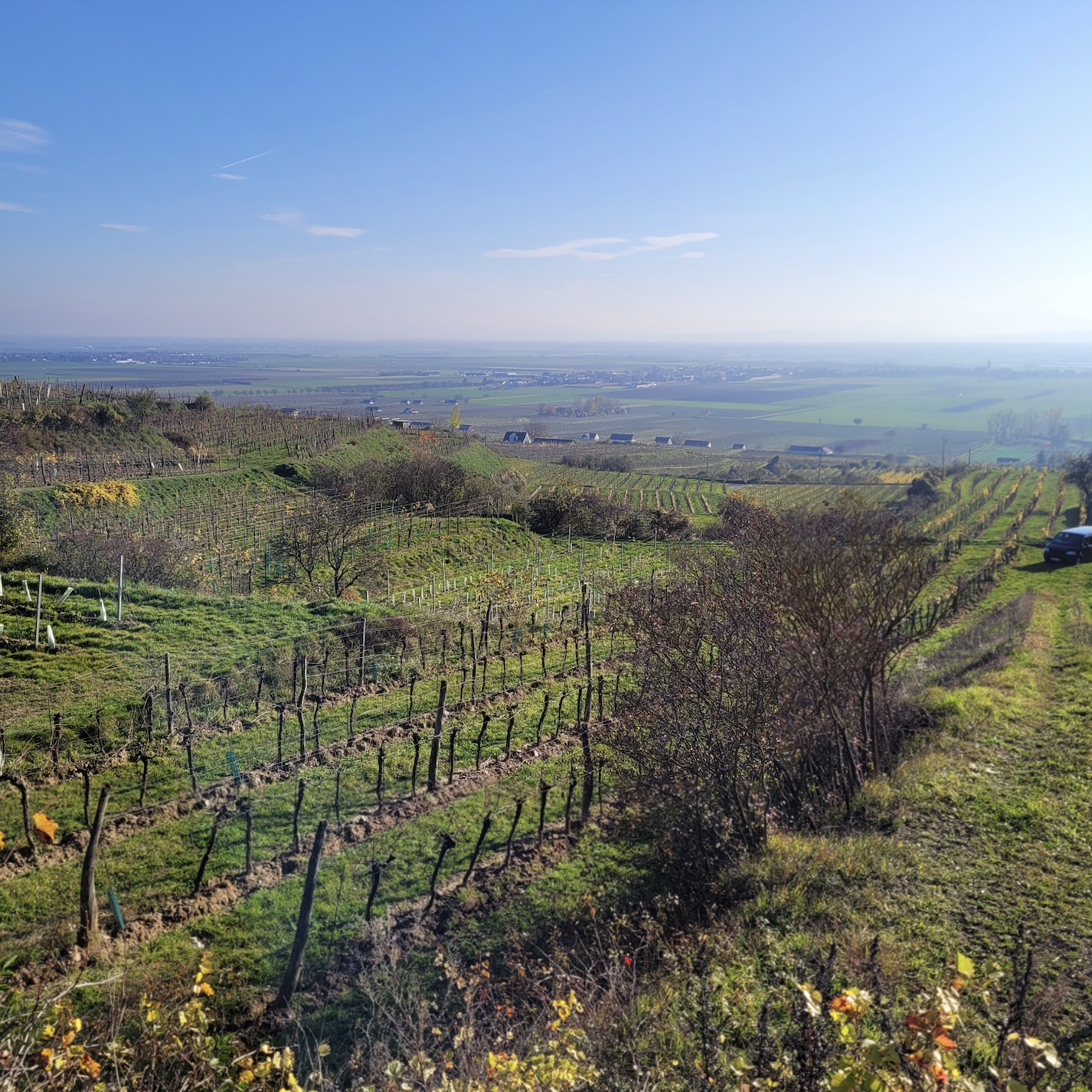
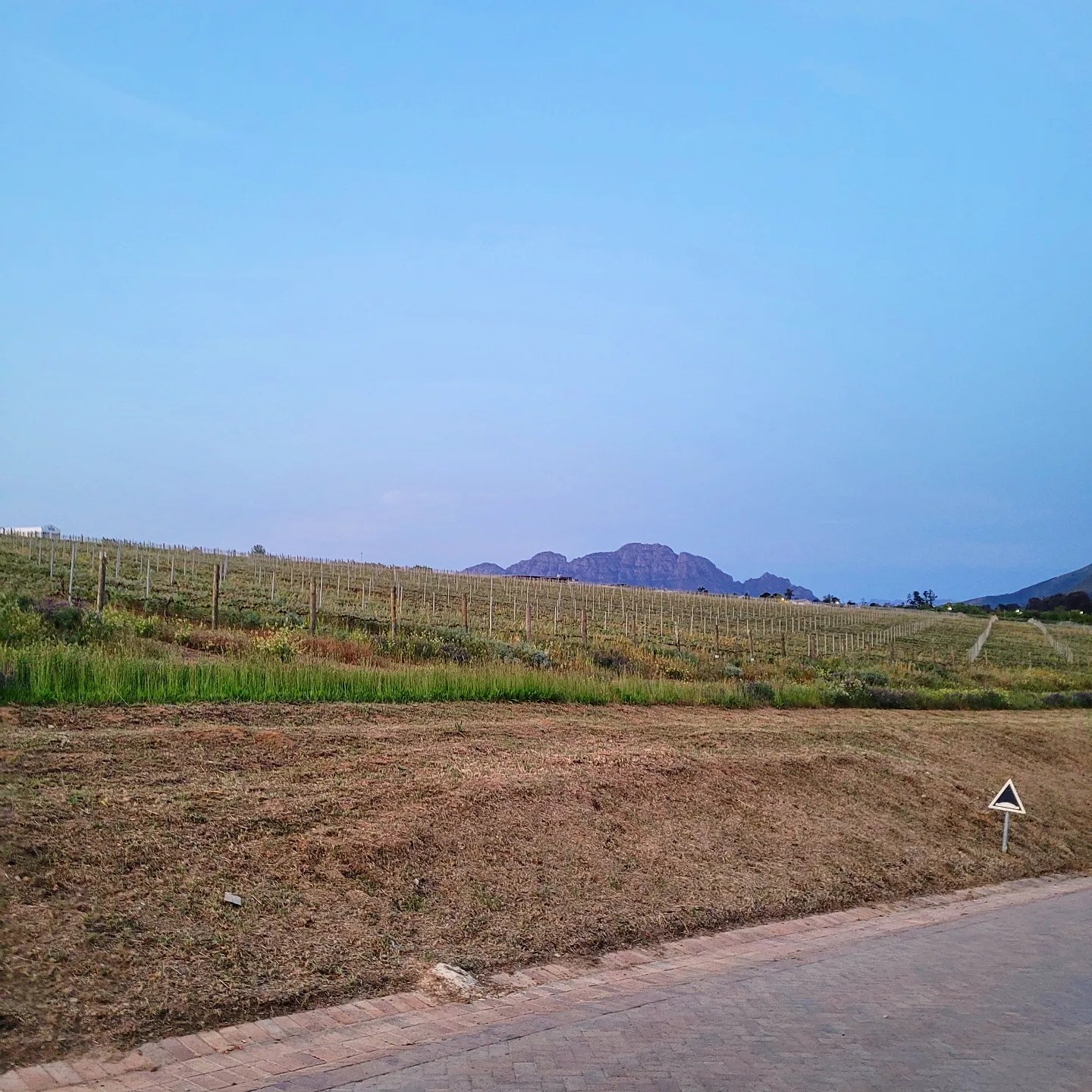
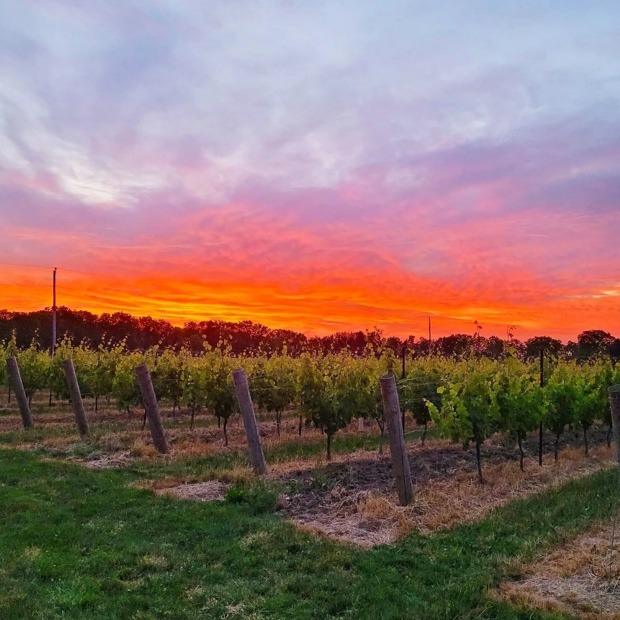
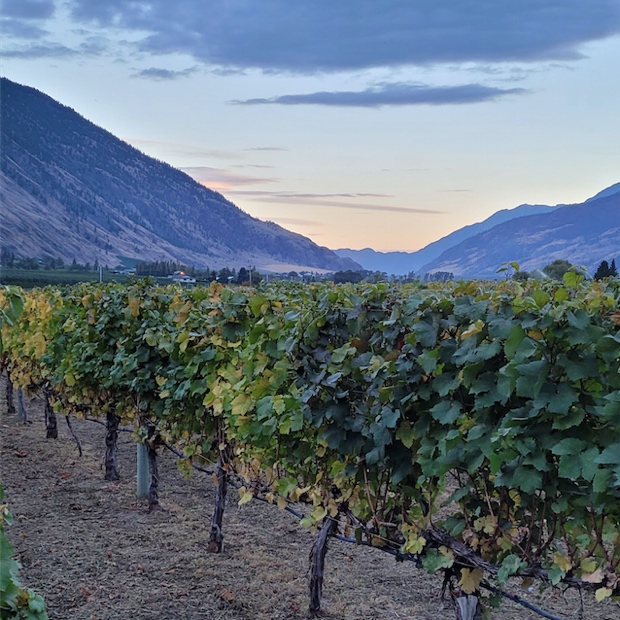
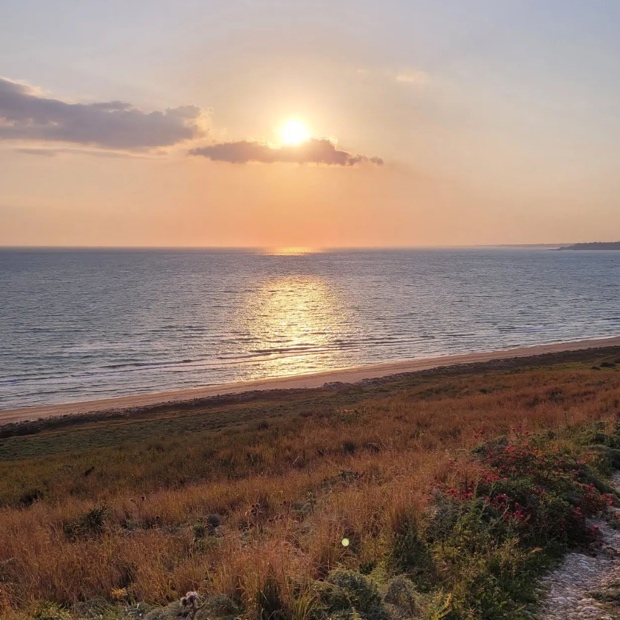
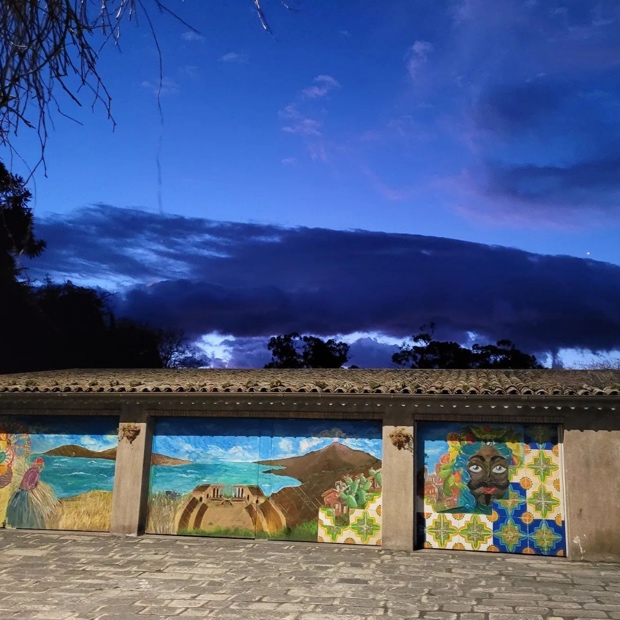
Sunset over Niederösterreich

Life is a series of movements, from pillar to post and decision making often culminates in negative results. Every day there are deliberations, shuttles and bargaining for positivity, all inherently matters of the human condition, experienced through the tension of opposites, simply because choices made more often than not feel diametrically opposed to one another in some unavoidable way. This is one of Carl Jung’s foundational precepts and while it is often a source of frustration and confusion, for grapes and the wines they create it can be the source of greatest joy. A vine planted in poor soils and subjected to the tensity of elements may succeed but it must find a way to suffer through the strain and pressure. Jung noted that in fact it can be a necessary pre-condition (in the case of people) for real transformation to occur. Antithetically speaking grapevines are not human and nature is exceedingly if also impressively resourceful. Roots dig deeper in search of nutrients, the plant stretches and adapts, learns to embrace the tension of opposites and in turn grows stronger. Wine lovers know the feeling, of tasting that which was raised on terroirs where the vine struggle is real, survival is the necessity and the wine results are pure glory.

Godello in Wagram

Which brings us directly to Austria, where incidentally I visited, albeit briefly, back in late November of 2022. It was there that this theory was brought to light. Extreme climate, gradience and geology can lead and convince a vine to beat the odds, case in point examples from near and far. Places such as the Côtes d’Or, Rangen de Thann, Radda in Chianti, The Mosel, Salta, Lanzarote, Camargue, Bekka Valley, Santorini, Aosta Valley, Patagonia, Ahr Valley, Prince Edward County, Hunter Valley, Annapolis Valley, Lamole and Limarí Valley. Just to name a large handful! Let us add Austria to the list, Lower Austria that is (Niederösterreich) and more specifically the Wagram and the Traisental. Three aspects determine the viability for these two growing areas to qualify as those where the experience concerns the tension of opposites. Cool climate, poor soils and windswept ridges. Stand atop any one of these spots in late November, feel the chill drill straight down into your bones and know just what a vine must do to not only survive, but also thrive.

The Loess of Clemens Strobl

Wagram

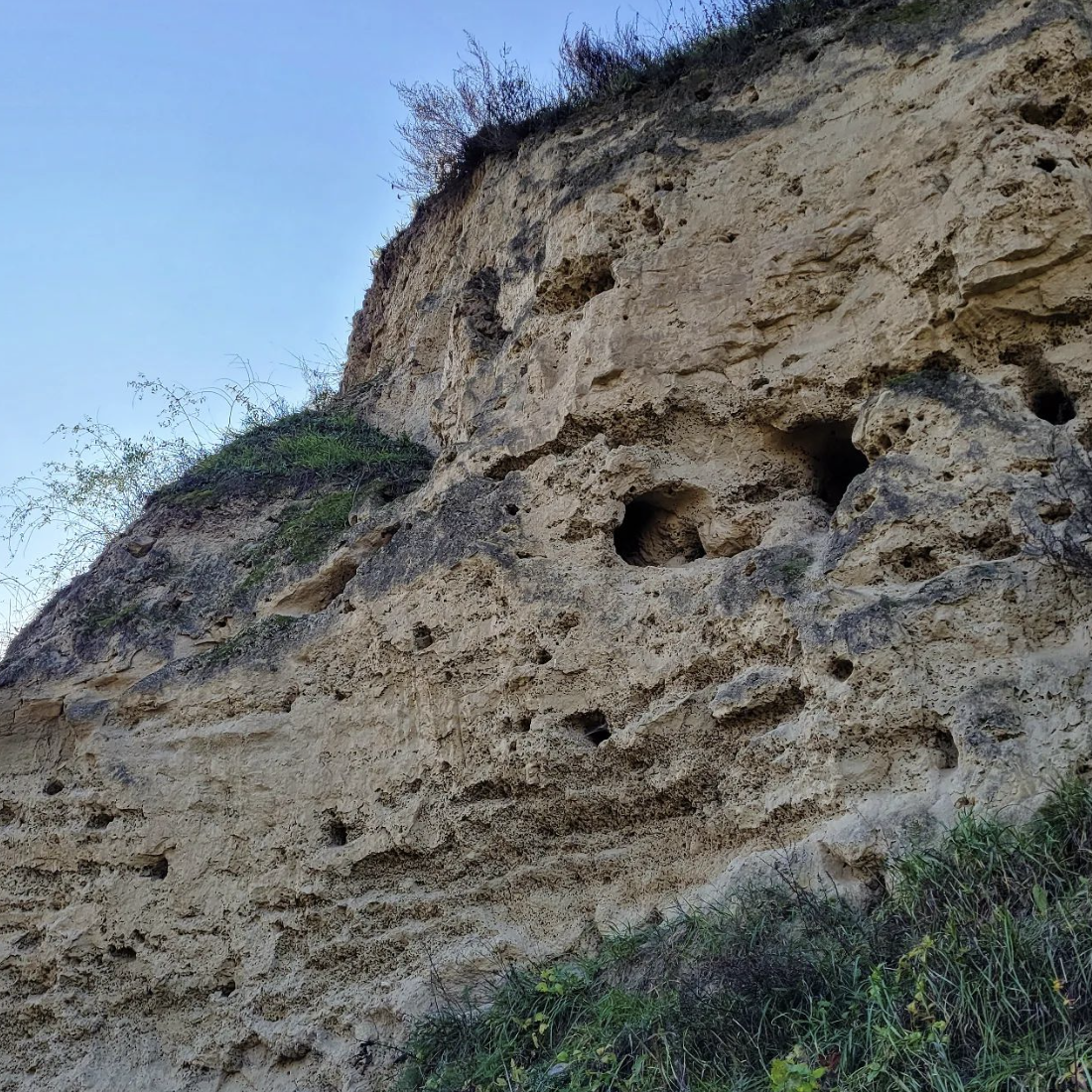
In the Wagram the vineyards are divided between two distinct zones. The first is north of the Danube, directly to the east of the Kamptal where a vast terrace of land stretches eastwards for approximately 30 kilometres. The second zone runs south of the Danube, home to the small wine villages of the Tulln Basin, as well as the historic wine-growing town of Klosterneuburg which is just a stone’s throw away from Vienna. There are 250 wineries in the wagram, 2,459 hectares under vine and the three principal grape varieties are grüner veltliner, riesling and roter veltliner. The main viticultural villages are Feuersbrunn, Fels, Grossriedenthal, Gösing, Kirchberg, Großweikersdorf and Klosterneuburg.

Kirchberg am Wagram

It’s really all about rich, aromatic wines. The name Wagram is derived from the word Wogenrain, roughly translated as “surfside.” This is because the substratum of alluvial gravels and sedimentary marine deposits is covered by loess,  blown in during the ice ages and has since played a significant role in shaping the landscape. From the 2021 vintage onwards, regionally typical wines can be labelled as Wagram DAC. The top tier of the pyramid is represented by the region’s Riedenwein (single-vineyard wines) and here is where grüner veltliner, riesling and roter veltliner truly shine. Moving down from the Ried there are the Ortsweine or Villages wines that can also include chardonnay, weißburgunder, blauburgunder, and zweigelt. Finally there are the Gebietsweine, monovarietal, as a cuvée blend or Gemischter Satz (field blend)). The above mentiioned grape varieties are joined by frühroter veltliner, grauer burgunder, gelber muskateller, sauvignon blanc and traminer.

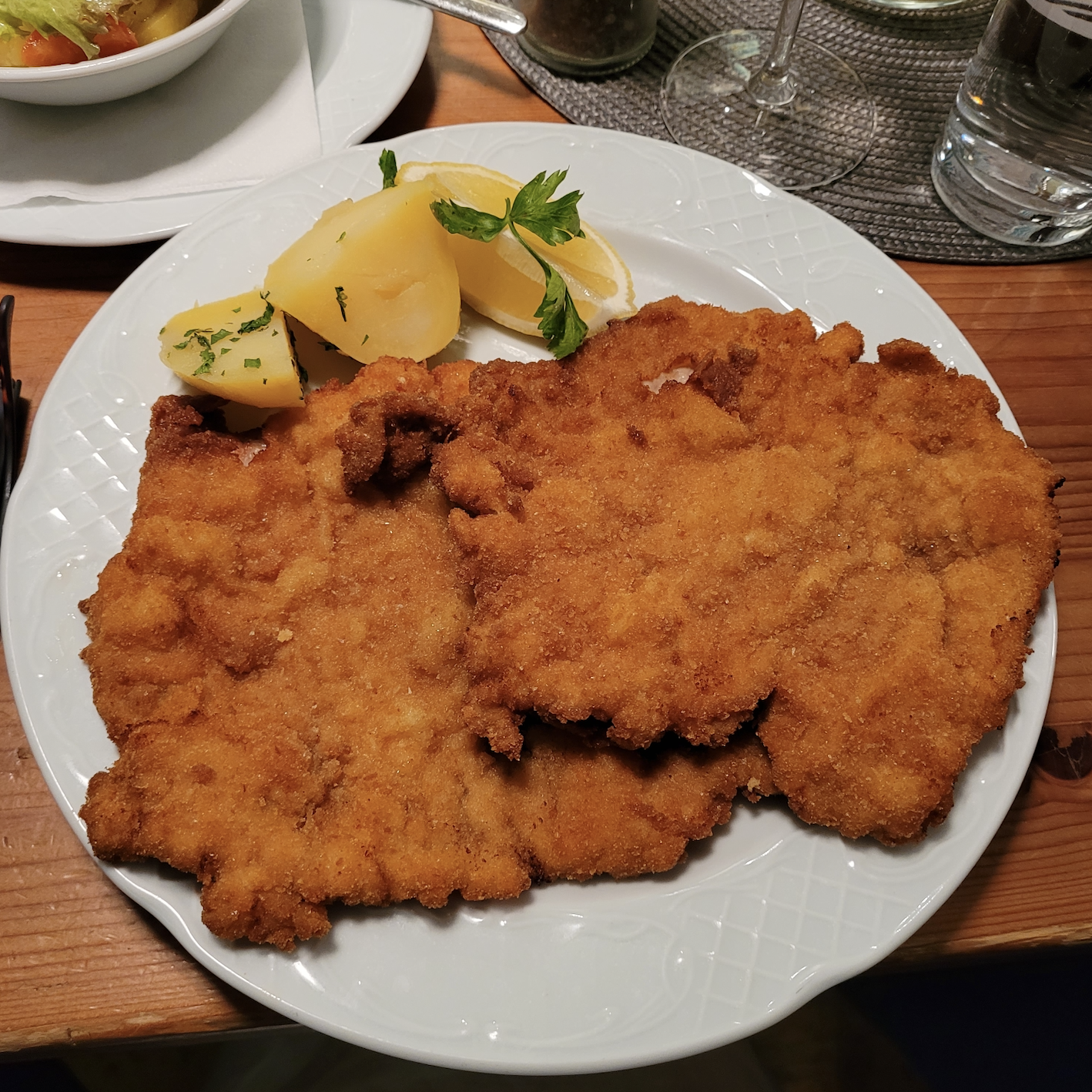
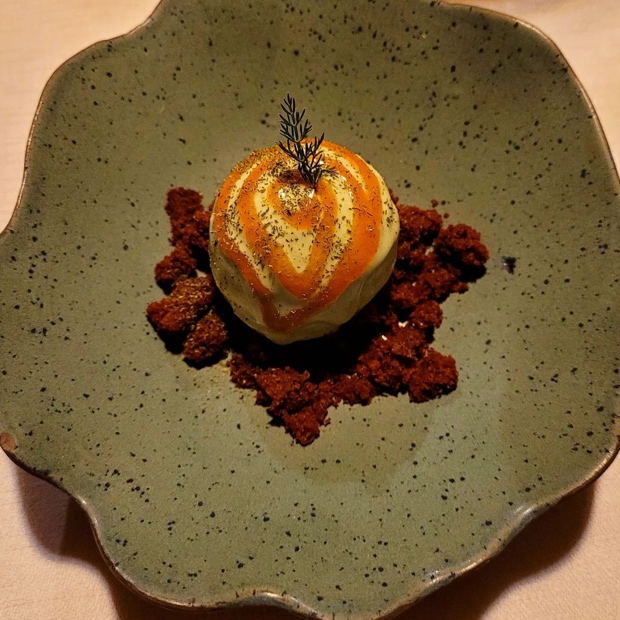
Schnitzel in Langenlois

Traisental

The Traisental is the youngest wine-growing region in Austria, only dating back to 1995 in the way we know it today with their corresponding DACs having been cemented in 2006. Of all the Austrian DACs it is one of the smallest with a shade over 800 hectares under vine. Nowhere does grüner veltliner lead as it does in Traisental, relatively speaking, where nearly two-thirds of all vineyards are planted to the signature Austrian white grape variety. Also riesling which holds great importance and perhaps increasingly so. The growing areas are tied to the villages and their signature taverns where these wines flow and also revered. Two such places are Traismauer and Herzogenburg, towns with windows into the past. Smallest of terraces are where vines grow on gravelly and often calcareous soils. Weather can be extreme, especially winds, of Pannonian influences along with cold air from the foothills of the Alps. The nearby Danube River balances temperature and day/night fluctuations. Wine culture dates back to the Romans and modern times place most importance on grüner veltliner and riesling thoughb there are smatterings of other varieties in white and red, namely pinot blanc and noir.

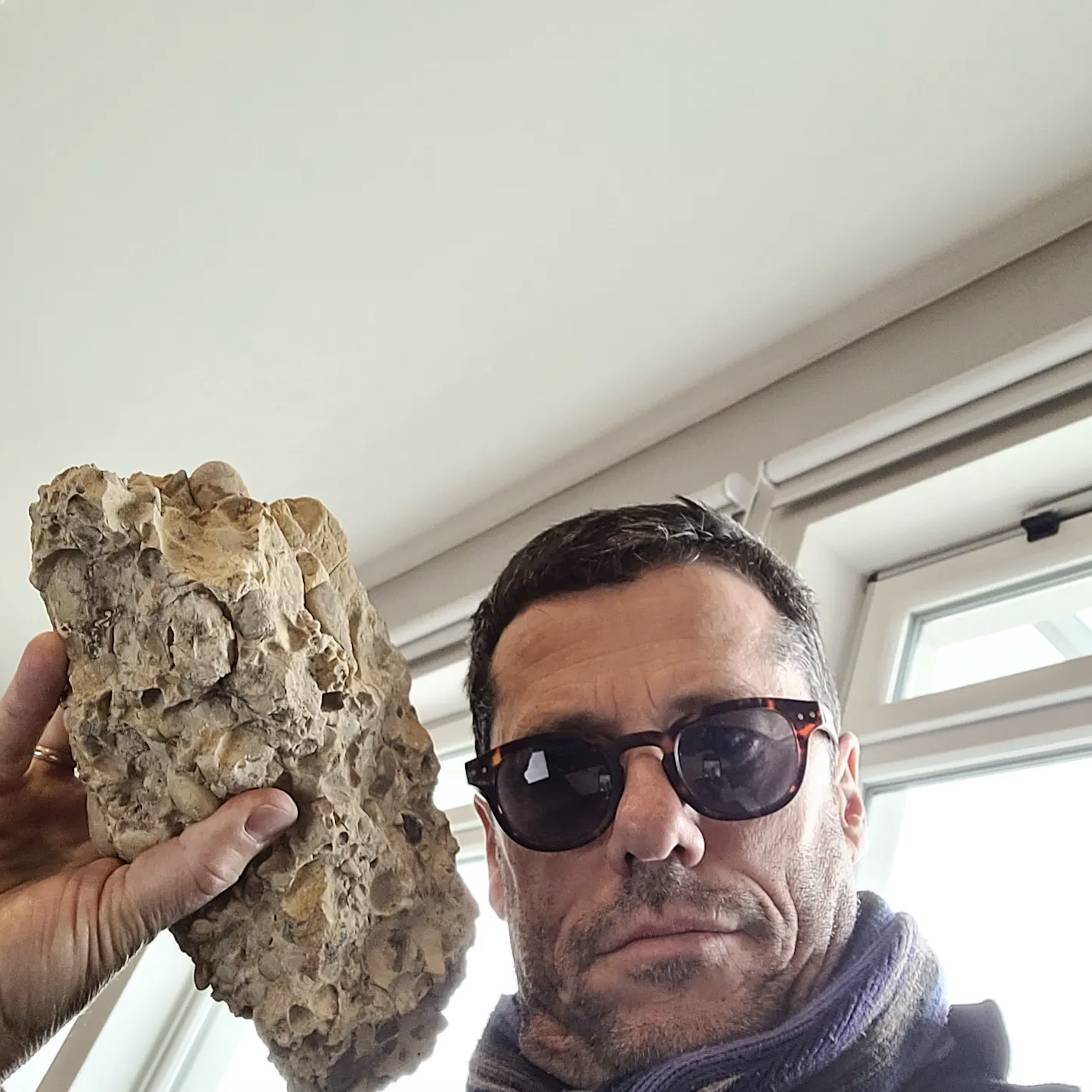
Godello and Traisental Geology

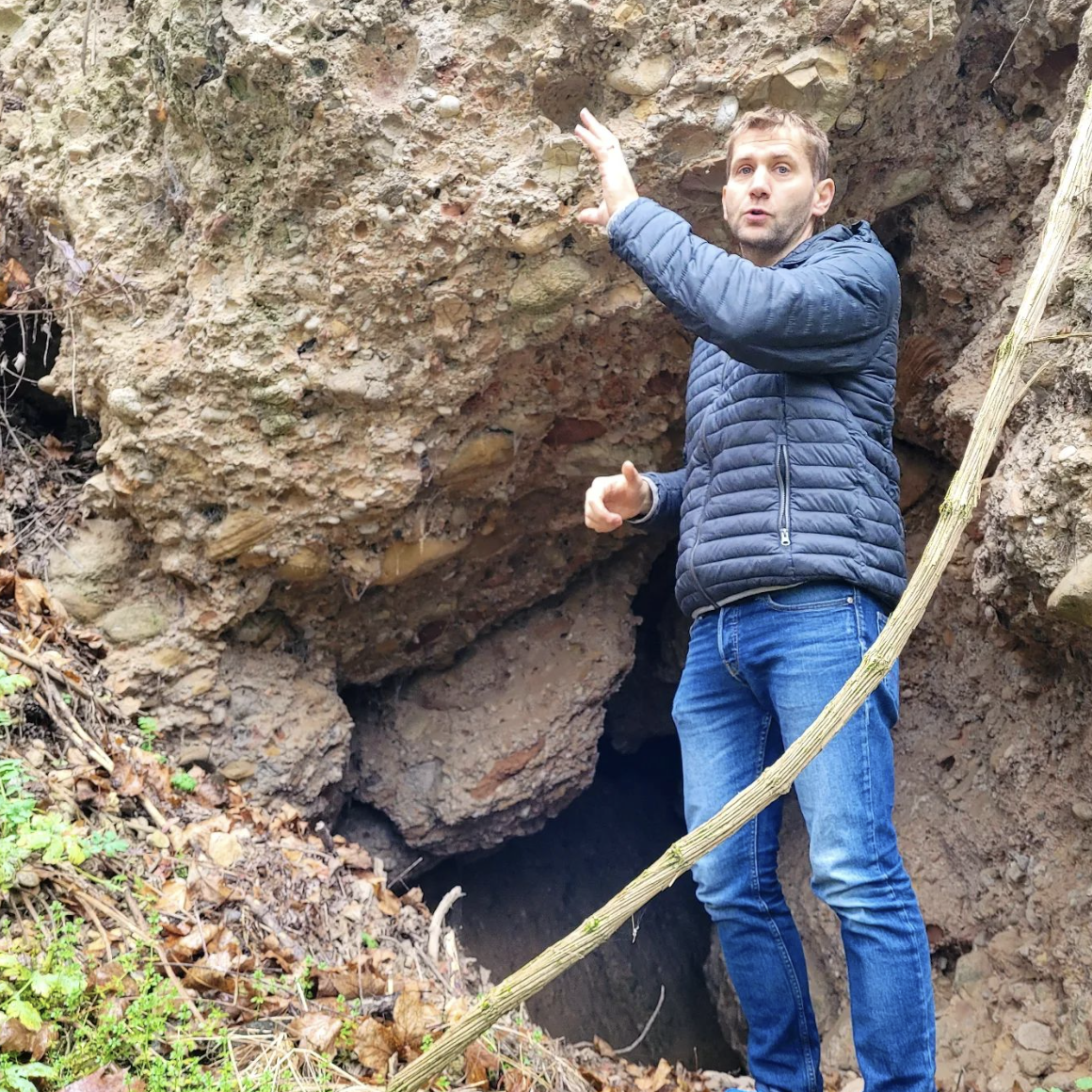
Ten million years ago the Traisen river ran through what is now the Traisental Valley, a growing area so apropos to talk about tension of opposites. The limestone conglomerate and poor soils south of the Danube house a mere 25 producers plus growers and their focus on grüner veltliner and riesling is all about making magic where vines suffer before begetting incredible fruit. The vineyards are planted up to 380m and what was once a four to five kilometre wide river is now just 100-150 metres across at its widest. The build up from 10,000 years of hummus is such that now if you screw up your soil it can takes decades to build it back up again. And so growers like Markus Huber have certified organic but are not content with just the rules, but concern themselves with always being one step ahead. Producers have to be open for things available on the markets, especially preparations, like Trichoderma and other microorganisms used against downy mildew. Huber remarks how herb extracts applied over the last five years have led to very good results.

The Art of Wine – Down to Earth

This two-part expression are but two ways to look at Austrian wine. From Styria, the Burgenland and Vienna in Lower Austria there are 17 DACs from a bit less than 45,000 hectares of planted vineyard. They speak collectively in a typically Austrian vernacular and with a connectivity as real and transparent as any wine producing nation in Europe. Draw a line through the village of Saint Pölten from the Traisental to the Wagram and a most specific association is forged, by geography, geology and climatic patterns. There are recurring characteristics in the grüner veltliner and riesling throughout these two DAC wines and in turn their relatedness to Niederösterreich as a whole is forged through the lands on either side of the Danube.

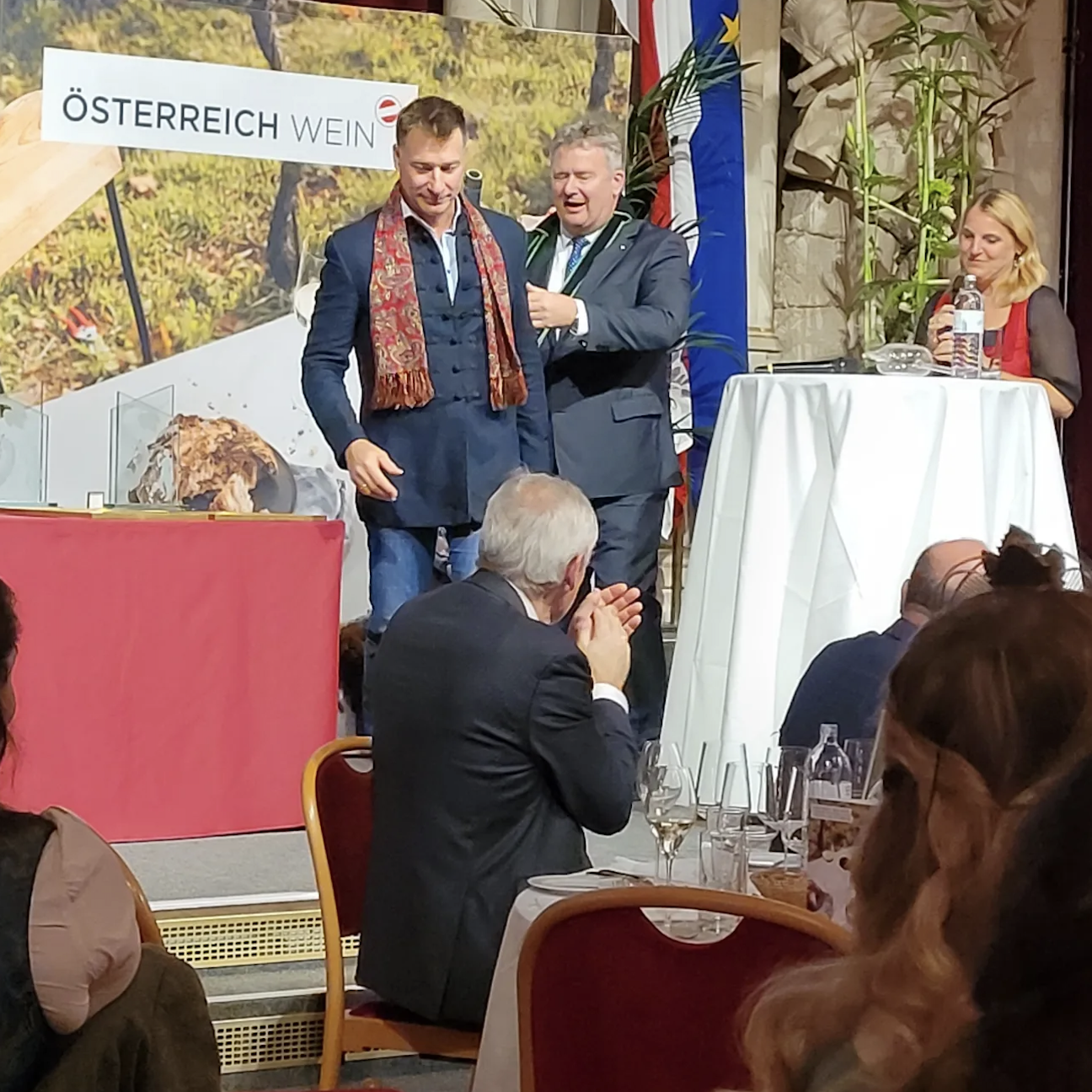
John Szabo M.S. receives the Bacchus Award from Chris Yorke, Wines of Austria

In November of 2022 our small group of four spent two and a half days wandering these two Lower Austrian wine regions with the chaperone assistance of Matthias and Wines of Austria. We also spent two evenings in Vienna, one at dinner with Zahel’s Alex Zahel and another at the Wiener Rathaus as our colleague John Szabo M.S. received Wines of Austria’s most prestigious International Bacchus Award for his two decades of commitment in writing about and educating on behalf of Austrian wines. Our visits in Wagram and Traisental took us to Domaine Ott, Weinmanufaktur Clemens Strobl, Dockner Tom, Jurtschitsch, Markus Huber, Matthias Warnung and Weinkultur Preiß. Just before flying to Europe John and Roman Horvath MW had delivered a November 9th masterclass in Toronto on Austrian wines and those notes are also included in this report. In total I share 90 tasting notes with you.

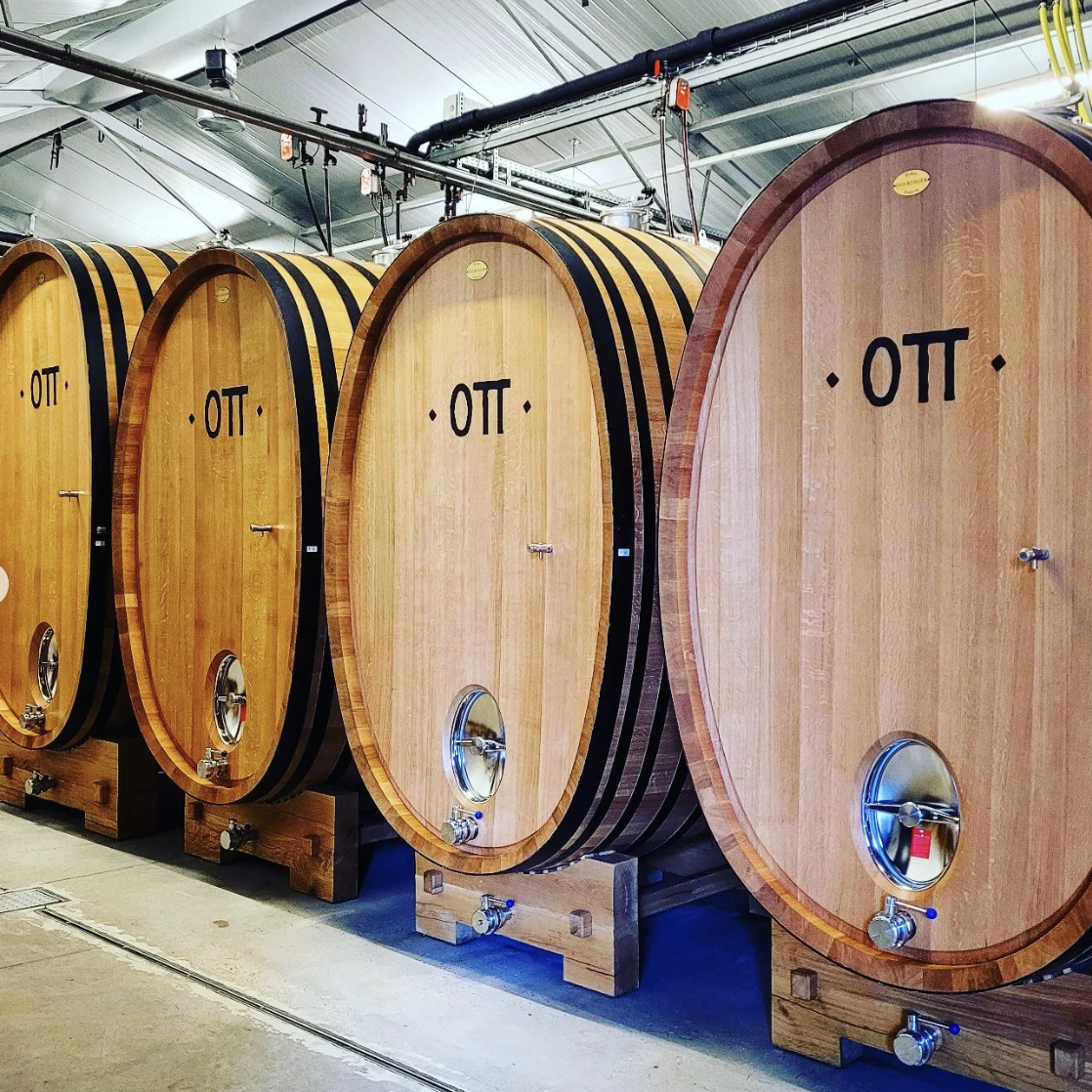
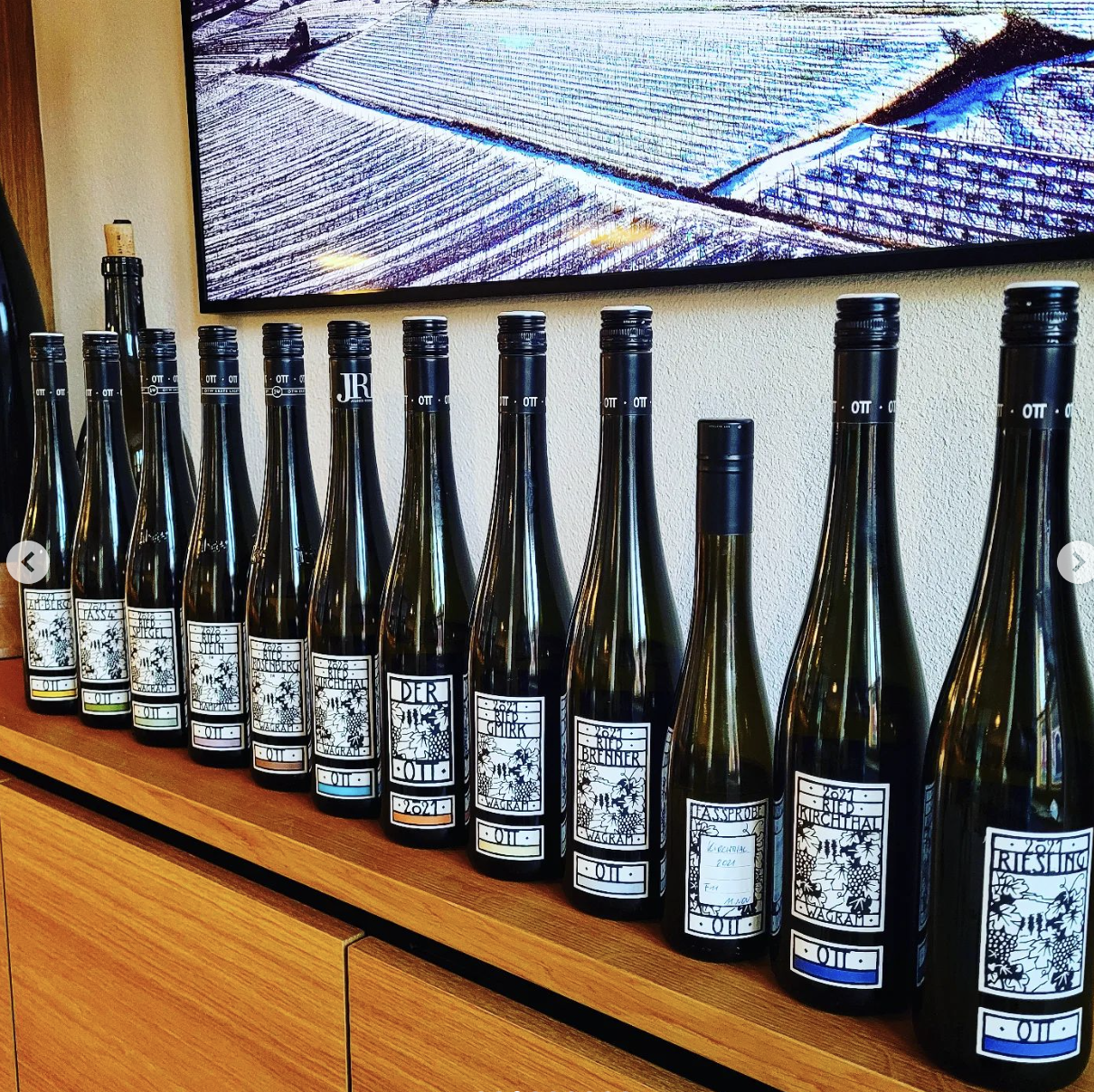
Domaine Ott – Feuersbrunn, Wagram

Bernhard Ott is a fourth generation winemaker, at the helm since 1993 for an estate dating back to 1889. Ott farms and bottles from 32 different plots, including three prized premium sites, one in Kamptal (Engabrunner Stein) and two in Wagram (Feuersbrunner Spiegel and Rosenberg). Bernhard’s initial goal was to make use of stainless steel though in 2018 he began working with varying sizes of Stockinger fuders. These traditional Mosel casks literally translate to a “wagonload, cartload; A unit of measure for wine equal to roughly 1000 litres.” In total there are 55 hectares and it was after tasting a 1933 Rosenberg GV that Ott decided to go back to his roots, to what his grandfather would have been doing and moved to basket press. The first to do so with white wine. In the early 2000s Bernhard began composting, with organic cow manure, became certified organic in 2006 and later visited the biodynamic property of Domaine La Romanée Conti in Vosne with Hans Reisetbauer. This was the impetus towards committing to biodynamic viticulture. He formed Respekt in 2007 with Johannes Hirsch, Fred Loimer and a group of like-minded producers, Respekt was formed. The oldest vines in the Rosenberg were planted in 1954 in very deep loess soil. Stein is Gföhler gneiss at the bottom, with red and white sands, a layer of chalk and a little loess on top. At Spiegel the soils are a mix of deep, chalky loess and red gravel, part Rosenberg and part Stein. Most of the production is grüner veltliner with 10 percent riesling.

Bernhard Ott Grüner Veltliner Am Berg 2021, Lower Austria

Frankly as direct and rounded as grüner veltliner will ever get, three parts gathered together, estate fruit, biodynamic growers’ and two hectares from agronomist Hans Reisetbauer’s father’s GV. The dictionary entry, easy to access, wisps of smoke and white pepper, finishing with a tincture’s drops of fine tonic and bitters. Drink 2022-2025.  Tasted November 2022

Bernhard Ott Grüner Veltliner Fass 4 2021, Wagram

The fourth barrel, named for Bernhard Ott’s father, a big brand poured in wine bars all over Europe. All estate fruit (which separates it from the Am Berg) and all the vines used are a minimum 12 years of age. More aromatic presence, fruit substantiality, single-vineyard edginess and concentration. Now some smoulder and layered vim, even into volupté territory. Drink 2022-2027.  Tasted November 2022

Bernhard Ott Grüner Veltliner Ried Spiegel Feuersbrunn 1ÖTW 2020, Wagram

Seriously smouldering out of the glass, so much so you are surprised to not see some smoke rising. From Ott’s six hectare portion, high in loess, gravel and (15-20 per cent) chalk. A very windy spot, seemingly always, a very exposed place. Almost the highest part of Hengstberg, a cool and understated wine, shy in its early stage yet blessed with grand cru vineyard DNA, beauty and tangible length. Drink 2023-2029.  Tasted November 2022

Bernhard Ott Grüner Veltliner Ried Stein Engabrunn 1ÖTW 2020, Kamptal

All Kamptal fruit, from a vineyard mentioned in 1427, loess with granite, firestone, gravel and a “fruity” hummus in the top few centimetres of the soil. Bigger fruit expression as compared to Spiegel, also in slide over to Kamptal there is more generosity and up front openness. No paraffin wax or lightning strikes though the back palate is alive, layered and kicking. Though consistently at 13 per cent alcohol like the rest it is felt with more oomph in Stein, thanks to the bigger amount of flesh on the palate. Drink 2023-2027.  Tasted November 2022

Bernhard Ott Gruner Veltliner Ried Rosenberg Feuersbrunn 1ÖTW 2020, Wagram

Ott took over this vineyard from his father in 1993 and decided at this time to focus on the white wines, trading the planted red vineyards for this Rosenberg, planted in 1956. Roots go down 30 metres in pure loess soil with 30-33 per cent free (or active) chalk. Man does this taste like chalk incarnate but with salty, smoky and elemental veins cut through carrying the lifeblood of the soil beneath. Luxe enough to imagine a wine going on with great flesh over a long period of time and more because the chalk will morph, transmigrate and develop a whole new level of smoulder, always connected to that chalk. Drink 2024-2035.  Tasted November 2022

Bernhard Ott Grüner Veltliner Ried Kirchtal 2020, Wagram

On the east shoulder of Hengstberg with mainly loess but also gravel and some heavy clay. The nose delivers Rhône like or more specifically Châteauneuf-du-Pâpe heady aromas in flowers like roses in oil and a density or booziness. The vineyard was planted in 2010 and 2014 was the first vintage. Seems like a big and gorgeous wine that’s a bit funny on its feet, like a breed still as a puppy with big feet and not having yet grown into itself. Clumsy yet amazing, juicy and excitable, not as focused as the grand crus, nor finessed neither. Look for iterations from 2025 onwards to get there. Drink 2023-2027.  Tasted November 2022

Bernhard Ott Grüner Veltliner Der Ott 2021, Wagram

Combines three Erste Lage (Grand Crus) in one wine. One hundred per cent basket pressed and large cask aged. Approximately 45 percent Spiegel with equal parts Stein and Rosenberg. These pressings are separated from the single-vineyard wines, picked separately (essentially from younger vines). Exciting levels of grand cru, layers and layers to stack, unfold and peel away, perhaps not as linear, focused and precise but worthy of the ideal. Bloody delicious at a high level for the short term and offering a window into all three crus after they age well into the future. Drink 2023-2027.  Tasted November 2022

Bernhard Ott Grüner Veltliner Ried Gmirk 2021, Wagram

Gmirk, from the German, only 500L of juice available, from 30 year-old vineyards demarcating the border to a village (Gösing) that deserves to be on its own as a high level wine. The concentration is rather remarkable, the smokiness thick like fog and the texture palpable. A delicious grüner veltliner that satisfies as much as it impresses. Drink 2023-2027.  Tasted November 2022

Bernhard Ott Grüner Veltliner Ried Brenner 2021, Wagram

Only 1000L of juice available, from a few rows in Spiegel that deserve to be bottled on their own. The intensity is palpable, a chiseled grüner veltliner of finesse, focus and linearity. Also power and drive, horsepower really, full speed ahead that can run both the sprint and the marathon. Drink 2024-2035.  Tasted November 2022

Bernhard Ott Riesling Ried Kirchthal 2021, Wagram

Youthful, stoic and reticent, not really giving away much at this very early stage. Layers of typical riesling necessity, intensity and sprit, needing time, slowly unfolding towards the greatness that awaits, Not quite what is available, possible and probable with grüner veltliner but impressively profound just the same. Drink 2024-2028.  Tasted November 2022

Bernhard Ott Riesling Kabin(O)TT 2021, Lower Austria

Made with some more residual sugar, Kabinett style (obviously) as a wink and a nod towards the Mosel. Green mango and peach, flowers as well, top quality acids and overall a proper if professional balance. Drink away though careful of how easy it disappears. Drink 2022-2024.  Tasted November 2022

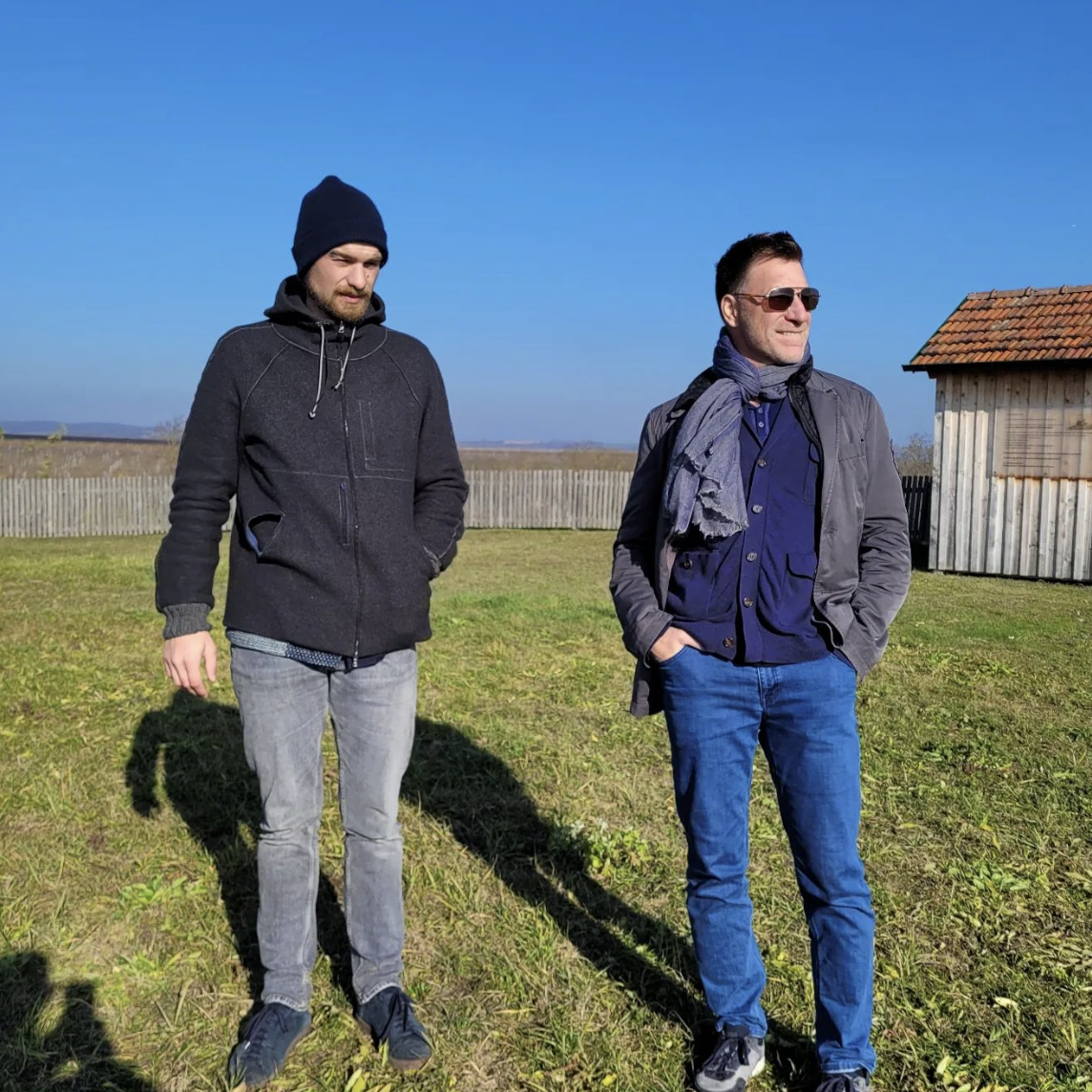
Lukas Strobl and John Szabo MS

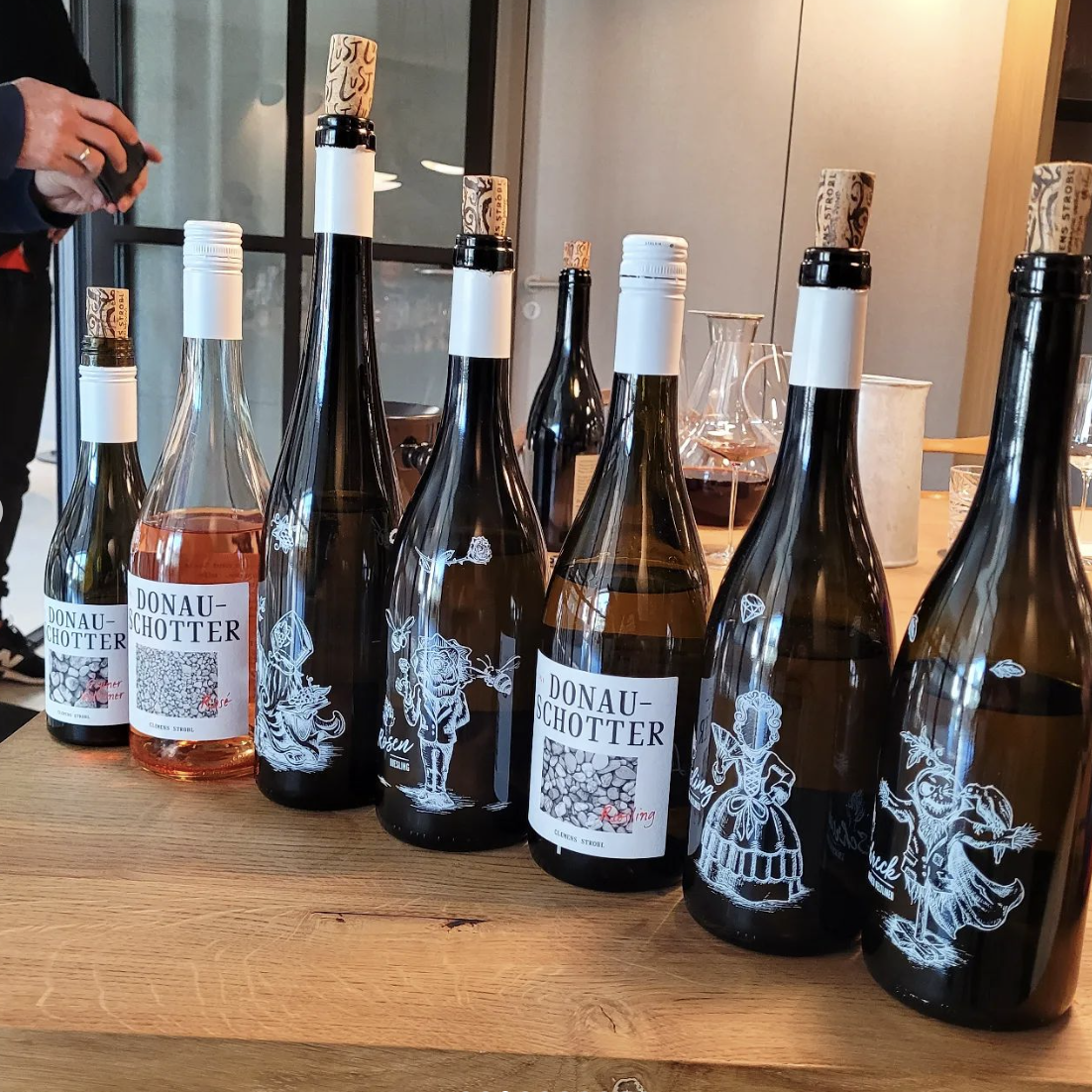
Weinmanufaktur Clemens Strobl – Kirchberg am Wagram

Clemens Strobl is a second generation family-owned winery started in 2008, led by Clemens and son Lukas. They started with one hectare, “wanting to know what is behind winemaking.” Today there are 15 hectares, mostly terraced above the winery. The 2012 vintage was the first to make use of native yeasts and the beginning of a conversation towards organics. They are self-professed “unbound to tradition” and so there are no appellations on the wines. Experimentation is key, yet also with winemaking ideas in the skin-contact, unfined, unfiltered and minimal sulphuring realm. They may be uncomfortable to be tagged as makers of natural wine but their actions speak for themsleves. For Clemens and Strobl wine is directly connected to soil and this means loess. Metres of loam and loess, tertiary gravel dating back millions of years. Their’s is “the region of the future.” Burgundian conditions, of loess and limestones, expressly Wagram.

Clemens Strobl Donauschotter Grüner Veltliner 2021

Clemens Strobl purchased the property in 2016, renovated the vineyards, built the winery over three years and opened the doors in 2019. The soils are rich loess to create a cuvée of grüner veltliner from grapes excluded from the single block labels. Natural ferment, malolactic as well, stable, round and offering easy access. Bottled in May and always sold out within six months – as in now. There are 20-25k bottles produced of this GV licked by flinty smoulder, flavours imagining a dry lime cordial, salty, light-hearted and with that classic white pepper. Über correct. Drink 2022-2025.  Tasted November 2022

Clemens Strobl Grüner Veltliner Schrek 2019

From the Schrekenberg, abutting the Kamptal, surrounded by forest, filled with wildlife. Vineyards face more east than south, a cooler spot that’s increasingly warming and this being one of those really warm years. Fermented in 100L oak vats. More concentration exaggerated in this 2019, but also that flinty smoulder and malolactic induced mouthfeel. Not a wine concerned with primary flavours and more about impression, in a way that reminds of some aged Domaine Paul Blanck, albeit in grüner veltliner clothing. The clarity is admirable, focus and purity as well. Drink 2022-2026.  Tasted November 2022

Clemens Strobl Lössling Grüner Veltliner 2019

From Weissbrün on heavy Loess soils, “one of our warmest vineyards, especially for grüner veltliner, now quite challenging with warming temperatures and yet we don’t lose acidity.” The warmth is so up front and immediately nurturing, soft and creamier than Schrek from a vintage in requiem of a quicker maceration, less than six hours, working on brown juice, unconcerned with primary fruit flavours. Keeps the pH lower and acids higher, maintaining flow and mouthfeel. The roundness and barrel effect are felt here in that Bourgogne chardonnay way. Apposite to Schrek. Drink 2023-2027.  Tasted November 2022

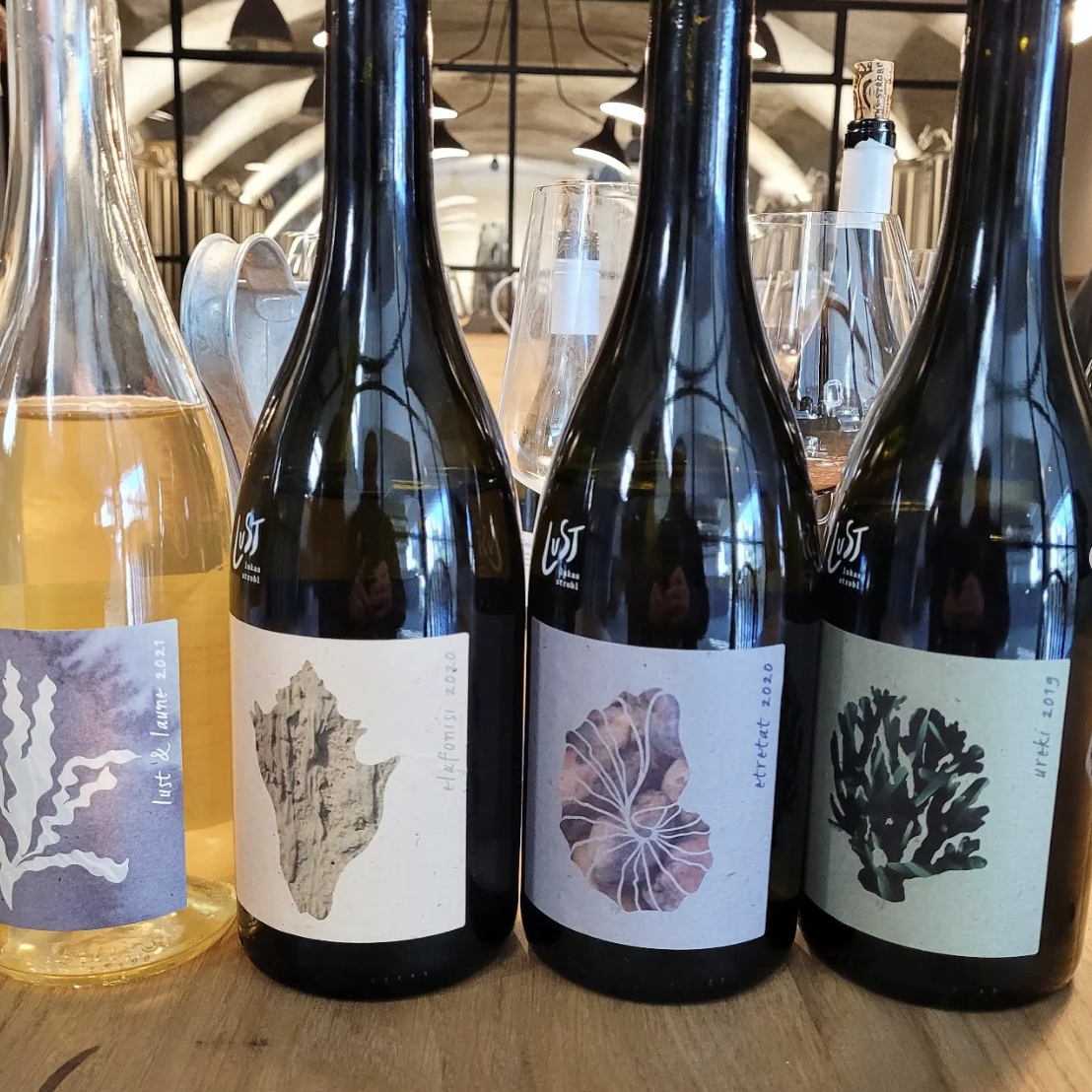
Lust By Lukas Strobl Lust & Laune 2021, Wagram

“Not a big fan of the term but it is natural wine,” tells Lukas Strobl, son of Clemens. His skin contact blend combines grüner veltliner with chardonnay, unfined, unfiltered and sulphured minimally at bottling. From Clemens Strobl estate fruit and as noted in his and his father’s wines you can expect this subtly orange example to be as clean and crisp as possible. This first vintage is 2,600 bottles. Orange and lemon skin, persimmon and no off-putting funk, just the Mark Ronson and Pharrell Williams kind. Just a dream. Drink 2022-2025.  Tasted November 2022

Clemens Strobl Donauschotter Riesling 2021

The Loess soils are heavy, aka Danube gravel and they can produce overly rich and fruity riesling so this is made in the driest possible style,. High in lime, acids in and around 7 g/L, a bit of boosted alcohol and more than anything a feeling of fullness in the mouth. Tart yellow plum, white peach and lemony finish. Classic dry riesling. Drink 2022-2024.  Tasted November 2022

Clemens Strobl Rosen Riesling 2019

From the Rosenberg, one of the highest (380m) in terms of elevation which is at the height of the Wagram. A place of sunny and warm days through summer plus really cold winter nights. Also one of the rockiest/stoniest vineyards, worked botrytis free, passed through several times during harvest. Again in the arena of dry though clearly elevated in viscous mouthfeel, noticeable alcohol matched by some residual sugar though far less than many counterparts. Elegant and refined, age-able to a mid-term degree. Drink 2022-2025.  Tasted November 2022

Clemens Strobl Riesling Pfaff 2019, Kremstal

From a 40-45 year-old vineyard, having been taken over in 2015, a stony, east facing block almost on a cliff. Drier, more intensity, precision and finesse. This is not about primary fruit at all and more concerned with drive, freshness and the kind of character that can accept great changes over time through the canals of elemental, mineral and gaseous shifts. Has begun and will accede to the secondary before too long. Drink 2022-2027.  Tasted November 2022

Clemens Strobl Donauschotter Rosé 2021

From pinot noir and st. laurent aged in 25 different vessels, including clay amphora. The effect felt here is as much orange as it is Rosé but also a style that is dry, pale, elegantly tart and of a tang that’s also just faintly there. Would not refer to it as serious but certainly refined, akin to the agreeable whites and of a clear, focused and distinct advantageous style. Can really see this alongside braised pork, either belly or guanciale in pasta. Drink 2022-2024.  Tasted November 2022

Clemens Strobl Pinot Noir Hengst 2019, Wagram

Not THAT Hengst but a single vineyard in the Wagram and 2011 being the first vintage. Spends nearly three years in wood and the style is one that wants flinty-smoky reduction from the natural yeasts, clearly spoken from 2019 though the warm vintage speaks right up. While it seems that this is not the past personality exhibited by this deliciously creamy pinot noir it also seems that this will be a big part of its future. Drink 2023-2027.  Tasted November 2022

Lust Lukas Strobl Etretat 2020

Of sauvignon blanc, unfined, unfiltered and nowhere near the vicinity of grassy, green nor blowsy styles. That said there is more fruit than any of the Clemems Strobl wines, and also the orange. There is an immense wealth of fruit, layering character and possibility in this singular sauvignon blanc. It’s bloody delicious. Drink 2022-2026. Tasted November 2022

Lust Lukas Strobl Elafonisi 2020

Made from grüner veltliner, eight days on the skins, 30 per cent whole bunch, approaching orange but not quite at that territory. Natural in any case, by nature of the unfined, unfiltered and minimal sulphuring (at bottling) treatment. Captures the flinty-smoky smoulder though with more viscosity and palate density. Comes away with great stage presence, here as a the second try just after working harvest in the Mosel at Clemens Busch. Drink 2023-2027.  Tasted November 2022

Lust Lukas Strobl Ureki 2019

Only 300L produced from one of the oldest cabernet sauvignon parcels in the Wagram, purchased in 2009 and becoming easier and easier to ripen the grapes. Much better adapted to this climate than it surely was when planted in the 1980s. OK so it’s still cool climate cabernet but this is the warmest of vintages from which ripeness is just about as close to phenolic fruition as it will get for the place. Just carries the feel of the Wagram, in spite of the variety, with a kind of evergreen and as with the whites, a smoky-flinty mineral feel, always present. From land and also winemaking, wanted and relished. Super refined and elegant tannins. Drink 2023-2027.  Tasted November 2022

Ground Control to Dockner Tom

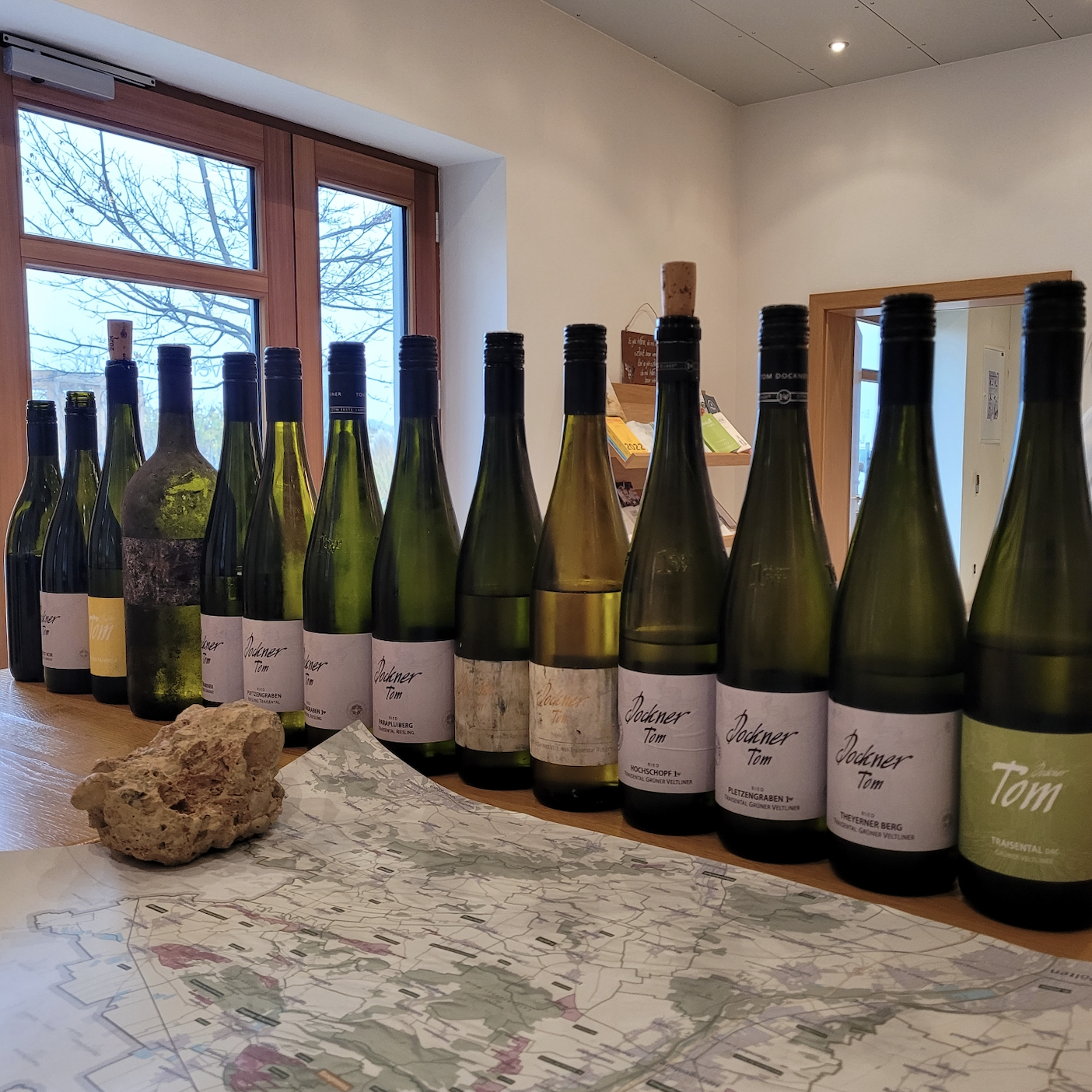
Dockner Tom – Thayern

The winery dates back to 1912 while the house is 580 years old. Dockner is a producer with a large and well-rounded portfolio, bottling regional, village, single-vineyard and 1ÖTW premium vineyard classified wines. The Dockner family have been vintners in Theyern for four generations and Tom credits his father for teaching him a great deal. His pursuit of quality and sustainable cultivation is integral to the family’s estate. Ried Theyerner Berg, Pletzengraben and Hochschopf are the most important sites, especially for grüner veltliner while riesling also thrives at Parapluiberg Mountain.

Dockner Tom Grüner Veltliner Tom 2021, Traisental DAC

Quite a golden rich grüner veltliner of elevated ripeness and sapidity over salinity, über freshness and a drinkable nature that most people can really understand. A high-level entry wine with a top fruit core and no complications. Nor distractions and tangents neither. Drink 2022-2023.  Tasted November 2022

Dockner Tom Grüner Veltliner Nussdorf 2021, Traisental DAC

A village wine from Nussdorf off of loess soils and always a bit creamy yet persistently fresh. Carries the classic white pepper and here with that light buzz, not effervescence but a definite hum. Tart and sapid again, almost blanched nut but not fully and all the while equally salty, direct and again, an easy wine to understand. Clean, crisp and really well made. Drink 2022-2024.  Tasted November 2022

Dockner Tom Grüner Veltliner Ried Theyerner Berg 2021, Traisental DAC

From very chalky soil, a cool climate location, intensely taut and so very affected by the soil. Clearly, unequivocally and directly with more salinity than the regional or village examples to be frank and sure. Not an elastic texture or length but so very linear, upright and long. Drink 2023-2028.  Tasted November 2022

Dockner Tom Grüner Veltliner Ried Pletzengraben 1ÖTW 2021, Traisental DAC

The Pletzengraben is place abutting a forest and blessed by cool, fresh winds. Here a knowable tonic and cordial character, lime and botanicals, quite taut but still with some give. Work with the wine to allow the chalkiness to come through and the wine carries just a hint of residual sugar. Arrests on its own at 3.5 g/L of RS. Drink 2022-2027.  Tasted November 2022

Dockner Tom Grüner Veltliner Ried Hochschopf 1ÖTW 2021, Traisental DAC

East facing hill on terraces, very chalky, with loess and stones. Fermented in large oak casks, just like the past and the result is a creamy, softly textured and downy wine with white chalky salinity though not really intense. An billowy example that drinks with ease. Drier than the Pletzengraben. Drink 2022-2025.  Tasted November 2022

Dockner Tom Grüner Veltliner Ried Hochschopf 1ÖTW 2013, Traisental DAC

East facing hill on terraces, very chalky, with loess and stones. Fermented in large oak casks, just like the past. An older example and there is some terpene here, like apple juice, the fruit having been originally a bit bruised. Lemon preserve and decent acidity for sure so not a hot year but just some fruit that likely should have been sorted out. Drink 2022.  Tasted November 2022

Dockner Tom Grüner Veltliner Ried Hochschopf 1ÖTW 2010, Traisental DAC

East facing hill on terraces, very chalky, with loess and stones. Fermented in large oak casks, just like the past. An older example (tasted blind) from what feels like a much cooler vintage and the fruit is again apple though tart, green and with a white peppery bite. Good acid crunch here, lovely energy, so very grüner. Turns out to be 2010 and so the coolest vintage of the last 15 where picking lasted all the way into mid-November. Drink 2022-2024.  Tasted November 2022

Dockner Tom Riesling Ried Parapluiberg 2021, Traisental DAC

Parapluiberg as in the hill with the umbrella and a fresh, saline and acid led riesling. Really high acidity manages the 6-7 g/L of RS in a very Germanic style, more Rheinhessen than anything else, lime sharp, juiced and zesty. Good fruit here, vibrancy and really tart. Drink 2022-2025.  Tasted November 2022

Dockner Tom Riesling Ried Pletzengraben 1ÖTW 2021, Traisental DAC

Quite a rich and concentrated riesling, not quite the lime cordial of the Pletzengraben grüner veltliner but there is still this rich viscosity and texture that is very mouth filling. Quite an aromatic beauty and a wine that integrates its parts very well. Drink 2022-2027.  Tasted November 2022

Dockner Tom Riesling Ried Pletzengraben 1ÖTW 2017, Traisental DAC

Again, tasted blind this reminds of an older grüner veltliner, like that green apple, white pepper and sharp 2010. This one snaps and bites, with searing acids and an intensity off the proverbial charts. Drink 2022-2025.  Tasted November 2022

Dockner Tom Riesling Ried Pletzengraben 1ÖTW 2016, Traisental DAC

Really interesting vintage tasted blind, very much in line with the grüner veltliner of 2013, fruit a bit bruised and here in riesling there is saffron, banana and pineapple. Acids are good though the fruit was obviously very ripe. Secondary stage showing petrol and botanicals. Drink 2022-2023.  Tasted November 2022

Dockner Tom Traminer Konglomerat 2021, Traisental DAC

Off-dry gelber muskateller and gewürztraminer, high in sgars but also acids for balance, from a rich vintage with highly tropical fruit like guava and pineapple. Actually a matter of 12 g/L of RS but only 6.5 of acidity, high for traminer. Drink 2022-2027.  Tasted November 2022

Dockner Tom Traminer Konglomerat 20007, Traisental DAC

Off-dry gelber muskateller and gewürztraminer, much older vintage but also one of extreme ripeness because the litchi is full on, as are the roses and blanched nuts. Not quite the richness of the warmest vintage but surely sharp and older at the same time. Drink 2022-2023.  Tasted November 2022

Dockner Tom Gelber Traminer Natur 2021

A natural white from gelber muskateller meets gewürztraminer 10 months on skins. Lemon and quite sweet fruit meets acids in a lovely wine, of no salve or distraction, very clean and fresh. Drink 2022-2025.  Tasted November 2022

Dockner Tom Pinot Noir Konglomerat 2019

Sees 300L barrels for 30 months after a long skin maceration. Light and creamy, tart and with enough tension to match the soft palate. Of a cool climate style where fruit hangs long, develops good phenolics and eerily like Nova Scotia actually. Could be a Lightfoot & Wolfville Ancienne, ostensibly if truly in the way it presents itself. Drink 2022-2025.  Tasted November 2022

Dockner Tom Pinot Noir Konglomerat 2008

Older vintage tasted blind, showing plenty of age, caramel and bitters, warm vintage, a bit astringent. Quite volatile. Drink 2022.  Tasted November 2022

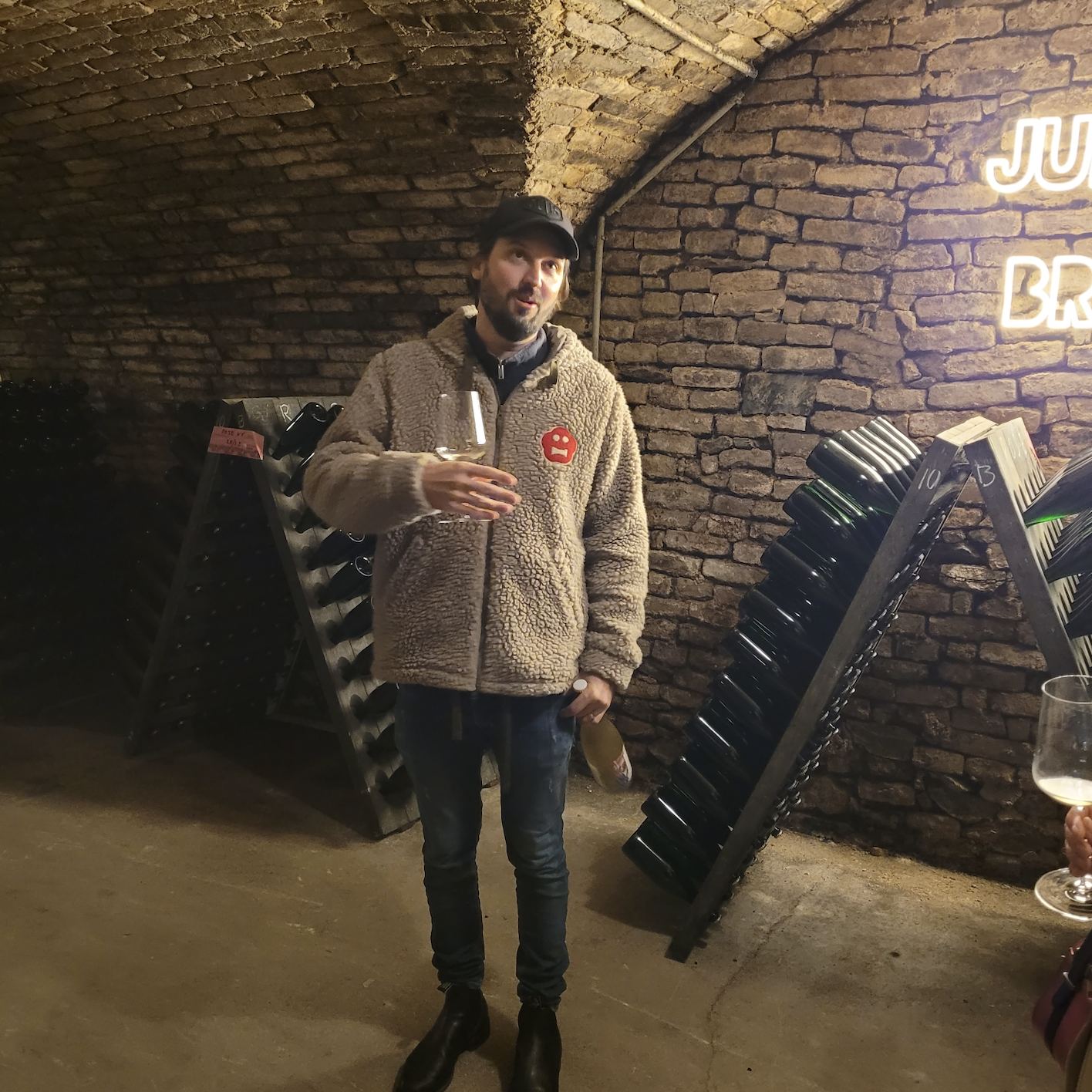
Alwin Jurtschitsch

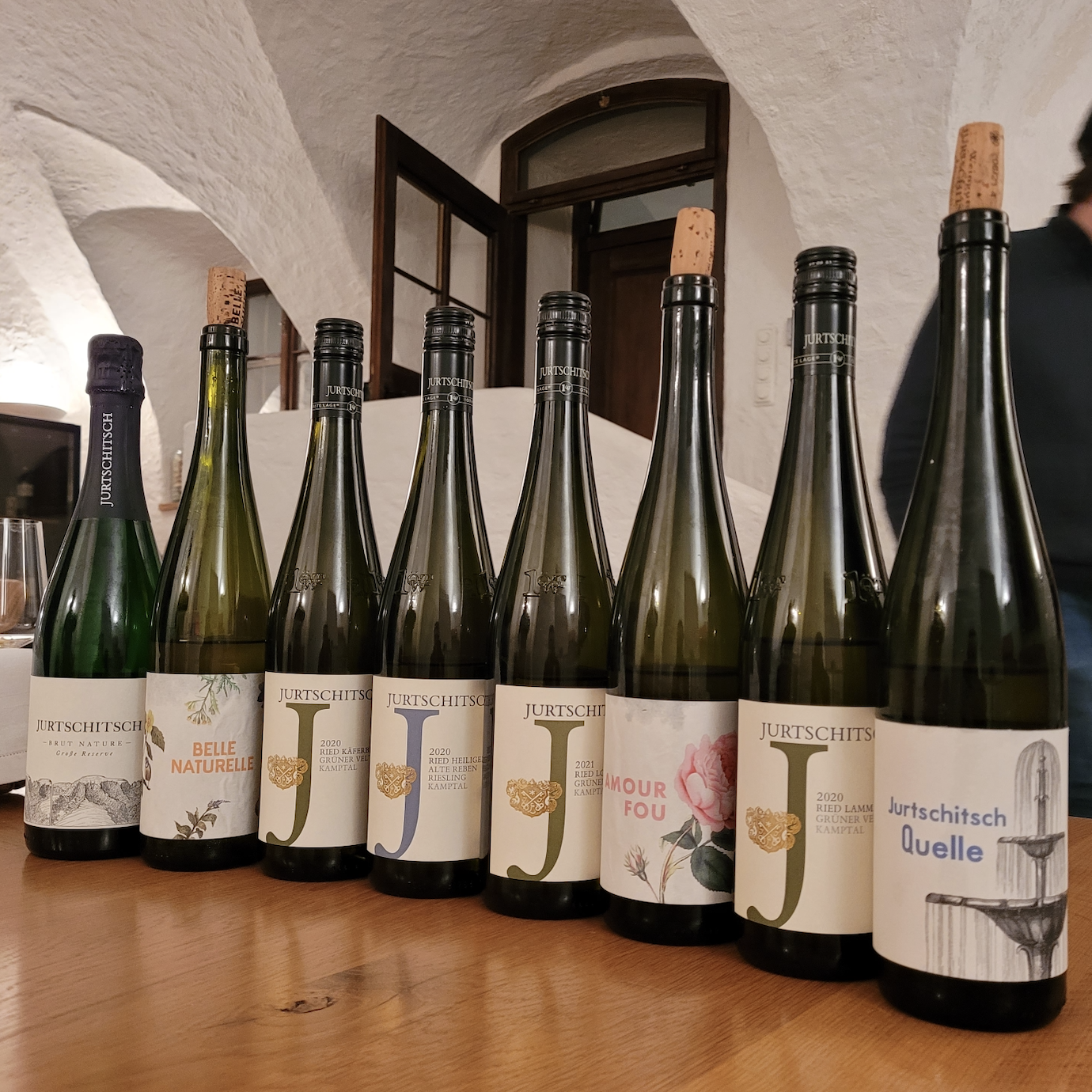
Jurtschitsch – Langenlois

Alwin Jurtschitsch and Stephanie Hasselbach (formerly of Gunderloch in the Rheinhessen) have been working the vineyards since 2006 and immediately began transforming to organic back then. Their wines are a combination of old style classics and the new natural, loyal to grandparents while simultaneously focused on a new generation of wine drinkers. There are Pét-Nats and bottles made by skin-contact, unfined, unsulphured and unfiltered. There are also 1ÖTW premium site grüner veltliner and riesling in the tradition of modern day Wagram. Some wines are labeled Jurtschitsch while others carry the name of Alwin und Stefanie Jurtschitsch or Weingut Fuchs Und Hase.

Weingut Fuchs Und Hase Pet Nat Vol 3

Simply allowing sugar and yeast to make a second fermentation in the bottle but with high level and quality grüner veltliner. More than a different Pét-Nat but one that is more connected to grape variety and vineyard. How? You can just feel it. Leathery orange, candied fennel and root vegetables, toasty and sweet. Natural as far as the saying and the ideal goes. Far, far away from funkier and all the better for it. Drink 2022-2024.  Tasted November 2022

Jurtschitsch Grüner Veltliner Ried Lamm 1ÖTW 2020, Kamptal

No doubt a reductive style of Kamptal winemaking and after tasting through a half dozen barrels of 2021 and 2022s the stylistic is fully confirmed. A two weeks partial stem maceration gives this Erste Lage so much texture, a wine you can chew, for a while and on from which you can extract all the juice, flavour and tannin. Orange, a tisane, sugar cane, lemon thyme and great length in a fine, thoughtful and uplifting wine. Drink 2022-2026.  Tasted November 2022

Jurtschitsch Grüner Veltliner Ried Kaferberg 1ÖTW 2020, Kamptal

Less reduction than the Lamm though even more extract and tannin, viscosity, unctuousness and a mineral-boozy feeling. Still it is linear, focused and upright. This reduction is linked to lees only, not sulphur, it’s not stinky and in fact completely a matter of fruit. A Burgundian one if you will and very practical for freshness and also longevity. From a southeastern parcel of the Kaferberg where the old vines grow. More filigranite and not just loess, a place of pyre rock. Makes for a most amazing expression of grüner veltliner, on the lee side where prevailing winds cool and instigate this very specific type of smoulder. Drink 2022-2027.  Tasted November 2022

Jurtschitsch Grüner Veltliner Ried Loisenberg 1ÖTW 2021, Kamptal

Loisenberg is the only single-vineyard erste lage bottled ahead of the harvest simply because it had done its work, unlike the Kaferberg and Lamm which were not. In fact the Lamm had not net even gone dry. Another reductive grüner but we’re lessening as we go through the range. Herbals, sweet ones that is, tonics and Limoncello. Searing, sharp, serious tang and the most citrus of any of the grand cru. Drink 2022-2025.  Tasted November 2022

Jurtschitsch Grüner Veltliner Amour Fou Natural Wine Trocken 2020, Kamptal

Full on Ried Loisenberg fruit under Alwin and Stephanie Jurtschitsch’s natural range, skin-contact, unfined, unsulphured and unfiltered. Skin maceration was quick, sent straight to barrel from press. Clearly Kamptal, not an amphora or orange stylistic, just something to distill the place into a transparent example. Nothing crazy about it, knowable, tannins at the top, extract in line, no funk, nor salve on the palate or earthiness at all. So clean and yes like looking in a Kamptal mirror. Drink 2022-2025.  Tasted November 2022

Jurtschitsch Riesling Heligenstein 1ÖTW Alte Reben 2020, Kamptal

Alte Reben, aka old vines, and some say Heligenstein is the most unique reddish, desert sandstone soil not found anywhere else. Just this little hillside, also a very historical place. A great terroir, but not an easy one. Requires compost and hummus and if you get it right there is an entirely new kind of mineral and elemental push run through the vines and into the wines. Truly, that and a botanical density, a viscous herbology and lime intensity. My how this will develop and morph into something new, time after time. Completely dry, a result of vintage and barrel, not cru. Drink 2022-2027.  Tasted November 2022

Jurtschitsch Riesling Quelle 2019

Made from a unique spot aboard the hill that is the Heligenstein where a natural spring exists in one of the driest places in Austria. Bottled natural and unfiltered, no enzymes, yeast and certainly no botrytis. Still buzzing with a minor amount of what feels like CO2 but really just sexy energy. Super juicy, orange distillate, tisane and zest. Crunchy, salty and fine. Drink 2022-2027.  Tasted November 2022

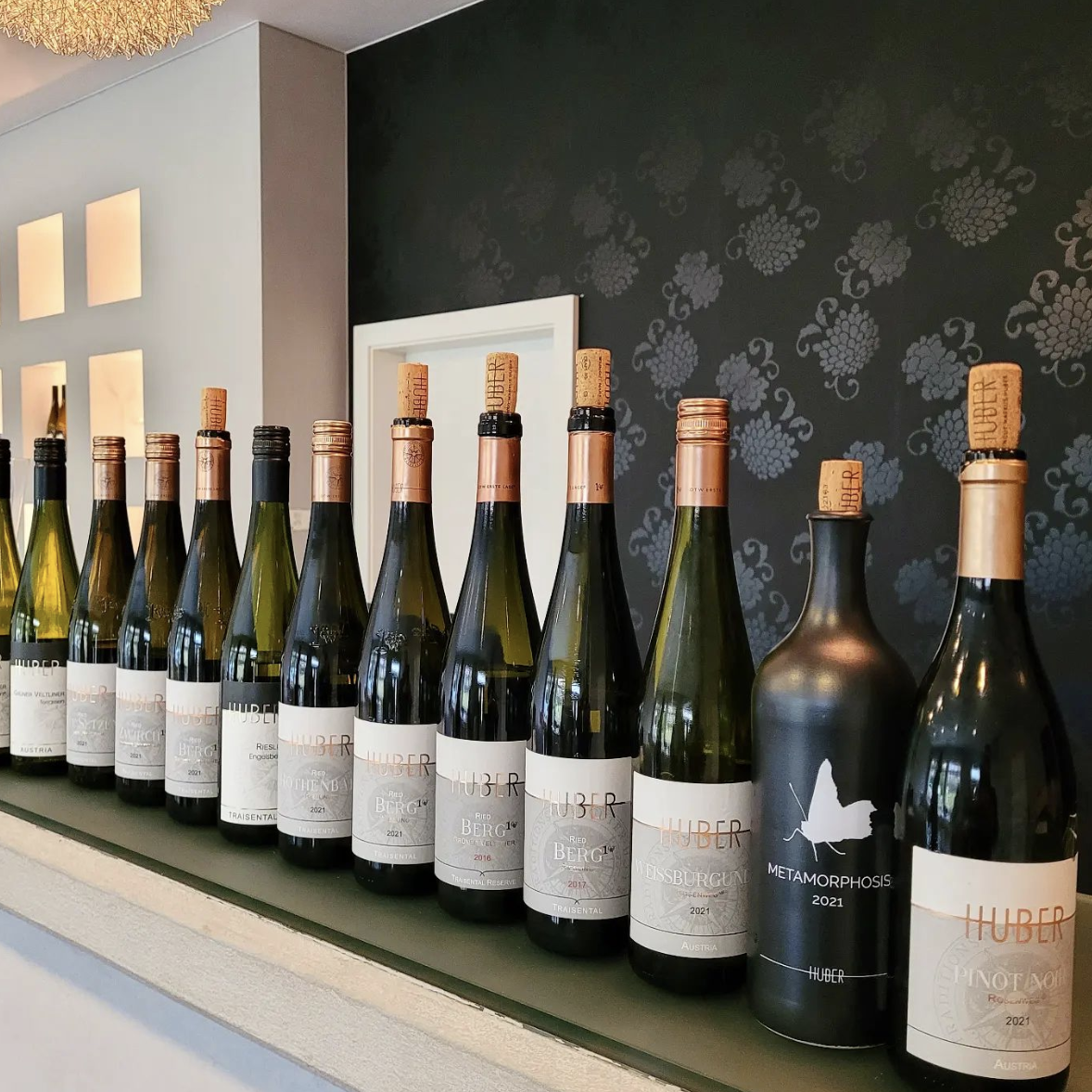
Markus Huber – Reichersdorf, Traisental

The vineyards are cultivated according to organic guidelines and the entire winery is certified according to the “Sustainable Austria” criteria. Markus Huber tries to improve biodiversity by sowing plants that are favourable to vines, keeping bushes, trees and hedges around the vineyards and by using animals and beneficial organisms. All these measures come together to result in better soil quality and increased vine health – and, ultimately, in expressive and authentic wines typical of the region.  The vines are mainly planted on terraces – some of them quite minuscule – comprised of dry and very limy gravel soils. The Traisental valley is the only wine producing region of lower Austria where a most important limestone soil type can be found. Huber is the spearhead for the Österreichischen Traditionsweingüter, and organization of vintners from the Danube areas in Kremstal and Kamptal with the intention to identify and understand the diverse soils, the microclimate of the different vineyards and the impact of these factors on the varieties. The question posed was how do these conditions support quality and character in the wine? Thus in 2010 an attempt was made to classify the classic vineyards objectively. The awareness that great wines only thrive in great vineyards is inherent in this philosophy. The terms Klassifizierte Lage, Erste Lage and Große Erste Lage were thus defined.

Markus Huber

Markus Huber Grüner Veltliner Terassen 2021, Traisental, Niederösterreich, Austria

Esssentially the “estate” grüner veltliner, of 15 parcels from north to south separated by 10 kms harvested between 10 days and two weeks in the Traisental. As precise as it gets for grüner with a little bit of skin contact, zero botrytis, bone dry (with help from a cultured yeast). Big licensee pour so it has to be dry and consistent. White liquid peppery, taut yet not tight and notably sapid, surely an agglomerated grab of conglomerate rock from around the region. Drink 2022-2024.  Tasted November 2022

Markus Huber Grüner Veltliner Nussdorfer Obere Steigen 2021, Traisental, Niederösterreich, Austria

Essentially the “villages” grüner veltliner, from Nussdorfer, of six vineyards, vines in and around 25 years and picked on average 10 days later than the Terrassen. More weight, physiological ripeness and complexity than the Terrassen. Focus and precision as well though still an averaged out or at least layered expression to speak of a more confined sense of Traisental space. Saltier as well though hard not to notice the sapidity too. This just has that balanced posit tug between the two. Drink 2022-2025.  Tasted November 2022

Markus Huber Grùner Veltliner Ried Alte Setzen 1ÖTW 2021, Traisental, Niederösterreich, Austria

Single vineyard from the pressed rock of the name that combines limestone with sand and clay formed by the retreating Traisen River formed 10 million years ago. the soils here are very shallow and roots dig very deep to find nutrients in the water table below. Saltier, slightly lower in pH and conversely not as sapid as the Zwirch. Fermented in large traditional oak casks and the result here speaks to limestone in the most direct, fresh and high spirited way. Chiseled for grüner veltliner. Drink 2023-2028.  Tasted November 2022

Markus Huber Grùner Veltliner Ried Zwirch 1ÖTW 2021, Traisental, Niederösterreich, Austria

Single vineyard from the conglomerate rock of the name that combines limestone with small stones and clay formed by the retreating Traisen River form 10 million years ago. Fermented in large traditional chestnut casks from the 1960s of 10 years minimum for micro-oxidation. Old vines as well, some 70 years of age for a truly sapid expression of grüner veltliner with thanks to this specialized geology that is very high in pH. Power in this wine though the clarity and determinative focus is estimable. The winemaking too. Drink 2023-2027.  Tasted November 2022

Markus Huber Grüner Veltliner Ried Berg 1ÖTW 2021, Traisental, Niederösterreich, Austria

Highest and coolest vineyard of the Traisental Erste Lage because by three or four pm the forest casts shade over the vineyard. Limestone based soil as well, upwards of 380m and the only portion that has iron rich red elements in the earth. Actually finding a richness in this, surely vintage related and that is unexpected but it’s also the most savoury, minty cool, eucalyptus accented, or the like. Curious by comparison to Alte Zetsen and Zwirch, in what is assessed as almost dark, smoky, spicy volcanic-simulate stuff. Brings whole and utter meaning to grüner veltliner at the Grand Cru level. Drink 2023-2028.  Tasted November 2022

Markus Huber Grüner Veltliner Ried Berg 1ÖTW 2016, Traisental, Niederösterreich, Austria

Berg is so bloody apposite to Rotenberg even though they both come from the same geology but here the block is the highest and coolest vineyard of the Erste Lage because by three or four pm the forest casts shade over the vineyard. A cool vintage when quite a bit of selection was necessary where some unusually present botrytis did occur. Definitely moving into a savoury secondary stage though the great factor is the emerging petrol, great for grüner, the white pepper now so liquified and the texture really quite layered yet compressed. Advancing and will drink with lovely sway for another two or three years. Drink 2022-2025.  Tasted November 2022

Markus Huber Grüner Veltliner Ried Berg 1ÖTW 2017, Traisental, Niederösterreich, Austria

A warm summer and cool fall, considered as a very strong vintage, doused in lime, no real petrol and this was in fact the first year where the vines sat under the hail nets so that they received dappled light instead of direct sun. The Berg is a top site and makes grand jour, grand cru wines. This is cracker riesling. Top, top. Drink 2022-2027. Tasted November 2022

Markus Huber Riesling Ried Berg 1ÖTW 2021, Traisental, Niederösterreich, Austria

Berg is so bloody apposite to Rothenberg even though they both come from the same geology but here the block is the highest and coolest vineyard of the Erste Lage because by three or four pm the forest casts shade over the vineyard. And so the focus here is intense, the herbology present and the sapid savour almost flying off the charts. Incredible determination and what has to be as good a vintage for this Grand Cru as there as ever been. Drink 2023-2023.  Tasted November 2022

Markus Huber Getzersdorfer Riesling Engelsberg 2021, Traisental, Niederösterreich, Austria

A villages wine, from Getzersdorf, of vineyards that stretch over two crus, and an example of dry wine with all the varietal characteristics of the area. Like white flowers as opposed to peach and the limestone tightens the palate. Provides the sapidity though the wine is balanced in equanimous behaviour by salinity. Drink 2023-2027.  Tasted November 2022

Markus Huber Riesling Rotenberg 1ÖTW 2021, Traisental, Niederösterreich, Austria

From Dolomite limestone soil, as with the sister riesling Berg, and it is pretty obvious that south facing slopes make for a richer, luxe, viscous and textured style. No skin contact (as opposed to the grüners) but whole bunch pneumatic pressed. The phenols are in fact not eliminated but the precursive petrol notes are encouraged and phenols are pulled from the whole bunch breakdown. Most important the berries are protected from ultra violet light under hail nets and so dappled light improves the aromatics in the grapes while still on the vines. Yet another example of capturing what you want in the vineyard and not in the winemaking. Salty number, taut, finessed, yes rich but also so focused. Drink 2023-2028.  Tasted November 2022

Markus Huber Weissburgunder Rosenweg 2021, Traisental, Niederösterreich, Austria

From a single vineyard Hochschopf which is a grand cru for grüner veltliner and riesling only, a place to deliver high ripeness and the winemaking is a blend of the grüner veltliner and riesling in that the fermentation is done in Acacia barrels after receiving a long skin-contact maceration (69 hours). Definite phenolic presence, grip and circumstance, no botrytis or malo, cool, silky textured and yet crunchy enough to keep our attention. A really smooth drinking weissburgunder. Drink 2022-2024.  Tasted November 2022

Markus Huber Metamorphosis 2021, Traisental, Niederösterreich, Austria

A natural wine made since 2017, always changing, thus the name. Varietal grüner veltliner picked earlier to lessen alcohol, ferments for four months in concrete egg, racked off, sent back in without sulphur for six more months on the gross lees and only sulphured minimally (20 bbm) at bottling. Preserved lemon is the crux and the focus, that being how textured it presents as a varietal wine in the natural vein. Even the tisane and the poached or blanched flavours are yellow citrus with creamed pine nuts or hummus in the mix. Drink 2022-2025.  Tasted November 2022

Markus Huber Pinot Noir Rosenweg 2021, Traisental, Niederösterreich, Austria

Grown on blocks where the grüner veltliner and riesling don’t and yet this is from an Erste Lage site. Harvested on the 30th of October so the phenolic vernacular is one from a long growing season. A mix of 30 percent whole bunch and 70 from separated grapes for a minor carbonic maceration. Maximum two weeks for the whole process and racked off into 500L Bourgogne barrels, left on lees for 10 months. Vines were planted in 2004, 777 (Bourgogne) and one German clone. Waited 10 years before bottling as pinot noir. Quite round and creamy, unfiltered and low by intervention. Finishes with just a fraction of extending tension to keep interest and see the wine age just a few years. Drink 2022-2024.  Tasted November 2022

Matthias Warnung

Matthias Warnung – Kamptal

Welcome to the low intervention winemaking world of Matthias Warnung. Warnung farms 10 hectares in the Kamptal after taking over the winery from his father in 2010. Matthias has worked with other winemakers, including Craig Hawkins, the South African natural winemaker behind the brand Testalonga. He also worked alongside Tom Lubbe of Matassa in the Roussillon. Organically raised grüner veltliner and riesling rest in large old casks for several years, always after wild ferments, extended skin contact and minimal sulphuring.

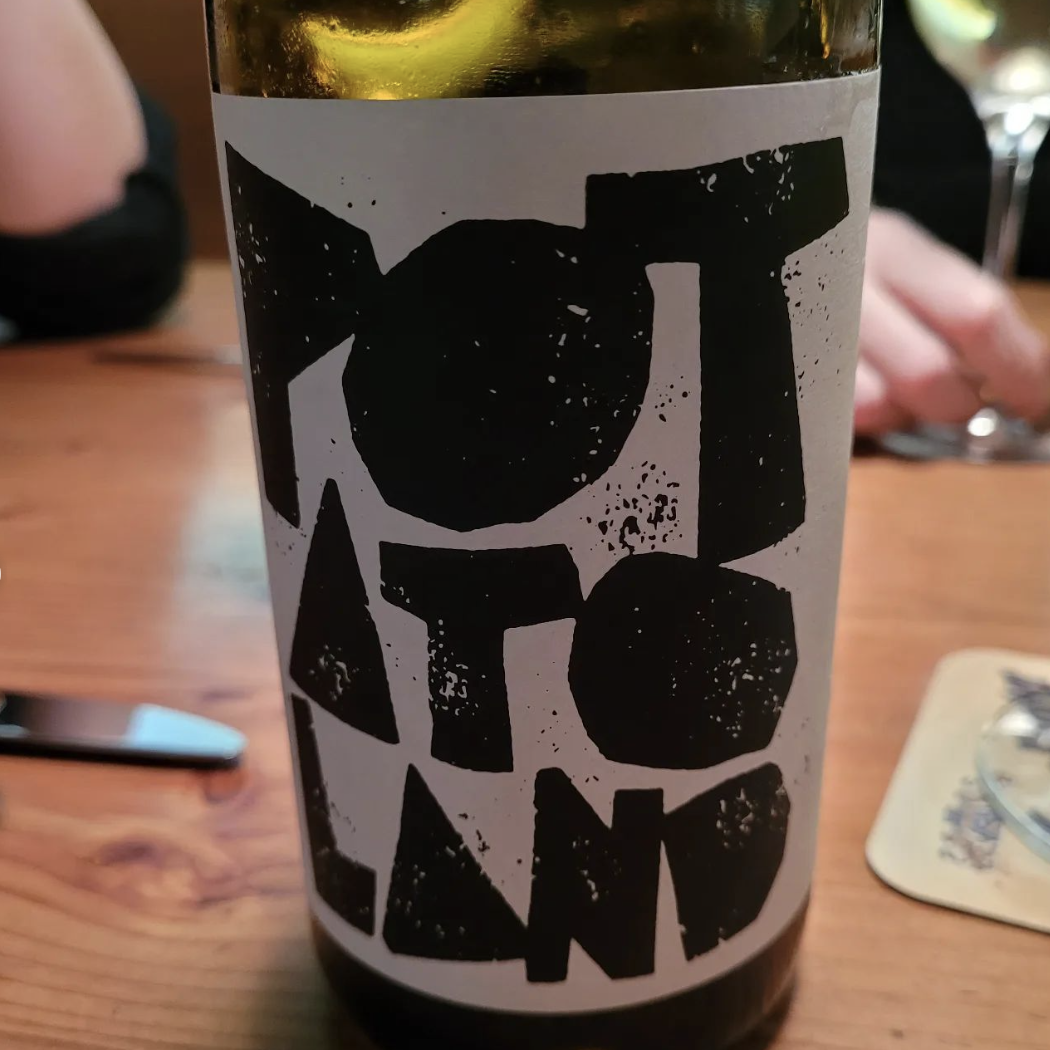
Matthias Warnung Grüner Veltliner Potato Land 2021

“It is Kartoffelland around here” smiles Matthias Warnung. Potatoes are everywhere and the jest is real though Warnung is anything but a tongue and cheek comic. No, he is a dead serious vine-grower and winemaker, young, precocious and deeply rooted in the tradition of the Ernst Warnung estate. Just calling a spud a spud and this grüner veltliner is an agriculturalists’ way of keeping in touch with 10-plus hectares of vines surrounded by the Kartofel. Perhaps there is a wink-wink suggestion here from a producer who sometimes makes wines unconnected to appellation but in any case the minor skin-contact and playful nature offers plenty of good fun. A joyous and textural grüner, herbal, dry and expertly spoken in layers of loess, clay and chalk. A terrific and affordable cuvée, knowable and yet just a bit different. Cheeky even. Drink 2022-2024.  Tasted November 2022

Matthias Warnung Grüner Veltliner Espere 2020

This step up in grüner veltliner character and texture puts this minimal intervention example into a “Villages” level of expression, first from higher quality and older vines’ fruit but also with thanks to two years spend in large older casks. Tightly wound whilst in that balanced middle zone, above a regional roundness yet still shy of a rich and not quite opened single-vineyard style. In fact it seems that only this level delivers a truly authentic grüner veltliner experience, at least so far as it registers under the guidance of Matthias Warnung. Overall this smoulders lightly and finishes wholly and unequivocally sharp. Drink 2022-2026.  Tasted November 2022

Matthias Warnung Grüner Veltliner Lossling Single Vineyard (Barrel Sample) 2017

Younngest vineyards are bottled after one year. Village wines are two years. The single vineyards minimum five. Aging is done in a cold and humid cellar, barrels cleaned of the nitrates every ten odd years. The grüner veltliner is whole bunch pressed, of a wild ferment and straight to 300L barrel in the 350 year-old cellar. Will be bottled in December after five years, sulphured 15-25 mg at the end. The Jean-Pierre Frick of the Kamptal but this is incredibly clean and pure, far less oxidative and nervous. Now honeyed, paraffin waxy, of lemon preserve with great tension and energy. Acids run the show and texture is lovely. Carefully considered, slowly developed, a process and structured to last. Drink 2022-2030.  Tasted November 2022

Matthias Warnung Riesling Single Vineyard (Barrel Sample) 2017

The oldest part of the grüner veltliner vineyard houses riesling, vines around 40 years of age, made in the same way as the Lossling grüner veltliner. Whole bunch pressed, wild ferment and straight to 300L barrel in the 350 year-old cellar. Will be bottled in December after five years, sulphured 15-25 mg at the end. Noses more like older riesling than the grüner does for that variety but the tension here is greater, the fruit skin scents muskier and more intense. Some evergreen here, pencil shaving and more skin-contact feeling in a Gravner meets Fino kind of way. Green olive, almond skin and lime. Complex and fascinating.  Drink 2022-2029.  Tasted November 2022

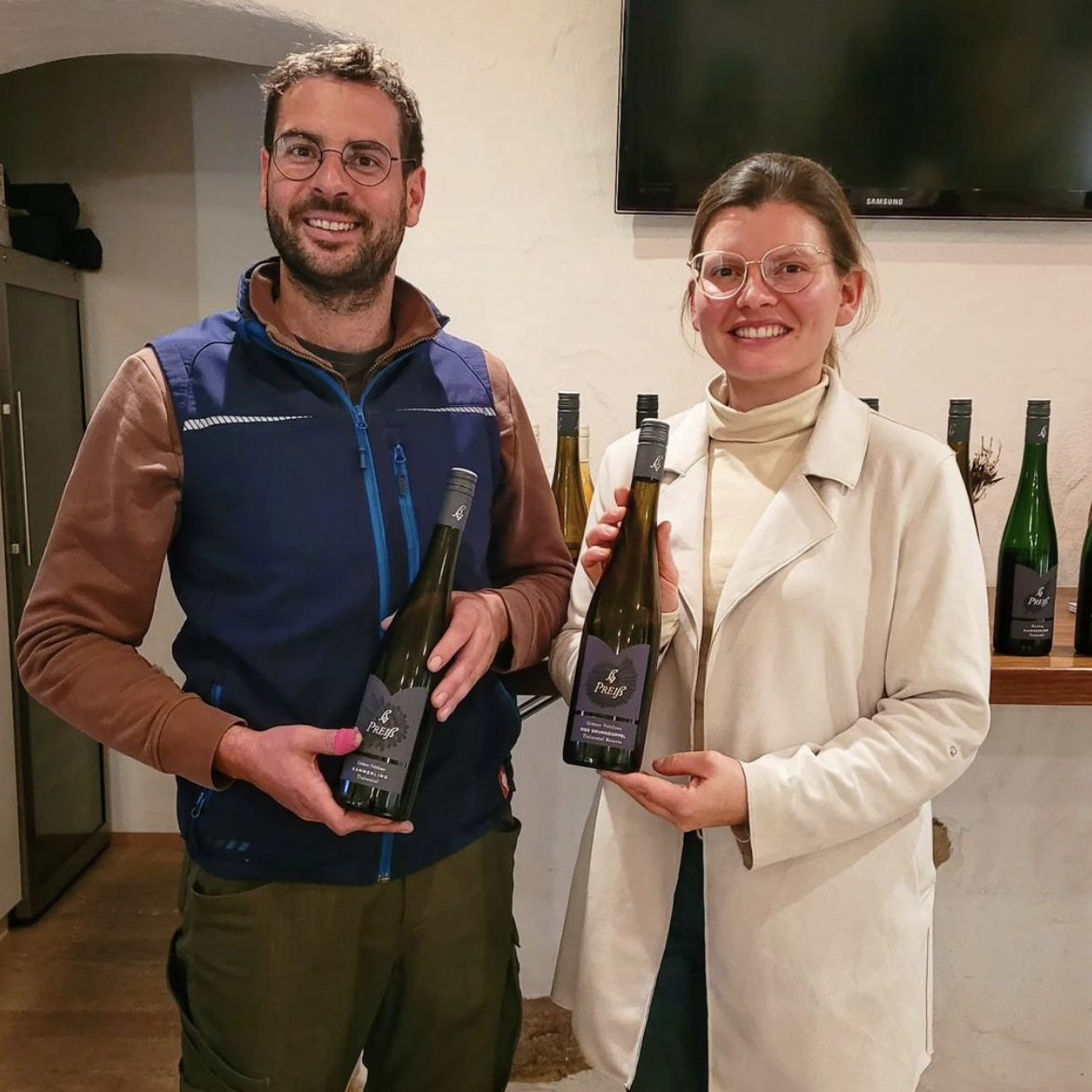
Klaus and Viktoria, Weinkultur Preiß

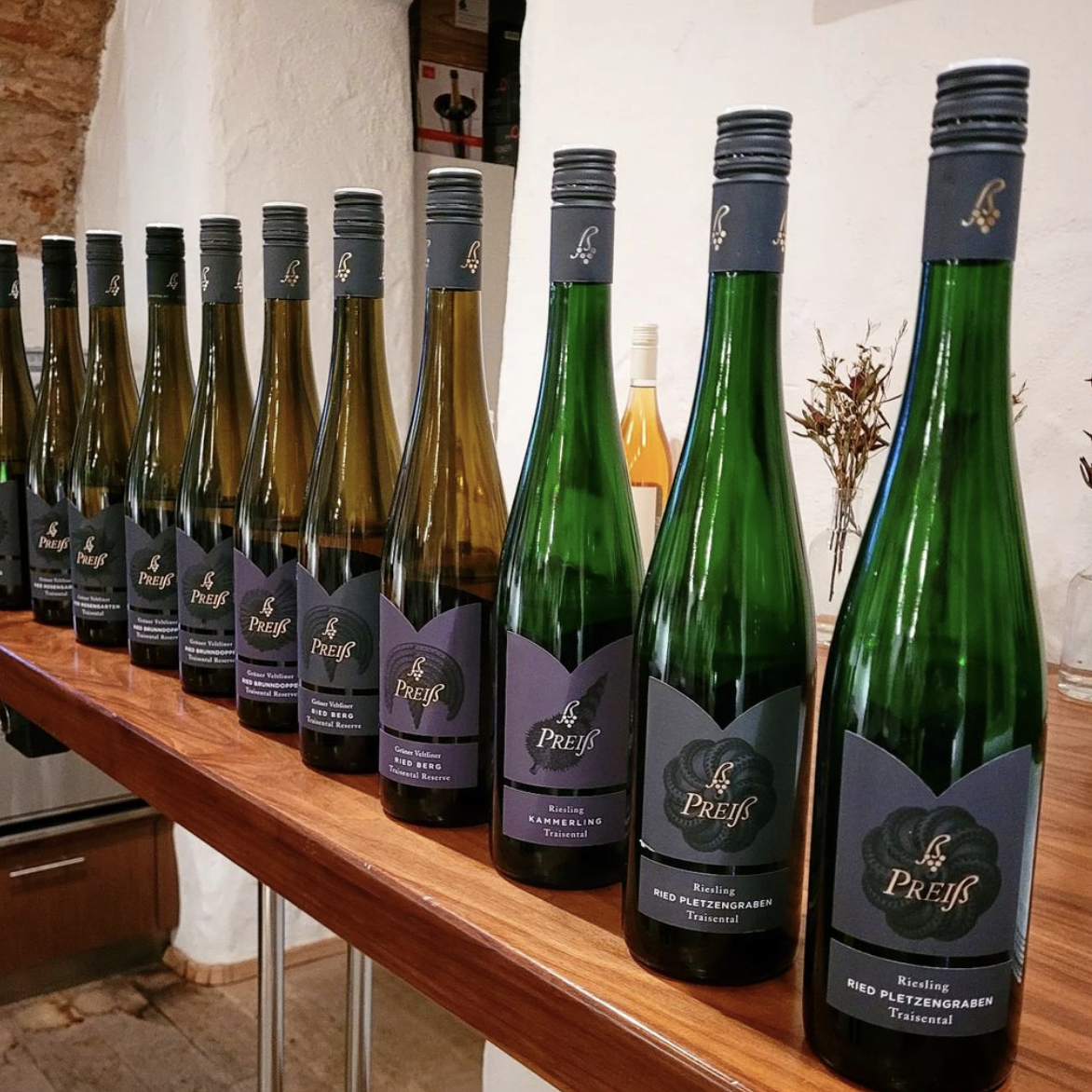
Weinkultur Preiß – Thayern

Fifth generation winemaker Viktoria Preiss and partner Klaus are most concerned with nurturing balanced and healthy soils, healthy vines and grapes. It is what they call “close-to-nature cultivation, certified organic by Austria Bio Garantie and from the 2025 vintage forward they will be officially certified organic. They employ self-produced compost and most importantly diverse cover crops for the purpose of increasing biodiversity, control erosion, provide nutrition, work against soil compaction and produce humus for long term gains. To combat the grape vine moth they use pheromones instead of insecticides. Of great interest has been the decision to use the pruning method of Simonit & Sirch, to increase the overall balance of their vines and to make them more resistant against viral diseases.

Weinkultur Preiß Grüner Veltliner Kammerling 2021, Traisental DAC

From fifth generation winemaker Viktoria Preiss and partner Klaus on a Thayern farm working towards and converting to organic agriculture. A grüner veltliner right up the middle for a regional agglomeration of fruitiness, mineral and acidity – all the proverbial bests. Tart, medium-bodied, middle of the road taken, well made. Sharp value. Drink 2022-2024.  Tasted November 2022

Weinkultur Preiß Grüner Veltliner Ried Rosengarten 2021, Traisental DAC

Moving to the most northern vineyard in the valley with a grüner veltliner of notable vintage richness, warmth and clear late harvest concentration. An elevated pH for high sapidity and while the acidity is perfectly fine it is certainly not high or up front, nor centre stage. Classic ripe to ripest tonic finish. Drink 2022-2024.  Tasted November 2022

Weinkultur Preiß Grüner Veltliner Ried Rosengarten 2019, Traisental DAC

Retreating back two years and again from the most northern vineyard in the valley with here another warm, if quite a bit warmer vintage. Already showing some secondary character, petrol and saffron, likely due to a touch of botrytis in this vintage. Drink 2022.  Tasted November 2022

Weinkultur Preiß Grüner Veltliner Reserve Ried Brunndoppel 2021, Traisental DAC

Moving from the most northern vineyard (Rosengarten) to further south where the bedrock of limestone makes it difficult for the vines to burrow down in search of nutrients. Brunndoppel refers to two water sources beneath the vineyard and is a monopole under the framing of the Preiß famly, high in elevation and approximately three hectares total. Still the richness and ripeness but this is very youthful and sharp, working through its edges, tight and stretching. Drier than the previous 2020 and 2017, more focused and well made out of a very good vintage. Drink 2022-2025.  Tasted November 2022

Weinkultur Preiß Grüner Veltliner Reserve Ried Brunndoppel 2020, Traisental DAC

Southern reaches of the Traisental, where limestone bedrock is hard and vines must burrow to seek nutrients below. The name Brunndoppel makes reference to two water sources beneath the soil, a monopole farmed only by the family Preiß – their three hectare Grüner Veltliner grand cru if you will. Works to converse positivity, here from a very cool vintage. Lovely movement and a good balance between ripeness and tension, fruit and rock, all wrapped up in sweet acidity. Well made here. Drink 2022-2025.  Tasted November 2022

Weinkultur Preiß Grüner Veltliner Reserve Ried Brunndoppel 2017, Traisental DAC

Showing age and a warmer vintage to create this warm, fuzzy, soft and creamy wine. What grüner veltliner was and still can be, likely some botrytis involved, certainly some residual sugar and tastes like traditional Alsace pinot gris or blanc. Drink 2022.  Tasted November 2022

Weinkultur Preiß Grüner Veltliner Reserve Ried Berg 2021, Traisental DAC

Highest and coolest vineyard of the Cru because by three or four pm the forest casts shade over the vineyard. Limestone based soil as well, upwards of 380m and the only portion that has iron rich red in the earth. Vines are young, just about 10 years of age at this point and chardonnay was planted here before. With her third vintage in pocket is shows that Viktoria Preiß has this innate understanding of the vineyard better then the others she works with. This grüner veltliner shows more precision and finesse, clarity too. Then again this is Berg. It’s exceptionality is consistent, so long as its custodians don’t mess it up. The connection between richness and tension is justly executed. Drink 2022-2027.  Tasted November 2022

Weinkultur Preiß Grüner Veltliner Reserve Ried Berg 2020, Traisental DAC

Highest and coolest vineyard of the Cru because by three or four pm the forest casts shade over the vineyard. Limestone based soil as well, upwards of 380m and the only portion that has iron rich red in the earth. Vines are young, just about 10 years of age at this point and chardonnay was planted here before. Again Berg shows its stripes and produces a fine grüner veltliner though really at the maximum ripeness here with some, but not too much residual sugar. Luxe and soft, already moving forward. The winemaking is spot on, that much is clear. Drink 2022-2023.  Tasted November 2022

Weinkultur Preiß Riesling Kammerling 2021, Traisental DAC

Floral riesling, smelling like white roses, lilacs and white peach. Flavour profile is quite similar though with a pretty distinct orange juicing. Like fresh squeezed, a wet stony note and the name Kammer comes from chamber, as in the holes in conglomerate chalky limestone rocks where fossils fit in. Lovely wine, sugars a bit heavier than acids can withstand, but a lovely wine. Drink 2022-2024.  Tasted November 2022

Weinkultur Preiß Riesling Pletzengraben 2021, Traisental DAC

In Viktoria Preiß’s estimation her part of the Pletzengraben is close to the woods and so it benefits from the cooling effect but also from some wind coming down from the alps. That said it’s not a windy block and so hard work has to be done in the vineyard. Her harvest last four weeks, often stretching into the first week of November. Truly sapid riesling, apposite to salty, so mineral either way. Not as much tension as some of the other crus but a really fine wine. Drink 2022-2025.  Tasted November 2022

Weinkultur Preiß Riesling Pletzengraben 2020, Traisental DAC

Relatively soft fruit, mashed peaches and guava, much richer than 2021. Bright and enough freshness maintained though again almost traditionally older-schooled Alsatian, with more residual sugar and elasticity. That said the acidity is also noticed a bit higher in this particular 2020. Drink 2022-2023.  Tasted November 2022

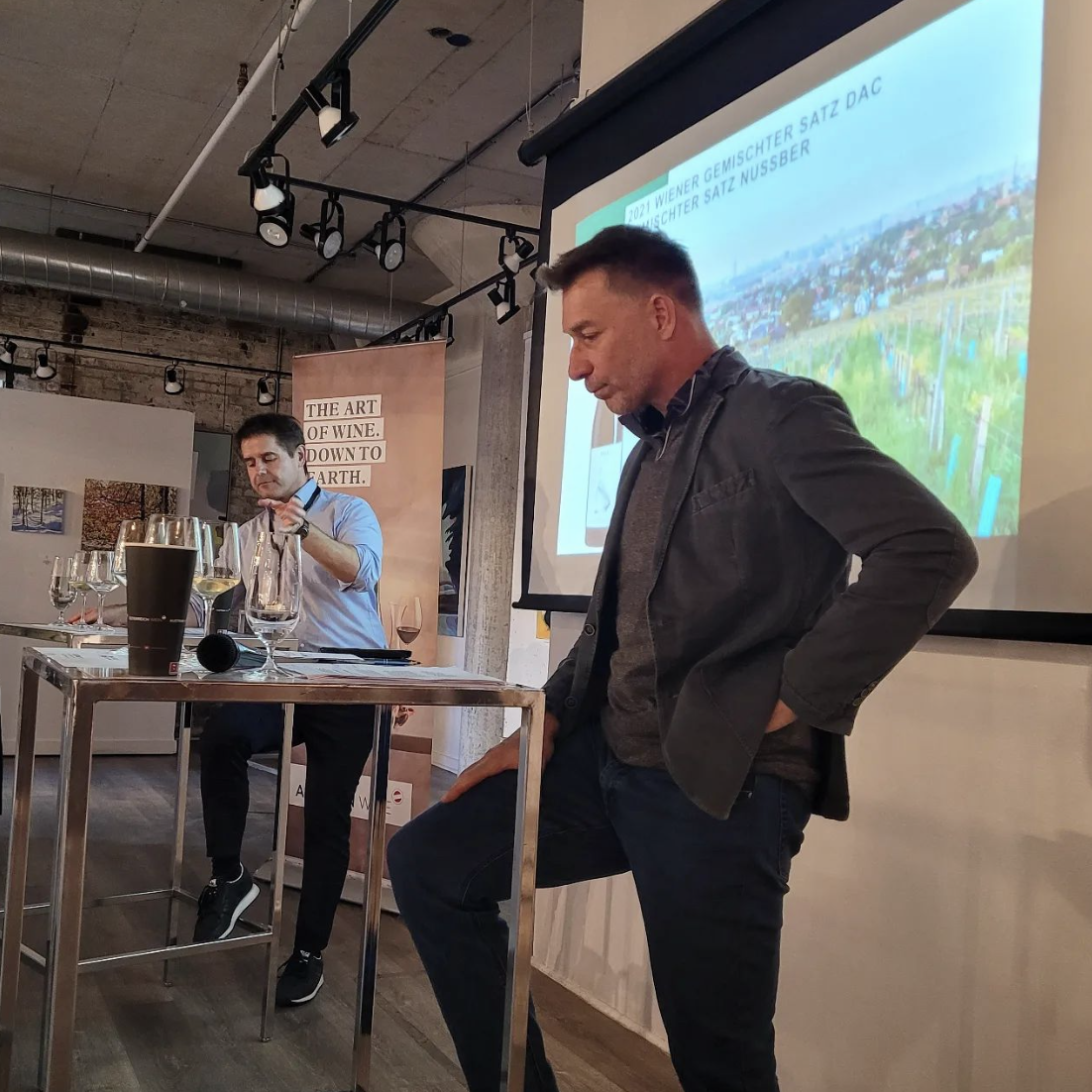
Top, top seminar for @austrianwine with our @winealign own @johnszaboms and Roman Horvath MW of @domanewachau

Toronto Austria Tasting, Nov. 11th, 2022

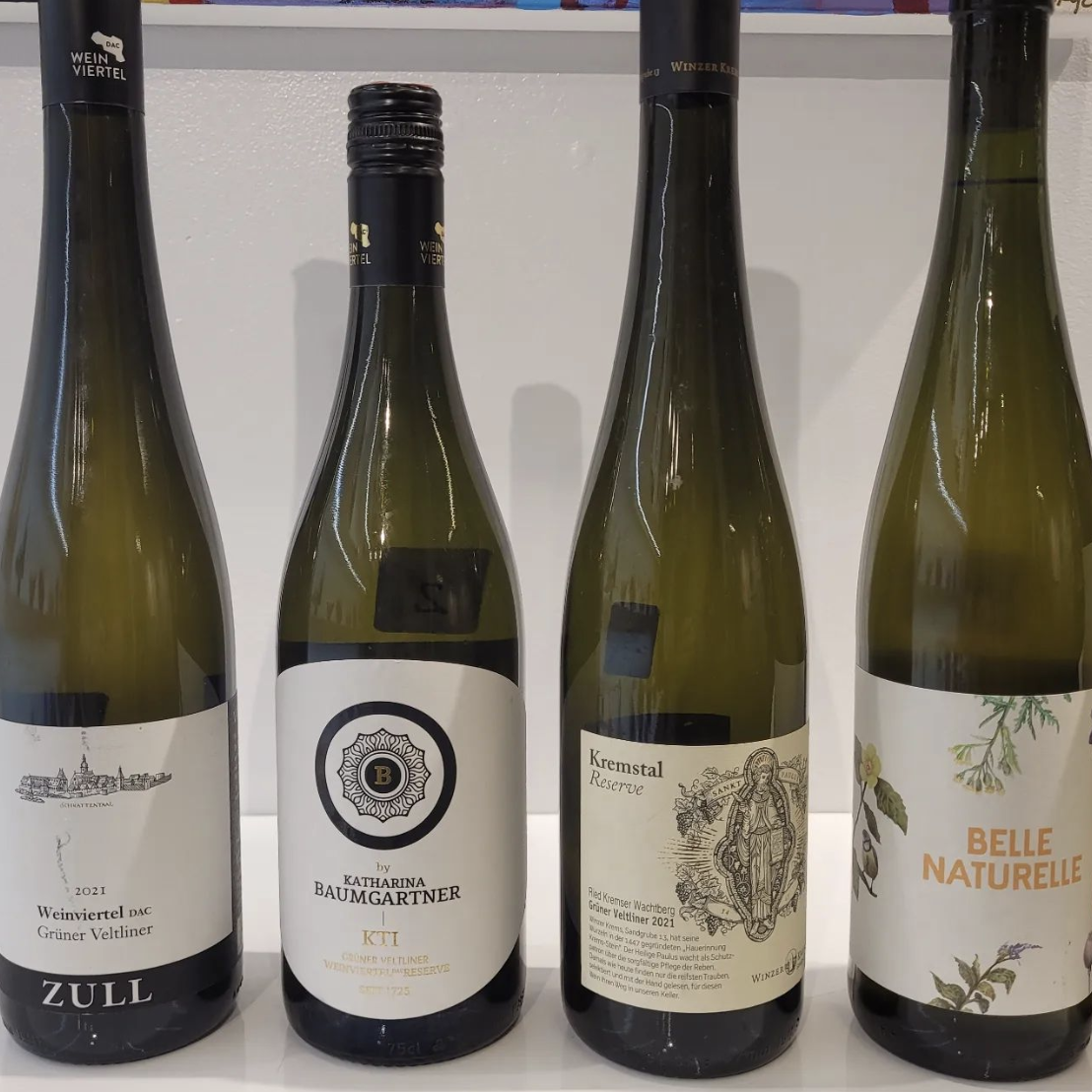
Zull Grüner Veltliner 2021, Weinviertel DAC

From the first DAC, created in 2002, here made in a classic, 12.5 per cent abv style. The traditional bottle and label indicate classic birthright and heritage housing a grüner veltliner that dutifully follows the line. The grind of white pepper is right there, that influence of Rotundone unavoidable and correct. Fruit of actionability and purpose with the tonic and bitter hints consistently pushed on the palate and back end of the wine. Fennel and green herbs, crisp and fresh. It will be some time before this begins to show any maturity though it does feel as though it has already eased in to a place soft and settled. Yet the good energy persists and the wine sparks in fits and spurts, leaving behind that white pepper fuelled vapour trail. Look back at the final peak of performance in 2025 and likely say still crunchy after all these years. Drink 2023-2025.  Tasted November 2022 and January 2023

Domäne Baumgartner Grüner Veltliner Reserve Kti By Katharina Baumgartner 2021, Weinvertel DAC

In Reserve style the ripeness and by consequence the alcohol raises a point up to 13.5 per cent abv and in this Weinvertel from a winemaker who plays cellar music to her wines in tank and barrel, that being Katharina Baumgartner. The dry factor keeps this clean, fresh and precise and though the alcohol is upwards to generosity this is grüner that stays fine, focused and in balance. No wood but yes some malolactic and an elastic to ever so slightly creamy mouthfeel. Think lime cordial but one dry and satisfying. Drink 2022-2025.  Tasted November 2022

Winzer Krems Grüner Veltliner Reserve Ried Kremser Wachtberg 2021, Kremstal DAC

In Reserve the alcohol will always rise and here with just a point or point and a half of extra residual sugar the result finishes at 14 per cent abv. That said the vintage is very positive and so winemakers could play here and there, as this Krems shows. Feels a touch boozy, like a spirit and a dry mixer, botanical, herbal, green pepper to a degree and a hyperbole of white pepper, yet liquid as opposed to powdery. Quite a punch and pungent single vineyard example. Makes its presence known. Drink 2022-2025.  Tasted November 2022

Jurtschitsch Grüner Veltliner “Belle Naturelle” 2021, Österreich

Newer style, well-known producer and from their natural wine range. Some skin contract and in actuality two full weeks because you’d not really guess that. Dry as the Styrian desert (sic) and seriously taut though not a wine of texture or salve dissolve. Edgy with sound roundness at its edges, middle of the road in natural wine terms. Clean expression, in a post or neo-alternative way. Drink 2022-2024.  Tasted November 2022

Sonnemulde Riesling “Organic” 2021, Burgenland

From Burgenland where there really isn’t much planting of riesling but here from stony sites in the Danube the result is lean, simple and just lovely. Easy of residual sugar (5.3 g/L) and really well balanced, charming even, matched by (6.6) of acidity. Gains flesh and stature with time and offers peach, lime and moderate intensity. Drink 2022-2025.  Tasted November 2022

Rabl Riesling Ried Langenloiser Steinhaus “Rote Erde” 2020, Kamptal DAC Reserve

A bit more alcohol and technically a “dry” wine because under 9 g/L of residual sugar (and here just below that number) the balance is struck with even more total acidity. This is cool climate riesling and so no shock or problem with this elevated stylistic conditioning. There is no lack of tension but the stone fruit generosity is even stronger in a true nectarine meets lime doused green mango flavour profile. Fresh and full which is a really good combination. Drink 2022-2026.  Tasted November 2022

Deim Gerhard Riesling Ried Irbling 2019, Dac Kamptal

Another top site for riesling in Austria, here the intensity is matched by fruit flesh because of a warm vintage and fuller if quicker ripening. Tart in the most readily available implosive way and though there is some noted residual sugar there is also classic acid balancing and finishing tonic. Incredibly well made wine. Drink 2022-2027.  Tasted November 2022

Domäne Wachau Riesling Smaragd Ried Achleiten 2021, Wachau

One of the top sites for riesling in Austria and with the great if dry vintage on record there is a magnificent presence but also balance accorded this riesling. Certainly more phenolic with thanks to a combination of cool fermentation and also extended skin contact while aromatics are at peak because of this pitch-perfect capture. The length is just amazing. Controlled power and grace run throughout. Drink 2022-2027.  Tasted November 2022

Ziniel NV Weinland Muskatteler “Muskat”

Fun with muscat, lively, juicy, 11 per cent low, no musk or funk, just summertime beauty. Imagine certain modern beers or ciders that are just dry enough and sparked for glory. Made from the yellow muscat variety and simply glou-glou. Essentially natural but not the matter at the end of the day when you just want a quench of thirst. Drink 2022-2023.  Tasted November 2022

Zahel Wiener Gemischter Satz Grosslage Nussberg 2021, Vienna

From the category where something like 27 grape varieties are permitted and in a field blend drawn out of beneficial ecosystems, regenerative agriculture and maybe most importantly – bio-diversity. A truly flesh-centric and stone fruit notable GS, just ever so slightly sweet and a ripe example from Vienna vineyards on the north side of the city. Drink 2022-2027.  Tasted November 2022

Muster Gamlitz Sauvignon Blanc Ried Grubthal 2021, Südsteiermark DAC

Not only a dry, stoic and pragmatic example of sauvignon blanc but an intense one in the most expressive way possible. But not only this. The impression left on one’s mind and palate is both profound and imagination will go to the crazy steep Syrian slopes in this part of Austria. Hard not to notice this wine that was almost certainly a challenge to produce. Needs time to digest the 28 months of lees aging in wood. There is gravitas, density and texture in ways others would appreciate like those from Graves. Drink 2023-2026.  Tasted November 2022

George Toifl Weissburgunder Ried Seeleiten “Ge.Org” 2021, Niederösterreich

Quite amazing how pinot blanc will always express as itself, regardless of place. This could be from Alsace, southern Germany, the Okanagan Valley and also here from Austria. The fruit is all stone orchard, the texture almost glycerin, the nut notes both sweet and fleshy. Aged in new large casks which is almost incredible to believe because the assimilation is just ideal. Drink 2022-2024.  Tasted November 2022

Taferner Zweigelt Ried Bärnreiser 1ÖTW 2019, Carnuntum DAC

From a predominantly red wine area though in Carnuntum there are only 900 hectares (in total) planted. Exuberant fruitiness, soft and sweet tannins, quite Burgundian in a regional to good Villages example kind of way. Light, fresh and really elegant with good extraction, some oak influence and as you work with it the flesh from maceration becomes apparent. Dry, of healthy alcohol, ripe and ultimately serious. Drink 2022-2025.  Tasted November 2022

Johanneshof Reinisch St. Laurent Thermenregion 2019

Quite a heavy example of st. laurent from a highly emblematic producer and their look at a variety related to pinot noir. The connection feels relatable to that cooler part of Bourgogne near Vézelay where some wild, rustic, reductive and musky animale is both distinctive and knowable. Chewy, leathery and for those who don’t know or haven’t had the pleasure, surely an acquired taste. Needs a year (or preferably two) to settle and integrate. Drink 2023-2027.  Tasted November 2022

Groszer Wein Blaufränkisch “Tiroler” Österreich 2020

Clear example of a grape variety that knows how to express terroir and here from the Burgenland the case is open and shut. Chalky from clay and schist, hematic, less fruity in style, heavy but not dense, textural, just beginning to begin the slow dissolve. Leathery and savoury, a varietal soul stew of blue and red fruit with impressive structure. A hit of bretty volatility comes late and explains the need to lay this down for two years plus. Drink 2024-2028.  Tasted November 2022

MAD Blaufränkisch Ried Marienthal 2018, Leithaberg DAC

A lighter and fruitier style yet that is relative because there is also some peppery reduction, tension and structure in this blaufränkisch. Botanicals and earthy scrub plus foliage mix with the damson plum, red to black currants and really textural, wood influenced in an almost creamy palate way. Really long and less reductive but also volatile as time works wonders on the wine. Drink 2023-2027.  Tasted November 2022

Good to go!

godello

Twitter: @mgodello

Instagram: mgodello

WineAlign

Seeing Western Cape stars: A guide to Cape Wine 2022

Hemel-en-Aarde

Regenerative and creative farming, old vines, new frontiers, 80 recommended current releases and braai brekkies

The phenomenon known as “seeing stars” is a common description for disturbances of vision, in seeing bands of light, prisms, sparks or flashing lights. The scientific name is photopsia, a fleeting state most often caused when temporary pressure is placed on the eye, like what happens when you sneeze or bump your head. Seeing stars has also become a symbol of positivity, happiness or renewal. A recent trip to South Africa’s Cape Wine 2022 brought about the literal meaning of the saying as it pertains to celebrity. Wine celebrity that is — and while most Cape personalities carry themselves in complete opposite character to that of an Afrikaans bekende persoon (famous person), their wines on the other hand might bring on that condition called photopsiaThe individual flashes of light called phosphenes may cause dreaminess, giddiness and being weak in the knees. Spend nearly two weeks in South Africa for the Cape Wine fair and you are more than likely to find yourself seeing Western Cape stars.

Related – What comes next for the wines of South Africa?

Old Vines FMC Vineyard, Stellenbosch

The Old Vine Project

In today’s Western Cape, discussions must begin with the entity known as The Old Vine Project. Over the past 20 years viticulturalist Rosa Kruger has focused on discovering, classifying, cataloguing and certifying heritage vineyards. It was a great pleasure to chat with Kruger at a Wines of South Africa ceremony and tasting at Cape Wine 2022, which celebrated her 2022 Decanter Hall of Fame Award. And also with the legend André Morgenthal, orchestrator of the tasting of old vines wines. It is remarkable to see how many estates and producers have come on board — to celebrate and show off the wines they are making from 35-year-old (and older) dry-farmed bush vines. Many vines are even pushing or exceeding the century mark.

He is in fact larger than life – André Morgenthal, The Old Vines Project

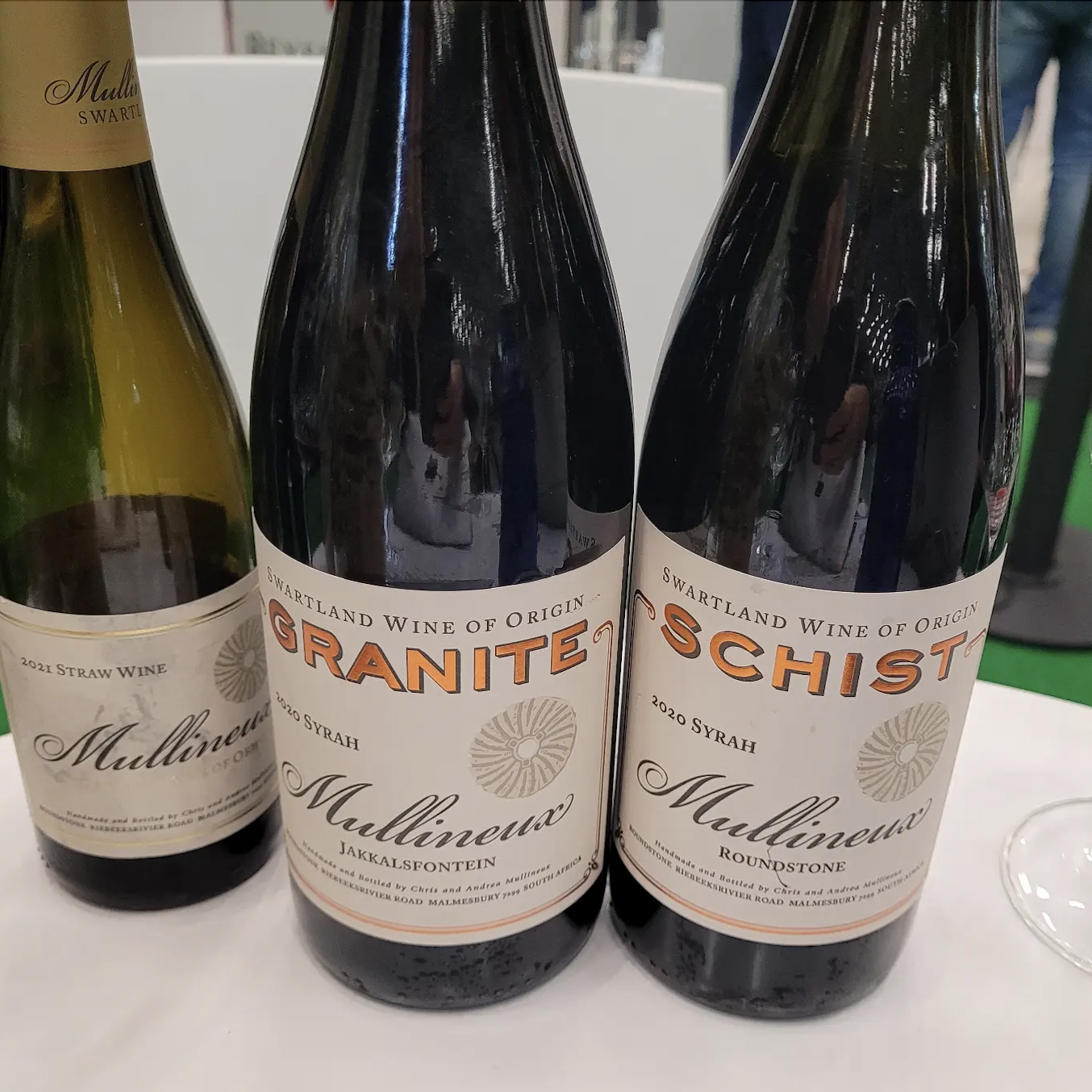
“The old method is always the best, because…how did it get so old?” The words of La Motte’s Edmund Terblanche — and yet South Africa is really all about balancing the past with the present. This is why the PIWOSA group — Premium Independent Wines of South Africa — chose the thematic “something old and something new” for their event at Klein Constantia. Old will always be new again, reiterates Andrea Mullineux when she describes the Leeu Passant Old Vine Cinsault Lötter as “a national monument — that must be ripened. Either that or it’s sauvignon blanc and apricots.” Or worse — just apricots.

Preservation is key to the South African wine industry and heritage sites are the assets and the advantage. Chris Alheit is adamant about protecting heritage sites. “I mean, how can you not see this as a Cape treasure? As an ancestral site?” Thus, Alheit’s sémillon, once called La Colline, is also worthy of “monument” status — and though it may not seem to represent the literal definition of a “memorial stone or a building erected,” it does pay homage “in remembrance of a person or event.” In this case, the farmer — and every season of sémillon attempting to seek its fruition for the past 85 or more. Francois Haasbroek of Blackwater uses the term zeitgeist and, yes, the definition is equivocated through the idea of Western Cape single-vineyard wines from off the beaten path, small-parcel sites.

John Szabo MS, Roas Kruger, Godello and the photo bomber

So why are old vines important? Simply put, they are valued for acumen and complexity. They have moved past the imbalance and gawky stage, having achieved life experience, and now possessing profound things to say. Ten years ago, the Old Vine Project considered one per cent of planted vineyards as old, but the truth is 50 percent of old vineyards can be rejuvenated. Most are set into decomposed granite soils, in some instances colluvial as well. These tracts are really old and weathered, predating microbial life. The vineyards dot a landscape occupied by granite plumes exposed above the surface; where below the surface magma cooled ever so slowly and so there is now much more diversity in the life and texture of the rock. Some will wonder how the wines grow on the granite. Physically, the decomposed granite is very friable, and the soils are sandy, two to three meters deep. Roots can dig down, resulting in a bigger canopy — and under that dappled light (as opposed to daytime/nighttime sun), the grapes are able to retain acidity.

Related – Searching for great heart in South Africa
Chenin Blanc

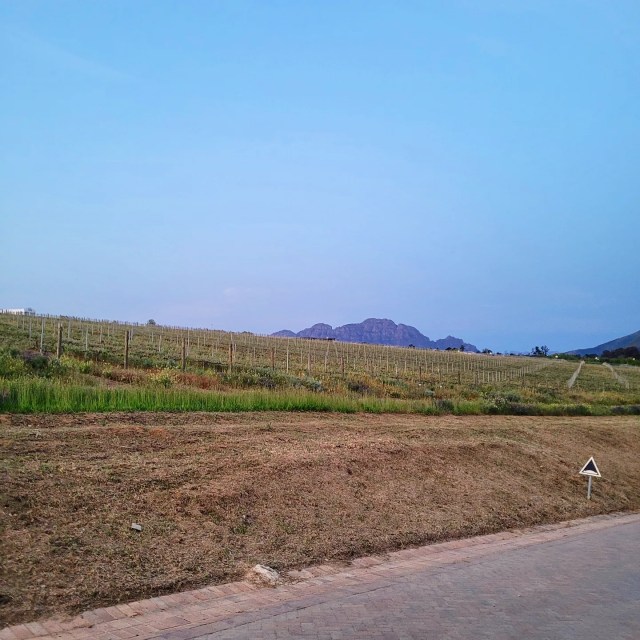
Chenin Blanc and decomposed granite soils

The artist formerly known as Steen, now simply “chenin,” is as complex as chardonnay, with acidity like sauvignon blanc but never searing. For a passionate winemaker like Andrea Mullineux, the grape holds nostalgic qualities. In the Western Cape there are 17,000 hectares planted, more than double that of the Loire. From the 1960s to the ’80s, Lieberstein (a mass market, kitsch wine that launched a sort of South African renaissance) was the most successful wine brand. So much so the government put out a call to plant more chenin in the 1990s.

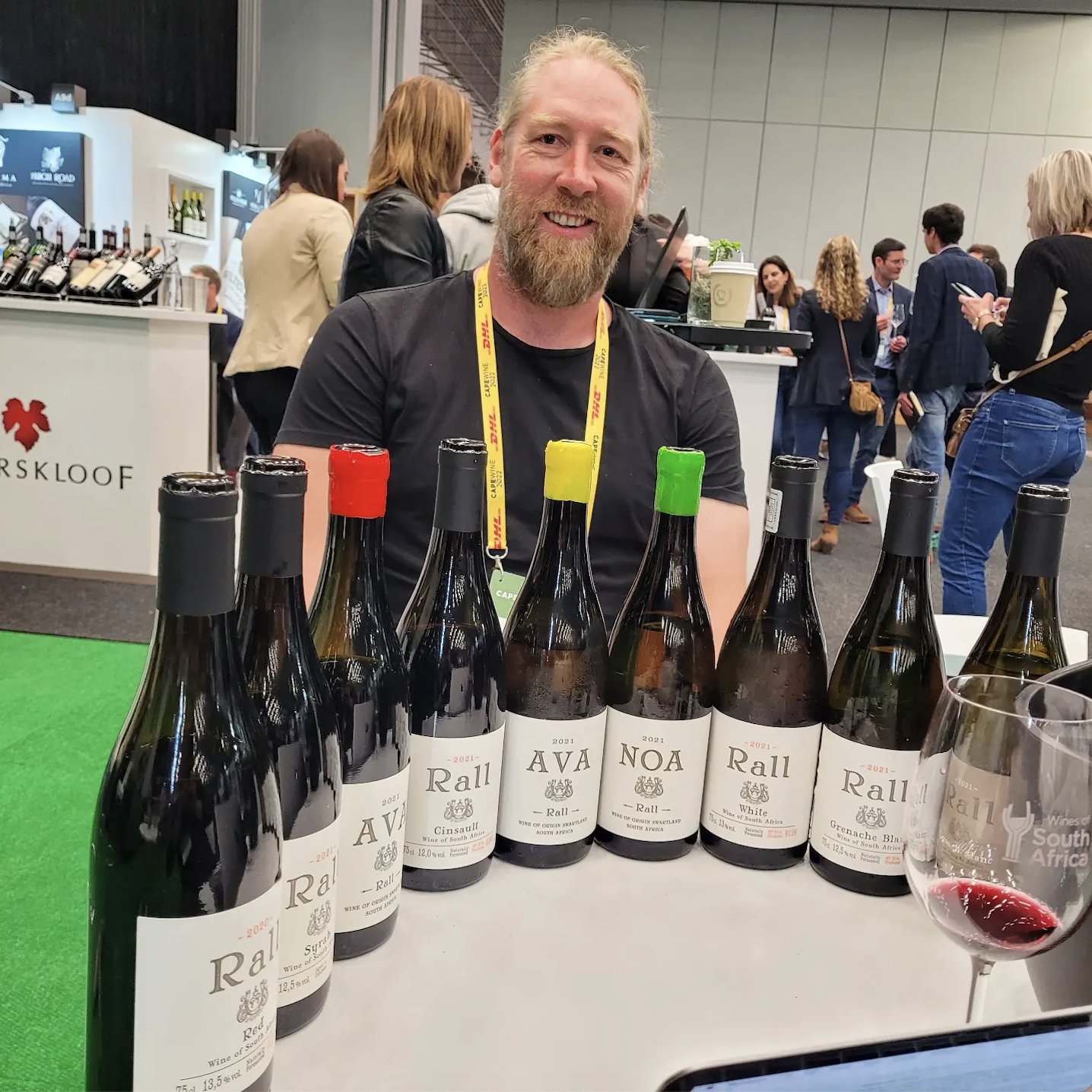
“When you have old bush vines, you’re going to get chenin blanc that harnesses sunlight, a thickening of the skins and an accumulation of full phenolic character — a taste of sunshine,” says Mullineux with that wry and sly smile. “Granite is the only soil that can give you this super reductive style with great energy,” explains Donovan Rall, who picks his chenin blanc early. “What we learned through the drought years is you don’t have to pick things as you were traditionally taught.”

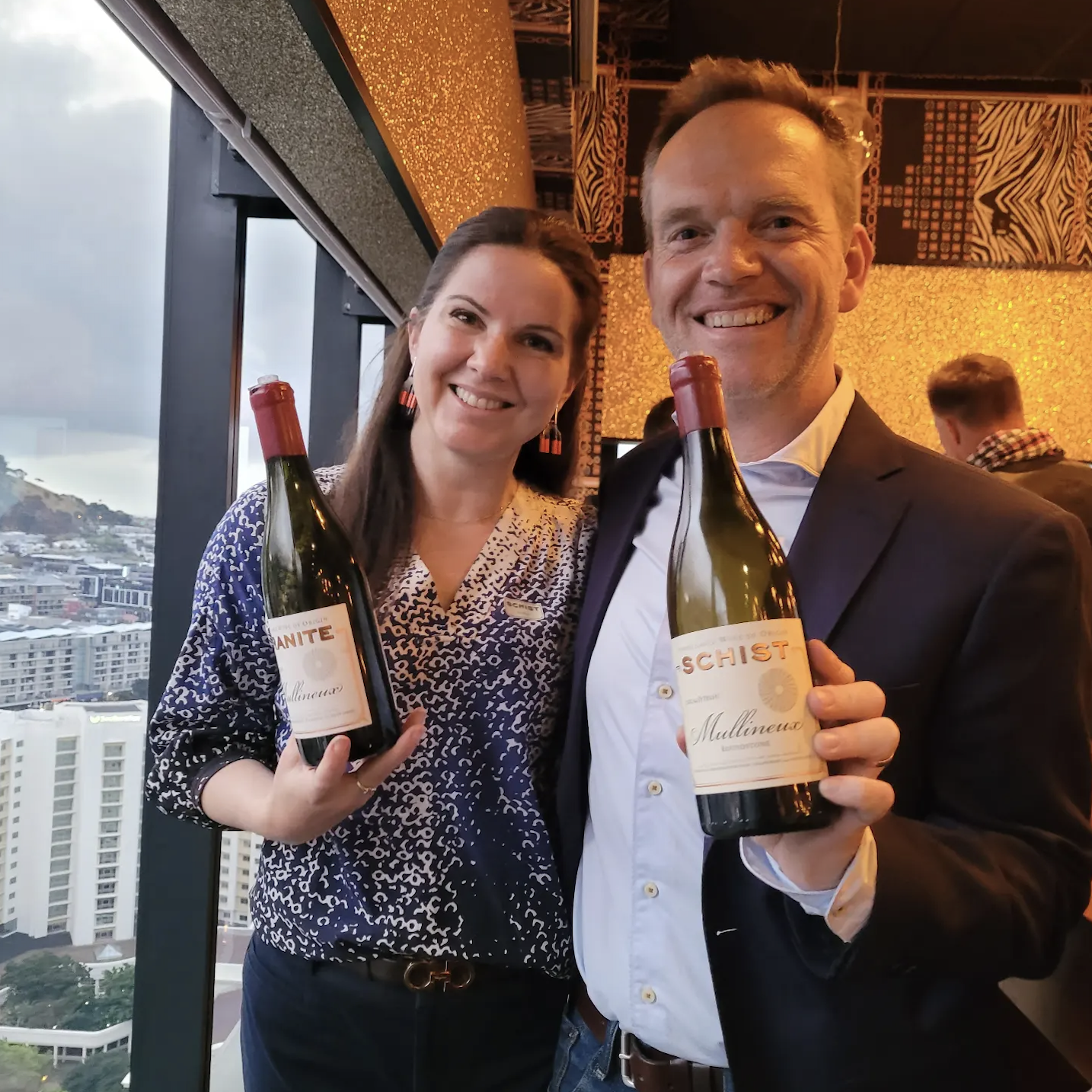
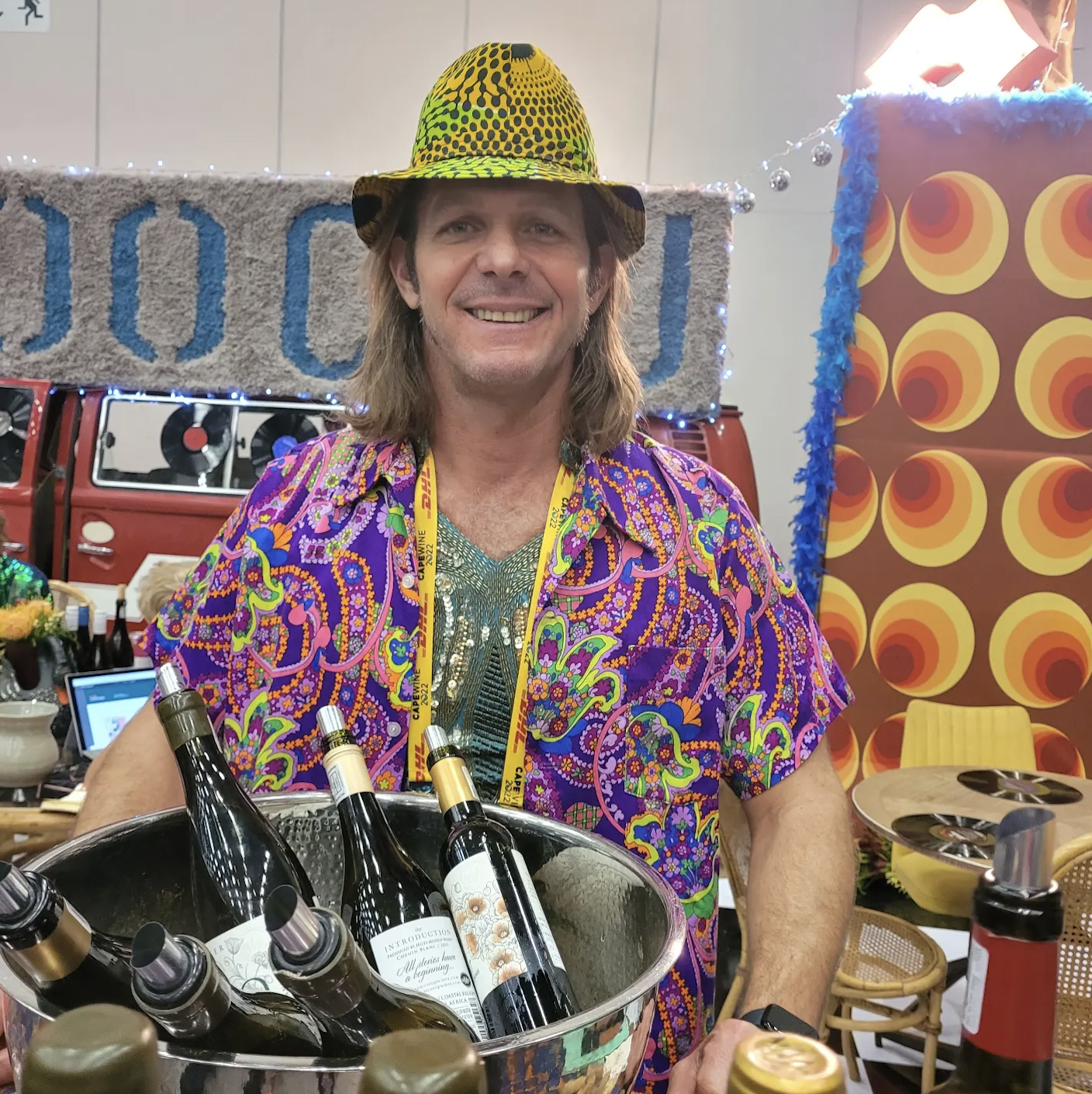
Andrea and Chris Mullineux

As for recent vintages, 2019 had warm days and cool nights, allowing vines to relax and recover acidity. Then 2020 was very temperate with little diurnal temperature fluctuation, leading to quick yet relatively even ripening. In 2021 the season was cool but dry, though not with drought-like conditions seen in 2018. Veraison only finished in the second week of — quite opposed to previous years when picking was completed by the second or third weekend of that month. Yet 2021 allowed for more precision picking and quite a relaxed harvest.

In 2021 and 2022, vineyards in the Swartland achieved that elusive ideal of full phenolic ripeness. “We say phenolic ripeness, but we call it psychological ripeness,” notes Mullineux. “At least with respect to basing on numbers.” The ripening schedule follows a path starting in Roberston (which is inland), followed by Paarl, Franschhoek and the Swartland, then the coastal regions with Stellenbosch being one of the last, just ahead of Elgin, Wellington, Hermanus and Hemel-en-Aarde.

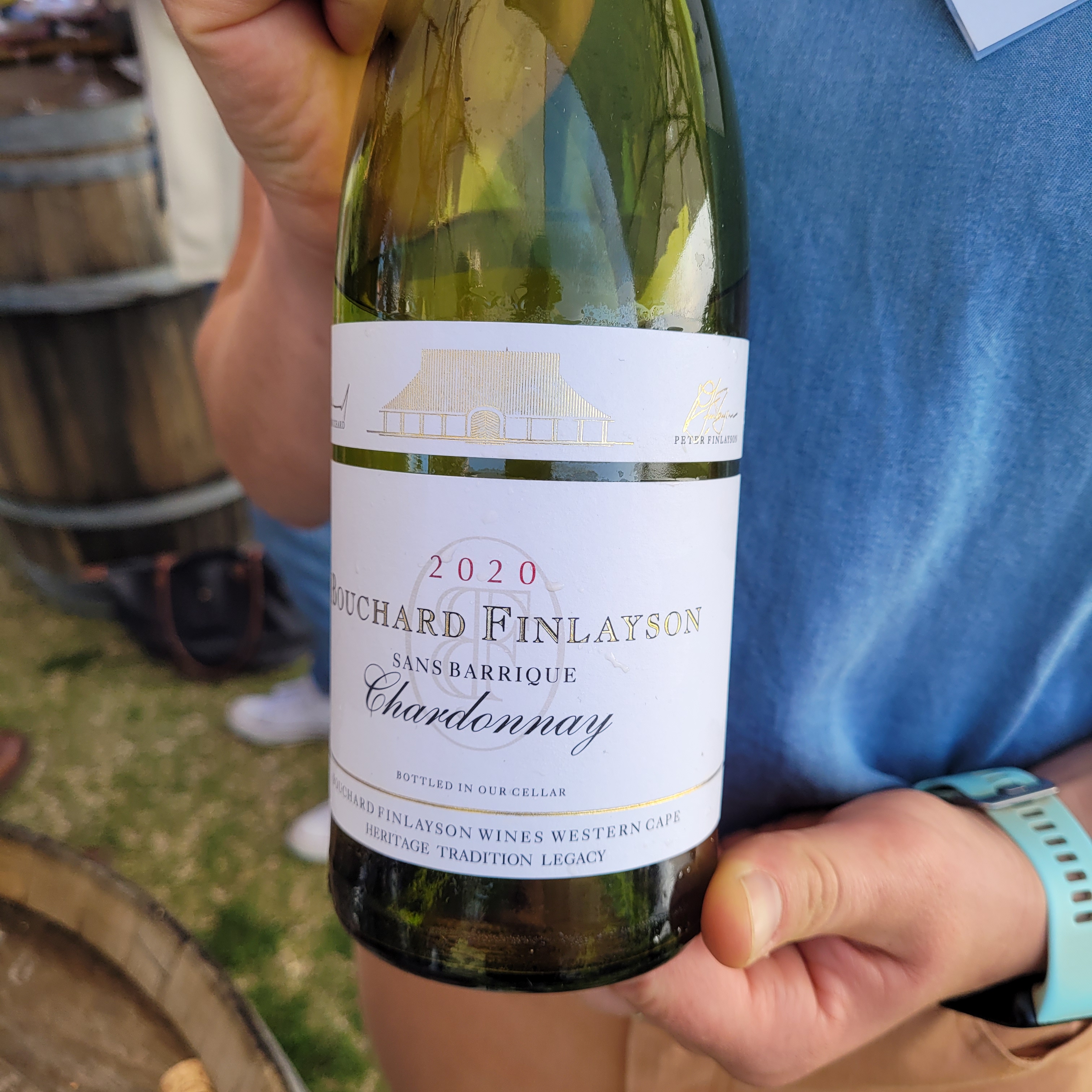
As for the Hemel-en-Aarde and chardonnay, Chris Albrecht from Bouchard Finlayson indicates that elevation on their side of the valley where fog and humidity settle at the lower levels play a direct role in viticulture and especially the ripening seasoning. Shallow shale soils overlaid with heavy clay is also a factor in determining grape maturity. The Valley has a plateau with an underbelly delivering unique sets of tannin, structure and acidity that, when mixed with sandstone and clay soils, makes for this aspect of how chardonnay sets up for individualistic display.

Related – Memories of South Africa in 60 notes
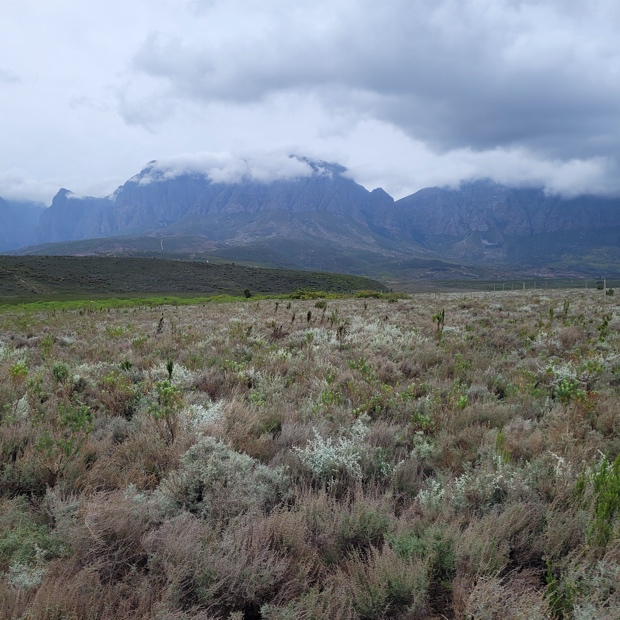
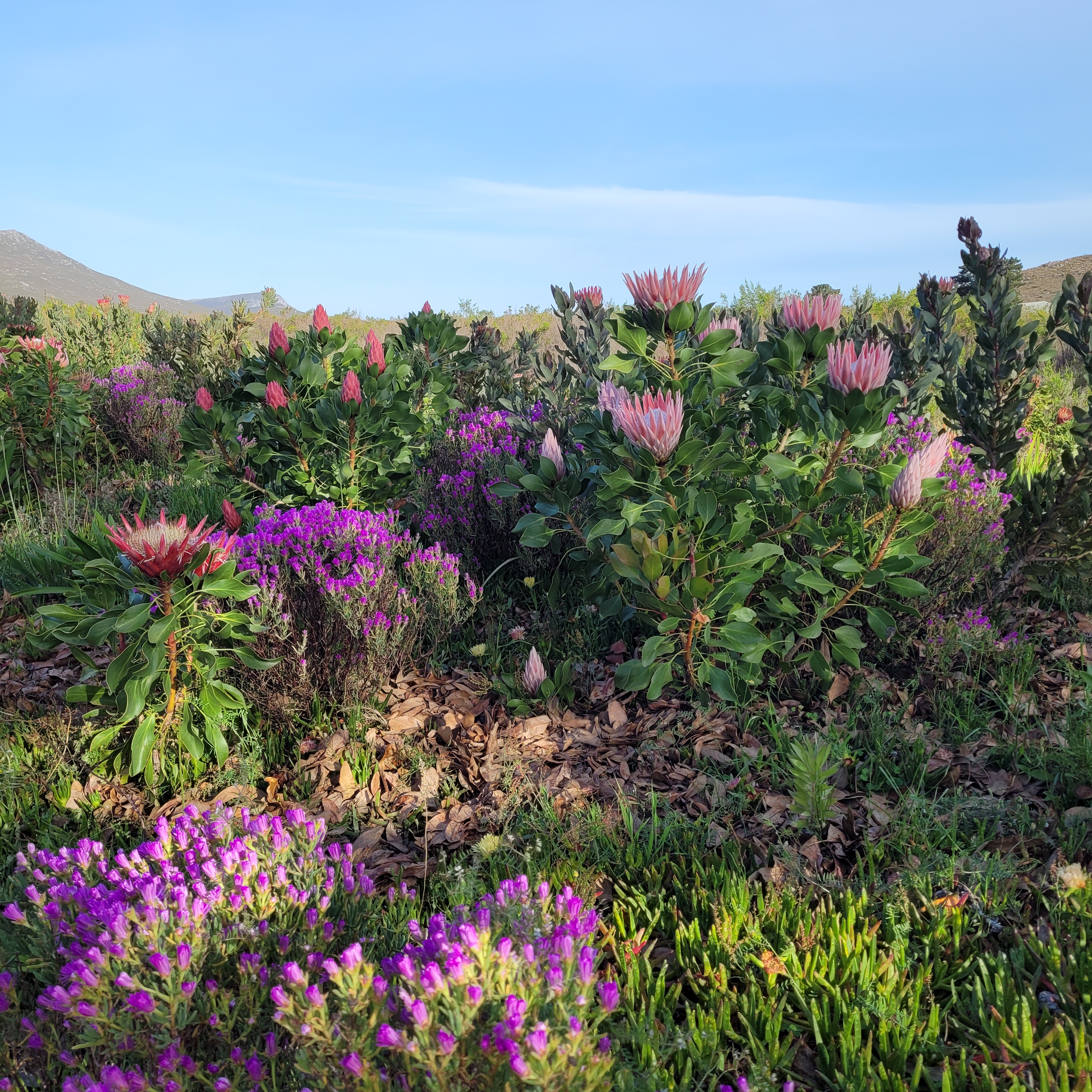
Fynbos, Vergelegen, Stellenbosch

The venn diagram of organic, biodynamic, sustainable and regenerative farming

Soils in South Africa are ancient and varied. There are three main types along with derivatives:

  • Decomposed granites (oakleaf, tukulu, hutton and clovelly)
  • Malmesbury, bokkeveld or witteberg shale (glenrosa, swartland, klapmuts and estcourt)
  • Table Mountain sandstone (fernwood, longlands, westleigh and dundee)

Still other soils are major contributors to farming styles and the wines they beget. Alluvial, koffieklip, silica quartz, kaolinite clay, river gravels, klipheuwel conglomerates and shales, limestone and malmesbury clay are but a few. Then there are the plutons, dome-like intrusions of igneous magma into the earth’s crust which occurred at great depths and consequently cooled slowly, resulting in a coarse crystalline (granitoid) texture. These plutons have subsequently been exposed by erosion, resulting in mountains or hills such as those in Paarl and Perdeberg and the hills in Darling. In some cases, the exposed domes have been flat-topped by erosion and then covered with sandstone deposits, and have then again been eroded, resulting in sandstone on a granitic base, such as can be found in the Table and Simonsberg mountains. We must also point out the incredible Breede River Region’s characteristic calcareous loam soils and their association with bokkeveld and witteberg shales, dwyka tillite and enon conglomerate. In this part of the Cape it is Malgas that is the only South African wine area with significant alkaline soils.
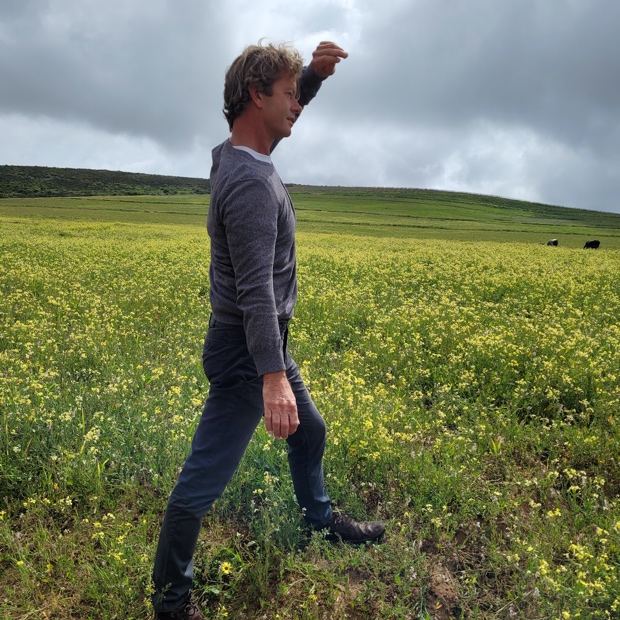
Johan Reyneke, Stellenbosch

Between the 1970s and ’90s, many of the old vineyards in the fancy regions like Stellenbosch and Costantia were ripped out to plant cabernet, merlot and pinot noir. This was not the case in the “sleepy” Swartland where many old vines, especially of the bush variety, remained untouched. Today a less obtrusive pruning method is employed on “goblet,” which means smaller canopies, lower yields and less water requirements. This method reduces susceptibility to wood rot and also Esca, one of the complex of “trunk diseases” (along with Botryosphaeria dieback, Eutypa dieback, and Phomopsis dieback) caused by wood-infecting fungi.

“We’re figuring this out and it’s getting fun now,” says Callie Louw. But Louw is the anti-hero, the man who focuses on one large entity. “Working with all these little bits of grapes here and there is not sustainable,” he says, and so 90 hectares produces 850 tonnes of grapes with 85 per cent going into (Boekenhoutskloof) Chocolate Block. “We don’t need to offset climate change with varietal adaptation. We just need to farm better. The problem doesn’t go away. Cover cropping, activate your place, get things growing, the whole profile is run in the top four inches. Below is the bank, the reservoir, the thing that makes the money is on top. Stop tilling! Leave that stuff on the top of soil. It just burns. Keep the active things alive. Increase the carbon in your soil by one per cent and the water will increase by 50.”

With Callie Louw, Porseleinberg

At Vergelegen Wine Estate in Somerset West it is environmental manager Eben Olderwagen who shows how abrasive yellow vine trunk wraps are employed to repel geckos and slugs in lieu of spaying. This sustainability action is part of Vergelegen’s track record as a wine estate renowned for its biodiversity and commitment to environmental sustainability. (Vergelegen is owned by mining company Anglo American.) The recent completion of an extensive programme to rehabilitate eroded watercourses is now the stuff of Western Cape legend. Five sites saw the removal of invasive alien species like Blue Gum trees (between 2004 and 2018) and the replanting of some 15,000 indigenous plants that were housed temporarily while the programme was underway. The 12 million Rand project has saved rehabilitated wetlands and Lourensford Alluvium Fynbos vegetation, which could have been badly affected by sediment washing onto the area. In addition, it has halted sediment contamination of the Lourens River, part of which runs through the estate. Rare vegetation discovered by botanists on the property thought to be extinct has been preserved within the hills and valleys of the 2,000-hectare nature preserve. In 2009 a major fore swept through and burned much of the vegetation, but this is actually beneficial to the fynbos which needs a good burn every 12-15 years for proper rejuvenation. No municipal water is used on the property as water from the Helderberg Mountain is captured in two damns. Vergelegen lays claim to now being the most leaf-roll virus free in the Western Cape.

Johan Reyneke

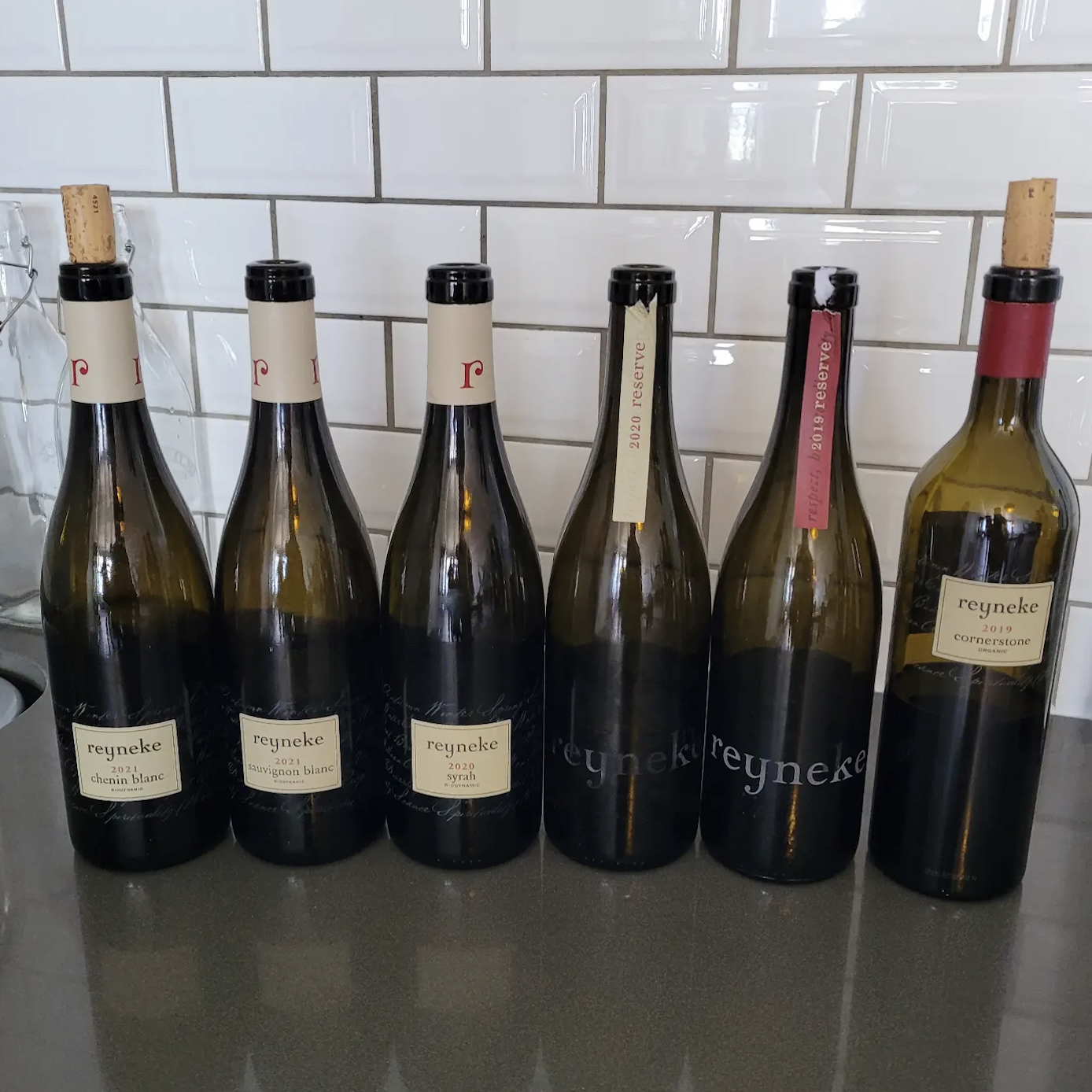
“Land caring, land sharing and making quality wine” is Reyneke’s tripartite platform and both story and also that of the cows is like a tree with different branches. The animals graze in high density, moving throughout the year from block to block. They graze and return microbes back into the soil, through their waste and create humus. Vines are fed by this regenerative activity. Dandelions are planted to attract pests so they will leave the vines and roots alone. Downy mold is managed with metabolic enzymes of copper, not always successful on its own but fighting alongside the humus offers a much better chance of control. Not to mention brix levels are raised because of this type of farming. Land sparing essentially means that if you have ecologically endangered endemic plant species you must leave them to live in conjunction with your vines. Don’t reduce them. And for goodness sakes don’t till.

Chenin Blanc, Reyneke

Thankfully by this point roughly 90 percent of farmers in the Western Cape have converted to no-tillage systems to improve the efficiency of crop production. Reyneke also plants new vineyards on contoured angles to control winter water flow but also erosion so that the flow will reach the property’s two dams. There are the fynbos “corridors,” between the blocks to allow wild animals a chance to remain in nature. This all adds up to creative farming mixed with regeneration and sustainability. The first seven years of this policy have all been about renewing the soils and each year the goal is to plant between five and seven new hectares, with 30 on schedule to go in over the next five years. “It begins with organics (which is sustainable), then graduate to biodynamics (which is self-sufficiency) but there is a constant struggle between caring and common sense.”

In other words decisions have to be made, economic ones, to support family, workers and the farm. “People have different tools during different epochs to deal with reality. Science is not about being certain and sometimes it’s about being doubtful. I’m never sure 100 per cent.”

These are the words of Jolandie Fouché of Wolf and Woman Wines: “As shared custodians of the lands that house these vineyards, we also ensure that we partner with growers who farm sustainably in order to produce top-quality grapes without compromising the environment, and the vineyards themselves, in the long run.” And there is Marlise Niemann who recreates the taciturn through gestures so befitting her Momento wines. They like so many of the Western Cape endure for their balance between place and adventure, as well as remaining grounded through their maker’s independence and relationship with the tracts they choose to interpret.

Related – Around the Cape in 50 wines
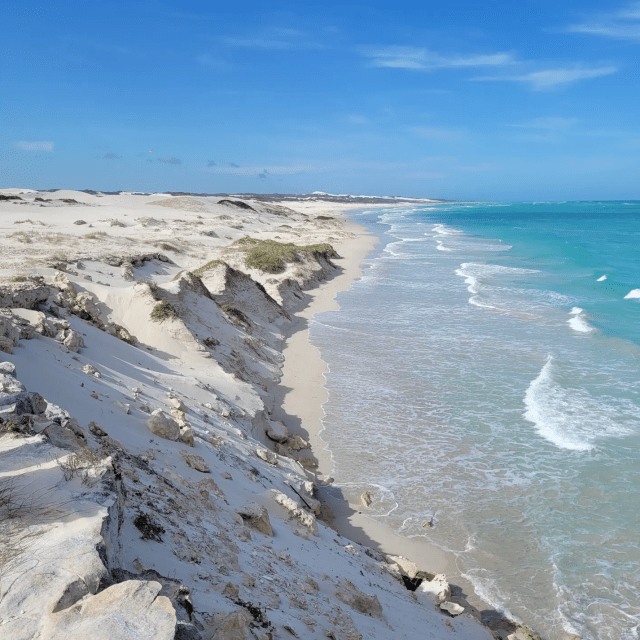
Agulhas

Appellative blends in red and white

There are reasons why many Western Cape winemakers increasingly turn to accounts spoken in stacked varieties through appellative blends. Not because it can be a French thing to do in the ways of Châteauneuf-du-Pâpe but because it makes for wines possessive of immense character.

“We need these wines and to pay a lip service to them is essential,” says Adi Badenhorst. “As a winemaker or in any homestead job you are always influenced by where you grew up and who you worked with. In the Swartland these are the varieties that were there.” Badenhorst’s ideas are echoed and expanded upon by Duncan Savage. “All the wines are directly connected to their sites,” he says. “That shouldn’t change too often. The farms are big here so you can’t afford to own 50 hectares.” Thus, a winemaker and producer like Savage picks their plots and develops their relationships with their fruit over long periods of time.
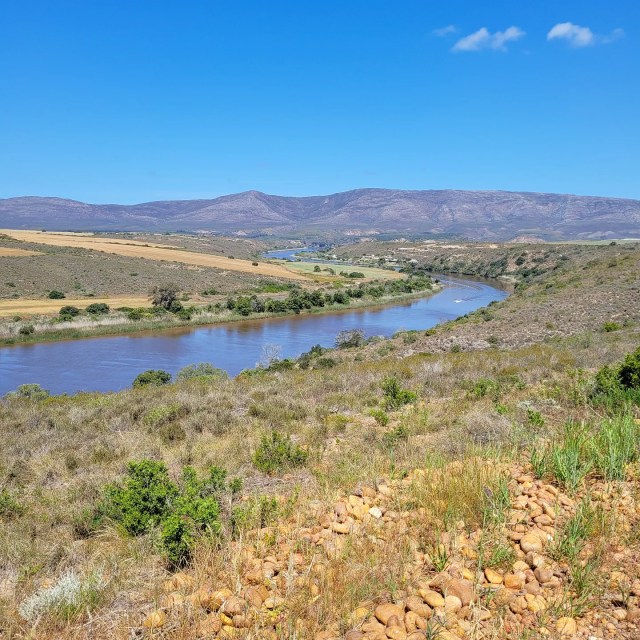
After the Cape Wine trade fair, we rode over dirt and dust to what felt like The Western Cape’s version of the outback, to arrive near Malgas up above the Breede River just 15 kilometres in from the Indian Ocean at South Africa’s most southern tip. This is the remote and “insane” home of Sijnn Wines (pronounced “sane”) where visionary David Trafford saw the future a few hours away from Arniston and Cape Agulhas. The beautifully shaped and hued river stones (aka, puddings) and Bokkeveld Shale are perhaps the world’s greatest impetus for developing Rhône varieties à la Châteauneuf-du-Pâpe.

Yet this is South Africa and so chenin blanc, verdelho, touriga nacional, trincadeira and cabernet sauvignon also thrive despite the poorest of soils. Winemaking in the hands of Charla Bosman sees a prodigy and savant at one with the land so that the progression from 2015 vintage through wines resting in barrel today may as well be a decades long discovery.

Related – Welcome to South Africa’s Capelands

With Charla Bosman

Why South African producers must sell their wines abroad

There can be no begrudging people who might imagine South Africa as a growing area of sunshine, heat, and potentially high-alcohol red wines. That is why they must be shows how so many phenolically ripe red wines lock in at a low, low 11.5 to 12.5 percent alcohol that seemingly only the Western Cape can affect for grape varieties like cinsault and grenache.

“I’ve never worked with conversion rates this low,” says Donovan Rall, and his cinsault is a testament to the excellence and magic of vintage. “With no compromise to flavour, tannin, acidity and length.” The low alcohol at 11.8 is brilliant, as no push to ripeness was needed to achieve these heights. Mick and Jeanine Craven manage to create this impossibility with cabernet sauvignon, while still delivering ripeness, generosity, and peace of mind. Another bit of voodoo magic from a place and a maker that knows what’s what.

Cape Town

The need to export, to reach as many new customers in as many countries as possible is the challenge for South Africa’s producers. The Cape Winelands are oceans and continents away from most markets and that remains a serious obstacle, not to mention being situated at the southern-most tip of Africa. The isolation was devastating during Covid, compounded by governmental decisions rooted in prohibition, isolationism, and fear. But the world has re-opened to South Africa and seeking representation beyond Europe is necessary, including finding markets in Canada.

Says Eben Sadie: “There is now a healthy competition between producers. There are vineyards that I planted 10 and 15 years ago that I can now say great things about. It’s in the glass. It’s kind of our time now. We have 3,000 people in this country buying fine wine. Guys who are willing to pay $50 to $60 a bottle for wine. We are all selling locally to the same group of guys. The local market is brutal.”

Related – Once upon a time in the Western Cape

How the Western Cape was won

Cape Wine 2022 was my third trip to South Africa’s winelands between 2015 and 2022. That first congress in 2015 opened my eyes to the possibilities of a wild west experience where the planet’s most ancient soils and geography were able to host grape varieties from all over the world. It seemed like anything could ripen anywhere agriculturalists chose and winemakers wished for. Three years later it was understood that what and where you plant was the key to producing great wines of a sort being made nowhere else in this world. This last journey changed everything again and now it is the coalescence of heritage vineyards, magical conversion rates, sustainable and regenerative agriculture that separates South Africa from all the rest. The Western Cape may be an isolated wine industry and exporting the most challenging of any wine producing nation, but these wines must make it onto our shores. They are too good to miss, not just a handful but hundreds of outstanding examples. Quality has risen exponentially, virtually across all places of origin, including new frontiers. The stars are out, and they are aligned.

Braai Brekkies, Franschhoek

Godello’s 80 recommended current releases

Cap Classique

Anthonij Rupert L’Ormarins Cap Classique Blanc De Blancs 2017, WO Western Cape

Drought vintage no matter nor adversity for this 100 per cent chardonnay aged four and a half years on the lees. Palate presence and texture synthesis but also a really sharp bubble of aromatics in lemon zest, ginger and spice. Elegant and sensory, of sips drift worthy for daydreaming and calm. A blanc de blancs of sanguine personality, extroverted, social and active so that you don’t have to be. Good times when a Cap Classique can do it all, leaving you to enjoy, relieve stress and relax. Seventh iteration heaven from a program that began back in 2017. Drink 2022-2026.  Tasted October 2022

With Johnathan Grieve, Avondale Wines

Avondale Armilla Blanc De Blanc 2015, WO Paarl

From the tradition of Méthode Cap Classique Armilla is a Blanc de Blancs in 100 percent chardonnay, seven years total on the lees, 90 percent in stainless steel, (10) in big French for one year in barrel. Two of the years on the coarse lees were in tank and all is natural. First vintage was 2003. The only thing that has really changed is the extended lees aging but not the moorish acidity extending the freshness and eliciting a keen sense of brioche. The 3 g/L dosage is negligible and so from start to finish Armilla retains its aridity, is never stark but always balanced. More sugar would make it big and fat and see it lacking brightness which frankly is this B de B’s calling card. Resides at the upper echelon for Cap Classique. Cracker stuff. Drink 2022-2029.  Tasted October 2022
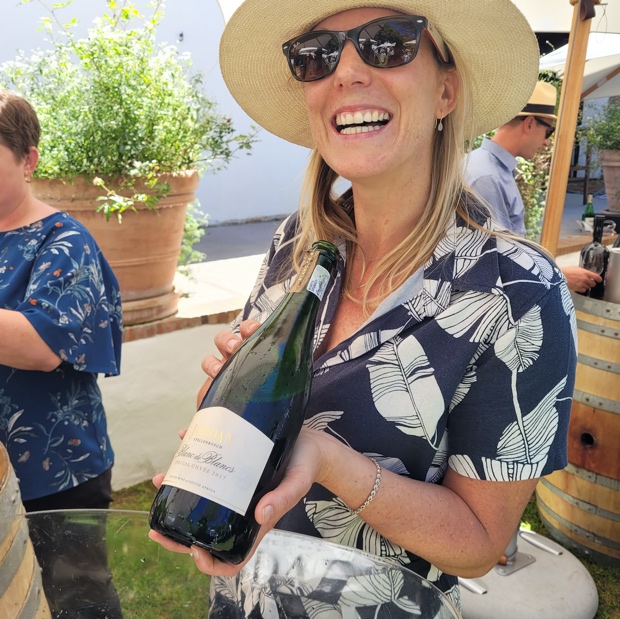
Jordan Wines Blanc De Blancs Special Cuvée 2017, WO Stellenbosch

A brilliant all in chardonnay Cap Classique from 22 year-old vines growing on Glenrosa and Hutton soils abutting the Stellenbosch Kloof. A Mediterranean climate here, only 24 kms from the ocean at False Bay. Breezes channel in from the West Coast’s Benguela current and it’s not just a repeated adage to say that the Atlantic winds translate into crazy open-air freshness in Jordan’s scintillant of a white sparkling wine. Spends a nurturing 54 months on lees and this bottle is from the second disgorgement, just now in October of this year. First vintage was 2015 and this is just the second for a B de B bubble that will join the ranks from MCC through to CC’s finest. Sharp yet delicate, intensely focused, precise, with citrus squalls and in the end a treat and a dream. Drink 2022-2027.  Tasted October 2022

Le Lude Brut Reserve Cap Classique NV, WO Franschhoek

I mean, just classic. Citrus juiced and a ripeness in this particular cuvée, always ahead of the curve and also the Rosé. Nothing taking for granted, sharp and superlative acids causing the chardonnay to flourish, intensity heightened as far as one could wish. Even keeled, never expressing highs to high or lows to low.  Last tasted October 2022

The blend is with pinot noir but in this sister cuvée to the Brut Rosé it’s really about what chardonnay is going to bring to the MCC table. The dosage is just slightly higher than the Rosé, here at 6.5 g/L and 24 months on its lees. Here the shift is towards more richness, almost counterintuitive when you think about blanc vs. rose but Paul Gerber is on to something big. There is a plum compote luxe note stirred into the citrus and so both ends of the fruit spectrum are involved and incredible. “You must taste the sun in the fruit,” insists Gerber, sparkling wine or not and so with verve, intensity and balance this travels to terrific and back. Drink 2018-2022.  Tasted September 2018
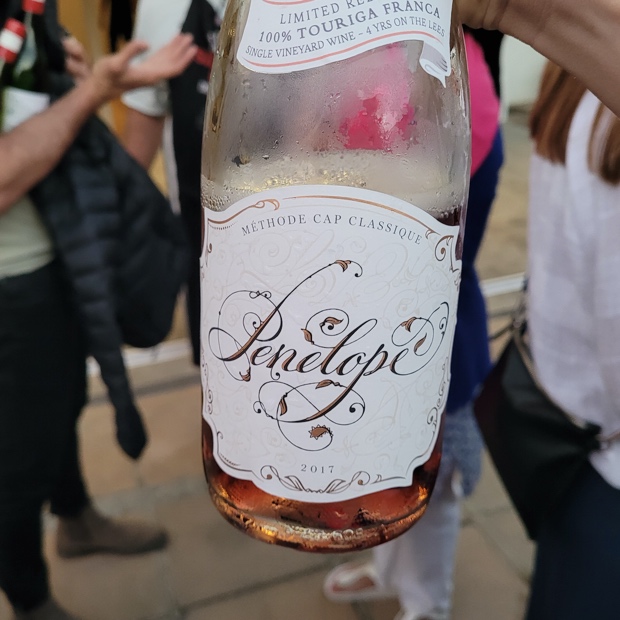
The Drift Estate Penelope Cap Classique 2017, WO Overberg Highlands

Penelope by Bruce Jack is 100 percent touriga nacional, first ever in existence as sparkling wine, likely not just in South Africa but anywhere in the world. Also a single vineyard Cap Classique and as crazy a perfect storm of variety and methodology as there has ever been, almost outdone by Jack’s ice bucket and Penelope story when the earth stopped. Go to the website for more details. This CC is raging though the specs are not exceptional and so some sort of Cape voodoo is happening here. The farm is too cold to really get a ripeness converting above 11.5 percent alcohol so sparkling it is and the 20 year-old vines deliver the necessary fodder for top notch sparkling Rosé. Goes all currants and ginger, rooibos and fynbos. As it must. Drink 2022-2025.  Tasted October 2022
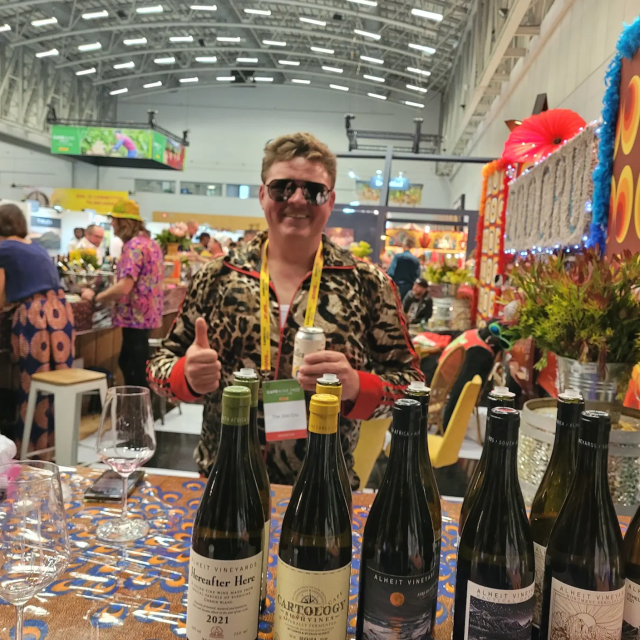
Old Vines

Alheit Vineyards Sémillon Monument 2021, WO Franschhoek

The artist formerly known as “La Colline” received a name re-branding in the previous vintage yet the source and the song remain the same. That being the 1936 planted (and registered) heritage sémillion vineyard but the farmer passed away in 1938 so the block could actually be as much as two decades older. “Diversity is a matter of having the genetic material to do it,” explains Chris Alheit “and though there may be drifts away from the original DNA, there will always be that connection.” Oldest indeed within the quadrangle composed of Paarl, Wellington, Franschhoek and Stellenbosch. “I mean how can you not see this as a Cape treasure? As an ancestral site?” Thus the new moniker and though it may not seem to represent the true definition of a “memorial stone or a building erected” it does in fact pay homage “in remembrance of a person or event.” They being the farmer and every season of sémillon attempting to seek its fruition for the past 85+ seasons. As for 2021 the imprint just feels like a culmination, of fruit speaking in historical terms and bound to structure, of acid, tannin and extract all constructed as confidentially as ever there has been afforded the opportunity. The 2021 Monument is a rock as profound and important as any sémillon anywhere. “Yeah, people don’t you listen now? Sing along, Oh. You don’t know what you’re missing, now.” Drink 2024-2035.  Tasted October 2022

Bellevue Estate 1953 Pinotage 2017, WO Stellenbosch

A remarkable wine to have the opportunity to taste from vines aged 64 at the time of this vintage and interpreted by winemaker Wilhelm Kritzinger. Bush vines, their yields less than one tonne per hectare (in drought years, of which there are many), upwards of 1.75 in the best of times. The location is Bottelary in Stellenbosch and Bellevue seeks gradual extraction, not quite a full on délestage but the whole lot is transferred from vessel to vessel. The normal press time is seven days and this rare pinotage is always fermented fully dry. Sees 23 months in well versed and rehearsed wood for what is tops in terms of experienced and developed pinotage. Secure in character, prepped and purposed in personality, in delivery of the bloody and the iodide, part soil and part ocean water. A metabolic wonder, converter of energy, meticulously made. Total pro with a whole lotta good dark salted chocolate upon the finish. Drink 2023-2027.  Tasted October 2022
Penny Noire, Cape Town

Boekenhoutskloof Sémillon 2019, WO Franschhoek

Tasted with Lynton Kaiser of Boekenhoutskloof and this three vineyard sémillon blend out of this vintage elicits the kind of looks and gestures requiring no words. The 1936 Franschhoek planted La Colline provides half the fruit (with a good portion having mutated into sémillon gris) and the other 50 percent coming from a 1942 site set into the ancient Franschhoek Riverbed, but also including a few points of muscat out of a block planted in 1902. Concrete eggs house 30 per cent of the ferment and neutral barrels do the yeoman work to keep this cuvée in a primary state for what will likely be a minimum eight to 10 years. The bones are hard and unbreakable to indicate structural propriety and so seeing a decade pass is a near guarantee before next level complexities and brilliant complications will appear. For now there is intrigue, the promise of lemon curd, beeswax, toasted lemongrass and the sort of exotic herbs you’d tear into a bowl of aromatically charged southeast Asian broth. Top and benchmark in so many ways, easily deserving of its reputation. Drink 2026-2035.  Tasted October 2022


David And Nadia Wines Chenin Blanc Hoë Steen 2021, WO Swartland

Hoë-Steen is one of four single vineyard chenin blanc from a terroir in the “which one of these things is not like the rest” set of propositions. Planted in 1968 to see it recently cross the half century mark and soils are unique, especially as it pertains to chenin blanc. They are red iron oxide clay, rich and deep, location west of Malmesbury direction Darling. The label reads chenin but truth is a few other surviving vines here and there are in the yard, including discoveries of riesling (crouchen blanc), false pedro, palomino, sémillon and clairette blanche. And who does not appreciate the heritage and concept of a field blend? They’ll call them zinfandel in Sonoma but many are layered of a similar ilk, with the likes of grenache, alicante bouschet, petite sirah, mataro and others playing in the band. Hoë-Steen’s adept water retention and cool temps below the surface put this dry-farmed SV in a place of slower phenolic development and longer growing seasons. The effect on chenin is enchanting, divinatory even and never what you fully expect. Round is not the thought because the trinity of fruit, acid and tannin touch all points, in sequence and exact intervals. The wine can keep time and also plays in fills between the lines. It is symphonic, the whole package, in synch. Drink 2023-2034.  Tasted October 2022
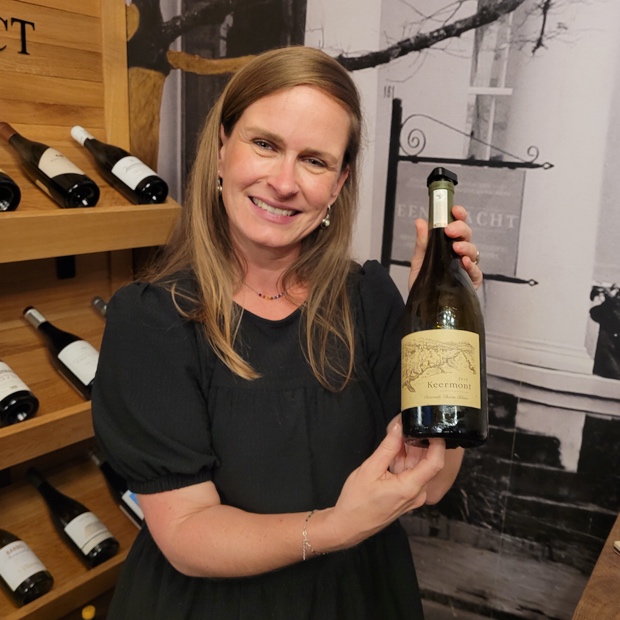
Nicole Kilian, Keermont Wines

Nicole Kilian, Keermont Wines

Keermont Chenin Blanc Riverside 2019, WO Stellenbosch

Keermont is the Stellenbosch farm of Mark and Monica Wraith with their four children. Alex Starey takes care of the vineyards and is the winemaker. This 2019 Riverside was tasted at the Old Vines Project evening with Nicole Kilian who happens to be an American married to a Canadian and their work is purely South African. The 1971 planted single vineyard is the third oldest chenin plot in Stellenbosch. The ’19 was barrel fermented and spent a year in well seasoned oak. The result is purity incarnate, from old vine chenin that has endured nearly 50 years and it just seems like this is the kind of wine that makes itself. The barrels add subtle smoulder and bright luminescence but nothing in terms of density or maturity. A beautiful thing when chenin glides like this and one that will surely sail slowly towards the sunset. Drink 2022-2027.  Tasted October 2022

Ken Forrester

Ken Forrester The FMC Chenin Blanc 2021, WO Stellenbosch

Really different vintage as compared to 2019, here the FMC is a matter of something definably sapid which would indicate the pH being slightly higher while the acidity is just a bit levelled. The wood elicits density and as a result there is a depth to 2021 that stands apart. Fruit concentration while special is not the solo driver because pH, natural fruit sweetness and texture are what make ’21 shine. The youthfulness will confuse the situation and it would seem that eight to 10 years will be needed to settle this score, like Kabinett riesling, Hunter Valley sémillon or any number of Cape old vines chenin blanc. Drink 2024-2031.  Tasted October 2022

Cinsault is the grape planted after phylloxera, which started its devastation around 1900. The idea was essentially to replant all that was lost. The Franschhoek vineyard went in back in 1932, placed upon the mid-slopes, close to but not quite on the valley floor. The Mullineuxs started leasing the block in 2014 and are committed through 2034. This is higher up in these foothills facing west and produces some of the darker cinsaults in the Western Cape, relatively speaking, but especially in contrast to the Wellington (Basson) vineyard. Ethereal and elegant in spite of the shade, more fruit substance and also textural elements. Lötter is the one in this regard, effusive and generous, a wine of soul, soil, history and heritage. A cinsault in the prime time of its epic journey as Andrea Mullineux describes its host as “a national monument that must be ripened. Either that or it’s sauvignon blanc and apricots.” There are two hectares of really healthy and hardy plants, once nearly lost to the sands of time. Drink 2022-2028.  Tasted October 2022

Old Road Wine Company Sémillon Grand Mère 2020, WO Franschhoek

From the vineyard known as La Colline, a high density Franschhoek plot planted back in 1936. Chis Alheit also uses some of this sémillon and now calls his old vines “Monument.” The Old Road Company chooses the name “Grand Mère” which is precisely what the incredible heritage block is for vineyards that have stood the test of time. Crops at a mere three tones per hectare and delivers the most steely and flinty sémillon on the planet. La Colline is southeast facing at 350m, housing unirrigated bush vines and experienced to the effect that a winemaker must not try to dictate its direction. Grapes are left on the skins overnight and 30 percent are allowed to run through a wild ferment. Barrel maturation in mostly older French oak on the primary lees with regular stirring induces a coagulation of creamy texture to offset the striking metal sensation in the wine. On the boozy side but the vintage and the vineyard truly dictate the course. Will age really well, likely well into the next decade. Drink 2023-2032.  Tasted October 2022
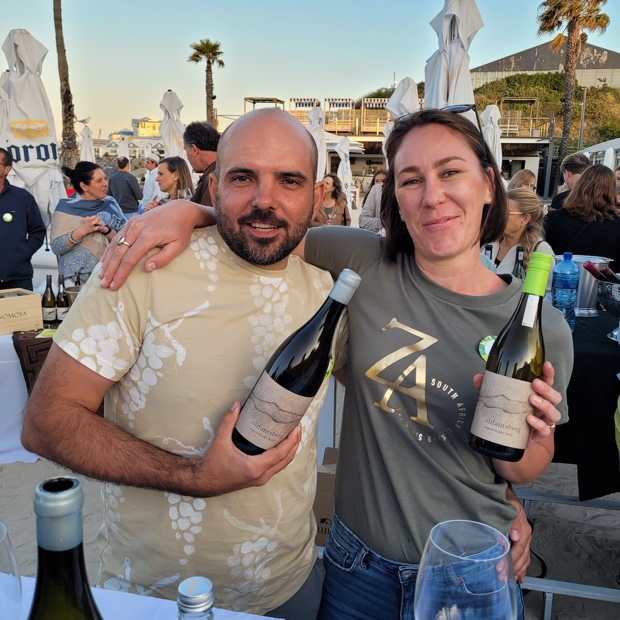
Ferdie and Elizma Visser

Olifantsberg Chenin Blanc Old Vine 2022, WO Breedekloof

From Ferdie and (winemaker) Elizma Visser in the Western Cape Breedlekloof (part of the Breede River Valley) at 450m above sea level. The soils are sansdstone and shale with rich alluvials and river rocks for a complex earth from which 1982 planted (certified) old bush vines deliver this exceptional chenin blanc. Olifantsberg was established in 2003 and in just two short decades this producer has connected with their surroundings so tactfully as witnessed in this varietal wine. Now here is something you need to know about, of purity by chenin and a s much rich texture you will ever encounter. Comes equipped with all the minerals and elements of this diverse terroir darting and dodging flesh to preserve and heighten freshness. So Chablisienne in chenin blanc terms, at Premier Cru level and rising. Wow. Drink 2023-2029. Tasted October 2022

Roodekrantz Chenin Blanc Old Bush Vine 2021, WO Paarl

The 1974 vineyard is dry-land, bush vine on deep decomposed Malmesbury shale with more rocky parts than clay-based underlay. “One of the more sought after blocks,” says Marius Burger. “A fight for just a few rows.” He and winemaker Danie Morkel have been interpreting this chenin blanc fruit since 2017, to make this 2021 number five. The vineyard inclines with quite the ungraded slope so it’s hard to pick it right. “Parts of the vineyard have creaky bones in the mornings but we’ve man aged to get it right by now.” This is chenin of a brilliant tenor, bass note placed just below the treble, finding equalization. The fruit shows tempo, mixing with texture to share likeminded frequencies with rhythm and pitch. Just a focused chenin blanc handled by the drogaman wholly respectful of a vineyard’s 47 years of experience. Drink 2024-2029.  Tasted October 2022

The Sadie Family Die Ouwingerdreeks Mev. Kirsten Wyn Van Oorsprong Stellenbosch Die Sadie Familie Wyne 2021, WO Swartland

The vines that supply Mev. Kirsten Wyn are the oldest chenin blanc in the country, out of Stellenbosch and planted in 1905. In 1947 every second row was pulled out to make room for tractors and the configuration still exists this way. “If South Africa has a true apex white Grand Cru vineyard then this is it” insists Eben Sadie. Facts are facts are you just can’t accede these levels of power, concentration, extract and tannin anywhere else. The nose communicates as an intoxicant of sublime forces and these grapes bestow chenin blanc 2021 are those that transcend fruit, deliver ethereality and a heightened sense of awareness. An awakening from necessary tension, crisis and personal freedoms, existential off the charts, poetic and epic. One hundred and sixteen stanzas recorded, in the books and the finest verse written right here in the most recent vintage. If enlightenment is to be gained from chenin blanc in the Western Cape, Mev. Kirsten would provide the fodder. “The grail. End of fucking story” concludes Sadie. All hail. Long live the queen. Drink 2025-2040.  Tasted October 2022

Chenin Blanc

David And Nadia Sadie Wines Plat’Bos Chenin Blanc 2021, WO Swartland

At a tasting where everything is Old Vines Project certified there must be something extraordinary about a wine to stand out from a crowd of greats. David and Nadia Sadie are in fact turning heritage vines chenin blanc (amongst other varietal explorations) into content born of context harboured though never paraded. They are rhythmic and scientific with just enough fantasy and romanticism, but never too much. Plat’Bos stands above Skaliekop and Hoë Steen because 2021 asks it to do so, not because it is better or more important, but it is surely chenin blanc profound. The 1981 Swartland planting is in the steady zone, shed of the mercurial and in ’21 so very linear yet salty of the earth in its sombre-sepulchral tone. There is reduction here because the poor soil nutrients demand that this chenin begins this way. The levels of tension and intensity are most elevated, sufficing to say as high as any from the Western Cape. Attention is paid unwavering to detail, sequencing is in order, purity incarnate, grape and place together pristinely kept. In Plat’Bos 2021 the palate is taken down to the whipping post by a wine built to endure. Given time there will be calm, healing and reward in the end. Drink 2024-2036.  Tasted October 2022

Rascallion The Devonian 2021, WO Swartland

A small production of 100 percent Swartland chenin blanc from old vines planted between 1968 and 1982 and at this price ($32 CDN) it solicits an “are you kidding me?” reaction. Bloody rich and concentrated yet so balanced without any slide into metallic or boozy character. Expertly managed with all connective tissue tied to the decomposed granites of the Swartland, blessed of true expressive nature, pulsating and alive. The energy is buzzing and its impressive in the way it grabs, demands and keeps attention. So hard to turn away or think about anything else. Drink 2022-2026.  Tasted October 2022

Theunis Kruger

Fram Chenin Blanc 2020, WO Piekenierskloof

Theunis Kruger’s natural chenin blanc from a 1987 or 1988 planted vineyard comes away in one pick and is put to large (15 year) old foudres of 300-400L. He and we agree that this represents the most important grape (Theunis uses the word “best”) and yet they are not all created equal, including this coming from Citrusdal Mountain. Cracks the whip and works the palate like it means business, knows what wants and also what needs. The race of acidity will carry forward for quite some time. Drink 2022-2027.  Tasted October 2022

Holden Manz Chenin Blanc Reserve 2019, WO Stellenbosch

Spent nine months on lees, fruit from 43 year-old vineyard on the Simonsberg side of the Helderberg Mountain. A bit further up the valley en route to Franschhoek. Made since 2010 (by Gerard Manz) with a rich and viscous meets metallic chenin. High level of concentration in a high-caste style. No lack of barrel accentuation and well made. Drink 2023-2027.  Tasted October 2022

Kleine Zalze, Stellenbosch

Kleine Zalze Chenin Blanc Vineyard Selection 2021, WO Stellenbosch

Wouldn’t call this ulterior but there is something curiously upticking, visceral and unique as it pertains to Stellenbosch chenin blanc. Not simply a matter of richness but a varietal wine that elicits a rise of emotion, especially out of flavours and textures with barrel fermentation acting as the catalyst. Buzz of energy yes but also a buttery syrup sensation derived and you could just pour this over your morning pancakes. Not because of sweetness but instead complexity, stylish personality and as they say, deliciousness. Also looking for some fatty protein so pulled duck leg and blueberry on those flapjacks and a glass of chenin blanc will do nicely thank you very much. If you want a chardonnay alternative with less apples and brioche this is the way to go. Drink 2022-2026.  Tasted October 2022
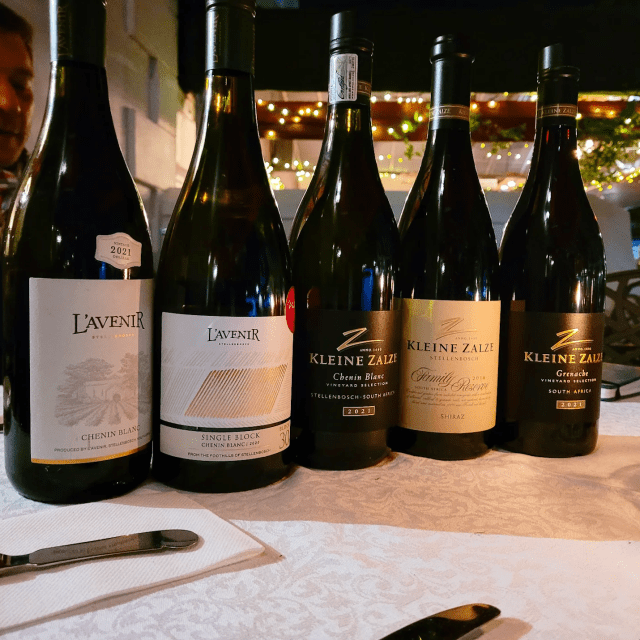
L’Avenir Estate Chenin Blanc Single Block 2021, WO Stellenbosch

Notably concentrated by naturally sweet chenin blanc fruit inclusive of the 1971 planted Stellenbosch vineyard. As a comparison to the Far and Near chenin it’s as if everything accentuates and comes into clearer view. Feels a touch advanced and mature beyond its short time after harvest and my if this just speaks the varietal language of Stellenbosch. If you like the normal then you will come to appreciate the reserve, aka the Single Block. Drink 2022-2025.  Tasted October 2022
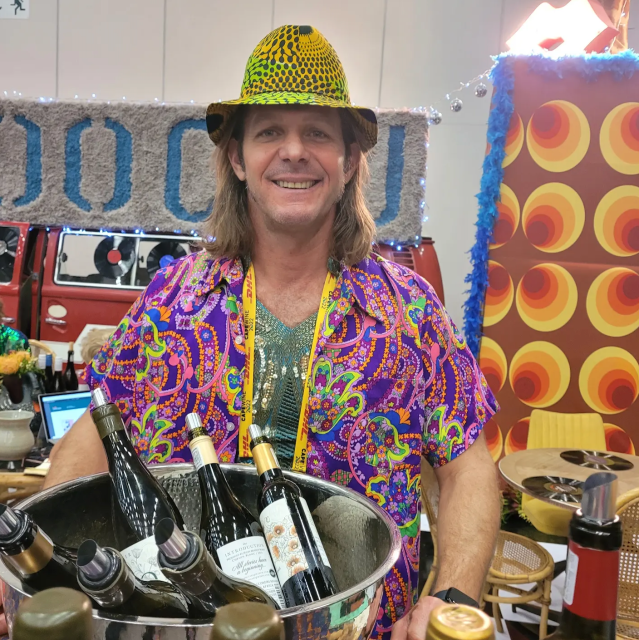
Miles Mossop

Miles Mossop Wines Chenin Blanc Chapter Two 2021, WO Swartland

From deep Paardeberg granite soils and a series of wines from Miles Mossop predicated as chapters; three being chenin blanc and four with sauvignon blanc, both out of Stellenbosch. This Swartland chenin is the signature for Mossop, from a 1971 planted vineyard, top section of the block, bordering and abutting the fynbos. A chenin of outspoken freshness, high yet taciturn acidity, old vine intensity, concentration and know-how. Experience quantified generates specificities quantized to beget excitement. Chapter Two is an experiential success simply because it is based on top chenin fruit from heritage vines done right. Drink 2023-2027.  Tasted October 2022
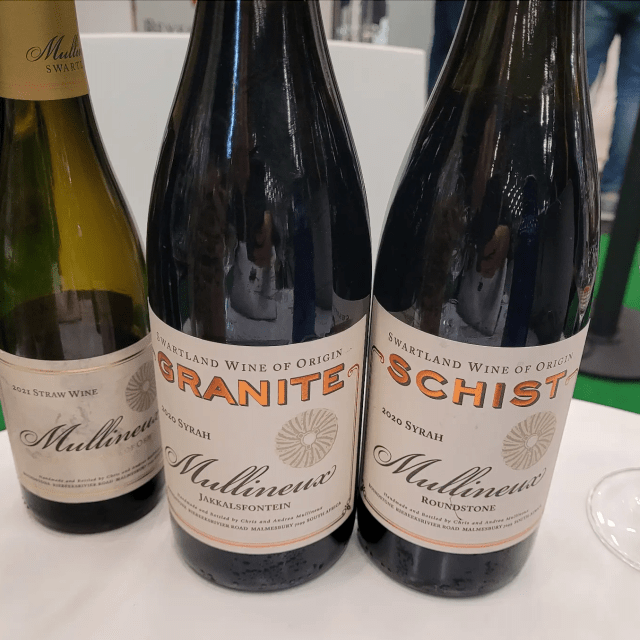
Mullineux Chenin Blanc Schist Roundstone 2021, WO Swartland

Roundstone, aka “ronde steen or rondklip” in Afrikaans but the farm is known by its English name. Another Western Cape account for struggling grapes while here the matter involves smaller canopies, clusters and grapes. The vineyard begets and raises a child of the land’s stony “dakteëls,” roof tiles where everything slides and so the tannins accentuate to procure wines of a certain toughness. This child is street smart and battle ready, got into a few fights in the early days, now able stand up for itself no matter the attack or the scene. Aromatically speaking there is a cheese rind scent in the dry comports of extreme aridity, resulting in intensity and directivity. A slightly higher pH makes this the sapid one, sliding across the palate with its über fresh scathe. This will age with the best of them, more like structured reds but so very capable as chenin blanc. Drink 2024-2034.  Tasted October 2022
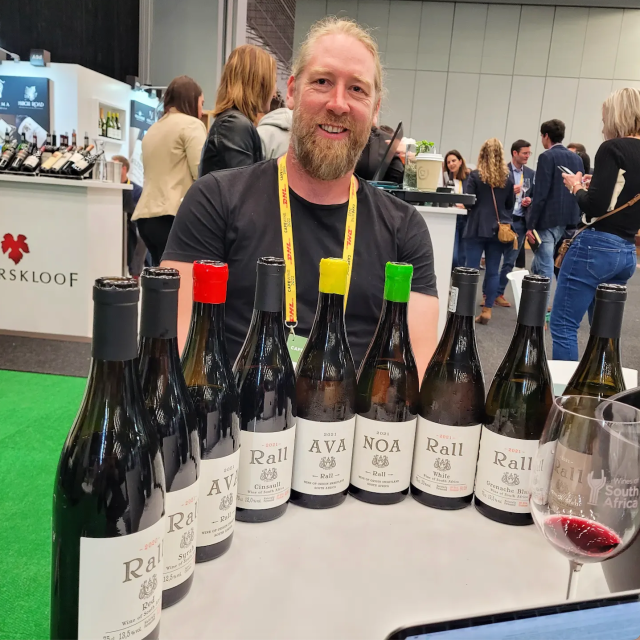
Donovan Rall

Rall Wines Noa 2021, WO Swartland

The first, named after Donovan Rall’s daughter born during the pandemic. From 2.1 hectares of chenin blanc planted in the Paardeberg in the 1960s on the finest decomposed sandy granite soil. “Granite is the only soil that can give you this super reductive style with great energy,” tells Rall and he cropped to yield at three tonnes per hectare. Picked super early at high acid and low pH (3.28 in 2021, after malo) at the high point of the vitality vortex. Moving away from texture and into the business of lightning and mouth-watering succulence from a chenin so electrically plugged in. All this for only 12.0 per cent. “What we learned through the drought years is you don’t have to pick things as you were traditionally taught.” The decision made was at least two weeks as compared to 15 years ago, climate change aside. Truth. Drink 2022-2029.  Tasted October 2022
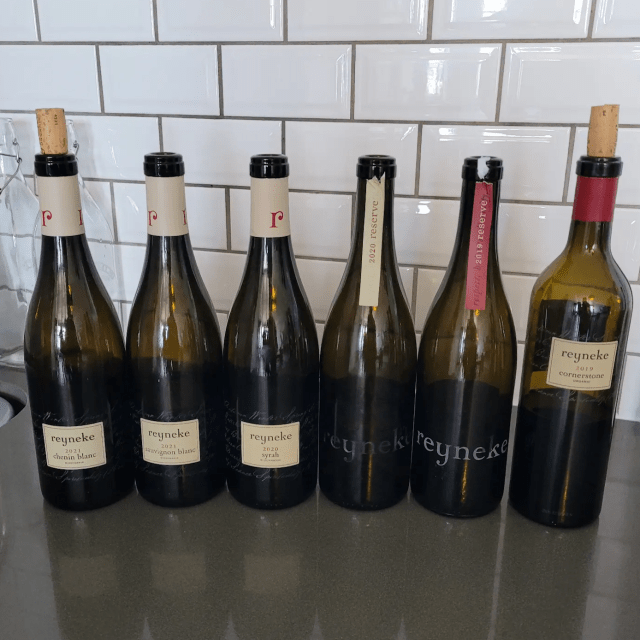
Reyneke Chenin Blanc Biodymnamic 2021, WO Stellenbosch

Biodynamic, estate farmed, from vines planted in 1974 and 1976, part of the certified Old Vines Project. Surely it is old vines at the source coupled with the principled biodynamic exercises to make for an enlightened and heightened precision in a chenin blanc of purity and trenchant estate desire. Concentration, varietal hyperbole and a reflection of what the farm wants to share are the drivers and we the passengers abide. There is no doubt that this Reyneke exists (with distinction) within the vacuum of what is working and creating haute quality chenin blanc. Success is measured by dint of hard work and respect for all things natural, including humans, animals and plants. This paints a picture and sculpts a figure of fine granite. Drink 2022-2028.  Tasted October 2022

With Adi Badenhorst

White Blends

A.A. Badenhorst Kalmoesfontein White Blend 2021, WO Swartland

There are reasons why many Western Cape winemakers increasingly turn to accounts spoken in stacked varieties through appellative white blends. Not because it can be a French thing to do in the ways of Châteauneuf-du-Pâpe but because it makes for wines possessive of immense character. Adi Badenhorst makes use of at least 10 different grapes and you’ll need to read the bottle to know what they are. But seriously chenin blanc is joined by grenache gris, grenache blanc, marsanne, clairette, verdelho, roussanne, sémillon, viognier and palomino, Stacked, layered, integrated and in a vintage as rich as ’21 also acidified just ever so slightly. Says Adi. “We need this wine and to pay a lip service to them is essential.” White Blends they are the walrus. “I am he as you are he as you are me and we are all together.” Sees one year in foudres and one in concrete. Only in South Africa and as here so very noteworthy from the Kalmoesfontein Farm at the base of the Paardeberg do these extract and alcohol conversion rates create magic. Decomposed stone infused, citrus and DNA of granite manifested as a swirl of orange, lemon and lime, tea and cordial fulfillment. Swartland grape varieties combining for brilliance in genius, epically so. Drink 2023-2030.  Tasted October 2022

Alheit Vineyards Cartology Bush Vines 2021, WO Western Cape

The question is posed to Chris Alheit but he says the lighter and lighter (including alcohol) wines are not a matter of intentional design nor aesthetic choice. Farming and the use of grand-sized blending tanks in the mid four to six months increases stability, mobility and consistency well ahead of bottling. Clarity is ensured, true clarity and more purity plus “the guarantee to present the best version of that vintage.” In the end the chenin blanc plus (20 per cent sémillon) Cartology 2021 seems to be the most effusive, sharp and translucent to date, this despite a group of on repeat parcels varying in output from vintage to vintage and quite significantly so. This is primed and ready if perhaps ready to begin peaking as early as next Spring. Drink 2023-2027.  Tasted October 2022

B Vintners Vine Exploration Company “B” Haarlem To Hope 2021, WO Stellenbosch

Cousins Bruwer Raats and Gavin Bruwer Slabbert created Bruwer Vintners Vine Exploration Company in 2014 to celebrate family and Cape heritage through a joint venture. Haarlem To Hope 2021, from the motherland to the Cape of Good Hope, a blend of nearly 70 per cent chenin blanc with just about (30) sémillon plus bits of muscat blanc and muscat d’Alexandrie. All from Polkadraai Hills where Raats’ extraordinary Eden chenin is from. All four blocks of vines are old and Bruwer had to convince a neighbour not to rip them out. The chenin is barrel fermented, the sémillon harvested early and the blend is laden with this amazing glück, a textural component indescribable using any other word. “B” is for everyone involved; Bruwer, Gavin’s mother’s maiden name and the history of the Bruwer Huguenots. Impressed by how this never drifts into oiliness or liquid metals but finds balance between all parts. The texture could be called sumptuous but in any case the two plus two varietal get together walks up and down both sides of a two-way street. Drink 2022-2026.  Tasted October 2022
With Sebastian Beaumont

Beaumont Wines New Baby 2019, WO Bot Rivier

New Baby was released in June of this year and 2015 was the first vintage of a truly Cape conceptual wine. It was launched as a way to combine the idiosyncrasies and potentially complimentary personalities of different white grape varieties on the farm. In 2019 the lead is chenin blanc at 40 per cent with (30) sauvignon blanc plus smaller amounts of chardonnay, sémillon and colombard. They were all planted by Sebastian Beaumont’s father from 1974 onwards. The style and notion follow the line established by Hope Marguerite. “My mother said every vintage was like giving birth to a new child,” explains Beaumont. “Once you do something it’s hard to shake.” Yet another brilliant white appellative blend to define the Cape’s idiomatic meets wild west psyche and only in South Africa do the interpretations emerge like this. All in barrel and the vapour trail is palpable, especially in the flint and smoulder that come from the Bordeaux grapes. New Baby pops, piques, kindles and snaps, raises the senses and is just a perfect conceptual creation. Hard not to love this bloody wine. Drink 2023-2030.  Tasted October 2022

Christa Von La Chevallerie

Huis Van Chevallerie Springhaas Vin Blanc 2019, WO Coastal Region

Springhaas is the South African hare, a medium-sized terrestrial and burrowing rodent. Despite the name, it is not a hare. Springhaas the white appellative blend is from Voor-Paardeberg, of 40 percent chenin blanc, (33) viura and (27) verdelho. Many winemakers get their “specs” from these vineyards, including Thorne & Daughters. This is Christa Von La Chevallerie’s concept wine but also a signature of who she is. The viura is also used for her Hummingbird sparkling. “It’s from the mountain and people know it,” she says and what she means is this is bloody good juice. “It’s my six dollar version of something fun. Others can play on top of it.” Well it jumps and hops so there’s that, also fine bitters, lime, a fino moment and a sweet brininess that makes you want more. What a fantastic finish, drink enough of it and it goes all refreshing and satisfying. But you’re upset when it’s gone and it makes you realize that you’re also hungry. The chenin from decomposed granite releases the acidity and is the impetus for excitement. Just enough takes the lead to establish balance. Springhaas will have you realize with relief that this is not an invitation to small Pedetidae murder but an alliterative description of an appellative deliveroo. “Here, hare, here.” Drink 2022-2026.  Tasted October 2022
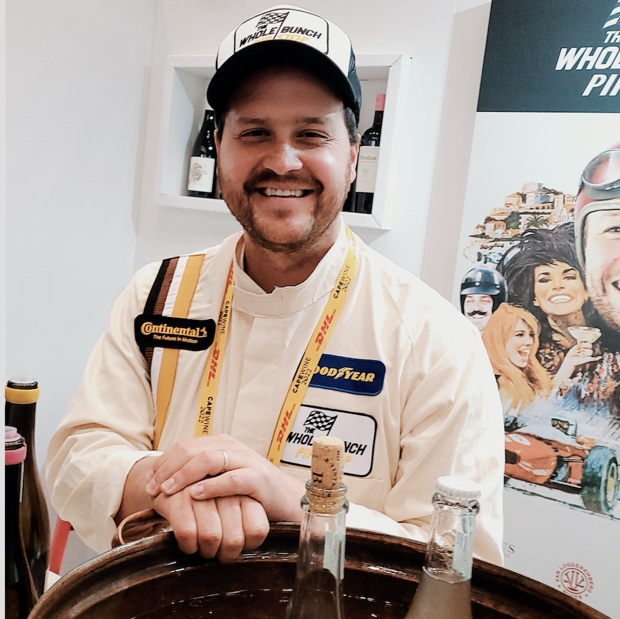
Franco Lourens

Lourens Family Wines Lindi Carien 2021, WO Western Cape

The influence on and reasons are numerous for Franco Lourens to make this white appellative blend. It begins working alongside Chris Alheit and a little wine called Cartology, develops out of a need to pay for an engagement ring, solicits the assistance of old vine chenin, old for South Africa verdelho plus wisened teens named colombard, grenache blanc and palomino. Finally, it’s success and payout get the ring, marries the girl and the wine remembers it all, named after Franco’s bride, Lindi Carien Lourens. The Stellenbosch verdelho (35 per cent), Swartland chenin blanc (21) and colombard (19), Piekenierskloof grenache blanc (18) and 1972 planted palomino (7) are all expertly judged and delineated in 2021. Five days of skin-contact on the GB does just enough to solidify and texturize the entirety but otherwise it’s “lazy winemaking” says Franco for a wine first made in 2016. Oak is old while the package is just as tight and seamless as a WAB can be, especially in the WC. The layers of components really do like one another, that much is obvious and yes, “all my wines have come a long way,” says Lourens. “I try to tighten the bolts and the screws every year.” These are snug in 2021. Indeed. Drink 2022-2027.  Tasted October 2022
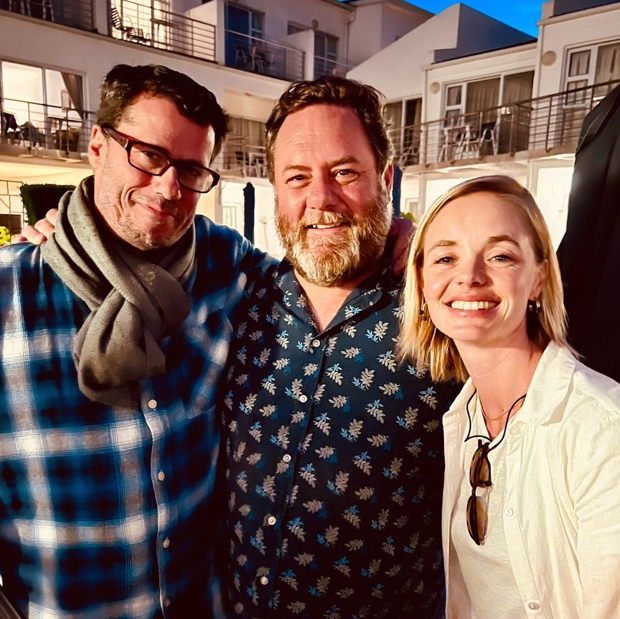
With André Morgenthal and Charla Bosman

Sijnn White 2020, WO Malgas

This 2020 is the first vintage to bring verdelho into the mix with chenin blanc (the OG variety planting in 2004) and roussanne. The Iberian grape takes this intrepid White to a side-stepping, new era level. The first of its ilk and a bit clumsy whilst this young and impressionable but my how this will change perception and forward thinking with respect to Malgas blending. The White iterations from 2017-2019 are stellar wines and represent peak performance for their time. But change and growth are good and necessary, otherwise things get stale, even in this crazy outpost of a wine-growing place. There is much to learn from the 2020 first kick at this new can and there can be no doubt winemaker Charla Bosman will take little time to morph this new identity into something mind-blowing. Drink 2024-2028.  Tasted October 2022
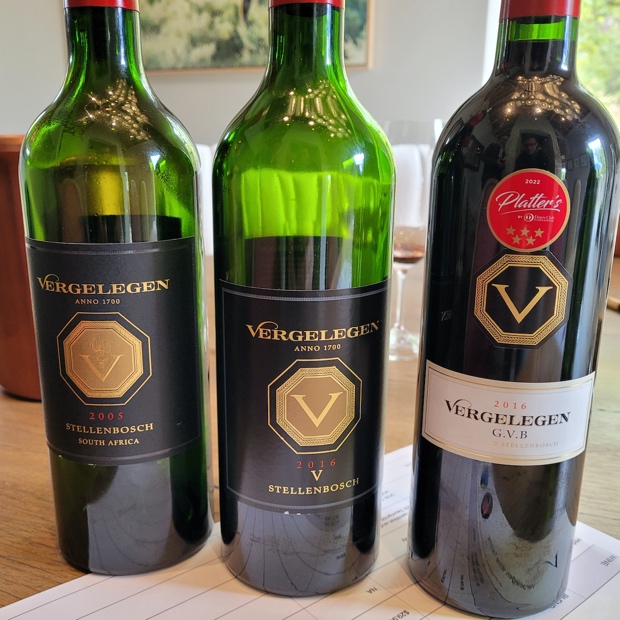
Vergelegen G.V.B. White 2021, WO Stellenbosch

A Bordeaux blend of 78 percent sémillon with (22) sauvignon blanc and likely the most dominant blend in this regard anywhere in the Western Cape. The sém portion is usually 50-60 and here from 2021 the standing firm, upright and out is on fully skeletal display. There can be no mistaking the fynbos and on a grander scale the estate farm in this wine. Peaches and cream dictate the fruit aromatics before the sémillon kicks into pedal to metal overdrive, ushering in resins, essential plant oils and strength of character acidity. This was bottled at the end of 2021 and just recently released. Subsequent vintages will be under the reigns of new winemaker Luke O’Cuinneagain whose track record includes stints at Château Fieuzal, Cave Dietrich, Château Angelus, Screaming Eagle, Rustenberg and Glenelly. Drink 2022-2026.  Tasted October 2022

Red Blends

A.A. Badenhorst Kalmoesfontein Red Blend 2021, WO Swartland

Five grape varieties and as Badenhorst is wont to do they are all co-fermented. As a winemaker or in any homestead job you are always influenced by where you grew up and who you worked with. Tells Adi, “in the Swartland these are the varieties that were there.” And so this is Saint-Éstephe meets Cornas, rustic yet pure, ripe and ripped. No make up and it preaches the Badenhorst philosophy. The elévage is 80 percent in concrete with (20) new casks. Turned out to be a pretty tannic vintage, maybe even as a surprise to Adi. “There’s oxygen here.” The most structured of all these wines and clearly one that can age, with thanks to amazing vineyards. Drink 2024-2032.  Tasted October 2022

Glenelly Estate Reserve Red Blend 2016, WO Stellenbosch

Based on Bordeaux varieties and the fruit is almost second wine styled as if Lady May the Glenelly grand vin is Paulliac and this Reserve Red is La Croix Ducru Beaucaillou. Or something along those lines. Here we receive top ecehlon Cape cabernet sauvignon with merlot and petit verdot but the side-swiping catalyst is the generous and liquid peppery splash of syrah, the energizer and impetus to really make this Meritage go. Rich and chocolaty, financed and very clever, warm and woollen. Yes it reminds of Bordeaux in Western Cape earth but that syrah changes everything. Or adds actually, activates notions and sentiments only Stellenbosch and environs are want to do. Creates a new yet old-hearted heritage. Drink 2023-2027.  Tasted October 2022

Kanonkop Paul Sauer 2019, WO Stellenbosch

Abrie Beeslaar is the winemaker of this Cape icon of a Bordeaux blend in 2019 composed of 75 percent cabernet sauvignon, (14) cabernet franc and (11) merlot. Beeslaar notes that the carry over of drought is still felt through this ’19 pulled from dryland vines aged 30 years on average and growing in decomposed granite, Hutton and Clovelly. Obviously youthful as to the point of immovable but in a modern world Paul Sauer speaks clearly and the vernacular is as understood as it has likely ever been. Tasted alongside the ’91, ’97, ’09 and ’14 you can see a shift in style over the course of nearly three decades or rather an adjustment to keep up with wants and needs. Change does indeed match the times and while this blend is about as structured as any in the Western Cape there are more handsome qualities and even a moment or two of immediacy. Not exactly gratification because the tannins are a force but things seem measurable. The middle palate is full and flavourful, giving off this cool sensation. Many years of excellence lay ahead. Drink 2025-2035.  Tasted October 2022

Meerlust Rubicon 2017, WO Stellenbosch

From a drought vintage yet there can be little doubt that in farming these Bordeaux varietal vineyards almost every bunch, however small they may have been, came out fresh and healthy. Rubicon 2017 is all perfume, of violets and berries, currants and Cassis as a by-product of distilling these varieties down. Still youthful and feeling a bit boozy though the complexities and acidities have yet to arrange, layer and align. The intensities are a bit haphazard and there are so many programming features running on overdrive. A look deep back for a comparison might be 1991 and if there is truly a connection then the future for this vintage is so very bright. Drink 2023-2033.  Tasted October 2022
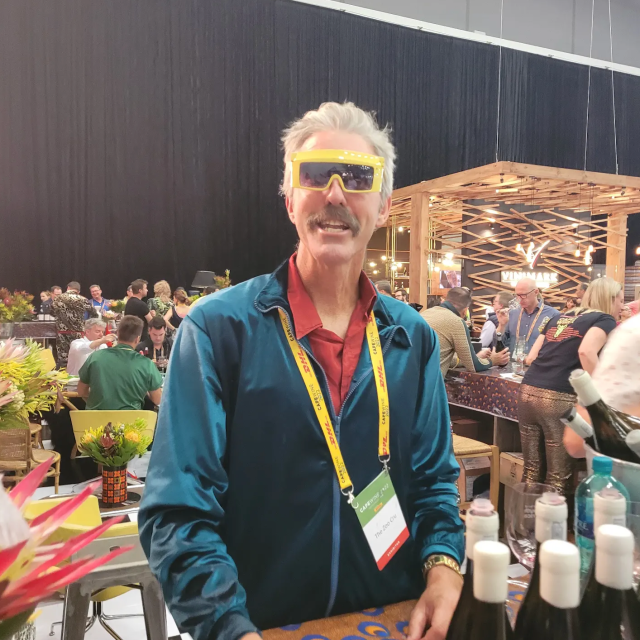
Duncan Savage

Savage Wines Red 2020, WO Stellenbosch

Still called “Red” but since 2017 this artist formerly known to blend with grenache, cinsault and touriga nacional no longer seeks that meritage effect. For good reason because the syrah fruit is tops and under this command it transforms into magic. The idea of cuvée persists but the concept is that of mono-layering, single varietal stacking, syrah on syrah upon syrah. The progression come to this makes perfect sense for a signature wine to define what Savage wines is and needs to explain. This wine is unreal, fully formed and seamless, of a structural indemnity that shifts risk from one party to another, from one layer of syrah to another so that the whole is always protected. Might seem or feel like an impossibility but when one part has the back of the rest and the engineering covers the whole, then the architecture is solid. A beautifully tough and grippy syrah is the result, never gritty or swarthy but so very fine-tuned. Drink 2025-2030.  Tasted October 2022
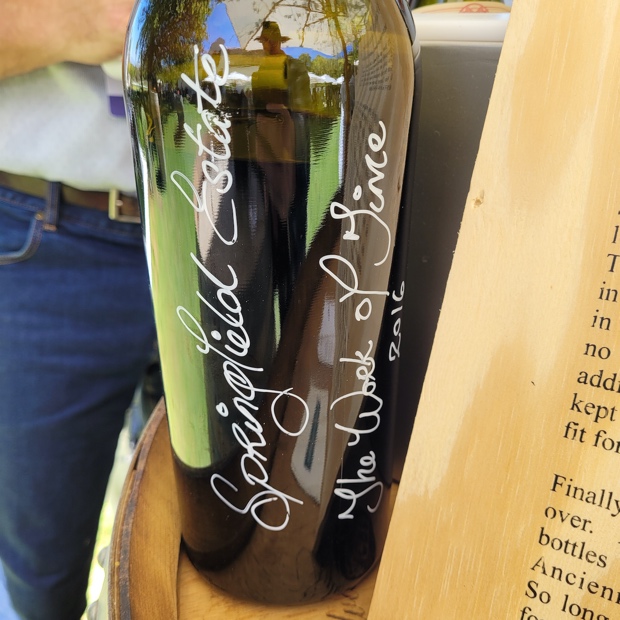
Springfield Estate The Work Of Time 2016, WO Robertson

Based on the concept that “time is the lost element in today’s winemaking, can be so precious – yet it is free.” Time for a 1992 planted vineyard to reach a level of maturity to make a great wine and so the first vintage is 2001. Time in barrel and bottle, two plus four, then released with the work having already been done. Ready to drink? Not so fast. Time is not of the essence but for the patient. The grapes are cabernet sauvignon, cabernet franc, petit verdot and merlot for a truth be told in woollen, swarthy and sauvage personality, needing two more years to begin breathing and exhaling the true character of their gathering. Bonded together they will be one flesh and fleshy they will be, fruit and animal, of a vibrancy to speak of cape heritage through red blends. Chalky tannins and high acidity also need to cooperate but in the end this will surely become something really special. Drink 2024-2030.  Tasted October 2022
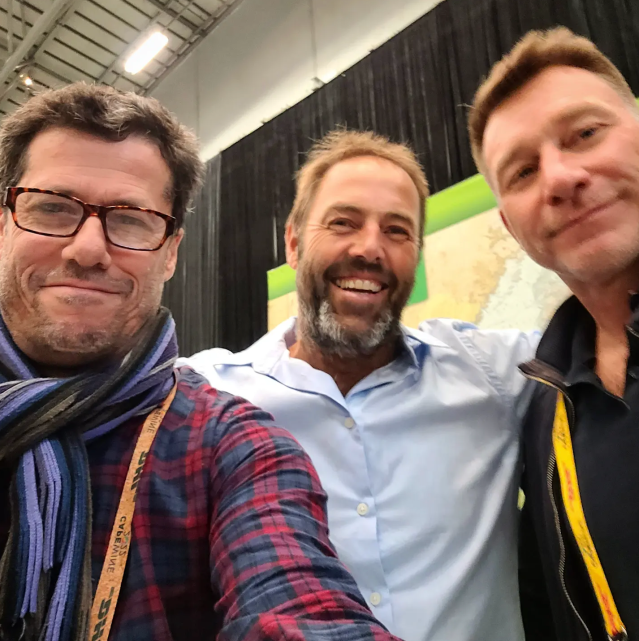
With Eben Sadie and John Szabo MS

The Sadie Family Die Ouwingerdreeks Columella Liberatus In Castro Bonae Spei Vindemia 2020, WO Swartland

Less syrah (40 per cent as opposed to what used to be 80), with grenache and mourvèdre plus more tinta barocca now in Columella. Results in an even firmer, linear, direct in your face and on the palate kind of red blend. Tannic to the bone, a karst now painted on, slowly to weather and be stripped away, eventually to dry as a charcuterie board of salumi, savoury jam and tart pickle. Eben Sadie feels this stylistic cuvée in his bones, down to his core and know this. Big extraction and heavy oak treatment is not part of the program. For the highest degree of complexity accumulated it would be best to hide this ’20 away and return in 10 years. At the very least. Check in after four or five and there will be great reward if not the kind of next level, millennia or epoch. Drink 2026-2037.  Tasted October 2022

Agulhas

Varietal Whites

Ataraxia Chardonnay Earthborn 2020, WO Hemel-En-Aarde Ridge

Snap, crackle, dried green apple skin dusted and pop with white pepper bite. Savoury-herbal by a typically endemic site where terroir is clearly the driver for this particular chardonnay. Vineyards of fruit counteracted by salinity. Drink 2022-2025.  Tasted October 2022

Bosman Family Vineyards Chardonnay 2021, WO Upper Hemel-en-Aarde

Persistently reductive, brown butter nutty and softly aromatic. The notable (13.9 per cent) alcohol accentuates the 15 per cent settled juice aged in Burgundy barrels for six months to make this feel generously wooded. Richer palate and furthered intensity. Tasted as part of a 15 chardonnay flight in perspective at L’Avenir. Drink 2022-2024.  Tasted October 2022

Bouchard Finlayson Chardonnay Missionvale 2021, WO Hemel-en-Aarde Valley

Pure citrus entry, all parts involved, juice, zest and pith. Well lees aged during its tenure with sweet fruit scents, flavours and naturally occurring caramelization. Old school, less cool and yet herbal minty through the mid stage, then ranging quite long and far. One of the more complex chards with depth and warmth provided by the valley floor. Drink 2022-2025.  Tasted October 2022
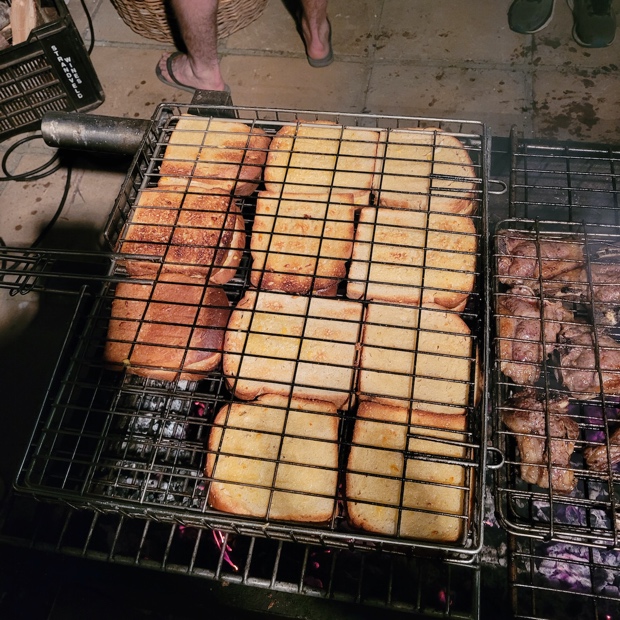
Braai Brekkies in Arniston

Cap Maritime Chardonnay 2020, WO Upper Hemel-en-Aarde

Cap Maritime is the Upper Hemel En Aarde chardonnay work of Boekenhoutskloof’s Marc Kent. A classic cool climate chardonnay, whether by place or vintage, or perhaps a combination of the two. This jumps out as one made in the most wholesome and also dedicated way, smooth and consistent, surely a factor of an estate’s terroir. Perfectly seasoned and reasoned for great effect. Cool all the way. Drink 2022-2024.  Tasted October 2022

Creation Chardonnay 2020, WO Hemel-en-Aarde Ridge

Quite buttery and rich, fully formed, styled and developed as chardonnay in a cool yet at times foggy and humid climate. A fine mix of toast and texture, energy and appeal. Drink 2022-2024.  Tasted October 2022

Zoo Crü – Cape Wine 2022

Crystallum Chardonnay Clay Shales 2021, WO Hemel-En-Aarde Ridge

Clay Shales is what Bourgogne not called Grand Cru strives for. That would be stage presence, which is a character trait that less than one per cent of the world’s chardonnay can say it displays. Andrew and Peter Allan Finlayson have mined platinum with this 2021 of a what’s in a name codex for Bokkeveld Shale meets clay soil. Single vineyard chardonnay of one hectare producing only 2,000 bottles is deserved of cru status when it takes a producer’s profound to an entirely new level. Hilltop site, windy as fuck and you can sense the breeze blowing through to mitigate and balance an unreal level of richness and concentration. Not just this but an equality by a tautness that commands respect but also relaxes to let the fruit exhale and express. Clay Shales is an important matter of a single Hemel-en-Aarde ward, a ridge supreme upwards and its makers standing two metres tall, upright and looking over the pack. Chardonnay at the pinnacle for Crystallum’s studio work, conveying much without overstatement. It is almost impossible to imagine any Western Cape chardonnay discussion without it. Drink 2024-2030.  Tasted October 2022
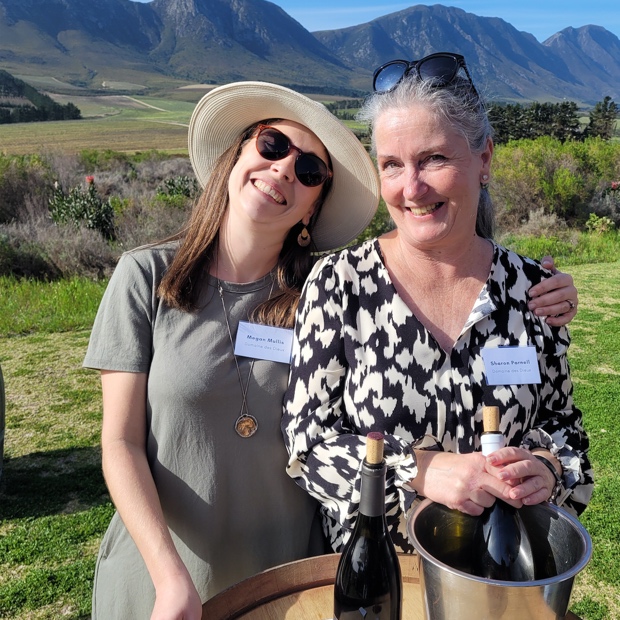
Megan Mullis and Sharon Parnell, Domaine des Dieux

Domaine Des Dieux Chardonnay 2019, WO Hemel-En-Aarde Ridge

The mansion of the gods and can’t help but think of a childhood cartoon memory (Asterix) but there is nothing childish or cartoonish about this splendid chardonnay. By a long shot the most reductive of the 12 thus far in this blind tasting flight. Holding back the years and tears, a chardonnay of deem, deed and demand, explaining little, not interested in giving in, clearly designed for longevity. Impressive and of secrets we wish to know. “Hoping for the arms of mater, get to me the sooner or later, oh.” Drink 2023-2027.   Tasted October 2022

Godello in Hemel-en-Aarde

Hasher Family Wines Chardonnay Marimist 2020, WO Upper Hemel-En-Aarde

Richly aromatic, emitting the perfume of fresh yellow flowers like few in a 15 strong chardonnay flight from the Hemel-en-Aarde. No let down on the palate in fact texturally this lays it all out, with more fruit and wood interaction than most in an evolved, developed and symbiotic way. Fulsome wine, ready, willing and able. Drink 2022-2024.  Tasted October 2022
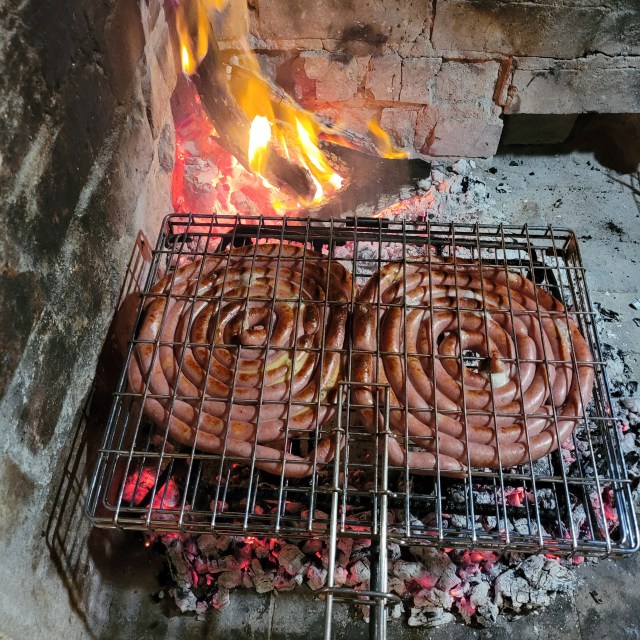
Braai at La Motte

La Motte Sauvignon Blanc Pierneef 2021, WO South Coast

Pierneef, a reference to the well-known painter. Includes 10 per cent sémillon and the earliest vineyards were planted in the 90s. Pinpointed sharpness in sauvignon blanc and although there is a sense of pungency the urgency of freshness and spirit are the shit. Comes from Agulhas in the Cape’s South Coast which is the most southern vineyard in Africa, perhaps the coolest there is in the Western Cape. There is indeed a Sancerre sentiment here but stands apart, alone, of its own accord. From a growing contract of 25 years, rented, a management contract paid and grapes taken. Drink 2022-2025.  Tasted October 2022
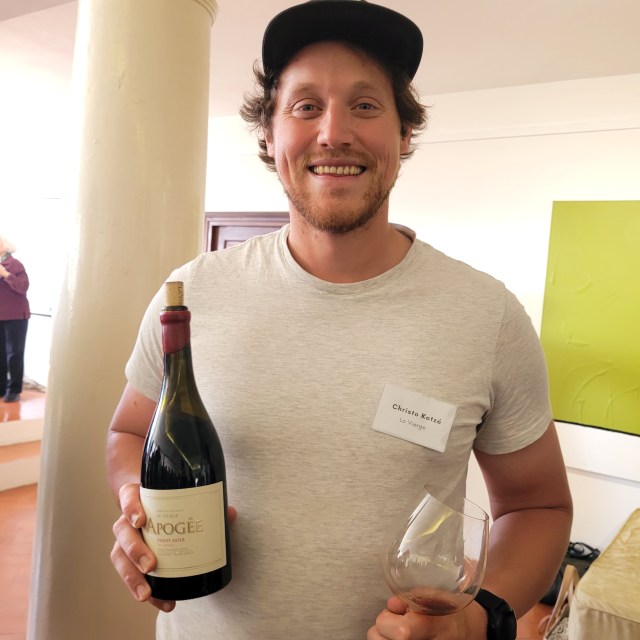
Christo Kotzé, L’Apogée

La Vierge Chardonnay Apogée 2018, WO Upper Hemel-En-Aarde

Though a 2018 the primary notes prevail in this chardonnay from a cool marine climate. Young vines (eight years of age) on the plateau’s argillaceous Bokkeveld Shale and sea breezes are at the tops of influence. Closed, taut, yes reductive but more so a case of youth, unforgiving and ungiving while in that state. A mildly warming and nutty white caramel indicate change is coming as they carry on and over into a chardonnay expressive of great length. High caste and style though the climax or pinnacle of potential is far from realized. Drink 2022-2025.  Tasted October 2022

Natasha Williams, Bosman and Lelie Von Saron

Lelie Van Saron Chardonnay 2021, WO Upper Hemel-en-Aarde

Exceptional and artistically precocious work here at the hands of Natasha Williams, cool and linear, of less barrel than most. A bit taut and tightly wound. Piqued, liquid white peppery, no caramelization, brown butter nuttiness or toast in any shape, style or form. Not the longest finish though also never sharp – nor abrupt neither. Solid construction, plenty of citrus, proper and distinct. Drink 2022-2024.  Tasted October 2022
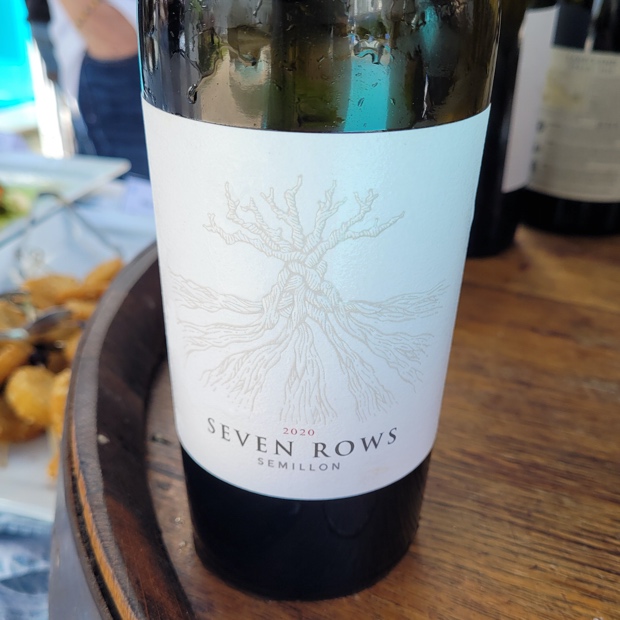
Lomond Wines Sémillon Seven Rows 2019, WO Cap Agulhas

Must be nice to farm and produce in a climate where you can consistently grow and then gift straight sémillon and this from Lomond is about as credible as they come. Obvious richness mixes with herbology in sweetness but most of all the effect comes from barrel fermentation in 500L tonneaux. Lean is not the operative though mineral and elemental surely are, not merely salty but marine influenced at the southern most point on the African continent. It’s something so much more, notorious even, unique, curious and all in. Intensely woven as sémillon will ever get and the real interest is to see how this ages. Great intrigue. Drink 2022-2026.  Tasted October 2022
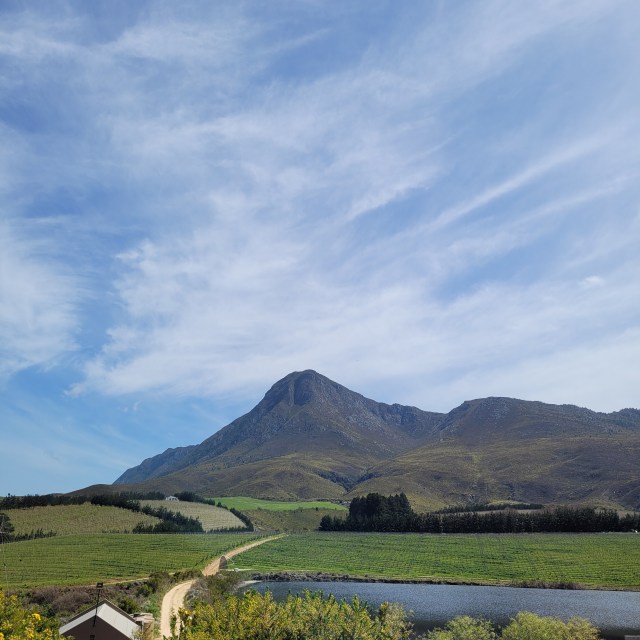
Hemel-en-Aarde

Newton Johnson Family Vineyards Chardonnay 2021, WO Upper Hemel-En-Aarde

Newton Johnson’s is self-professed vibrant chardonnay to rival Bourgogne as well as anywhere in South Africa. Their 2021 raised in the ward of the Upper Hemel-En-Aarde shows so much more than taut mineral activity and is yet so far from anything remotely tropical. Rather it resides on the barrel fermented side of things where fruit richesse and oak fuelled beauty get together in a whirl and swirl of lees and acid, forming a cone of chardonnay in centrifuge, oily and silky at the same time. There are some juicy terpene moments upon tasting and so a disparate moment or two will happen before the warmth of this chardonnay nurtures as it trickles down upon the finish. Feels preserved in great balance and of citrus in oxygenated motion. Drink 2022-2026.  Tasted October 2022
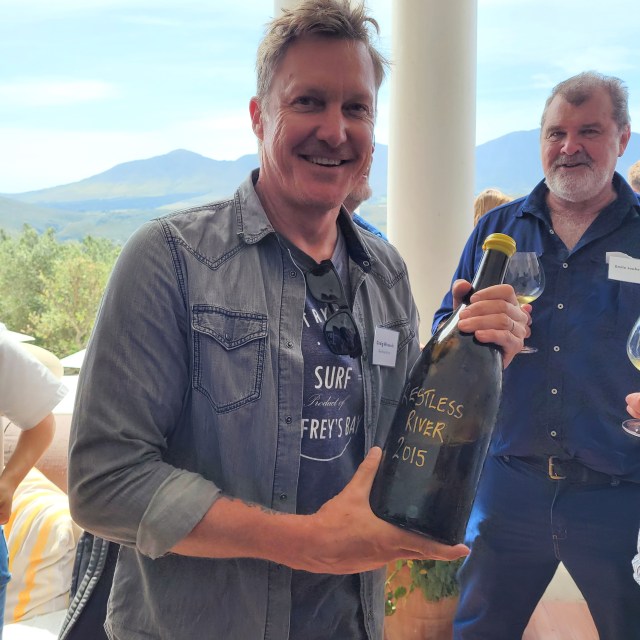
Craig Wessels

Restless River Chardonnay Ava Marie 2020, WO Upper Hemel-En-Aarde

To meet and taste with Craig Wessels is to know him because he wears his wines on his sleeve and allows them to do the talking. They in turn speak on behalf of a breeze swept place aboard the plateau of the Upper Hemel-En-Aarde. There is a wee bit of (Tuscan) amphora addition and yet its effect is only sensed in the shadows of this understated chardonnay. Named for Wessels’ daughter with fruit hermetically contained and protected the minute it left the small, profound and single two hectare vineyard. A bit demure, pretty and classic, less ambition and need for immediate recognition but clearly confident without attitude or overt display. Almost convinces of the simple, amenable and how remarkably easy it is to get with, but that is indeed the beauty and subtlety of this wine. Fine wine. Made that much more indelible after tasting a 2015 from Magnum with Wessels over lunch at Hamilton Russell. Drink 2023-2028.  Tasted October 2022

Jessica Saurwein

Saurwein Riesling Chi 2022, WO Elgin

CHI is the riesling work of Jessica Saurwein, German-South African, naturalist and champion of both riesling (Elgin) and pinot noir (Hemel-en-Aarde Ridge). The word carries two meanings, translated as “life force” and also the first three letters of CHIUTA, an African rain god. These are spiritual connections that reflect the individualism of the producer and also her wines in the how, where and why they are of a magic produced by the garden. Saurwein’s 2022 is a beautifully balanced riesling of invisible pulse that feels akin to how mushrooms might communicate with one another using electrical impulses. You could imagine attaching a soundboard and speaker through electrodes to the vines to measure spikes in signal activity. Just as a scientist would connect to hyphae and hear them talk. But I digress and in this glass this mix of 11.5 per cent alcohol, 11.5 g/L RS, 7.5 g\L TA and less than 3.0 PH equates to a rich yet linear riesling of full flesh and healthy bones. A riesling aching to explain itself, how it is grounded while also soulful, hovering in weightlessness and ethereal. This may seem like a quiet, standalone organism of a wine but is in fact a complex weave of language transmitting soil, geology and place. It’s really quite special and Jessica Saurwein seems poised to be the Cape winemaker who will translate substrate behaviour with clarity through the language of wine. Drink 2023-2029.  Tasted October 2022

Southern Right Sauvignon Blanc 2022, WO Cape Coast

The fruit origins are threefold, as are the soil types. Walker Bay (47 percent), Hemel-en-Aarde (43) and Elgin (10) and a sauvignon blanc layering by way of clay-rich shale, decomposed granite and Table Mountain sandstone. Dry, medium to elevated acidity, low pH and moderate alcohol adds up to marine air freshness and what proprietors Anthony and Olive Hamilton Russell will say is “tensile character and a marked, saline minerality.” The Hemel-en-Aarde Valley contributes as much as any fruit source in terms of having a say, not dominant per se but leading in its confident way. A track record as solid as any of its ilk to deliver an intensity of flavour and that freshness overload, together thick as thieves, drinking at peak, right now. With four-plus years in bottle a next level flinty magic and fruiting genius will occur, like tooth fungi from mycelium when conditions run ideal. The vintage guarantees such a transition into secondary character will happen. Drink 2022-2027.  Tasted October 2022

Hemel-en-Aarde

Storm Wines Chardonnay Storm Vrede 2021, WO Hemel-en-Aarde Valley

Vrede is literally “peace,” as chardonnay so named and raised on clay-rich Bokkeveld shale soil in the valley where fog and humidity settle at the lower levels to play a direct role in viticulture and especially the ripening seasoning. The soils are shallow overlaid heavy clay and who could dispute this geology acting vehemently as a factor? Rich and golden, reductive yet apple fleshy yellow and cream textured. Protected beneath a savoury-candied shell then later accented by herbaceous rhizome spice. Continues with ever consistent persistence, unrelenting, direct, linear and perhaps while this youthful also just a bit woolly and wild. Must check this out on repeat for the first three-plus years. Tiny production of just 125 cases (of 12). Drink 2023-2026.  Tasted October 2022

Tesselaarsdal Chardonnay 2021, WO Hemel-en-Aarde Ridge

The juice is up front, the wine opening for immediate gratification, ready and willing to please. Charged though here in a first dimension without any knowable access to further ones available. Quite tart and spirited though on a one way street with a finite finish. Super high acid, early picked and a touch green. Drink 2022-2024.  Tasted October 2022
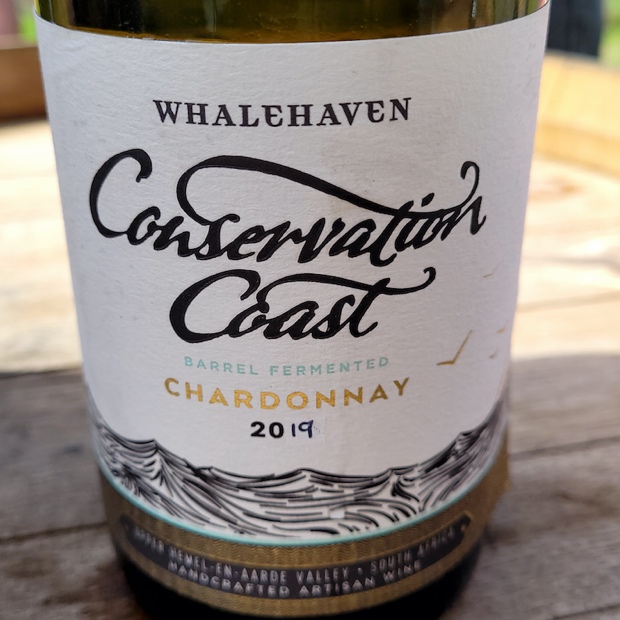
Whalehaven Chardonnay Conservation Coast 2020, WO Upper Hemel-en-Aarde

Slow to reveal, unwind and prepare itself for the great revelation, in tact and a chardonnay of firmness and useful tactility. The kind of tact is so apposite to wines that tack or are in fact tacky as this is anything but. The lees are a bit sticky and so there are some thicker glück moments. Drink 2022-2024.  Tasted October 2022
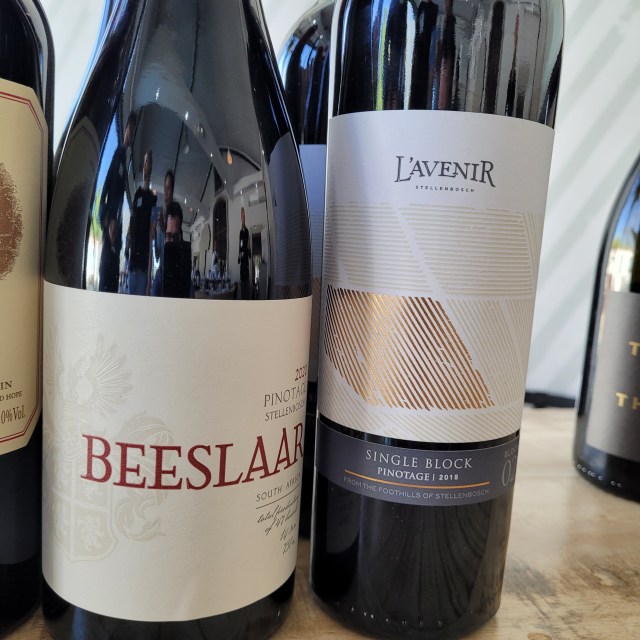
Varietal Reds

Beeslaar Wines Pinotage 2020, WO Stellenbosch

Abrie Beeslaar came from Kanonkop so the acumen with respect to pinotage is more than obvious. Beeslaar works with vines planted at the grape’s origins on the north side of Stellenbosch. There are few if any with this type of natural sweetness in the fruit, with thanks to the pinpointed location on the line of decomposed shale that runs up to Stellenbosch mountain. Passes through this pinotage with peaking fruit power and stone intensity. Despite 40 per cent new oak (and you feel the wood) there is a lovely peeking swarthiness about this pretty wine. Drink 2023-2027.  Tasted October 2022
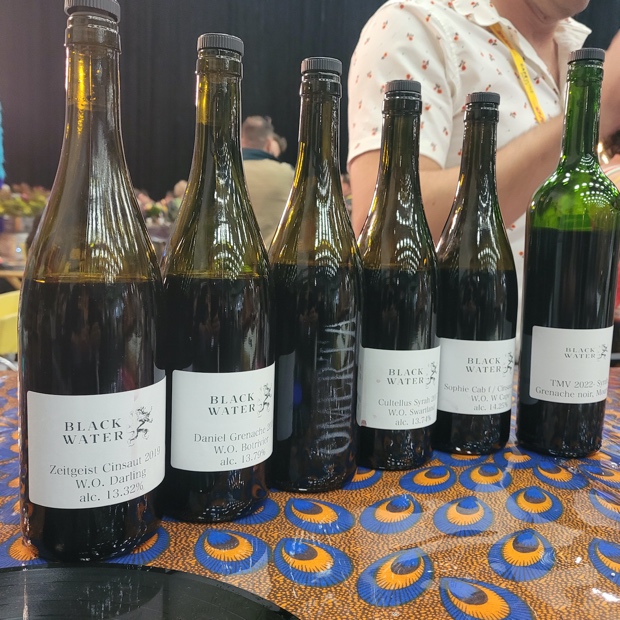
Blackwater Wines Cinsault Zeitgeist 2019, WO Darling

Francois Haasbroek makes use of the same Darling block of fruit as Duncan Savage in his cinsault called “Follow the Line.” This used to be called “Hinterland” but Haasbroek has changed the name to “Zeitgeist” and yes, the definition is equivocated through the idea of Western Cape single-vineyard wines from off the beaten path, small-parcel sites. Recall that “the defining spirit or mood of a particular period of history as shown by the ideas and beliefs of the time” is exactly what winemakers consider and exact from these varietal blocks. Francois goes at it with 60 per cent whole cluster and 100 percent concrete fermentation. Results in notable up front fruit with age-prepared softness and a marbling nearly unrivalled in Cape cinsault. Like protein of perfect ratio turning to butter the moment it hits the heat of the pan, this is the effect that transpires when the wine slides across the palate. Cinsualt of bandwidth from dry-farmed bush vines growing on Table Mountain sandstone for indelible grace. Drink 2023-2028.  Tasted October 2022
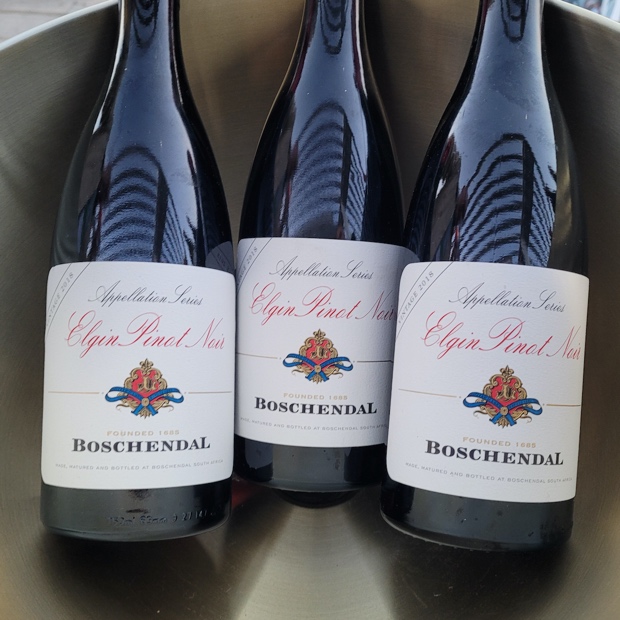
Boschendal Pinot Noir Appellation Series 2020, WO Elgin

Taken from vines growing at 500m on a what’s what of soil types; Heavy red clays, Table Mountain sandstone, Bokkeveld shale, Tukulu and Silica quartz with underlying Kaoline clay. An extreme slope and a place where baboons take what they want and wine is made from the remainder. Serious solar radiation juxtaposed against the coolness of what lays beneath the surface to result in dichotomous pinot noir, blessed of purely Elgin-styled red fruit, richness and tension fighting for supremacy. Earthy enough, element driven, aged in mostly 500L wood, to augment and not infiltrate. Could benefit from another six months of settling. Drink 2023-2026.  Tasted October 2022
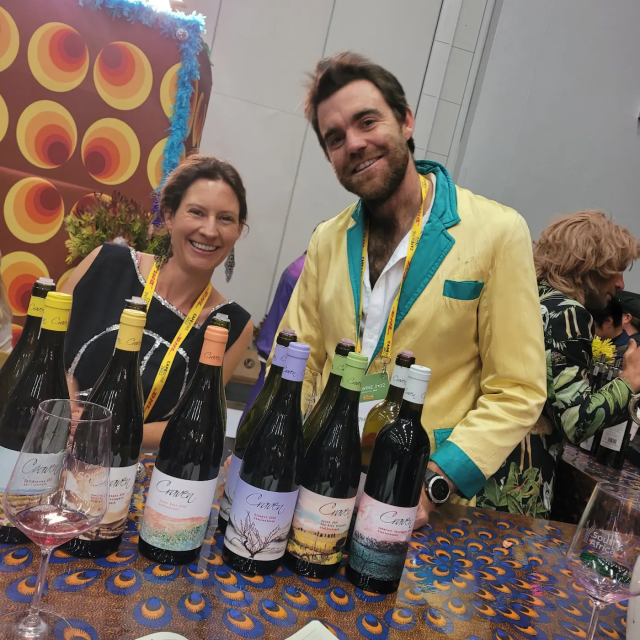
Jeanine and Mick Craven

Craven Wines Cabernet Sauvignon 2021, WO Stellenbosch

Mick and Jeanine Craven’s cabernet sauvignon grows right next to the chenin blanc site on mainly granite with some clay underneath. Fermentation includes 70 per cent whole cluster; why…why not…wait…with cabernet sauvignon? Mick shoots that mischievous look and that explains the choice because he gets it. He understands his fruit from Karibib Vineyard site planted in 1999 on these Polkadraai decomposed granites. The whole bunch number was far less in 2020 so maybe if he knew then what he knows now it would have been higher. Maybe not. Notable stem savour but one so piquant, toothsome and then a woolliness but one subtle enough to speak in just a whisper. There feels a syrah comparison but deliciousness in this cabernet comes without iron and closed fisted punches. Kind of Loire franc in its verdant character but again, there really is no reference, nor sauvignon connections neither. Clocks in at a low, low 12.5 per cent alcohol that only the Western Cape can effect for this grape variety while still delivering ripeness, generosity and peace of mind. Another bit of voodoo magic from a place and a maker that knows what’s what. The conclusion? Finesse. Drink 2023-2029.  Tasted October 2022
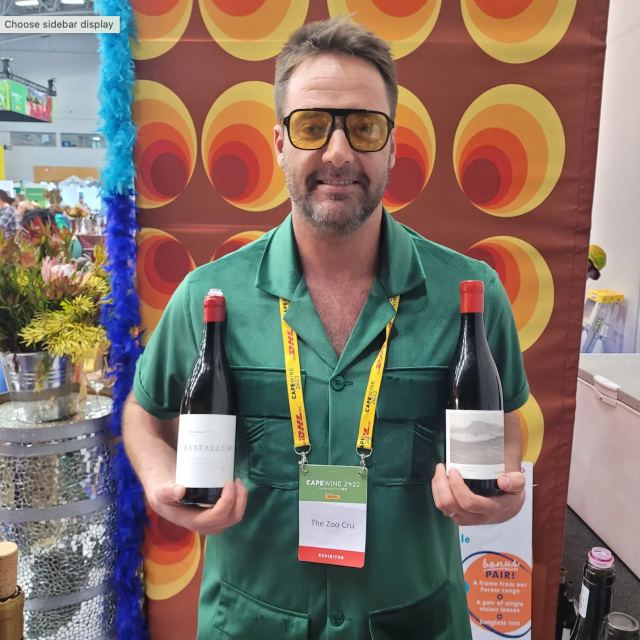
Gabriëlskloof Syrah Whole Bunch 2021, WO Bot Rivier

Now in the hands of Hemel-en-Aarde’s Peter Allan Finlayson of Crystallum and the third vintage of treating Bot Rivier syrah to all in, whole bunch fermentation. All the perfumes that can be pulled might just fill up a small room to do for syrah what only this place can in fact do. The carbonic maceration lasted for ten days before being pressed, taken off the lees and aged in steel tanks for eight months. Clarity, purity and aromatics flown off the charts. You can decide what they are to you but know their omnipotence will draw full attention. Creates a magically sweet, succulent and serious elixir, pretty and poetry in motion, serving up the Bot with sultry sensations. Quite something really. Drink 2023-2026.  Tasted October 2022
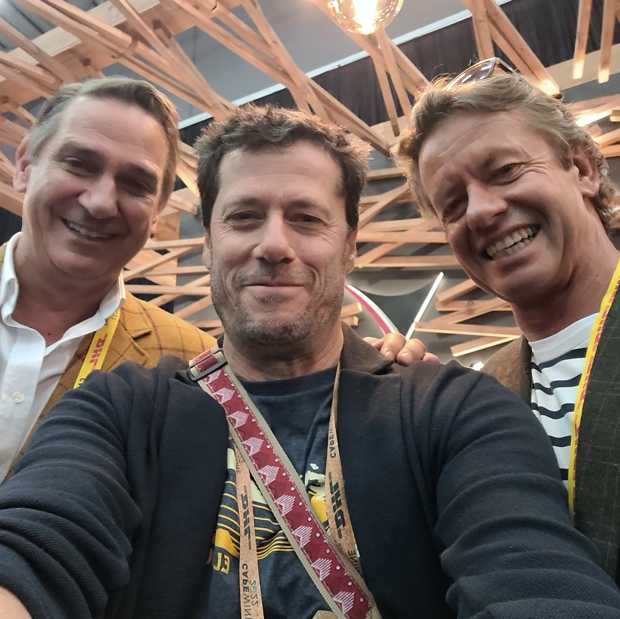
With Anthony Hamilton Russell and Johan Reyneke

Hamilton Russell Pinot Noir 2021, WO Hemel-En-Aarde Valley

It has come to the point where we want to distinguish stylistic differences between Ridge, Valley and Upper in the Hemel-en-Aarde and if any pinot noir is capable of creating some kind of definition than Hamilton Russell’s would be the one. From 2021 this feels like a light and ethereal kind, tight and restrained but not backward, which can always be a possibility. Valley pinot is less obvious, slower to reveal, incrementally opposite to the Ridge and apposite to the Upper, both of which are showier, less complex and quick to speak. Anthony talks about less solids being left in the tank (since the mid to late 2000s) to result in a greater ability to diversify in barrel. The great solids epiphany came in 2020, 10 years after the “malo epiphany.” When the Ridge pinots show more persistent tannic structure it can create wines of disparate character while the Upper will usually offer the most perfumed intensity. This is more aromatic than most from HR, gorgeous even, as “Burgundian” as ever there has been. Yet Hamilton Russell from the Valley seeks equanimity and slow maturation, never peaking too early or looking to deliver immediate gratification. Patience is the request, even in a “lighter” vintage. This from ’21 is no exception. Drink 2024-2029.  Tasted October 2022


Iona Pinot Noir Kloof Monopole 2019, WO Elgin

Andrew Gunn’s Kloof single-vineyard is the only one on the mountain and he alone makes this Elgin pinot noir from that fruit, thus the Burgundian monopole terminology. There are 12 blocks planted in 1998 and 2010 overlooking the Atlantic Ocean so the wind effect is more than imagined to create the taut tightest, finessed and saltiest on the local (and very parochial) scene. When pinot acts this alive it opens your eyes, nose and palate to a vitality capable of inducing invigoration. A fine example at elevation no doubt with great promise and eventually elegance with thanks to Iona’s focused attention and listening to the winds. Drink 2022-2026.  Tasted October 2022
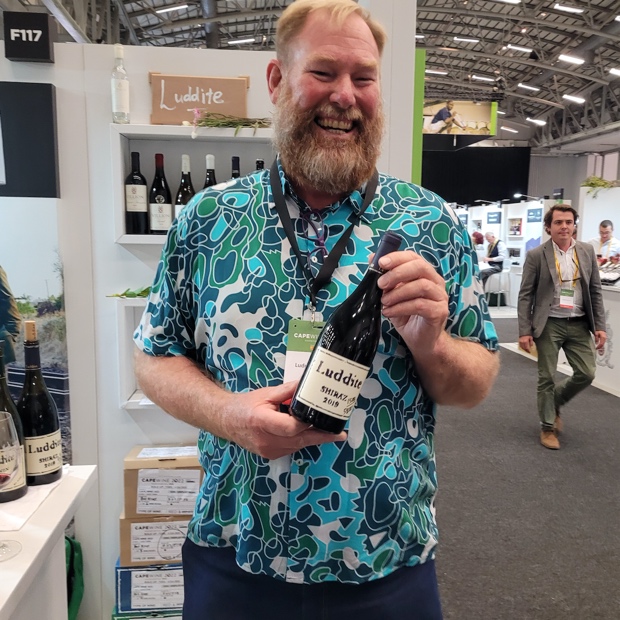
Niels Verburg

Niels Verburg

Luddite Shiraz 2019, WO Bot Rivier

This is the 20th vintage for Niels Verburg’s Luddite shiraz and what he calls “a survivor.” Each time it arrives there is this newfound, newly generated freshness in revival, no matter the season. The 2019 is the last of the drought vintages from which only 5,800 bottles were made for a sku that can be as high as 30,000. Garrigue aka Fynbos, iodine, Velddrif salts, Imphepho and Nasturtium. Lively and jumps right out of the glass. “Quintessential vintage,” smiles Verburg, released a bit early “but this ’19 is really good.” Producers who do it right work this way and this one reels you in though is surely also age worthy. Drink 2023-2032.  Tasted October 2022
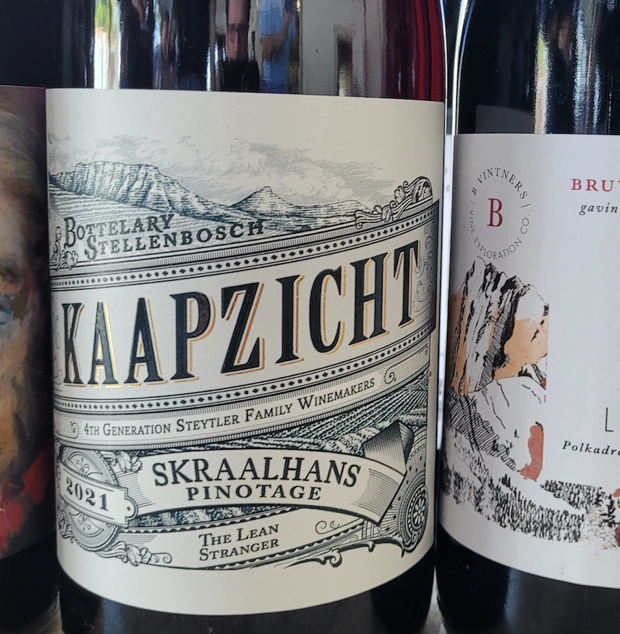
Kaapzicht Pinotage 2021, WO Stellenbosch

Known for a more traditional style, heavy and round, self-professed by winemaker Danie Steytler. Jokes aside this from Bottelary Road is indeed a dense and thickly consummate pinotage, liquid chalky and structured for a long, slow-cooked and extended warranty. Not that Steytler is trying to coax, extract and demand too much but place and climate do conspire anyway. The endgame is far away, for now embittered in black liquorice and taut intensity. Drink 2024-2029.  Tasted October 2022

Restaurant at Kleine Zalze

L’Avenir Wine Estate Pinotage Single Block 2020, WO Stellenbosch

From winemaker Dirk Coetzee, from a registered single vineyard planted in 1994. Smooth, refined and swelling with ample tannin. The more “Bordeaux” within the pinotage pantheon, of graphite and Ribena, a righteous greenness, modern perhaps yet earthy, already showing some soy, balsamic, fungi and truffle. Drink 2022-2025.  Tasted October 2022
With Marlise Niemann

Momento Wines Grenache Noir 2020 WO Swartland

This grenache noir is Momento’s OG because Marlise Niemann worked in Spain and in 2010 decided to put her faith in this grape. As always low yielding bush-vines in the Swartland grown on its ancient decomposed granite soil are the source and there are few Western Cape examples as beautiful as this. Any origin for that matter because Niemann and the Paardeberg have become soulmates and her choice of one-third whole bunch pressing is spot on. Creates a crust or barque on top of the ferment that carries through to the wine. Cold soak of four days and punchdowns exaggerate the sweetest fruit of sing-song temperament, a varietal Carole King, woven tapestry of longing and love. If you need a restart of your joie de vivre than this is the wine to pour. Aside from its undeniable winemaking genius, the grenache noir endures for its balance between place and adventure, as well as remaining grounded through its maker’s independence and relationship with the Swartland. Drink 2023-2028.  Tasted October 2022
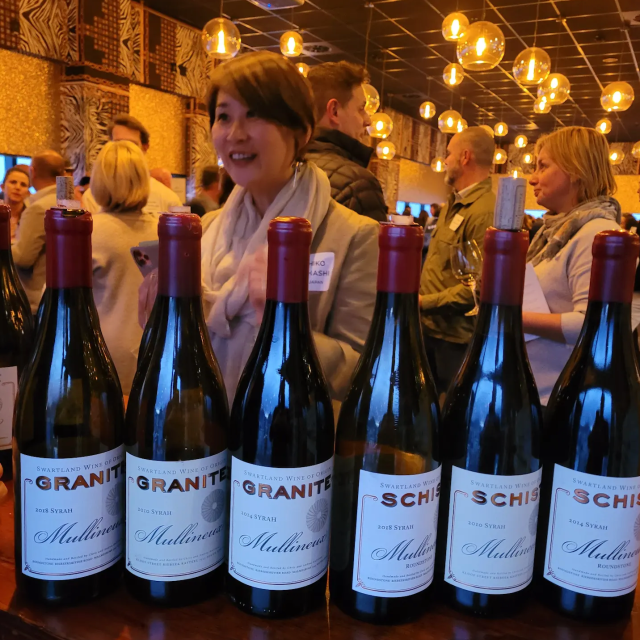
Mullineux Syrah Granite Jakkalsfontein 2020, WO Swartland

Jakkalsfontein, “where the dogs spring,” perhaps eternal because granite soils are a gazillion years old and the Mullineuxs have been working with the vineyard since 2014. Whole cluster to the max, open top large vats allowing release and punchdowns keeping that elusive concept of stems working in the success side of trial and error. After that it’s all about tannin polymerization and then refinement. Grandstanding tannins indeed, a vintage of manyfold layers, of warm days and cool nights especially towards harvest, where acid will improve upon tannin . Will be most interesting to watch this one age. Should be a grand granite year. These are true Swartland tannins. Drink 2025-2033.  Tasted October 2022

With Alex Milner

Natte Valleij Cinsault 2021, WO Stellenbosch

In 2018 I tasted four different cinsault from Alex Milner and at the time the Darling stood apart. Feels like four years later he has grown to fully appreciate this 1972 Stellenbosch vineyard with deeper understanding and cinsault intuition. This site with its views of Table Mountain and False Bay is picked the latest and in 2021 finished at a mere 11.5 percent alcohol. It is the litheness of glycerol and grace in texture over the palate that makes this far from conventional cinsault tick. That is where the magic happens with thanks to concrete “barrel” aging and guaranteed freshness captured. Tannins are whispers, sweet nothings that melt in the mouth upon contact though they will linger for a few years yet. As soft spoken a cinsault as there is, even by Western Cape standards. Drink 2022-2026.  Tasted October 2022

Paul Cluver Pinot Noir Seven Flags 2015, WO Elgin

Increasingly considered a great vintage in Elgin, backed up by this showing at seven years of age. The 115 grows on shale with Koffieklip and in ’15 the whole bunch number was 50 percent. Settled now and in a most ideal drinking way, with nearly five years remaining for more expressive things to say.  Last tasted October 2022

The most floral vintage of the Seven Flags and the first with clones 115 and 667 brought into the blend. This to create new concepts and levels of complexity with vines old, new and next level involved. The intermixing leaves us with a sensation involving many layerings; fruit, acid and structural. The fruitiness and fresh flower gatherings presents an aperture of severe harmony and adds up to a bunch of aesthetic yeses. Give it a year or two to integrate. Drink 2020-2027.  Tasted September 2018

Porseleinberg Syrah 2020, WO Swartland

It begins with a right proper rant from farmer, BBQ smoker and winemaker Callie Louw. “We don’t need to offset climate change with varietal adaptation. We just need to farm better. The problem doesn’t go away. Cover cropping, activate your place, get things growing, the whole profile is run in the top four inches. Below is the bank, the reservoir. The thing that makes the money is on top. Stop tilling. Leave that stuff on the top of soil. it just burns. Keep the active things alive. Increase the carbon in your soil by one per cent and the water will increase by 50.” Then to the current release at hand. Porseleinberg syrah 2020 is aged in 90 percent foudre and (10) concrete egg. “A nice vintage,” says Louw, “still stuck in a drought but the first year with average rainfall, just about 400mm.” Healthy canopies, just right there, picking without stress. From 2020 about 70 per cent is from one site and while the soils are consistent, the aspects, gradients and all else bring minor variegation, seasoning and spice.“The success of this is a complete fluke. I literally do nothing with the grapes. I realize I do fuck all.” And yet the consistency of the process prevails; of working with syrah like this, whole bunch, no pump-overs and just a belief in the farming. Not sure many 2020s are the shit but this folks and my friends is. South African wine is not all the same. Drink 2020 sooner, the delicious factor will ride. Drink 2024-2032.  Tasted October 2022
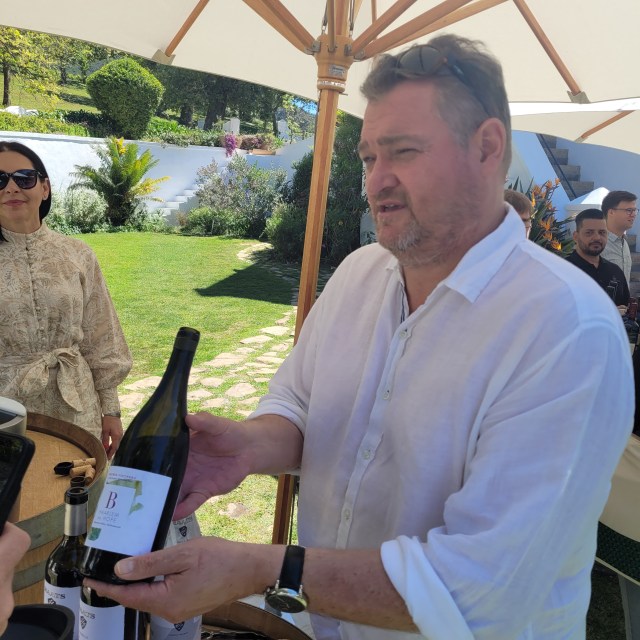
Bruwer Raats

Raats Family Wines Pinotage Liberte 2020, WO Stellenbosch

From Polkadraai, picked early to help establish a deeply South African sentiment or even manifesto that allows pinotage to separate itself and announce its uniqueness as a wine unlike anywhere else in the world. These are the thoughts of Gavin Bruwer Slabbert. If you attempt to compare this to a Raats cabernet franc there are so few similarities and in fact here pinotage gains stature, swagger and momentum in ways the Bordeaux family of varieties can only wish for. At what cost you ask and that is a worthy query. Traditional beauty perhaps but even pinotage’s lies in the eyes of the beholder. Thick skins and fleshiness abound to announce their estimable arrival. Drink 2023-2028.  Tasted October 2022

Radford Dale Freedom Pinot Noir 2021, WO Elgin

Proprietor Alex Dale takes inspiration from Nelson Mandela’s memoir “A Long Walk to Freedom” as he sees his adopted South Africa as the place where agriculture and winemaking have given him his. The first organic pinot noir from this Elgin outpost for Stellenbosch producer Radford Dale and what winemaker Jacques de Klerk calls “a transitory vintage.” Meaning Elgin Ridge was the original owner and the farming is now fully under RD’s command. This ’21 is glaring and striking in primary freshness, so youthful it feels like bottling happened only yesterday. Chalky tannic, of a formidable density but stone cold salty, like Sonoma Coast and a wedge of Délice de Bourgogne. This is, in the parlance of our times endearingly referred to as “C’est bon, fuck!” Drink 2024-2028.  Tasted October 2022
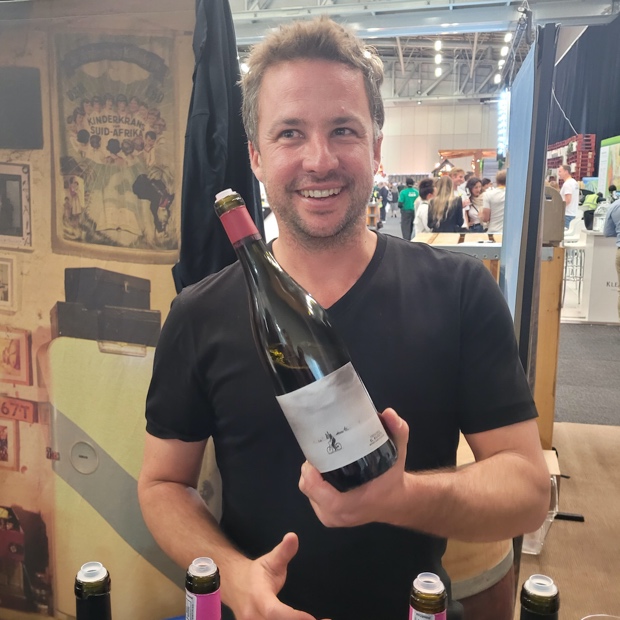
Testalonga El Bandito Mourvedre Monkey Gone To Heaven 2021, WO Swartland

Craig and Carla Hawkins make many skus, almost all small lot from the Swartland and it feels like there is no true rhyme or reason to the portfolio. That is why Monkey Gone to Heaven is the poster for their work, a Pixies song reference Black Francis (Frank Black) has said was named because it “just sounds neat” and also “it wasn’t like we thought we’d get played on the radio.” Perhaps Craig (aka El Bandito) approaches his work in a similar way. Hawkins goes at is as natural as anyone out there but believe it when he insists he’s simply making wine from grapes. What do people think? Whatever. Are the wines niche, raw or mainstream? Don’t really know. Making a statement on environmental concerns? Probably not. We do know this varietal mourvèdre is 100 per cent whole bunch fermented for nine days in open tanks, pressed and aged in 500L foudres. Wild and full on ambient malolactic fermentation. The winking winemaking equivalent of “If man is five…Then the devil is six…Then God is seven.” Actually less intense and grippy than the Queen of Spades Tinta Amarela and also surprisingly perfumed. Even a bit pretty, of different aromatic and volatile lift, apposite in structure, soliciting an arousal of trenchant imagination. What is this? Sarcasm, Kaballah and good grapes. Drink 2023-2026.  Tasted October 2022
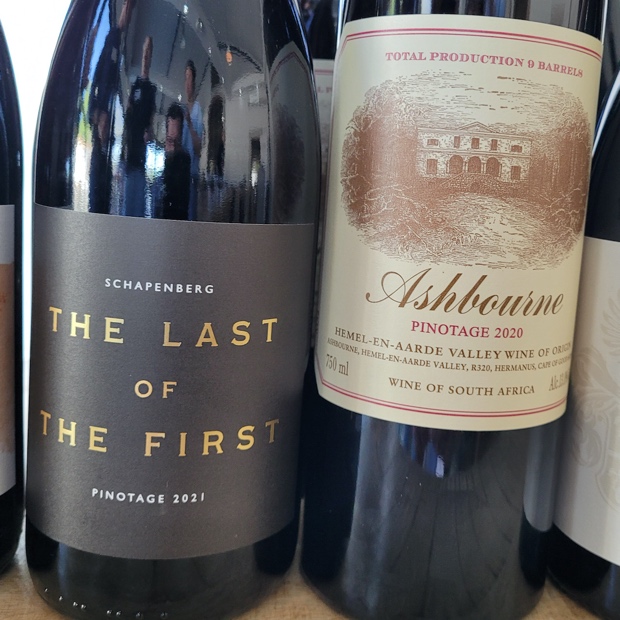
Waterkloof Wine Estate Pinotage Last Of The First 2021, WO Stellenbosch

“We like to make wine we like to drink,” tells Nadia Barnard-Langenegger, based in Somerset West. The block for this wine is part of the first commercial one planted in South Africa, on a cool, east-facing bush vine block planted in 1994 to clay and some decomposed granite. In conversion to organic. “I want to taste what I taste in the vineyard, stones and freshness.” The name is Last of the First because there are no others planted on the Skurfberg. Another terrific example of the new pinotage of flesh, savour, lithely bitter liquorice and high acidity. Definite quality once again. Drink 2024-2027.  Tasted October 2022
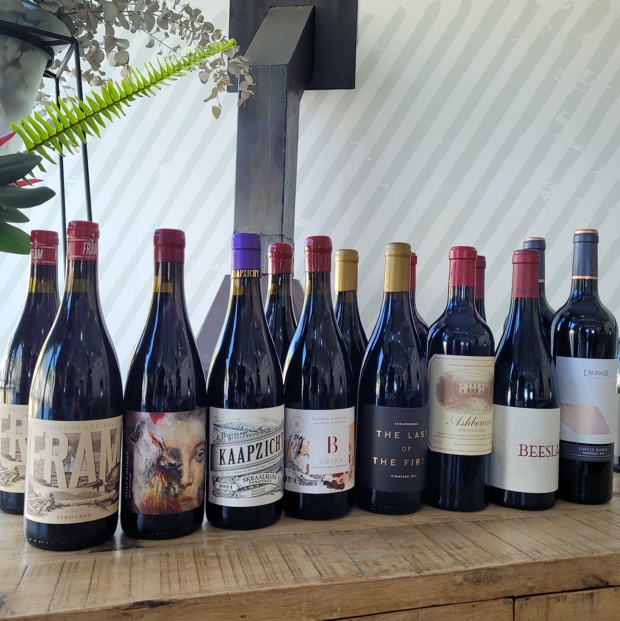
Wolf And Woman Wines Pinotage 2021, WO Swartland

From Jolandie Fouché and old vines planted in 1973 on truly sandy (meaning zero clay) Paardeberg soils. Fouché’s journey has run the gamut, from matriculating to earning her stripes in the South African industry. And one of her dogs is named cinsault. “Sometimes I’m more wolf than woman and I need to stop apologizing for my ways.” Hers is a most perfumed pinotage, thanks to bush vines with big canopies whereby the vine is mostly in the shade, that and more than ample whole bunch fermentation in a carbonic vein. Less oxygen and no new wood lengthen, extend and create a drift that so few wines of this idiom are able to achieve. WAWW is pinotage of elegance incarnate, not without inherent tannin, yet silken no doubt. Drink 2024-2028.  Tasted October 2022

Good to go!

godello

Hemel-en-Aarde

Twitter: @mgodello

Instagram: mgodello

WineAlign
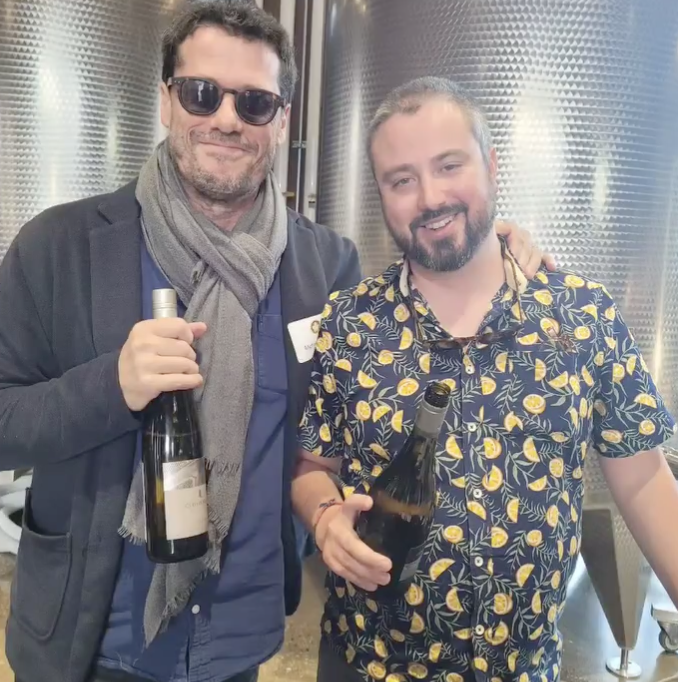
Twenty-two Canadian wines that rocked in 2022

Godello taking in the spirit of Grimsby Hillside Vineyard

I am a forager. I forage in the natural world, for plants in their season, pulled from the soil, from earth to pan, for medicinal teas, to preserve by drying or pickling, whatever the most appropriate case may be. Wild herbs, allium and beneficial greens are prized but mostly I use my mycological senses by looking for signs beneath my feet as to where the mycelium below will choose to fruit as fungi above. I look for the saprobic and the decomposer but also the mushroom that works through symbiosis, to aid and abet other species while receiving something beneficial in return.

Laetiporus Sulphureus, aka Chicken of the Woods

I am a forager of wines as well, perhaps not in the same spiritual or personal way, but as I do with the forest I try my best to listen and become one with the vine, to imagine what it will beget, that being quality grapes and eventually honest wine. Vinifera success in Canadian vineyards is a recent phenomenon and there are plants more suited and native to our land but we should and will continue to pursue both realities.  This is not a manifesto about natural wine, no far from it, but it is a confession. I love great wine, well made wine, wine in balance. I am open to all wines and like the fungi I choose to eat or to ignore, I can’t be sickened by something I choose not to taste. I taste what I trust and drink what I must. Most often it take years of research and seeing the same fruiting body appear in the same location with consistent markings to make the decision to eat that mushroom. That is why wines of history, pedigree and consistency are the greatest and most exciting. They have earned the recognition. Others gain reputation much quicker and they too deserve the kudos but the choice comes down to the individual. I just want the wines I choose to rock. Canadian wines, yeah they rock.

Hypomyces Lactifluorum, the Lobster Mushroom

Nova Scotia wines at Obladee Wine Bar in Halifax

Related – Twenty-one Canadian wines that rocked in 2021

The full scale return to not only tasting but rallying around Canadian wine began in earnest back in June of 2022. In a span of less than 30 days there were judges’ panel assessments and events during the WineAlign National Wine Awards of Canada, To July and 10 days spent in Nova Scotia wine country followed by a glorious weekend in Niagara for the i4c Canadian Cool Climate Celebration. Get back to Cool Chardonnay was the impetus and the reminder how much we Canadian wine folk respect one another and truly enjoy each other’s company. How great was it to interact once again, to taste with and experience the verities of vignerons and winemakers? To gather Insights, illuminations and incidentals from illustrious voices. To enter discourse with thought provocateurs who question sense of place, who consider vines and their relationship with the land. To reconnect with old friends forging new directions, seek flights of fancy and return to places always familiar, like coming home. The road ahead may still be uncertain but onward we will go.

Godello and Pender

Related – Twenty Canadian wines that rocked in 2020

Devastating news and especially the loss of a friend takes time to process. At the time I did not know what to do but suddenly the words poured forth, in one take and so in February I penned The Walrus is Paul. I miss Paul Pender. He was not my closest bud nor was I his but there will always be a hole in our lives without him. The thing about sadness is that it never goes away, but the trick is to remember the people we loved in a way that helps us through another day. “Paul Pender humanized everything in his life and all that he touched. He never expressed any dismay at comments I may have made about wines not being perfect, nor did he exalt in high scores or praise for wines about which I may have gushed or waxed rhapsodic. He was always zen, even-keeled, grounded and humble. Paul was the personification of gravitational constant, THE universal gravitational constant, a constant of gravitation. His presence and being related force to mass and distance, and he lived his life within the law of gravitation. I hope he taught everyone to be this way and that we can all go forward with his wise, sage and calm demeanour, safely tucked into our own lives. Thank you Paul. I love you, man. You are the walrus.”

Seafood by Godello, Kejimkujik National Park, Nova Scotia

Related – Nineteen Canadian wines that rocked in 2019

This might just be the 10th annual list and another spot is in fact added each year but the process just keeps getting tougher to complete. According to WineAlign I reviewed more than 3,000 wines in 2022, which means I tasted at least 3,500, if not more. The number of Canadian wines is likely one third, say 1,500 examples tasted this past year, in great part because at least one-third of that number is tasted at the Nationals. The process of nailing down this summary comes out of a shortlist of 100-plus that were what would be considered exciting. The exercise must be one that filters, fines and refines again and again so that every wine is reviewed and re-considered on repeat. I find it near impossible to make final decisions these days and yet somehow feel compelled to continue the discipline.  Thank you to all; associates, colleagues, wine professionals and especially friends who poured, for every sip and taste, with heartfelt thanks. Especially to the WineAlign Crü; David Lawrason, John Szabo M.S., Sara d’Amato, Steve Thurlow, Megha Jandhyala, Bryan McCaw, Sarah Goddard, Miho Yamamoto, Carol-Ann Jessiman and Heather Riley. Godello gives you 22 Canadian wines that rocked in 2022.

With The Thinker, Jean-Benoit Déslauriers, Benjamin Bridge Vineyards

Benjamin Bridge Glooscap First Nation X Rosé 2021, Nova Scotia

Benjamin Bridge Glooscap First Nation X Rosé is first a wine. A lithe, 10 percent alcohol and bone-dry vision in pale pink hue, described by thinker Jean-Benoit Déslauriers as blessed “with a softness from within.” My family and I taste along and become privy to why this project means so much more. The Rosé marks a turning point for Benjamin Bridge and is crafted neither for reconciliation nor to undue the past. Instead the path leads forward, for mutualism, cooperation and respect. A harbinger towards a more balanced future. Meaning is gleaned for the team after a decade-plus of grape growing now widened to include 13,000 years of sustainable and synergetic preservation of an ecosystem. Twenty years ago the BB understanding was of vineyards producing grapes exclusively focused on the sensory profile of wines, how they reflected the terroir and stacked up against Europe. Yet the Mi’kmaq have lived in balance within this unique ecosystem for millennium and the goal is to return to this symbiosis. It may take another 13,000 years and while subsequent generations will not be obligated to complete the work, neither are they free to desist from it. This Rosé establishes a “Ni’tap,” a relationship as ally-ship and friendship between Benjamin Bridge’s McConnell-Gordon family and Glooscap First Nation; Elder Lorraine Whitman, President of the Native Women’s Association of Canada and Advocate for the rights of Indigenous women, girls & gender-diverse people; her daughter Zabrina Whitman and Chief Sidney Peters. Glooscap First Nation X Rosé is a direct product of climate change with no need to soften the sear of acidity by backsliding into residual sugar. Do not forget the effect created by the air pump that is the Bay of Fundy that allows the vines to always take their time and manage a slowly gained phenolic development. The Bay means Rosé can indeed be forged this way. Dry and bright, aligning ortega, gamay and riesling in such a pointed and profound aromatic Sikunme’katik (Gaspereau) Valley way. The connection to Nova Scotia is real but very much a singular notion. The fact that modern agriculture has erased what really happened in this valley, as it pertains to vines and this terroir it is the kind of commentary that is “by definition profoundly inaccurate.” This is the charge of Déslauriers and all who take this path forward. Indigenous plants were in fact replaced with European plants so BB makes a clear point. How can it be said that these wines capture the essence of this terroir? The argument is compelling and will eventually change again, after 13 or 13,000 more years, or perhaps somewhere in between. In any case the wine is grand and the prospects even greater. Bravo all around. Drink 2022-2025.  Tasted July 2022

Mackenzie Brisbois, Trail Estate

Trail Estate ‘Oh Julius’ Skin Fermented White 2021, VQA Ontario

A plus or minus 10 days skin contact for 59 per cent riesling, (35) gewürztraminer and (5) muscat that drinks with full submission, symbiotically speaking. The wine gives and our palates lay down, receive this effortless elixir and allow it to pass on through, no questions asked, no wondering why. Something like 550 cases are made of this wild-fermented, Benchlands (Wismer) fruit-sourced quencher, aka refreshing drink. Easy enough in the tart citrus vein, no lacking for energy and in turn, our interest. Weird? No not really. Cool? Ticks all the boxes for what the kids are all making these days, but this is more a case of being made by and for kids at heart who are adults with kids of their own. At 10.4 per cent alcohol, no acetic meanderings nor cider-y complications neither. Well that just about wraps it up in a big natural bow and guarantees a good time. Drink 2022-2023.  Tasted June 2022

Canoe Trip cooking

Blue Mountain Blanc De Blancs R.D. 2013, VQA Okanagan Valley, British Columbia

The research tells us chardonnay and time conspire for beauty while development reminds how years upon years upon lees directs a Blue Mountain R.D. into sublimity and profundity. A vintage to recall, reflect upon and surely celebrate, to mull over its integrated and subtle spices, controlled energy and slow time release of responsibility. A sparkling wine of nature that has become one of nurture, now a perfectly posit tug between edginess and oxidation, tension and generosity. They call this the sweet spot. Raise a glass to recently disgorged. Drink 2022-2026.  Tasted November 2022

WineAlign judges at Stratus Vineyards

Stratus X Trials Blanc De Blancs 2012, VQA Niagara-on-the-Lake, Niagara Peninsula, Ontario

Looking back two years the bar was set so very high as noted when we first began tasting the culmination of years put in towards this Sparkling program. Far be it for Stratus to regress or work in reverse but they are now grooving further back in lees cumulative time and out there comes a chardonnay spent what must be nearly 10 years on those lovely yeasts. Trials they were and fruition they have become. It’s not so much the toasty and beautifully oxidative-fino nutty character. The impression digs deeper than green olives in brine and sweet pear compote, it grabs us by the emotive heartstrings and holds us close. In fact it’s not unusual for B de Bs ’12 X Trials to be loved by anyone. There’s just something about the subtleties and the open invitation, to love and be loved. “Whoa oh, oh whoa, oh oh, oh oh!” Drink 2022-2026.  Tasted November 2022

Sunset over The Twenty Mile and Beamsville Bench

Flat Rock Cellars Nadja’s Vineyard Riesling 2020, VQA Twenty Mile Bench, Niagara Peninsula, Ontario

Distinct mineral and petrol aromatic riesling rising, up into the stratosphere. in no hurry to come back down. Cracker citrus and acidity, tart and fuelled by intensity with no boundaries nor atmospheric pressures or deadlines neither. Sugars and structure are one in the same, seamlessness is the result and everything falls into its right place. The poster child, educator and pioneer. Drink 2023-2027.  Tasted blind at NWAC2022, June 2022

Felseck Vineyard

Hidden Bench Riesling Felseck Vineyard 2017, VQA Beamsville Bench

Not quite but just about 20 year-old vines as of this stellar 2017 vintage and a benchmark Bench riesling of all that has been developed, given, remains and jazz. A stoic propellant and scintillant of fineness, fruit in ample preserve, acids convergent and power releasing ever so slowly in perfect pace. Pitch is spot on, balance ideal and direction effortlessly forward. The Mario Lemieux of riesling. Drink 2023-2032.  Tasted February 2022

The family with Josh Horton and Rachel Lightfoot, Wolfville, Nova Scotia

Lightfoot & Wolfville Chardonnay Small Lots Oak Knoll Vineyard Stainless Steel 2020, Nova Scotia, Canada

“People have always said we need to make a stainless steel version,” says winemaker Josh Horton, to lighten the room and the mood. This being the first go at it, protocol kept very similar to the oaked (Ancienne), by wild ferment, aka “brown” maceration. Gone to bottle quicker (eight months after pick) and this will be slowed down in the future. Absolute tightness and freshness, purity of chardonnay as expressed in a juiced lemon and almost no reduction. A chardonnay of isolated terroir, specificity and one helluva beautiful experiment. Drink 2022-2024.  Tasted July 2022

Thirty Bench Small Lot Chardonnay 2020, VQA Beamsville Bench, Niagara Peninsula, Ontario

Really quite primary, an undisclosed while pleasingly reticent chardonnay from Emma Garner of gratitude and grace. The first because it thanks the Beamsville terroir and the second because it does so with soft spoken respect. A mélange of different fermentation batches, each small and precise come together for the final sumptuous and restrained blend. The tenets of fruit, acid and what ties them together is just about as seamless and easily layered as any of a Bench ilk and idiom. Not a chardonnay of style but instead stylish, not chic but surely sung with notes held, seemingly forever. Drink 2023-2028.  Tasted July 2022

Grimsby Hillside Vineyard

Ilya and Nadia Senchuk, Leaning Post Wines

Leaning Post Chardonnay Grimsby Hillside Vineyard 2019, VQA Lincoln Lakeshore, Niagara Peninsula, Ontario

Delicate, bright and efficacious wine from a north facing nook of the Escarpment vineyard in the narrowest spit of land between the rock face and the lake. Once the viticultural labrusca home of Parkdale Wines and now owned by the Franciosa family. A special wine occupying a place in my family’s history and heart. Apposite to Wismer in that there are more piques and peaks in and out, up and down, hither and thither in this singularly focused chardonnay. Pay attention to nuance, to barrel as well as it speaks in extra density because the terroir encourages the ambition. Remarkable structure despite how short a relationship there has been between maker and farm. The instant brilliance creates an effective and then profound buzz, a desired effect and the future is WIDE open. Drink 2022-2027.  Tasted June 2022

Melissa Marotta-Paolicelli, winemaker Adam Pearce and Angela Marotta

Two Sisters Chardonnay 2020, VQA Beamsville Bench, Niagara Peninsula, Ontario

With part in part thanks and a nod to the experimental minds and vineyard management acumen at (then) Parkdale Wines, back in 1959 Bill Lenko took a flyer on vinifera in the form of chardonnay. Today Two Sisters is the primary beneficiary of Niagara’s oldest chardonnay vines and this primo vintage extolls the virtues of those wise plants and their concentrated fruit. Still showing balance and tenderness, never mind the barrel beauty, bullocks or beast, in fact it all comes together in seamless fashion because the fruit is indefatigably remarkable. Winemaker Adam Pearce heeds the directive, does nothing to get in the way and what is delivered comes away with such a sheen and energetic burst it just may blow your mind. This is the finest result to date, a lightly reductive, subtly lees inflected, full fruit captured chardonnay. All of its lines run parallel, incline up the same slope, coextend in collateral company and with time will eventually relent for the great transversal. The fruit will cross over both acidity and backbone, resulting in the ultimate complex equation. Drink 2023-2028.  Tasted August 2022

The fishy work of Ryan Crawford (Ruffino’s and Bar Bea), Raoul Duke of Chefs


Bachelder Hill Of Wingfield Chardonnay 2020, VQA Twenty Mile Bench, Niagara Peninsula, Ontario

Hill of Wingfield, as opposed to the flatter portions of the large chardonnay expanse and one can’t help but conjure up vineyard monikers like “Hill of” Corton, or even Grace. Ancient and modern tracts can be descried by farmers and writers so with Thomas Bachelder as the guide we too can play this game, by extension and in a most semi-serious way. Everything is derivative and by association anyway so Hill of Wingfield it is. Same lush, luxe and top of the pops richness as Wismer-Wingfield yet here with some reduction and an almost candied shell of protection. Nearly impossible and yet every reason to believe that vintage, grape, block and maker can combine to execute such a phenomenon of chardonnay. No understatement or restraint here, nor were any grapes harmed in the due process. My goodness what gumption, ambition and monkified execution. You gotta believe in the truth! Drink 2023-2028.  Tasted December 2022

With Shiraz Mottiar and the uni, I mean photo bomber Anthony Gismondi

Malivoire Gamay Courtney 2020, VQA Beamsville Bench, Niagara Peninsula, Ontario

Youthful is the understatement when coming at this 2020 Courtney but my how juicy, meaty and pinpointed a gamay it truly is. There have been serious and fully formed Courtneys before but never have the assets in fruit, mouthfeel and acid-tannin structural interplay grabbed attention like this young and in charge ’20. Adds up to big, boisterous, ripe to the hilt, of zero austerity and so much possibility. Drink 2023-2027.  Tasted April 2022

Meyer Pinot Noir McLean Creek Road Vineyard Old Block 2020, BC VQA Okanagan Falls, British Columbia

Plenty of substance fills the aromatic glass in this immortality jam of substance, acid and textural intensity. Good red fruit if turning to act youthfully grainy in its unresolved structural demand, especially as it lands on and then scrapes over the palate. Dutifully solid wine, nothing to some and to others a pearl needing time. High arcing, a factor of indefinite continuation for pinot noir existence and “he who forgets will be destined to remember.” For such a delicate (aromatic) and working (palate) pinot noir it carries more than ample finishing strength, energy and power. “And I wish to hold on, too, but saw the trapdoor in the sun.” Drink 2023-2028.  Tasted blind at NWAC2022, June 2022

Closson Chase Pinot Noir South Clos 2020, VQA Prince Edward County, Ontario

As a reminder the South Clos Vineyard is six hectares of Prince Edward County Hillier clay loam and shallow crumbled limestone overlying fractured limestone. A top site (within the limit of vinifera capability) where chardonnay and pinot noir present as viable as any combo in Canada. Bring on a warm gift of a vintage like 2020 and the possibilities suddenly become endless. The site is always a place of high pH and allowable root penetration but 2020 just tops the show. The intensities are boundless in a most youthful and exuberant South Clos pinot noir that clearly act as the embodiment of one for the ages. Never before have acids tasted so sweet and tannins wept such tears of joy. South Clos is the culmination of decades put in, torches passed, hard work and experimentation. A victory for the 2020 season and perhaps the beginning of a Keith Tyers’ led dynasty. Drink 2024-2032.  Tasted November 2022

With Chef Michael Olson

Bachelder Pinot Noir Wismer Parke “Wild West End” 2020, VQA Twenty Mile Bench, Niagara Peninsula, Ontario

Wismer-Parke’s western section on Victoria Avenue just up from Highway 8 is planted to what Thomas Bachelder refers to as a mystery clone of pinot noir “whose identity is lost to the mists of time.” Twenty-one years to be exact at the meter of this vintage yet in nostalgic ways that kind of statement feels like something dating back to the 1950s or ’60s. Either way it’s long enough to make one wonder and wonder why. There’s a whole lot of “duh duh dun dun dun dah,” and “bah ah bah ah dun dun dun bah” then “beh do beh do,” followed by “bah doo doo bah,” and finally “wop, wop, wop, wop, wop” in this pinot noir. Why? Because this beast of the east is so strong-willed, immoveable and timeless with unparalleled layering and nuance. Doo Wop tannins in total control, winning out over dark fruit in black olive, fennel and tarry tones playing second fiddle. Why is there more oomph and grip to this savoury flavoured pinot noir of scrub and scorrevole across the palate?” The answer my friend is blowing in those mists and in the time you must give to see this wine come to its fruition. Wismer-Parke Wild West End may not necessarily save your soul, but it will make your soul worth saving! Drink 2024-2029.  Tasted December 2022

PEC wines

Rosehall Run Pinot Noir St. Cindy Unfiltered 2020, VQA Prince Edward County, Ontario

In 2004 and 2005 the first County Rosehall Run vineyards pinot noir fruit were given the name Cindy but between ’06 and ’19 the name JCR defined the estate’s best fruit. With a vintage as great as 2020 in vessel Cindy was anointed once again as saint of the top pinot noir. The ripeness and extract here are in fact the finest ever from these PEC lands so the choice was and remains perfectly clear. What the JCR misses in terms of tension is here fully trenchant and oblique, angles run in slants, musculature neither parallel nor perpendicular to the long axis of structure or bones. This is fascinating wine geometry and anatomy, clearly regimented yet offset and in the end, simply wondrous. Drink 2024-2030.  Tasted October 2022

Le Vieux Pin Syrah Cuvée Violette 2015, BC VQA Okanagan Valley

Five years after first tasting Cuvée Violette blind the opportunity arises for an up front and centre moment with bottle, label and glass. Though this syrah would have been more than satisfying before it must be said that its peak performance is in fact NOW. Takes an aromatic leap of faith and suspends at that Black Sage Bench/Dead Man Lake syrah apex where violets and pepper drip their eau de parfum down upon dark varietal fruit. There are many a more expensive Okanagan syrah but there are none as benchmark to combine age-worthiness with price as this Severine Pinte stunner. I for one am thankful to taste this vintage again and at its best.  Last tasted December 2022

Let’s put up our hands so we know who we are, we who expect three P’s in syrah; perfume, pepper and pulchritude. This syrah is possessive of all three. It’s quite the dark purple beauty but also savoury, reeking of black olive and brushy garrigue. The wood is exercised with admirable restraint and then there is this fineness of tannin. A very pretty, seamless and structured syrah of great length. Drink 2018-2023.  Tasted blind at #NWAC17, June 2017

Creekside Broken Press Syrah Reserve Queenston Road Vineyard 2016, VQA St. David’s Bench, Niagara Peninsula, Ontario

Good years have got behind this syrah with a touch of viognier so that five-plus in there’s an open window through which to find the heart of this wine. A democratic vintage, fruit at peak, elongated and built to last, last longer than anyone who knows not what capability is in store for this wine. The tannins are just beginning to wane and with great acumen they have melted into the karst of what is truly a special BP vintage. A minimum five years remains and quite possibly 10. Drink 2022-2028.  Tasted April 2022

CedarCreek Winemaker Taylor Whelan

CedarCreek Syrah Platinum Jagged Rock 2020, BC VQA Okanagan Valley, British Columbia

Inky and cimmerian, full syrah extraction, maceration, skin contact fermentation and finally, thankfully and for the win, concentration. All adds up to as big as it gets, with iodine, soy and yet this amazing floral indemnity that tells the whole story, but also one that celebrates a truly special site. Yes the tannins are omnipresent but they are reasonable, metered, mattering and real. So very polished. Drink 2025-2029.  Tasted blind at NWAC2022, June 2022

Vines in the Similkameen

Corcelettes Talus 2020, BC VQA Similkameen Valley, British Columbia

Talus makes balanced work of all fine main Bordeaux varieties, led by merlot (40 per cent) and cabernet franc (35), with (20) cabernet sauvignon, (3) malbec and (2) petit verdot. The names refers to the Talus “slides” that accentuate each mountainous side of the Similkameen Valley and the wine slides across the palate in equal, opposing and proportionate waves. Mostly a precise ripeness of fruit but also some passionate acids and truly purposed tannins. The merlot does seem to stand out with its verdant, creamy and downy character as it pertains to soaking up some barrel. There is a notable amount of quality dark chocolate here and still all parts just seem to synch up. Proper Meritage indeed. Drink 2024-2028.  Tasted September 2022

Black Hills Nota Bene 2020, BC VQA Okanagan Valley, British Columbia

The blend for the Black Hills flagship red in 2020 is 42 percent cabernet franc, (33) cabernet sauvignon, 24 (merlot) and (1) petit verdot. Merlot fared very well in 2020 and yet the team chose franc as the anchor, why, well it seems for structure over beauty and longevity over immediacy. This vintage is quite a remarkable example because all of these aspects show up, repeat, shuffle, reorganize and collectively speak a Black Sage Bench truth. Hard to imagine a more seamless set of red blend circumstances or astrological linearity. The stars do in fact align for this bright constellation of an Okanagan wine. Drink 2024-2030.  Tasted November 2022

Phantom Creek Phantom Creek Vineyard Cuvée #24 2019, BC VQA Okanagan Valley, British Columbia

At the top of the heap and pops for Phantom Creek is the red blend cuvée from the homestead vineyard and a wine denied absolutely nothing. The finest of the best is grown, nurtured and gathered with equally prized vessels providing the nurturing environment. There are some silky, suave and stylish red wines in this portfolio but nothing compares to the desire in Cuvée #24. These are the richest fruit sets, sweetest acids and silkiest tannins, none more important than the other and all working towards a common goal. That being beauty and longevity which the wine surely boasts. The only question is cost and a decision to be made to decide if the extra $60-100 dollars buys more wine and age-ability. The answer is yes, it surely does but is this “perfect” style the kind you like, want, need or deserve. Only you can be the judge of these things. Drink 2024-2035.  Tasted November 2022

Good to go!

godello

Godello surveys Grimsby Hillside Vineyard

Twitter: @mgodello

Instagram: mgodello

WineAlign
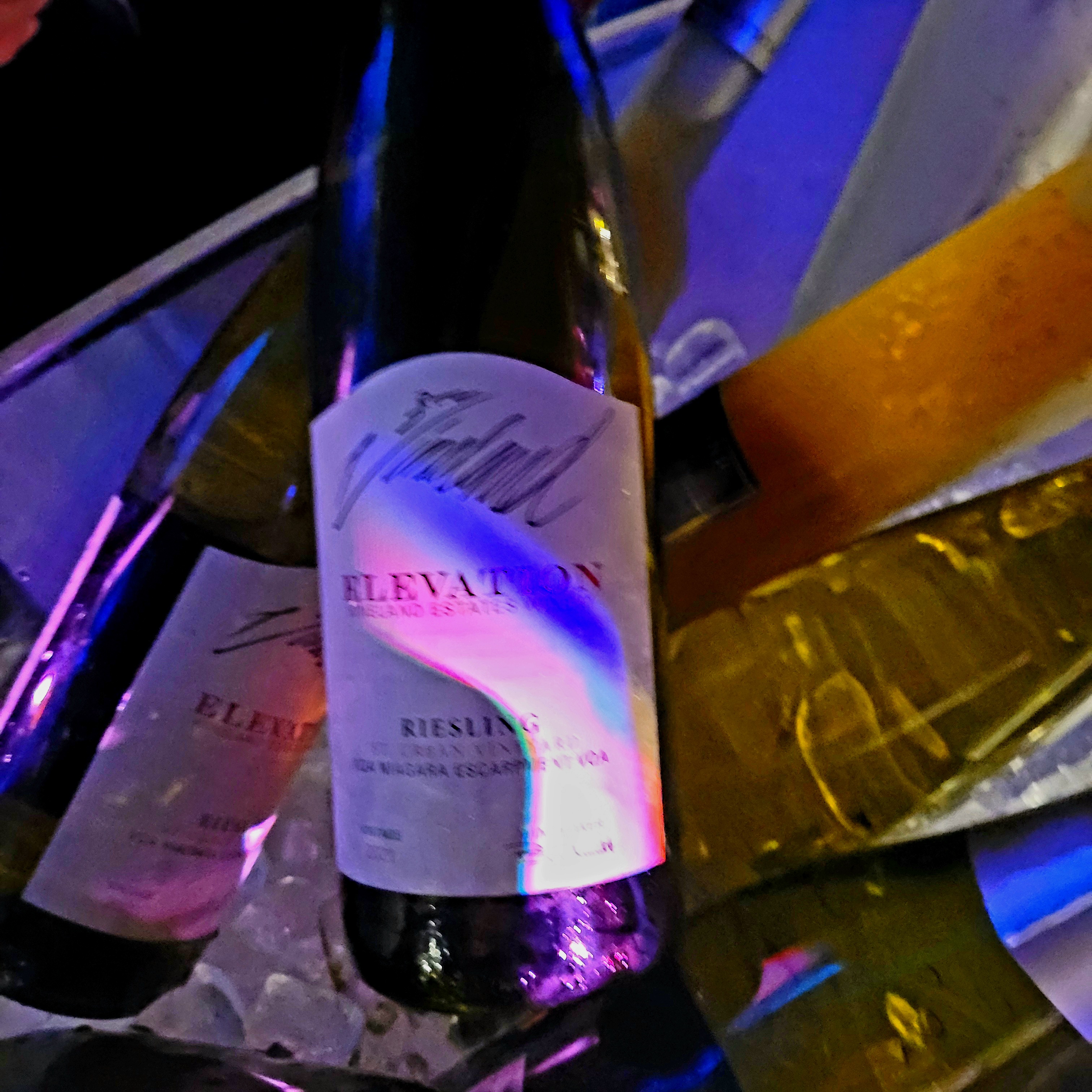
Twenty-two mind-blowing wines of 2022

Godello in the Stellenbosch heather, Reyneke Wine Estate

We are who we are and we choose to live in a world according to wine. Within its walls are endless permutations and revelations, of the dark moments and the light, the romantic entanglements and the failures. We witness cycles of passion, highs and lows, endless accounts of quirky little episodes that reveal how grapes really live under the circumstances of a vintage. How they survive and thrive, eventually turning into the wine they become. A wine’s history is a lovely aside accompanied by a recorded and constructed account through the lens of someone who observes its transformations. We are messengers who take the land, plant and maker into consideration and always abide, recounting the story to those who would choose to listen. According to WineAlign I reviewed more than 3,000 wines in 2022, which means I tasted at least 3,500, if not more. In order to surmise this final list from a shortlist of more than 100 mind-blowing wines it meant another 2,900 are not even in the running and yet surely no less than a quarter are exceptional wines in their own right. That is how difficult, personal and stringent an exercise this annual choosing has become. I find it near impossible these days and yet somehow feel compelled to continue the drill. 

Godello in Chianti Classico

Related – Twenty-one mind-blowing wines of 2021

The year 2022 afforded multiple opportunities to get back on the road in search of great wines in places across the ponds and beyond. To Tuscany in both February and March, for the for the Chianti Classico Collection and also as chaperone to La Squadra Canadese for a week of exploration throughout the 11 UGAs of the territory. Forever in Chianti Classico included a masterclass presented by Italian wine expert Filippo Bartolotta and Consorzio President Giovanni Manetti titled Il Chianti Classico in 9 Decadi. This year-end summary includes one of those Chianti Classico wines dating back to 1949 but a few more could been here as well, including the fascinating Badia A Coltibuono Chianti Classico 1958. At Laura Bianchi’s estate the Castello Di Monsanto Sangioveto 1986 was one to blow my mind, as did Luca Martini di Cigala’s San Giusto a Rentennano Percarlo 2018 and VinSanto del Chianti Classico 1998. As a proud, card-carrying Ambasciatore there are dozens upon dozens of Classico and affiliate sangiovese that move me each and every calendar year. Il Molino Di Grace Gratius 2018 is an example and just one of many.

Related – Twenty mind-blowing wines of 2020

After that Tuscan adventure I moved on to Sicily for a five day exploration of The five estates of Planeta earth and my stay turned into two weeks. Covid-19 had caught me and yet the humanity of Alessio Planeta, Patricia Tòth and several winemakers aboard L’Etna turned a challenging test result into many days of discovery and deeper volcanic understanding. In fact L’Etna and Parco Statella saved my Sicilian quarantine. So many producers’ wines could and should be on this list: Azienda Agricola Sofia, Calcagno, Donnafugata, Eduardo Torres, Feudo Pignatone, Girolamo Russo, Graci, Scirto, Tascante, and Vigneti Vecchio. Oddly this was not a year for nebbiolo with likely the least amount of opportunities made available and yet a month from now I will spend 10 days in Piemonte to make up for the absence in 2022. That said there can be no forgetting Réva Barolo Cannubi 2018, from which impartiality is off the table because if you do not fall in love with this Barolo then you are not setting your palate free.

Travels in June and Abruzzo in four-part harmony included a bucket list visit with Emidio Pepe where I found that an unwavering commitment to land is everything that matters in making exceptional and memorable wine. It’s not only what you do but also who you are. Ahead of that trip I had tasted La Valentina Montepulciano d’Abruzzo DOC Bellovedere Riserva Terre Dei Vestini 2017, and there can be little doubt that it is a wine that resides at the top of the montepulciano food chain because this Riserva hails from a most specific and important terroir. After Abruzzo and then Rome I moved on to attend the first ever Anteprima for Simply Red: Rosso di Montalcino where the Brunello were set aside for one day only and the 2020 vintage of Rosso got directly under my skin, including Lorenzo Magnelli’s mind bending Le Chiuse Rosso Di Montalcino DOC 2020. Dieci Anni di Rosso di Montalcino (Ten Years of Rosso di Montalcino) and Selezione di Rosso di Montalcino (Rosso di Montalcino Selection) showed wines of age-ability and purpose; my if Alessandro Mori’s Il Marroneto Rosso Di Montalcino DOC Jacopo 2019 did not blow my mind. A visit with Violante Gardini Cinelli Colombini meant a pour of Donatella Cinelli Colombini Brunello Di Montalcino DOCG Io Sono Donatella 2015 for the most profound barrel expression of Le Donne’s Brunelli. 

Menfi

Related – Nineteen mind-blowing wines of 2019

In October the Cape Wine congress resumed after a four year absence and now more than ever this is what I have to say. South Africa is the most exciting and mind-expanding wine universe alive today. There are no less than 40 Western Cape wines from two dozen or so producers tasted in 2022 that could have made this list: A.A. Badenhorst, Alheit, Beaumont, Boekenhoutskloof, Crystallum, David and Nadia Sadie, Hamiilton Russell, Huis van Chevallerie, Kanonkop, Ken Forrester, La Motte, Leeu Passant, Klein Contsantia, Meerlust, Momento, Mullineux, Old Road Wine Company, Porseleinberg, Raal, Raats, Radford Dale, Restless River, Reyneke, Savage, Sijnn, Storm and The Sadie Family. To name but a few. Other southern hemisphere wines were killer in 2022, namely Torbreck Grenache Hillside Vineyard 2019, a special Barossa block to be sure.

With John Szabo MS and Rosa Kruger at the Old Vines Project tasting

In November a return to Montalcino for Benvenuto Brunello 2022 meant a look at the 2018 vintage but also the Riserva of 2017. At Col d’Orcia the Conte Francesco Cinzano Marone and his son Santiago led yet another vertical tasting, this time on the 8s and it was Brunello Di Montalcino Riserva DOCG Poggio Al Vento 1988 that stood both out and also the test of time. From Montalcino it was on to Vienna and then a Wagram-Traisental discovery tour that was both too short and mind-expanding – A return must and will happen soon. Meanwhile a tasting at home in the WineAlign office showed this Rheingau gem to the crü. Leitz Berg Schlossberg Grosses Gewächs Riesling Trocken 2019 is grand Rüdesheim indeed. 

These are the wines that blew my mind in 2022

Most of all 2022 was a year when associates, colleagues, wine professionals and especially friends reunited to break bread and taste great wines together. At a birthday party I had the opportunity to taste the following in one evening; Château Lafitte 1986, Château Mouton-Rothschild 1986, Chave Hermitage 2010, Guigal Côte-Rôtie La Turque 1999, Paul Jaboulet Aîné Hermitage La Chapelle 1990, Dom Perignon 2000, Veuve Cliquot La Grand Dame 1995 to name just seven of 20-plus icons. Bordeaux made several prominent appearances in ’22; Château Margaux 1989 (and 2004), Château Haut-Brion 2012 and Château La Mission Haut-Brion 2012. More importantly in 2022 we shared bottles of all ilk, pedigree and origin, not only the expensive and famous labels but all the great wines, big and small. Thank you to every person who poured, for every sip and taste, with heartfelt thanks. These are Godello’s 22 mind-blowing wines of 2022.

Markus Huber Grüner Veltliner Berg 1ÖTW 2021, Traisental, Austria

Highest and coolest vineyard of the Traisental Erste Lage because by three or four pm the forest casts shade over the vineyard. Limestone based soil as well, upwards of 380m and the only portion that has iron rich red elements in the earth. Actually finding a richness in this, surely vintage related and that is unexpected but it’s also the most savoury, minty cool, eucalyptus accented, or the like. Curious by comparison to Alte Zetsen and Zwirch, in what is assessed as almost dark, smoky, spicy volcanic-simulate stuff. Brings whole and utter meaning to grüner veltliner at the Grand Cru level. Drink 2023-2028.  Tasted November 2022

Godello with Charla Bosman

Sijnn White 2019, WO Malgas, South Africa

Up above the Breede River there are vines of chenin blanc, viognier, roussanne and verdelho, varieties that have been working towards a common goal, to eventuate at something great. Then 2019 comes along and the world changes. This is the vintage from which David Trafford, Sijnn and winemaker Charla (Hassbroek) Bosman take full reign of their collective charge. To be truthful the agriculture, winemaking and face of the brand is Bosman and were I in the market to hire someone of her passion, ability and professionalism I could not help but remunerate her like a top European footballer. But lucky we all are that she and Sijnn are together because she is at one with this impossible yet absurdly beautiful environment where wines like this White Blend are made and will blow your proverbial mind. They attach themselves and get so close to that personal part of you. Imagine Châteauneuf though I’d much rather consider Malgas because that is what this is. Rich and perfectly viscous, spicy, structured and fine. Drink 2024-2030.  Tasted October 2022

Girolamo Russo Etna Bianco DOC San Lorenzo 2020, Sicily, Italy

From the single vineyard at 730-740m of elevation and vinified in tonneaux. The 2009 was the first vintage of San Lorenzo Bianco for a wine that leads amongst the 80-90 thousand total bottles made by Giuseppe Russo from 18 hectares. A strong selection from the plants of carricante with cattaratto and grecanico. The carricante are the oldest and they provide the breadth in the mouth, the texture in unction and the presence that really makes you feel the vineyard. The difference between it and Nerina is really in the selection of the grapes. Giuseppe wants his whites to speak for his territory, here to be a bit more generous and 2020 obliges first because it was easier and second because it is such a vintage specific to the white wines. Such beauty and emotion is purity and life. No stress and a wine you want to drink. Drink 2022-2028.  Tasted March 2022

David And Nadia Sadie Wines Plat’Bos Chenin Blanc 2021, WO Swartland, South Africa

At a tasting where everything is Old Vines Project certified there must be something extraordinary about a wine to stand out from a crowd of greats. David and Nadia Sadie are in fact turning heritage vines chenin blanc (amongst other varietal explorations) into content born of context harboured though never paraded. They are rhythmic and scientific with just enough fantasy and romanticism, but never too much. Plat’Bos stands above Skaliekop and Hoë Steen because 2021 asks it to do so, not because it is better or more important, but it is surely chenin blanc profound. The 1981 Swartland planting is in the steady zone, shed of the mercurial and in ’21 so very linear yet salty of the earth in its sombre-sepulchral tone. There is reduction here because the poor soil nutrients demand that this chenin begins this way. The levels of tension and intensity are most elevated, sufficing to say as high as any from the Western Cape. Attention is paid unwavering to detail, sequencing is in order, purity incarnate, grape and place together pristinely kept. In Plat’Bos 2021 the palate is taken down to the whipping post by a wine built to endure. Given time there will be calm, healing and reward in the end. Drink 2024-2036.  Tasted October 2022

The Sadie Family Die Ouwingerdreeks Mev. Kirsten Wyn Van Oorsprong Stellenbosch Die Sadie Familie Wyne 2021, Stellenbosch, South Africa

The vines that supply Mev. Kirsten Wyn are the oldest chenin blanc in the country, out of Stellenbosch and planted in 1905. In 1947 every second row was pulled out to make room for tractors and the configuration still exists this way. “If South Africa has a true apex white Grand Cru vineyard then this is it” insists Eben Sadie. Facts are facts are you just can’t accede these levels of power, concentration, extract and tannin anywhere else. The nose communicates as an intoxicant of sublime forces and these grapes bestow chenin blanc 2021 are those that transcend fruit, deliver ethereality and a heightened sense of awareness. An awakening from necessary tension, crisis and personal freedoms, existential off the charts, poetic and epic. One hundred and sixteen stanzas recorded, in the books and the finest verse written right here in the most recent vintage. If enlightenment is to be gained from chenin blanc in the Western Cape, Mev. Kirsten would provide the fodder. “The grail. End of fucking story” concludes Sadie. All hail. Long live the queen. Drink 2025-2040.  Tasted October 2022

Iconic Bourgogne

Domaine De Bellene Vosne Romanée Premier Cru Les Suchots 2020, AC Bourgogne, France

“Suchots” originates from “souches,” the name given to the woods before the land was prepared to house these vines. Les Suchots is but a small 13 hectare part of the larger 220 in total for Vosne Romanée and was first planted in 1937. La Romanée and Saint Vivant are the closest plots, south of Echezeaux, north or Richebourg and though just six per cent of the appellation it is actually the largest Premier Cru Climat therein. The vineyard is divided in two by a road. The eastern part below lays just above the cemetery and the village terroir called Hautes Maizieres. The top part is located below Les Beaux-Monts. The 2019 was a dream, crème de la crème and yet 2020 seems to embrace the powerful vintage with a most extraordinary level of perfume. That and fruit concentrated to a maximum degree without falling into any of the trappings associated with hyperbole. The concept of pinot noir reaching regional levels like this seems counterintuitive to the variety-appellation contract but the balance and harmony at the top is something the likes almost never seen. This will surely be one of the wines that explain with hyper clarity what 2020 is as a vintage. Drink 2026-2040.  Tasted May 2022

Graci Etna Rosso DOC Arcurìa Sopra Il Pozzo 2017, Sicily, Italy

Sopra il Pozzo describes a special portion of the signature Arcurìa vineyard (and contrada of the same name), a block “above the well,” 100 per cent nerello mascalese picked in the last week of October. Treated to the same maceration and elévage as the Rosso for the same spontaneous style and time as Feudo di Mezzo. However Sopra il Pozzo’s “refuse” soil composition is different and requires patience in the name of time, due to its alternating layers of decomposed volcanics in stone and coarse sand. This is a section of recast material and the corresponding mascalese is both emasculated and chivalrous. The degree to which layers of fruit, mineral and umami incorporare and completare is finite and contiguous yet also lengthy, scorrevole and endless. There is rare Etna glycerin texture and perfectly timed acid tang. Tempismo perfetto. Grande. Drink 2024-2032.  Tasted April 2022

Elisabetta Foradori

Foradori Granato Teroldego 2019, IGT Vigneti Delle Dolomiti, Trentino-Alto Adige, Italy

Granato from Elisabetta Foradori resides at or near the peak of the Trentino-Alto Adige wine chain, a Dolomite force of varietal nature, richness incarnate and cragged to gain your full attention. Fruit comes at a great premium, not by absence of the heart but because so much site, land and space speak louder than words. A static red stuck in a state of cryogenic freeze, immovable and surely able to handle immobility and also time. Will drink beautifully for a decade and a half, or possibly more. Drink 2024-2034.  Tasted February 2022

Garage Wine Co. Truquilemu Vineyard Lot 97 Dry Farmed Old Vines Field Blend Carignan 2018, DO Maule Valley, Chile

The eastern facing side of the Coastal Range where the old vines grow, in places where you had to make wines for the Catholic Church, “to save souls.” The most aromatic of Derek’s wines, a true field blend with a je ne sais quoi of varieties bursting off of dry farmed bush vines. Showy with that combination of outright juiciness juxtaposed against iron-fisted structure. A wine that comes from a place where the farmer worked to break up the “los camellones”, strange diagonal lines drawn and a framer who shows how to separate the land so that making great wine is easier. This is a remarkable example of old, bush and real. Drink 2024-2030. Tasted July 2022

Barone Ricasoli Castello Di Brolio Chianti Classico 1949, Tuscany, Italy

Tasted as part of “Il Chianti Classico in 9 Decadi” led by Filippo Bartolotta with Giovanni Manetti at Stazione Leopolda in Florence at the Chianti Classico Collection. The oldest wine in the flight. apropos and just when you consider the Ricasoli heritage and lineage. A mineral layering which instinctively mimics the compaction of argiloso, macigno and calcari from Brolio’s soils, no longer feeling the separation or mille-feuille effect but now just all morphed into one and the same. There were surely some white wines in this mix, as per the formula written decades earlier by Bettino Ricasoli. Probably helped keep the freshness for some time and while this is now all earth and stone the wine is very much alive. There’s even some sweetness and citrus showing, indicative of blood orange some 73 years later, finishing with a trebbiano and malvasia Vinsanto tang.  Tasted March 2022

Isole E Olena Chianti Classico Gran Selezione DOCG 2016, Tuscany, Italy

“I did not like Gran Selezione, I did not have anything against Gran Selezione but the discussion about UGA (sub-zones) was already underway so why not wait for this next change to the appellation?” The thinking for Paolo de Marchi was more about the wines that did not qualify for the appellation becoming wines that now qualified, the issue being a new rule could not apply to only 30 or so producers. So what is needed for that to happen? “All grapes born here should be able to travel with a passport.” If it is more complicated than that then there is much more to discuss. A Chianti Classico from a long, linear and fortifying vintage delivers equally appropriate and extending tannins, gripping the composition while proposing to become elegant and fine. The seamlessness and never wavering focus keeps on keeping on, in the ways of emotion in motion. Will remain in bottle one year more before being released to the market. Drink 2023-2027.  Tasted February 2022

Great anticipation to taste La Casaccia and Montosoli side by each from a vintage carrying no option but to act out the passion play through the glaring clarity of a sense of place. There are facts involved and there is no hiding the truth formed by these plots of sangiovese in this vintage. By now it is understood how 2018 exists on its own accord at one with nature though Francesco Ripaccioli will tell you there are similarities with 2013, if only because that vintage was greatly ignored and is drinking well at this time. La Casaccia in the località of Canalicchio is the wildcard of Montalcino and tasting several wines from the frazione reveals a collective affinity supplied by the year’s gifts. Nothing was portioned or taken away from the ’18 Annata and yet this Vigna sings with even more range and depth than that wine. The acids are simply out of this proverbial world, the linear aspects drawn with precise architectural or even, in Old English speak, a Cutter’s line. Remarkable reserve in concentration and forward slicing finesse. Forever long. Forever young. Drink 2025-2038.  Tasted November 2022

Biondi Santi Brunello Di Montalcino Riserva DOCG 2016, Tuscany, Italy

Riserva 2016 is the 42nd such vintage since 1888 from estate vineyards and the oldest parcels therein. Meanwhile olive trees and other compatible local species grow in those places and there always seems to be lower pH and higher bright acidity coming off the grapes. The Federico Radi team seeks to broaden biodiversity with unlimited scope and more vineyards would benefit by following such a plan. When Biondi-Santi gets to their next position we can expect even more refined and higher quality wines. Meanwhile the harmony and extant abilities in this ’16 Riserva are almost impossible to believe. A Riserva of fruit termed as the locus of the points drawn at an equidistant from the centre. Sangiovese of no stops and starts existing on a special kind of ellipse in which the eccentricity is zero and the two foci are coincident. Simple descriptors like crunch, chew or crust are not in the lexicon nor do service to speak about the texture of this remarkable sangiovese. Subtlety and strength, a dappling of early morning light, patterning and shimmering as if on water. The phenolics are spot on, coherent and the connection with both palate and tannins perform as an unbreakable bond. A canvas flooded with colour and while there is a level of transparency there are no white spots. Everything is filled in. Clocks in at 14 per cent abv. Drink 2025-2040.  Tasted November 2022

Fontodi Flaccianello Della Pieve 2001, IGT Toscana Centrale, Tuscany, Italy

Youthful is the proverbial understatement, zesty and full of Panzano life the other. A sangiovese in strike of ideal accord, freshness captured in bottle and development low, easy and slow accrued. Just like the season, stress-free, never too hot, never too wet. Stellar autumn of warm days and retentive cool nights. A late harvest and full phenolic character. It all shows in this 20-plus year-old Flaccianello, singing a ballad, verse after verse, refrain post refrain. After 20 minutes a sweet porcini perfume emits and one wishes for a 50 day dry-aged Chianina Fiorentina. What fortune! Along with the special effects of smoky rosmarino and wild fennochio. Drink 2022-2029.  Tasted February 2022

Sassicaia 2019, DOC Bolgheri, Tuscany, Italy

Priscilla Incisa’s Tenuta San Guido is located one hour south of Pisa, going back many generations. The surface area covers 2,500 hectares in a “classic Tuscan agricultural estate, of vines, olive oil, cereals including wheat and feed for thoroughbred horses. There are 500 hectares towards the seashore dedicated to a wild life refuge “paradise” free from hunting and for migrating birds coming from northern Europe and heading to Africa, especially because a good part of the land is covered by water during the winter. Before 1994 the appellation was Vino da Tavola. The grand vin Sassicaia is always a minimum 80 per cent cabernet sauvignon (as per the appellation) with cabernet franc. The youthful perfume of Sassicaia is really something other, an invitation to the plume of a great and mighty bird that will soon migrate or not be seen or heard from until another season. The fruit is both wound taut and also layered, a mix of liquids, gasses and decomposed mineral, turning on its axes, literally the earth itself. The effort put in speaks volumes about the quality and yet the seamless transitions are as if there are no transitions at all, only one contiguous entity. Will release in Ontario as an Online Exclusive by lottery on October 20th. Drink 2025-2034.  Tasted September 2022

Emidio Pepe Montepulciano d’Abruzzo DOC 2002, Abruzzo, Italy

The subtle and gentle elegance of 2002 is almost mystifying, if at least a surprise that kinda hypnotizes. Memory serves up a case of conflict and adversity, if also vintage envy for the bookends of 2001 and 2003. And yet the cool of the night prevails to elongate a montepulciano for our pleasure and make it sing 20 years later. It was also decanted to reduce the lees sediment and then re-corked for our benefit. Words cannot express what a beautiful place this 2002 EP is found to be. It is a treat to taste and also behold, exactly as of right now. Drink 2022-2026.  Tasted June 2022

Planeta Santa Cecilia 2005, DOC Noto, Sicily, Italy

Finding oneself in a state of utter disbelief upon nosing an older Santa Cecilia has just happened with thanks to this 2005 and the unthinkable aromatics it possesses. There have been some older examples like 2007, 2008 and 2011 which all showed morphological magic but this, this is something other. The state of perfumed preservation is impossible, the floral emanations and fruit continuance implausible and in suspension of belief. The 2005 is almost perfect, dark berries and red citrus alive, acids in perfect condition, wood dissolved, resolved and walked straight out the door. The life and vitality reside in the arena of the flawless, faultless and achievable. This is what nero d’avola, Santa Cecilia, Noto and Planeta can be, at its collective finest. Will drink this way (and also that) for five more years and with ease. Drink 2022-2027.  Tasted April 2022

Château Cheval Blanc 1998, Saint-Émilion Grand Cru Classé, Bordeaux, France

The 24 year-old 1998 has been argued and predominantly defended as a Right Bank vintage, especially for merlot based wines, which the 1998 Cheval Blanc happens to be. Clocks in at 65 percent plus (35) cabernet franc and the two combine for hypnotic aromatics to put mind and palate in an immediately dizzying and gratifying tizzy. Dark, dark fruit of the “cimmérienne” kind yet of a grace and genteel manner shared by other profoundly distinguished red wines. Thoughts can wander and wonder as a result of tasting this blind and considering the depth it is nebbiolo that is imagined. Only for a moment because the numerous dual-toned vibrations direct towards knowing this to be a blend and so Right Bank combinations lead by their impression. Both of ’98 Cheval Blanc’s are blessed of ripenesses, acids and structural bones all having peaked at a shared summit. The conclusion can only be a two-part perception, of balance and beauty. Drink 2022-2042.  Tasted November 2022

Mullineux Schist Syrah 2019, WO Swartland, South Africa

Vines planted in 1999, mature if still 12 years away from being classified as “Old Vines.” Schist is the home Brownstone Vineyard, shallow and rocky of less than 20 cm of soil. An extreme site in which vines attempt to grow, but so much comes down to the where and how. Rows are close together and planted in an almost race track configuration within an amphitheatre. The roots spread and dig deep within the stripes of schist interspersed with iron and the grapes are harvested plant by plant to create two apposite cuvées. Visually these are small vines with smaller leaves and an airiness – physically speaking. The skeletal backbone here is upright, towering and commanding, the juiciest of varietal fruit hanging as flesh, taut and muscular upon these bones. Unyielding yet never brooding nor astringent, but bountiful and beautiful. Drink 2024-2032.  Tasted July 2022

Penfolds Grange 1981, South Australia

Poured blind and easily recognized as a wine of great depth with at least two decades of maturity. Either older or hastily advanced but there are indicators to the former, namely high tones, substantial crunchy acids and full on perfume. There is a touch of Brettanomyces but only a feathery tickle and the wine still has something left to give and also to prove. Great depth is provided by wood notes, of soy, balsamic, wild fennel and all together now a reduction keeping its form, a foxy liqueur, once Cassis but now Amaro, finishing with flavours bloody and gamy. The reveal as Grange 1981 explains that while shiraz is always the game and king it had been a season for which the cabernet sauvignon portion exceeded 10 percent. Winemaker John Duval felt that ’81 was a tannic one but they left the building long ago. Both Barossa and McLaren Vale were involved and so this look back at blending expertise matters in the context of all Aussie blends being tasted today. Being present to be poured a taste of Grange represents good fortune and from 1981 there abides a full and fair suck of the sauce bottle.  Drink 2022-2025. Tasted November 2022

Donnafugata Ben Ryé 2019, Passito Di Pantelleria DOC, Sicily, Italy

Ben, as in “son of” and Ryé, a Sicilian riff on the concept of making strong mocker from the wheat grass. Think of grapes instead, in this case zibibbo (muscat of Alexandria) grown off the southwestern coast of Sicily on the Island of Pantelleria. Passito di Pantelleria DOC is one of the world’s great sweet wines, found only on this windswept promontory where the grapes concentrate, drink in the sea and express a view to which only this place commits. The warmest of vintages develops and comprises these particular sugars into something surreal. Extraordinary orange-ginger crème brûlée, perfectly embittered and made viscous in the most natural of ways. Layers of dedication and spice, health affirming herbs, respiratory fixing drops and sweetness captured, effortlessly and to gift plaisir. Apricots ripe and glazed, zen zero limone, giusto intenso. Nearly perfect. Drink 2025-2039.  Tasted April 2022

Vintage Port (c) Sarah Goddard/WineAlign

Niepoort Vintage Port 2019, DOP Douro, Portugal

Expect top concentration in Vintage Port from what Niepoort calls a “return to balance in the vineyard” type of season. Summer was unseasonably cool and the timely rainfall on the 26/27th of August was invaluable, allowing fruit maturity to go to completion. A recall to 2008, of natural, acid driven, balanced musts. Foot trodden in circular granite lagares with 100 per cent stems, racked soon after harvest, aged in “tonéis” (large oak vats) in the Douro over the winter, and then moved to the cellars in Vila Nova de Gaia in the Spring of 2020. Acid vintage indeed, fruit caught by circumfuse so as to be surrounded, ignited and eventually dispersed for decades of slow release power. The liquid chalkiness of tannin is so fine-grained you swirl and mull over just how hypnotizing it is. Truly great Vintage Port will act out this passion play. Drink 2025-2048.  Tasted October 2022

Good to go!

godello

Twitter: @mgodello

Instagram: mgodello

WineAlign
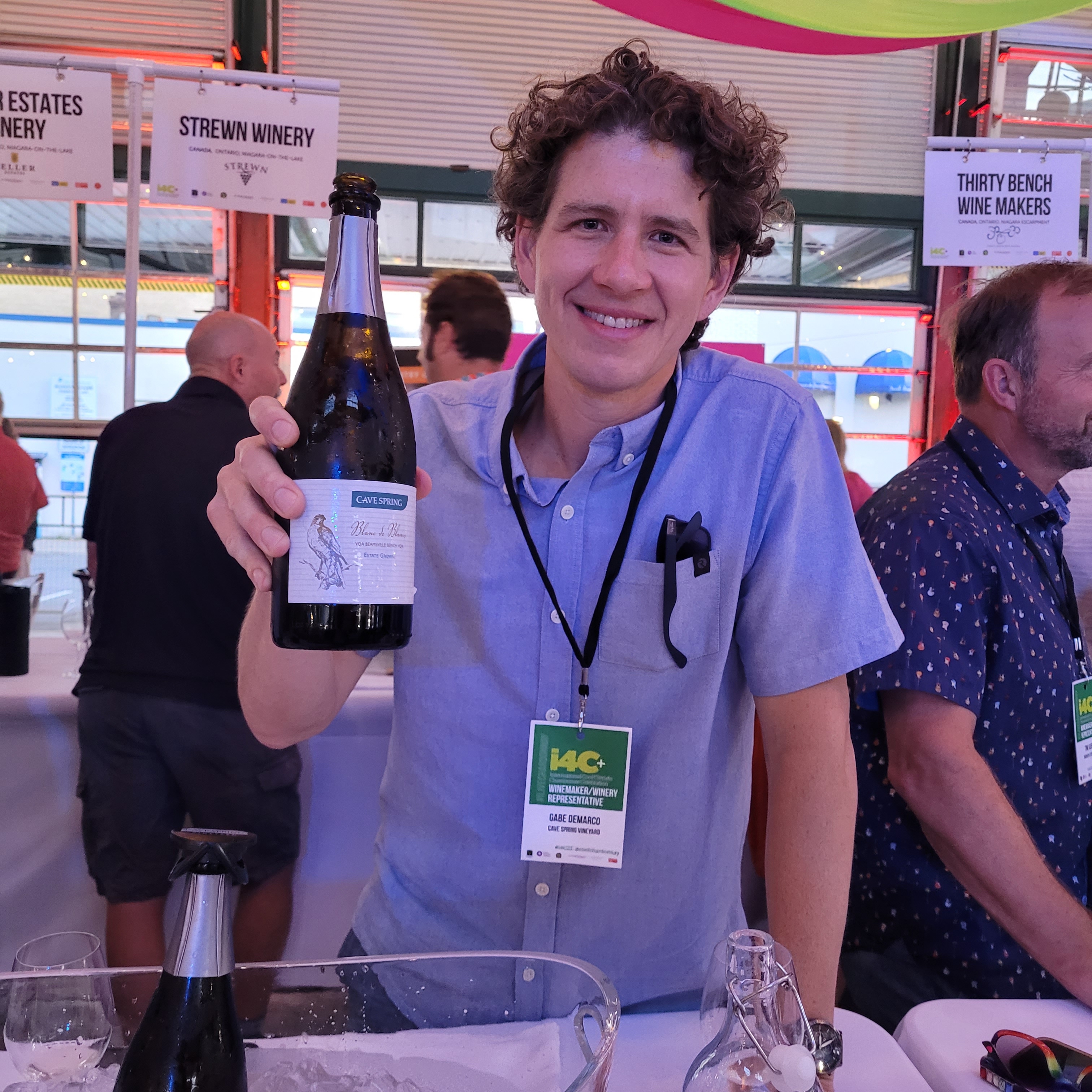
The five estates of Planeta earth

Welcome to Planeta Earth

The question often asked, if you could go back in time and meet just one person, who would it be? Shakespeare, Golda Meir, Beethoven, Anne Frank, Martin Luther King, Maya Angelou, Galileo, Marie Curie, Einstein, or maybe Gandhi? In the winemaking world there would be many great men and women to consider but this current fascination with Sicilia leads to the name Diego Planeta. Pioneer, visionary and a man who considered the entire island an agricultural playground where anything was possible. The Planeta family has Spanish origins and roots dating back five hundred years. Diego Planeta was the former president of the Settesoli Cooperative and founder of Planeta winery. His passing in 2020 left an irreplaceable hole but 15 cousins, including Alessio, Francesca and Santi Planeta are the beneficiaries of their uncle’s plans and legacy. Five family members run the day-to day operation and more than 200 vinicultural, viticultural, administrative and marketing artisans share in the collective vision. Today they work, farm sustainably and reap the benefits of five distinct estates but more than that they bring the fruits of these locations to the world. No other producer in Sicilia does this, not with the scope and breadth they do. This is the story of the five Sicilian estates of Planeta earth.

Godello, L’Etna

Related – Planeta’s Sicily

Un percorso non casuale, fortemente legato alla diversità dei paesaggi, dei venti, del carattere degli uomini e quindi dei loro vini. Not an accidental journey but one inextricably linked to the diversity of five landscapes, in soil, wind, climate and the relationship between the custodians and the wines they shepherd. Menfi, Vittoria, Noto, L’Etna and Capo Milazzo. No two are the same and all five contribute to the fabric of Planeta’s extant association and alliance with Sicilia. The Planeta family and head winemaker Patricia Tóth abide by their surroundings, as do the agriculturalists, guardians and caretakers, of olive groves, orchards, hinterlands and plantations. The pentamerous grouping of estates in all its micro and collective diversity is at once staggering to consider and then a thing of sensory overload. Taking in one at a time and appreciating the profundity of each place is the key to understanding. In March of 2022 I had the honour and pleasure to visit two properties and were it not for Covid-19 and later in June travel misteps I would have seen a third, quite possibly a fourth and perhaps even all five. As it is my personal and professional life have become enriched in ways that could never have been imagined.

Menfi Coast

Only came outside to watch the nightfall with the rain. I heard you making patterns rhyme

Not to be overlooked is above all else, Planeta’s production of IGP olive oil. Their’s is a painstaking process to achieve uncompromising quality borne of the trees in a landscape destined to deliver greatness. The fields of hospitality and cultural ventures integrate into their viticultural activities, all purposed to enliven the Sicilian experience. Sustainability without exception,  respect for the land and wineries completely integrated within the landscape are the values which guide the company’s activities. Winemaker Patricia Tóth was born in Hungary and received a degree in 2004 at the University of Corvinus in Budapest in Food Science specializing in wine, beer and spirits. Tóth worked at Le Vigne di Zamò Friuli, Bava in Piemonte and Vylyan in Hungary. She began her 17 year Planeta run in 2005 at Noto, then in Vittoria, later managing the setup of the estate in Capo Milazzo and on L’Etna. She now splits her time at 900m above sea level on the volcano’s north face and also nearest the beating heart control centre of operations in Menfi.

Related – All the wines of Sicily

Baglio di Ulmo

In Menfi the variety of terroir is infinite and to walk the phrygana is to stop time. The fauna ignites in the olive oil and the wines from Ulmo in a variety of styles and varietal personalities as sundry as the numbers of women and men who create them. They can be fast or slow, rich or discreet, loud or soft, hard or tender, loving or intense. They can be so packed full of notes it may feel like life speeded up. They can also be calming and interpretive. They can be anything at all.

L’Etna eruption, 1981

On L’Etna space and melody, in particular aboard the volcano’s north face (versante nord) there is a use of space so artful it enables the melodies of the original lines in the wines. Though Planeta (and so many others) use improvisations and embellishments, they do so in order to integrate the leading voice to grow together with the supporting cast. The main declarations of nerello mascalese and carricante are joined by nerello cappuccio, catarratto and grecanico, all evolving together organically, swelling and retreating as the complete pulse of the wines, the inner pulse guiding the creativity itself, as it is dictated.

The inimitable human and paradigmatic winemaker Patricia Tóth

In Vittoria, Noto and Capo Milazzo the path indicated is that of quiet intensity, of melodies so phrased that the rhythm and the space together build wines of strong driving forces. Their collective agency is power achieved without volume, tension without distortion. Some wines grab you and drive everything else from your mind. They seduce, softly engage your whole attention and lure you into the grooves they are travelling. All this without you being aware, of what is happening until it has already happened.

This is planet earth you’re looking at planet earth
Bop bop bop bop bop bop bop bop this is planet earth

Alessio Planeta

Related – Sicily in review

Paraphrasing from something Alessio Planeta said back in 2018, Planeta looks to connect the island by the phrase stato stazione delle una perfetta, meaning the union is currently situated in a perfect state, working together for the common good. Alessio and his family’s rich set of wine-producing circumstances, whether it be the individual refrains of each estate or the collaborative effect of the group, is a constantly growing and changing undertaking but never with the kind of urgency implied in some other producers’ body of work. Planeta’s is more than methodical, it is meditative, contemplative and organic. Calculated? Of course but with the future in mind and the greater good always considered. Leadership incarnate, always hospitable and most importantly positive. When I fell ill with Covid whilst visiting with Alessio and Patricia I felt safe and set up for recovery. I can never thank them enough, for their humanity and support.

Meet next gen Planeta custodian and burgeoning chef, Costante Planeta

Here are the 45 Planeta wines tasted in late March and early April in a cross-section of a portfolio interconnected and jointly illustrative of five estates. Their quality is what makes it so satisfying to taste, assess, compose, edit and finally publish the results. Working through these wines, like listening to the albums of a band’s tenure, or sitting in a club while they play their songs, well this makes for a great trip through an intensely diverse and ever-evolving viticultural terrain.

Menfi phrygana

Menfi-Ulmo

The Menfi situation is really one of Ulmo, or rather Ulmo is Menfi. Here on the island’s southwest coast beneath Palermo is where Planeta’s first winery opened in 1995 near the village of Sambuca di Sicilia, Built near an ancient 16th-century baglio, or stone farmhouse, situated above Lake Arancio and blessed with chalky limestone soils. In the middle of the 1980’s Planeta planted their first vines around the baglio which the family has always owned. The Iter Vitis museum, surrounded by a “collection meadow’” of different Sicilian and Georgian vines, “inspired by the idea of enhancing the rich Sicilian winemaking tradition.” The nature footpath called La Segreta runs from the winery, connects with those that intersect the Menfi hills and also 250 cultivated hectares of vineyard. The name adorns the quadripartite set of wine labels that are arguably Sicily’s most well-known. The crux, core and heart is Dispensa where production, administration and planning all happen.

Beach at Menfi

The Infernotto, inside the small winery, is the family caveau, one of the most calming placing to read, rest and taste through Planeta’s portfolio of wines. Ulmo, Maroccoli, Cirami, Baglio di Ulmo and the 6th century B.C. Palmento di Bosco della Resinata; places of affinity, integration and varietal kinship. Of grillo, fiano, chardonnay, grecanico, sauvignon blanc, viognier, nero d’Avola, syrah, merlot, cabernet franc and cabernet sauvignon. The chardonnay stands out as the iconic label, a super chardonnay to be sure because no other varietal example delivers the two pillars of quality and quality like this Planeta label.

Planeta Serra Ferdinandea Rosato 2021, Sicilia DOC

A joint venture between Planeta and the family Oddo from the south of France. Rosato, Bianco and Rosso made high in the hills above the sea near Menfi, closer to Sambuca. Here nero d’avola and syrah made in the airiest, salty and light tart way, quenching and satisfying. The name refers to the story of a volcanic island that suddenly rose from the sea in 1831, fought over for claim by the Italians, French and British, before disappearing back in to the water many months later. There it sits 30 to 40 metres below the surface. You can drink the town dry out of this Rosato, any day, any time. Drink 2022-2024.  Tasted March 2022

Ulmo Chardonnay

Planeta Chardonnay 2020, Sicilia DOC

Chardonnay comes from two vineyards, Storico which is the large white rock at 270m above the Menfi lake and Marrocoli, where red grapes (cabernet franc, merlot and syrah) really thrive. Here chardonnay is given roundness to mix with the stoic-stony and intense directness of what it could have been. A place of vibrations and nerves and so Marrocoli is needed to tame and soften Storico’s blunt edginess. That it does, injecting peach fleshy sunshine into the linearity of the wine. Keep in mind that 200,000 bottles a year are made and that doesn’t even keep up with the demand. Arch classic Planeta bread and butter wine, also in style. One of the planet’s great chardonnays of double Q effect. Quantity and quality. Drink 2022-2025.  Tasted March 2022

Planeta Chardonnay 2019, Sicilia DOC

The two vineyards are Storico at 270m above the Menfi lake and Marrocoli where really white calcari predominates. While there is the plump presence of chardonnay giving “morbido” roundness in apposite to the mineral Storico fruit, there is also this persistent buzz and and nervy character. For a wine for which upwards of 200,000 bottles a year are produced it really is quite incredible how vintage dictates the personality of the wine. Fresh quality bread and churned butter in the glass. Drink 2022-2024.  Tasted March 2022

Planeta Cometa 2020, Sicilia Menfi DOC

As a reminder Cometa comes from two vineyards, the important one being Dispensa right by the winery and Paso di Gura, 10 kms away. Fiano, not off of volcanics but clay soils close to the sea, well-ripened, in a place where it likes the sun, suffers and gets a bit bronzing and golden. A fiano of white and yellow flowers, chamomile and the like. While the universe busy was sending more than enough chaos to humanity, in this vintage there were only good conditions and therefore excellent to raise a proper Cometa. Feels plump and salty, full and herbal, bitters so minor and subtleties available to those who wait for it. The upward trend continues, towards greatness. Drink 2023-2028.  Tasted March 2022

Planeta Cometa 2019, Sicilia Menfi DOC

Cometa is fiano “di Ulmo” in Menfi out of two vineyards, Dispensa and Paso di Gura. Clay soils over calcium carbonate and a place for full ripeness within the context of fulfilling the promise for golden grapes. The florals sing from 2019, more white than yellow and the vintage delivers a credibly balanced affair. In this last vintage before the world went mad Cometa seems at ease, confident and secure. Not as round and plump as the following 2020 yet equally saline, herbal if sweetly so and the crunchiest Cometa ever encountered. Not a shock because “every vintage of fiano is unpredictable” explains Alessio Planeta. More vertical, linear and direct. Drink 2022-2026.  Tasted March 2022

Planeta Cometa 2018, Sicilia Menfi DOC

Experimental grape introduction of fiano to Menfi in 1994 with the first vintage being 2000. “They (Avellino) grow fiano on volcanic soil in the mountains and we grow it in clay soils by the sea,” tells Alessio Planeta. “With low yields and small bunches.” Here it can be tropical but it’s always herbal and breezy. Can’t help but be salty, after all the air is filled with marine life.  Last tasted March 2022

Cometa has changed or rather in its youthful state of ultimate reductive freshness is so straight-laced, linear, tightrope walking along a razor sharp edge. There’s a tonic injection that helps to propel it forward and the envisioning projects two years ahead to see it develop some sweeter fruit notes, straight from the orchard’s hip. Watch for this special vintage of fiano, the ancient noble variety from Campania that Planeta’s braintrust took a well-advised flyer on in the 1990s. Drink 2020-2026.  Tasted May 2019

Planeta Didacus 2019, Sicilia Menfi DOC

The name Didacus is Diego, from the Latin, a chardonnay dedicated to Alessio Planeta’s visionary uncle, the late Diego Planeta. These Storico Vineyard Menfi vines were planted in 1985 on the hillside up to 270m of elevation and below the white rock on calcareous-clay soils above the lake. As a vintage 2019 was dryer and warmer than 2018, especially in summer. Results in a richly concentrated chardonnay but one picked earlier with acids in tact and phenols well developed. Plenty of water stocks in the soil after a wet 2018 allowed the plants to ease through ’19 and take full advantage of the dry season. Full malo feel, good mineral backbone and a long sensation swept across the palate puts this in a place of Menfi specificity while also leaving an impression that next level notes will emerge over a good period of time. Drink 2023-2029.  Tasted March 2022

Planeta Didacus 2018, Sicilia Menfi DOC

The chardonnay dedicated to Diego Planeta, from the oldest Menfi vines, planted in 1985. The name Didacus is indeed Diego in Latin and the inherent plus inferred further meaning is as thought, a didactic one, which says something about many things. It speaks to the pioneer Mr. Planeta’s two-toned, ahead of its time work and to the way chardonnay takes Sicily into another realm and brings reductive freshness into buttery bites that ties two voices together. And they will speak as one. Soon. Drink 2021-2027.  Tasted May 2019 and March 2022

Planeta Ulmo tasting

Planeta Didacus Cabernet Franc 2017, Sicilia Menfi DOC

The Didacus red is a varietal cabernet franc from a very specific Ulmo block, also named for Diego Planeta, visionary and pioneer for wines in Sicily. The Piano del Sommacco (sumac) is the source, treated to whole bunch fermentation and aged in tonneaux because of the fruit’s great potential. The heat did not come until just before harvest (after a cooler season early). This is good for franc when the heat comes late for more concentration though also one picked later as it should be. The uncanny smell of carob and even bokser pod fruit, properly herbal, just the right amount of pyrazine, balsamic and spice. Long, blue and true. Drink 2023-2027.  Tasted March 2022

Didacus is Diego, from the Latin and like the chardonnay this cabernet franc is dedicated in kinship to Alessio Planeta’s uncle, pioneer and visionary, the late Diego Planeta. Storico Vineyard in Menfi was planted in 1985 on white rock-calcareous-clay soils above the lake. There is little surprise that 2016 was a serious franc vintage, long and drawn out, perfect to bring the ripeness of necessary phenols that the grape so clearly needs and dearly deserves. Shows off cabernet franc’s dreamy complexion with a side of pyrazine though depth of fruit and dearth of (including American) oak are really the pair in charge. There is something Rioja Gran Reserva about Didacus but even more so there is Sicilian depth, Moorish density and Planeta gravity. Or gravitas it should be conceded from and for a wine of many splendored seasoning and structure. Perfume flies in the air and dreams will someday come true. Drink 2024-2032.  Tasted March 2022

Fishes by Costante Planeta

Planeta Alastro 2021, Sicilia Menfi DOC

Alsatro the yellow flower that appears all over Menfi in Spring. Mainly grecanico with some sauvignon blanc, the former essentially the same grape as garganega. Similar to a Soave ideal, to add some aromatic swagger in a friendship to work with a local grape. Lean and light, like garganega in wet concrete, straight ahead citrus, neutral and refreshing with just a hint of petrol. Cool white. Drink 2022-2025. Tasted March 2022

Planeta Grillo Terebinto 2021, Sicilia Menfi DOC

Terebinto the red flower all over the hills of Menfi in spring, especially as you approach the sea. A cross between the aromatics and intensity of cataratto and the gregarious flavours of zibbibo. Made as a pure variety but only since 2016 because Alessio Planeta realized it was a beautiful beast. While the sunshine and richness are very much accumulated there is also the sea in this gently rolling and saline white. A great vintage of this wine and just what grillo should be. Drink 2022-2025.  Tasted March 2022

Planeta Plumbago Nero d’Avola 2019, Sicilia DOC

Plumbago or “Ploom-baggo” grows in Menfi and around Ulmo, coming out in Spring though not right away. In nero d’avola it is a red that manifests Menfi missives though Planeta chooses to label it not in menzione geographica terms but rather Sicilia DOC. This is because a new vineyard’s fruit is involved and so it was not requested to be Menfi, but again in 2021 will be. Always rolling deep and seasoned, a black cherry and seasoned meaty depth yet ’19 seems to have more stones, air and lightness, a relative thing but it makes a difference. This Plumbago really gets it, or maybe we get it and how it translates transparently. Less rustic than usual, a wood adjustment made and so here with a bit more sympathy and less dealing with the devil. Or more perhaps? It may say, “Pleased to meet you, hope you guess my name. But what’s puzzling you, is the nature of my game.” Drink 2023-2028.  Tasted March 2022

Planeta Maroccoli Syrah 2017, Sicilia Menfi DOC

Syrah, from a conca facing the lake in Ulmo, more calcareous than where the chardonnay grows, a sea of sediment that is more alluvial going down to the shore. This syrah grows on the white calcium carbonate which surely gives vivid florals to mitigate a hematic meatiness created by the clay, sun and varietal tendency. Not a syrah of bacon or smoked meat and also not overtly concentrated but instead quite pretty and elegant. It should be expected this direction will continue with subsequent vintages. Drink 2022-2027.  Tasted March 2022

Vineyards in Ulmo

Planeta Maroccoli Syrah 2016, Sicilia Menfi DOC

Syrah is grown above the lake in Ulmo on a “conca“ of alluvial and calcareous clay soils notably white and the purple flower aromas are surely there in this vintage. So are the meaty ones but also those that imagine roasted melanzane and other toasty vegetative scents. While there used to be so much concentration in this wine it seems that 2016 marks a turn towards restraint and that thing we like to call elegance. Still the dripping meat juices fragrance and flavour rear up in this ’16, as they have always been known to do. Ready to go now with the first hints of balsamic and flint coming through. Drink 2022-2026.  Tasted March 2022

Planeta Sito Dell’Ulmo Planeta Merlot 2016, Sicilia Menfi DOC

Pure merlot made since 1995, one of the first for Planeta and one that used to be called simply “merlot.” A style of spice and even balsamic but once again the florals, lighter activity and respect for vineyard in their sense of place is what really matters today. These were the first vineyards planted in 1985, along with chardonnay, nero d’avola and grecanico. The experimental early days. At 31 years-old these merlot vines are highly experienced, the varietal give is exactly of itself and the wine is almost OCD stringent. That is to say it knows what it is and wants to be. Not overtly rich but surely capable of aging and again a vintage of freshness meets long, cool and slow ripening. “A bit too fresh for me,” says Alessio Planeta and then “nordic style,” adds Patrica Tóth.” Beautifully chalky and like a Sicilian I will fight to the death to argue that soil has much to do with the mouthfeel of this merlot. Still needs one more year. Drink 2023-2028.  Tasted March 2022

Planeta Burdese 2016, Sicilia Menfi DOC

Burdese (Boor-dee-say) from a Sicilian dialect, as in Bordelais, looking back in time at Bordeaux, using the two cabernets from Ulmo, sauvignon and franc, 70-30 in every vintage except ’97-99, when it was only sauvignon. There is an acidity that can only be described as “Burdese,” even when the sauvignon dries out a bit, by the calcareous raised franc and most importantly the freshest of Menfi vintages. Here a fragrant and bright Bordeaux (or perhaps Ulmese?) joint, a blend that sings and raises the bar for such wines in Sicily. Tart and chalky, structured and really long. Drink 2023-2027.  Tasted March 2022

Planeta Burdese 2015, Sicilia Menfi DOC

Burdese, the Sicilian Bordeaux blend, a word brought back and employed here in Menfi as the French dispatch for cabernet sauvignon (70 per cent) and franc grown in Ulmo. Now settled into its Bordelais by way of Sicilian skin, tannins softened and acids too. Feels like a warm season created the resolve in this wine but then again it also seems like there are parts unknown and things yet revealed. After all “all great beauties withhold their deepest secrets.” Drink 2023-2027.  Tasted March 2022

Sicilia DOC

Planeta La Segreta Grillo 2021, Sicilia DOC

An extension from the original Bianco bottle, added a few years back (2016) when grillo and nero d’avola were recognized as protected varieties under the Sicilia DOC. While made in greater quantity and with less complexity than the Terebinto grillo the idea and the ideal are one in the same. Citrus and herbs, some fleshiness and sunshine though quiet and calm. Spot on balance and amenability. Drink 2022-2024.  Tasted March 2022

Planeta La Segreta Il Bianco 2021, Sicilia DOC

Il Bianco is the original La Segreta, a blend of (50 per cent) grecanico with viognier, chardonnay and sauvignon blanc. Remarkably the aromatics do tell of viognier but that changes across a palate that  s expressly grecanico with shades of the other grapes. Broader and more rounded than grillo, perhaps antithetically so but less specificity Makes Il Bianco the one to work for all. Drink 2022-2024.  Tasted March 2022

Planeta La Segreta Nero d’Avola 2021, Sicilia DOC

An extension from the original Rosso bottle, added a few years back (2016) when nero d’avola and grillo were recognized and added as protected varieties under the Sicilia DOC. Essentially Planeta’s varietal “lite,” a lithe and honest, pure and transparent entry into the Ulmo world for nero d’avola, with just a small portion from Noto. The key is all estate grapes, an entry into and sort of second set of wines for Planeta. The selection comes within the availability of 370 hectares of production. Safe, straightforward, varietally correct, tart and also too easy to knock back. Drink 2022-2024. T asted March 2022

Planeta La Segreta Il Rosso 2021, Sicilia DOC

As with Il Bianco, Il Rosso is the original red under the La Segreta label, a blend of (50 per cent) nero d’avola with merlot, syrah and splashes of cabernet franc. Deeper if not darker but certainly meatier and more ferric than the varietal nero. Herbal as well, a note of Amaro and dark chocolate shavings. As with the other three La Segreta wines the Rosso is a matter of different vineyard management as compared with the other Planeta wines, with the intendment to be less concentrated, less tannic and to drink right here and right now. That it does, especially with pasta in a sauce of eggplant and tomatoes from Vittoria. Drink 2022-2024.  Tasted March 2022

Lava flow, Feudo di Mezzo

L’Etna

The year was 2008 when Planeta settled on the north side of Etna, among the lava flows and the woods which surround the village of Passopisciaro. Vines of planted nerello and carricante were planted and then in 2012 the winery was also established. The hospitality is housed to the north at Montelaguardia, in the middle of the Sciaranuova vineyard at more than 800m above sea level. Here the Etna cru are produced, in pinot nero, nerello mascalese, riesling and carricante. To the south the Feudo di Mezzo winery and vineyard (for Etna Rosso) are right in the centre of a 15th century lava flow. Nearby at Torreguarino and Rampante the vines are also best suited to red wines. At Sciaranuova the old terraces were transformed into a “Theatre in the Vineyard,” home to the Sciaranuova Festival.

Sciaranuova, Etna

To get a true sense of geography and location there are four passeggiate that will unlock the door to Etna enlightenment. The first is through the 15th century lava flow at Feudo di Mezzo and the vineyards with their gnarly bush vines. The second is the lava flow of “L’Etna 1981,” an eruption between the 17th and 23rd of March, at which time the village of Randazzo below came this close to being swallowed whole. The third is through Parco Statella to gain a sense of how Etna’s north face integrates Alberello vineyards, woods and homes. The fourth is ambling over volcanic boulder flows, admiring all the layers of lava rock, exploring the ancient, gnarly and propitious aboard L’Etna, as seen in Passopisciaro.

Planeta Eruzione 1614 Carricante 2019, Terre Siciliane IGT

Eruzione is always picked later than the carricante for the Etna Bianco (from Monetalguardia), at least a week later, finished on the 20th of October, really early. You smell and taste the Bianco from 2019 and think it’s tight but then you do the same with the Eruzione and then realize just what tight is. In this amazingly compact ’19 there is the feeling of salts dissolving into the fine grain of the wine, volcanics in carricante disappearing with immediacy though their presence never leaves your palate. A vintage that so precisely and clearly defines what it means to grow this grape on the northern slope of the mountain between 810-900m, even though at this elevation it can’t qualify for DOC Etna. The higher you go, the tighter are the wines and the longer they live. That is a fact. Drink 2023-2028.  Tasted March 2022

Parco Statella, Etna

Planeta Eruzione 1614 Carricante 2014, Terre Siciliane IGT

This is just perfect. To re-taste Eruzione carricante five years later, almost to the day and just past the halfway point in this 1614’s expected tenure. In fact it barely feels like any time has passed save for a fumé moment of character that Tóth admits “I don’t know where it comes from,” meaning it’s not technologically possible. Which means it comes from the vineyard. Or, the original sapid part of the wine transforming into smoulder. The texture is not organza but sheer, you can feel through it. The salt has fully melted to now extend the flavour but the wine remains tight. And so the longevity abides. And the score also rises, as the sun. Drink through 2027.   Last tasted March 2022

“Not everyone can carry the weight of the world,” save perhaps Planeta’s Patricia Tóth, a winemaker who celebrates the past, the endemic varietal and in the present, the glaring truth. The name Eruzione is evocative of the estate’s Cru dell’Etna and in a mind’s eye transports history through the narrative of carricante (with 10 per cent riesling). It brings the legendary 1614 Mount Etna eruption to life, a longest ever recorded catastrophe that lasted ten years, halting just on the border of the vineyards of Sciaranuova. This is veritable mountain altitude wine, from high (790-890m) terraced, volcanic black soils delivering fresh conifer savour, saltiness and palpable mineral style. It is sharp and composed on the nose, with citrus distillate and elevated acidity. It does not matter whether you are wide awake or deep in R.E.M sleep. At all times it is a revelation for carricante. This is what it can be! There was no need for crop thinning, it was picked four to five weeks after the sparkling and it spent five months on the lees. The texture and the potential longevity are thankful for this. “Combien, combien, combien du temps?” At least seven years. Talk about the passion. Drink 2018-2025.   Tasted March 2017

Quarantine passegiata, Versante Nord, Etna

Planeta Riesling 2018, Terre Siciliane IGT

What do you compare Etna riesling to? Nothing save perhaps Eden Valley but what’s the point? Texturally this from Planeta is quite soft but no matter the texture every sip goes salty. Volcanics, or more to the lava flow point, living, breathing and current (within the last 400 years) volcanics will do that, for real. Not like other “volcanic” soils, those from mountains that erupted maybe one million years ago. But that’s only half of the matter. The other and equally important matter is elevation, at 900m, less fancy, attractive and sexy. But this is real and this is what riesling wants and needs. Not Mosel, not Trentino, not Argentina but L’Etna heights. She is present and she presents. “Elevation is not as sexy as volcanics, “ said no one ever but this is the thing. Riesling was never that or like this but it has arrived. Say hello to my little friend TS-IGT. Drink 2022-2026.  Tasted March 2022

Sciaranuova Vineyard

Planeta Eruzione 1614 Pinot Nero 2018, Terre Siciliane IGT

Super fine pinot noir from Patricia Tóth on Etna’s north slope at 820m, like well-prepared sea urchin, straccato di manzo mantecato and fegato d’oca. If not the best Etna Rosso vineyard it may as well be in the conversation because this kind of pinot noir depth is usually reserved for nerello mascalese. Something cool this way comes every morning and dry, no matter the settling of precipitation the night before. Here the fineness of varietal and block share a feeling, a commonality of place within to the third degree, mimicking gastronomy and asking for the right set of partners. There is fennel and there are dried spices, cumin perhaps in how the delicate yet forceful south asianer’s carpet really ties the wine together. Sweet meanderings in dried rags really bring the rustica and the autentica. Drink 2023-2028.  Tasted March 2022

Making friends in Parco Statella, Etna

Planeta Etna Bianco DOC 2020

Widest and most inviting smile yet from Planeta and winemaker Patricia Tóth’s 2020 Etna Bianco, generous gift of the volcano and the sun, elemental salts and even ripeness, controlled eruption and fleshy intensity. A relaxed bianco as an extension of the vineyard, 100 per cent carricante from Contrada Taccione in the village of Monetalguardia. The soil is deeply organic, nourishing, dark for Etna at 690-720m. Hard to find more direct accommodation and physical beauty than what this Bianco wants to share, without demands, strings or expecting anything in return. Drink 2022-2027.  Tasted March 2022

Etna hospitality, Planeta

Planeta Etna Bianco DOC 2019

Though the next vintage of Etna Bianco DOC will be the perfect one, for everyone and all, this from 2019 is no difficult one, it’s just more linear, laser focused and intense. There are times when 100 per cent carricante can act this way, not because of any varietally finicky reason but just because the vintage makes it so. More central, linear, severe and seeking ways to branch out but that still may not be possible at this time. Super compact and it looks as though 2021 could also be this way. The grapes came early, seemingly counterintuitive to how things turned out and the winemaker looked around, not believing the harvest was done. But forget about it Patricia. It’s Etna. Drink 2023-2028.  Tasted March 2022

Shalalingualossa

Planeta Etna Rosso DOC 2020

A 100 per cent nerello mascalese from Pietramarina and Feudo di Mezzo (where the cellar is located), two vineyards 5km between them at 600m of elevation. The nose is almost clay even though there is none on Etna making for a very clean aromatic profile. Made in the Piedmontese cappelo sommerso method, 35-40 days on skins, because nerello mascalese doesn’t like and doesn’t need oxygen, regardless of its tannic structure. The vintage is a round and gifting one for all, bianco and rosso alike, less compact than some and fleshy as a ripe plum, especially with reds. A 2020 in which recent volcanics are a matter of wringing out a basalt sponge with the resulting juices running with charismatic invitation. That said a Planeta Etna Rosso clearly needs some time, not forever mind you and in this case a depth of developed fruit and mineral swath keeps things wrapped and taut. Notable for the red citrus bite, pique and pith across the back end. Drink 2023-2028.  Tasted March 2022

Feudo di Mezzo, Etna

Planeta Eruzione 1614 Nerello Mascalese 2018, Terre Siciliane IGT

Varietal nerello mascalese grown above the DOC line is a matter of great, compact and vertical concern from out of the 2018 vintage. Was a rainy and “fragile” vintage, a matter of nature putting more stress on bunches that can result in variegate meaning. The concept of rigorous table sorting and the use of a basket press are essential tools to getting pristine fruit and then juice. Etna’s conditions are so unique to Sicily and so here in Sciaranuova it is the last of Planeta’s estates to figure out the what, why and how for making quality wine. On the whites it was in and around ’16 and for the reds probably right here with this sharp, spiced and meaningful red. While it is quite compressed there is also an expansiveness that presses to the full extent in how the palate is swarmed and covered. My goodness. Drink 2025-2032.  Tasted March 2022

Parco Statella, Versante Nord, Etna

Planeta Eruzione 1614 Nerello Mascalese 2017, Terre Siciliane IGT

Sciaranuova is the place closest to the village of Passopisciaro for nerello mascalese of a very specific style. From a warm vintage and one when there was nine per cent cappuccio mixed in with the mascalese. More of a salumi, curative and dried skins vintage, not just with an extra year affecting the wine but also because of the cappuccio influence with an increase in oxidative feel. Feels quite ready to rock and roll, more of the latter perhaps and with the right moment there will be a scorrevole of mascalese sensation running and then sliding across the palate. Drink 2022-2026.  Tasted March 2022

Capo Milazzo, Sicily

Capo Milazzo

Sicilia’s most extreme and dramatic northeast corner is home to some of Planeta’s most extreme and dramatic wines. Capo Milazzo’s soils are alluvial, deep soils, friables, born out of rivers that came from the northern mountains. The peninsula’s proximity to the sea leads to wines that are salty, with algae, black cherry and cypress. The four hectare vineyard is called La Baronia, used for the Sicilia DOCs in Nocera and Mamertino but also experimentally and for research in three ancient varieties known as varietà reliquie; vitraruolo, lucignola and catanese nera.

Planeta Nocera 2018, Nocero Sicilia DOC

Specific to Milazzo in the northeast of Sicily, in two appellations, Faro and Mamertino. Noce is “nuts,” growing in big bunches and blue-hued (much more so than cabernet sauvignon). Grows on volcanics, in a place with an active volcano (Stromboli) which is significant and in 2018 the vintage didn’t turn out the same beast of a bruiser in terms of the grape’s intensity of tannins. Forget the comparisons to sangiovese, barbera and tannat because this ’18 is a wonderfully harmonious and balanced varietal wine. Still the presence and obviousness of black cherry, peppery nocellara olive and just a kiss of orange. Drink 2023-2027.  Tasted March 2022

Planeta Mamertino 2017, Mamertino Sicilia DOC

From the dramatic land and seascape that is Capo Milazzo and a wine surely as close to winemaker Patricia Tóth’s heart as any in her Planeta dreams. Blends 60 per cent nero d’Avola, with (40) nocera while paying homage to the Mamertini who produced a version of this wine at Milazzo, described by Pliny and beloved by Julius Caesar. First vintage was 2013 and so only the fifth by this warm vintage example. Can be a bruiser and a brooder but ’17 exhibits a surprising antithetical brightness and invitation for pleasure. Even when this young, now moving, not evolving but relenting, in structure and for spirit. The two grapes work in seamless if also delicious tandem, pushing and giving a little, extending an olive branch through clear Mediterranean scents, flavours and style. Like morning dew, soulfully guitar driven, modern jazzy in pure stone groove. Unexpected and warranted at the very same time. Drink 2023-2029.  Tasted April 2022

Noto

Noto is the birthplace of nero d’Avola, graced with calcareous soils like Jerez and Champagne, not really comparable to anywhere else. Noto is close to Vittoria in how the wines come to be but it’s a mobile texture, silken and with velvety tannins. The soft hills of Buonivini are blessed by soft breezes arising from the meeting of two seas, ideal for nero d’Avola and moscato, but also almonds, carobs and olives, symbolic plants of the Mediterranean location. The three vineyards are agliastro, buonvini and zuppardo on 45 hectares, acquired piece by piece, today producing the DOC wines Santa Cecilia, Moscato di Noto and Passito di Noto.

Planeta Allemanda 2021, Sicilia Noto DOC

Allemanda, opening baroque dance, 100 per cent moscato bianco, fully, completely Noto. The concept is before the meal, a winder upper, ahead of several courses and pairings, in lieu of that wine killing sundowner, Sicilian style. Quite a tart and powerfully stinging revivalist, to wake one up and keep the spirit alive well into the night. A palate refresher, making use of the indigenous and the parochial. Crisp, clean, tightly wound, acidity high, difficulty low. Revive your energy with a glass of Allemanda, dancer in the mouth. Drink 2022-2024.  Tasted April 2022

Moscato Di Noto Dry 2021, Sicilia Noto DOC

Sister to Allemanda, 100 per cent moscato (di Noto) yet here dry as the southern Sicilian desert (proverbially speaking) and acids running jet propelled high. In the vein of riesling or say Hunter Valley sémillon, austere, intense, at present unknowable but tenable as time will surely race on by. Lime and the dream of petrol, sharp herbs and even sharper citrus, though not straightforward as such. Most curious and intense white wine, best with sea creatures now but with time, who knows, the sky just may be the limit. Age some and see what transpires. Drink 2023-2027.  Tasted April 2022

Planeta Controdanza 2018, Sicilia Noto DOC

Not quite a year has passed and while a settling seems noticeable there still pulses and vibrates a dance of sorts. The white soils have yet to leave the floor and the wines continues to slide over the sleek surface. The nero needs more time, the austerity must chill out and the integration is still somewhat far away. Keep to the program.  Last tasted April 2022

Noto’s bianci soils on the Buonivini estate are the Controdanza source at of Sicily’s furthest southeastern point. Planeta’s relationship here dates back to 1998. The hoedown,”quadrille” or square dance is 85 per cent nero d’Avola plus (15) merlot, super Sicilian by way of Noto and no matter how many vintages pass on by there is still this irony between barn dancing and post-modern blending. It takes tasting this 2018 to realize how dominant the nero d’Avola really is and while merlot is supposed to soften and add a cream centre, in 2018 that’s a big request. Now 2017 makes even more sense and is a cream puff compared to this tannic and grippy 2018. A bigger wine of greater fortitude and one that needs some time to soften. Hold off on the Controdanza for now, the wine and the dance. Drink 2023-2028.  Tasted June 2021

Planeta Santa Cecilia 2016, DOC Noto

That idea behind tertiary fungi and umami is still a dream and should be shelved for at least four to five years. That said there is some movement now into the secondary, just hints mind you but there are the plums baked into the minced meat of a sciachiatta pie. Even a note of red pepper flake, parsley and dandelion to accent the sausage. Drinking with most excellent gastronomy right now.  Last tasted April 2022

The flagship 100 per cent nero d’avola must be poured last because of the power and the fact that it’s not something so easily understood. If you were to try and taste other wines after this it would be like Eric Clapton going on after Jimi Hendrix. There’s a deep olive, blood orange, tar and ribena profile that you just know will seek out truffle, porcini, tar and roses. Welcome to the world of aging Sicilian wines and in this very specific world, nero d’avola from Noto. Drink 2022-2034.  Tasted May 2019

Planeta Santa Cecilia 2011, DOC Noto

Santa Cecilia from 2011 is a special nero d’avola, balanced in silent but sweetly deadly acquiescence of Noto’s white chalky soils. Her tannins are abundant and smooth, running in one direction and so it’s a wonder how un-evolved and yet so involved this nero d’avola is equipped to believe about and with great kindred spirit with itself. That it presents this youthful and yet to advance is a thing magical and sincere. Inner strength is one thing but outward beauty is the real deal. Or is it the other way around? Either way they combine for one of Cecilia’s greatest acuity and remainder of structure. Drink 2018-2026.  Tasted May 2018 and April 2022

Planeta Santa Cecilia 2008, DOC Noto

Having now tasted several vintages, including a few older examples of Santa Cecilia the idea of taking nothing for granted is now engrained. Something happens to this nero d’avola after several years in bottle, part chemistry and part magic. When 10 years get behind this wine it begins to dig, deep and purposefully into the Noto soil, finding minerals and elements that never seemed to before be present in this wine. Well past the fruit stage here in this 2008, now underlying, primitive and fundamental. And yet it reeks of nero, wood a thing of the past, a perfume cast with spellbound, gripping and intriguing fascination. No shortage of earth and cocoa derivations but mostly the curiosity of place. Drink 2022-2024.  Tasted April 2022

Planeta Santa Cecilia 2005, DOC Noto

Finding oneself in a state of utter disbelief upon nosing an older Santa Cecilia has just happened with thanks to this 2005 and the unthinkable aromatics it possesses. There have been some older examples like 2007, 2008 and 2011 which all showed morphological magic but this, this is something other. The state of perfumed preservation is impossible, the floral emanations and fruit continuance implausible and in suspension of belief. The 2005 is almost perfect, dark berries and red citrus alive, acids in perfect condition, wood dissolved, resolved and walked straight out the door. The life and vitality reside in the arena of the flawless, faultless and achievable. This is what nero d’avola, Santa Cecilia, Noto and Planeta can be, at its collective finest. Will drink this way (and also that) for five more years and with ease. Drink 2022-2027.  Tasted April 2022

Planeta Passito Di Noto 2019, Sicilia Noto DOC

Planeta’s Passito di Noto is a rare and singular dessert wine, now in its 17th year of production, made with moscato (di Noto) and from vines so old it may not be known just how old they are. The grapes are dried using the appassimento method and then turned into this concentrated and naturally sweet dessert wine. This is a very particular viscosity and profile with resins and vapours as tenable as are the sugars, with herbs and plants nearby mixing with their vinous qualities for a sticky of superior savour and character. Imagine pineapple soaked in rosemary and vermouth, apricots bathing in fennel and golden Amaro, hazelnuts toasted with long pepper and green vines. Not unusual but particular, spoken personality and in the end, so very fine. Drink 2024-2035. Planeta’s Passito di Noto is a rare and singular dessert wine, now in its 17th year of production, made with moscato (di Noto) and from vines so old it may not be known just how old they are. The grapes are dried using the appassimento method and then turned into this concentrated and naturally sweet dessert wine. This is a very particular viscosity and profile with resins and vapours as tenable as are the sugars, with herbs and plants nearby mixing with their vinous qualities for a sticky of superior savour and character. Imagine pineapple soaked in rosemary and vermouth, apricots bathing in fennel and golden Amaro, hazelnuts toasted with long pepper and green vines. Not unusual but particular, spoken personality and in the end, so very fine. Drink 2024-2035. Tasted April 2022.Tasted April 2022

Vittoria

Southeastern Vittoria is home to the only Sicilian DOCG called Cerasuola di Vittoria, a blend of nero d’Avola and frappato grown on red sandy soils. As winemaker Patricia Tóth likes to say, “the main actor in all these wines is the beloved nero’d’Avola,” most important variety on the island, planted across 60 per cent of vinicultural surface area. Nero is the adaptable one, like pinot noir in France, nebbiolo in Piemonte and sangiovese in Tuscany. Vittoria’s are fresher and ignite more passion as compared to what comes from Noto and parts further east on Sicilia.

Diesel

Planeta Frappato Sicilia Vittoria DOC 2020

First vintage of Planeta’s frappato was 2013 so by count this eighth is a Vittoria DOC of experiential significance, rare, low output yielding and as always, never showy. The grape and the amazing singularity it possesses makes for comparisons that are desperate but ultimately useless. That frappato in Planeta’s way can deliver this fresh strawberry and reductively earthy combination is testament to soil and sea. Think of the ripest fruit cut clear and clean by wet stoniness and sharp imagery. Crystalline vintage here for Planeta, potent, vehement and heartfelt. There is no hiding from such clarity and tempered ethos. The 2020 shows a little of that Etna Rosso feeling and from a location so far away. Drink 2023-2027.  Tasted April 2022

Planeta Frappato Sicilia Vittoria DOC 2019

An extra year effects a significant amount of change and difference, especially when that vintage was so warm and generous. In the realm of rare and dignified frappato there are moods, as if sounds, environment, beats and emotion have become involved, as if music saved my life. The strawberries are wilder and deeper, the herbals ground by pestle and the sea just a bit dark, turned up and stormy. The mid-palate on 2019 is completely filled in, the acids circulative, the finish weighty and defiant. Not the light and bright frappato of some years and yet always sharp, direct, pointed. It can’t help but be. Drink 2022-2026.  Tasted April 2022

Winemaker or dog whisperer? Both

Planeta Cerasuolo Di Vittoria DOCG 2020

From the red soils of the Dorilli estate and Sicily’s only DOCG in capture of a seriously striking vintage. The southerly location lands between the sea and the Iblean mountains, the name coming from cerasa, cherry in Sicilian dialect. Typical for Planeta’s take, blend of 60 per cent nero d’Avola with (40) frappato, coming together like Hall and Oates, a little bit 80s, funky and pretty. Cerasuola as method of modern love, in which “dreams are made of a different stuff.” Cerasuola pitting strawberry and cherry against a red citrus backdrop, remarkably well constructed and produced. Two grapes in harmony, with strong hooks and overlaying melodies. Adheres to traditional soul traditions while turning out the pop. Thus the DOCG. Drink 2024-2028.  Tasted April 2022

Dorilli Sicilia Cerasuola Di Vittoria Classico DOCG 2017

Dorilli represents the pinnacle of the eponymous estate sound and vision in a Cerasuolo more Bowie and Lennon than any duo aligned for hits. The 2017 is Planeta’s Fame, higher in nero d’Avola (70 per cent) and lesser (30) in frappato as compared to the normale. Named for the nearby river Dirillo, “landing place of brave Aeneas,” and a red blend that aches with both maturity and confidence. “Could it be the best, could it be? Really be really babe. Could it be my babe could it babe?” The answer is yes, in spite of a warm vintage with some dustiness and dried fruit. Fame can be and is had with bowie knife sharpness and young Sicilian intensity. Yes this 2017 is too youthful to call but time will be kind and this wine will be timeless. Drink 2023-2029.  Tasted April 2022

Good to go!

godello

Welcome to Planeta Earth

Twitter: @mgodello

Instagram: mgodello

WineAlign


Twenty-one Canadian wines that rocked in 2021

Another year comes to a close, one filled with the dark moments and the light, the romantic entanglements and debacles, highs and lows. In life, love and wine, here with any reference to a gesture, gaze, smile or any other sensory reaction coming from an account of someone who witnessed it. In this particular case that would be Godello and much of what he saw and heard included odd little episodes that reveal how grapes really lived under the conditions of not only this vintage, but also the ones that came before. This ninth edition of 21 Canadian wines that rocked in 2021 comes out as a derivative, spin-off and postscript to all of this.

Godello in the Similkameen Valley

Related – Twenty Canadian wines that rocked in 2020

As a reminder, year-end lists are a matter of personal fascination and should be met with a certain level of judgement so that highly subjective descriptors such as “best” or “most” can be consumed with doubt, thoughts askance and even heated moments of disbelief. That which makes us feel moved, stirred, excited, ignited and set aflame could very well be someone else’s nothingness. Classification, indexing and charting is truly personal and as such opens up wide for criticism and hopefully, healthy debate. So keep it real but also civil, if you please.

Related – Nineteen Canadian wines that rocked in 2019

If we thought the 12 months that made up the 2020 calendar took things deep into the arena of the unfathomable and the absurd, then 2021 left the stadium and flew into the stratosphere of the preposterous. One silly year led to another but this one just seems to be concluding with some sort of level best described as fraught with “Vonnegutian violence.” Thank goodness there is Canadian wine to fall back onto and though it has been said before, this was indeed the very best year for the local stuff. A 2021 from which the highest to date level of greatness was achieved. Though these holidays are bittersweet and conditioned with some great unknowns, take solace in Canadian wine and what can be learned from their progression, evolution and continued excellence. They never give in or up but always strive forward, getting better all the time. To quote and then paraphrase from Britt Daniel and his band Spoon, “when you think your thoughts be sure that they are sweet ones. Don’t you know, love, you’re alright…don’t you know your (glass) awaits and now it’s time for (tasting).”

Related – Godello’s 24-hour Nova Scotia revival

This latest rocking roster of Canadian made wine is now the ninth annual for an exercise that first began back in 2013. When 2022 comes to a close the 10th will come to fruition in print, with 22 of Canada’s best laid to order. In 2021 Canadian wines were made available at every turn, especially at the WineAlign tasting table. In July the WineAlign critics’ crü took in Niagara for a pseudo-i4C 2021 Cool Chardonnay weekend. Godello made his own way to Nova Scotia in September to meet with and taste alongside eight of that province’s great winemaking teams. In October the WineAlign judging cartel sat through more than 2,000 entries at the National Wine Awards of Canada in the Okanagan Valley. Events such as the VQA Oyster competition, Somewhereness and Terroir Symposium were still no shows, or gos, nor walk-around tastings neither. Once again sad to miss Tony Aspler’s Ontario Wine Awards and David Lawrason’s Great Canadian Kitchen Party, the artist formerly known as Gold Medal Plates. Here’s to hoping 2022 will finally usher in a return to assessing and celebrating together.

Related – Niagara’s cool for chards

As per previous incarnations of this annual compendium, “the numbers chosen to cant, recant and decant excellence in Canadian wine continue to march ahead, as promised by the annual billing. In 2019 the list counted 19. In 2018 there were 18 and in 2017, 17 noted. In 2016 that meant 16 and 15 for 2015, just as in 2014 the filtered list showed 14, after  13 for 2013. Last year? You would be correct if you guessed 20. “Whence comes the sense of wonder we perceive when we encounter certain bottles of art?” Note that a third of the 21 most exciting Canadian wines of 2021 are in sparkling form. Does that need to be qualified? Of course not. Godello gives you twenty-one Canadian wines that rocked in 2021.

13th Street Premier Cuvée Sparkling 2015, Traditional Method, VQA Niagara Peninsula, Ontario

Racy sparkling wine of traditional ways, dry, toasty and of great vigour. Top notch autolysis, fine lees and guesses to the end would have to be in the 48-plus month arena. The real deal, richly rendered, acids in charge, instructive and carrying the fruit to the mountain’s peak. Hard to top this in Canada. Drink 2021-2027.  Tasted blind at NWAC2021, October 2021

Avondale Sky Winery Méthode Traditionelle Blanc De Noir 2013, Nova Scotia

While Ben Swetnam had wanted to dabble in sparkling going back to 2009 he can thank everyone in the Nova Scotia industry for showing him the ropes. That includes Gina Haverstock at Gaspereau, Bruce Ewart at L’Acadie, Simon Rafuse at Blomidon, Jean-Benoit Deslauriers at Benjamin Bridge and others. The 2011 would have been the first vintage of pinot noir production with the intent of making sparkling wine, of hot to cool years and all others in between. Dijon clones and a warmer edge of a ’13 season, a riper style but brought in at classic sparkling numbers, acids 11-12.5 and brix 17-19, picking in the third week of October. An early vintage. Intensity meets richness halfway there, fruit flavours are exceptional, just shy of eight years on lees, disgorged three months ago. “For the pinot I always wanted to do a minimum five years and the acidity was always there,” tells Ben. “The tertiary qualities were not out yet so the pause every six months kept the decisions at bay.” Got this apricot chanterelle fungi character, mousse and bubble are really in tact, dosage is 7.5 g/L almost fully hidden by that Nova Scotia acidity. There is something about this sight that maintains higher acidity levels while sugars rise but as an example perhaps it’s the gypsum based soil underneath the whole vineyard, or the tidal rivers and the specific diurnal fluctuations, cooler at night and “it’s something we can always rely on, in every year, that backbone of acidity.” So very Nova Scotia. Usually 500 bottles produced per year. Drink 2021-2027.  Tasted August 2021

Benjamin Bridge Méthode Classique Brut Rosé 2017, Nova Scotia

One of the first wines to come to the surface with Pascal Agrapart’s involvement with winemakers Jean-Benoit Deslauriers and Alex Morozov. When tasted the sentiment was that this particular vintage of this very particular sparkling wine was not yet there yet in terms of readiness or rather publicizing but truth be told, never have texture and acids come together as one in a BB Rosé. Crunch and chew, riff and rise, bellow and beauty, all despite the spiralling zeitgeist that underscores its urgency. Drink 2022-2027.  Tasted August 2021

Blomidon Estate Winery Méthode Traditionelle Blanc De Noirs 2016, Nova Scotia

Give or take 76 per cent pinot noir and 24 meunier, a similar vintage to 2015 (though a touch warmer) and here picked on the 17th of November. Almost all from Woodside Vineyard and some meunier off of the Blomidon estate vines, no longer here. Disgorged today, yes today and my oh my the potential here elevates to a very high ceiling. Just under 6 g/L RS so exactly extra brut, really primary but with the dosage that will arrive before you know it. The pinot delivers more fruit than the chardonnay, perhaps a counterintuitive concept but that’s Nova Scotia. And every vintage will flip the head and make you think again. Small lot, 50 cases or so. Searing succulence, a structural richness and transformative beyond the complex, curious and interesting. Assiduous if conceited blanc de noirs, pejorative to chardonnay, entangled inside enigma, mystery and riddle. Literally. Drink 2022-2027.  Tasted August 2021

Blue Mountain Blanc De Blancs R.D. 2012, VQA Okanagan Valley, British Columbia

A varietal estate grown chardonnay that spent upwards of 78 months sur lie is nothing short of dramatic, if not unconscionable. Not that no one else, anywhere else does such a thing but to do so, change so little and deliver unquestionable excellence is what dreams, expression and delivery are all about. If the Brut Reserve is Fillmore East than this Blanc de Blancs is Montreux, electric, mind-bending and so very exotique. João Gilberto, Marvin Gaye and Lou Reed wrapped into one, a sparkling wine of influence that only incidentally expands into mainstream visibility. This has stage presence and breaks fresh ground with creative sensibility, not to mention a deliciousness of flavour and mousse. That and 2012 in pocket permanently affixed to to the album cover. Drink 2021-2029.  Tasted March 2021

Henry Of Pelham Estate Winery Cuvée Catharine Centenary Estate Blanc De Blanc 2010, VQA Short Hills Bench, Ontario

As a reminder this top H of P traditional method sparkling wine is named after Catharine Smith, Henry of Pelham’s wife and this Centenary is the crème de la crème for the label. A rarity for the estate and for Canadian wine, partially (20 per cent) barrel fermented and aged for up to 100 months on the lees. All Short Hills Bench chardonnay, all in with a hyperbole of toasty development and the most brûlée of any bubble in the village. The sparkling stage presence and prescience of being so connected to grape and place make this true to itself. Not to be missed. Drink 2021-2026.  Tasted December 2021

L’Acadie Vineyards Prestige Brut Estate Méthode Traditionelle 2014, Nova Scotia

Was embargoed until September 9th after having just received the Lieutenant Governor Award. Has evolved into a seriously toasted arena, gone long with lees contact, looking for peaceful co-existence between yeast autolysis and the fruit of the wine. “You don’t want conflict, you want that harmony, tells Bruce Ewart.” Disgorged January 2021 and so spent more than the minimum five years on lees. An insignificant dosage (more than most of these wines). Bruce’s program goes at it in terms of two and five year aging and he believes that while Nova Scotia can do ten or more there is only a minor incremental increase in complexity by doing so. This at six-plus has hit such a sweet spot, still in retention of currant and white/red berry fruit but also low and slow golden, tanned and long as an August afternoon Gaspereau shadow. Drink 2021-2026.  Tasted September 2021

Two Sisters Blanc De Franc 2018, VQA Niagara River, Ontario

Stellar work here in blanc de franc, understated and effusive, lifted of black currants and sweet pepperoncini yet grounded by serious grape tannin. A sparkling wine of grape extract so full of depth and breadth. Not a wine of high autolysis but rather tart, tight and in command of all it wants to be. Last tasted blind at NWAC2021, October 2021.

The third vintage of Adam Pearce’s ground-breaking Blanc de Franc is as you would imagine a white sparkling wine made from the red cabernet franc grape. The aromas are distinct and secure, squarely wrested from the red currant and sweet peppery varietal post, expressed in a uniquely Two Sisters bubble that may once again, or rather should continue to rock one’s world. More richness and also excitement than ever before, risk taken and reward achieved. No acquiescence, no adjacent meanders but head down, goal in sight and hurdles overcome. At the end of the day this is one of the most impressive and essential wines made in Ontario. Nova Scotia is on the franc idea and others locally are beginning to follow. Autolytic and delicious, on point and regal. Drink 2021-2027.  Tasted September 2021

Malivoire Rosé Moira 2020, VQA Beamsville Bench, Niagara Escarpment, Ontario

From vines planted by proprietor Martin Malivoire “close to home” in what is the eponymous vineyard. Moira is a Beamsville Bench icon and has been for quite some time now, without question, nothing to discuss here, case closed. There is a complex and layered developed notation that Vivant does not have, not fort better or worse but Moira requires more thought and consternation. You can no longer think on it in terms of salinity, sapidity and satisfaction. Something more and other must be considered. Style. Style is what separates Moira from most other Ontario Rosé and in 2020 it exudes with prejudice and finesse. When a sip of a wine in this category stays with you for as long as Moira does, well you just know greatness is in the glass. This can saunter with the very best of Southern France. That’s the truth. Kudos to winemaker Shiraz Mottiar for this. Drink 2021-2025.  Tasted April 2021

Martin’s Lane Riesling Fritzi’s Vineyard 2018, BC VQA Okanagan Valley, British Columbia

Shane Munn’s riesling from the volcanic, clay and white quarts Fritzi’s Vineyard continues to get better, all the while with a wine he seems to do less and less to try and control. Must be the place and the fruit from this 21 year-old block (as of this 2018 vintage) seeking a 48 hour skin-contact for oxidatively handled juice. Pressed once, lightly and so softly treated, then transferred to German casks where it stays for up to eight months. Just bloody delicious, hard to not conjure a frothie for this freshest of phenolic rieslings, which incidentally was only sulphured once, four months into the trek. Walks about from grippy to lovely and back again, with silk stops along the way. Will shine brightest two years from now. Drink 2023-2029.  Tasted twice, October and December 2021

A really creative sémillon, rich, creamy and fulsome which is classic Mt. Boucherie while never abandoning the grape’s pointed and intense linearity. Hard not to be impressed by the soil intendment and how it creates a backbone in the wine, beyond acidity and into something sarsen-like, upright, timeless, forever. Plenty of grip, essential elements, minerals and metallics. Keeps the sémillon sensibility alive of an unconquerable nature, varietal invictus, solid construct but with more than ample fruit. Convincing follow-up to 2019 and really quite on par in every respect. Drink 2021-2025.  Tasted October 2021

Closson Chase South Clos Chardonnay 2019, VQA Prince Edward County, Ontario

Notable reduction marks South Clos’ youthful entry and with that first nose in the glass we are put on immediate notice that 2019 will be a structured year for winemaker Keith Tyers’ and Closson Chase’s chardonnay. This and the following vintage will trade blows for bragging rights, longevity and excellence, so pay attention to this pool of varietal estate wines. That is something CC so generously affords their customers. Here at the top level the fruit is glorious, pristine, pure and cut by diamond clarity. The reduction flies away and a nose of marzipan, lemon preserve and a fresh bitten Ida Red apple come away from the vineyard. Acids here are tight, crunchy, friable, felt from the tongue’s tip to the wisdoms. The liquidity is so finely chalky with all signs pointing to spirit and balance with that ’19 crop of South Clos fruit at the core. Does not get much better from PEC, Ontario or Canada. Anywhere. Drink 2022-2028.  Tasted October 2021

Hidden Bench Chardonnay Felseck Vineyard 2019, VQA Beamsville Bench

Tasted as part of an #14c21 seven year vertical Felseck Vineyard retrospective. No stirring, “I don’t like bâtonnage,” tells winemaker Jay Johnston, “unless I’m trying to get a wine to dry.” Never mind the lees aeration or the emulsification because texture in this ’19 is extraordinary to behold, gliding across the palate with Bench orchard fruit cleverness, penetrating perspicacity and juices running through unblemished flesh. Tighter and taut than ’18, while seemingly improbable but here yet unwound, far from the pinnacle at which point full expression will surely ache to be. The ’18 may be a beautiful thing but the ’19 is structured, manifold in destiny and ideal for those who know, or at least think they do. Drink 2023-2030.  Tasted July 2021

Lightfoot And Wolfville Ancienne Chardonnay 2018, Annapolis Valley, Nova Scotia

Frost year for the valley but again an escape by the vines at Lightfoot & Wolfville with thanks to the tidal influence to keep the chardonnay vines happy, healthy and secure. So much fruit and warm summer sunshine, a glade bathed in light and a luminescence rarely found in chardonnay. Consistent L & W elévage, increasingly into puncheons and away from 225L barriques. You can never forget and not remember what chardonnay has done for L & W, while now the richness and restraint work in optimized tandem. Less reductive than previous incantations, with new and improved connotations, consistencies and harmonic sway. Also a matter of vintage and cooperage. Stability is the key to being great. Drink 2022-2026.  Tasted September 2021

Westcott Reserve Chardonnay 2020, VQA Vinemount Ridge, Ontario

Almost seems redundant to say anything about the Reserve from 2020 because what more is there that was not already expounded upon from the Estate chardonnay. Same soft entry, slow developing charm, fruit neither richest nor gregarious but yet in Reserve truly ideal, less variegated and hinting at opulence. That is the crux and the key, hints, in shadows, speculations, possibilities and in Reserve form most surely probabilities. Elevates the crisp crunch and gets real trenchant with the pulverulent and tactile sensations. Seriously credible, professional and still emotive work here from Westcott at the pinnacle of Vinemount Ridge, but also Bench and Escarpment chardonnay. Drink 2022-2027.  Tasted October 2021

The Bachelder Vineyard Map

Bachelder Bai Xu Gamay Noir Niagara Cru 2019, VQA Four Mile Creek, Ontario

Bai Xu is unique within the Bachelder gamay domain encompassing whole cluster ferments and cru investigations. It reminds us all that time and patience are a must, an academic approach is not enough and one must follow their intuition, instinct and heart to deliver appreciated wine. In Niagara the philosophy has merged with gamay in ways the monk could never have known were possible. Here 20 per cent whole cluster may be less than the 22 and 52 crus, but this is a broader matter and one that fruits beyond the Wismer-Foxcroft Vineyard. In a sense, a villages-plus wine (think Côte d’Or) but as a conceptual one. The clarity and slow release of flavour in Bai Xu happens without power, grip or forceful intent. The acidity neither startles nor does it cry out, but instead acts as architect for the infrastructure and the mosaic. Bai (it is presumed) from a Chinese language, meaning “pure,” (depending on the dialect and vowel’s accent) and Xu, “slowly, calmly.” Thomas Bachelder is surely looking for the chaste gamay, unadulterated and one that rushes nowhere, takes the slow and winding path, feet securely on solid ground. More than anything else, this gamay cru won’t chase after what it thinks may make us happy or search for things that deliver one and done, immediate and short-lived excitement. As another one of nature’s mysterious constructs the captured poise and effect make cause for great delight. Drink 2021-2026.  Tasted June 2021

Cloudsley Cellars Cuesta Vineyard Pinot Noir 2018, VQA Twenty Mile Bench

Cuesta as a vineyard has more history behind it than one might have assumed, having been planted back in 2002. Adam Lowy has made 65 cases from Cuesta’s deeply resonant and soulful fruit, so as a consequence given it more new oak (28 per cent) than any of his other three single-vineyard pinot noirs. Clearly the brightest, most tonally effusive and transparent of the quadrangle, as Burgundian as it gets when it comes to mapping or contemplating the connectivity with the mothership. Just a lovely, elegant and sweet-scented pinot noir, classically arranged, scientifically opined and romantically delivered by Lowy’s prudent if so very hopeful elévage. The Côtes de Nuits notation is clearly defined, intuited and understood. Not quite but resembling Marsannay, or perhaps even something just a plot or three further south. Cuesta conduits as the “Robbinsian” one for which “the scientist keeps the romantic honest and the romantic keeps the scientist human.” Drink 2022-2027.  Tasted August 2021

Checkmate Silent Bishop Merlot 2015, BC VQA Okanagan Valley, British Columbia

One of four Checkmate merlots, regional expressions, here a blend of three benches, Osoyoos West, Oliver North and Golden Mile. A Silent Bishop and a merlot are more powerful than those who speak and their ordinations may also be called consecrations. Here the silent 2015 is one that is dedicated, coordinated, devoted and sacred to proprietors, winemaker and place. When a merlot is silent it moves in dynamic tactical effect and like the bishop moving on a position, does not capture or attack an enemy piece. Truth be told this is a stealth merlot, of fruit so dark and mysterious, of structure hidden, enigmatic and prepared to go the distance. Such an efficient wine and the kind to cause a ripple effect. Taste this and you too will want to pursue making profound Okanagan merlot, an endeavour as frustrating as it can be elusive. Drink 2022-2029.  Tasted June 2021

La Stella Maestoso “Solo Merlot” 2017, BC VQA Okanagan Valley, British Columbia

The decision whether to listen to Chopin’s Piano Concerto No.2 or Handel’s Allegro Maestoso (Water Music Suite 2) while tasting and sipping through La Stella’s “Solo” merlot is a difficult one. Less obvious than it might seem and the question is which piece best exemplifies “the highest peak in the crescendo, that moment of realizing you are in the presence of majesty.” Both, to be fair and so I find myself in good ears, and taste by the triad grace of Chopin, Handel and La Stella hands. Let’s revise to encompass all three, in decadence, rolling rhythm and Okanagan Valley merlot-defining precociousness come crashing onto a shore of strings. This is where the maestroso moment happens, in cumulative fruit substance joined by fine acid intensity, wrapped up in structural soundness. All this after a great deal of strong tempo variations which are prominent features in this Severine Pinte interpretation. The instruments are Glacio Fluvial and Fluvial Fan; Clay and Gravel mix, Alluvial deposit and Clay, playing in the orchestra of Osoyoos Lake District and Golden Mile. Support from the Okanagan’s best, written as a top merlot composition and executed flawlessly by the winemaking team. Bravissimo. Drink 2023-2032.  Tasted May 2021

Phantom Creek Phantom Creek Vineyard Cabernet Sauvignon 2017, BC VQA Okanagan Valley, British Columbia

Two weeks later than the usual norm defined the 2017 spring but hot and dry summer weather confirmed the intensity of Phantom Creek Vineyard’s southern Okanagan growing season. The cabernet sauvignon grows on the lower terrace of the Black Sage Bench’s Osoyoos sandy loam and it has been approximately 15 years that these vines have been fostering these wines. Magnanimously ripe and conspicuously copious fruit sees the unabashed generosity of (75 per cent new) French wood in a bone dry, healthy acidity endowed and elevated pH cabernet. This is essential edging up and into quintessential Okanagan varietal chattel, a wine of substance, grip and winched binding, oozing with expensive taste, fine dark chocolate and a depth of fruit that aches to be heard. That will have to wait and so should you because the structural parsimony will need three years or more to release and allow for stretching and breathing room. A prouheze as they say. Drink 2024-2032.  Tasted May 2021

Stag’s Hollow Syrah 2018, BC VQA Okanagan Valley, British Columbia

Roes floral, elegant, ethereal, really effusive and just lovely stuff. Nothing remotely over the top, no blow to the head nor a crashing upon the senses. Sweet acids and silky tannins are the finality in what is clearly generated to conclude upon the notion of a very great wine. Drink 2022-2026.  Tasted blind at NWAC2021, October 2021

Good to go!

godello

Twitter: @mgodello

Instagram: mgodello

WineAlign

Wines in the Similkameen they are, sometimes they blow my mind

Ben in back, Goode standing tall

Last month the WineAlign judges spent an evening under the Similkameen Valley stars against a rugged mountain backdrop of glacial rock formation, the vineyards quiet, their fall foliage bright at dusk above stony, gravelly, and silty loam soil. The pizza oven was firing and the Similkameen growers hosted our motley crew with wines pouring all night long.

Similkameen Valley

Related – WineAlign Nationals meet the Iconic Wineries of B.C.

These are the facts. The Similkameen Valley lies west of Osoyoos with the majority of vineyards located around Cawston and Keremeos. Significant winds help naturally keep vineyards in this arid valley free of pests and disease, making this region well-suited for organic farming. Due to the steep surrounding mountains, and the reflectivity of the rock, heat remains in the valley long after the sun sets. Did I mention how beautiful a place this is?

WineAlign judges Janet Dorozynski, Michaela Morris and Michelle Bouffard

Our hosts were the owners of Crowsnest Vineyards, a Cawston property purchased by the Heinecke family in 1985 and named after the Crowsnest Highway #3. The family was an early contributor to the development of the Similkameen wine region, led by  second generation family siblings Sascha and Anna Heinecke. Here are 12 wines tasted that evening.

Clos Du Soleil Winemaker’s Series Pinot Blanc Middle Bench Vineyard 2020, BC VQA Similkameen Valley

Pointed and punchy pinot blanc, stone fruit with a verdant piquancy. Not exactly edgy but crisp, quite precise and yes, surely punchy. Early picked acids maintain freshness and this is nothing but bloody delicious. Drink 2021-2023.  Tasted October 2021

Wines in the Similkameen they are, sometimes they blow my mind

Clos Du Soleil Capella 2020, BC VQA Similkameen Valley

From the Upper Bench of the South Similkameen Valley and winemaker Michael Clarke’s signature Bordeaux-inspired white blend of sauvignon blanc and sémillon. Knowing the maker’s education and professional past one might look at this Capella as a branch of blancs that employs mathematical models and abstractions of physical objects and systems to rationalize, explain and predict natural phenomena. In other words Capella a.k.a. the brightest star in the constellation of Auriga, presents a case of two complimentary grape varieties made profound by the abstractions of soil, gently inclined land and the reflectivity of mountain rock. These building blocks of terroir and warmth may be real but it is the philosophies and methodologies of growing and winemaking that allows us to vindicate the greatness in this 2020. A virtuoso deportment of fine salinity and truffled perfume speaks in subtle Similkameen tones and a light touch is noted by both délestage and elévage restraint. This pure citrus distillate is sharp and pointed but then come the poignant flavours. Like the assyrtiko of the Similkameen with Bordeaux structure. Theoretical and physical, void of experimental tools and yes, c’est bon. Drink 2021-2025.  Tasted October 2021

Vines in the Similkameen

Corcelettes Micro Lot Series Chardonnay 2020, BC VQA Similkameen Valley

Fulsome, not bullish, cream centred and with exteriors all bite and wood spice. Almost too youthful still, previously misunderstood, not yet in full perfume bloom. Hinting at what’s coming, tree fruit part orchard and part tropical but no bloody pineapple. Chard of interest.  Last tasted October 2021

Part of the Micro Lot Series and a cool to gelid chardonnay well into the yogurt and lemon curd with finishing almond flavours. Texturally speaking there is flesh and fluidity in a Similkameen chardonnay that receives much barrel addendum. Silky and creamy, all about mouthfeel and development. Drink 2021-2023.  Tasted September 2021

Brad Royale and Crowsnest Gourd

Crowsnest Family Reserve Chardonnay Stahltank 2020, BC VQA Similkameen Valley

Stahltank as in stainless steel fermentation for full retention of freshness, which this energetic 2020 shows, but also big and substantial fruit. Crowsnest Vineyards is located near Cawston in the Similkameen Valley and chardonnay is clearly a specialty. Soft, creamy and devoted, available and amenable. Subtle spice, crafty and just crisp enough to remind of the fresh intendment and lively persistence. Drink 2021-2023.  Tasted October 2021

Hugging Tree Moonchild Merlot 2016, BC VQA Similkameen Valley

Solid merlot in many respects, rich and caky, thick and chock full of ripe fruit. Edgy as needed, split by a streak of right proper greenness and out of a quality vintage. Steeping in acids and tannins running down grain for a result that has and will continue to please for a few years yet to come.  Drink 2021-2023. Tasted October 2021

Orofino Riesling Hendsbee Vineyard 2018, BC VQA Similkameen Valley

Made from the other Alsatian Clone (as opposed to the oft employed 49) from the 2006 planted vineyard by Cheryl and Lee Hendsbee adjacent to and with great soil similarities to Orofino’s home block on the Cawston Bench. A place of rich caky soil atop gravel and river rock for 100 feet. Prudent to experience this with some but not too much age and the hope is to have an experiential moment, say one or two years forward to do so again. Just now moving into some development, a secondary dance step, trip of the tongue, coupling fruit and mineral salts. Quite dry with elevated but knowing and promising acidity. At present a true matter of delight mixed with complex notions in this time of emerging secondary emotions. The appendages work together, in rhythm and forward motion. Drink 2021-2025.  Tasted October 2021

Orofino Gamay 2020, BC VQA Similkameen Valley

So bloody primary, a fresh smack of Similkameen juice, a touch turbid and seemingly not quite at the curtain call of its final act towards being a finished wine. Still swimming in carbonic waters, openly fragrant and inviting. A squeeze of blood orange and tart edging while in full control to effect positively on the palate. You think it might turn botanical or volatile but it never does, instead staying a fruit persistent course. Can see this being underestimated when in fact it is simply a joy to drink. Drink 2021-2024.  Tasted October 2021

Orofino Wild Ferment Syrah 2014, BC VQA Similkameen Valley

A well developed smoulder, purely be variety and place, not by wood. Still persistently and openly fragrant, earth, brush, flora and fruit intertwined as one in a syrah of end game integration. What was once folds, waves and shadows is now seamlessness, inertia and assimilation. Orofino’s WFS resides in a place of great comfort and equally important regard. Drink 2021-2023.  Tasted October 2021

Robin Ridge Winery Gamay 2016, BC VQA Similkameen Valley

Has advanced well into the denouement of its life with fruit persistently black of cherry and what tannins there ever were have melted into a glass darkly. Even the acids wane, effecting little to no meaning at this stage. Drinks quite well actually if showing signs of imminence. Nothing wrong about a glass with a good slice of pizza on a cool Similkameen night. Drink 2021-2022.  Tasted October 2021

Seven Stones Speaking Rock Estate Chardonnay 2015, BC VQA Similkameen Valley

Reductive even after all this time, spicy chardonnay chai and wasabi spiced though still some juicy fruit. Showing well for its age, far from oxidative, of clotted cream and some drying to desiccating flavours. Lemon namely and a dollop of that cream. Fully developed and soon to finish all the softening. A lovely drop at this moment. Drink 2021-2022.  Tasted October 2021

Vanessa Vineyard Syrah 2018, BC VQA Similkameen Valley

Quite a big syrah expression while balanced and showing an ease with which it carries itself this way. Maintains composure and control in the face of a deep and hematic meatiness, high-toned culture, level, pulse and pace of play. Clearly a wine of site, revealing in a meaningful style because it just seems to be the kind of weighty wine it needs to be. No two ways around it. Drink 2021-2026.  Tasted October 2021

Vanessa Vineyard Cabernet Franc 2018, BC VQA Similkameen Valley

A whopping 16 per cent alcohol but truth is you’d not really fully feel or know it. The level of fruit and the flesh it expounds hangs snugly, fitted and tied to the bone. The chalky and peppery liquidity want to be about juiciness and freshness, some way, somehow. The cigarillo smoulders still and the wine finds those realistic and honest moments. Suffers and survives, delivers the varietal goods. Well perhaps there is a moment of shock and awe but ultimately the wine is the wine, for its time and place. Drink 2021-2024.  Tasted October 2021

Good to go!

godello

Ben in back, Goode standing tall

vvv

WineAlign Nationals meet the Iconic Wineries of B.C.

Judging Rosé at the 2021 WineAligjn National Wine Awards of Canada – Photo (c) WineAlign

Back in the first week of October a special anniversary took place in Penticton, British Columbia. Special because it was the 20th running of Canada’s greatest wine show on wheels, now and for the past 10 years known as the WineAlign National Wine Awards of Canada. Remarkable because the week of judging Canada’s finest wines and ciders brought together a group of erudite and beautiful people for the first time in nearly 28 months. It was in June of 2019 the last time a 50-plus strong NWAC gaggle assembled, of back room volunteers, behind the scenes technical wizards, scoring junkies and FOH judging professionals. The 2021 results are beginning to roll out, including the first four categories last week; Sparkling, Gamay, Pinot Gris and Rosé. Today you can read up on chardonnay and pinot noir. I was entrusted the Rosé category write-up and you can view it here:

Related – A record medal haul for Canadian Rosé

A record-setting number of wines were entered from coast to coast. The two-decade journey has been worth every moment for this most respected and important Canadian wine competition. I have been at these judging tables since 2013, to capture this most essential snapshot of Canadian wine and by now have witnessed a great change and evolution, as have mentors Anthony Gismondi and David Lawrason over two decades. The inaugural competition in 2001 drew 528 wines from 71 wineries and in 2021, 26 judges tasted 2,075 entries from more than 260 wineries.

Backroom at NWAC2021, photo (c) WineAlign

I have now published more than 270 wines tasted at the competition that can be viewed on WineAlign. Most have only been tasted the one time, that being during blind varietal and stylistic flights in Penticton and those reviews have only been edited for spelling, grammar, syntax and in a few instances musical reference fact checking. No information, estate history, principals’ stories or winemaking data have been added to those notes. In cases where wines had been previously reviewed or tasted in Kelowna just prior to the awards then the blind notes are added in.

Day one judging @winealign #NWAC2021 ~ With the inimitable @trevering and @bryantmao ~ Only 2,000 more to go ~ #canadianwine #winejudging #thenationals #wineawards

Upon arrival in the Okanagan on the eve of day one at the awards we were privileged to be guests at a walk-around tasting hosted by Anthony Von Mandl’s Iconic Wineries of British Columbia at Checkmate Artisanal Winery in Oliver. All seven estates were present and pouring some of their top tier bottles; CedarCreek Estate Winery (Kelowna), Checkmate (Oliver), Liquidity Wines (Okanagan Falls), Martin’s Lane Winery (Kelowna), Mission Hill Family Estate Winery (West Kelowna), Red Barn Winery (Oliver) and Road 13 Vineyards (Oliver). The following 19 tasting notes are from the bottles poured by all seven members of the IWBC.

CedarCreek Platinum Block 3 Riesling 2020, BC VQA Okanagan Valley

From the Kelowna home vineyard and the oldest block of riesling vines at 30 years of age. A wild ferment, kept on the skins for 12 hours and aged half in stainless, half in German oak (not to be confused with the 1970s prog. rock/psychedelic band). “It’s very easy to make lime juice from this block,” is a reminder from winemaker Taylor Whelan to take great care, find focus and another gear. “We’re aiming for GG (Grosses Gewächs) numbers,” here emerging at 8 g/L RS, but the intensity and grip make the wine seem much drier. No detention or detection of wood whatsoever in a currently bracing riesling but one set up for a readied future of full embrace. Drink 2022-2028.  Tasted October 2021

Cedar Creek Platinum Jagged Rock Vineyard Chardonnay 2020, BC VQA Okanagan Valley

A 100 per cent wild and in barrel though with truncated malolactic fermentation, “because we’re CedarCreek, not Checkmate,” quips winemaker Taylor Whelan. Some banana emits in this moment of estimable youth and we both admit the wine is “not yet quite ready.” From the vineyard down in the valley below Checkmate Winery, a contributor to the freshness in a chardonnay straddling the line between reduction and flesh, flintiness and splendored expression. Tropical fruit hints, nary a creamy plasticity and zero gratuity, but plenty of gravitas. To say they are on to something would be a gross understatement in this a vintage readying to unroll later on in 2022. Drink 2022-2026.  Tasted October 2021

CedarCreek Winemaker Taylor Whelan

CedarCreek Platinum Simes Vineyard Natural Pinot Noir 2020, BC VQA Okanagan Valley

Dark as a syrah night, pressed, full on violet to balsamic, rich beyond the pinot pale and fully into a film noir genre. A bit Wagner north, with gritty tannins and hidden greens.  Last tasted blind at NWAC2021, October 2021

Approximately 55 per cent (Clone 115) whole bunch concrete fermentation. A crunchy red in the guise of Beaujolais and the reference point is not such a stretch. Recently planted gamay vines will do the same or take the torch when they come to their fruition. Some pretty serious pitch and tannin, a cru on steroids, wild man, far from reductive and big. Drink 2022-2027.  Tasted October 2021

Looking out from Checkmate Winery

Checkmate Queen Taken Chardonnay 2018, BC VQA Golden Mile Bench

From the unknown 1975 planted clone, same one used by Mission Hill going back to 1994 with a musqué intonation. The Vineyard is called Dekleva, coolish spot on the Golden Mile Bench. Lower slope soils are patch sandy, with fragmented rocks aboard a fluvial fan. The 2018 is a preview of what the vintage can be for chardonnay or perhaps better described in prologue as to what it has already shown to be. Layers upon layers, alternating chew and crunch, great freshness matching the buttery croissant and if you drop your guard this chardonnay will crush you. It has the game. Drink 2021-2027.  Tasted October 2021

Checkmate Opening Gambit Merlot 2017, BC VQA Okanagan Valley

From the Osoyoos Bench with 100 per cent merlot, a wild ferment and 21 months in new wood. Truly, ostensibly varietal Okanagan realism. Could be nothing but and anything at all, a merlot so cured, verdantly specialized and toasty because the growth cycle and viticultural handling all lead down a path where grape and place walk cane and shoot. Bramble, fully loaded spice masala, a modicum of intensity fleshing out the layers of brush, underbrush and ultimately a silken merlot style. Structured but not overtly so, best in the mid term though it will linger well into the latter stages of the decade. Drink 2022-2027.  Tasted October 2021

Liquidity Reserve Chardonnay 2019, BC VQA Okanagan Valley

Poured by winemaker Amy Paynter, a Reserve chardonnay so aptly named as it submits to the ease with which assets of fruit and structural security are converted into ready to drink pleasure, without affecting cost, value or age worthiness. No searching for richness, nor unction neither, not to mention mille-feuille layering. Chewy enough, fleshy for certain and textural throughout, but always this ease of transitions, conversions and fluidity. Drink 2021-2025.  Tasted October 2021

Liquidity winemaker Amy Paynter

Liquidity Viognier 2020, BC VQA Okanagan Valley

Golden hue, ripeness at the top, surely only B.C. can effect. Not nearly as unctuous as expected yet there is some sweetness and spice to be sure. Spicy too, tart, tincture of tang and all the while circumstantially evident.  Last tasted blind at NWAC2021, October 2021

Part estate with fruit from Oliver and Osoyoos. Very apricot in a chanterelle way so it’s scents is like the idea of a mushroom that smells like the memory of a ripe apricot. What else does one need. Drink 2021-2024.  Tasted October 2021

Liquidity Estate Pinot Noir 2019, BC VQA Okanagan Valley

Made with one hundred per cent Okanagan Falls fruit, picked in lots, each small batch fermented, 14-15 months in (25 per cent new) wood. The decision as to what qualifies as Reserve is made at the time of bottling. A true OK Falls Liquidity Reserve in such regard, much in the way sangiovese is dealt with in Chianti Classico or Montalcino. But this is pinot noir, an animal all to itself, fickle and choosy, hard to get and yet Liquidity has their fruit down with proof right in this glass. Smooth, supple, strong and sure, a confident if simply delicious pinot noir of balance, harmony and grace. Tasted with incumbent winemaker Amy Paynter who’s first full vintage will be 2021 and look for her work ethic (and measured risks) to take this wine to a whole new level. Drink 2021-2023.  Tasted October 2021

Martin’s Lane Riesling Fritzi’s Vineyard 2018, BC VQA Okanagan Valley

Shane Munn’s riesling from the volcanic, clay and white quarts Fritzi’s Vineyard continues to get better, all the while with a wine he seems to do less and less to try and control. Must be the place and the fruit from this 21 year-old block (as of this 2018 vintage) seeks a 48 hour skin-contact for oxidatively handled juice. Pressed once, lightly and so softly treated, then transferred to German casks where it stays for up to eight months. Just bloody delicious, hard to not conjure a frothie for this freshest of phenolic rieslings, which incidentally was only sulphured once, four months into the trek. Walks about from grippy to lovely and back again, with silk stops along the way. Will shine brightest two years from now. Drink 2023-2029.  Tasted October 2021

Martin’s Lane Riesling Fritzi’s Vineyard 2017, BC VQA Okanagan Valley

Fritzi’s Vineyard on Mission Hill Road is a volcanic block on dry yet rich clay, with white quartz below, planted in 1997. The winemaking is consistent from year to year and as time passes forward what’s done to this wine “is very little, less and less” tells Shane Munn. Such a phenolic riesling and irrefutably circulating in a floating balloon of immaculate freshness. Yes there is some creamy richness but it can’t hold a candle to the level of “frische und enger” in a riesling interfacing the land at the base of Boucherie. Fritzbox and very cool cat. Drink 2022-2028.  Tasted October 2021

Martin’s Lane Pinot Noir Fritzi’s Vineyard Missing Ear 2018, BC VQA Okanagan Valley

Some changes in 2018, nothing earth shattering but alterations nonetheless. This time around a 70 per cent whole bunch natural ferment for 42 days (and nearly Piedmontese cappello sommerso as such). No punch-downs nor pump-overs neither, instead a “semi-délestage,” notes winemaker Shane Munn, a fanning over the cap two or three times a day, to polymerize the tannins. Call this the Munn manifesto, unique to pinot noir, Fritzi’s Vineyard and the Okanagan, an infusion rather than a maceration. Fanning acts out so very gently, allowing for an elegant transfer of fruit through structure all the while in retention of some of the noble elements found in the skins. Surely an old-school reference point, a consciousness at the very least and a way to make a big but not dense wine, fulsome yet far from heavy, with great finesse and emotive wakefulness. Munn’s pinot noir is alert and at the ready, as should we all be, from the get go and with the slow moving current that will see aging take place over a six to eight year period. Drink 2024-2029.  Tasted October 2021

Martin’s Lane Pinot Noir Fritzi’s Vineyard Missing Ear 2017, BC VQA Okanagan Valley

Tasted with winemaker Shane Munn, a 50 per cent whole bunch natural fermentation in concrete for 32 days, in this vintage quicker to resolve (five to seven days earlier) than the average. Polymers culminated, “melted” and melded with the richness of tannic volcanic thrush. The optimum if classic Fritzi’s pinot noir fruit at first precipitously gliding down so easy but the stem inclusion thankfully graduates the incline and slows the consumption process down to a much necessitated trickle. Also keeps the wine from lunging or lurching into its immediate future, ahead of promise and proper compulsion for brilliance. No comeuppance or envy here, only pinot mercy and possibility. Log life ahead, breezes in sails, drifts and finally, sandy shores. Drink 2022-2028.  Tasted October 2021

Mission Hill Perpetua 2019, BC VQA Okanagan Valley

Top of the flinty pops, super reductive and oh so tight, taut and implosive. The fruit rolls on through, states a territorial claim and give thanks for all the right reasons. The includes a high level of quality salt, pepper and wood seasoning, which it submits to and willfully accepts. Fine work in chardonnay all around. Drink 2021-2025.  Tasted October 2021

Mission Hill Terroir Collection Vista’s Edge Cabernet Franc 2019, BC VQA Okanagan Valley

Tasted with Graham Nordin, General Manager for Iconic Wineries of B.C. and a man passionate for cabernet franc, especially this fifth vintage of Vista’s Edge for Mission Hill. A wine that began in 2015 after winemaker Darryl Brooker took over from John Simes and the first full vintage for Aussie Ben Bryant who in 2018 succeeded Brooker as chief winemaker. The vineyard can be seen looking out from Checkmate Winery and just past Phantom Creek. The 2019 cabernet franc was fermented in concrete and then aged in Bourgogne wood. My this packs a punch, of fruit so primary, succulent acids secondary and bones tertiary, the latter only because so much flesh and antioxidant donation hangs upon the very backbone of the wine. A cabernet construct like this is neither common nor fully understood in such youth. Will exude charm and captivate to the fullest in two to three years time. Drink 2023-2028.  Tasted October 2021

Red Barn Jagged Rock Vineyard Lost Art Sémillon 2020, BC VQA Okanagan Valley

Red Barn is the newest Black Sage Bench project for Anthony Von Mandl’s Iconic Wineries of British Columbia (IWBC). The seventh member joins Mission Hill, Cedar Creek, CheckMate, Road 13, Liquidity and Martin’s Lane. The winery should be ready to open its doors in 2022. The sèmillon is raised in both stainless steel and concrete, coming across with esteemed richness of fruit so very tropical, nearing a stylistic that usually comes from Okanagan viognier. Viscous with a lovely salt line running through, keeping the varietal faith and boding well for future renditions of this wine. Drink 2021-2023.  Tasted October 2021

Red Barn Jagged Rock Vineyard Silent Partner Cabernet Franc 2019, BC VQA Okanagan Valley

The newest kid on the Black Sage Bench for the Iconic Wineries of B.C. is Red Barn and this cabernet franc from Jagged Rock Vineyard of 30 per cent whole bunch fermentation was aged in concrete. Only 165 cases were produced for an all in, full varietal monty of great transparency, wonderful red fruit and perfect simplicity. A terrific entry point for vineyard and new order outfit. “I know, you know, we believe in a land of love,” that being this institution of an Okanagan bench, a pleasure zone for fun, ripe fruit and the sun’s perfect kiss. All the distractions are kept at bay in a cabernet franc well on its way. Drink 2021-2024.  Tasted October 2021

Road 13 Vineyards Sparkling Chenin Blanc 2017, BC VQA Golden Mile Bench, Okanagan Valley

Lots of fun here, funk too, western richness, sunshine and fulsome palate flavours and texture. Lots of lees and layers.  Last tasted blind at NWAC2021, October 2021

From some of the oldest chenin planting in the Okanagan (1968) and North America for that matter, used exclusively for the sparkling wine program. Vinous yet sleek, rich and intense. Mineral fascination in bubble form, loaded with character. Spent 36 months on the secondary lees. Drink 2021-2025.  Tasted October 2021

Road 13 Winemaker Barclay Robinson

Road 13 Vineyards Sparkling Chenin Blanc 2012, BC VQA Golden Mile Bench, Okanagan Valley

Spent eight years on the lees, still now vibrant and acting as a solemn totem to what distance and time can do for chenin blanc in sparkling significance. Now a wine of fully developed character at the peak of complexities possible. Will linger in this lovely suspended state for a few more years. Drink 2021-2024.  Tasted October 2021

Road 13 5th Element Jackpot 2019, BC VQA Okanagan Valley

The intensity of blue fruit is something to behold, with imminent proposal and one’s imagination trends towards a high percentage of petit verdot (when in fact the number is only in the three to five range). Winemaker Barclay Robinson smiles a wry smile because he knows he’s onto something great and perhaps he too imagines a jackpot at the end of this rainbow. The merlot and malbec offer up interwoven waves of red and black fruit, all the while bespoken to chocolate and goji berry. Then the perfume hits, violet and hibiscus, followed by a return of that beautiful blue fruit. Onto something indeed. Drink 2022-2026.  Tasted October 2021

Good to go!

godello

Judging Rosé at the 2021 WineAligjn National Wine Awards of Canada

Twitter: @mgodello

Instagram: mgodello

WineAlign
Godello’s 24-hour Nova Scotia revival

Lightfoot & Wolfville estate vines overlooking the Minas Basin

Neither travel fatigue nor Ida on a wet and grey last day of August and first of September could hardly dampen the spirit nor get in the way of a most rewarding and highly educational visit to Nova Scotia wine country. On Thursday the skies looked like an unripe olive as photographed through gauze yet the fabric gifted a palpable feeling of optimism. As Friday progressed the resolute mood took on a confidence in airs. An exchange of ideas and a refreshed positivism rang from Newport to Wolfville, the Blomidon Peninsula, Gaspereau Valley and through permeate points dotting the Minas Basin. Looking back one month later, a persistent study in reflection wonders if the blood of Nova Scotia wines are closer to seawater than its bones are to soil. Considering the growing of grapes so proximate to the immense tidal sways of the Bay of Fundy can weaken or perhaps even profane the recurring thought, as if in fact in the whole of the Annapolis Valley there may be more earth than sea. If that is the answer then what is the question? Ponder this. Can you taste Nova Scotia terroir in the wine?

A rebirth with new blood. Caitlyn McNamara, Erin Carroll, Cat Taylor. Three new faces of Nova Scotia winemaking. Innovators, bringers of new, fresh and forward-thinking ideas to an industry well past the cusp, fully cognizant of and cementing its command of greatness. Arbiters of viticulture and viniculture who have joined the ranks of teams already entrenched and with positions of leadership occupied; Louis Coutinho, Jean-Benoit Deslauriers, Bruce Ewart, Harold Gaudy, Gina Haverstock, Josh Horton, Rachel Lightfoot, Mike Mainguy, Alex Morozov, Simon Rafuse, Jürg Stutz and Ben Swetnam. There are others of course and yet on my most recent east coast swing to the Annapolis Valley there were six visits in total plus two remarkable if isolated wine experiences and meals; first at Heather Rankin’s Obladee Wine Bar in Halifax and then at Chef Geoffrey Hopgood’s Juniper in Wolfville. Add to that an ocean submerging of 300 bottles of sparkling wine and some after the fact assessments of more Nova Scotia bottles. Funny how a 24 hour jaunty through Nova Scotia wine country is the stuff of bagatelles, dear and near to a naturalist’s heartstrings, familiar as family and yet wrought with equalizing, objective professionalism. Please read on for a 2021 update to winery profiles and tasting notes for 40 wines from Nova Scotia.

Related – Consider the Gaspereau Valley

Winemaker Ben Swetnam, Avondale Sky Winery

Avondale Sky Winery, Newport

Andrew and Mary Bennet first planted the vineyard in 1987, in one of the hotter provincial zones. It would have been an old dairy farm, with an original schoolhouse, six old dug wells and the same number of split properties/buildinAvila,gs on the farm. In 2008 they realized the 12.5 acres was a bit much so put it up for sale. They were picky about the buyer and keen to keep it going. Winemaker Ben Swetnam was at Petite Rivière on the South Shore at the time and was hired by Chef Ray Bear, then Avondale sold five months later to Lorraine Vassalo who kept Ben on. They relocated an old hay barn from down the road without water and doors but that first harvest went through beautifully. The Coutinho family bought Avondale Sky Winery and Restaurant at the tail end of November 2019. They lost 95 per cent of their crop to the 2018 frosts. As an example l’acdie’s primary, secondary and tertiary buds all come out at the same time, not exactly frost protection and all hybrids were lost. The original 12.5 acres have turned into 25 which now includes an acre of pinot noir and this coming Spring the plan is to add more, along with pinot gris (as far as cleared land) with a possible five cares uncleared that could be used in the future. Up to 5,000-5,500 total cases at this point. Vineyard manager is Pete Smits and has been at Avondale for five years. The family are all involved; Louis (vineyard), Avila (finance), Sean (hospitality), Karl (CEO) and Jamie (Social Media).

Avondale Sky Winery

Avondale Sky Winery Gamay Pet Nat 2019, Nova Scotia ($50)

From a grower (Andre Dant’emont) in Mahoney Bay who has a small amount (he sold winemaker Ben Swetnam 96 kilos) with the intention of making a red from whole cluster and a gentle mash. Swetnam instead decided to “let this happen” because it just smelled clean. An as it happens sparkling pet-nat with just the right amount of lees, and a quick three day riddle so that it wouldn’t explode as Rosé P-N is want to be a little jumpy. Bloody delicious, as juicy and forthright as could possibly be. Bottled on November 18th, 2019, only 23 bottles made, from grapes brought in November 2nd and 3rd. Showing with vigour, intendment and kept determination. Drink 2021-2023.  Tasted August 2021

Avondale Sky Winery Méthode Traditionelle Blanc De Noir 2013, Nova Scotia ($75)

While Ben Swetnam had wanted to dabble in sparkling going back to 2009 he can thank everyone in the Nova Scotia industry for showing him the ropes. That includes Gina Haverstock at Gaspereau, Bruce Ewart at L’Acadie, Simon Rafuse at Blomidon, Jean-Benoit Deslauriers at Benjamin Bridge and others. The 2011 would have been the first vintage of pinot noir production with the intent of making sparkling wine, of hot to cool years and all others in between. Dijon clones and a warmer edge of a ’13 season, a riper style but brought in at classic sparkling numbers, acids 11-12.5 and brix 17-19, picking in the third week of October. An early vintage. Intensity meets richness halfway there, fruit flavours are exceptional, just shy of eight years on lees, disgorged three months ago. “For the pinot I always wanted to do a minimum five years and the acidity was always there,” tells Ben. “The tertiary qualities were not out yet so the pause every six months kept the decisions at bay.” Got this apricot chanterelle fungi character, mousse and bubble are really in tact, dosage is 7.5 g/L almost fully hidden by that Nova Scotia acidity. There is something about this sight that maintains higher acidity levels while sugars rise but as an example perhaps it’s the gypsum based soil underneath the whole vineyard, or the tidal rivers and the specific diurnal fluctuations, cooler at night and “it’s something we can always rely on, in every year, that backbone of acidity.” So very Nova Scotia. Usually 500 bottles produced per year. Drink 2021-2027.  Tasted August 2021

Avondale Sky Winery Méthode Traditionelle L’Acadie 2015, Nova Scotia ($55)

A first attempt at l’acadie (with 86 per cent estate) and because there was no pinot noir available at the time there is instead some frontenac blanc by a grower in Truro (grown in a gravel parking lot). It lends some (lol) acidity (21 g/L) but it’s almost all tartaric, meaning you can lose much of it during cold stabilization, which incidentally may have been lacking (hard to believe) while the fruit essentially came in at 19-21 brix. L’Acadie comes in around 18-18.5 brix with acid 10-10.5, so much less bracing than what reputation may proceed it. In fact it can be flabby if harvested late and happens to act the part of texture grape for Tidal Bay. May be revelatory to think this way but it is the least of the bunch. About five years on lees, disgorged this winter, 10.5 g/L of RS, mineral push, now out of the searing and into developing secondary moments, petrol to mild caramelization. Only 300 bottles disgorged, more citrus, a touch of pith, fine bitters, botanical, orange scrape, length, striking. Hair raising though never a scare. Drink 2021-2025.  Tasted August 2021

Avondale Sky Benediction 2017, Nova Scotia ($35)

“Our cheap and cheerful bubble as you will find here,” targeting 18 months on lees, with the idea being geisenheim fruit and higher dosage (20 g/L) to balance out geisenheim’s acidity. Smells like geisenheim alright, star fruit to the edge of elderflower, picked 17-18 brix, before the cabbage and burnt orange but with the fresh citrus well intact. The bliss (stalled ferment geisenheim) is employed for more green apple and grapey notes. More dried herbs here, fennel and a touch of anise. All works really well together. Surely one of the more consistent sparkling wines and ’17 may be a more linear, shall we say “classic,” unmeshed, non messed with or plussed vintage. So drinkable with great and sweet acids. Drink 2021-2023.  Tasted August 2021

Avondale Sky Winery Riesling Small Lot NV, Nova Scotia ($25)

“A rescue wine,” blending re-fermented 2018 fruit with 2019 and “the wine is better as a blend than either one would have been on their own.” Super biased towards the Mosel (Ben Swetnam worked at St. Urbans-Hof in 2005) and so a riesling to prove that terroir does indeed exist. A child of stalled ferments, sugar kept naturally. Almost entirely Warner Vineyards fruit, down in the valley, been working with them since 2012. The sugar level is higher than imagined, upwards of 26 g/L (the ’18 fruit was at 38 and the ’19 part 40 and part fully dry). A better methodology to keep aromatics and shy away from vinous qualities. Also in avoidance of dilution, here the concentration and texture are in upright rise and uprising. Citrus prominence and at the lower end of the phenolic spectrum. Terrific work. Drink 2022-2026.  Tasted August 2021

Avondale Sky Tidal Bay 2020, Nova Scotia ($23)

A blend of l’acadie, vidal, frontenac blanc, geisenheim and muscat. The plan is “don’t screw it up, stick to your guns” and stay consistent. Even in frost destroying 2018 there was no non-Nova Scotia grapes allowed. Each winery has their own style and Avondale Sky’s is on the sweeter, stalled ferment part of the spectrum, keeping balance with the searing acids, finishing at 16-17 g/L of residual sugar, centring around fruit. So citrus, with plenty of juiced orange. Sweet and sassy, tart with a faux botrytis sauvignon character managed by riesling like acidity. Quite complex for Tidal Bay, sweet yet classy. Look beyond seafood for this, in particular hot and spicy. Hot wings and south asian dhosa, as examples. First made in 2010, first official vintage was 2011. Drink 2021-2023. Tasted August 2021

JB and Morozov, Benjamin Bridge

Related – Crush on Benjamin Bridge

Benjamin Bridge, Wolfville

From the name of the bridge that crosses the Gaspereau Valley and pays tribute to the Benjamin family who dammed up the river to become the first industrialists here. Sparkling wine specialist, unquestioned leader and now moving into uncharted territory but also deep waters. Watch these videos to learn more about the 2011 Blanc de Noirs that was “dunked into the sea to age and drift with the tides to test the effects of underwater ageing on sparkling.”

Each bottle has been carefully wrapped so as not to disturb the Bryozoa and sediments. The project was inspired by recovered Champagne on shipwrecks on the ocean floor and the fun daydreaming ways through the inquiring minds of Alex Morozov and Maxime Daigle. After a year at sea, though ice and snow, this wine is finally surfacing. But there’s more in the works at Benjamin Bridge, including newest member of the winemaking team Erin Carroll’s “Gamay Col Fondo,” a hybrid concept in ancient meets futuristic sparkling wine. The fun never ends at the Bridge, nor does the excitement.

Benjamin Bridge Méthode Classique Brut Rosé 2017, Nova Scotia ($49.95)

One of the first wines to come to the surface with Pascal Agrapart’s involvement with winemakers Jean-Benoit Deslauriers and Alex Morozov. When tasted the sentiment was that this particular vintage of this very particular sparkling wine was not yet there yet in terms of readiness or rather publicizing but truth be told, never have texture and acids come together as one in a BB Rosé. Crunch and chew, riff and rise, bellow and beauty, all despite the spiralling zeitgeist that underscores its urgency. Drink 2022-2027.  Tasted August 2021

Benjamin Bridge Gamay Col Fondo Handcrafted Small Lot 2020, Nova Scotia ($49.95)

A hybrid concept, between Ancestrale and Traditional Method sparkling wine, driven by experimentation, constant reassessment of a varietal progression and the new injection of intelligence through the focused lens of assistant winemaker Erin Carroll. Though the term is normally associated with Prosecco there is really no reference point as such, not with gamay and certainly not the way the BB team approaches their work. Such gamay-ness glaring, vivid and concentrated never graced a glass, not before nor likely any time soon. Refosco meets Lambrusco and a quasi Valpolicella rifermermentato in bottiglia futuristic sentimentality. Despite the Nova Scotia acid structure that hangs in the balance it should be considered that Carroll’s Col Fondo is not likely to allow objectivity to nudge itself off of the pillar of its own perspective. Drink 2021-2024.  Tasted August 2021

Benjamin Bridge Méthode Classique Brut 2016, Nova Scotia ($45.00)

Perfect conditions, “an Olympic year.” The most tightly wound toast, the year that acidity through the roof while in control will bring the dosage down, from 8.5 to 2.6 g/L. At the most. And so Brut Reserve will be Brut zero. The epiphany, or at least the latest epiphany is upon Alex Morozov and Jean-Benoit Deslauriers. No longer the project incarnate, defined, teachable house style. Now the realization of a prophecy from words spoken three years ago by Deslauriers, then echoing in your head, now coming to idealistic fruition. “With the possibility of absolute transcendency.” Back then it was a matter of eventuality. Today it is the truth. This may not turn out to be the finest Brut made by the team in the new era but it sets a course for a neoteric sparkling wizardry shore, where climate, acids, vines, sugars and controlled emotion all meet to advocate in realization of their necessary dynamic. Drink 2022-2027.  Tasted August 2021

Winemaker Simon Rafuse, Blomidon Estate

Blomidon Estate Winery, Canning

Blomidon Estate Winery is set on the western pastoral shelf of a shore overlooking the the Minas Basin in Nova Scotia’s Annapolis Valley. Perhaps the most intimate of all the seaside settings there is a sense of singularity in the milieu and atmospheric conditions on this side of the basin’s shores edging northerly up the Blomidon Peninsula. Surely a sparkling wine specialist but also a champion of chardonnay both in still and sparkling forms. Co-owner Tim Ramey purchased the property in 2007 and Simon Rafuse is the Winemaker alongside Harold Gaudy, the viticulturist.

Blomidon Estate Winery Crémant NV, Nova Scotia ($28)

Disgorged March of 2021, based on the 2019 harvest, bottled in early 2020. Three grapes, approx 60-20-20, seyval blanc, l’acadie and chardonnay. Moving up in pressure and therefore a new sweet spot, up to 5.5 bars of pressure, at 14-16 g/L RS, with more texture. This is the balanced spot, with seyval’s acidity equalizing into citrus and tree (peach) fruit. Tart and full on tang, fulsome and a healthy dose of fruit, so late in ripening, old school Nova Scotia. If too old school so be it because longevity and slow development is everything. Easy to drink and yet pointed, poignant even. Drink 2021-2025.  Tasted August 2021

Blomidon Estate Winery Cuvée L’Acadie Brut Méthode Traditionelle, Nova Scotia ($39.95)

A 100 per cent estate l’acadie disgorged in March 2020, approx. 65-70 per cent 2017 with 2016 and a splash of 2015, 2,500 bottles caged in August 2018. Dosage is 6 g/L, very Brut, dry as the desert and not just because of a concept in which l’acadie is an acid king, because in fact it can be quite the opposite. A phenolic sparkler, picked early (first in fact) and therefore a self-starter, enthusiastic, cranking and varietally zealous. There will be 24 cases coming to VINTAGES in mid-September. Drink 2021-2025.  Tasted August 2021

Charcuterie, Obladee Wine Bar, Halifax

Blomidon Estate Winery Brut Réserve Méthode Traditionelle 2014, Nova Scotia ($45.00)

A 100 per cent estate chardonnay picked relatively early (21st of October), having seen no malolactic fermentation and six years on the lees. Feels like this has moved into both secondary and tertiary character, that and so much deeper engagement with structure. Disgorged in the spring of 2020 then held for eight months before release. This to get new reactions past dosage (that was 6.5 g/L). The mushroom notes and other evolutionary gains are vintage driven and the lemon crème brûlée meets Nova Scotia finish is bridged by orchard fruits as creamy as they are striking. Toasty dichotomous bubbles of the extraordinary kind. Drink 2021-2025.  Tasted August 2021

Blomidon Estate Winery Méthode Traditionelle Woodside Road Vineyard 2015, Nova Scotia ($45.00)

The second iteration, disgorged on August 31st, no malo, 7 g/L dosage, picked on the 20th of October. Made from 70 per cent chardonnay, (20) pinot noir, (5) meunier and splashes of pinot gris plus blanc. Base wines were bottled late summer 2016 and so now five years and a bit of lees aging. The pinot brings much ado in small quantity. The aromatics are temporarily not quite integrated, the gas is working the room and in due course all will come back together. Complex, graphing a new Minas course, small lot, 50 cases or so. Drink 2022-2027.  Tasted August 2021

Shrimp Cocktail at Juniper, Wolfville

Blomidon Estate Winery Méthode Traditionelle Blanc De Noirs 2016, Nova Scotia ($45.00)

Give or take 76 per cent pinot noir and 24 meunier, a similar vintage to 2015 (though a touch warmer) and here picked on the 17th of November. Almost all from Woodside Vineyard and some meunier off of the Blomidon estate vines, no longer here. Disgorged today, yes today and my oh my the potential here elevates to a very high ceiling. Just under 6 g/L RS so exactly extra brut, really primary but with the dosage that will arrive before you know it. The pinot delivers more fruit than the chardonnay, perhaps a counterintuitive concept but that’s Nova Scotia. And every vintage will flip the head and make you think again. Small lot, 50 cases or so. Searing succulence, a structural richness and transformative beyond the complex, curious and interesting. Assiduous if conceited blanc de noirs, pejorative to chardonnay, entangled inside enigma, mystery and riddle. Literally. Drink 2022-2027.  Tasted August 2021

Jürg Stutz, Winemaker at Domaine de Grand Pré

Related – East coast swing 2015: Time, tides and wine

Domaine De Grand Pré, Grand Pré

Domaine De Grand Pré has recently celebrated 20 years of erudite work leading the Nova Scotia wine industry. As for riesling, well the work of Jürg Stutz speaks for itself and now in sparkling the game is on. A visit is well worth the tasting, local knowledge and great gastronomy of Chef Jason Lynch.

Domaine De Grand Pré Riesling Extra Dry Traditional Method NV, Nova Scotia ($44.50)

A blend of 2019 and (more) 2018 fruit reviewed by the traditional method and 12 months of lees aging, finishing at 18 g/L dosage of RS. Just released one month ago, the first such sparkling wine at Grand Pré. The ’18 juices at low pH and high acidity was adjusted by the ’19s, then sent back to bottle for an additional 12 months. Sometimes not acting with pragmatic immediacy turns into something special and complex. A matter of adjustments and not the ripest ’18 grapes but here the combination of autolysis and phenolics goes beyond acidity. Three thousand bottles of great energy in the wine, green apple bite and that phenolic rush. Very singular, even for Nova Scotia sparkling. Drink 2021-2023.  Tasted September 2021

Domaine De Grand Pré Riesling 2020, Nova Scotia ($22.50)

Harvested Oct. 23rd at 18.3 brix, a pH of 3.05, with total acidity at 10.4, no malo and 18 g/L of RS. Picking can be the first week of November but 2020 saw picking towards the later stages of October. A wine without changes, a Grand Pré way stuck to, given extra care, in vinifera extra work put in, with cluster thinning and battling all the disease pressure grapes are likely to meet in this climate. Vinous riesling, fermented through with adding back sugar in a complex, layered and Mosel like riesling. Really balanced and perfect with subtly spiced cuisine. Will improve with two to three years of age. Drink 2021-2024.  Tasted September 2021

Domaine De Grand Pré Tidal Bay 2020, Nova Scotia ($22.00)

In 2020 a blend of mainly l’acadie (44 per cent), with vidal (20), ortega (16), muscat (12) and seyval (8). TA is 8.6 g/L; RS 12 g/L; 11 per cent alc./vol. Certainly one of the most aromatic of all Tidal Bays, fruit spread across yellow, white and green spectrums, flowers too. Really pushes the appellative concept, ties the room together, bedroom, living space and community. Plums and oranges, apricots, peached and green apples. All the fruits, all in full regale and blossoms in bloom. The most fruit adjustment of all. The next (2021) will be labelled Annapolis Valley. Drink 2021-2023.  Tasted September 2021

Domaine De Grand Pré Chardonnay 2020, Annapolis Valley, Nova Scotia ($35.00)

Second vintage from young Melanson Vineyard vines (planted in 2017), low yielding, definitely a work in progress. Harvested Oct. 16t at 20 brix, barrel fermented in new French oak, passed through malo and remained there for nine months altogether. Only two barrels were gained of this flinty, sulphide felt, clearly reductive style but also one that is explicitly Nova Scotia. The pH is 3.11, the tA 9.4. Some of this fruit will go to sparkling and it’s really quite a special vineyard (Melanson) that sits across the river in the Gaspereau Valley across from L’Acadie Vineyards. This will morph and flesh, placate the over-cumbersome wood at present and then settle in. Work in progress as mentioned. The vineyard is also planted to some pinot noir and cabernet franc. Drink 2021-2023.  Tasted September 2021

Domaine De Grand Pré Millot 2017, Nova Scotia ($28.50)

One hundred per cent Leon Millot in American oak for two years. Was already planted when the Stutz family arrived, along with Marechal Foch. A lighter red here, lending itself to barrel aging, green when fresh and urged on to fleshy substance with two or three years of barrel put behind. A warm vintage and a remarkable brightness having emerged with gamay-like tang and circumstance. Very cherry, almost black but short of that darker hue-flavour profile. The least musky and foxy of hybrid reds. Really well made. Drink 2021-2024.  Tasted September 2021

Domaine De Grand Pré 20 By Domaine De Grand Pré, Nova Scotia ($28.50)

A one-off, three part blend of cabernet foch (40 per cent) with equal (30) parts marquette and marechal foch, released to celebrate the winery’s 20th anniversary. Mainly from the hot 2016 vintage (70 per cent) with some warm 2017 mixed in. Again in American oak, most for two years, some even longer. Layered with some further musk this time, skins of dark red fruits and a forest floor component. A bit of tar and so much tang. More chalky texture and chew but still good balance. Was recently pulled off the shelf because only 20 cases remained. Drink 2021-2023.  Tasted September 2021

Bruce Ewart, L’Acadie Vineyards

L’Acadie Vineyards, Wolfville

Bruce Ewart hired a viticultural manager and performed a three year terroir study on his vineyards in collaboration with three other wineries (Benjamin Bridge, Domaine de Grand Pré and Lightfoot & Wolfville). The study was assembled by the department of agriculture, or rather it was part of a program informally known as “farm extension,” services provided by Perennia on behalf of the Nova Scotia Department of Agriculture. The idea was to get a good representation of the Nova Scotia wine industry. Rodrigo Layette who is Directeur Général de trois domaines (a Bordeaux viticultural consultant) dug test holes to look at the schist and sandstone. They found roots were three feet deep and like children and if you give them everything they want (like soft clay and loam) they will stay near the surface where the water is. If they have to work for the nutrients they will dig deeper and find the trace elements and minerals. Ewart also converted to Clover and Timothy employed as ground cover, part of the organic practice and to till only occasionally. The use of compost and horsetail teas, humus, etc. Caitlin McNamara is the vineyard manager and she did her degree at the university (Acadia), of which Bruce is half the faculty. “We used to employ organic chicken manure and the study determined this was no longer necessary. L’Acadie wanted to find a non-biodynamic organization.” They found Biocyclic Vegan (from Germany) whose concept is farming without any form of animal or animal product, opposite or rather apposite to biodynamism. This year (2021) they will become certified and from 2021 onwards their bottles will wear the certification. L’Acadie Vineyards will be the first in North America to gain this status.

L’Acadie Vineyards Pétillant Naturel Méthode Ancestrale 2020, Nova Scotia ($29.00)

This is the story of Saccharomyces paradoxus. Wild yeast present in the vineyard, naturally, like pre-packaged enzymatic magic ready and prepared to give a Pétillant Naturel its head start. Bruce Ewart explains they know this from analyses of the lees and his Pet-Nat acts as a conduit for microbial terroir, with no inputs showing itself off. Whole cluster pressed with no skin contact, a light disgorgement, no residual sugar, bottled just at dryness. Subtly orange, lithely citric, a marriage of acidities, tremendous flavour development and amazingly so considering the grapes are picked at sparkling time, four weeks ahead of when the l’acadie is picked for the still bottling. Drink 2021-2024.  Tasted September 2021

L’Acadie Vineyards Prestige Brut Estate Méthode Traditionelle 2014, Nova Scotia ($50.00)

Was embargoed until September 9th after having just received the Lieutenant Governor Award. Has evolved into a seriously toasted arena, gone long with lees contact, looking for peaceful co-existence between yeast autolysis and the fruit of the wine. “You don’t want conflict, you want that harmony, tells Bruce Ewart.” Disgorged January 2021 and so spent more than the minimum five years on lees. An insignificant dosage (more than most of these wines). Bruce’s program goes at it in terms of two and five year aging and he believes that while Nova Scotia can do ten or more there is only a minor incremental increase in complexity by doing so. This at six-plus has hit such a sweet spot, still in retention of currant and white/red berry fruit but also low and slow golden, tanned and long as an August afternoon Gaspereau shadow. Drink 2021-2026.  Tasted September 2021

Tuna, Obladee Wine Bar, Halifax

L’Acadie Vineyards Joie De Vivre Charmat Method 2019, Nova Scotia ($28.00)

From a project that began three years ago, with vessels from Northern Italy, wines rested in tank during the pandemic, made from l’acadie (85 per cent) and (15) seyval blanc. “An earlier release, fruity sparkling for the market.” Held at 0-2 degrees celsius. The tanks arrived in early May and this was bottled last week. From the later picked l’acadie, fuller of tree fruit and lower in acidity. Low dosage for the style at 8 g/L and lithe at 11.1 per cent alcohol. Peach and apricot in a moscato d’asti vein, albeit higher of alcohol, mingling with yeasty col fondo, though crystal clean. Simple and satisfying. Delightful. Drink 2021-2023.  Tasted September 2021

L’Acadie Vineyards Vintage Cuvée Méthode Traditionelle 2018, Nova Scotia ($35.00)

From the frost year (June 5th), a blend of l’acadie and seyval blanc in a sparkling wine that shows the formers’s resilience, having raced out to meet bloom, veraison and harvest dates. In a 30 per cent crop but vines that bounced back the following year for a full yield out of harvest. A wine that meets the LV twain, somewhere between the fruit first sparklers and those of the longest tirage. The length of this is more than surprisingly impressive from a wine that looks for a new slate in every vintage. A wine of trials, investigations and experiments. Not at the toast ceiling but consistently malolactic and in that 8-12 g/L dosage. Truly a Brut style and middle of the road in the most complimentary way. Drink 2022-2026.  Tasted September 2021

L’Acadie Vineyards Tidal Bay 2020, Nova Scotia ($24.00)

Bruce Ewart’s first Tidal Bay, now being a part of the committee that holds a new standard to protect Nova Scotia wines from artificial carbonation. Here a combination of the two grape varieties where the hat is hung upon, they being l’acadie and seyval blanc. “My take on Tidal Bay is dry, even at five or ten g/L of RS it is not really our market.” Many are going dry and while there is stone fruit and white citrus this is truly a TB of mineral push and salty Fundy air. Just tastes like the vineyard so clearly showing off as a terroir based wine. Nova Scotia, part of a common thread but pretty specific to here. Drink 2021-2022.  Tasted September 2021

Cat Taylor, Rachel Lightfoot and Godello

Related – The future is now for Lightfoot and Wolfville Vineyards

Lightfoot & Wolfville Vineyards, Wolfville

When I first arrived on the shores of the Minas Basin in 2013 to begin a near decade long (by now) immersion into the Nova Scotia wine industry it was Mike Lightfoot that I first came to know. With thanks to consulting oenologist Peter Gamble I spent a great chunk of time with the Lightfoots and their exciting new Wolfville project. My how things have changed, evolved, progressed and come to this astonishing point.

There is the home vineyard, Raven Hill across the road and what may just be the valley’s most important knoll in a vineyard at Avonport. Along with the most precocious work being executed by winemaker Josh Horton, Rachel Lightfoot and now with the addition of Assistant Winemaker Cat Taylor. Cat came from Toronto in logistics (Unilever) for 10 years, went to New York, then to wine school in France. She staged with Zind-Humbrecht alongside Biodynamic guru Olivier Humbrecht in 2016, worked at Tawse in Ontario with Paul Pender in 2017, then arrived here to Lightfoot & Wolfville in 2018. A biodynamic journey and now she is responsible for implementing the biodynamic aspect of the farming. “Using what’s on the farm around you,” Taylor notes, “seeing what the books say and what your farm says. It took me a while to get used to Nova Scotia acidity, I’m now much more comfortable with it.” Cat also brought in foudres from Alsace with thanks to Olivier Humbrecht. If around the time Cat Taylor arrived in Wolfville coincided with The future being now for Lightfoot and Wolfville Vineyards, well then that future is now the present.

The tasting line-up at Lightfoot & Wolfville

Lightfoot & Wolfville Blanc De Blancs Extra Brut 2014, Nova Scotia ($75.00)

From a specific lower-cropped section of the home farm vineyard and an early 2019 disgorgement so an additional year on its lees, rounding it out just a hair further. Still the ripeness and added creamy character, engaging a new complexity by way of fruit fleshiness and crisp exterior crunches. This is the window, open, acclimatized and staid through a holding pattern of complex energies.  Last tasted September 2021

Disgorged just now. Looking for a late spring release. Built on 100 per cent clone 95 and 96 estate fruit, on its lees almost 50 months. This carries the most texture meeting energy piqued by pungency. The story is now beginning to truly set in with formative consistency. The lemon curd is swirled with bits of zest for a salty citrus intensity not yet known from this chardonnay. Was picked a bit riper and that’s quite obvious, plus some new play time with malo. Needs nine or ten more months of integration for the moving parts of tension and density to come together. Yet another Nova Scotia sparkling wine to inform us all. This must be the place and the sky is the limit. Drink 2019-2026.  Tasted October 2018

Lobster Gnocchi at Juniper, Wolfville

Lightfoot & Wolfville Blanc De Blanc Brut 2015, Annapolis Valley ($45.00)

From all three blocks of the home vineyard, 100 per cent chardonnay, classic line, part tank and part barrel, an extra year in barrel. Disgorged in February 2020, still only at 15 per cent malolactic, soon to become near 100 per cent in 2017. In these early-ish sparkling wine program days there was worry about how high to go with malic conversions and with so much acidity to play with these things were not yet known. Less tension, more cream, 15 g/L in RS as compared to 4 g/L in the Extra Brut. Still a toasted element and at 50-plus months of lees contact this is just shy of that perfect window. Some tropical fruit joins tree peach and pure yellow citrus, all following the brushy herbs. Drink 2021-2024.  Tasted September 2021

Lightfoot & Wolfville Brut Rosé 2019, Annapolis Valley ($45.00)

Made from 100 per cent pinot noir off of the certified organic, third year Raven Hill Vineyard fruit across the road from the winery. Full malolactic fermentation and a wine that needed a few more months of time before disgorgement. Also to step away and allow the wine to say what it wants to say. After all it’s a wine made with red fruit, of more pulp and circumstance, fruit substance in waves and surely a great season following and in spite of the challenging 2018. Who would not be wooed, pleased and gainfully satisfied by a glass of this class, craft and equanimous Rosé? Methinks no one paying any attention. A gorgeous wine that shows off the L & W ability for shortening the wait times on enjoyment for their ever maturing, evolving and appetizing sparkling wines. Drink 2021-2026.  Tasted September 2021

Lightfoot & Wolfville Small Lots Oak Island Vineyard Sparkling Chenin Blanc 2016, Annapolis Valley ($55.00)

In 2016 the one acre Oak Island Vineyard crop was split between this sparkling wine and the (still) barrel-fermented chenin blanc. The wine has progressed with slow haste, still tense and exited while in exemplary control. Driving forward with rhythmic dance step, forward and sideways but also times always gaining.  Last tasted September 2021

I tasted this unfinished wine in the Oak Island Vineyard back in November 2018 and I remember at the time Mike Lightfoot saying “out goes the muscat, in goes the chardonnay.” Truth is, in goes the chenin blanc as well. To say the grape variety is suitable to Nova Scotia sparkling would be a gross understatement. What it delivers is the expected tight and bracing local acidity but with longer hang time also the potential to accept a lees-aging development for downy to fluffy texture. Mousse without compromise to emotion and ardor. As with the L & W Blanc De Blanc Brut there is some white lightning by direct sunlight extended and mixed into weeks of cloud cover for a full east coast sparkling wine experience. Phenolics, acidities and specificity of flavours. Ideal now with a foreshadowing towards the memorable, three to four years ahead. Drink 2021-2025.  Tasted February 2021

Lightfoot & Wolfville Ancienne Oak Island Vineyard Chenin Blanc 2017, Annapolis Valley ($39.00)

In a most interesting phase, not dumb but reserved, needing some coaxing. Shows off the 2017 structure, long-lasting and ever-bearing. Or vice versa. Spent 18 months in neutral French oak (three barrels full) and a vintage meant for still wines, not necessarily for sparkling. Hung really long, picked in early November and finishing at a remarkable 23-plus brix. Tough mudder this variety (on California rootstock) set into Nova Scotia soils. An Avonport, Oak Island child, one acre in an open place to the elements and elements there almost always are. Richness, fulsome character and textural gains are possible, even if there could have been no way to know it. A beautiful fall, especially October led to the hang, develop and creation of minutia facets of this wine. A one off perhaps but also the future.  Last tasted September 2021

The Oak Island hill in Avonport is Nova Scotia’s “mini Corton,” a vineyard unlike any other in surround of The Bay of Fundy’s Minas Basin. Lightfoot & Wolfville planted many engaging varieties on that convex mound through the course of the last decade and chenin blanc is just now coming into fruition. It was October of 2018 when I last walked it with winemaker Josh Horton, Mike and Rachel Lightfoot. The purpose that day was to sample the chenin projects, still and sparkling, while also tasting grapes just a couple of weeks away from picking. While still from young vines this 2017 shows great charm, a curious varietal precociousness and calling it a quick study speaks to the land and the choice of plantation. Aromatically sits in a tirage de liqueur place, prominent and demanding. Acids are Oak Knoll special, lifted and crunchy. High ceiling relationship between varietal and place is in the books, this being just the new beginning. Drink 2021-2024.  Tasted February 2021

Lightfoot & Wolfville Gamay Noir Terroir Series 2020, Annapolis Valley ($30)

From a block just now coming into its own, on the far end of the Oak Island, Avonport Vineyard, planted in 2013 and 2014. The first vintage was 2018 though this is the fullest of the three and the question begs, is gamay perfect for Nova Scotia? Some neutral oak was incorporated because of increased ripeness, though just for a few months. Freshness of course but also a marine funk that speaks to food pairing possibilities. Lovely musk that talks of the grape and also other fruit skins. Very primary, delightful, floral and as Rachel Lightfoot says, “weirdly popular.” As it should be. Drink 2021-2023.  Tasted September 2021

Lightfoot & Wolfville Ancienne Wild Ferment Pinot Noir 2018, Annapolis Valley ($45)

Despite the early frost of 2018 (June 5th) the pinot noir was unaffected, even at the Oak Island site where other (earlier developing) varieties were hit. The rest of the season was beautiful and with today being a spice day (or earth if you prefer) the sandalwood, fenugreek, cinnamon and cardamom all come through. Such a seep of tea, red tea that is, not quite rooibos but more floral, into hibiscus without any doubt. A wine of oscillations and grooves, sensitive, emotive, ever changing. That said the mood is more than good at this stage, an intuitive and responsive, paying attention and ranging to so many edges, corners and plateaus. Already secondary, perhaps empathetic in speaking about other vines’ suffering and expressive of beauty for all. Almost as if the pinot noir is saying I’ll take all the attention right now while the rest of you get healthy. 3,000 bottles made, approximately. Drink 2022-2027.  Tasted September 2021

Lightfoot & Wolfville Kékfrankos 2018, Annapolis Valley ($30)

A near-finished product but still needing the final touches after nine months in mostly older wood. Well hello there Kék, welcome to the world. Structured like nothing that came previous and floral off the charts. Still so youthful in exuberance and yet to settle in, the richness and caky barrel notes still very much in charge. Oh my the sweetness of fruit, so ripe, full on tang, tannins a bit lowered but so much richesse. Vinous and primary, expressive and working through the gears of its journey. Drink 2022-2025.  Tasted September 2021

Rachel Lightfoot and Cat Taylor

Lightfoot & Wolfville Ancienne Chardonnay 2018, Annapolis Valley ($56.95)

Frost year for the valley but again an escape by the vines at Lightfoot & Wolfville with thanks to the tidal influence to keep the chardonnay vines happy, healthy and secure. So much fruit and warm summer sunshine, a glade bathed in light and a luminescence rarely found in chardonnay. Consistent L & W elévage, increasingly into puncheons and away from 225L barriques. You can never forget and not remember what chardonnay has done for L & W, while now the richness and restraint work in optimized tandem. Less reductive than previous incantations, with new and improved connotations, consistencies and harmonic sway. Also a matter of vintage and cooperage. Stability is the key to being great. Drink 2022-2026.  Tasted September 2021

Lightfoot & Wolfville Riesling 2020, Annapolis Valley ($30)

A not quite finished wine but so very close, raised in foudres, lighter in oak impact as compared to what might happen in smaller barrel. Hard not to imagine an Alsace-Zind Humbrecht idealistic connection, long-pressed and slowly done, a 10-12 hour cycle without compromising the pH. That’s because you get plenty before it trickles in at the end of the cycle. Full malo as well, a few grams of sugar and definitely a lemon curd, perhaps but not in a Windsbuhl manner. Just enough crunch but to be fair the texture is more emulsified than in any other way. Gonna be a stunner. Drink 2022-2027.  Tasted September 2021

Lightfoot & Wolfville Tidal Bay 2020, Annapolis Valley ($30)

Tidal Bay’s mix in 2020 is 50 per cent l’acadie with an almost equal amount of geisenheim and chardonnay. In a tree fruit moment, in apples and pears with citrus in the background. Sugar in the 12 g/L area and trying for drier, with higher toned fruit due to the pressing on l’acadie’s skins. Over time the sugars are less important, especially as compared to the wine in its extreme youth. This is the Tidal Bay for all and all will love what it brings to the appellative table. Drink 2021-2023.  Tasted September 2021

Lightfoot & Wolfville Terroir Series Scheurebe 2020, Annapolis Valley ($30)

Skipped in 2018 due to the hurricane’s fall effect and now here back in 2020. Not merely a classic varietal vintage but an exaggerated one, in harmony and open to any and all benefactors. A benevolent and philanthropic scheurebe, a touch drier than before, toned back in the range of 10-12 g/L of sugar, along with the matching decreased acidity. Stays focused and balanced throughout. So much stone orchard fruit unrelenting and with feeling. Passion fruit as well, open-knit, expressive and very giving. Drink 2022-2027.  Tasted September 2021

Luckett Vineyards, Wolfville

While I did not visit with winemaker Mike Mainguy on this trip I did have the pleasure of tasting through some of his essentials. These are three that stand out as wholly representative of Luckett’s increasingly focused varietal persona.

Luckett Vineyards Rosetta Rosé 2019 ($20)

The plan has been to get back to Nova Scotia and get a bottle of Luckett winemaker Mike Mainguy’s Rosé. Took two years to do so and Rosetta is the one, perhaps (if only in this fantasy) a reference to Lennon’s only utterance ahead of McCartney’s final crooning upon a London rooftop. Also a vidal, riesling and leon millet chorus of Nova Scotia phenolics, soft-pressed sentimentality and faintly funky-earthy Fundy salt. Consistently reeking of red berry and citrus, sweetly herbal and coaxing out (or in) stone fruit. Drinking well more than a year in. Crushable delicasse. Optimization and individuality meet upon a plain where all can enjoy this satisfying Rosé. Drink 2021-2022.  Tasted September 2021

Luckett Vineyards Tidal Bay 2020 ($20)

Confirms the billing of 100 per cent Nova Scotia, as per the Tidal Bay manifesto and in Luckett’s view (which incidentally is a spectacular one) screams local, parochial and beneficially biased. The l’acadie, seyval blanc, chardonnay and ortega all conspire to speak the language or even more so the spirited vernacular of Tidal Bay. This package may have once been a searing machine but the ripenesses reached besides maintaining early enough picked acidity is a miracle of climate change and wine-growing intelligence. This new era is coming out clean, obvious and beautiful with new phenolic frontiers gained. Yes the lemon incarnate zests, juices and zings throughout this 2020 but so do orange, jasmine, lemongrass and honeyed herbals. Dry as it seems to get for the category yet opulent in its very own light alcohol, marine breezes, oyster shell way. Hello Santorini assyrtiko and Muscadet Sèvre et Maine melon de Bourgogne. Meet the new Tidal Bay. Drink 2021-2023.  Tasted September 2021

Luckett Vineyards Chardonnay 2020 ($25)

Grapes are grown in Avonport, one of Nova Scotia’s wildcard if tiny micro zones in Kings County. The land is graced by flats, rolls of hills and well-positioned knobs or hillocks set between the mouths of the Avon and Gaspereau Rivers. No other Nova Scotia terroir offers up the kind of varietal-vinifera playground as Avonport and Luckett’s unoaked beauty takes on the marine air, silty saltiness and Fundy-proximate sway. Lean and characterful, herbaceous in an ox-eye daisy way, nearly chamomile and no woody parts denoted. Quite a precise chardonnay with snap-back green apple bite and positive energy. Drink early and on repeat. Drink 2020-2021.  Tasted September 2021

Good to go!

godello

Lightfoot & Wolfville estate vines overlooking the Minas Basin

Twitter: @mgodello

Instagram: mgodello

WineAlign

Niagara’s cool for chards


Niagara chardonnay, cornerstone of an industry, another one of nature’s mysterious constants, long-time member of both local and globally recognized greatness. A pandemic be damned the time had finally come to glide on down the QEW, inch by inch, to arrive in Niagara’s wine-lands and taste recently bottled vineyard bounty, plus some older surprises. At the behest, felicitations and facilitations of WMAO we the crü at WineAlign abided by the invitation. The visits included Le Clos Jordanne, On Seven Estate Winery, Stratus Vineyards, Trius Winery and Restaurant, Hidden Bench Estate Winery, Tawse Winery, Redstone Winery and Restaurant and the Bat Caves at Bachelder Wines. The next trip will take in at least seven more and after that, no less than seven again. And so on. Niagara is not conquered in a day, or a weekend.

And everybody tells me that it’s cool to be a cat
Cool for cats (cool for cats)

Related – A Chardonnay toast to Cool and the gang

The steamy and canicular July varietal sally coincided with the physical return, if only in part and to limited display, of the region’s annual i4c Cool Climate Chardonnay Celebration. Ontario’s most famous annual gathering inclusive of international winemaking stars is one that so many media, sommeliers, producers, importers, marketers and consumers have come to know, embrace and love. With a commitment for more arms to get jabbed and further progress towards community safety be made in these next 11 months, there should be every reason for optimism that i4c 2022 will return in full force next July.

Thomas Bachelder between Hanck East and West

Related – David Lawrason’s Canadian Wine Insider – Niagara’s Regeneration

In addition to chardonnay (that cool refreshing drink) there too were touring pours of sparkling wines, riesling, pinot gris, skin contact whites, rosé, pinot noir, cabernet franc and gamay. Those tasting notes are included in this report because quite frankly Niagara’s varietal diversity and inclusivity on full display should be duly noted. The festivities concluded on Sunday afternoon with not one but two Bat Cave barrel tastings with the stupefied, hyper-hypnotized and monkified winemaking tour de force himself, the other tall and thin white duke, Thomas Bachelder. No I did not make any formal notes on the dozens of chardonnay and gamay thieved from his barrels because frenetics and focus do not jive, not when Bachelder, barrels and argumentative discourse are involved. Bachelder began with some re-visits of finished “Villages” wines in the guise of Mineralité de Niagara and L’Ardoise, same same but for different markets (Ontario and Québec), both from the 2019 vintage. Then the surprise of the tasting emerged, two unmarked magnums, as of that very moment yet untasted and very special. “From the Heart Cuvée Number 1” is a project with fellow enlightened, philanthropic aiding and abetting abbot Steven Campbell. Their chardonnay crushes the concept with its dynamic and lush configuration. Why because of the very notion of being figuratively layered, blessed with a frictional vitality burnished into its collective heart and chardonnay soul. I had to stop after each sip to reassemble my nervous system and scrape my mind of the cosmos, not to mention the universe, galaxies and stars.

Crazy eyes in the throes of a four-hour Bachelder barrel tasting

The concept began as an annual Canadian Charity Wine Auction in support of the battle against climate change and then further developed into the Rescue the Grapes auction in NYC in partnership with Christie’s. Campbell and Bachelder convinced dozens of winemakers to donate small-ish lots of unfinished wines to be gathered and vinified as a single wine, an Ontario supergroup-cuvée if you will and finished by Thomas, acting as lead singer and songwriter. In Canada he and Steven are asking wineries to sponsor winemakers dinners in their home province and if they do host a dinner also support our auctions in the other two provinces. For the other province they donate a six pack of wine and will include  VIP “Passport” to the winery to promote interprovincial wine tourism. So far in Ontario Trail Estate, Malivoire, Southbrook, The Farm, Trius, Cave Spring, Pearl Morissette, Bachelder, Henry of Pehlam, Tawse and Rosehall run have all stepped up with a few more in the wings. In British Columbia Black Hills, Stag Hollow, Burrowing Owl, Okanagan Crush Pad, Tin Horn Creek, Tantalus, Quails Gate, Mission Hill and an Arterra winery are in with more to come.

The Bachelder Vineyard Map

The chardonnays were pulled from Willms Vineyard, Wismer-Wingfield est and ouest, Wismer-Foxcroft, Saunders Organic and Bio and Grimsby Hillside Escarpment Red Clay Barn Block. The gamay barrels tasted were Bator, Jackson-Bai “Bai Xu,” Wismer-Parke, Hanck est and ouest. Thomas did reveal the first ever bottle of Grimsby Hillside Chardonnay. The personal connection to that storied plot along the Lincoln Lakeshore in Winona will be investigated to the fullest extent of Godello law in a report coming soon.

Godello with Hidden Bench winemaker Jay Johnston

Has one really taken full advantage of a cool chardonnay weekend if one has not gone nose, palate, heart and mind deep into a seven year Hidden Bench Marlize Beyers to Jay Johnston Felseck Vineyard Chardonnay vertical? Methinks not. Not to mention a viticultural tour with J.J. and Joel Williams, Brut 2014, Rachis & Derma skin-contact and of course, Gamay. Thanks to proprietor Harald Thiel and congrats on being bestowed with the honour of “Champion Chardonnay of the year!” Couldn’t have happened to a more deserving and industry leading partner. 👏 👏 👏

Hidden Bench Winemaker Jay Johnston and Viticulturist Joel Williams

New to the Niagara Peninsula scene is On Seven Estate Winery, headed up by Vittorio de Stefano and with the charge in the hands of Canada’s most accomplished consulting winemaker Peter Gamble. Just as he has made giant viticultural and vinicultural strides with the likes of Stratus, Benjamin Bridge and Lightfoot & Wolfville, in typical, ambitious and big picture defining fashion it is Gamble who sees unlimited qualitative potential in the mineral-rich soils of OSEW’s Niagara-on-the-Lake soils. 

The sit-down at Stratus Vineyards titled “To lees or not to lees? That is the tasting” explained from the word go about the new direction concerns all things lees. To see two winemakers, they being J.L. Groux and Dean Stoyka existing on the same mad scientist solids page is something all Ontario wine pursuers should choose to follow. The pursuit is being played out in chardonnays and multifarious sparkling wines, in Blanc de Blancs, Brut Nature Zero Dosage and “Field Blend” Ancestral. For Ontario this means serious sparkling wine business.

Panko-Crusted Pork Rilette, poached plum & charred fennel salad, toasted hazelnuts, honey dressing, pickled mustard seeds – Executive Chef Steve Sperling, Tide and Vine Oyster House

“Lunch and Launch in Le Clos Jordanne Vineyard” moved us in many ways, first through distant Upper and immediate Lower Jordan Bench views, of Le Clos, Talon Ridge and Claystone Terrace. Tide and Vine Oyster House was responsible for feeding us to the breaking point, by oysters, yellow fin tuna tartar, cold smoked salmon, vichyssoise, pork rillete, surf & turf and olive oil cake. The chardonnay flowed, with Village and Grand Clos examples by hosts LCJ, but also international stars; Tasmania, Australia’s Dalrymple, Hemel-en-Aarde, South Africa’s Hamilton Russell and Russian River Valley, Sonoma County, California’s Gary Farrell. Here are my notes on those three wines.

Dalrymple Cave Block Chardonnay 2018, Tasmania, Australia ($70.95, Noble Estates)

A steely year with the vineyard’s hallmark acidity in a cracker Tazzy chardonnay with lip-smacking energy, intensity and drive. Soil, site and place in relentless pursuit of a focus at the head of body and game. Crunchy, crisp, indelibly fresh and piqued with the finest wisp of white peppery kicks. Nuts, complexity, bolts and length. All in. Drink 2021-2026.  Tasted July 2021

Hamilton Russel Vineyard Chardonnay 2018, Hemel-en-Aarde Valley, South Africa ($47.95, Noble Estates)

From the air-conditioned, cool breeze motivated vineyards (52 hectares) 100 miles from the ocean. Wet vintage, cool and long-hanging. Concentrated flavours in chardonnay that draws from all parcels which is more than just the Hamilton Russell way but in fact the only way. No fruit is wasted, all parts commit and contribute to the whole. A vintage like this is special, restrained, understated and one should not be misled by the shadowy depth and layering. Fruit is but a conduit for all else happening in this streamlined chardonnay. The alcohol and opulence are subtle, the pleasure calming, the capitulations promising. Methinks time will be long, slow and kind to HRV ’18. Drink 2021-2027.  Tasted July 2021

Garry Farrell Chardonnay Olivet Lane 2018, Russian River Valley, Sonoma County, California ($69.00, Noble Estates)

Pellegrini’s 1975 planted Olivet Lane Vineyard sits on 65 acres of sloping benchland in the Santa Rosa Plain, in between the warmer Westside Road region and the cooler Green Valley. If taking a step up from Gary Farrell’s estate label is even a possibility then yes Olivet Lane is just such an animal. Threefold (or ten times) more expressive, from jump started to flying ahead, in freshness, vitality and tightly wound intensity. Flesh and opulence submit to energy, motion and emotion. Captivated and caught up in a bold embrace. Forget bracing but surely feel the fineness and the purpose towards effecting satisfaction. Top, right, fine. Drink 2022-2027.  Tasted July 2021

Tres Cool Chardonnay

We’ve called on many estates over the last 10 years but truth is the visits were epic this time around, with thanks to the talent involved; Thomas Bachelder, Elsa MacDonald MW, Eugene Mlynczyk MW and the Arterra Wines Canada crew; Tide and Vine’s Mike Langley, Chef Steve Sperling and team; On Seven Estate Winery’s Vittorio de Stefano and Consulting Winemaker Peter Gamble; Stratus Vineyards Assistant Winemaker Dean Stoyka and Estate Director Suzanne Janke; Trius Winery and Restaurant’s Executive Chef Frank Dodd and team; Hidden Bench Estate Winery’s Winemaker Jay Johnston and Viticulturalist Joel Williams; Tawse Winery Winemakers Paul Pender and Jessica Otting; The Restaurant at Redstone Executive Chef Dave Sider and team; Thomas Bachelder and Mary Delaney. These are the 40 finished wines tasted over a near 30-hour period on July 24th and 25th, 2021.

Felseck Vertical

Hidden Bench Chardonnay Felseck Vineyard 2019, VQA Beamsville Bench ($42.20)

Tasted as part of an #14c21 seven year vertical Felseck Vineyard retrospective. No stirring, “I don’t like bâtonnage,” tells winemaker Jay Johnston, “unless I’m trying to get a wine to dry.” Never mind the lees aeration or the emulsification because texture in this ’19 is extraordinary to behold, gliding across the palate with Bench orchard fruit cleverness, penetrating perspicacity and juices running through unblemished flesh. Tighter and taut than ’18, while seemingly improbable but here yet unwound, far from the pinnacle at which point full expression will surely ache to be. The ’18 may be a beautiful thing but the ’19 is structured, manifold in destiny and ideal for those who know, or at least think they do. Drink 2023-2030.  Tasted July 2021

Hidden Bench Chardonnay Felseck Vineyard 2018, VQA Beamsville Bench

First a walk through the Felseck Vineyard and then a tasting with winemaker Jay Johnston and viticulturist Joel Williams as part of an #14c21 seven year vertical retrospective. Very warm season, much like 2016 though not quite as scorching and sun-filled. Would not call this stoic but would say that concentration, grace and all things stretched are in optimum balance this time around. Pretty quick turn around for Johnston to exact an ideal Felseck chardonnay just a year and a bit into his tenure at Hidden Bench. Just crunchy enough, more than ample and most importantly understated within the context of a great richness inherent in its varietal meets plantation DNA. There is no denying how enticing, invigorating and attractive this chardonnay is and will be to many who showed buyer’s foresight, but also those now lucky enough to come across its terroir-motivated beauty. Drink 2022-2028.  Tasted July 2021

Hidden Bench Chardonnay Felseck Vineyard 2017, VQA Beamsville Bench

Tasted as part of an #14c21 seven year vertical Felseck Vineyard retrospective. A vintage of survival, saved by a glorious September and into October. Looks like the richness made it with thanks to the fall weather and yet the elongation, length, elasticity and texture are all what matters to speak, walk, talk and tow the Felseck line. Solid, mid-weight, mid-acid and structure chardonnay that acts with perfectly middling emotion between the warm ’16 and ’18.  Last tasted July 2021

Felseck gifts what chardonnay needs with fruit equipped to start out subtle, gain traction and then commit to gliding into grace. That state of delicasse is now, with a natural orchard-stone-melon sweetness and an integration seamless, layered and eternal. Drinking this now makes great sense and the honey notes that may follow will only add to the mystique. The Ontario epitome of intelligent and refined chardonnay. Drink 2020-2025.  Tasted May 2020

Felseck Vineyard

Hidden Bench Chardonnay Felseck Vineyard 2016, VQA Beamsville Bench

Tasted as part of an #14c21 seven year vertical Felseck Vineyard retrospective. Smoking hot season, much like 2018. No other vintage will impress and woo a more general if elevated palate than this ’16 (save perhaps the high award winning ’18) because both concentration and grace reside in the arena of the beautiful, together, side by side. Not the tightest grain in the vertical retrospective Felseck ship. Can’t say this will live as long as the ’13 and ’14 but there is plenty of life in this gorgeous and not so alone 2016. Drink 2021-2026.  Tasted July 2021

Hidden Bench Chardonnay Felseck Vineyard 2015, VQA Beamsville Bench

Tasted as part of an #14c21 seven year vertical Felseck Vineyard retrospective. A short crop year, “we got slammed,” says winemaker Jay Johnstone, “but a wine of definite concentration.” Showing evolution and age in tones, developed richesse and caramelization well beyond both that of ’13 and ’14. No corn however, despite what the initial nose might have indicated. A faux creamed presentation that ended up more peach to apricot in drupe, not niblet. Nutty too, again idiosyncratic and a unique Felseck as such.  Last tasted July 2021

Sometimes I’m “walking down the street, minding my own business” when a taste of a chardonnay makes my eyes go wide. Like this lovely thing of really compelling and nuanced aromatics, diverting, bright and effusive. Intoxicating really, “must have been the sun beating down on me.” A soulful chardonnay, Darondo luscious, strutting at you, with golden fruit, layers of slaty under-vein, a bit of ancient bivalve fossil shell, piqued and long. Gets its texture from a pinpointed cru for sure and is very cool-climate Canadian, almost certainly Bench Niagara, more than likely in Beamsville. Drink 2019-2025.  Tasted blind at NWAC18, June 2018

Hidden Bench Chardonnay Felseck Vineyard 2014, VQA Beamsville Bench

Tasted as part of an #14c21 seven year vertical Felseck Vineyard retrospective. A short crop year but a solid year. Now expressive with croccante and cracker sensibility. Aromatically touched by croissant to brioche biscuit richness, with still pulsing acids and mouthfeel second to none. This is a next era Hidden Bench Felseck and the launch point from off of the work put in through the previous five or six vintages. Tasted blind four years previous to now was a completely different experience. Drink 2021-2026.  Last tasted July 2021

Unction and creaminess, lost in a chardonnay dream because to nose it’s a sweet, floral, demure thing. Lees apparent so you can smell the work in progress and feel the texture. But it’s wound loosely tight with just enough give to make it so readily available. Beautiful little wine though I can’t help but imagine there’s more single-focus structure than a blind taste wants to give. Hope to come across this hard to get beauty again someday soon.  Tasted blind at NWAC17, June 2017

Hidden Bench Chardonnay Felseck Vineyard 2013, VQA Beamsville Bench

Tasted with incumbent winemaker Jay Johnston as part of an #14c21 seven year vertical Felseck Vineyard retrospective. The vintage may very well be considered much like 2021 is shaping up to be, wet and humid, culminating in a late season. A short crop year but surely one of the Bench’s best dating back to 2009. Persistently flinty and aromatic, holding the citrus and stone fruit line, still quite tight and yet to evolve with any considerable haste. Not one to think on as a specific Bourguignons terroir per se but definitely Hidden Bench, amphitheatric Beamsville of origin, expression and conclusion. Drink 2021-2025.  Tasted July 2021

Le Clos Jordanne Jordan Village Chardonnay 2019, VQA Niagara Peninsula ($24.95)

The first attempt and rather obvious pronouncement towards creating a Bourguignons Villages wine is this over-delivering for the price chardonnay from Thomas Bachelder and the re-invented spirit of Le Clos Jordanne. Jordan Village as in grapes gathered from the lower and upper Jordan benches. When warmed in the glass and were it drawn from a warmer vintage there might be even more fleshy opulence but with 2019 and this collection of LCJ single vineyards there is fresh magnification and edgy dance moves, shimmer and glitter, not to mention of glimmer of what this commercially viable brand will ultimately bring to the collective entity that is cool climate Ontario chardonnay. Drink 2021-2024.  Tasted July 2021

Le Clos Jordanne Le Grand Clos Chardonnay 2018, VQA Twenty Mile Bench ($44.95)

Le Grand Clos signals the return of the lower Jordan Bench and “I’m very happen it’s back in the (Escarpment) lexicon,” says winemaker Thomas Bachelder for a chardonnay of origins truly different than the upper benches in Beamsville, Vineland and Jordan. A svelte vintage, not lean by any stretch but surely tight and what some might say restrained. That may or may not include fine white caramel, liqueur glazed fennel and a mild sense of grilling. A chardonnay from vines in a season that needed not shut down to either hydric nor heat stress. Funny how both 2018 in Niagara and Hermanus produced similar results. The big “E,” fine-tuning, chiseled features and sneaky structure.  Last tasted July 2021

Thomas Bachelder’s second vintage since the reprise of Le Clos Jordanne’s chardonnay and pinot noir is perhaps the most nurtured (and nurturing) because he and team treated this varietal fruit through all the early stages; newborn, infant, toddler and child. The attention to detail, from choosing cooperage, forests, barrels and in elévage design is both mathematical and surgical. After 22 months the result is just so imperfectly perfect. Unequivocally noted as a high acid vintage and rather then fatten up this fruit the monk chose the direction of vintage seasoning and identity. Drills down into the Clos and where it fits within the Twenty Mile Bench. The exiguity and heretical transparency makes this a great ’18 Le Clos because ambiguity is the enemy of accountability and also progress. As a forward thinking chardonnay it represents itself, the maker and proffers a sense of place. Perfectly easy to drink right now and imperfectly set up for aging, but that’s just not the point. Drink 2020-2025.  Tasted November 2020

On Seven Estate Winery The Pursuit On Seven Chardonnay 2018, VQA Niagara-on-the-Lake ($45.00)

Seven acres, thus the name, in the hands of Vittorio de Stefano, “and a project paramount to wanting something sustainable that can compete at the international level and standard.” The vineyard is five acres and the property now 15.5. Planted half each to chardonnay and pinot noir, all organic. Bourgogne is the impetus, Niagara the goal. The genesis of planting decisions dates back to 2009, high vigour rootball SO4 rootstocks and clones finally acquired in 2014. Now at seven years of age the vines are ready to rock. A place of science, with oenological consultant/winemaker Peter Gamble at the fore and wines of minimalist approach starting out in reductive tendency, then finishing with longevity defining acidity. Richness and intensity meet at a general Côte d’Or vortex but in the end Niagara lake-proximate flesh and tension are the true meeting point. There is a distinct flintiness (and unlike other flinty chardonnays) but also a caramelization of high delectability and flavour. Vim and vigour, vivid and 20 per cent new oak over three years to gain such favour. Exotic too, with wood contributing to the extract, but surely essential trace elements; manganese, iron and calcium of causation allowing the minerals to make themselves heard. Intriguing wine if only at the beginning of a long story yet to be told. Only 82 cases made. The goal as the vines mature will be 800. Drink 2021-2024.  Tasted July 2021

On Seven Estate Winery The Pursuit On Seven Chardonnay 2017, VQA Niagara-on-the-Lake ($45.00)

Perhaps not the highest of knowable excellence yet clearly the most intriguing chardonnay that may never be emulated any time soon, certainly not out of 2019 or 2020. Singular stylistic wine, reductive and opulent, more Pouilly-Fuissé (with thanks to 2017) and a warmth that creates such a textural buzz. More fat in spite of that 8 g/L acidity, but such energy and considering the age at this point it almost seems the wine is going a bit backwards. That said the vanilla and caramel comes in wafts and waves, the flavours and textures in layers, long, lingering, forever. Only 108 cases made.  Last tasted July 2021

The newest Peter Gamble consulting joint is this from upstart The Pursuit of Seven. The chardonnay fruit is Niagara-on-the-Lake and the concentration suggest established vines (of at least 15 years-old it would seem) and no holds barred in terms of extraction and wood support. The density and fruit bang for buck are impressive and there is some volatility in distraction. Ambitious to be sure and the acumen employed true to form, not to mention distinctly clear. Drink 2020-2023.  Tasted March 2020

Vittorio de Stefano of @onsevenwinery with consulting oenologist Peter Gamble

On Seven Estate Winery The Devotion On Seven Chardonnay 2018, VQA Niagara-on-the-Lake ($65.00)

Imagine the minerals from these Niagara-on-the-Lake soils (manganese, iron and calcium) and the highest intensity fruit getting together in a tiny lot chardonnay case load. Then consider going against the grain with harder (elevated) turbidity in the ferments for more skin feel and purposed pulp for upfront loaded flavour intensity. That’s the direction and hyperbole of pursuit in The Devotion on Seven, an (only) 31 cases made chardonnay. Doubles (or perhaps triples) down on reduction, fulsome flesh and yet the warner vintage has as much to say as the inherent processes involved. Also a tannic chardonnay, in dramatic sensory extract as compared to the Pursuit on Seven ’18, though it can’t help but express more of everything as compared to the Pursuit of Seven. The acidity number of 8 g/L might seem extraordinary when considering the warmth and the ripeness of the vintage, however, and this matters most, ultimately it is the terroir that drives both the texture and the acidity of this special, barrel selection wine. Drink 2021-2025.  Tasted July 2021

Peller Estates Signature Series Chardonnay Sur Lie 2019, VQA Niagara-on-the-Lake

Yet another cracker 2019 chardonnay with the coolest of vintages meeting varietal bones and a karst of energy to drive the lees machine. Spent 10 months sur lie to be exact in a fully malolactic confirmed textural tang that benefits from a certain restraint only such a season can affirm. That being particularly cool and elongated for a chardonnay just crunchy enough to support the promise and extend enjoyment for a good, long and fruitful spree. Expect a future filled with a soft and creamy centre, eventuating in some creamed Niagara corn. Drink 2021-2024.  Tasted July 2021

Stratus Chardonnay ‘Unfiltered’ & Bottled With Lees 2019, VQA Niagara-on-the-Lake ($49.20)

“It’s not that we’re trying to change something every year,” explains assistant winemaker Dean Stoyka, which means that the R and D projects are in constant motion and take four to five years to come to fruition. The October 18-26 stretch is the latest harvest in quite some time (since 2009), fermented in various clay vessels and French oak, 76 per cent in neutral barrels and (24) in stainless steel. Great naturally developed acidity and just enough ripeness to gain favour with the fully-completely accessed, utilized and kept in the bottle lees. So lemon, so balanced and very fine. There is a combinative effect of mad scientist acumen for a wine that needs to be explained to a consumer mixed with absolute pleasure and amenability. One of the finest chardonnay peaks conquered nut just in Ontario but anywhere cool varietal mountains are meant to be climbed.  Last tasted July 2021

Tight one this 2019 chardonnay, seductively reductive and unwilling to relent this early in life. Knowable richness is optimized by being associated with green orchard fruit bite. Though so youthful and shrink wrapped at this time there are some ways to pair with potential and eek out enough charm. Boy do you feel the lees but the freshness really shines. Prosciutto comes to mind, as does mortadella, especially if it’s from Faenza. Drink 2022-2027.  Tasted October 2020

Stratus Chardonnay ‘Unfiltered’ & Bottled With Lees 2017, VQA Niagara-on-the-Lake

Warm and ripe vintage if only because of a gorgeous September into October, more lees than ever before, no new wood and an extended elévage nearing a year in length. Alcohol has risen, as has the pH though neither are what you might call vivid. The palate is actually tightly strung, the texture fulfilling and a cloudiness so perfect for what the winemaking team had long wanted to achieve. Hard not to see 2017 as the teaching wine where lees usage is concerned, the (after the fact) ah-hah moment whereby knowing what to do and how deep to go was learned by how 2017 turned out. In this case fulsome of stone fruit, opaque clarity, an oxymoronic ying-yang of positives in apposite attractions. A Monet vintage, modernized and so very J-L Groux. A Stratus, unlike any other. Drink 2021-2025.  Tasted July 2021

Stratus Chardonnay 2015, VQA Niagara-on-the-Lake

The 2014 vintage was essentially the first year when barrel lees would be left in the bottle and my how conservative this ’15 really was as compared to an evolution that culminates (currently) with the full on lees filed chardonnay vintage. Quite the opulent vintage mixed with aromatics still morphing, developing lees, brash and blushing by 40 per cent new oak, complimented by generous acidity. Showing with controlled drama and though the yields were low (only 88 tonnes) there is something quite special about this emotionally charged, vivid, scarce and remarkable chardonnay.  Last tasted July 2021

Stratus Chardonnay 2012, VQA Niagara-on-the-Lake

Tasting with assistant winemaker Dean Stoyka as part of a vertical exercise in “to lees or not to lees.” Neither hue nor aromatics suggest much evolution though the low-ish acidity and tropical fruit tell an emerging secondary story. Creamy and centred, gregarious of flavour, nothing left unsaid, hidden or kept hidden away. Up front and talking vintage warmth, opulence and ripeness. Was housed in only 18 per cent new wood. For a good time, drink up.  Last tasted July 2021

As per the house promulgation, in chardonnay, “still an assemblage process,” insists Groux, “no matter what we do.” Some grapes grown for Sparkling were added back in, for acidity, complexity and ultimately balance. That and though notably barrel burdened (a good, hard burden to bare) leading to a bargain, “the best I ever had.” Major key of whose who of Niagara fruit, power acoustic chords and 12-string harmonics. Drink 2015-2022.  Tasted June 2015

A change in direction is duly noted with J-L Groux’s 2012 chardonnay, from fruit picked six weeks earlier than in 2010. The program is scaled back and the wine is more “typical” of the region, in weight, in barrel effect and in alcohol. Still quite defined by natural yeasts that “sometimes go a bit wild, but I’m getting better at it,” concedes the clinician of vinous letters. Those feisty microbes are difficult to work with, like dealing with a wine that lacks natural clarity. “You have to shut down the bacteria, teach the yeast to stop stealing the lees. In 2013 I really got it.” The ’12’s altered course is welcome and encouraged and the world should wait with bated breath for what ’13 will bring. Here the complexity of aromatics is matched only by the intensity of tropical fruit. Has balance and a soft, round feel. Again, more texture and aromatics than natural acidity. Classic J-L style. “It’s not about trying to imitate anyone. It’s about making the most interesting and most complex chardonnay in Niagara.”  Tasted March 2014

Tawse Chardonnay Quarry Road 2018, VQA Vinemount Ridge ($35.95)

Definitely a warm vintage, picked on the early side, bite still clamped down, a bit of pesto and far from reductive as noted in Quarry Roads of the recent past (i.e 2011 and 2013). Pine nut pronunciation, no malic residual transformations (there will never me) and just bloody good freshness. Last tasted July 2021

No shocker that Quarry Road always finds a way to morph and change gears, meaning every so often, a year and up to two years later there will be some significant movement in this wine. Something about the Vinemount Ridge and how its players are in constant flux, adjusting sentiments and character to keep things curious, interesting and alive. Still the unencumbered and free-flowing expression it set out to be, free to be Quarry Road and as for me, I am always enamoured by how it marries personality with age. Natural (not unlike the Natural version of itself), enigmatic and very personal. Let it be. Drink 2021-2026.  Tasted May 2021

Tawse winemakers Paul Pender and Jessica Otting

Tawse Quarry Road Chardonnay 2011, VQA Vinemount Ridge

Fantastic ten years after flinty reduction from arguably the most cracking vintage of the previous decade. As it is said, “you’ve got to feed the beauty, it doth not come cheap.” And that is what Paul Pender went for in 2011. At 10 Quarry is light on its feet, fresh, spirited jumping rope and spinning in concentric chardonnay circles. It simply reeks of beautiful Vinemount Ridge stone.  Last tasted July 2021

The pinpoint accuracy and gemstone capture of the Quarry is exaggerated in ’11, amplified and fully plugged in. From my earlier, October 2013 note: “Carries that classic Paul Pender perfume; rocks and stones, flaxen, refulgent toast and the verdure Vinemount terroir. A free flying, linear, atmospheric smear of thermal fortitude and backbone. A polemic Bowie Chardonnay to make you believe “the strangest things, loving the alien.”  Tasted May 2014

Resides on the mineral, slate and lime side of the tracks. The calcareous quality imparted by its eponymous SV terroir makes it the antithesis of David. Creamy, 24-karat fruit.  Tasted March 2012 (barrel sample)

Thirty Bench Small Lot Chardonnay 2019, VQA Beamsville Bench ($34.95)

Prick, punch and torque from the conceptual vintage get-go, a classic 2019 in the making, if by so many yet to be understood standards. A chardonnay so cool it causes a brain freeze while simultaneously moving the soul. In fact put on some vinyl Gaye, get in on, or even disco foreshadowing Temptations, echoing the chardonnay law of the land. Don’t sleep on the high level fruit, not quite fleshy but surely potent and dynamic to match the season’s verve in acidity. Fine lees, better texture and all-around vitality so essential to chardonnay. Will improve with six more months in bottle. Drink 2022-2026.  Tasted July 2021

Trius Showcase Chardonnay Wild Ferment 2019, VQA Lincoln Lakeshore ($36.75)

A single-vineyard chardonnay once labelled Oliveira and then watching Tree Vineyard but no longer, though the source remains the same. Embraces a cool 2019 vintage played out through rewards in the guise of reduction, toast, flint and drive. In cool climate varietal terms this ’19 reminds of 2011 though to be clear and certain there is more focus where by the quantity and quality of ripenesses meet at the essential points of acidity and tannin. Here is a vintage to end a decade in the most poised and poignant way. Spot on, striking and graceful chardonnay. Drink 2021-2026.  Tasted July 2021

Remarkable finesse, flavours and design @triuswines and Restaurant by Chef Frank Dodd with @coolchardonnay accompaniments.
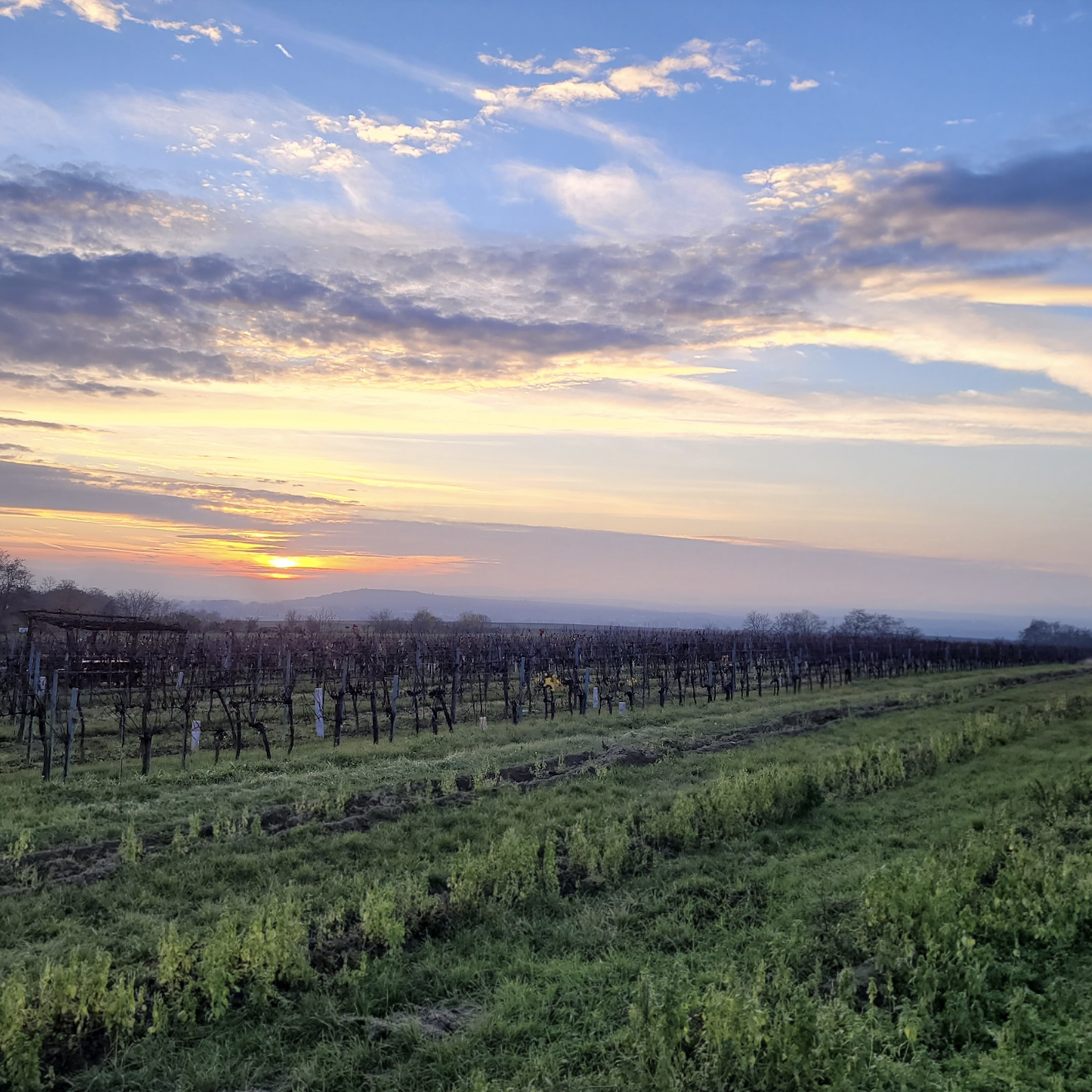
Beyond Chardonnay

Hidden Bench Blanc De Blanc Zero Dosage 2014, VQA Beamsville Bench ($48.00)
Second vintage from a tightly contested and smaller crop, initiated by then winemaker Marlize Beyers and subsequently disgorged by Jay Johnston, following five years on the lees. Moves from the practice of poetics to the anticipatory embracing of tomorrow’s science. Full disclosure this was tasted while walking the Hidden Bench chardonnay vineyards with a traditional method sparkling wine in hand first disgorged in the summer of 2019, when the yeasts were removed and the bottle was topped with the same wine. This tasting featured a January 2021 disgorgement and the term “Brut Nature Zero Dosage used when no sugar is added to the finished wine, which provides the most authentic expression of (the Hidden Bench) terroir.” Truth and synchronicity, grace, striking engagement, pure citrus and pleasure. Who could not anticipate and wait on subsequent vintages of this wine? The best is yet to come. Drink 2021-2027.  Tasted July 2021
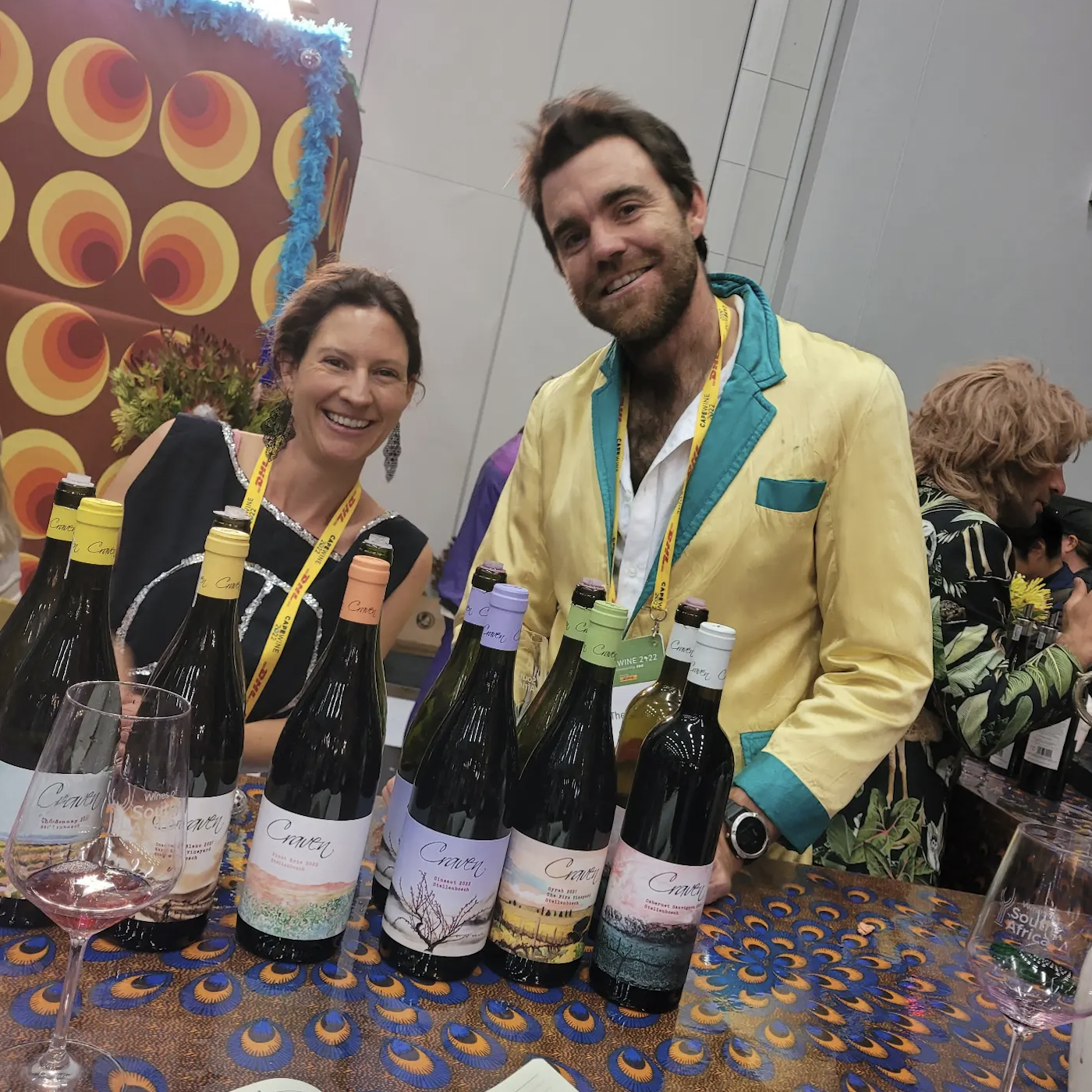
Stratus Brut Nature Zero Dosage 2013, VQA Niagara-on-the-Lake ($100.00)

Comes across a bit cloudy, at least as compared to the B de B with thanks to the natural, lees left intact style. The citrus component is so pronounced, as is the taut, direct, lean and intense manifold destiny of what is truly a singular Sparkling wine. That being a living, breathing, inhaling and exhaling wine, slowly releasing proteins, acids and realizing its B de B Nature dream. Just amazing what lees can do for sparkling wine.  Last tasted July 2021

Released side by each with the Stratus Blanc de Blanc 2013 and while vintage and grape are the same, the similarities almost seemingly, ostensibly and allegedly end there. Yes in fact this 100 per cent chardonnay is a child of the most excellent varietal vintage and like the B de B spent six years on the lees. Comparisons cast aside it is the very fact that because much of the lees were transferred to bottle by a minimalist’s disgorging that this cloudy bubble with a Canadian artist’s series set of labels can’t help but elicit another memory. The Lilies of Monet and their clouds represent neither the horizon, nor the top or the bottom. Nor does a bottle of this Zéro Dosage Brut. The elements of water, air, sky and earth become intertwined in a composition without perspective, or so it goes in this hazy, opaque and dry as the desert sparkling wine. So many layers of lemon can be peeled, juiced and scraped away. If a Stratus wine could be a a riddle, wrapped in a mystery, inside an enigma then here it is. The texture here is palpable and the intrigue factor surely high, so it should be imagined that longevity will be this wine’s calling card. It’s more austere than the Blanc de Blanc but I think in fact it will. Drink 2022-2029.  Tasted November 2020

Stratus Blanc De Blancs 2013, VQA Niagara-on-the-Lake ($75.00)

One gram of dosage, disgorged in January 2020. Nearly six years on the lees based on the first R & D trials done in 2006 and 2007. High level autolytic entity, a toasted affair and an idea long time coming for the Stratus team. Fine tonic and bitters. With 15 minutes of air the blooming happens, floral, expressive and complex. This wine has really developed more layers, emotions and complexity.  Last tasted July 2021

The first (commercial) J-L Groux foray into traditional method Sparkling wine has been six plus years in the making, or in this case, senescence as the lees fly and his Blanc de Blanc has finally arrived. A notable moment in the Stratus continuum as they too now own a program of development, time, investment, research and acumen. The nose on this bubble tells a pensive story, or as fantasy goes like dipping your face into a tale-spun pensieve as it takes you back in time. In 2013 chardonnay excelled on the Niagara Peninsula and still today in 2020 we are drinking vintage examples persistent in their freshness and durability of construct. That this reeks of varietal lore is a hallmark moment, that and a conscientious adherence to reverence for solids and the focus on rotational detail. Speaks a Blanc de Blanc vernacular as a chardonnay should, with a bite out of a sharp fall apple, a pesto of verdant aromatics and a crunch of texture before drifting saline, briny and fine. Pretty good work J-L. Kudos for getting from there to here with intelligence and humility. Drink 2020-2026.  Tasted November 2020

Stratus Vineyards “Field Blend” Ancestral 2020, VQA Niagara-on-the-Lake ($35.00)

The inaugural Stratus commercially labelled release is what winemaker Dean Stoyka refers to as “in the mindset of monks.” A field blend of sémillon, chardonnay, riesling and viognier. Pressed all together, fermented dry and then re-fermented in the bottle with no sugar added. Dry enough, or so it seems, non-disgorged, under crown cap and so very fruity. Floral, allspice and spiciness overtop apricot, pear and black walnuts conceptually turning into Vin de Noix or Nocino. A natural testament to assemblage and a great use of varieties without a home. 100 cases produced. Drink 2021-2024.  Tasted July 2021

Tawse Spark Laundry Vineyard Blanc De Noirs 2013, VQA Lincoln Lakeshore

Actually quite shocked I’ve never tasted this wine before, a Spark about which winemaker Paul Pender exults by saying “2013 is my favourite vintage for all our sparklings.” Traditional method, pinot noir from Heather Laundry’s double L vineyard and a fizz that fits and sparks. Gingered and toasty, crunchy, wave cresting and fulsome by six years on the lees. The dosage was five to six g/L, in that Pender sweet spot all around, just right, so well and good. A little romanticism goes a long way where science is concerned, especially in this medium and in Spark Blanc De Noirs 2013 one is simply good for the other. Drink 2021-2025.  Tasted July 2021

Tawse David’s Block Estate Vineyard Spark 2014, VQA Twenty Mile Bench

Tasted side by side with the 2013 Blanc de Noirs, making for a striking if surprisingly antithetical contrasting contract with this Blanc de Blancs. Aged three years on the lees and finished with the same 5-6 g/L of dosage yet here so upfront, centred and personal. More immediate richness than what pinot seems to do from Laundry Vineyard and so even in sparkling it is David’s Block and chardonnay that gift quicker satisfaction. Likely vintage driven (again, even in sparkling), very pear and shortbread, a savoury dessert of a sparkling wine. Like olive oil cake, all about the simple pleasures. Drink 2021-2023.  Tasted July 2021

Trius Showcase Brut Nature NV Méthode Traditionelle, VQA Niagara Peninsula ($55.00)

The dry as the desert Brut nature initiates with a yeasty faradism of excitement from what strikes as a minimum four to five years spent sitting on those fascinating lees. While the wine does not exactly smoulder with a toasty salutation that is no matter because textural acidity and blooming aromatics also arrive to an applause of immediate gratification. There is an exceptional level of “croccante” satisfaction that parlays that “texture” into a lasting display of bits and bites. The make up is 50 per cent chardonnay and (45) pinot noir with (5) pinot meunier and 2014 being the primary vintage source, though there is some 2013 involved. Zero dosage, top tier, notch and drop. Drink 2021-2027.  Tasted July 2021

Tawse Rosé Limestone Vineyard 2020, VQA Twenty Mile Bench ($27.95)

Tawse began crafting Rosé from (Vinemount Ridge) Quarry Road Vineyard fruit in 2017 and now here they come with Twenty Mile Bench pinot noir. From Limestone Vineyard this represents a heads and tails Rosé, meaning 40 per cent is used for Spark traditional method bubbles and the bookends is destined for this salty, straight-shooting and crisp-freckled single-vineyard blush. Double-redheaded wow! Grape, place and style all on side for so many good reasons. 1000 bottles made. Drink 2021-2023.  Tasted July 2021

Tawse Pinot Gris Lawrie Vineyard 2019, VQA Niagara-on-the-Lake ($27.15)

Not to be confused with the Lowrey Vineyard on St. David’s Bench and a best varietal vintage for Paul Pender. Far from being a “Miller-Lite or Corona” pinot gris, instead creamy, fulsome, well-versed and elastic. The furthest away from metallic and/or turbid, low on phenols, no bitters, nor tonics neither.  Last tasted July 2021

Fresh and while this young is full of its original fruit, which is the biggest plus for pinot gris because dry varietal wines have a hard time after enough time has passed on by. Sulphur is not really an issue so this delivers the varietal and stylistic goods with fruit at the lead. Good acids, persistence and balance. Drink 2020-2022.  Tasted October 2020

Tawse Winery Carly’s Block Riesling 2015, VQA Twenty Mile Bench

A sleeper vintage, not necessarily exacting out of the blocks, not heavy cropped, middle of the road in so many respects. If I tasted this before memory fails to draw any retrospective conclusions) but Carly’s ’15 has already turned towards the petrol sun, “let the shadows fall behind you, don’t look back, just carry on.” This perhaps began more than a year or two ago and today acts Rihanna outspokenly so. Lime and almost cordial by now, warm and friendly as a riesling liqueur. Quite stable, animated, holding its patterning, likely to do so for an additional three or fours years. Drink before it returns home. Drink 2021-2024.  Tasted July 2021

Tawse Limestone Ridge Riesling 2012, VQA Twenty Mile Bench

Unlike the Carly’s ’15 (tasted at the same time) this Limestone ’12 has not moved forward with any vehement haste. The lack of advancing towards petrol is curious but the softening is surely comforting. Still resplendent with a particular 2012 meets Twenty Mile Bench acidity, now oscillating while integrating with waning fruit. Drinking beautifully.  Last tasted July 2021

From the newest estate vineyard, the single-vineyard Limestone Ridge exteriorizes its name in a rubric of pressed rock, struck flint and chalky density. Paul Pender has coaxed a multiplicity oft linear character, with major notes of lime zest and juice, persistent from start to finish. A mid-pause of oozing, residual sinensis is the determinant towards the wine’s matrix of longevity. A longer, leaner, meaner and mightier Riesling charged by a different sort of power. Kinetic, frenetic and electric.  Tasted twice, April and May 2014

Hidden Bench Rachis & Derma Aromatiq! Skin Fermented White 2020, VQA Niagara Peninsula ($35.00)

Whole cluster sauvignon blanc, viognier and riesling, layered atop one another, full on hilt in spice, a hit of gingerbread, light in talc and salve. Good-natured and textured when well chilled, oxidative for sure, drinkable, pleasurable, done in one puncheon. Simple really. Drink 2021-2023.  Tasted July 2021

Hidden Bench Rachis & Derma Chardonnay Skin Fermented White 2020, VQA Niagara Peninsula ($35.00)

Whole cluster chardonnay, more spirited than the Aromatiq!, crunchy even, definitely with more spice and plenty of bite. More tannin too, structurally sound to allow more secondary character and time spent developing cooler, more energetic waves of spirit. Wild ride yet just sound and subtle enough to attract the right kind of attention. Drink 2021-2024.  Tasted July 2021

Hidden Bench Gamay Unfiltered 2019, VQA Lincoln Lakeshore ($29.95)

The inaugural gamay release from Hidden Bench is eight years in the planning and making, from 2013 through planting in 2017 and with third leaf fruit for this game changing 2019. That is because the grape and the maker were made for each other so the question begs, what took so long to take the plunge? No matter because such an auspicious start can never come too late. A wine of native yeasts, a properly prolonged, 24-day maceration, an eighth of new wood and the Lincoln Lakeshore being the ideal appellation for what wants and surely needs. More than impressive for such young vine fruit, of a light smoulder lending an essence of jasmine and by argan to red, red fruit, tightly winding acids and such gamay crunch, the likes of which are attributed to expectation, hopes and dreams. When the vineyard grows up there will be further anticipations, exegeses further afield to include cru and reserve concepts. That is a countable fact based on current evidence and credible speculation.  Drink 2021-2023. Tasted April and July 2021

Hidden Bench Rachis & Derma Gamay 2019, VQA Niagara Peninsula

Naturally refined, welcoming, open-knit and my oh my, juicy as a basket of Niagara plums and peaches blended into rooibos kombucha. Rachis, “main axis or shaft, a stem of a plant, bearing flower stalks at short intervals.” Derma, or Dermis, “the inner layer of the two main layers of the skin.” In R & D the inner workings of gamay are accessed at the natural axis between light to fruity and joyful to dark, before sous serious and after vide structured. Middle ground, believable and exhibiting intrinsic purity. Drink 2021-2024.  Tasted July 2021

Tawse Pinot Noir Tintern Vineyard 2013, VQA Vinemount Ridge ($50.15)

This July 2021 tasting is my first for Pinot Noir Tintern 2013 in bottle but I did run through two different barrels with Paul Pender back in March of 2014. The vines were only three years old at the time, on a site (next door to John Howard) Pender likens to “reclaiming the swamps,” or “the Golan Heights project.” From the Vosges medium toast the wine was already showing colour, freshness and drive. From the Vosges, medium plus toast it was a bit reductive, with more tannin and more sappy wood. This look back reveals not a vintage of varietal exhilaration but a malic one with credit due the high levels of potassium in the soil. A cherry generosity a la Central Otago by way of the Vinemount Ridge. Almost a volcanic presence, but not and yes a pinot from young vines come about as a result of winemaking. Up front, in motion, drinking really well. Drink 2021-2023.  Tasted July 2021

Redstone Restaurant

Tawse Pinot Noir Cherry Avenue Vineyard 2017, VQA Twenty Mile Bench ($49.15)

Another high-toned pinot noir from an inverted vintage, in cherry spirit, a hit of fennel and enough lingering energy while there is a meld and morph towards darker black fruit. Broad shouldered, now tannic, settling in as a pretty big wine.  Last tasted July 2021

As for Cherry Avenue the twain is met, somewhere between Tintern and Quarry, in the middle of vintage and classic Tawse styling. Both firm and bright, the fruit a cherry but a darkening black one and then the grip of place though well within vintage reason. Less structured than Quarry but not as hematic and brooding as Tintern. Solid pinot noir. Drink 2021-2025.  Tasted June 2020

Tawse Cabernet Franc Growers Blend 2010, VQA Niagara Peninsula

How remarkably fresh, inviting, enticing and that is just the aromatic front. Effusive, the greater good of burgeoning, smelling like Bourgeuil in uncanny resemblance. Nothing leafy here, just the smell of youth, post-adolescence and from a notably warm vintage. A freshness that just may be a foreshadowing of what’s to come from 2021. Heat and water, humidity and rain, yet no vine stress nor disease pressure neither. A product of great agriculture and an example of 2010’s longevity. “On the riper side but not overly ripe,” tells Paul Pender with a pragmatically raised brow. Indeed. Drink 2021-2024.  Tasted July 2021

Tawse David’s Block Cabernet Franc 2013, VQA Niagara Peninsula

Whole-souled, benevolent and keyed up though that’s the vineyard, persistent and in perpetuity. Red to charcoal fruit, quite firm and tannic for the Tawse-varietal relationship and in that sense mostly related to vintage. Was not picked until November 15th and stayed in barrel for 18 months. Not showy really, not the ripest vintage after all but surely one to promote variegation, fruit/acid layers and particularities. Wait long enough (as in seven-plus years) and these things become complexities. Drink 2021-2023.  Tasted July 2021

Good to go!

godello


Twitter: @mgodello

Instagram: mgodello

WineAlign